FINAL PROJECT 1 PRESENTATION
Presented by: SITI AMELIA BINTI AHMAD
           ID No: 51262111365
Bachelor of Engineering Technology in Data
              Communication
 Supervisor : Sir Mohd Ghazali Mohd Tahir
INTRODUCTION
Traffic Engineering
Process of controlling how traffic flow from one network to another and optimizing
resouces utilization and network performance.


Why traffic engineering is needed in IP network:
Current IGPs always use the shortest path to forward the traffic.


MPLS
   Generally a mechanism in high performance telecommunication network


Why MPLS:
   Lack of traffic engineering controlling in the network.
   MPLS provides increased scalability, manageability, and Quality of Service (QoS)
    functions to IP-based networks in order to improve traffic engineering.
OBJECTIVES
   To study on how to Improve traffic engineering in
    the IP network
   To study which algorithm that can be completely
    useful to implement the direction of this project
   To study on how to utilized the use of paths in the
    network to avoid over-utilized or underutilized
   To study on how to solved the congestion problem
    that exist in the IP network
   To study on how to apply new technologies – MPLS
PROBLEM STATEMENT
Traffic engineering problems in IP network:
 Uneven distribution of traffic

 In fowarding the traffic, it causes the traffic

  congestion on the path and remain other paths
  over-utilized or underutilized.
LITERATURE REVIEW
   Papers ‘A Load Balancing Scheme For Congestion
    Control In MPLS Networks’ describe that the other way
    to solve the congestion control that exist in Traffic
    Engineering is by using load balancing scheme.

   A study by David Culley, Chris Fuchs and Duncan Sharp
    in their journal entitled An Investigation of MPLS Traffic
    Engineering Capabilities using CR-LDP compared the
    performance of the network before and after CR-LDP
    has been setup.
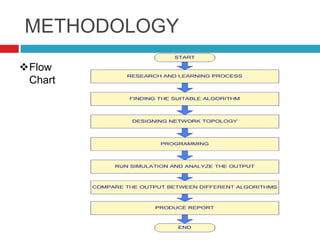
METHODOLOGY
Flow
 Chart
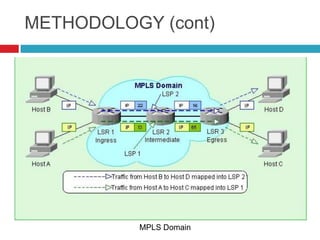
METHODOLOGY (cont)


          MPLS Domain
METHODOLOGY (cont)

Algorithms deployed in the IP network for traffic
engineering controlling:
 IGP algorithm

 CR-LDP algorithm


Software that will be involved in performing the
simulation:
a. NS2 (Network Simulator)

b. NAM (Network Animator)
METHODOLOGY (cont)
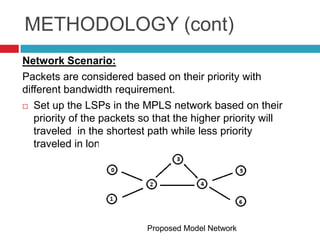
Network Scenario:
Packets are considered based on their priority with
different bandwidth requirement.
 Set up the LSPs in the MPLS network based on their

   priority of the packets so that the higher priority will
   traveled in the shortest path while less priority
   traveled in longer path of the network.


                            Proposed Model Network
EXPECTED RESULT

   MPLS enables the traffic engineering in the IP
    network and that is done essentially by the
    capabilities of Constraint –based Routing
    algorithm. (CR-LDP algorithm)
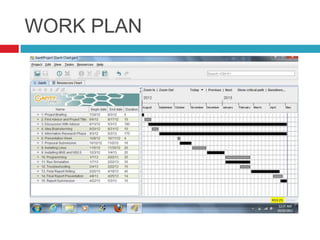
WORK PLAN
CONCLUSION
   We can conclude that MPLS has many
    advantages for traffic engineering. It increases
    network scalability, simplifies network service
    integration, offers integrated recovery and
    simplifies network management, design and
    operation. Designing suitable algorithm will
    make better use in improving the traffic
    engineering throughout the simulations.
REFERENCES
   1. X. Xiao and L. Ni “Traffic Engineering with MPLS in the Internet”,
    Michigan State University, 2000
   2. David Culley “An Investigation of MPLS Traffic Engineering
    Capabilities using CR-LDP”, April 12, 2001
   3. Tamrat Bayle. “Performance Measurement of MPLS Traffic
    Engineering and QoS”, Hiroshima University.
   4. Tony Dongliang Feng, “An Analysis of Constraint-based Routing
    in MPLS”, April 15,2002.
   5. Shyam Subramaniam, “Study of Traffic Engineering Algorithms
    and Framework”.
   6. Elio Salvadori, “A Load Balancing Scheme For Congestion
    Control In MPLS Networks”, University of Trento, November 2002.
   7. NS-manual: http://www.isi.edu/nsnam/ns
   8. MNS-manual: http://flower.ce.cnu.ac.kr%7Efog1/mns/

Fyp presentation

  • 1.
    FINAL PROJECT 1PRESENTATION Presented by: SITI AMELIA BINTI AHMAD ID No: 51262111365 Bachelor of Engineering Technology in Data Communication Supervisor : Sir Mohd Ghazali Mohd Tahir
  • 2.
    INTRODUCTION Traffic Engineering Process ofcontrolling how traffic flow from one network to another and optimizing resouces utilization and network performance. Why traffic engineering is needed in IP network: Current IGPs always use the shortest path to forward the traffic. MPLS  Generally a mechanism in high performance telecommunication network Why MPLS:  Lack of traffic engineering controlling in the network.  MPLS provides increased scalability, manageability, and Quality of Service (QoS) functions to IP-based networks in order to improve traffic engineering.
  • 3.
    OBJECTIVES  To study on how to Improve traffic engineering in the IP network  To study which algorithm that can be completely useful to implement the direction of this project  To study on how to utilized the use of paths in the network to avoid over-utilized or underutilized  To study on how to solved the congestion problem that exist in the IP network  To study on how to apply new technologies – MPLS
  • 4.
    PROBLEM STATEMENT Traffic engineeringproblems in IP network:  Uneven distribution of traffic  In fowarding the traffic, it causes the traffic congestion on the path and remain other paths over-utilized or underutilized.
  • 5.
    LITERATURE REVIEW  Papers ‘A Load Balancing Scheme For Congestion Control In MPLS Networks’ describe that the other way to solve the congestion control that exist in Traffic Engineering is by using load balancing scheme.  A study by David Culley, Chris Fuchs and Duncan Sharp in their journal entitled An Investigation of MPLS Traffic Engineering Capabilities using CR-LDP compared the performance of the network before and after CR-LDP has been setup.
  • 6.
  • 7.
  • 8.
    METHODOLOGY (cont) Algorithms deployedin the IP network for traffic engineering controlling:  IGP algorithm  CR-LDP algorithm Software that will be involved in performing the simulation: a. NS2 (Network Simulator) b. NAM (Network Animator)
  • 9.
    METHODOLOGY (cont) Network Scenario: Packetsare considered based on their priority with different bandwidth requirement.  Set up the LSPs in the MPLS network based on their priority of the packets so that the higher priority will traveled in the shortest path while less priority traveled in longer path of the network. Proposed Model Network
  • 10.
    EXPECTED RESULT  MPLS enables the traffic engineering in the IP network and that is done essentially by the capabilities of Constraint –based Routing algorithm. (CR-LDP algorithm)
  • 11.
  • 12.
    CONCLUSION  We can conclude that MPLS has many advantages for traffic engineering. It increases network scalability, simplifies network service integration, offers integrated recovery and simplifies network management, design and operation. Designing suitable algorithm will make better use in improving the traffic engineering throughout the simulations.
  • 13.
    REFERENCES  1. X. Xiao and L. Ni “Traffic Engineering with MPLS in the Internet”, Michigan State University, 2000  2. David Culley “An Investigation of MPLS Traffic Engineering Capabilities using CR-LDP”, April 12, 2001  3. Tamrat Bayle. “Performance Measurement of MPLS Traffic Engineering and QoS”, Hiroshima University.  4. Tony Dongliang Feng, “An Analysis of Constraint-based Routing in MPLS”, April 15,2002.  5. Shyam Subramaniam, “Study of Traffic Engineering Algorithms and Framework”.  6. Elio Salvadori, “A Load Balancing Scheme For Congestion Control In MPLS Networks”, University of Trento, November 2002.  7. NS-manual: http://www.isi.edu/nsnam/ns  8. MNS-manual: http://flower.ce.cnu.ac.kr%7Efog1/mns/