Chapter 8
Support and Movement
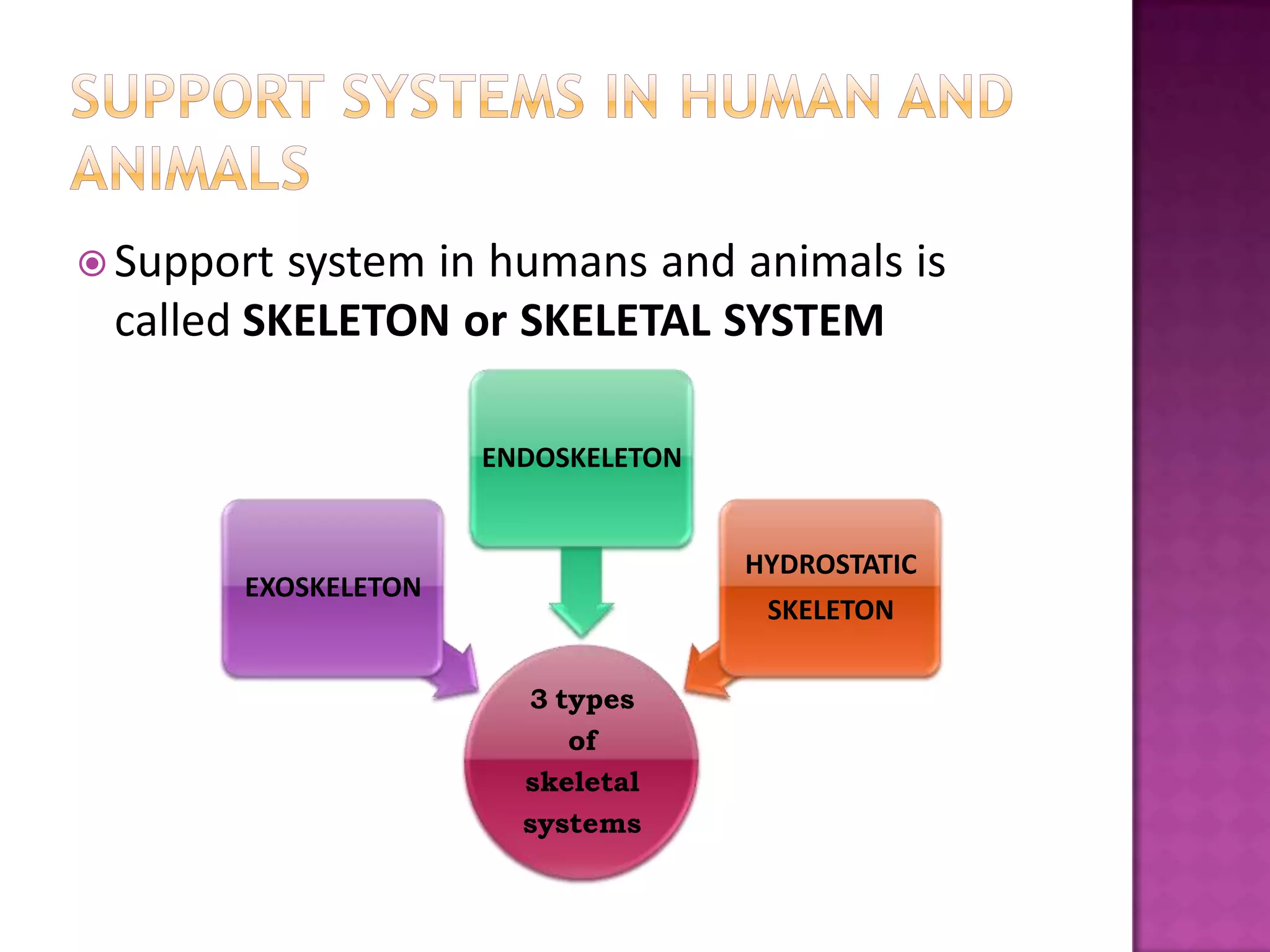
 Support system in humans and animals is
 called SKELETON or SKELETAL SYSTEM

                     ENDOSKELETON


                                    HYDROSTATIC
       EXOSKELETON
                                     SKELETON

                       3 types
                          of
                       skeletal
                       systems
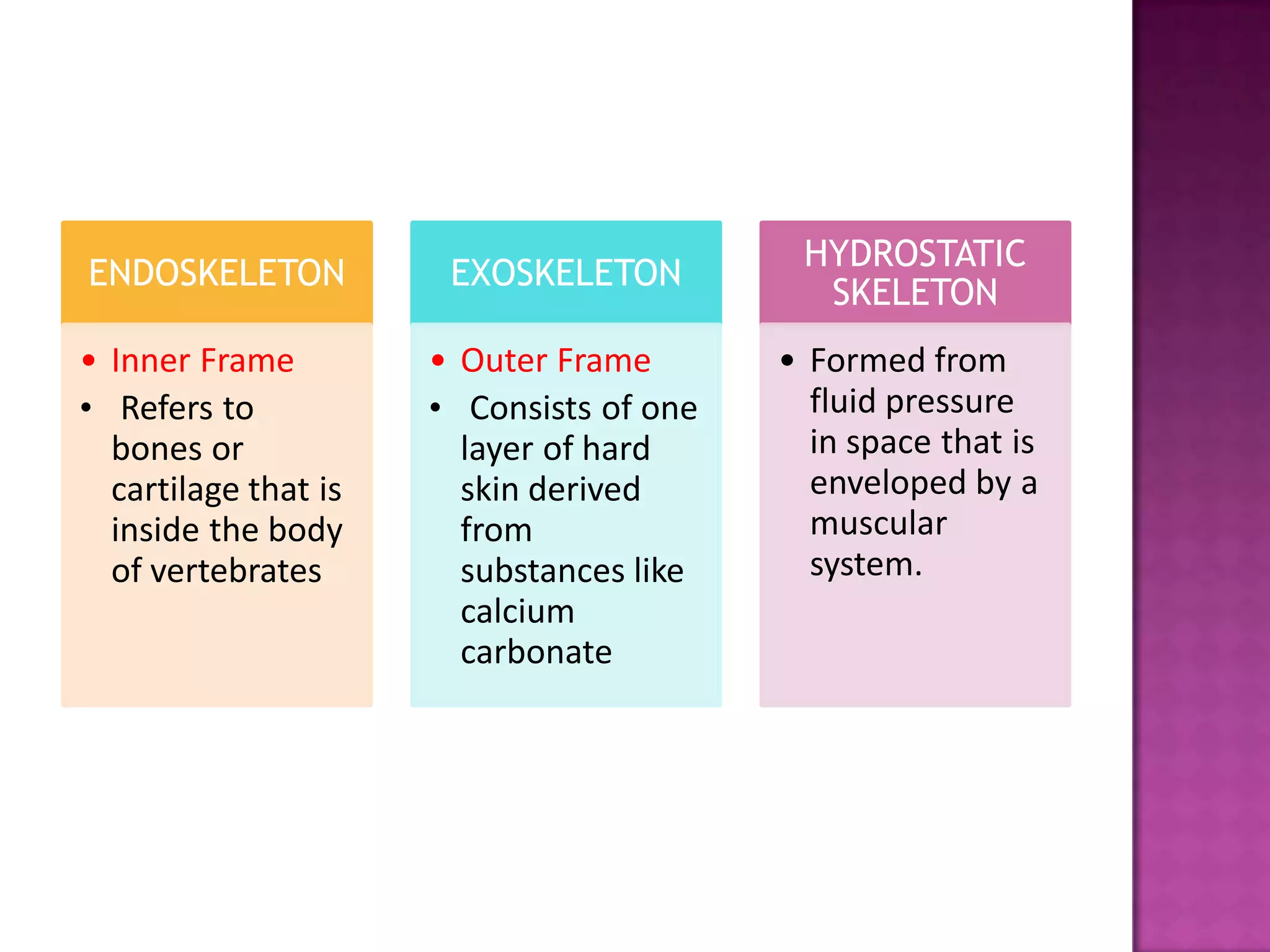
HYDROSTATIC
ENDOSKELETON           EXOSKELETON
                                            SKELETON
• Inner Frame         • Outer Frame       • Formed from
• Refers to           • Consists of one     fluid pressure
  bones or              layer of hard       in space that is
  cartilage that is     skin derived        enveloped by a
  inside the body       from                muscular
  of vertebrates        substances like     system.
                        calcium
                        carbonate
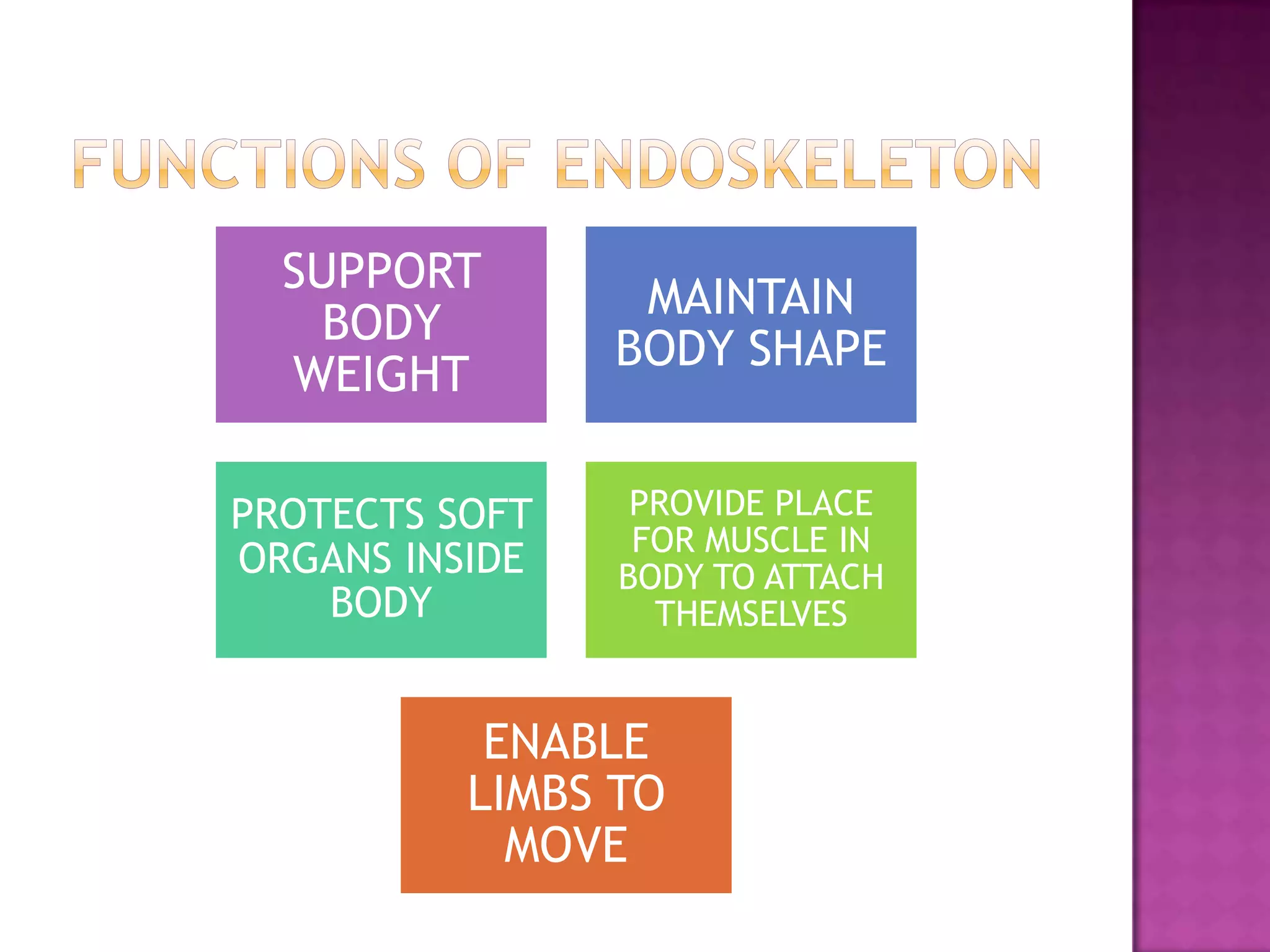
SUPPORT
                 MAINTAIN
    BODY
                BODY SHAPE
  WEIGHT

PROTECTS SOFT    PROVIDE PLACE
                 FOR MUSCLE IN
ORGANS INSIDE   BODY TO ATTACH
    BODY          THEMSELVES


           ENABLE
          LIMBS TO
            MOVE
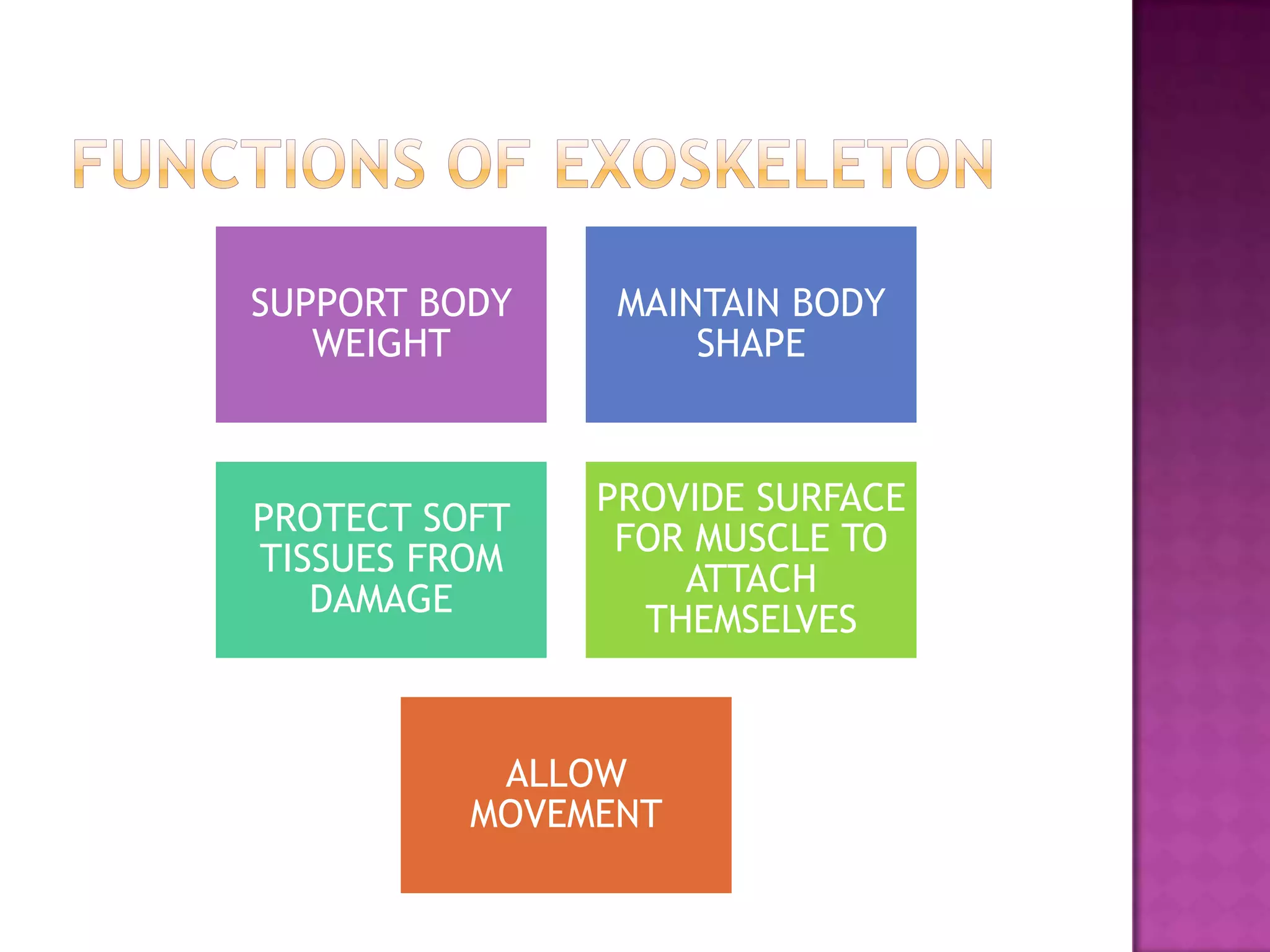
SUPPORT BODY    MAINTAIN BODY
   WEIGHT           SHAPE


               PROVIDE SURFACE
PROTECT SOFT
                FOR MUSCLE TO
TISSUES FROM
                   ATTACH
   DAMAGE
                 THEMSELVES


           ALLOW
          MOVEMENT
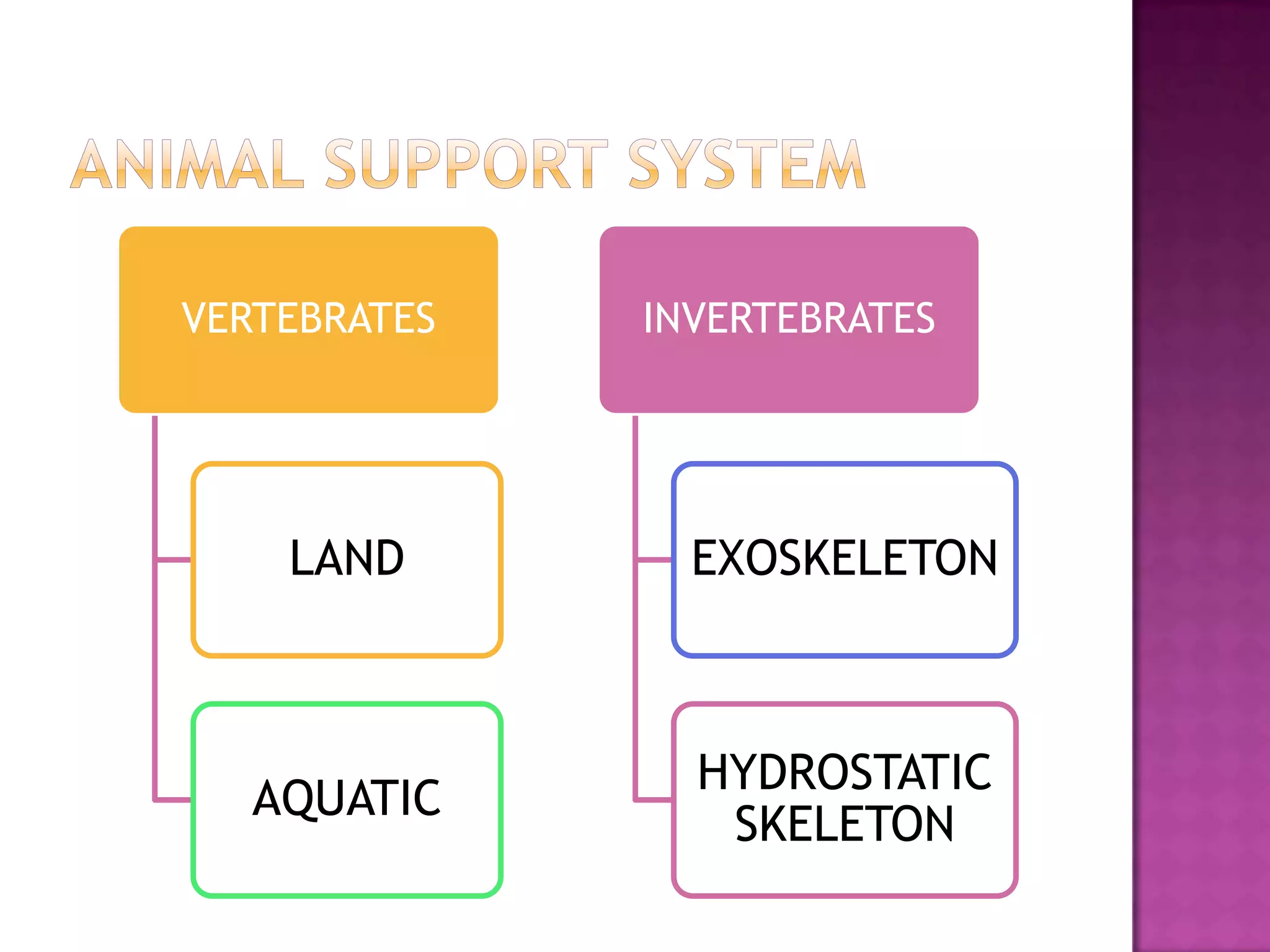
VERTEBRATES   INVERTEBRATES


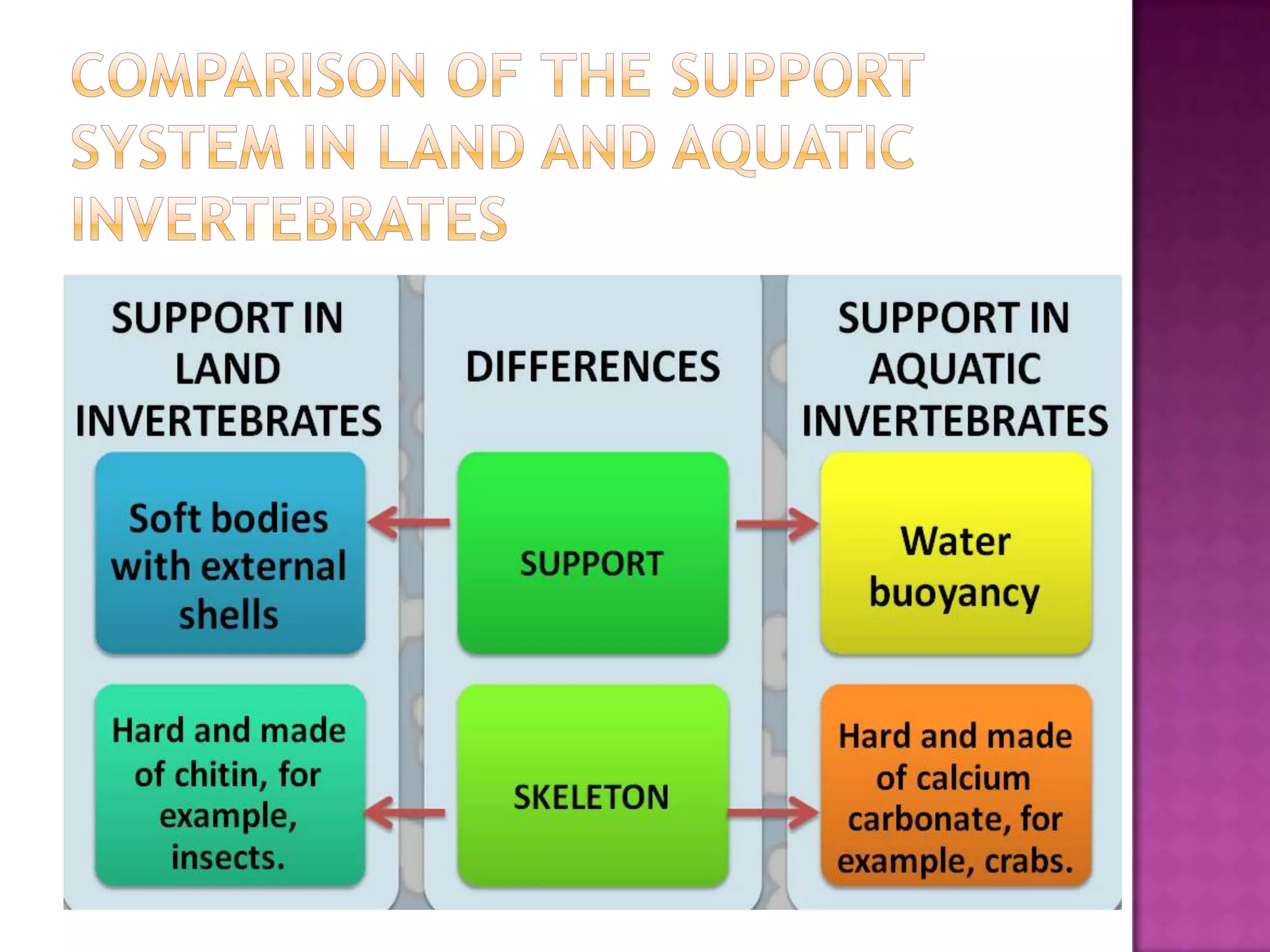
    LAND        EXOSKELETON


                HYDROSTATIC
   AQUATIC
                 SKELETON
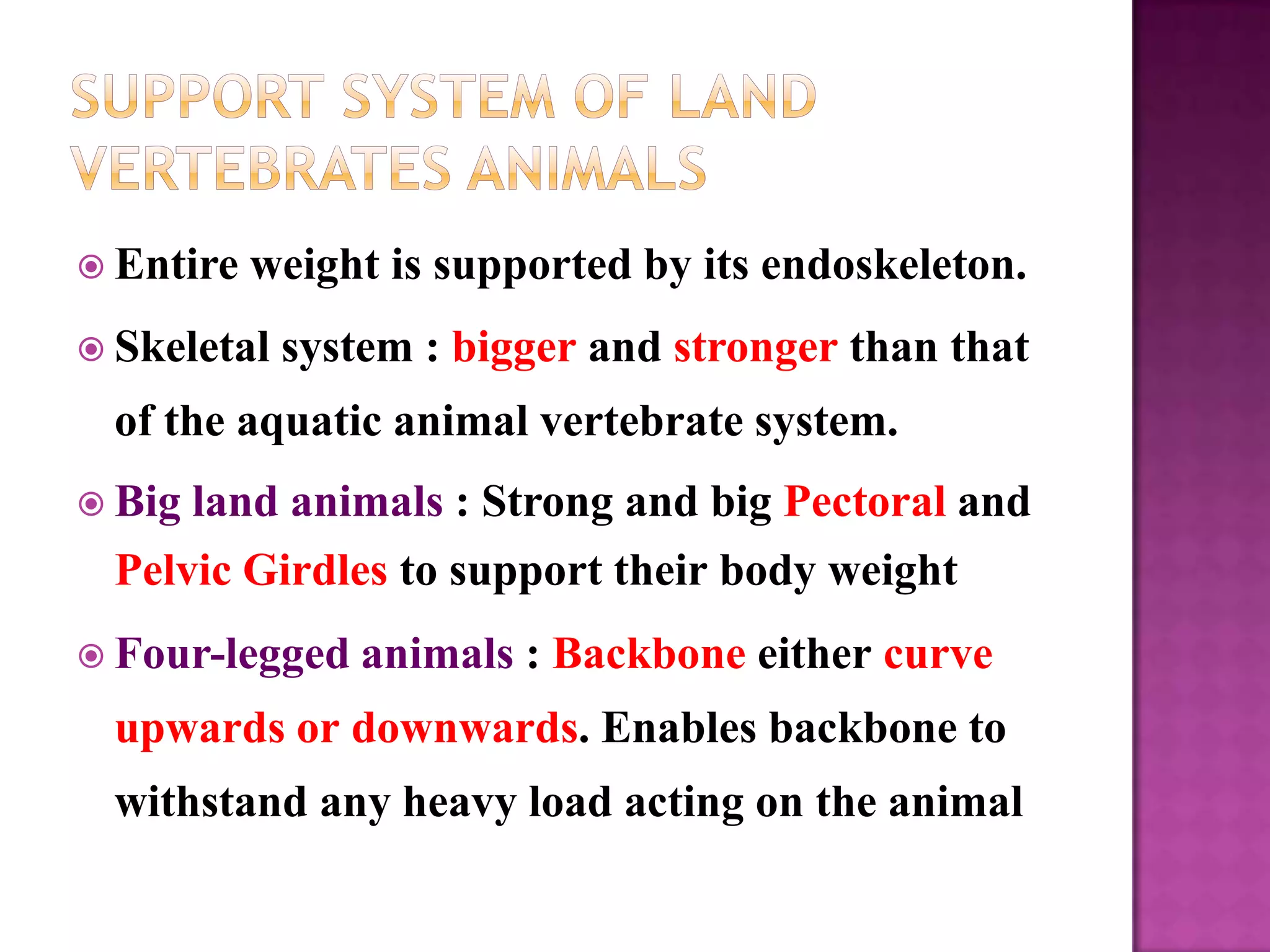
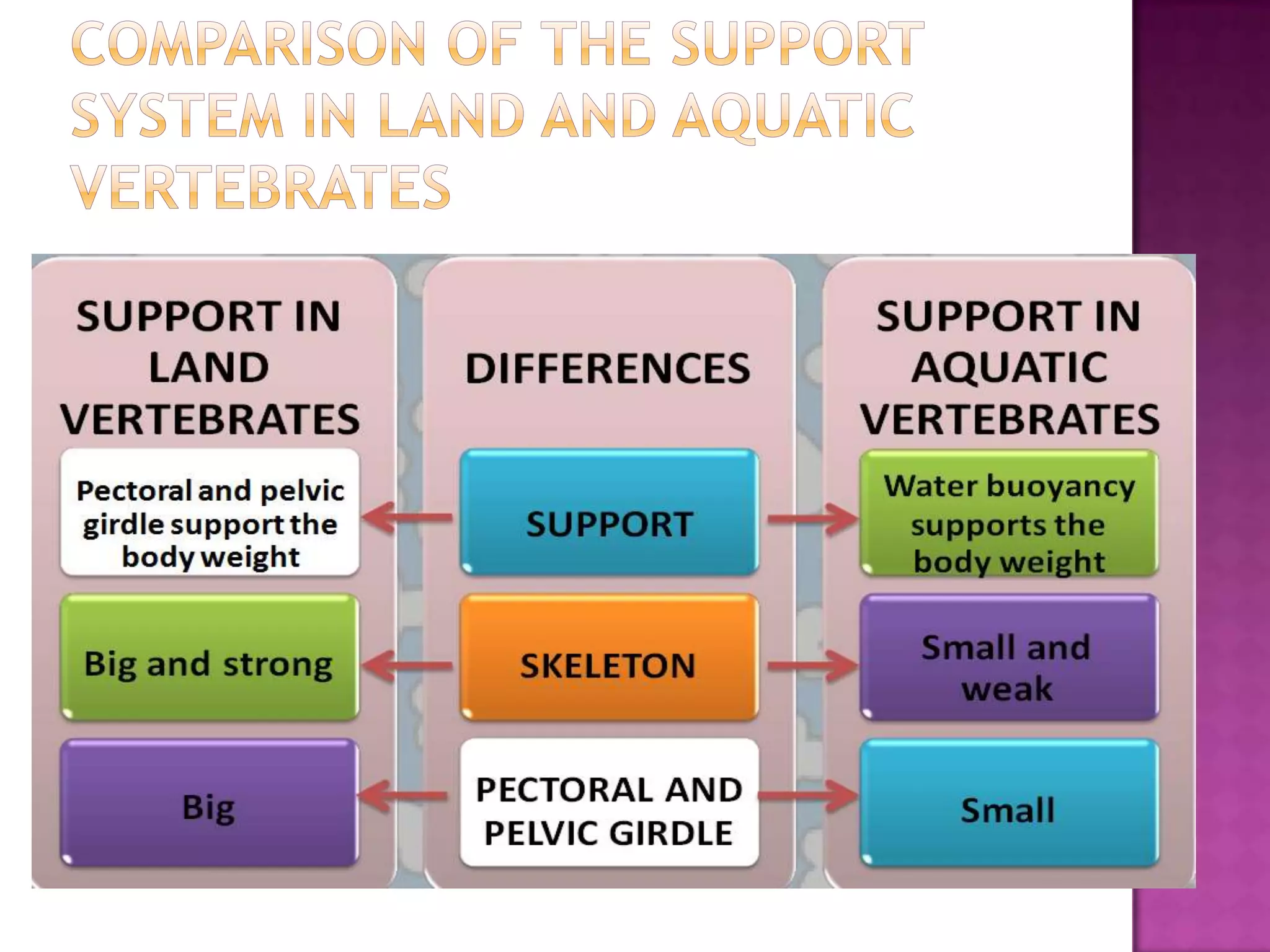
 Entire   weight is supported by its endoskeleton.
 Skeletal   system : bigger and stronger than that
 of the aquatic animal vertebrate system.
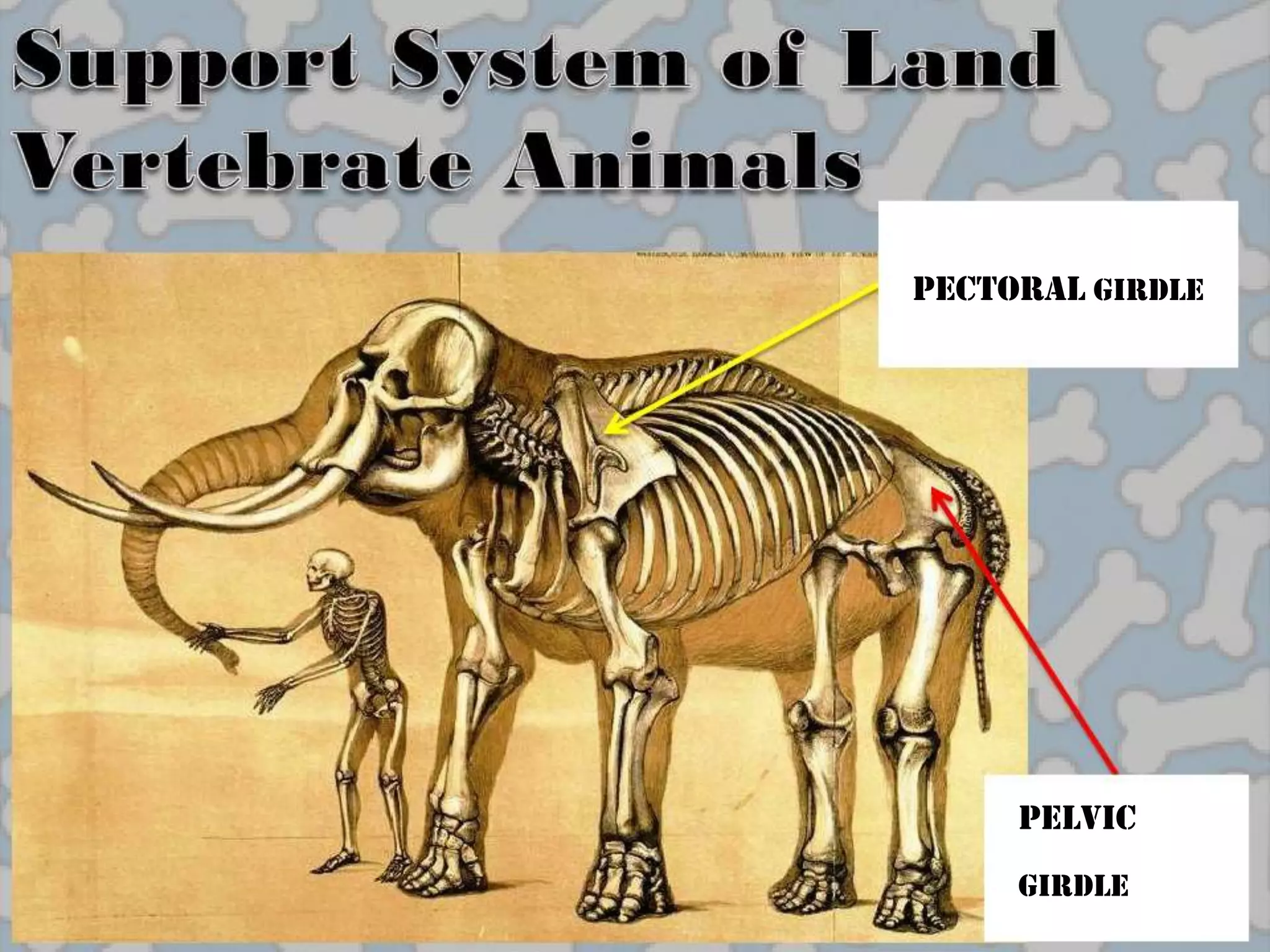
 Bigland animals : Strong and big Pectoral and
 Pelvic Girdles to support their body weight
 Four-legged    animals : Backbone either curve
 upwards or downwards. Enables backbone to
 withstand any heavy load acting on the animal
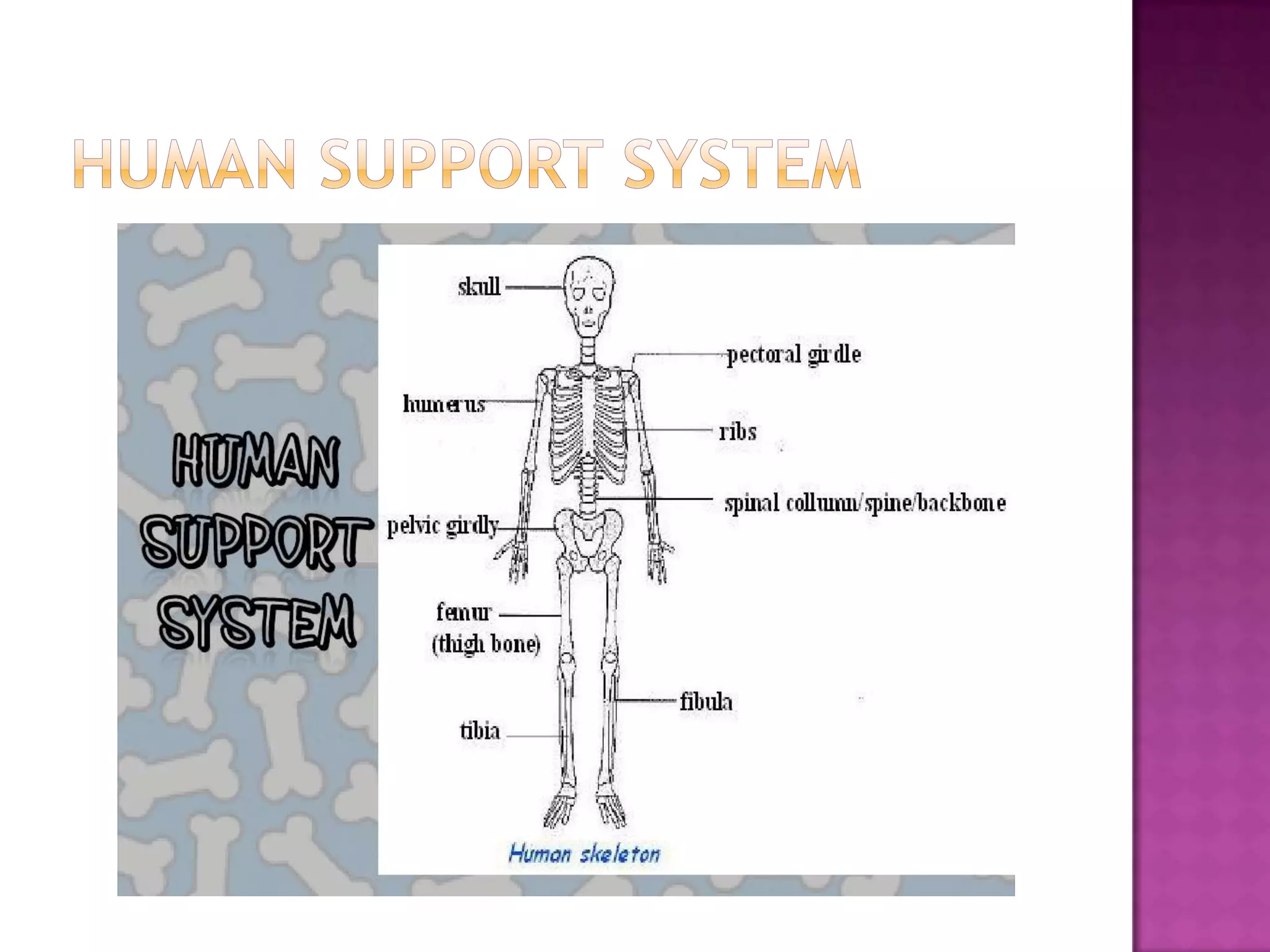
Pectoral Girdle


     Pelvic
     Girdle
 Birds: Have hollow bones and air spaces
 inside so that the body is lighter.

 Advantages   of hollow bones :
  Lighter
  Requires  less calcium and phosphorous for
   its formation.
 Examples  : Whales, dolphins
 Smaller and lighter endoskeleton than
  land vertebrates.
 Pectoral and pelvic support that is
  smaller and lighter.
 Most of body weight is supported by
  buoyancy of the water
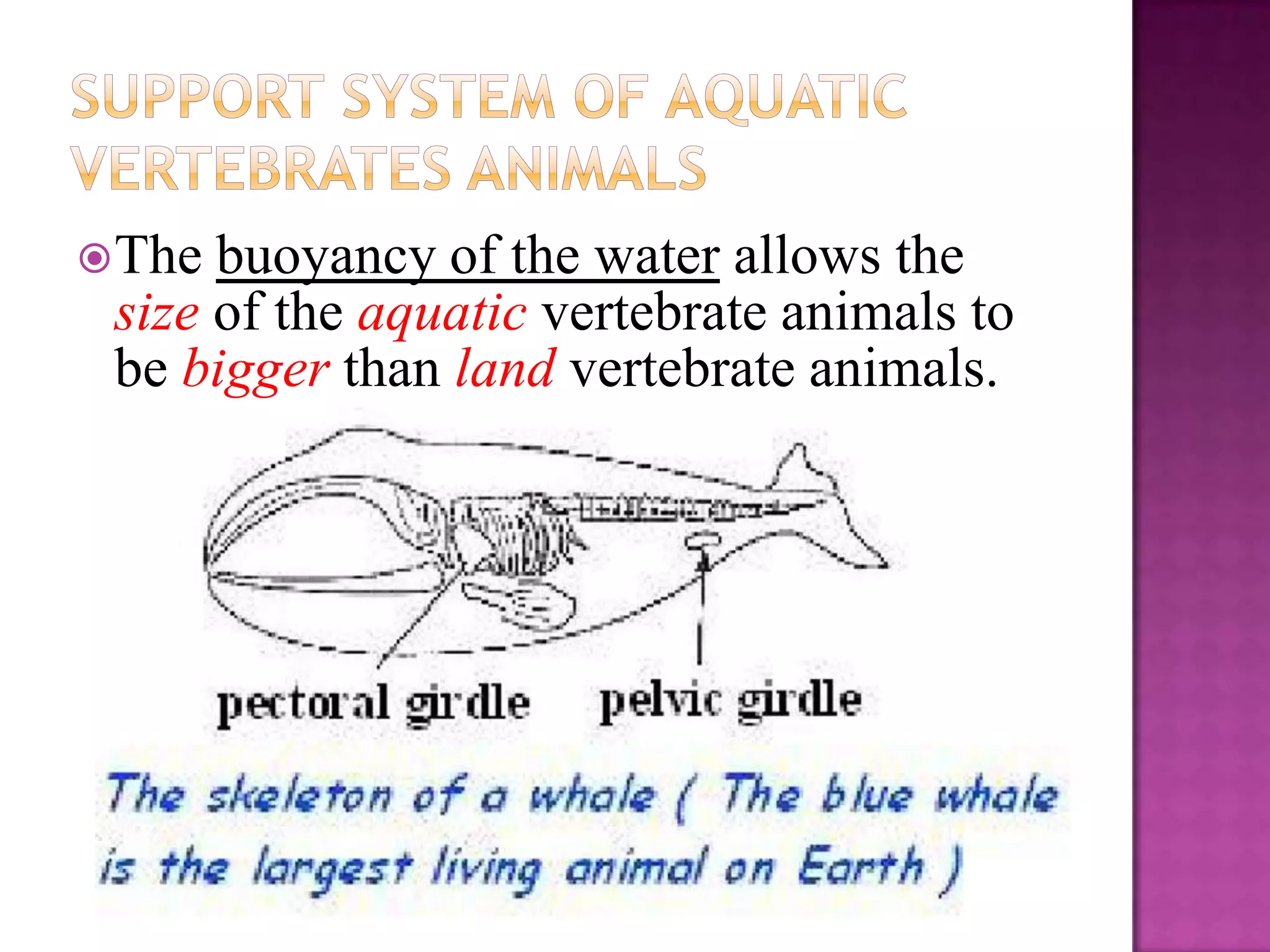
 The buoyancy of the water allows the
 size of the aquatic vertebrate animals to
 be bigger than land vertebrate animals.
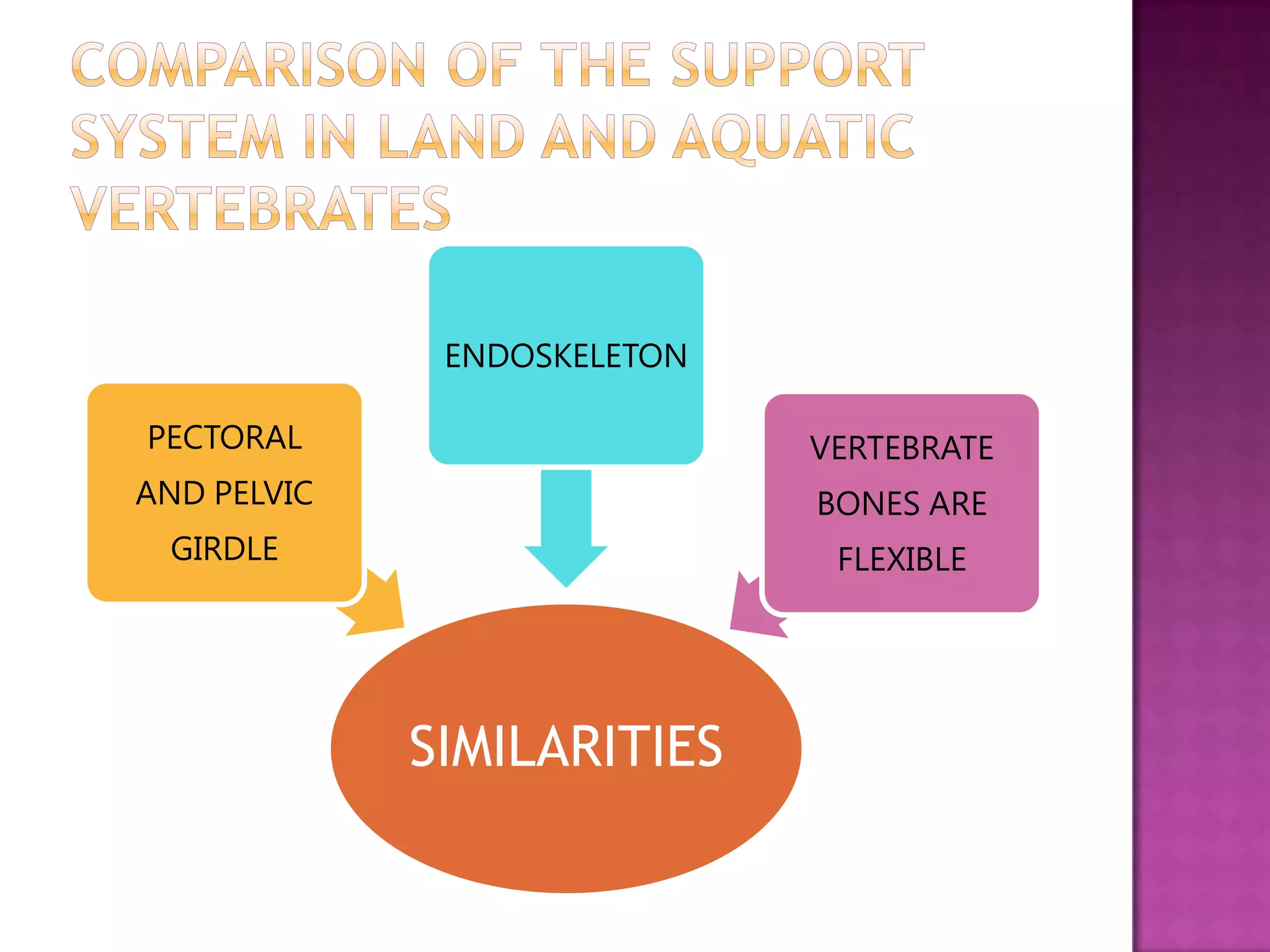
ENDOSKELETON

PECTORAL                     VERTEBRATE
AND PELVIC                   BONES ARE
 GIRDLE                       FLEXIBLE


             SIMILARITIES
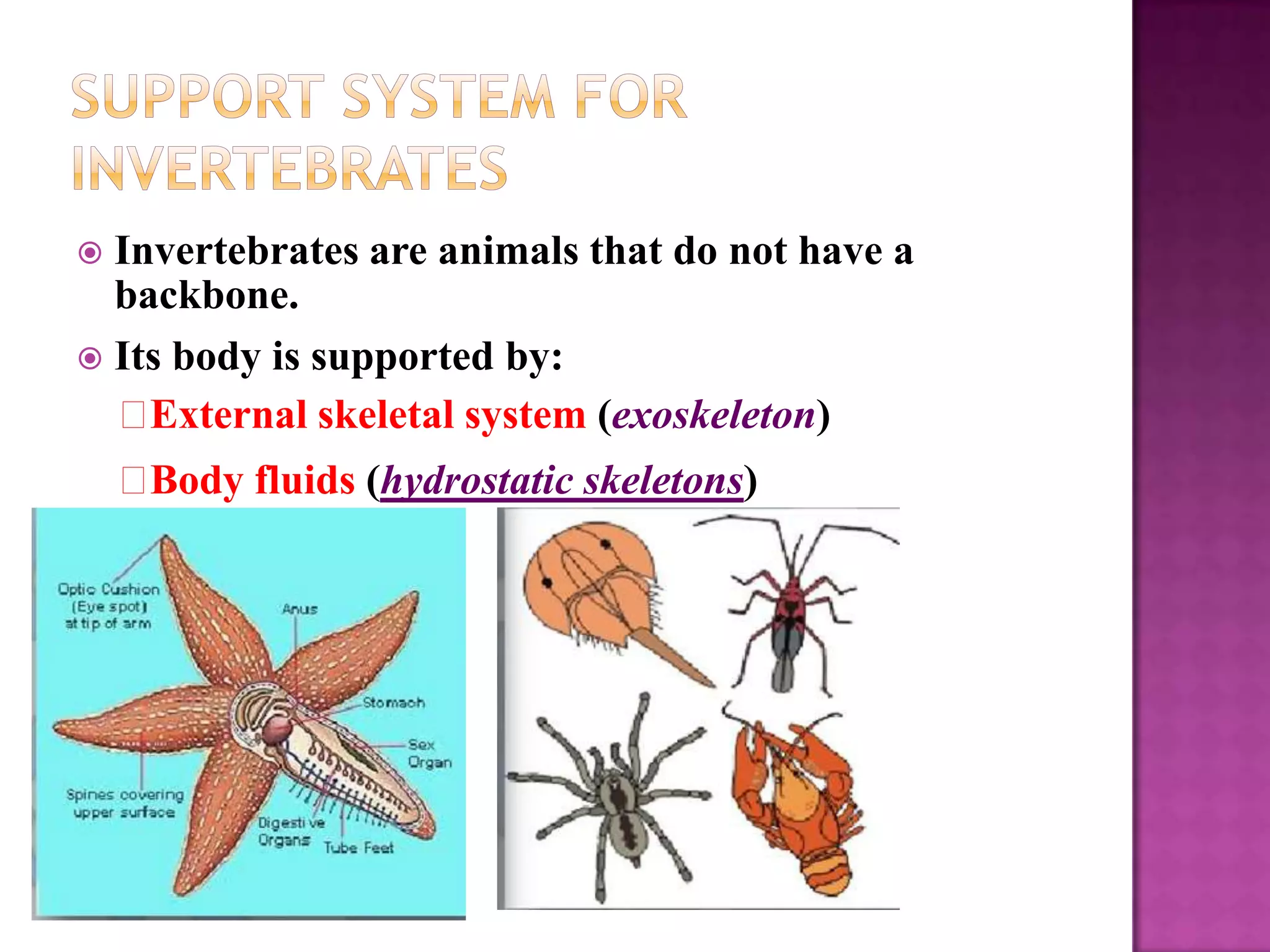
 Invertebrates are animals that do not have a
  backbone.
 Its body is supported by:
   External skeletal system (exoskeleton)
    Body fluids (hydrostatic skeletons)
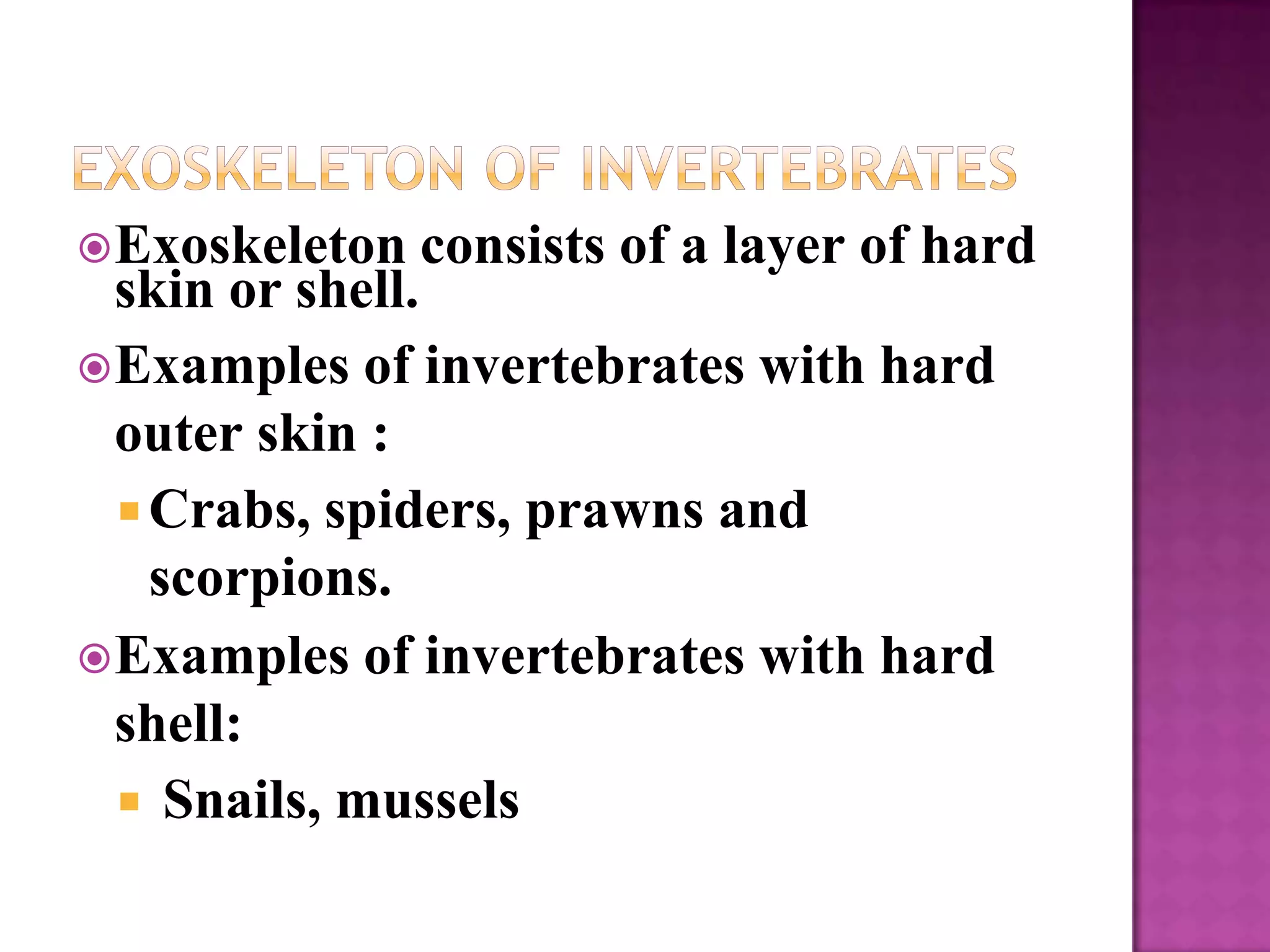
 Exoskeleton   consists of a layer of hard
  skin or shell.
 Examples of invertebrates with hard
  outer skin :
   Crabs, spiders, prawns and
    scorpions.
 Examples of invertebrates with hard
  shell:
   Snails, mussels
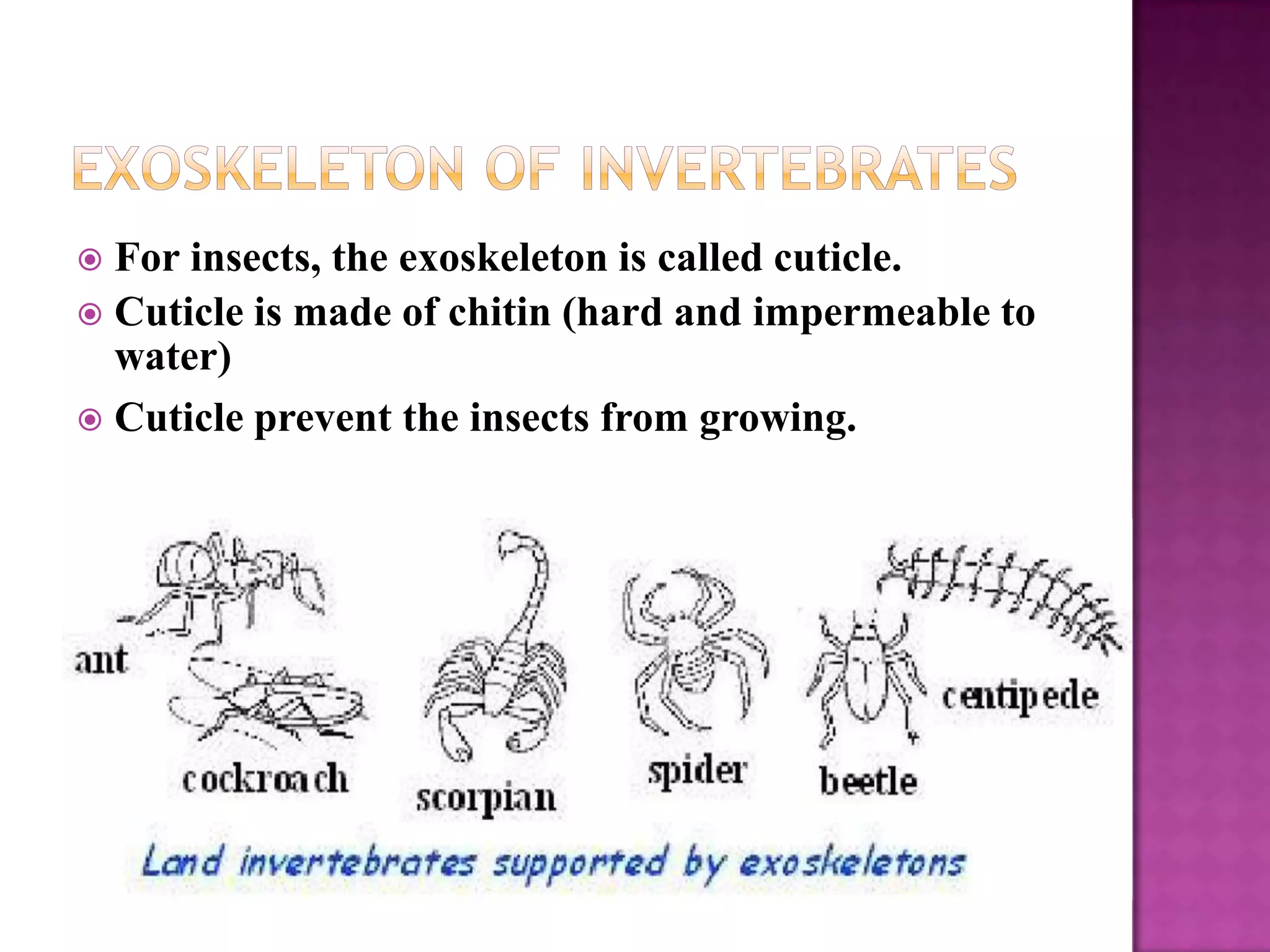
 For insects, the exoskeleton is called cuticle.
 Cuticle is made of chitin (hard and impermeable to
  water)
 Cuticle prevent the insects from growing.
 Leeches,  worms and octopus do not
  have exoskeleton. Their bodies are
  soft.
 Use the body fluid (also known as
  hydrostatic skeleton system) as
  support system.
 The body fluids exert a pressure on
  their body walls to form a hydrostatic
  skeleton.
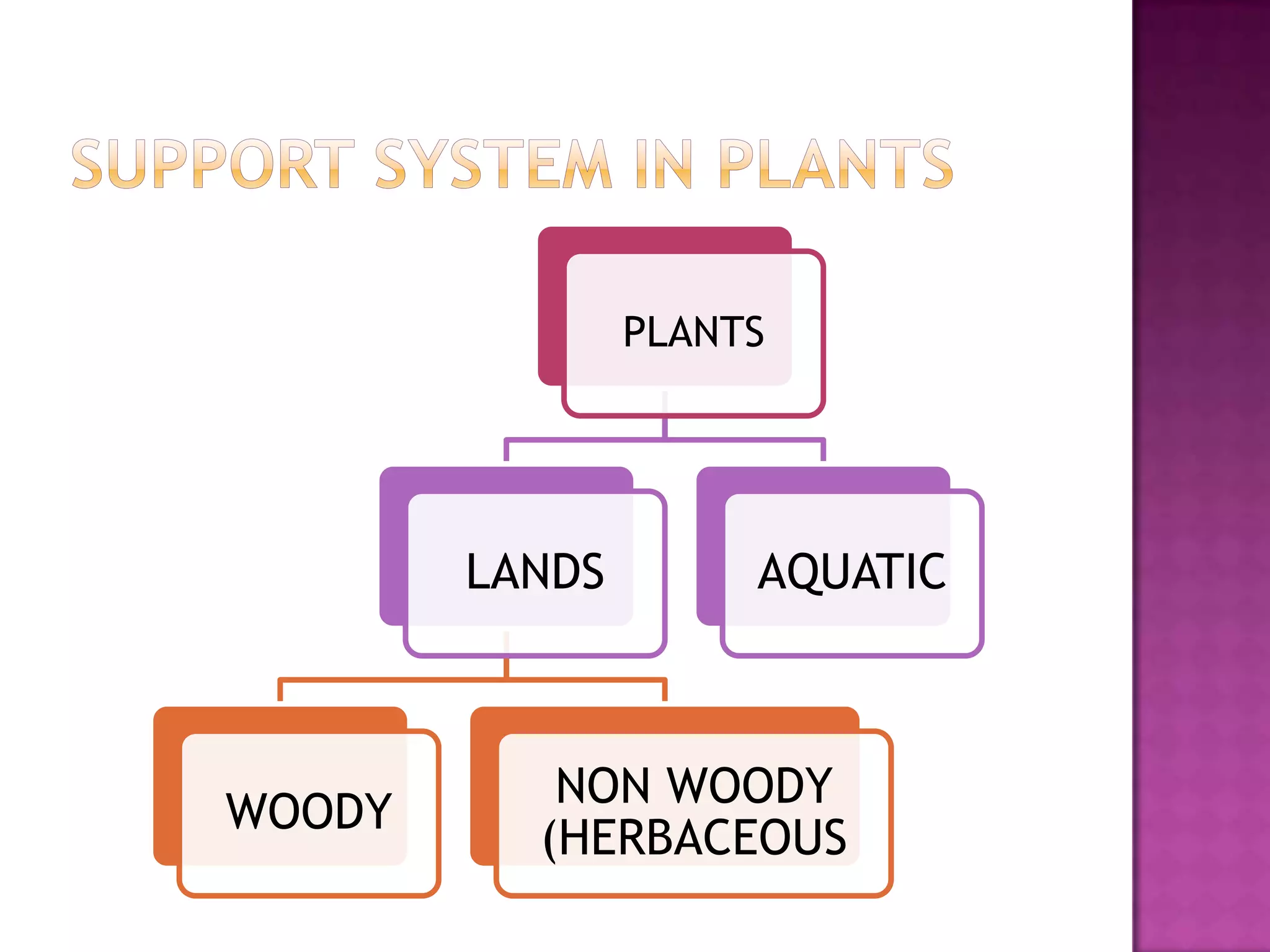
PLANTS


        LANDS        AQUATIC


           NON WOODY
WOODY
          (HERBACEOUS
   WOODY PLANTS
     Examples: rubber tree, durian
      tree, rambutan tree, and teak tree.
     Supported by woody tissues.
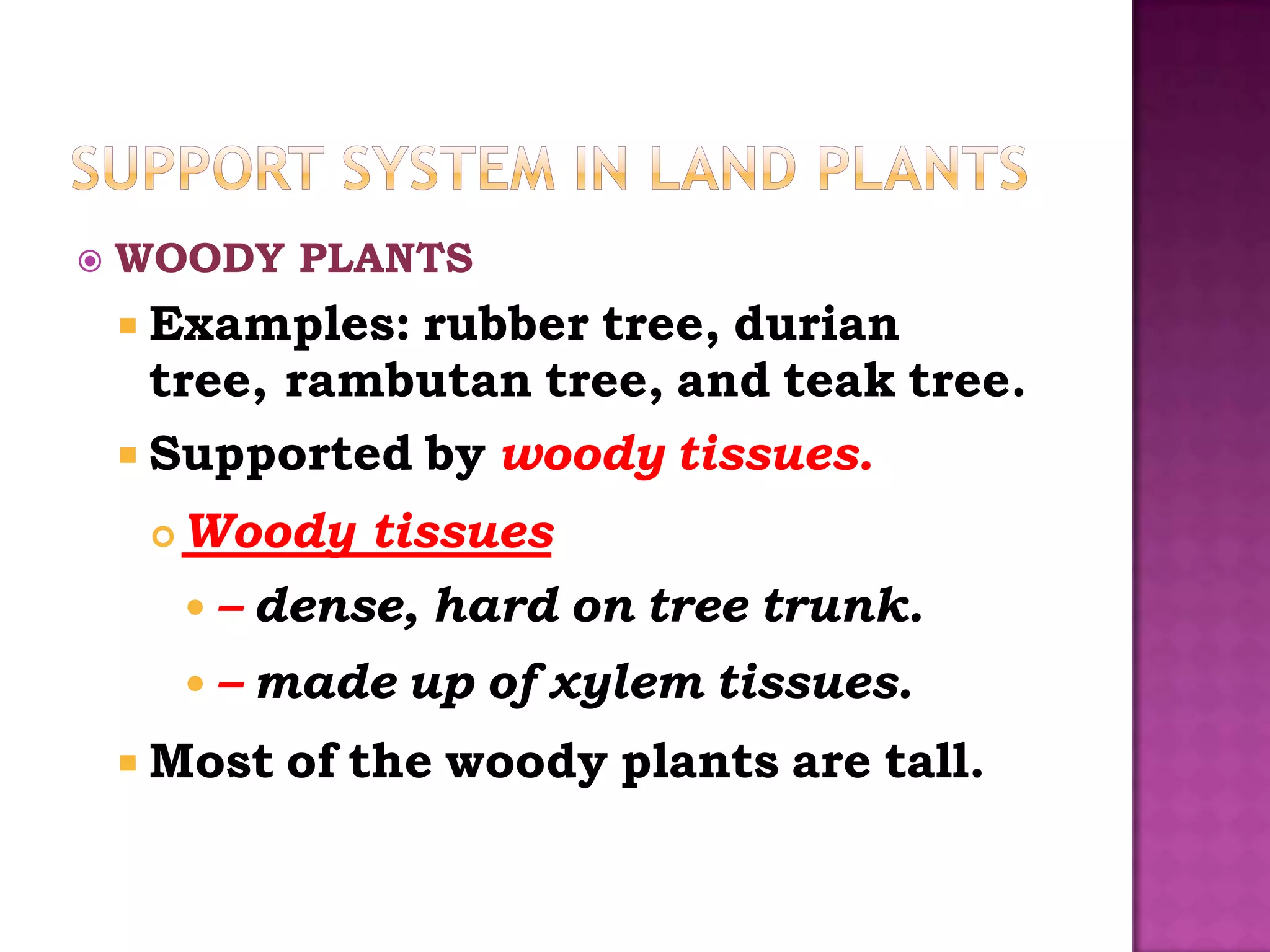
        Woody tissues
         –   dense, hard on tree trunk.
         –   made up of xylem tissues.
     Most     of the woody plants are tall.
 WOODY        PLANTS
  Also   supported by special structures
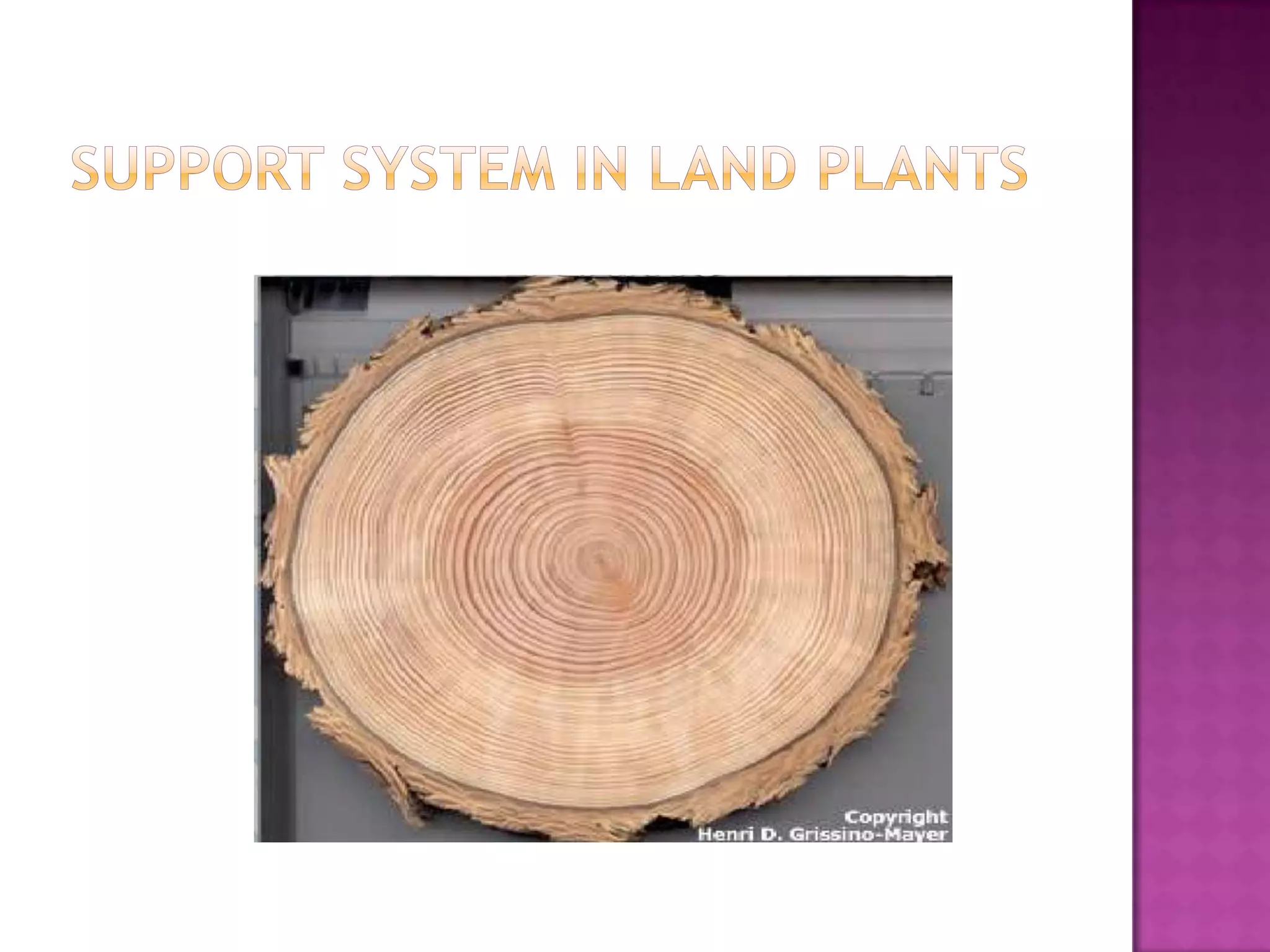
     - Buttress roots
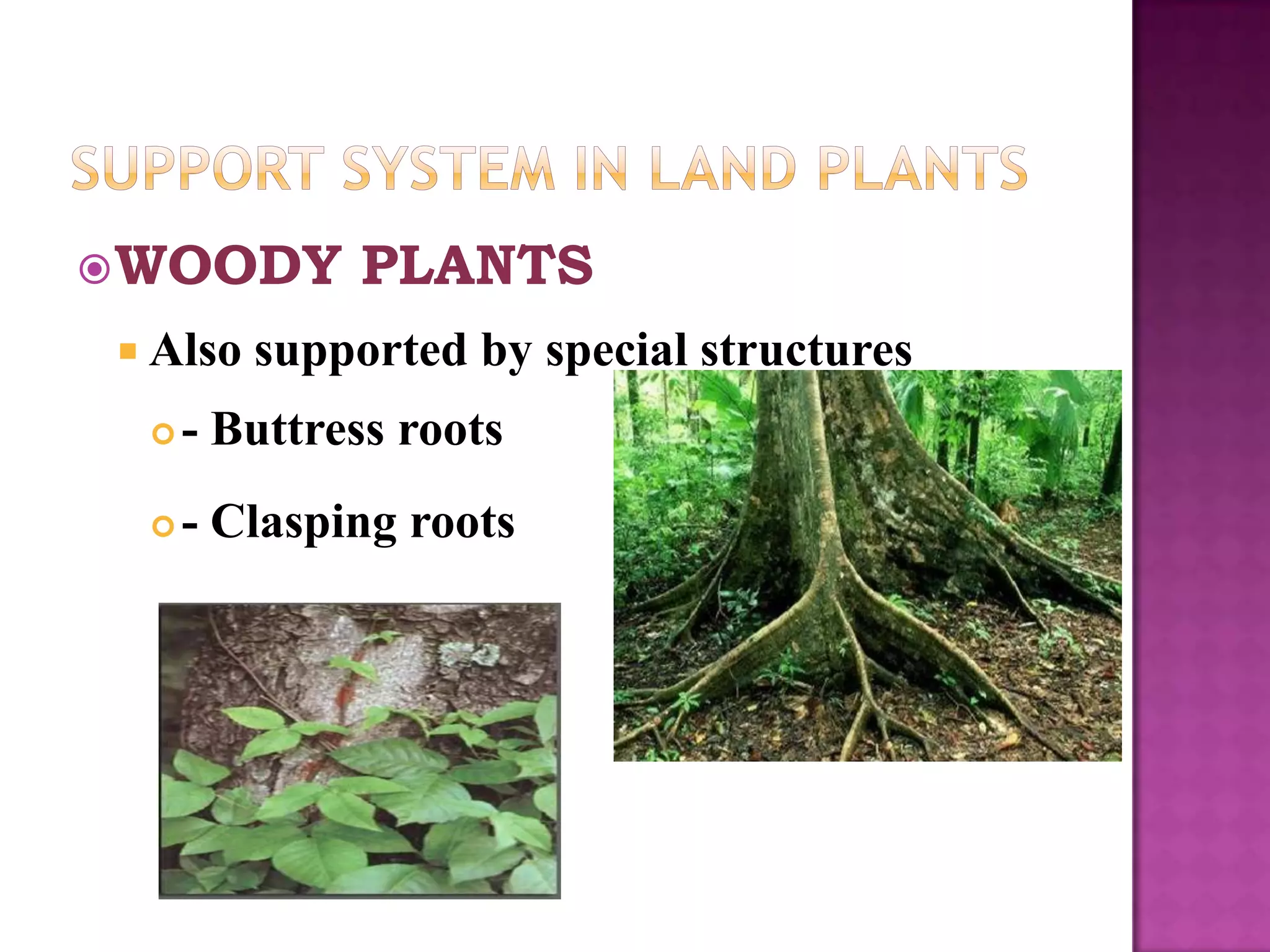
     - Clasping roots
   Buttress roots
       Examples: durian trees, casuarina trees, and yellow
        flame trees.
       Occurs at the base of the trunk where the main roots
        branch off at the ground surface and enter the soil.

   Clasping root
       Examples : money plant, certain wild orchid.
       Enable a plant to climb by growing around and
        clasping its support.
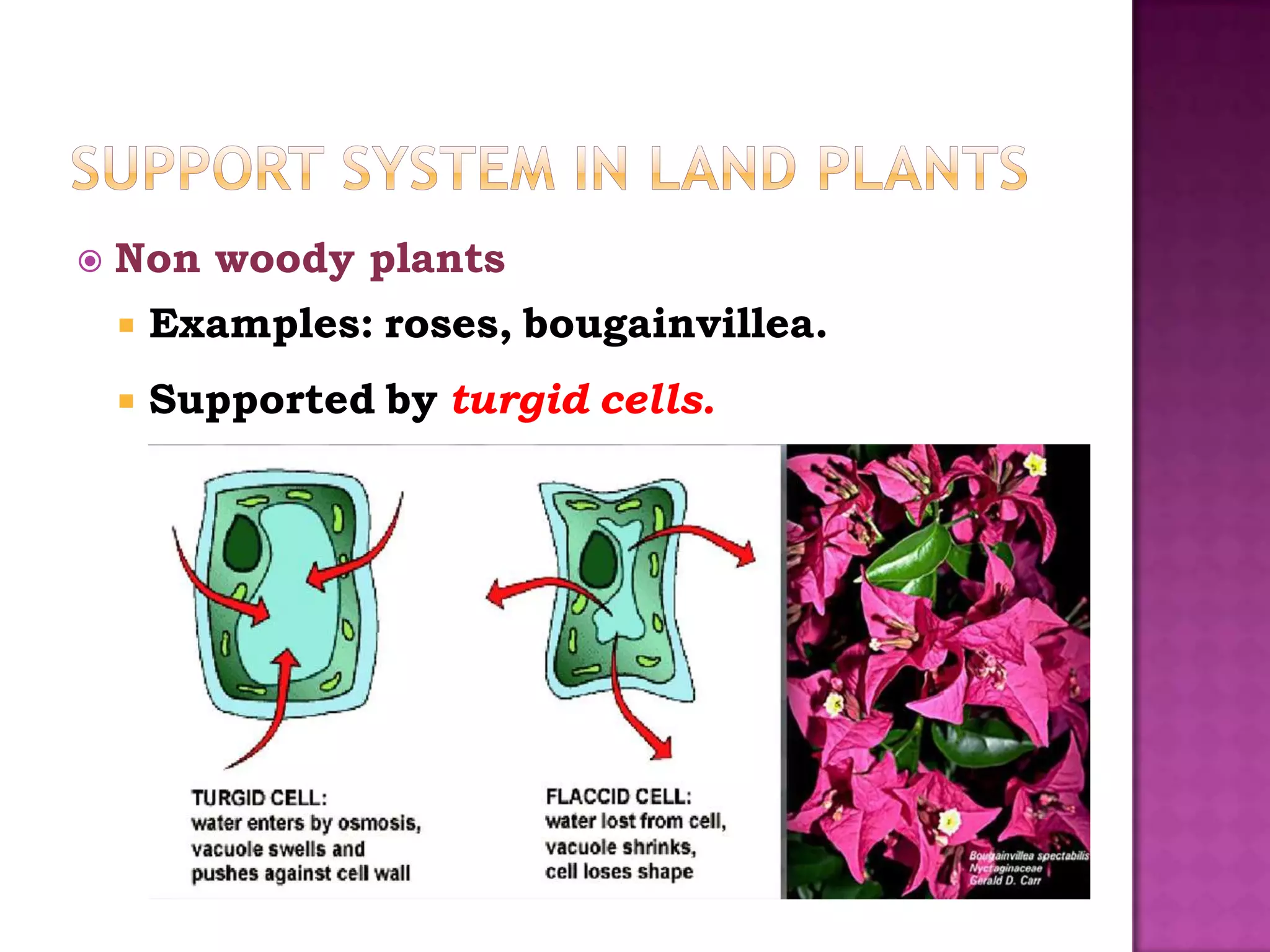
   Non woody plants
       Examples: roses, bougainvillea.
       Supported by turgid cells.
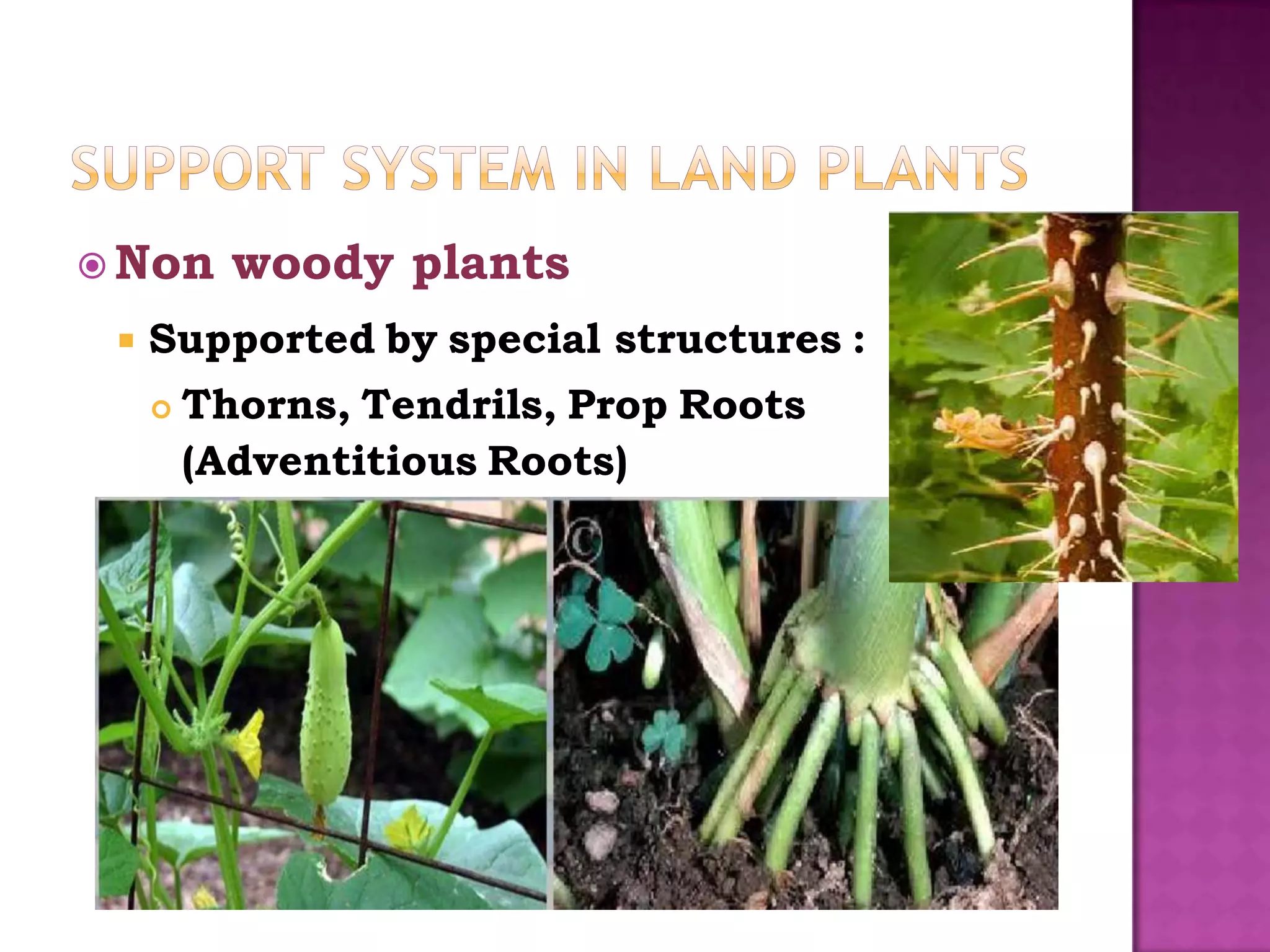
 Non      woody plants
    Supported by special structures :
        Thorns, Tendrils, Prop Roots
         (Adventitious Roots)
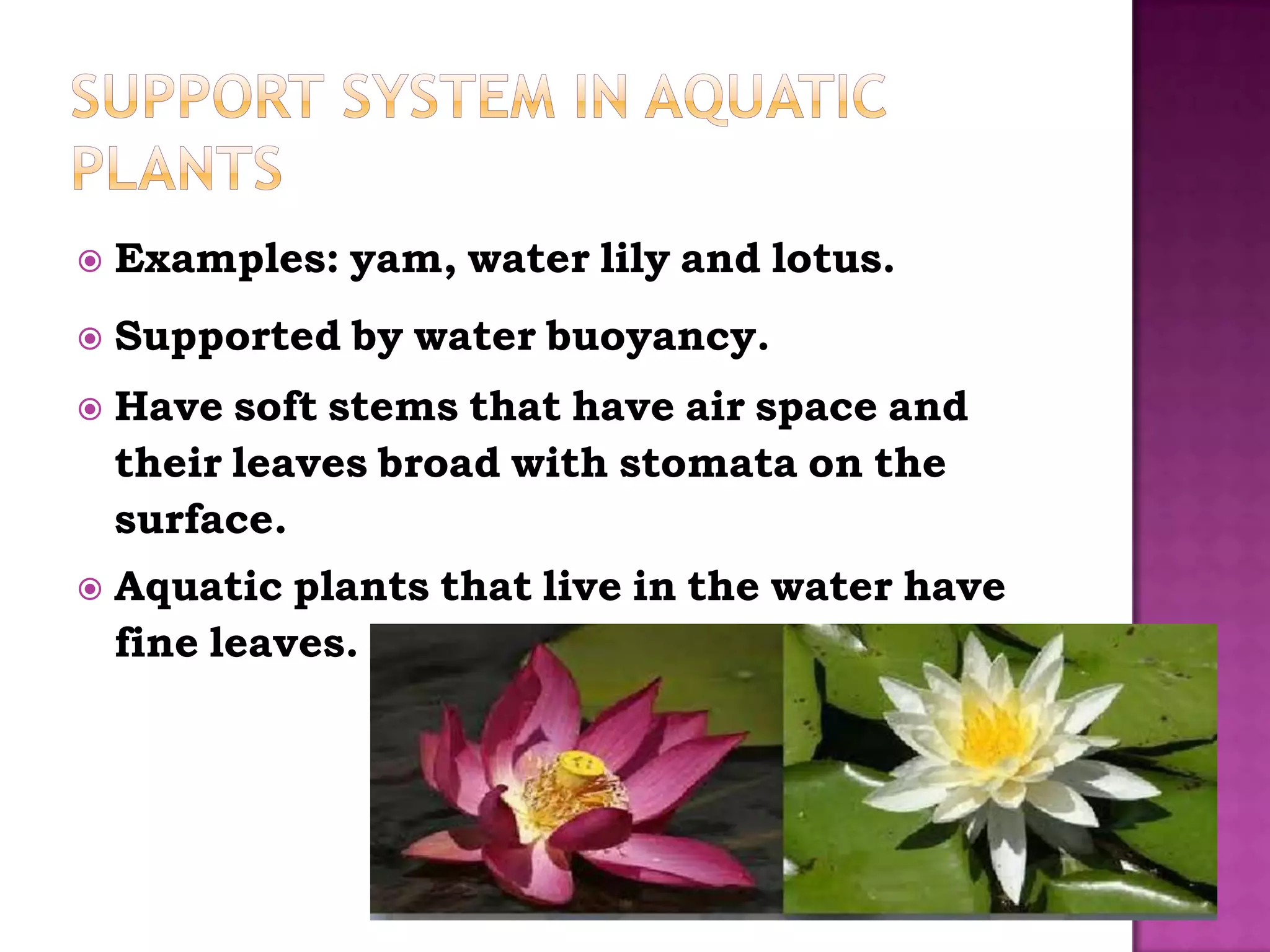
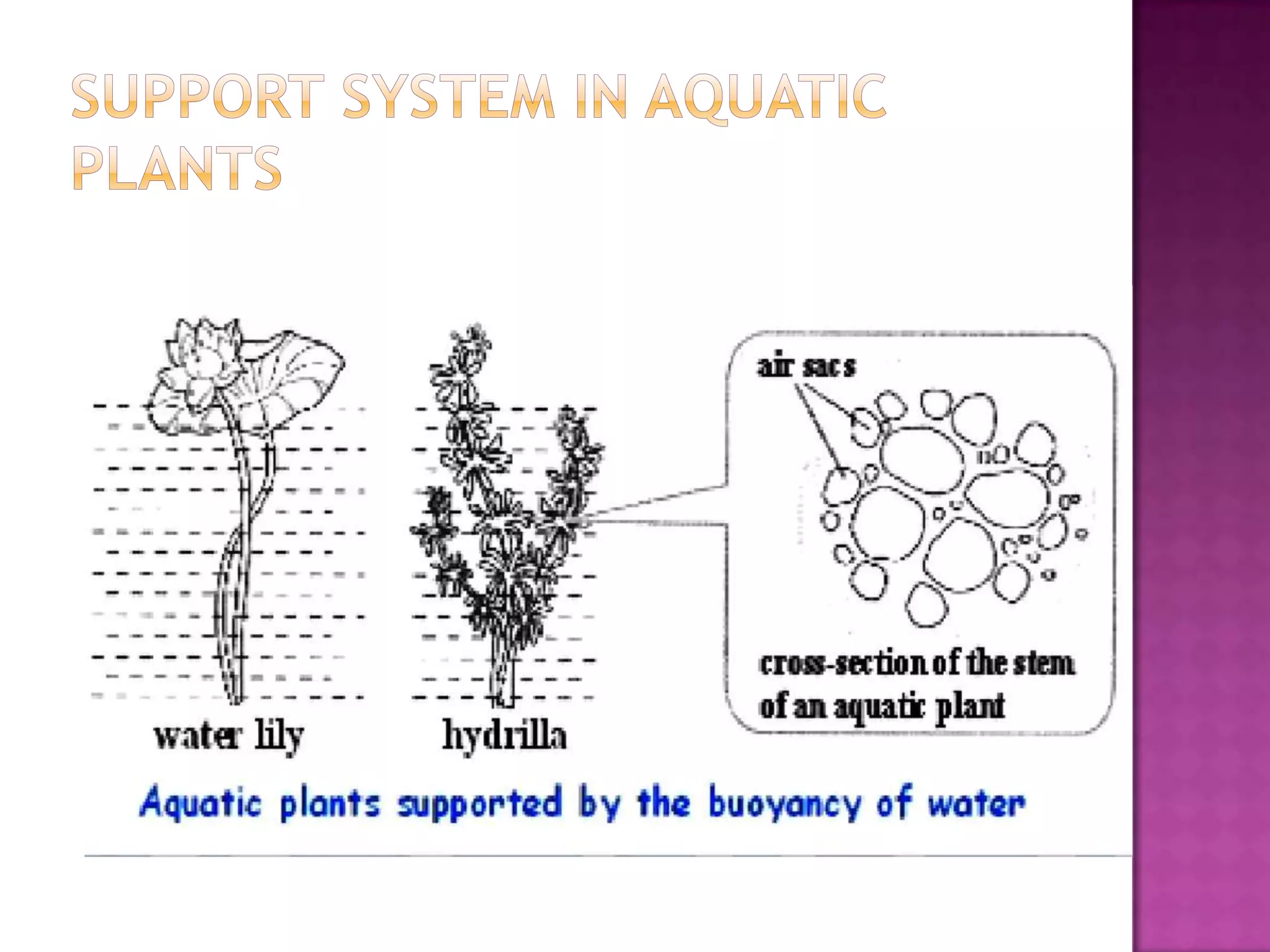
   Examples: yam, water lily and lotus.
   Supported by water buoyancy.
   Have soft stems that have air space and
    their leaves broad with stomata on the
    surface.
   Aquatic plants that live in the water have
    fine leaves.
Chapter 8 support and movement

Chapter 8 support and movement

  • 1.
  • 2.
     Support systemin humans and animals is called SKELETON or SKELETAL SYSTEM ENDOSKELETON HYDROSTATIC EXOSKELETON SKELETON 3 types of skeletal systems
  • 3.
    HYDROSTATIC ENDOSKELETON EXOSKELETON SKELETON • Inner Frame • Outer Frame • Formed from • Refers to • Consists of one fluid pressure bones or layer of hard in space that is cartilage that is skin derived enveloped by a inside the body from muscular of vertebrates substances like system. calcium carbonate
  • 4.
    SUPPORT MAINTAIN BODY BODY SHAPE WEIGHT PROTECTS SOFT PROVIDE PLACE FOR MUSCLE IN ORGANS INSIDE BODY TO ATTACH BODY THEMSELVES ENABLE LIMBS TO MOVE
  • 5.
    SUPPORT BODY MAINTAIN BODY WEIGHT SHAPE PROVIDE SURFACE PROTECT SOFT FOR MUSCLE TO TISSUES FROM ATTACH DAMAGE THEMSELVES ALLOW MOVEMENT
  • 7.
    VERTEBRATES INVERTEBRATES LAND EXOSKELETON HYDROSTATIC AQUATIC SKELETON
  • 8.
     Entire weight is supported by its endoskeleton.  Skeletal system : bigger and stronger than that of the aquatic animal vertebrate system.  Bigland animals : Strong and big Pectoral and Pelvic Girdles to support their body weight  Four-legged animals : Backbone either curve upwards or downwards. Enables backbone to withstand any heavy load acting on the animal
  • 9.
    Pectoral Girdle Pelvic Girdle
  • 10.
     Birds: Havehollow bones and air spaces inside so that the body is lighter.  Advantages of hollow bones :  Lighter  Requires less calcium and phosphorous for its formation.
  • 11.
     Examples : Whales, dolphins  Smaller and lighter endoskeleton than land vertebrates.  Pectoral and pelvic support that is smaller and lighter.  Most of body weight is supported by buoyancy of the water
  • 12.
     The buoyancyof the water allows the size of the aquatic vertebrate animals to be bigger than land vertebrate animals.
  • 13.
    ENDOSKELETON PECTORAL VERTEBRATE AND PELVIC BONES ARE GIRDLE FLEXIBLE SIMILARITIES
  • 15.
     Invertebrates areanimals that do not have a backbone.  Its body is supported by:  External skeletal system (exoskeleton) Body fluids (hydrostatic skeletons)
  • 16.
     Exoskeleton consists of a layer of hard skin or shell.  Examples of invertebrates with hard outer skin :  Crabs, spiders, prawns and scorpions.  Examples of invertebrates with hard shell:  Snails, mussels
  • 17.
     For insects,the exoskeleton is called cuticle.  Cuticle is made of chitin (hard and impermeable to water)  Cuticle prevent the insects from growing.
  • 18.
     Leeches, worms and octopus do not have exoskeleton. Their bodies are soft.  Use the body fluid (also known as hydrostatic skeleton system) as support system.  The body fluids exert a pressure on their body walls to form a hydrostatic skeleton.
  • 20.
    PLANTS LANDS AQUATIC NON WOODY WOODY (HERBACEOUS
  • 21.
    WOODY PLANTS  Examples: rubber tree, durian tree, rambutan tree, and teak tree.  Supported by woody tissues.  Woody tissues – dense, hard on tree trunk. – made up of xylem tissues.  Most of the woody plants are tall.
  • 23.
     WOODY PLANTS  Also supported by special structures  - Buttress roots  - Clasping roots
  • 24.
    Buttress roots  Examples: durian trees, casuarina trees, and yellow flame trees.  Occurs at the base of the trunk where the main roots branch off at the ground surface and enter the soil.  Clasping root  Examples : money plant, certain wild orchid.  Enable a plant to climb by growing around and clasping its support.
  • 25.
    Non woody plants  Examples: roses, bougainvillea.  Supported by turgid cells.
  • 26.
     Non woody plants  Supported by special structures :  Thorns, Tendrils, Prop Roots (Adventitious Roots)
  • 27.
    Examples: yam, water lily and lotus.  Supported by water buoyancy.  Have soft stems that have air space and their leaves broad with stomata on the surface.  Aquatic plants that live in the water have fine leaves.