Chapter 6
Air Pressure
Air pressure is all around us and
act on us all the time. The function
of many tools in our everyday life
such as syringes and sprayers are
based on the principle of air
pressure.
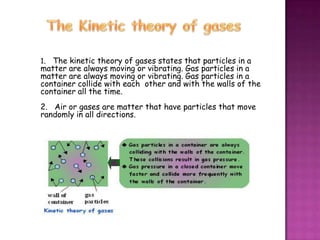
1. The kinetic theory of gases states that particles in a
matter are always moving or vibrating. Gas particles in a
container collide with each other and with the walls of the
container all the time.
2. Air or gases are matter that have particles that move
randomly in all directions.
1. Air has mass. Therefore air has weight.

2. Air has particles that are continually moving
and colliding with things on Earth. These
collisions produce air pressure.

3. Air presses down on all things in the Earth's
surface. The pressure exerted by air is known
as air pressure or atmospheric pressure.
4. The features of air pressure are :
    (a) acts in all direction
    (b) changes from one place to another
    (c) decreases the higher you go above ground
level. This feature exists because at high place,
the amount on air decreases. This explains why the
air pressure on the top of a mountain is lower that
at the foot of the mountain.
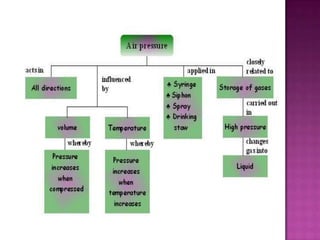
1. Air is a mixture of gases made up of
practicles that move randomly in all directions.

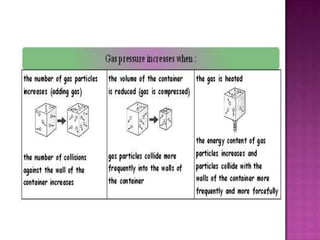
2. Air pressure increases when air is heated.
This is because the air particles obtain more
energy and collide with the walls of the container
more vigorously.

3. When air compressed, air particles collide
with the walls of the container more frequently
and this makes the air pressure increase.
4. The increasing volume of gas in
the container increases air pressure.

5. A brief explanation on the
factors that influence air pressure in
a closed container is given on the
next page.
1. There are many tools in everyday life
that function based on the principle of air
pressure.

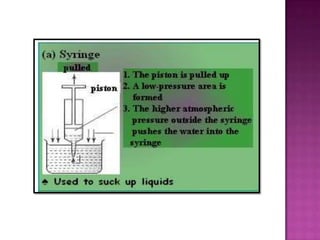
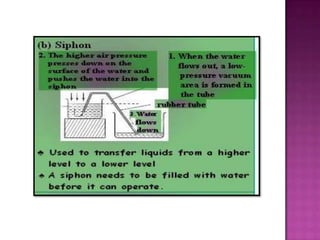
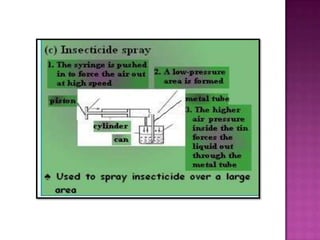
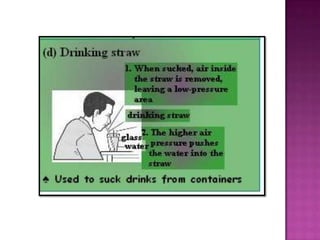
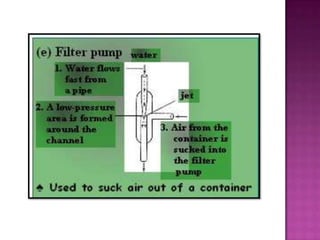
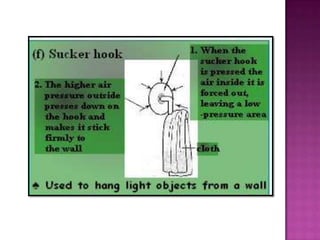
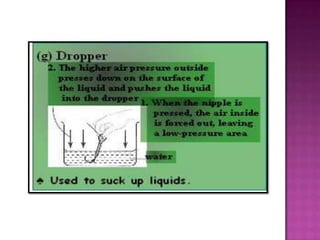
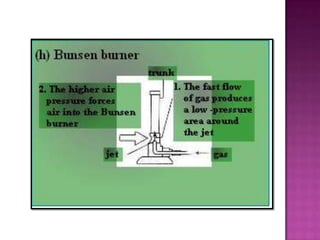
2. Below are some tools that depend on air
pressure to operate :
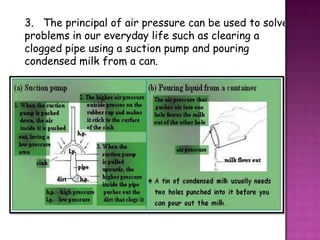
3. The principal of air pressure can be used to solve
problems in our everyday life such as clearing a
clogged pipe using a suction pump and pouring
condensed milk from a can.
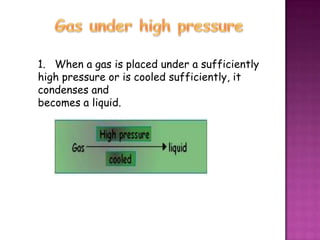
1. When a gas is placed under a sufficiently
high pressure or is cooled sufficiently, it
condenses and
becomes a liquid.
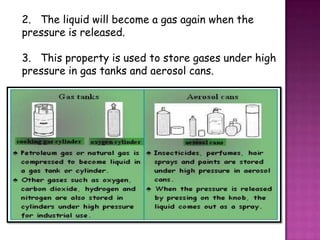
2. The liquid will become a gas again when the
pressure is released.

3. This property is used to store gases under high
pressure in gas tanks and aerosol cans.
The following safety measures must be followed when using
gases under high pressure.

(a) Place the gas tank upright.
(b) Keep the gas tank away from heat sources (fire) or sunlight.
(c) Light a match forst before turning on the gas.
(d) do not store the gas tank in an enclosed space.
(e) Do not throw aerosol cans into a fire as they will explode.
(f) Turn off the gas supply when you do not need it any longer.
(g) Check to ensure that all mgas tubes and connections are tight
and do not leak.
(h) Used a soap solution to cheak for leaks along gas tubes and
connections

Chapter 6 air pressure

  • 1.
  • 2.
    Air pressure isall around us and act on us all the time. The function of many tools in our everyday life such as syringes and sprayers are based on the principle of air pressure.
  • 4.
    1. The kinetictheory of gases states that particles in a matter are always moving or vibrating. Gas particles in a matter are always moving or vibrating. Gas particles in a container collide with each other and with the walls of the container all the time. 2. Air or gases are matter that have particles that move randomly in all directions.
  • 5.
    1. Air hasmass. Therefore air has weight. 2. Air has particles that are continually moving and colliding with things on Earth. These collisions produce air pressure. 3. Air presses down on all things in the Earth's surface. The pressure exerted by air is known as air pressure or atmospheric pressure.
  • 6.
    4. The featuresof air pressure are : (a) acts in all direction (b) changes from one place to another (c) decreases the higher you go above ground level. This feature exists because at high place, the amount on air decreases. This explains why the air pressure on the top of a mountain is lower that at the foot of the mountain.
  • 7.
    1. Air isa mixture of gases made up of practicles that move randomly in all directions. 2. Air pressure increases when air is heated. This is because the air particles obtain more energy and collide with the walls of the container more vigorously. 3. When air compressed, air particles collide with the walls of the container more frequently and this makes the air pressure increase.
  • 8.
    4. The increasingvolume of gas in the container increases air pressure. 5. A brief explanation on the factors that influence air pressure in a closed container is given on the next page.
  • 10.
    1. There aremany tools in everyday life that function based on the principle of air pressure. 2. Below are some tools that depend on air pressure to operate :
  • 19.
    3. The principalof air pressure can be used to solve problems in our everyday life such as clearing a clogged pipe using a suction pump and pouring condensed milk from a can.
  • 20.
    1. When agas is placed under a sufficiently high pressure or is cooled sufficiently, it condenses and becomes a liquid.
  • 21.
    2. The liquidwill become a gas again when the pressure is released. 3. This property is used to store gases under high pressure in gas tanks and aerosol cans.
  • 22.
    The following safetymeasures must be followed when using gases under high pressure. (a) Place the gas tank upright. (b) Keep the gas tank away from heat sources (fire) or sunlight. (c) Light a match forst before turning on the gas. (d) do not store the gas tank in an enclosed space. (e) Do not throw aerosol cans into a fire as they will explode. (f) Turn off the gas supply when you do not need it any longer. (g) Check to ensure that all mgas tubes and connections are tight and do not leak. (h) Used a soap solution to cheak for leaks along gas tubes and connections