Downloaded 490 times

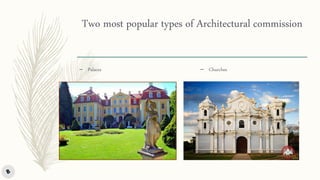

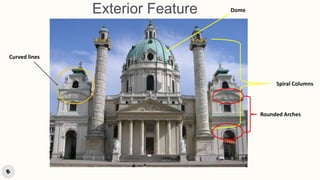
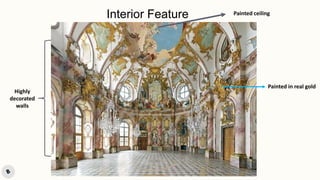
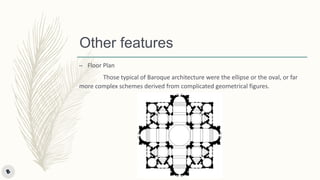
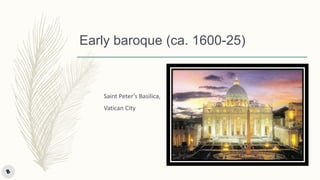
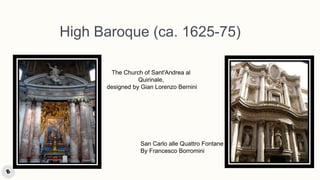
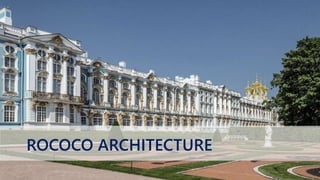
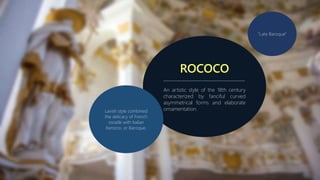
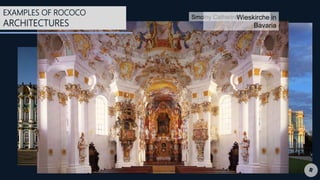
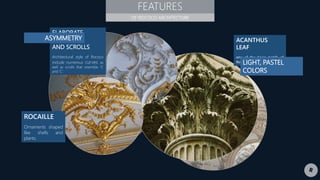
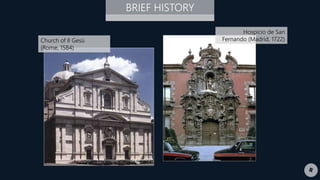
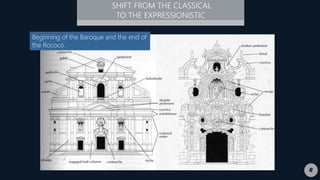
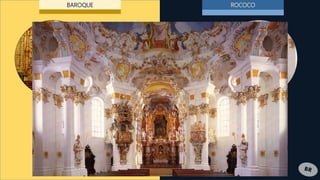


Baroque architecture began in the early 1600s in Rome and was characterized by exaggerated motion, dramatic effects, and lavish decoration. It was promoted by the Catholic Church to distinguish itself from the Protestant Reformation. Common features included spiral columns, domes, rounded arches, and painted ceilings with real gold. Rococo architecture emerged in the 18th century and featured more elaborate curved forms, asymmetry, light colors, and ornate decorations inspired by shells and plants. Examples include the Hermitage Winter Palace and Smolny Cathedral in St. Petersburg, as well as the Wieskirche in Bavaria. Both Baroque and Rococo represented a shift away from classical architecture towards a more expressionistic style.


