Baroque
Architecture
Manodon, Jarrel Martin B.
Feria, Elijah P.
Baroque
Dramatic lighting, dramatic colors, impressive painting combined with guild sculptures that make an effect like
looking into heaven. Intentionally unfinished architecture elements and other distinctive features Baroque architecture
is still one of the influential styles of architecture history.
History
Originated in the late 16th century which in the end of the renaissance period and left its place to rococo style
architecture.
3 PHASES OF BAROQUE
ARCHITECTURE
• Early Baroque (1584-1625)
• High Baroque (1625-1675)
• Late Baroque (1675-1750)
Thisoccurredstarting inthe1584sandlasted untilabout
1625. ManyearlyBaroquebuildings morecloselyresemble
prior worksofRenaissanceArchitecturewhencompared
to laterBaroquestructures.
• OriginatedinRome
• SawonlyincreasedworkofarchitectsintheItalian
capital
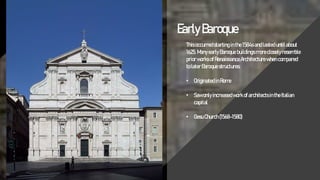
• GesuChurch(1568–1580)
EarlyBaroque
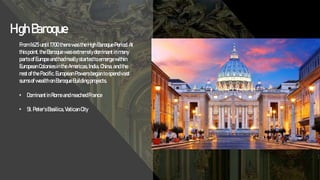
From1625 until1700 therewastheHighBaroquePeriod.At
thispoint, theBaroque wasextremelydominantinmany
partsofEuropeandhadreallystarted to emergewithin
EuropeanColoniesintheAmericas,India, China,andthe
restofthePacific.EuropeanPowersbeganto spendvast
sumsofwealthonBaroque Buildingprojects.
• DominantinRomeand reachedFrance
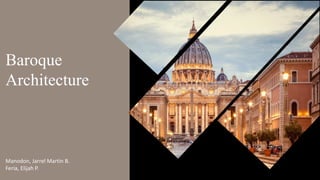
• St.Peter’sBasilica,VaticanCity
HighBaroque
Finally,from1700 untilabout 1775, theLate BaroquePeriod
emerged.Late Baroquebuildingsaretypicallyevenmore
detailedandcomplexthanearlierexamples.Its alsointhe
LateBaroque Periodyou start toseecertainelementsof
theRococoAge emerging.
• SpreadacrossEuropeandeventuallyaround the
world.
• TreviFountain, Rome
LateBaroque
• Large Domes and Cupolas is generally position in the center of the building.
Characteristics of Baroque Architecture
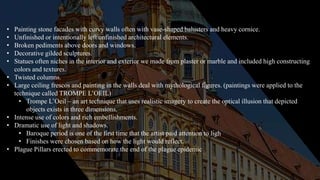
• Painting stone facades with curvy walls often with vase-shaped balusters and heavy cornice.
• Unfinished or intentionally left unfinished architectural elements.
• Broken pediments above doors and windows.
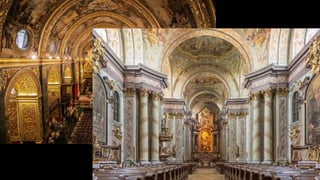
• Decorative gilded sculptures.
• Statues often niches in the interior and exterior we made from plaster or marble and included high constructing
colors and textures.
• Twisted columns.
• Large ceiling frescos and painting in the walls deal with mythological figures. (paintings were applied to the
technique called TROMPE L’OEIL)
• Trompe L’Oeil – an art technique that uses realistic imagery to create the optical illusion that depicted
objects exists in three dimensions.
• Intense use of colors and rich embellishments.
• Dramatic use of light and shadows.
• Baroque period is one of the first time that the artist paid attention to ligh
• Finishes were chosen based on how the light would reflect.
• Plague Pillars erected to commemorate the end of the plague epidemic
• Double-sloped mansard roof
• This rifling element is a key feature in French Baroque Architecture.
• Static Dynamism
• Creating a sense of movement where there is none.
ArchitectsandtheirWorks
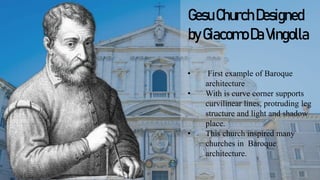
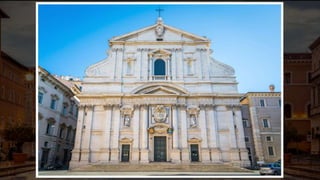
GesuChurchDesigned
byGiacomoDaVingolla
• First example of Baroque
architecture
• With is curve corner supports
curvilinear lines, protruding leg
structure and light and shadow
place.
• This church inspired many
churches in Baroque
architecture.
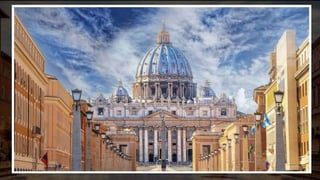
St.Peter’sBasilica
ByGianLorenzoBernini
• World’s largest church, it was
built at a monumental scale in
multiple places.
• The façade was designed by
Carlo Moderano
• The elaborate decorated interior
was the work of the Baroque
Culture; Gian Lorenzo Bernini
SanCarlo AlleQuattro
Fontane
ByFrancesoBorromini
• Described as one of the ultimate
masterpiece of Baroque
Architecture.
• Designed by Francesco Borromini
and was his first independent
commission.
• The design of the church was
quite unusual at that time because
Borromini has to integrate several
curves
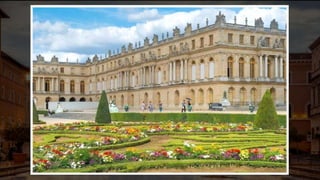
ThePalaceofVersailles
ByKingLouisXIV
• Ultimate example of French
Baroque style
• A formal French royal residence
and center of government, now a
national landmark.
• Located outside of Paris
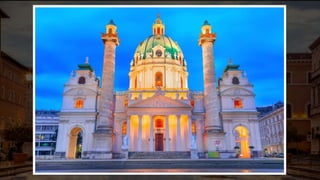
TheKarlskirche
ByJohannBernhardVon
Erlach
• Located in Vienna, Austria
• Widely considered as the most
outstanding churches in Vienna.
• The church is dedicated to St.
Charles Borromeo, one of the
great counter-reformers in the 16th
century.
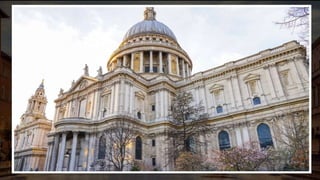
St.Paul’sCathedral
BySirChristopherWren
• Designed by Christopher Wren
• One of the most famous
structures and the epitome of
Baroque architecture in
England.
LesInvalides
ByKingLouisXIV
• Complex buildings in Paris,
France containing monuments &
museums, all relating to the
military history of France, as well
as hospital and retirement home
for veterans.
• Prime example of Baroque
architecture.
TheCathedral ofSantiago DeCompestela
ByJuandeAlava, RodrigoHontanon,VegayVerdugo,
GinesMartinez,&FernandodeCasas
• Another building that was built for multiple centuries
• Though is started as a Romanesque building, gothic and Baroque editions were
added as well.
• The main façade is a great example of Baroque architecture in Spain.
TreviFountain
ByGiuseppePannini&
NicolaSalvi
• An 18th century fountain in the Trevi
district in Rome
• Considered as late baroque
masterpiece and is arguably the best
known of the city’s numerous
fountain
• Designed by an Italian architect
Nicola Salvi and completed by
Giuseppe Pannini and several others.
Baroque-Architecture_Finals.pptx

Baroque-Architecture_Finals.pptx

  • 1.
  • 2.
    Baroque Dramatic lighting, dramaticcolors, impressive painting combined with guild sculptures that make an effect like looking into heaven. Intentionally unfinished architecture elements and other distinctive features Baroque architecture is still one of the influential styles of architecture history. History Originated in the late 16th century which in the end of the renaissance period and left its place to rococo style architecture.
  • 5.
    3 PHASES OFBAROQUE ARCHITECTURE • Early Baroque (1584-1625) • High Baroque (1625-1675) • Late Baroque (1675-1750)
  • 6.
    Thisoccurredstarting inthe1584sandlasted untilabout 1625.ManyearlyBaroquebuildings morecloselyresemble prior worksofRenaissanceArchitecturewhencompared to laterBaroquestructures. • OriginatedinRome • SawonlyincreasedworkofarchitectsintheItalian capital • GesuChurch(1568–1580) EarlyBaroque
  • 7.
    From1625 until1700 therewastheHighBaroquePeriod.At thispoint,theBaroque wasextremelydominantinmany partsofEuropeandhadreallystarted to emergewithin EuropeanColoniesintheAmericas,India, China,andthe restofthePacific.EuropeanPowersbeganto spendvast sumsofwealthonBaroque Buildingprojects. • DominantinRomeand reachedFrance • St.Peter’sBasilica,VaticanCity HighBaroque
  • 8.
    Finally,from1700 untilabout 1775,theLate BaroquePeriod emerged.Late Baroquebuildingsaretypicallyevenmore detailedandcomplexthanearlierexamples.Its alsointhe LateBaroque Periodyou start toseecertainelementsof theRococoAge emerging. • SpreadacrossEuropeandeventuallyaround the world. • TreviFountain, Rome LateBaroque
  • 9.
    • Large Domesand Cupolas is generally position in the center of the building. Characteristics of Baroque Architecture
  • 10.
    • Painting stonefacades with curvy walls often with vase-shaped balusters and heavy cornice. • Unfinished or intentionally left unfinished architectural elements. • Broken pediments above doors and windows. • Decorative gilded sculptures. • Statues often niches in the interior and exterior we made from plaster or marble and included high constructing colors and textures. • Twisted columns. • Large ceiling frescos and painting in the walls deal with mythological figures. (paintings were applied to the technique called TROMPE L’OEIL) • Trompe L’Oeil – an art technique that uses realistic imagery to create the optical illusion that depicted objects exists in three dimensions. • Intense use of colors and rich embellishments. • Dramatic use of light and shadows. • Baroque period is one of the first time that the artist paid attention to ligh • Finishes were chosen based on how the light would reflect. • Plague Pillars erected to commemorate the end of the plague epidemic
  • 11.
    • Double-sloped mansardroof • This rifling element is a key feature in French Baroque Architecture.
  • 12.
    • Static Dynamism •Creating a sense of movement where there is none.
  • 13.
  • 14.
    GesuChurchDesigned byGiacomoDaVingolla • First exampleof Baroque architecture • With is curve corner supports curvilinear lines, protruding leg structure and light and shadow place. • This church inspired many churches in Baroque architecture.
  • 16.
    St.Peter’sBasilica ByGianLorenzoBernini • World’s largestchurch, it was built at a monumental scale in multiple places. • The façade was designed by Carlo Moderano • The elaborate decorated interior was the work of the Baroque Culture; Gian Lorenzo Bernini
  • 18.
    SanCarlo AlleQuattro Fontane ByFrancesoBorromini • Describedas one of the ultimate masterpiece of Baroque Architecture. • Designed by Francesco Borromini and was his first independent commission. • The design of the church was quite unusual at that time because Borromini has to integrate several curves
  • 20.
    ThePalaceofVersailles ByKingLouisXIV • Ultimate exampleof French Baroque style • A formal French royal residence and center of government, now a national landmark. • Located outside of Paris
  • 22.
    TheKarlskirche ByJohannBernhardVon Erlach • Located inVienna, Austria • Widely considered as the most outstanding churches in Vienna. • The church is dedicated to St. Charles Borromeo, one of the great counter-reformers in the 16th century.
  • 24.
    St.Paul’sCathedral BySirChristopherWren • Designed byChristopher Wren • One of the most famous structures and the epitome of Baroque architecture in England.
  • 26.
    LesInvalides ByKingLouisXIV • Complex buildingsin Paris, France containing monuments & museums, all relating to the military history of France, as well as hospital and retirement home for veterans. • Prime example of Baroque architecture.
  • 28.
    TheCathedral ofSantiago DeCompestela ByJuandeAlava,RodrigoHontanon,VegayVerdugo, GinesMartinez,&FernandodeCasas • Another building that was built for multiple centuries • Though is started as a Romanesque building, gothic and Baroque editions were added as well. • The main façade is a great example of Baroque architecture in Spain.
  • 30.
    TreviFountain ByGiuseppePannini& NicolaSalvi • An 18thcentury fountain in the Trevi district in Rome • Considered as late baroque masterpiece and is arguably the best known of the city’s numerous fountain • Designed by an Italian architect Nicola Salvi and completed by Giuseppe Pannini and several others.