
Baroque and Rococo
Architecture
By Sultan Murat YILMAZ
Baroque
– often thought of as a period of artistic style that used exaggerated
motion and clear, easily interpreted detail to produce drama,
tension, exuberance, and grandeur.
– The style began around 1600 in Rome, Italy, and spread to most of
Europe
– encouraged by the Catholic Church during Counter Reformation
against Protestant Reformation
Two most popular types of Architectural
commission
– Palaces – Churches
Features of Baroque
Architecture
Exterior and Interior
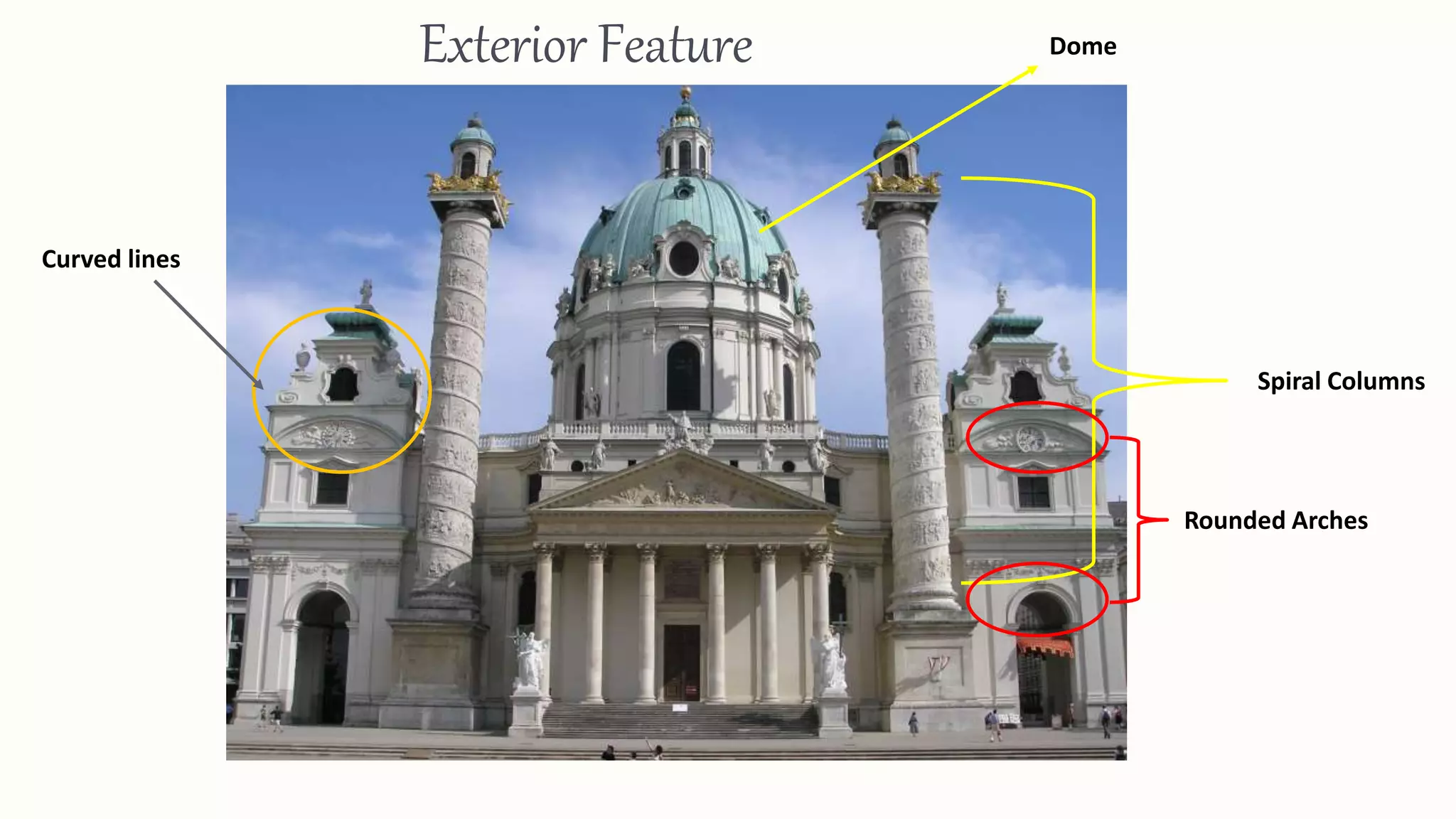
Spiral Columns
Exterior Feature Dome
Rounded Arches
Curved lines
Interior Feature Painted ceiling
Painted in real gold
Highly
decorated
walls
Other features
– Floor Plan
Those typical of Baroque architecture were the ellipse or the oval, or far
more complex schemes derived from complicated geometrical figures.
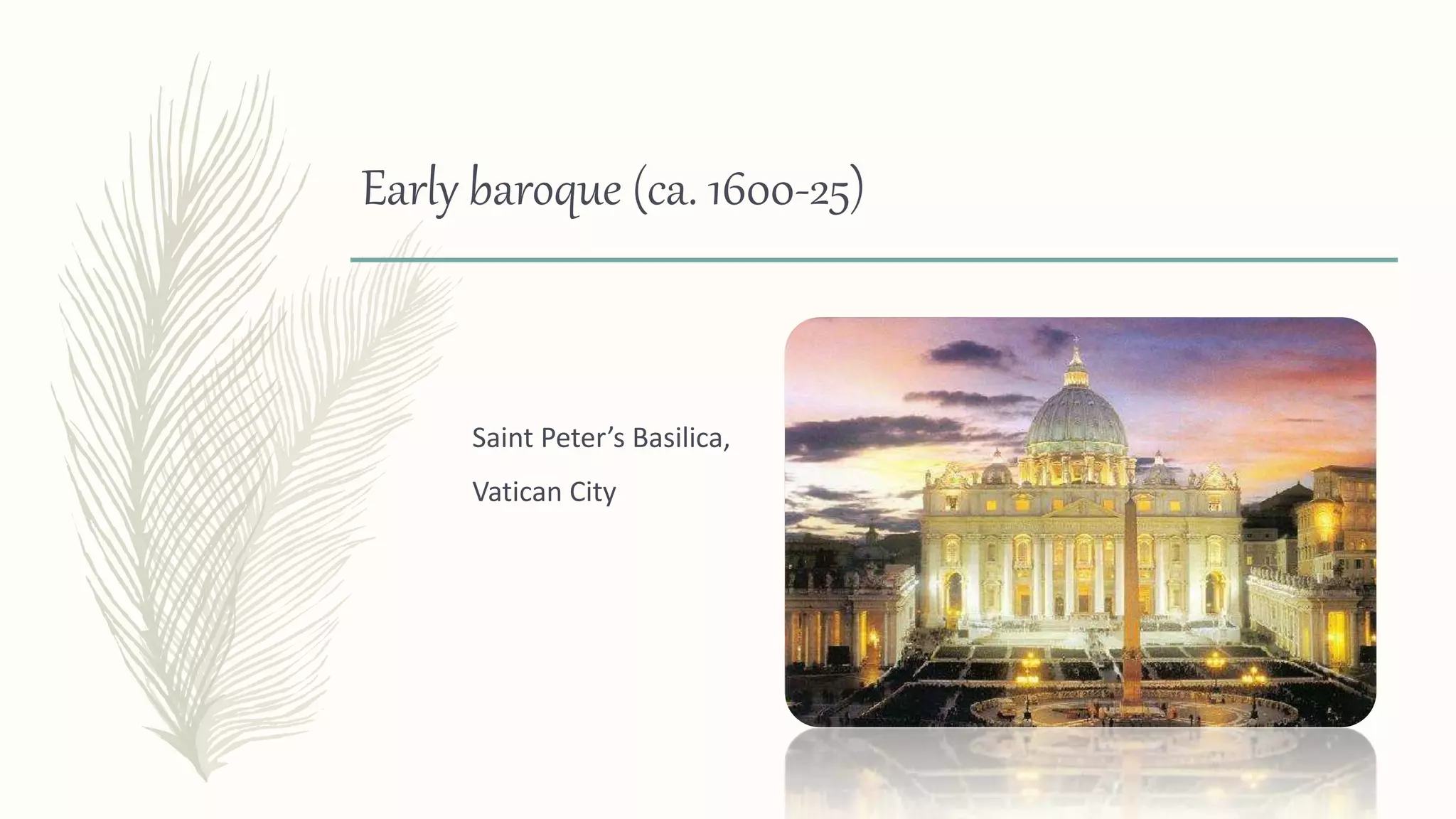
Early baroque (ca. 1600-25)
Saint Peter’s Basilica,
Vatican City
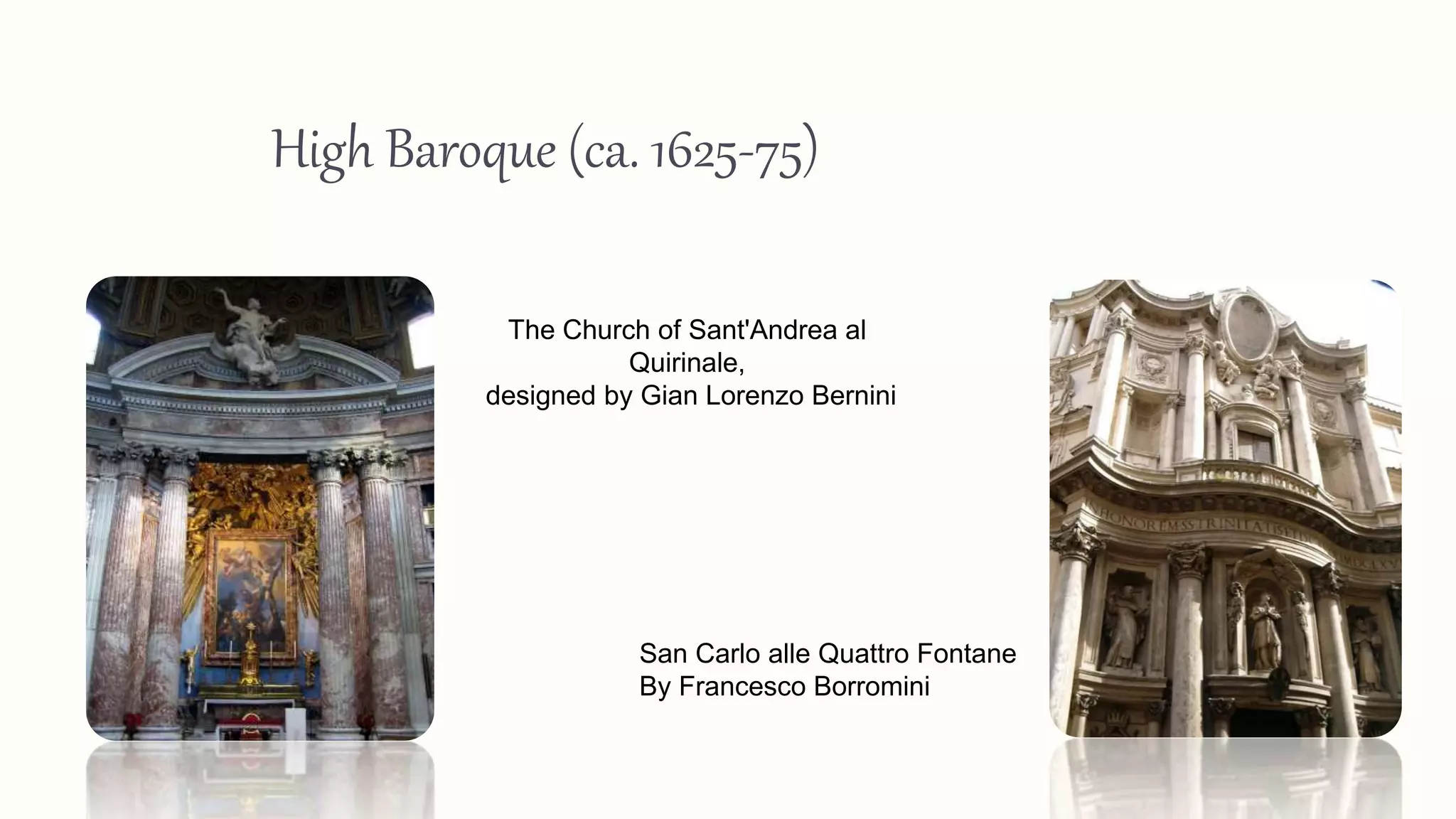
High Baroque (ca. 1625-75)
The Church of Sant'Andrea al
Quirinale,
designed by Gian Lorenzo Bernini
San Carlo alle Quattro Fontane
By Francesco Borromini
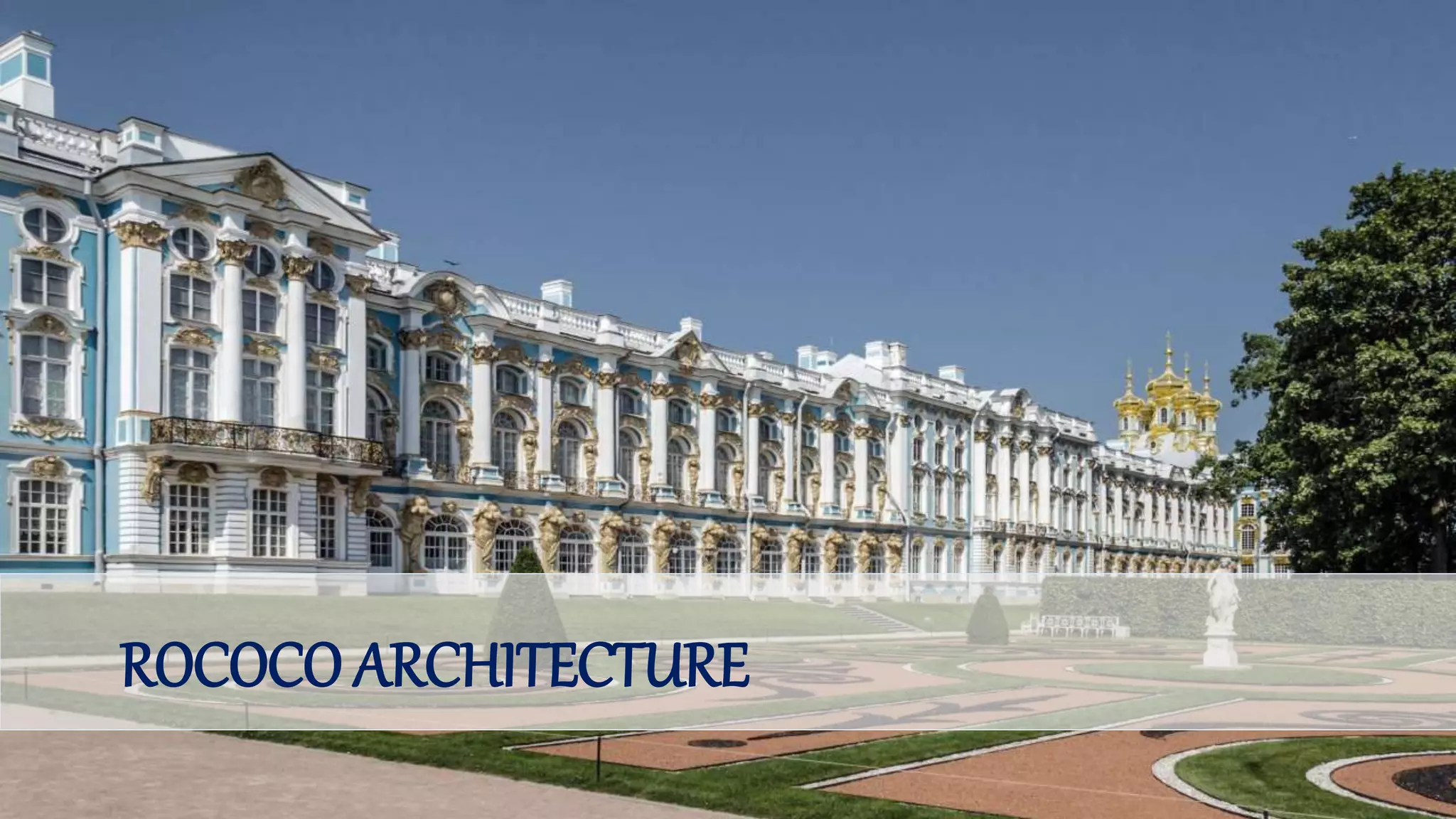
ROCOCO ARCHITECTURE
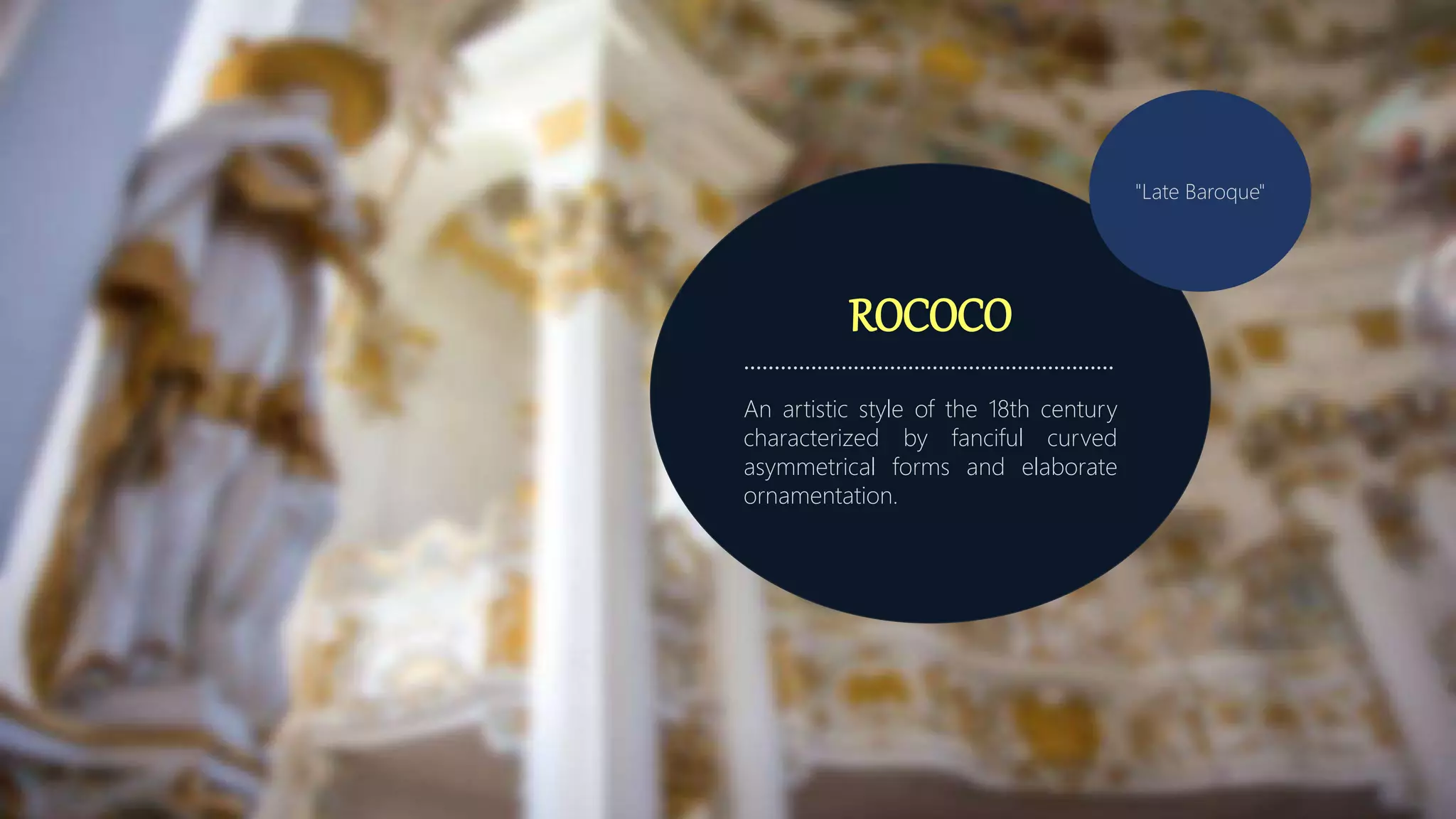
ROCOCO
………………………………….…………………
An artistic style of the 18th century
characterized by fanciful curved
asymmetrical forms and elaborate
ornamentation.
"Late Baroque"
Hermitage Winter Palace
in St. Petersburg, Russia
Smolny Cathedral
in St. Petersburg, Russia
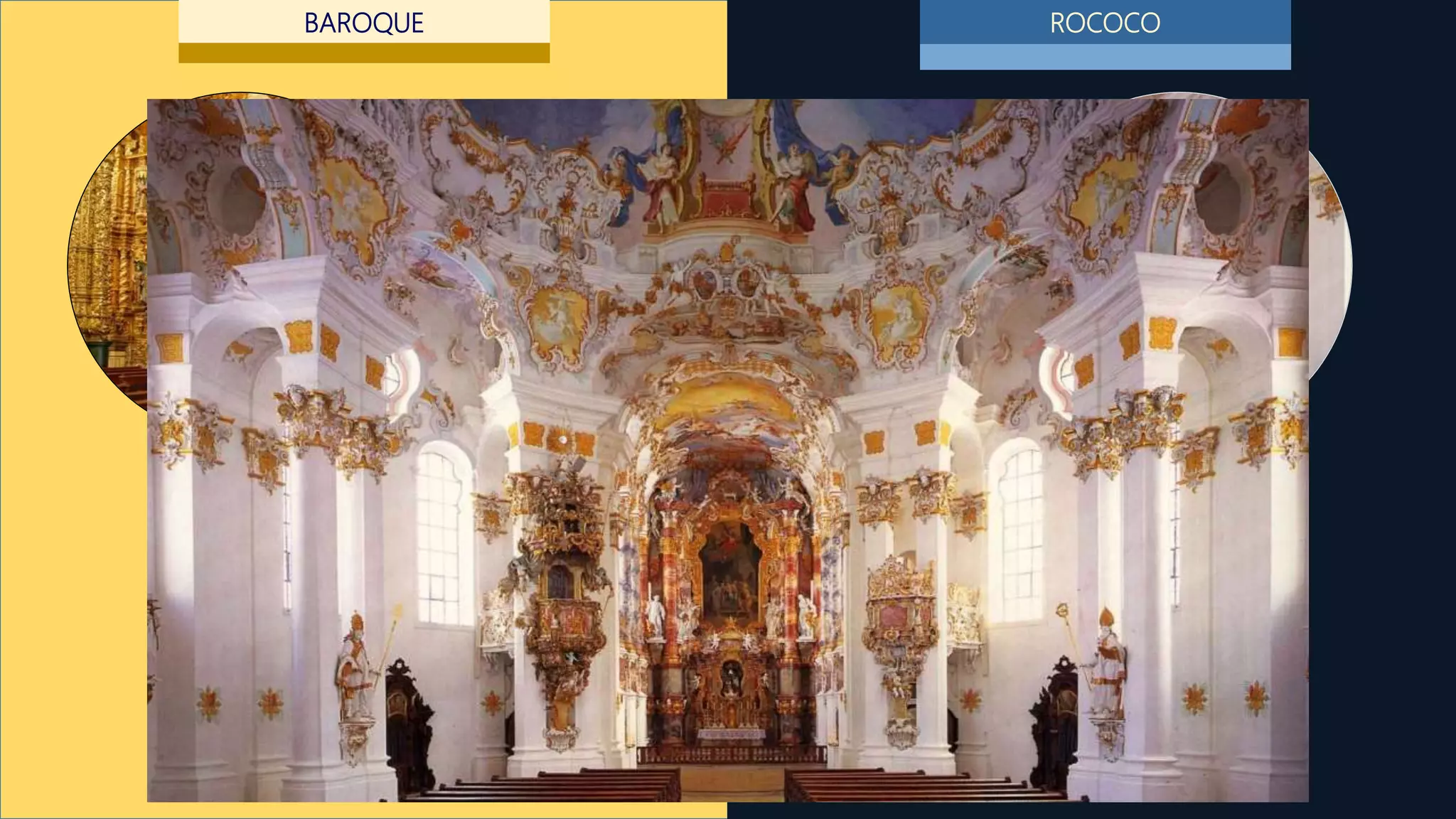
Wieskirche in
Bavaria
EXAMPLES OF ROCOCO
ARCHITECTURES
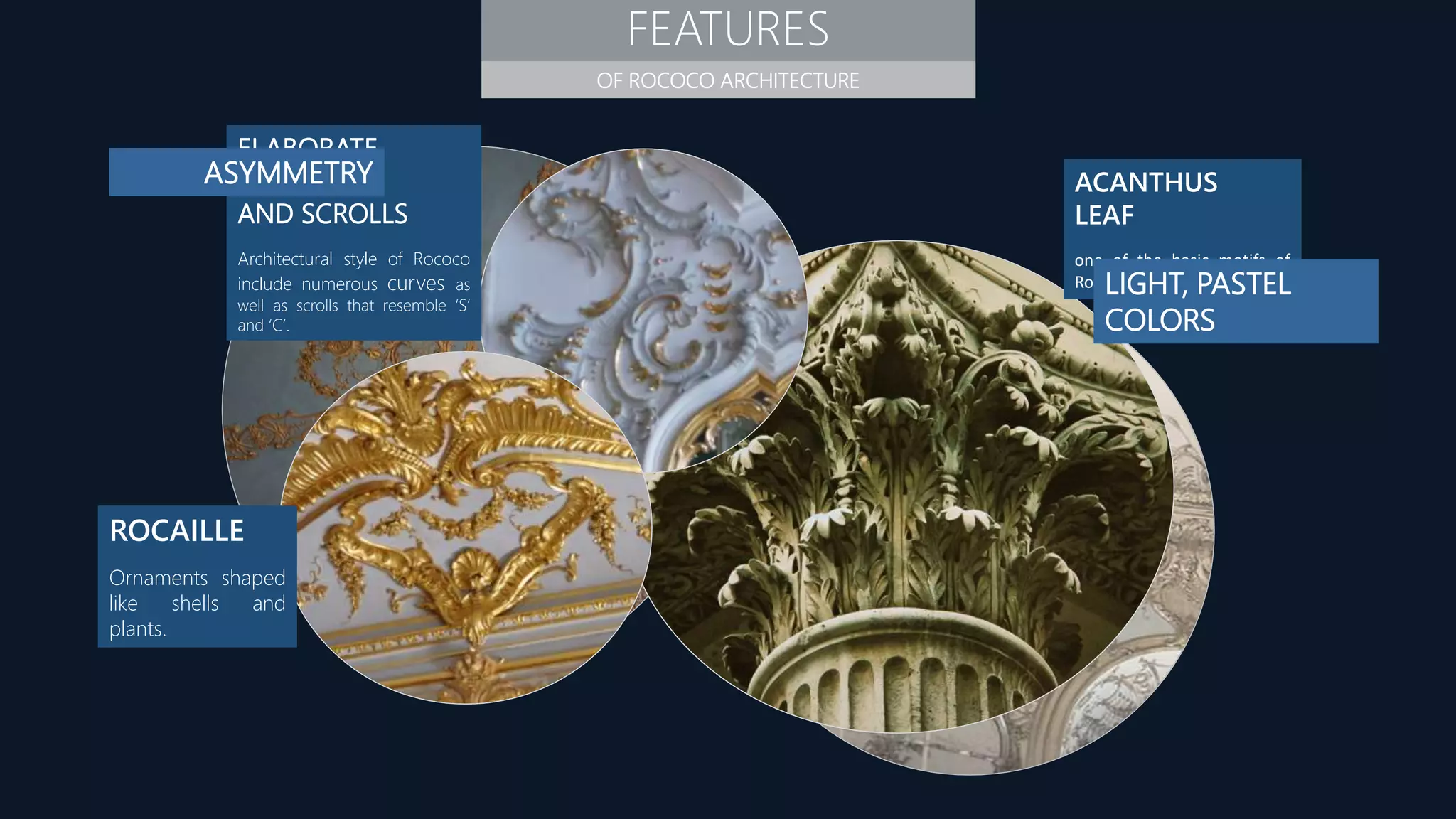
FEATURES
OF ROCOCO ARCHITECTURE
ELABORATE
CURVES
AND SCROLLS
Architectural style of Rococo
include numerous curves as
well as scrolls that resemble ‘S’
and ‘C’.
ROCAILLE
Ornaments shaped
like shells and
plants.
ACANTHUS
LEAF
one of the basic motifs of
Rococo design.
ASYMMETRY
LIGHT, PASTEL
COLORS
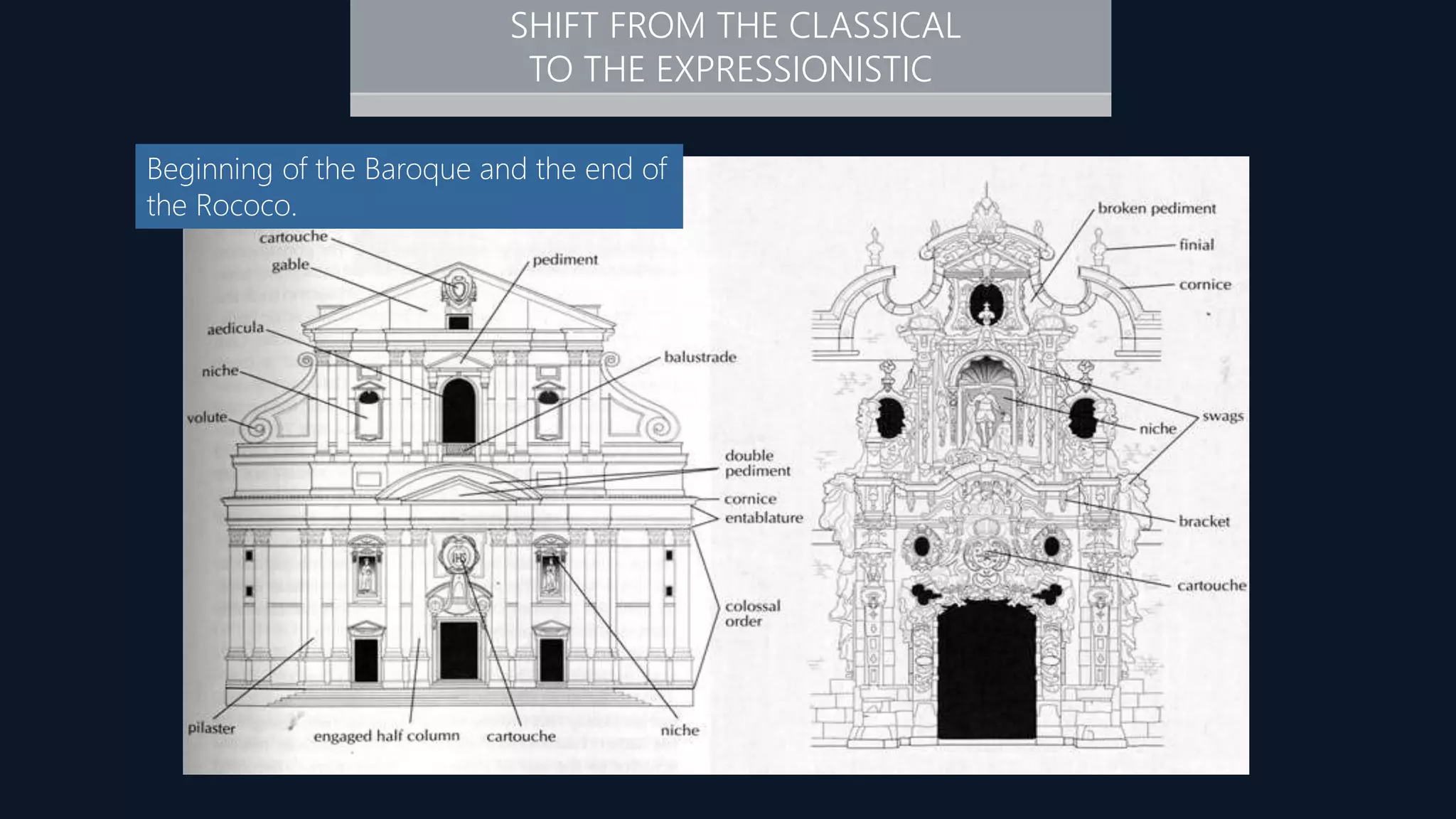
Church of Il Gesù
(Rome, 1584)
BRIEF HISTORY
Hospicio de San
Fernando (Madrid, 1722)
Beginning of the Baroque and the end of
the Rococo.
SHIFT FROM THE CLASSICAL
TO THE EXPRESSIONISTIC
VS
BAROQUE ROCOCO
Thank you.
SULTAN MURAT YILMAZ
140504020

Baroque and Rococo Era