THEMATIC PLANNINGHans Christian AndersenSchoolEnglishImmersionProgram
Thematic PlanningOrganize curriculum around a themeIntegrates different developmental and subject areasContributes to child’s growing awareness and understandingProvides opportunities for child to learn by doing and have direct experiences with the worldHelps children understand that learning is connected to life.
Children’s ExperiencesReflect on and recreate experiences through:Dramatic playBlock buildingDiscussionsArtMusicMovementMeasuringGraphing and MappingChildren develop skills through:SensingMovingThinkingProblem solvingCommunicatingCreatingWorkingPlaying with others
Appropriate ThemesPrimary Question: Can I give children direct experience of this topic?Should reflect children’s interests, abilities and issues of concernShould involve concepts and skills at the right level of challenge for the age groupTopic should be complex and interesting enough to be explored at some depthPlan to focus on topic for several weeks to several months
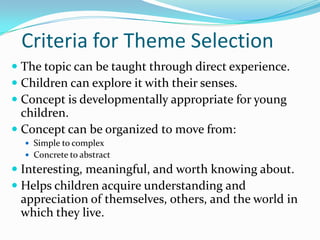
Criteria for Theme SelectionThe topic can be taught through direct experience.Children can explore it with their senses.Concept is developmentally appropriate for young children.Concept can be organized to move from:Simple to complexConcrete to abstractInteresting, meaningful, and worth knowing about.Helps children acquire understanding and appreciation of themselves, others, and the world in which they live.
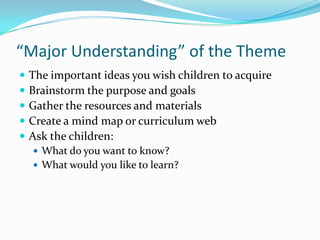
“Major Understanding” of the ThemeThe important ideas you wish children to acquireBrainstorm the purpose and goalsGather the resources and materialsCreate a mind map or curriculum webAsk the children:What do you want to know?What would you like to learn?
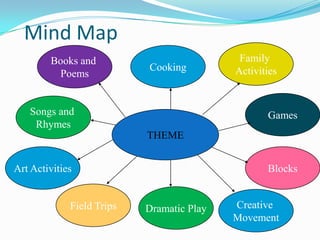
Mind MapFamily ActivitiesBooks and PoemsCookingGamesSongs and RhymesTHEMEBlocksArt ActivitiesField TripsDramatic PlayCreative Movement
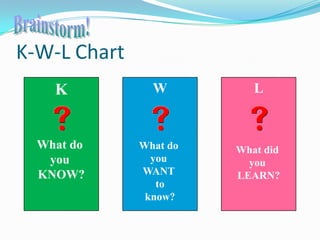
K-W-L ChartBrainstorm!KWhat do you KNOW?WWhat do you WANT toknow?LWhat did you LEARN?
Outline for an Integrated Thematic PlanTheme: the topic or focusChildren: age and characteristicsRationale: Why?Goals: 3-6 broad statements of desired endsAttitudesSkillsAbilitiesExperiencesMajor Understandings: 4-6 important ideas you want children to constructResources: Books, articles, etc.
Adapt your Teaching Environment to Include ALL ChildrenAsk yourself:What goals do I have for the activity so that all children are engaged and learning?What different ways do I need to present information so that everyone understands and is engaged?What kinds of support or encouragement will be needed to engage and ensure learning among all children?
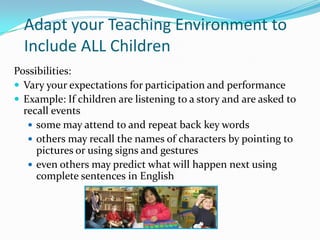
Adapt your Teaching Environment to Include ALL ChildrenPossibilities:Vary your expectations for participation and performanceExample: If children are listening to a story and are asked to recall eventssome may attend to and repeat back key words others may recall the names of characters by pointing to pictures or using signs and gestureseven others may predict what will happen next using complete sentences in English
Teaching EnvironmentPresent content in multiple formatsverbal, print, video, or concrete objectsrepeating key words/phrases in children’s home languageusing simple sentences with gesturesUse physical cues to focus children’s attentionpointing to the picture in the bookgiving verbal prompts to help children begin a response offering language models for children to imitateencouraging children to keep thinking and trying
AssessmentHow do you document children’s learning?How do you know if children understand the big ideas of your unit?DocumentationObservation notesPhotography or videoCollection of student work samplesA class book, newsletter, scrapbookSocial event where student work is shared
How Can you Involve Families?Possibilities:Share information with families through a newsletter written at an appropriate levelHave key phrases translated into families’ home languages, and include photographs of children engaged in an activity.Provide multiple opportunities for families to be involvedFamilies could support their child’s involvement by asking specific questions about the activity and/or the book read to the group.

Thematic teaching

  • 1.
    THEMATIC PLANNINGHans ChristianAndersenSchoolEnglishImmersionProgram
  • 2.
    Thematic PlanningOrganize curriculumaround a themeIntegrates different developmental and subject areasContributes to child’s growing awareness and understandingProvides opportunities for child to learn by doing and have direct experiences with the worldHelps children understand that learning is connected to life.
  • 3.
    Children’s ExperiencesReflect onand recreate experiences through:Dramatic playBlock buildingDiscussionsArtMusicMovementMeasuringGraphing and MappingChildren develop skills through:SensingMovingThinkingProblem solvingCommunicatingCreatingWorkingPlaying with others
  • 4.
    Appropriate ThemesPrimary Question:Can I give children direct experience of this topic?Should reflect children’s interests, abilities and issues of concernShould involve concepts and skills at the right level of challenge for the age groupTopic should be complex and interesting enough to be explored at some depthPlan to focus on topic for several weeks to several months
  • 5.
    Criteria for ThemeSelectionThe topic can be taught through direct experience.Children can explore it with their senses.Concept is developmentally appropriate for young children.Concept can be organized to move from:Simple to complexConcrete to abstractInteresting, meaningful, and worth knowing about.Helps children acquire understanding and appreciation of themselves, others, and the world in which they live.
  • 6.
    “Major Understanding” ofthe ThemeThe important ideas you wish children to acquireBrainstorm the purpose and goalsGather the resources and materialsCreate a mind map or curriculum webAsk the children:What do you want to know?What would you like to learn?
  • 7.
    Mind MapFamily ActivitiesBooksand PoemsCookingGamesSongs and RhymesTHEMEBlocksArt ActivitiesField TripsDramatic PlayCreative Movement
  • 8.
    K-W-L ChartBrainstorm!KWhat doyou KNOW?WWhat do you WANT toknow?LWhat did you LEARN?
  • 9.
    Outline for anIntegrated Thematic PlanTheme: the topic or focusChildren: age and characteristicsRationale: Why?Goals: 3-6 broad statements of desired endsAttitudesSkillsAbilitiesExperiencesMajor Understandings: 4-6 important ideas you want children to constructResources: Books, articles, etc.
  • 10.
    Adapt your TeachingEnvironment to Include ALL ChildrenAsk yourself:What goals do I have for the activity so that all children are engaged and learning?What different ways do I need to present information so that everyone understands and is engaged?What kinds of support or encouragement will be needed to engage and ensure learning among all children?
  • 11.
    Adapt your TeachingEnvironment to Include ALL ChildrenPossibilities:Vary your expectations for participation and performanceExample: If children are listening to a story and are asked to recall eventssome may attend to and repeat back key words others may recall the names of characters by pointing to pictures or using signs and gestureseven others may predict what will happen next using complete sentences in English
  • 12.
    Teaching EnvironmentPresent contentin multiple formatsverbal, print, video, or concrete objectsrepeating key words/phrases in children’s home languageusing simple sentences with gesturesUse physical cues to focus children’s attentionpointing to the picture in the bookgiving verbal prompts to help children begin a response offering language models for children to imitateencouraging children to keep thinking and trying
  • 13.
    AssessmentHow do youdocument children’s learning?How do you know if children understand the big ideas of your unit?DocumentationObservation notesPhotography or videoCollection of student work samplesA class book, newsletter, scrapbookSocial event where student work is shared
  • 14.
    How Can youInvolve Families?Possibilities:Share information with families through a newsletter written at an appropriate levelHave key phrases translated into families’ home languages, and include photographs of children engaged in an activity.Provide multiple opportunities for families to be involvedFamilies could support their child’s involvement by asking specific questions about the activity and/or the book read to the group.