• What is topic work?

• How topics can be used as a basis for
  planning and organizing language
  learning.

• How to organize topic work.

• The problems and benefits of using topic
  work.
Topic work is a way of organizing
children’s learning and language
learning around topics or themes
of interest to the children.
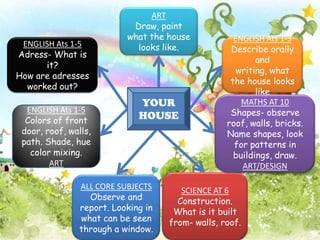
ART
                           Draw, paint
                          what the house            ENGLISH Ats 1-5
 ENGLISH Ats 1-5            looks like.            Describe orally
Adress- What is
                                                          and
      it?
                                                     writing, what
How are adresses
                                                   the house looks
  worked out?
                                                          like
                             YOUR                     MATHS AT 10
  ENGLISH Ats 1-5
                             HOUSE                 Shapes- observe
  Colors of front                                 roof, walls, bricks.
 door, roof, walls,                               Name shapes, look
 path. Shade, hue                                   for patterns in
   color mixing.                                    buildings, draw.
        ART                                           ART/DESIGN

               ALL CORE SUBJECTS       SCIENCE AT 6
                 Observe and          Construction.
               report. Looking in    What is it built
               what can be seen     from- walls, roof.
               through a window.
How topics can be used
as a basis for planning
    and organizing
  language learning.
   In the next part , we will see an example of how to
      plan for topic work. It is not the only way to
      proceed but it gives you a framework to start
      from, which you can try out in your own
      situation.
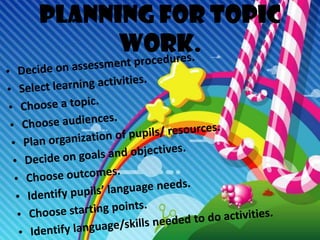
Planning for topic
      work.
• How would you choose a topic and what factors
  would influence your choice of topic and
  activities?

• Which age and language level do you think the
  topic would be suitable for?

• Which language-learning activities based on the
  topic web would be suitable for the learners you
  have in mind?

• Do all the activities in the web involve children in
  using languaje?
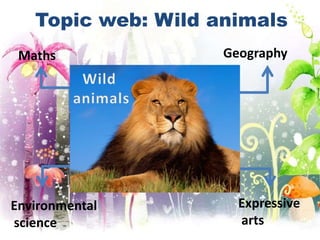
Topic web: Wild animals
 Maths              Geography


Environmental         Expressive
science               arts
You can choose a topic by:
Here are some of the factors which
     may influence your choice of
              activities:
• Pupil’s interests.

• Pupil’s conceptual level.

• Time available to do the topic work.

• Level of language needed for the topic or to do the
  activity.

• Level of cognitive challenge.
• Potential for encouraging pupil involvement
  and participation.

• Pupil’s language needs.

• Resources available to do the activity.

• Syllabus.

• Potential for linking with other activities.
Analysing language/skills/attitudes
        in learning activities.
Here you have a list of
things you can do once
you have selected a range
of activities. You can:
TASK 2 Sequencing activities.
Objectives and   Language focus: Skills and            Pronunciation Notes
activity         vocabulary and functions
                 structures
To find and      Receptive         Reading skills      Final             Links with maths-
interpret        (recycled)        Finding             consonant         estimating and
information on   Vocabulary        appropiate books.   clusters, eg in   measuring skills.
animals’ sizes   related to size   Finding key         length            Organization: in
from books       height, length,   information about                     pairs and then
                 numbers in        animals’                              compare answers.
                 meters and cm     sizes/heights in
                 deer, wolf        library books
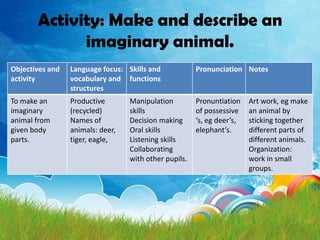
Activity: Make and describe an
             imaginary animal.
Objectives and   Language focus: Skills and            Pronunciation Notes
activity         vocabulary and functions
                 structures
To make an       Productive       Manipulation         Pronuntiation    Art work, eg make
imaginary        (recycled)       skills               of possessive    an animal by
animal from      Names of         Decision making      ‘s, eg deer’s,   sticking together
given body       animals: deer,   Oral skills          elephant’s.      different parts of
parts.           tiger, eagle,    Listening skills                      different animals.
                                  Collaborating                         Organization:
                                  with other pupils.                    work in small
                                                                        groups.
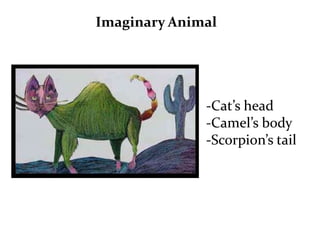
Imaginary Animal


              -Cat’s head
              -Camel’s body
              -Scorpion’s tail
Guidelines for sequencing
TASK 3 Identifying outcomes for
            activities.
• In topic work, pupils learn how to work
  together, how to find out information, how to
  manage their work and present it.
• The emphasis is on the process of learning and so
  we could say that one outcome is the development
  of process skills.
Starting points for topic work
Here are three starting points for the
                topic work.
• Consider the advantage
  and disadvantage of
  each one.
How to organize topic work.
• There can be a lot of      • If it is successful, this
  work involved in             will give you
  organizing topic work.       confidence to try a
  So it is best to start       slightly longer project.
  small. Begin with a        • In the following parts
  small project that takes     we will consider you
  only two or three            need to decide or
  lessons, perhaps linked      organize in planning for
  to your coursebook.          topic work.
• What materials do I need?
Decide what materials you need to
carry out the activities.
To reduce the burden of making
materials, think about how the children
can help. What can they bring to class?
               • Monitoring and recording
                  childrens’ progress.
               Keep records of how children work
               (learning process) as well as of the
               outcomes of their work during. If
               time is limited, just monitor a few
               activities closely and keep brief
               notes on each child.
• Classroom organization.
Decide how you will organize pupils
  for
each activity, remembering to vary
ways of working in a lesson, eg whole
class pair-group-individual wholeclass.
• How to group children?
For group work you need to think about how
to group children. This can be according to:
-friendship
-ability
-mixed ability
-shared interest.
Change your groupings from time to time so
children get a chance to work with different
children and are not labelled as belonging to
a weak or a strong group.
The problems and benefits of
      using topic work.
Lets see which conditions are particularly
supported by topic work and let us also look at
some of the problems which may prevent topic
work from creating these conditions.
• Create a real need and desire to use english
• Provide exposure to varied and meaningful
  input with a focus on communication
• Create a friendly atmosphere in which
  pupils can take risks and enjoy their
  learning
• Provide opportunities for children to
  experiment with their new lenguage
• Provide plenty of oppotunities to practise
  and use the language in different contexs
• Help children notice the underlying pattern
  in language
Problems:
What's your topic?

What's your topic?

  • 2.
    • What istopic work? • How topics can be used as a basis for planning and organizing language learning. • How to organize topic work. • The problems and benefits of using topic work.
  • 3.
    Topic work isa way of organizing children’s learning and language learning around topics or themes of interest to the children.
  • 4.
    ART Draw, paint what the house ENGLISH Ats 1-5 ENGLISH Ats 1-5 looks like. Describe orally Adress- What is and it? writing, what How are adresses the house looks worked out? like YOUR MATHS AT 10 ENGLISH Ats 1-5 HOUSE Shapes- observe Colors of front roof, walls, bricks. door, roof, walls, Name shapes, look path. Shade, hue for patterns in color mixing. buildings, draw. ART ART/DESIGN ALL CORE SUBJECTS SCIENCE AT 6 Observe and Construction. report. Looking in What is it built what can be seen from- walls, roof. through a window.
  • 6.
    How topics canbe used as a basis for planning and organizing language learning. In the next part , we will see an example of how to plan for topic work. It is not the only way to proceed but it gives you a framework to start from, which you can try out in your own situation.
  • 7.
  • 9.
    • How wouldyou choose a topic and what factors would influence your choice of topic and activities? • Which age and language level do you think the topic would be suitable for? • Which language-learning activities based on the topic web would be suitable for the learners you have in mind? • Do all the activities in the web involve children in using languaje?
  • 10.
    Topic web: Wildanimals Maths Geography Environmental Expressive science arts
  • 11.
    You can choosea topic by:
  • 12.
    Here are someof the factors which may influence your choice of activities: • Pupil’s interests. • Pupil’s conceptual level. • Time available to do the topic work. • Level of language needed for the topic or to do the activity. • Level of cognitive challenge.
  • 13.
    • Potential forencouraging pupil involvement and participation. • Pupil’s language needs. • Resources available to do the activity. • Syllabus. • Potential for linking with other activities.
  • 14.
    Analysing language/skills/attitudes in learning activities. Here you have a list of things you can do once you have selected a range of activities. You can:
  • 15.
    TASK 2 Sequencingactivities. Objectives and Language focus: Skills and Pronunciation Notes activity vocabulary and functions structures To find and Receptive Reading skills Final Links with maths- interpret (recycled) Finding consonant estimating and information on Vocabulary appropiate books. clusters, eg in measuring skills. animals’ sizes related to size Finding key length Organization: in from books height, length, information about pairs and then numbers in animals’ compare answers. meters and cm sizes/heights in deer, wolf library books
  • 16.
    Activity: Make anddescribe an imaginary animal. Objectives and Language focus: Skills and Pronunciation Notes activity vocabulary and functions structures To make an Productive Manipulation Pronuntiation Art work, eg make imaginary (recycled) skills of possessive an animal by animal from Names of Decision making ‘s, eg deer’s, sticking together given body animals: deer, Oral skills elephant’s. different parts of parts. tiger, eagle, Listening skills different animals. Collaborating Organization: with other pupils. work in small groups.
  • 17.
    Imaginary Animal -Cat’s head -Camel’s body -Scorpion’s tail
  • 18.
  • 19.
    TASK 3 Identifyingoutcomes for activities. • In topic work, pupils learn how to work together, how to find out information, how to manage their work and present it. • The emphasis is on the process of learning and so we could say that one outcome is the development of process skills.
  • 20.
  • 21.
    Here are threestarting points for the topic work. • Consider the advantage and disadvantage of each one.
  • 22.
    How to organizetopic work. • There can be a lot of • If it is successful, this work involved in will give you organizing topic work. confidence to try a So it is best to start slightly longer project. small. Begin with a • In the following parts small project that takes we will consider you only two or three need to decide or lessons, perhaps linked organize in planning for to your coursebook. topic work.
  • 24.
    • What materialsdo I need? Decide what materials you need to carry out the activities. To reduce the burden of making materials, think about how the children can help. What can they bring to class? • Monitoring and recording childrens’ progress. Keep records of how children work (learning process) as well as of the outcomes of their work during. If time is limited, just monitor a few activities closely and keep brief notes on each child.
  • 25.
    • Classroom organization. Decidehow you will organize pupils for each activity, remembering to vary ways of working in a lesson, eg whole class pair-group-individual wholeclass.
  • 26.
    • How togroup children? For group work you need to think about how to group children. This can be according to: -friendship -ability -mixed ability -shared interest. Change your groupings from time to time so children get a chance to work with different children and are not labelled as belonging to a weak or a strong group.
  • 27.
    The problems andbenefits of using topic work. Lets see which conditions are particularly supported by topic work and let us also look at some of the problems which may prevent topic work from creating these conditions.
  • 28.
    • Create areal need and desire to use english • Provide exposure to varied and meaningful input with a focus on communication • Create a friendly atmosphere in which pupils can take risks and enjoy their learning • Provide opportunities for children to experiment with their new lenguage • Provide plenty of oppotunities to practise and use the language in different contexs • Help children notice the underlying pattern in language
  • 29.