ASSIGNMENT
on
MAJOR ANDMINOR GROOVES OF DNA
Submitted To: Submitted By:
Dr. D.K. Garg Smrutishree Sahoo
Professor M.Sc.(Ag.) PBG Previous
Department of PLANT BREEDING AND GENETICS
College of Agriculture
Swami Keshwanand Rajasthan Agricultural University, Bikaner
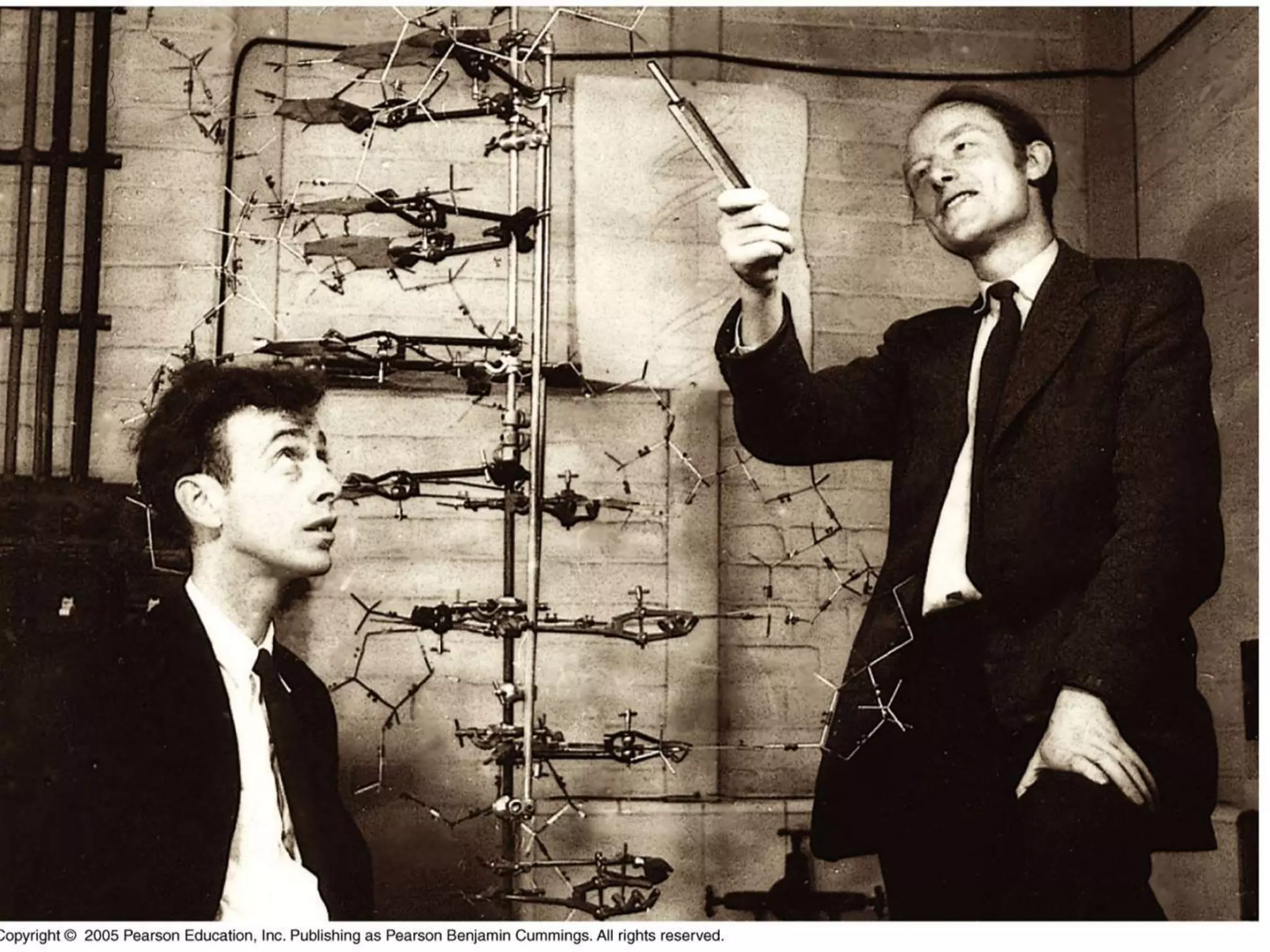
James D. Watson & Francis H. Crick
 In 1953 presented the double Helix model of DNA
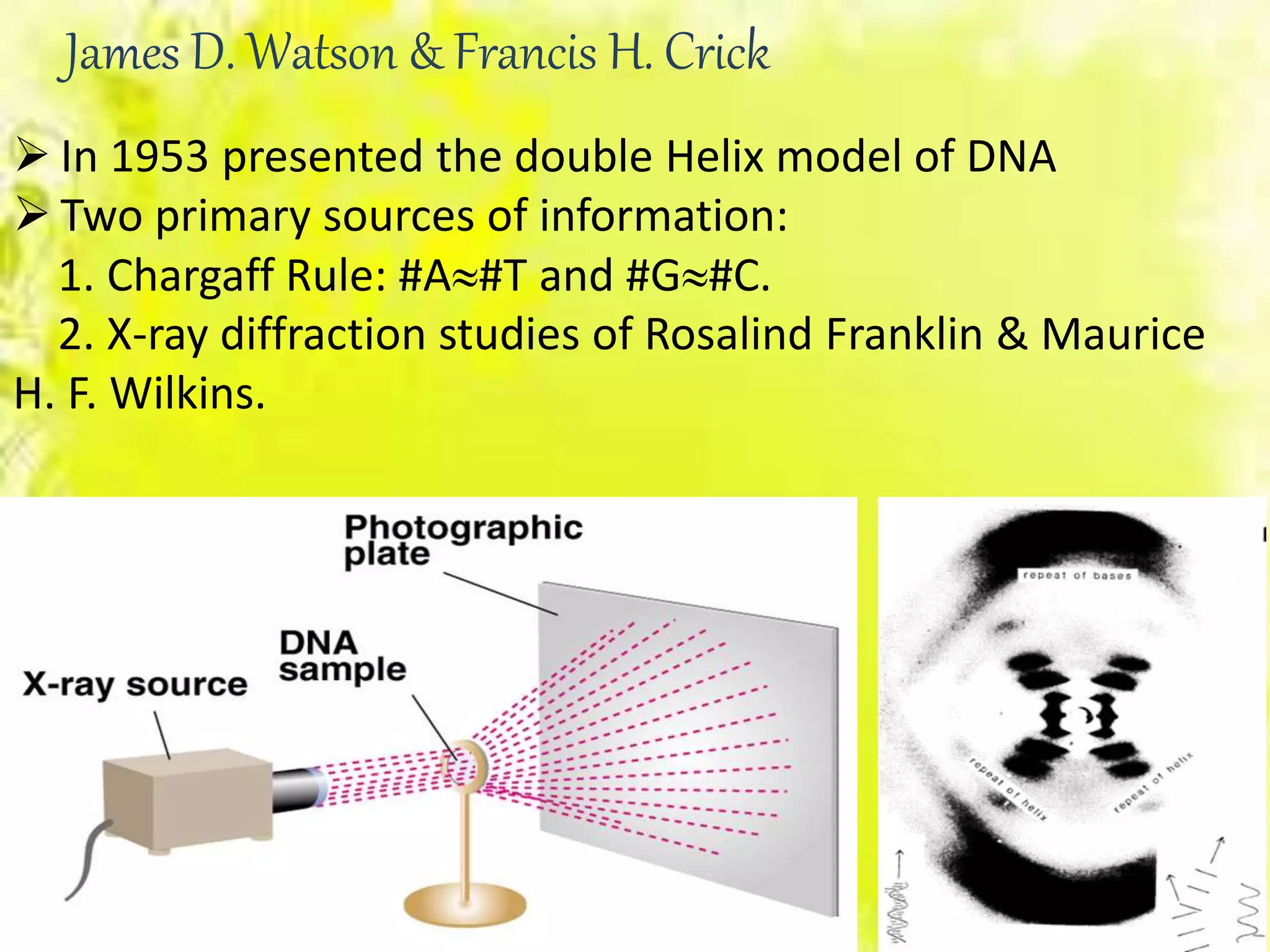
 Two primary sources of information:
1. Chargaff Rule: #A#T and #G#C.
2. X-ray diffraction studies of Rosalind Franklin & Maurice
H. F. Wilkins.
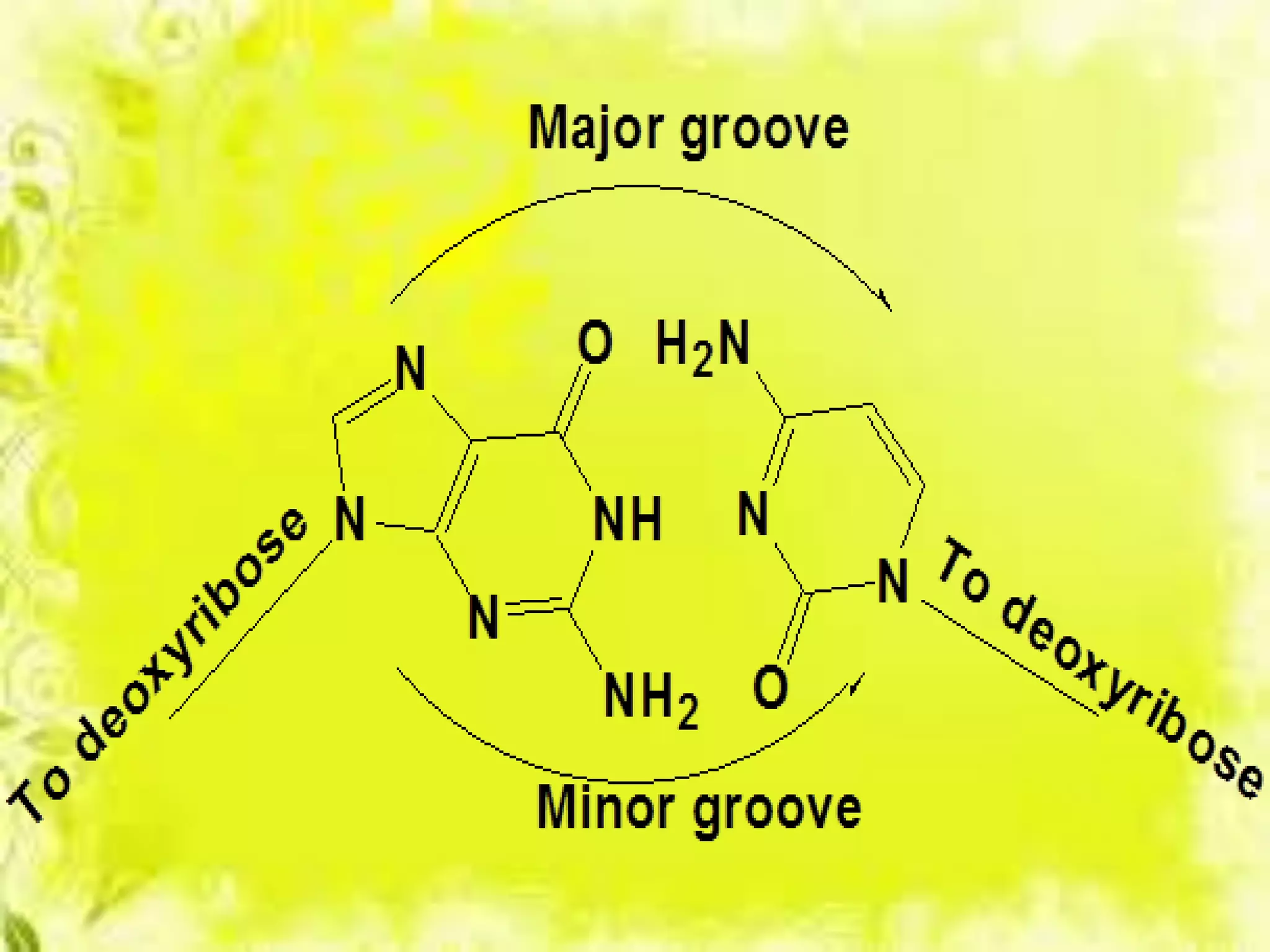
The Two Grooves of DNA
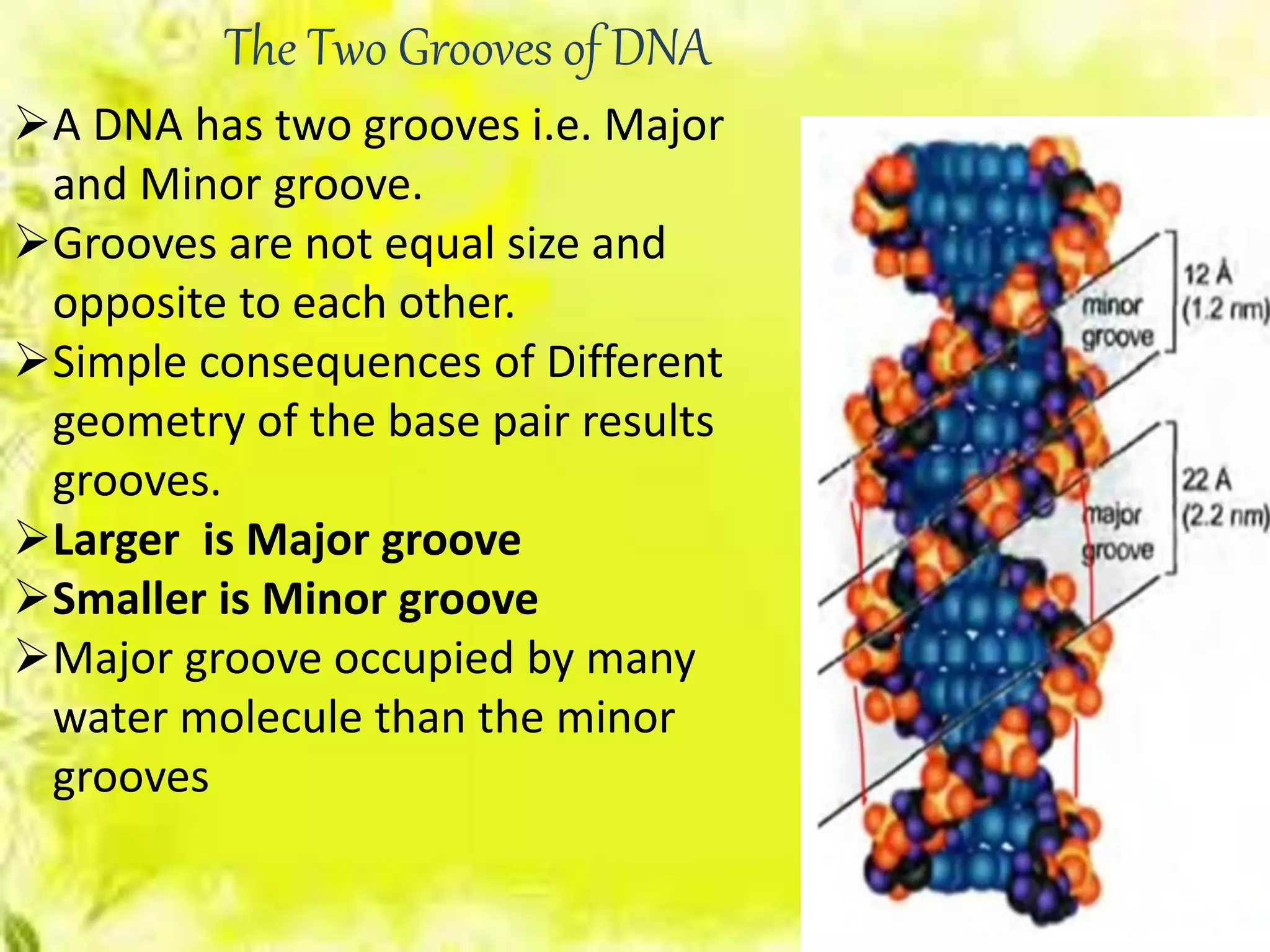
A DNA has two grooves i.e. Major
and Minor groove.
Grooves are not equal size and
opposite to each other.
Simple consequences of Different
geometry of the base pair results
grooves.
Larger is Major groove
Smaller is Minor groove
Major groove occupied by many
water molecule than the minor
grooves
 Each base pair rotated in 36 ˚around the axis
 10 base pairs rotated in 360˚ makes a complete turn.
 Twisting of the two strands around one another forms a
double helix with a minor groove with 12A˚ across and a
major groove with 22A˚ across .
 Angle at which the sugar protrude out from the base
pair(i.e. angle between Glycosidic bond) is 120˚ or 240˚.
 Major Groove - 240˚
 Minor Groove - 120˚
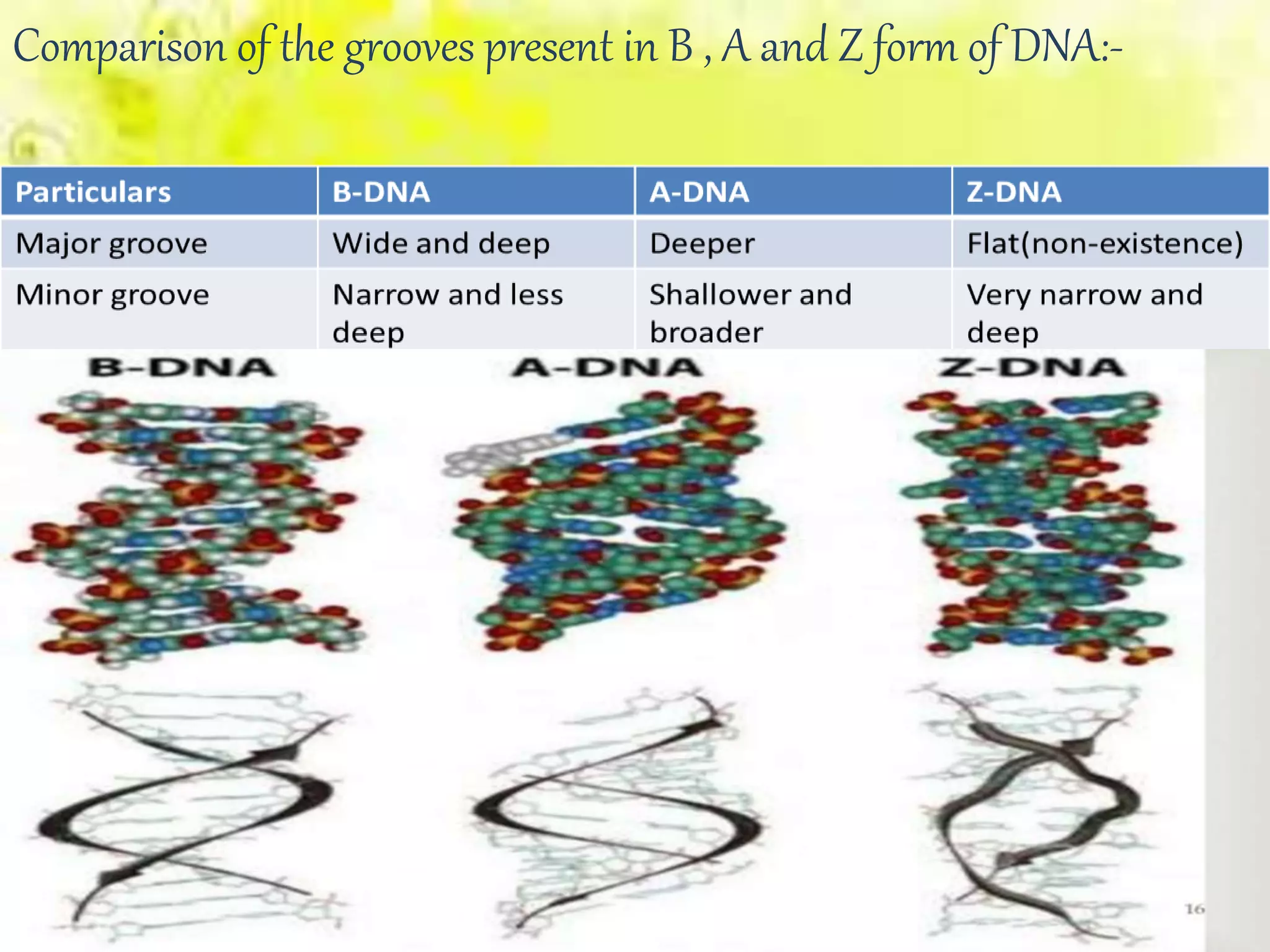
Comparison of the grooves present in B , A and Z form of DNA:-
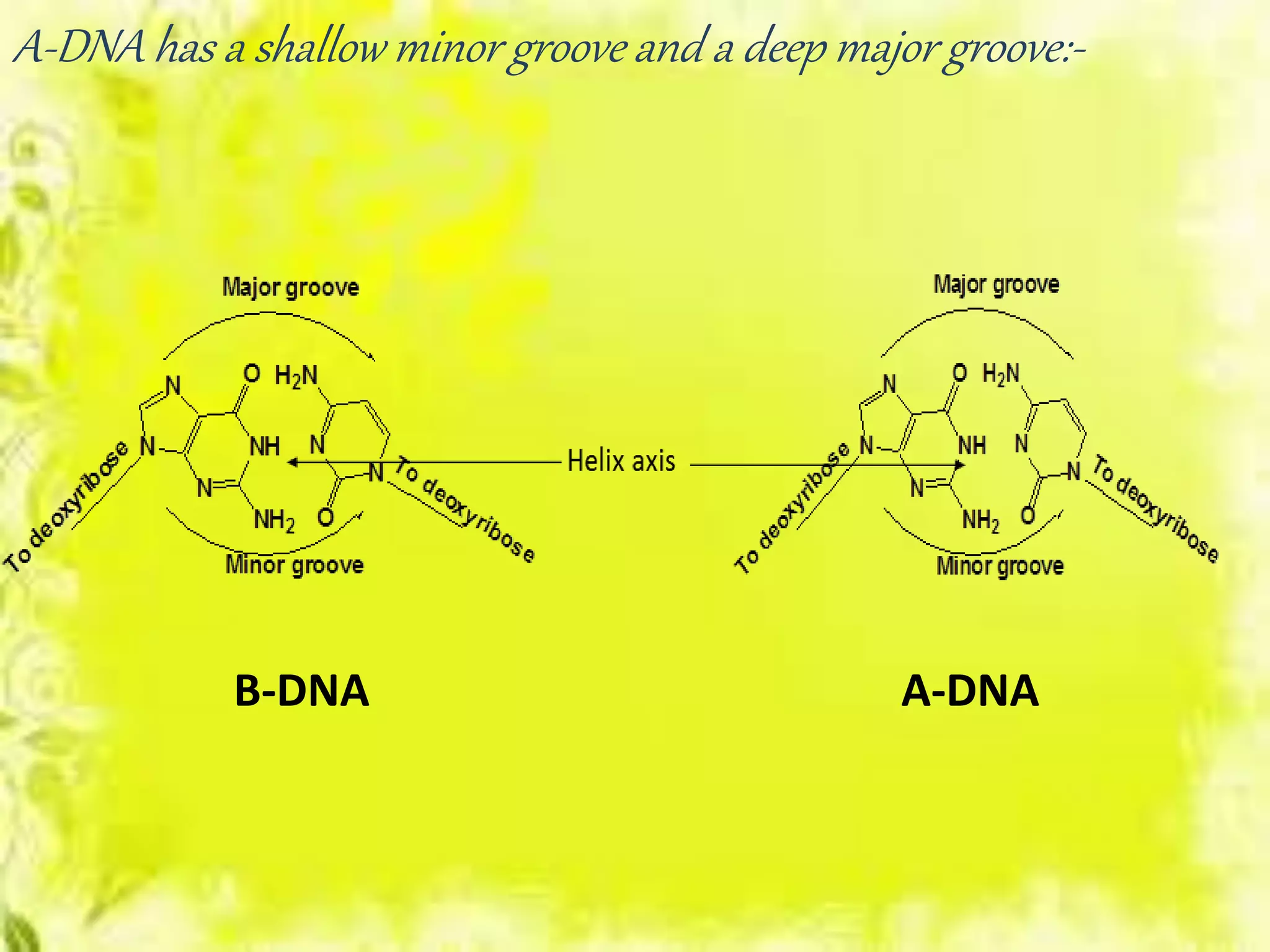
A-DNA has a shallow minor groove and a deep major groove:-
B-DNA A-DNA
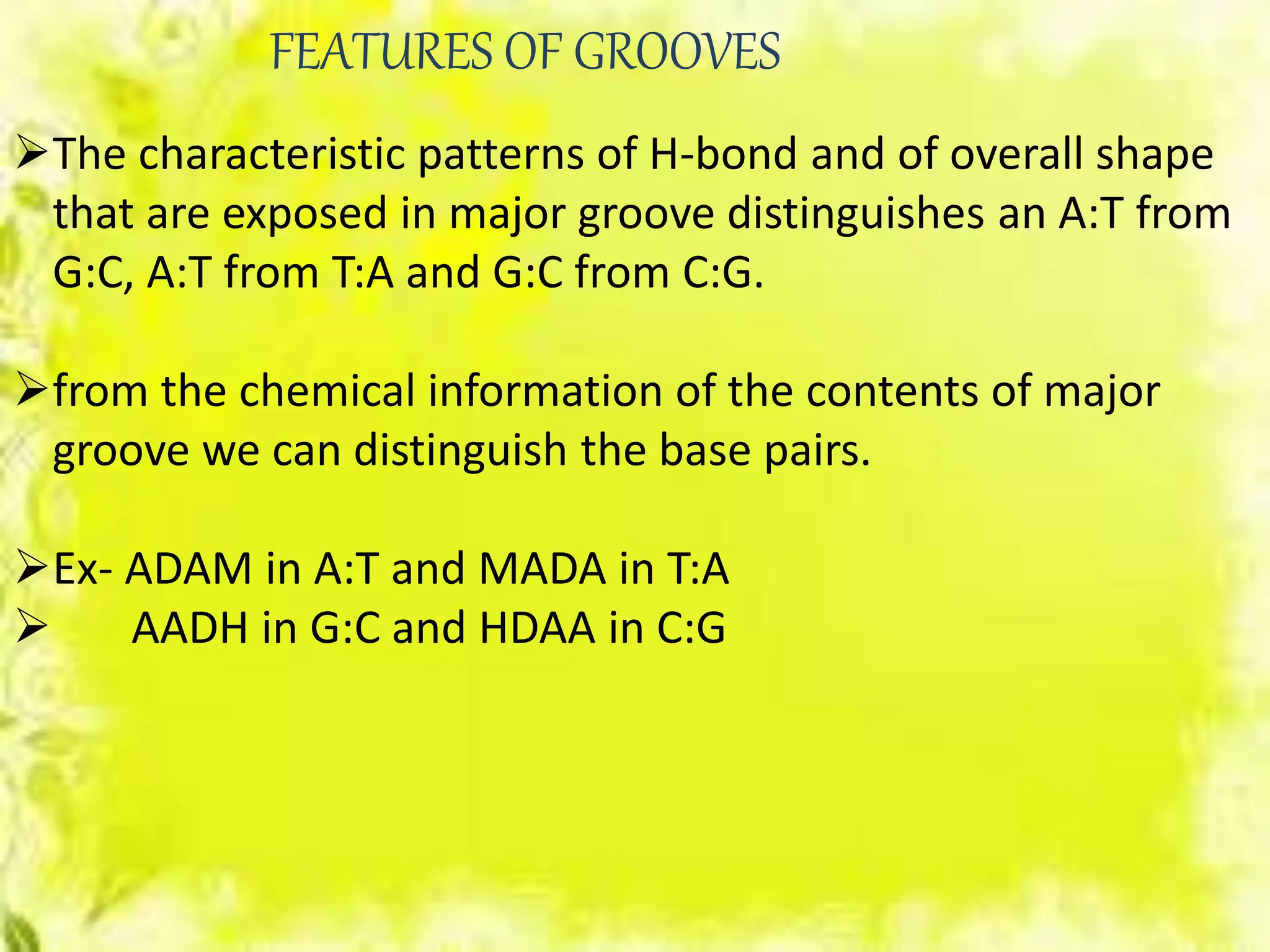
FEATURES OF GROOVES
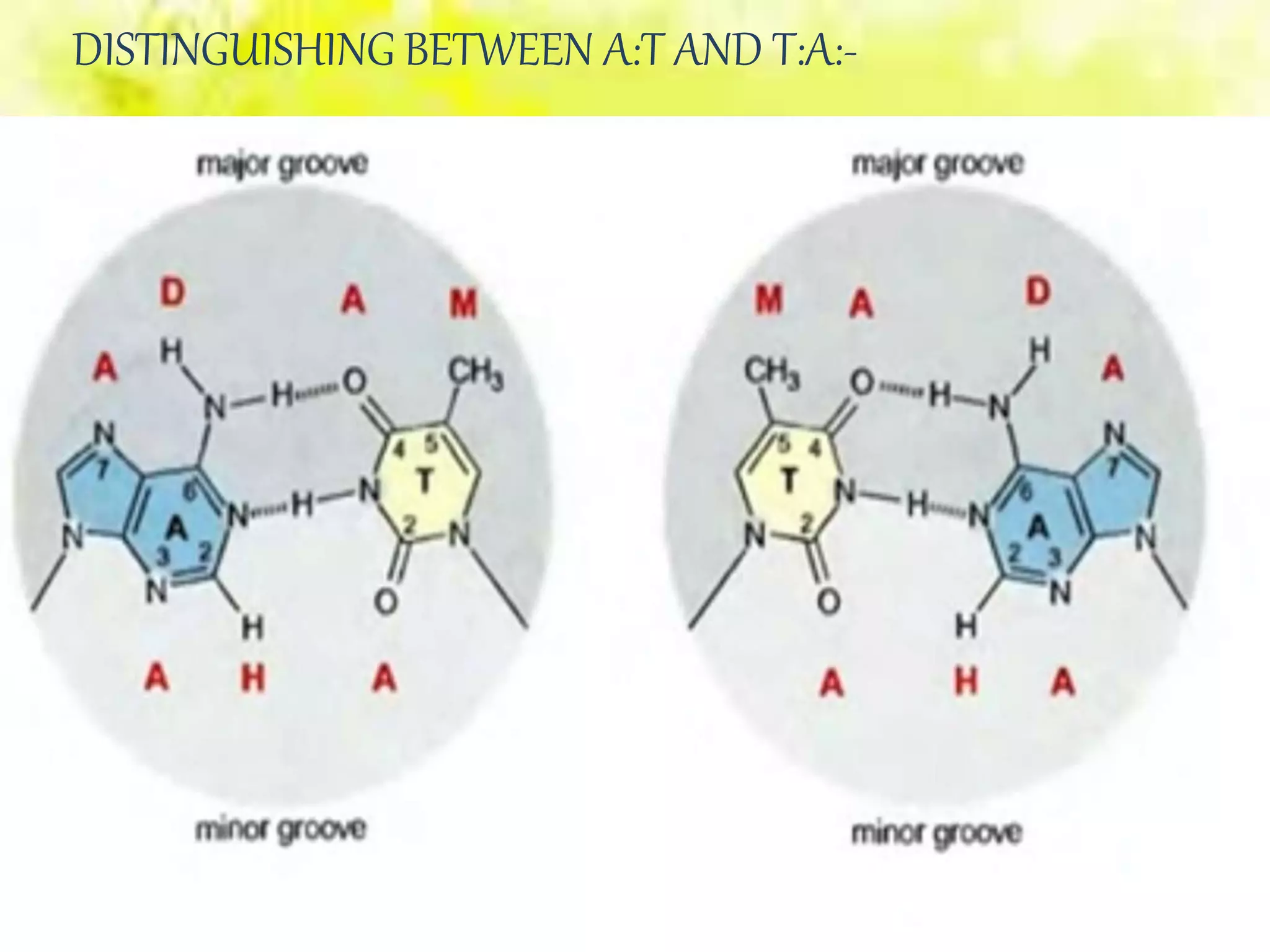
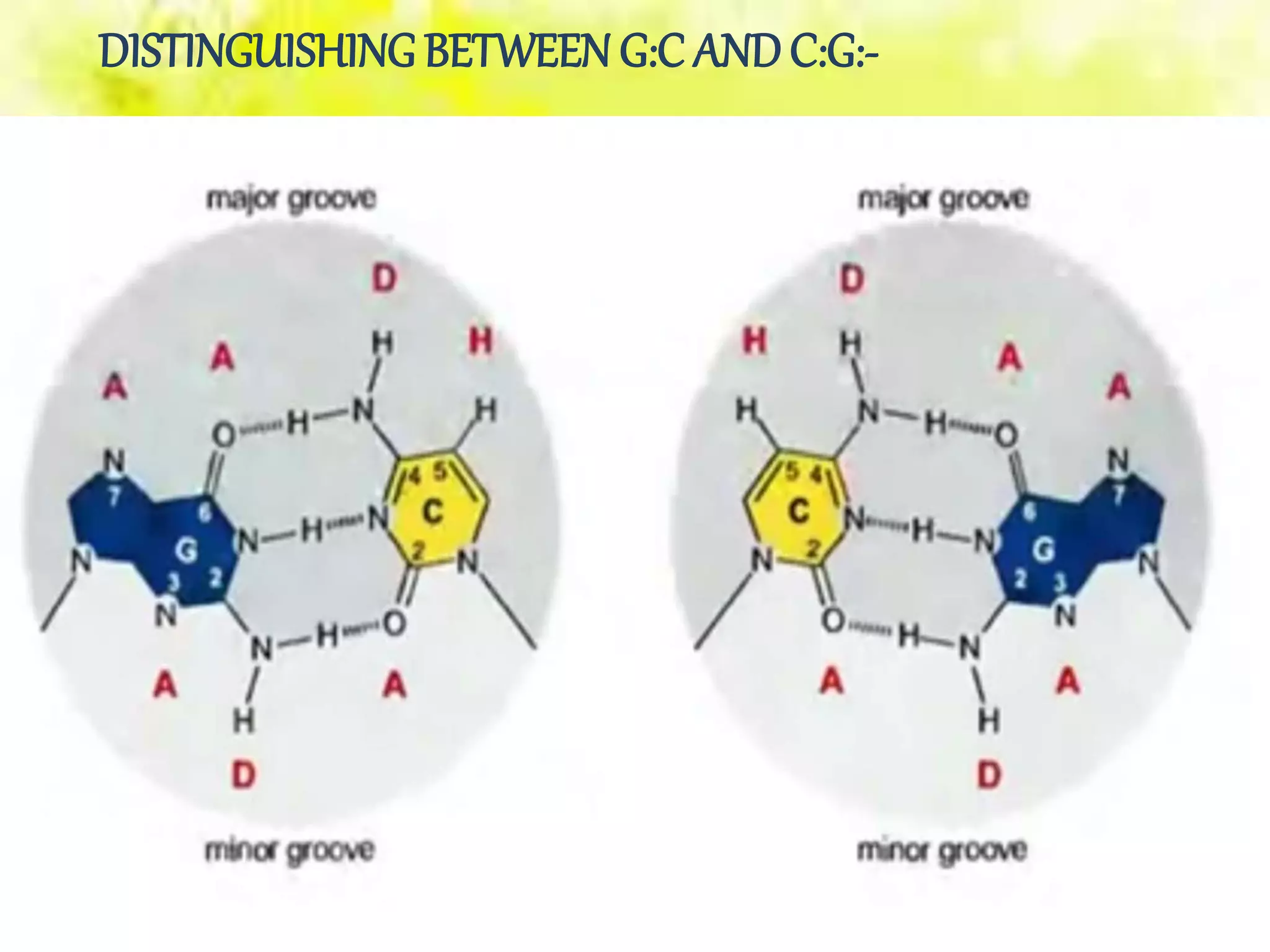
The characteristic patterns of H-bond and of overall shape
that are exposed in major groove distinguishes an A:T from
G:C, A:T from T:A and G:C from C:G.
from the chemical information of the contents of major
groove we can distinguish the base pairs.
Ex- ADAM in A:T and MADA in T:A
 AADH in G:C and HDAA in C:G
A:T PAIR
 Large angle of MAJOR GROOVES
contain following structures-
 A hydrogen bond acceptor (N7 of
Adenine)
 A H-bond donor(Amino group on
C6 of Adenine)
 A H-bond acceptor (Carbonyl
group on Thymine)
 A hydrophobic surface(Methyl
group on C5 Thymine)
 MINOR GROOVE has
 Two H-bond Acceptor
 One H-atom
DISTINGUISHING BETWEEN A:T AND T:A:-
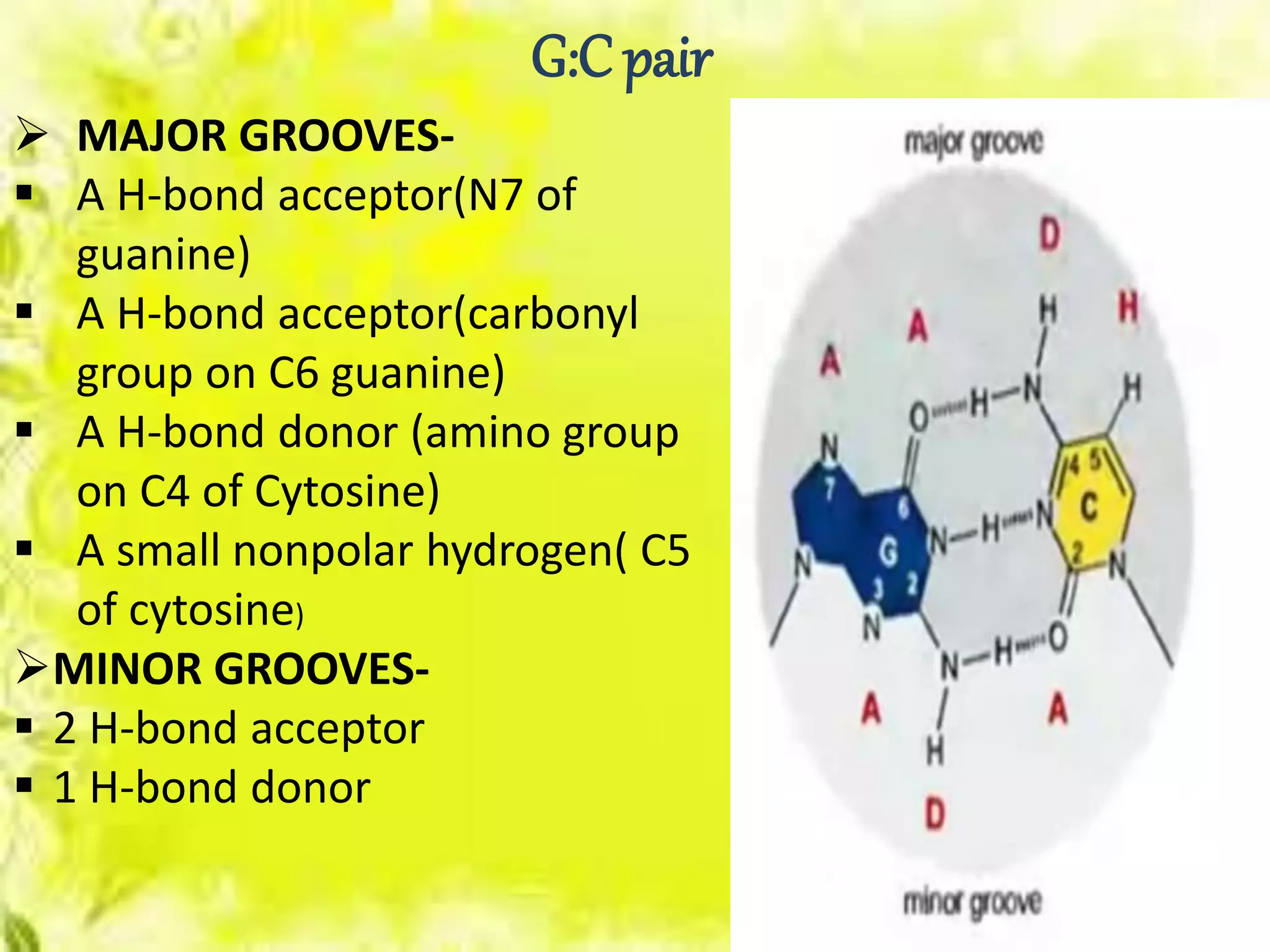
G:C pair
 MAJOR GROOVES-
 A H-bond acceptor(N7 of
guanine)
 A H-bond acceptor(carbonyl
group on C6 guanine)
 A H-bond donor (amino group
on C4 of Cytosine)
 A small nonpolar hydrogen( C5
of cytosine)
MINOR GROOVES-
 2 H-bond acceptor
 1 H-bond donor
DISTINGUISHING BETWEEN G:C ANDC:G:-
DNA BINDING PROTEINS:-
 Expression of the biological phenomenon in a genome
mediated by a DNA binding protein.
 These proteins attach to the double helix in a specific site
and regulate the gene activity.
 Major groove is rich in chemical information that's why
most of the DNA binding proteins bind with major groove.
 The DNA sequence can be read without the helix being
opened up by breaking the base pairs.
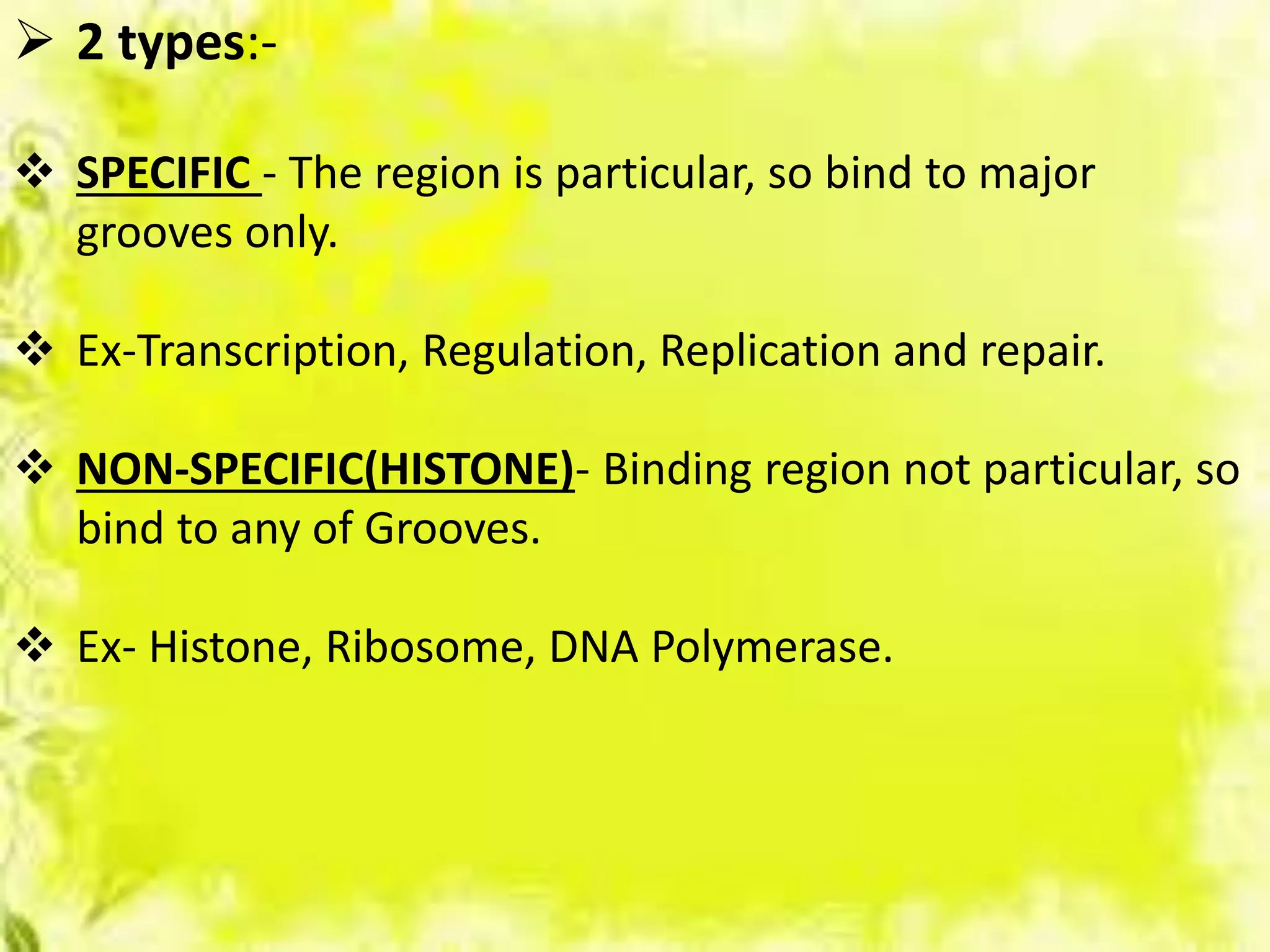
 2 types:-
 SPECIFIC - The region is particular, so bind to major
grooves only.
 Ex-Transcription, Regulation, Replication and repair.
 NON-SPECIFIC(HISTONE)- Binding region not particular, so
bind to any of Grooves.
 Ex- Histone, Ribosome, DNA Polymerase.
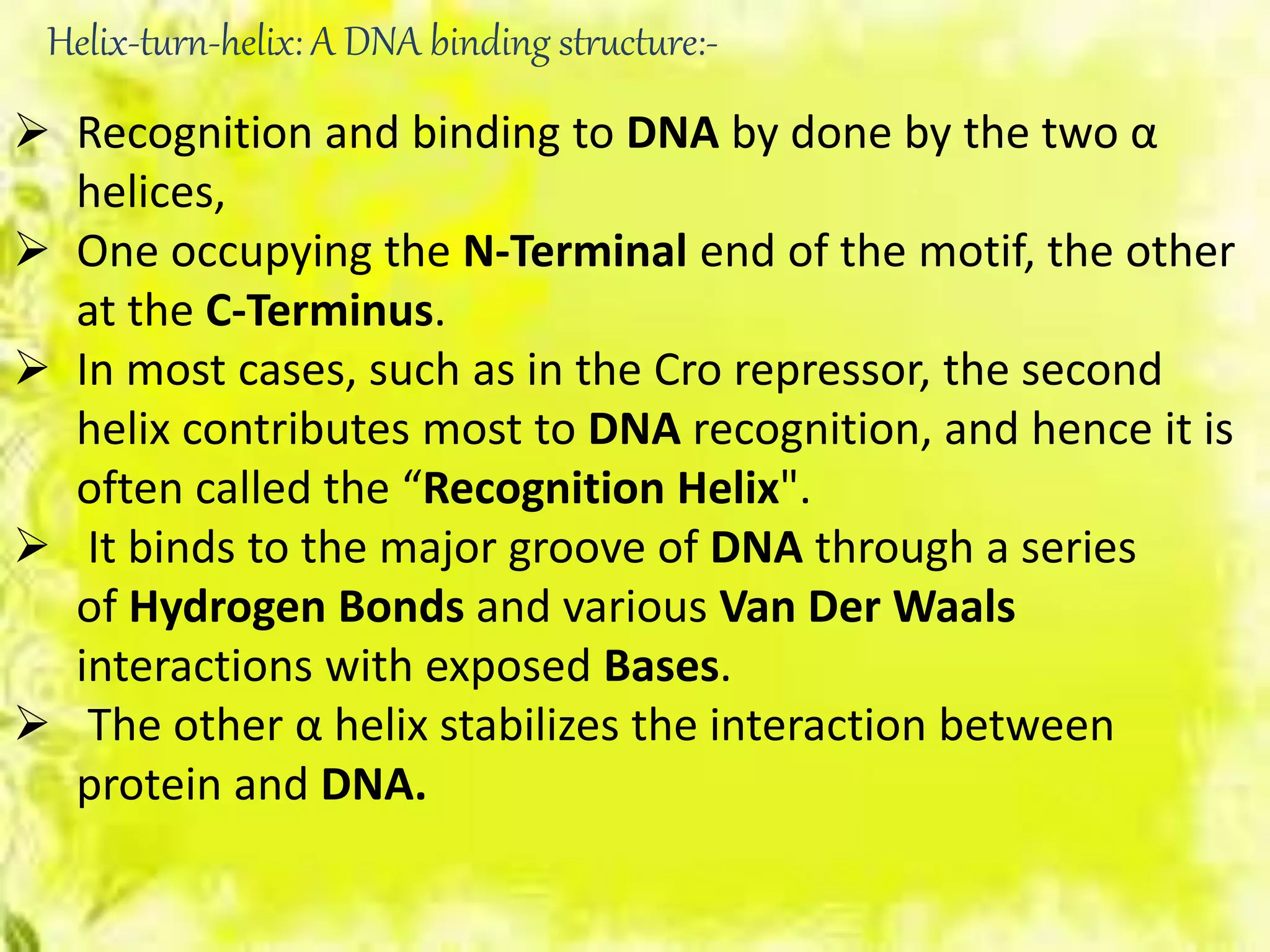
Helix-turn-helix: A DNA binding structure:-
 Recognition and binding to DNA by done by the two α
helices,
 One occupying the N-Terminal end of the motif, the other
at the C-Terminus.
 In most cases, such as in the Cro repressor, the second
helix contributes most to DNA recognition, and hence it is
often called the “Recognition Helix".
 It binds to the major groove of DNA through a series
of Hydrogen Bonds and various Van Der Waals
interactions with exposed Bases.
 The other α helix stabilizes the interaction between
protein and DNA.
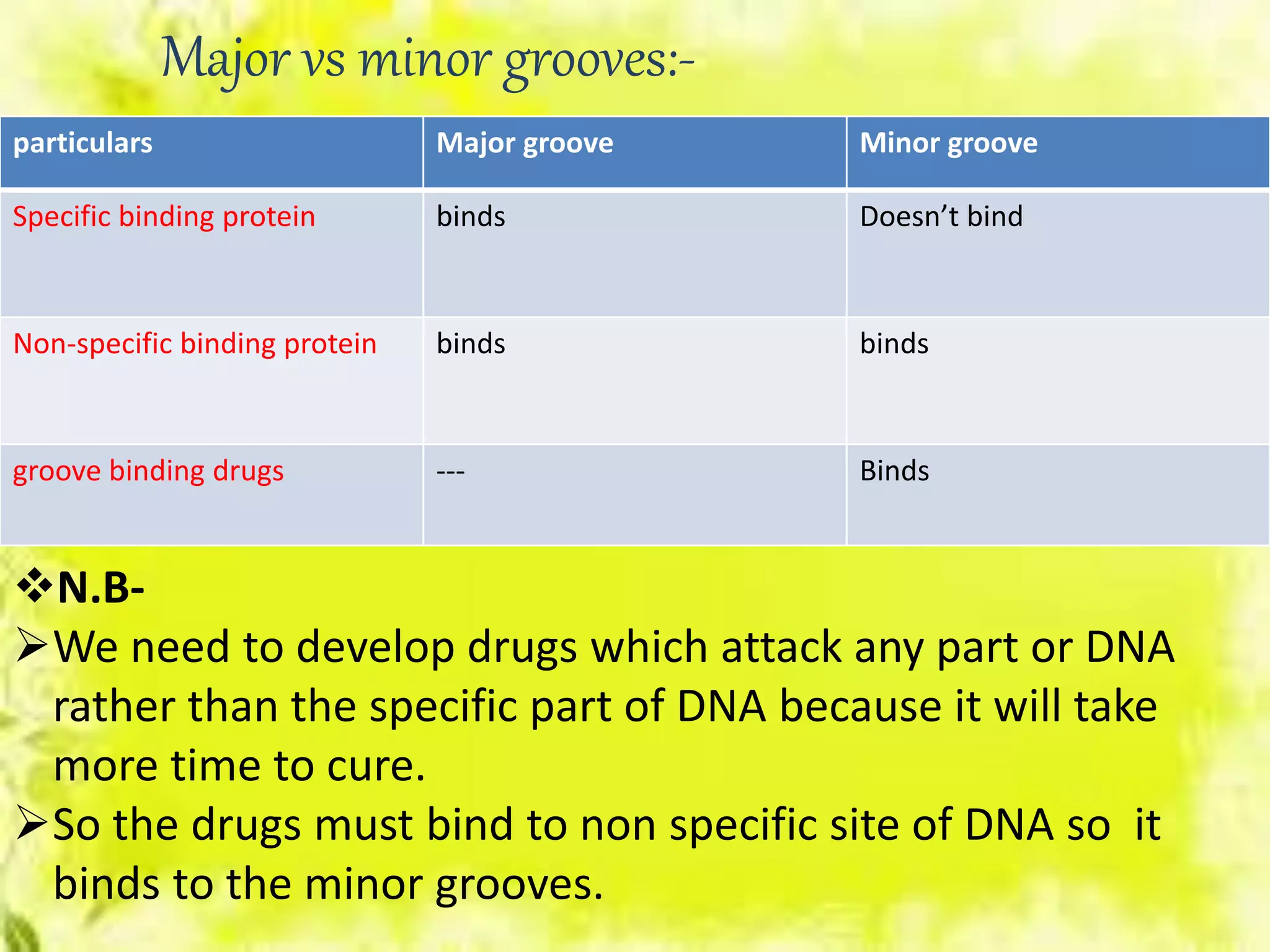
Major vs minor grooves:-
N.B-
We need to develop drugs which attack any part or DNA
rather than the specific part of DNA because it will take
more time to cure.
So the drugs must bind to non specific site of DNA so it
binds to the minor grooves.
particulars Major groove Minor groove
Specific binding protein binds Doesn’t bind
Non-specific binding protein binds binds
groove binding drugs --- Binds
Major and minor grooves dna

Major and minor grooves dna

  • 1.
    ASSIGNMENT on MAJOR ANDMINOR GROOVESOF DNA Submitted To: Submitted By: Dr. D.K. Garg Smrutishree Sahoo Professor M.Sc.(Ag.) PBG Previous Department of PLANT BREEDING AND GENETICS College of Agriculture Swami Keshwanand Rajasthan Agricultural University, Bikaner
  • 3.
    James D. Watson& Francis H. Crick  In 1953 presented the double Helix model of DNA  Two primary sources of information: 1. Chargaff Rule: #A#T and #G#C. 2. X-ray diffraction studies of Rosalind Franklin & Maurice H. F. Wilkins.
  • 5.
    The Two Groovesof DNA A DNA has two grooves i.e. Major and Minor groove. Grooves are not equal size and opposite to each other. Simple consequences of Different geometry of the base pair results grooves. Larger is Major groove Smaller is Minor groove Major groove occupied by many water molecule than the minor grooves
  • 6.
     Each basepair rotated in 36 ˚around the axis  10 base pairs rotated in 360˚ makes a complete turn.  Twisting of the two strands around one another forms a double helix with a minor groove with 12A˚ across and a major groove with 22A˚ across .  Angle at which the sugar protrude out from the base pair(i.e. angle between Glycosidic bond) is 120˚ or 240˚.  Major Groove - 240˚  Minor Groove - 120˚
  • 8.
    Comparison of thegrooves present in B , A and Z form of DNA:-
  • 9.
    A-DNA has ashallow minor groove and a deep major groove:- B-DNA A-DNA
  • 10.
    FEATURES OF GROOVES Thecharacteristic patterns of H-bond and of overall shape that are exposed in major groove distinguishes an A:T from G:C, A:T from T:A and G:C from C:G. from the chemical information of the contents of major groove we can distinguish the base pairs. Ex- ADAM in A:T and MADA in T:A  AADH in G:C and HDAA in C:G
  • 11.
    A:T PAIR  Largeangle of MAJOR GROOVES contain following structures-  A hydrogen bond acceptor (N7 of Adenine)  A H-bond donor(Amino group on C6 of Adenine)  A H-bond acceptor (Carbonyl group on Thymine)  A hydrophobic surface(Methyl group on C5 Thymine)  MINOR GROOVE has  Two H-bond Acceptor  One H-atom
  • 12.
  • 13.
    G:C pair  MAJORGROOVES-  A H-bond acceptor(N7 of guanine)  A H-bond acceptor(carbonyl group on C6 guanine)  A H-bond donor (amino group on C4 of Cytosine)  A small nonpolar hydrogen( C5 of cytosine) MINOR GROOVES-  2 H-bond acceptor  1 H-bond donor
  • 14.
  • 15.
    DNA BINDING PROTEINS:- Expression of the biological phenomenon in a genome mediated by a DNA binding protein.  These proteins attach to the double helix in a specific site and regulate the gene activity.  Major groove is rich in chemical information that's why most of the DNA binding proteins bind with major groove.  The DNA sequence can be read without the helix being opened up by breaking the base pairs.
  • 16.
     2 types:- SPECIFIC - The region is particular, so bind to major grooves only.  Ex-Transcription, Regulation, Replication and repair.  NON-SPECIFIC(HISTONE)- Binding region not particular, so bind to any of Grooves.  Ex- Histone, Ribosome, DNA Polymerase.
  • 17.
    Helix-turn-helix: A DNAbinding structure:-  Recognition and binding to DNA by done by the two α helices,  One occupying the N-Terminal end of the motif, the other at the C-Terminus.  In most cases, such as in the Cro repressor, the second helix contributes most to DNA recognition, and hence it is often called the “Recognition Helix".  It binds to the major groove of DNA through a series of Hydrogen Bonds and various Van Der Waals interactions with exposed Bases.  The other α helix stabilizes the interaction between protein and DNA.
  • 19.
    Major vs minorgrooves:- N.B- We need to develop drugs which attack any part or DNA rather than the specific part of DNA because it will take more time to cure. So the drugs must bind to non specific site of DNA so it binds to the minor grooves. particulars Major groove Minor groove Specific binding protein binds Doesn’t bind Non-specific binding protein binds binds groove binding drugs --- Binds