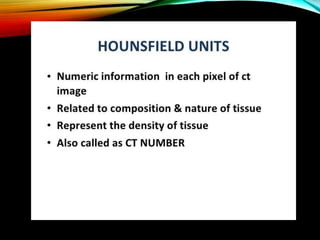
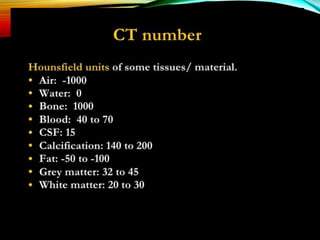
CT NUMBERS,
WINDOW WIDTH AND
WINDOW LEVEL
G.YOGANANTHEM
PROF.DR.I.GURUBHARATH
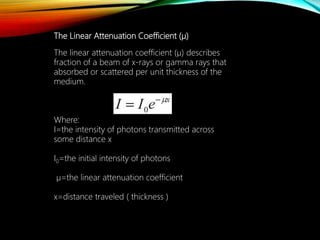
The Linear Attenuation Coefficient (µ)
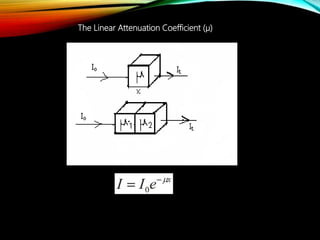
The linear attenuation coefficient (µ) describes
fraction of a beam of x-rays or gamma rays that
absorbed or scattered per unit thickness of the
medium.
Where:
I=the intensity of photons transmitted across
some distance x
I0=the initial intensity of photons
µ=the linear attenuation coefficient
x=distance traveled ( thickness )
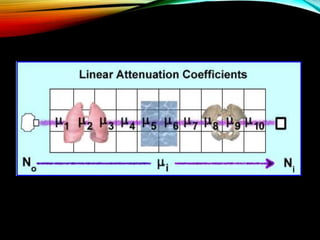
The Linear Attenuation Coefficient (µ)
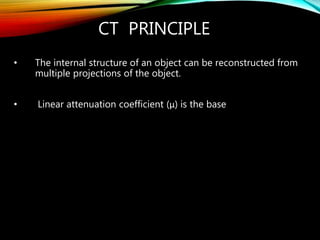
CT PRINCIPLE
• The internal structure of an object can be reconstructed from
multiple projections of the object.
• Linear attenuation coefficient (μ) is the base
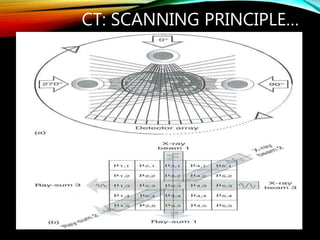
CT: SCANNING PRINCIPLE…
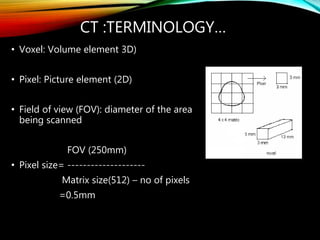
CT :TERMINOLOGY…
• Voxel: Volume element 3D)
• Pixel: Picture element (2D)
• Field of view (FOV): diameter of the area
being scanned
FOV (250mm)
• Pixel size= --------------------
Matrix size(512) – no of pixels
=0.5mm
Why we are giving importance to CT numbers and
why not
LINEAR Attenuation coefficient (μ)
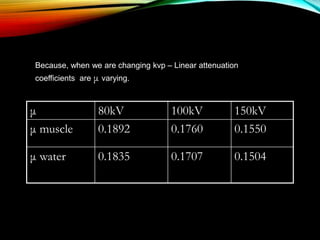
μ 80kV 100kV 150kV
μ muscle 0.1892 0.1760 0.1550
μ water 0.1835 0.1707 0.1504
Because, when we are changing kvp – Linear attenuation
coefficients are μ varying.
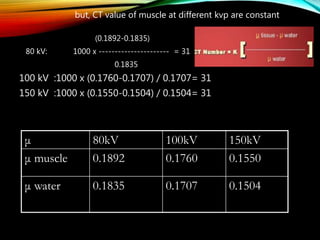
but, CT value of muscle at different kvp are constant
(0.1892-0.1835)
80 kV: 1000 x ---------------------- = 31
0.1835
100 kV :1000 x (0.1760-0.1707) / 0.1707= 31
150 kV :1000 x (0.1550-0.1504) / 0.1504= 31
μ 80kV 100kV 150kV
μ muscle 0.1892 0.1760 0.1550
μ water 0.1835 0.1707 0.1504
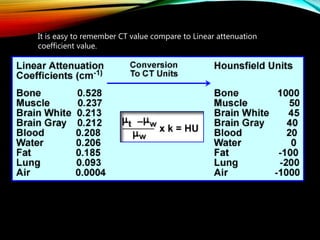
It is easy to remember CT value compare to Linear attenuation
coefficient value.
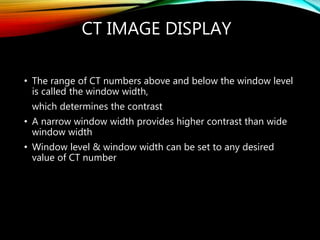
CT IMAGE DISPLAY
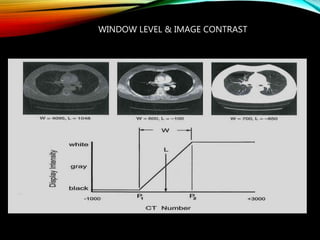
• The range of CT numbers above and below the window level
is called the window width,
which determines the contrast
• A narrow window width provides higher contrast than wide
window width
• Window level & window width can be set to any desired
value of CT number
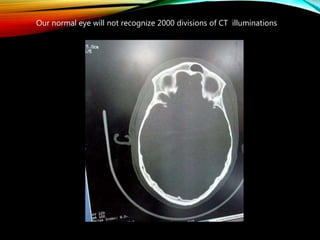
Our normal eye will not recognize 2000 divisions of CT illuminations
GRAY SCALE
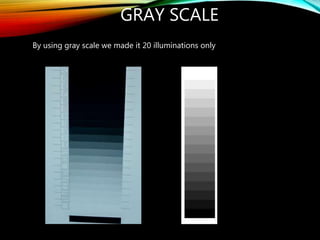
By using gray scale we made it 20 illuminations only
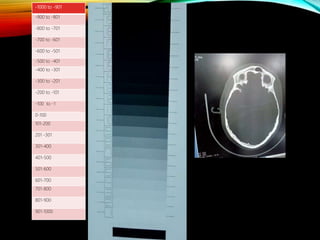
-1000 to -901
-900 to -801
-800 to -701
-700 to -601
-600 to -501
-500 to -401
-400 to -301
-300 to -201
-200 to -101
-100 to -1
0-100
101-200
201 -301
301-400
401-500
501-600
601-700
701-800
801-900
901-1000
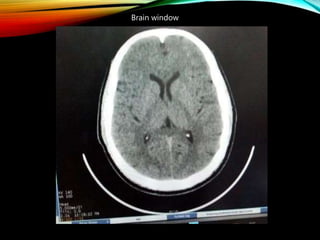
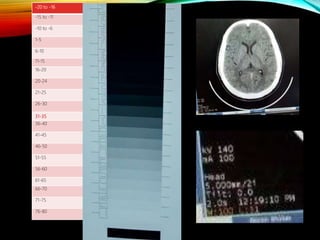
Brain window
-20 to -16
-15 to -11
-10 to -6
1-5
6-10
11-15
16-20
20-24
21-25
26-30
31-35
36-40
41-45
46-50
51-55
56-60
61-65
66-70
71-75
76-80
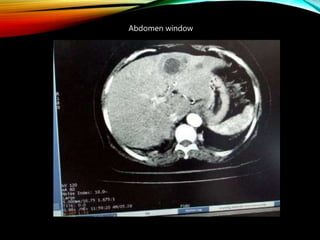
Abdomen window
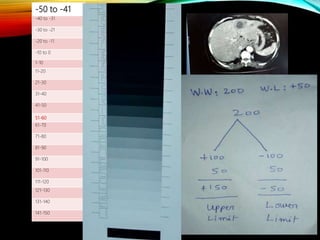
-50 to -41
-40 to -31
-30 to -21
-20 to -11
-10 to 0
1-10
11-20
21-30
31-40
41-50
51-60
61-70
71-80
81-90
91-100
101-110
111-120
121-130
131-140
141-150
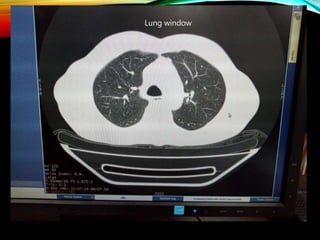
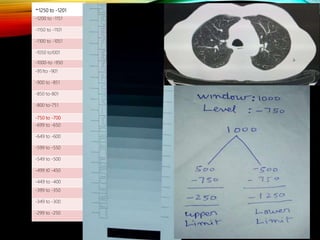
Lung window
-1250 to -1201
-1200 to -1151
-1150 to -1101
-1100 to -1051
-1050 to1001
-1000-to -950
-951to -901
-900 to -851
-850 to-801
-800 to-751
-750 to -700
-699 to -650
-649 to -600
-599 to -550
-549 to -500
-499 t0 -450
-449 to -400
-399 to -350
-349 to -300
-299 to -250
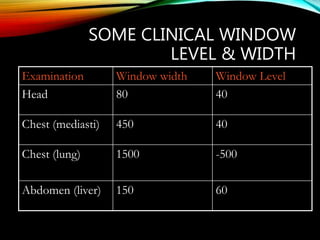
SOME CLINICAL WINDOW
LEVEL & WIDTH
Examination Window width Window Level
Head 80 40
Chest (mediasti) 450 40
Chest (lung) 1500 -500
Abdomen (liver) 150 60
Window width
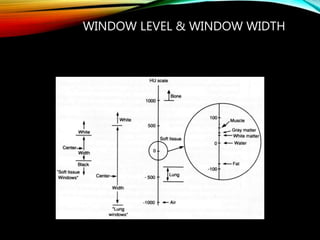
The window width (WW) as the name suggests is
the measure of the range of CT numbers that an
image contains. That is range of CT numbers
displayed in the CT image.
A wider window width (2000 HU), therefore, will
display a wider range of CT numbers.
Window
level/centre
The window level (WL), often also referred
to as window centre, is the midpoint of the
range of the CT numbers displayed.
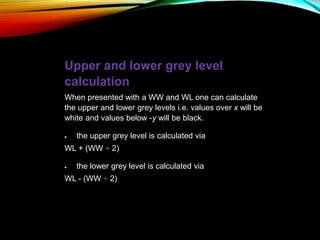
Upper and lower grey level
calculation
When presented with a WW and WL one can calculate
the upper and lower grey levels i.e. values over x will be
white and values below -y will be black.
 the upper grey level is calculated via
WL + (WW ÷ 2)
 the lower grey level is calculated via
WL - (WW ÷ 2)
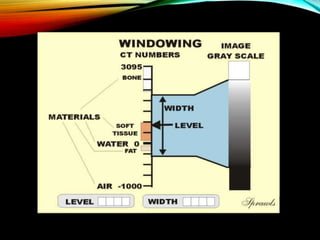
Simply saying window width
controls contrast
and
Window level controls
brightness.
WINDOW LEVEL & IMAGE CONTRAST
WINDOW LEVEL & WINDOW WIDTH
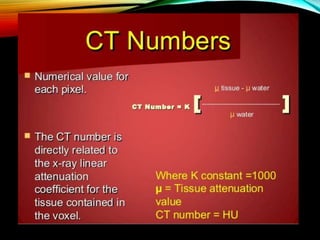
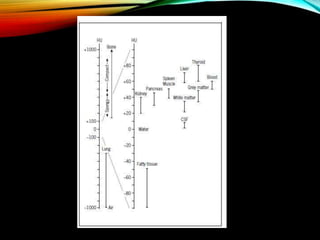
CT numbers, window width and window level

CT numbers, window width and window level

  • 1.
    CT NUMBERS, WINDOW WIDTHAND WINDOW LEVEL G.YOGANANTHEM PROF.DR.I.GURUBHARATH
  • 2.
    The Linear AttenuationCoefficient (µ) The linear attenuation coefficient (µ) describes fraction of a beam of x-rays or gamma rays that absorbed or scattered per unit thickness of the medium. Where: I=the intensity of photons transmitted across some distance x I0=the initial intensity of photons µ=the linear attenuation coefficient x=distance traveled ( thickness )
  • 3.
    The Linear AttenuationCoefficient (µ)
  • 5.
    CT PRINCIPLE • Theinternal structure of an object can be reconstructed from multiple projections of the object. • Linear attenuation coefficient (μ) is the base
  • 6.
  • 8.
    CT :TERMINOLOGY… • Voxel:Volume element 3D) • Pixel: Picture element (2D) • Field of view (FOV): diameter of the area being scanned FOV (250mm) • Pixel size= -------------------- Matrix size(512) – no of pixels =0.5mm
  • 10.
    Why we aregiving importance to CT numbers and why not LINEAR Attenuation coefficient (μ)
  • 11.
    μ 80kV 100kV150kV μ muscle 0.1892 0.1760 0.1550 μ water 0.1835 0.1707 0.1504 Because, when we are changing kvp – Linear attenuation coefficients are μ varying.
  • 12.
    but, CT valueof muscle at different kvp are constant (0.1892-0.1835) 80 kV: 1000 x ---------------------- = 31 0.1835 100 kV :1000 x (0.1760-0.1707) / 0.1707= 31 150 kV :1000 x (0.1550-0.1504) / 0.1504= 31 μ 80kV 100kV 150kV μ muscle 0.1892 0.1760 0.1550 μ water 0.1835 0.1707 0.1504
  • 13.
    It is easyto remember CT value compare to Linear attenuation coefficient value.
  • 16.
    CT IMAGE DISPLAY •The range of CT numbers above and below the window level is called the window width, which determines the contrast • A narrow window width provides higher contrast than wide window width • Window level & window width can be set to any desired value of CT number
  • 17.
    Our normal eyewill not recognize 2000 divisions of CT illuminations
  • 18.
    GRAY SCALE By usinggray scale we made it 20 illuminations only
  • 19.
    -1000 to -901 -900to -801 -800 to -701 -700 to -601 -600 to -501 -500 to -401 -400 to -301 -300 to -201 -200 to -101 -100 to -1 0-100 101-200 201 -301 301-400 401-500 501-600 601-700 701-800 801-900 901-1000
  • 20.
  • 21.
    -20 to -16 -15to -11 -10 to -6 1-5 6-10 11-15 16-20 20-24 21-25 26-30 31-35 36-40 41-45 46-50 51-55 56-60 61-65 66-70 71-75 76-80
  • 22.
  • 23.
    -50 to -41 -40to -31 -30 to -21 -20 to -11 -10 to 0 1-10 11-20 21-30 31-40 41-50 51-60 61-70 71-80 81-90 91-100 101-110 111-120 121-130 131-140 141-150
  • 24.
  • 25.
    -1250 to -1201 -1200to -1151 -1150 to -1101 -1100 to -1051 -1050 to1001 -1000-to -950 -951to -901 -900 to -851 -850 to-801 -800 to-751 -750 to -700 -699 to -650 -649 to -600 -599 to -550 -549 to -500 -499 t0 -450 -449 to -400 -399 to -350 -349 to -300 -299 to -250
  • 26.
    SOME CLINICAL WINDOW LEVEL& WIDTH Examination Window width Window Level Head 80 40 Chest (mediasti) 450 40 Chest (lung) 1500 -500 Abdomen (liver) 150 60
  • 27.
    Window width The windowwidth (WW) as the name suggests is the measure of the range of CT numbers that an image contains. That is range of CT numbers displayed in the CT image. A wider window width (2000 HU), therefore, will display a wider range of CT numbers.
  • 28.
    Window level/centre The window level(WL), often also referred to as window centre, is the midpoint of the range of the CT numbers displayed.
  • 29.
    Upper and lowergrey level calculation When presented with a WW and WL one can calculate the upper and lower grey levels i.e. values over x will be white and values below -y will be black.  the upper grey level is calculated via WL + (WW ÷ 2)  the lower grey level is calculated via WL - (WW ÷ 2)
  • 30.
    Simply saying windowwidth controls contrast and Window level controls brightness.
  • 31.
    WINDOW LEVEL &IMAGE CONTRAST
  • 33.
    WINDOW LEVEL &WINDOW WIDTH