SUDDEN CARDIAC DEATH
Chairperson Dr Praveen Kusubi
Student Dr Ibin Shah
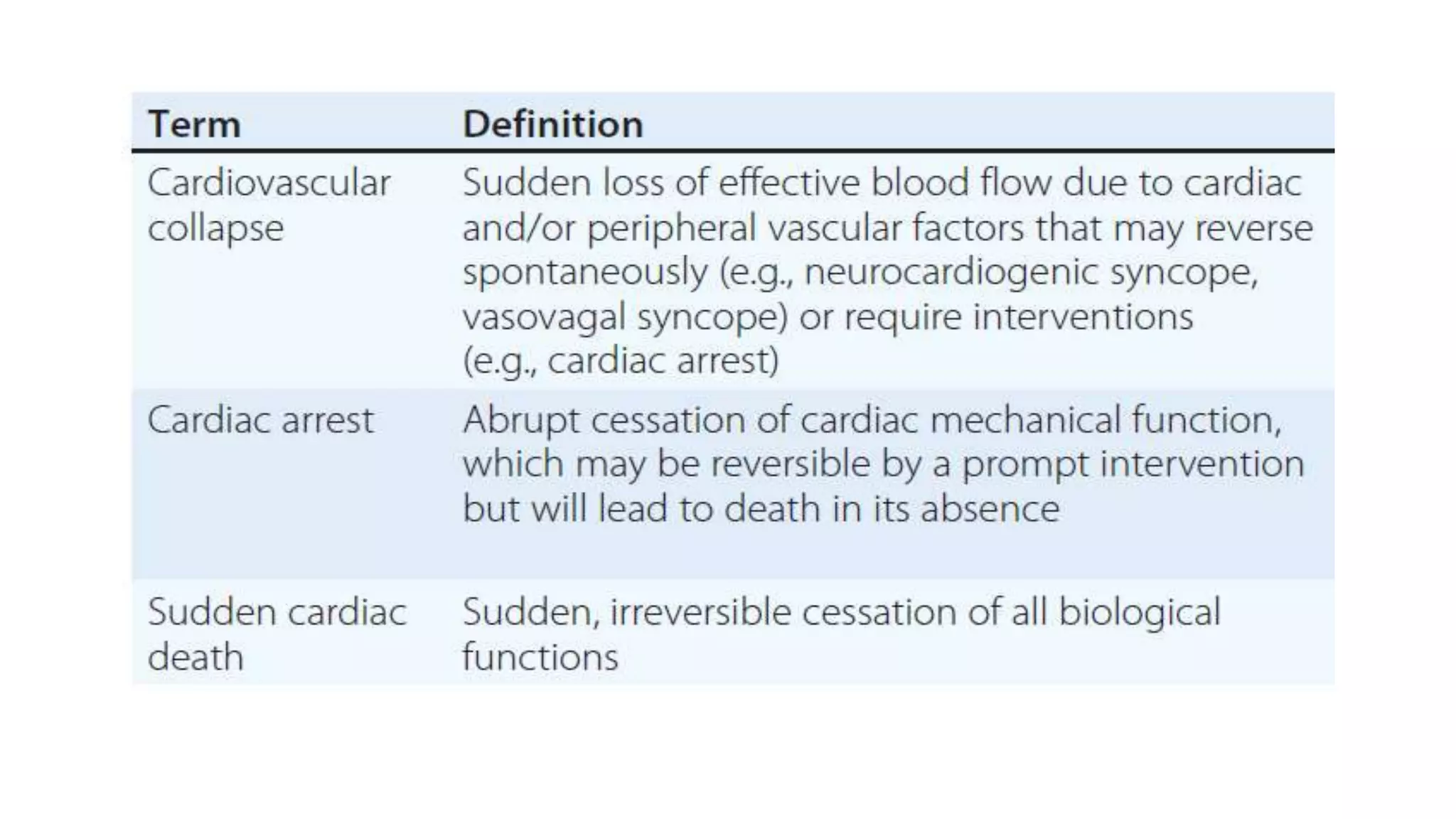
Definition
• SCD is natural death from cardiac causes heralded by abrupt loss of
consciousness within 1 hour of the onset of an acute change in
cardiovascular status
• Preexisting heart disease may or may not have been known to be
present, but the time and mode of death are unexpected
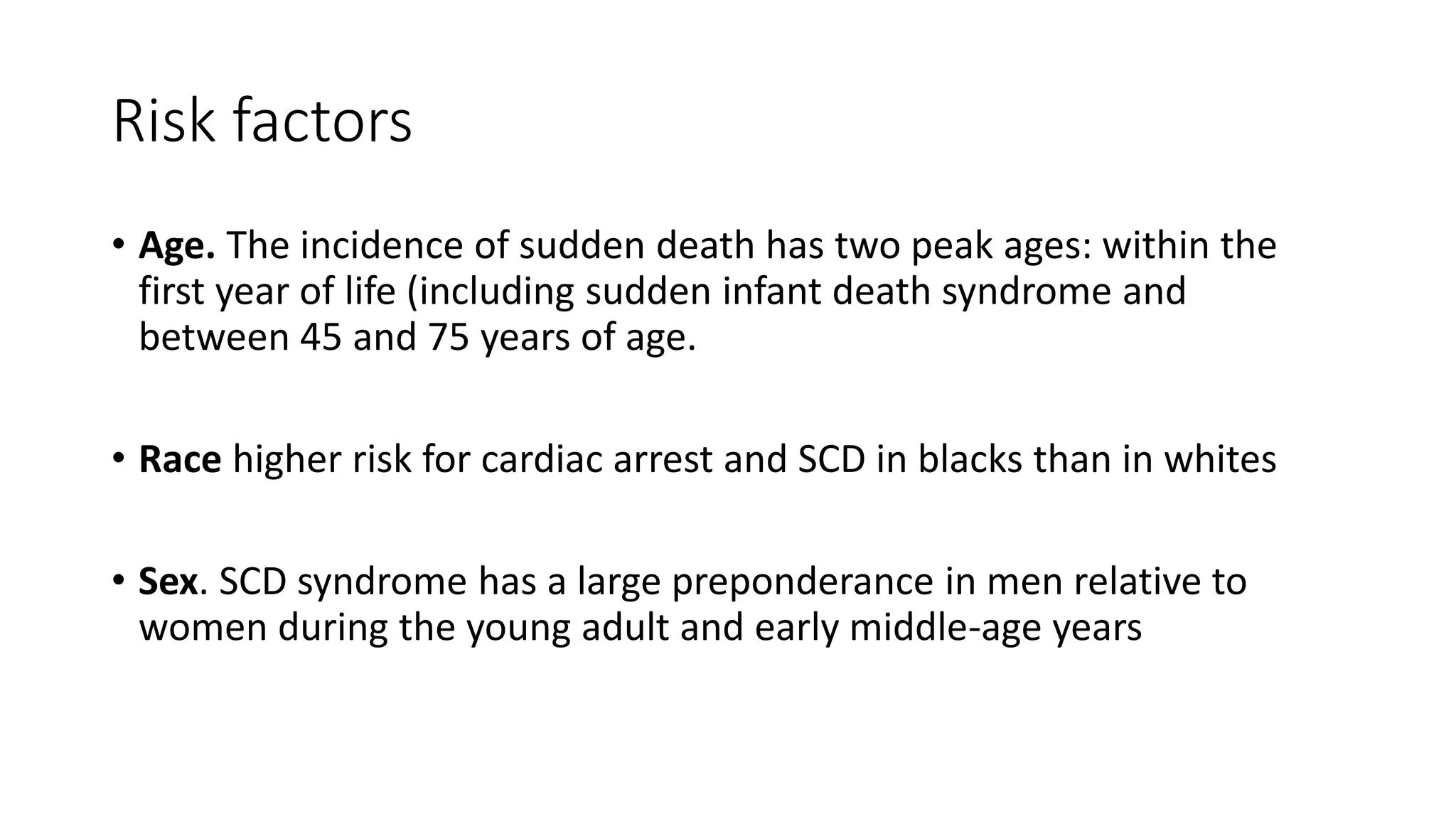
Risk factors
• Age. The incidence of sudden death has two peak ages: within the
first year of life (including sudden infant death syndrome and
between 45 and 75 years of age.
• Race higher risk for cardiac arrest and SCD in blacks than in whites
• Sex. SCD syndrome has a large preponderance in men relative to
women during the young adult and early middle-age years
• Hereditary
• Lifestyle Factors
1.Smokers have a two fold to threefold increase in risk for sudden
death
2. Obesity
3. 17-fold relative increase in SCD associated with vigorous exercise as
opposed to lower level activity or inactive states
habitual vigorous exercise reduces the risk
• Left Ventricular Ejection Fraction in Chronic Ischemic Heart Disease
Ejection fraction of 30% or lower is the single most powerful
independent predictor of SCD
• Ventricular Arrhythmias in Chronic Ischemic Heart Disease
Exercise-induced PVCs and short runs of nonsustained VT
CAUSES OF SUDDEN CARDIAC DEATH
• 1 Atherosclerotic Coronary Artery Disease
• 2. Nonatherosclerotic Coronary Artery Abnormalities
Anomalous Origin of Coronary Arteries from the Wrong Sinus of
Valsalva.
Embolism to the Coronary Arteries.
Coronary Arteritis.- Kawasaki disease , polyarteritis nodosa ,syphilitic
aortitis
Mechanical Obstruction of Coronary Arteries. –Coronary artery
dissection, prolapse of myxomatous polyps, dissection or rupture of a
sinus of Valsalva aneurysm
Deep myocardial bridges over coronary arteries- common in
association with hypertrophic cardiomyopathy
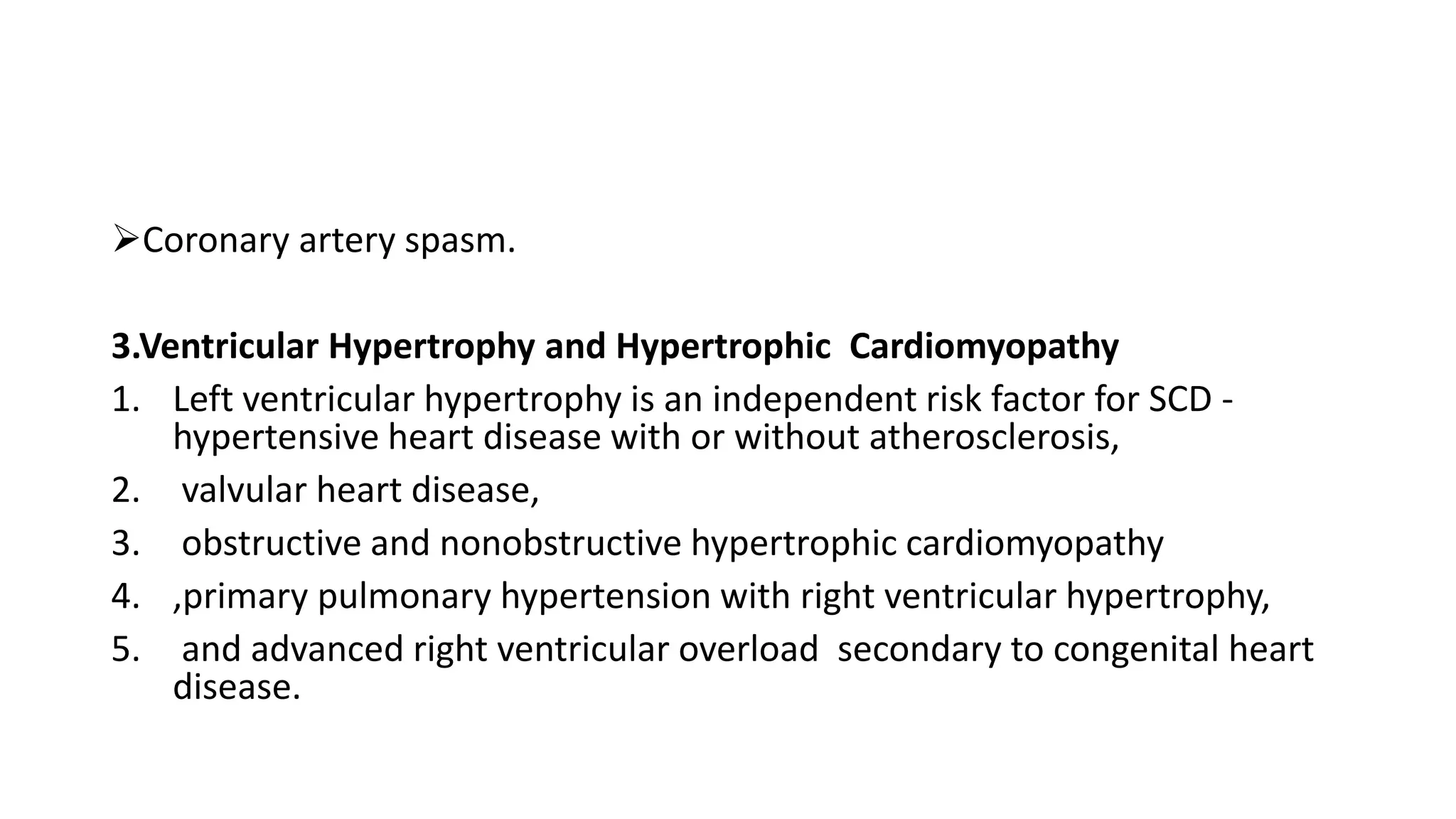
Coronary artery spasm.
3.Ventricular Hypertrophy and Hypertrophic Cardiomyopathy
1. Left ventricular hypertrophy is an independent risk factor for SCD -
hypertensive heart disease with or without atherosclerosis,
2. valvular heart disease,
3. obstructive and nonobstructive hypertrophic cardiomyopathy
4. ,primary pulmonary hypertension with right ventricular hypertrophy,
5. and advanced right ventricular overload secondary to congenital heart
disease.
4. Acute Heart Failure
massive acute myocardial infarction
, acute myocarditis,
acute alcoholic cardiac dysfunction
, acute pulmonary edema
 massive pulmonary embolism,
mechanical disruption of intracardiac structures secondary to
infarction or infection
• 5 .Electrophysiologic Abnormalities
• Long QT syndrome
• Short QT syndrome
• Brugada stndrome
• Catecholaminergic Polymorphic Ventricular Tachycardia.
• Central Nervous System Influences
PATHOLOGY
• More than 80% of SCD victims have pathologic findings of CHD
• 70–75% of males who die suddenly have preexisting healed MIs,
• whereas only 20–30% have recent acute MIs
• Transient ischemia Is the mechanism of onset.
CLINICAL FEATURES OF PATIENTS
WITH CARDIAC ARREST
• Prodromal Symptoms
chest pain,
dyspnea,
 weakness or fatigue,
 palpitations,
syncope,
• Onset of the Terminal Event
Increasing heart rate and advancing grades of ventricular ectopy are
common antecedents of VF.
Alterations in autonomic nervous system activity
• Cardiac Arrest
most common electrical mechanism is VF, followed by asystole or PEA
and pulseless VT
 Mechanical mechanisms include
rupture of the ventricle, cardiac tamponade, acute mechanical
obstruction to flow, and acute disruption of a major blood vessel
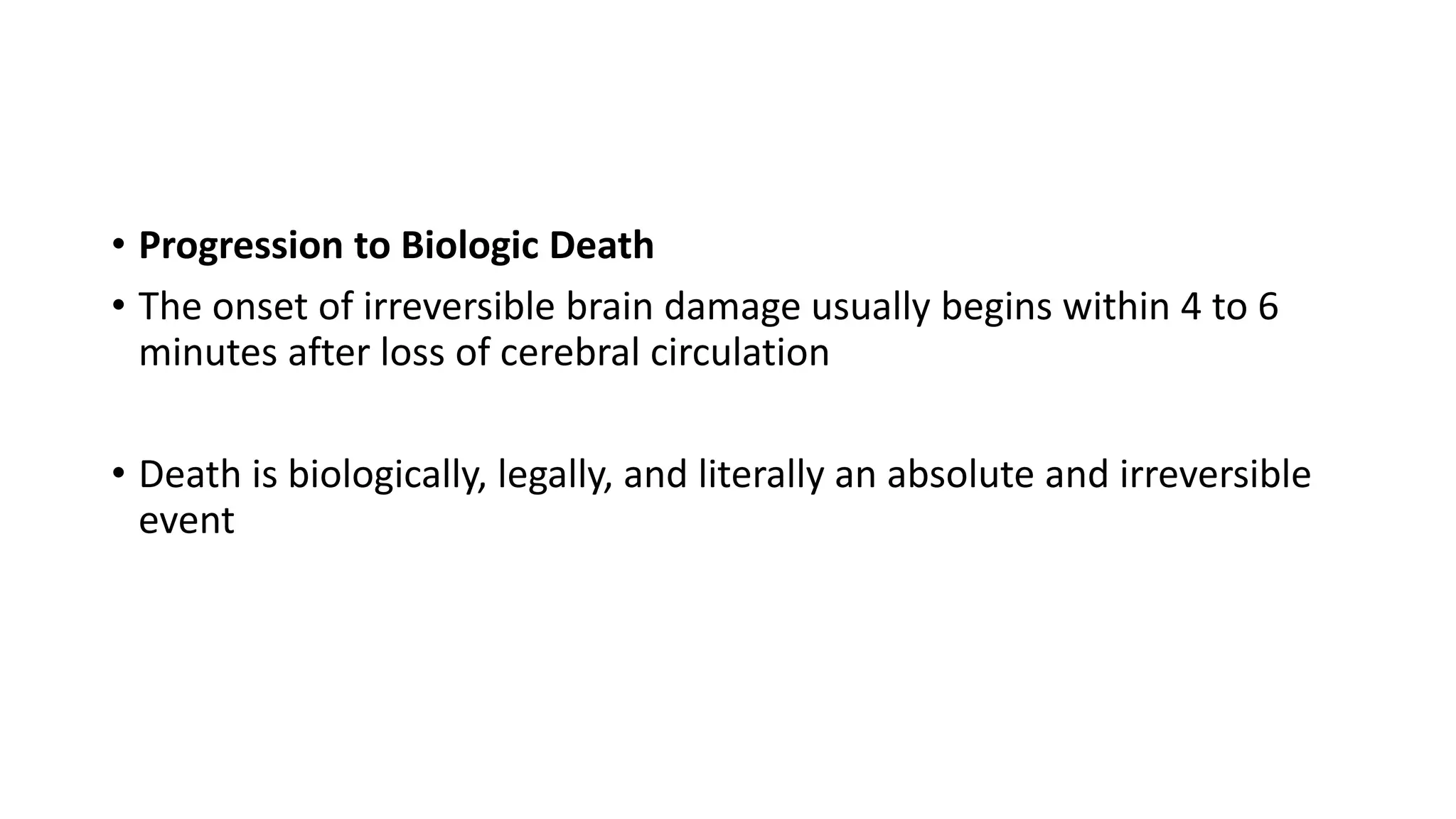
• Progression to Biologic Death
• The onset of irreversible brain damage usually begins within 4 to 6
minutes after loss of cerebral circulation
• Death is biologically, legally, and literally an absolute and irreversible
event
MANAGEMENT OF CARDIAC ARREST
• The response to cardiac arrest is driven by two urgent principles
• : (1) maintenance of continuous artificial cardiopulmonary support
until return of spontaneous circulation has been achieved
• (2) restoration of spontaneous circulation as quickly as possible.
• Five elements to achieve this
• (1) initial assessment and summoning of an emergency response
team
• (2) basic life support
• (3) early defibrillation by a first responder (if available)
• (4) advanced life support
• (5) post–cardiac arrest care.
• Initial Assessment and Basic Life Support
• The first action must be confirmation of a cardiac arrest.
• response to voice, observation for respiratory movements and skin
color, and simultaneous palpation of major arteries for the presence
or absence of pulse
• Chest Thump
• The thumpversion technique involves one or two blows delivered
firmly to the junction of the middle and lower thirds of the sternum
from a height of 8 to 10 inches.
• it is recommended to use precordial thumps as a life support
technique only when monitoring and defibrillation are available
• Basic Life Support—The Initial Steps in Cardiopulmonary
Resuscitation
• Goal of this activity is to maintain viability of the central nervous
system, heart, and other vital organs until definitive return of
spontaneous circulation can be achieved
• Circulation.
• The palm of one hand is placed over the lower half of the sternum
and the heel of the other rests on the dorsum of the lower part of the
hand.
• The sternum is then depressed, with the resuscitator’s arms straight
at the elbows to provide a less tiring and more forceful fulcrum at the
junction of the shoulders and back
• sufficient force is applied to depress the sternum at least 2 inches (>5
cm), with abrupt relaxation, and the cycle is carried out at a rateof
about 100 compressions/min
• For single responders to victims from infancy through adulthood and
for adults responded to by two rescuers, a compression-
ventilationratio of 30:2 is recommended
• Two -rescuer CPR in infants and children,compression-ventilation
ratio is 15:2
• Airway.
• Clearing of the airway includes tilting the head backward and lifting
the chin, in addition to exploring the airway forbforeign bodies,
including dentures, and removing them
Heimlich maneuver
• Breathing.
• mouth-to-mouth resuscitation is initiated if no specific rescue
equipment is available
• Intubation is the preferred procedure
• Advanced Cardiac Life Support
• The general goals of advanced life support are to restore cardiac
rhythm to one that is hemodynamically effective, to optimize
ventilation, and to maintain and support the restored circulation
• A short period of closed-chest cardiac compression 60-90 sec
immediately before defibrillation enhances the probability of survival
• Intubate the patient and start oxygenation
• Establish Intravenous line
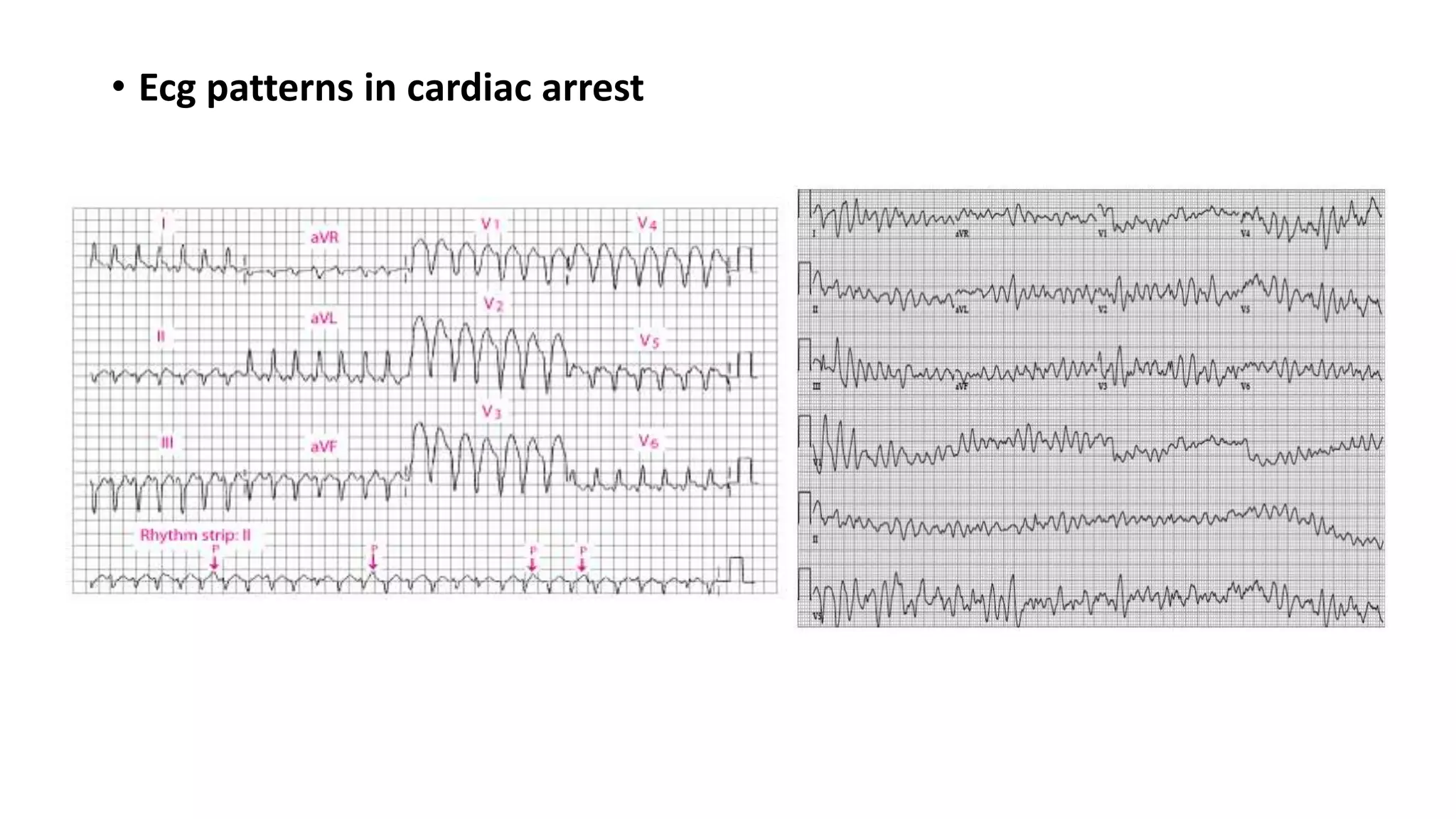
• Ecg patterns in cardiac arrest
Defibrillation-Cardioversion
• VF or VT that is pulseless and/or accompanied by loss of
consciousness is recognized on a monitor or by telemetry,
defibrillation should be carried out immediately
• monophasic devices 360 J initially
• Biphasic devices 120 to 200 J
• Failure of the initial shock to provide an effective rhythm is a poor
prognostic sign.
• Failure of a single adequate shock to restore a pulse should
be followed by continued CPR and a second shock delivered
after five cycles of CPR.
• If cardiac arrest still persists Epinephrine 1mg i.v followed by
repeated defibrillation attempts at 360 J (monophasic) or
200 J or higher (biphasic).
• Meanwhile secure airway and maintain ventilation
• Correct electrolyte imbalances and acidosis if present
• Sodium bicarbonate( 1meq /kg ) is recommended for circumstances
of known or suspected pre-existing bicarbonate-responsive causes of
acidosis, certain drug overdoses, prolonged resuscitation
Pharmacotherapy
• For patients who continue to have persistent or recurrent VT or VF
despite direct-current cardioversion after epinephrine
• Electrical stability of the heart may be achieved by the intravenous
administration of antiarrhythmic agents
• Amiodarone is the drug of choice (300mg bolus, second dose150 mg ,
followed by 1 mg/min for up to 6 h and 0.5 mg/min thereafter)
• If amidarone fails lidocaine is the second choice ( 1mg/kg)
• If acute hyperkalemia is the triggering event for resistant VF 10%
calcium gluconate will be helpful
For resistant forms of polymorphic VT or torsades de pointes, rapid
monomorphic VT or ventricular flutter (rate ≥260/min), or resistant VF
may respond to intravenous beta blocker therapy or intravenous
magnesium sulfate.
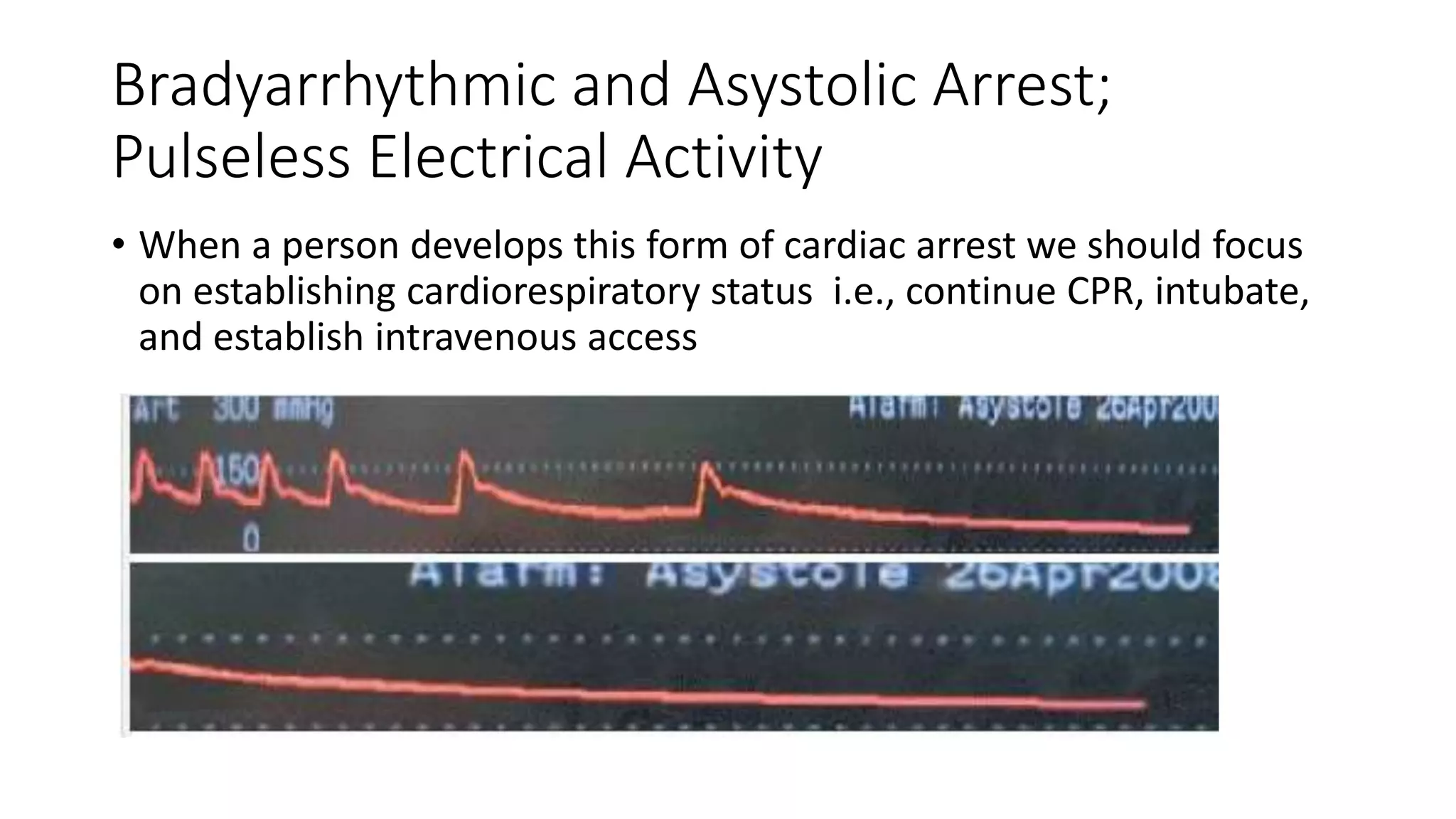
Bradyarrhythmic and Asystolic Arrest;
Pulseless Electrical Activity
• When a person develops this form of cardiac arrest we should focus
on establishing cardiorespiratory status i.e., continue CPR, intubate,
and establish intravenous access
• Possible reversible causes
• Hypovolemia
• hypoxia
• cardiac tamponade
• tension pneumothorax
• preexisting acidosis
• drug overdose
• hypothermia
• hyperkalemia
• Epinephrine 1mg i.v is commonly used in an attempt to elicit
spontaneous electrical activity or to increase the rate of a
bradycardia.
• Sodium bicarbonate, 1 mEq/kg, may be tried for known or strongly
suspected preexisting hyperkalemia or bicarbonate-responsive
acidosis
• Stabilization of Cardiac Rhythm after Initial Return of
Spontaneous Circulation
• If frequent PVC and VT persist – use antiarrythmic drugs
• First choice is amiodarone
• In arrythmia due to acute ischemic events lidocaine is
preferred
• For recurrent episodes of polymorphic VT unresponsive to
amiodarone , use magnesium sulphate
Post cardiac arrest syndrome and post
resuscitation care
• The four components of post-cardiac arrest syndrome include
• brain injury
• myocardial dysfunction
• systemic ischemia/reperfusion responses
• and control of persistent precipitating factor
• The goal is to maintain a stable electrical, hemodynamic, and central
nervous system status
• Post resuscitation care
• Mild therapeutic hypothermia is indicated for resuscitated cardiac
arrest victims who are hemodynamically stable, but remain comatose
• Core body temperature is decreased to 32–34°C, by several available
techniques as soon as practical after resuscitation and maintained for
a minimum of 12–24 h.
• It reduces metabolic demands and cerebral edema, and improves
probability of survival with better neurologic outcome.
Primary prevention of SCD in patients with
ischemic heart disease
• Indications for Implantable Cardioverter-Defibrillators in
Genetic Disorders Associated with Risk for Sudden Cardiac
Death
References
• 1. 2017 AHA/ACC/HRS Guideline for Management of Patients With
Ventricular Arrhythmias and the Prevention of Sudden Cardiac Death
• 2 .Braunwald’s heart disease
• 3. Harrisons principles of internal medicine
• 4. Paul l marino ICU Book
•THANK YOU

Sudden cardiac death

  • 1.
    SUDDEN CARDIAC DEATH ChairpersonDr Praveen Kusubi Student Dr Ibin Shah
  • 2.
    Definition • SCD isnatural death from cardiac causes heralded by abrupt loss of consciousness within 1 hour of the onset of an acute change in cardiovascular status • Preexisting heart disease may or may not have been known to be present, but the time and mode of death are unexpected
  • 4.
    Risk factors • Age.The incidence of sudden death has two peak ages: within the first year of life (including sudden infant death syndrome and between 45 and 75 years of age. • Race higher risk for cardiac arrest and SCD in blacks than in whites • Sex. SCD syndrome has a large preponderance in men relative to women during the young adult and early middle-age years
  • 5.
  • 6.
    • Lifestyle Factors 1.Smokershave a two fold to threefold increase in risk for sudden death 2. Obesity 3. 17-fold relative increase in SCD associated with vigorous exercise as opposed to lower level activity or inactive states habitual vigorous exercise reduces the risk
  • 7.
    • Left VentricularEjection Fraction in Chronic Ischemic Heart Disease Ejection fraction of 30% or lower is the single most powerful independent predictor of SCD • Ventricular Arrhythmias in Chronic Ischemic Heart Disease Exercise-induced PVCs and short runs of nonsustained VT
  • 8.
    CAUSES OF SUDDENCARDIAC DEATH • 1 Atherosclerotic Coronary Artery Disease • 2. Nonatherosclerotic Coronary Artery Abnormalities Anomalous Origin of Coronary Arteries from the Wrong Sinus of Valsalva. Embolism to the Coronary Arteries.
  • 9.
    Coronary Arteritis.- Kawasakidisease , polyarteritis nodosa ,syphilitic aortitis Mechanical Obstruction of Coronary Arteries. –Coronary artery dissection, prolapse of myxomatous polyps, dissection or rupture of a sinus of Valsalva aneurysm Deep myocardial bridges over coronary arteries- common in association with hypertrophic cardiomyopathy
  • 10.
    Coronary artery spasm. 3.VentricularHypertrophy and Hypertrophic Cardiomyopathy 1. Left ventricular hypertrophy is an independent risk factor for SCD - hypertensive heart disease with or without atherosclerosis, 2. valvular heart disease, 3. obstructive and nonobstructive hypertrophic cardiomyopathy 4. ,primary pulmonary hypertension with right ventricular hypertrophy, 5. and advanced right ventricular overload secondary to congenital heart disease.
  • 11.
    4. Acute HeartFailure massive acute myocardial infarction , acute myocarditis, acute alcoholic cardiac dysfunction , acute pulmonary edema  massive pulmonary embolism, mechanical disruption of intracardiac structures secondary to infarction or infection
  • 12.
    • 5 .ElectrophysiologicAbnormalities • Long QT syndrome • Short QT syndrome • Brugada stndrome • Catecholaminergic Polymorphic Ventricular Tachycardia. • Central Nervous System Influences
  • 16.
    PATHOLOGY • More than80% of SCD victims have pathologic findings of CHD • 70–75% of males who die suddenly have preexisting healed MIs, • whereas only 20–30% have recent acute MIs • Transient ischemia Is the mechanism of onset.
  • 17.
    CLINICAL FEATURES OFPATIENTS WITH CARDIAC ARREST • Prodromal Symptoms chest pain, dyspnea,  weakness or fatigue,  palpitations, syncope,
  • 19.
    • Onset ofthe Terminal Event Increasing heart rate and advancing grades of ventricular ectopy are common antecedents of VF. Alterations in autonomic nervous system activity
  • 20.
    • Cardiac Arrest mostcommon electrical mechanism is VF, followed by asystole or PEA and pulseless VT  Mechanical mechanisms include rupture of the ventricle, cardiac tamponade, acute mechanical obstruction to flow, and acute disruption of a major blood vessel
  • 21.
    • Progression toBiologic Death • The onset of irreversible brain damage usually begins within 4 to 6 minutes after loss of cerebral circulation • Death is biologically, legally, and literally an absolute and irreversible event
  • 22.
    MANAGEMENT OF CARDIACARREST • The response to cardiac arrest is driven by two urgent principles • : (1) maintenance of continuous artificial cardiopulmonary support until return of spontaneous circulation has been achieved • (2) restoration of spontaneous circulation as quickly as possible.
  • 23.
    • Five elementsto achieve this • (1) initial assessment and summoning of an emergency response team • (2) basic life support • (3) early defibrillation by a first responder (if available) • (4) advanced life support • (5) post–cardiac arrest care.
  • 24.
    • Initial Assessmentand Basic Life Support • The first action must be confirmation of a cardiac arrest. • response to voice, observation for respiratory movements and skin color, and simultaneous palpation of major arteries for the presence or absence of pulse
  • 25.
    • Chest Thump •The thumpversion technique involves one or two blows delivered firmly to the junction of the middle and lower thirds of the sternum from a height of 8 to 10 inches. • it is recommended to use precordial thumps as a life support technique only when monitoring and defibrillation are available
  • 26.
    • Basic LifeSupport—The Initial Steps in Cardiopulmonary Resuscitation • Goal of this activity is to maintain viability of the central nervous system, heart, and other vital organs until definitive return of spontaneous circulation can be achieved
  • 27.
    • Circulation. • Thepalm of one hand is placed over the lower half of the sternum and the heel of the other rests on the dorsum of the lower part of the hand. • The sternum is then depressed, with the resuscitator’s arms straight at the elbows to provide a less tiring and more forceful fulcrum at the junction of the shoulders and back • sufficient force is applied to depress the sternum at least 2 inches (>5 cm), with abrupt relaxation, and the cycle is carried out at a rateof about 100 compressions/min
  • 29.
    • For singleresponders to victims from infancy through adulthood and for adults responded to by two rescuers, a compression- ventilationratio of 30:2 is recommended • Two -rescuer CPR in infants and children,compression-ventilation ratio is 15:2
  • 30.
    • Airway. • Clearingof the airway includes tilting the head backward and lifting the chin, in addition to exploring the airway forbforeign bodies, including dentures, and removing them
  • 31.
  • 32.
    • Breathing. • mouth-to-mouthresuscitation is initiated if no specific rescue equipment is available • Intubation is the preferred procedure
  • 33.
    • Advanced CardiacLife Support • The general goals of advanced life support are to restore cardiac rhythm to one that is hemodynamically effective, to optimize ventilation, and to maintain and support the restored circulation • A short period of closed-chest cardiac compression 60-90 sec immediately before defibrillation enhances the probability of survival
  • 34.
    • Intubate thepatient and start oxygenation • Establish Intravenous line
  • 35.
    • Ecg patternsin cardiac arrest
  • 39.
    Defibrillation-Cardioversion • VF orVT that is pulseless and/or accompanied by loss of consciousness is recognized on a monitor or by telemetry, defibrillation should be carried out immediately • monophasic devices 360 J initially • Biphasic devices 120 to 200 J • Failure of the initial shock to provide an effective rhythm is a poor prognostic sign.
  • 41.
    • Failure ofa single adequate shock to restore a pulse should be followed by continued CPR and a second shock delivered after five cycles of CPR. • If cardiac arrest still persists Epinephrine 1mg i.v followed by repeated defibrillation attempts at 360 J (monophasic) or 200 J or higher (biphasic).
  • 42.
    • Meanwhile secureairway and maintain ventilation • Correct electrolyte imbalances and acidosis if present • Sodium bicarbonate( 1meq /kg ) is recommended for circumstances of known or suspected pre-existing bicarbonate-responsive causes of acidosis, certain drug overdoses, prolonged resuscitation
  • 43.
    Pharmacotherapy • For patientswho continue to have persistent or recurrent VT or VF despite direct-current cardioversion after epinephrine • Electrical stability of the heart may be achieved by the intravenous administration of antiarrhythmic agents • Amiodarone is the drug of choice (300mg bolus, second dose150 mg , followed by 1 mg/min for up to 6 h and 0.5 mg/min thereafter) • If amidarone fails lidocaine is the second choice ( 1mg/kg)
  • 44.
    • If acutehyperkalemia is the triggering event for resistant VF 10% calcium gluconate will be helpful For resistant forms of polymorphic VT or torsades de pointes, rapid monomorphic VT or ventricular flutter (rate ≥260/min), or resistant VF may respond to intravenous beta blocker therapy or intravenous magnesium sulfate.
  • 46.
    Bradyarrhythmic and AsystolicArrest; Pulseless Electrical Activity • When a person develops this form of cardiac arrest we should focus on establishing cardiorespiratory status i.e., continue CPR, intubate, and establish intravenous access
  • 47.
    • Possible reversiblecauses • Hypovolemia • hypoxia • cardiac tamponade • tension pneumothorax • preexisting acidosis • drug overdose • hypothermia • hyperkalemia
  • 48.
    • Epinephrine 1mgi.v is commonly used in an attempt to elicit spontaneous electrical activity or to increase the rate of a bradycardia. • Sodium bicarbonate, 1 mEq/kg, may be tried for known or strongly suspected preexisting hyperkalemia or bicarbonate-responsive acidosis
  • 51.
    • Stabilization ofCardiac Rhythm after Initial Return of Spontaneous Circulation • If frequent PVC and VT persist – use antiarrythmic drugs • First choice is amiodarone • In arrythmia due to acute ischemic events lidocaine is preferred • For recurrent episodes of polymorphic VT unresponsive to amiodarone , use magnesium sulphate
  • 53.
    Post cardiac arrestsyndrome and post resuscitation care • The four components of post-cardiac arrest syndrome include • brain injury • myocardial dysfunction • systemic ischemia/reperfusion responses • and control of persistent precipitating factor • The goal is to maintain a stable electrical, hemodynamic, and central nervous system status
  • 54.
    • Post resuscitationcare • Mild therapeutic hypothermia is indicated for resuscitated cardiac arrest victims who are hemodynamically stable, but remain comatose • Core body temperature is decreased to 32–34°C, by several available techniques as soon as practical after resuscitation and maintained for a minimum of 12–24 h. • It reduces metabolic demands and cerebral edema, and improves probability of survival with better neurologic outcome.
  • 55.
    Primary prevention ofSCD in patients with ischemic heart disease
  • 57.
    • Indications forImplantable Cardioverter-Defibrillators in Genetic Disorders Associated with Risk for Sudden Cardiac Death
  • 59.
    References • 1. 2017AHA/ACC/HRS Guideline for Management of Patients With Ventricular Arrhythmias and the Prevention of Sudden Cardiac Death • 2 .Braunwald’s heart disease • 3. Harrisons principles of internal medicine • 4. Paul l marino ICU Book
  • 60.

Editor's Notes

  • #3 1-hour definition, which primarily refers to the duration of the “terminal event,” defines the interval between the onset of symptoms signaling the pathophysiologic disturbance leading to cardiac arrest and the onset of the cardiac arrest itself.
  • #4 cardiac arrest is often potentially reversible Death is biologically, legally, and literally an absolute and irreversible event for statistical purposes, deaths that occur during hospitalization or within 30 days after resuscitated cardiac arrest are counted as sudden deaths
  • #5 one of four lesions: congenital aortic stenosis, Eisenmenger syndrome, pulmonary stenosis or atresia, or obstructive hypertrophic Cardiomyopathy Other common causes included myocarditis, hypertrophic and dilated cardiomyopathy, congenital heart disease, and aortic dissection.
  • #6 Chlorpromazine Tricyclic antidepressants Haloperidol Droperidol Quetiapine Olanzapine
  • #8 10 PVCs per hour as a threshold level for increased risk Nonsustained ventricular tachycardia (NSVT) is defined as 3 (sometimes 5) or more consecutive beats arising below the atrioventricular node with an RR interval of <600 ms (>100 beats/min) and lasting <30 s
  • #9 When the anomalous artery passes between the aortic and the pulmonary artery root, the takeoff angle of the anomalous ostium creates a slitlike opening of the vessel that reduces the effective cross-sectional area for blood flow. Coronary artery emboli occur most commonly in aortic valve endocarditis and from thrombotic material on diseased or prosthetic aortic or mitral valves. Emboli can also originate from left ventricular mural thrombi or as a consequence of surgery or cardiac catheterization.
  • #10 Coronary artery dissection, with or without dissection of the aorta, Marfan syndrome,after trauma and in the peripartum period of pregnancy
  • #11 although young age at onset, a strong family history of SCD, magnitude of the left ventricular mass, ventricular arrhythmias, and worsening symptoms (especially syncope) appear to indicate higher risk
  • #12 Mechanical disruptions of cardiac structures a. Rupture of the ventricular free wall b. Disruption of the mitral apparatus (1) Papillary muscle (2) Chordae tendineae (3) Leaflet c. Rupture of the interventricular septum
  • #13 takotsubo cardiomyopathy voodoo death
  • #20 The period of 1 hour or less between acute changes in cardiovascular status and the cardiac arrest itself is defined as the “onset of the terminal event
  • #21 Cardiac arrest is characterized by abrupt loss of consciousness caused by lack of adequate cerebral blood flow as a result of failure of cardiac pump function. It almost always leads to death in the absence of a successful intervention,
  • #25 absence of a carotid or femoral pulse detected by a medical professional, particularly if it is confirmed by the absence of an audible heartbeat, is a primary diagnostic criterion. skin color may be pale or intensely cyanotic. In contrast, absence of respiratory effort or the presence of severe stridor with persistence of a pulse suggests a primary respiratory arrest
  • #26 occasionally revert VT or VF
  • #37 Escape rhythms with underlying ventricular standstill. (A) Junctional escape rhythm with narrow QRS complexes. (B) Idioventricular escape rhythm with wide QRS complexes. Treatment should include the use of intravenous atropine and, if needed, sympathomimetic drugs in an attempt to speed up these bradycardias, which cannot support the circulation. If hyperkalemia is present, it should be treated
  • #39 Brugada pattern showing characteristic ST elevations in the right chest leads. The ECG superficially resembles a right bundle branch block (RBBB) pattern. However, typical RBBB produces an rSR′ pattern in right precordial leads and is not associated with ST segment elevation (arrows) in this distribution. The Brugada pattern appears to be a marker of abnormal right ventricular repolarization and in some individuals (Brugada syndrome) is associated with an increased risk of life-threatening ventricular arrhythmias and sudden cardiac arrest.
  • #43 alkalosis, hypernatremia, and hyperosmolality may outweigh its benefits, Up to 50% of the dose may be repeated every 10 to 15 minutes during the course of CPR. When possible, arterial pH, Po2, and Pco2 should be monitored during the resuscitation.
  • #44 Intravenous amiodarone has emerged as the initial treatment of choice.124 Bolus therapy is followed by a maintenance dose during the next 18 hours and for several days, as necessary, depending on the stability of the rhythm. A bolus of lidocaine may an acute transmural myocardial infarction as the triggering mechanism for the cardiac arrest.
  • #46 Intravenous procainamide (loading infusion of 100 mg/5 min to a total dose of 500–800 mg, followed by continuous infusion at 2–5 mg/min) is now rarely used in this setting but may be tried for persisting, hemodynamically stable arrhythmias
  • #49 epinephrine, 1 mg (10 mL of a 1:10,000 solution), may be given by the intracardiac or intraosseous route,