ULTRASOUND
COMPONENTS AND THEIR
USES
Presenter: Dr. Dheeraj Kumar
MRIT, Ph.D. (Radiology and Imaging)
Assistant Professor
Medical Radiology and Imaging Technology
School of Health Sciences, CSJM University, Kanpur
Introduction
• Definition of ultrasound imaging in radiology: Ultrasound uses sound
waves to create real-time images of internal body structures.
• Importance of ultrasound technology in medical diagnosis: Non-invasive,
safe, and cost-effective imaging method with various applications.
• Overview of the presentation structure: An outline of topics covered,
including components and working principles of ultrasound machines.
03-08-2023 Ultrasound Components and Their Uses By- Dr. Dheeraj Kumar 2
Basic Principles of Ultrasound
• Explanation of sound waves and their properties: Ultrasound waves are
mechanical waves with high frequency beyond human hearing range.
• Difference between ultrasound waves and other imaging techniques:
Comparison with X-rays, MRI, and CT scans.
• Ultrasound frequency and its relation to image quality: Higher frequency
provides better resolution but limited penetration.
03-08-2023 Ultrasound Components and Their Uses By- Dr. Dheeraj Kumar 3
Transducer: Introduction
• Definition and function of the transducer in
an ultrasound machine: Converts electrical
energy to ultrasound waves and vice versa.
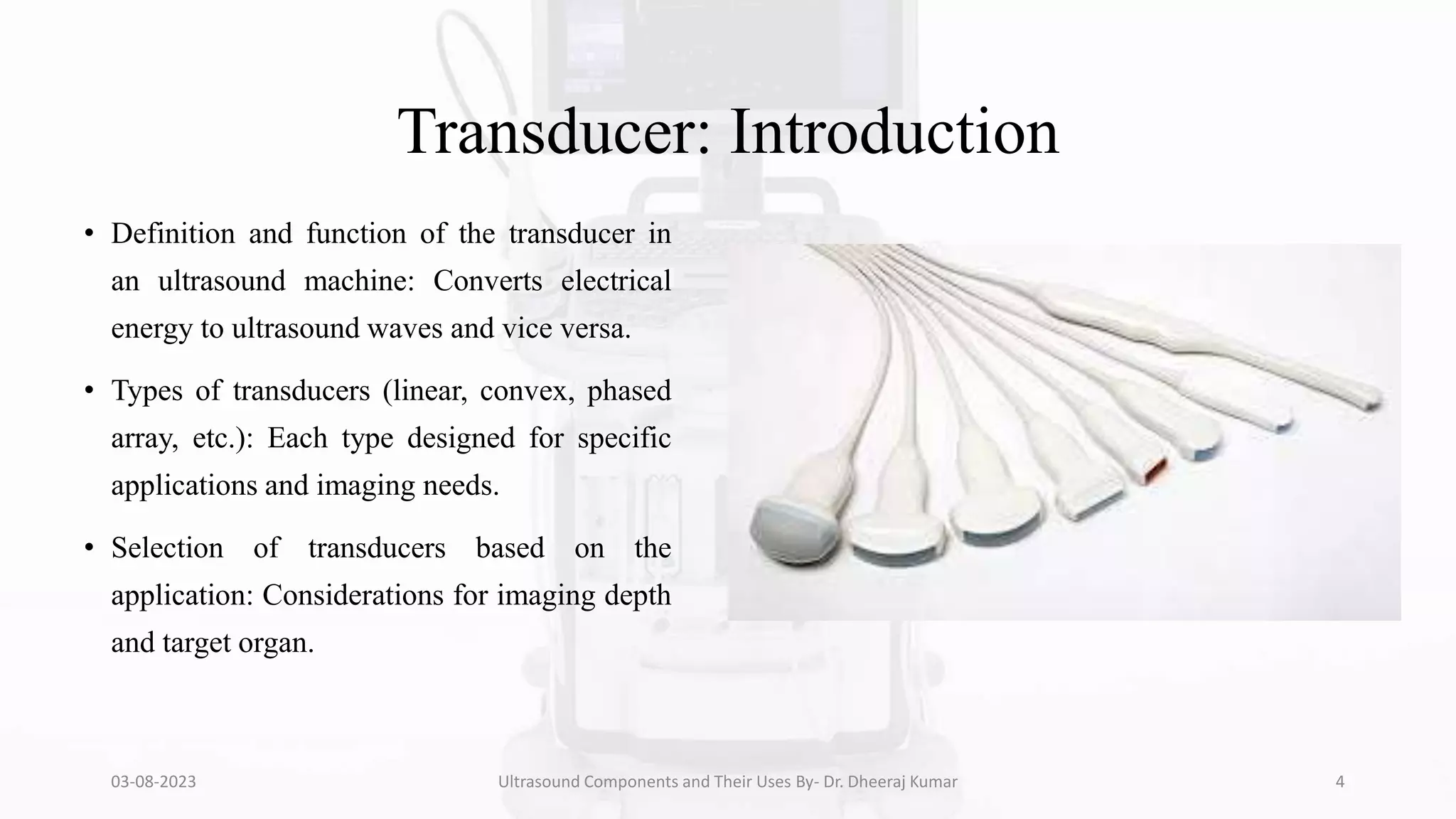
• Types of transducers (linear, convex, phased
array, etc.): Each type designed for specific
applications and imaging needs.
• Selection of transducers based on the
application: Considerations for imaging depth
and target organ.
03-08-2023 Ultrasound Components and Their Uses By- Dr. Dheeraj Kumar 4
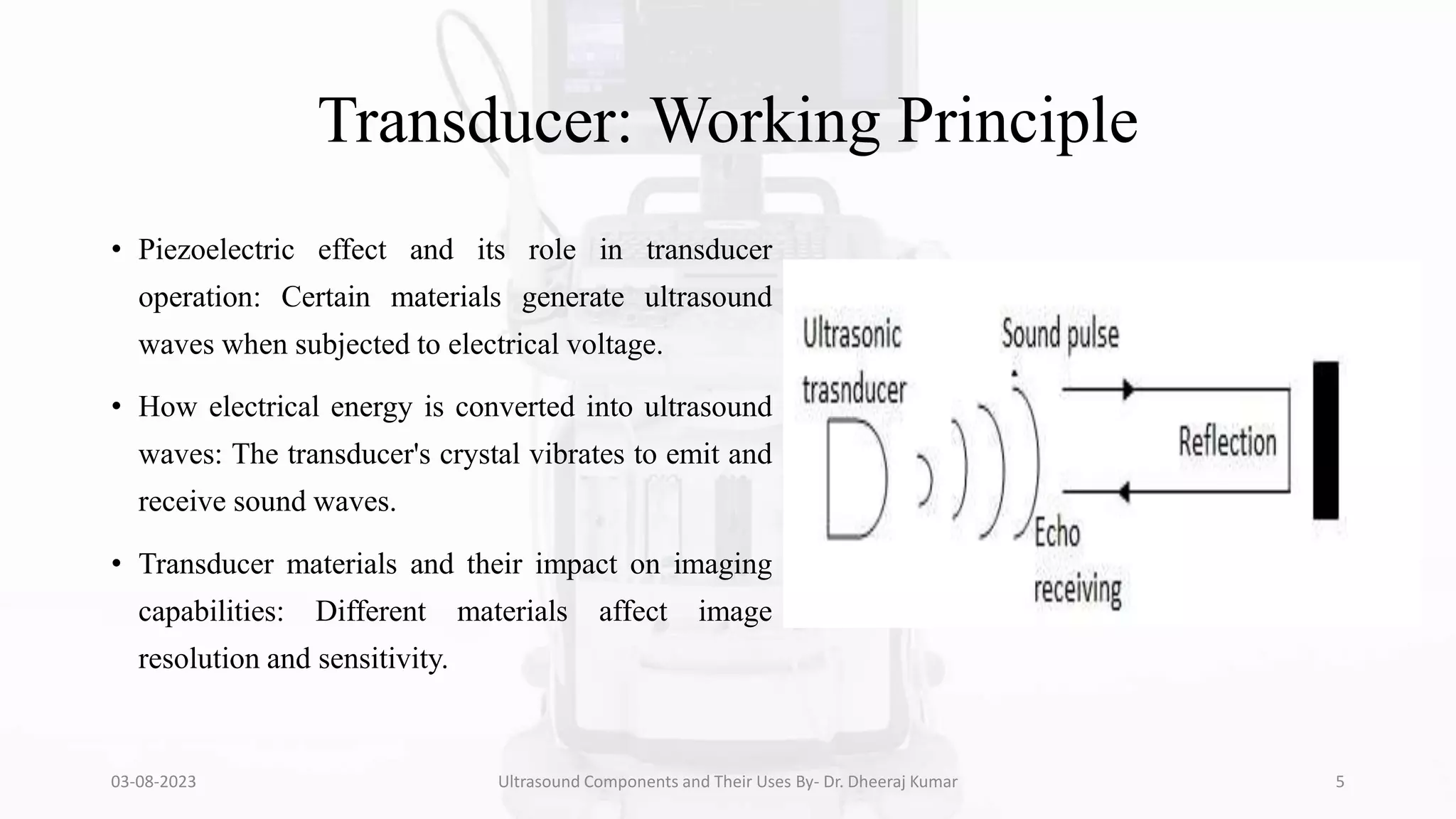
Transducer: Working Principle
• Piezoelectric effect and its role in transducer
operation: Certain materials generate ultrasound
waves when subjected to electrical voltage.
• How electrical energy is converted into ultrasound
waves: The transducer's crystal vibrates to emit and
receive sound waves.
• Transducer materials and their impact on imaging
capabilities: Different materials affect image
resolution and sensitivity.
03-08-2023 Ultrasound Components and Their Uses By- Dr. Dheeraj Kumar 5
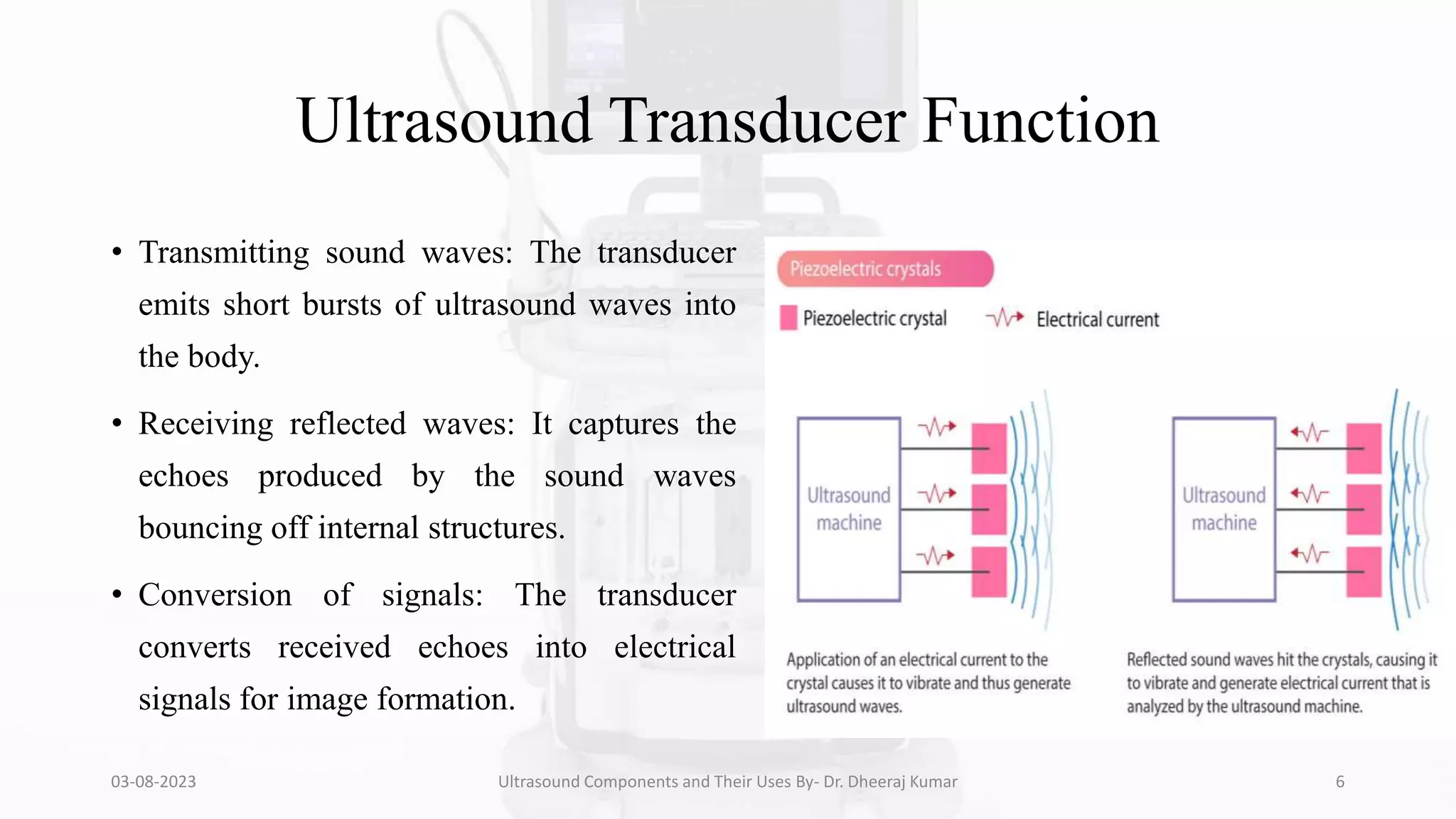
Ultrasound Transducer Function
• Transmitting sound waves: The transducer
emits short bursts of ultrasound waves into
the body.
• Receiving reflected waves: It captures the
echoes produced by the sound waves
bouncing off internal structures.
• Conversion of signals: The transducer
converts received echoes into electrical
signals for image formation.
03-08-2023 Ultrasound Components and Their Uses By- Dr. Dheeraj Kumar 6
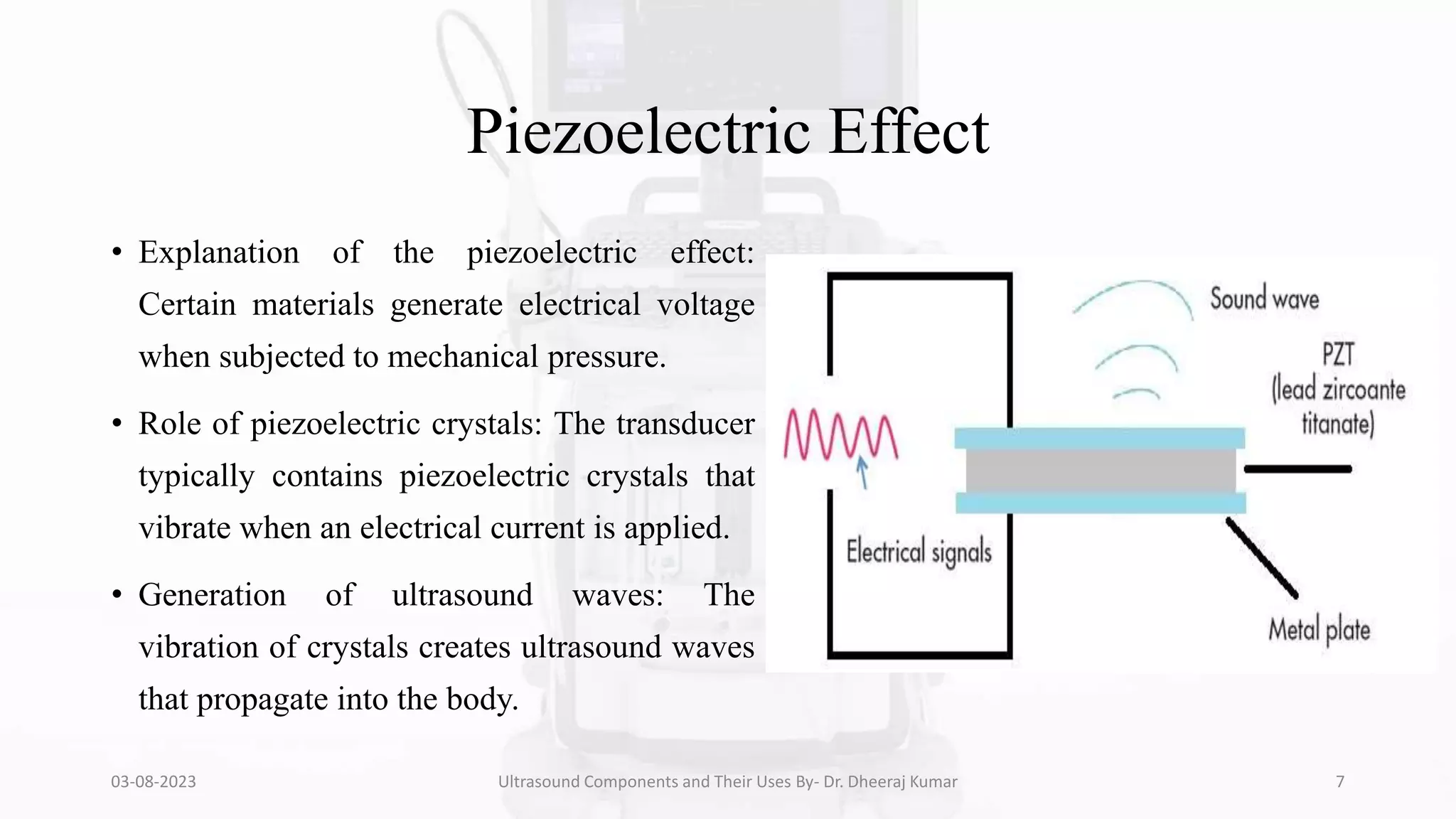
Piezoelectric Effect
• Explanation of the piezoelectric effect:
Certain materials generate electrical voltage
when subjected to mechanical pressure.
• Role of piezoelectric crystals: The transducer
typically contains piezoelectric crystals that
vibrate when an electrical current is applied.
• Generation of ultrasound waves: The
vibration of crystals creates ultrasound waves
that propagate into the body.
03-08-2023 Ultrasound Components and Their Uses By- Dr. Dheeraj Kumar 7
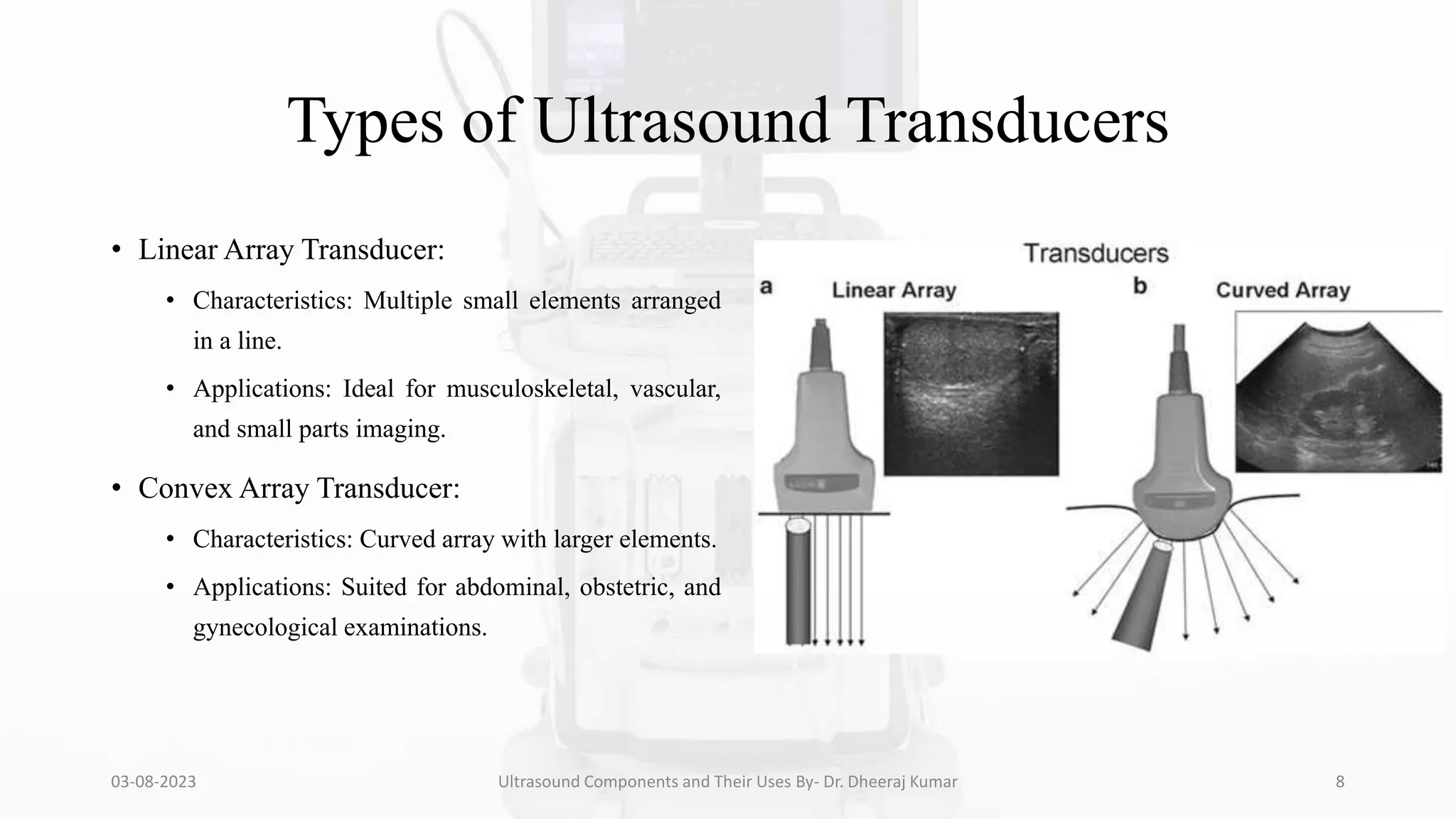
Types of Ultrasound Transducers
• Linear Array Transducer:
• Characteristics: Multiple small elements arranged
in a line.
• Applications: Ideal for musculoskeletal, vascular,
and small parts imaging.
• Convex Array Transducer:
• Characteristics: Curved array with larger elements.
• Applications: Suited for abdominal, obstetric, and
gynecological examinations.
03-08-2023 Ultrasound Components and Their Uses By- Dr. Dheeraj Kumar 8
Types of Ultrasound Transducers (Continued)
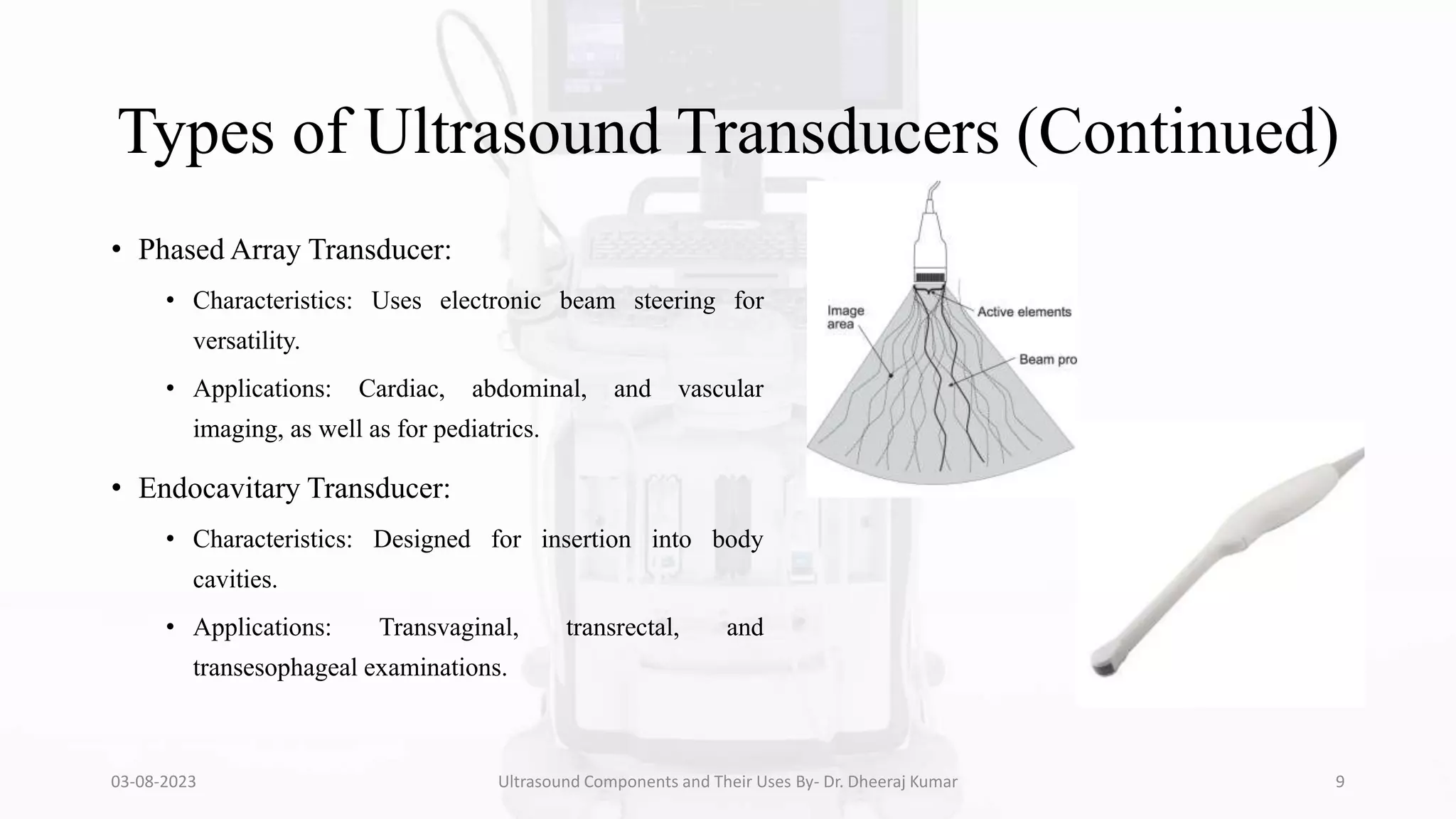
• Phased Array Transducer:
• Characteristics: Uses electronic beam steering for
versatility.
• Applications: Cardiac, abdominal, and vascular
imaging, as well as for pediatrics.
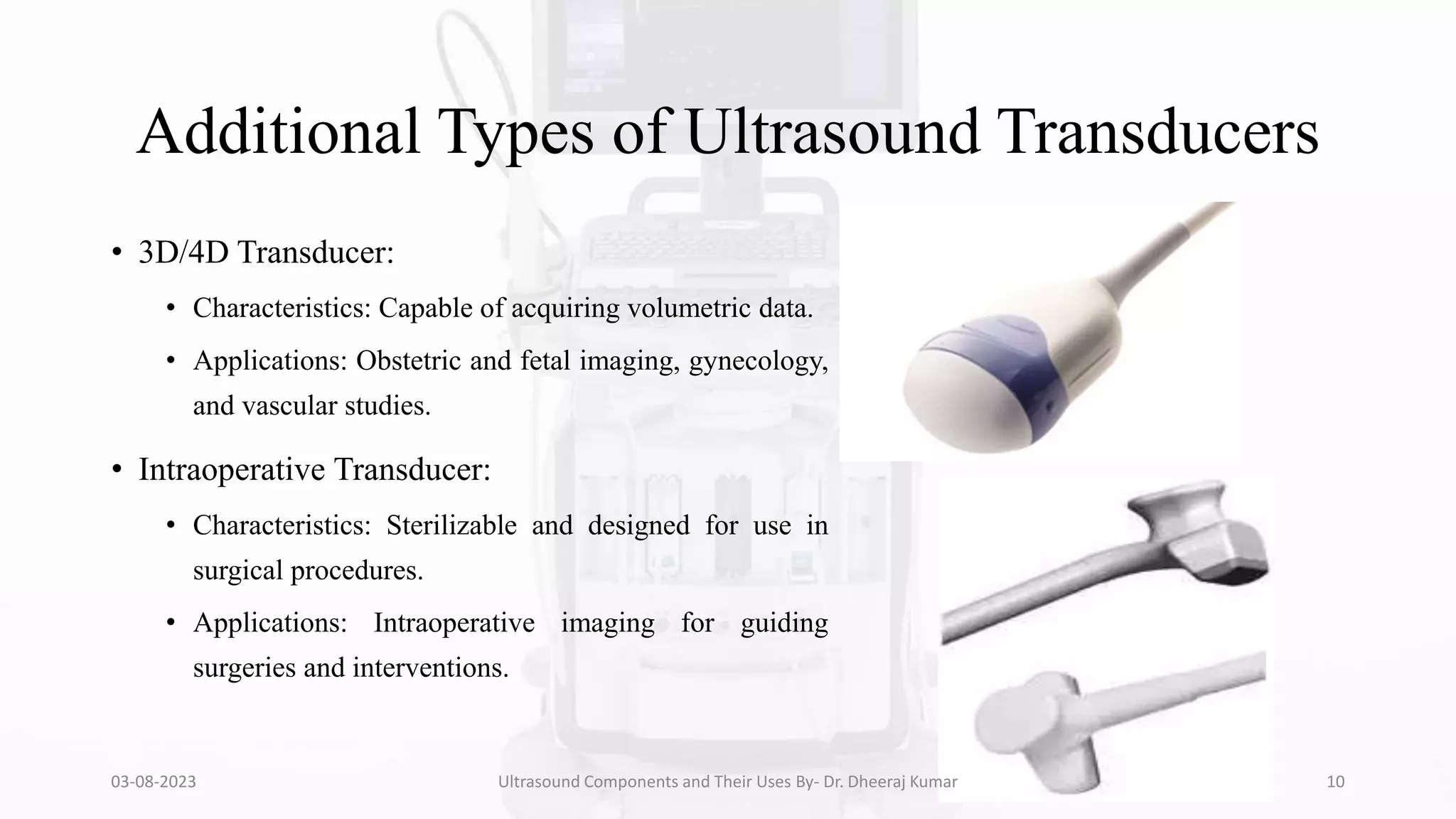
• Endocavitary Transducer:
• Characteristics: Designed for insertion into body
cavities.
• Applications: Transvaginal, transrectal, and
transesophageal examinations.
03-08-2023 Ultrasound Components and Their Uses By- Dr. Dheeraj Kumar 9
Additional Types of Ultrasound Transducers
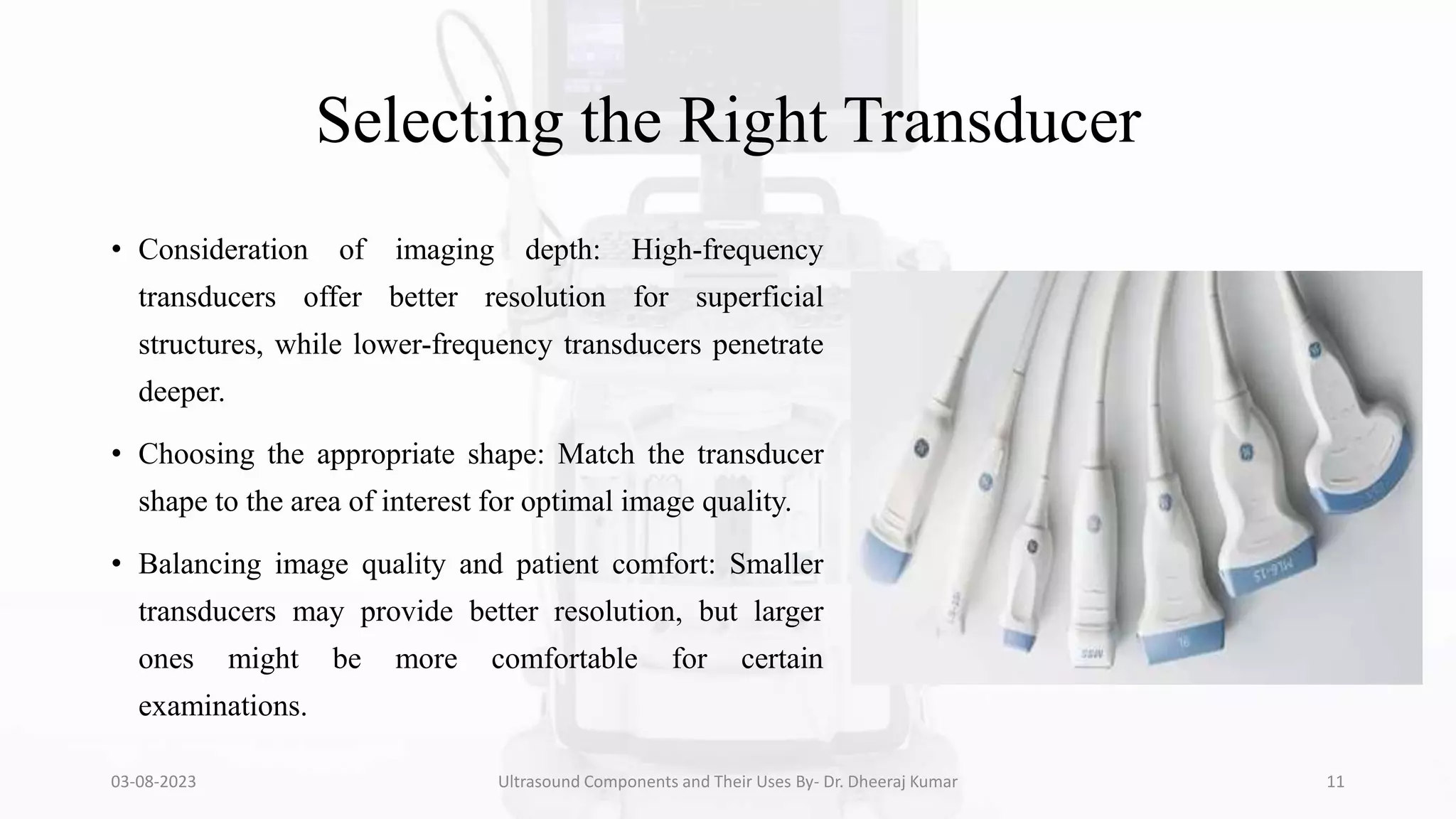
• 3D/4D Transducer:
• Characteristics: Capable of acquiring volumetric data.
• Applications: Obstetric and fetal imaging, gynecology,
and vascular studies.
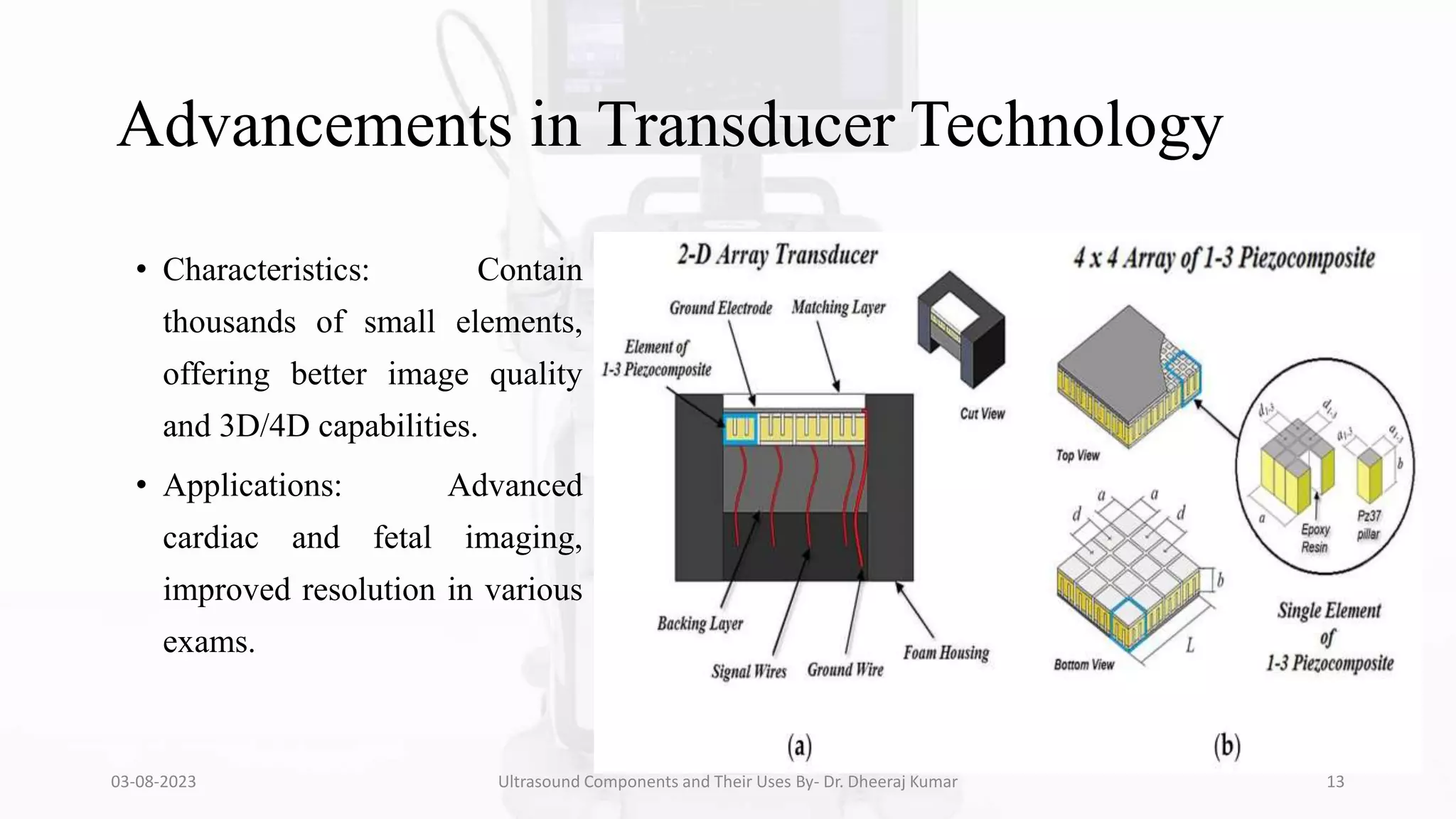
• Intraoperative Transducer:
• Characteristics: Sterilizable and designed for use in
surgical procedures.
• Applications: Intraoperative imaging for guiding
surgeries and interventions.
03-08-2023 Ultrasound Components and Their Uses By- Dr. Dheeraj Kumar 10
Selecting the Right Transducer
• Consideration of imaging depth: High-frequency
transducers offer better resolution for superficial
structures, while lower-frequency transducers penetrate
deeper.
• Choosing the appropriate shape: Match the transducer
shape to the area of interest for optimal image quality.
• Balancing image quality and patient comfort: Smaller
transducers may provide better resolution, but larger
ones might be more comfortable for certain
examinations.
03-08-2023 Ultrasound Components and Their Uses By- Dr. Dheeraj Kumar 11
Transducer Care and Maintenance
• Proper handling and storage: Transducers are
delicate and should be handled with care to
avoid damage.
• Cleaning and disinfection: Following
manufacturer guidelines for cleaning and
disinfecting to prevent cross-contamination.
• Regular maintenance and calibration: Routine
checks and calibration ensure optimal
performance and image quality.
03-08-2023 Ultrasound Components and Their Uses By- Dr. Dheeraj Kumar 12
Advancements in Transducer Technology
• Characteristics: Contain
thousands of small elements,
offering better image quality
and 3D/4D capabilities.
• Applications: Advanced
cardiac and fetal imaging,
improved resolution in various
exams.
03-08-2023 Ultrasound Components and Their Uses By- Dr. Dheeraj Kumar 13
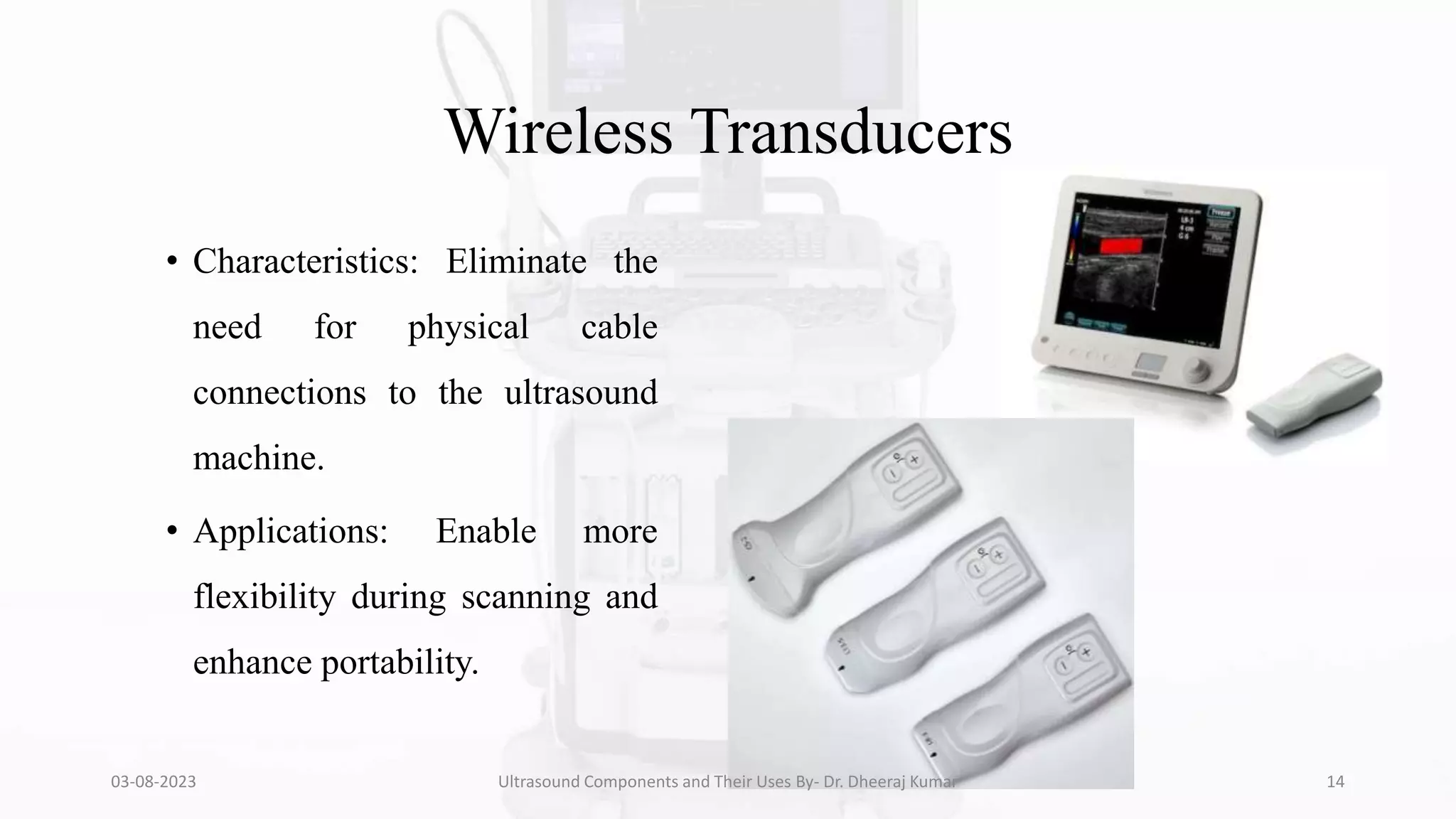
Wireless Transducers
• Characteristics: Eliminate the
need for physical cable
connections to the ultrasound
machine.
• Applications: Enable more
flexibility during scanning and
enhance portability.
03-08-2023 Ultrasound Components and Their Uses By- Dr. Dheeraj Kumar 14
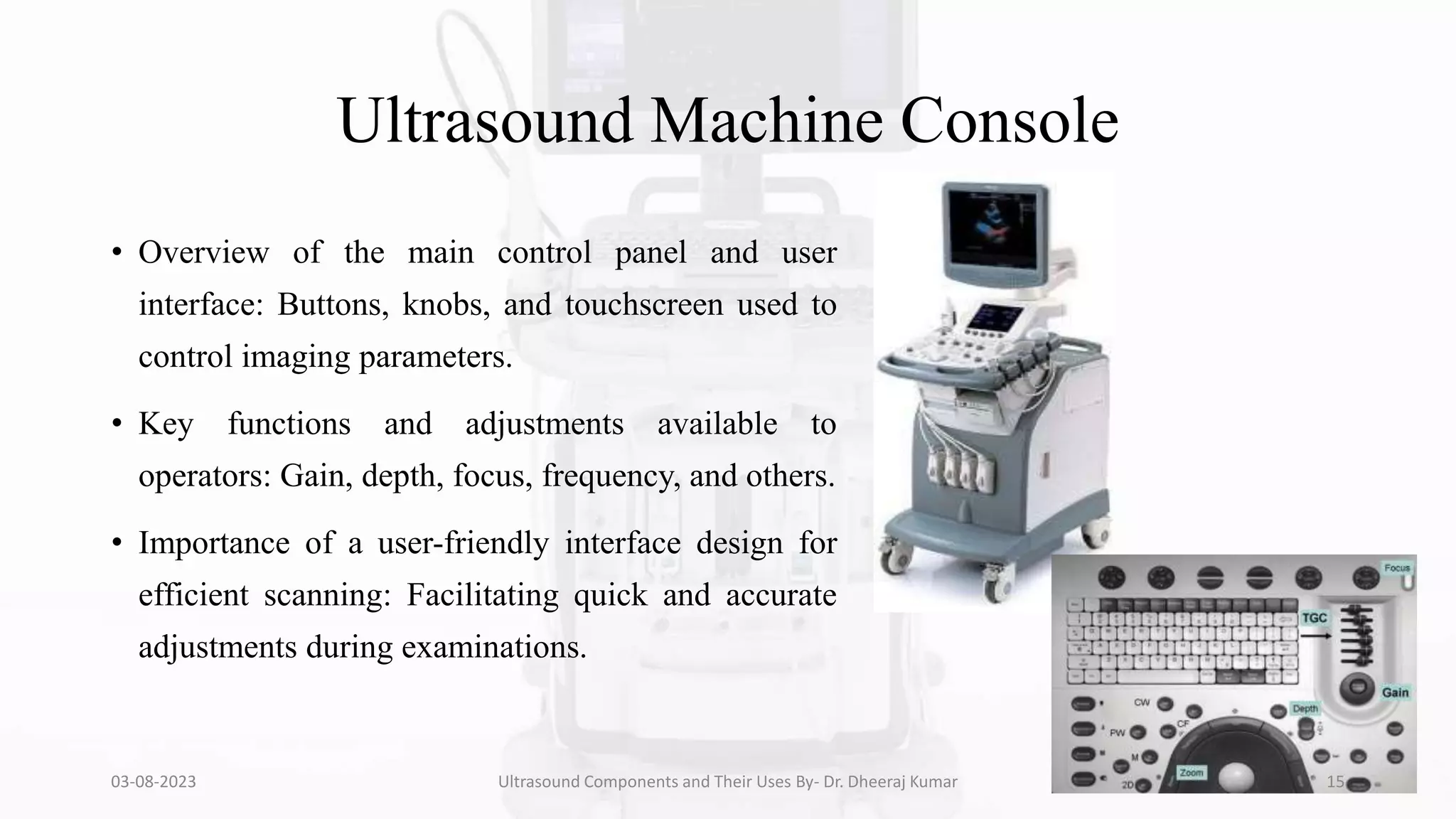
Ultrasound Machine Console
• Overview of the main control panel and user
interface: Buttons, knobs, and touchscreen used to
control imaging parameters.
• Key functions and adjustments available to
operators: Gain, depth, focus, frequency, and others.
• Importance of a user-friendly interface design for
efficient scanning: Facilitating quick and accurate
adjustments during examinations.
03-08-2023 Ultrasound Components and Their Uses By- Dr. Dheeraj Kumar 15
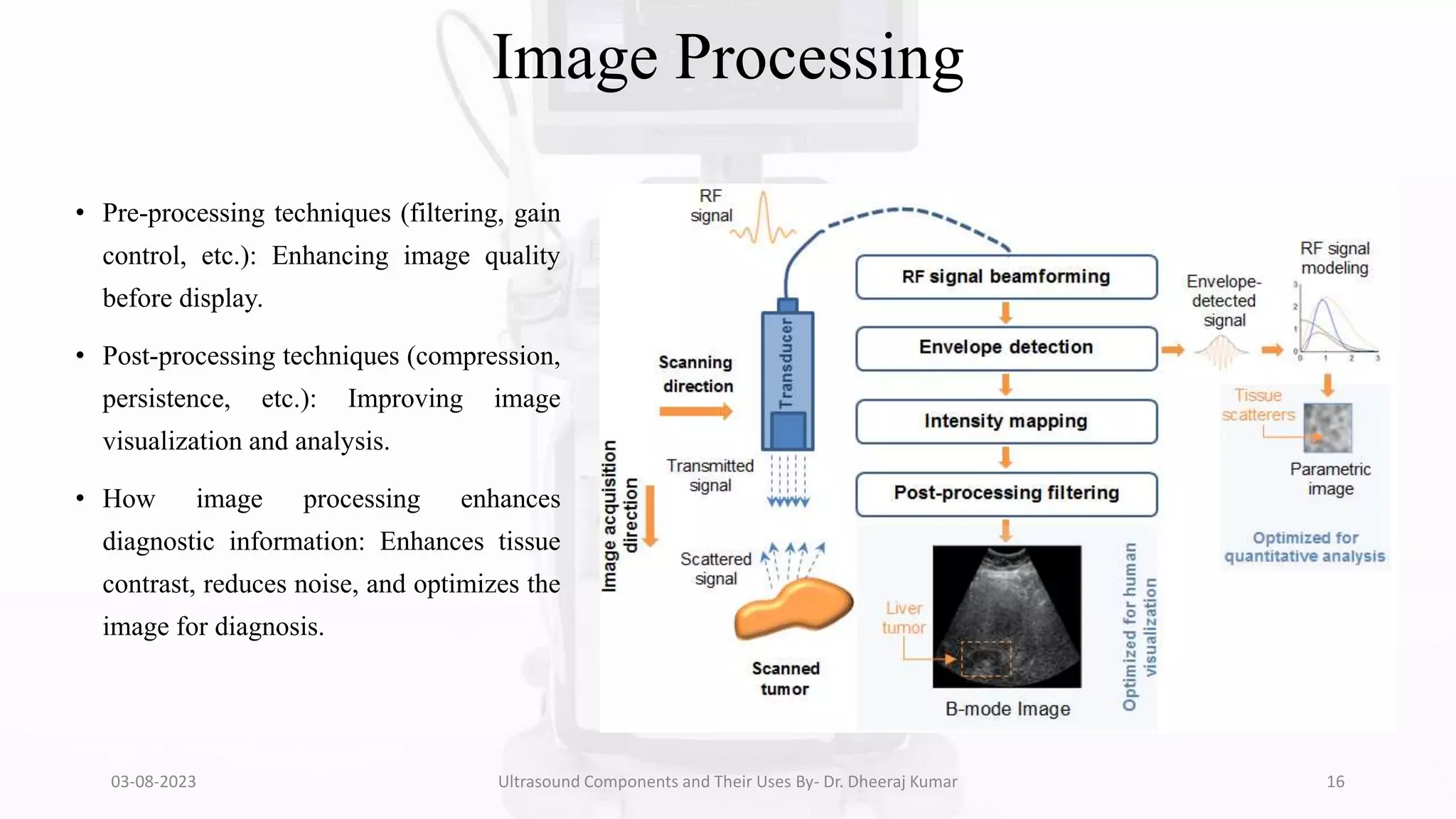
Image Processing
• Pre-processing techniques (filtering, gain
control, etc.): Enhancing image quality
before display.
• Post-processing techniques (compression,
persistence, etc.): Improving image
visualization and analysis.
• How image processing enhances
diagnostic information: Enhances tissue
contrast, reduces noise, and optimizes the
image for diagnosis.
03-08-2023 Ultrasound Components and Their Uses By- Dr. Dheeraj Kumar 16
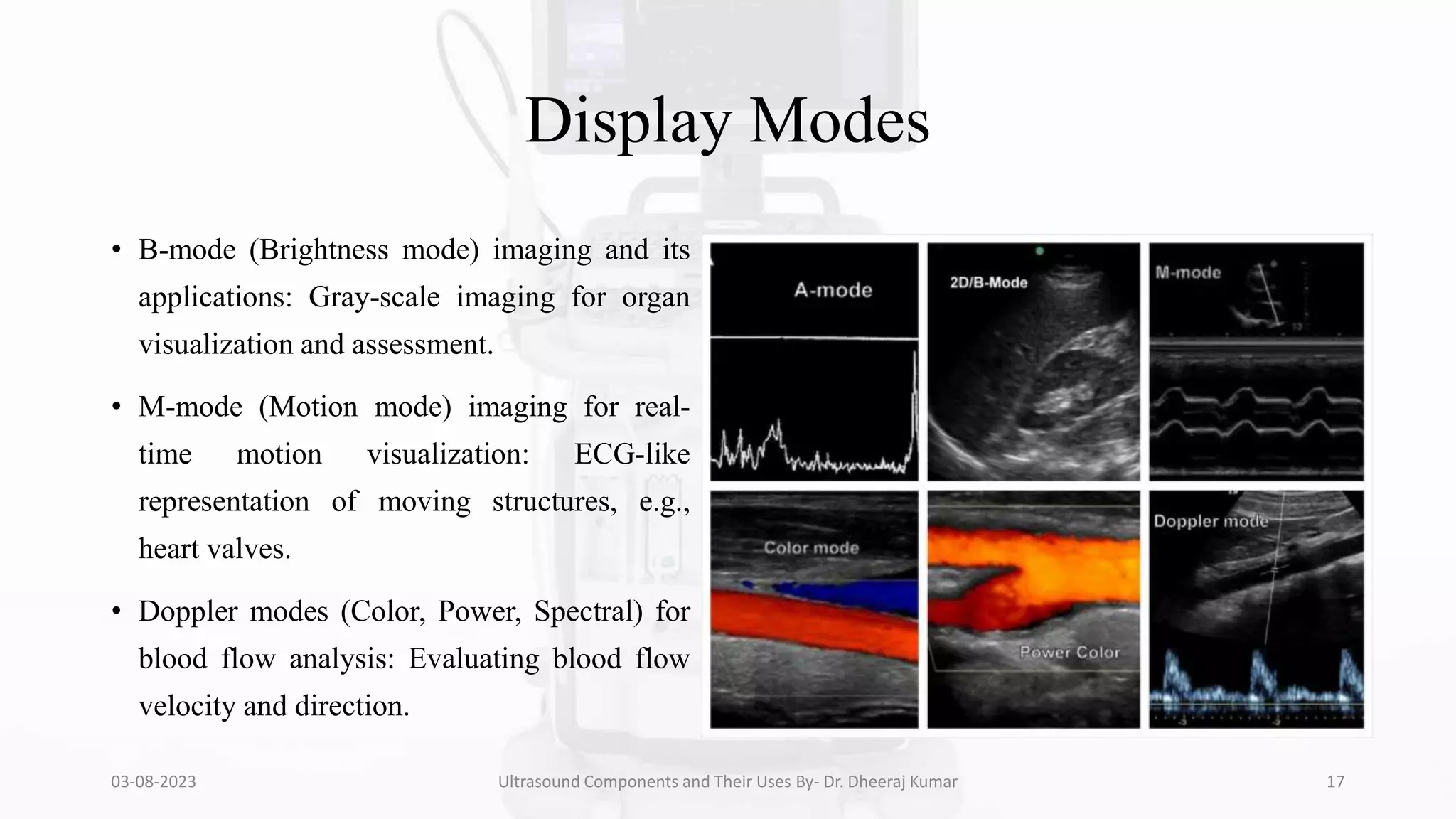
Display Modes
• B-mode (Brightness mode) imaging and its
applications: Gray-scale imaging for organ
visualization and assessment.
• M-mode (Motion mode) imaging for real-
time motion visualization: ECG-like
representation of moving structures, e.g.,
heart valves.
• Doppler modes (Color, Power, Spectral) for
blood flow analysis: Evaluating blood flow
velocity and direction.
03-08-2023 Ultrasound Components and Their Uses By- Dr. Dheeraj Kumar 17
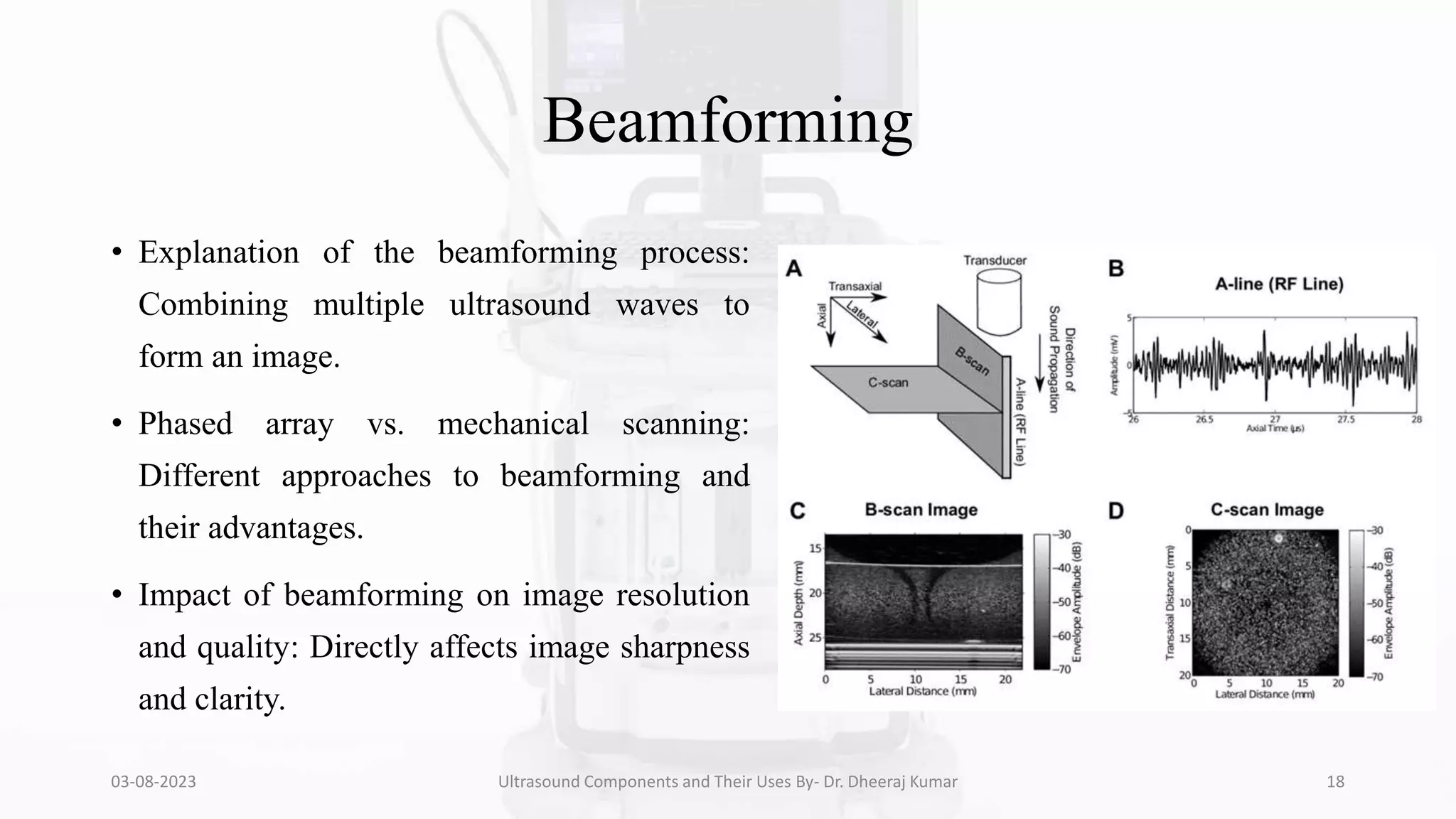
Beamforming
• Explanation of the beamforming process:
Combining multiple ultrasound waves to
form an image.
• Phased array vs. mechanical scanning:
Different approaches to beamforming and
their advantages.
• Impact of beamforming on image resolution
and quality: Directly affects image sharpness
and clarity.
03-08-2023 Ultrasound Components and Their Uses By- Dr. Dheeraj Kumar 18
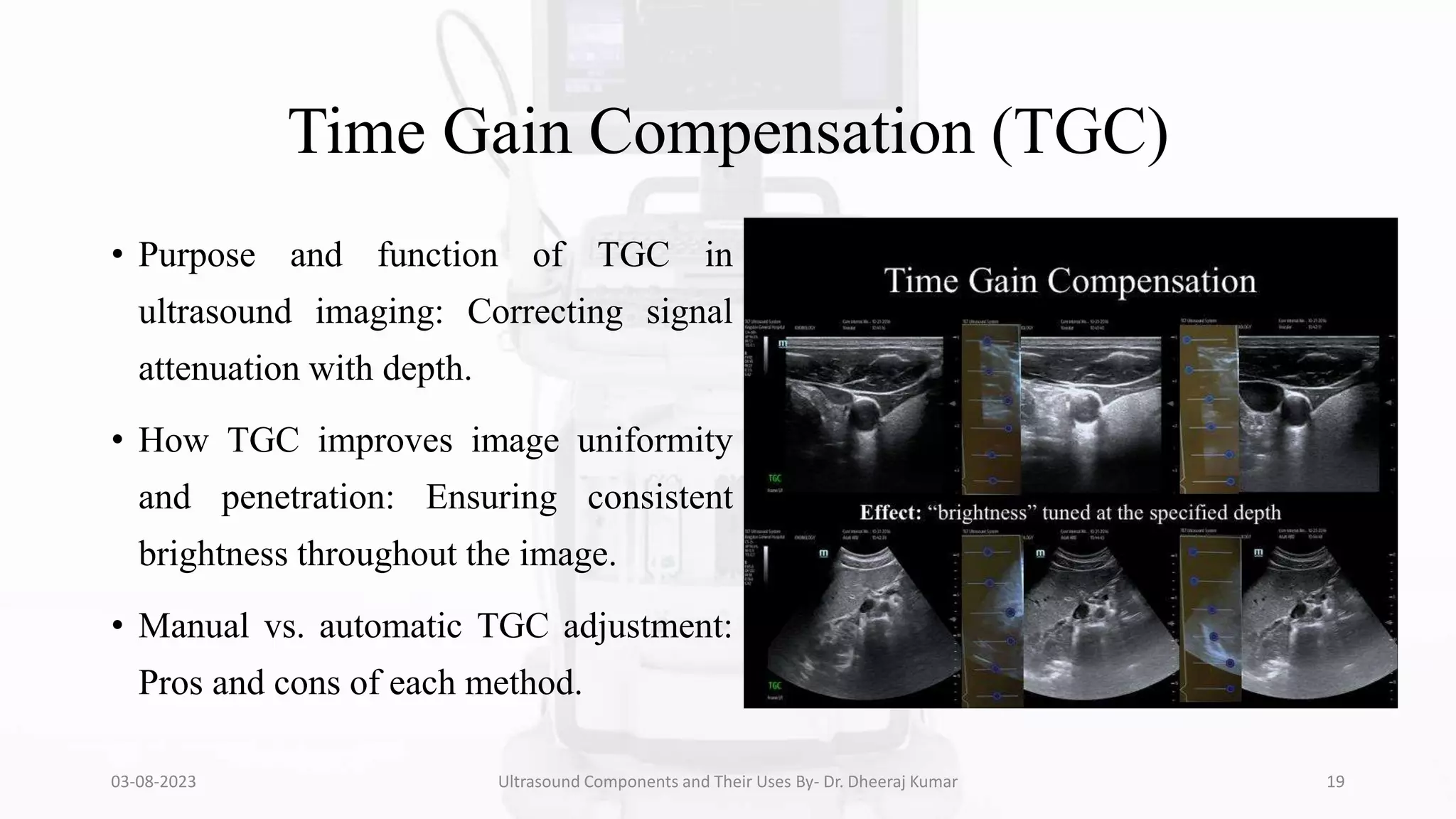
Time Gain Compensation (TGC)
• Purpose and function of TGC in
ultrasound imaging: Correcting signal
attenuation with depth.
• How TGC improves image uniformity
and penetration: Ensuring consistent
brightness throughout the image.
• Manual vs. automatic TGC adjustment:
Pros and cons of each method.
03-08-2023 Ultrasound Components and Their Uses By- Dr. Dheeraj Kumar 19
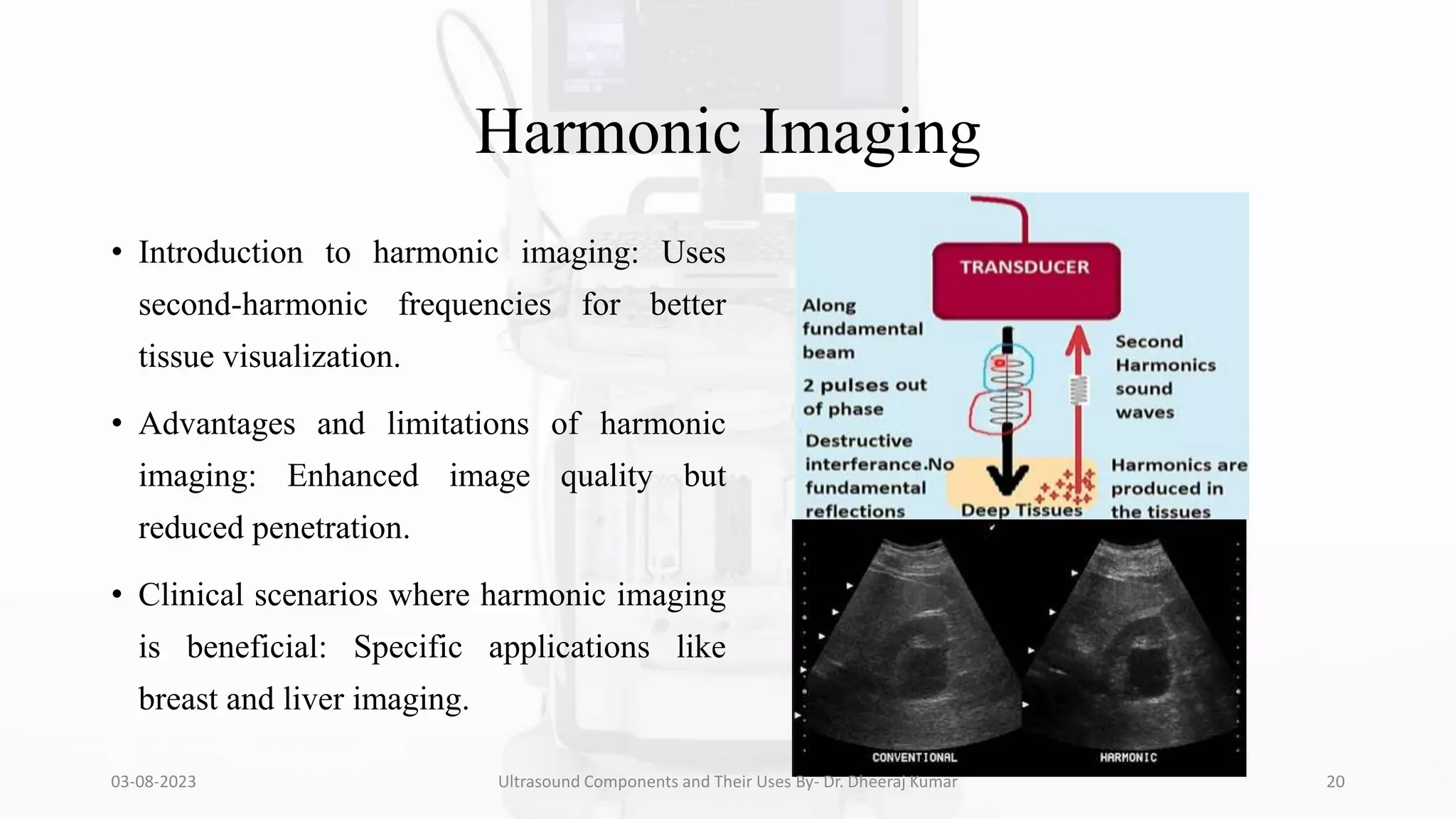
Harmonic Imaging
• Introduction to harmonic imaging: Uses
second-harmonic frequencies for better
tissue visualization.
• Advantages and limitations of harmonic
imaging: Enhanced image quality but
reduced penetration.
• Clinical scenarios where harmonic imaging
is beneficial: Specific applications like
breast and liver imaging.
03-08-2023 Ultrasound Components and Their Uses By- Dr. Dheeraj Kumar 20
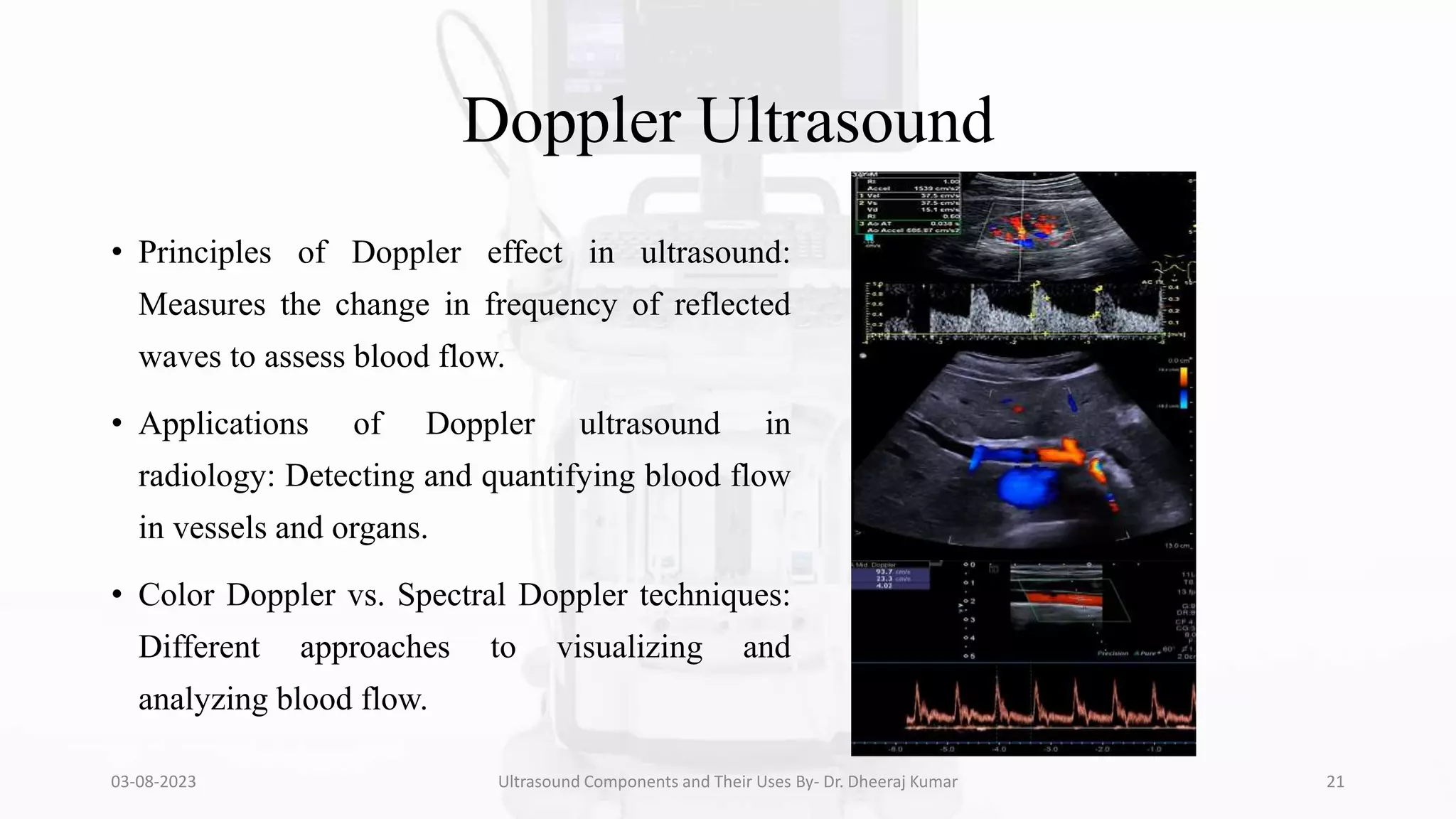
Doppler Ultrasound
• Principles of Doppler effect in ultrasound:
Measures the change in frequency of reflected
waves to assess blood flow.
• Applications of Doppler ultrasound in
radiology: Detecting and quantifying blood flow
in vessels and organs.
• Color Doppler vs. Spectral Doppler techniques:
Different approaches to visualizing and
analyzing blood flow.
03-08-2023 Ultrasound Components and Their Uses By- Dr. Dheeraj Kumar 21
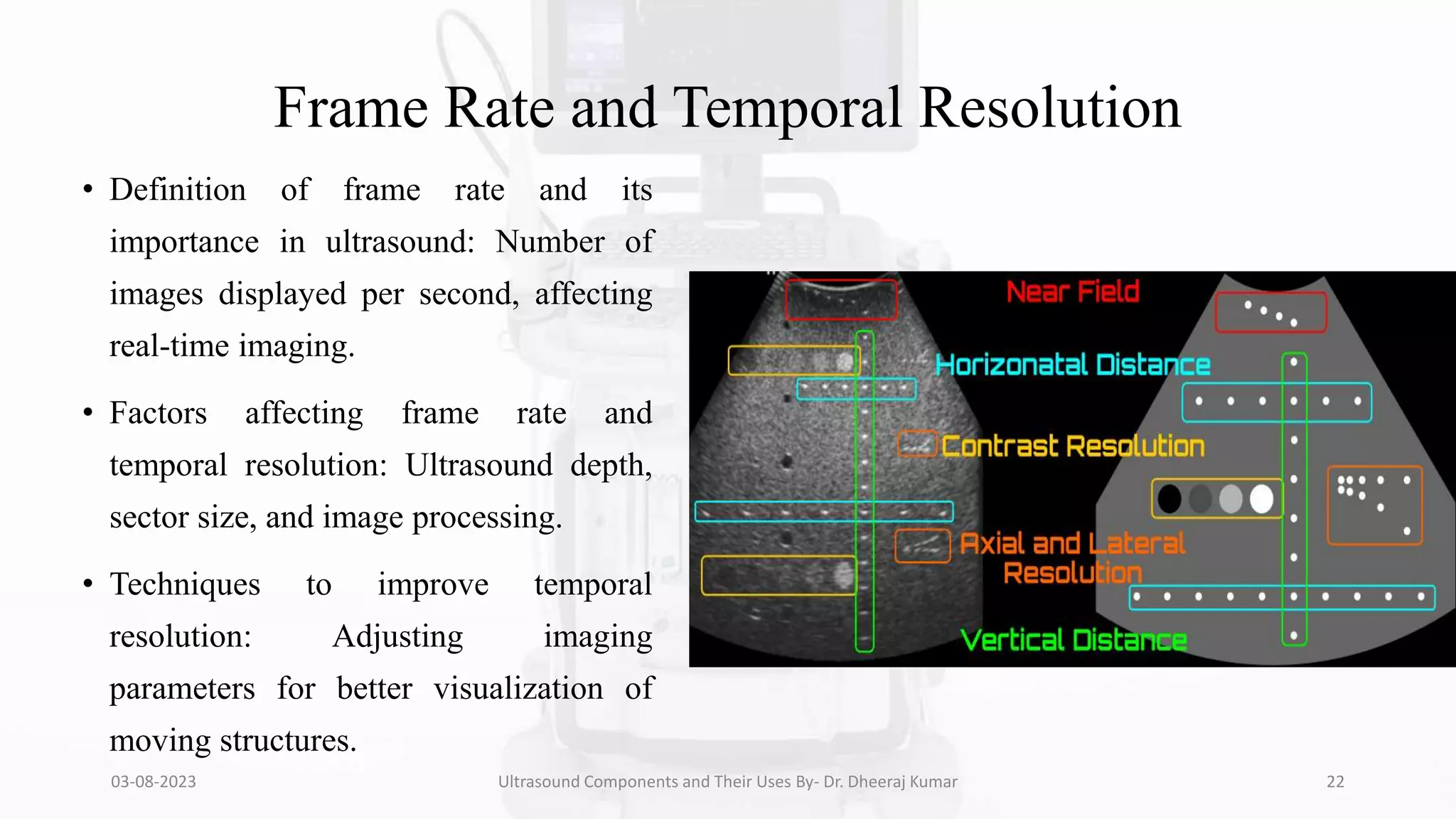
Frame Rate and Temporal Resolution
• Definition of frame rate and its
importance in ultrasound: Number of
images displayed per second, affecting
real-time imaging.
• Factors affecting frame rate and
temporal resolution: Ultrasound depth,
sector size, and image processing.
• Techniques to improve temporal
resolution: Adjusting imaging
parameters for better visualization of
moving structures.
03-08-2023 Ultrasound Components and Their Uses By- Dr. Dheeraj Kumar 22
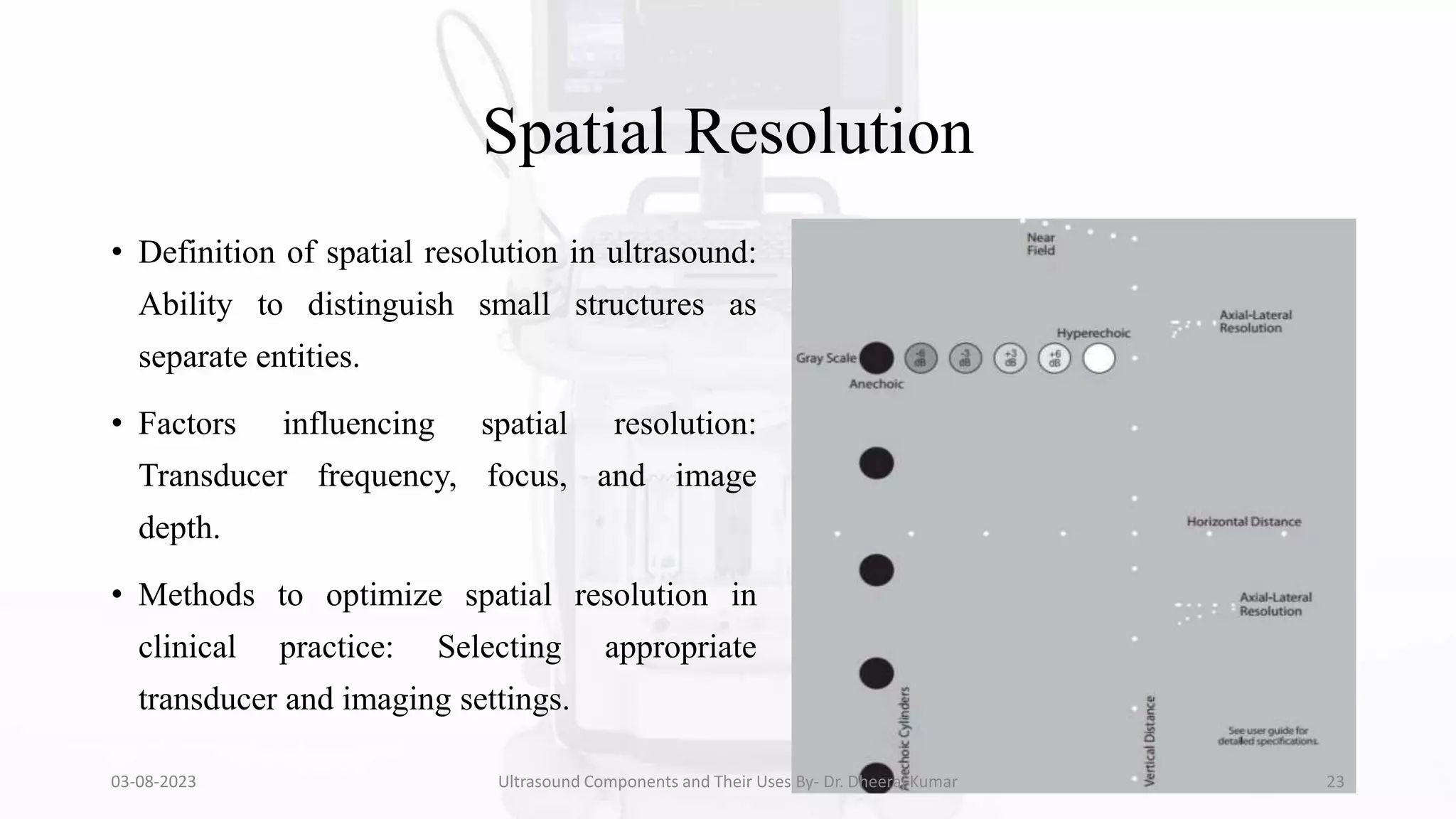
Spatial Resolution
• Definition of spatial resolution in ultrasound:
Ability to distinguish small structures as
separate entities.
• Factors influencing spatial resolution:
Transducer frequency, focus, and image
depth.
• Methods to optimize spatial resolution in
clinical practice: Selecting appropriate
transducer and imaging settings.
03-08-2023 Ultrasound Components and Their Uses By- Dr. Dheeraj Kumar 23
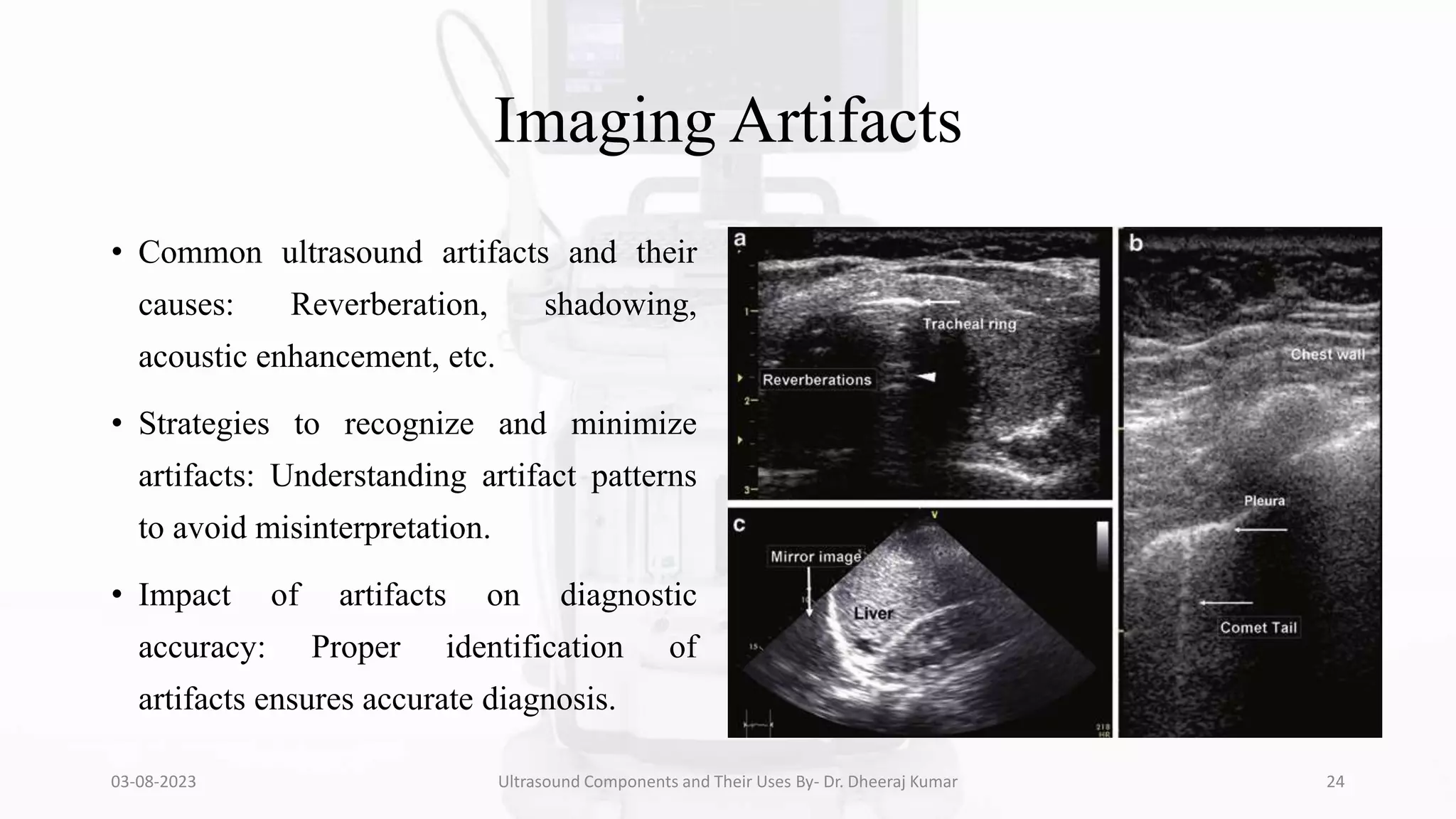
Imaging Artifacts
• Common ultrasound artifacts and their
causes: Reverberation, shadowing,
acoustic enhancement, etc.
• Strategies to recognize and minimize
artifacts: Understanding artifact patterns
to avoid misinterpretation.
• Impact of artifacts on diagnostic
accuracy: Proper identification of
artifacts ensures accurate diagnosis.
03-08-2023 Ultrasound Components and Their Uses By- Dr. Dheeraj Kumar 24
Real-time 3D and 4D Imaging
• Explanation of 3D and 4D ultrasound
techniques: 3D volumes and 4D real-time
dynamic imaging.
• Clinical applications and advantages of real-
time 3D/4D imaging: Fetal imaging,
gynecology, and cardiac assessments.
• Limitations and challenges of implementing
3D/4D imaging: Increased data volume and
processing requirements.
03-08-2023 Ultrasound Components and Their Uses By- Dr. Dheeraj Kumar 25
Elastography
• Introduction to elastography in ultrasound: Assessing tissue
stiffness for detecting abnormalities.
• Tissue stiffness assessment and clinical significance:
Differentiating benign and malignant lesions.
• Elastography applications in various medical specialties:
Breast, liver, and prostate imaging.
• These techniques take advantage of changed soft tissue
elasticity in various pathologies to yield qualitative and
quantitative information that can be used for diagnostic
purposes.
• Measurements are acquired in specialized imaging modes that
can detect tissue stiffness in response to an applied mechanical
force (compression or shear wave).
03-08-2023 Ultrasound Components and Their Uses By- Dr. Dheeraj Kumar 26
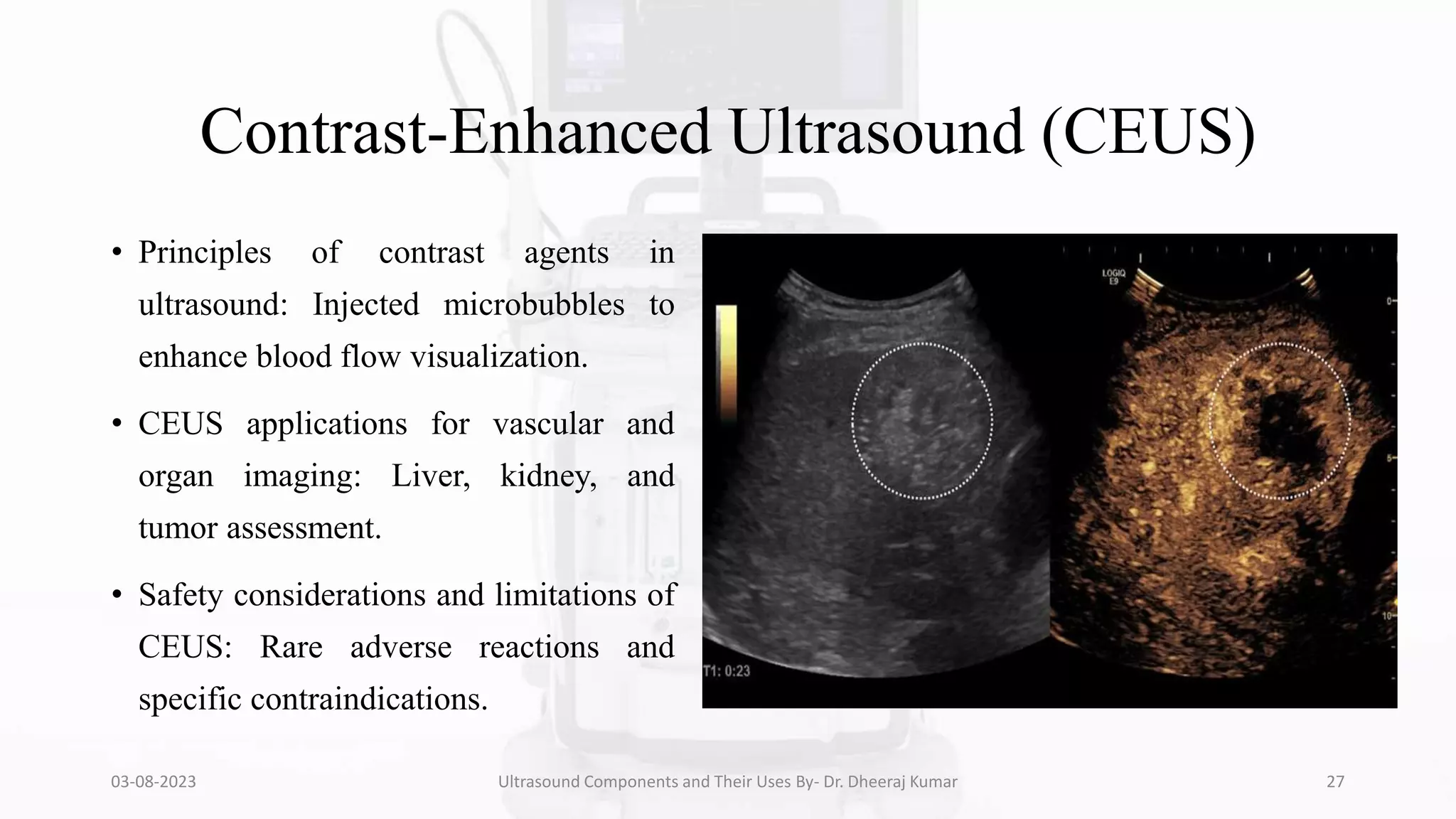
Contrast-Enhanced Ultrasound (CEUS)
• Principles of contrast agents in
ultrasound: Injected microbubbles to
enhance blood flow visualization.
• CEUS applications for vascular and
organ imaging: Liver, kidney, and
tumor assessment.
• Safety considerations and limitations of
CEUS: Rare adverse reactions and
specific contraindications.
03-08-2023 Ultrasound Components and Their Uses By- Dr. Dheeraj Kumar 27
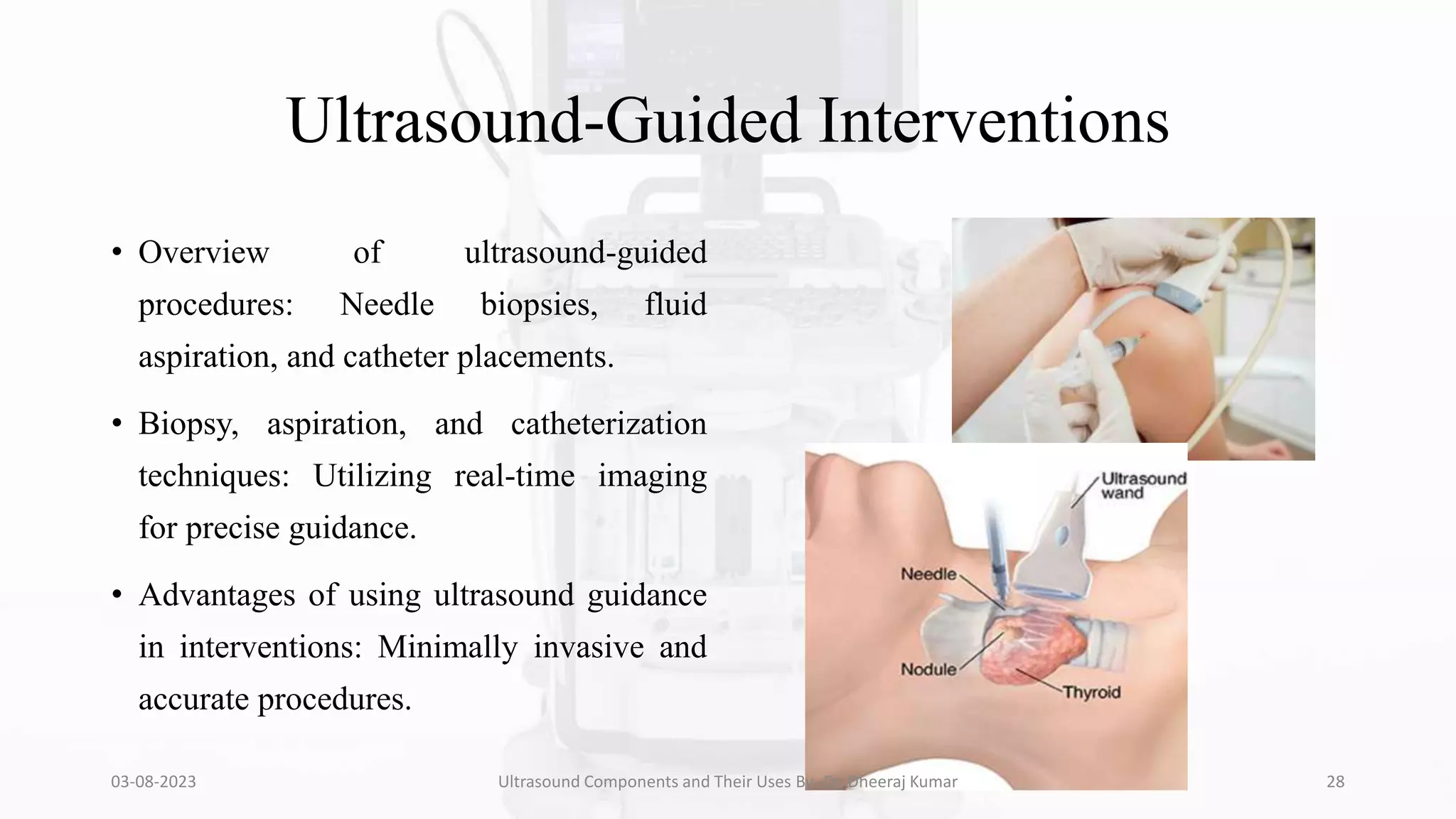
Ultrasound-Guided Interventions
• Overview of ultrasound-guided
procedures: Needle biopsies, fluid
aspiration, and catheter placements.
• Biopsy, aspiration, and catheterization
techniques: Utilizing real-time imaging
for precise guidance.
• Advantages of using ultrasound guidance
in interventions: Minimally invasive and
accurate procedures.
03-08-2023 Ultrasound Components and Their Uses By- Dr. Dheeraj Kumar 28
Quality Assurance in Ultrasound
• Importance of quality control and
assurance: Ensuring consistent and
accurate imaging results.
• Routine maintenance and calibration of
ultrasound machines: Regular checks to
optimize performance.
• Compliance with regulatory standards in
radiology: Following guidelines for safe
and effective use.
03-08-2023 Ultrasound Components and Their Uses By- Dr. Dheeraj Kumar 29
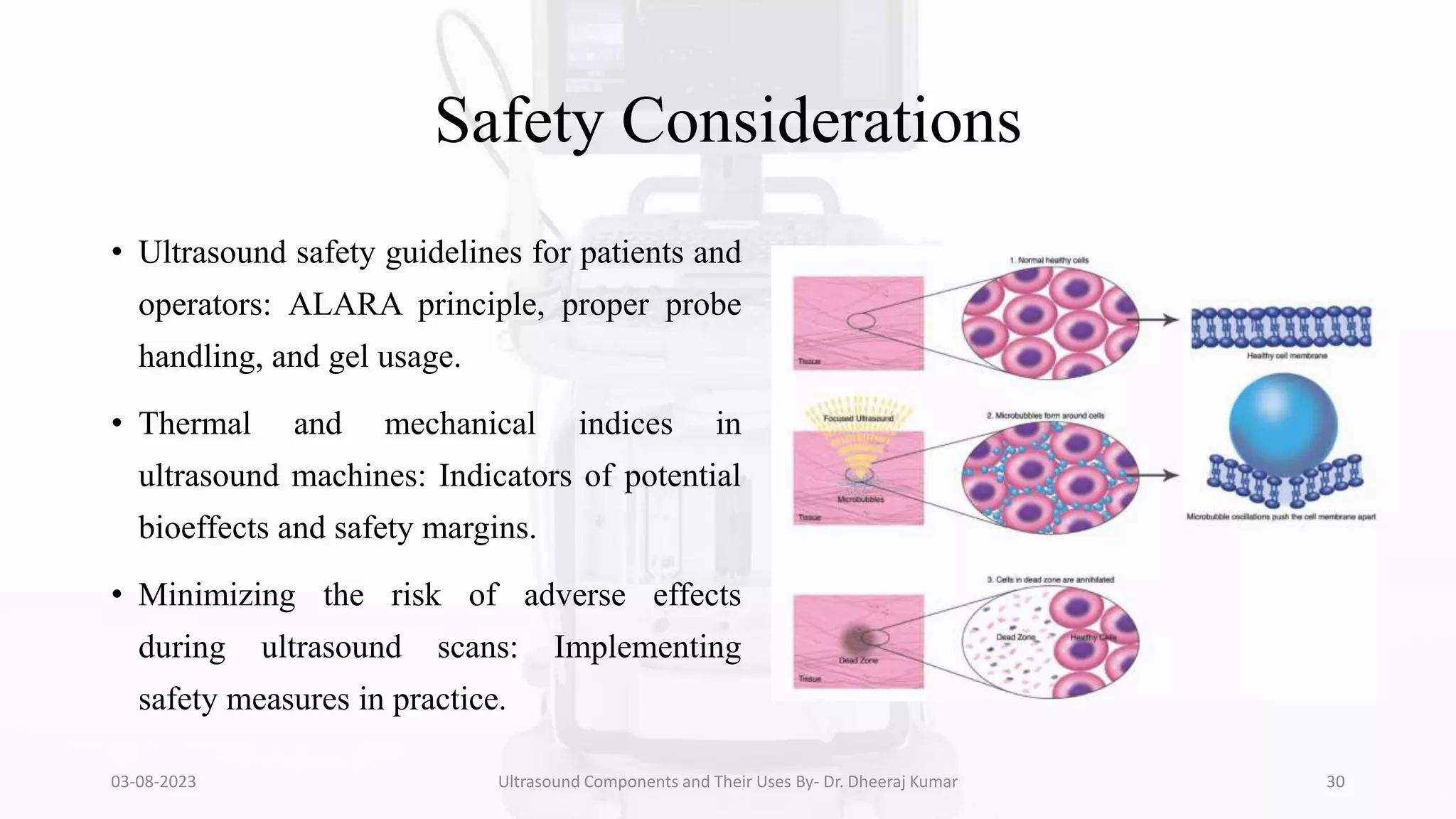
Safety Considerations
• Ultrasound safety guidelines for patients and
operators: ALARA principle, proper probe
handling, and gel usage.
• Thermal and mechanical indices in
ultrasound machines: Indicators of potential
bioeffects and safety margins.
• Minimizing the risk of adverse effects
during ultrasound scans: Implementing
safety measures in practice.
03-08-2023 Ultrasound Components and Their Uses By- Dr. Dheeraj Kumar 30
Advances in Ultrasound Technology
• Emerging trends in ultrasound imaging: Artificial intelligence,
miniaturization, and portable devices.
• Innovative technologies and their potential impact on radiology:
Enhanced image processing and image fusion.
• The future outlook of ultrasound machines in healthcare: Expanding
applications and improved patient care.
03-08-2023 Ultrasound Components and Their Uses By- Dr. Dheeraj Kumar 31
Case Studies
• Clinical examples showcasing
the significance of ultrasound
in diagnosis: Abdominal,
cardiac, and obstetric cases.
• Differentiating normal vs.
abnormal ultrasound findings:
Utilizing image features for
accurate interpretation.
03-08-2023 Ultrasound Components and Their Uses By- Dr. Dheeraj Kumar 32
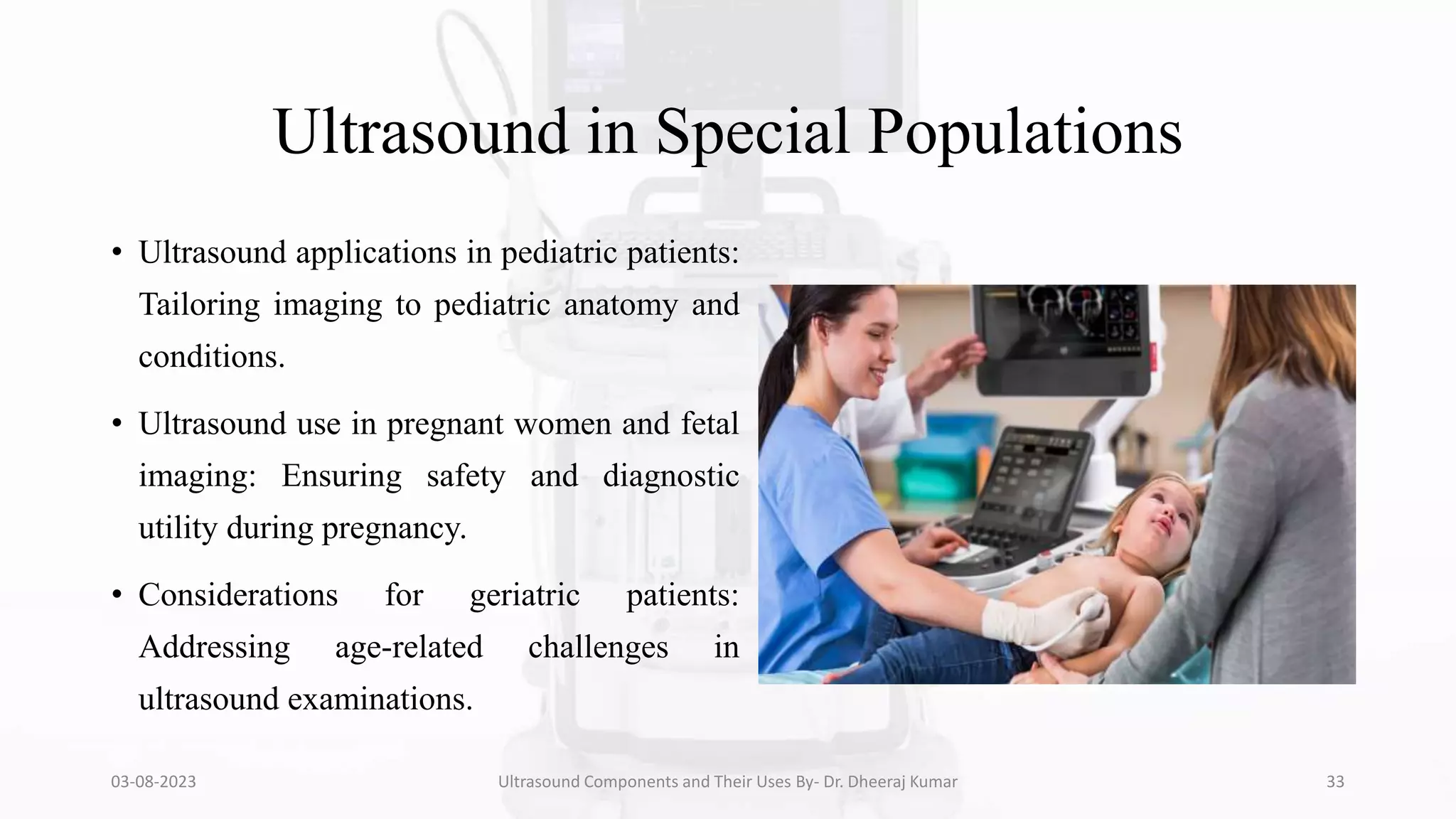
Ultrasound in Special Populations
• Ultrasound applications in pediatric patients:
Tailoring imaging to pediatric anatomy and
conditions.
• Ultrasound use in pregnant women and fetal
imaging: Ensuring safety and diagnostic
utility during pregnancy.
• Considerations for geriatric patients:
Addressing age-related challenges in
ultrasound examinations.
03-08-2023 Ultrasound Components and Their Uses By- Dr. Dheeraj Kumar 33
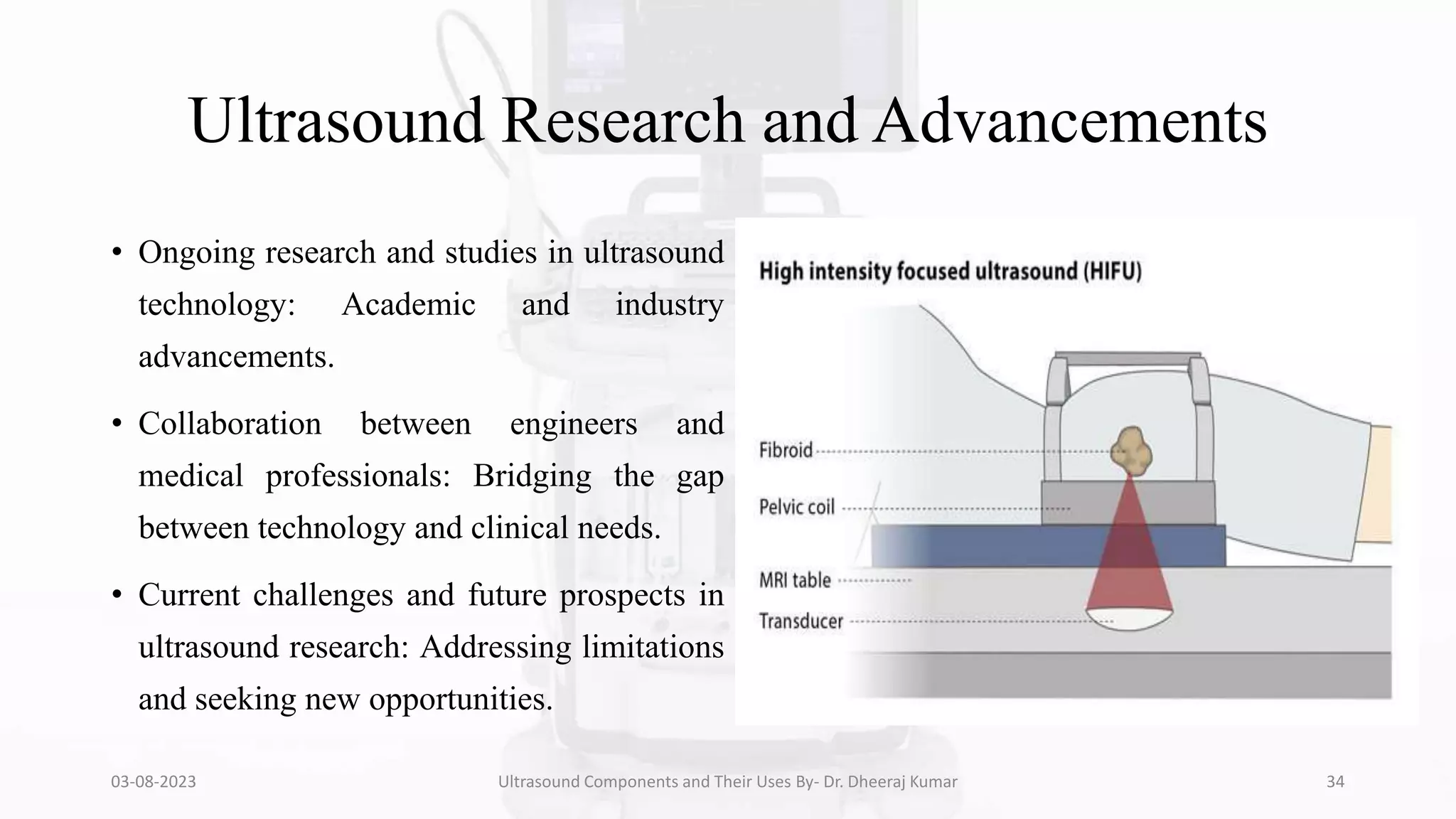
Ultrasound Research and Advancements
• Ongoing research and studies in ultrasound
technology: Academic and industry
advancements.
• Collaboration between engineers and
medical professionals: Bridging the gap
between technology and clinical needs.
• Current challenges and future prospects in
ultrasound research: Addressing limitations
and seeking new opportunities.
03-08-2023 Ultrasound Components and Their Uses By- Dr. Dheeraj Kumar 34
Training and Education
• Importance of proper training for ultrasound
technicians and radiologists: Ensuring skilled
and competent operators.
• Accredited ultrasound programs and
certifications: Recognized educational
pathways for professional development.
• Continuous education for staying up-to-date
with advancements: Attending workshops,
conferences, and online courses.
03-08-2023 Ultrasound Components and Their Uses By- Dr. Dheeraj Kumar 35
Conclusion
• Recapitulate the main points covered in the presentation: Summarizing the
key components and principles of ultrasound machines.
• Emphasize the significance of ultrasound technology in modern radiology:
Highlighting its critical role in medical diagnosis.
• Encourage further exploration and utilization of ultrasound in clinical
practice: Motivating the audience to embrace and advance ultrasound
imaging in their careers.
03-08-2023 Ultrasound Components and Their Uses By- Dr. Dheeraj Kumar 36
References
1. Textbook: "Diagnostic Ultrasound: Principles and Instruments" by Frederick W. Kremkau
2. Textbook: "Introduction to Vascular Ultrasonography" by John Pellerito and Joseph F. Polak
3. Textbook: "Diagnostic Ultrasound Imaging: Inside Out" by Thomas L. Szabo
4. Textbook: "Clinical Ultrasound: A Comprehensive Text" by Paul L. Allan and Grant M. Baxter
5. Article: "Transducer technologies in medical ultrasound – A review" by Per-Ola Forsberg et al., Medical
Engineering & Physics, Volume 30, Issue 8, 2008.
6. Article: "Advances in Ultrasound Transducers and Future Trends" by Matt R. Trahey et al., Current Opinion in
Biomedical Engineering, Volume 4, 2017.
7. Article: "Choosing the Correct Transducer Frequency" by Hugh Harrison, Journal of Diagnostic Medical
Sonography, Volume 22, Issue 2, 2006.
03-08-2023 Ultrasound Components and Their Uses By- Dr. Dheeraj Kumar 37
03-08-2023 Ultrasound Components and Their Uses By- Dr. Dheeraj Kumar 38

ULTRASOUND COMPONENTS AND THEIR USES.pptx

  • 1.
    ULTRASOUND COMPONENTS AND THEIR USES Presenter:Dr. Dheeraj Kumar MRIT, Ph.D. (Radiology and Imaging) Assistant Professor Medical Radiology and Imaging Technology School of Health Sciences, CSJM University, Kanpur
  • 2.
    Introduction • Definition ofultrasound imaging in radiology: Ultrasound uses sound waves to create real-time images of internal body structures. • Importance of ultrasound technology in medical diagnosis: Non-invasive, safe, and cost-effective imaging method with various applications. • Overview of the presentation structure: An outline of topics covered, including components and working principles of ultrasound machines. 03-08-2023 Ultrasound Components and Their Uses By- Dr. Dheeraj Kumar 2
  • 3.
    Basic Principles ofUltrasound • Explanation of sound waves and their properties: Ultrasound waves are mechanical waves with high frequency beyond human hearing range. • Difference between ultrasound waves and other imaging techniques: Comparison with X-rays, MRI, and CT scans. • Ultrasound frequency and its relation to image quality: Higher frequency provides better resolution but limited penetration. 03-08-2023 Ultrasound Components and Their Uses By- Dr. Dheeraj Kumar 3
  • 4.
    Transducer: Introduction • Definitionand function of the transducer in an ultrasound machine: Converts electrical energy to ultrasound waves and vice versa. • Types of transducers (linear, convex, phased array, etc.): Each type designed for specific applications and imaging needs. • Selection of transducers based on the application: Considerations for imaging depth and target organ. 03-08-2023 Ultrasound Components and Their Uses By- Dr. Dheeraj Kumar 4
  • 5.
    Transducer: Working Principle •Piezoelectric effect and its role in transducer operation: Certain materials generate ultrasound waves when subjected to electrical voltage. • How electrical energy is converted into ultrasound waves: The transducer's crystal vibrates to emit and receive sound waves. • Transducer materials and their impact on imaging capabilities: Different materials affect image resolution and sensitivity. 03-08-2023 Ultrasound Components and Their Uses By- Dr. Dheeraj Kumar 5
  • 6.
    Ultrasound Transducer Function •Transmitting sound waves: The transducer emits short bursts of ultrasound waves into the body. • Receiving reflected waves: It captures the echoes produced by the sound waves bouncing off internal structures. • Conversion of signals: The transducer converts received echoes into electrical signals for image formation. 03-08-2023 Ultrasound Components and Their Uses By- Dr. Dheeraj Kumar 6
  • 7.
    Piezoelectric Effect • Explanationof the piezoelectric effect: Certain materials generate electrical voltage when subjected to mechanical pressure. • Role of piezoelectric crystals: The transducer typically contains piezoelectric crystals that vibrate when an electrical current is applied. • Generation of ultrasound waves: The vibration of crystals creates ultrasound waves that propagate into the body. 03-08-2023 Ultrasound Components and Their Uses By- Dr. Dheeraj Kumar 7
  • 8.
    Types of UltrasoundTransducers • Linear Array Transducer: • Characteristics: Multiple small elements arranged in a line. • Applications: Ideal for musculoskeletal, vascular, and small parts imaging. • Convex Array Transducer: • Characteristics: Curved array with larger elements. • Applications: Suited for abdominal, obstetric, and gynecological examinations. 03-08-2023 Ultrasound Components and Their Uses By- Dr. Dheeraj Kumar 8
  • 9.
    Types of UltrasoundTransducers (Continued) • Phased Array Transducer: • Characteristics: Uses electronic beam steering for versatility. • Applications: Cardiac, abdominal, and vascular imaging, as well as for pediatrics. • Endocavitary Transducer: • Characteristics: Designed for insertion into body cavities. • Applications: Transvaginal, transrectal, and transesophageal examinations. 03-08-2023 Ultrasound Components and Their Uses By- Dr. Dheeraj Kumar 9
  • 10.
    Additional Types ofUltrasound Transducers • 3D/4D Transducer: • Characteristics: Capable of acquiring volumetric data. • Applications: Obstetric and fetal imaging, gynecology, and vascular studies. • Intraoperative Transducer: • Characteristics: Sterilizable and designed for use in surgical procedures. • Applications: Intraoperative imaging for guiding surgeries and interventions. 03-08-2023 Ultrasound Components and Their Uses By- Dr. Dheeraj Kumar 10
  • 11.
    Selecting the RightTransducer • Consideration of imaging depth: High-frequency transducers offer better resolution for superficial structures, while lower-frequency transducers penetrate deeper. • Choosing the appropriate shape: Match the transducer shape to the area of interest for optimal image quality. • Balancing image quality and patient comfort: Smaller transducers may provide better resolution, but larger ones might be more comfortable for certain examinations. 03-08-2023 Ultrasound Components and Their Uses By- Dr. Dheeraj Kumar 11
  • 12.
    Transducer Care andMaintenance • Proper handling and storage: Transducers are delicate and should be handled with care to avoid damage. • Cleaning and disinfection: Following manufacturer guidelines for cleaning and disinfecting to prevent cross-contamination. • Regular maintenance and calibration: Routine checks and calibration ensure optimal performance and image quality. 03-08-2023 Ultrasound Components and Their Uses By- Dr. Dheeraj Kumar 12
  • 13.
    Advancements in TransducerTechnology • Characteristics: Contain thousands of small elements, offering better image quality and 3D/4D capabilities. • Applications: Advanced cardiac and fetal imaging, improved resolution in various exams. 03-08-2023 Ultrasound Components and Their Uses By- Dr. Dheeraj Kumar 13
  • 14.
    Wireless Transducers • Characteristics:Eliminate the need for physical cable connections to the ultrasound machine. • Applications: Enable more flexibility during scanning and enhance portability. 03-08-2023 Ultrasound Components and Their Uses By- Dr. Dheeraj Kumar 14
  • 15.
    Ultrasound Machine Console •Overview of the main control panel and user interface: Buttons, knobs, and touchscreen used to control imaging parameters. • Key functions and adjustments available to operators: Gain, depth, focus, frequency, and others. • Importance of a user-friendly interface design for efficient scanning: Facilitating quick and accurate adjustments during examinations. 03-08-2023 Ultrasound Components and Their Uses By- Dr. Dheeraj Kumar 15
  • 16.
    Image Processing • Pre-processingtechniques (filtering, gain control, etc.): Enhancing image quality before display. • Post-processing techniques (compression, persistence, etc.): Improving image visualization and analysis. • How image processing enhances diagnostic information: Enhances tissue contrast, reduces noise, and optimizes the image for diagnosis. 03-08-2023 Ultrasound Components and Their Uses By- Dr. Dheeraj Kumar 16
  • 17.
    Display Modes • B-mode(Brightness mode) imaging and its applications: Gray-scale imaging for organ visualization and assessment. • M-mode (Motion mode) imaging for real- time motion visualization: ECG-like representation of moving structures, e.g., heart valves. • Doppler modes (Color, Power, Spectral) for blood flow analysis: Evaluating blood flow velocity and direction. 03-08-2023 Ultrasound Components and Their Uses By- Dr. Dheeraj Kumar 17
  • 18.
    Beamforming • Explanation ofthe beamforming process: Combining multiple ultrasound waves to form an image. • Phased array vs. mechanical scanning: Different approaches to beamforming and their advantages. • Impact of beamforming on image resolution and quality: Directly affects image sharpness and clarity. 03-08-2023 Ultrasound Components and Their Uses By- Dr. Dheeraj Kumar 18
  • 19.
    Time Gain Compensation(TGC) • Purpose and function of TGC in ultrasound imaging: Correcting signal attenuation with depth. • How TGC improves image uniformity and penetration: Ensuring consistent brightness throughout the image. • Manual vs. automatic TGC adjustment: Pros and cons of each method. 03-08-2023 Ultrasound Components and Their Uses By- Dr. Dheeraj Kumar 19
  • 20.
    Harmonic Imaging • Introductionto harmonic imaging: Uses second-harmonic frequencies for better tissue visualization. • Advantages and limitations of harmonic imaging: Enhanced image quality but reduced penetration. • Clinical scenarios where harmonic imaging is beneficial: Specific applications like breast and liver imaging. 03-08-2023 Ultrasound Components and Their Uses By- Dr. Dheeraj Kumar 20
  • 21.
    Doppler Ultrasound • Principlesof Doppler effect in ultrasound: Measures the change in frequency of reflected waves to assess blood flow. • Applications of Doppler ultrasound in radiology: Detecting and quantifying blood flow in vessels and organs. • Color Doppler vs. Spectral Doppler techniques: Different approaches to visualizing and analyzing blood flow. 03-08-2023 Ultrasound Components and Their Uses By- Dr. Dheeraj Kumar 21
  • 22.
    Frame Rate andTemporal Resolution • Definition of frame rate and its importance in ultrasound: Number of images displayed per second, affecting real-time imaging. • Factors affecting frame rate and temporal resolution: Ultrasound depth, sector size, and image processing. • Techniques to improve temporal resolution: Adjusting imaging parameters for better visualization of moving structures. 03-08-2023 Ultrasound Components and Their Uses By- Dr. Dheeraj Kumar 22
  • 23.
    Spatial Resolution • Definitionof spatial resolution in ultrasound: Ability to distinguish small structures as separate entities. • Factors influencing spatial resolution: Transducer frequency, focus, and image depth. • Methods to optimize spatial resolution in clinical practice: Selecting appropriate transducer and imaging settings. 03-08-2023 Ultrasound Components and Their Uses By- Dr. Dheeraj Kumar 23
  • 24.
    Imaging Artifacts • Commonultrasound artifacts and their causes: Reverberation, shadowing, acoustic enhancement, etc. • Strategies to recognize and minimize artifacts: Understanding artifact patterns to avoid misinterpretation. • Impact of artifacts on diagnostic accuracy: Proper identification of artifacts ensures accurate diagnosis. 03-08-2023 Ultrasound Components and Their Uses By- Dr. Dheeraj Kumar 24
  • 25.
    Real-time 3D and4D Imaging • Explanation of 3D and 4D ultrasound techniques: 3D volumes and 4D real-time dynamic imaging. • Clinical applications and advantages of real- time 3D/4D imaging: Fetal imaging, gynecology, and cardiac assessments. • Limitations and challenges of implementing 3D/4D imaging: Increased data volume and processing requirements. 03-08-2023 Ultrasound Components and Their Uses By- Dr. Dheeraj Kumar 25
  • 26.
    Elastography • Introduction toelastography in ultrasound: Assessing tissue stiffness for detecting abnormalities. • Tissue stiffness assessment and clinical significance: Differentiating benign and malignant lesions. • Elastography applications in various medical specialties: Breast, liver, and prostate imaging. • These techniques take advantage of changed soft tissue elasticity in various pathologies to yield qualitative and quantitative information that can be used for diagnostic purposes. • Measurements are acquired in specialized imaging modes that can detect tissue stiffness in response to an applied mechanical force (compression or shear wave). 03-08-2023 Ultrasound Components and Their Uses By- Dr. Dheeraj Kumar 26
  • 27.
    Contrast-Enhanced Ultrasound (CEUS) •Principles of contrast agents in ultrasound: Injected microbubbles to enhance blood flow visualization. • CEUS applications for vascular and organ imaging: Liver, kidney, and tumor assessment. • Safety considerations and limitations of CEUS: Rare adverse reactions and specific contraindications. 03-08-2023 Ultrasound Components and Their Uses By- Dr. Dheeraj Kumar 27
  • 28.
    Ultrasound-Guided Interventions • Overviewof ultrasound-guided procedures: Needle biopsies, fluid aspiration, and catheter placements. • Biopsy, aspiration, and catheterization techniques: Utilizing real-time imaging for precise guidance. • Advantages of using ultrasound guidance in interventions: Minimally invasive and accurate procedures. 03-08-2023 Ultrasound Components and Their Uses By- Dr. Dheeraj Kumar 28
  • 29.
    Quality Assurance inUltrasound • Importance of quality control and assurance: Ensuring consistent and accurate imaging results. • Routine maintenance and calibration of ultrasound machines: Regular checks to optimize performance. • Compliance with regulatory standards in radiology: Following guidelines for safe and effective use. 03-08-2023 Ultrasound Components and Their Uses By- Dr. Dheeraj Kumar 29
  • 30.
    Safety Considerations • Ultrasoundsafety guidelines for patients and operators: ALARA principle, proper probe handling, and gel usage. • Thermal and mechanical indices in ultrasound machines: Indicators of potential bioeffects and safety margins. • Minimizing the risk of adverse effects during ultrasound scans: Implementing safety measures in practice. 03-08-2023 Ultrasound Components and Their Uses By- Dr. Dheeraj Kumar 30
  • 31.
    Advances in UltrasoundTechnology • Emerging trends in ultrasound imaging: Artificial intelligence, miniaturization, and portable devices. • Innovative technologies and their potential impact on radiology: Enhanced image processing and image fusion. • The future outlook of ultrasound machines in healthcare: Expanding applications and improved patient care. 03-08-2023 Ultrasound Components and Their Uses By- Dr. Dheeraj Kumar 31
  • 32.
    Case Studies • Clinicalexamples showcasing the significance of ultrasound in diagnosis: Abdominal, cardiac, and obstetric cases. • Differentiating normal vs. abnormal ultrasound findings: Utilizing image features for accurate interpretation. 03-08-2023 Ultrasound Components and Their Uses By- Dr. Dheeraj Kumar 32
  • 33.
    Ultrasound in SpecialPopulations • Ultrasound applications in pediatric patients: Tailoring imaging to pediatric anatomy and conditions. • Ultrasound use in pregnant women and fetal imaging: Ensuring safety and diagnostic utility during pregnancy. • Considerations for geriatric patients: Addressing age-related challenges in ultrasound examinations. 03-08-2023 Ultrasound Components and Their Uses By- Dr. Dheeraj Kumar 33
  • 34.
    Ultrasound Research andAdvancements • Ongoing research and studies in ultrasound technology: Academic and industry advancements. • Collaboration between engineers and medical professionals: Bridging the gap between technology and clinical needs. • Current challenges and future prospects in ultrasound research: Addressing limitations and seeking new opportunities. 03-08-2023 Ultrasound Components and Their Uses By- Dr. Dheeraj Kumar 34
  • 35.
    Training and Education •Importance of proper training for ultrasound technicians and radiologists: Ensuring skilled and competent operators. • Accredited ultrasound programs and certifications: Recognized educational pathways for professional development. • Continuous education for staying up-to-date with advancements: Attending workshops, conferences, and online courses. 03-08-2023 Ultrasound Components and Their Uses By- Dr. Dheeraj Kumar 35
  • 36.
    Conclusion • Recapitulate themain points covered in the presentation: Summarizing the key components and principles of ultrasound machines. • Emphasize the significance of ultrasound technology in modern radiology: Highlighting its critical role in medical diagnosis. • Encourage further exploration and utilization of ultrasound in clinical practice: Motivating the audience to embrace and advance ultrasound imaging in their careers. 03-08-2023 Ultrasound Components and Their Uses By- Dr. Dheeraj Kumar 36
  • 37.
    References 1. Textbook: "DiagnosticUltrasound: Principles and Instruments" by Frederick W. Kremkau 2. Textbook: "Introduction to Vascular Ultrasonography" by John Pellerito and Joseph F. Polak 3. Textbook: "Diagnostic Ultrasound Imaging: Inside Out" by Thomas L. Szabo 4. Textbook: "Clinical Ultrasound: A Comprehensive Text" by Paul L. Allan and Grant M. Baxter 5. Article: "Transducer technologies in medical ultrasound – A review" by Per-Ola Forsberg et al., Medical Engineering & Physics, Volume 30, Issue 8, 2008. 6. Article: "Advances in Ultrasound Transducers and Future Trends" by Matt R. Trahey et al., Current Opinion in Biomedical Engineering, Volume 4, 2017. 7. Article: "Choosing the Correct Transducer Frequency" by Hugh Harrison, Journal of Diagnostic Medical Sonography, Volume 22, Issue 2, 2006. 03-08-2023 Ultrasound Components and Their Uses By- Dr. Dheeraj Kumar 37
  • 38.
    03-08-2023 Ultrasound Componentsand Their Uses By- Dr. Dheeraj Kumar 38