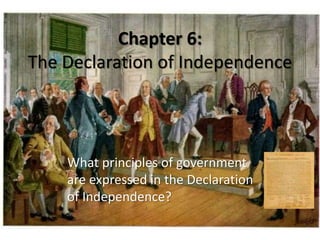
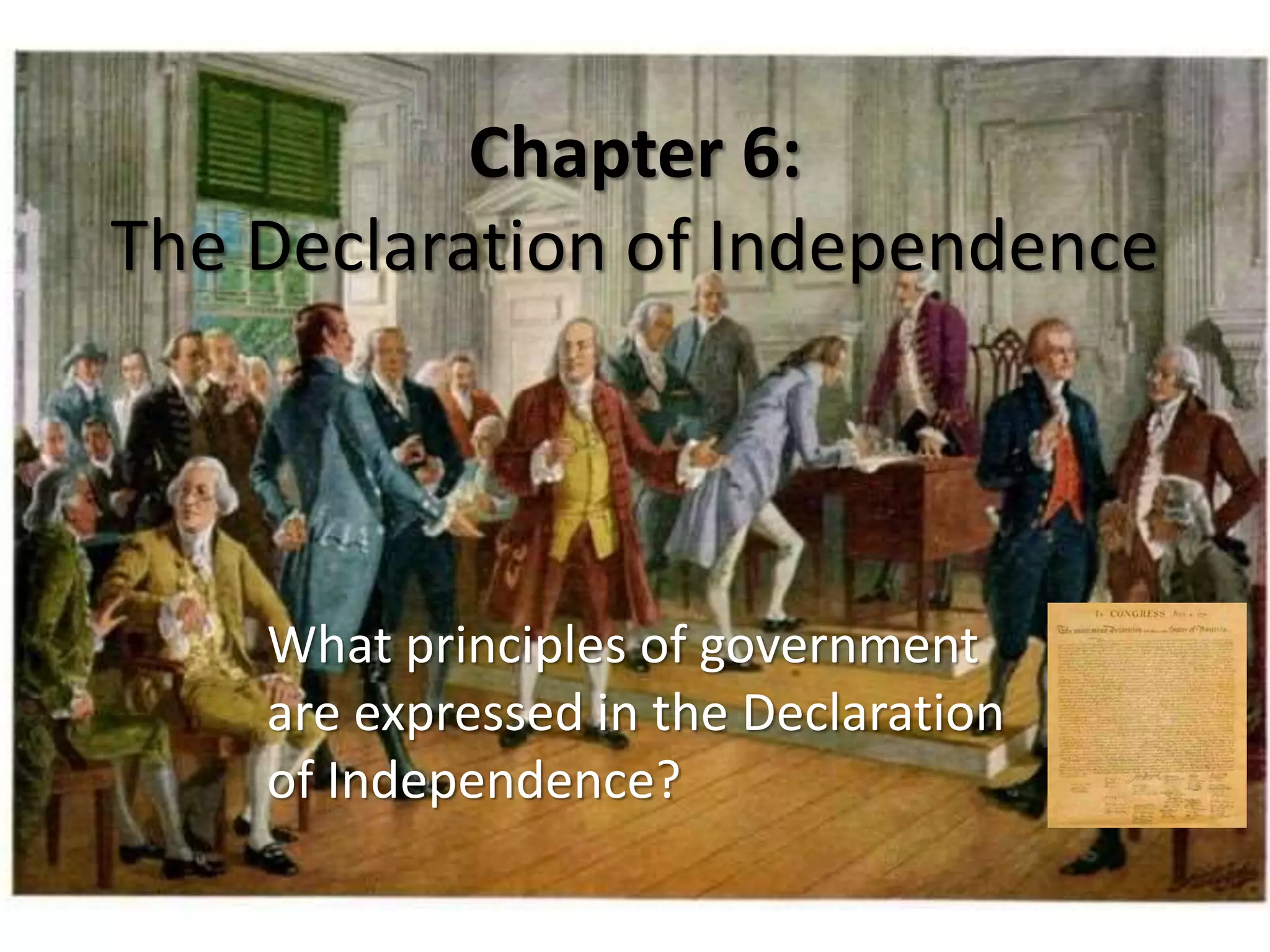
Chapter 6:
The Declaration of Independence
What principles of government
are expressed in the Declaration
of Independence?
Patrick Henry
• Founding Father
• Patriot
• Governor of Virginia
• Delivered famous speech
to Virginia House of
Burgesses
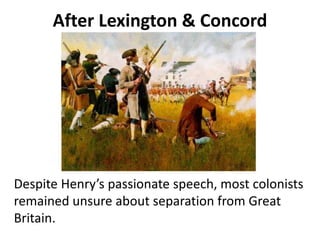
After Lexington & Concord
Despite Henry’s passionate speech, most colonists
remained unsure about separation from Great
Britain.
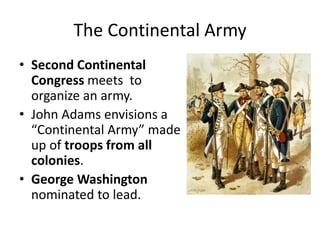
The Continental Army
• Second Continental
Congress meets to
organize an army.
• John Adams envisions a
“Continental Army” made
up of troops from all
colonies.
• George Washington
nominated to lead.
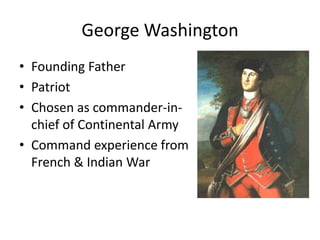
George Washington
• Founding Father
• Patriot
• Chosen as commander-in-
chief of Continental Army
• Command experience from
French & Indian War
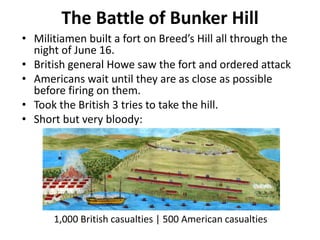
The Battle of Bunker Hill
• Militiamen built a fort on Breed’s Hill all through the
night of June 16.
• British general Howe saw the fort and ordered attack
• Americans wait until they are as close as possible
before firing on them.
• Took the British 3 tries to take the hill.
• Short but very bloody:
1,000 British casualties | 500 American casualties
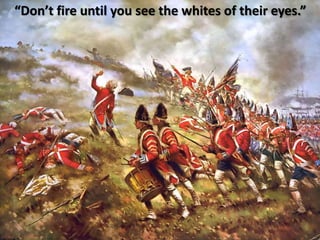
“Don’t fire until you see the whites of their eyes.”
Olive Branch Petition
• Second Continental Congress sends a petition
to King George III asking him to end the
conflict.
• Olive tree: ancient symbol of peace
• King declares colonies are in “open and
avowed rebellion.” Orders his ministers “to
bring the traitors to justice.”
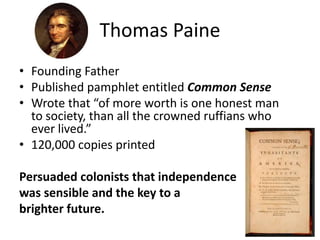
Thomas Paine
• Founding Father
• Published pamphlet entitled Common Sense
• Wrote that “of more worth is one honest man
to society, than all the crowned ruffians who
ever lived.”
• 120,000 copies printed
Persuaded colonists that independence
was sensible and the key to a
brighter future.
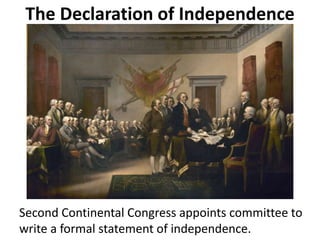
The Declaration of Independence
Second Continental Congress appoints committee to
write a formal statement of independence.
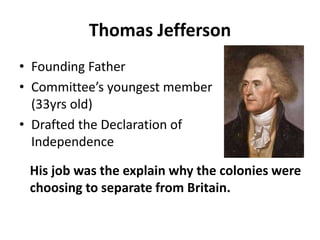
Thomas Jefferson
• Founding Father
• Committee’s youngest member
(33yrs old)
• Drafted the Declaration of
Independence
His job was the explain why the colonies were
choosing to separate from Britain.
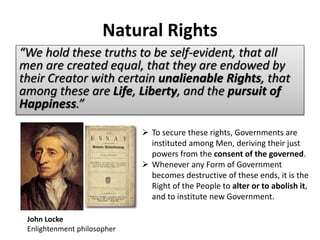
Natural Rights
“We hold these truths to be self-evident, that all
men are created equal, that they are endowed by
their Creator with certain unalienable Rights, that
among these are Life, Liberty, and the pursuit of
Happiness.”
 To secure these rights, Governments are
instituted among Men, deriving their just
powers from the consent of the governed.
 Whenever any Form of Government
becomes destructive of these ends, it is the
Right of the People to alter or to abolish it,
and to institute new Government.
John Locke
Enlightenment philosopher
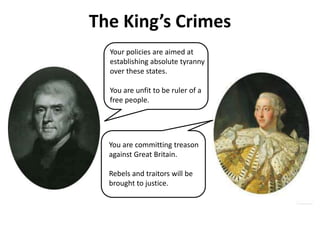
The King’s Crimes
Your policies are aimed at
establishing absolute tyranny
over these states.
You are unfit to be ruler of a
free people.
You are committing treason
against Great Britain.
Rebels and traitors will be
brought to justice.
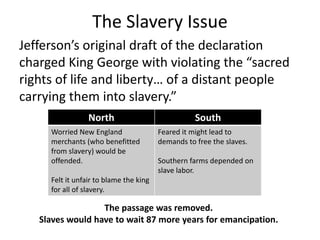
The Slavery Issue
Jefferson’s original draft of the declaration
charged King George with violating the “sacred
rights of life and liberty… of a distant people
carrying them into slavery.”
North South
Worried New England
merchants (who benefitted
from slavery) would be
offended.
Felt it unfair to blame the king
for all of slavery.
Feared it might lead to
demands to free the slaves.
Southern farms depended on
slave labor.
The passage was removed.
Slaves would have to wait 87 more years for emancipation.
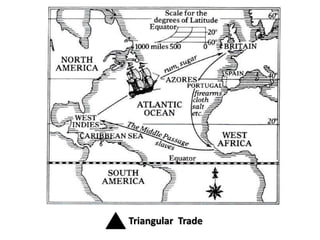
Triangular Trade
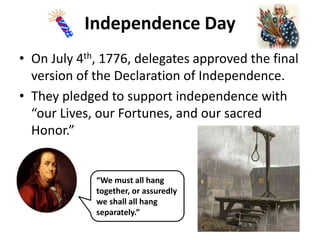
Independence Day
• On July 4th, 1776, delegates approved the final
version of the Declaration of Independence.
• They pledged to support independence with
“our Lives, our Fortunes, and our sacred
Honor.”
“We must all hang
together, or assuredly
we shall all hang
separately.”

Declaration of Independence

  • 1.
    Chapter 6: The Declarationof Independence What principles of government are expressed in the Declaration of Independence?
  • 2.
    Patrick Henry • FoundingFather • Patriot • Governor of Virginia • Delivered famous speech to Virginia House of Burgesses
  • 3.
    After Lexington &Concord Despite Henry’s passionate speech, most colonists remained unsure about separation from Great Britain.
  • 4.
    The Continental Army •Second Continental Congress meets to organize an army. • John Adams envisions a “Continental Army” made up of troops from all colonies. • George Washington nominated to lead.
  • 5.
    George Washington • FoundingFather • Patriot • Chosen as commander-in- chief of Continental Army • Command experience from French & Indian War
  • 6.
    The Battle ofBunker Hill • Militiamen built a fort on Breed’s Hill all through the night of June 16. • British general Howe saw the fort and ordered attack • Americans wait until they are as close as possible before firing on them. • Took the British 3 tries to take the hill. • Short but very bloody: 1,000 British casualties | 500 American casualties
  • 7.
    “Don’t fire untilyou see the whites of their eyes.”
  • 8.
    Olive Branch Petition •Second Continental Congress sends a petition to King George III asking him to end the conflict. • Olive tree: ancient symbol of peace • King declares colonies are in “open and avowed rebellion.” Orders his ministers “to bring the traitors to justice.”
  • 9.
    Thomas Paine • FoundingFather • Published pamphlet entitled Common Sense • Wrote that “of more worth is one honest man to society, than all the crowned ruffians who ever lived.” • 120,000 copies printed Persuaded colonists that independence was sensible and the key to a brighter future.
  • 10.
    The Declaration ofIndependence Second Continental Congress appoints committee to write a formal statement of independence.
  • 11.
    Thomas Jefferson • FoundingFather • Committee’s youngest member (33yrs old) • Drafted the Declaration of Independence His job was the explain why the colonies were choosing to separate from Britain.
  • 12.
    Natural Rights “We holdthese truths to be self-evident, that all men are created equal, that they are endowed by their Creator with certain unalienable Rights, that among these are Life, Liberty, and the pursuit of Happiness.”  To secure these rights, Governments are instituted among Men, deriving their just powers from the consent of the governed.  Whenever any Form of Government becomes destructive of these ends, it is the Right of the People to alter or to abolish it, and to institute new Government. John Locke Enlightenment philosopher
  • 13.
    The King’s Crimes Yourpolicies are aimed at establishing absolute tyranny over these states. You are unfit to be ruler of a free people. You are committing treason against Great Britain. Rebels and traitors will be brought to justice.
  • 14.
    The Slavery Issue Jefferson’soriginal draft of the declaration charged King George with violating the “sacred rights of life and liberty… of a distant people carrying them into slavery.” North South Worried New England merchants (who benefitted from slavery) would be offended. Felt it unfair to blame the king for all of slavery. Feared it might lead to demands to free the slaves. Southern farms depended on slave labor. The passage was removed. Slaves would have to wait 87 more years for emancipation.
  • 15.
  • 16.
    Independence Day • OnJuly 4th, 1776, delegates approved the final version of the Declaration of Independence. • They pledged to support independence with “our Lives, our Fortunes, and our sacred Honor.” “We must all hang together, or assuredly we shall all hang separately.”