Elections, Voting, and Voter Behavior
OutlineNominating CandidatesCaucuses & ConventionsPrimary ElectionsPetitionNominating Presidential CandidatesElections and CampaignsRegulating ElectionsFinancing ElectionsHard & Soft MoneyPresidential ElectionsVoting Rights and Voting LawsHistoryLawsVoter BehaviorInfluences on Voting DecisionsVoters and Nonvoters
Nominating CandidatesNominate: select a candidate to run for office4 methods for being on the ballot:CaucusConventionDirect primarypetition
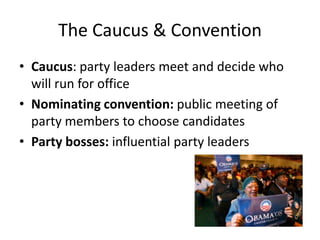
The Caucus & ConventionCaucus: party leaders meet and decide who will run for officeNominating convention: public meeting of party members to choose candidatesParty bosses: influential party leaders
Primary ElectionDirect primary election: several candidates from the same party run against each other for the nominationTwo types of primary:Closed primary: limited to registered members of political partiesOpen primary: any registered voter
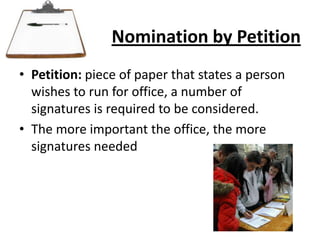
Nomination by PetitionPetition: piece of paper that states a person wishes to run for office, a number of signatures is required to be considered.The more important the office, the more signatures needed
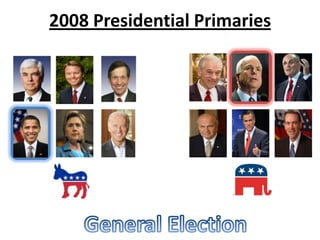
2008 Presidential PrimariesGeneral Election
Elections & CampaignsRight to vote=basic to democracyElection DayRegulating Elections:State v. Federal lawsElection dates (1st Tuesday, following the 1st Monday in November)Help America Vote Act (2002)
Financing ElectionsCampaigns require lots of money:OfficesCampaign workersAdvertisementsWebsitesWhere does the money come from?Private donors (expect favors)Public money ($3 contribution on income tax)
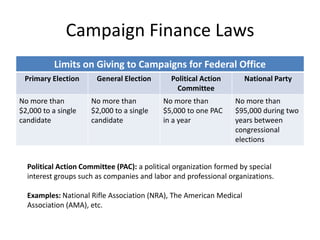
Campaign Finance LawsPolitical Action Committee (PAC): a political organization formed by special interest groups such as companies and labor and professional organizations. Examples: National Rifle Association (NRA), The American Medical Association (AMA), etc.
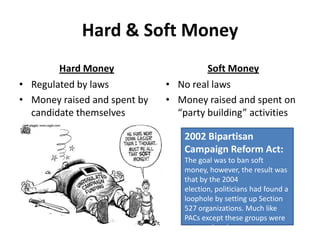
Hard & Soft MoneyHard MoneyRegulated by lawsMoney raised and spent by candidate themselvesSoft MoneyNo real lawsMoney raised and spent on “party building” activities2002 Bipartisan Campaign Reform Act: The goal was to ban soft money, however, the result was that by the 2004 election, politicians had found a loophole by setting up Section 527 organizations. Much like PACs except these groups were not regulated.
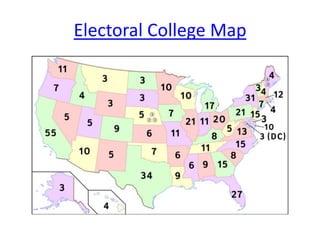
Presidential ElectionsElectoral CollegeJanuary 6th (Congress counts votes)Election night news coveragePopular vote: total number of votes cast by citizensElectoral vote: number of votes that states have in the electoral college
Electoral College Map
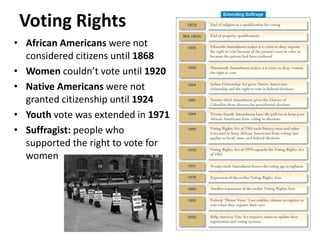
Voting RightsAfrican Americans were not considered citizens until 1868Women couldn’t vote until 1920Native Americans were not granted citizenship until 1924Youth vote was extended in 1971Suffragist: people who supported the right to vote for women
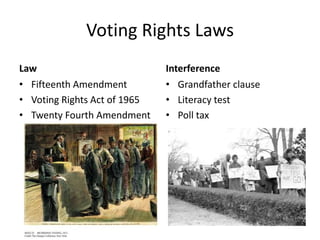
Voting Rights LawsLawFifteenth AmendmentVoting Rights Act of 1965Twenty Fourth AmendmentInterferenceGrandfather clauseLiteracy testPoll tax
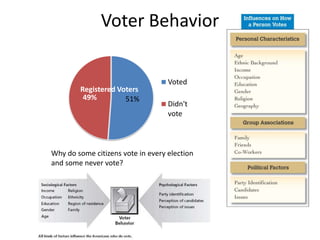
Voter BehaviorRegistered VotersWhy do some citizens vote in every election and some never vote?
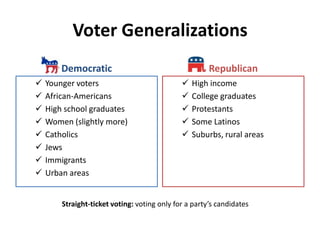
Voter GeneralizationsDemocraticYounger voters
African-Americans
High school graduates

Elections, voting, and voter behavior

  • 1.
  • 2.
    OutlineNominating CandidatesCaucuses &ConventionsPrimary ElectionsPetitionNominating Presidential CandidatesElections and CampaignsRegulating ElectionsFinancing ElectionsHard & Soft MoneyPresidential ElectionsVoting Rights and Voting LawsHistoryLawsVoter BehaviorInfluences on Voting DecisionsVoters and Nonvoters
  • 3.
    Nominating CandidatesNominate: selecta candidate to run for office4 methods for being on the ballot:CaucusConventionDirect primarypetition
  • 4.
    The Caucus &ConventionCaucus: party leaders meet and decide who will run for officeNominating convention: public meeting of party members to choose candidatesParty bosses: influential party leaders
  • 5.
    Primary ElectionDirect primaryelection: several candidates from the same party run against each other for the nominationTwo types of primary:Closed primary: limited to registered members of political partiesOpen primary: any registered voter
  • 6.
    Nomination by PetitionPetition:piece of paper that states a person wishes to run for office, a number of signatures is required to be considered.The more important the office, the more signatures needed
  • 7.
  • 8.
    Elections & CampaignsRightto vote=basic to democracyElection DayRegulating Elections:State v. Federal lawsElection dates (1st Tuesday, following the 1st Monday in November)Help America Vote Act (2002)
  • 9.
    Financing ElectionsCampaigns requirelots of money:OfficesCampaign workersAdvertisementsWebsitesWhere does the money come from?Private donors (expect favors)Public money ($3 contribution on income tax)
  • 10.
    Campaign Finance LawsPoliticalAction Committee (PAC): a political organization formed by special interest groups such as companies and labor and professional organizations. Examples: National Rifle Association (NRA), The American Medical Association (AMA), etc.
  • 11.
    Hard & SoftMoneyHard MoneyRegulated by lawsMoney raised and spent by candidate themselvesSoft MoneyNo real lawsMoney raised and spent on “party building” activities2002 Bipartisan Campaign Reform Act: The goal was to ban soft money, however, the result was that by the 2004 election, politicians had found a loophole by setting up Section 527 organizations. Much like PACs except these groups were not regulated.
  • 12.
    Presidential ElectionsElectoral CollegeJanuary6th (Congress counts votes)Election night news coveragePopular vote: total number of votes cast by citizensElectoral vote: number of votes that states have in the electoral college
  • 13.
  • 14.
    Voting RightsAfrican Americanswere not considered citizens until 1868Women couldn’t vote until 1920Native Americans were not granted citizenship until 1924Youth vote was extended in 1971Suffragist: people who supported the right to vote for women
  • 15.
    Voting Rights LawsLawFifteenthAmendmentVoting Rights Act of 1965Twenty Fourth AmendmentInterferenceGrandfather clauseLiteracy testPoll tax
  • 16.
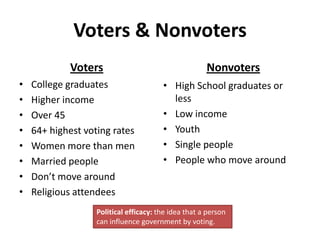
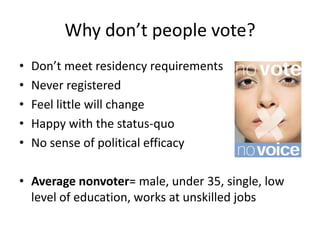
    Voter BehaviorRegistered VotersWhydo some citizens vote in every election and some never vote?
  • 17.
  • 18.
  • 19.