Taxation Without
 Representation
British Problems After 1763

-Massive new empire to maintain.

-Massive war debts to pay off.

-Settlers from the 13 colonies flooding into Indian lands are
causing continued conflicts, such as Pontiac's War.

The Solution?

1. Proclamation of 1763 forbids settlement west of the
Appalachian Mountains.

2. Tax the colonies
1764
The British Parliament creates the
Sugar Act, taxing all sugar and
molasses.

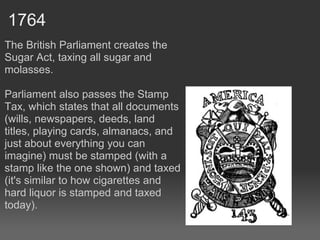
Parliament also passes the Stamp
Tax, which states that all documents
(wills, newspapers, deeds, land
titles, playing cards, almanacs, and
just about everything you can
imagine) must be stamped (with a
stamp like the one shown) and taxed
(it's similar to how cigarettes and
hard liquor is stamped and taxed
today).
The Colonies respond:

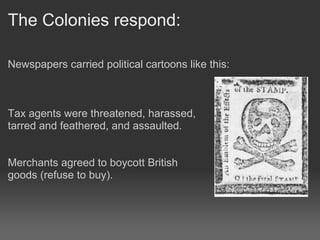
Newspapers carried political cartoons like this:


Tax agents were threatened, harassed,
tarred and feathered, and assaulted.


Merchants agreed to boycott British
goods (refuse to buy).
The main complaint of the Colonists:

"No Taxation without Representation!"

in otherwords, no taxing of the colonies
without allowing the colonies to be
represented in the Parliament.
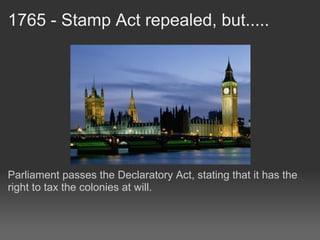
1765 - Stamp Act repealed, but.....


Parliament passes the Declaratory Act, stating that it has the
right to tax the colonies at will.
1767 - Townshend Acts

A series of taxes named after Charles Townshend, the
British minister who wrote them.

These Acts taxed everyday items that the colonists couldn't live
without (glass, lead, paint, paper and tea).

They also allowed the acts to be enforced through Writs of
Assistance...which were basically open-ended search warrants
allowing British authorities to search any part of your property
at any time for any reason (or none at all).
Colonial Response:

A group called the Sons of Liberty (and a womens' group called
the Daughters of Liberty), which started during the Stamp Act
Crisis, urged boycotts of British goods. In some cases, they
threatened tax agents, merchants and individuals who
continued to buy British goods.

There were also various other protests throughout the colonies
ranging from mass meetings, official protests to newspaper
articles and satirical plays.

Taxation without representation

  • 1.
  • 2.
    British Problems After1763 -Massive new empire to maintain. -Massive war debts to pay off. -Settlers from the 13 colonies flooding into Indian lands are causing continued conflicts, such as Pontiac's War. The Solution? 1. Proclamation of 1763 forbids settlement west of the Appalachian Mountains. 2. Tax the colonies
  • 3.
    1764 The British Parliamentcreates the Sugar Act, taxing all sugar and molasses. Parliament also passes the Stamp Tax, which states that all documents (wills, newspapers, deeds, land titles, playing cards, almanacs, and just about everything you can imagine) must be stamped (with a stamp like the one shown) and taxed (it's similar to how cigarettes and hard liquor is stamped and taxed today).
  • 4.
    The Colonies respond: Newspaperscarried political cartoons like this: Tax agents were threatened, harassed, tarred and feathered, and assaulted. Merchants agreed to boycott British goods (refuse to buy).
  • 5.
    The main complaintof the Colonists: "No Taxation without Representation!" in otherwords, no taxing of the colonies without allowing the colonies to be represented in the Parliament.
  • 6.
    1765 - StampAct repealed, but..... Parliament passes the Declaratory Act, stating that it has the right to tax the colonies at will.
  • 7.
    1767 - TownshendActs A series of taxes named after Charles Townshend, the British minister who wrote them. These Acts taxed everyday items that the colonists couldn't live without (glass, lead, paint, paper and tea). They also allowed the acts to be enforced through Writs of Assistance...which were basically open-ended search warrants allowing British authorities to search any part of your property at any time for any reason (or none at all).
  • 8.
    Colonial Response: A groupcalled the Sons of Liberty (and a womens' group called the Daughters of Liberty), which started during the Stamp Act Crisis, urged boycotts of British goods. In some cases, they threatened tax agents, merchants and individuals who continued to buy British goods. There were also various other protests throughout the colonies ranging from mass meetings, official protests to newspaper articles and satirical plays.