Physics of Ventilation
National Chairperson (Ex)
Intensive Care Chapter I A P
Founder Chairman.....
National conference on pediatric critical
care
Professor of pediatrics ( Hon )
JNMC:Wardha
Nagpur : INDIA
Dr Deopujari
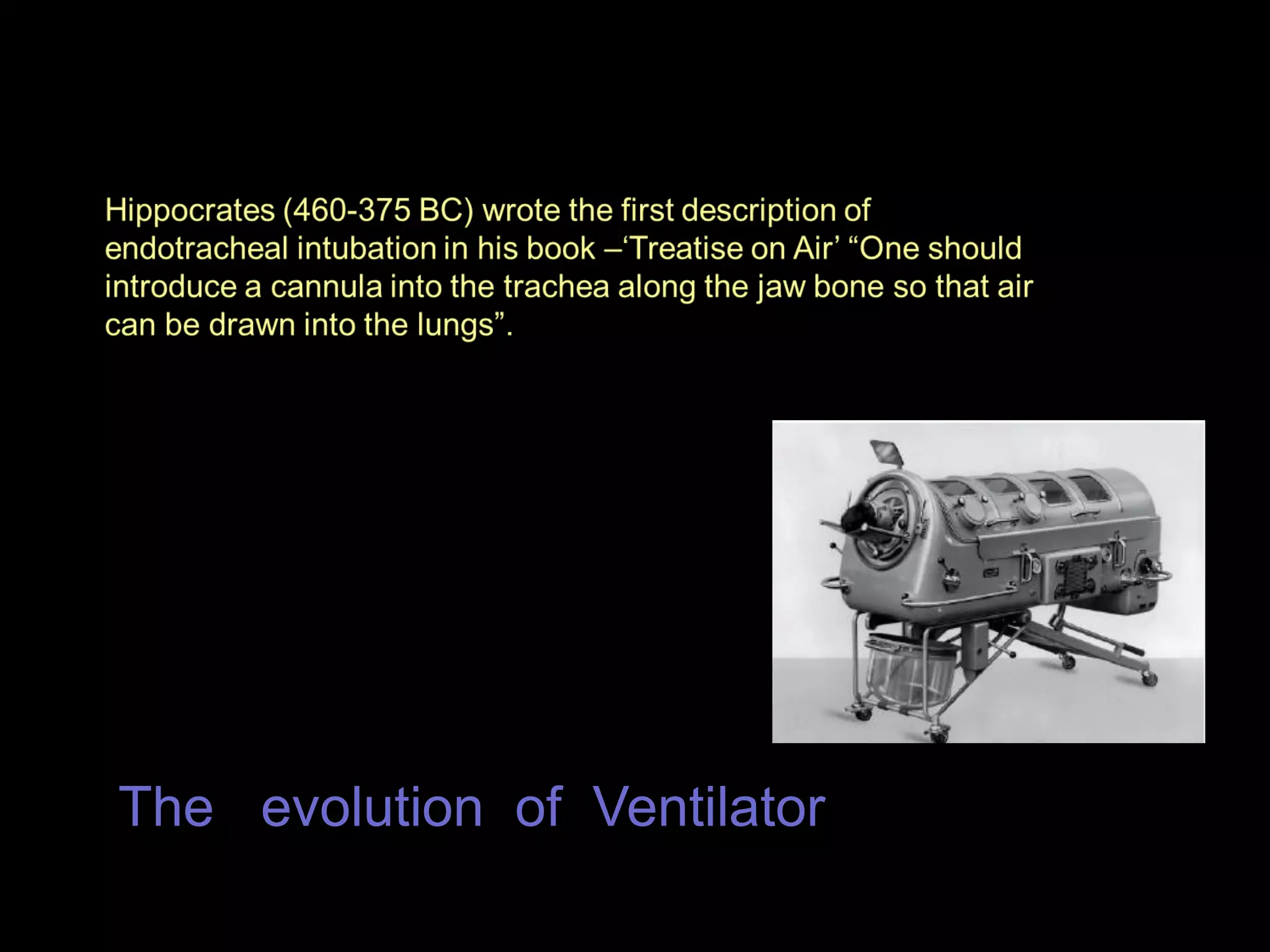
The evolution of Ventilator
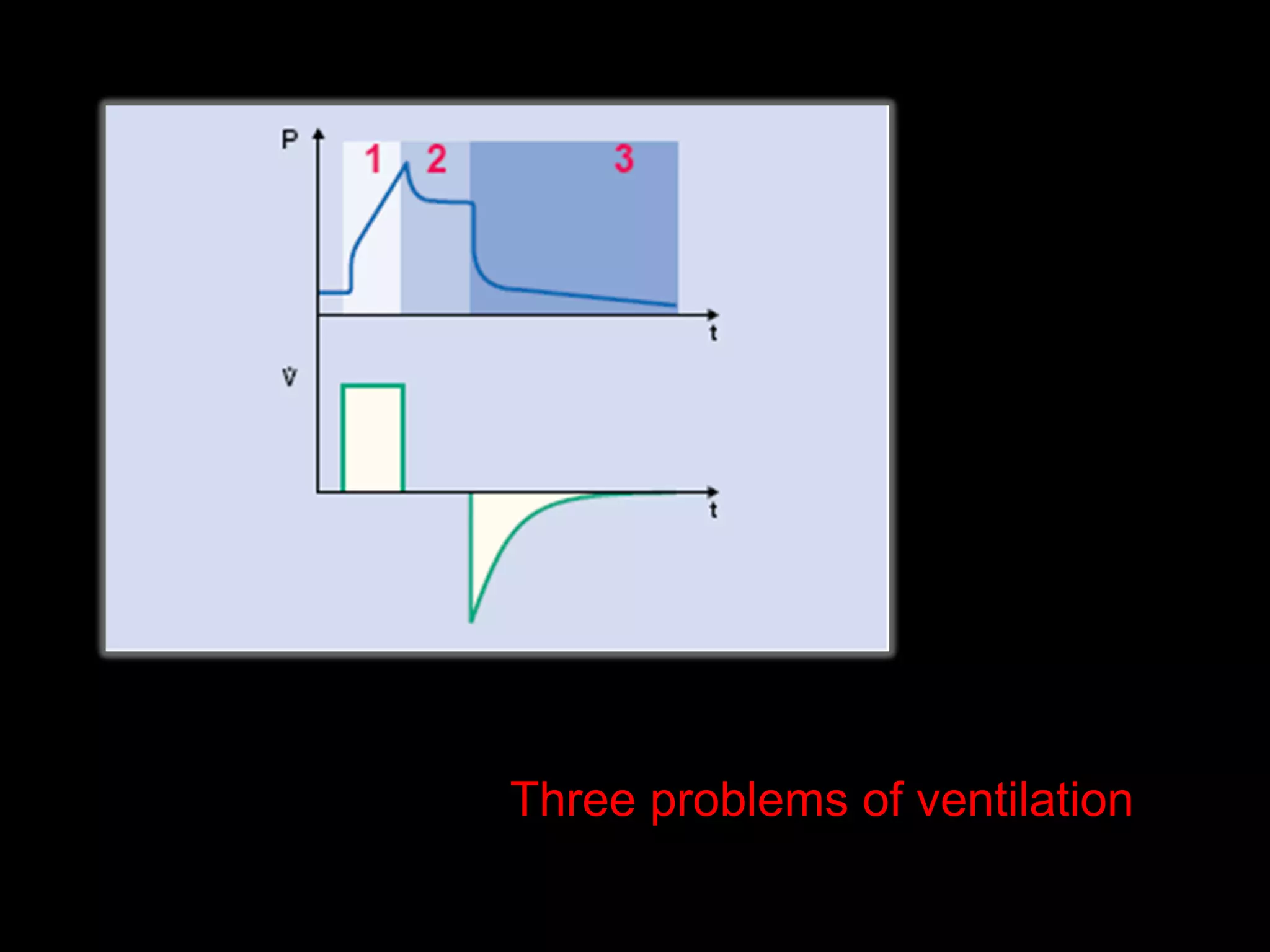
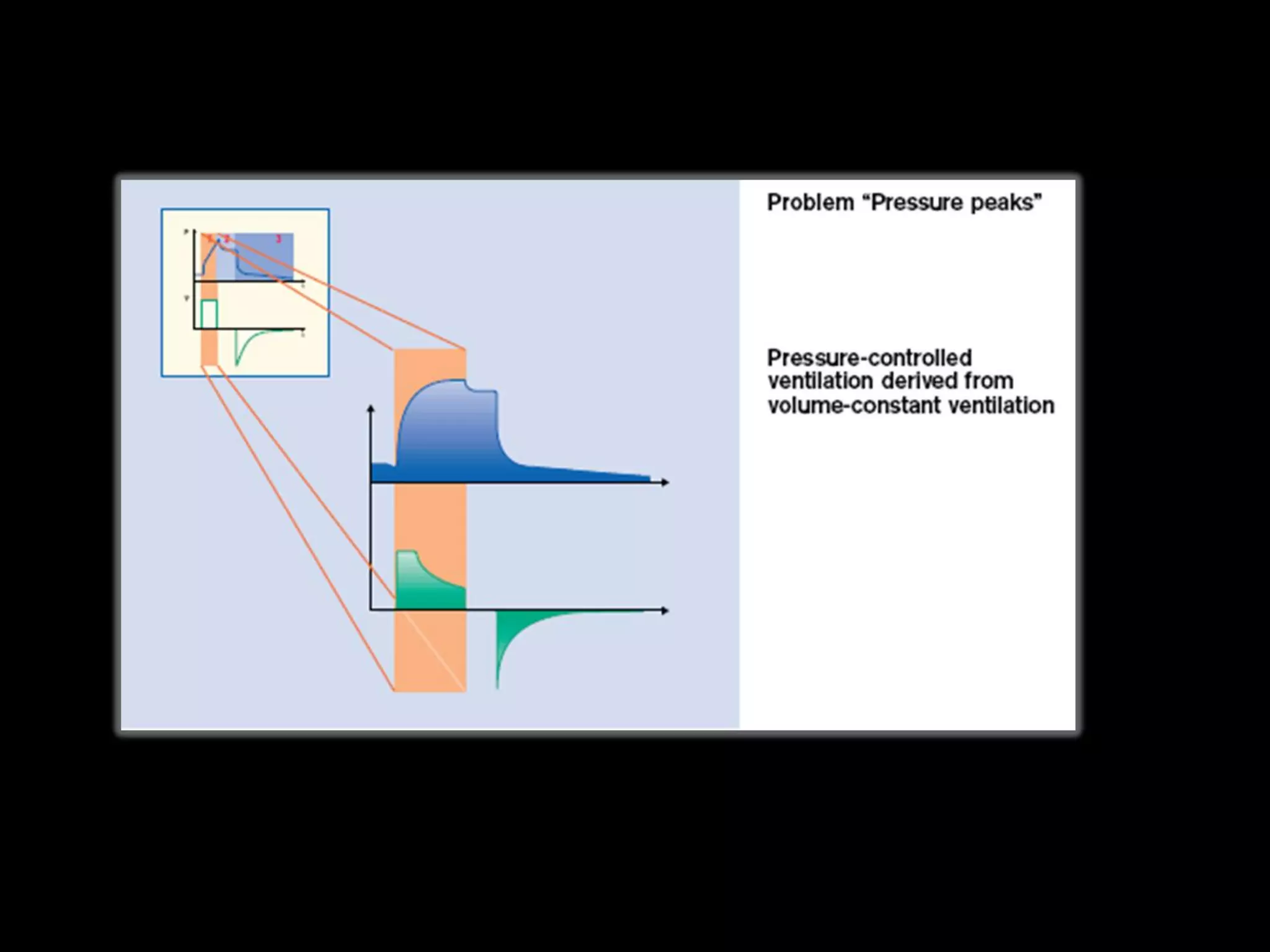
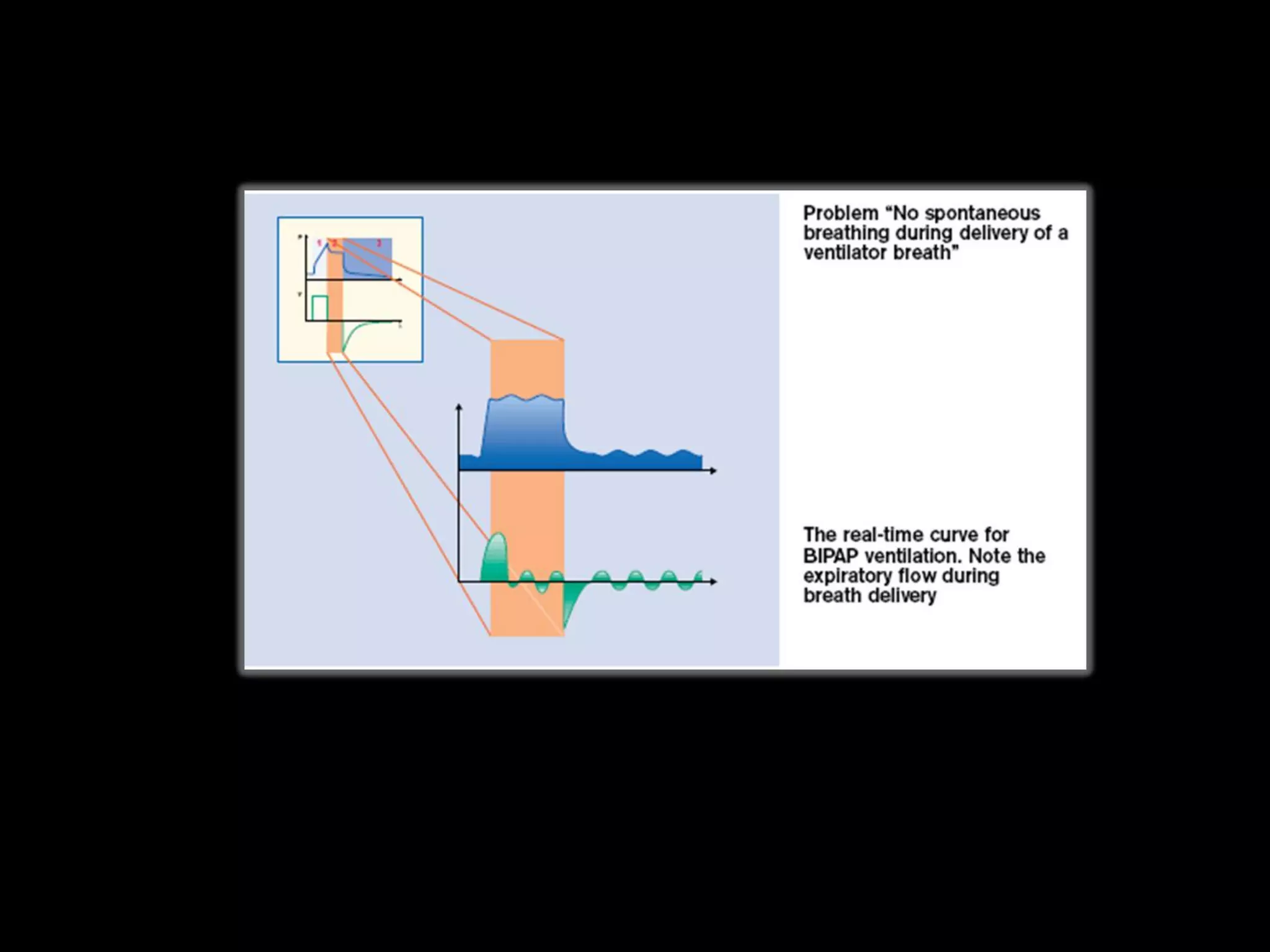
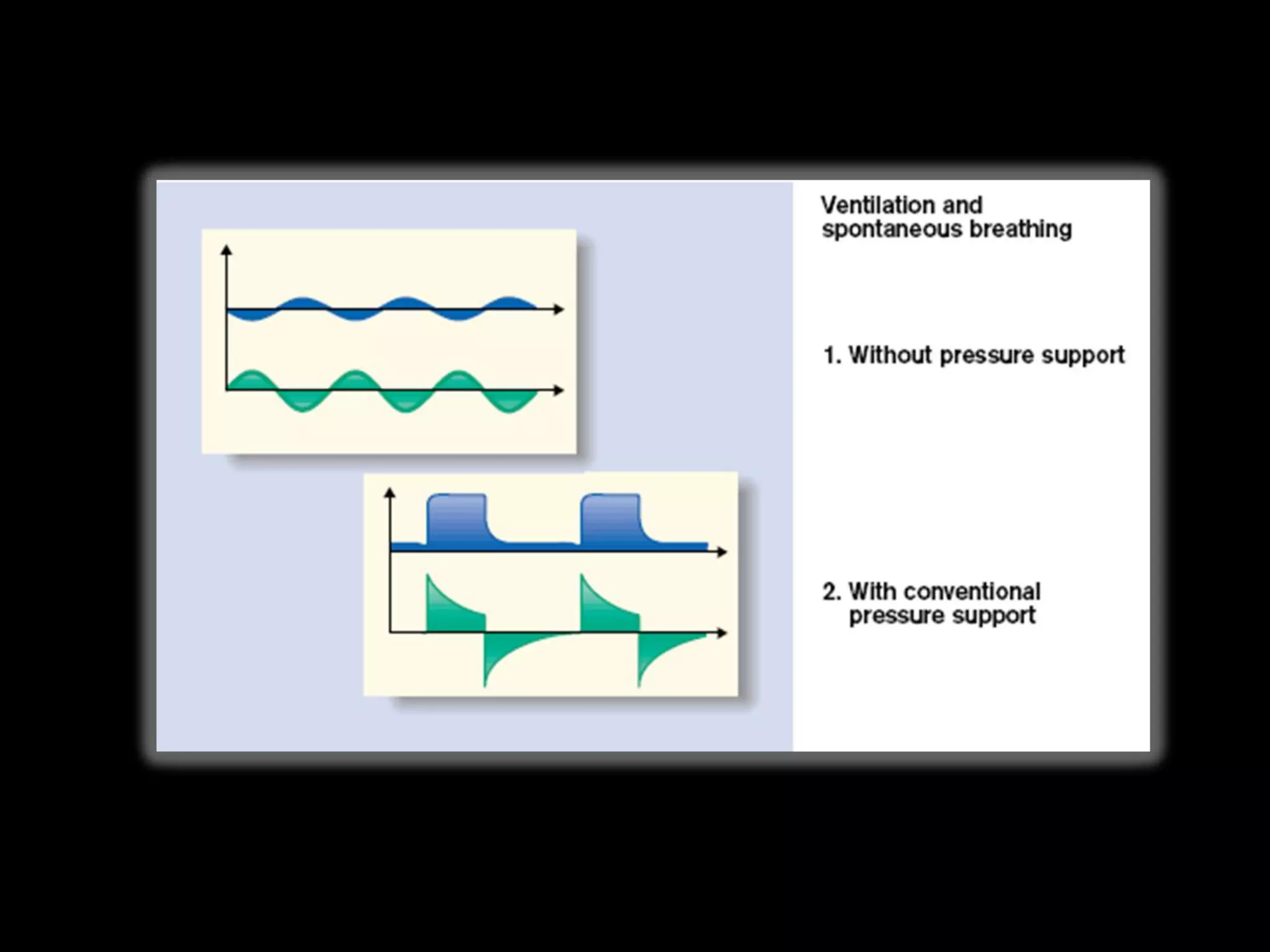
Three problems of ventilation
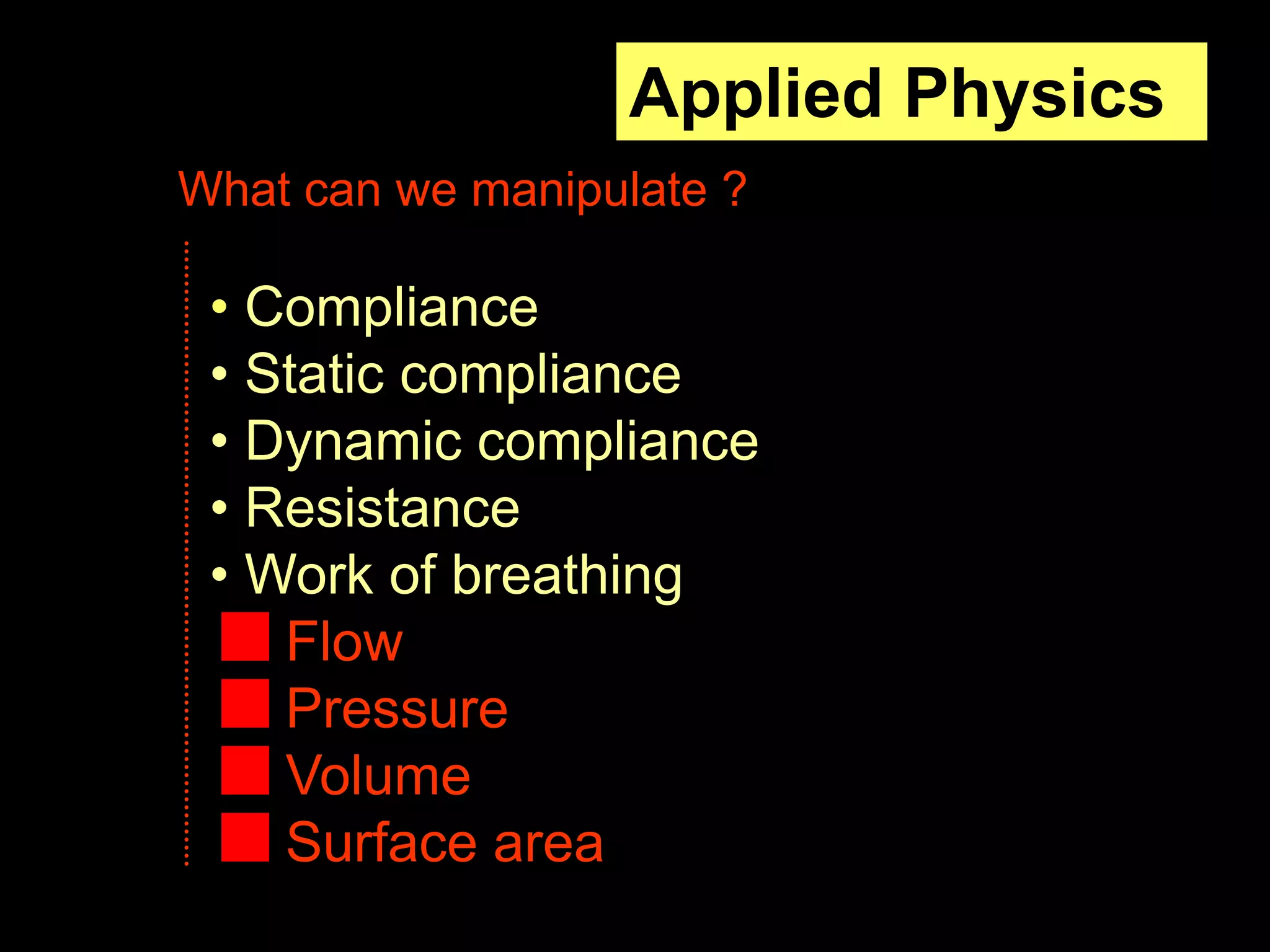
Applied Physics
• Compliance
• Static compliance
• Dynamic compliance
• Resistance
• Work of breathing
Flow
Pressure
Volume
Surface area
What can we manipulate ?
Evolution of Ventilators………………
What can we manipulate ?
1)Minute ventilation
2)Pressure gradient
3)Surface are
4)Pulmonary vasculature
5)Solubility
How can we do this ?
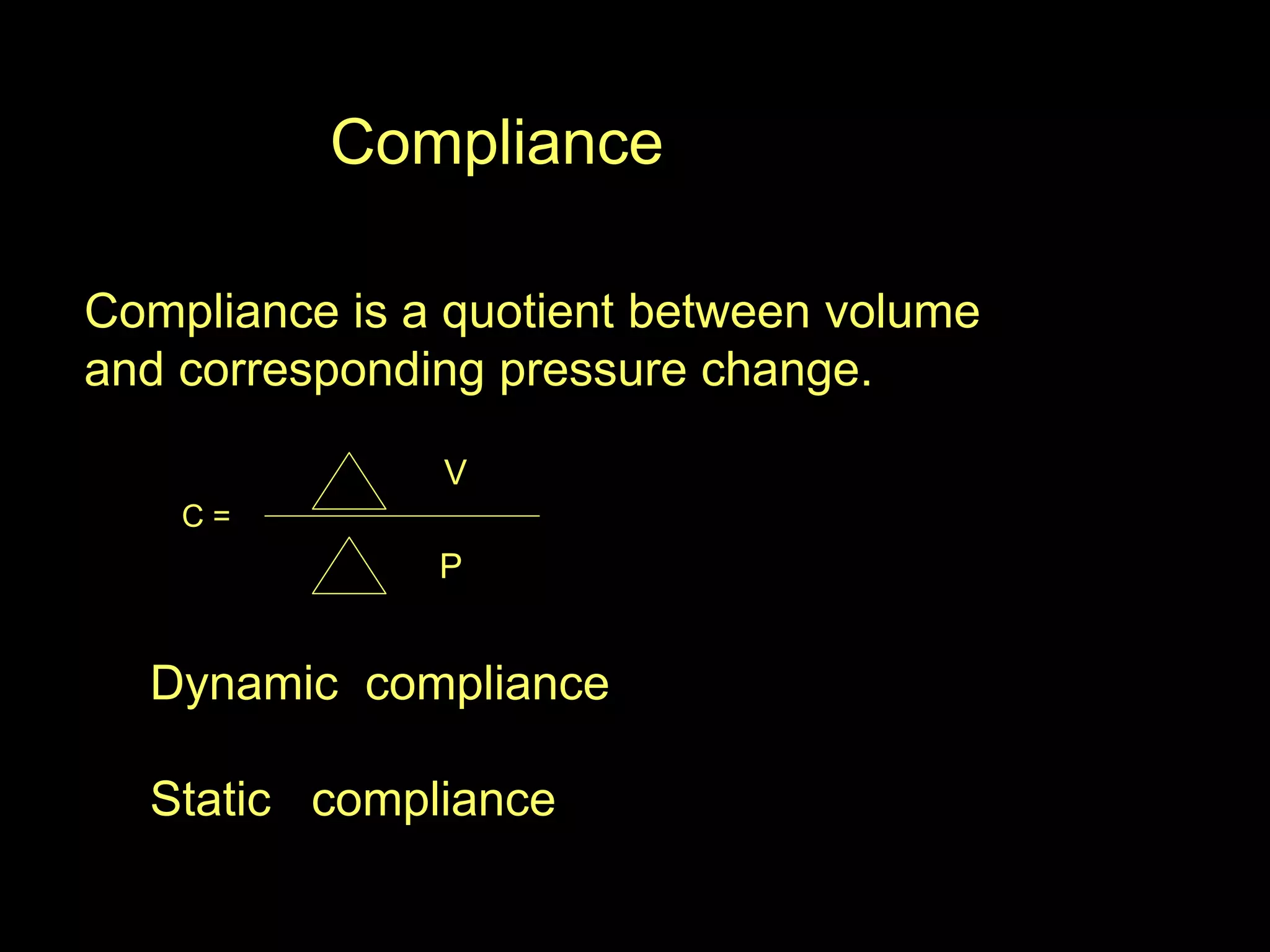
Compliance
Compliance is a quotient between volume
and corresponding pressure change.
C =
V
P
Dynamic compliance
Static compliance
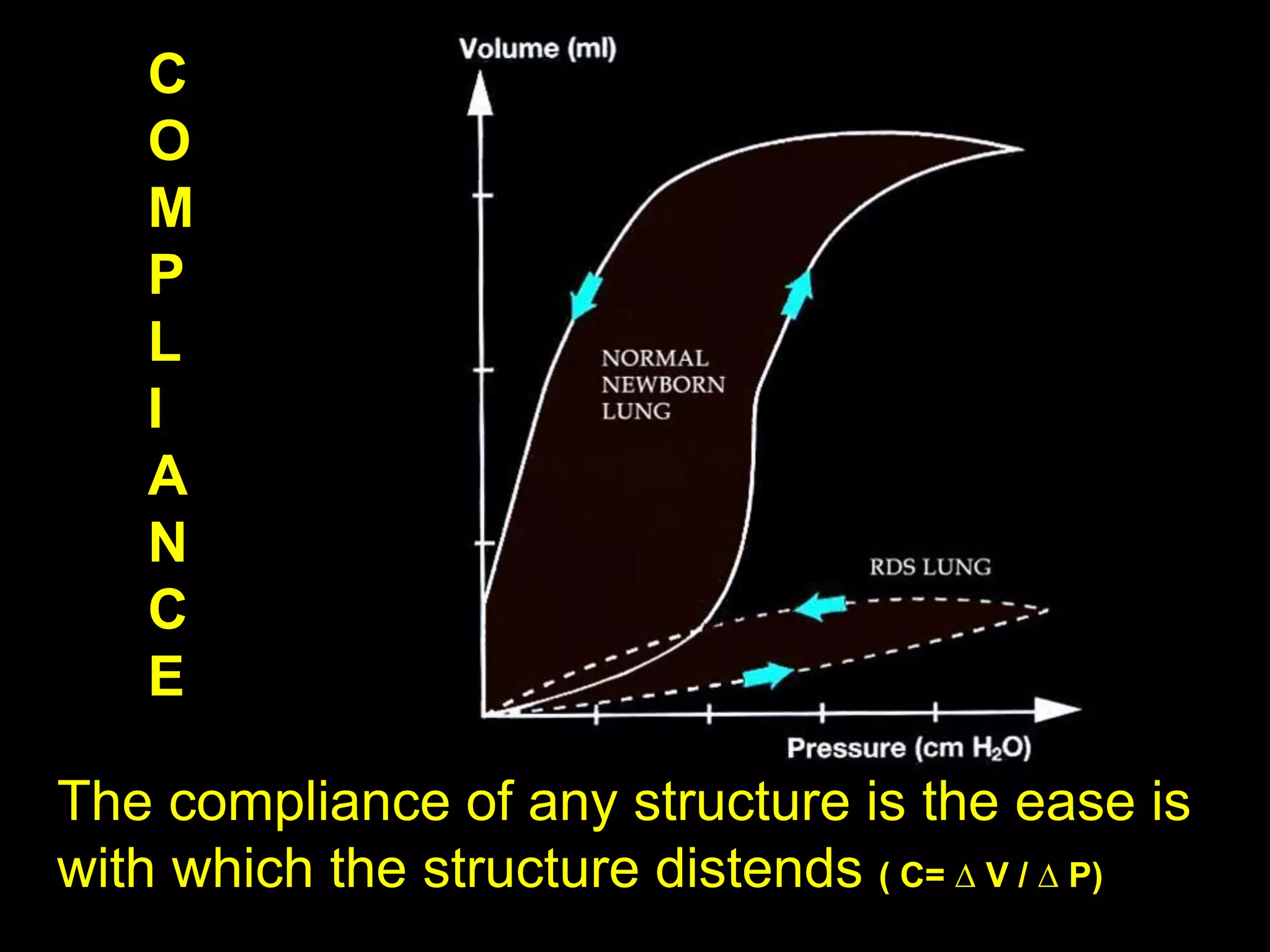
The compliance of any structure is the ease is
with which the structure distends ( C= ∆ V / ∆ P)
C
O
M
P
L
I
A
N
C
E
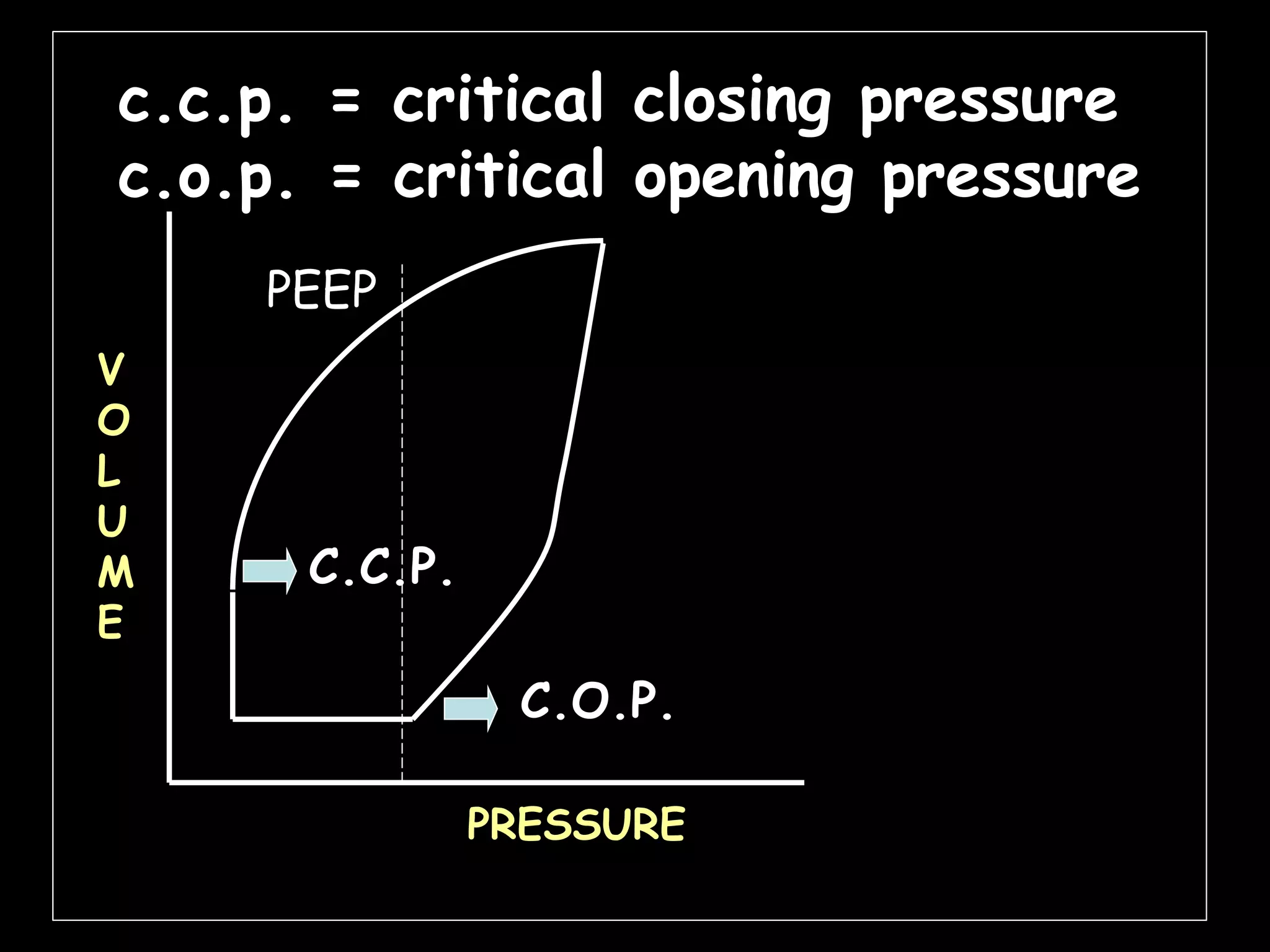
C.C.P.
C.O.P.
V
O
L
U
M
E
PRESSURE
c.c.p. = critical closing pressure
c.o.p. = critical opening pressure
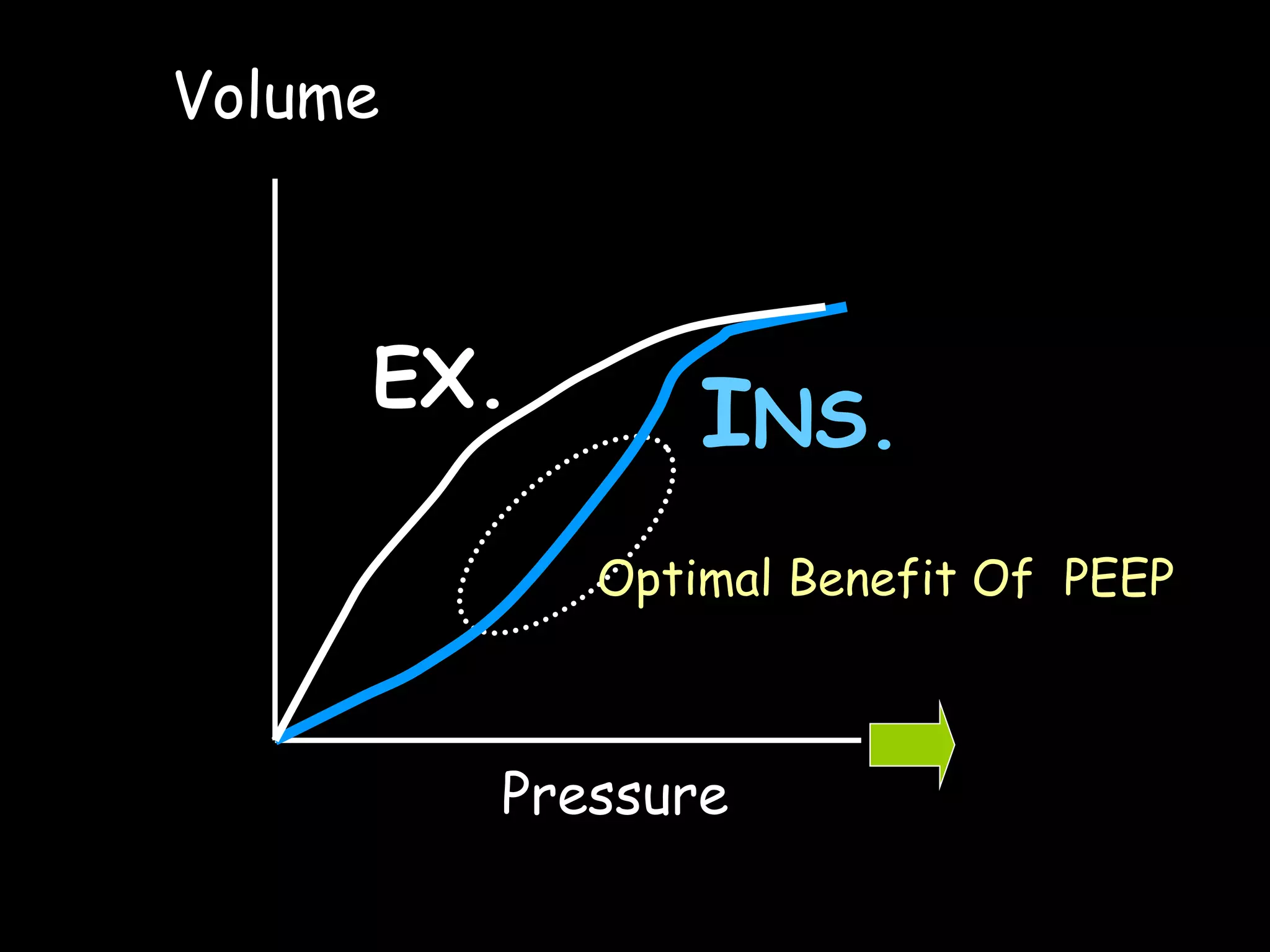
PEEP
Pressure
Volume
Optimal Benefit Of PEEP
EX.
INS.
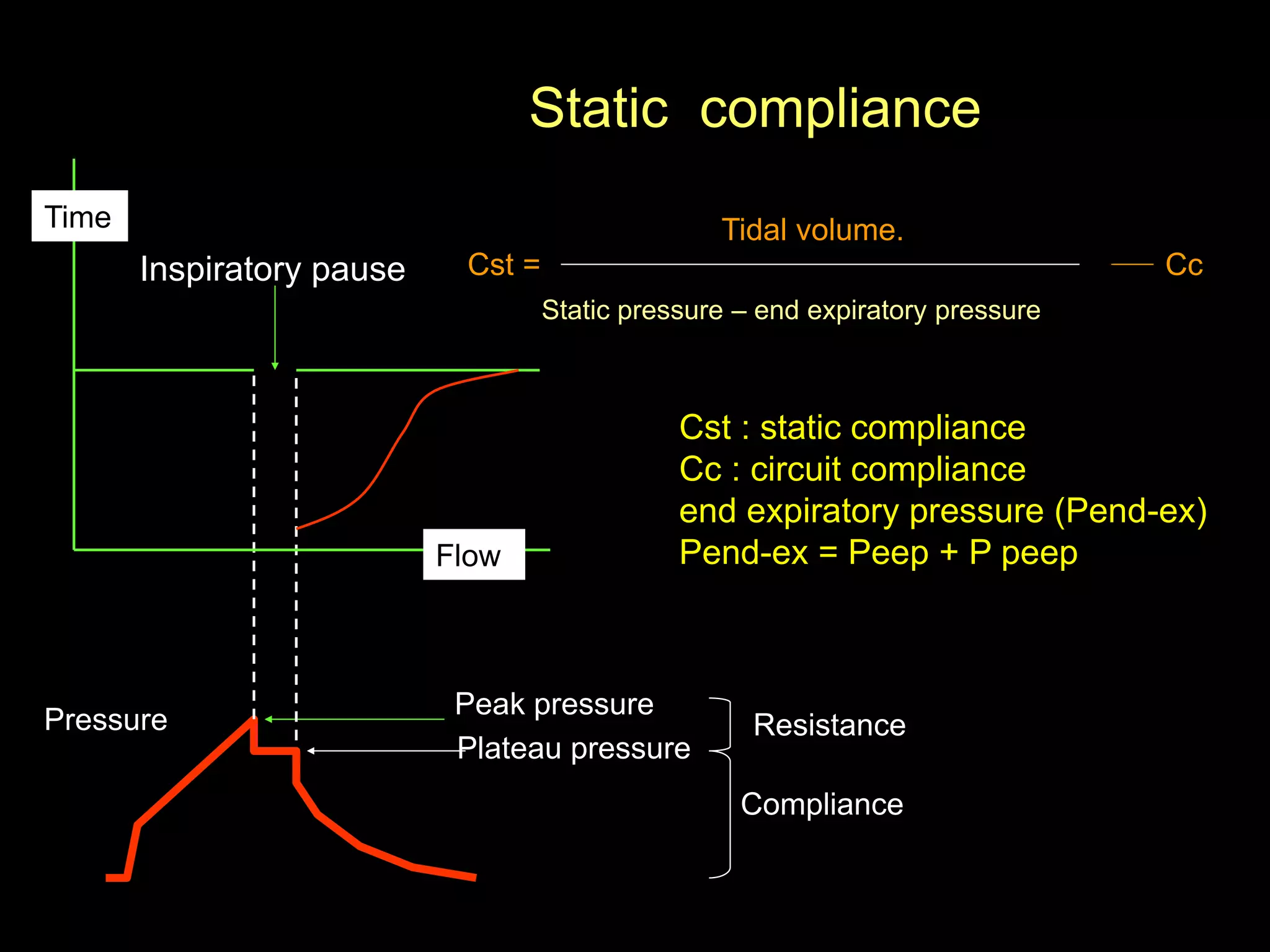
Peak pressure
Plateau pressure
Pressure
Inspiratory pause
Flow
Time
Cst =
Tidal volume.
Cc
Cst : static compliance
Cc : circuit compliance
end expiratory pressure (Pend-ex)
Pend-ex = Peep + P peep
Resistance
Compliance
Static compliance
Static pressure – end expiratory pressure
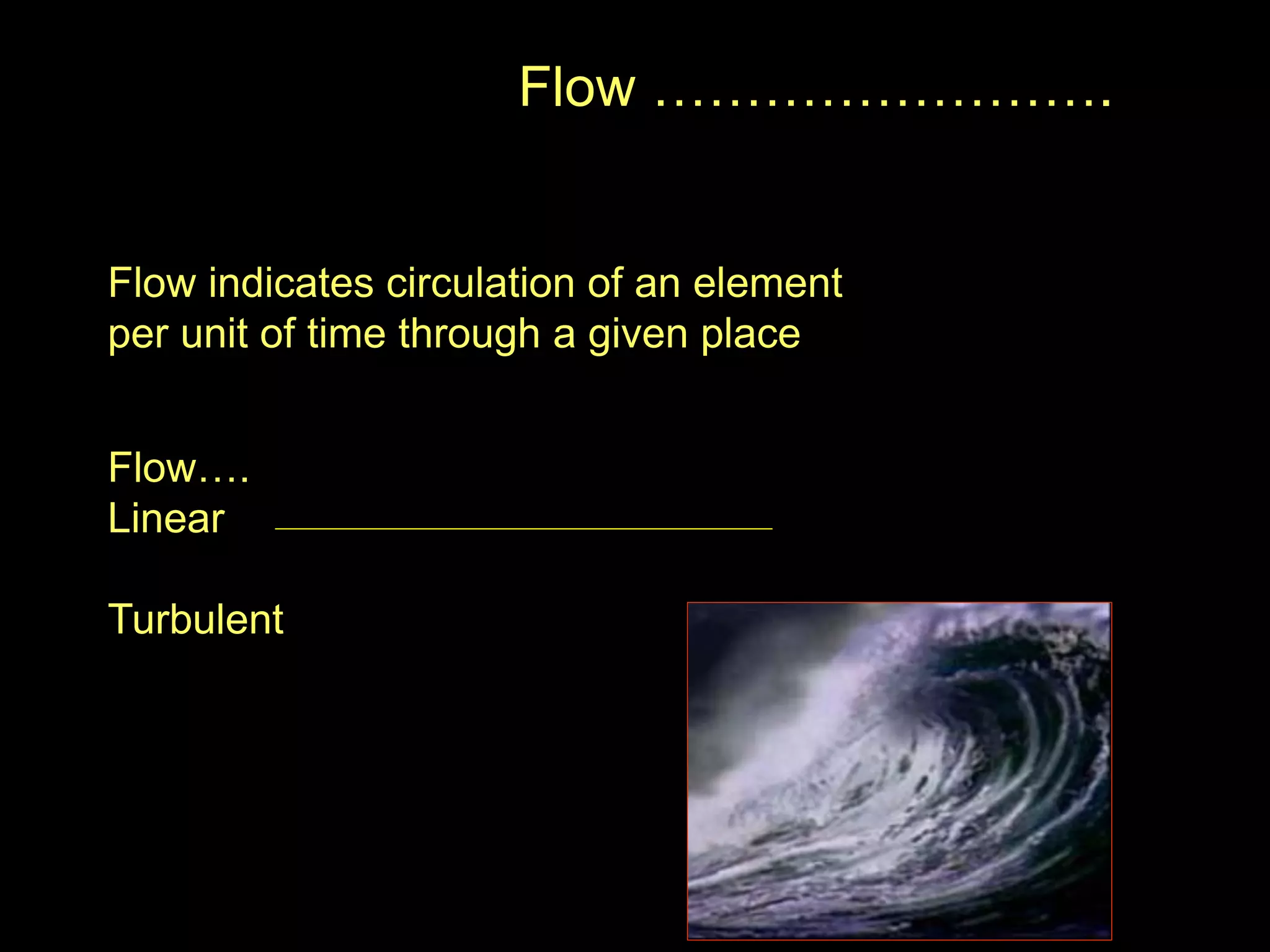
Flow …………………….
Flow indicates circulation of an element
per unit of time through a given place
Flow….
Linear
Turbulent
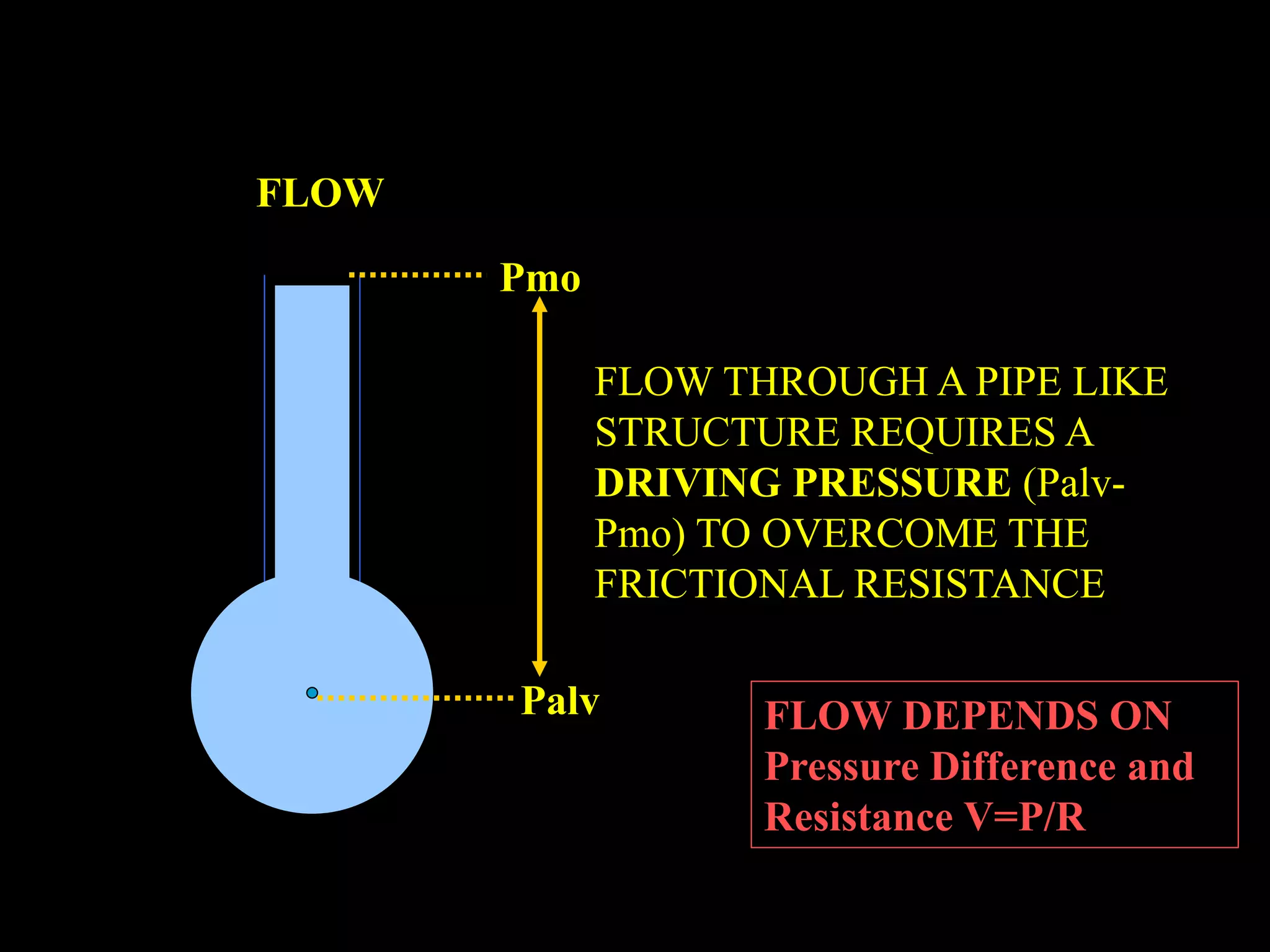
FLOW
Palv
Pmo
FLOW THROUGH A PIPE LIKE
STRUCTURE REQUIRES A
DRIVING PRESSURE (Palv-
Pmo) TO OVERCOME THE
FRICTIONAL RESISTANCE
FLOW DEPENDS ON
Pressure Difference and
Resistance V=P/R
Pressure …………….
Represents the force that a volume of gas exercises upon a unit
area.
Kinetic theory states that gas molecules bomb the walls of a
container .
If volume remains constant , pressure varies in direct proportion
to Temperature.
If temperature remains constant , pressure varies in inverse
relation to Volume .
Increase in pressure decreases volume
Resistance ……………
Resistance is defined as the relationship between pressure (p) and flow ( 0 )
Therefore important when there is air flow.
R = -----------
Resistance depends upon
Diameter of airway
Length of airway
Viscosity and density of air
Resistance during inspiration
Resistance during expiration
P
O
And how can we do this ?
• Conditional variables
• Control variables
• Phase variables
Trigger variables
Limit variables
Cycle variables
Base line
Mechanical Ventilation
Concept
Conditional variables alone or in combination are
analyzed by Ventilator’s control logic.
The state of this variable determines as to which of
two types of breath would be delivered.
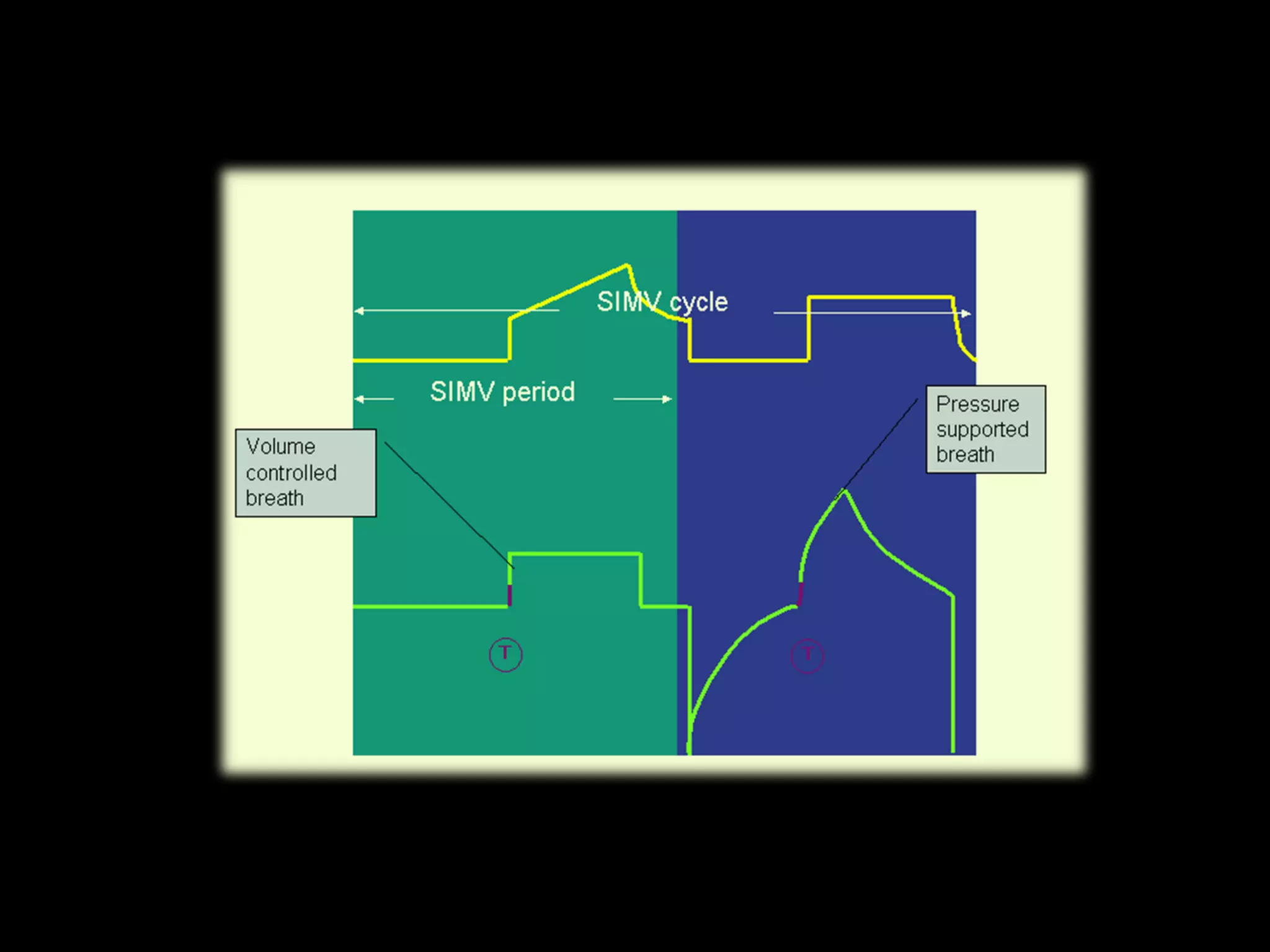
SIMV is based on timing window and accordingly the
ventilator delivers …………………………….
a pressure triggered ( patient ) or time triggered
( machine) breath.
In this situation the patient effort and time are
conditional variables for determining triggering.
CONDITIONAL
VARIABLE
Conditional variables
• Pressure
• Volume
• Flow
• Time
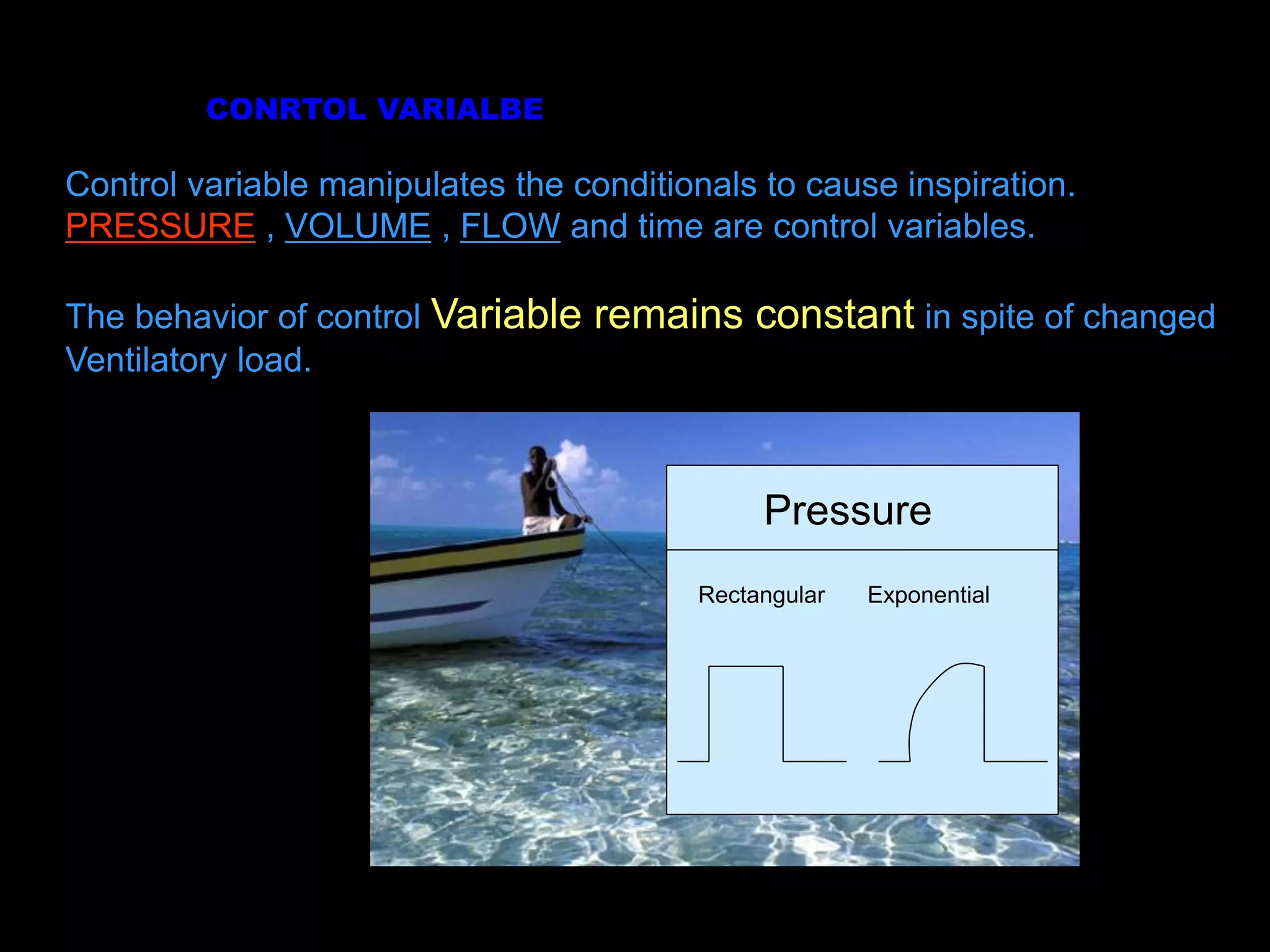
Control variable manipulates the conditional to cause inspiration.
Pressure , volume , flow and time are control variables.
The behavior of control Variable remains constant in spite of changed
Ventilatory load.
CONRTOL VARIALBE
Control variable manipulates the conditionals to cause inspiration.
PRESSURE , VOLUME , FLOW and time are control variables.
The behavior of control Variable remains constant in spite of changed
Ventilatory load.
CONRTOL VARIALBE
Pressure
Rectangular Exponential
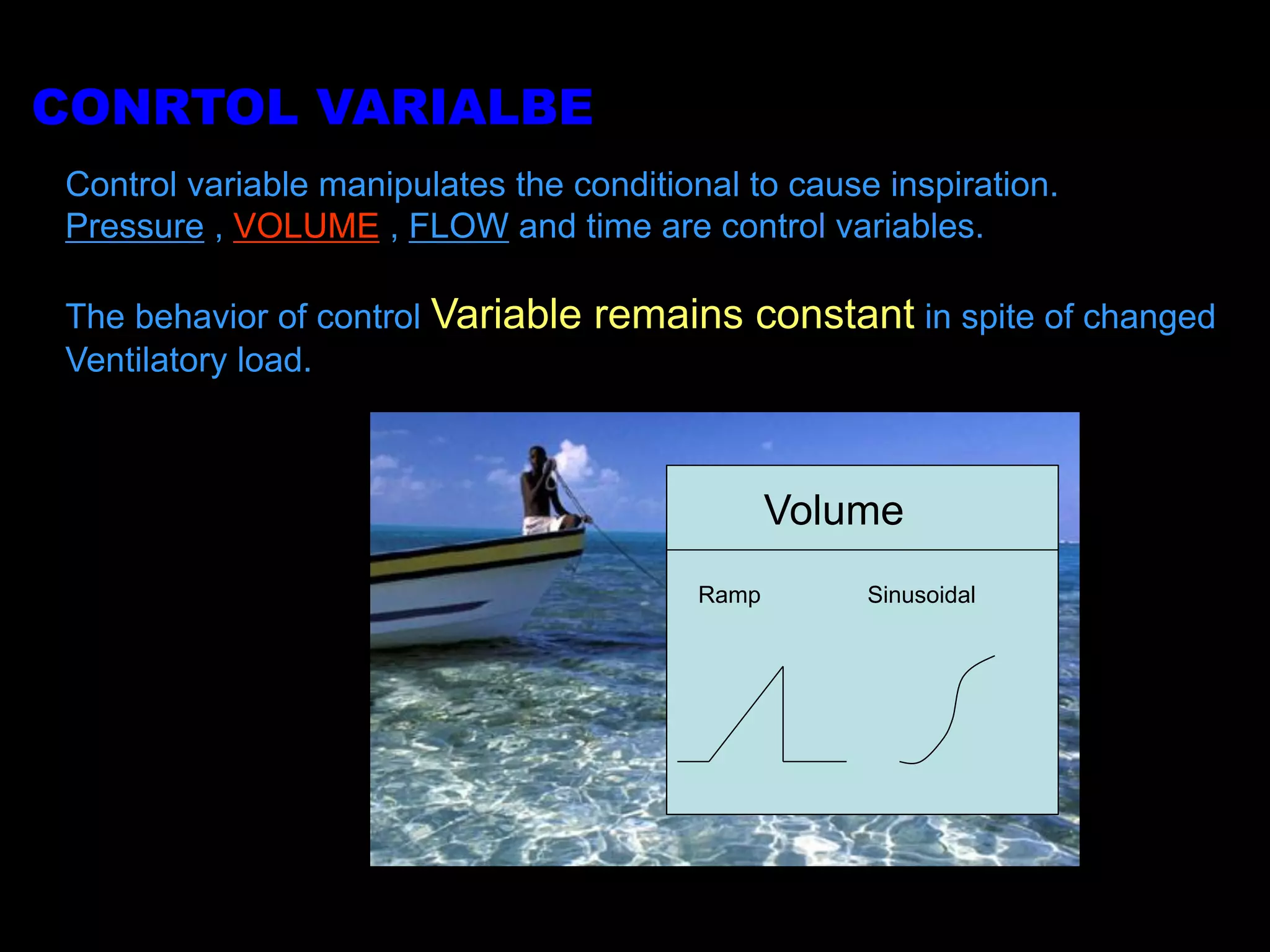
Control variable manipulates the conditional to cause inspiration.
Pressure , VOLUME , FLOW and time are control variables.
The behavior of control Variable remains constant in spite of changed
Ventilatory load.
Volume
Ramp Sinusoidal
CONRTOL VARIALBE
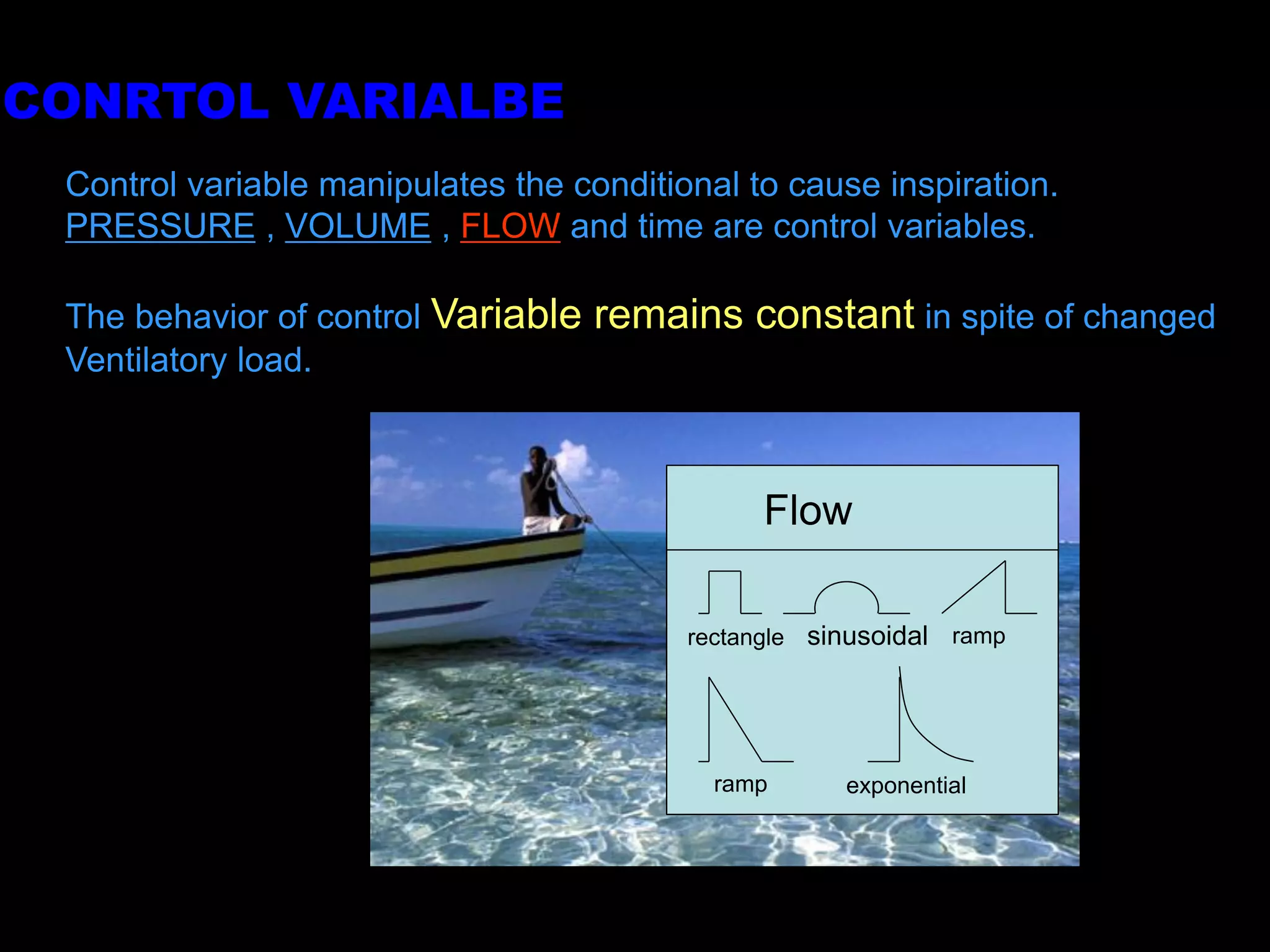
Control variable manipulates the conditional to cause inspiration.
PRESSURE , VOLUME , FLOW and time are control variables.
The behavior of control Variable remains constant in spite of changed
Ventilatory load.
Flow
sinusoidalrectangle ramp
ramp exponential
CONRTOL VARIALBE
During pressure support ventilation
though one selects a level of support
the Inspiration continues till
predetermined flow rate or termination
criteria is reached.
During PSV patient determines the
Rate ……………..
Inspiratory time…
Flow……………..
LIMIT
VARIBALE
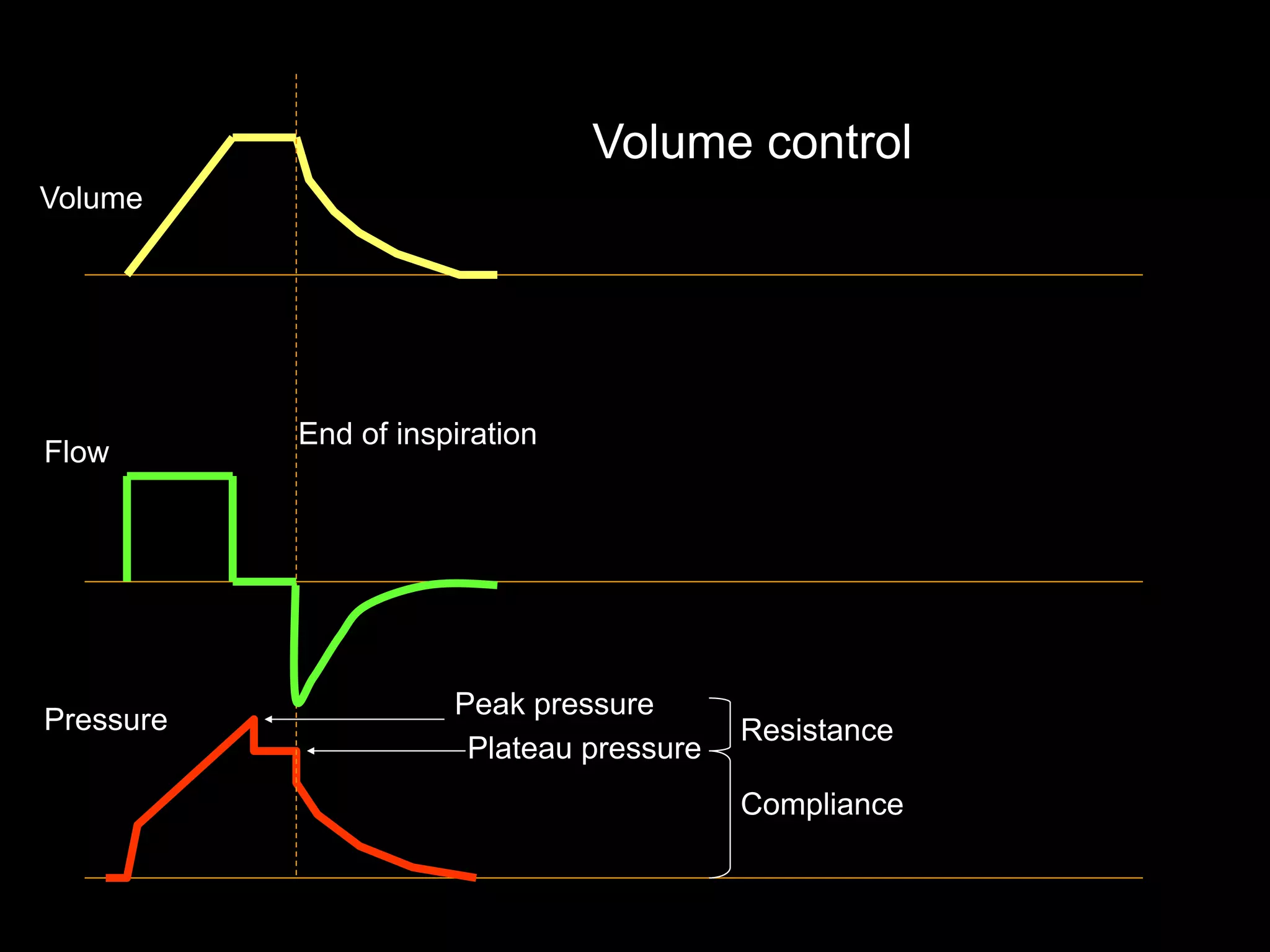
Peak pressure
Plateau pressure
Resistance
Compliance
End of inspiration
Volume
Flow
Pressure
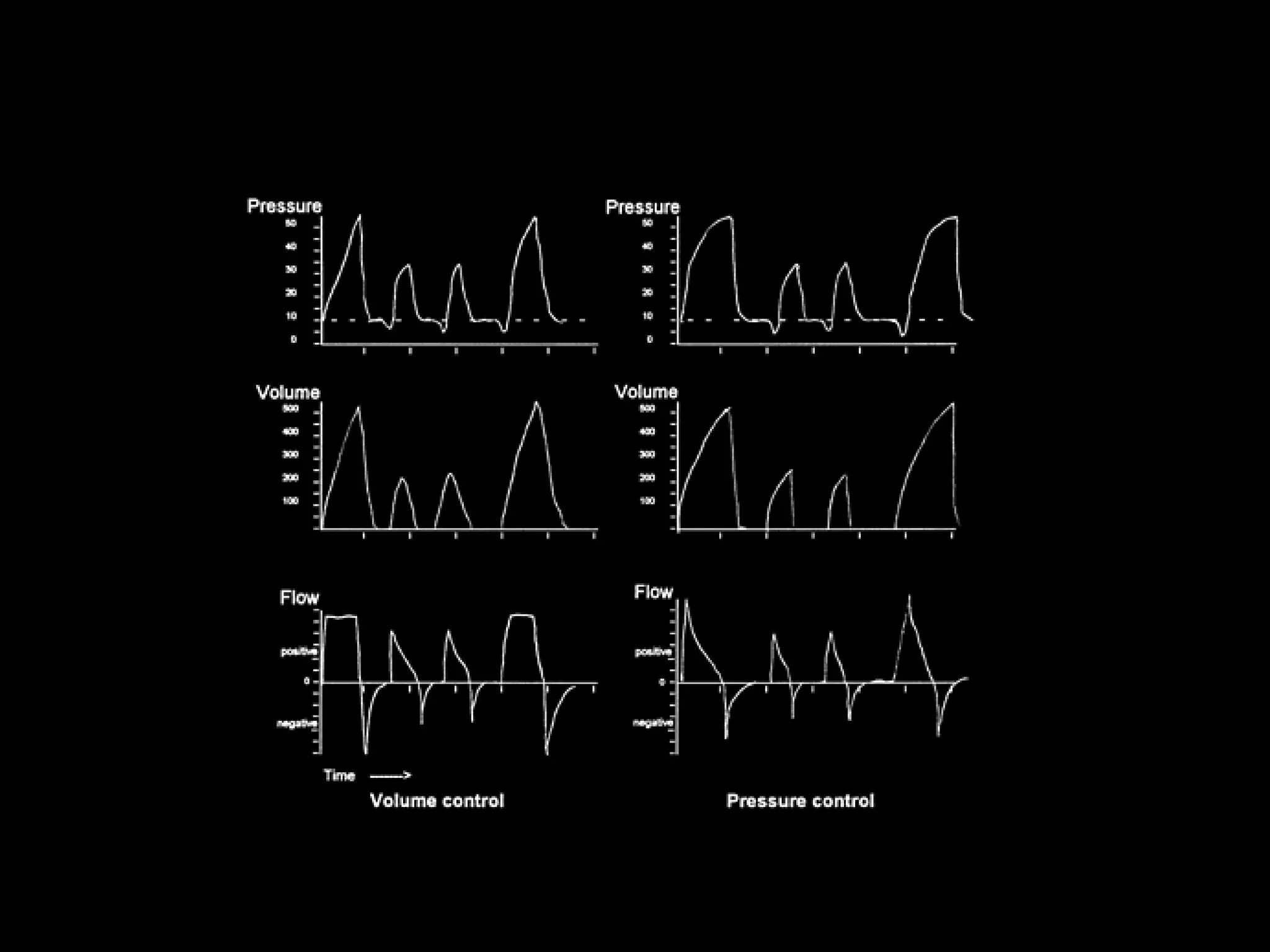
Volume control
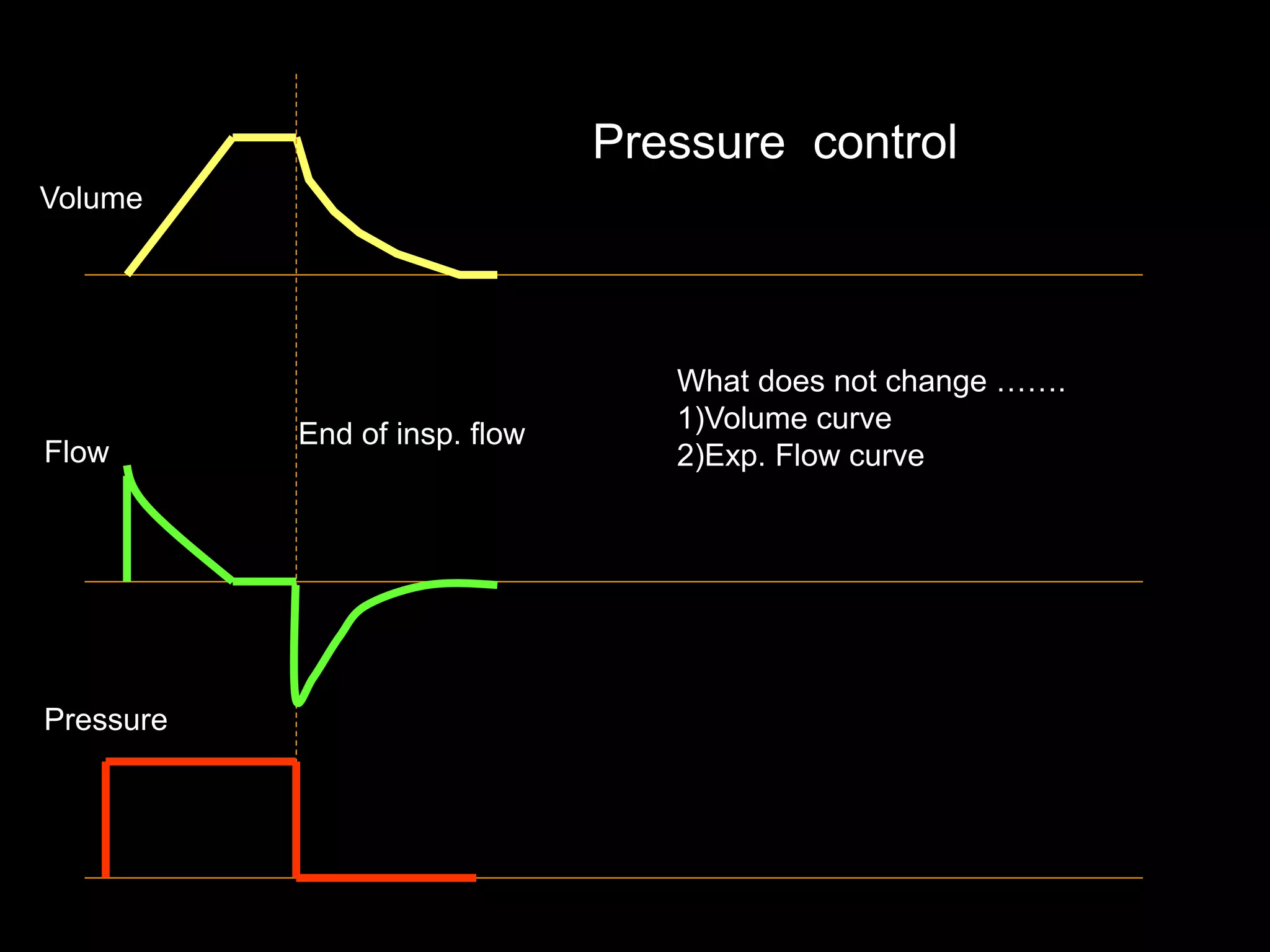
End of insp. flow
Volume
Flow
Pressure
Pressure control
What does not change …….
1)Volume curve
2)Exp. Flow curve
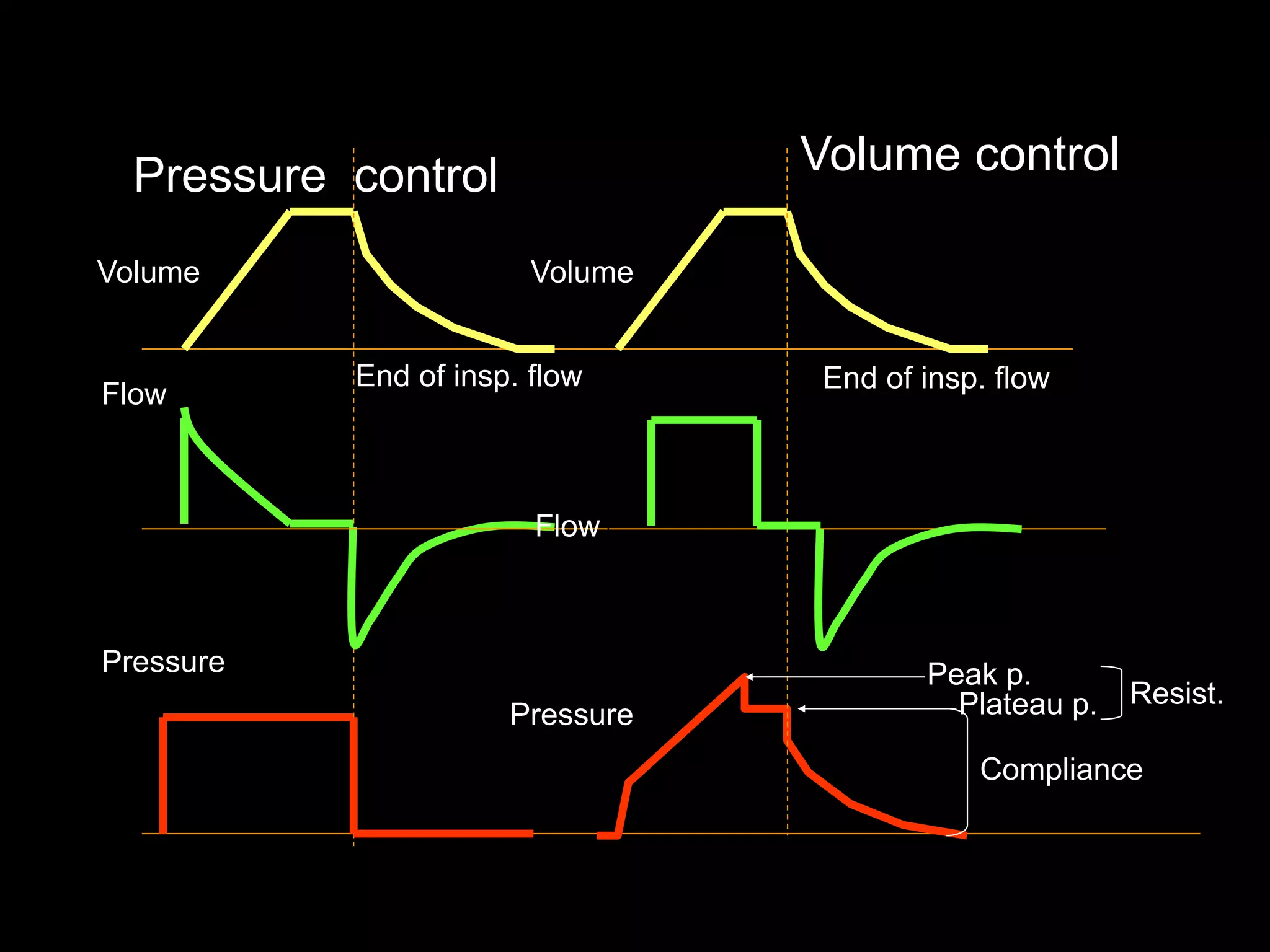
End of insp. flow
Volume
Flow
Pressure
Pressure control
Peak p.
Plateau p. Resist.
Compliance
End of insp. flow
Volume
Flow
Pressure
Volume control
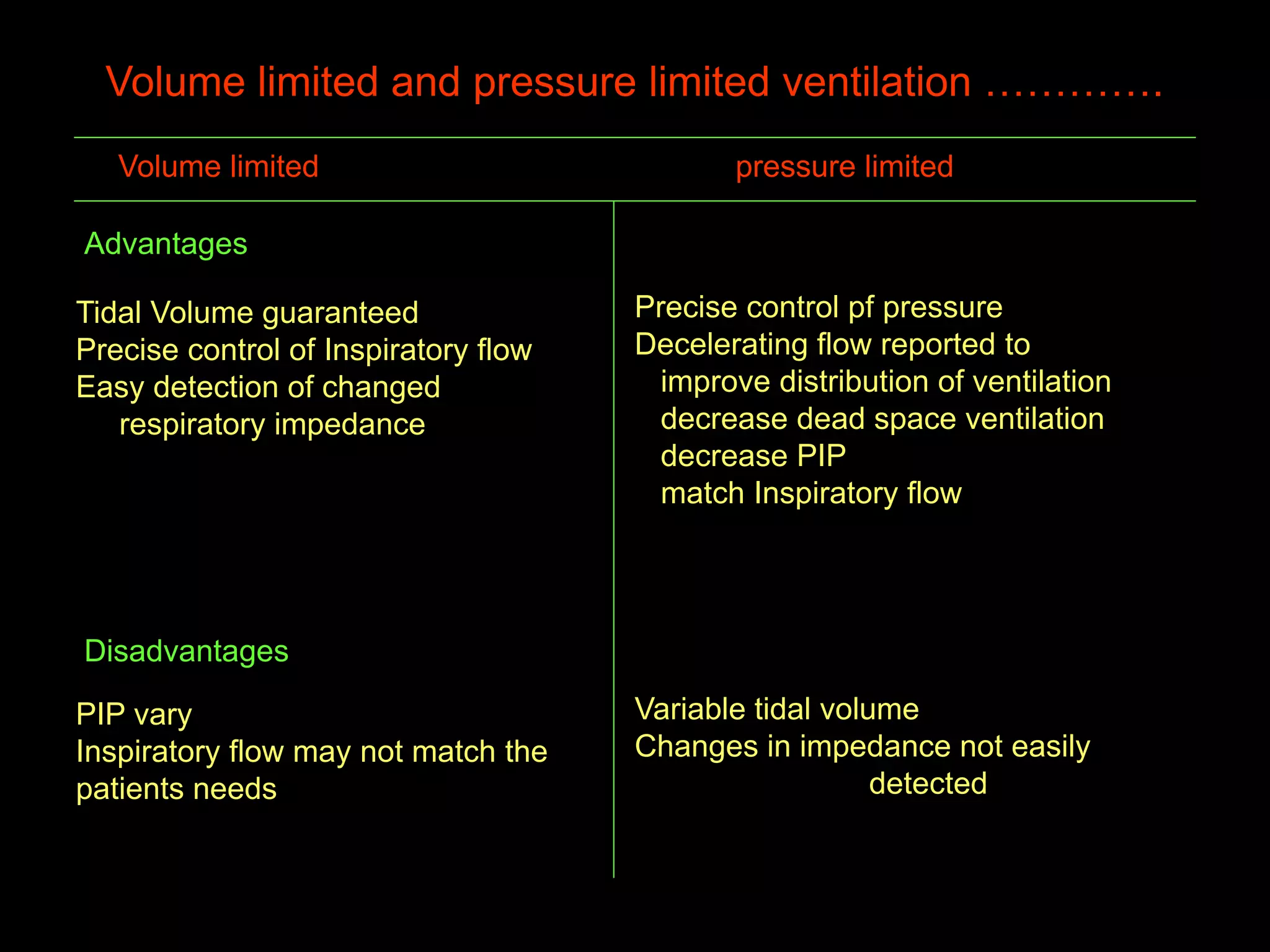
Volume limited and pressure limited ventilation ………….
Volume limited pressure limited
Advantages
Tidal Volume guaranteed
Precise control of Inspiratory flow
Easy detection of changed
respiratory impedance
Precise control pf pressure
Decelerating flow reported to
improve distribution of ventilation
decrease dead space ventilation
decrease PIP
match Inspiratory flow
Disadvantages
PIP vary
Inspiratory flow may not match the
patients needs
Variable tidal volume
Changes in impedance not easily
detected
Modes of ventilation
or moods of ventilation
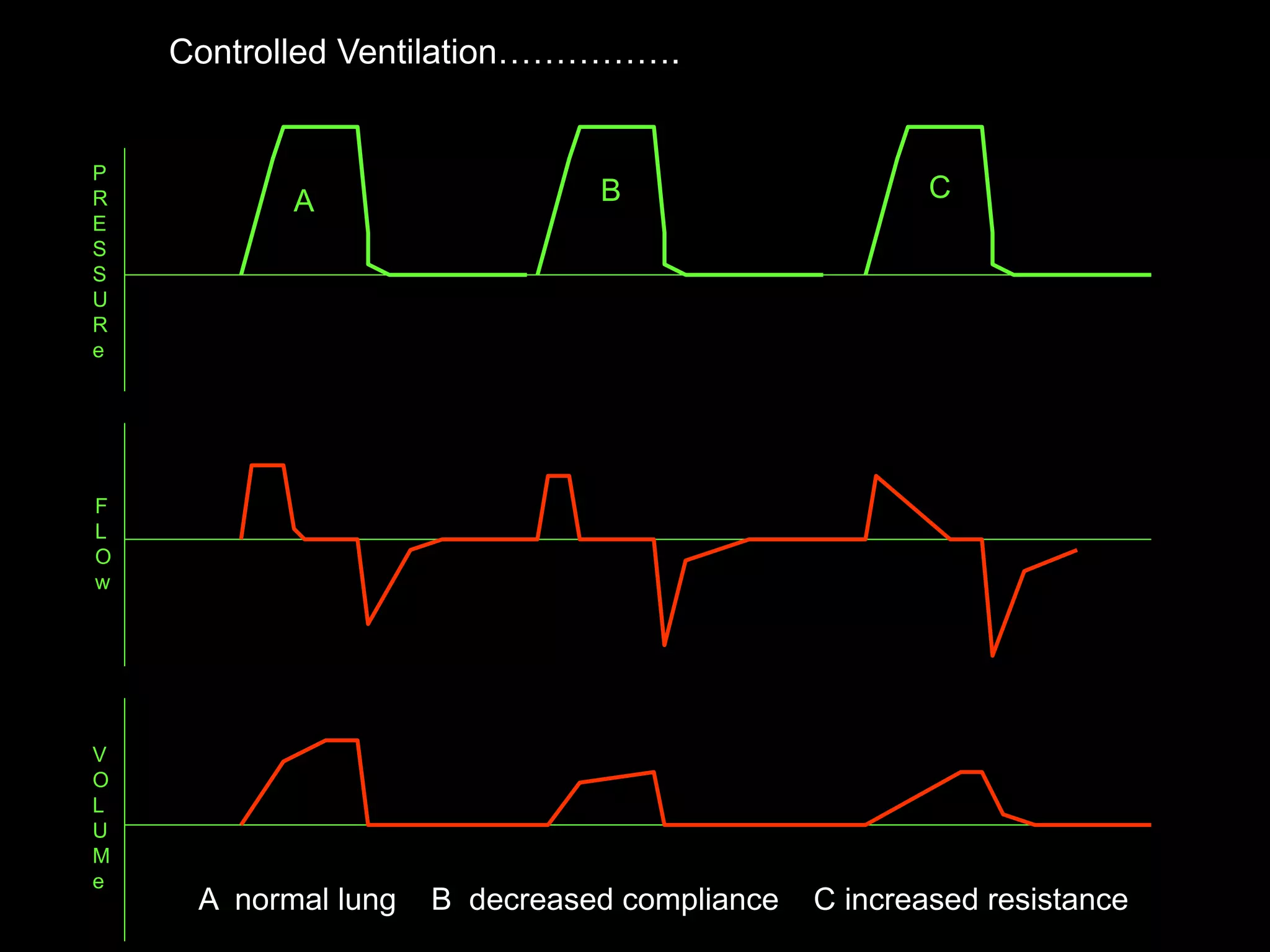
P
R
E
S
S
U
R
e
F
L
O
w
V
O
L
U
M
e
A B C
A normal lung B decreased compliance C increased resistance
Controlled Ventilation…………….
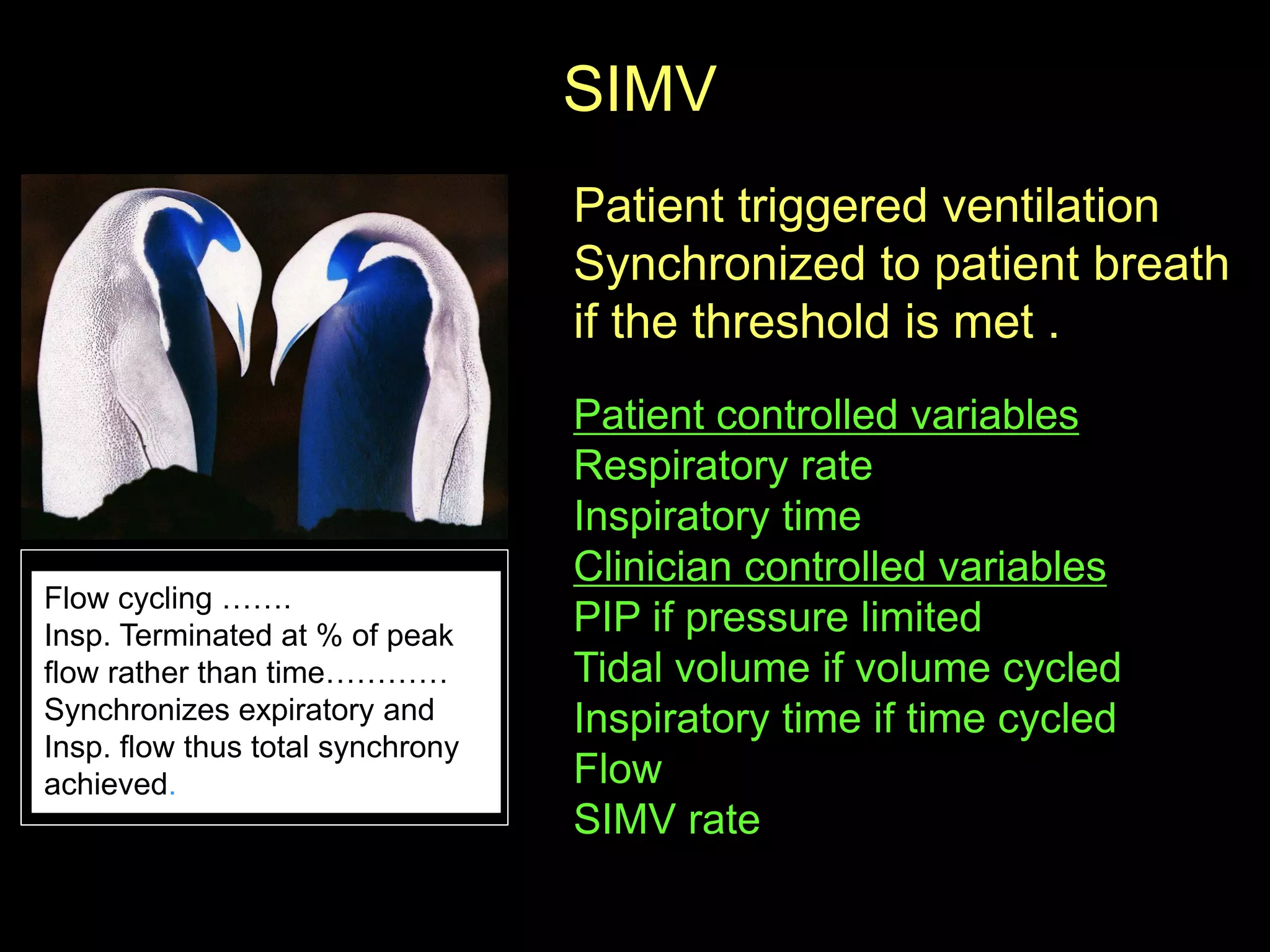
SIMV
Patient triggered ventilation
Synchronized to patient breath
if the threshold is met .
Patient controlled variables
Respiratory rate
Inspiratory time
Clinician controlled variables
PIP if pressure limited
Tidal volume if volume cycled
Inspiratory time if time cycled
Flow
SIMV rate
Flow cycling …….
Insp. Terminated at % of peak
flow rather than time…………
Synchronizes expiratory and
Insp. flow thus total synchrony
achieved.
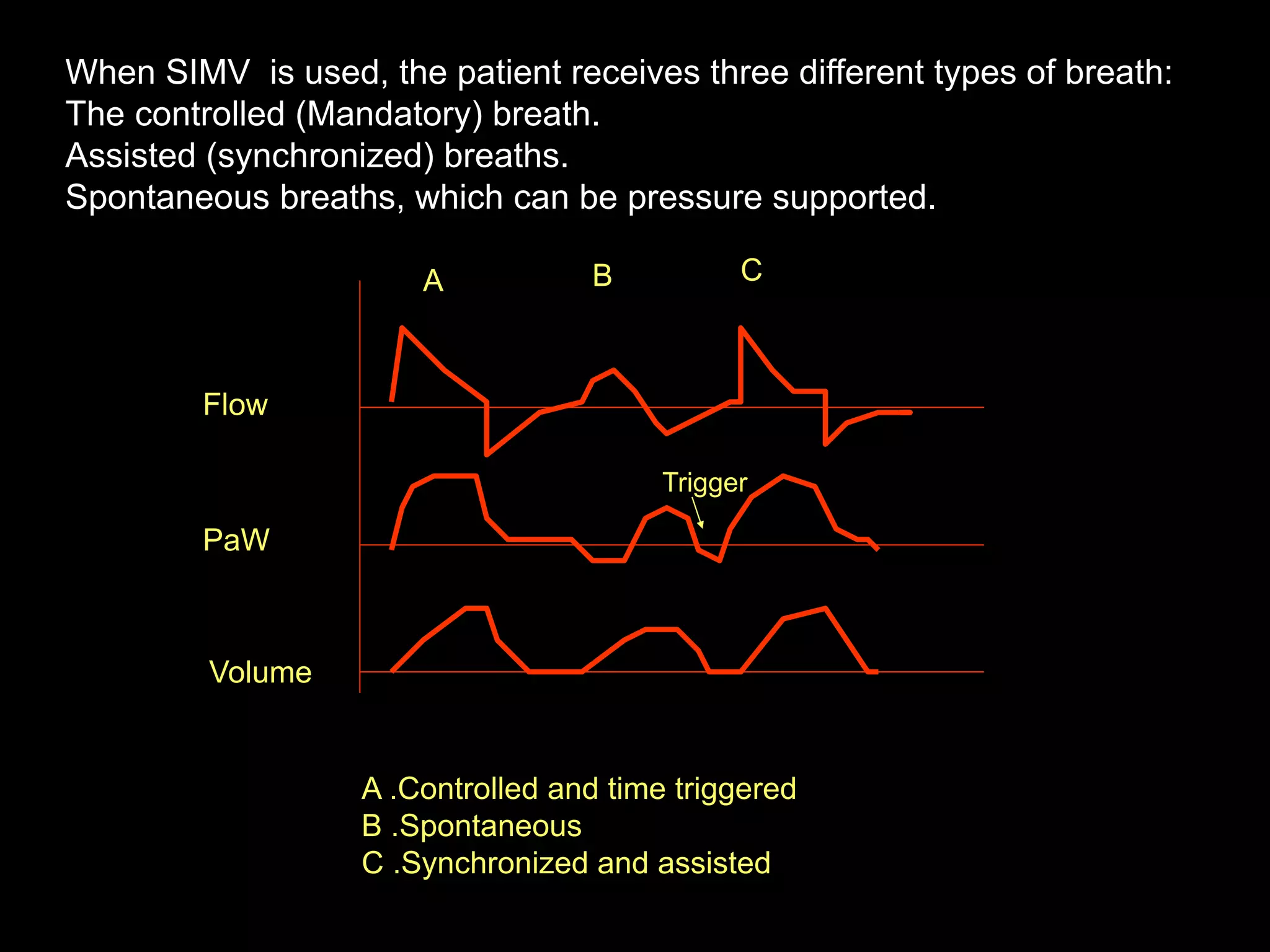
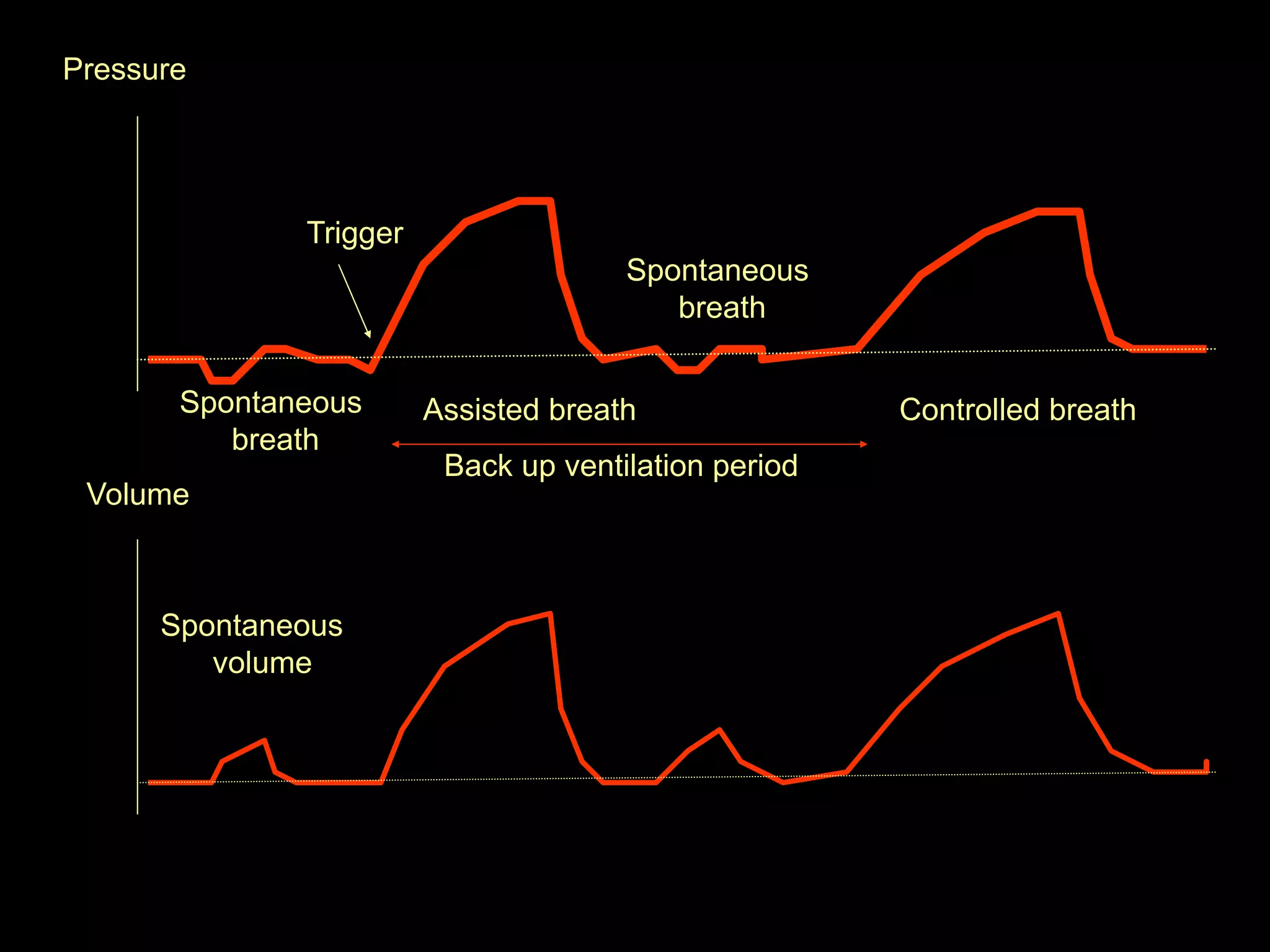
When SIMV is used, the patient receives three different types of breath:
The controlled (Mandatory) breath.
Assisted (synchronized) breaths.
Spontaneous breaths, which can be pressure supported.
A B C
A .Controlled and time triggered
B .Spontaneous
C .Synchronized and assisted
Flow
PaW
Volume
Trigger
Spontaneous
breath
Assisted breath
Back up ventilation period
Controlled breath
Spontaneous
volume
Trigger
Spontaneous
breath
Pressure
Volume
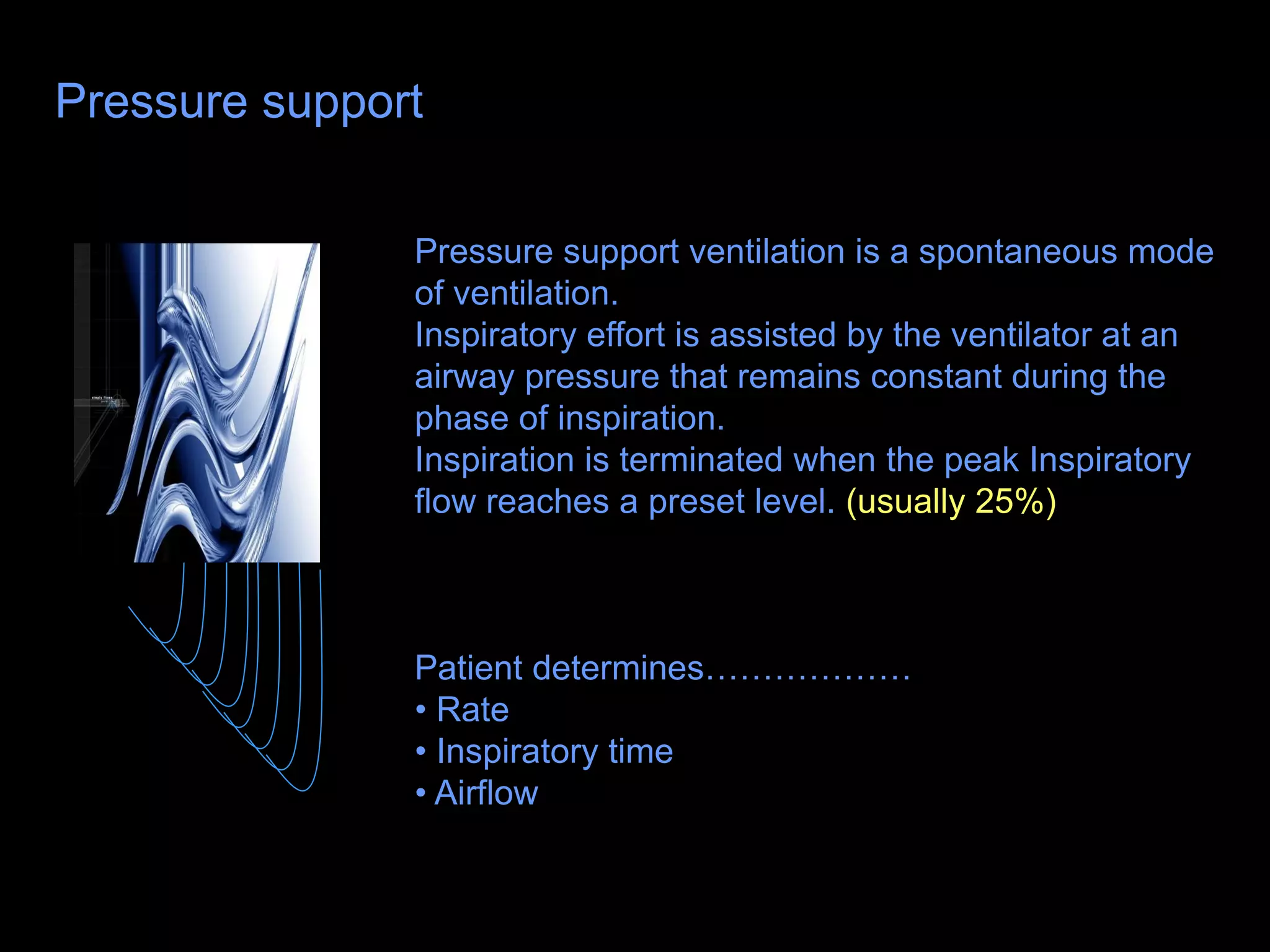
Pressure support
Pressure support ventilation is a spontaneous mode
of ventilation.
Inspiratory effort is assisted by the ventilator at an
airway pressure that remains constant during the
phase of inspiration.
Inspiration is terminated when the peak Inspiratory
flow reaches a preset level. (usually 25%)
Patient determines………………
• Rate
• Inspiratory time
• Airflow
PRVC
A control mode, which
delivers a set tidal volume with
each breath at the lowest
possible peak pressure.
Delivers the breath with a
decelerating flow pattern that is
thought to be less injurious to
the lung……
Volume Support
Equivalent to pressure support
set a “goal” tidal volume
the machine watches the delivered
volumes and adjusts the pressure
support to meet desired “goal”
within limits set by you.
Airway Pressure Release Ventilation
Can be thought of as giving a patient
two different levels of CPAP
Set “high” and “low” pressures with
release time.
Length of time at “high” pressure
generally greater than length of time at
“low” pressure.
By “releasing” to lower pressure, lung
volume is allowed to decrease to FRC
Certain other issues
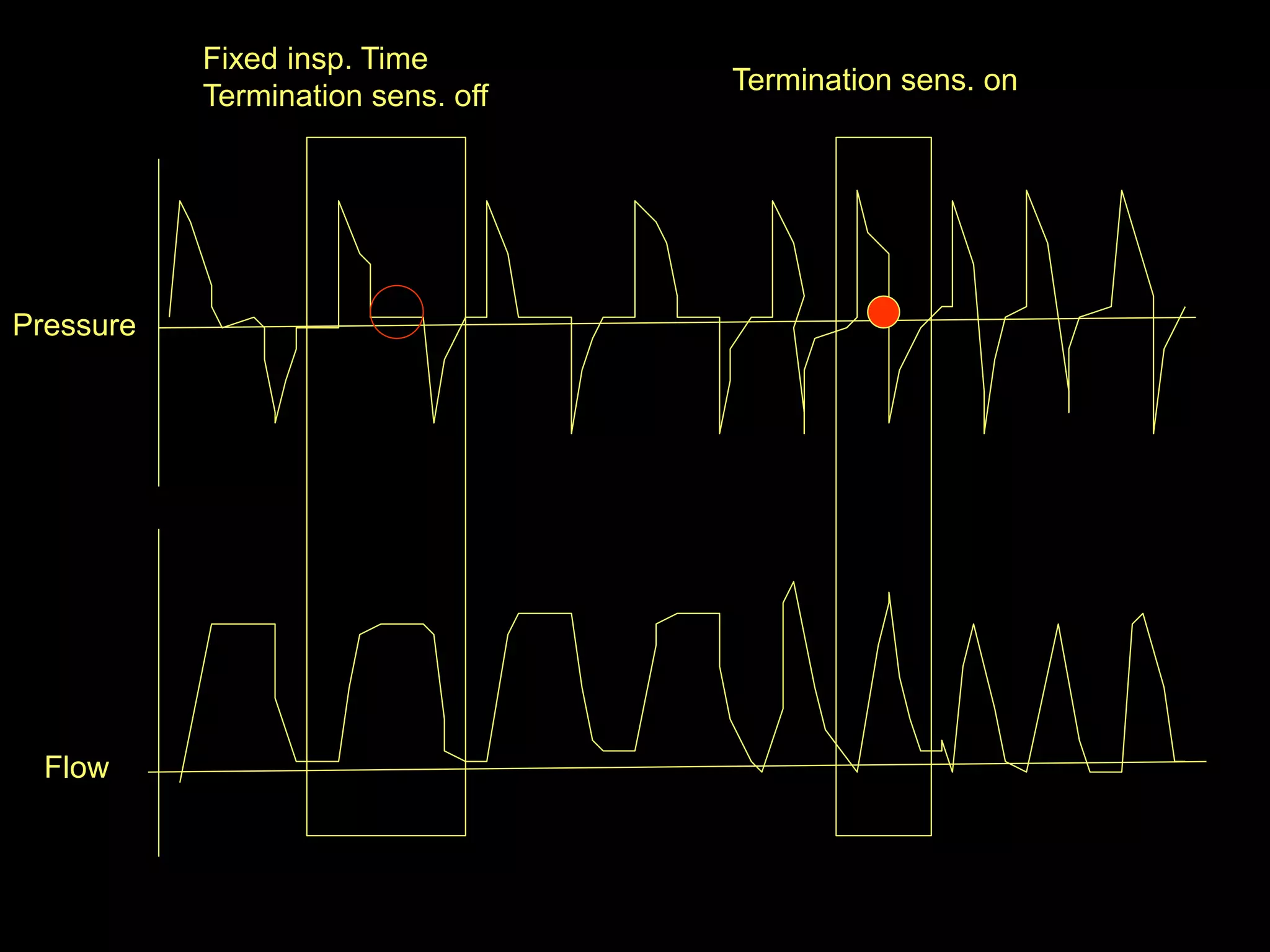
Fixed insp. Time
Termination sens. off
Termination sens. on
Flow
Pressure
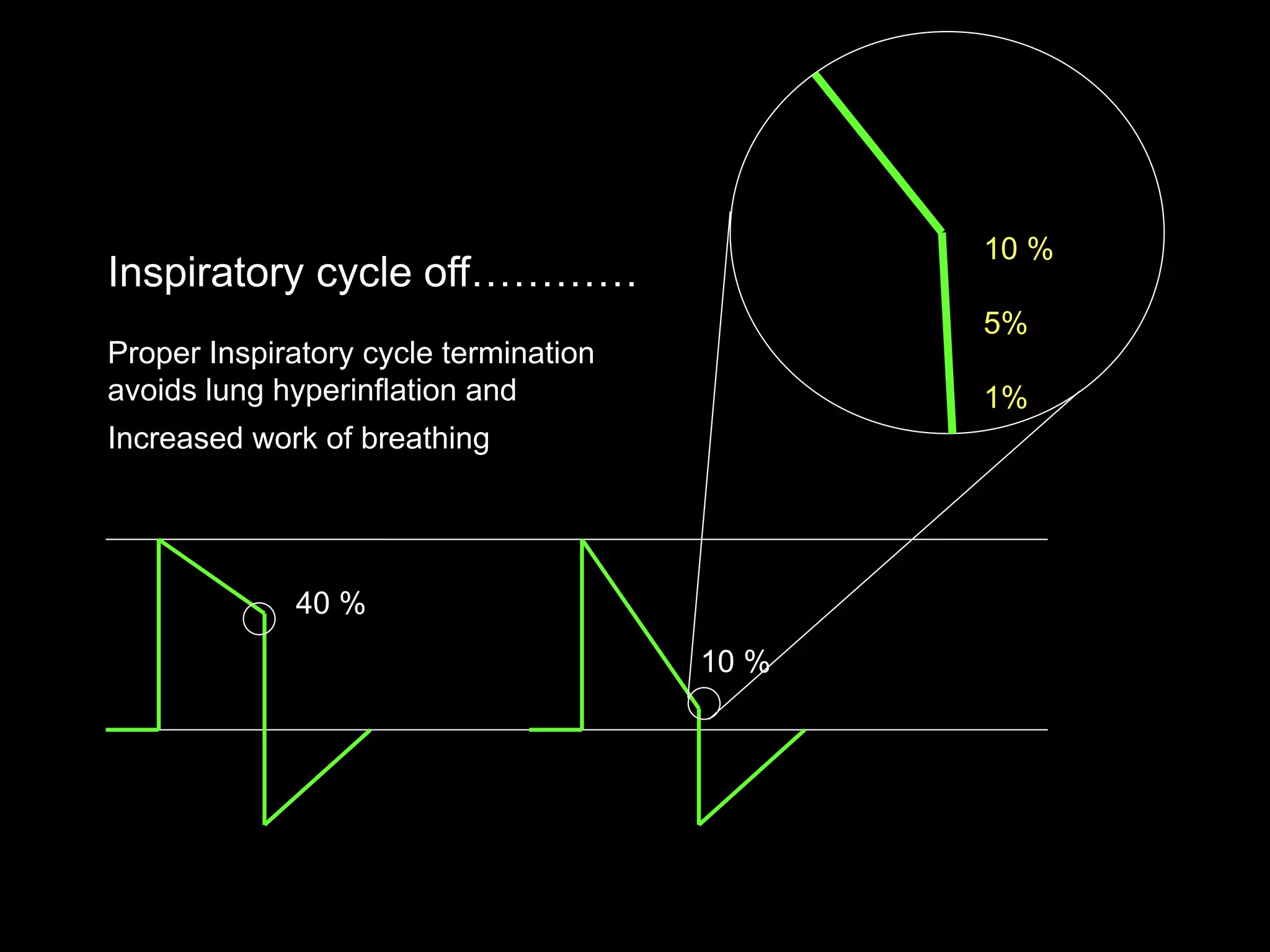
Inspiratory cycle off…………
Proper Inspiratory cycle termination
avoids lung hyperinflation and
Increased work of breathing
40 %
10 %
10 %
5%
1%
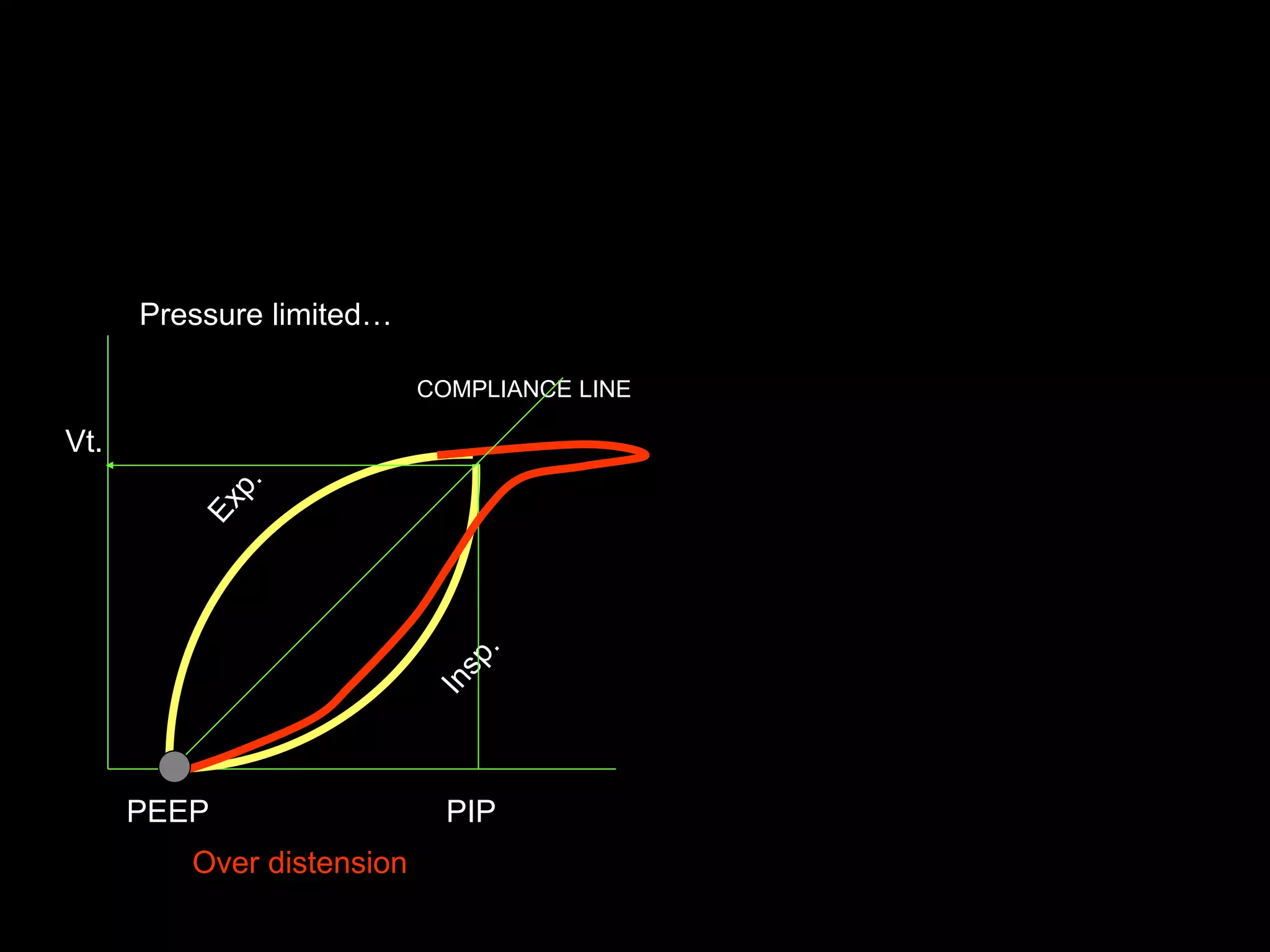
PEEP PIP
Vt.
COMPLIANCE LINE
Pressure limited…
Over distension
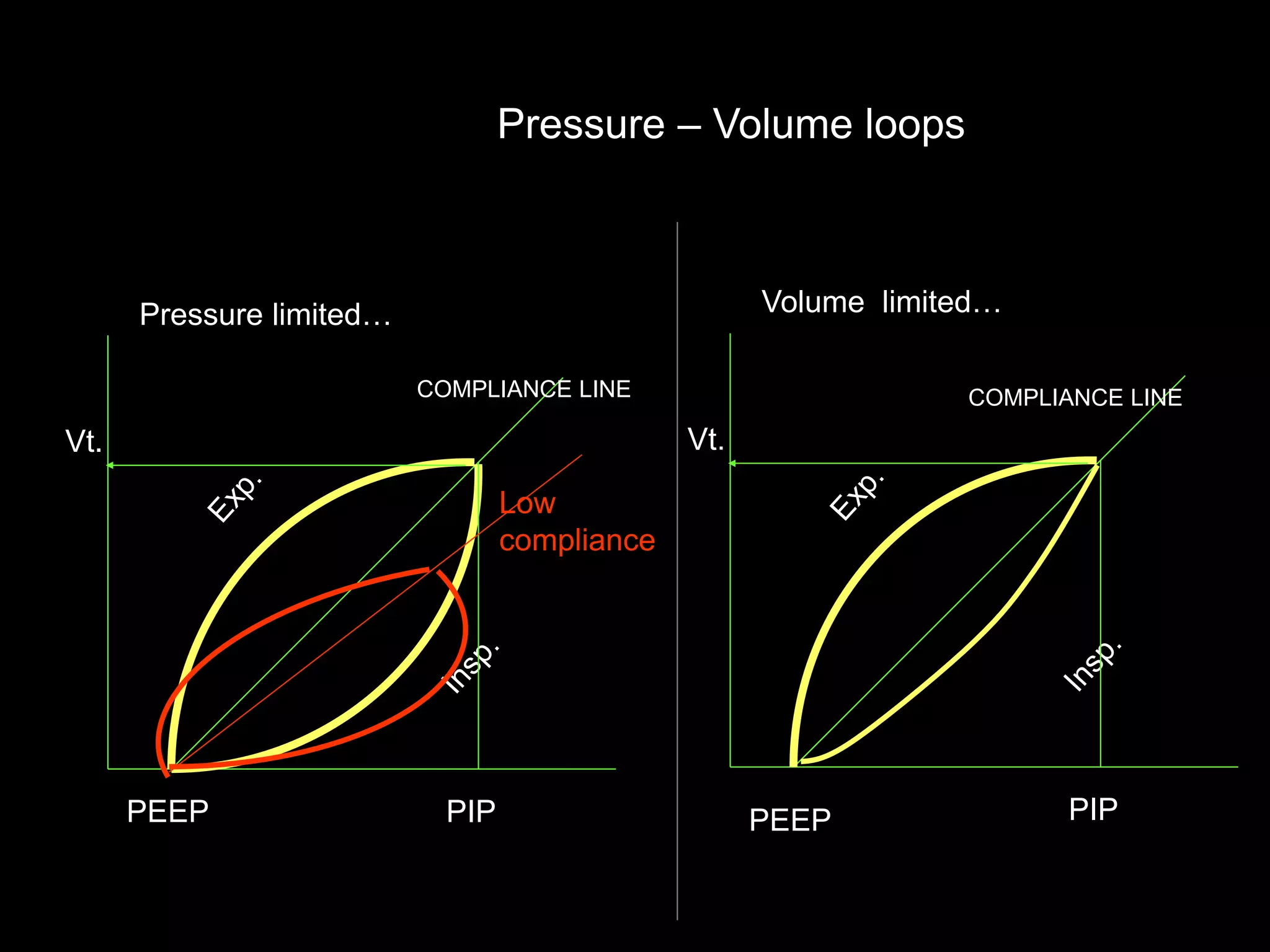
PEEP PIP
Vt.
COMPLIANCE LINE
Pressure limited…
PEEP PIP
Vt.
COMPLIANCE LINE
Volume limited…
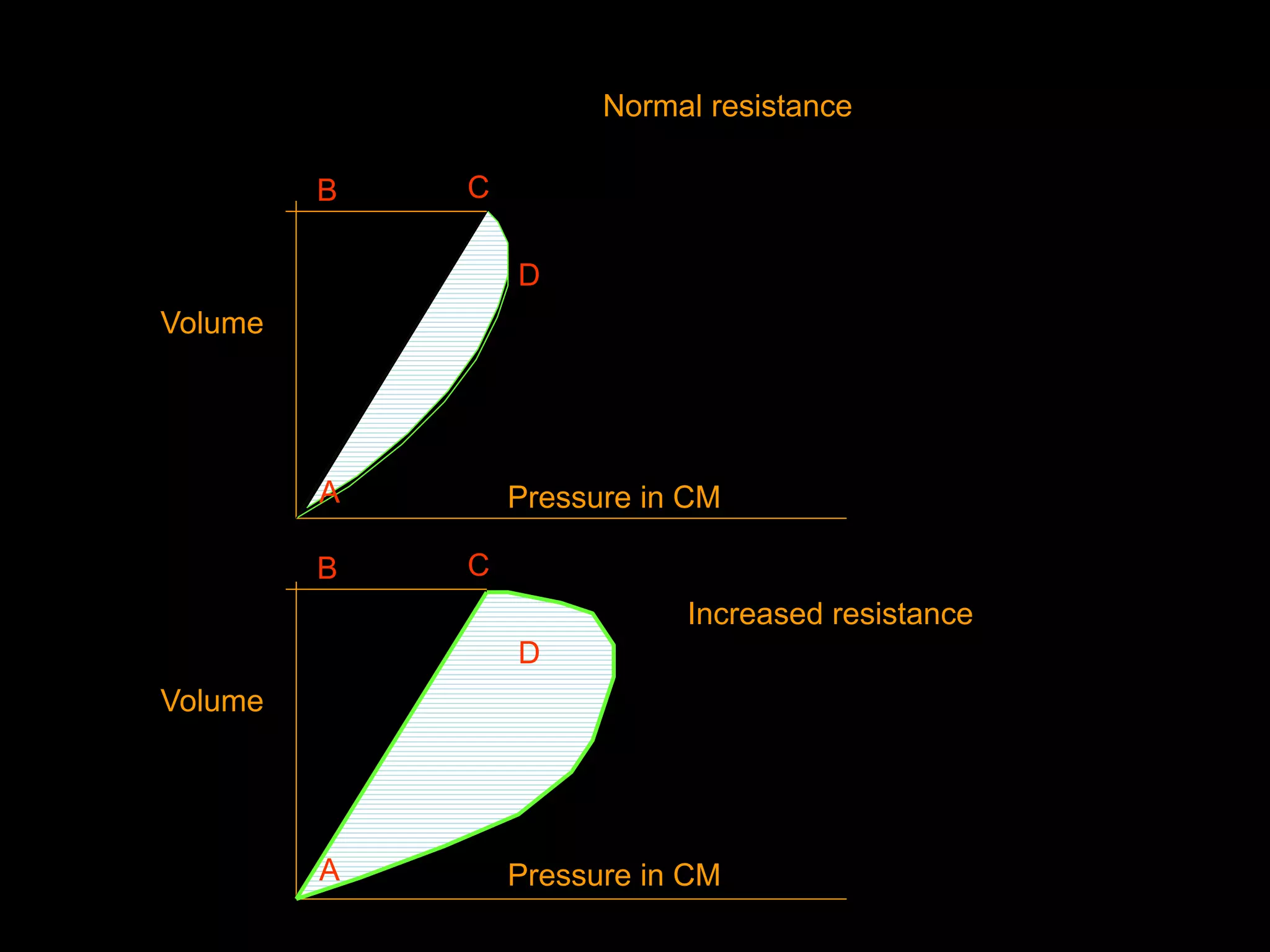
Pressure – Volume loops
Low
compliance
A
B C
D
Volume
Pressure in CM
B C
Volume
Pressure in CMA
D
Normal resistance
Increased resistance
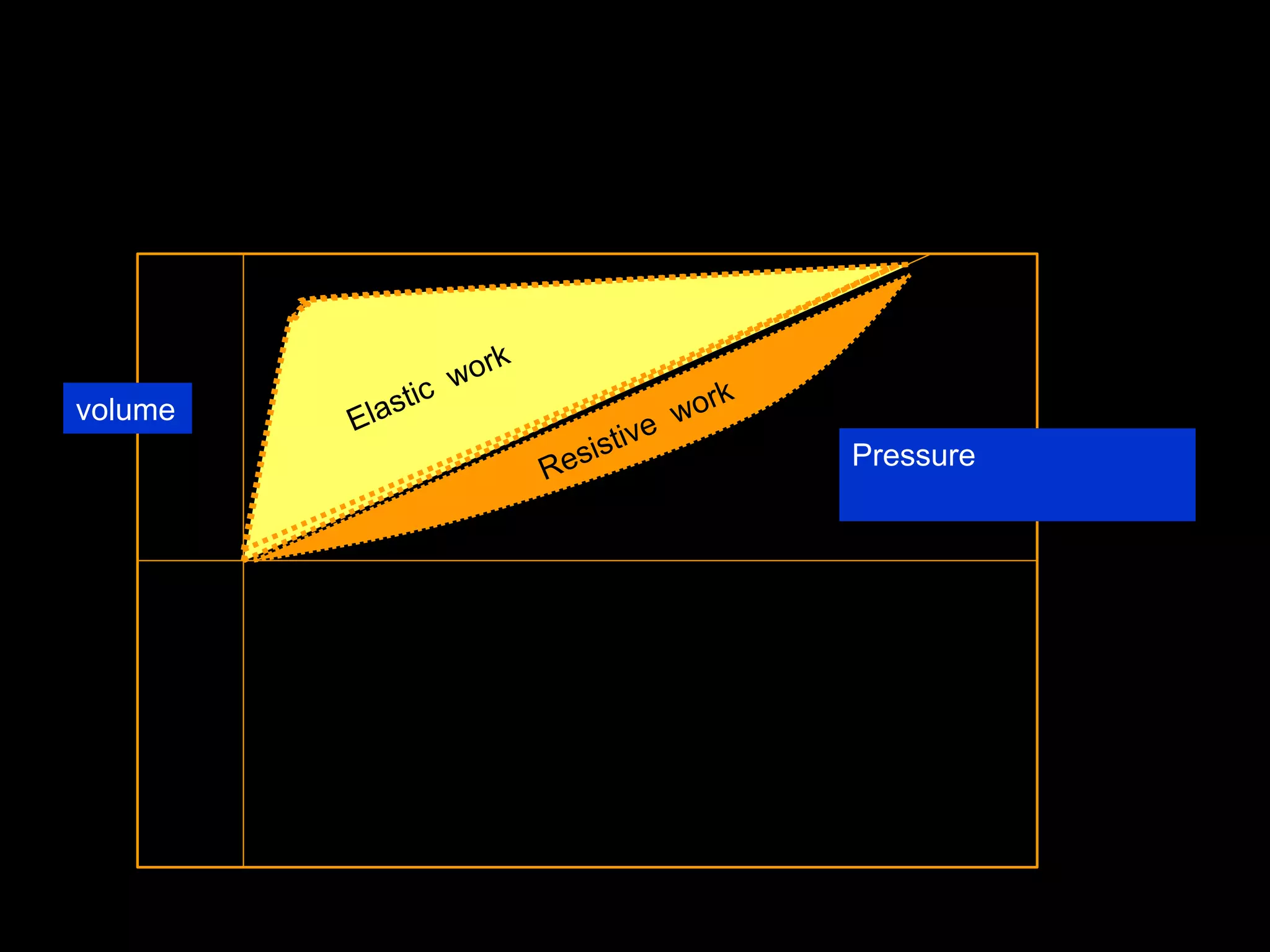
volume
Pressure
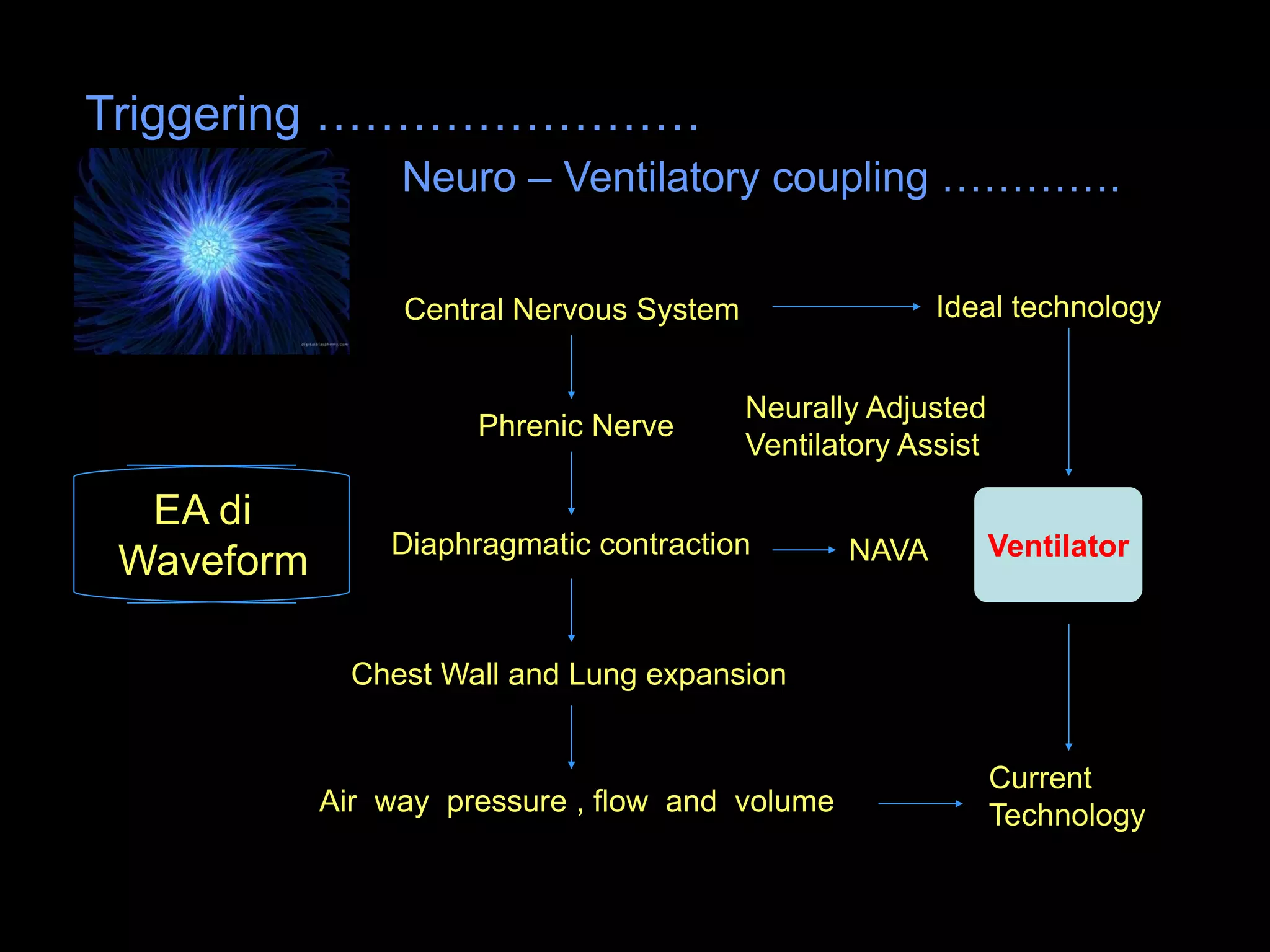
Triggering ……………………
Triggering ……………………
Neuro – Ventilatory coupling ………….
Central Nervous System
Phrenic Nerve
Diaphragmatic contraction
Chest Wall and Lung expansion
Air way pressure , flow and volume
NAVA Ventilator
Current
Technology
Ideal technology
Neurally Adjusted
Ventilatory Assist
EA di
Waveform
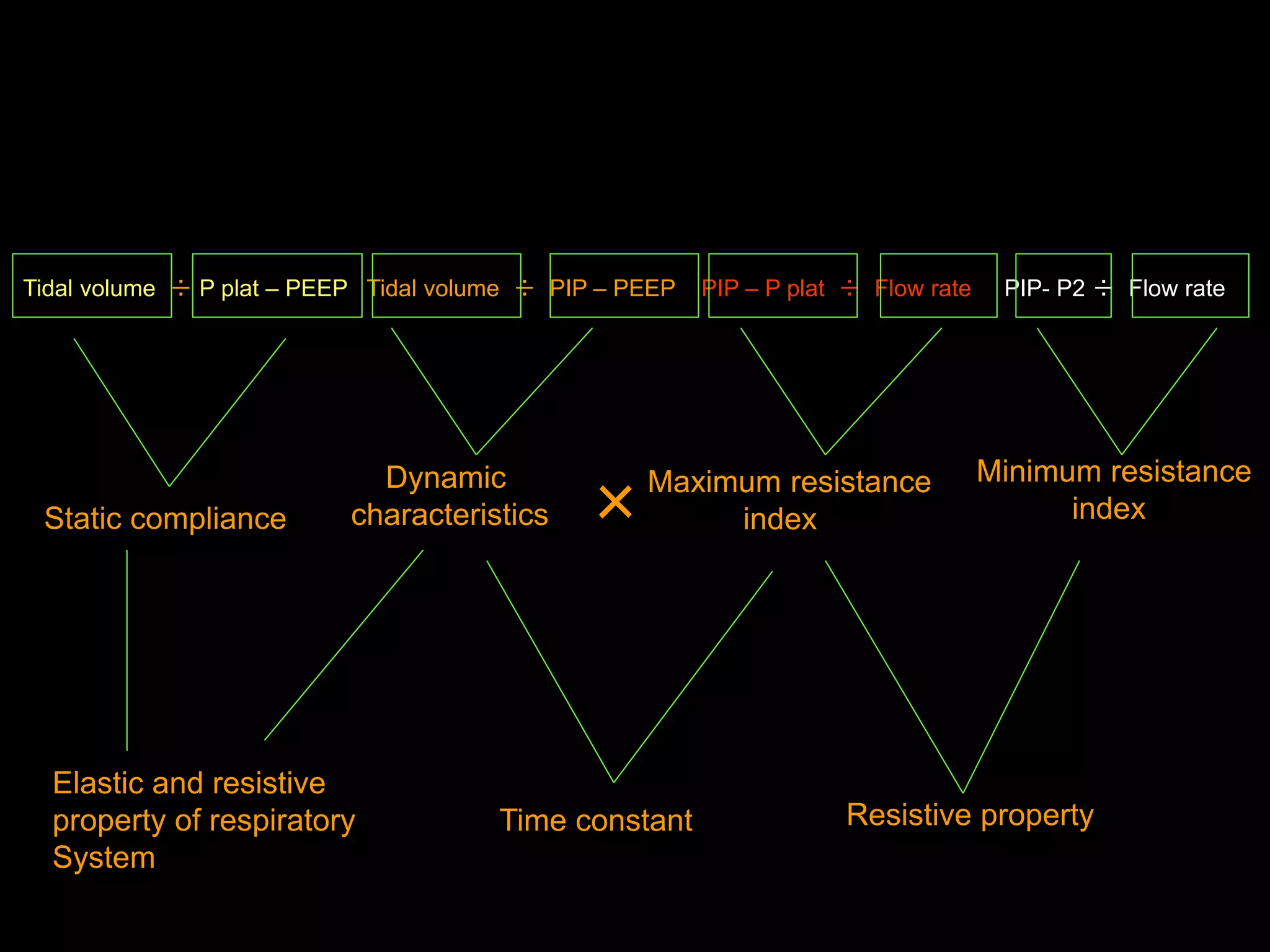
Tidal volume ÷ P plat – PEEP Tidal volume ÷ PIP – PEEP PIP – P plat ÷ Flow rate PIP- P2 ÷ Flow rate
Static compliance
Dynamic
characteristics
Maximum resistance
index
Minimum resistance
index
Elastic and resistive
property of respiratory
System
Time constant
×
Resistive property
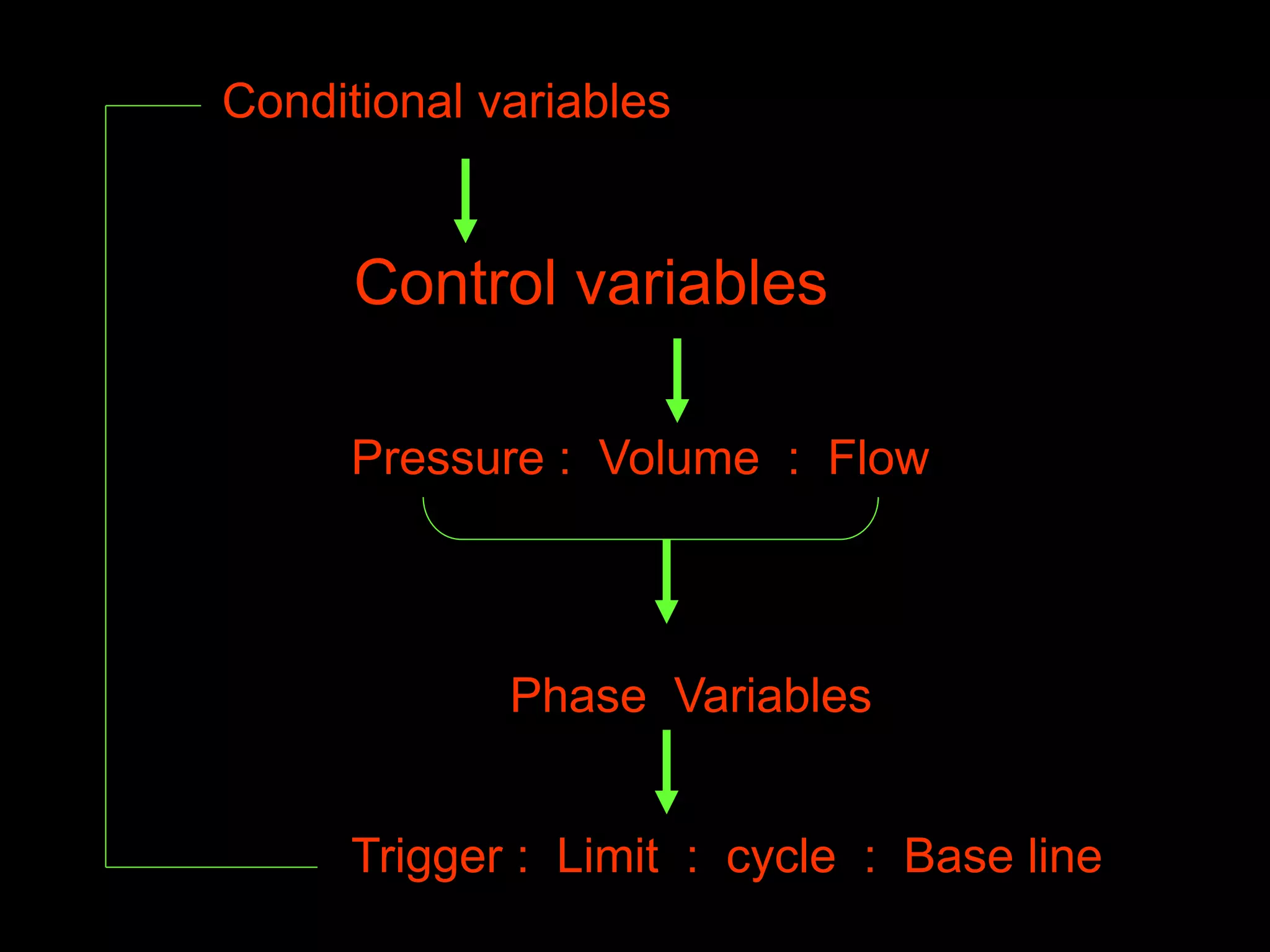
Conditional variables
Control variables
Pressure : Volume : Flow
Phase Variables
Trigger : Limit : cycle : Base line
You can comfortably SLEEP even in difficult situation
if you know your physiology well……………
Thanks
SLEEP

Physics of Ventilation

  • 1.
    Physics of Ventilation NationalChairperson (Ex) Intensive Care Chapter I A P Founder Chairman..... National conference on pediatric critical care Professor of pediatrics ( Hon ) JNMC:Wardha Nagpur : INDIA Dr Deopujari
  • 2.
    The evolution ofVentilator
  • 3.
    Three problems ofventilation
  • 7.
    Applied Physics • Compliance •Static compliance • Dynamic compliance • Resistance • Work of breathing Flow Pressure Volume Surface area What can we manipulate ?
  • 8.
    Evolution of Ventilators……………… Whatcan we manipulate ? 1)Minute ventilation 2)Pressure gradient 3)Surface are 4)Pulmonary vasculature 5)Solubility How can we do this ?
  • 9.
    Compliance Compliance is aquotient between volume and corresponding pressure change. C = V P Dynamic compliance Static compliance
  • 10.
    The compliance ofany structure is the ease is with which the structure distends ( C= ∆ V / ∆ P) C O M P L I A N C E
  • 11.
    C.C.P. C.O.P. V O L U M E PRESSURE c.c.p. = criticalclosing pressure c.o.p. = critical opening pressure PEEP
  • 12.
  • 13.
    Peak pressure Plateau pressure Pressure Inspiratorypause Flow Time Cst = Tidal volume. Cc Cst : static compliance Cc : circuit compliance end expiratory pressure (Pend-ex) Pend-ex = Peep + P peep Resistance Compliance Static compliance Static pressure – end expiratory pressure
  • 14.
    Flow ……………………. Flow indicatescirculation of an element per unit of time through a given place Flow…. Linear Turbulent
  • 15.
    FLOW Palv Pmo FLOW THROUGH APIPE LIKE STRUCTURE REQUIRES A DRIVING PRESSURE (Palv- Pmo) TO OVERCOME THE FRICTIONAL RESISTANCE FLOW DEPENDS ON Pressure Difference and Resistance V=P/R
  • 16.
    Pressure ……………. Represents theforce that a volume of gas exercises upon a unit area. Kinetic theory states that gas molecules bomb the walls of a container . If volume remains constant , pressure varies in direct proportion to Temperature. If temperature remains constant , pressure varies in inverse relation to Volume . Increase in pressure decreases volume
  • 17.
    Resistance …………… Resistance isdefined as the relationship between pressure (p) and flow ( 0 ) Therefore important when there is air flow. R = ----------- Resistance depends upon Diameter of airway Length of airway Viscosity and density of air Resistance during inspiration Resistance during expiration P O
  • 18.
    And how canwe do this ?
  • 19.
    • Conditional variables •Control variables • Phase variables Trigger variables Limit variables Cycle variables Base line Mechanical Ventilation Concept
  • 20.
    Conditional variables aloneor in combination are analyzed by Ventilator’s control logic. The state of this variable determines as to which of two types of breath would be delivered. SIMV is based on timing window and accordingly the ventilator delivers ……………………………. a pressure triggered ( patient ) or time triggered ( machine) breath. In this situation the patient effort and time are conditional variables for determining triggering. CONDITIONAL VARIABLE Conditional variables • Pressure • Volume • Flow • Time
  • 21.
    Control variable manipulatesthe conditional to cause inspiration. Pressure , volume , flow and time are control variables. The behavior of control Variable remains constant in spite of changed Ventilatory load. CONRTOL VARIALBE
  • 22.
    Control variable manipulatesthe conditionals to cause inspiration. PRESSURE , VOLUME , FLOW and time are control variables. The behavior of control Variable remains constant in spite of changed Ventilatory load. CONRTOL VARIALBE Pressure Rectangular Exponential
  • 23.
    Control variable manipulatesthe conditional to cause inspiration. Pressure , VOLUME , FLOW and time are control variables. The behavior of control Variable remains constant in spite of changed Ventilatory load. Volume Ramp Sinusoidal CONRTOL VARIALBE
  • 24.
    Control variable manipulatesthe conditional to cause inspiration. PRESSURE , VOLUME , FLOW and time are control variables. The behavior of control Variable remains constant in spite of changed Ventilatory load. Flow sinusoidalrectangle ramp ramp exponential CONRTOL VARIALBE
  • 25.
    During pressure supportventilation though one selects a level of support the Inspiration continues till predetermined flow rate or termination criteria is reached. During PSV patient determines the Rate …………….. Inspiratory time… Flow…………….. LIMIT VARIBALE
  • 26.
    Peak pressure Plateau pressure Resistance Compliance Endof inspiration Volume Flow Pressure Volume control
  • 27.
    End of insp.flow Volume Flow Pressure Pressure control What does not change ……. 1)Volume curve 2)Exp. Flow curve
  • 28.
    End of insp.flow Volume Flow Pressure Pressure control Peak p. Plateau p. Resist. Compliance End of insp. flow Volume Flow Pressure Volume control
  • 29.
    Volume limited andpressure limited ventilation …………. Volume limited pressure limited Advantages Tidal Volume guaranteed Precise control of Inspiratory flow Easy detection of changed respiratory impedance Precise control pf pressure Decelerating flow reported to improve distribution of ventilation decrease dead space ventilation decrease PIP match Inspiratory flow Disadvantages PIP vary Inspiratory flow may not match the patients needs Variable tidal volume Changes in impedance not easily detected
  • 30.
    Modes of ventilation ormoods of ventilation
  • 31.
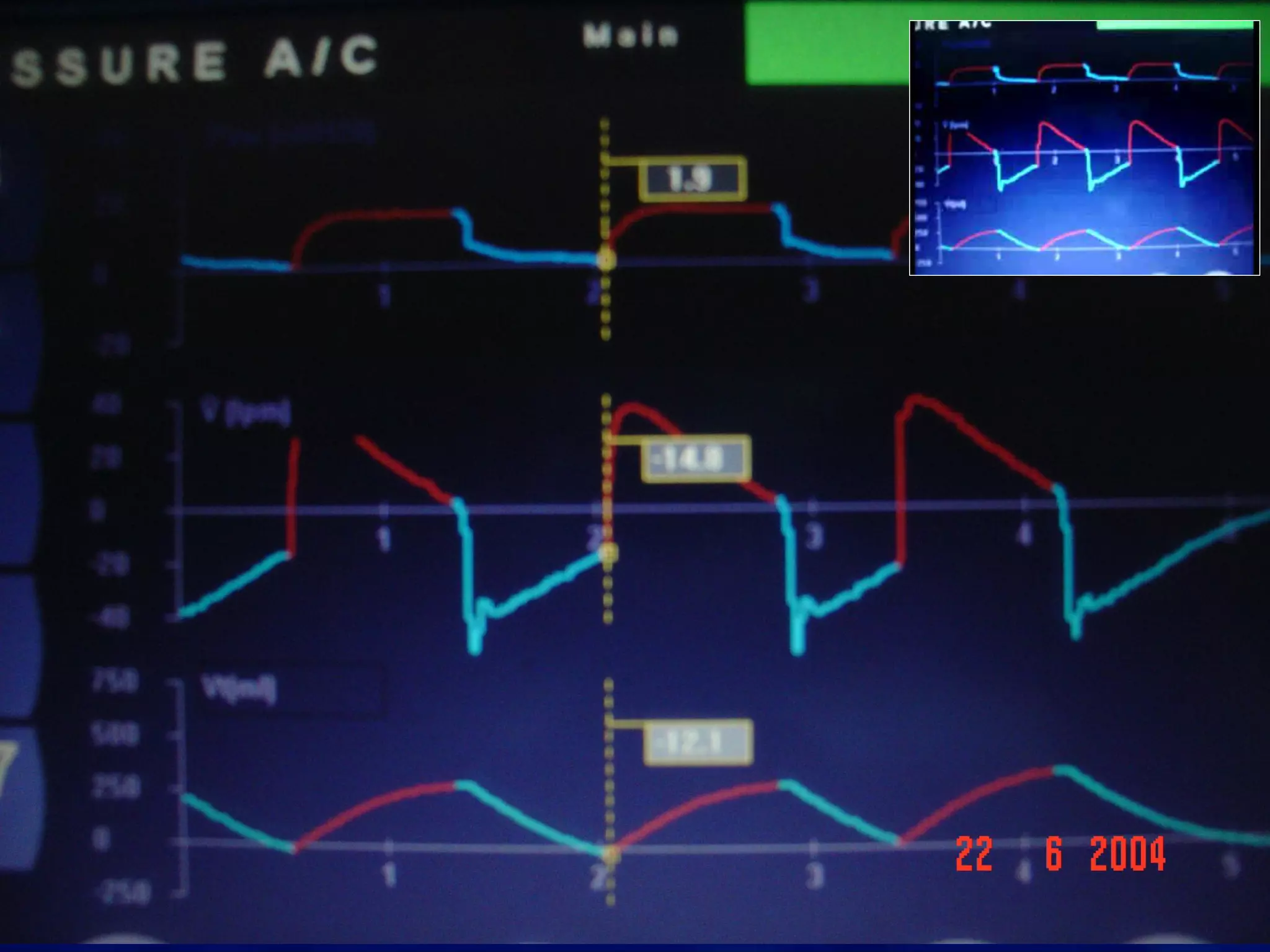
    P R E S S U R e F L O w V O L U M e A B C Anormal lung B decreased compliance C increased resistance Controlled Ventilation…………….
  • 32.
    SIMV Patient triggered ventilation Synchronizedto patient breath if the threshold is met . Patient controlled variables Respiratory rate Inspiratory time Clinician controlled variables PIP if pressure limited Tidal volume if volume cycled Inspiratory time if time cycled Flow SIMV rate Flow cycling ……. Insp. Terminated at % of peak flow rather than time………… Synchronizes expiratory and Insp. flow thus total synchrony achieved.
  • 33.
    When SIMV isused, the patient receives three different types of breath: The controlled (Mandatory) breath. Assisted (synchronized) breaths. Spontaneous breaths, which can be pressure supported. A B C A .Controlled and time triggered B .Spontaneous C .Synchronized and assisted Flow PaW Volume Trigger
  • 34.
    Spontaneous breath Assisted breath Back upventilation period Controlled breath Spontaneous volume Trigger Spontaneous breath Pressure Volume
  • 36.
    Pressure support Pressure supportventilation is a spontaneous mode of ventilation. Inspiratory effort is assisted by the ventilator at an airway pressure that remains constant during the phase of inspiration. Inspiration is terminated when the peak Inspiratory flow reaches a preset level. (usually 25%) Patient determines……………… • Rate • Inspiratory time • Airflow
  • 38.
    PRVC A control mode,which delivers a set tidal volume with each breath at the lowest possible peak pressure. Delivers the breath with a decelerating flow pattern that is thought to be less injurious to the lung……
  • 39.
    Volume Support Equivalent topressure support set a “goal” tidal volume the machine watches the delivered volumes and adjusts the pressure support to meet desired “goal” within limits set by you.
  • 40.
    Airway Pressure ReleaseVentilation Can be thought of as giving a patient two different levels of CPAP Set “high” and “low” pressures with release time. Length of time at “high” pressure generally greater than length of time at “low” pressure. By “releasing” to lower pressure, lung volume is allowed to decrease to FRC
  • 41.
  • 42.
    Fixed insp. Time Terminationsens. off Termination sens. on Flow Pressure
  • 43.
    Inspiratory cycle off………… ProperInspiratory cycle termination avoids lung hyperinflation and Increased work of breathing 40 % 10 % 10 % 5% 1%
  • 45.
    PEEP PIP Vt. COMPLIANCE LINE Pressurelimited… Over distension
  • 46.
    PEEP PIP Vt. COMPLIANCE LINE Pressurelimited… PEEP PIP Vt. COMPLIANCE LINE Volume limited… Pressure – Volume loops Low compliance
  • 47.
    A B C D Volume Pressure inCM B C Volume Pressure in CMA D Normal resistance Increased resistance
  • 48.
  • 49.
  • 50.
    Triggering …………………… Neuro –Ventilatory coupling …………. Central Nervous System Phrenic Nerve Diaphragmatic contraction Chest Wall and Lung expansion Air way pressure , flow and volume NAVA Ventilator Current Technology Ideal technology Neurally Adjusted Ventilatory Assist EA di Waveform
  • 51.
    Tidal volume ÷P plat – PEEP Tidal volume ÷ PIP – PEEP PIP – P plat ÷ Flow rate PIP- P2 ÷ Flow rate Static compliance Dynamic characteristics Maximum resistance index Minimum resistance index Elastic and resistive property of respiratory System Time constant × Resistive property
  • 52.
    Conditional variables Control variables Pressure: Volume : Flow Phase Variables Trigger : Limit : cycle : Base line
  • 53.
    You can comfortablySLEEP even in difficult situation if you know your physiology well…………… Thanks SLEEP