Open Leadership for 
OCLMOOC 
Christina Hendricks 
Philosophy, University of British Columbia 
Vancouver, BC 
Oct 16, 2014
What does “open” mean? 
• Accessible 
• Revisable 
• Reusable, 
redistributable 
• Transparent 
• Collaborative 
• Shared 
See also: 
http://www.opencontent.org/definition/ 
http://opendefinition.org/od/
What could open leadership be? 
• Write on the white board…
Transparency 
Don Wettrick: “transparency”—show your work! 
http://is.gd/ecrZE5 
E.g., post teaching 
materials publicly 
and with an open 
license 
• Benefits/drawba 
cks?
Transparency 
Blog about what you’re doing and why, how it’s 
going 
• Talk about the failures too, what’s not going 
well, and what you’re doing about it 
• Potential problems with blogging about 
failures when students are involved 
– My blog post about this: 
http://blogs.ubc.ca/chendricks/2011/10/20/the-ethics- 
of-blogging-about-teaching-and-learning/
Transparency 
Engage in public discussions 
• Twitter chats; Twitter generally 
• Other social media (e.g., Google Plus, 
Facebook) 
• Comment on blogs 
• Participate in open, online courses
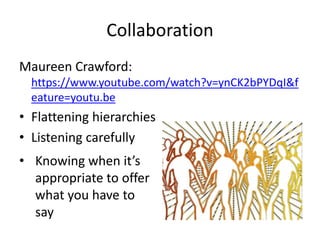
Collaboration 
Maureen Crawford: 
https://www.youtube.com/watch?v=ynCK2bPYDqI&f 
eature=youtu.be 
• Flattening hierarchies 
• Listening carefully 
• Knowing when it’s 
appropriate to offer 
what you have to 
say
Collaboration 
• Confidence: that you have something useful to 
offer 
• Humility: you are not the only one who does 
• Encouragement: 
– Look out for those who are talking, but not 
receiving responses—find ways to draw them 
further into the conversation 
– Point out strengths in what others have to say 
– Criticize in a way that invites dialogue
Courage 
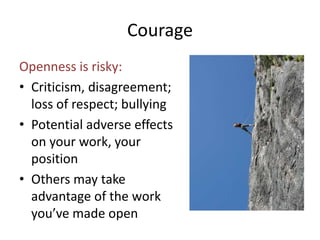
Openness is risky: 
• Criticism, disagreement; 
loss of respect; bullying 
• Potential adverse effects 
on your work, your 
position 
• Others may take 
advantage of the work 
you’ve made open
Courage 
Courage required: 
• To be honest about what you really think 
• To reveal your weaknesses and ask for help 
• To believe that more people will benefit from 
your open work than will take advantage (or 
that it’s worth it even if the latter happens) 
• To stand up when others are being mistreated 
• To believe that your network will come to your 
aid if you are mistreated
Thank you! 
Christina Hendricks: 
• http://blogs.ubc.ca/chendricks (blog) 
• http://blogs.ubc.ca/christinahendricks 
(website) 
• @clhendricksbc (Twitter)

Open Leadership for OCLMOOC

  • 1.
    Open Leadership for OCLMOOC Christina Hendricks Philosophy, University of British Columbia Vancouver, BC Oct 16, 2014
  • 2.
    What does “open”mean? • Accessible • Revisable • Reusable, redistributable • Transparent • Collaborative • Shared See also: http://www.opencontent.org/definition/ http://opendefinition.org/od/
  • 3.
    What could openleadership be? • Write on the white board…
  • 4.
    Transparency Don Wettrick:“transparency”—show your work! http://is.gd/ecrZE5 E.g., post teaching materials publicly and with an open license • Benefits/drawba cks?
  • 5.
    Transparency Blog aboutwhat you’re doing and why, how it’s going • Talk about the failures too, what’s not going well, and what you’re doing about it • Potential problems with blogging about failures when students are involved – My blog post about this: http://blogs.ubc.ca/chendricks/2011/10/20/the-ethics- of-blogging-about-teaching-and-learning/
  • 6.
    Transparency Engage inpublic discussions • Twitter chats; Twitter generally • Other social media (e.g., Google Plus, Facebook) • Comment on blogs • Participate in open, online courses
  • 7.
    Collaboration Maureen Crawford: https://www.youtube.com/watch?v=ynCK2bPYDqI&f eature=youtu.be • Flattening hierarchies • Listening carefully • Knowing when it’s appropriate to offer what you have to say
  • 8.
    Collaboration • Confidence:that you have something useful to offer • Humility: you are not the only one who does • Encouragement: – Look out for those who are talking, but not receiving responses—find ways to draw them further into the conversation – Point out strengths in what others have to say – Criticize in a way that invites dialogue
  • 9.
    Courage Openness isrisky: • Criticism, disagreement; loss of respect; bullying • Potential adverse effects on your work, your position • Others may take advantage of the work you’ve made open
  • 10.
    Courage Courage required: • To be honest about what you really think • To reveal your weaknesses and ask for help • To believe that more people will benefit from your open work than will take advantage (or that it’s worth it even if the latter happens) • To stand up when others are being mistreated • To believe that your network will come to your aid if you are mistreated
  • 11.
    Thank you! ChristinaHendricks: • http://blogs.ubc.ca/chendricks (blog) • http://blogs.ubc.ca/christinahendricks (website) • @clhendricksbc (Twitter)

Editor's Notes

  • #3 Accessible—cost, but also technical, language barriers Revisable—allowing revisions, but also open to changing your own mind, to listening to others and coming to a shared decision; inviting criticism that you actually reflect on and act on Collaborative comes from the previous ones—because it allows these things, projects or artifacts invite collaboration; Also collaboration on goals, learning outcomes, teaching and learning Shared—sharing with others, believing that if we shared more information and artifacts that this would provide significant benefits 5R’s