UNIVERSIDAD AUTÓNOMA DE CHIRIQUÍ
FACULTY OF HUMANITIES
SCHOOL OF ENGLISH
ENGLISH 420
PROFESSOR: MARISOL BARRAZA
BLOGS AND WIKIS ENHANCING TEACHING AND LEARNING
PRESENTED BY
ANDRES PINEDA
4-763-1314
JUNE 7TH 2016
1
Introduction
 Blogs and wikis are web resources that
emphasize on sharing information through the
web. They depend on the level of knowledge
the user has to employ them, blog and wikis
surge as an alternative to web sites without
the need of coding.
2
Table of contents
 Presentation
 Introduction
 Table of contents
 Definition of terms
 Similarities between blogs and wikis
 Differences between blogs and wikis
3
Table of contents
 Functions of blogs and wikis
 Uses of blogs and wikis
 Appropriate time to use blogs and wikis
 Blogs and wikis permission to view
 Educational blog sites
 Educational wiki sites
4
Table of contents
 Steps to create a blog
 Steps to create a wiki
 Tips for blogs and wikis
 Conclusion
 References
5
Definition of terms
6
Definition of terms
 Blog: A blog is a shortened
version of a online diary and in
other terms it means an online
interactive journal
 Wiki: A wiki is software used to
create a website
7
Definition of terms
 Domain: Part of a web address that
identify your site
 Server: net of computers used to
process chunks of data
 Host: an electronic reference to
where your site is located
8
Similarities between blogs and wikis
 They provide a place to keep your
website for free
 They provide a place to work in
group
 No technical knowledge is necessary
for their usage
9
Similarities between blogs and wikis
 They can be accessible
from anywhere using
internet
 They foster critical
thinking
10
Differences of blogs and wikis
 They both offer different layouts
 Blogs can be managed by one
person whereas wikis require more
personnel
 They oriented to different purpose
blogs (personal record) wikis
(community records)
11
Differences of blogs and wikis
 The number of students
reached is not the same
 Their edition permit is
personal in blogs (the
author) and in wikis ( the
public)
12
Functions of blogs and wikis
 To provide a free web site
to use
 To enhance web usage
 To provide a tool for novice
web users
13
Functions of blogs and wikis
 Facilitate discussion over
complex topics
 Spread the knowledge for free
 To link people around the world
with different mindsets
14
Uses of blogs and wikis
 To provide and outlet to opinion in the web
 To promote group work
 To broaden the student’s horizon
 Encourage web editing
15
Appropriate time to use blogs and wikis
 When you handle group projects,
blogs and wikis become the perfect
tool
 When the teacher needs to monitor
his or her class progress
16
Appropriate time to use blogs and wikis
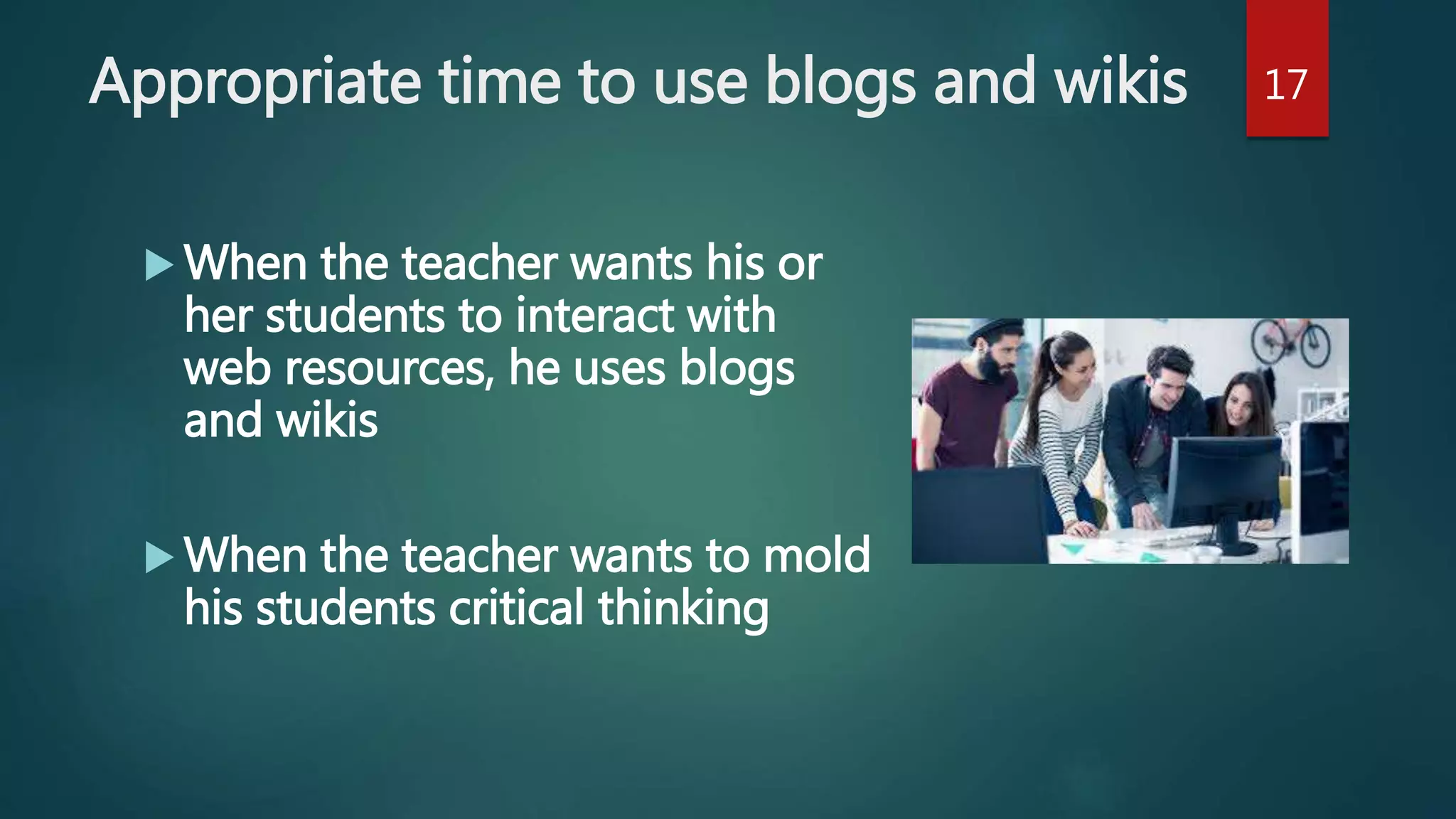
 When the teacher wants his or
her students to interact with
web resources, he uses blogs
and wikis
 When the teacher wants to mold
his students critical thinking
17
Permissions to view blogs and wikis
 The permission to view in
a blog or wiki can be
private or selective
 The permission to view
might be granted upon
certain requirements are
fulfilled
18
Permissions to view blogs and wikis
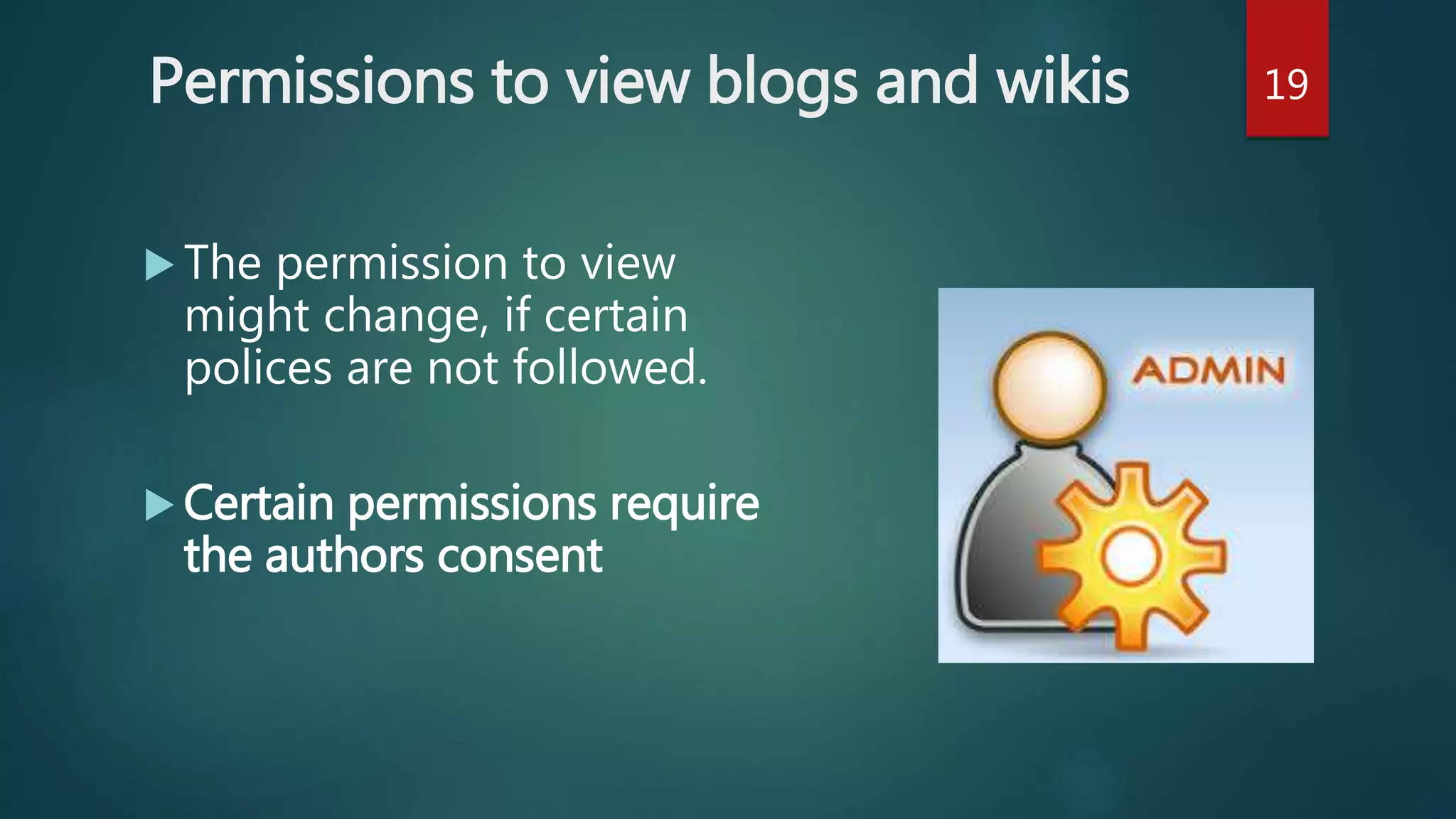
 The permission to view
might change, if certain
polices are not followed.
 Certain permissions require
the authors consent
19
Educational blog sites
 Degree. Org
 25 top blogsites for ESL teachers and students:
 http://www.onlinedegrees.org/top-25-esl-
blogs-for-teachers-and-students/
20
Educational wiki sites
 Wikispaces:
 https://www.wikispaces.com/content/classroom
 ESL wiki:
 http://esl.wikia.com/wiki/Main_Page
 Wikiniversity:
 https://en.wikiversity.org/wiki/Wikiversity:Main_Page
21
Steps to create a blog
 Know WHY you want to start a blog
 Decide WHAT your blog will focus on
 Decide WHICH of the blogging platforms you’ll
use
 Decide which web host to use
 Login to your new blog and start blogging
22
Steps to create a wiki
 Determine what your wiki is for
 Check if a wiki already exists on the
same subject.
 Make a team before creating your wiki.
23
Steps to create a wiki
 Decide between hosting
your own wiki or using a
wiki farm
 Choose a software
package
24
Tips for blog and wikis
 Seek aid from specialized forums
 Start with a topic of your liking
 Employ trial and error
 Try several platforms
 Be prepare to re do
25
Conclusion
 Wikis and blogs have become a way for
teachers to enhance the learning environment
and reach new heights with the inclusion of
the internet as the new domain. Blogs and
wikis are a tool and as such they depend on
the manipulator to produce results
26
References
ESl wiki. ( 2016). ESL wiki. Retrieved June 6, 2016, from
http://esl.wikia.com/wiki/Main_Page
Pbworkscom. (2016). Pbworkscom. Retrieved June
6, 2016, from
http://meblog.pbworks.com/w/page/11074186
/Similarities and Differences
27
References
Wikihowcom. (2016). WikiHow. Retrieved June 6, 2016, from
http://www.wikihow.com/Start-a-Wiki
Howtostartablogonlinenet. (2016). How To Start A Blog Online.
Retrieved June 6, 2016, from http://howtostartablogonline.net/
Edtechnetworkcom. (2016). Edtechnetworkcom. Retrieved June 6,
2016, from http://www.edtechnetwork.com/wikis_blogs.html
28

Blogs and wikis

  • 1.
    UNIVERSIDAD AUTÓNOMA DECHIRIQUÍ FACULTY OF HUMANITIES SCHOOL OF ENGLISH ENGLISH 420 PROFESSOR: MARISOL BARRAZA BLOGS AND WIKIS ENHANCING TEACHING AND LEARNING PRESENTED BY ANDRES PINEDA 4-763-1314 JUNE 7TH 2016 1
  • 2.
    Introduction  Blogs andwikis are web resources that emphasize on sharing information through the web. They depend on the level of knowledge the user has to employ them, blog and wikis surge as an alternative to web sites without the need of coding. 2
  • 3.
    Table of contents Presentation  Introduction  Table of contents  Definition of terms  Similarities between blogs and wikis  Differences between blogs and wikis 3
  • 4.
    Table of contents Functions of blogs and wikis  Uses of blogs and wikis  Appropriate time to use blogs and wikis  Blogs and wikis permission to view  Educational blog sites  Educational wiki sites 4
  • 5.
    Table of contents Steps to create a blog  Steps to create a wiki  Tips for blogs and wikis  Conclusion  References 5
  • 6.
  • 7.
    Definition of terms Blog: A blog is a shortened version of a online diary and in other terms it means an online interactive journal  Wiki: A wiki is software used to create a website 7
  • 8.
    Definition of terms Domain: Part of a web address that identify your site  Server: net of computers used to process chunks of data  Host: an electronic reference to where your site is located 8
  • 9.
    Similarities between blogsand wikis  They provide a place to keep your website for free  They provide a place to work in group  No technical knowledge is necessary for their usage 9
  • 10.
    Similarities between blogsand wikis  They can be accessible from anywhere using internet  They foster critical thinking 10
  • 11.
    Differences of blogsand wikis  They both offer different layouts  Blogs can be managed by one person whereas wikis require more personnel  They oriented to different purpose blogs (personal record) wikis (community records) 11
  • 12.
    Differences of blogsand wikis  The number of students reached is not the same  Their edition permit is personal in blogs (the author) and in wikis ( the public) 12
  • 13.
    Functions of blogsand wikis  To provide a free web site to use  To enhance web usage  To provide a tool for novice web users 13
  • 14.
    Functions of blogsand wikis  Facilitate discussion over complex topics  Spread the knowledge for free  To link people around the world with different mindsets 14
  • 15.
    Uses of blogsand wikis  To provide and outlet to opinion in the web  To promote group work  To broaden the student’s horizon  Encourage web editing 15
  • 16.
    Appropriate time touse blogs and wikis  When you handle group projects, blogs and wikis become the perfect tool  When the teacher needs to monitor his or her class progress 16
  • 17.
    Appropriate time touse blogs and wikis  When the teacher wants his or her students to interact with web resources, he uses blogs and wikis  When the teacher wants to mold his students critical thinking 17
  • 18.
    Permissions to viewblogs and wikis  The permission to view in a blog or wiki can be private or selective  The permission to view might be granted upon certain requirements are fulfilled 18
  • 19.
    Permissions to viewblogs and wikis  The permission to view might change, if certain polices are not followed.  Certain permissions require the authors consent 19
  • 20.
    Educational blog sites Degree. Org  25 top blogsites for ESL teachers and students:  http://www.onlinedegrees.org/top-25-esl- blogs-for-teachers-and-students/ 20
  • 21.
    Educational wiki sites Wikispaces:  https://www.wikispaces.com/content/classroom  ESL wiki:  http://esl.wikia.com/wiki/Main_Page  Wikiniversity:  https://en.wikiversity.org/wiki/Wikiversity:Main_Page 21
  • 22.
    Steps to createa blog  Know WHY you want to start a blog  Decide WHAT your blog will focus on  Decide WHICH of the blogging platforms you’ll use  Decide which web host to use  Login to your new blog and start blogging 22
  • 23.
    Steps to createa wiki  Determine what your wiki is for  Check if a wiki already exists on the same subject.  Make a team before creating your wiki. 23
  • 24.
    Steps to createa wiki  Decide between hosting your own wiki or using a wiki farm  Choose a software package 24
  • 25.
    Tips for blogand wikis  Seek aid from specialized forums  Start with a topic of your liking  Employ trial and error  Try several platforms  Be prepare to re do 25
  • 26.
    Conclusion  Wikis andblogs have become a way for teachers to enhance the learning environment and reach new heights with the inclusion of the internet as the new domain. Blogs and wikis are a tool and as such they depend on the manipulator to produce results 26
  • 27.
    References ESl wiki. (2016). ESL wiki. Retrieved June 6, 2016, from http://esl.wikia.com/wiki/Main_Page Pbworkscom. (2016). Pbworkscom. Retrieved June 6, 2016, from http://meblog.pbworks.com/w/page/11074186 /Similarities and Differences 27
  • 28.
    References Wikihowcom. (2016). WikiHow.Retrieved June 6, 2016, from http://www.wikihow.com/Start-a-Wiki Howtostartablogonlinenet. (2016). How To Start A Blog Online. Retrieved June 6, 2016, from http://howtostartablogonline.net/ Edtechnetworkcom. (2016). Edtechnetworkcom. Retrieved June 6, 2016, from http://www.edtechnetwork.com/wikis_blogs.html 28