ECG or EKG Strips
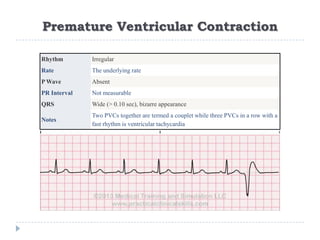
Premature Ventricular Contraction
Rhythm Irregular
Rate The underlying rate
P Wave Absent
PR Interval Not measurable
QRS Wide (> 0.10 sec), bizarre appearance
Notes
Two PVCs together are termed a couplet while three PVCs in a row with a
fast rhythm is ventricular tachycardia
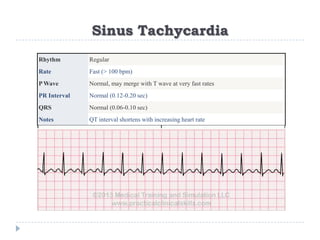
Sinus Tachycardia
Rhythm Regular
Rate Fast (> 100 bpm)
P Wave Normal, may merge with T wave at very fast rates
PR Interval Normal (0.12-0.20 sec)
QRS Normal (0.06-0.10 sec)
Notes QT interval shortens with increasing heart rate
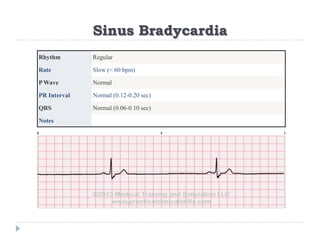
Sinus Bradycardia
Rhythm Regular
Rate Slow (< 60 bpm)
P Wave Normal
PR Interval Normal (0.12-0.20 sec)
QRS Normal (0.06-0.10 sec)
Notes
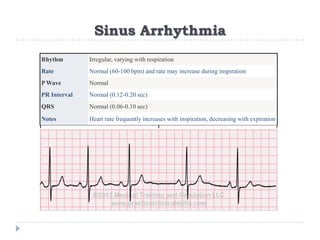
Sinus Arrhythmia
Rhythm Irregular, varying with respiration
Rate Normal (60-100 bpm) and rate may increase during inspiration
P Wave Normal
PR Interval Normal (0.12-0.20 sec)
QRS Normal (0.06-0.10 sec)
Notes Heart rate frequently increases with inspiration, decreasing with expiration
Atrial Dysrhythmias
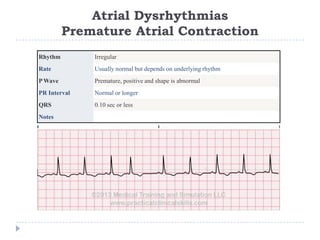
Premature Atrial Contraction
Rhythm Irregular
Rate Usually normal but depends on underlying rhythm
P Wave Premature, positive and shape is abnormal
PR Interval Normal or longer
QRS 0.10 sec or less
Notes
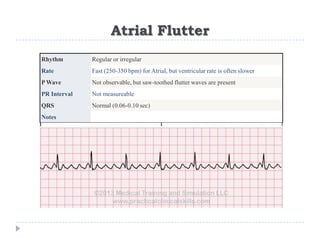
Atrial Flutter
Rhythm Regular or irregular
Rate Fast (250-350 bpm) for Atrial, but ventricular rate is often slower
P Wave Not observable, but saw-toothed flutter waves are present
PR Interval Not measureable
QRS Normal (0.06-0.10 sec)
Notes
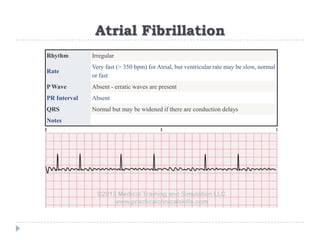
Atrial Fibrillation
Rhythm Irregular
Rate
Very fast (> 350 bpm) for Atrial, but ventricular rate may be slow, normal
or fast
P Wave Absent - erratic waves are present
PR Interval Absent
QRS Normal but may be widened if there are conduction delays
Notes
Ventricular Dysrhythmias
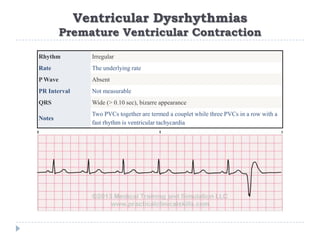
Premature Ventricular Contraction
Rhythm Irregular
Rate The underlying rate
P Wave Absent
PR Interval Not measurable
QRS Wide (> 0.10 sec), bizarre appearance
Notes
Two PVCs together are termed a couplet while three PVCs in a row with a
fast rhythm is ventricular tachycardia
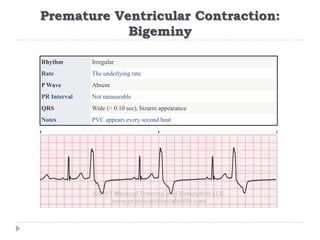
Premature Ventricular Contraction:
Bigeminy
Rhythm Irregular
Rate The underlying rate
P Wave Absent
PR Interval Not measurable
QRS Wide (> 0.10 sec), bizarre appearance
Notes PVC appears every second beat
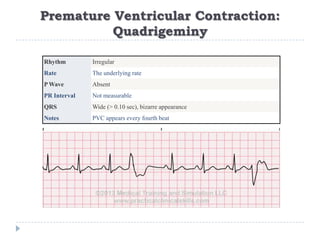
Premature Ventricular Contraction:
Quadrigeminy
Rhythm Irregular
Rate The underlying rate
P Wave Absent
PR Interval Not measurable
QRS Wide (> 0.10 sec), bizarre appearance
Notes PVC appears every fourth beat
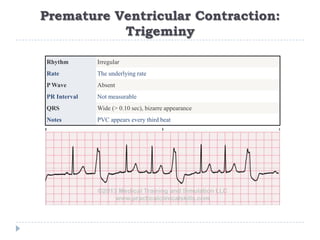
Premature Ventricular Contraction:
Trigeminy
Rhythm Irregular
Rate The underlying rate
P Wave Absent
PR Interval Not measurable
QRS Wide (> 0.10 sec), bizarre appearance
Notes PVC appears every third beat
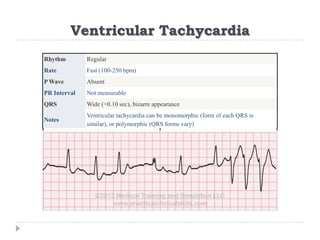
Ventricular Tachycardia
Rhythm Regular
Rate Fast (100-250 bpm)
P Wave Absent
PR Interval Not measurable
QRS Wide (>0.10 sec), bizarre appearance
Notes
Ventricular tachycardia can be monomorphic (form of each QRS is
similar), or polymorphic (QRS forms vary)
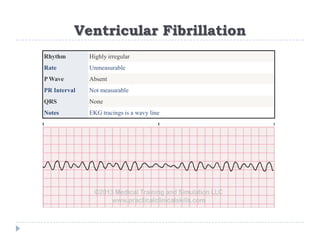
Ventricular Fibrillation
Rhythm Highly irregular
Rate Unmeasurable
P Wave Absent
PR Interval Not measurable
QRS None
Notes EKG tracings is a wavy line
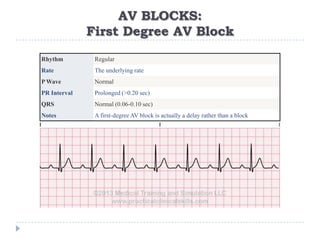
AV BLOCKS:
First Degree AV Block
Rhythm Regular
Rate The underlying rate
P Wave Normal
PR Interval Prolonged (>0.20 sec)
QRS Normal (0.06-0.10 sec)
Notes A first-degree AV block is actually a delay rather than a block
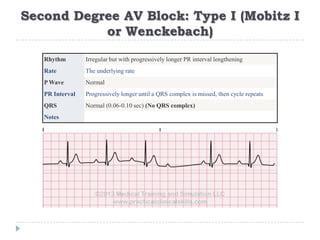
Second Degree AV Block: Type I (Mobitz I
or Wenckebach)
Rhythm Irregular but with progressively longer PR interval lengthening
Rate The underlying rate
P Wave Normal
PR Interval Progressively longer until a QRS complex is missed, then cycle repeats
QRS Normal (0.06-0.10 sec) (No QRS complex)
Notes
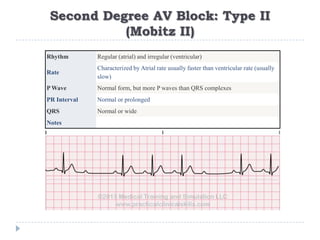
Second Degree AV Block: Type II
(Mobitz II)
Rhythm Regular (atrial) and irregular (ventricular)
Rate
Characterized by Atrial rate usually faster than ventricular rate (usually
slow)
P Wave Normal form, but more P waves than QRS complexes
PR Interval Normal or prolonged
QRS Normal or wide
Notes
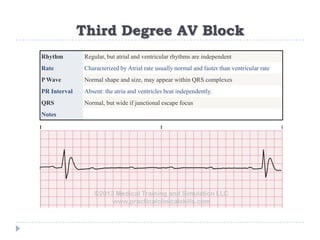
Third Degree AV Block
Rhythm Regular, but atrial and ventricular rhythms are independent
Rate Characterized by Atrial rate usually normal and faster than ventricular rate
P Wave Normal shape and size, may appear within QRS complexes
PR Interval Absent: the atria and ventricles beat independently.
QRS Normal, but wide if junctional escape focus
Notes

Ecg or ekg sample strips (MS Cardiovascular)

  • 1.
    ECG or EKGStrips
  • 2.
    Premature Ventricular Contraction RhythmIrregular Rate The underlying rate P Wave Absent PR Interval Not measurable QRS Wide (> 0.10 sec), bizarre appearance Notes Two PVCs together are termed a couplet while three PVCs in a row with a fast rhythm is ventricular tachycardia
  • 3.
    Sinus Tachycardia Rhythm Regular RateFast (> 100 bpm) P Wave Normal, may merge with T wave at very fast rates PR Interval Normal (0.12-0.20 sec) QRS Normal (0.06-0.10 sec) Notes QT interval shortens with increasing heart rate
  • 4.
    Sinus Bradycardia Rhythm Regular RateSlow (< 60 bpm) P Wave Normal PR Interval Normal (0.12-0.20 sec) QRS Normal (0.06-0.10 sec) Notes
  • 5.
    Sinus Arrhythmia Rhythm Irregular,varying with respiration Rate Normal (60-100 bpm) and rate may increase during inspiration P Wave Normal PR Interval Normal (0.12-0.20 sec) QRS Normal (0.06-0.10 sec) Notes Heart rate frequently increases with inspiration, decreasing with expiration
  • 6.
    Atrial Dysrhythmias Premature AtrialContraction Rhythm Irregular Rate Usually normal but depends on underlying rhythm P Wave Premature, positive and shape is abnormal PR Interval Normal or longer QRS 0.10 sec or less Notes
  • 7.
    Atrial Flutter Rhythm Regularor irregular Rate Fast (250-350 bpm) for Atrial, but ventricular rate is often slower P Wave Not observable, but saw-toothed flutter waves are present PR Interval Not measureable QRS Normal (0.06-0.10 sec) Notes
  • 8.
    Atrial Fibrillation Rhythm Irregular Rate Veryfast (> 350 bpm) for Atrial, but ventricular rate may be slow, normal or fast P Wave Absent - erratic waves are present PR Interval Absent QRS Normal but may be widened if there are conduction delays Notes
  • 9.
    Ventricular Dysrhythmias Premature VentricularContraction Rhythm Irregular Rate The underlying rate P Wave Absent PR Interval Not measurable QRS Wide (> 0.10 sec), bizarre appearance Notes Two PVCs together are termed a couplet while three PVCs in a row with a fast rhythm is ventricular tachycardia
  • 10.
    Premature Ventricular Contraction: Bigeminy RhythmIrregular Rate The underlying rate P Wave Absent PR Interval Not measurable QRS Wide (> 0.10 sec), bizarre appearance Notes PVC appears every second beat
  • 11.
    Premature Ventricular Contraction: Quadrigeminy RhythmIrregular Rate The underlying rate P Wave Absent PR Interval Not measurable QRS Wide (> 0.10 sec), bizarre appearance Notes PVC appears every fourth beat
  • 12.
    Premature Ventricular Contraction: Trigeminy RhythmIrregular Rate The underlying rate P Wave Absent PR Interval Not measurable QRS Wide (> 0.10 sec), bizarre appearance Notes PVC appears every third beat
  • 13.
    Ventricular Tachycardia Rhythm Regular RateFast (100-250 bpm) P Wave Absent PR Interval Not measurable QRS Wide (>0.10 sec), bizarre appearance Notes Ventricular tachycardia can be monomorphic (form of each QRS is similar), or polymorphic (QRS forms vary)
  • 14.
    Ventricular Fibrillation Rhythm Highlyirregular Rate Unmeasurable P Wave Absent PR Interval Not measurable QRS None Notes EKG tracings is a wavy line
  • 15.
    AV BLOCKS: First DegreeAV Block Rhythm Regular Rate The underlying rate P Wave Normal PR Interval Prolonged (>0.20 sec) QRS Normal (0.06-0.10 sec) Notes A first-degree AV block is actually a delay rather than a block
  • 16.
    Second Degree AVBlock: Type I (Mobitz I or Wenckebach) Rhythm Irregular but with progressively longer PR interval lengthening Rate The underlying rate P Wave Normal PR Interval Progressively longer until a QRS complex is missed, then cycle repeats QRS Normal (0.06-0.10 sec) (No QRS complex) Notes
  • 17.
    Second Degree AVBlock: Type II (Mobitz II) Rhythm Regular (atrial) and irregular (ventricular) Rate Characterized by Atrial rate usually faster than ventricular rate (usually slow) P Wave Normal form, but more P waves than QRS complexes PR Interval Normal or prolonged QRS Normal or wide Notes
  • 18.
    Third Degree AVBlock Rhythm Regular, but atrial and ventricular rhythms are independent Rate Characterized by Atrial rate usually normal and faster than ventricular rate P Wave Normal shape and size, may appear within QRS complexes PR Interval Absent: the atria and ventricles beat independently. QRS Normal, but wide if junctional escape focus Notes