Downloaded 371 times

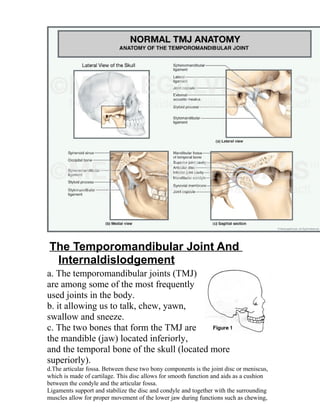

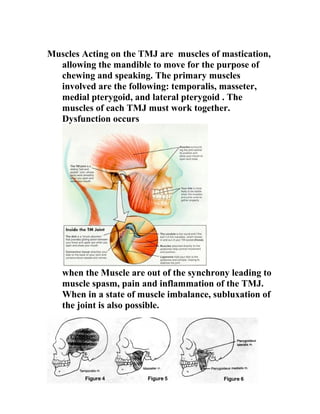



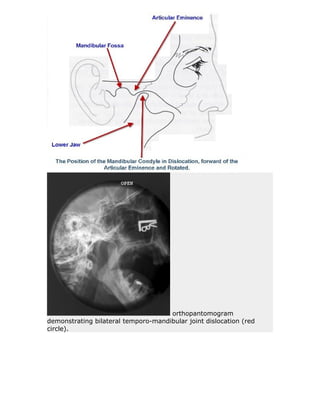
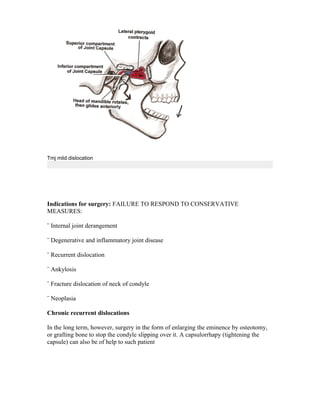


The temporomandibular joints (TMJs) connect the mandible to the temporal bones of the skull, allowing for movement of the jaw. The TMJs contain articular discs that cushion the joints and allow for smooth movement. TMJ dysfunction can occur due to trauma, muscle imbalances, inflammation, or other causes, resulting in symptoms like joint pain, clicking, and limited jaw movement. Treatment may involve self-care measures, dental appliances, or surgery in severe cases that do not improve with conservative treatment. Accurate diagnosis involves taking a medical history, clinical examination, and sometimes imaging tests.


