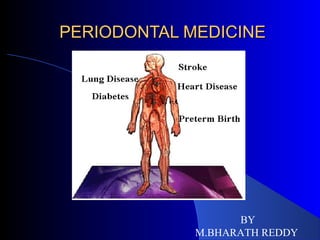
PERIODONTAL MEDICINE

BY
M.BHARATH REDDY
OBJECTIVES
 Introduction
 Era

of focal infection
 Periodontal and coronory heart
disease/Atherosclerosis
 Periodontal disease & Diabetes mellitus
 Role of periodontitis in pregnancy out come
 Periodontal disease & COPD
 Periodontal disease & Acute Respiratory
Infection
 Periodontal Medicine In Clinical Practice
INTRODUCTION








Advances in the science & technology over the
last centuary have greatly expanded our
knowledge of pathogenesis of periodontal disease.
Certain systemic conditions may affect the
initiation & progression of gingivitis &
periodontitis.
The effect of oral health on the rest of the human
body was proposed by assyrians in the 7th
centuary.
In the 18th centuary a pennsylvanian physician
named Benjamin Rush quoted that arthritis could
be treated in some people after they get extracted
the infected teeth.
ERA OF FOCAL INFECTION
 WD

MILLER & WILLIAM HUNTER
given a concept that oral bacteria &
infection were likely to cause most of the
person’s systemic illness.

 This
 This

concept became very popular.

era,which came to be known as “THE
ERA OF FOCAL INFECTION”
However by 1940 medicine & dentistry were
realising that there was much more to explain a
patients general condition than bacteria in his/her
mouth.
o They realised that1.extarcting a person teeth donot make their
disease go away.
2.people with very healthy mouths also
develop systemic disease.
3.people with no teeth & thus no apparent oral
infection still develop systemic disease.
FOCAL INFECTION as a primary cause of
systemic infection finally came to an end.
o
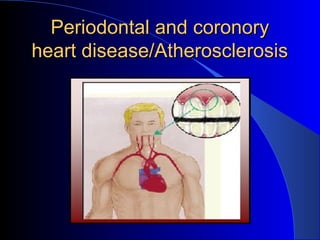
Periodontal and coronory
heart disease/Atherosclerosis
Periodontal and coronory
heart disease
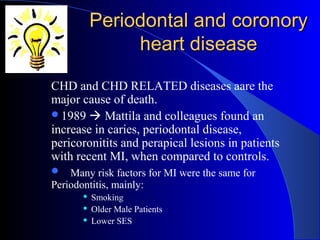
CHD and CHD RELATED diseases aare the
major cause of death.
1989  Mattila and colleagues found an
increase in caries, periodontal disease,
pericoronitits and perapical lesions in patients
with recent MI, when compared to controls.
 Many risk factors for MI were the same for

Periodontitis, mainly:




Smoking
Older Male Patients
Lower SES
Effect of periodontal infection
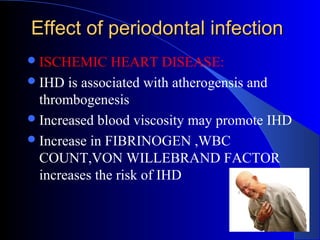
 ISCHEMIC

HEART DISEASE:
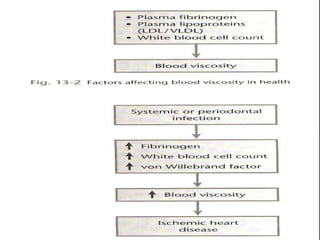
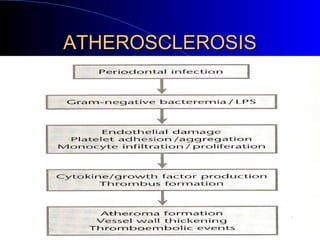
 IHD is associated with atherogensis and
thrombogenesis
 Increased blood viscosity may promote IHD
 Increase in FIBRINOGEN ,WBC
COUNT,VON WILLEBRAND FACTOR
increases the risk of IHD
ATHEROSCLEROSIS
STROKE
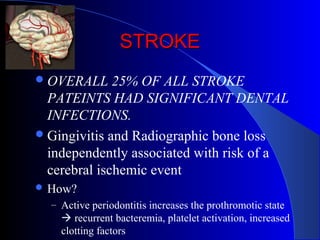
 OVERALL

25% OF ALL STROKE
PATEINTS HAD SIGNIFICANT DENTAL
INFECTIONS.
 Gingivitis and Radiographic bone loss
independently associated with risk of a
cerebral ischemic event
 How?
– Active periodontitis increases the prothromotic state

 recurrent bacteremia, platelet activation, increased
clotting factors
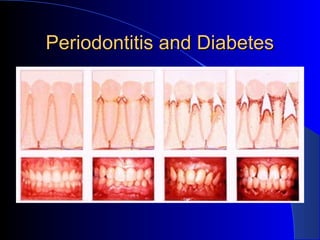
Periodontitis and Diabetes
Diabetes
– American Diabetes Association recognizes that

periodontal disease is common in diabetic
patients
– Studies have shown:
Diabetes is a risk factor for periodontal disease
 Diabetic control improves the prognosis of
periodontitis
 Treatment of periodontitis improves
metabolic/diabetic control

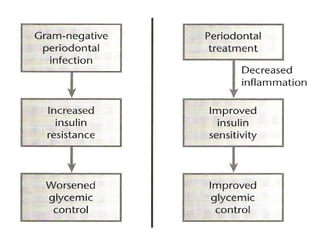
Periodontal infection associated with
glycemic control in diabetes
 Acute

bacterial and viral infections have
been shown to increase insulin resistance
and aggravate glycemic control.
 Systemic infections increase tissue
resistance to insulin,preventing glucose
from entering target cells ,causing elevated
blood glucose levels
 Pancreatic insulin production increases to
maintain normalglycemia
Role of periodontitis in pregnancy
outcome
 Periodontitis

is a gram-ve infection that
play role in low birth weight individuals.
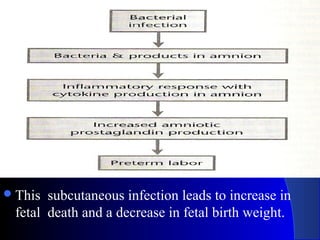
 Bacteria and products causes inflammatory
response with stimulation of cytokine
production in amnion.
 P.gingivalis implanted in subcutaneous
chambers during gestation caused
significant increase in TNF-ALFA and
PGE2 levels
 This

subcutaneous infection leads to increase in
fetal death and a decrease in fetal birth weight.
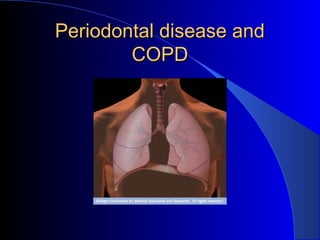
Periodontal disease and
COPD
 COPD

is characterised by airflow
obstruction resulting from chronic
bronchitis or emphysema.
 About 14 million americans have COPD
,tobacco smoking is the primary risk factor.
 COPD shares similar pathogenic
mechanisms with periodontal disease.
 In both diseases ,host inflammatory
response is mounted in response to chronic
challenge by
bacteria in periodontal disease
cigarette smoking in COPD
 Broncial

mucosa glands enlarge ,and
inflammatory process occurs in which
neutrophils and mononuclear inflammatory
cells accumulate with in lung tissue.
 The resulting neutrophil influx leads to
release of oxidative and hydrolytic enzymes
that cause tissue distruction .
 In current smokers ,however the presence of
severe periodontits was associated with
increased risk of COPD.
 This results suggest that smoking may act
as a major “effect modifier” in relationship
btw COPD and periodontal disease.
Periodontal disease and acute
respiratory infection
 Pneumonia

is classified as Community
Acquired or Nosocomial.

 The

most common organisms found are S.
pneumoniae and H. influenzae
 How do the bacteria go from the mouth to the
lungs?
– Hematogenous Spread
– Aspiration:
 45% of healthy people aspirate upper airway
substances during sleep
 70% of those with impaired consciousness
aspirate substances from upper airway
 Hospital

acquired bacterial pneumonia is usually
caused by aspiration of oropharyngeal contents.
 Oropharyngeal colonization with potential
respiratory pathogens(PRP) increases during
hospitalizations.
 PRP may also orginate in the oral cavity ,with
dental plaque serving as a reservoir of these
organisms .
 PRPS are commonly isolated from
supragingival plaque and buccal mucosa of the
patients .
Periodontal medicine in
clinical practice
 Periodontal

infection may act as
independent risk factor for systemic
disease in suseptible individual.
 Dentists need to know more about systemic
diseases and physicians need to increase
their knowledge of oral diseases.
 Patient education in this regrad is also very
important.
Thank you

Periodontal medicine

  • 1.
  • 2.
    OBJECTIVES  Introduction  Era offocal infection  Periodontal and coronory heart disease/Atherosclerosis  Periodontal disease & Diabetes mellitus  Role of periodontitis in pregnancy out come  Periodontal disease & COPD  Periodontal disease & Acute Respiratory Infection  Periodontal Medicine In Clinical Practice
  • 3.
    INTRODUCTION     Advances in thescience & technology over the last centuary have greatly expanded our knowledge of pathogenesis of periodontal disease. Certain systemic conditions may affect the initiation & progression of gingivitis & periodontitis. The effect of oral health on the rest of the human body was proposed by assyrians in the 7th centuary. In the 18th centuary a pennsylvanian physician named Benjamin Rush quoted that arthritis could be treated in some people after they get extracted the infected teeth.
  • 4.
    ERA OF FOCALINFECTION  WD MILLER & WILLIAM HUNTER given a concept that oral bacteria & infection were likely to cause most of the person’s systemic illness.  This  This concept became very popular. era,which came to be known as “THE ERA OF FOCAL INFECTION”
  • 5.
    However by 1940medicine & dentistry were realising that there was much more to explain a patients general condition than bacteria in his/her mouth. o They realised that1.extarcting a person teeth donot make their disease go away. 2.people with very healthy mouths also develop systemic disease. 3.people with no teeth & thus no apparent oral infection still develop systemic disease. FOCAL INFECTION as a primary cause of systemic infection finally came to an end. o
  • 6.
    Periodontal and coronory heartdisease/Atherosclerosis
  • 7.
    Periodontal and coronory heartdisease CHD and CHD RELATED diseases aare the major cause of death. 1989  Mattila and colleagues found an increase in caries, periodontal disease, pericoronitits and perapical lesions in patients with recent MI, when compared to controls.  Many risk factors for MI were the same for Periodontitis, mainly:    Smoking Older Male Patients Lower SES
  • 8.
    Effect of periodontalinfection  ISCHEMIC HEART DISEASE:  IHD is associated with atherogensis and thrombogenesis  Increased blood viscosity may promote IHD  Increase in FIBRINOGEN ,WBC COUNT,VON WILLEBRAND FACTOR increases the risk of IHD
  • 10.
  • 11.
    STROKE  OVERALL 25% OFALL STROKE PATEINTS HAD SIGNIFICANT DENTAL INFECTIONS.  Gingivitis and Radiographic bone loss independently associated with risk of a cerebral ischemic event  How? – Active periodontitis increases the prothromotic state  recurrent bacteremia, platelet activation, increased clotting factors
  • 12.
  • 13.
    Diabetes – American DiabetesAssociation recognizes that periodontal disease is common in diabetic patients – Studies have shown: Diabetes is a risk factor for periodontal disease  Diabetic control improves the prognosis of periodontitis  Treatment of periodontitis improves metabolic/diabetic control 
  • 14.
    Periodontal infection associatedwith glycemic control in diabetes  Acute bacterial and viral infections have been shown to increase insulin resistance and aggravate glycemic control.  Systemic infections increase tissue resistance to insulin,preventing glucose from entering target cells ,causing elevated blood glucose levels  Pancreatic insulin production increases to maintain normalglycemia
  • 16.
    Role of periodontitisin pregnancy outcome  Periodontitis is a gram-ve infection that play role in low birth weight individuals.  Bacteria and products causes inflammatory response with stimulation of cytokine production in amnion.  P.gingivalis implanted in subcutaneous chambers during gestation caused significant increase in TNF-ALFA and PGE2 levels
  • 17.
     This subcutaneous infectionleads to increase in fetal death and a decrease in fetal birth weight.
  • 18.
  • 19.
     COPD is characterisedby airflow obstruction resulting from chronic bronchitis or emphysema.  About 14 million americans have COPD ,tobacco smoking is the primary risk factor.  COPD shares similar pathogenic mechanisms with periodontal disease.  In both diseases ,host inflammatory response is mounted in response to chronic challenge by bacteria in periodontal disease cigarette smoking in COPD
  • 20.
     Broncial mucosa glandsenlarge ,and inflammatory process occurs in which neutrophils and mononuclear inflammatory cells accumulate with in lung tissue.  The resulting neutrophil influx leads to release of oxidative and hydrolytic enzymes that cause tissue distruction .  In current smokers ,however the presence of severe periodontits was associated with increased risk of COPD.  This results suggest that smoking may act as a major “effect modifier” in relationship btw COPD and periodontal disease.
  • 21.
    Periodontal disease andacute respiratory infection  Pneumonia is classified as Community Acquired or Nosocomial.  The most common organisms found are S. pneumoniae and H. influenzae  How do the bacteria go from the mouth to the lungs? – Hematogenous Spread – Aspiration:  45% of healthy people aspirate upper airway substances during sleep  70% of those with impaired consciousness aspirate substances from upper airway
  • 22.
     Hospital acquired bacterialpneumonia is usually caused by aspiration of oropharyngeal contents.  Oropharyngeal colonization with potential respiratory pathogens(PRP) increases during hospitalizations.  PRP may also orginate in the oral cavity ,with dental plaque serving as a reservoir of these organisms .  PRPS are commonly isolated from supragingival plaque and buccal mucosa of the patients .
  • 23.
    Periodontal medicine in clinicalpractice  Periodontal infection may act as independent risk factor for systemic disease in suseptible individual.  Dentists need to know more about systemic diseases and physicians need to increase their knowledge of oral diseases.  Patient education in this regrad is also very important.
  • 24.