Downloaded 445 times


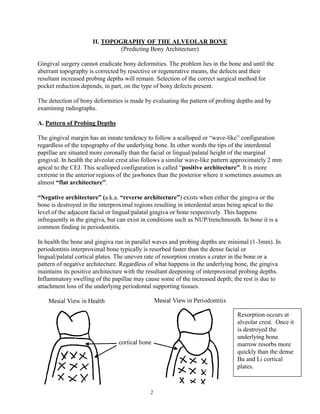

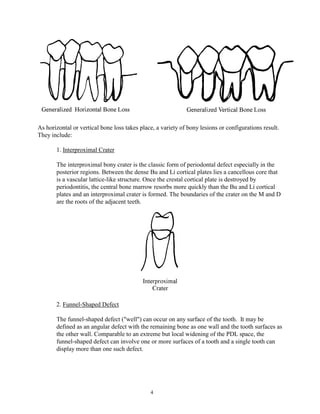
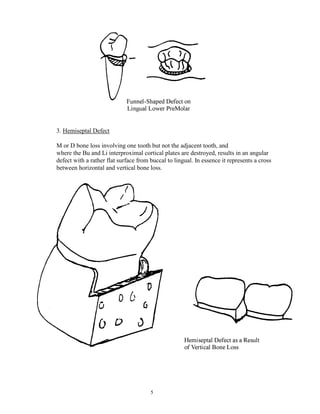
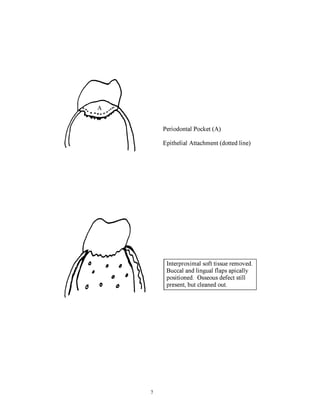

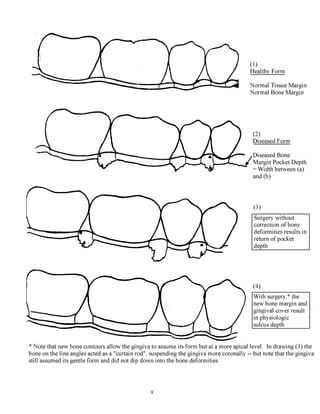


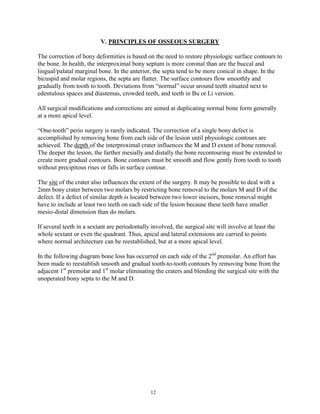


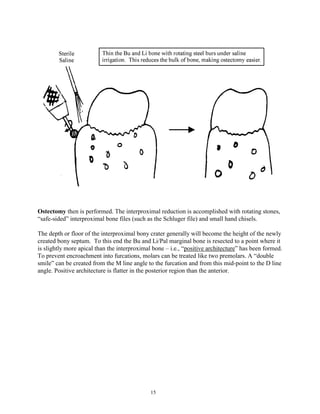
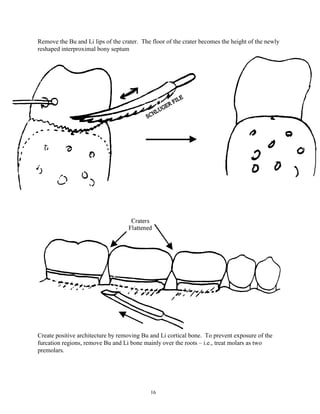


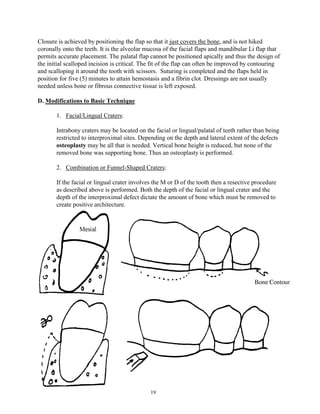










This document discusses osseous surgery and the treatment of bone defects caused by periodontitis. It begins with an overview of normal bone topography and how bone loss from periodontal disease can result in abnormal architectures like interproximal craters and angular bony defects. The rationale for surgical correction of these bone defects is explained, along with the objectives, techniques, and healing process of osseous surgery. Specific challenges like furcation invasions are also addressed. The goal of osseous surgery is to reshape damaged bone in order to reduce pockets and allow for periodontal regeneration.


