Downloaded 146 times

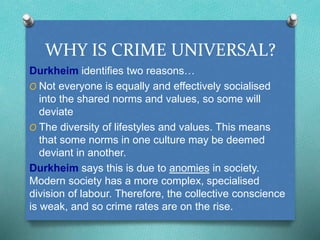


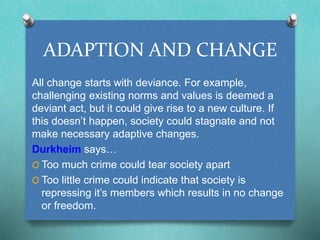













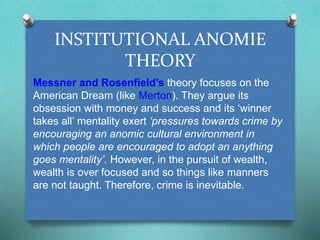


Functionalism views crime as inevitable and having some positive functions for society. Durkheim believed crime reinforces social solidarity and norms, as it provokes condemnation that reaffirms shared values. Crime can also drive social change by challenging norms. However, functionalist theories have been criticized for ignoring individual experiences and how crime primarily benefits certain groups. Subsequent theorists like Merton, Cohen, and Cloward and Ohlin incorporated structural factors and examined how blocked opportunities and cultural goals can lead some groups to form deviant subcultures as alternative means to achieve success and status.


