Downloaded 162 times




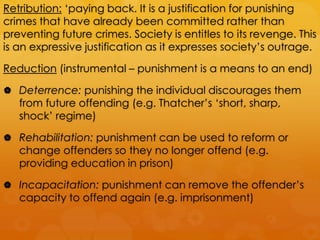


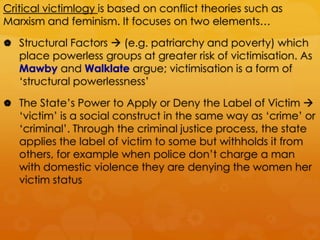


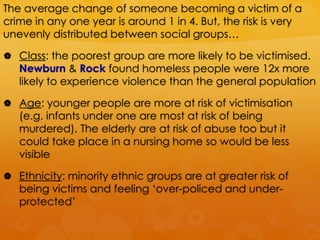
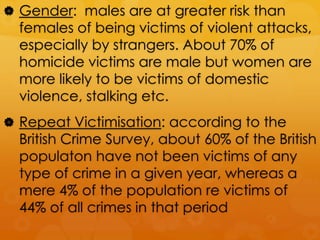


Situational crime prevention focuses on reducing criminal opportunities by managing the environment. It is based on a rational choice theory of crime. Critics argue it may displace rather than reduce crime, and ignores root causes. "Broken windows theory" argues disorder sends a signal that no one cares, attracting more crime. Evidence from NYC found reducing graffiti and targeting minor offenses reduced crime. However, other factors like increased police may have contributed. Social prevention targets potential offenders' social contexts to remove predisposing conditions. The Perry Preschool project found early childhood programs reduced lifetime arrests. Punishment is justified as retribution or crime reduction. Retribution expresses social outrage, while reduction deters, rehabilitates or incapacitates offenders. Marx


![Contemporary crime reduction strategies[1]stu](https://cdn.slidesharecdn.com/ss_thumbnails/contemporarycrimereductionstrategies1stu-131001031356-phpapp01-thumbnail.jpg?width=640&height=640&fit=bounds)


