





















































![2. Material contributions
determine the extent to which
social classes can organize
effectively to fight for their
interests; such conditions of
mobilization are a set of
intervening variables between
class and political power.
[The more wealth you have
the more political power you
have.]](https://image.slidesharecdn.com/socialcontrolanddeviance-130218193445-phpapp01/85/Social-control-and-deviance-121-320.jpg)






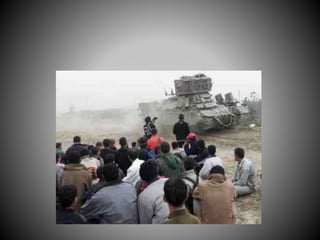
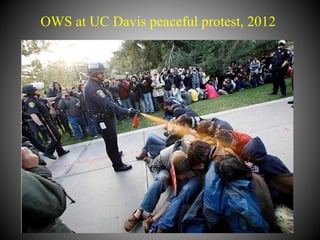
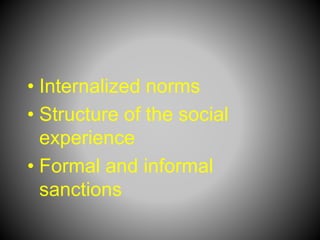
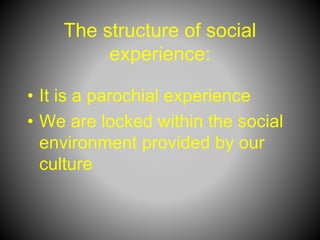
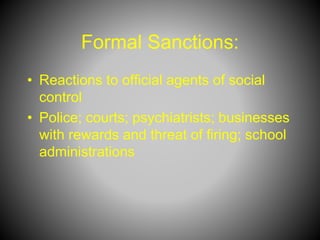
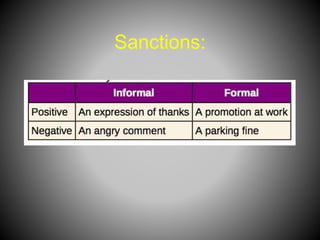
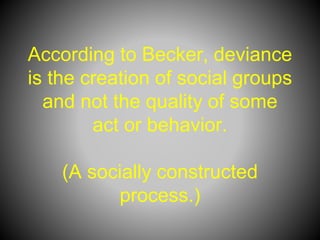
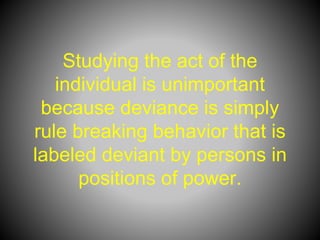
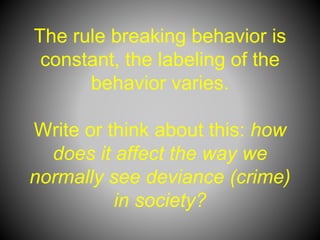
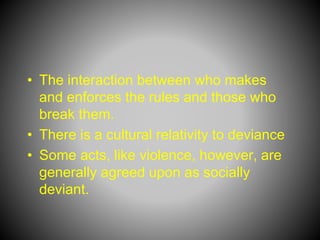
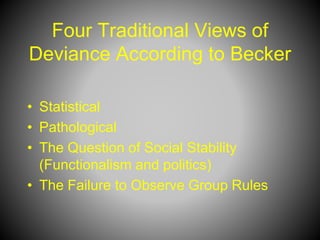
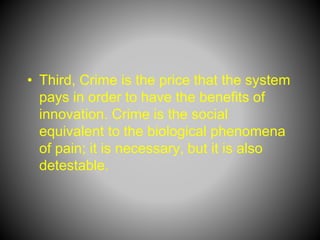
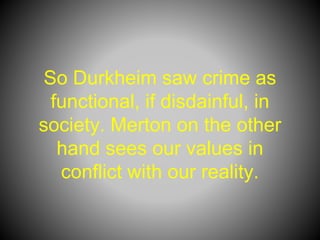
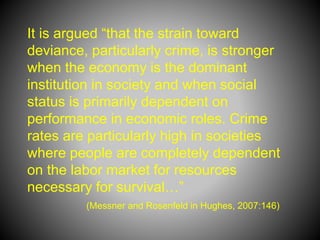
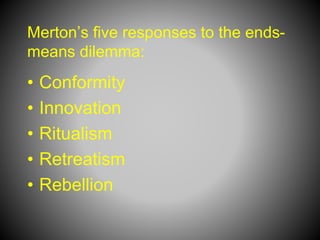
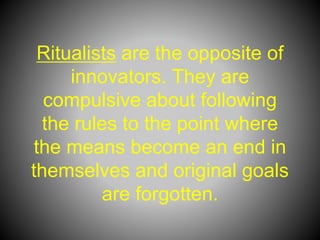
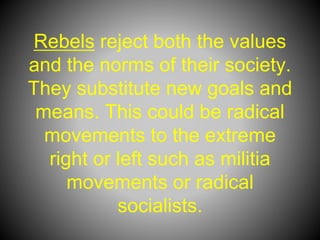
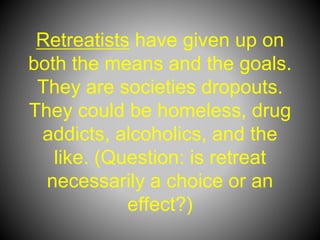
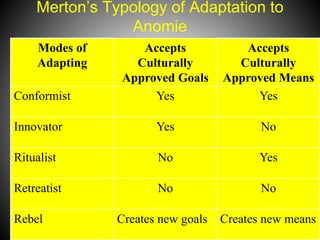
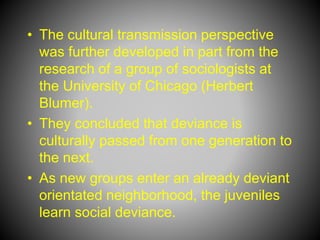
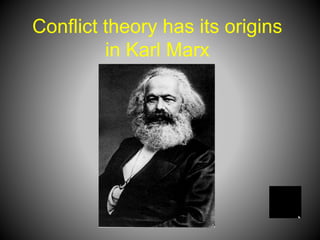
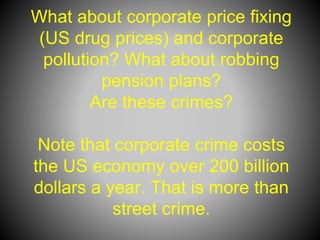
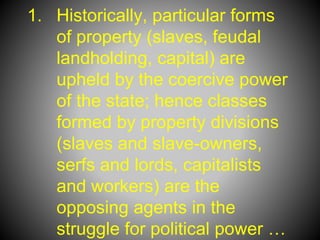
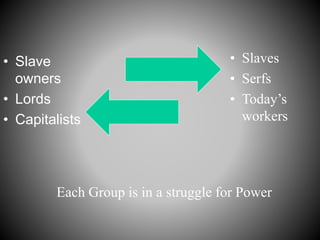
Social control consists of the methods used to regulate behavior in society. There are three main theoretical perspectives on social control - functionalists see it as necessary for survival, interactionists see it as a social process, and conflict theorists see it as benefiting powerful groups. There are three main types of social control - internalized norms, social structure, and formal/informal sanctions. Deviance is shaped by social forces like labeling, strain due to unequal access to goals, and cultural transmission of norms from one generation to the next. Conflict theory views social control as a mechanism for powerful classes to maintain their power and property over subordinate classes.


![Sociology[1]](https://cdn.slidesharecdn.com/ss_thumbnails/sociology1-100613235614-phpapp02-thumbnail.jpg?width=640&height=640&fit=bounds)


