TAYLOR’S UNIVERSITY 
BACHELOR OF SCIENCE (HONOURS) (ARCHITECTURE) 
ARC 1215 METHODS OF DOCUMENTATION & MEASURED DRAWING 
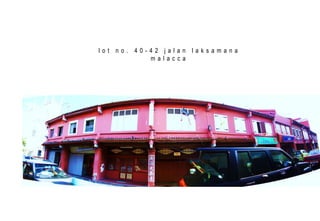
LOT NO. 40-42, JALAN LAKSAMANA, 
75000 MELAKA. 
JANUARY 2013
lot no. 40-42 jalan laksamana 
malacca
ABSTRACT 
TAYLOR‟S UNIVERSITY 
SCHOOL OF ARCHITECTURE, BUILDING AND DESIGN 
i 
Documentation of Measured Drawings on Lot No. 40-42 Jalan Laksamana, Malacca. 
Abstract 
This report documents the overall information and data obtained from Measured Drawings activity on the site of Lot No. 40-42 shop houses. Jalan Laksamana, formerly known as Riverside, is a prominent street in the history of Malacca. Built over a century ago these shop houses, including Lot No. 40-42, stand strong as the symbol of commercial development in Malacca during the Western colonization. In the process of measuring these shop houses for conservation purposes the condition of the shop houses as well as their architectural development are analyzed and recorded. Western colonization has influenced the architecture in Malacca resulting in their styles being adapted into the shop houses, among them are Dutch Style, Southern China Style and Early Shop houses Style. The elements of these styles can be seen from the façade design of Lot No. 40-42, as well as the interior qualities. Over the years the shop houses have been renovated and transformed as they are needed to house varying types of businesses, from a traditional Chinese herb pharmacy to local cafés. These changes are also made in the hope of acknowledging the relevance of this row of shop houses with modern time. However with the rising development of shopping malls and foreign business icons in the town of Malacca these shop houses are no longer a commercial center, they are landmarks of the town and witnesses its historical evolution. These shop houses have defeated their purpose and Jalan Laksamana is a just another forgotten street.
ACKNOWLEDGEMENTS 
The group would like to extend our acknowledgement and many thanks to the following persons and organizations that have lent us a hand and provided guidance and information throughout this project. To whom without we would not be able to complete this project. 
Ms. Ida Mazlan, Ms. Delliya Zain and Ms. Nurul Anida, our lecturers for their patience, guidance and comments that helped us in preparing the measured drawings and report; 
Ms. Norhayati and Ms. Noridayu, our subject coordinator for providing us with information and assistance; 
Mr. Arthur Chan, the owner of Lot No. 40-42 Jalan Laksamana for giving us the permission to measure the historical building and providing reliable documents of information; 
Mr. Kuah Kee Kiat, the contractor of Lot No. 40-42 for making time to open the doors to the shop house and providing information; 
Ar. Debbie Lee, the architect responsible for the conservation of Malacca‟s heritage buildings; 
TAYLOR‟S UNIVERSITY 
SCHOOL OF ARCHITECTURE, BUILDING AND DESIGN 
ii
DECLARATION 
Name of building No. 40-42, Jalan Laksamana. 
Address No. 40-42, Jalan Laksamana, Bandar Hilir, 75000, Melaka. 
This report is submitted for the subject Methods of Documentation (ARC 1212) to complement the set of architectural drawings submitted for Measured Drawings (ARC 1223) to the School of Architecture, Building and Design of Taylor‟s University Lakeside Campus to obtain two credits for Practicum 1. 
A group work by: 
Angeline Kon Kee Hooi 
Asyraf Riduan 
Boo Chie Peng 
Chiew Swee Mun 
Chong Zohan 
Gooi Liang Jun 
Lau Wei Ann 
Lim Meng Yeow 
Melika Aghabeigi 
0302068 
1001P75532 
0303285 
1007P79022 
0302126 
1007P10780 
1101P13485 
1001A76873 
0305600 
TAYLOR‟S UNIVERSITY 
SCHOOL OF ARCHITECTURE, BUILDING AND DESIGN 
Mohamad Azlan Johar Mohammad Nabil Koodaruth Nurul Aisyah Binti Meor Mohd Mahazir Shafeeqa Bt. Md. Sham Stella Lystia Tan Hop Kins Wong Dao Min Wong Man Hou Yap Zheng Kuan 
0309909 
0303399 
1007P79492 
1007P79674 
1007P79477 
0302076 
1101P11901 
0308893 
1007P10760 
iii
TABLE OF CONTENTS 
ABSTRACT 
ACKNOWLEDGEMENTS 
DECLARATION 
TABLE OF CONTENTS 
LIST OF FIGURES 
LIST OF TABLES 
CHAPTER 1 INTRODUCTION 
1.0 OBJECTIVES AND AIM 
1.1 SCOPE 
1.2 LIMITATION 
1.3 METHODOLOGY 
1.4 LITERATURE REVIEW 
1.5 SIGNIFICANCE OF STUDY 
1.6 EQUIPMENTS 
TAYLOR‟S UNIVERSITY 
SCHOOL OF ARCHITECTURE, BUILDING AND DESIGN 
I 
CHAPTER 2 HISTORICAL BACKGROUND 
2.0 MALACCA 
2.0.1 MALACCA SULTANATE 
2.0.2 PORTUGUESE COLONIZATION 
2.0.3 DUTCH COLONIZATION 
2.0.4 BRITISH COLONIZATION 
2.0.5 JAPANESE OCCUPATION 
2.0.6 INDEPENDENCE 
2.0.7 MALACCA WORLD HERITAGE CITY 
2.1 JALAN LAKSAMANA 
2.2 NO 40-42 JALAN LAKSAMANA 
2.2.1 HISTORY AND OWNERSHIP 
iv 
i 
ii 
iii 
iv 
v 
xiv 
1 
1 
2 
3 
5 
6 
7 
10 
13 
14 
17 
19 
20 
22 
24 
25 
27 
27
TABLE OF CONTENTS 
CHAPTER 3 ARCHITECTURAL DEVELOPMENT 
3.0 SITE CONTEXT 
3.1 ARCHITECTURAL INFLUENCES 
3.1.1 DUTCH STYLE 
3.1.2 SOUTHERN CHINA STYLE 
3.1.3 EARLY SHOPHOUSES STYLE 
3.2 DESIGN CONCEPT 
3.2.1 FORM 
3.2.2 EXTERIOR 
3.2.3 INTERIOR 
3.2.4 „FENG SHUI‟ 
3.3 SPACE PLANNING 
3.3.1 EXTERIOR 
3.3.2 INTERIOR 
3.4 CULTURAL ASPECTS 
CHAPTER 4 CONSTRUCTION 
4.0 MATERIAL AND CONSTRUCTION DETAIL 
4.0.1 FLOOR 
4.0.2 WALL 
4.0.3 COLUMN AND PILASTER 
4.0.4 STAIRCASE AND HANDRAIL 
4.0.5 DOOR 
4.0.6 WINDOW 
4.0.7 ROOF 
CHAPTER 5 CASE STUDY: LOT NO. 54-56 HEREEN STREET 
CHAPTER 6 DISCUSSION: A FORGOTTEN STREET 
6.1 A FORGOTTEN STREET 
6.2 FACTORS 
6.3 CONCLUSION 
REFERENCES 
APPENDIX 
SCALED DRAWINGS 
TAYLOR‟S UNIVERSITY 
SCHOOL OF ARCHITECTURE, BUILDING AND DESIGN 
v 
29 31 32 34 36 38 38 41 54 67 70 75 76 79 
81 
81 
84 
89 
91 
102 
109 
114 
117 
119 
119 
120 
121 
122 
126 
133
LIST OF FIGURES 
TAYLOR‟S UNIVERSITY 
SCHOOL OF ARCHITECTURE, BUILDING AND DESIGN 
vi 
Figure 1 Measuring tape. 
Figure 1.1 Laser measure tool. 
Figure 1.2 Adjustable set square. 
Figure 1.3 Scaffolding. 
Figure 1.4 Ladder. 
Figure 2 Parameswara under the Malacca tree. 
Figure 2.1 The fortress of Malacca map by Portuguese. 
Figure 2.2 A‟ Famosa. (Source: www.cuti.my) 
Figure 2.3 St. Peter‟s Church. (Source: sayangmelaka.blogspot.com) 
Figure 2.4 Riverside Malacca during Dutch colonization. (Source:kotasejarah.blogspot.com) 
Figure 2.5 Christ Church. (Source:destinationtomalaysia.com) 
Figure 2.6 Stradthuys. (Source: sunflowerholidays.com) 
Figure 2.7 Japanese riding bicycles through Malaya. (Source: kotasejarah.blogspot.com) 
Figure 2.8 Protest against Malayan Union. (Source: kotasejarah.blogspot.com) 
Figure 2.9 Towards independence. (Source: kotasejarah.blogspot.com) 
Figure 2.10 Malacca World Heritage City signboard. (Source: dreamstime.com) 
Figure 2.11 Jalan Laksamana. 
Figure 2.12 Lot No. 40-42 Jalan Laksamana. 
Figure 2.13 Jalan Laksamana under Core Zone. 
Figure 2.14 Location plan of Lot No. 40-42 shop houses.
LIST OF FIGURES 
TAYLOR‟S UNIVERSITY 
SCHOOL OF ARCHITECTURE, BUILDING AND DESIGN 
vii 
Figure 3.1 Dutch Style shop house. (Source: buildingconservation.blogspot.com) 
Figure 3.2 Symmetrical façade. 
Figure 3.3 Centralized windows and door. 
Figure 3.4 Southern China Style shop house. (Source: buildingconservation.blogspot.com) 
Figure 3.5 Position of courtyards in No. 40-42 shop houses. 
Figure 3.6 Early Shophouses Style shop house. (Source: thestar.com.my) 
Figure 3.7 Recessed ground floor and „kaki lima‟. 
Figure 3.8 Five-foot walkway viewing East. 
Figure 3.9 Five-foot walkway viewing West.. 
Figure 3.10 Decorative tiles on the five-foot walkway. 
Figure 3.11 Front facade of shop houses No. 40-42. 
Figure 3.12 Parts of the Tuscan order. 
Figure 3.13 Column on the left side of Lot No. 40. 
Figure 3.14 Column on the right side of Lot No. 42. 
Figure 3.15 The cylindrical column in the middle. 
Figure 3.16 Exposed party wall of a shop house along Jalan Laksamana. 
Figure 3.17 Cantilevered roof tiles with unglazed Chinese clay terracotta roof tiles. 
Figure 3.18 Timber roof beams and the interior part of the gable wall. 
Figure 3.19 Waste water flows from the shop houses to the drain. 
Figure 3.20 Metal screen on the front façade of Lot No. 42. 
Figure 3.21 The metal door level on the metal screen door. 
Figure 3.22 Metal screen on the front façade of Lot No. 42. 
Figure 3.23 The metal door level on the metal screen door.
LIST OF FIGURES 
TAYLOR‟S UNIVERSITY 
SCHOOL OF ARCHITECTURE, BUILDING AND DESIGN 
viii 
Figure 3.24 Courtyard door. 
Figure 3.25 Barrel bolt latch with clasp.. 
Figure 3.26 Back alley door. 
Figure 3.27 Doors in Lot No. 40. 
Figure 3.28 Door in Lot No. 42. 
Figure 3.29 Barrel bolt latch with padlock clasp. 
Figure 3.30 Night latch door lock. 
Figure 3.31 Door threshold. 
Figure 3.32 Louvered timber panel with solid timber shutters on both shop houses‟ facades. 
Figure 3.33 Spandrel. 
Figure 3.34 Cantilever beam. 
Figure 3.35 Partition wall built at the back alley 
Figure 3.36 The condition of the back alley. 
Figure 3.37 The air well in shop house No. 40. 
Figure 3.38 The air well in shop house No. 42. 
Figure 3.39 The location of the water well in Lot No. 42 before it was covered. 
Figure 3.40 Interior Tuscan pilaster. 
Figure 3.41 Detail at the bottom part of pilaster. 
Figure 3.42 Detail at the top part of pilaster. 
Figure 3.43 „Resak‟ timber beams on the ground floor ceiling. 
Figure 3.44 „Resak‟ timber beams on the first floor ceiling. 
Figure 3.45 Load-bearing wall in shop house No. 40.
LIST OF FIGURES 
TAYLOR‟S UNIVERSITY 
SCHOOL OF ARCHITECTURE, BUILDING AND DESIGN 
ix 
Figure 3.46 Archway. 
Figure 3.47 Blocked archway. 
Figure 3.48 Staircase in Lot No. 42. 
Figure 3.49 Staircase in Lot No. 40. 
Figure 3.50 Newel cap in Lot No. 42. 
Figure 3.51 Newel cap in Lot No. 40. 
Figure 3.52 Newel cap in Pulau Duyong, Terengganu. 
Figure 3.53 Newel cap in Janda Baik, Pahang. 
Figure 3.54 The shop house‟s attic. 
Figure 3.55 Air well at the rear court. 
Figure 3.56 Timber window shutter. 
Figure 3.57 Timber window shutter with stiles. 
Figure 3.58 Bean tip iron strap hinge. 
Figure 3.59 Traditional L-type shutter hinge. 
Figure 3.60 Arched alcove. 
Figure 3.61 Air vents. 
Figure 3.62 Water collector. 
Figure 3.63 Cornice. 
Figure 3.64 „Cyme Reversa‟. 
Figure 3.65 Terracotta decorative floor tiles in the main court of shop house No. 40. 
Figure 3.66 Plywood on the front façade of the shop houses. 
Figure 3.67 Bamboo blinds on the façade of the shop houses and the back alley door.
LIST OF FIGURES 
TAYLOR‟S UNIVERSITY 
SCHOOL OF ARCHITECTURE, BUILDING AND DESIGN 
x 
Figure 3.68 Orange interior walls. 
Figure 3.69 Air well. 
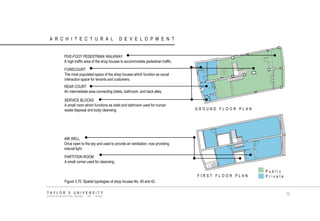
Figure 3.70 Spatial typologies of shop houses No. 40 and 42. 
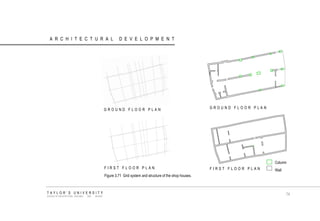
Figure 3.71 Grid system and structure of the shop houses. 
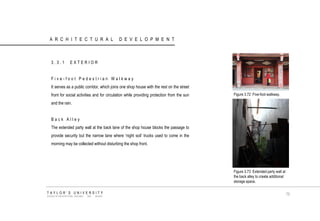
Figure 3.72 Five-foot walkway. 
Figure 3.73 Extended party wall at the back alley to create additional storage space. 
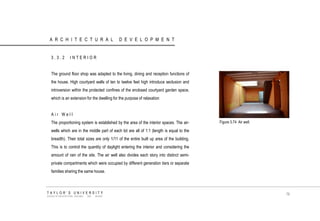
Figure 3.74 Air well. 
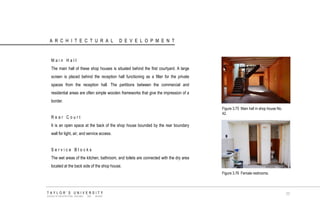
Figure 3.75 Main hall in shop house No. 42. 
Figure 3.76 Female restrooms. 
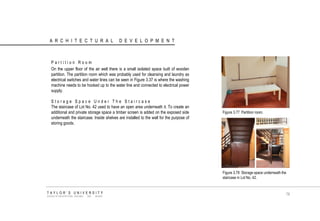
Figure 3.77 Partition room. 
Figure 3.78 Storage space underneath the staircase in Lot No. 42. 
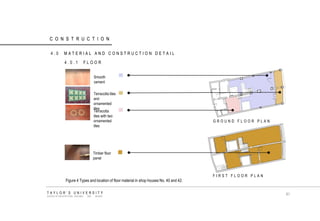
Figure 4 Types and location of floor material in shop houses No. 40 and 42. 
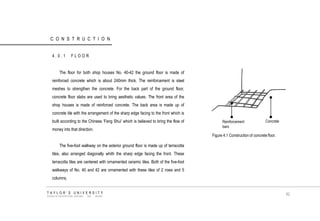
Figure 4.1 Construction of concrete floor. 
Figure 4.2 Construction of timber flooring on the first floor. 
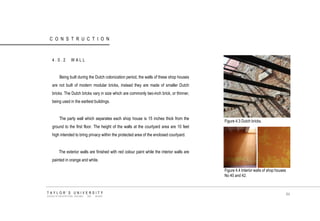
Figure 4.3 Dutch bricks. 
Figure 4.4 Interior walls of shop houses No 40 and 42. 
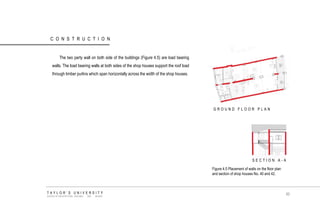
Figure 4.5 Placement of walls on the floor plan and section of shop houses No. 40 and 42. 
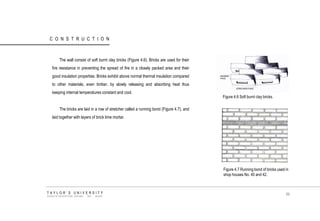
Figure 4.6 Soft burnt clay bricks. 
Figure 4.7 Running bond of bricks used in shop houses No. 40 and 42. 
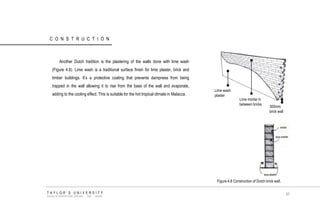
Figure 4.8 Construction of Dutch brick wall. 
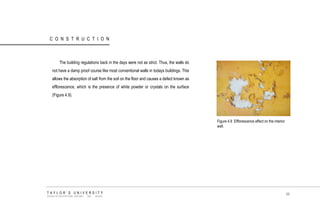
Figure 4.9 Efflorescence effect on the interior wall.
LIST OF FIGURES 
TAYLOR‟S UNIVERSITY 
SCHOOL OF ARCHITECTURE, BUILDING AND DESIGN 
xi 
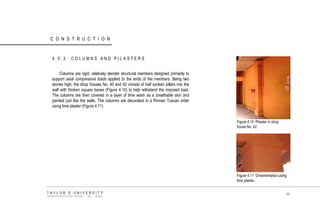
Figure 4.10 Pilaster in shop house No. 42. 
Figure 4.11 Ornamentation using lime plaster. 
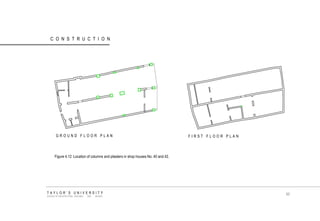
Figure 4.12 Location of columns and pilasters in shop houses No. 40 and 42. 
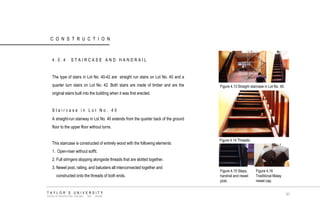
Figure 4.13 Straight staircase in Lot No. 40. 
Figure 4.14 Threads. 
Figure 4.15 Steps, handrail and newel post. 
Figure 4.16 Traditional Malay newel cap. 
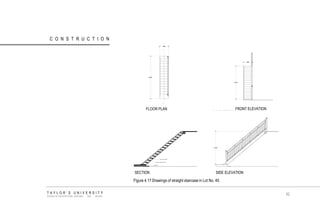
Figure 4.17 Drawings of straight staircase in Lot No. 40. 
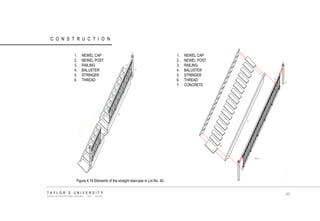
Figure 4.18 Elements of the straight staircase in Lot No. 40. 
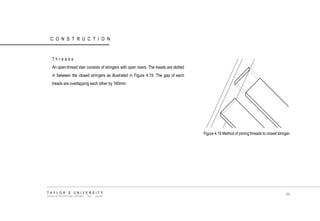
Figure 4.19 Method of joining threads to closed stringer. 
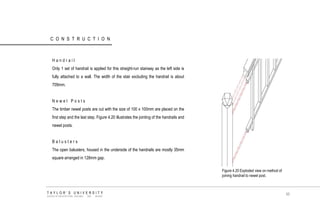
Figure 4.20 Exploded view on method of joining handrail to newel post. 
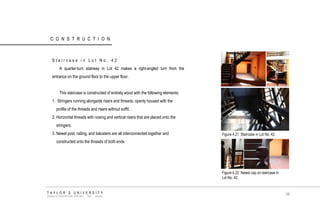
Figure 4.21 Staircase in Lot No. 42. 
Figure 4.22 Newel cap on staircase in Lot No. 42. 
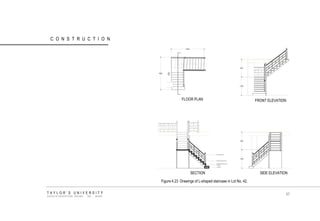
Figure 4.23 Drawings of L-shaped staircase in Lot No. 42. 
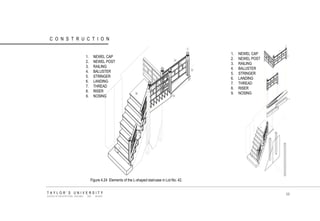
Figure 4.24 Elements of the L-shaped staircase in Lot No. 42. 
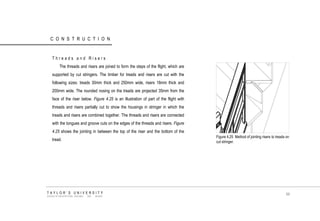
Figure 4.25 Method of jointing risers to treads on cut stringer. 
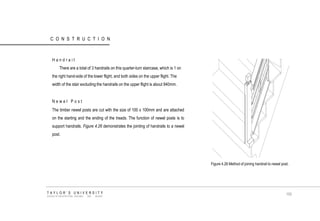
Figure 4.26 Method of joining handrail to newel post. 
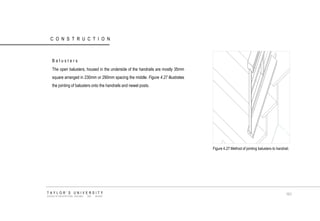
Figure 4.27 Method of jointing balusters to handrail. 
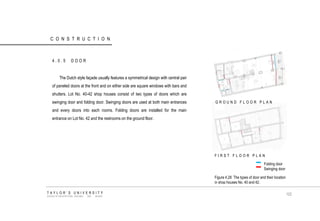
Figure 4.28 The types of door and their location in shop houses No. 40 and 42. 
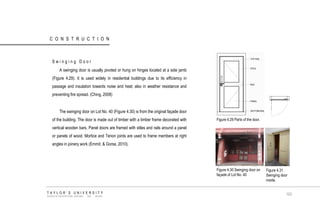
Figure 4.29 Parts of the door. 
Figure 4.30 Swinging door on façade of Lot No. 40 
Figure 4.31 Swinging door inside.
LIST OF FIGURES 
TAYLOR‟S UNIVERSITY 
SCHOOL OF ARCHITECTURE, BUILDING AND DESIGN 
xii 
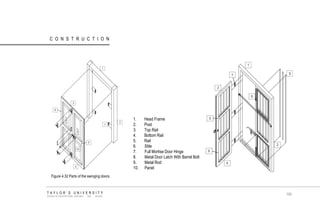
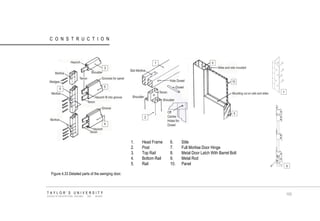
Figure 4.32 Parts of the swinging doors. 
Figure 4.33 Detailed parts of the swinging door. 
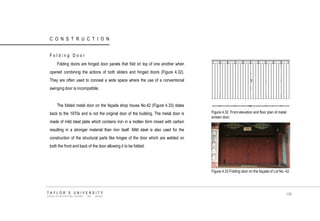
Figure 4.34 Front elevation and floor plan of metal screen door. 
Figure 4.35 Folding door on the façade of Lot No. 42. 
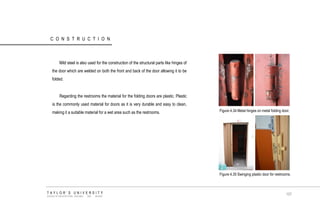
Figure 4.36 Metal hinges on metal folding door. 
Figure 4.37 Swinging plastic door for restrooms. 
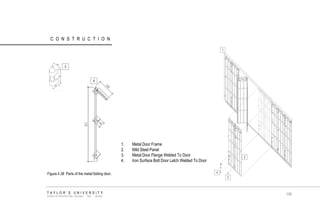
Figure 4.38 Parts of the metal folding door. 
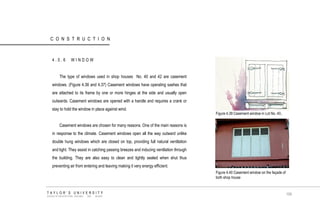
Figure 4.39 Casement window in Lot No. 40.. 
Figure 4.40 Casement window on the façade of both shop house 
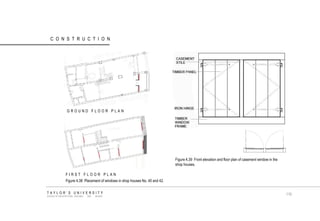
Figure 4.41 Placement of windows in shop houses No. 40 and 42. 
Figure 4.42 Front elevation and floor plan of casement window in the shop houses. 
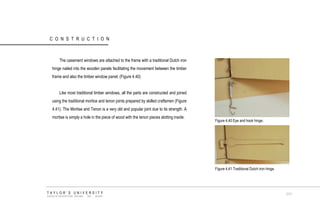
Figure 4.43 Eye and hook hinge. 
Figure 4.44 Traditional Dutch iron hinge. 
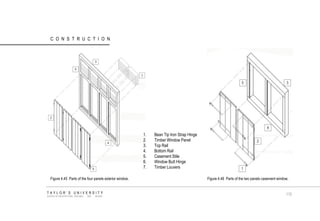
Figure 4.45 Parts of the four panels exterior window. 
Figure 4.46 Parts of the two panels casement window. 
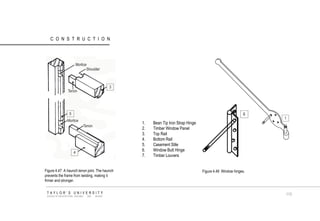
Figure 4.47 A haunch tenon joint. The haunch prevents the frame from twisting, making it firmer and stronger. 
Figure 4.48 Window hinges. 
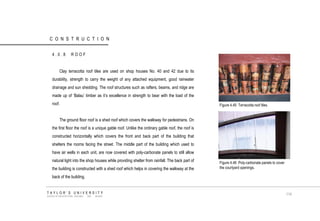
Figure 4.51 Terracotta roof tiles. 
Figure 4.52 Poly-carbonate panels to cover the courtyard openings. 
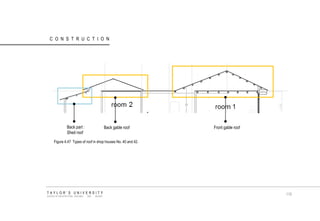
Figure 4.53 Types of roof in shop houses No. 40 and 42. 
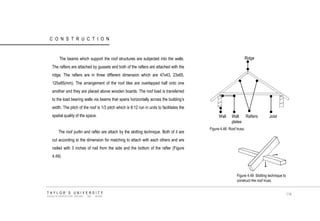
Figure 4.54 Roof truss. 
Figure 4.55 Slotting technique to construct the roof truss.
LIST OF FIGURES 
TAYLOR‟S UNIVERSITY 
SCHOOL OF ARCHITECTURE, BUILDING AND DESIGN 
xiii 
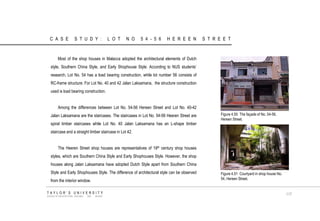
Figure 5 The façade of No. 54-56, Hereen Street. 
Figure 5.1 Courtyard in shop house No. 54, Hereen Street. 
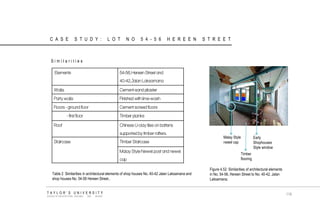
Figure 5.2 Similarities of architectural elements in No. 54-56, Hereen Street to No. 40-42, Jalan Laksamana. 
Figure A Mr. Kuah, the contractor of shop houses No. 40-42 Jalan Laksamana. 
Figure B Mr. Wong, the owner of the watch shop at the opposite shop house from Lot No. 40-42.
LIST OF TABLES 
TAYLOR‟S UNIVERSITY 
SCHOOL OF ARCHITECTURE, BUILDING AND DESIGN 
xiv 
Table 1 Sultanates of Malacca. 
Table 2 Similarities in architectural elements of shop houses No. 40-42 Jalan Laksamana and shop houses No. 54-56 Hereen Street..
INTRODUCTION 
1.0 OBJECTIVES AND AIM 
The objectives of thid study are to obtain the precise measurement of Lot No. 40-42 Jalan Laksamana, including the detailed building analysis, documented history and culture, and to produce a scale drawing according to the existing heritage building on site, as well as producing a smaller scale model of Lot No. 40-42 Jalan Laksamana. The outcome of this study is to be a source of information for Lot No. 40-42 Jalan Laksamana for conservation purposes. 
1.1 SCOPE 
The study focuses on Jalan Laksamana situated in Malacca Town, which has been listed by UNESCO as a heritage city in the year 1989.The chosen building is Lot No. 40-42 along Jalan Laksamana which possesses certain uniqueness in terms of its purpose, history and aesthetic value. This study will also document the history of the commercial purposes and local businesses served in this building. Particular case studies on buildings in Malacca which are related to Lot No. 40-42 Jalan Laksamana will be discussed to complete the information in order to document this building. 
TAYLOR‟S UNIVERSITY 
SCHOOL OF ARCHITECTURE, BUILDING AND DESIGN 
1
INTRODUCTION 
1.2 LIMITATION 
Lot No. 40-42 is situated along Jalan Laksamana which is the main road into Malacca town. Being the only road into town, Jalan Laksamana is extremely busy. Furthermore, it is a very narrow road which results in a large inconvenience if there were to be any disturbances along the road. For these reasons a crane could not be rented and the higher parts on the exterior of the building such as the roof could not be measured. 
Lot No. 40-42 Jalan Laksamana has been vacant for a few years which made it difficult to obtain a definite visual of how the spaces inside were used as an operating unit. The majority of the data collected is from interviewing the owner and the contractor of the building apart from the locals and neighboring shop houses‟ owners. From these sources, useful but not thorough information on the building‟s architectural style, history, function, and ownership were acquired. There was a limitation of reliable and specific recording of the shop houses‟ chronology leading to present time. Apart from that, some of the locals interviewed refused to provide their personal information and did not want to be photographed. 
TAYLOR‟S UNIVERSITY 
SCHOOL OF ARCHITECTURE, BUILDING AND DESIGN 
2
INTRODUCTION 
1.3 METHODOLOGY 
To complete the research on documenting Lot No. 40-42 Jalan Laksamana a number of methods were used to collect the data and information. A total of 18 students were managed by a leader and then divided into three groups; floor plans group, elevations group and sections group. Each group had its own sub-leader to give guidance on the measuring tasks. 
Measuring Methods 
There are a variety of techniques to obtain the precise measurements of this building. In this project, the applied method was using measuring tape and digital laser measuring devices. These equipment's were mainly used to measure the floor area, walls, columns and areas within accessible height. Meanwhile for the ceiling and roof the digital laser measuring device was used, with the help of scaffolding. As for the walls which were not 90 degrees at each corner, a set square was used to measure the angle between joining walls. The floor plans were sketched out on site while measuring to document the measurements. From there the grid lines were then established for the elevation drawings and section cuts. All measurements are taken at three points; the two edges and the midpoint. The measuring process was repeated twice to minimize errors. 
TAYLOR‟S UNIVERSITY 
SCHOOL OF ARCHITECTURE, BUILDING AND DESIGN 
3
INTRODUCTION 
Lot No. 40-42 Jalan Laksamana does not consist of many ornaments. However, there are some details on the columns, staircase‟s handrails and kaki lima floor tiles. To measure these parts; each are photographed and transferred into AutoCAD as a guide to produce the precise shape. To document the history, culture and architectural aspect of Lot No. 40-42 Jalan Laksamana most of the information was gathered through conducting interviews with the owner, contractor, the neighboring business owners, and the locals. The museums in Malacca were also visited to obtain more information, apart from books and journals from the internet. 
Production of Drawings 
The measurements recorded were directly drafted onto AutoCAD on site to ensure that all parts were measured and they corresponded to one another. During the discussion sessions at night, drawings were discussed and further drafted. Drawings are then given final touches for the final submission. 
Research Procedures 
To document the history, culture, and architectural aspect of Lot No. 40-42 Jalan Laksamana most of the information obtained was through conducting interviews with the owner, contractor, the neighboring business owners and the locals. The museums in Malacca were also visited in order to gather additional information, apart from books and journals from the internet. 
TAYLOR‟S UNIVERSITY 
SCHOOL OF ARCHITECTURE, BUILDING AND DESIGN 
4
INTRODUCTION 
1.4 LITERATURE REVIEW 
Malacca is listed and protected under UNESCO as a heritage city and its historical features are conserved for the future. Jalan Laksamana, formerly known as Riverside, is one of the most prominent streets in Malacca. Lot No. 40-42 and has held commercial purpose since the day it was built until present day. It has been the address of a number of local businesses, for over a century. 
The literature review emphasizes the importance of knowledge on history and theory. In addition, it comprises the highlighted writings of the prominent figure in the architecture history and studies of Malacca. The key figure of this study is the ownership of this building and its development. In addition, the study of the spaces in this building, the culture aspects, and the site context are selected for the writings. 
Books, articles, journals and other physical publications provide information on the historical background of Malaya, Malacca, Jalan Laksamana and Lot No. 40-42. They also provide information on the architecture style during the time. 
General reading materials were borrowed from libraries, while some original documents were provided by the building owner, Mr. Arthur Chan. 
TAYLOR‟S UNIVERSITY 
SCHOOL OF ARCHITECTURE, BUILDING AND DESIGN 
5
INTRODUCTION 
1.5 SIGNIFICANCE OF STUDY 
The purpose of this project is to unfold the history of the heritage city of Malacca and its shop houses along Jalan Laksamana while simultaneously relating its architectural style to the social, political , economical and other influences at the time. 
Measuring, sketching, drawing, documenting and photographing on site enhanced the students‟ appreciation towards the buildings valuable architectural heritage and cultural reminder to the nation‟s past. 
Studying the purpose of the building provides the students a different perspective on Western colonization in Malacca. These Western powers opened doors and developed our society into entrepreneurs. 
After accomplishing this study, students are expected to generate an awareness to appreciate the learning of architectural history and theory. There is a need to conserve Lot No. 40-42 Jalan Laksamana as there is a significant history and value in which it has contributed to society for over a century. It will be a great loss if this historical building is not preserved for the future. Furthermore, the outcome of this study will be put to practice for our future as students pursuing a career in architecture. 
TAYLOR‟S UNIVERSITY 
SCHOOL OF ARCHITECTURE, BUILDING AND DESIGN 
6
INTRODUCTION 
1.6 EQUIPMENTS 
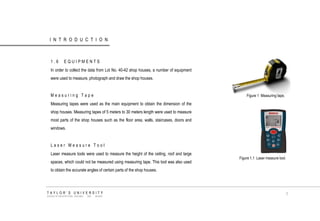
In order to collect the data from Lot No. 40-42 shop houses, a number of equipment were used to measure, photograph and draw the shop houses. 
Measuring Tape 
Measuring tapes were used as the main equipment to obtain the dimension of the shop houses. Measuring tapes of 5 meters to 30 meters length were used to measure most parts of the shop houses such as the floor area, walls, staircases, doors and windows. 
Laser Measure Tool 
Laser measure tools were used to measure the height of the ceiling, roof and large spaces, which could not be measured using measuring tape. This tool was also used to obtain the accurate angles of certain parts of the shop houses. 
Figure 1 Measuring tape. 
Figure 1.1 Laser measure tool. 
TAYLOR‟S UNIVERSITY 
SCHOOL OF ARCHITECTURE, BUILDING AND DESIGN 
7
INTRODUCTION 
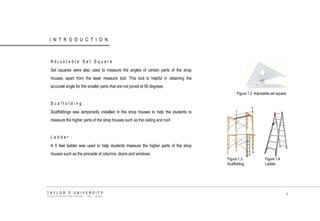
Adjustable Set Square 
Set squares were also used to measure the angles of certain parts of the shop houses, apart from the laser measure tool. This tool is helpful in obtaining the accurate angle for the smaller parts that are not joined at 90 degrees. 
Scaffolding 
Scaffoldings was temporarily installed in the shop houses to help the students to measure the higher parts of the shop houses such as the ceiling and roof. 
Ladder 
A 5 feet ladder was used to help students measure the higher parts of the shop houses such as the pinnacle of columns, doors and windows. 
Figure 1.2 Adjustable set square. 
TAYLOR‟S UNIVERSITY 
SCHOOL OF ARCHITECTURE, BUILDING AND DESIGN 
Figure 1.3 Scaffolding. 
Figure 1.4 Ladder. 
8
INTRODUCTION 
Digital Single Lens Reflex (DSLR ) Camera 
DSLR cameras were used to capture clear and detailed photographs of the shop houses for recording, documentation and photo book purposes. They were also used to record ornamentations, in which they were photographed and traced back into AutoCAD. 
Butter Paper 
Butter papers was used as the initial medium to draw the layout of the shop houses in order to record the measurements before they were transferred into AutoCAD. 
Laptops 
Laptops were brought to site and used to produce AutoCAD drawings directly after the measuring process was complete. 
TAYLOR‟S UNIVERSITY 
SCHOOL OF ARCHITECTURE, BUILDING AND DESIGN 
9
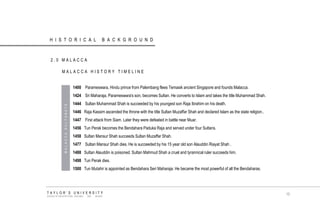
1400 Parameswara, Hindu prince from Palembang flees Temasik ancient Singapore and founds Malacca. 
1424 Sri Maharaja, Parameswara's son, becomes Sultan. He converts to Islam and takes the title Muhammad Shah. 
1444 Sultan Muhammad Shah is succeeded by his youngest son Raja Ibrahim on his death. 
1446 Raja Kassim ascended the throne with the title Sultan Muzaffar Shah and declared Islam as the state religion.. 
1447 First attack from Siam. Later they were defeated in battle near Muar. 
1456 Tun Perak becomes the Bendahara Paduka Raja and served under four Sultans. 
1458 Sultan Mansur Shah succeeds Sultan Muzaffar Shah. 
1477 Sultan Mansur Shah dies. He is succeeded by his 15 year old son Alauddin Riayat Shah . 
1488 Sultan Alauddin is poisoned. Sultan Mahmud Shah a cruel and tyrannical ruler succeeds him. 
1498 Tun Perak dies. 
1500 Tun Mutahir is appointed as Bendahara Seri Maharaja. He became the most powerful of all the Bendaharas. 
HISTORICAL BACKGROUND 
2.0 MALACCA 
MALACCA HISTORY TIMELINE 
MALACCA SULTANATE 
TAYLOR‟S UNIVERSITY 
SCHOOL OF ARCHITECTURE, BUILDING AND DESIGN 
10
HISTORICAL BACKGROUND PORTUGUESE COLONIZATION 
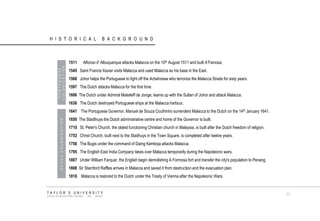
1511 Alfonso d' Albuquerque attacks Malacca on the 10th August 1511 and built A‟Famosa. 
1545 Saint Francis Xavier visits Malacca and used Malacca as his base in the East. 
1568 Johor helps the Portuguese to fight off the Achehnese who terrorize the Malacca Straits for sixty years. 
1597 The Dutch attacks Malacca for the first time. 
1606 The Dutch under Admiral Matelieff de Jonge, teams up with the Sultan of Johor and attack Malacca. 
1636 The Dutch destroyed Portuguese ships at the Malacca harbour. 
1641 The Portuguese Governor, Manuel de Souza Couthinho surrenders Malacca to the Dutch on the 14th January 1641. 
1650 The Stadthuys the Dutch administrative centre and home of the Governor is built. 
1710 St. Peter's Church, the oldest functioning Christian church in Malaysia, is built after the Dutch freedom of religion. 
1753 Christ Church, built next to the Stadhuys in the Town Square, is completed after twelve years. 
1756 The Bugis under the command of Daing Kamboja attacks Malacca. 
1795 The English East India Company takes over Malacca temporarily during the Napoleonic wars. 
1807 Under William Farquar, the English begin demolishing A Formosa fort and transfer the city's population to Penang. 
1808 Sir Stamford Raffles arrives in Malacca and saved it from destruction and the evacuation plan. 
1818 Malacca is restored to the Dutch under the Treaty of Vienna after the Napoleonic Wars. 
DUTCH COLONIZATION 
TAYLOR‟S UNIVERSITY 
SCHOOL OF ARCHITECTURE, BUILDING AND DESIGN 
11
HISTORICAL BACKGROUND 
MALACCA HISTORY TIMELINE 
BRITISH COLONIZATION 
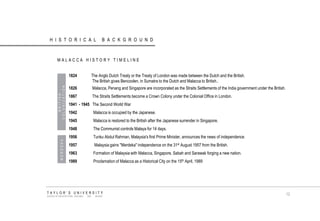
1824 The Anglo Dutch Treaty or the Treaty of London was made between the Dutch and the British. The British gives Bencoolen, in Sumatra to the Dutch and Malacca to British.. 1826 Malacca, Penang and Singapore are incorporated as the Straits Settlements of the India government under the British. 1867 The Straits Settlements become a Crown Colony under the Colonial Office in London. 1941 - 1945 The Second World War 1942 Malacca is occupied by the Japanese. 1945 Malacca is restored to the British after the Japanese surrender in Singapore. 1948 The Communist controls Malaya for 14 days. 1956 Tunku Abdul Rahman, Malaysia's first Prime Minister, announces the news of independence. 1957 Malaysia gains "Merdeka" independence on the 31st August 1957 from the British. 1963 Formation of Malaysia with Malacca, Singapore, Sabah and Sarawak forging a new nation. 1989 Proclamation of Malacca as a Historical City on the 15th April, 1989 
MERDEKA 
TAYLOR‟S UNIVERSITY 
SCHOOL OF ARCHITECTURE, BUILDING AND DESIGN 
12
HISTORICAL BACKGROUND 
2.0.1 MALACCA SULTANATE 
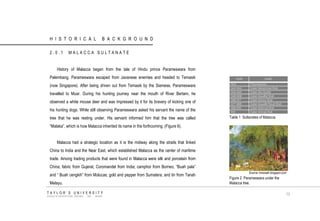
History of Malacca began from the tale of Hindu prince Parameswara from Palembang. Parameswara escaped from Javanese enemies and headed to Temasik (now Singapore). After being driven out from Temasik by the Siamese, Parameswara travelled to Muar. During his hunting journey near the mouth of River Bertam, he observed a white mouse deer and was impressed by it for its bravery of kicking one of his hunting dogs. While still observing Parameswara asked his servant the name of the tree that he was resting under. His servant informed him that the tree was called “Malaka”, which is how Malacca inherited its name in the forthcoming. (Figure 6). 
Malacca had a strategic location as it is the midway along the straits that linked China to India and the Near East, which established Malacca as the center of maritime trade. Among trading products that were found in Malacca were silk and porcelain from China; fabric from Gujerat, Coromandel from India; camphor from Borneo, “Buah pala” and “ Buah cengkih” from Molucas; gold and pepper from Sumatera; and tin from Tanah Melayu. 
YEAR 
NAME 
1400 
Parameswara 
1424-1444 
Sultan Muhammad Shah 
1444-1445 
Sultan Abu Syahid 
1446-1458 
Sultan Muzaffar Shah 
1458-1477 
Sultan Mansur Shah 
1477-1488 
Sultan Alauddin Riayat Shah 
1488-1510 
Sultan Mahmud Shah 
1510 
Sultan Ahmad Shah 
Source: limeisiah.blogspot.com 
Table 1 Sultanates of Malacca. 
Figure 2 Parameswara under the Malacca tree. 
TAYLOR‟S UNIVERSITY 
SCHOOL OF ARCHITECTURE, BUILDING AND DESIGN 
13
HISTORICAL BACKGROUND 
2.0.2 PORTUGUESE COLONIZATION 
The Portuguese arrived to Malacca due to its strategic location . At that time, Malacca had extended its influence through wide territory and its port was visited by a crowd of ships and merchants from all of the Asian nations. Some goods that were sold in Malacca at that time were spices, pepper, cloves, ginger, cinnamon and others. 
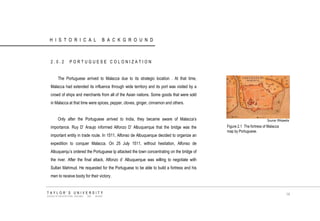
Only after the Portuguese arrived to India, they became aware of Malacca‟s importance. Ruy D‟ Araujo informed Alfonzo D‟ Albuquerque that the bridge was the important entity in trade route. In 1511, Alfonso de Albuquerque decided to organize an expedition to conquer Malacca. On 25 July 1511, without hesitation, Alfonso de Albuquerqu‟s ordered the Portuguese tp attacked the town concentrating on the bridge of the river. After the final attack, Alfonzo d‟ Albuquerque was willing to negotiate with Sultan Mahmud. He requested for the Portuguese to be able to build a fortress and his men to receive booty for their victory. 
Source: Wikipedia 
Figure 2.1 The fortress of Malacca map by Portuguese. 
TAYLOR‟S UNIVERSITY 
SCHOOL OF ARCHITECTURE, BUILDING AND DESIGN 
14
HISTORICAL BACKGROUND 
The Capture Of The City, 24 August 1511 
Sultan Mahmud and his son, Sultan Alauddin were driven out by some Javanese and they fled to Pahang. Finally Malacca was fully in Portuguese hands. After Portuguese‟s succession in conquering Malacca, Alfonzo Albuquerque ordered to build a fortress on the south side of the river. The fortress was well known as “A Famosa”, and was finished in November 1511. 
Sultanate of Malacca that were based in Johore, repeatedly attacked Malacca. Ultimately in 1538, a peace treaty was signed. 
Johor and the Dutch gathered together to fight against the Portuguese in 1607. The Dutch attacked the Portuguese several times however they were unsuccessful. In 1633, a blockade was set up, After 5 months of siege, the Portuguese ran out of gunpowder and food supplies. On 14 January 1641 the Dutch under the command of Willemsoon Kartekoe success pushed out the Portuguese. 
TAYLOR‟S UNIVERSITY 
SCHOOL OF ARCHITECTURE, BUILDING AND DESIGN 
15
HISTORICAL BACKGROUND 
Economical Effect 
Alfonzo de Albuquerque established a new administration, and a new currency 
Social Effect 
During the Portuguese colonization, a school was opened initiated by the catholic church. The Catholic religion was widely spread during the Portuguese colonization. 
Political Effect 
Malacca was set up as a Municipal Council of Malacca in 1552. 
Architectural Effect 
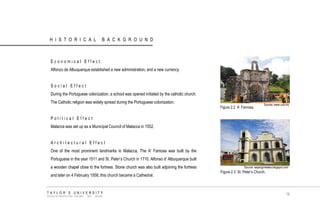
One of the most prominent landmarks in Malacca, The A‟ Famosa was built by the Portuguese in the year 1511 and St. Peter‟s Church in 1710. Alfonso d‟ Albuquerque built a wooden chapel close to the fortress. Stone church was also built adjoining the fortress and later on 4 February 1558, this church became a Cathedral. 
Source: www.cuti.my Source: sayangmelaka.blogspot.com 
Figure 2.2 A‟ Famosa. 
Figure 2.3 St. Peter‟s Church. 
TAYLOR‟S UNIVERSITY 
SCHOOL OF ARCHITECTURE, BUILDING AND DESIGN 
16
HISTORICAL BACKGROUND 
2.0.3 DUTCH COLONIZATION 
With the help of Sultan Johor, on 14 January 1641, Dutch success took fortress of Malacca from the Portuguese. The Malays helped the Dutch because they believed that the Dutch would help them get rid of the Portuguese. The Dutch‟s initial aim was to conquer Malacca. 
In 1660s there was a decline between the Dutch Malacca trade, which caused the relations with the Malay states to deteriorate. In 1670s the Dutch developed a factory at the mouth of Siak River in Sumatra and controlled tin trade. 
As the trading in Malacca was developing greatly, the British appeared. The Anglo- Dutch treaty was signed between British and Dutch in 1824. The treaty was their agreement that British give Bencoolen on Sumatra to the Dutch and Malacca be given to the British by the Dutch. 
Source: kotasejarah.blogspot.com 
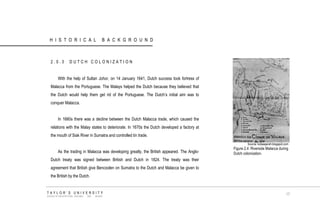
Figure 2.4 Riverside Malacca during Dutch colonization. 
TAYLOR‟S UNIVERSITY 
SCHOOL OF ARCHITECTURE, BUILDING AND DESIGN 
17
HISTORICAL BACKGROUND 
2.0.3 DUTCH COLONIZATION 
Economical Effect 
The trading through Malacca during the Dutch colonization was controlled by VOC. 
Social Effect 
The Dutch spread the Christian religion in Malacca. 
Architectural Effect 
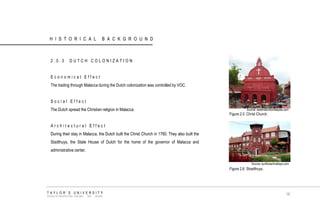
During their stay in Malacca, the Dutch built the Christ Church in 1760. They also built the Stadthuys, the State House of Dutch for the home of the governor of Malacca and administrative center. 
Source: destinationtomalaysia.com 
Source: sunflowerholidays.com 
Figure 2.5 Christ Church. 
Figure 2.6 Stradthuys. 
TAYLOR‟S UNIVERSITY 
SCHOOL OF ARCHITECTURE, BUILDING AND DESIGN 
18
HISTORICAL BACKGROUND 
2.0.4 BRITISH COLONIZATION 
Multi-racial Society 
The British had brought in immigrants from China and India to work at estates within the tin ore mines. The entry of immigrants resulted in a rapid increase in population. As an effect, social division occurred as intended by the British. 
Change Of Political System 
With the implementation of Resident System and Advisory System, all powers were passed over to residents, leaving the kings with power Islam and Malay customs only. 
Development Of Infrastructures 
British constructed roads and railways, and land administration were introduced. They also altered the justice system (through a proper court system) and introduced a formal educational system 
TAYLOR‟S UNIVERSITY 
SCHOOL OF ARCHITECTURE, BUILDING AND DESIGN 
19
HISTORICAL BACKGROUND 
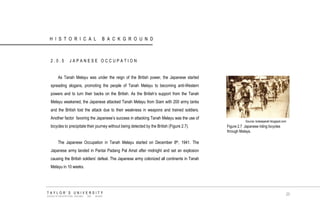
2.0.5 JAPANESE OCCUPATION As Tanah Melayu was under the reign of the British power, the Japanese started spreading slogans, promoting the people of Tanah Melayu to becoming anti-Western powers and to turn their backs on the British. As the British‟s support from the Tanah Melayu weakened, the Japanese attacked Tanah Melayu from Siam with 200 army tanks and the British lost the attack due to their weakness in weapons and trained soldiers. Another factor favoring the Japanese‟s success in attacking Tanah Melayu was the use of bicycles to precipitate their journey without being detected by the British (Figure 2.7). The Japanese Occupation in Tanah Melayu started on December 8th, 1941. The Japanese army landed in Pantai Padang Pal Amat after midnight and set an explosion causing the British soldiers‟ defeat. The Japanese army colonized all continents in Tanah Melayu in 10 weeks. 
Source: kotasejarah.blogspot.com 
Figure 2.7 Japanese riding bicycles through Malaya. 
TAYLOR‟S UNIVERSITY 
SCHOOL OF ARCHITECTURE, BUILDING AND DESIGN 
20
HISTORICAL BACKGROUND 
Political Effect 
The Japanese ruled Tanah Melayu as a military base country. The Sultanates are no longer in power in the ruling of Tanah Melayu, they are only the leader of Islam and the Malay culture. 
Economical Effect 
The economy of Tanah Melayu is exploited for industrial and war funding purposes. The Japanese fixed a food ratio or portion in order to solve the need for common needs. 
Social Effect 
During the ruling of the Japanese in Tanah Melayu, they forced the Japanese culture and way of life into the Malay culture. The English and Chinese schools were closed, the national anthem of Japan, Kimigaya was sung in schools and the Japanese language Nippon-go was used as the main language in schools. 
TAYLOR‟S UNIVERSITY 
SCHOOL OF ARCHITECTURE, BUILDING AND DESIGN 
21
HISTORICAL BACKGROUND 
2.0.6 INDEPENDENCE 
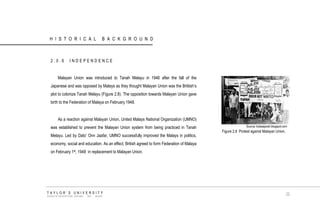
Malayan Union was introduced to Tanah Melayu in 1946 after the fall of the Japanese and was opposed by Malays as they thought Malayan Union was the Brtitish‟s plot to colonize Tanah Melayu (Figure 2.8). The opposition towards Malayan Union gave birth to the Federation of Malaya on February 1948. 
As a reaction against Malayan Union, United Malays National Organization (UMNO) was established to prevent the Malayan Union system from being practiced in Tanah Melayu. Led by Dato‟ Onn Jaafar, UMNO successfully improved the Malays in politics, economy, social and education. As an effect, British agreed to form Federation of Malaya on February 1st, 1948 in replacement to Malayan Union. 
Figure 2.8 Protest against Malayan Union. 
Source: kotasejarah.blogspot.com 
TAYLOR‟S UNIVERSITY 
SCHOOL OF ARCHITECTURE, BUILDING AND DESIGN 
22
HISTORICAL BACKGROUND 
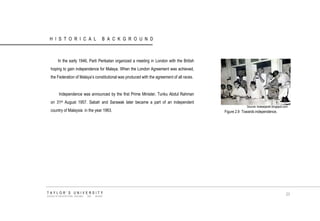
In the early 1946, Parti Perikatan organized a meeting in London with the British hoping to gain independence for Malaya. When the London Agreement was achieved, the Federation of Malaya‟s constitutional was produced with the agreement of all races. Independence was announced by the first Prime Minister, Tunku Abdul Rahman on 31st August 1957. Sabah and Sarawak later became a part of an independent country of Malaysia in the year 1963. 
Source: kotasejarah.blogspot.com 
Figure 2.9 Towards independence. 
TAYLOR‟S UNIVERSITY 
SCHOOL OF ARCHITECTURE, BUILDING AND DESIGN 
23
HISTORICAL BACKGROUND 
2.0.7 MALACCA WORLD HERITAGE CITY 
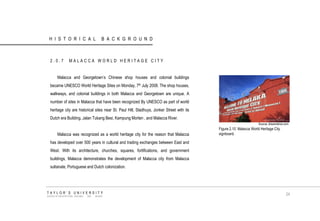
Malacca and Georgetown‟s Chinese shop houses and colonial buildings became UNESCO World Heritage Sites on Monday, 7th July 2008. The shop houses, walkways, and colonial buildings in both Malacca and Georgetown are unique. A number of sites in Malacca that have been recognized By UNESCO as part of world heritage city are historical sites near St. Paul Hill, Stadhuys, Jonker Street with its Dutch era Building, Jalan Tukang Besi, Kampung Morten , and Malacca River. 
Malacca was recognized as a world heritage city for the reason that Malacca has developed over 500 years in cultural and trading exchanges between East and West. With its architecture, churches, squares, fortifications, and government buildings, Malacca demonstrates the development of Malacca city from Malacca sultanate, Portuguese and Dutch colonization. 
Source: dreamstime.com 
Figure 2.10 Malacca World Heritage City signboard. 
TAYLOR‟S UNIVERSITY 
SCHOOL OF ARCHITECTURE, BUILDING AND DESIGN 
24
HISTORICAL BACKGROUND 
2.1 JALAN LAKSAMANA (RIVERSIDE) 
“Riverside, in particular, ,exemplified the area‟s civic and commercial character.” 
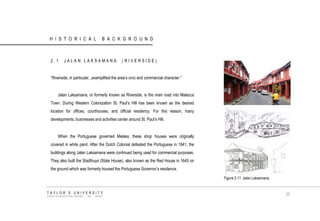
Jalan Laksamana, or formerly known as Riverside, is the main road into Malacca Town. During Western Colonization St. Paul‟s Hill has been known as the desired location for offices, courthouses, and official residency. For this reason, many developments, businesses and activities center around St. Paul‟s Hill. 
When the Portuguese governed Melaka, these shop houses were originally covered in white paint. After the Dutch Colonial defeated the Portuguese in 1641, the buildings along Jalan Laksamana were continued being used for commercial purposes. They also built the Stadthuys (State House), also known as the Red House in 1645 on the ground which was formerly housed the Portuguese Governor‟s residence. 
TAYLOR‟S UNIVERSITY 
SCHOOL OF ARCHITECTURE, BUILDING AND DESIGN 
25 
Figure 2.11 Jalan Laksamana.
HISTORICAL BACKGROUND 
When the British took over Malacca, they preserved existing Dutch structures and put them into use to avoid investing in new public buildings. In the year 1911 the buildings were re-painted in terra cotta to symbolize the buildings as a historical row. By the end of 19th century, Jalan Laksamana was transformed into Malacca‟s High Street, the premier shopping area. The shop lots and businesses catered to the locals and the Western clients as dispensaries, pharmacies and everyday goods. Riverside was also the address of Malacca‟s major merchants and traders such as Tan Hoon Chiang & Brothers at No.27 and Tan Soo Hock & Co. at No. 86. By the early 20th century, it consisted of shop lots offering an outstanding variety of goods from all over the world. 
Today, although the buildings along Jalan Laksamana still stand strong as part of a heritage city, they are no longer the center of commercial purposes. Sure some businesses in these shop lots are still operating, but as the other parts of Malacca develop, Jalan Laksamana which was once an eventful street it is now just a road that has to be taken to get into the town. 
TAYLOR‟S UNIVERSITY 
SCHOOL OF ARCHITECTURE, BUILDING AND DESIGN 
26
HISTORICAL BACKGROUND 
2.2 NO. 40-42 JALAN LAKSAMANA 
2.2.1 HISTORY AND OWNERSHIP 
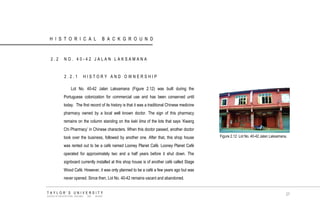
Lot No. 40-42 Jalan Laksamana (Figure 2.12) was built during the Portuguese colonization for commercial use and has been conserved until today. The first record of its history is that it was a traditional Chinese medicine pharmacy owned by a local well known doctor. The sign of this pharmacy remains on the column standing on the kaki lima of the lots that says „Kwang Chi Pharmacy‟ in Chinese characters. When this doctor passed, another doctor took over the business, followed by another one. After that, this shop house was rented out to be a café named Looney Planet Café. Looney Planet Café operated for approximately two and a half years before it shut down. The signboard currently installed at this shop house is of another café called Stage Wood Café. However, it was only planned to be a café a few years ago but was never opened. Since then, Lot No. 40-42 remains vacant and abandoned. 
Figure 2.12 Lot No. 40-42 Jalan Laksamana. TAYLOR‟S UNIVERSITY SCHOOL OF ARCHITECTURE, BUILDING AND DESIGN 
27
HISTORICAL BACKGROUND 
These lots are privately owned and has been passed down from generation to generation and he current owner of these lots is Mr. Arthur Chan, a Portuguese mix Chinese man who inherited them from his great grandfather. 
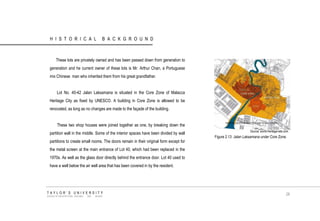
Lot No. 40-42 Jalan Laksamana is situated in the Core Zone of Malacca Heritage City as fixed by UNESCO. A building in Core Zone is allowed to be renovated, as long as no changes are made to the façade of the building. 
These two shop houses were joined together as one, by breaking down the partition wall in the middle. Some of the interior spaces have been divided by wall partitions to create small rooms. The doors remain in their original form except for the metal screen at the main entrance of Lot 40, which had been replaced in the 1970s. As well as the glass door directly behind the entrance door. Lot 40 used to have a well below the air well area that has been covered in by the resident. 
Source: world-heritage-site.com 
Figure 2.13 Jalan Laksamana under Core Zone. 
TAYLOR‟S UNIVERSITY 
SCHOOL OF ARCHITECTURE, BUILDING AND DESIGN 
28
ARCHITECTURAL DEVELOPMENT 
3.0 SITE CONTEXT 
Jalan Laksamana is a street of shop houses which was constructed beside the Malacca River in the 1900s. The shop houses along this road used to be the central of goods from all over the world, as a result of trading among the Malacca River. Jalan Laksamana is the main and only road into Malacca town and it is one of the most prominent streets in Malacca. 
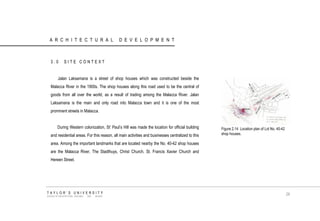
During Western colonization, St‟ Paul‟s Hill was made the location for official building and residential areas. For this reason, all main activities and businesses centralized to this area. Among the important landmarks that are located nearby the No. 40-42 shop houses are the Malacca River, The Stadthuys, Christ Church, St. Francis Xavier Church and Hereen Street. 
TAYLOR‟S UNIVERSITY 
SCHOOL OF ARCHITECTURE, BUILDING AND DESIGN 
29 
Figure 2.14 Location plan of Lot No. 40-42 shop houses.
ARCHITECTURAL DEVELOPMENT 
Now the street performs it functions as one of the core tourism area in Malacca, Lot No. 40, 42 Laksamana shophouses occupies the third and fourth lot of the northeast row of the Jalan Laksamana. Among the few businesses that still operate in the neighboring shop houses are the Dutch Harbor café, Icily ice cream shop, a Nyonya kebaya boutique, a souvenir shop and a watch shop. 
TAYLOR‟S UNIVERSITY 
SCHOOL OF ARCHITECTURE, BUILDING AND DESIGN 
30
ARCHITECTURAL DEVELOPMENT 
3.1 ARCHITECTURAL INFLUENCES 
Located in the Core Zone of Malacca town, No. 40-42 Jalan Laksamana are two of the 600 shop houses in Malacca that possesses different architectural styles and influences. These architectural styles are the results of foreign colonization, culture and beliefs of the people in Malacca. An architectural style can be determined by observing a shop house‟s façade design. 
The architectural styles of the shop houses in Malacca are categorized into nine different styles, according to their façade design and architectural features. These architectural styles are Dutch Style (17th – 18th century), Southern China Style (18th – early 19th century), Early Shophouse Style (1800s – 1850s), Early Transitional Style (1840s – 1900s), Early Straits Eclectic Style (1890s – 1920s), Late Straits Eclectic Style (1920s – 1940s), Neo- Classical Style (19th – early 20th century), Art-Deco Style (1930s – 1950s), Early Modern Style (Post War). 
No. 40-42 Jalan Laksamana shop houses‟ façade design can be categorized into three architectural styles in Malacca which are the Dutch Style, Southern China Style and Early Shophouses Style. 
TAYLOR‟S UNIVERSITY 
SCHOOL OF ARCHITECTURE, BUILDING AND DESIGN 
31
ARCHITECTURAL DEVELOPMENT 
3.1.1 DUTCH STYLE (17th – 18th century) 
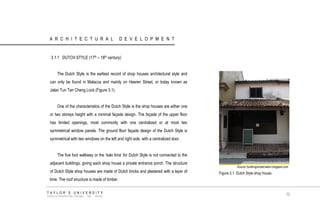
The Dutch Style is the earliest record of shop houses architectural style and can only be found in Malacca and mainly on Heeren Street, or today known as Jalan Tun Tan Cheng Lock (Figure 3.1). 
One of the characteristics of the Dutch Style is the shop houses are either one or two storeys height with a minimal façade design. The façade of the upper floor has limited openings, most commonly with one centralized or at most two symmetrical window panels. The ground floor façade design of the Dutch Style is symmetrical with two windows on the left and right side, with a centralized door. 
The five foot walkway or the „kaki lima‟ for Dutch Style is not connected to the adjacent buildings, giving each shop house a private entrance porch. The structure of Dutch Style shop houses are made of Dutch bricks and plastered with a layer of lime. The roof structure is made of timber. 
Source: buildingconservation.blogspot.com 
Figure 3.1 Dutch Style shop house. 
TAYLOR‟S UNIVERSITY 
SCHOOL OF ARCHITECTURE, BUILDING AND DESIGN 
32
ARCHITECTURAL DEVELOPMENT 
The Elements of Dutch Style on No. 40-42 Jalan Laksamana 
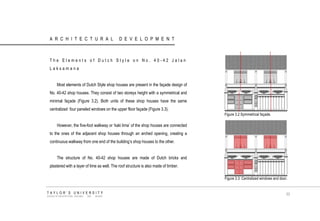
Most elements of Dutch Style shop houses are present in the façade design of No. 40-42 shop houses. They consist of two storeys height with a symmetrical and minimal façade (Figure 3.2). Both units of these shop houses have the same centralized four paneled windows on the upper floor façade (Figure 3.3). 
However, the five-foot walkway or „kaki lima‟ of the shop houses are connected to the ones of the adjacent shop houses through an arched opening, creating a continuous walkway from one end of the building‟s shop houses to the other. 
The structure of No. 40-42 shop houses are made of Dutch bricks and plastered with a layer of lime as well. The roof structure is also made of timber. 
Figure 3.2 Symmetrical façade. 
Figure 3.3 Centralized windows and door. 
TAYLOR‟S UNIVERSITY 
SCHOOL OF ARCHITECTURE, BUILDING AND DESIGN 
33
ARCHITECTURAL DEVELOPMENT 
3.1.2 SOUTHERN CHINA STYLE (18th – 19th century) 
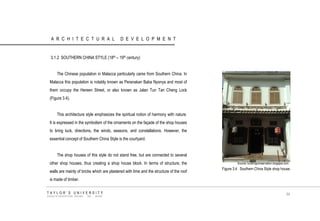
The Chinese population in Malacca particularly came from Southern China. In Malacca this population is notably known as Peranakan Baba Nyonya and most of them occupy the Hereen Street, or also known as Jalan Tun Tan Cheng Lock (Figure 3.4). 
This architecture style emphasizes the spiritual notion of harmony with nature. It is expressed in the symbolism of the ornaments on the façade of the shop houses to bring luck, directions, the winds, seasons, and constellations. However, the essential concept of Southern China Style is the courtyard. 
The shop houses of this style do not stand free, but are connected to several other shop houses, thus creating a shop house block. In terms of structure, the walls are mainly of bricks which are plastered with lime and the structure of the roof is made of timber. 
Source: buildingconservation.blogspot.com 
Figure 3.4 Southern China Style shop house. 
TAYLOR‟S UNIVERSITY 
SCHOOL OF ARCHITECTURE, BUILDING AND DESIGN 
34
ARCHITECTURAL DEVELOPMENT 
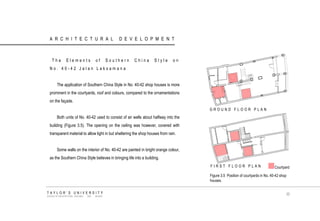
The Elements of Southern China Style on No. 40-42 Jalan Laksamana The application of Southern China Style in No. 40-42 shop houses is more prominent in the courtyards, roof and colours, compared to the ornamentations on the façade. Both units of No. 40-42 used to consist of air wells about halfway into the building (Figure 3.5). The opening on the ceiling was however, covered with transparent material to allow light in but sheltering the shop houses from rain. Some walls on the interior of No. 40-42 are painted in bright orange colour, as the Southern China Style believes in bringing life into a building. 
Courtyard 
GROUND FLOOR PLAN 
FIRST FLOOR PLAN 
Figure 3.5 Position of courtyards in No. 40-42 shop houses. 
TAYLOR‟S UNIVERSITY 
SCHOOL OF ARCHITECTURE, BUILDING AND DESIGN 
35
ARCHITECTURAL DEVELOPMENT 
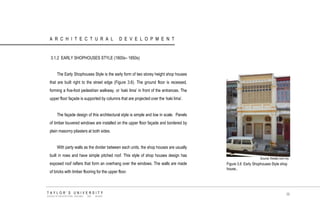
3.1.2 EARLY SHOPHOUSES STYLE (1800s– 1850s) The Early Shophouses Style is the early form of two storey height shop houses that are built right to the street edge (Figure 3.6). The ground floor is recessed, forming a five-foot pedestrian walkway, or „kaki lima‟ in front of the entrances. The upper floor façade is supported by columns that are projected over the „kaki lima‟. The façade design of this architectural style is simple and low in scale. Panels of timber louvered windows are installed on the upper floor façade and bordered by plain masonry pilasters at both sides. With party walls as the divider between each units, the shop houses are usually built in rows and have simple pitched roof. This style of shop houses design has exposed roof rafters that form an overhang over the windows. The walls are made of bricks with timber flooring for the upper floor. 
Source: thestar.com.my 
Figure 3.6 Early Shophouses Style shop house.. 
TAYLOR‟S UNIVERSITY 
SCHOOL OF ARCHITECTURE, BUILDING AND DESIGN 
36
ARCHITECTURAL DEVELOPMENT 
The Elements of Early Shophouses Style on No. 40-42 Jalan Laksamana 
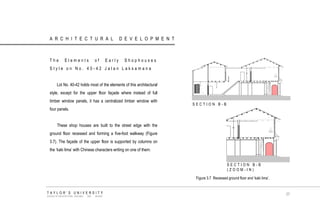
Lot No. 40-42 holds most of the elements of this architectural style, except for the upper floor façade where instead of full timber window panels, it has a centralized timber window with four panels. 
These shop houses are built to the street edge with the ground floor recessed and forming a five-foot walkway (Figure 3.7). The façade of the upper floor is supported by columns on the „kaki lima‟ with Chinese characters writing on one of them. 
SECTION B-B 
SECTION B-B (ZOOM-IN) 
Figure 3.7 Recessed ground floor and „kaki lima‟. 
TAYLOR‟S UNIVERSITY 
SCHOOL OF ARCHITECTURE, BUILDING AND DESIGN 
37
ARCHITECTURAL DEVELOPMENT 
3.2 DESIGN CONCEPT 
3.2.1 FORM 
The early masonry old shop houses built in the Dutch period were usually around 6-7 meters wide and 30 meters deep. The narrow frontage, particularly in Malacca, was due to the paying of tax according to the width of the façade facing the street during the Dutch period (Too, in Chen, ed. 1998). 
The plans of the old shop houses are basically divided into several segments that include the courtyard. The number of courtyards relates to the length of the old shop houses, whereby the longer it is the more number of courtyards available. The floor plan and section are built on a basic pattern and doesn‟t change much over time. The elevations show the architectural differences over different periods of time. 
TAYLOR‟S UNIVERSITY 
SCHOOL OF ARCHITECTURE, BUILDING AND DESIGN 
38
ARCHITECTURAL DEVELOPMENT 
Built side-by-side with common party walls and identical façade at the west bank of the Malacca River, is an inspiration from the early Chinese residents in Malaysia. 
The five-foot pedestrian walkway which is a unique feature of the Malacca town was added after 1880s when British colonial administrator Sir Thomas Stamford Raffles issued town planning regulation to address the hot tropical climate. 
Lot No. 40-42 shop houses are a combination of Dutch style (17th-18th century), Southern China Style (18-early 19th century), and Early Shophouses Style (1800-1850). It is designed following the Chinese proportion systems. The standard proportions applied are rectangular and represent the earth-round concept. 
TAYLOR‟S UNIVERSITY 
SCHOOL OF ARCHITECTURE, BUILDING AND DESIGN 
39
ARCHITECTURAL DEVELOPMENT 
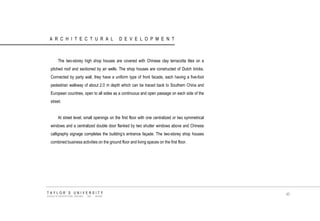
The two-storey high shop houses are covered with Chinese clay terracotta tiles on a pitched roof and sectioned by air wells. The shop houses are constructed of Dutch bricks. Connected by party wall, they have a uniform type of front facade, each having a five-foot pedestrian walkway of about 2.0 m depth which can be traced back to Southern China and European countries, open to all sides as a continuous and open passage on each side of the street. 
At street level, small openings on the first floor with one centralized or two symmetrical windows and a centralized double door flanked by two shutter windows above and Chinese calligraphy signage completes the building‟s entrance façade. The two-storey shop houses combined business activities on the ground floor and living spaces on the first floor. 
TAYLOR‟S UNIVERSITY 
SCHOOL OF ARCHITECTURE, BUILDING AND DESIGN 
40
ARCHITECTURAL DEVELOPMENT 
3.2.2 EXTERIOR 
Five-foot Walkway 
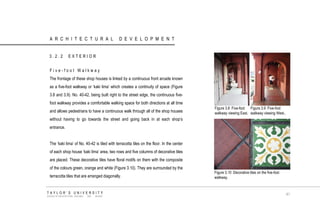
The frontage of these shop houses is linked by a continuous front arcade known as a five-foot walkway or „kaki lima‟ which creates a continuity of space (Figure 3.8 and 3.9). No. 40-42, being built right to the street edge, the continuous five- foot walkway provides a comfortable walking space for both directions at all time and allows pedestrians to have a continuous walk through all of the shop houses without having to go towards the street and going back in at each shop‟s entrance. 
The „kaki lima‟ of No. 40-42 is tiled with terracotta tiles on the floor. In the center of each shop house „kaki lima‟ area, two rows and five columns of decorative tiles are placed. These decorative tiles have floral motifs on them with the composite of the colours green, orange and white (Figure 3.10). They are surrounded by the terracotta tiles that are arranged diagonally. 
Figure 3.8 Five-foot walkway viewing East. 
Figure 3.9 Five-foot walkway viewing West.. 
Figure 3.10 Decorative tiles on the five-foot walkway. 
TAYLOR‟S UNIVERSITY 
SCHOOL OF ARCHITECTURE, BUILDING AND DESIGN 
41
ARCHITECTURAL DEVELOPMENT 
Front façade 
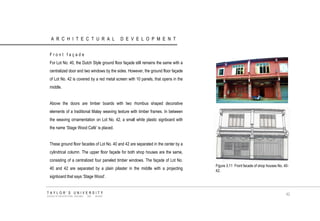
For Lot No. 40, the Dutch Style ground floor façade still remains the same with a centralized door and two windows by the sides. However, the ground floor façade of Lot No. 42 is covered by a red metal screen with 10 panels, that opens in the middle. 
Above the doors are timber boards with two rhombus shaped decorative elements of a traditional Malay weaving texture with timber frames. In between the weaving ornamentation on Lot No. 42, a small white plastic signboard with the name „Stage Wood Café‟ is placed. 
These ground floor facades of Lot No. 40 and 42 are separated in the center by a cylindrical column. The upper floor façade for both shop houses are the same, consisting of a centralized four paneled timber windows. The façade of Lot No. 40 and 42 are separated by a plain pilaster in the middle with a projecting signboard that says „Stage Wood‟. 
TAYLOR‟S UNIVERSITY 
SCHOOL OF ARCHITECTURE, BUILDING AND DESIGN 
42 
Figure 3.11 Front facade of shop houses No. 40- 42.
ARCHITECTURAL DEVELOPMENT 
Column 
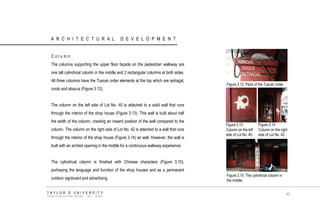
The columns supporting the upper floor façade on the pedestrian walkway are one tall cylindrical column in the middle and 2 rectangular columns at both sides. All three columns have the Tuscan order elements at the top which are astragal, ovolo and abacus (Figure 3.12). 
The column on the left side of Lot No. 40 is attached to a solid wall that runs through the interior of the shop house (Figure 3.13). This wall is built about half the width of the column, creating an inward position of the wall compared to the column. The column on the right side of Lot No. 42 is attached to a wall that runs through the interior of the shop house (Figure 3.14) as well. However, the wall is built with an arched opening in the middle for a continuous walkway experience. 
The cylindrical column is finished with Chinese characters (Figure 3.15), portraying the language and function of the shop houses and as a permanent outdoor signboard and advertising. 
ABACUS 
OVOLO 
ASTRAGAL 
Figure 3.12 Parts of the Tuscan order. 
Figure 3.13 Column on the left side of Lot No. 40. 
Figure 3.14 Column on the right side of Lot No. 42. 
Figure 3.15 The cylindrical column in the middle. 
TAYLOR‟S UNIVERSITY 
SCHOOL OF ARCHITECTURE, BUILDING AND DESIGN 
43
ARCHITECTURAL DEVELOPMENT 
Party wall 
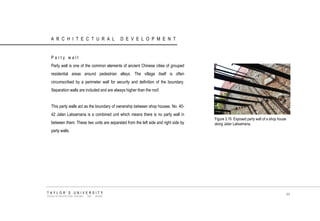
Party wall is one of the common elements of ancient Chinese cities of grouped residential areas around pedestrian alleys. The village itself is often circumscribed by a perimeter wall for security and definition of the boundary. Separation walls are included and are always higher than the roof. 
This party walls act as the boundary of ownership between shop houses. No. 40- 42 Jalan Laksamana is a combined unit which means there is no party wall in between them. These two units are separated from the left side and right side by party walls. 
Figure 3.16 Exposed party wall of a shop house along Jalan Laksamana. 
TAYLOR‟S UNIVERSITY 
SCHOOL OF ARCHITECTURE, BUILDING AND DESIGN 
44
ARCHITECTURAL DEVELOPMENT 
Cantilevered Roof 
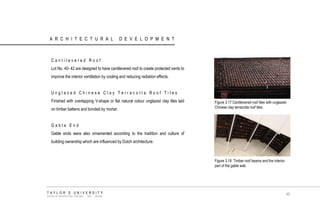
Lot No. 40- 42 are designed to have cantilevered roof to create protected vents to improve the interior ventilation by cooling and reducing radiation effects. 
Unglazed Chinese Clay Terracotta Roof Tiles 
Finished with overlapping V-shape or flat natural colour unglazed clay tiles laid on timber battens and bonded by mortar. 
Gable End 
Gable ends were also ornamented according to the tradition and culture of building ownership which are influenced by Dutch architecture. Figure 3.17 Cantilevered roof tiles with unglazed Chinese clay terracotta roof tiles. 
Figure 3.18 Timber roof beams and the interior part of the gable wall. 
TAYLOR‟S UNIVERSITY 
SCHOOL OF ARCHITECTURE, BUILDING AND DESIGN 
45
ARCHITECTURAL DEVELOPMENT 
Low Wall 
Low wall is found under the shutter. It is used in the façade to increase lateral safety. It is influeced by Southern Chinese Eclectic Style. 
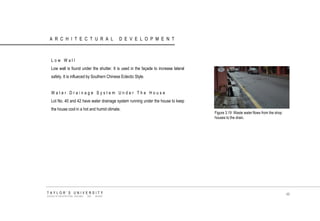
Water Drainage System Under The House 
Lot No. 40 and 42 have water drainage system running under the house to keep the house cool in a hot and humid climate. 
Figure 3.19 Waste water flows from the shop houses to the drain. 
TAYLOR‟S UNIVERSITY 
SCHOOL OF ARCHITECTURE, BUILDING AND DESIGN 
46
ARCHITECTURAL DEVELOPMENT 
Metal Screen 
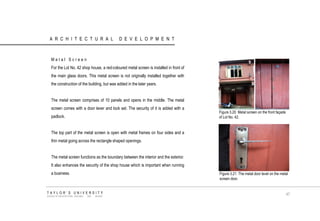
For the Lot No. 42 shop house, a red-coloured metal screen is installed in front of the main glass doors. This metal screen is not originally installed together with the construction of the building, but was added in the later years. 
The metal screen comprises of 10 panels and opens in the middle. The metal screen comes with a door lever and lock set. The security of it is added with a padlock. 
The top part of the metal screen is open with metal frames on four sides and a thin metal going across the rectangle shaped openings. 
The metal screen functions as the boundary between the interior and the exterior. It also enhances the security of the shop house which is important when running a business. 
Figure 3.20 Metal screen on the front façade of Lot No. 42. 
Figure 3.21 The metal door level on the metal screen door. 
TAYLOR‟S UNIVERSITY 
SCHOOL OF ARCHITECTURE, BUILDING AND DESIGN 
47
ARCHITECTURAL DEVELOPMENT 
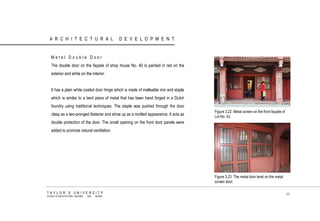
Metal Double Door The double door on the façade of shop house No. 40 is painted in red on the exterior and white on the interior. It has a plain white coated door hinge which is made of malleable iron and staple which is similar to a bent piece of metal that has been hand forged in a Dutch foundry using traditional techniques. The staple was pushed through the door clasp as a two-pronged fastener and show up as a mottled appearance. It acts as double protection of the door. The small opening on the front door panels were added to promote natural ventilation. 
Figure 3.22 Metal screen on the front façade of Lot No. 42. 
Figure 3.23 The metal door level on the metal screen door. 
TAYLOR‟S UNIVERSITY 
SCHOOL OF ARCHITECTURE, BUILDING AND DESIGN 
48
ARCHITECTURAL DEVELOPMENT 
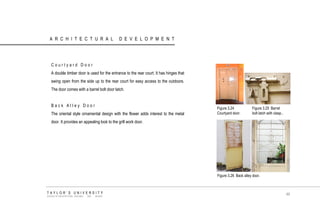
Courtyard Door 
A double timber door is used for the entrance to the rear court. It has hinges that swing open from the side up to the rear court for easy access to the outdoors. The door comes with a barrel bolt door latch. 
Back Alley Door 
The oriental style ornamental design with the flower adds interest to the metal door. It provides an appealing look to the grill work door. 
Figure 3.24 Courtyard door. 
Figure 3.26 Back alley door. 
Figure 3.25 Barrel bolt latch with clasp.. 
TAYLOR‟S UNIVERSITY 
SCHOOL OF ARCHITECTURE, BUILDING AND DESIGN 
49
ARCHITECTURAL DEVELOPMENT 
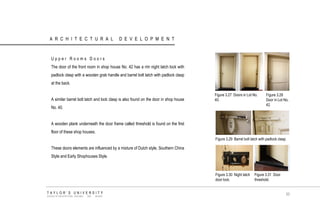
Upper Rooms Doors 
The door of the front room in shop house No. 42 has a rim night latch lock with padlock clasp with a wooden grab handle and barrel bolt latch with padlock clasp at the back. 
A similar barrel bolt latch and lock clasp is also found on the door in shop house No. 40. 
A wooden plank underneath the door frame called threshold is found on the first floor of these shop houses. 
These doors elements are influenced by a mixture of Dutch style, Southern China Style and Early Shophouses Style. 
Figure 3.27 Doors in Lot No. 40. 
Figure 3.29 Barrel bolt latch with padlock clasp. Figure 3.28 Door in Lot No. 42. 
Figure 3.30 Night latch door lock. 
Figure 3.31 Door threshold. 
TAYLOR‟S UNIVERSITY 
SCHOOL OF ARCHITECTURE, BUILDING AND DESIGN 
50
ARCHITECTURAL DEVELOPMENT 
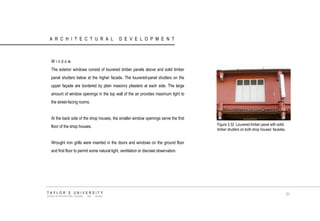
Window 
The exterior windows consist of louvered timber panels above and solid timber panel shutters below at the higher facade. The louvered-panel shutters on the upper façade are bordered by plain masonry pilasters at each side. The large amount of window openings in the top wall of the air provides maximum light to the street-facing rooms. 
At the back side of the shop houses, the smaller window openings serve the first floor of the shop houses. 
Wrought iron grills were inserted in the doors and windows on the ground floor and first floor to permit some natural light, ventilation or discreet observation. 
Figure 3.32 Louvered timber panel with solid timber shutters on both shop houses‟ facades. TAYLOR‟S UNIVERSITY SCHOOL OF ARCHITECTURE, BUILDING AND DESIGN 
51
ARCHITECTURAL DEVELOPMENT 
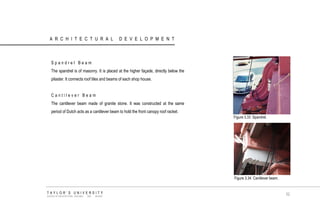
Spandrel Beam 
The spandrel is of masonry. It is placed at the higher façade, directly below the pilaster. It connects roof tiles and beams of each shop house. 
Cantilever Beam 
The cantilever beam made of granite stone. It was constructed at the same period of Dutch acts as a cantilever beam to hold the front canopy roof racket. 
Figure 3.33 Spandrel. 
Figure 3.34 Cantilever beam. 
TAYLOR‟S UNIVERSITY 
SCHOOL OF ARCHITECTURE, BUILDING AND DESIGN 
52
ARCHITECTURAL DEVELOPMENT 
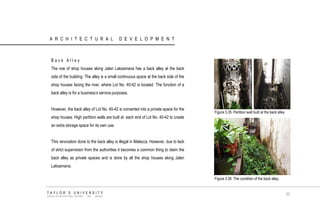
Back Alley 
The row of shop houses along Jalan Laksamana has a back alley at the back side of the building. The alley is a small continuous space at the back side of the shop houses facing the river, where Lot No. 40-42 is located. The function of a back alley is for a business‟s service purposes. 
However, the back alley of Lot No. 40-42 is converted into a private space for the shop houses. High partition walls are built at each end of Lot No. 40-42 to create an extra storage space for its own use. 
This renovation done to the back alley is illegal in Malacca. However, due to lack of strict supervision from the authorities it becomes a common thing to claim the back alley as private spaces and is done by all the shop houses along Jalan Laksamana. 
Figure 3.35 Partition wall built at the back alley 
Figure 3.36 The condition of the back alley. 
TAYLOR‟S UNIVERSITY 
SCHOOL OF ARCHITECTURE, BUILDING AND DESIGN 
53
ARCHITECTURAL DEVELOPMENT 
3.2.3 INTERIOR 
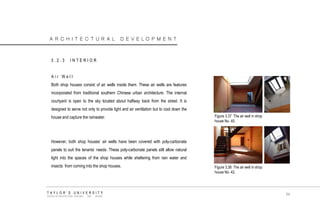
Air Well 
Both shop houses consist of air wells inside them. These air wells are features incorporated from traditional southern Chinese urban architecture. The internal courtyard is open to the sky located about halfway back from the street. It is designed to serve not only to provide light and air ventilation but to cool down the house and capture the rainwater. 
However, both shop houses‟ air wells have been covered with poly-carbonate panels to suit the tenants‟ needs. These poly-carbonate panels still allow natural light into the spaces of the shop houses while sheltering from rain water and insects from coming into the shop houses. Figure 3.37 The air well in shop house No. 40. 
Figure 3.38 The air well in shop house No. 42. 
TAYLOR‟S UNIVERSITY 
SCHOOL OF ARCHITECTURE, BUILDING AND DESIGN 
54
ARCHITECTURAL DEVELOPMENT 
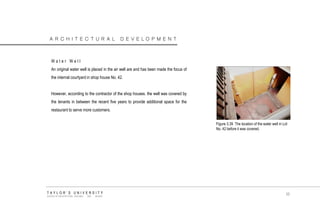
Water Well 
An original water well is placed in the air well are and has been made the focus of the internal courtyard in shop house No. 42. 
However, according to the contractor of the shop houses. the well was covered by the tenants in between the recent five years to provide additional space for the restaurant to serve more customers. 
Figure 3.39 The location of the water well in Lot No. 42 before it was covered. 
TAYLOR‟S UNIVERSITY 
SCHOOL OF ARCHITECTURE, BUILDING AND DESIGN 
55
ARCHITECTURAL DEVELOPMENT 
Columns 
Columns are vertical supportive elements in a building structure. The columns in the shop houses are plain columns and function to transfer the load of the upper floor downwards to the ground. They are designed to support beams and arches, apart from resisting lateral forces. 
Tuscan Pilasters 
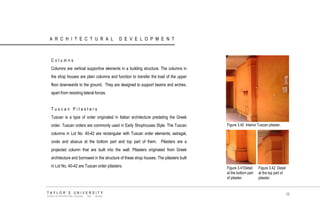
Tuscan is a type of order originated in Italian architecture predating the Greek order. Tuscan orders are commonly used in Early Shophouses Style. The Tuscan columns in Lot No. 40-42 are rectangular with Tuscan order elements; astragal, ovolo and abacus at the bottom part and top part of them. Pilasters are a projected column that are built into the wall. Pilasters originated from Greek architecture and borrowed in the structure of these shop houses. The pilasters built in Lot No, 40-42 are Tuscan order pilasters. 
Figure 3.40 Interior Tuscan pilaster. 
Figure 3.41Detail at the bottom part of pilaster. 
Figure 3.42 Detail at the top part of pilaster. 
TAYLOR‟S UNIVERSITY 
SCHOOL OF ARCHITECTURE, BUILDING AND DESIGN 
56
ARCHITECTURAL DEVELOPMENT 
Beams 
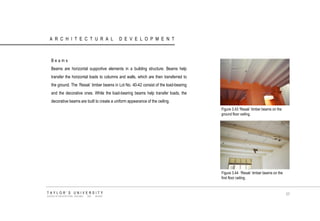
Beams are horizontal supportive elements in a building structure. Beams help transfer the horizontal loads to columns and walls, which are then transferred to the ground. The „Resak‟ timber beams in Lot No. 40-42 consist of the load-bearing and the decorative ones. While the load-bearing beams help transfer loads, the decorative beams are built to create a uniform appearance of the ceiling. 
Figure 3.43 „Resak‟ timber beams on the ground floor ceiling. 
Figure 3.44 „Resak‟ timber beams on the first floor ceiling. 
TAYLOR‟S UNIVERSITY 
SCHOOL OF ARCHITECTURE, BUILDING AND DESIGN 
57
ARCHITECTURAL DEVELOPMENT 
Load-bearing Walls 
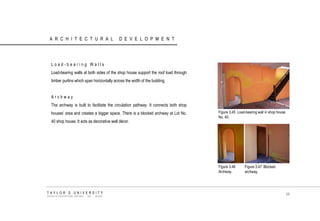
Load-bearing walls at both sides of the shop house support the roof load through timber purlins which span horizontally across the width of the building. 
Archway 
The archway is built to facilitate the circulation pathway. It connects both shop houses‟ area and creates a bigger space. There is a blocked archway at Lot No. 40 shop house. It acts as decorative wall décor. 
Figure 3.45 Load-bearing wall in shop house No. 40. 
Figure 3.46 Archway. 
Figure 3.47 Blocked archway. 
TAYLOR‟S UNIVERSITY 
SCHOOL OF ARCHITECTURE, BUILDING AND DESIGN 
58
ARCHITECTURAL DEVELOPMENT 
Staircase 
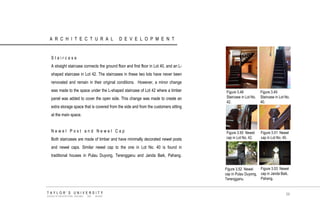
A straight staircase connects the ground floor and first floor in Lot 40, and an L- shaped staircase in Lot 42. The staircases in these two lots have never been renovated and remain in their original conditions. However, a minor change was made to the space under the L-shaped staircase of Lot 42 where a timber panel was added to cover the open side. This change was made to create an extra storage space that is covered from the side and from the customers sitting at the main space. 
Newel Post and Newel Cap 
Both staircases are made of timber and have minimally decorated newel posts and newel caps. Similar newel cap to the one in Lot No. 40 is found in traditional houses in Pulau Duyong, Terengganu and Janda Baik, Pahang. 
Figure 3.48 Staircase in Lot No. 42. 
Figure 3.49 Staircase in Lot No. 40. 
Figure 3.50 Newel cap in Lot No. 42. 
Figure 3.51 Newel cap in Lot No. 40. 
Figure 3.52 Newel cap in Pulau Duyong, Terengganu. 
Figure 3.53 Newel cap in Janda Baik, Pahang. 
TAYLOR‟S UNIVERSITY 
SCHOOL OF ARCHITECTURE, BUILDING AND DESIGN 
59
ARCHITECTURAL DEVELOPMENT 
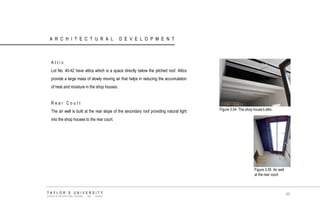
Attic Lot No. 40-42 have attics which is a space directly below the pitched roof. Attics provide a large mass of slowly moving air that helps in reducing the accumulation of heat and moisture in the shop houses. Rear Court The air well is built at the rear slope of the secondary roof providing natural light into the shop houses to the rear court. 
Figure 3.54 The shop house‟s attic. 
Figure 3.55 Air well at the rear court. 
TAYLOR‟S UNIVERSITY 
SCHOOL OF ARCHITECTURE, BUILDING AND DESIGN 
60
ARCHITECTURAL DEVELOPMENT 
Windows 
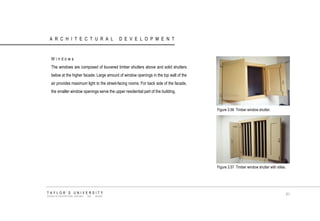
The windows are composed of louvered timber shutters above and solid shutters below at the higher facade. Large amount of window openings in the top wall of the air provides maximum light to the street-facing rooms. For back side of the facade, the smaller window openings serve the upper residential part of the building. 
Figure 3.56 Timber window shutter. 
Figure 3.57 Timber window shutter with stiles. 
TAYLOR‟S UNIVERSITY 
SCHOOL OF ARCHITECTURE, BUILDING AND DESIGN 
61
ARCHITECTURAL DEVELOPMENT 
Window Hinges 
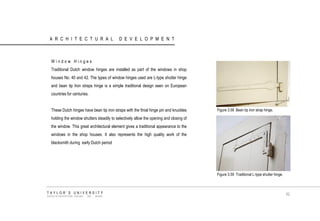
Traditional Dutch window hinges are installed as part of the windows in shop houses No. 40 and 42. The types of window hinges used are L-type shutter hinge and bean tip Iron straps hinge is a simple traditional design seen on European countries for centuries. 
These Dutch hinges have bean tip iron straps with the finial hinge pin and knuckles holding the window shutters steadily to selectively allow the opening and closing of the window. This great architectural element gives a traditional appearance to the windows in the shop houses. It also represents the high quality work of the blacksmith during early Dutch period 
Figure 3.58 Bean tip iron strap hinge. 
Figure 3.59 Traditional L-type shutter hinge. 
TAYLOR‟S UNIVERSITY 
SCHOOL OF ARCHITECTURE, BUILDING AND DESIGN 
62
ARCHITECTURAL DEVELOPMENT 
Arched Alcove 
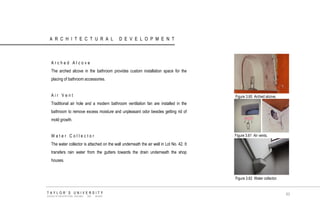
The arched alcove in the bathroom provides custom installation space for the placing of bathroom accessories. 
Air Vent 
Traditional air hole and a modern bathroom ventilation fan are installed in the bathroom to remove excess moisture and unpleasant odor besides getting rid of mold growth. 
Water Collector 
The water collector is attached on the wall underneath the air well in Lot No. 42. It transfers rain water from the gutters towards the drain underneath the shop houses. 
Figure 3.60 Arched alcove. 
Figure 3.61 Air vents. 
Figure 3.62 Water collector. 
TAYLOR‟S UNIVERSITY 
SCHOOL OF ARCHITECTURE, BUILDING AND DESIGN 
63
ARCHITECTURAL DEVELOPMENT 
Ornamentation 
Cornice 
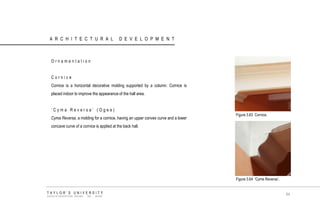
Cornice is a horizontal decorative molding supported by a column. Cornice is placed indoor to improve the appearance of the hall area. 
„Cyma Reversa‟ (Ogee) 
Cyma Reversa, a molding for a cornice, having an upper convex curve and a lower concave curve of a cornice is applied at the back hall. 
Figure 3.63 Cornice. 
Figure 3.64 „Cyme Reversa‟. 
TAYLOR‟S UNIVERSITY 
SCHOOL OF ARCHITECTURE, BUILDING AND DESIGN 
64
ARCHITECTURAL DEVELOPMENT 
Floor Tiles 
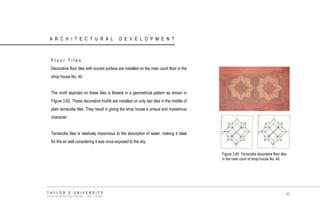
Decorative floor tiles with scored surface are installed on the main court floor in the shop house No. 40. 
The motif depicted on these tiles is flowers in a geometrical pattern as shown in Figure 3.62. These decorative motifs are installed on only two tiles in the middle of plain terracotta tiles. They result in giving the shop house a unique and mysterious character. 
Terracotta tiles is relatively impervious to the absorption of water, making it ideal for the air well considering it was once exposed to the sky. TAYLOR‟S UNIVERSITY SCHOOL OF ARCHITECTURE, BUILDING AND DESIGN 
65 
Figure 3.65 Terracotta decorative floor tiles in the main court of shop house No. 40.
ARCHITECTURAL DEVELOPMENT 
Façade Plywood 
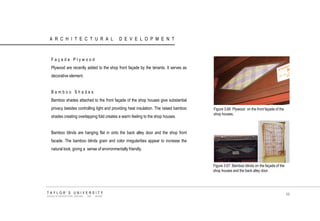
Plywood are recently added to the shop front façade by the tenants. It serves as decorative element. 
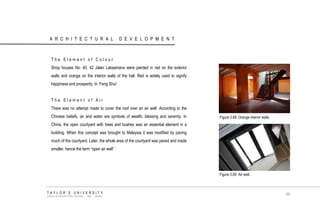
Bamboo Shades 
Bamboo shades attached to the front façade of the shop houses give substantial privacy besides controlling light and providing heat insulation. The raised bamboo shades creating overlapping fold creates a warm feeling to the shop houses. 
Bamboo blinds are hanging flat in onto the back alley door and the shop front facade. The bamboo blinds grain and color irregularities appear to increase the natural look, giving a sense of environmentally friendly. 
Figure 3.66 Plywood on the front façade of the shop houses. 
Figure 3.67 Bamboo blinds on the façade of the shop houses and the back alley door. 
TAYLOR‟S UNIVERSITY 
SCHOOL OF ARCHITECTURE, BUILDING AND DESIGN 
66
ARCHITECTURAL DEVELOPMENT 
3.2.4 „Feng Shui‟ 
The shophouses were built based on the principle 'Feng Shui' theory (geomancy). Geomancy or "Feng Shui" (the art of divining the future for good or ill- fortune based on prescribed principles) plays a significant role in the orientation and the site planning concepts. The practice of „Feng Shui‟ is to achieve a better quality of life and improve lifestyle. It is believed that misfortune would befall those who displays wealth too much. The shop houses were never oriented to face the back lane or a road junction because it was considered an invitation for evil spirits to enter the house. 
TAYLOR‟S UNIVERSITY 
SCHOOL OF ARCHITECTURE, BUILDING AND DESIGN 
67
ARCHITECTURAL DEVELOPMENT 
Orientation 
The front façade of No. 40 and 42 shop houses faces north. The north-facing front door looks affects the amount of positive or negative energy ‟chi‟ that comes into the shop houses. The Chinese spatial planning principles were traceable to Chinese origins which were austere and formal. The principle underlying this is bilateral symmetry along a single axis running north to south. All the key elements are organized along this axis and the secondary elements developed transversely to it. This automatically results in the typical shape of Chinese buildings, either a rectangle or a square. 
Houses built in the town are arranged with a view to economize in materials, space, and street frontage in order to provide security. Even the general layout of a cluster of buildings was formal. It was impossible to place small rooms around an air well because of the limited width of the building therefore the houses adapted to a series of rooms after successive courtyards were arranged longitudinally. 
TAYLOR‟S UNIVERSITY 
SCHOOL OF ARCHITECTURE, BUILDING AND DESIGN 
68
ARCHITECTURAL DEVELOPMENT 
The Element of Colour 
Shop houses No. 40, 42 Jalan Laksamana were painted in red on the exterior walls and orange on the interior walls of the hall. Red is widely used to signify happiness and prosperity. In „Feng Shui‟. 
The Element of Air 
There was no attempt made to cover the roof over an air well. According to the Chinese beliefs, air and water are symbols of wealth, blessing and serenity. In China, the open courtyard with trees and bushes was an essential element in a building. When this concept was brought to Malaysia it was modified by paving much of the courtyard. Later, the whole area of the courtyard was paved and made smaller, hence the term “open air well”. 
Figure 3.68 Orange interior walls. 
Figure 3.69 Air well. 
TAYLOR‟S UNIVERSITY 
SCHOOL OF ARCHITECTURE, BUILDING AND DESIGN 
69
ARCHITECTURAL DEVELOPMENT 
3.3 SPACE PLANNING No. 40,-42 Jalan Laksamana shop houses were restored to its authenticity and adapted to new uses providing flexible space and multi-functional spaces. The two storey high shop houses are typically very long in floor plan with a narrow frontage on the streets. It contains notable elements such as three separated air wells, a wishing well, three individual rooms, a kitchen, bathroom, and toilets while the core part of the shop houses contains living spaces. The ground floor shop was adapted to the living, dining and reception functions of the shop house as a restaurant. High courtyard walls of ten to twelve feet high introduce seclusion and introversion within the protected confines of the enclosed courtyard garden space, which is an extension for the dwelling for the purpose of relaxation 
TAYLOR‟S UNIVERSITY 
SCHOOL OF ARCHITECTURE, BUILDING AND DESIGN 
70
ARCHITECTURAL DEVELOPMENT 
Ground Floor 
Lot No. 40 and 42 shop houses are built to the street edge, the ground floor is recessed and in this way forming a five-foot pedestrian walkway. This walkway is connected to the adjacent buildings, and the private entrance is lost. This type of shop house is like the Dutch and Chinese, relatively simple, detailed, and low in scale. 
The ground floor frontage has a double entrance door with a metal bar locked into the door head, metal-bar with an extant shop house window whose design dates back to the Dutch period. The element of a collapsible metal panel door acts as air ventilation for the shops ground floor façade. The pillar with Chinese characters in the front shop façade was used for outdoor advertising. This old signage of the Chinese pharmacy has been preserved, a charming memory of its past as a Chinese pharmacy. Air well is flanked by windows with solid shutters above. 
TAYLOR‟S UNIVERSITY 
SCHOOL OF ARCHITECTURE, BUILDING AND DESIGN 
71
ARCHITECTURAL DEVELOPMENT 
First Floor The first floor is a living space for the occupants. The space pierced by two internal courtyards which provides light, air circulation, and collection of rainwater. A straight staircase and L-shaped staircase are placed within air wells. The first floor has three bedrooms. The bigger front room has an open wood beam ceiling over the front room, creating an open and attractive space on the upper floor. The wall shelves have been added on by later occupants to have the maximum capacity for its exhibition or storage. No. 40 and 42 shop houses are connected to each other by a wall opening. 
TAYLOR‟S UNIVERSITY 
SCHOOL OF ARCHITECTURE, BUILDING AND DESIGN 
72
ARCHITECTURAL DEVELOPMENT 
PARTITION ROOM 
A small corner used for cleansing. 
AIR WELL 
Once open to the sky and used to provide air ventilation, now providing natural light. 
FIRST FLOOR PLAN 
GROUND FLOOR PLAN 
FIVE-FOOT PEDESTRIAN WALKWAY A high traffic area of the shop houses to accommodate pedestrian traffic. 
FORECOURT 
The most populated space of the shop houses which function as social interaction space for tenants and customers. 
REAR COURT 
An intermediate area connecting toilets, bathroom, and back alley. 
SERVICE BLOCKS 
A small room which functions as toilet and bathroom used for human waste disposal and body cleansing. 
Public 
Private 
Figure 3.70 Spatial typologies of shop houses No. 40 and 42. 
TAYLOR‟S UNIVERSITY 
SCHOOL OF ARCHITECTURE, BUILDING AND DESIGN 
73
ARCHITECTURAL DEVELOPMENT 
Column 
Wall 
GROUND FLOOR PLAN 
FIRST FLOOR PLAN 
FIRST FLOOR PLAN 
GROUND FLOOR PLAN 
Figure 3.71 Grid system and structure of the shop houses. TAYLOR‟S UNIVERSITY SCHOOL OF ARCHITECTURE, BUILDING AND DESIGN 
74
ARCHITECTURAL DEVELOPMENT 
3.3.1 EXTERIOR 
Five-foot Pedestrian Walkway 
It serves as a public corridor, which joins one shop house with the rest on the street front for social activities and for circulation while providing protection from the sun and the rain. 
Back Alley 
The extended party wall at the back lane of the shop house blocks the passage to provide security but the narrow lane where „night soil‟ trucks used to come in the morning may be collected without disturbing the shop front. 
Figure 3.72 Five-foot walkway. 
Figure 3.73 Extended party wall at the back alley to create additional storage space. 
TAYLOR‟S UNIVERSITY 
SCHOOL OF ARCHITECTURE, BUILDING AND DESIGN 
75
ARCHITECTURAL DEVELOPMENT 
3.3.2 INTERIOR 
The ground floor shop was adapted to the living, dining and reception functions of the house. High courtyard walls of ten to twelve feet high introduce seclusion and introversion within the protected confines of the enclosed courtyard garden space, which is an extension for the dwelling for the purpose of relaxation 
Air Well 
The proportioning system is established by the area of the interior spaces. The air- wells which are in the middle part of each lot are all of 1:1 (length is equal to the breadth). Their total sizes are only 1/11 of the entire built up area of the building. This is to control the quantity of daylight entering the interior and considering the amount of rain of the site. The air well also divides each story into distinct semi- private compartments which were occupied by different generation tiers or separate families sharing the same house. 
Figure 3.74 Air well. 
TAYLOR‟S UNIVERSITY 
SCHOOL OF ARCHITECTURE, BUILDING AND DESIGN 
76
ARCHITECTURAL DEVELOPMENT 
Main Hall 
The main hall of these shop houses is situated behind the first courtyard. A large screen is placed behind the reception hall functioning as a filter for the private spaces from the reception hall. The partitions between the commercial and residential areas are often simple wooden frameworks that give the impression of a border. 
Rear Court 
It is an open space at the back of the shop house bounded by the rear boundary wall for light, air, and service access. 
Service Blocks 
The wet areas of the kitchen, bathroom, and toilets are connected with the dry area located at the back side of the shop house. 
Figure 3.75 Main hall in shop house No. 42. 
Figure 3.76 Female restrooms. 
TAYLOR‟S UNIVERSITY 
SCHOOL OF ARCHITECTURE, BUILDING AND DESIGN 
77
ARCHITECTURAL DEVELOPMENT 
Partition Room 
On the upper floor of the air well there is a small isolated space built of wooden partition. The partition room which was probably used for cleansing and laundry as electrical switches and water lines can be seen in Figure 3.37 is where the washing machine needs to be hooked up to the water line and connected to electrical power supply. 
Storage Space Under The Staircase 
The staircase of Lot No. 42 used to have an open area underneath it. To create an additional and private storage space a timber screen is added on the exposed side underneath the staircase. Inside shelves are installed to the wall for the purpose of storing goods. 
Figure 3.77 Partition room. 
Figure 3.78 Storage space underneath the staircase in Lot No. 42. 
TAYLOR‟S UNIVERSITY 
SCHOOL OF ARCHITECTURE, BUILDING AND DESIGN 
78
ARCHITECTURAL DEVELOPMENT 
3.4 CULTURAL ASPECTS 
Malacca shop houses evolved from several cultural circumstances and climatic considerations. Malacca constitutes a unique architectural and cultural townscape without parallel anywhere in East and Southeast Asia. 
Malacca has a very strong semblance in their multicultural heritage which has developed over 500 years through the process of history. The influences of Asia and Europe through trading and cultural exchanges between East and West in the Straits of Malacca have endowed the town with a specific multicultural heritage that is both tangible and intangible. A mix of time and cultures, a mix of colonial suppression and freedom can be felt and tasted. The aroma of the food, the sound they produce and the sense of colours fill the spaces and enrich the sensory effect of the townscape. 
TAYLOR‟S UNIVERSITY 
SCHOOL OF ARCHITECTURE, BUILDING AND DESIGN 
79
ARCHITECTURAL DEVELOPMENT 
Jalan Laksamana reflect a mixture of influences which have created a unique architecture, culture and townscape without parallel anywhere in East and South Asia. These buildings show many different types and stages of development of the building typologies, some originating in the Dutch or Portuguese periods. 
A shop house‟s relatively detailed building facades and interiors are retained and incorporated and many of their original features exhibit a largely acceptable state of conservation and cultural preservation. 
While physical and environmental factors such as climate, methods of construction, available materials and technology have remained the same for all, the individual communities have displayed distinct ethnic variations. 
TAYLOR‟S UNIVERSITY 
SCHOOL OF ARCHITECTURE, BUILDING AND DESIGN 
80
CONSTRUCTION 
4.0 MATERIAL AND CONSTRUCTION DETAIL 
4.0.1 FLOOR 
Smooth cement 
Terracotta tiles and ornamented tiles 
Terracotta tiles with two ornamented tiles Timber floor panel 
FIRST FLOOR PLAN 
GROUND FLOOR PLAN 
Figure 4 Types and location of floor material in shop houses No. 40 and 42. 
TAYLOR‟S UNIVERSITY 
SCHOOL OF ARCHITECTURE, BUILDING AND DESIGN 
81
CONSTRUCTION 
4.0.1 FLOOR 
The floor for both shop houses No. 40-42 the ground floor is made of reinforced concrete which is about 240mm thick. The reinforcement is steel meshes to strengthen the concrete. For the back part of the ground floor, concrete floor slabs are used to bring aesthetic values. The front area of the shop houses is made of reinforced concrete. The back area is made up of concrete tile with the arrangement of the sharp edge facing to the front which is built according to the Chinese „Feng Shui‟ which is believed to bring the flow of money into that direction. 
The five-foot walkway on the exterior ground floor is made up of terracotta tiles, also arranged diagonally whith the sharp edge facing the front. These terracotta tiles are centered with ornamented ceramic tiles. Both of the five-foot walkways of No. 40 and 42 are ornamented with these tiles of 2 rows and 5 columns. Reinforcement bars 
Concrete 
Figure 4.1 Construction of concrete floor. 
TAYLOR‟S UNIVERSITY 
SCHOOL OF ARCHITECTURE, BUILDING AND DESIGN 
82
CONSTRUCTION 
The floor structures for the second floor such as joists, wall plates are made up of „Balau‟ timber while planks are made up of „Resak‟ timber. The joists which act as the load bearing are wide in dimension. Timber structures were purposely exposed to utilize its natural lines to beautify the building from the ground floor. 
The wall plates are placed on both side of the wall to support the joists. The joists are built in a narrow span for good bearing of the floor. A layer of wooden board is then placed on the top of the joists to support the wood planks. The average dimension of each timber plank Is 180 x 18 x 2 cm. They are joined by using 3 inches nails. 
Ground floor wall Joist 
Wooden board 
Timber planks 
Figure 4.2 Construction of timber flooring on the first floor. 
TAYLOR‟S UNIVERSITY 
SCHOOL OF ARCHITECTURE, BUILDING AND DESIGN 
83
CONSTRUCTION 
4.0.2 WALL 
Being built during the Dutch colonization period, the walls of these shop houses are not built of modern modular bricks, instead they are made of smaller Dutch bricks. The Dutch bricks vary in size which are commonly two-inch brick, or thinner, being used in the earliest buildings. 
The party wall which separates each shop house is 15 inches thick from the ground to the first floor. The height of the walls at the courtyard area are 10 feet high intended to bring privacy within the protected area of the enclosed courtyard. 
The exterior walls are finished with red colour paint while the interior walls are painted in orange and white. Figure 4.3 Dutch bricks. 
Figure 4.4 Interior walls of shop houses No 40 and 42. 
TAYLOR‟S UNIVERSITY 
SCHOOL OF ARCHITECTURE, BUILDING AND DESIGN 
84
CONSTRUCTION 
GROUND FLOOR PLAN 
SECTION A-A 
Figure 4.5 Placement of walls on the floor plan and section of shop houses No. 40 and 42. 
The two party wall on both side of the buildings (Figure 4.5) are load bearing walls. The load bearing walls at both sides of the shop houses support the roof load through timber purlins which span horizontally across the width of the shop houses. 
TAYLOR‟S UNIVERSITY 
SCHOOL OF ARCHITECTURE, BUILDING AND DESIGN 
85
CONSTRUCTION 
The wall consist of soft burnt clay bricks (Figure 4.6). Bricks are used for their fire resistance in preventing the spread of fire in a closely packed area and their good insulation properties. Bricks exhibit above normal thermal insulation compared to other materials, even timber, by slowly releasing and absorbing heat thus keeping internal temperatures constant and cool. 
The bricks are laid in a row of stretcher called a running bond (Figure 4.7), and laid together with layers of brick lime mortar. 
Figure 4.6 Soft burnt clay bricks. 
Figure 4.7 Running bond of bricks used in shop houses No. 40 and 42. 
TAYLOR‟S UNIVERSITY 
SCHOOL OF ARCHITECTURE, BUILDING AND DESIGN 
86
CONSTRUCTION 
Another Dutch tradition is the plastering of the walls done with lime wash (Figure 4.8). Lime wash is a traditional surface finish for lime plaster, brick and timber buildings. It‟s a protective coating that prevents dampness from being trapped in the wall allowing it to rise from the base of the wall and evaporate, adding to the cooling effect. This is suitable for the hot tropical climate in Malacca. 
Lime wash plaster 
Lime mortar in between bricks 
300mm brick wall 
Figure 4.8 Construction of Dutch brick wall. 
TAYLOR‟S UNIVERSITY 
SCHOOL OF ARCHITECTURE, BUILDING AND DESIGN 
87
CONSTRUCTION 
The building regulations back in the days were not as strict. Thus, the walls do not have a damp proof course like most conventional walls in todays buildings. This allows the absorption of salt from the soil on the floor and causes a defect known as efflorescence, which is the presence of white powder or crystals on the surface (Figure 4.9). 
Figure 4.9 Efflorescence effect on the interior wall. 
TAYLOR‟S UNIVERSITY 
SCHOOL OF ARCHITECTURE, BUILDING AND DESIGN 
88
CONSTRUCTION 
4.0.3 COLUMNS AND PILASTERS 
Columns are rigid, relatively slender structural members designed primarily to support axial compressive loads applied to the ends of the members. Being two stories high, the shop houses No. 40 and 42 consist of half sunken pillars into the wall with thicken square bases (Figure 4.10) to help withstand the imposed load. The columns are then covered in a layer of lime wash as a breathable skin and painted just like the walls. The columns are decorated in a Roman Tuscan order using lime plaster (Figure 4.11) Figure 4.10 Pilaster in shop house No. 42. 
Figure 4.11 Ornamentation using lime plaster. 
TAYLOR‟S UNIVERSITY 
SCHOOL OF ARCHITECTURE, BUILDING AND DESIGN 
89
CONSTRUCTION 
Figure 4.12 Location of columns and pilasters in shop houses No. 40 and 42. 
GROUND FLOOR PLAN 
FIRST FLOOR PLAN TAYLOR‟S UNIVERSITY SCHOOL OF ARCHITECTURE, BUILDING AND DESIGN 
90
CONSTRUCTION 
4.0.4 STAIRCASE AND HANDRAIL 
The type of stairs in Lot No. 40-42 are straight run stairs on Lot No. 40 and a quarter turn stairs on Lot No. 42. Both stairs are made of timber and are the original stairs built into the building when it was first erected. 
Staircase in Lot No. 40 
A straight-run stairway in Lot No. 40 extends from the quarter back of the ground floor to the upper floor without turns. 
This staircase is constructed of entirely wood with the following elements: 
1. Open-riser without soffit. 
2. Full stringers slopping alongside threads that are slotted together. 
3. Newel post, railing, and balusters all interconnected together and 
constructed onto the threads of both ends. 
Figure 4.13 Straight staircase in Lot No. 40. 
Figure 4.14 Threads. 
Figure 4.15 Steps, handrail and newel post. 
Figure 4.16 Traditional Malay newel cap. TAYLOR‟S UNIVERSITY SCHOOL OF ARCHITECTURE, BUILDING AND DESIGN 
91
CONSTRUCTION 
FLOOR PLAN 
FRONT ELEVATION 
SECTION 
SIDE ELEVATION 
Figure 4.17 Drawings of straight staircase in Lot No. 40. TAYLOR‟S UNIVERSITY SCHOOL OF ARCHITECTURE, BUILDING AND DESIGN 
92
CONSTRUCTION 
1.NEWEL CAP 
2.NEWEL POST 
3.RAILING 
4.BALUSTER 
5.STRINGER 
6.THREAD 
1.NEWEL CAP 
2.NEWEL POST 
3.RAILING 
4.BALUSTER 
5.STRINGER 
6.THREAD 
7.CONCRETE 
Figure 4.18 Elements of the straight staircase in Lot No. 40. 
TAYLOR‟S UNIVERSITY 
SCHOOL OF ARCHITECTURE, BUILDING AND DESIGN 
93
CONSTRUCTION 
Threads 
An open-thread stair consists of stringers with open risers. The treads are slotted in between the closed stringers as illustrated in Figure 4.19. The gap of each treads are overlapping each other by 160mm. 
Figure 4.19 Method of joining threads to closed stringer. TAYLOR‟S UNIVERSITY SCHOOL OF ARCHITECTURE, BUILDING AND DESIGN 94
CONSTRUCTION 
Handrail 
Only 1 set of handrail is applied for this straight-run stairway as the left side is fully attached to a wall. The width of the stair excluding the handrail is about 709mm. 
Newel Posts 
The timber newel posts are cut with the size of 100 x 100mm are placed on the first step and the last step. Figure 4.20 illustrates the jointing of the handrails and newel posts. 
Balusters 
The open balusters, housed in the underside of the handrails are mostly 35mm square arranged in 128mm gap. 
Figure 4.20 Exploded view on method of joining handrail to newel post. TAYLOR‟S UNIVERSITY SCHOOL OF ARCHITECTURE, BUILDING AND DESIGN 
95
CONSTRUCTION 
Staircase in Lot No. 42 A quarter-turn stairway in Lot 42 makes a right-angled turn from the entrance on the ground floor to the upper floor. This staircase is constructed of entirely wood with the following elements: 1. Stringers running alongside risers and threads, openly housed with the profile of the threads and risers without soffit. 2. Horizontal threads with nosing and vertical risers that are placed onto the stringers. 3. Newel post, railing, and balusters are all interconnected together and constructed onto the threads of both ends Figure 4.21 Staircase in Lot No. 42. 
Figure 4.22 Newel cap on staircase in Lot No. 42. 
TAYLOR‟S UNIVERSITY 
SCHOOL OF ARCHITECTURE, BUILDING AND DESIGN 
96
CONSTRUCTION 
FLOOR PLAN 
FRONT ELEVATION 
SECTION SIDE ELEVATION 
Figure 4.23 Drawings of L-shaped staircase in Lot No. 42. 
TAYLOR‟S UNIVERSITY 
SCHOOL OF ARCHITECTURE, BUILDING AND DESIGN 
97
CONSTRUCTION 
1.NEWEL CAP 
2.NEWEL POST 
3.RAILING 
4.BALUSTER 
5.STRINGER 
6.LANDING 
7.THREAD 
8.RISER 
9.NOSING 
1.NEWEL CAP 
2.NEWEL POST 
3.RAILING 
4.BALUSTER 
5.STRINGER 
6.LANDING 
7.THREAD 
8.RISER 
9.NOSING 
Figure 4.24 Elements of the L-shaped staircase in Lot No. 42. TAYLOR‟S UNIVERSITY SCHOOL OF ARCHITECTURE, BUILDING AND DESIGN 
98
CONSTRUCTION 
Threads and Risers 
The threads and risers are joined to form the steps of the flight, which are supported by cut stringers. The timber for treads and risers are cut with the following sizes: treads 30mm thick and 250mm wide, risers 18mm thick and 200mm wide. The rounded nosing on the treads are projected 35mm from the face of the riser below. Figure 4.25 is an illustration of part of the flight with threads and risers partially cut to show the housings in stringer in which the treads and risers are combined together. The threads and risers are connected with the tongues and groove cuts on the edges of the threads and risers. Figure 4.25 shows the jointing in between the top of the riser and the bottom of the tread. Figure 4.25 Method of jointing risers to treads on cut stringer. TAYLOR‟S UNIVERSITY SCHOOL OF ARCHITECTURE, BUILDING AND DESIGN 99
CONSTRUCTION Handrail There are a total of 3 handrails on this quarter-turn staircase, which is 1 on the right hand-side of the lower flight, and both sides on the upper flight. The width of the stair excluding the handrails on the upper flight is about 940mm. Newel Post The timber newel posts are cut with the size of 100 x 100mm and are attached on the starting and the ending of the treads. The function of newel posts is to support handrails. Figure 4.26 demonstrates the jointing of handrails to a newel post. 
Figure 4.26 Method of joining handrail to newel post. 
TAYLOR‟S UNIVERSITY 
SCHOOL OF ARCHITECTURE, BUILDING AND DESIGN 
100
CONSTRUCTION Balusters The open balusters, housed in the underside of the handrails are mostly 35mm square arranged in 230mm or 290mm spacing the middle. Figure 4.27 illustrates the jointing of balusters onto the handrails and newel posts. Figure 4.27 Method of jointing balusters to handrail. TAYLOR‟S UNIVERSITY SCHOOL OF ARCHITECTURE, BUILDING AND DESIGN 101
CONSTRUCTION 
4.0.5 DOOR 
The Dutch style façade usually features a symmetrical design with central pair of paneled doors at the front and on either side are square windows with bars and shutters. Lot No. 40-42 shop houses consist of two types of doors which are swinging door and folding door. Swinging doors are used at both main entrances and every doors into each rooms. Folding doors are installed for the main entrance on Lot No. 42 and the restrooms on the ground floor. 
Folding door 
Swinging door 
GROUND FLOOR PLAN FIRST FLOOR PLAN Figure 4.28 The types of door and their location in shop houses No. 40 and 42. TAYLOR‟S UNIVERSITY SCHOOL OF ARCHITECTURE, BUILDING AND DESIGN 102
CONSTRUCTION 
Swinging Door 
A swinging door is usually pivoted or hung on hinges located at a side jamb (Figure 4.29). It is used widely in residential buildings due to its efficiency in passage and insulation towards noise and heat; also in weather resistance and preventing fire spread. (Ching, 2008) 
The swinging door on Lot No. 40 (Figure 4.30) is from the original façade door of the building. The door is made out of timber with a timber frame decorated with vertical wooden bars. Panel doors are framed with stiles and rails around a panel or panels of wood. Mortice and Tenon joints are used to frame members at right angles in joinery work (Emmit, & Gorse, 2010). 
Figure 4.29 Parts of the door. Figure 4.30 Swinging door on façade of Lot No. 40 Figure 4.31 Swinging door inside. TAYLOR‟S UNIVERSITY SCHOOL OF ARCHITECTURE, BUILDING AND DESIGN 103
CONSTRUCTION 
TAYLOR‟S UNIVERSITY 
SCHOOL OF ARCHITECTURE, BUILDING AND DESIGN 
104 
1.Head Frame 
2.Post 
3.Top Rail 
4.Bottom Rail 
5.Rail 
6. Stile 7. Full Mortise Door Hinge 8. Metal Door Latch With Barrel Bolt 9. Metal Rod 10. Panel Figure 4.32 Parts of the swinging doors.
CONSTRUCTION TAYLOR‟S UNIVERSITY SCHOOL OF ARCHITECTURE, BUILDING AND DESIGN 105 
1.Head Frame 
2.Post 
3.Top Rail 
4.Bottom Rail 
5.Rail 
6. Stile 
7. Full Mortise Door Hinge 
8. Metal Door Latch With Barrel Bolt 
9. Metal Rod 
10. Panel 
Figure 4.33 Detailed parts of the swinging door.
CONSTRUCTION Folding Door Folding doors are hinged door panels that fold on top of one another when opened combining the actions of both sliders and hinged doors (Figure 4.32). They are often used to conceal a wide space where the use of a conventional swinging door is incompatible. The folded metal door on the façade shop house No.42 (Figure 4.33) dates back to the 1970s and is not the original door of the building. The metal door is made of mild steel plate which contains iron in a molten form mixed with carbon resulting in a stronger material than iron itself. Mild steel is also used for the construction of the structural parts like hinges of the door which are welded on both the front and back of the door allowing it to be folded. Figure 4.32 Front elevation and floor plan of metal screen door. Figure 4.33 Folding door on the façade of Lot No. 42. TAYLOR‟S UNIVERSITY SCHOOL OF ARCHITECTURE, BUILDING AND DESIGN 106
CONSTRUCTION 
Mild steel is also used for the construction of the structural parts like hinges of the door which are welded on both the front and back of the door allowing it to be folded. Regarding the restrooms the material for the folding doors are plastic. Plastic is the commonly used material for doors as it is very durable and easy to clean, making it a suitable material for a wet area such as the restrooms. Figure 4.34 Metal hinges on metal folding door. Figure 4.35 Swinging plastic door for restrooms. TAYLOR‟S UNIVERSITY SCHOOL OF ARCHITECTURE, BUILDING AND DESIGN 107
CONSTRUCTION TAYLOR‟S UNIVERSITY SCHOOL OF ARCHITECTURE, BUILDING AND DESIGN 
108 
1.Metal Door Frame 
2.Mild Steel Panel 
3.Metal Door Flange Welded To Door 
4.Iron Surface Bolt Door Latch Welded To Door 
Figure 4.38 Parts of the metal folding door.
CONSTRUCTION 4.0.6 WINDOW The type of windows used in shop houses No. 40 and 42 are casement windows. (Figure 4.36 and 4.37) Casement windows have operating sashes that are attached to its frame by one or more hinges at the side and usually open outwards. Casement windows are opened with a handle and requires a crank or stay to hold the window in place against wind. Casement windows are chosen for many reasons. One of the main reasons is in response to the climate. Casement windows open all the way outward unlike double hung windows which are closed on top, providing full natural ventilation and light. They assist in catching passing breezes and inducing ventilation through the building. They are also easy to clean and tightly sealed when shut thus preventing air from entering and leaving making it very energy efficient. TAYLOR‟S UNIVERSITY SCHOOL OF ARCHITECTURE, BUILDING AND DESIGN 109 Figure 4.39 Casement window in Lot No. 40.. 
Figure 4.40 Casement window on the façade of both shop house
CONSTRUCTION Figure 4.39 Front elevation and floor plan of casement window in the shop houses. Figure 4.38 Placement of windows in shop houses No. 40 and 42. GROUND FLOOR PLAN FIRST FLOOR PLAN TAYLOR‟S UNIVERSITY SCHOOL OF ARCHITECTURE, BUILDING AND DESIGN 110
CONSTRUCTION 
The casement windows are attached to the frame with a traditional Dutch iron hinge nailed into the wooden panels facilitating the movement between the timber frame and also the timber window panel. (Figure 4.40) Like most traditional timber windows, all the parts are constructed and joined using the traditional mortice and tenon joints prepared by skilled craftsmen (Figure 4.41). The Mortise and Tenon is a very old and popular joint due to its strength. A mortise is simply a hole in the piece of wood with the tenon pieces slotting inside. Figure 4.40 Eye and hook hinge. Figure 4.41 Traditional Dutch iron hinge. TAYLOR‟S UNIVERSITY SCHOOL OF ARCHITECTURE, BUILDING AND DESIGN 111
CONSTRUCTION Figure 4.45 Parts of the four panels exterior window. 
TAYLOR‟S UNIVERSITY 
SCHOOL OF ARCHITECTURE, BUILDING AND DESIGN 
112 Figure 4.46 Parts of the two panels casement window. 
1.Bean Tip Iron Strap Hinge 
2.Timber Window Panel 
3.Top Rail 
4.Bottom Rail 
5.Casement Stile 
6.Window Butt Hinge 
7.Timber Louvers
CONSTRUCTION Figure 4.47 A haunch tenon joint. The haunch prevents the frame from twisting, making it firmer and stronger. TAYLOR‟S UNIVERSITY SCHOOL OF ARCHITECTURE, BUILDING AND DESIGN 113 
Figure 4.48 Window hinges. 
1.Bean Tip Iron Strap Hinge 
2.Timber Window Panel 
3.Top Rail 
4.Bottom Rail 
5.Casement Stile 
6.Window Butt Hinge 
7.Timber Louvers
CONSTRUCTION 4.0.8 ROOF Clay terracotta roof tiles are used on shop houses No. 40 and 42 due to its durability, strength to carry the weight of any attached equipment, good rainwater drainage and sun shedding. The roof structures such as rafters, beams, and ridge are made up of „Balau‟ timber as it‟s excellence in strength to bear with the load of the roof. The ground floor roof is a shed roof which covers the walkway for pedestrians. On the first floor the roof is a unique gable roof. Unlike the ordinary gable roof, the roof is constructed horizontally which covers the front and back part of the building that shelters the rooms facing the street. The middle part of the building which used to have air wells in each unit, are now covered with poly-carbonate panels to still allow natural light into the shop houses while providing shelter from rainfall. The back part of the building is constructed with a shed roof which helps in covering the walkway at the back of the building. Figure 4.45 Terracotta roof tiles. Figure 4.46 Poly-carbonate panels to cover the courtyard openings. TAYLOR‟S UNIVERSITY SCHOOL OF ARCHITECTURE, BUILDING AND DESIGN 114
CONSTRUCTION Back part : Shed roof Back gable roof Front gable roof Figure 4.47 Types of roof in shop houses No. 40 and 42. TAYLOR‟S UNIVERSITY SCHOOL OF ARCHITECTURE, BUILDING AND DESIGN 115
CONSTRUCTION 
The beams which support the roof structures are subjected into the walls. The rafters are attached by gussets and both of the rafters are attached with the ridge. The rafters are in three different dimension which are 47x43, 23x65, 125x85(mm). The arrangement of the roof tiles are overlapped half onto one another and they are placed above wooden boards. The roof load is transferred to the load bearing walls via beams that spans horizontally across the building‟s width. The pitch of the roof is 1/3 pitch which is 8:12 run in units to facilitates the spatial quality of the space. 
The roof purlin and rafter are attach by the slotting technique. Both of it are cut according to the dimension for matching to attach with each others and are nailed with 3 inches of nail from the side and the bottom of the rafter (Figure 4.49). Ridge Rafters Joist Wall plates Wall Figure 4.48 Roof truss. Figure 4.49 Slotting technique to construct the roof truss. 
TAYLOR‟S UNIVERSITY 
SCHOOL OF ARCHITECTURE, BUILDING AND DESIGN 
116
CASE STUDY: LOT NO 54-56 HEREEN STREET Most of the shop houses in Malacca adopted the architectural elements of Dutch style, Southern China Style, and Early Shophouse Style. According to NUS students‟ research, Lot No. 54 has a load bearing construction, while lot number 56 consists of RC-frame structure. For Lot No. 40 and 42 Jalan Laksamana, the structure construction used is load bearing construction. Among the differences between Lot No. 54-56 Hereen Street and Lot No. 40-42 Jalan Laksamana are the staircases. The staircases in Lot No. 54-56 Heeren Street are spiral timber staircases while Lot No. 40 Jalan Laksamana has an L-shape timber staircase and a straight timber staircase in Lot 42. The Heeren Street shop houses are representatives of 19th century shop houses styles, which are Southern China Style and Early Shophouses Style. However, the shop houses along Jalan Laksamana have adopted Dutch Style apart from Southern China Style and Early Shophouses Style. The difference of architectural style can be observed from the interior window. Figure 4.50 The façade of No. 54-56, Hereen Street. Figure 4.51 Courtyard in shop house No. 54, Hereen Street. TAYLOR‟S UNIVERSITY SCHOOL OF ARCHITECTURE, BUILDING AND DESIGN 117
CASE STUDY: LOT NO 54-56 HEREEN STREET 
Similarities 
Elements 
54-56, Hereen Street and 
40-42, Jalan Laksamana 
Walls 
Cement-sand pilaster 
Party walls 
Finished with lime-wash 
Floors - ground floor 
Cement screed floors 
- first floor 
Timber planks 
Roof 
Chinese U-clay tiles on battens supported by timber rafters. 
Staircase 
Timber Staircase 
Malay Style Newel post and newel cap Malay Style newel cap Early Shophouses Style window Timber flooring Figure 4.52 Similarities of architectural elements in No. 54-56, Hereen Street to No. 40-42, Jalan Laksamana. Table 2 Similarities in architectural elements of shop houses No. 40-42 Jalan Laksamana and shop houses No. 54-56 Hereen Street.. TAYLOR‟S UNIVERSITY SCHOOL OF ARCHITECTURE, BUILDING AND DESIGN 
118
6.1 A FORGOTTEN STREET Jalan Laksamana was once a glorious street catering to every wants and needs of the people of Malacca. The shop houses along Jalan Laksamana were the epitome of Malacca‟s economical development being its first commercial building to be built. A rising city that Malacca is today, this street has become less relevant and forgotten. With other developments around the town of Malacca, the shop houses along Jalan Laksamana are no longer considered as the places to explore, but only as places to pass by. TAYLOR‟S UNIVERSITY SCHOOL OF ARCHITECTURE, BUILDING AND DESIGN 119 DISCUSSION: A FORGOTTEN STREET
6.2 FACTORS Shopping Malls With the existing and multiplying number of shopping malls in Malacca they have taken over the function of the shop houses along Jalan Laksamana, being a one-stop-center for goods. They are more preferred to be visited compared to these heritage shop houses in this modern time. Foreign Business Icons Being a tourist spot, Malacca town has developed tremendously. Among the foreign icons development nearby to Jalan Laksamana are Casa del Rio, a five-star Mediterranean concept hotel and Hard Rock Café. The modern Malacca has adapted foreign identity without realizing the lost of its own. TAYLOR‟S UNIVERSITY SCHOOL OF ARCHITECTURE, BUILDING AND DESIGN 120 
DISCUSSION: A FORGOTTEN STREET
6.3 CONCLUSION The sudden rise of development in the heritage zone of Malacca, solely for commercial and profit purposes, has destroyed its own identity and the centuries of historical value built up in these shop houses. These heritage shop houses may have been listed as a world heritage site however it takes more than just an awarded title to truly preserve these pieces of historical and sentimental values. Jalan Laksamana, being described as one lively and eventful street in the historical study, was a let down as students walked down the hollow and quite five-foot ways. It appeared that Jalan Laksamana is no longer a destination, but only a road that has to be taken to get to the town to Malacca. At most, tourists would walk through the five-foot way, capture some photographs and move along. It is unfortunate that the present and future generations do not have the opportunity of experiencing the commercial glory that were the shop houses of Jalan Laksamana over a century ago. The development around the town of Malacca must be controlled and given more attention to in order to preserve the identity of Malacca as a World Heritage City. It can be seen that developments continue to take place even though they are clearly compromising the social, historical and cultural values of the site. Malacca is selling history. And with foreign icons taking over our identity, World Heritage City will be just a title. TAYLOR‟S UNIVERSITY SCHOOL OF ARCHITECTURE, BUILDING AND DESIGN 121 DISCUSSION: A FORGOTTEN STREET
REFERENCES 1. Chin, L. H., & Jorge, F. (2006). Malacca voices from the street. (1st ed., pp. 4-12). Malaysia: Lim Huck Chin. DOI: www.malaccavoices.com 2. Ching, D.K. (2008). Building construction illustrated. Hoboken, NJ: John Wiley & Sons, Inc. 3. Allen, E., & Iano, J. (2009). The Fundamentals of Building Construction (5th ed.). Hoboken, NJ: John Wiley & Son, Inc. 4. Emmit, S., & Gorse, C, A. (2010), Baryy’s Introduction to Construction Of Buildings (2nd ed.). Singapore: John Wiley & Son, Inc. 5. Melaka State Goverment. The guide to melaka. (1st ed.). Malaysia: Leisure Guide Publishing Sdn. Bhd. 6. Building Conservation. (2008). Typology Of Shophouses in Malaysia. Retrieved February 22, 2013, from http://buildingconservation.blogspot.com/search/label/Heritage%20Shophouses 7. Advantages and Benefits Of Casement Window. Retrieved February 26, 2013, from http://www.reliancehome.com/general/advantage-and-benefit-of-casement-window 8. Replacement Windows for Dummies. (2011). Casement Windows Advantages and Disadvantages. Retrieved February 28, 2013, from http://www.reliancehome.com.general/advantage-and-benefit-of-casement-window 9. UK Workshop. (2001). Mortise and Tenon Joint. Retrieved February 24, 2013, from http://www.ukworkshop.co.uk/how-tos/joints/mortise-tenon-joint.html 10. Materials Technology Wood. Mortise and Tenon Joints. Retrieved February 28, 2013, from http://www.reliancehome.com/general/advantage-and-benefit-of-casement-window TAYLOR‟S UNIVERSITY SCHOOL OF ARCHITECTURE, BUILDING AND DESIGN 
122
REFERENCES 11. Do It Yourself. (2011). Lime Plaster. Retrieved February 25, 2013, from http://www.doityourself.com/stry/lime-plaster#b 12. Brick Walls and Brickwork. (2008). Efflorescence. Retrieved February 27, 2013, from http://www.azom.com/article.aspx?ArticleID=1398 13. Anonymous. (2007, September). Sejarah Melaka. Retrieved from http://www.kotasejarah.blogspot.com 14. Stephen Emmitt & Christopher A. Gorse. (2010). Barry’s Introduction to Construction of Buildings. Retrieved from http://books.google.com.my/books?id=6G0doVhKG40C&Ipg 15. Stairbuilding DIY Project. Retrieved from http://www.diydoctor.org.uk/projects/stairbuilding.htm 16. Department of National Heritage (n.d). Melaka and George Town, Historic Cities of the Straits of Malacca. Retrieved February 17, 2013 from http://www.kpkk.gov.my/sektor_kebudayaan/melaka_georgetown/melaka_georgetown.pdf 17. Doric column. (n.d) . In Illustrated Glossary of Classical Architecture. Retrieved February 26, 2013 from http://www.doric-column.com/glossary_classical_architecture.html TAYLOR‟S UNIVERSITY SCHOOL OF ARCHITECTURE, BUILDING AND DESIGN 123
REFERENCES 18. Emilda A.N. (2011). Sungei melaka- past and present. Retrieved February 23, 2013 from http://eprints.uitm.edu.my/1252/1/EMILDA_A._NORDIN_24.pdf 19. Francis D. K. C. (1995). A visual dictionary of architecture. Canada: Wiley, John & Sons. 20. Ghafar A. (1994, December 3). The architectural style of the peranakan cina. Retrieved February 17, 2013 from http://www.hbp.usm.my/conservation/SeminarPaper/peranakan%20cina.html 21. Ho, K. C., Ahmad, S.H., & Norizal M.N. (2011, September). An Influence of Colonial Architecture to Building Styles and Motifs in Colonial Cities in Malaysia. Retrieved February 17, 2013 from http://www.vintagemalaya.com/files/An_Influence_of_Colonial_Architecture_To_Building_Style_and_Motifs_In_Colonial _Cities_in_Malaysia.pdf 22. Hong, T. (2010, January). Classical Architecture - FOM Friends of the Museums. Retrieved from http://www.fom.sg/Passage/2009/12shophouse.pdf 23. Kamarul S. K. (2008, April 1). Categories and Styles of Shophouses and Townhouses in Malacca and George Town, Malaysia. Retrieved February 17, 2013 from http://buildingconservation.blogspot.com/2009/01/categories-of-shophouses-at-malacca.html 24. Ooi, K.G. (2010). The A to Z of malaysia. Lanham, Md.: Scarecrow Press. TAYLOR‟S UNIVERSITY SCHOOL OF ARCHITECTURE, BUILDING AND DESIGN 
124
REFERENCES 25. Maarten den Teuling, M. (2009, June 10). Maartendenteulingthesis.pdf - repository - tu delft. Retrieved February 17, 2013 from https://www.google.com.my/url?sa=t&rct=j&q=&esrc=s&source=web&cd=8&cad=rja&ved=0CGwQFjAH&url= http%3A%2F%2Frepository.tudelft.nl%2Fassets%2Fuuid%3A3f87afa3-4fe7-493c-9e43-9ea2e45ddfbe%2F MaartendenTeulingThesis.pdf&ei=ea4gUbvxCc2HrAeRwICAAQ&usg=AFQjCNGBkKOA7VaGXntl6ANTLH5- 1cZLRQ&sig2=Eo3SaiQKcYrS5s7S9c4b-Q 26. Rozliani, M., Azree O. M., Norazmawati, M.S., Ruhizal R., & Hasnanywati H. (2012). Classification of Inheritance Shop Houses in George Town, Penang - UNESCO World Heritage Site. Retrieved February 17, 2013 from http://anale-ing.uem.ro/2012/16.pdf 27. Syed, S. Z. and Wan, A. S. (2004, June). Initiatives and intervention in promoting pedestrianization in the Historic City Of Melaka, Malaysia. Retrieved February 21, 2013 from http://www.walk21.com/papers/Copenhagen%2004%20Zubir%20Promoting%20Pedestrianisation%20in%20 Melaka%20Ma.pdf 28. Wan H. W. I. and Shuhana S. (2005, September). The old shophouses as part of malaysian urban heritage: the current dilemma. Retrieved February 17, 2013 from http://www.vintagemalaya.com/files/The_Oldshophouses_As_Part_Of_Malaysian_Urban_Heritage_The_ Current_Dilemma.pdf 29. Yahaya, A. (2010, April 19). World Heritage Sites of Melaka & George Town. Ahmedabad, India. Retrieved February 17, 2013 from http://www.ihcn.in/pdf/19-april-2010/session-2/4%20Melaka.pdf TAYLOR‟S UNIVERSITY SCHOOL OF ARCHITECTURE, BUILDING AND DESIGN 125
APPENDIX TAYLOR‟S UNIVERSITY SCHOOL OF ARCHITECTURE, BUILDING AND DESIGN Interview with Mr. Kuah Is Lot No. 40, 42 originally a combined unit? Answer: No. Are the rows Laksamana double-storey old shophouses constructed in the same period (Dutch)? Answer: Yes. When were the façade of the shophouses (reflective glass screen, plywood décor, the glass door) renovated or restored? Answer: Sorry. I was unable to answer your question because the tenants were keep changing and unable to trace back. However, when we renovate we tried to restore back. When were the brackets at shop front pillar above the Chinese signage added? Answer: That are not brackets, it is actually a granite stone that constructed at the same period of Dutch and act as a cantilever beam to hold the front canopy roof. 
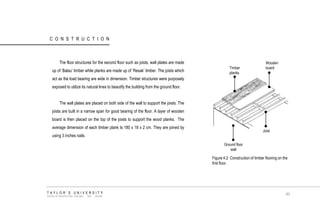
Figure 5.1 Mr. Kuah, the contractor of shop houses No. 40-42 Jalan Laksamana. 126
APPENDIX TAYLOR‟S UNIVERSITY SCHOOL OF ARCHITECTURE, BUILDING AND DESIGN Are the orange ceramic floor tiles on the ground floor and the timber flooring on the upper floor original design or altered by tenants? Answer: It is altered by the tenants. There is a back door which leads to a back alley. Is the back alley of the Laksamana shop houses connected to each other? Answer: Yes. It is supposed to be a back land for fire escape. What is the use of the front room (bedroom?), back rooms (bedrooms?), and the empty space near the L-shaped staircase on the first floor? Answer: It is depend on the tenants. Are the beam interlocked with each other or nailed? Answer: They are interlocked with each other. The beam pierced through the back room, Is the action an original intention of the builder or construction error? Answer: It is an original intention. 127
APPENDIX TAYLOR‟S UNIVERSITY SCHOOL OF ARCHITECTURE, BUILDING AND DESIGN 
Archway in a brick wall (Arched wall) on the ground floor. Is that archway once open to the next shop house (Lot No.38) or acts as décor only? 
Answer: Yes. It is the archway 
Are the staircases in both Lot No.40, 42 Laksamana shop house original design? 
Answer: yes. 
When is the addition of fascia, a flat horizontal surface which is directly above the columns? 
Answer: It is not added. It is constructed in the same period of Dutch. 
Are the additional cornice, „Cyma Reversa’ moulding and column an original design of Lot No. 40 Laksamana shophouse? 
Answer: Yes. 
When was the cover for the air well- transparent PVC sheet on framework of timber or metal painted or anodized or colour coated and covered? 
Answer: It was just added by the previous tenants. 
When was the rain downpipes in the air well added? Does the Water drainage system under the house goes to Malacca River directly during the old days? 
Answer: It is not added. It is the discharge the rainwater from the roof. 
128
APPENDIX TAYLOR‟S UNIVERSITY SCHOOL OF ARCHITECTURE, BUILDING AND DESIGN Was the collapsible metal door an original door or any wooden door before that? Answer: Sorry. I was unable to answer your question because the tenants were keep changing and unable to trace back. However, when we renovate we tried to restore back. When was the clear front glass door at the Lot no.40 Laksamana shop houses added? Answer: Sorry. I was unable to answer your question because the tenants were keep changing and unable to trace back. However, when we renovate we tried to restore back. The ground at the air well at Lot No. 42 Laksamana shop house is originally flat or sunken surface? If it is a flat surface, how the occupants manage to solve the rainwater problem during the drainpipes was installed? Answer: The original air well is sunken surface. When was the floor tiles in the air well, five-foot ways ornately tiled? Is the floor tiling a restoration work or renovation? Answer: It is just added by the previous tenant. When the wishing well was covered by the tenants? What‟s the story behind the wishing well? Answer: The wishing well was covered by the tenants in between these five years. Sorry, you should ask the owner about the story behind it. 129
APPENDIX TAYLOR‟S UNIVERSITY SCHOOL OF ARCHITECTURE, BUILDING AND DESIGN 
Interview with Mr. Arthur Chan 
Good afternoon, Mr. Chan. Hope you are doing well. If you don't mind, I have some questions regarding the business that used to run in these shop houses. I understand that it was originally a traditional Chinese herb pharmacy, for 3 generations before converted to Looney Planet Cafe and then Stage Wood Cafe. If you can recall the year of these businesses, it would really much help our research. Thank you. 
Answer: Hi, as far as I can recall, the Chinese herbal pharmacy became active after end of world war 2, around 1945 and continued till late 1980s. As with most traditional businesses, unless there are very strong and unbreakable family ties, which bind one generation to another, somehow the family tradition could not be carried over. More so these days as the new age generation does not appear to appreciate all that which was heritage but we will do the best to keep and restore as best as we can. 
130
APPENDIX TAYLOR‟S UNIVERSITY SCHOOL OF ARCHITECTURE, BUILDING AND DESIGN Interview with Mr. Wong Since when the building have been built? 这个建筑物从什么时候开始建设的? Answer: Since the twentieth century, around 1940. Malacca was colonized by Dutch. And the building was built out according to the Dutch construction methods. 这个建筑物早在二十世纪就有了,大约是1940.马六甲被荷兰人殖民。这个 建筑物是根据荷兰人的建设方法建设的 What was the building managed to be during that time? 这个建筑物曾经是作为什么用途的? Answer: The building was used to be a Chinese herbal pharmacy which managed by a very famous Chinese pharmacist during 1940, the building was then managed by another two doctors. And for the past few years, the building was bought by a Singaporean and his son was once managing a café in the shop lots but it‟s no longer being open anymore. 它曾经是个华人传统的药房,是一个当时很有名的中医开的。在那之后, 它被另两个医生继承。直到前几年,它被一个新加坡人买下,他的儿子曾 经在这儿开了个咖啡厅,但现在已经倒闭了 Figure 5 Mr. Wong, the owner of the watch shop at the opposite shop house from Lot No. 40-42. 131
APPENDIX 
TAYLOR‟S UNIVERSITY 
SCHOOL OF ARCHITECTURE, BUILDING AND DESIGN 
Is the façade of the building been changed since it was built ? 那这个建筑物的外观有变化过吗? Answer:They had replaced the old woods with new woods of the windows and installed a glass partition wall behind the main door, other than that, the façade remained the same as it was been built. 他们把窗口旧了的木板重新翻新成新的,再安装了玻璃门窗在大门的后面,除 了这些,它的 外表一直都跟刚开始所建的一样 Is the shop lots always been a combined units? 那这个店屋一直都是联合起来的吗? Answer: Yes, it was always been a combined units. The whole row of the shop lots was actually painted with white in color, but the government painted it after that with red in color for the purpose of tourist attraction 是的,它一直都是联合起来的。这整排店屋其实曾经是白漆,但是政府在过后 把它们漆成 红色的目的是为了吸引更多的游客 132
TAYLOR‟S UNIVERSITY SCHOOL OF ARCHITECTURE, BUILDING AND DESIGN SCALED DRAWINGS 133
TAYLOR‟S UNIVERSITY SCHOOL OF ARCHITECTURE, BUILDING AND DESIGN SCALED DRAWINGS 
GROUND FLOOR PLAN 
134
TAYLOR‟S UNIVERSITY SCHOOL OF ARCHITECTURE, BUILDING AND DESIGN SCALED DRAWINGS FIRST FLOOR PLAN 135
TAYLOR‟S UNIVERSITY SCHOOL OF ARCHITECTURE, BUILDING AND DESIGN SCALED DRAWINGS 
GROUND FLOOR PLAN RCP 
136
TAYLOR‟S UNIVERSITY SCHOOL OF ARCHITECTURE, BUILDING AND DESIGN SCALED DRAWINGS FIRST FLOOR PLAN RCP 137
TAYLOR‟S UNIVERSITY SCHOOL OF ARCHITECTURE, BUILDING AND DESIGN SCALED DRAWINGS 
ROOF PLAN 
138
TAYLOR‟S UNIVERSITY SCHOOL OF ARCHITECTURE, BUILDING AND DESIGN SCALED DRAWINGS SECTION X1 139
TAYLOR‟S UNIVERSITY SCHOOL OF ARCHITECTURE, BUILDING AND DESIGN SCALED DRAWINGS 
SECTION X2 
140
TAYLOR‟S UNIVERSITY SCHOOL OF ARCHITECTURE, BUILDING AND DESIGN SCALED DRAWINGS SECTION Y1 141
TAYLOR‟S UNIVERSITY SCHOOL OF ARCHITECTURE, BUILDING AND DESIGN SCALED DRAWINGS 
SECTION Y2 
142
TAYLOR‟S UNIVERSITY SCHOOL OF ARCHITECTURE, BUILDING AND DESIGN SCALED DRAWINGS SECTION Y3 143
TAYLOR‟S UNIVERSITY SCHOOL OF ARCHITECTURE, BUILDING AND DESIGN SCALED DRAWINGS 
FRONT ELEVATION 
144
TAYLOR‟S UNIVERSITY SCHOOL OF ARCHITECTURE, BUILDING AND DESIGN SCALED DRAWINGS BACK ELEVATION 145
TAYLOR‟S UNIVERSITY SCHOOL OF ARCHITECTURE, BUILDING AND DESIGN SCALED DRAWINGS 
DECORATIVE DETAILING 
146
TAYLOR‟S UNIVERSITY SCHOOL OF ARCHITECTURE, BUILDING AND DESIGN SCALED DRAWINGS SCALE 1:8 SCALE 1:16 SCALE 1:100 D1 
SCALE 1: 400 
147
TAYLOR‟S UNIVERSITY SCHOOL OF ARCHITECTURE, BUILDING AND DESIGN SCALED DRAWINGS SCALE 1:100 D2 SCALE 1: 400 148
TAYLOR‟S UNIVERSITY 
SCHOOL OF ARCHITECTURE, BUILDING AND DESIGN SCALED DRAWINGS SCALE 1:100 SCALE 1:16 SCALE 1:20 D3 D4 D5 
SCALE 1: 400 
149
TAYLOR‟S UNIVERSITY SCHOOL OF ARCHITECTURE, BUILDING AND DESIGN SCALED DRAWINGS D6 D7 D8 SCALE 1:64 
SCALE 1: 400 
SCALE 1:100 150
TAYLOR‟S UNIVERSITY SCHOOL OF ARCHITECTURE, BUILDING AND DESIGN SCALED DRAWINGS SCALE 1:20 SCALE 1:16 SCALE 1: 400 
SCALE 1:100 
D10 D11 D9 151
TAYLOR‟S UNIVERSITY SCHOOL OF ARCHITECTURE, BUILDING AND DESIGN SCALED DRAWINGS SCALE 1: 400 
SCALE 1:160 
S1 SCALE 1: 16 SCALE 1: 16 152
TAYLOR‟S UNIVERSITY SCHOOL OF ARCHITECTURE, BUILDING AND DESIGN SCALED DRAWINGS SCALE 1:300 
153
TAYLOR‟S UNIVERSITY SCHOOL OF ARCHITECTURE, BUILDING AND DESIGN SCALED DRAWINGS SCALE 1: 400 SCALE 1: 400 W1 W2 W3 
SCALE 1:100 
154
TAYLOR‟S UNIVERSITY SCHOOL OF ARCHITECTURE, BUILDING AND DESIGN SCALED DRAWINGS SCALE 1:100 SCALE 1: 16 155

[ARC 1215] Methods of Documentation & Measured Drawing: Lot 40-42, Jalan Laksamana, Malacca

  • 1.
    TAYLOR’S UNIVERSITY BACHELOROF SCIENCE (HONOURS) (ARCHITECTURE) ARC 1215 METHODS OF DOCUMENTATION & MEASURED DRAWING LOT NO. 40-42, JALAN LAKSAMANA, 75000 MELAKA. JANUARY 2013
  • 2.
    lot no. 40-42jalan laksamana malacca
  • 3.
    ABSTRACT TAYLOR‟S UNIVERSITY SCHOOL OF ARCHITECTURE, BUILDING AND DESIGN i Documentation of Measured Drawings on Lot No. 40-42 Jalan Laksamana, Malacca. Abstract This report documents the overall information and data obtained from Measured Drawings activity on the site of Lot No. 40-42 shop houses. Jalan Laksamana, formerly known as Riverside, is a prominent street in the history of Malacca. Built over a century ago these shop houses, including Lot No. 40-42, stand strong as the symbol of commercial development in Malacca during the Western colonization. In the process of measuring these shop houses for conservation purposes the condition of the shop houses as well as their architectural development are analyzed and recorded. Western colonization has influenced the architecture in Malacca resulting in their styles being adapted into the shop houses, among them are Dutch Style, Southern China Style and Early Shop houses Style. The elements of these styles can be seen from the façade design of Lot No. 40-42, as well as the interior qualities. Over the years the shop houses have been renovated and transformed as they are needed to house varying types of businesses, from a traditional Chinese herb pharmacy to local cafés. These changes are also made in the hope of acknowledging the relevance of this row of shop houses with modern time. However with the rising development of shopping malls and foreign business icons in the town of Malacca these shop houses are no longer a commercial center, they are landmarks of the town and witnesses its historical evolution. These shop houses have defeated their purpose and Jalan Laksamana is a just another forgotten street.
  • 4.
    ACKNOWLEDGEMENTS The groupwould like to extend our acknowledgement and many thanks to the following persons and organizations that have lent us a hand and provided guidance and information throughout this project. To whom without we would not be able to complete this project. Ms. Ida Mazlan, Ms. Delliya Zain and Ms. Nurul Anida, our lecturers for their patience, guidance and comments that helped us in preparing the measured drawings and report; Ms. Norhayati and Ms. Noridayu, our subject coordinator for providing us with information and assistance; Mr. Arthur Chan, the owner of Lot No. 40-42 Jalan Laksamana for giving us the permission to measure the historical building and providing reliable documents of information; Mr. Kuah Kee Kiat, the contractor of Lot No. 40-42 for making time to open the doors to the shop house and providing information; Ar. Debbie Lee, the architect responsible for the conservation of Malacca‟s heritage buildings; TAYLOR‟S UNIVERSITY SCHOOL OF ARCHITECTURE, BUILDING AND DESIGN ii
  • 5.
    DECLARATION Name ofbuilding No. 40-42, Jalan Laksamana. Address No. 40-42, Jalan Laksamana, Bandar Hilir, 75000, Melaka. This report is submitted for the subject Methods of Documentation (ARC 1212) to complement the set of architectural drawings submitted for Measured Drawings (ARC 1223) to the School of Architecture, Building and Design of Taylor‟s University Lakeside Campus to obtain two credits for Practicum 1. A group work by: Angeline Kon Kee Hooi Asyraf Riduan Boo Chie Peng Chiew Swee Mun Chong Zohan Gooi Liang Jun Lau Wei Ann Lim Meng Yeow Melika Aghabeigi 0302068 1001P75532 0303285 1007P79022 0302126 1007P10780 1101P13485 1001A76873 0305600 TAYLOR‟S UNIVERSITY SCHOOL OF ARCHITECTURE, BUILDING AND DESIGN Mohamad Azlan Johar Mohammad Nabil Koodaruth Nurul Aisyah Binti Meor Mohd Mahazir Shafeeqa Bt. Md. Sham Stella Lystia Tan Hop Kins Wong Dao Min Wong Man Hou Yap Zheng Kuan 0309909 0303399 1007P79492 1007P79674 1007P79477 0302076 1101P11901 0308893 1007P10760 iii
  • 6.
    TABLE OF CONTENTS ABSTRACT ACKNOWLEDGEMENTS DECLARATION TABLE OF CONTENTS LIST OF FIGURES LIST OF TABLES CHAPTER 1 INTRODUCTION 1.0 OBJECTIVES AND AIM 1.1 SCOPE 1.2 LIMITATION 1.3 METHODOLOGY 1.4 LITERATURE REVIEW 1.5 SIGNIFICANCE OF STUDY 1.6 EQUIPMENTS TAYLOR‟S UNIVERSITY SCHOOL OF ARCHITECTURE, BUILDING AND DESIGN I CHAPTER 2 HISTORICAL BACKGROUND 2.0 MALACCA 2.0.1 MALACCA SULTANATE 2.0.2 PORTUGUESE COLONIZATION 2.0.3 DUTCH COLONIZATION 2.0.4 BRITISH COLONIZATION 2.0.5 JAPANESE OCCUPATION 2.0.6 INDEPENDENCE 2.0.7 MALACCA WORLD HERITAGE CITY 2.1 JALAN LAKSAMANA 2.2 NO 40-42 JALAN LAKSAMANA 2.2.1 HISTORY AND OWNERSHIP iv i ii iii iv v xiv 1 1 2 3 5 6 7 10 13 14 17 19 20 22 24 25 27 27
  • 7.
    TABLE OF CONTENTS CHAPTER 3 ARCHITECTURAL DEVELOPMENT 3.0 SITE CONTEXT 3.1 ARCHITECTURAL INFLUENCES 3.1.1 DUTCH STYLE 3.1.2 SOUTHERN CHINA STYLE 3.1.3 EARLY SHOPHOUSES STYLE 3.2 DESIGN CONCEPT 3.2.1 FORM 3.2.2 EXTERIOR 3.2.3 INTERIOR 3.2.4 „FENG SHUI‟ 3.3 SPACE PLANNING 3.3.1 EXTERIOR 3.3.2 INTERIOR 3.4 CULTURAL ASPECTS CHAPTER 4 CONSTRUCTION 4.0 MATERIAL AND CONSTRUCTION DETAIL 4.0.1 FLOOR 4.0.2 WALL 4.0.3 COLUMN AND PILASTER 4.0.4 STAIRCASE AND HANDRAIL 4.0.5 DOOR 4.0.6 WINDOW 4.0.7 ROOF CHAPTER 5 CASE STUDY: LOT NO. 54-56 HEREEN STREET CHAPTER 6 DISCUSSION: A FORGOTTEN STREET 6.1 A FORGOTTEN STREET 6.2 FACTORS 6.3 CONCLUSION REFERENCES APPENDIX SCALED DRAWINGS TAYLOR‟S UNIVERSITY SCHOOL OF ARCHITECTURE, BUILDING AND DESIGN v 29 31 32 34 36 38 38 41 54 67 70 75 76 79 81 81 84 89 91 102 109 114 117 119 119 120 121 122 126 133
  • 8.
    LIST OF FIGURES TAYLOR‟S UNIVERSITY SCHOOL OF ARCHITECTURE, BUILDING AND DESIGN vi Figure 1 Measuring tape. Figure 1.1 Laser measure tool. Figure 1.2 Adjustable set square. Figure 1.3 Scaffolding. Figure 1.4 Ladder. Figure 2 Parameswara under the Malacca tree. Figure 2.1 The fortress of Malacca map by Portuguese. Figure 2.2 A‟ Famosa. (Source: www.cuti.my) Figure 2.3 St. Peter‟s Church. (Source: sayangmelaka.blogspot.com) Figure 2.4 Riverside Malacca during Dutch colonization. (Source:kotasejarah.blogspot.com) Figure 2.5 Christ Church. (Source:destinationtomalaysia.com) Figure 2.6 Stradthuys. (Source: sunflowerholidays.com) Figure 2.7 Japanese riding bicycles through Malaya. (Source: kotasejarah.blogspot.com) Figure 2.8 Protest against Malayan Union. (Source: kotasejarah.blogspot.com) Figure 2.9 Towards independence. (Source: kotasejarah.blogspot.com) Figure 2.10 Malacca World Heritage City signboard. (Source: dreamstime.com) Figure 2.11 Jalan Laksamana. Figure 2.12 Lot No. 40-42 Jalan Laksamana. Figure 2.13 Jalan Laksamana under Core Zone. Figure 2.14 Location plan of Lot No. 40-42 shop houses.
  • 9.
    LIST OF FIGURES TAYLOR‟S UNIVERSITY SCHOOL OF ARCHITECTURE, BUILDING AND DESIGN vii Figure 3.1 Dutch Style shop house. (Source: buildingconservation.blogspot.com) Figure 3.2 Symmetrical façade. Figure 3.3 Centralized windows and door. Figure 3.4 Southern China Style shop house. (Source: buildingconservation.blogspot.com) Figure 3.5 Position of courtyards in No. 40-42 shop houses. Figure 3.6 Early Shophouses Style shop house. (Source: thestar.com.my) Figure 3.7 Recessed ground floor and „kaki lima‟. Figure 3.8 Five-foot walkway viewing East. Figure 3.9 Five-foot walkway viewing West.. Figure 3.10 Decorative tiles on the five-foot walkway. Figure 3.11 Front facade of shop houses No. 40-42. Figure 3.12 Parts of the Tuscan order. Figure 3.13 Column on the left side of Lot No. 40. Figure 3.14 Column on the right side of Lot No. 42. Figure 3.15 The cylindrical column in the middle. Figure 3.16 Exposed party wall of a shop house along Jalan Laksamana. Figure 3.17 Cantilevered roof tiles with unglazed Chinese clay terracotta roof tiles. Figure 3.18 Timber roof beams and the interior part of the gable wall. Figure 3.19 Waste water flows from the shop houses to the drain. Figure 3.20 Metal screen on the front façade of Lot No. 42. Figure 3.21 The metal door level on the metal screen door. Figure 3.22 Metal screen on the front façade of Lot No. 42. Figure 3.23 The metal door level on the metal screen door.
  • 10.
    LIST OF FIGURES TAYLOR‟S UNIVERSITY SCHOOL OF ARCHITECTURE, BUILDING AND DESIGN viii Figure 3.24 Courtyard door. Figure 3.25 Barrel bolt latch with clasp.. Figure 3.26 Back alley door. Figure 3.27 Doors in Lot No. 40. Figure 3.28 Door in Lot No. 42. Figure 3.29 Barrel bolt latch with padlock clasp. Figure 3.30 Night latch door lock. Figure 3.31 Door threshold. Figure 3.32 Louvered timber panel with solid timber shutters on both shop houses‟ facades. Figure 3.33 Spandrel. Figure 3.34 Cantilever beam. Figure 3.35 Partition wall built at the back alley Figure 3.36 The condition of the back alley. Figure 3.37 The air well in shop house No. 40. Figure 3.38 The air well in shop house No. 42. Figure 3.39 The location of the water well in Lot No. 42 before it was covered. Figure 3.40 Interior Tuscan pilaster. Figure 3.41 Detail at the bottom part of pilaster. Figure 3.42 Detail at the top part of pilaster. Figure 3.43 „Resak‟ timber beams on the ground floor ceiling. Figure 3.44 „Resak‟ timber beams on the first floor ceiling. Figure 3.45 Load-bearing wall in shop house No. 40.
  • 11.
    LIST OF FIGURES TAYLOR‟S UNIVERSITY SCHOOL OF ARCHITECTURE, BUILDING AND DESIGN ix Figure 3.46 Archway. Figure 3.47 Blocked archway. Figure 3.48 Staircase in Lot No. 42. Figure 3.49 Staircase in Lot No. 40. Figure 3.50 Newel cap in Lot No. 42. Figure 3.51 Newel cap in Lot No. 40. Figure 3.52 Newel cap in Pulau Duyong, Terengganu. Figure 3.53 Newel cap in Janda Baik, Pahang. Figure 3.54 The shop house‟s attic. Figure 3.55 Air well at the rear court. Figure 3.56 Timber window shutter. Figure 3.57 Timber window shutter with stiles. Figure 3.58 Bean tip iron strap hinge. Figure 3.59 Traditional L-type shutter hinge. Figure 3.60 Arched alcove. Figure 3.61 Air vents. Figure 3.62 Water collector. Figure 3.63 Cornice. Figure 3.64 „Cyme Reversa‟. Figure 3.65 Terracotta decorative floor tiles in the main court of shop house No. 40. Figure 3.66 Plywood on the front façade of the shop houses. Figure 3.67 Bamboo blinds on the façade of the shop houses and the back alley door.
  • 12.
    LIST OF FIGURES TAYLOR‟S UNIVERSITY SCHOOL OF ARCHITECTURE, BUILDING AND DESIGN x Figure 3.68 Orange interior walls. Figure 3.69 Air well. Figure 3.70 Spatial typologies of shop houses No. 40 and 42. Figure 3.71 Grid system and structure of the shop houses. Figure 3.72 Five-foot walkway. Figure 3.73 Extended party wall at the back alley to create additional storage space. Figure 3.74 Air well. Figure 3.75 Main hall in shop house No. 42. Figure 3.76 Female restrooms. Figure 3.77 Partition room. Figure 3.78 Storage space underneath the staircase in Lot No. 42. Figure 4 Types and location of floor material in shop houses No. 40 and 42. Figure 4.1 Construction of concrete floor. Figure 4.2 Construction of timber flooring on the first floor. Figure 4.3 Dutch bricks. Figure 4.4 Interior walls of shop houses No 40 and 42. Figure 4.5 Placement of walls on the floor plan and section of shop houses No. 40 and 42. Figure 4.6 Soft burnt clay bricks. Figure 4.7 Running bond of bricks used in shop houses No. 40 and 42. Figure 4.8 Construction of Dutch brick wall. Figure 4.9 Efflorescence effect on the interior wall.
  • 13.
    LIST OF FIGURES TAYLOR‟S UNIVERSITY SCHOOL OF ARCHITECTURE, BUILDING AND DESIGN xi Figure 4.10 Pilaster in shop house No. 42. Figure 4.11 Ornamentation using lime plaster. Figure 4.12 Location of columns and pilasters in shop houses No. 40 and 42. Figure 4.13 Straight staircase in Lot No. 40. Figure 4.14 Threads. Figure 4.15 Steps, handrail and newel post. Figure 4.16 Traditional Malay newel cap. Figure 4.17 Drawings of straight staircase in Lot No. 40. Figure 4.18 Elements of the straight staircase in Lot No. 40. Figure 4.19 Method of joining threads to closed stringer. Figure 4.20 Exploded view on method of joining handrail to newel post. Figure 4.21 Staircase in Lot No. 42. Figure 4.22 Newel cap on staircase in Lot No. 42. Figure 4.23 Drawings of L-shaped staircase in Lot No. 42. Figure 4.24 Elements of the L-shaped staircase in Lot No. 42. Figure 4.25 Method of jointing risers to treads on cut stringer. Figure 4.26 Method of joining handrail to newel post. Figure 4.27 Method of jointing balusters to handrail. Figure 4.28 The types of door and their location in shop houses No. 40 and 42. Figure 4.29 Parts of the door. Figure 4.30 Swinging door on façade of Lot No. 40 Figure 4.31 Swinging door inside.
  • 14.
    LIST OF FIGURES TAYLOR‟S UNIVERSITY SCHOOL OF ARCHITECTURE, BUILDING AND DESIGN xii Figure 4.32 Parts of the swinging doors. Figure 4.33 Detailed parts of the swinging door. Figure 4.34 Front elevation and floor plan of metal screen door. Figure 4.35 Folding door on the façade of Lot No. 42. Figure 4.36 Metal hinges on metal folding door. Figure 4.37 Swinging plastic door for restrooms. Figure 4.38 Parts of the metal folding door. Figure 4.39 Casement window in Lot No. 40.. Figure 4.40 Casement window on the façade of both shop house Figure 4.41 Placement of windows in shop houses No. 40 and 42. Figure 4.42 Front elevation and floor plan of casement window in the shop houses. Figure 4.43 Eye and hook hinge. Figure 4.44 Traditional Dutch iron hinge. Figure 4.45 Parts of the four panels exterior window. Figure 4.46 Parts of the two panels casement window. Figure 4.47 A haunch tenon joint. The haunch prevents the frame from twisting, making it firmer and stronger. Figure 4.48 Window hinges. Figure 4.51 Terracotta roof tiles. Figure 4.52 Poly-carbonate panels to cover the courtyard openings. Figure 4.53 Types of roof in shop houses No. 40 and 42. Figure 4.54 Roof truss. Figure 4.55 Slotting technique to construct the roof truss.
  • 15.
    LIST OF FIGURES TAYLOR‟S UNIVERSITY SCHOOL OF ARCHITECTURE, BUILDING AND DESIGN xiii Figure 5 The façade of No. 54-56, Hereen Street. Figure 5.1 Courtyard in shop house No. 54, Hereen Street. Figure 5.2 Similarities of architectural elements in No. 54-56, Hereen Street to No. 40-42, Jalan Laksamana. Figure A Mr. Kuah, the contractor of shop houses No. 40-42 Jalan Laksamana. Figure B Mr. Wong, the owner of the watch shop at the opposite shop house from Lot No. 40-42.
  • 16.
    LIST OF TABLES TAYLOR‟S UNIVERSITY SCHOOL OF ARCHITECTURE, BUILDING AND DESIGN xiv Table 1 Sultanates of Malacca. Table 2 Similarities in architectural elements of shop houses No. 40-42 Jalan Laksamana and shop houses No. 54-56 Hereen Street..
  • 17.
    INTRODUCTION 1.0 OBJECTIVESAND AIM The objectives of thid study are to obtain the precise measurement of Lot No. 40-42 Jalan Laksamana, including the detailed building analysis, documented history and culture, and to produce a scale drawing according to the existing heritage building on site, as well as producing a smaller scale model of Lot No. 40-42 Jalan Laksamana. The outcome of this study is to be a source of information for Lot No. 40-42 Jalan Laksamana for conservation purposes. 1.1 SCOPE The study focuses on Jalan Laksamana situated in Malacca Town, which has been listed by UNESCO as a heritage city in the year 1989.The chosen building is Lot No. 40-42 along Jalan Laksamana which possesses certain uniqueness in terms of its purpose, history and aesthetic value. This study will also document the history of the commercial purposes and local businesses served in this building. Particular case studies on buildings in Malacca which are related to Lot No. 40-42 Jalan Laksamana will be discussed to complete the information in order to document this building. TAYLOR‟S UNIVERSITY SCHOOL OF ARCHITECTURE, BUILDING AND DESIGN 1
  • 18.
    INTRODUCTION 1.2 LIMITATION Lot No. 40-42 is situated along Jalan Laksamana which is the main road into Malacca town. Being the only road into town, Jalan Laksamana is extremely busy. Furthermore, it is a very narrow road which results in a large inconvenience if there were to be any disturbances along the road. For these reasons a crane could not be rented and the higher parts on the exterior of the building such as the roof could not be measured. Lot No. 40-42 Jalan Laksamana has been vacant for a few years which made it difficult to obtain a definite visual of how the spaces inside were used as an operating unit. The majority of the data collected is from interviewing the owner and the contractor of the building apart from the locals and neighboring shop houses‟ owners. From these sources, useful but not thorough information on the building‟s architectural style, history, function, and ownership were acquired. There was a limitation of reliable and specific recording of the shop houses‟ chronology leading to present time. Apart from that, some of the locals interviewed refused to provide their personal information and did not want to be photographed. TAYLOR‟S UNIVERSITY SCHOOL OF ARCHITECTURE, BUILDING AND DESIGN 2
  • 19.
    INTRODUCTION 1.3 METHODOLOGY To complete the research on documenting Lot No. 40-42 Jalan Laksamana a number of methods were used to collect the data and information. A total of 18 students were managed by a leader and then divided into three groups; floor plans group, elevations group and sections group. Each group had its own sub-leader to give guidance on the measuring tasks. Measuring Methods There are a variety of techniques to obtain the precise measurements of this building. In this project, the applied method was using measuring tape and digital laser measuring devices. These equipment's were mainly used to measure the floor area, walls, columns and areas within accessible height. Meanwhile for the ceiling and roof the digital laser measuring device was used, with the help of scaffolding. As for the walls which were not 90 degrees at each corner, a set square was used to measure the angle between joining walls. The floor plans were sketched out on site while measuring to document the measurements. From there the grid lines were then established for the elevation drawings and section cuts. All measurements are taken at three points; the two edges and the midpoint. The measuring process was repeated twice to minimize errors. TAYLOR‟S UNIVERSITY SCHOOL OF ARCHITECTURE, BUILDING AND DESIGN 3
  • 20.
    INTRODUCTION Lot No.40-42 Jalan Laksamana does not consist of many ornaments. However, there are some details on the columns, staircase‟s handrails and kaki lima floor tiles. To measure these parts; each are photographed and transferred into AutoCAD as a guide to produce the precise shape. To document the history, culture and architectural aspect of Lot No. 40-42 Jalan Laksamana most of the information was gathered through conducting interviews with the owner, contractor, the neighboring business owners, and the locals. The museums in Malacca were also visited to obtain more information, apart from books and journals from the internet. Production of Drawings The measurements recorded were directly drafted onto AutoCAD on site to ensure that all parts were measured and they corresponded to one another. During the discussion sessions at night, drawings were discussed and further drafted. Drawings are then given final touches for the final submission. Research Procedures To document the history, culture, and architectural aspect of Lot No. 40-42 Jalan Laksamana most of the information obtained was through conducting interviews with the owner, contractor, the neighboring business owners and the locals. The museums in Malacca were also visited in order to gather additional information, apart from books and journals from the internet. TAYLOR‟S UNIVERSITY SCHOOL OF ARCHITECTURE, BUILDING AND DESIGN 4
  • 21.
    INTRODUCTION 1.4 LITERATUREREVIEW Malacca is listed and protected under UNESCO as a heritage city and its historical features are conserved for the future. Jalan Laksamana, formerly known as Riverside, is one of the most prominent streets in Malacca. Lot No. 40-42 and has held commercial purpose since the day it was built until present day. It has been the address of a number of local businesses, for over a century. The literature review emphasizes the importance of knowledge on history and theory. In addition, it comprises the highlighted writings of the prominent figure in the architecture history and studies of Malacca. The key figure of this study is the ownership of this building and its development. In addition, the study of the spaces in this building, the culture aspects, and the site context are selected for the writings. Books, articles, journals and other physical publications provide information on the historical background of Malaya, Malacca, Jalan Laksamana and Lot No. 40-42. They also provide information on the architecture style during the time. General reading materials were borrowed from libraries, while some original documents were provided by the building owner, Mr. Arthur Chan. TAYLOR‟S UNIVERSITY SCHOOL OF ARCHITECTURE, BUILDING AND DESIGN 5
  • 22.
    INTRODUCTION 1.5 SIGNIFICANCEOF STUDY The purpose of this project is to unfold the history of the heritage city of Malacca and its shop houses along Jalan Laksamana while simultaneously relating its architectural style to the social, political , economical and other influences at the time. Measuring, sketching, drawing, documenting and photographing on site enhanced the students‟ appreciation towards the buildings valuable architectural heritage and cultural reminder to the nation‟s past. Studying the purpose of the building provides the students a different perspective on Western colonization in Malacca. These Western powers opened doors and developed our society into entrepreneurs. After accomplishing this study, students are expected to generate an awareness to appreciate the learning of architectural history and theory. There is a need to conserve Lot No. 40-42 Jalan Laksamana as there is a significant history and value in which it has contributed to society for over a century. It will be a great loss if this historical building is not preserved for the future. Furthermore, the outcome of this study will be put to practice for our future as students pursuing a career in architecture. TAYLOR‟S UNIVERSITY SCHOOL OF ARCHITECTURE, BUILDING AND DESIGN 6
  • 23.
    INTRODUCTION 1.6 EQUIPMENTS In order to collect the data from Lot No. 40-42 shop houses, a number of equipment were used to measure, photograph and draw the shop houses. Measuring Tape Measuring tapes were used as the main equipment to obtain the dimension of the shop houses. Measuring tapes of 5 meters to 30 meters length were used to measure most parts of the shop houses such as the floor area, walls, staircases, doors and windows. Laser Measure Tool Laser measure tools were used to measure the height of the ceiling, roof and large spaces, which could not be measured using measuring tape. This tool was also used to obtain the accurate angles of certain parts of the shop houses. Figure 1 Measuring tape. Figure 1.1 Laser measure tool. TAYLOR‟S UNIVERSITY SCHOOL OF ARCHITECTURE, BUILDING AND DESIGN 7
  • 24.
    INTRODUCTION Adjustable SetSquare Set squares were also used to measure the angles of certain parts of the shop houses, apart from the laser measure tool. This tool is helpful in obtaining the accurate angle for the smaller parts that are not joined at 90 degrees. Scaffolding Scaffoldings was temporarily installed in the shop houses to help the students to measure the higher parts of the shop houses such as the ceiling and roof. Ladder A 5 feet ladder was used to help students measure the higher parts of the shop houses such as the pinnacle of columns, doors and windows. Figure 1.2 Adjustable set square. TAYLOR‟S UNIVERSITY SCHOOL OF ARCHITECTURE, BUILDING AND DESIGN Figure 1.3 Scaffolding. Figure 1.4 Ladder. 8
  • 25.
    INTRODUCTION Digital SingleLens Reflex (DSLR ) Camera DSLR cameras were used to capture clear and detailed photographs of the shop houses for recording, documentation and photo book purposes. They were also used to record ornamentations, in which they were photographed and traced back into AutoCAD. Butter Paper Butter papers was used as the initial medium to draw the layout of the shop houses in order to record the measurements before they were transferred into AutoCAD. Laptops Laptops were brought to site and used to produce AutoCAD drawings directly after the measuring process was complete. TAYLOR‟S UNIVERSITY SCHOOL OF ARCHITECTURE, BUILDING AND DESIGN 9
  • 26.
    1400 Parameswara, Hinduprince from Palembang flees Temasik ancient Singapore and founds Malacca. 1424 Sri Maharaja, Parameswara's son, becomes Sultan. He converts to Islam and takes the title Muhammad Shah. 1444 Sultan Muhammad Shah is succeeded by his youngest son Raja Ibrahim on his death. 1446 Raja Kassim ascended the throne with the title Sultan Muzaffar Shah and declared Islam as the state religion.. 1447 First attack from Siam. Later they were defeated in battle near Muar. 1456 Tun Perak becomes the Bendahara Paduka Raja and served under four Sultans. 1458 Sultan Mansur Shah succeeds Sultan Muzaffar Shah. 1477 Sultan Mansur Shah dies. He is succeeded by his 15 year old son Alauddin Riayat Shah . 1488 Sultan Alauddin is poisoned. Sultan Mahmud Shah a cruel and tyrannical ruler succeeds him. 1498 Tun Perak dies. 1500 Tun Mutahir is appointed as Bendahara Seri Maharaja. He became the most powerful of all the Bendaharas. HISTORICAL BACKGROUND 2.0 MALACCA MALACCA HISTORY TIMELINE MALACCA SULTANATE TAYLOR‟S UNIVERSITY SCHOOL OF ARCHITECTURE, BUILDING AND DESIGN 10
  • 27.
    HISTORICAL BACKGROUND PORTUGUESECOLONIZATION 1511 Alfonso d' Albuquerque attacks Malacca on the 10th August 1511 and built A‟Famosa. 1545 Saint Francis Xavier visits Malacca and used Malacca as his base in the East. 1568 Johor helps the Portuguese to fight off the Achehnese who terrorize the Malacca Straits for sixty years. 1597 The Dutch attacks Malacca for the first time. 1606 The Dutch under Admiral Matelieff de Jonge, teams up with the Sultan of Johor and attack Malacca. 1636 The Dutch destroyed Portuguese ships at the Malacca harbour. 1641 The Portuguese Governor, Manuel de Souza Couthinho surrenders Malacca to the Dutch on the 14th January 1641. 1650 The Stadthuys the Dutch administrative centre and home of the Governor is built. 1710 St. Peter's Church, the oldest functioning Christian church in Malaysia, is built after the Dutch freedom of religion. 1753 Christ Church, built next to the Stadhuys in the Town Square, is completed after twelve years. 1756 The Bugis under the command of Daing Kamboja attacks Malacca. 1795 The English East India Company takes over Malacca temporarily during the Napoleonic wars. 1807 Under William Farquar, the English begin demolishing A Formosa fort and transfer the city's population to Penang. 1808 Sir Stamford Raffles arrives in Malacca and saved it from destruction and the evacuation plan. 1818 Malacca is restored to the Dutch under the Treaty of Vienna after the Napoleonic Wars. DUTCH COLONIZATION TAYLOR‟S UNIVERSITY SCHOOL OF ARCHITECTURE, BUILDING AND DESIGN 11
  • 28.
    HISTORICAL BACKGROUND MALACCAHISTORY TIMELINE BRITISH COLONIZATION 1824 The Anglo Dutch Treaty or the Treaty of London was made between the Dutch and the British. The British gives Bencoolen, in Sumatra to the Dutch and Malacca to British.. 1826 Malacca, Penang and Singapore are incorporated as the Straits Settlements of the India government under the British. 1867 The Straits Settlements become a Crown Colony under the Colonial Office in London. 1941 - 1945 The Second World War 1942 Malacca is occupied by the Japanese. 1945 Malacca is restored to the British after the Japanese surrender in Singapore. 1948 The Communist controls Malaya for 14 days. 1956 Tunku Abdul Rahman, Malaysia's first Prime Minister, announces the news of independence. 1957 Malaysia gains "Merdeka" independence on the 31st August 1957 from the British. 1963 Formation of Malaysia with Malacca, Singapore, Sabah and Sarawak forging a new nation. 1989 Proclamation of Malacca as a Historical City on the 15th April, 1989 MERDEKA TAYLOR‟S UNIVERSITY SCHOOL OF ARCHITECTURE, BUILDING AND DESIGN 12
  • 29.
    HISTORICAL BACKGROUND 2.0.1MALACCA SULTANATE History of Malacca began from the tale of Hindu prince Parameswara from Palembang. Parameswara escaped from Javanese enemies and headed to Temasik (now Singapore). After being driven out from Temasik by the Siamese, Parameswara travelled to Muar. During his hunting journey near the mouth of River Bertam, he observed a white mouse deer and was impressed by it for its bravery of kicking one of his hunting dogs. While still observing Parameswara asked his servant the name of the tree that he was resting under. His servant informed him that the tree was called “Malaka”, which is how Malacca inherited its name in the forthcoming. (Figure 6). Malacca had a strategic location as it is the midway along the straits that linked China to India and the Near East, which established Malacca as the center of maritime trade. Among trading products that were found in Malacca were silk and porcelain from China; fabric from Gujerat, Coromandel from India; camphor from Borneo, “Buah pala” and “ Buah cengkih” from Molucas; gold and pepper from Sumatera; and tin from Tanah Melayu. YEAR NAME 1400 Parameswara 1424-1444 Sultan Muhammad Shah 1444-1445 Sultan Abu Syahid 1446-1458 Sultan Muzaffar Shah 1458-1477 Sultan Mansur Shah 1477-1488 Sultan Alauddin Riayat Shah 1488-1510 Sultan Mahmud Shah 1510 Sultan Ahmad Shah Source: limeisiah.blogspot.com Table 1 Sultanates of Malacca. Figure 2 Parameswara under the Malacca tree. TAYLOR‟S UNIVERSITY SCHOOL OF ARCHITECTURE, BUILDING AND DESIGN 13
  • 30.
    HISTORICAL BACKGROUND 2.0.2PORTUGUESE COLONIZATION The Portuguese arrived to Malacca due to its strategic location . At that time, Malacca had extended its influence through wide territory and its port was visited by a crowd of ships and merchants from all of the Asian nations. Some goods that were sold in Malacca at that time were spices, pepper, cloves, ginger, cinnamon and others. Only after the Portuguese arrived to India, they became aware of Malacca‟s importance. Ruy D‟ Araujo informed Alfonzo D‟ Albuquerque that the bridge was the important entity in trade route. In 1511, Alfonso de Albuquerque decided to organize an expedition to conquer Malacca. On 25 July 1511, without hesitation, Alfonso de Albuquerqu‟s ordered the Portuguese tp attacked the town concentrating on the bridge of the river. After the final attack, Alfonzo d‟ Albuquerque was willing to negotiate with Sultan Mahmud. He requested for the Portuguese to be able to build a fortress and his men to receive booty for their victory. Source: Wikipedia Figure 2.1 The fortress of Malacca map by Portuguese. TAYLOR‟S UNIVERSITY SCHOOL OF ARCHITECTURE, BUILDING AND DESIGN 14
  • 31.
    HISTORICAL BACKGROUND TheCapture Of The City, 24 August 1511 Sultan Mahmud and his son, Sultan Alauddin were driven out by some Javanese and they fled to Pahang. Finally Malacca was fully in Portuguese hands. After Portuguese‟s succession in conquering Malacca, Alfonzo Albuquerque ordered to build a fortress on the south side of the river. The fortress was well known as “A Famosa”, and was finished in November 1511. Sultanate of Malacca that were based in Johore, repeatedly attacked Malacca. Ultimately in 1538, a peace treaty was signed. Johor and the Dutch gathered together to fight against the Portuguese in 1607. The Dutch attacked the Portuguese several times however they were unsuccessful. In 1633, a blockade was set up, After 5 months of siege, the Portuguese ran out of gunpowder and food supplies. On 14 January 1641 the Dutch under the command of Willemsoon Kartekoe success pushed out the Portuguese. TAYLOR‟S UNIVERSITY SCHOOL OF ARCHITECTURE, BUILDING AND DESIGN 15
  • 32.
    HISTORICAL BACKGROUND EconomicalEffect Alfonzo de Albuquerque established a new administration, and a new currency Social Effect During the Portuguese colonization, a school was opened initiated by the catholic church. The Catholic religion was widely spread during the Portuguese colonization. Political Effect Malacca was set up as a Municipal Council of Malacca in 1552. Architectural Effect One of the most prominent landmarks in Malacca, The A‟ Famosa was built by the Portuguese in the year 1511 and St. Peter‟s Church in 1710. Alfonso d‟ Albuquerque built a wooden chapel close to the fortress. Stone church was also built adjoining the fortress and later on 4 February 1558, this church became a Cathedral. Source: www.cuti.my Source: sayangmelaka.blogspot.com Figure 2.2 A‟ Famosa. Figure 2.3 St. Peter‟s Church. TAYLOR‟S UNIVERSITY SCHOOL OF ARCHITECTURE, BUILDING AND DESIGN 16
  • 33.
    HISTORICAL BACKGROUND 2.0.3DUTCH COLONIZATION With the help of Sultan Johor, on 14 January 1641, Dutch success took fortress of Malacca from the Portuguese. The Malays helped the Dutch because they believed that the Dutch would help them get rid of the Portuguese. The Dutch‟s initial aim was to conquer Malacca. In 1660s there was a decline between the Dutch Malacca trade, which caused the relations with the Malay states to deteriorate. In 1670s the Dutch developed a factory at the mouth of Siak River in Sumatra and controlled tin trade. As the trading in Malacca was developing greatly, the British appeared. The Anglo- Dutch treaty was signed between British and Dutch in 1824. The treaty was their agreement that British give Bencoolen on Sumatra to the Dutch and Malacca be given to the British by the Dutch. Source: kotasejarah.blogspot.com Figure 2.4 Riverside Malacca during Dutch colonization. TAYLOR‟S UNIVERSITY SCHOOL OF ARCHITECTURE, BUILDING AND DESIGN 17
  • 34.
    HISTORICAL BACKGROUND 2.0.3DUTCH COLONIZATION Economical Effect The trading through Malacca during the Dutch colonization was controlled by VOC. Social Effect The Dutch spread the Christian religion in Malacca. Architectural Effect During their stay in Malacca, the Dutch built the Christ Church in 1760. They also built the Stadthuys, the State House of Dutch for the home of the governor of Malacca and administrative center. Source: destinationtomalaysia.com Source: sunflowerholidays.com Figure 2.5 Christ Church. Figure 2.6 Stradthuys. TAYLOR‟S UNIVERSITY SCHOOL OF ARCHITECTURE, BUILDING AND DESIGN 18
  • 35.
    HISTORICAL BACKGROUND 2.0.4BRITISH COLONIZATION Multi-racial Society The British had brought in immigrants from China and India to work at estates within the tin ore mines. The entry of immigrants resulted in a rapid increase in population. As an effect, social division occurred as intended by the British. Change Of Political System With the implementation of Resident System and Advisory System, all powers were passed over to residents, leaving the kings with power Islam and Malay customs only. Development Of Infrastructures British constructed roads and railways, and land administration were introduced. They also altered the justice system (through a proper court system) and introduced a formal educational system TAYLOR‟S UNIVERSITY SCHOOL OF ARCHITECTURE, BUILDING AND DESIGN 19
  • 36.
    HISTORICAL BACKGROUND 2.0.5JAPANESE OCCUPATION As Tanah Melayu was under the reign of the British power, the Japanese started spreading slogans, promoting the people of Tanah Melayu to becoming anti-Western powers and to turn their backs on the British. As the British‟s support from the Tanah Melayu weakened, the Japanese attacked Tanah Melayu from Siam with 200 army tanks and the British lost the attack due to their weakness in weapons and trained soldiers. Another factor favoring the Japanese‟s success in attacking Tanah Melayu was the use of bicycles to precipitate their journey without being detected by the British (Figure 2.7). The Japanese Occupation in Tanah Melayu started on December 8th, 1941. The Japanese army landed in Pantai Padang Pal Amat after midnight and set an explosion causing the British soldiers‟ defeat. The Japanese army colonized all continents in Tanah Melayu in 10 weeks. Source: kotasejarah.blogspot.com Figure 2.7 Japanese riding bicycles through Malaya. TAYLOR‟S UNIVERSITY SCHOOL OF ARCHITECTURE, BUILDING AND DESIGN 20
  • 37.
    HISTORICAL BACKGROUND PoliticalEffect The Japanese ruled Tanah Melayu as a military base country. The Sultanates are no longer in power in the ruling of Tanah Melayu, they are only the leader of Islam and the Malay culture. Economical Effect The economy of Tanah Melayu is exploited for industrial and war funding purposes. The Japanese fixed a food ratio or portion in order to solve the need for common needs. Social Effect During the ruling of the Japanese in Tanah Melayu, they forced the Japanese culture and way of life into the Malay culture. The English and Chinese schools were closed, the national anthem of Japan, Kimigaya was sung in schools and the Japanese language Nippon-go was used as the main language in schools. TAYLOR‟S UNIVERSITY SCHOOL OF ARCHITECTURE, BUILDING AND DESIGN 21
  • 38.
    HISTORICAL BACKGROUND 2.0.6INDEPENDENCE Malayan Union was introduced to Tanah Melayu in 1946 after the fall of the Japanese and was opposed by Malays as they thought Malayan Union was the Brtitish‟s plot to colonize Tanah Melayu (Figure 2.8). The opposition towards Malayan Union gave birth to the Federation of Malaya on February 1948. As a reaction against Malayan Union, United Malays National Organization (UMNO) was established to prevent the Malayan Union system from being practiced in Tanah Melayu. Led by Dato‟ Onn Jaafar, UMNO successfully improved the Malays in politics, economy, social and education. As an effect, British agreed to form Federation of Malaya on February 1st, 1948 in replacement to Malayan Union. Figure 2.8 Protest against Malayan Union. Source: kotasejarah.blogspot.com TAYLOR‟S UNIVERSITY SCHOOL OF ARCHITECTURE, BUILDING AND DESIGN 22
  • 39.
    HISTORICAL BACKGROUND Inthe early 1946, Parti Perikatan organized a meeting in London with the British hoping to gain independence for Malaya. When the London Agreement was achieved, the Federation of Malaya‟s constitutional was produced with the agreement of all races. Independence was announced by the first Prime Minister, Tunku Abdul Rahman on 31st August 1957. Sabah and Sarawak later became a part of an independent country of Malaysia in the year 1963. Source: kotasejarah.blogspot.com Figure 2.9 Towards independence. TAYLOR‟S UNIVERSITY SCHOOL OF ARCHITECTURE, BUILDING AND DESIGN 23
  • 40.
    HISTORICAL BACKGROUND 2.0.7MALACCA WORLD HERITAGE CITY Malacca and Georgetown‟s Chinese shop houses and colonial buildings became UNESCO World Heritage Sites on Monday, 7th July 2008. The shop houses, walkways, and colonial buildings in both Malacca and Georgetown are unique. A number of sites in Malacca that have been recognized By UNESCO as part of world heritage city are historical sites near St. Paul Hill, Stadhuys, Jonker Street with its Dutch era Building, Jalan Tukang Besi, Kampung Morten , and Malacca River. Malacca was recognized as a world heritage city for the reason that Malacca has developed over 500 years in cultural and trading exchanges between East and West. With its architecture, churches, squares, fortifications, and government buildings, Malacca demonstrates the development of Malacca city from Malacca sultanate, Portuguese and Dutch colonization. Source: dreamstime.com Figure 2.10 Malacca World Heritage City signboard. TAYLOR‟S UNIVERSITY SCHOOL OF ARCHITECTURE, BUILDING AND DESIGN 24
  • 41.
    HISTORICAL BACKGROUND 2.1JALAN LAKSAMANA (RIVERSIDE) “Riverside, in particular, ,exemplified the area‟s civic and commercial character.” Jalan Laksamana, or formerly known as Riverside, is the main road into Malacca Town. During Western Colonization St. Paul‟s Hill has been known as the desired location for offices, courthouses, and official residency. For this reason, many developments, businesses and activities center around St. Paul‟s Hill. When the Portuguese governed Melaka, these shop houses were originally covered in white paint. After the Dutch Colonial defeated the Portuguese in 1641, the buildings along Jalan Laksamana were continued being used for commercial purposes. They also built the Stadthuys (State House), also known as the Red House in 1645 on the ground which was formerly housed the Portuguese Governor‟s residence. TAYLOR‟S UNIVERSITY SCHOOL OF ARCHITECTURE, BUILDING AND DESIGN 25 Figure 2.11 Jalan Laksamana.
  • 42.
    HISTORICAL BACKGROUND Whenthe British took over Malacca, they preserved existing Dutch structures and put them into use to avoid investing in new public buildings. In the year 1911 the buildings were re-painted in terra cotta to symbolize the buildings as a historical row. By the end of 19th century, Jalan Laksamana was transformed into Malacca‟s High Street, the premier shopping area. The shop lots and businesses catered to the locals and the Western clients as dispensaries, pharmacies and everyday goods. Riverside was also the address of Malacca‟s major merchants and traders such as Tan Hoon Chiang & Brothers at No.27 and Tan Soo Hock & Co. at No. 86. By the early 20th century, it consisted of shop lots offering an outstanding variety of goods from all over the world. Today, although the buildings along Jalan Laksamana still stand strong as part of a heritage city, they are no longer the center of commercial purposes. Sure some businesses in these shop lots are still operating, but as the other parts of Malacca develop, Jalan Laksamana which was once an eventful street it is now just a road that has to be taken to get into the town. TAYLOR‟S UNIVERSITY SCHOOL OF ARCHITECTURE, BUILDING AND DESIGN 26
  • 43.
    HISTORICAL BACKGROUND 2.2NO. 40-42 JALAN LAKSAMANA 2.2.1 HISTORY AND OWNERSHIP Lot No. 40-42 Jalan Laksamana (Figure 2.12) was built during the Portuguese colonization for commercial use and has been conserved until today. The first record of its history is that it was a traditional Chinese medicine pharmacy owned by a local well known doctor. The sign of this pharmacy remains on the column standing on the kaki lima of the lots that says „Kwang Chi Pharmacy‟ in Chinese characters. When this doctor passed, another doctor took over the business, followed by another one. After that, this shop house was rented out to be a café named Looney Planet Café. Looney Planet Café operated for approximately two and a half years before it shut down. The signboard currently installed at this shop house is of another café called Stage Wood Café. However, it was only planned to be a café a few years ago but was never opened. Since then, Lot No. 40-42 remains vacant and abandoned. Figure 2.12 Lot No. 40-42 Jalan Laksamana. TAYLOR‟S UNIVERSITY SCHOOL OF ARCHITECTURE, BUILDING AND DESIGN 27
  • 44.
    HISTORICAL BACKGROUND Theselots are privately owned and has been passed down from generation to generation and he current owner of these lots is Mr. Arthur Chan, a Portuguese mix Chinese man who inherited them from his great grandfather. Lot No. 40-42 Jalan Laksamana is situated in the Core Zone of Malacca Heritage City as fixed by UNESCO. A building in Core Zone is allowed to be renovated, as long as no changes are made to the façade of the building. These two shop houses were joined together as one, by breaking down the partition wall in the middle. Some of the interior spaces have been divided by wall partitions to create small rooms. The doors remain in their original form except for the metal screen at the main entrance of Lot 40, which had been replaced in the 1970s. As well as the glass door directly behind the entrance door. Lot 40 used to have a well below the air well area that has been covered in by the resident. Source: world-heritage-site.com Figure 2.13 Jalan Laksamana under Core Zone. TAYLOR‟S UNIVERSITY SCHOOL OF ARCHITECTURE, BUILDING AND DESIGN 28
  • 45.
    ARCHITECTURAL DEVELOPMENT 3.0SITE CONTEXT Jalan Laksamana is a street of shop houses which was constructed beside the Malacca River in the 1900s. The shop houses along this road used to be the central of goods from all over the world, as a result of trading among the Malacca River. Jalan Laksamana is the main and only road into Malacca town and it is one of the most prominent streets in Malacca. During Western colonization, St‟ Paul‟s Hill was made the location for official building and residential areas. For this reason, all main activities and businesses centralized to this area. Among the important landmarks that are located nearby the No. 40-42 shop houses are the Malacca River, The Stadthuys, Christ Church, St. Francis Xavier Church and Hereen Street. TAYLOR‟S UNIVERSITY SCHOOL OF ARCHITECTURE, BUILDING AND DESIGN 29 Figure 2.14 Location plan of Lot No. 40-42 shop houses.
  • 46.
    ARCHITECTURAL DEVELOPMENT Nowthe street performs it functions as one of the core tourism area in Malacca, Lot No. 40, 42 Laksamana shophouses occupies the third and fourth lot of the northeast row of the Jalan Laksamana. Among the few businesses that still operate in the neighboring shop houses are the Dutch Harbor café, Icily ice cream shop, a Nyonya kebaya boutique, a souvenir shop and a watch shop. TAYLOR‟S UNIVERSITY SCHOOL OF ARCHITECTURE, BUILDING AND DESIGN 30
  • 47.
    ARCHITECTURAL DEVELOPMENT 3.1ARCHITECTURAL INFLUENCES Located in the Core Zone of Malacca town, No. 40-42 Jalan Laksamana are two of the 600 shop houses in Malacca that possesses different architectural styles and influences. These architectural styles are the results of foreign colonization, culture and beliefs of the people in Malacca. An architectural style can be determined by observing a shop house‟s façade design. The architectural styles of the shop houses in Malacca are categorized into nine different styles, according to their façade design and architectural features. These architectural styles are Dutch Style (17th – 18th century), Southern China Style (18th – early 19th century), Early Shophouse Style (1800s – 1850s), Early Transitional Style (1840s – 1900s), Early Straits Eclectic Style (1890s – 1920s), Late Straits Eclectic Style (1920s – 1940s), Neo- Classical Style (19th – early 20th century), Art-Deco Style (1930s – 1950s), Early Modern Style (Post War). No. 40-42 Jalan Laksamana shop houses‟ façade design can be categorized into three architectural styles in Malacca which are the Dutch Style, Southern China Style and Early Shophouses Style. TAYLOR‟S UNIVERSITY SCHOOL OF ARCHITECTURE, BUILDING AND DESIGN 31
  • 48.
    ARCHITECTURAL DEVELOPMENT 3.1.1DUTCH STYLE (17th – 18th century) The Dutch Style is the earliest record of shop houses architectural style and can only be found in Malacca and mainly on Heeren Street, or today known as Jalan Tun Tan Cheng Lock (Figure 3.1). One of the characteristics of the Dutch Style is the shop houses are either one or two storeys height with a minimal façade design. The façade of the upper floor has limited openings, most commonly with one centralized or at most two symmetrical window panels. The ground floor façade design of the Dutch Style is symmetrical with two windows on the left and right side, with a centralized door. The five foot walkway or the „kaki lima‟ for Dutch Style is not connected to the adjacent buildings, giving each shop house a private entrance porch. The structure of Dutch Style shop houses are made of Dutch bricks and plastered with a layer of lime. The roof structure is made of timber. Source: buildingconservation.blogspot.com Figure 3.1 Dutch Style shop house. TAYLOR‟S UNIVERSITY SCHOOL OF ARCHITECTURE, BUILDING AND DESIGN 32
  • 49.
    ARCHITECTURAL DEVELOPMENT TheElements of Dutch Style on No. 40-42 Jalan Laksamana Most elements of Dutch Style shop houses are present in the façade design of No. 40-42 shop houses. They consist of two storeys height with a symmetrical and minimal façade (Figure 3.2). Both units of these shop houses have the same centralized four paneled windows on the upper floor façade (Figure 3.3). However, the five-foot walkway or „kaki lima‟ of the shop houses are connected to the ones of the adjacent shop houses through an arched opening, creating a continuous walkway from one end of the building‟s shop houses to the other. The structure of No. 40-42 shop houses are made of Dutch bricks and plastered with a layer of lime as well. The roof structure is also made of timber. Figure 3.2 Symmetrical façade. Figure 3.3 Centralized windows and door. TAYLOR‟S UNIVERSITY SCHOOL OF ARCHITECTURE, BUILDING AND DESIGN 33
  • 50.
    ARCHITECTURAL DEVELOPMENT 3.1.2SOUTHERN CHINA STYLE (18th – 19th century) The Chinese population in Malacca particularly came from Southern China. In Malacca this population is notably known as Peranakan Baba Nyonya and most of them occupy the Hereen Street, or also known as Jalan Tun Tan Cheng Lock (Figure 3.4). This architecture style emphasizes the spiritual notion of harmony with nature. It is expressed in the symbolism of the ornaments on the façade of the shop houses to bring luck, directions, the winds, seasons, and constellations. However, the essential concept of Southern China Style is the courtyard. The shop houses of this style do not stand free, but are connected to several other shop houses, thus creating a shop house block. In terms of structure, the walls are mainly of bricks which are plastered with lime and the structure of the roof is made of timber. Source: buildingconservation.blogspot.com Figure 3.4 Southern China Style shop house. TAYLOR‟S UNIVERSITY SCHOOL OF ARCHITECTURE, BUILDING AND DESIGN 34
  • 51.
    ARCHITECTURAL DEVELOPMENT TheElements of Southern China Style on No. 40-42 Jalan Laksamana The application of Southern China Style in No. 40-42 shop houses is more prominent in the courtyards, roof and colours, compared to the ornamentations on the façade. Both units of No. 40-42 used to consist of air wells about halfway into the building (Figure 3.5). The opening on the ceiling was however, covered with transparent material to allow light in but sheltering the shop houses from rain. Some walls on the interior of No. 40-42 are painted in bright orange colour, as the Southern China Style believes in bringing life into a building. Courtyard GROUND FLOOR PLAN FIRST FLOOR PLAN Figure 3.5 Position of courtyards in No. 40-42 shop houses. TAYLOR‟S UNIVERSITY SCHOOL OF ARCHITECTURE, BUILDING AND DESIGN 35
  • 52.
    ARCHITECTURAL DEVELOPMENT 3.1.2EARLY SHOPHOUSES STYLE (1800s– 1850s) The Early Shophouses Style is the early form of two storey height shop houses that are built right to the street edge (Figure 3.6). The ground floor is recessed, forming a five-foot pedestrian walkway, or „kaki lima‟ in front of the entrances. The upper floor façade is supported by columns that are projected over the „kaki lima‟. The façade design of this architectural style is simple and low in scale. Panels of timber louvered windows are installed on the upper floor façade and bordered by plain masonry pilasters at both sides. With party walls as the divider between each units, the shop houses are usually built in rows and have simple pitched roof. This style of shop houses design has exposed roof rafters that form an overhang over the windows. The walls are made of bricks with timber flooring for the upper floor. Source: thestar.com.my Figure 3.6 Early Shophouses Style shop house.. TAYLOR‟S UNIVERSITY SCHOOL OF ARCHITECTURE, BUILDING AND DESIGN 36
  • 53.
    ARCHITECTURAL DEVELOPMENT TheElements of Early Shophouses Style on No. 40-42 Jalan Laksamana Lot No. 40-42 holds most of the elements of this architectural style, except for the upper floor façade where instead of full timber window panels, it has a centralized timber window with four panels. These shop houses are built to the street edge with the ground floor recessed and forming a five-foot walkway (Figure 3.7). The façade of the upper floor is supported by columns on the „kaki lima‟ with Chinese characters writing on one of them. SECTION B-B SECTION B-B (ZOOM-IN) Figure 3.7 Recessed ground floor and „kaki lima‟. TAYLOR‟S UNIVERSITY SCHOOL OF ARCHITECTURE, BUILDING AND DESIGN 37
  • 54.
    ARCHITECTURAL DEVELOPMENT 3.2DESIGN CONCEPT 3.2.1 FORM The early masonry old shop houses built in the Dutch period were usually around 6-7 meters wide and 30 meters deep. The narrow frontage, particularly in Malacca, was due to the paying of tax according to the width of the façade facing the street during the Dutch period (Too, in Chen, ed. 1998). The plans of the old shop houses are basically divided into several segments that include the courtyard. The number of courtyards relates to the length of the old shop houses, whereby the longer it is the more number of courtyards available. The floor plan and section are built on a basic pattern and doesn‟t change much over time. The elevations show the architectural differences over different periods of time. TAYLOR‟S UNIVERSITY SCHOOL OF ARCHITECTURE, BUILDING AND DESIGN 38
  • 55.
    ARCHITECTURAL DEVELOPMENT Builtside-by-side with common party walls and identical façade at the west bank of the Malacca River, is an inspiration from the early Chinese residents in Malaysia. The five-foot pedestrian walkway which is a unique feature of the Malacca town was added after 1880s when British colonial administrator Sir Thomas Stamford Raffles issued town planning regulation to address the hot tropical climate. Lot No. 40-42 shop houses are a combination of Dutch style (17th-18th century), Southern China Style (18-early 19th century), and Early Shophouses Style (1800-1850). It is designed following the Chinese proportion systems. The standard proportions applied are rectangular and represent the earth-round concept. TAYLOR‟S UNIVERSITY SCHOOL OF ARCHITECTURE, BUILDING AND DESIGN 39
  • 56.
    ARCHITECTURAL DEVELOPMENT Thetwo-storey high shop houses are covered with Chinese clay terracotta tiles on a pitched roof and sectioned by air wells. The shop houses are constructed of Dutch bricks. Connected by party wall, they have a uniform type of front facade, each having a five-foot pedestrian walkway of about 2.0 m depth which can be traced back to Southern China and European countries, open to all sides as a continuous and open passage on each side of the street. At street level, small openings on the first floor with one centralized or two symmetrical windows and a centralized double door flanked by two shutter windows above and Chinese calligraphy signage completes the building‟s entrance façade. The two-storey shop houses combined business activities on the ground floor and living spaces on the first floor. TAYLOR‟S UNIVERSITY SCHOOL OF ARCHITECTURE, BUILDING AND DESIGN 40
  • 57.
    ARCHITECTURAL DEVELOPMENT 3.2.2EXTERIOR Five-foot Walkway The frontage of these shop houses is linked by a continuous front arcade known as a five-foot walkway or „kaki lima‟ which creates a continuity of space (Figure 3.8 and 3.9). No. 40-42, being built right to the street edge, the continuous five- foot walkway provides a comfortable walking space for both directions at all time and allows pedestrians to have a continuous walk through all of the shop houses without having to go towards the street and going back in at each shop‟s entrance. The „kaki lima‟ of No. 40-42 is tiled with terracotta tiles on the floor. In the center of each shop house „kaki lima‟ area, two rows and five columns of decorative tiles are placed. These decorative tiles have floral motifs on them with the composite of the colours green, orange and white (Figure 3.10). They are surrounded by the terracotta tiles that are arranged diagonally. Figure 3.8 Five-foot walkway viewing East. Figure 3.9 Five-foot walkway viewing West.. Figure 3.10 Decorative tiles on the five-foot walkway. TAYLOR‟S UNIVERSITY SCHOOL OF ARCHITECTURE, BUILDING AND DESIGN 41
  • 58.
    ARCHITECTURAL DEVELOPMENT Frontfaçade For Lot No. 40, the Dutch Style ground floor façade still remains the same with a centralized door and two windows by the sides. However, the ground floor façade of Lot No. 42 is covered by a red metal screen with 10 panels, that opens in the middle. Above the doors are timber boards with two rhombus shaped decorative elements of a traditional Malay weaving texture with timber frames. In between the weaving ornamentation on Lot No. 42, a small white plastic signboard with the name „Stage Wood Café‟ is placed. These ground floor facades of Lot No. 40 and 42 are separated in the center by a cylindrical column. The upper floor façade for both shop houses are the same, consisting of a centralized four paneled timber windows. The façade of Lot No. 40 and 42 are separated by a plain pilaster in the middle with a projecting signboard that says „Stage Wood‟. TAYLOR‟S UNIVERSITY SCHOOL OF ARCHITECTURE, BUILDING AND DESIGN 42 Figure 3.11 Front facade of shop houses No. 40- 42.
  • 59.
    ARCHITECTURAL DEVELOPMENT Column The columns supporting the upper floor façade on the pedestrian walkway are one tall cylindrical column in the middle and 2 rectangular columns at both sides. All three columns have the Tuscan order elements at the top which are astragal, ovolo and abacus (Figure 3.12). The column on the left side of Lot No. 40 is attached to a solid wall that runs through the interior of the shop house (Figure 3.13). This wall is built about half the width of the column, creating an inward position of the wall compared to the column. The column on the right side of Lot No. 42 is attached to a wall that runs through the interior of the shop house (Figure 3.14) as well. However, the wall is built with an arched opening in the middle for a continuous walkway experience. The cylindrical column is finished with Chinese characters (Figure 3.15), portraying the language and function of the shop houses and as a permanent outdoor signboard and advertising. ABACUS OVOLO ASTRAGAL Figure 3.12 Parts of the Tuscan order. Figure 3.13 Column on the left side of Lot No. 40. Figure 3.14 Column on the right side of Lot No. 42. Figure 3.15 The cylindrical column in the middle. TAYLOR‟S UNIVERSITY SCHOOL OF ARCHITECTURE, BUILDING AND DESIGN 43
  • 60.
    ARCHITECTURAL DEVELOPMENT Partywall Party wall is one of the common elements of ancient Chinese cities of grouped residential areas around pedestrian alleys. The village itself is often circumscribed by a perimeter wall for security and definition of the boundary. Separation walls are included and are always higher than the roof. This party walls act as the boundary of ownership between shop houses. No. 40- 42 Jalan Laksamana is a combined unit which means there is no party wall in between them. These two units are separated from the left side and right side by party walls. Figure 3.16 Exposed party wall of a shop house along Jalan Laksamana. TAYLOR‟S UNIVERSITY SCHOOL OF ARCHITECTURE, BUILDING AND DESIGN 44
  • 61.
    ARCHITECTURAL DEVELOPMENT CantileveredRoof Lot No. 40- 42 are designed to have cantilevered roof to create protected vents to improve the interior ventilation by cooling and reducing radiation effects. Unglazed Chinese Clay Terracotta Roof Tiles Finished with overlapping V-shape or flat natural colour unglazed clay tiles laid on timber battens and bonded by mortar. Gable End Gable ends were also ornamented according to the tradition and culture of building ownership which are influenced by Dutch architecture. Figure 3.17 Cantilevered roof tiles with unglazed Chinese clay terracotta roof tiles. Figure 3.18 Timber roof beams and the interior part of the gable wall. TAYLOR‟S UNIVERSITY SCHOOL OF ARCHITECTURE, BUILDING AND DESIGN 45
  • 62.
    ARCHITECTURAL DEVELOPMENT LowWall Low wall is found under the shutter. It is used in the façade to increase lateral safety. It is influeced by Southern Chinese Eclectic Style. Water Drainage System Under The House Lot No. 40 and 42 have water drainage system running under the house to keep the house cool in a hot and humid climate. Figure 3.19 Waste water flows from the shop houses to the drain. TAYLOR‟S UNIVERSITY SCHOOL OF ARCHITECTURE, BUILDING AND DESIGN 46
  • 63.
    ARCHITECTURAL DEVELOPMENT MetalScreen For the Lot No. 42 shop house, a red-coloured metal screen is installed in front of the main glass doors. This metal screen is not originally installed together with the construction of the building, but was added in the later years. The metal screen comprises of 10 panels and opens in the middle. The metal screen comes with a door lever and lock set. The security of it is added with a padlock. The top part of the metal screen is open with metal frames on four sides and a thin metal going across the rectangle shaped openings. The metal screen functions as the boundary between the interior and the exterior. It also enhances the security of the shop house which is important when running a business. Figure 3.20 Metal screen on the front façade of Lot No. 42. Figure 3.21 The metal door level on the metal screen door. TAYLOR‟S UNIVERSITY SCHOOL OF ARCHITECTURE, BUILDING AND DESIGN 47
  • 64.
    ARCHITECTURAL DEVELOPMENT MetalDouble Door The double door on the façade of shop house No. 40 is painted in red on the exterior and white on the interior. It has a plain white coated door hinge which is made of malleable iron and staple which is similar to a bent piece of metal that has been hand forged in a Dutch foundry using traditional techniques. The staple was pushed through the door clasp as a two-pronged fastener and show up as a mottled appearance. It acts as double protection of the door. The small opening on the front door panels were added to promote natural ventilation. Figure 3.22 Metal screen on the front façade of Lot No. 42. Figure 3.23 The metal door level on the metal screen door. TAYLOR‟S UNIVERSITY SCHOOL OF ARCHITECTURE, BUILDING AND DESIGN 48
  • 65.
    ARCHITECTURAL DEVELOPMENT CourtyardDoor A double timber door is used for the entrance to the rear court. It has hinges that swing open from the side up to the rear court for easy access to the outdoors. The door comes with a barrel bolt door latch. Back Alley Door The oriental style ornamental design with the flower adds interest to the metal door. It provides an appealing look to the grill work door. Figure 3.24 Courtyard door. Figure 3.26 Back alley door. Figure 3.25 Barrel bolt latch with clasp.. TAYLOR‟S UNIVERSITY SCHOOL OF ARCHITECTURE, BUILDING AND DESIGN 49
  • 66.
    ARCHITECTURAL DEVELOPMENT UpperRooms Doors The door of the front room in shop house No. 42 has a rim night latch lock with padlock clasp with a wooden grab handle and barrel bolt latch with padlock clasp at the back. A similar barrel bolt latch and lock clasp is also found on the door in shop house No. 40. A wooden plank underneath the door frame called threshold is found on the first floor of these shop houses. These doors elements are influenced by a mixture of Dutch style, Southern China Style and Early Shophouses Style. Figure 3.27 Doors in Lot No. 40. Figure 3.29 Barrel bolt latch with padlock clasp. Figure 3.28 Door in Lot No. 42. Figure 3.30 Night latch door lock. Figure 3.31 Door threshold. TAYLOR‟S UNIVERSITY SCHOOL OF ARCHITECTURE, BUILDING AND DESIGN 50
  • 67.
    ARCHITECTURAL DEVELOPMENT Window The exterior windows consist of louvered timber panels above and solid timber panel shutters below at the higher facade. The louvered-panel shutters on the upper façade are bordered by plain masonry pilasters at each side. The large amount of window openings in the top wall of the air provides maximum light to the street-facing rooms. At the back side of the shop houses, the smaller window openings serve the first floor of the shop houses. Wrought iron grills were inserted in the doors and windows on the ground floor and first floor to permit some natural light, ventilation or discreet observation. Figure 3.32 Louvered timber panel with solid timber shutters on both shop houses‟ facades. TAYLOR‟S UNIVERSITY SCHOOL OF ARCHITECTURE, BUILDING AND DESIGN 51
  • 68.
    ARCHITECTURAL DEVELOPMENT SpandrelBeam The spandrel is of masonry. It is placed at the higher façade, directly below the pilaster. It connects roof tiles and beams of each shop house. Cantilever Beam The cantilever beam made of granite stone. It was constructed at the same period of Dutch acts as a cantilever beam to hold the front canopy roof racket. Figure 3.33 Spandrel. Figure 3.34 Cantilever beam. TAYLOR‟S UNIVERSITY SCHOOL OF ARCHITECTURE, BUILDING AND DESIGN 52
  • 69.
    ARCHITECTURAL DEVELOPMENT BackAlley The row of shop houses along Jalan Laksamana has a back alley at the back side of the building. The alley is a small continuous space at the back side of the shop houses facing the river, where Lot No. 40-42 is located. The function of a back alley is for a business‟s service purposes. However, the back alley of Lot No. 40-42 is converted into a private space for the shop houses. High partition walls are built at each end of Lot No. 40-42 to create an extra storage space for its own use. This renovation done to the back alley is illegal in Malacca. However, due to lack of strict supervision from the authorities it becomes a common thing to claim the back alley as private spaces and is done by all the shop houses along Jalan Laksamana. Figure 3.35 Partition wall built at the back alley Figure 3.36 The condition of the back alley. TAYLOR‟S UNIVERSITY SCHOOL OF ARCHITECTURE, BUILDING AND DESIGN 53
  • 70.
    ARCHITECTURAL DEVELOPMENT 3.2.3INTERIOR Air Well Both shop houses consist of air wells inside them. These air wells are features incorporated from traditional southern Chinese urban architecture. The internal courtyard is open to the sky located about halfway back from the street. It is designed to serve not only to provide light and air ventilation but to cool down the house and capture the rainwater. However, both shop houses‟ air wells have been covered with poly-carbonate panels to suit the tenants‟ needs. These poly-carbonate panels still allow natural light into the spaces of the shop houses while sheltering from rain water and insects from coming into the shop houses. Figure 3.37 The air well in shop house No. 40. Figure 3.38 The air well in shop house No. 42. TAYLOR‟S UNIVERSITY SCHOOL OF ARCHITECTURE, BUILDING AND DESIGN 54
  • 71.
    ARCHITECTURAL DEVELOPMENT WaterWell An original water well is placed in the air well are and has been made the focus of the internal courtyard in shop house No. 42. However, according to the contractor of the shop houses. the well was covered by the tenants in between the recent five years to provide additional space for the restaurant to serve more customers. Figure 3.39 The location of the water well in Lot No. 42 before it was covered. TAYLOR‟S UNIVERSITY SCHOOL OF ARCHITECTURE, BUILDING AND DESIGN 55
  • 72.
    ARCHITECTURAL DEVELOPMENT Columns Columns are vertical supportive elements in a building structure. The columns in the shop houses are plain columns and function to transfer the load of the upper floor downwards to the ground. They are designed to support beams and arches, apart from resisting lateral forces. Tuscan Pilasters Tuscan is a type of order originated in Italian architecture predating the Greek order. Tuscan orders are commonly used in Early Shophouses Style. The Tuscan columns in Lot No. 40-42 are rectangular with Tuscan order elements; astragal, ovolo and abacus at the bottom part and top part of them. Pilasters are a projected column that are built into the wall. Pilasters originated from Greek architecture and borrowed in the structure of these shop houses. The pilasters built in Lot No, 40-42 are Tuscan order pilasters. Figure 3.40 Interior Tuscan pilaster. Figure 3.41Detail at the bottom part of pilaster. Figure 3.42 Detail at the top part of pilaster. TAYLOR‟S UNIVERSITY SCHOOL OF ARCHITECTURE, BUILDING AND DESIGN 56
  • 73.
    ARCHITECTURAL DEVELOPMENT Beams Beams are horizontal supportive elements in a building structure. Beams help transfer the horizontal loads to columns and walls, which are then transferred to the ground. The „Resak‟ timber beams in Lot No. 40-42 consist of the load-bearing and the decorative ones. While the load-bearing beams help transfer loads, the decorative beams are built to create a uniform appearance of the ceiling. Figure 3.43 „Resak‟ timber beams on the ground floor ceiling. Figure 3.44 „Resak‟ timber beams on the first floor ceiling. TAYLOR‟S UNIVERSITY SCHOOL OF ARCHITECTURE, BUILDING AND DESIGN 57
  • 74.
    ARCHITECTURAL DEVELOPMENT Load-bearingWalls Load-bearing walls at both sides of the shop house support the roof load through timber purlins which span horizontally across the width of the building. Archway The archway is built to facilitate the circulation pathway. It connects both shop houses‟ area and creates a bigger space. There is a blocked archway at Lot No. 40 shop house. It acts as decorative wall décor. Figure 3.45 Load-bearing wall in shop house No. 40. Figure 3.46 Archway. Figure 3.47 Blocked archway. TAYLOR‟S UNIVERSITY SCHOOL OF ARCHITECTURE, BUILDING AND DESIGN 58
  • 75.
    ARCHITECTURAL DEVELOPMENT Staircase A straight staircase connects the ground floor and first floor in Lot 40, and an L- shaped staircase in Lot 42. The staircases in these two lots have never been renovated and remain in their original conditions. However, a minor change was made to the space under the L-shaped staircase of Lot 42 where a timber panel was added to cover the open side. This change was made to create an extra storage space that is covered from the side and from the customers sitting at the main space. Newel Post and Newel Cap Both staircases are made of timber and have minimally decorated newel posts and newel caps. Similar newel cap to the one in Lot No. 40 is found in traditional houses in Pulau Duyong, Terengganu and Janda Baik, Pahang. Figure 3.48 Staircase in Lot No. 42. Figure 3.49 Staircase in Lot No. 40. Figure 3.50 Newel cap in Lot No. 42. Figure 3.51 Newel cap in Lot No. 40. Figure 3.52 Newel cap in Pulau Duyong, Terengganu. Figure 3.53 Newel cap in Janda Baik, Pahang. TAYLOR‟S UNIVERSITY SCHOOL OF ARCHITECTURE, BUILDING AND DESIGN 59
  • 76.
    ARCHITECTURAL DEVELOPMENT AtticLot No. 40-42 have attics which is a space directly below the pitched roof. Attics provide a large mass of slowly moving air that helps in reducing the accumulation of heat and moisture in the shop houses. Rear Court The air well is built at the rear slope of the secondary roof providing natural light into the shop houses to the rear court. Figure 3.54 The shop house‟s attic. Figure 3.55 Air well at the rear court. TAYLOR‟S UNIVERSITY SCHOOL OF ARCHITECTURE, BUILDING AND DESIGN 60
  • 77.
    ARCHITECTURAL DEVELOPMENT Windows The windows are composed of louvered timber shutters above and solid shutters below at the higher facade. Large amount of window openings in the top wall of the air provides maximum light to the street-facing rooms. For back side of the facade, the smaller window openings serve the upper residential part of the building. Figure 3.56 Timber window shutter. Figure 3.57 Timber window shutter with stiles. TAYLOR‟S UNIVERSITY SCHOOL OF ARCHITECTURE, BUILDING AND DESIGN 61
  • 78.
    ARCHITECTURAL DEVELOPMENT WindowHinges Traditional Dutch window hinges are installed as part of the windows in shop houses No. 40 and 42. The types of window hinges used are L-type shutter hinge and bean tip Iron straps hinge is a simple traditional design seen on European countries for centuries. These Dutch hinges have bean tip iron straps with the finial hinge pin and knuckles holding the window shutters steadily to selectively allow the opening and closing of the window. This great architectural element gives a traditional appearance to the windows in the shop houses. It also represents the high quality work of the blacksmith during early Dutch period Figure 3.58 Bean tip iron strap hinge. Figure 3.59 Traditional L-type shutter hinge. TAYLOR‟S UNIVERSITY SCHOOL OF ARCHITECTURE, BUILDING AND DESIGN 62
  • 79.
    ARCHITECTURAL DEVELOPMENT ArchedAlcove The arched alcove in the bathroom provides custom installation space for the placing of bathroom accessories. Air Vent Traditional air hole and a modern bathroom ventilation fan are installed in the bathroom to remove excess moisture and unpleasant odor besides getting rid of mold growth. Water Collector The water collector is attached on the wall underneath the air well in Lot No. 42. It transfers rain water from the gutters towards the drain underneath the shop houses. Figure 3.60 Arched alcove. Figure 3.61 Air vents. Figure 3.62 Water collector. TAYLOR‟S UNIVERSITY SCHOOL OF ARCHITECTURE, BUILDING AND DESIGN 63
  • 80.
    ARCHITECTURAL DEVELOPMENT Ornamentation Cornice Cornice is a horizontal decorative molding supported by a column. Cornice is placed indoor to improve the appearance of the hall area. „Cyma Reversa‟ (Ogee) Cyma Reversa, a molding for a cornice, having an upper convex curve and a lower concave curve of a cornice is applied at the back hall. Figure 3.63 Cornice. Figure 3.64 „Cyme Reversa‟. TAYLOR‟S UNIVERSITY SCHOOL OF ARCHITECTURE, BUILDING AND DESIGN 64
  • 81.
    ARCHITECTURAL DEVELOPMENT FloorTiles Decorative floor tiles with scored surface are installed on the main court floor in the shop house No. 40. The motif depicted on these tiles is flowers in a geometrical pattern as shown in Figure 3.62. These decorative motifs are installed on only two tiles in the middle of plain terracotta tiles. They result in giving the shop house a unique and mysterious character. Terracotta tiles is relatively impervious to the absorption of water, making it ideal for the air well considering it was once exposed to the sky. TAYLOR‟S UNIVERSITY SCHOOL OF ARCHITECTURE, BUILDING AND DESIGN 65 Figure 3.65 Terracotta decorative floor tiles in the main court of shop house No. 40.
  • 82.
    ARCHITECTURAL DEVELOPMENT FaçadePlywood Plywood are recently added to the shop front façade by the tenants. It serves as decorative element. Bamboo Shades Bamboo shades attached to the front façade of the shop houses give substantial privacy besides controlling light and providing heat insulation. The raised bamboo shades creating overlapping fold creates a warm feeling to the shop houses. Bamboo blinds are hanging flat in onto the back alley door and the shop front facade. The bamboo blinds grain and color irregularities appear to increase the natural look, giving a sense of environmentally friendly. Figure 3.66 Plywood on the front façade of the shop houses. Figure 3.67 Bamboo blinds on the façade of the shop houses and the back alley door. TAYLOR‟S UNIVERSITY SCHOOL OF ARCHITECTURE, BUILDING AND DESIGN 66
  • 83.
    ARCHITECTURAL DEVELOPMENT 3.2.4„Feng Shui‟ The shophouses were built based on the principle 'Feng Shui' theory (geomancy). Geomancy or "Feng Shui" (the art of divining the future for good or ill- fortune based on prescribed principles) plays a significant role in the orientation and the site planning concepts. The practice of „Feng Shui‟ is to achieve a better quality of life and improve lifestyle. It is believed that misfortune would befall those who displays wealth too much. The shop houses were never oriented to face the back lane or a road junction because it was considered an invitation for evil spirits to enter the house. TAYLOR‟S UNIVERSITY SCHOOL OF ARCHITECTURE, BUILDING AND DESIGN 67
  • 84.
    ARCHITECTURAL DEVELOPMENT Orientation The front façade of No. 40 and 42 shop houses faces north. The north-facing front door looks affects the amount of positive or negative energy ‟chi‟ that comes into the shop houses. The Chinese spatial planning principles were traceable to Chinese origins which were austere and formal. The principle underlying this is bilateral symmetry along a single axis running north to south. All the key elements are organized along this axis and the secondary elements developed transversely to it. This automatically results in the typical shape of Chinese buildings, either a rectangle or a square. Houses built in the town are arranged with a view to economize in materials, space, and street frontage in order to provide security. Even the general layout of a cluster of buildings was formal. It was impossible to place small rooms around an air well because of the limited width of the building therefore the houses adapted to a series of rooms after successive courtyards were arranged longitudinally. TAYLOR‟S UNIVERSITY SCHOOL OF ARCHITECTURE, BUILDING AND DESIGN 68
  • 85.
    ARCHITECTURAL DEVELOPMENT TheElement of Colour Shop houses No. 40, 42 Jalan Laksamana were painted in red on the exterior walls and orange on the interior walls of the hall. Red is widely used to signify happiness and prosperity. In „Feng Shui‟. The Element of Air There was no attempt made to cover the roof over an air well. According to the Chinese beliefs, air and water are symbols of wealth, blessing and serenity. In China, the open courtyard with trees and bushes was an essential element in a building. When this concept was brought to Malaysia it was modified by paving much of the courtyard. Later, the whole area of the courtyard was paved and made smaller, hence the term “open air well”. Figure 3.68 Orange interior walls. Figure 3.69 Air well. TAYLOR‟S UNIVERSITY SCHOOL OF ARCHITECTURE, BUILDING AND DESIGN 69
  • 86.
    ARCHITECTURAL DEVELOPMENT 3.3SPACE PLANNING No. 40,-42 Jalan Laksamana shop houses were restored to its authenticity and adapted to new uses providing flexible space and multi-functional spaces. The two storey high shop houses are typically very long in floor plan with a narrow frontage on the streets. It contains notable elements such as three separated air wells, a wishing well, three individual rooms, a kitchen, bathroom, and toilets while the core part of the shop houses contains living spaces. The ground floor shop was adapted to the living, dining and reception functions of the shop house as a restaurant. High courtyard walls of ten to twelve feet high introduce seclusion and introversion within the protected confines of the enclosed courtyard garden space, which is an extension for the dwelling for the purpose of relaxation TAYLOR‟S UNIVERSITY SCHOOL OF ARCHITECTURE, BUILDING AND DESIGN 70
  • 87.
    ARCHITECTURAL DEVELOPMENT GroundFloor Lot No. 40 and 42 shop houses are built to the street edge, the ground floor is recessed and in this way forming a five-foot pedestrian walkway. This walkway is connected to the adjacent buildings, and the private entrance is lost. This type of shop house is like the Dutch and Chinese, relatively simple, detailed, and low in scale. The ground floor frontage has a double entrance door with a metal bar locked into the door head, metal-bar with an extant shop house window whose design dates back to the Dutch period. The element of a collapsible metal panel door acts as air ventilation for the shops ground floor façade. The pillar with Chinese characters in the front shop façade was used for outdoor advertising. This old signage of the Chinese pharmacy has been preserved, a charming memory of its past as a Chinese pharmacy. Air well is flanked by windows with solid shutters above. TAYLOR‟S UNIVERSITY SCHOOL OF ARCHITECTURE, BUILDING AND DESIGN 71
  • 88.
    ARCHITECTURAL DEVELOPMENT FirstFloor The first floor is a living space for the occupants. The space pierced by two internal courtyards which provides light, air circulation, and collection of rainwater. A straight staircase and L-shaped staircase are placed within air wells. The first floor has three bedrooms. The bigger front room has an open wood beam ceiling over the front room, creating an open and attractive space on the upper floor. The wall shelves have been added on by later occupants to have the maximum capacity for its exhibition or storage. No. 40 and 42 shop houses are connected to each other by a wall opening. TAYLOR‟S UNIVERSITY SCHOOL OF ARCHITECTURE, BUILDING AND DESIGN 72
  • 89.
    ARCHITECTURAL DEVELOPMENT PARTITIONROOM A small corner used for cleansing. AIR WELL Once open to the sky and used to provide air ventilation, now providing natural light. FIRST FLOOR PLAN GROUND FLOOR PLAN FIVE-FOOT PEDESTRIAN WALKWAY A high traffic area of the shop houses to accommodate pedestrian traffic. FORECOURT The most populated space of the shop houses which function as social interaction space for tenants and customers. REAR COURT An intermediate area connecting toilets, bathroom, and back alley. SERVICE BLOCKS A small room which functions as toilet and bathroom used for human waste disposal and body cleansing. Public Private Figure 3.70 Spatial typologies of shop houses No. 40 and 42. TAYLOR‟S UNIVERSITY SCHOOL OF ARCHITECTURE, BUILDING AND DESIGN 73
  • 90.
    ARCHITECTURAL DEVELOPMENT Column Wall GROUND FLOOR PLAN FIRST FLOOR PLAN FIRST FLOOR PLAN GROUND FLOOR PLAN Figure 3.71 Grid system and structure of the shop houses. TAYLOR‟S UNIVERSITY SCHOOL OF ARCHITECTURE, BUILDING AND DESIGN 74
  • 91.
    ARCHITECTURAL DEVELOPMENT 3.3.1EXTERIOR Five-foot Pedestrian Walkway It serves as a public corridor, which joins one shop house with the rest on the street front for social activities and for circulation while providing protection from the sun and the rain. Back Alley The extended party wall at the back lane of the shop house blocks the passage to provide security but the narrow lane where „night soil‟ trucks used to come in the morning may be collected without disturbing the shop front. Figure 3.72 Five-foot walkway. Figure 3.73 Extended party wall at the back alley to create additional storage space. TAYLOR‟S UNIVERSITY SCHOOL OF ARCHITECTURE, BUILDING AND DESIGN 75
  • 92.
    ARCHITECTURAL DEVELOPMENT 3.3.2INTERIOR The ground floor shop was adapted to the living, dining and reception functions of the house. High courtyard walls of ten to twelve feet high introduce seclusion and introversion within the protected confines of the enclosed courtyard garden space, which is an extension for the dwelling for the purpose of relaxation Air Well The proportioning system is established by the area of the interior spaces. The air- wells which are in the middle part of each lot are all of 1:1 (length is equal to the breadth). Their total sizes are only 1/11 of the entire built up area of the building. This is to control the quantity of daylight entering the interior and considering the amount of rain of the site. The air well also divides each story into distinct semi- private compartments which were occupied by different generation tiers or separate families sharing the same house. Figure 3.74 Air well. TAYLOR‟S UNIVERSITY SCHOOL OF ARCHITECTURE, BUILDING AND DESIGN 76
  • 93.
    ARCHITECTURAL DEVELOPMENT MainHall The main hall of these shop houses is situated behind the first courtyard. A large screen is placed behind the reception hall functioning as a filter for the private spaces from the reception hall. The partitions between the commercial and residential areas are often simple wooden frameworks that give the impression of a border. Rear Court It is an open space at the back of the shop house bounded by the rear boundary wall for light, air, and service access. Service Blocks The wet areas of the kitchen, bathroom, and toilets are connected with the dry area located at the back side of the shop house. Figure 3.75 Main hall in shop house No. 42. Figure 3.76 Female restrooms. TAYLOR‟S UNIVERSITY SCHOOL OF ARCHITECTURE, BUILDING AND DESIGN 77
  • 94.
    ARCHITECTURAL DEVELOPMENT PartitionRoom On the upper floor of the air well there is a small isolated space built of wooden partition. The partition room which was probably used for cleansing and laundry as electrical switches and water lines can be seen in Figure 3.37 is where the washing machine needs to be hooked up to the water line and connected to electrical power supply. Storage Space Under The Staircase The staircase of Lot No. 42 used to have an open area underneath it. To create an additional and private storage space a timber screen is added on the exposed side underneath the staircase. Inside shelves are installed to the wall for the purpose of storing goods. Figure 3.77 Partition room. Figure 3.78 Storage space underneath the staircase in Lot No. 42. TAYLOR‟S UNIVERSITY SCHOOL OF ARCHITECTURE, BUILDING AND DESIGN 78
  • 95.
    ARCHITECTURAL DEVELOPMENT 3.4CULTURAL ASPECTS Malacca shop houses evolved from several cultural circumstances and climatic considerations. Malacca constitutes a unique architectural and cultural townscape without parallel anywhere in East and Southeast Asia. Malacca has a very strong semblance in their multicultural heritage which has developed over 500 years through the process of history. The influences of Asia and Europe through trading and cultural exchanges between East and West in the Straits of Malacca have endowed the town with a specific multicultural heritage that is both tangible and intangible. A mix of time and cultures, a mix of colonial suppression and freedom can be felt and tasted. The aroma of the food, the sound they produce and the sense of colours fill the spaces and enrich the sensory effect of the townscape. TAYLOR‟S UNIVERSITY SCHOOL OF ARCHITECTURE, BUILDING AND DESIGN 79
  • 96.
    ARCHITECTURAL DEVELOPMENT JalanLaksamana reflect a mixture of influences which have created a unique architecture, culture and townscape without parallel anywhere in East and South Asia. These buildings show many different types and stages of development of the building typologies, some originating in the Dutch or Portuguese periods. A shop house‟s relatively detailed building facades and interiors are retained and incorporated and many of their original features exhibit a largely acceptable state of conservation and cultural preservation. While physical and environmental factors such as climate, methods of construction, available materials and technology have remained the same for all, the individual communities have displayed distinct ethnic variations. TAYLOR‟S UNIVERSITY SCHOOL OF ARCHITECTURE, BUILDING AND DESIGN 80
  • 97.
    CONSTRUCTION 4.0 MATERIALAND CONSTRUCTION DETAIL 4.0.1 FLOOR Smooth cement Terracotta tiles and ornamented tiles Terracotta tiles with two ornamented tiles Timber floor panel FIRST FLOOR PLAN GROUND FLOOR PLAN Figure 4 Types and location of floor material in shop houses No. 40 and 42. TAYLOR‟S UNIVERSITY SCHOOL OF ARCHITECTURE, BUILDING AND DESIGN 81
  • 98.
    CONSTRUCTION 4.0.1 FLOOR The floor for both shop houses No. 40-42 the ground floor is made of reinforced concrete which is about 240mm thick. The reinforcement is steel meshes to strengthen the concrete. For the back part of the ground floor, concrete floor slabs are used to bring aesthetic values. The front area of the shop houses is made of reinforced concrete. The back area is made up of concrete tile with the arrangement of the sharp edge facing to the front which is built according to the Chinese „Feng Shui‟ which is believed to bring the flow of money into that direction. The five-foot walkway on the exterior ground floor is made up of terracotta tiles, also arranged diagonally whith the sharp edge facing the front. These terracotta tiles are centered with ornamented ceramic tiles. Both of the five-foot walkways of No. 40 and 42 are ornamented with these tiles of 2 rows and 5 columns. Reinforcement bars Concrete Figure 4.1 Construction of concrete floor. TAYLOR‟S UNIVERSITY SCHOOL OF ARCHITECTURE, BUILDING AND DESIGN 82
  • 99.
    CONSTRUCTION The floorstructures for the second floor such as joists, wall plates are made up of „Balau‟ timber while planks are made up of „Resak‟ timber. The joists which act as the load bearing are wide in dimension. Timber structures were purposely exposed to utilize its natural lines to beautify the building from the ground floor. The wall plates are placed on both side of the wall to support the joists. The joists are built in a narrow span for good bearing of the floor. A layer of wooden board is then placed on the top of the joists to support the wood planks. The average dimension of each timber plank Is 180 x 18 x 2 cm. They are joined by using 3 inches nails. Ground floor wall Joist Wooden board Timber planks Figure 4.2 Construction of timber flooring on the first floor. TAYLOR‟S UNIVERSITY SCHOOL OF ARCHITECTURE, BUILDING AND DESIGN 83
  • 100.
    CONSTRUCTION 4.0.2 WALL Being built during the Dutch colonization period, the walls of these shop houses are not built of modern modular bricks, instead they are made of smaller Dutch bricks. The Dutch bricks vary in size which are commonly two-inch brick, or thinner, being used in the earliest buildings. The party wall which separates each shop house is 15 inches thick from the ground to the first floor. The height of the walls at the courtyard area are 10 feet high intended to bring privacy within the protected area of the enclosed courtyard. The exterior walls are finished with red colour paint while the interior walls are painted in orange and white. Figure 4.3 Dutch bricks. Figure 4.4 Interior walls of shop houses No 40 and 42. TAYLOR‟S UNIVERSITY SCHOOL OF ARCHITECTURE, BUILDING AND DESIGN 84
  • 101.
    CONSTRUCTION GROUND FLOORPLAN SECTION A-A Figure 4.5 Placement of walls on the floor plan and section of shop houses No. 40 and 42. The two party wall on both side of the buildings (Figure 4.5) are load bearing walls. The load bearing walls at both sides of the shop houses support the roof load through timber purlins which span horizontally across the width of the shop houses. TAYLOR‟S UNIVERSITY SCHOOL OF ARCHITECTURE, BUILDING AND DESIGN 85
  • 102.
    CONSTRUCTION The wallconsist of soft burnt clay bricks (Figure 4.6). Bricks are used for their fire resistance in preventing the spread of fire in a closely packed area and their good insulation properties. Bricks exhibit above normal thermal insulation compared to other materials, even timber, by slowly releasing and absorbing heat thus keeping internal temperatures constant and cool. The bricks are laid in a row of stretcher called a running bond (Figure 4.7), and laid together with layers of brick lime mortar. Figure 4.6 Soft burnt clay bricks. Figure 4.7 Running bond of bricks used in shop houses No. 40 and 42. TAYLOR‟S UNIVERSITY SCHOOL OF ARCHITECTURE, BUILDING AND DESIGN 86
  • 103.
    CONSTRUCTION Another Dutchtradition is the plastering of the walls done with lime wash (Figure 4.8). Lime wash is a traditional surface finish for lime plaster, brick and timber buildings. It‟s a protective coating that prevents dampness from being trapped in the wall allowing it to rise from the base of the wall and evaporate, adding to the cooling effect. This is suitable for the hot tropical climate in Malacca. Lime wash plaster Lime mortar in between bricks 300mm brick wall Figure 4.8 Construction of Dutch brick wall. TAYLOR‟S UNIVERSITY SCHOOL OF ARCHITECTURE, BUILDING AND DESIGN 87
  • 104.
    CONSTRUCTION The buildingregulations back in the days were not as strict. Thus, the walls do not have a damp proof course like most conventional walls in todays buildings. This allows the absorption of salt from the soil on the floor and causes a defect known as efflorescence, which is the presence of white powder or crystals on the surface (Figure 4.9). Figure 4.9 Efflorescence effect on the interior wall. TAYLOR‟S UNIVERSITY SCHOOL OF ARCHITECTURE, BUILDING AND DESIGN 88
  • 105.
    CONSTRUCTION 4.0.3 COLUMNSAND PILASTERS Columns are rigid, relatively slender structural members designed primarily to support axial compressive loads applied to the ends of the members. Being two stories high, the shop houses No. 40 and 42 consist of half sunken pillars into the wall with thicken square bases (Figure 4.10) to help withstand the imposed load. The columns are then covered in a layer of lime wash as a breathable skin and painted just like the walls. The columns are decorated in a Roman Tuscan order using lime plaster (Figure 4.11) Figure 4.10 Pilaster in shop house No. 42. Figure 4.11 Ornamentation using lime plaster. TAYLOR‟S UNIVERSITY SCHOOL OF ARCHITECTURE, BUILDING AND DESIGN 89
  • 106.
    CONSTRUCTION Figure 4.12Location of columns and pilasters in shop houses No. 40 and 42. GROUND FLOOR PLAN FIRST FLOOR PLAN TAYLOR‟S UNIVERSITY SCHOOL OF ARCHITECTURE, BUILDING AND DESIGN 90
  • 107.
    CONSTRUCTION 4.0.4 STAIRCASEAND HANDRAIL The type of stairs in Lot No. 40-42 are straight run stairs on Lot No. 40 and a quarter turn stairs on Lot No. 42. Both stairs are made of timber and are the original stairs built into the building when it was first erected. Staircase in Lot No. 40 A straight-run stairway in Lot No. 40 extends from the quarter back of the ground floor to the upper floor without turns. This staircase is constructed of entirely wood with the following elements: 1. Open-riser without soffit. 2. Full stringers slopping alongside threads that are slotted together. 3. Newel post, railing, and balusters all interconnected together and constructed onto the threads of both ends. Figure 4.13 Straight staircase in Lot No. 40. Figure 4.14 Threads. Figure 4.15 Steps, handrail and newel post. Figure 4.16 Traditional Malay newel cap. TAYLOR‟S UNIVERSITY SCHOOL OF ARCHITECTURE, BUILDING AND DESIGN 91
  • 108.
    CONSTRUCTION FLOOR PLAN FRONT ELEVATION SECTION SIDE ELEVATION Figure 4.17 Drawings of straight staircase in Lot No. 40. TAYLOR‟S UNIVERSITY SCHOOL OF ARCHITECTURE, BUILDING AND DESIGN 92
  • 109.
    CONSTRUCTION 1.NEWEL CAP 2.NEWEL POST 3.RAILING 4.BALUSTER 5.STRINGER 6.THREAD 1.NEWEL CAP 2.NEWEL POST 3.RAILING 4.BALUSTER 5.STRINGER 6.THREAD 7.CONCRETE Figure 4.18 Elements of the straight staircase in Lot No. 40. TAYLOR‟S UNIVERSITY SCHOOL OF ARCHITECTURE, BUILDING AND DESIGN 93
  • 110.
    CONSTRUCTION Threads Anopen-thread stair consists of stringers with open risers. The treads are slotted in between the closed stringers as illustrated in Figure 4.19. The gap of each treads are overlapping each other by 160mm. Figure 4.19 Method of joining threads to closed stringer. TAYLOR‟S UNIVERSITY SCHOOL OF ARCHITECTURE, BUILDING AND DESIGN 94
  • 111.
    CONSTRUCTION Handrail Only1 set of handrail is applied for this straight-run stairway as the left side is fully attached to a wall. The width of the stair excluding the handrail is about 709mm. Newel Posts The timber newel posts are cut with the size of 100 x 100mm are placed on the first step and the last step. Figure 4.20 illustrates the jointing of the handrails and newel posts. Balusters The open balusters, housed in the underside of the handrails are mostly 35mm square arranged in 128mm gap. Figure 4.20 Exploded view on method of joining handrail to newel post. TAYLOR‟S UNIVERSITY SCHOOL OF ARCHITECTURE, BUILDING AND DESIGN 95
  • 112.
    CONSTRUCTION Staircase inLot No. 42 A quarter-turn stairway in Lot 42 makes a right-angled turn from the entrance on the ground floor to the upper floor. This staircase is constructed of entirely wood with the following elements: 1. Stringers running alongside risers and threads, openly housed with the profile of the threads and risers without soffit. 2. Horizontal threads with nosing and vertical risers that are placed onto the stringers. 3. Newel post, railing, and balusters are all interconnected together and constructed onto the threads of both ends Figure 4.21 Staircase in Lot No. 42. Figure 4.22 Newel cap on staircase in Lot No. 42. TAYLOR‟S UNIVERSITY SCHOOL OF ARCHITECTURE, BUILDING AND DESIGN 96
  • 113.
    CONSTRUCTION FLOOR PLAN FRONT ELEVATION SECTION SIDE ELEVATION Figure 4.23 Drawings of L-shaped staircase in Lot No. 42. TAYLOR‟S UNIVERSITY SCHOOL OF ARCHITECTURE, BUILDING AND DESIGN 97
  • 114.
    CONSTRUCTION 1.NEWEL CAP 2.NEWEL POST 3.RAILING 4.BALUSTER 5.STRINGER 6.LANDING 7.THREAD 8.RISER 9.NOSING 1.NEWEL CAP 2.NEWEL POST 3.RAILING 4.BALUSTER 5.STRINGER 6.LANDING 7.THREAD 8.RISER 9.NOSING Figure 4.24 Elements of the L-shaped staircase in Lot No. 42. TAYLOR‟S UNIVERSITY SCHOOL OF ARCHITECTURE, BUILDING AND DESIGN 98
  • 115.
    CONSTRUCTION Threads andRisers The threads and risers are joined to form the steps of the flight, which are supported by cut stringers. The timber for treads and risers are cut with the following sizes: treads 30mm thick and 250mm wide, risers 18mm thick and 200mm wide. The rounded nosing on the treads are projected 35mm from the face of the riser below. Figure 4.25 is an illustration of part of the flight with threads and risers partially cut to show the housings in stringer in which the treads and risers are combined together. The threads and risers are connected with the tongues and groove cuts on the edges of the threads and risers. Figure 4.25 shows the jointing in between the top of the riser and the bottom of the tread. Figure 4.25 Method of jointing risers to treads on cut stringer. TAYLOR‟S UNIVERSITY SCHOOL OF ARCHITECTURE, BUILDING AND DESIGN 99
  • 116.
    CONSTRUCTION Handrail Thereare a total of 3 handrails on this quarter-turn staircase, which is 1 on the right hand-side of the lower flight, and both sides on the upper flight. The width of the stair excluding the handrails on the upper flight is about 940mm. Newel Post The timber newel posts are cut with the size of 100 x 100mm and are attached on the starting and the ending of the treads. The function of newel posts is to support handrails. Figure 4.26 demonstrates the jointing of handrails to a newel post. Figure 4.26 Method of joining handrail to newel post. TAYLOR‟S UNIVERSITY SCHOOL OF ARCHITECTURE, BUILDING AND DESIGN 100
  • 117.
    CONSTRUCTION Balusters Theopen balusters, housed in the underside of the handrails are mostly 35mm square arranged in 230mm or 290mm spacing the middle. Figure 4.27 illustrates the jointing of balusters onto the handrails and newel posts. Figure 4.27 Method of jointing balusters to handrail. TAYLOR‟S UNIVERSITY SCHOOL OF ARCHITECTURE, BUILDING AND DESIGN 101
  • 118.
    CONSTRUCTION 4.0.5 DOOR The Dutch style façade usually features a symmetrical design with central pair of paneled doors at the front and on either side are square windows with bars and shutters. Lot No. 40-42 shop houses consist of two types of doors which are swinging door and folding door. Swinging doors are used at both main entrances and every doors into each rooms. Folding doors are installed for the main entrance on Lot No. 42 and the restrooms on the ground floor. Folding door Swinging door GROUND FLOOR PLAN FIRST FLOOR PLAN Figure 4.28 The types of door and their location in shop houses No. 40 and 42. TAYLOR‟S UNIVERSITY SCHOOL OF ARCHITECTURE, BUILDING AND DESIGN 102
  • 119.
    CONSTRUCTION Swinging Door A swinging door is usually pivoted or hung on hinges located at a side jamb (Figure 4.29). It is used widely in residential buildings due to its efficiency in passage and insulation towards noise and heat; also in weather resistance and preventing fire spread. (Ching, 2008) The swinging door on Lot No. 40 (Figure 4.30) is from the original façade door of the building. The door is made out of timber with a timber frame decorated with vertical wooden bars. Panel doors are framed with stiles and rails around a panel or panels of wood. Mortice and Tenon joints are used to frame members at right angles in joinery work (Emmit, & Gorse, 2010). Figure 4.29 Parts of the door. Figure 4.30 Swinging door on façade of Lot No. 40 Figure 4.31 Swinging door inside. TAYLOR‟S UNIVERSITY SCHOOL OF ARCHITECTURE, BUILDING AND DESIGN 103
  • 120.
    CONSTRUCTION TAYLOR‟S UNIVERSITY SCHOOL OF ARCHITECTURE, BUILDING AND DESIGN 104 1.Head Frame 2.Post 3.Top Rail 4.Bottom Rail 5.Rail 6. Stile 7. Full Mortise Door Hinge 8. Metal Door Latch With Barrel Bolt 9. Metal Rod 10. Panel Figure 4.32 Parts of the swinging doors.
  • 121.
    CONSTRUCTION TAYLOR‟S UNIVERSITYSCHOOL OF ARCHITECTURE, BUILDING AND DESIGN 105 1.Head Frame 2.Post 3.Top Rail 4.Bottom Rail 5.Rail 6. Stile 7. Full Mortise Door Hinge 8. Metal Door Latch With Barrel Bolt 9. Metal Rod 10. Panel Figure 4.33 Detailed parts of the swinging door.
  • 122.
    CONSTRUCTION Folding DoorFolding doors are hinged door panels that fold on top of one another when opened combining the actions of both sliders and hinged doors (Figure 4.32). They are often used to conceal a wide space where the use of a conventional swinging door is incompatible. The folded metal door on the façade shop house No.42 (Figure 4.33) dates back to the 1970s and is not the original door of the building. The metal door is made of mild steel plate which contains iron in a molten form mixed with carbon resulting in a stronger material than iron itself. Mild steel is also used for the construction of the structural parts like hinges of the door which are welded on both the front and back of the door allowing it to be folded. Figure 4.32 Front elevation and floor plan of metal screen door. Figure 4.33 Folding door on the façade of Lot No. 42. TAYLOR‟S UNIVERSITY SCHOOL OF ARCHITECTURE, BUILDING AND DESIGN 106
  • 123.
    CONSTRUCTION Mild steelis also used for the construction of the structural parts like hinges of the door which are welded on both the front and back of the door allowing it to be folded. Regarding the restrooms the material for the folding doors are plastic. Plastic is the commonly used material for doors as it is very durable and easy to clean, making it a suitable material for a wet area such as the restrooms. Figure 4.34 Metal hinges on metal folding door. Figure 4.35 Swinging plastic door for restrooms. TAYLOR‟S UNIVERSITY SCHOOL OF ARCHITECTURE, BUILDING AND DESIGN 107
  • 124.
    CONSTRUCTION TAYLOR‟S UNIVERSITYSCHOOL OF ARCHITECTURE, BUILDING AND DESIGN 108 1.Metal Door Frame 2.Mild Steel Panel 3.Metal Door Flange Welded To Door 4.Iron Surface Bolt Door Latch Welded To Door Figure 4.38 Parts of the metal folding door.
  • 125.
    CONSTRUCTION 4.0.6 WINDOWThe type of windows used in shop houses No. 40 and 42 are casement windows. (Figure 4.36 and 4.37) Casement windows have operating sashes that are attached to its frame by one or more hinges at the side and usually open outwards. Casement windows are opened with a handle and requires a crank or stay to hold the window in place against wind. Casement windows are chosen for many reasons. One of the main reasons is in response to the climate. Casement windows open all the way outward unlike double hung windows which are closed on top, providing full natural ventilation and light. They assist in catching passing breezes and inducing ventilation through the building. They are also easy to clean and tightly sealed when shut thus preventing air from entering and leaving making it very energy efficient. TAYLOR‟S UNIVERSITY SCHOOL OF ARCHITECTURE, BUILDING AND DESIGN 109 Figure 4.39 Casement window in Lot No. 40.. Figure 4.40 Casement window on the façade of both shop house
  • 126.
    CONSTRUCTION Figure 4.39Front elevation and floor plan of casement window in the shop houses. Figure 4.38 Placement of windows in shop houses No. 40 and 42. GROUND FLOOR PLAN FIRST FLOOR PLAN TAYLOR‟S UNIVERSITY SCHOOL OF ARCHITECTURE, BUILDING AND DESIGN 110
  • 127.
    CONSTRUCTION The casementwindows are attached to the frame with a traditional Dutch iron hinge nailed into the wooden panels facilitating the movement between the timber frame and also the timber window panel. (Figure 4.40) Like most traditional timber windows, all the parts are constructed and joined using the traditional mortice and tenon joints prepared by skilled craftsmen (Figure 4.41). The Mortise and Tenon is a very old and popular joint due to its strength. A mortise is simply a hole in the piece of wood with the tenon pieces slotting inside. Figure 4.40 Eye and hook hinge. Figure 4.41 Traditional Dutch iron hinge. TAYLOR‟S UNIVERSITY SCHOOL OF ARCHITECTURE, BUILDING AND DESIGN 111
  • 128.
    CONSTRUCTION Figure 4.45Parts of the four panels exterior window. TAYLOR‟S UNIVERSITY SCHOOL OF ARCHITECTURE, BUILDING AND DESIGN 112 Figure 4.46 Parts of the two panels casement window. 1.Bean Tip Iron Strap Hinge 2.Timber Window Panel 3.Top Rail 4.Bottom Rail 5.Casement Stile 6.Window Butt Hinge 7.Timber Louvers
  • 129.
    CONSTRUCTION Figure 4.47A haunch tenon joint. The haunch prevents the frame from twisting, making it firmer and stronger. TAYLOR‟S UNIVERSITY SCHOOL OF ARCHITECTURE, BUILDING AND DESIGN 113 Figure 4.48 Window hinges. 1.Bean Tip Iron Strap Hinge 2.Timber Window Panel 3.Top Rail 4.Bottom Rail 5.Casement Stile 6.Window Butt Hinge 7.Timber Louvers
  • 130.
    CONSTRUCTION 4.0.8 ROOFClay terracotta roof tiles are used on shop houses No. 40 and 42 due to its durability, strength to carry the weight of any attached equipment, good rainwater drainage and sun shedding. The roof structures such as rafters, beams, and ridge are made up of „Balau‟ timber as it‟s excellence in strength to bear with the load of the roof. The ground floor roof is a shed roof which covers the walkway for pedestrians. On the first floor the roof is a unique gable roof. Unlike the ordinary gable roof, the roof is constructed horizontally which covers the front and back part of the building that shelters the rooms facing the street. The middle part of the building which used to have air wells in each unit, are now covered with poly-carbonate panels to still allow natural light into the shop houses while providing shelter from rainfall. The back part of the building is constructed with a shed roof which helps in covering the walkway at the back of the building. Figure 4.45 Terracotta roof tiles. Figure 4.46 Poly-carbonate panels to cover the courtyard openings. TAYLOR‟S UNIVERSITY SCHOOL OF ARCHITECTURE, BUILDING AND DESIGN 114
  • 131.
    CONSTRUCTION Back part: Shed roof Back gable roof Front gable roof Figure 4.47 Types of roof in shop houses No. 40 and 42. TAYLOR‟S UNIVERSITY SCHOOL OF ARCHITECTURE, BUILDING AND DESIGN 115
  • 132.
    CONSTRUCTION The beamswhich support the roof structures are subjected into the walls. The rafters are attached by gussets and both of the rafters are attached with the ridge. The rafters are in three different dimension which are 47x43, 23x65, 125x85(mm). The arrangement of the roof tiles are overlapped half onto one another and they are placed above wooden boards. The roof load is transferred to the load bearing walls via beams that spans horizontally across the building‟s width. The pitch of the roof is 1/3 pitch which is 8:12 run in units to facilitates the spatial quality of the space. The roof purlin and rafter are attach by the slotting technique. Both of it are cut according to the dimension for matching to attach with each others and are nailed with 3 inches of nail from the side and the bottom of the rafter (Figure 4.49). Ridge Rafters Joist Wall plates Wall Figure 4.48 Roof truss. Figure 4.49 Slotting technique to construct the roof truss. TAYLOR‟S UNIVERSITY SCHOOL OF ARCHITECTURE, BUILDING AND DESIGN 116
  • 133.
    CASE STUDY: LOTNO 54-56 HEREEN STREET Most of the shop houses in Malacca adopted the architectural elements of Dutch style, Southern China Style, and Early Shophouse Style. According to NUS students‟ research, Lot No. 54 has a load bearing construction, while lot number 56 consists of RC-frame structure. For Lot No. 40 and 42 Jalan Laksamana, the structure construction used is load bearing construction. Among the differences between Lot No. 54-56 Hereen Street and Lot No. 40-42 Jalan Laksamana are the staircases. The staircases in Lot No. 54-56 Heeren Street are spiral timber staircases while Lot No. 40 Jalan Laksamana has an L-shape timber staircase and a straight timber staircase in Lot 42. The Heeren Street shop houses are representatives of 19th century shop houses styles, which are Southern China Style and Early Shophouses Style. However, the shop houses along Jalan Laksamana have adopted Dutch Style apart from Southern China Style and Early Shophouses Style. The difference of architectural style can be observed from the interior window. Figure 4.50 The façade of No. 54-56, Hereen Street. Figure 4.51 Courtyard in shop house No. 54, Hereen Street. TAYLOR‟S UNIVERSITY SCHOOL OF ARCHITECTURE, BUILDING AND DESIGN 117
  • 134.
    CASE STUDY: LOTNO 54-56 HEREEN STREET Similarities Elements 54-56, Hereen Street and 40-42, Jalan Laksamana Walls Cement-sand pilaster Party walls Finished with lime-wash Floors - ground floor Cement screed floors - first floor Timber planks Roof Chinese U-clay tiles on battens supported by timber rafters. Staircase Timber Staircase Malay Style Newel post and newel cap Malay Style newel cap Early Shophouses Style window Timber flooring Figure 4.52 Similarities of architectural elements in No. 54-56, Hereen Street to No. 40-42, Jalan Laksamana. Table 2 Similarities in architectural elements of shop houses No. 40-42 Jalan Laksamana and shop houses No. 54-56 Hereen Street.. TAYLOR‟S UNIVERSITY SCHOOL OF ARCHITECTURE, BUILDING AND DESIGN 118
  • 135.
    6.1 A FORGOTTENSTREET Jalan Laksamana was once a glorious street catering to every wants and needs of the people of Malacca. The shop houses along Jalan Laksamana were the epitome of Malacca‟s economical development being its first commercial building to be built. A rising city that Malacca is today, this street has become less relevant and forgotten. With other developments around the town of Malacca, the shop houses along Jalan Laksamana are no longer considered as the places to explore, but only as places to pass by. TAYLOR‟S UNIVERSITY SCHOOL OF ARCHITECTURE, BUILDING AND DESIGN 119 DISCUSSION: A FORGOTTEN STREET
  • 136.
    6.2 FACTORS ShoppingMalls With the existing and multiplying number of shopping malls in Malacca they have taken over the function of the shop houses along Jalan Laksamana, being a one-stop-center for goods. They are more preferred to be visited compared to these heritage shop houses in this modern time. Foreign Business Icons Being a tourist spot, Malacca town has developed tremendously. Among the foreign icons development nearby to Jalan Laksamana are Casa del Rio, a five-star Mediterranean concept hotel and Hard Rock Café. The modern Malacca has adapted foreign identity without realizing the lost of its own. TAYLOR‟S UNIVERSITY SCHOOL OF ARCHITECTURE, BUILDING AND DESIGN 120 DISCUSSION: A FORGOTTEN STREET
  • 137.
    6.3 CONCLUSION Thesudden rise of development in the heritage zone of Malacca, solely for commercial and profit purposes, has destroyed its own identity and the centuries of historical value built up in these shop houses. These heritage shop houses may have been listed as a world heritage site however it takes more than just an awarded title to truly preserve these pieces of historical and sentimental values. Jalan Laksamana, being described as one lively and eventful street in the historical study, was a let down as students walked down the hollow and quite five-foot ways. It appeared that Jalan Laksamana is no longer a destination, but only a road that has to be taken to get to the town to Malacca. At most, tourists would walk through the five-foot way, capture some photographs and move along. It is unfortunate that the present and future generations do not have the opportunity of experiencing the commercial glory that were the shop houses of Jalan Laksamana over a century ago. The development around the town of Malacca must be controlled and given more attention to in order to preserve the identity of Malacca as a World Heritage City. It can be seen that developments continue to take place even though they are clearly compromising the social, historical and cultural values of the site. Malacca is selling history. And with foreign icons taking over our identity, World Heritage City will be just a title. TAYLOR‟S UNIVERSITY SCHOOL OF ARCHITECTURE, BUILDING AND DESIGN 121 DISCUSSION: A FORGOTTEN STREET
  • 138.
    REFERENCES 1. Chin,L. H., & Jorge, F. (2006). Malacca voices from the street. (1st ed., pp. 4-12). Malaysia: Lim Huck Chin. DOI: www.malaccavoices.com 2. Ching, D.K. (2008). Building construction illustrated. Hoboken, NJ: John Wiley & Sons, Inc. 3. Allen, E., & Iano, J. (2009). The Fundamentals of Building Construction (5th ed.). Hoboken, NJ: John Wiley & Son, Inc. 4. Emmit, S., & Gorse, C, A. (2010), Baryy’s Introduction to Construction Of Buildings (2nd ed.). Singapore: John Wiley & Son, Inc. 5. Melaka State Goverment. The guide to melaka. (1st ed.). Malaysia: Leisure Guide Publishing Sdn. Bhd. 6. Building Conservation. (2008). Typology Of Shophouses in Malaysia. Retrieved February 22, 2013, from http://buildingconservation.blogspot.com/search/label/Heritage%20Shophouses 7. Advantages and Benefits Of Casement Window. Retrieved February 26, 2013, from http://www.reliancehome.com/general/advantage-and-benefit-of-casement-window 8. Replacement Windows for Dummies. (2011). Casement Windows Advantages and Disadvantages. Retrieved February 28, 2013, from http://www.reliancehome.com.general/advantage-and-benefit-of-casement-window 9. UK Workshop. (2001). Mortise and Tenon Joint. Retrieved February 24, 2013, from http://www.ukworkshop.co.uk/how-tos/joints/mortise-tenon-joint.html 10. Materials Technology Wood. Mortise and Tenon Joints. Retrieved February 28, 2013, from http://www.reliancehome.com/general/advantage-and-benefit-of-casement-window TAYLOR‟S UNIVERSITY SCHOOL OF ARCHITECTURE, BUILDING AND DESIGN 122
  • 139.
    REFERENCES 11. DoIt Yourself. (2011). Lime Plaster. Retrieved February 25, 2013, from http://www.doityourself.com/stry/lime-plaster#b 12. Brick Walls and Brickwork. (2008). Efflorescence. Retrieved February 27, 2013, from http://www.azom.com/article.aspx?ArticleID=1398 13. Anonymous. (2007, September). Sejarah Melaka. Retrieved from http://www.kotasejarah.blogspot.com 14. Stephen Emmitt & Christopher A. Gorse. (2010). Barry’s Introduction to Construction of Buildings. Retrieved from http://books.google.com.my/books?id=6G0doVhKG40C&Ipg 15. Stairbuilding DIY Project. Retrieved from http://www.diydoctor.org.uk/projects/stairbuilding.htm 16. Department of National Heritage (n.d). Melaka and George Town, Historic Cities of the Straits of Malacca. Retrieved February 17, 2013 from http://www.kpkk.gov.my/sektor_kebudayaan/melaka_georgetown/melaka_georgetown.pdf 17. Doric column. (n.d) . In Illustrated Glossary of Classical Architecture. Retrieved February 26, 2013 from http://www.doric-column.com/glossary_classical_architecture.html TAYLOR‟S UNIVERSITY SCHOOL OF ARCHITECTURE, BUILDING AND DESIGN 123
  • 140.
    REFERENCES 18. EmildaA.N. (2011). Sungei melaka- past and present. Retrieved February 23, 2013 from http://eprints.uitm.edu.my/1252/1/EMILDA_A._NORDIN_24.pdf 19. Francis D. K. C. (1995). A visual dictionary of architecture. Canada: Wiley, John & Sons. 20. Ghafar A. (1994, December 3). The architectural style of the peranakan cina. Retrieved February 17, 2013 from http://www.hbp.usm.my/conservation/SeminarPaper/peranakan%20cina.html 21. Ho, K. C., Ahmad, S.H., & Norizal M.N. (2011, September). An Influence of Colonial Architecture to Building Styles and Motifs in Colonial Cities in Malaysia. Retrieved February 17, 2013 from http://www.vintagemalaya.com/files/An_Influence_of_Colonial_Architecture_To_Building_Style_and_Motifs_In_Colonial _Cities_in_Malaysia.pdf 22. Hong, T. (2010, January). Classical Architecture - FOM Friends of the Museums. Retrieved from http://www.fom.sg/Passage/2009/12shophouse.pdf 23. Kamarul S. K. (2008, April 1). Categories and Styles of Shophouses and Townhouses in Malacca and George Town, Malaysia. Retrieved February 17, 2013 from http://buildingconservation.blogspot.com/2009/01/categories-of-shophouses-at-malacca.html 24. Ooi, K.G. (2010). The A to Z of malaysia. Lanham, Md.: Scarecrow Press. TAYLOR‟S UNIVERSITY SCHOOL OF ARCHITECTURE, BUILDING AND DESIGN 124
  • 141.
    REFERENCES 25. Maartenden Teuling, M. (2009, June 10). Maartendenteulingthesis.pdf - repository - tu delft. Retrieved February 17, 2013 from https://www.google.com.my/url?sa=t&rct=j&q=&esrc=s&source=web&cd=8&cad=rja&ved=0CGwQFjAH&url= http%3A%2F%2Frepository.tudelft.nl%2Fassets%2Fuuid%3A3f87afa3-4fe7-493c-9e43-9ea2e45ddfbe%2F MaartendenTeulingThesis.pdf&ei=ea4gUbvxCc2HrAeRwICAAQ&usg=AFQjCNGBkKOA7VaGXntl6ANTLH5- 1cZLRQ&sig2=Eo3SaiQKcYrS5s7S9c4b-Q 26. Rozliani, M., Azree O. M., Norazmawati, M.S., Ruhizal R., & Hasnanywati H. (2012). Classification of Inheritance Shop Houses in George Town, Penang - UNESCO World Heritage Site. Retrieved February 17, 2013 from http://anale-ing.uem.ro/2012/16.pdf 27. Syed, S. Z. and Wan, A. S. (2004, June). Initiatives and intervention in promoting pedestrianization in the Historic City Of Melaka, Malaysia. Retrieved February 21, 2013 from http://www.walk21.com/papers/Copenhagen%2004%20Zubir%20Promoting%20Pedestrianisation%20in%20 Melaka%20Ma.pdf 28. Wan H. W. I. and Shuhana S. (2005, September). The old shophouses as part of malaysian urban heritage: the current dilemma. Retrieved February 17, 2013 from http://www.vintagemalaya.com/files/The_Oldshophouses_As_Part_Of_Malaysian_Urban_Heritage_The_ Current_Dilemma.pdf 29. Yahaya, A. (2010, April 19). World Heritage Sites of Melaka & George Town. Ahmedabad, India. Retrieved February 17, 2013 from http://www.ihcn.in/pdf/19-april-2010/session-2/4%20Melaka.pdf TAYLOR‟S UNIVERSITY SCHOOL OF ARCHITECTURE, BUILDING AND DESIGN 125
  • 142.
    APPENDIX TAYLOR‟S UNIVERSITYSCHOOL OF ARCHITECTURE, BUILDING AND DESIGN Interview with Mr. Kuah Is Lot No. 40, 42 originally a combined unit? Answer: No. Are the rows Laksamana double-storey old shophouses constructed in the same period (Dutch)? Answer: Yes. When were the façade of the shophouses (reflective glass screen, plywood décor, the glass door) renovated or restored? Answer: Sorry. I was unable to answer your question because the tenants were keep changing and unable to trace back. However, when we renovate we tried to restore back. When were the brackets at shop front pillar above the Chinese signage added? Answer: That are not brackets, it is actually a granite stone that constructed at the same period of Dutch and act as a cantilever beam to hold the front canopy roof. Figure 5.1 Mr. Kuah, the contractor of shop houses No. 40-42 Jalan Laksamana. 126
  • 143.
    APPENDIX TAYLOR‟S UNIVERSITYSCHOOL OF ARCHITECTURE, BUILDING AND DESIGN Are the orange ceramic floor tiles on the ground floor and the timber flooring on the upper floor original design or altered by tenants? Answer: It is altered by the tenants. There is a back door which leads to a back alley. Is the back alley of the Laksamana shop houses connected to each other? Answer: Yes. It is supposed to be a back land for fire escape. What is the use of the front room (bedroom?), back rooms (bedrooms?), and the empty space near the L-shaped staircase on the first floor? Answer: It is depend on the tenants. Are the beam interlocked with each other or nailed? Answer: They are interlocked with each other. The beam pierced through the back room, Is the action an original intention of the builder or construction error? Answer: It is an original intention. 127
  • 144.
    APPENDIX TAYLOR‟S UNIVERSITYSCHOOL OF ARCHITECTURE, BUILDING AND DESIGN Archway in a brick wall (Arched wall) on the ground floor. Is that archway once open to the next shop house (Lot No.38) or acts as décor only? Answer: Yes. It is the archway Are the staircases in both Lot No.40, 42 Laksamana shop house original design? Answer: yes. When is the addition of fascia, a flat horizontal surface which is directly above the columns? Answer: It is not added. It is constructed in the same period of Dutch. Are the additional cornice, „Cyma Reversa’ moulding and column an original design of Lot No. 40 Laksamana shophouse? Answer: Yes. When was the cover for the air well- transparent PVC sheet on framework of timber or metal painted or anodized or colour coated and covered? Answer: It was just added by the previous tenants. When was the rain downpipes in the air well added? Does the Water drainage system under the house goes to Malacca River directly during the old days? Answer: It is not added. It is the discharge the rainwater from the roof. 128
  • 145.
    APPENDIX TAYLOR‟S UNIVERSITYSCHOOL OF ARCHITECTURE, BUILDING AND DESIGN Was the collapsible metal door an original door or any wooden door before that? Answer: Sorry. I was unable to answer your question because the tenants were keep changing and unable to trace back. However, when we renovate we tried to restore back. When was the clear front glass door at the Lot no.40 Laksamana shop houses added? Answer: Sorry. I was unable to answer your question because the tenants were keep changing and unable to trace back. However, when we renovate we tried to restore back. The ground at the air well at Lot No. 42 Laksamana shop house is originally flat or sunken surface? If it is a flat surface, how the occupants manage to solve the rainwater problem during the drainpipes was installed? Answer: The original air well is sunken surface. When was the floor tiles in the air well, five-foot ways ornately tiled? Is the floor tiling a restoration work or renovation? Answer: It is just added by the previous tenant. When the wishing well was covered by the tenants? What‟s the story behind the wishing well? Answer: The wishing well was covered by the tenants in between these five years. Sorry, you should ask the owner about the story behind it. 129
  • 146.
    APPENDIX TAYLOR‟S UNIVERSITYSCHOOL OF ARCHITECTURE, BUILDING AND DESIGN Interview with Mr. Arthur Chan Good afternoon, Mr. Chan. Hope you are doing well. If you don't mind, I have some questions regarding the business that used to run in these shop houses. I understand that it was originally a traditional Chinese herb pharmacy, for 3 generations before converted to Looney Planet Cafe and then Stage Wood Cafe. If you can recall the year of these businesses, it would really much help our research. Thank you. Answer: Hi, as far as I can recall, the Chinese herbal pharmacy became active after end of world war 2, around 1945 and continued till late 1980s. As with most traditional businesses, unless there are very strong and unbreakable family ties, which bind one generation to another, somehow the family tradition could not be carried over. More so these days as the new age generation does not appear to appreciate all that which was heritage but we will do the best to keep and restore as best as we can. 130
  • 147.
    APPENDIX TAYLOR‟S UNIVERSITYSCHOOL OF ARCHITECTURE, BUILDING AND DESIGN Interview with Mr. Wong Since when the building have been built? 这个建筑物从什么时候开始建设的? Answer: Since the twentieth century, around 1940. Malacca was colonized by Dutch. And the building was built out according to the Dutch construction methods. 这个建筑物早在二十世纪就有了,大约是1940.马六甲被荷兰人殖民。这个 建筑物是根据荷兰人的建设方法建设的 What was the building managed to be during that time? 这个建筑物曾经是作为什么用途的? Answer: The building was used to be a Chinese herbal pharmacy which managed by a very famous Chinese pharmacist during 1940, the building was then managed by another two doctors. And for the past few years, the building was bought by a Singaporean and his son was once managing a café in the shop lots but it‟s no longer being open anymore. 它曾经是个华人传统的药房,是一个当时很有名的中医开的。在那之后, 它被另两个医生继承。直到前几年,它被一个新加坡人买下,他的儿子曾 经在这儿开了个咖啡厅,但现在已经倒闭了 Figure 5 Mr. Wong, the owner of the watch shop at the opposite shop house from Lot No. 40-42. 131
  • 148.
    APPENDIX TAYLOR‟S UNIVERSITY SCHOOL OF ARCHITECTURE, BUILDING AND DESIGN Is the façade of the building been changed since it was built ? 那这个建筑物的外观有变化过吗? Answer:They had replaced the old woods with new woods of the windows and installed a glass partition wall behind the main door, other than that, the façade remained the same as it was been built. 他们把窗口旧了的木板重新翻新成新的,再安装了玻璃门窗在大门的后面,除 了这些,它的 外表一直都跟刚开始所建的一样 Is the shop lots always been a combined units? 那这个店屋一直都是联合起来的吗? Answer: Yes, it was always been a combined units. The whole row of the shop lots was actually painted with white in color, but the government painted it after that with red in color for the purpose of tourist attraction 是的,它一直都是联合起来的。这整排店屋其实曾经是白漆,但是政府在过后 把它们漆成 红色的目的是为了吸引更多的游客 132
  • 149.
    TAYLOR‟S UNIVERSITY SCHOOLOF ARCHITECTURE, BUILDING AND DESIGN SCALED DRAWINGS 133
  • 150.
    TAYLOR‟S UNIVERSITY SCHOOLOF ARCHITECTURE, BUILDING AND DESIGN SCALED DRAWINGS GROUND FLOOR PLAN 134
  • 151.
    TAYLOR‟S UNIVERSITY SCHOOLOF ARCHITECTURE, BUILDING AND DESIGN SCALED DRAWINGS FIRST FLOOR PLAN 135
  • 152.
    TAYLOR‟S UNIVERSITY SCHOOLOF ARCHITECTURE, BUILDING AND DESIGN SCALED DRAWINGS GROUND FLOOR PLAN RCP 136
  • 153.
    TAYLOR‟S UNIVERSITY SCHOOLOF ARCHITECTURE, BUILDING AND DESIGN SCALED DRAWINGS FIRST FLOOR PLAN RCP 137
  • 154.
    TAYLOR‟S UNIVERSITY SCHOOLOF ARCHITECTURE, BUILDING AND DESIGN SCALED DRAWINGS ROOF PLAN 138
  • 155.
    TAYLOR‟S UNIVERSITY SCHOOLOF ARCHITECTURE, BUILDING AND DESIGN SCALED DRAWINGS SECTION X1 139
  • 156.
    TAYLOR‟S UNIVERSITY SCHOOLOF ARCHITECTURE, BUILDING AND DESIGN SCALED DRAWINGS SECTION X2 140
  • 157.
    TAYLOR‟S UNIVERSITY SCHOOLOF ARCHITECTURE, BUILDING AND DESIGN SCALED DRAWINGS SECTION Y1 141
  • 158.
    TAYLOR‟S UNIVERSITY SCHOOLOF ARCHITECTURE, BUILDING AND DESIGN SCALED DRAWINGS SECTION Y2 142
  • 159.
    TAYLOR‟S UNIVERSITY SCHOOLOF ARCHITECTURE, BUILDING AND DESIGN SCALED DRAWINGS SECTION Y3 143
  • 160.
    TAYLOR‟S UNIVERSITY SCHOOLOF ARCHITECTURE, BUILDING AND DESIGN SCALED DRAWINGS FRONT ELEVATION 144
  • 161.
    TAYLOR‟S UNIVERSITY SCHOOLOF ARCHITECTURE, BUILDING AND DESIGN SCALED DRAWINGS BACK ELEVATION 145
  • 162.
    TAYLOR‟S UNIVERSITY SCHOOLOF ARCHITECTURE, BUILDING AND DESIGN SCALED DRAWINGS DECORATIVE DETAILING 146
  • 163.
    TAYLOR‟S UNIVERSITY SCHOOLOF ARCHITECTURE, BUILDING AND DESIGN SCALED DRAWINGS SCALE 1:8 SCALE 1:16 SCALE 1:100 D1 SCALE 1: 400 147
  • 164.
    TAYLOR‟S UNIVERSITY SCHOOLOF ARCHITECTURE, BUILDING AND DESIGN SCALED DRAWINGS SCALE 1:100 D2 SCALE 1: 400 148
  • 165.
    TAYLOR‟S UNIVERSITY SCHOOLOF ARCHITECTURE, BUILDING AND DESIGN SCALED DRAWINGS SCALE 1:100 SCALE 1:16 SCALE 1:20 D3 D4 D5 SCALE 1: 400 149
  • 166.
    TAYLOR‟S UNIVERSITY SCHOOLOF ARCHITECTURE, BUILDING AND DESIGN SCALED DRAWINGS D6 D7 D8 SCALE 1:64 SCALE 1: 400 SCALE 1:100 150
  • 167.
    TAYLOR‟S UNIVERSITY SCHOOLOF ARCHITECTURE, BUILDING AND DESIGN SCALED DRAWINGS SCALE 1:20 SCALE 1:16 SCALE 1: 400 SCALE 1:100 D10 D11 D9 151
  • 168.
    TAYLOR‟S UNIVERSITY SCHOOLOF ARCHITECTURE, BUILDING AND DESIGN SCALED DRAWINGS SCALE 1: 400 SCALE 1:160 S1 SCALE 1: 16 SCALE 1: 16 152
  • 169.
    TAYLOR‟S UNIVERSITY SCHOOLOF ARCHITECTURE, BUILDING AND DESIGN SCALED DRAWINGS SCALE 1:300 153
  • 170.
    TAYLOR‟S UNIVERSITY SCHOOLOF ARCHITECTURE, BUILDING AND DESIGN SCALED DRAWINGS SCALE 1: 400 SCALE 1: 400 W1 W2 W3 SCALE 1:100 154
  • 171.
    TAYLOR‟S UNIVERSITY SCHOOLOF ARCHITECTURE, BUILDING AND DESIGN SCALED DRAWINGS SCALE 1:100 SCALE 1: 16 155