MELAKA
 a sketch journal
       Yang Kuan Abel
           A0096469J
2    A Brief Intoduction

4      Coast and River

8       The Shophouse

18             Diversity

24       Chee Mansion
                           1
A zenith of power in the 15th century, Melaka was an important port
                                                                    on the ancient trade route. Dubbed the ‘Queen of the spice trade’,
                                                                    she was hailed by historian Tome Pires as a city “of such impor-

A Brief Introduction
                                                                    tance and profit that it seems to me it has no equal in the world.”

                                                                    While the economy of this fascinating, exotic hub rested entirely in
                                                                    its entrepôt trade, its multiculturalism is where its charm lies. Indig-
                                                                    enous groups live harmoniously with immigrant peoples, with more
                                                                    than 80 languages spoken in streets. It is therefore not surprising
                                                                    that one can find mosques, temples and churches in the same area.


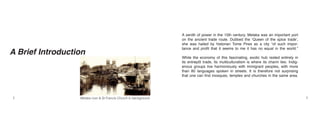
2                 Melaka river & St Francis Church in background.                                                                              3
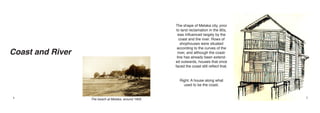
The shape of Melaka city, prior
                                                       to land reclamation in the 90s,
                                                        was influenced largely by the
                                                         coast and the river. Rows of
                                                          shophouses were situated

Coast and River
                                                       according to the curves of the
                                                        river, and although the coast-
                                                       line has already been extend-
                                                      ed outwards, houses that once
                                                      faced the coast still reflect that.


                                                        Right: A house along what
                                                          used to be the coast.


4                 The beach at Melaka, around 1900.                                         5
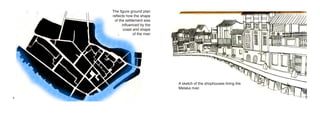
The figure ground plan
    reflects how the shape
     of the settlement was
          influenced by the
           coast and shape
                 of the river


                                A sketch of the shophouses lining the
                                Melaka river.

6                                                                       7
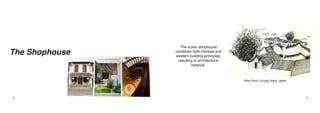
The iconic shophouse
The Shophouse   combines both chinese and
                western building principles,
                 resulting in architectonic
                         balance.


                                               View from Lorong Hang Jebat


8                                                                            9
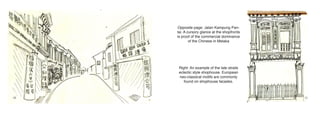
Opposite page: Jalan Kampung Pan-
     tai. A cursory glance at the shopfronts
     is proof of the commercial dominance
             of the Chinese in Melaka


      Right: An example of the late straits
      eclectic style shophouse. European
      neo-classical motifs are commonly
         found on shophouse facades.


10                                             11
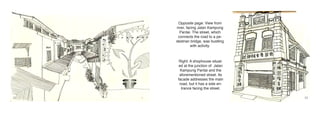
Opposite page: View from
     river, facing Jalan Kampung
       Pantai. The street, which
      connects the road to a pe-
     destrian bridge, was bustling
              with activity.


       Right: A shophouse situat-
       ed at the junction of Jalan
        Kampung Pantai and the
       aforementioned street. Its
      facade addresses the main
       road, but it has a side en-
        trance facing the street.

12                                   13
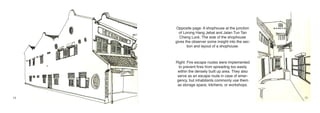
Opposite page: A shophouse at the junction
       of Lorong Hang Jebat and Jalan Tun Tan
        Cheng Lock. The side of the shophouse
     gives the observer some insight into the sec-
            tion and layout of a shophouse.


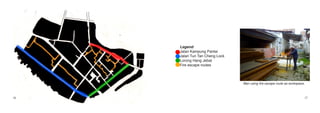
     Right: Fire escape routes were implemented
       to prevent fires from spreading too easily
      within the densely built up area. They also
      serve as an escape route in case of emer-
      gency, but inhabitants commonly use them
      as storage space, kitchens, or workshops.


14                                                   15
Legend
     Jalan Kampung Pantai
     Jalan Tun Tan Cheng Lock
     Lorong Hang Jebat
     Fire escape routes


                                Man using fire escape route as workspace.


16                                                                      17
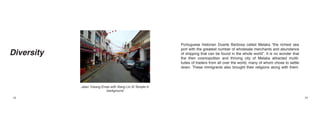
Portuguese historian Duarte Barbosa called Melaka “the richest sea

Diversity
                                                            port with the greatest number of wholesale merchants and abundance
                                                            of shipping that can be found in the whole world”. It is no wonder that
                                                            the then cosmopolitan and thriving city of Melaka attracted muliti-
                                                            tudes of traders from all over the world, many of whom chose to settle
                                                            down. These immigrants also brought their religions along with them.


            Jalan Tukang Emas with Xiang Lin Si Temple in
                           background

18                                                                                                                                    19
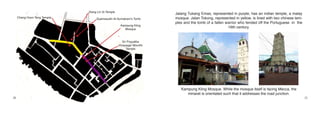
Xiang Lin Si Temple
                                                                        Jalang Tukang Emas, represented in purple, has an indian temple, a malay
     Cheng Hoon Teng Temple        Syamssudin Al-Sumatrani’s Tomb       mosque. Jalan Tokong, represented in yellow, is lined with two chinese tem-
                                                                        ples and the tomb of a fallen warrior who fended off the Portuguese in the
                                                     Kampung Kling
                                                       Mosque
                                                                                                       16th century.


                                                       Sri Poyyatha
                                                    Vinayagar Moorthi
                                                          Temple


                                                                           Kampung Kling Mosque. While the mosque itself is facing Mecca, the
                                                                              minaret is orientated such that it addresses the road junction.
20                                                                                                                                                    21
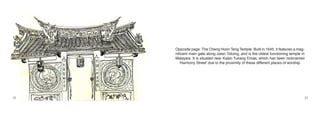
Opposite page: The Cheng Hoon Teng Temple. Built in 1645, it features a mag-
     nificent main gate along Jalan Tokong, and is the oldest functioning temple in
     Malaysia. It is situated near Kalan Tukang Emas, which has been nicknamed
        ‘Harmony Street’ due to the proximity of these different places of worship.


22                                                                                    23
Chee Mansion
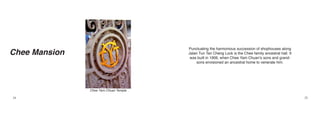
                                       Punctuating the harmonious succession of shophouses along
                                       Jalan Tun Tan Cheng Lock is the Chee family ancestral hall. It
                                        was built in 1906, when Chee Yam Chuan’s sons and grand-
                                           sons envisioned an ancestral home to venerate him.


               Chee Yam Chuan Temple

24                                                                                                      25
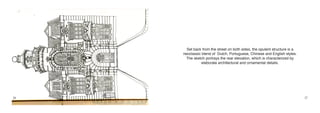
Set back from the street on both sides, the opulent structure is a
     neoclassic blend of Dutch, Portuguese, Chinese and English styles.
       The sketch portrays the rear elevation, which is characterized by
                elaborate architectural and ornamental details.


26                                                                          27

Malacca2

  • 1.
    MELAKA a sketchjournal Yang Kuan Abel A0096469J
  • 2.
    2 A Brief Intoduction 4 Coast and River 8 The Shophouse 18 Diversity 24 Chee Mansion 1
  • 3.
    A zenith ofpower in the 15th century, Melaka was an important port on the ancient trade route. Dubbed the ‘Queen of the spice trade’, she was hailed by historian Tome Pires as a city “of such impor- A Brief Introduction tance and profit that it seems to me it has no equal in the world.” While the economy of this fascinating, exotic hub rested entirely in its entrepôt trade, its multiculturalism is where its charm lies. Indig- enous groups live harmoniously with immigrant peoples, with more than 80 languages spoken in streets. It is therefore not surprising that one can find mosques, temples and churches in the same area. 2 Melaka river & St Francis Church in background. 3
  • 4.
    The shape ofMelaka city, prior to land reclamation in the 90s, was influenced largely by the coast and the river. Rows of shophouses were situated Coast and River according to the curves of the river, and although the coast- line has already been extend- ed outwards, houses that once faced the coast still reflect that. Right: A house along what used to be the coast. 4 The beach at Melaka, around 1900. 5
  • 5.
    The figure groundplan reflects how the shape of the settlement was influenced by the coast and shape of the river A sketch of the shophouses lining the Melaka river. 6 7
  • 6.
    The iconic shophouse TheShophouse combines both chinese and western building principles, resulting in architectonic balance. View from Lorong Hang Jebat 8 9
  • 7.
    Opposite page: JalanKampung Pan- tai. A cursory glance at the shopfronts is proof of the commercial dominance of the Chinese in Melaka Right: An example of the late straits eclectic style shophouse. European neo-classical motifs are commonly found on shophouse facades. 10 11
  • 8.
    Opposite page: Viewfrom river, facing Jalan Kampung Pantai. The street, which connects the road to a pe- destrian bridge, was bustling with activity. Right: A shophouse situat- ed at the junction of Jalan Kampung Pantai and the aforementioned street. Its facade addresses the main road, but it has a side en- trance facing the street. 12 13
  • 9.
    Opposite page: Ashophouse at the junction of Lorong Hang Jebat and Jalan Tun Tan Cheng Lock. The side of the shophouse gives the observer some insight into the sec- tion and layout of a shophouse. Right: Fire escape routes were implemented to prevent fires from spreading too easily within the densely built up area. They also serve as an escape route in case of emer- gency, but inhabitants commonly use them as storage space, kitchens, or workshops. 14 15
  • 10.
    Legend Jalan Kampung Pantai Jalan Tun Tan Cheng Lock Lorong Hang Jebat Fire escape routes Man using fire escape route as workspace. 16 17
  • 11.
    Portuguese historian DuarteBarbosa called Melaka “the richest sea Diversity port with the greatest number of wholesale merchants and abundance of shipping that can be found in the whole world”. It is no wonder that the then cosmopolitan and thriving city of Melaka attracted muliti- tudes of traders from all over the world, many of whom chose to settle down. These immigrants also brought their religions along with them. Jalan Tukang Emas with Xiang Lin Si Temple in background 18 19
  • 12.
    Xiang Lin SiTemple Jalang Tukang Emas, represented in purple, has an indian temple, a malay Cheng Hoon Teng Temple Syamssudin Al-Sumatrani’s Tomb mosque. Jalan Tokong, represented in yellow, is lined with two chinese tem- ples and the tomb of a fallen warrior who fended off the Portuguese in the Kampung Kling Mosque 16th century. Sri Poyyatha Vinayagar Moorthi Temple Kampung Kling Mosque. While the mosque itself is facing Mecca, the minaret is orientated such that it addresses the road junction. 20 21
  • 13.
    Opposite page: TheCheng Hoon Teng Temple. Built in 1645, it features a mag- nificent main gate along Jalan Tokong, and is the oldest functioning temple in Malaysia. It is situated near Kalan Tukang Emas, which has been nicknamed ‘Harmony Street’ due to the proximity of these different places of worship. 22 23
  • 14.
    Chee Mansion Punctuating the harmonious succession of shophouses along Jalan Tun Tan Cheng Lock is the Chee family ancestral hall. It was built in 1906, when Chee Yam Chuan’s sons and grand- sons envisioned an ancestral home to venerate him. Chee Yam Chuan Temple 24 25
  • 15.
    Set back fromthe street on both sides, the opulent structure is a neoclassic blend of Dutch, Portuguese, Chinese and English styles. The sketch portrays the rear elevation, which is characterized by elaborate architectural and ornamental details. 26 27