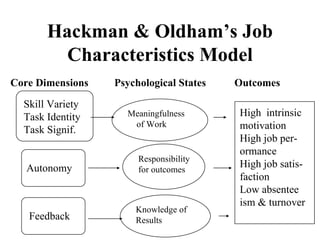
Hackman & Oldham’s Job
         Characteristics Model
Core Dimensions   Psychological States   Outcomes

  Skill Variety
  Task Identity     Meaningfulness       High intrinsic
                     of Work             motivation
  Task Signif.
                                         High job per-
                                         ormance
                       Responsibility
   Autonomy            for outcomes
                                         High job satis-
                                         faction
                                         Low absentee
                                         ism & turnover
                      Knowledge of
   Feedback           Results
Moderating Variables for the
  Job Characteristics Model
• Growth need strength
  – job is a vehicle for personal growth, sense of
    achievement, avenue for feeling success
• Knowledge and skills
• Satisfaction with extrinsic aspects of
  work
Motivating Potential Score
          Skill Variety +Task Identity+Task Significance
                                3

MPS   =                        X

                           Autonomy

                                X

                          Feedback
Implementing Concepts for the
  Job Characteristics Model
• Combine tasks: Effects skill variety, task
  identity, & task significance
• Group tasks into natural work units:
  Effects task significance and task identity
• Give workers contact with customers:
  Effects skill variety, autonomy, feedback
• Vertically load jobs: Effects autonomy
• Open feedback channels: Effects
  feedback
Designing Jobs for Teams
• Team has to be an identifiable group,
  doing a specified piece of work, and be
  self-managing
• Key behaviors: Ask for ideas, give
  suggestions,. listen to others, share
  information, help others
• Manager’s role: Make alterations needed
  for effective group performance, consult
Goals That Motivate
•   Specific Goals
•   Difficult Goals
•   Goal Acceptance
•   Goal Feedback
Why Goals Motivate
• Mobilize energy in relation to goal
• Focus attention towards goals attainment
• Encourages setting of action plans or
  strategies for goal attainment
• Encourages persistence until goal is
  attained
Enhancing Goal Acceptance
• Participation
• Rewards
• Supportiveness
Incentives for Individuals
• For Executives
  – Compensation tied to achieving strategic
    goals
• For Lower Level Employees
  – Tied to performance: bonuses, commissions,
    piecework
Incentives for Groups
•   Team incentives
•   Profit sharing
•   Gain sharing
•   Stock options
Where Pay Fails to Motivate
• Bonuses or merit pay is too small
• Non-existent link between pay and
  performance
• Performance appraisal is done poorly
• Effect of unions
• Adaptation problems
Effective Reward Systems
• Set high goals for performance
• Develop accurate ways to measure
  performance
• Train supervisors in performance
  appraisal
• Link pay to performance
• Make increases noticeable and
  meaningful
Backwards & Forwards
• Summing up: Examined how
  Hackman’s & Oldhams Job
  characteristics Model can be used to
  redesign jobs to engage motivation;
  studied how and why goals setting works
  & looked at ways to use pay as a
  motivator
• Next time we begin our study of groups
  in the organization looking at how they
  function and the role of cohesiveness

Jcm ppoint

  • 1.
    Hackman & Oldham’sJob Characteristics Model Core Dimensions Psychological States Outcomes Skill Variety Task Identity Meaningfulness High intrinsic of Work motivation Task Signif. High job per- ormance Responsibility Autonomy for outcomes High job satis- faction Low absentee ism & turnover Knowledge of Feedback Results
  • 2.
    Moderating Variables forthe Job Characteristics Model • Growth need strength – job is a vehicle for personal growth, sense of achievement, avenue for feeling success • Knowledge and skills • Satisfaction with extrinsic aspects of work
  • 3.
    Motivating Potential Score Skill Variety +Task Identity+Task Significance 3 MPS = X Autonomy X Feedback
  • 4.
    Implementing Concepts forthe Job Characteristics Model • Combine tasks: Effects skill variety, task identity, & task significance • Group tasks into natural work units: Effects task significance and task identity • Give workers contact with customers: Effects skill variety, autonomy, feedback • Vertically load jobs: Effects autonomy • Open feedback channels: Effects feedback
  • 5.
    Designing Jobs forTeams • Team has to be an identifiable group, doing a specified piece of work, and be self-managing • Key behaviors: Ask for ideas, give suggestions,. listen to others, share information, help others • Manager’s role: Make alterations needed for effective group performance, consult
  • 6.
    Goals That Motivate • Specific Goals • Difficult Goals • Goal Acceptance • Goal Feedback
  • 7.
    Why Goals Motivate •Mobilize energy in relation to goal • Focus attention towards goals attainment • Encourages setting of action plans or strategies for goal attainment • Encourages persistence until goal is attained
  • 8.
    Enhancing Goal Acceptance •Participation • Rewards • Supportiveness
  • 9.
    Incentives for Individuals •For Executives – Compensation tied to achieving strategic goals • For Lower Level Employees – Tied to performance: bonuses, commissions, piecework
  • 10.
    Incentives for Groups • Team incentives • Profit sharing • Gain sharing • Stock options
  • 11.
    Where Pay Failsto Motivate • Bonuses or merit pay is too small • Non-existent link between pay and performance • Performance appraisal is done poorly • Effect of unions • Adaptation problems
  • 12.
    Effective Reward Systems •Set high goals for performance • Develop accurate ways to measure performance • Train supervisors in performance appraisal • Link pay to performance • Make increases noticeable and meaningful
  • 13.
    Backwards & Forwards •Summing up: Examined how Hackman’s & Oldhams Job characteristics Model can be used to redesign jobs to engage motivation; studied how and why goals setting works & looked at ways to use pay as a motivator • Next time we begin our study of groups in the organization looking at how they function and the role of cohesiveness