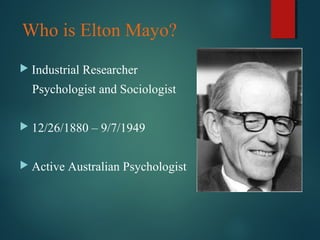
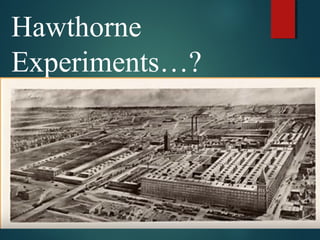
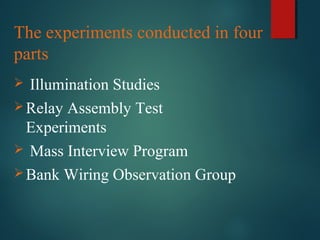
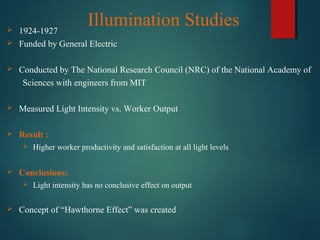
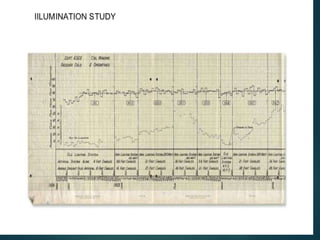
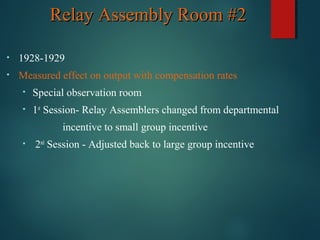
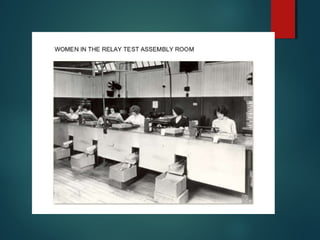
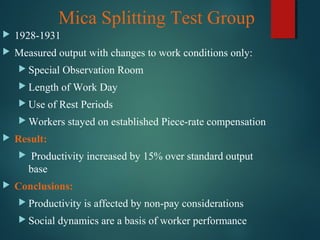
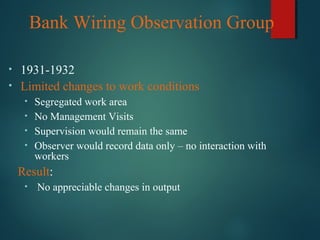
The Hawthorne Experiments conducted by Elton Mayo from 1924-1932 consisted of four parts that studied the impact of various work conditions on worker productivity. The experiments found that changes to factors like lighting levels, pay incentives, work hours and breaks resulted in higher productivity, likely due to the positive effects of attention paid to workers and strengthened social bonds within groups. The experiments helped establish the concept of the "Hawthorne Effect" and showed that productivity is influenced by non-physical work factors like social dynamics and feelings of recognition.