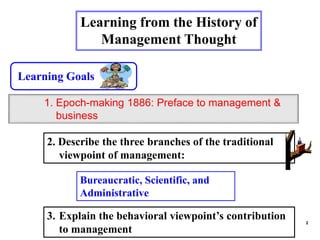
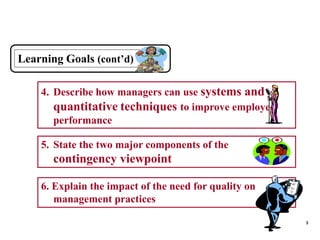
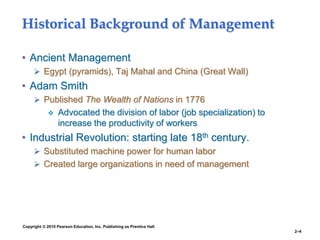
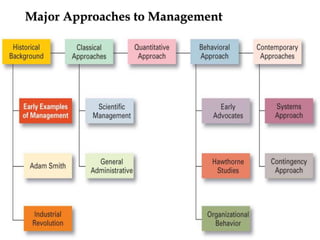
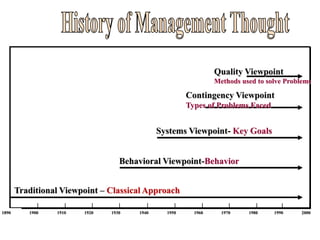
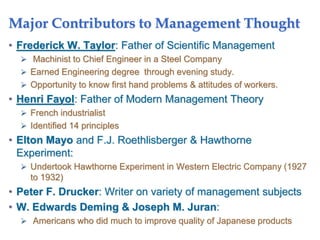
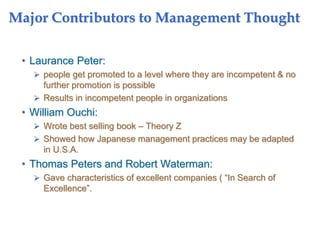
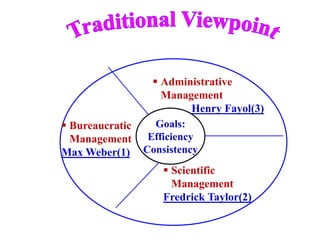
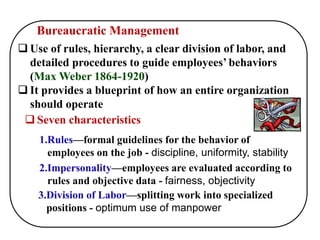
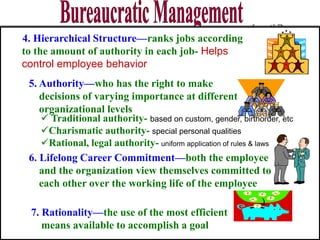
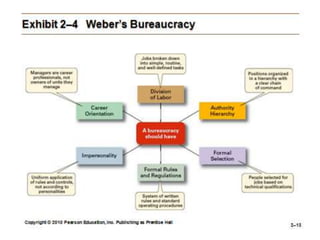
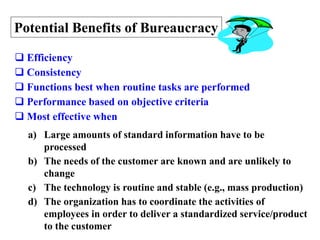
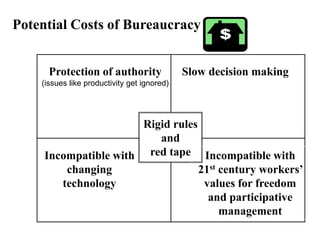
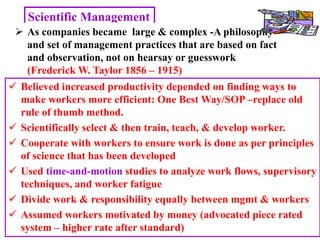
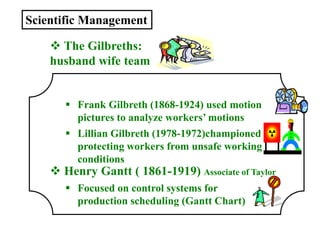
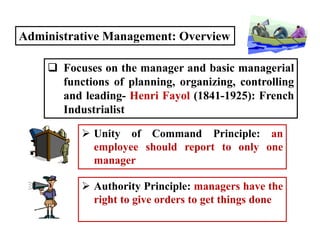
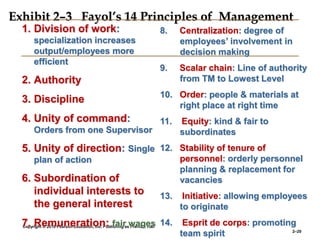
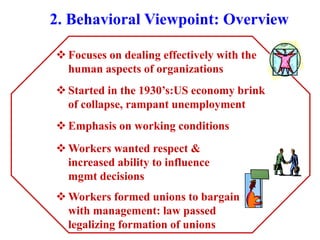
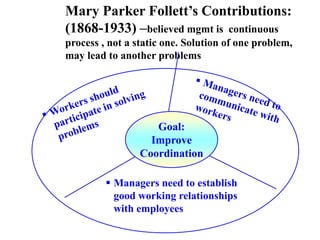
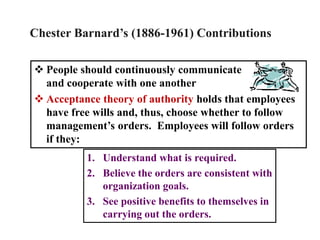
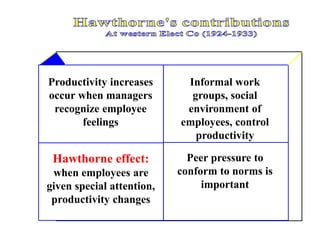
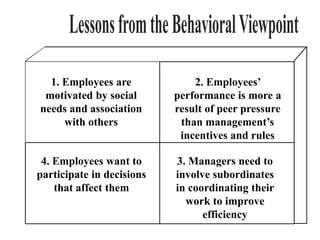
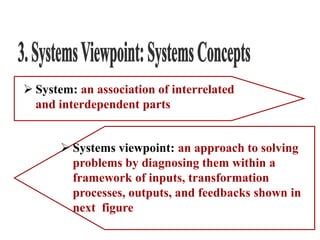
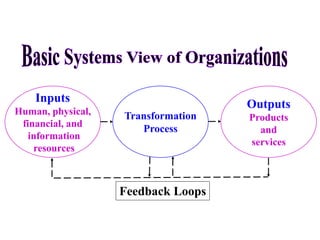
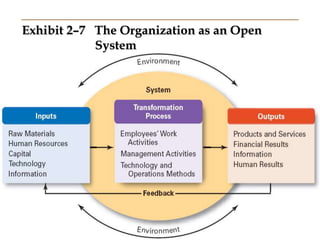
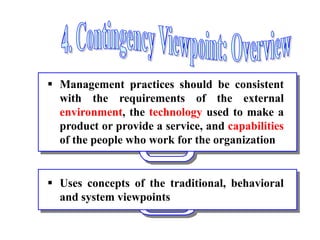
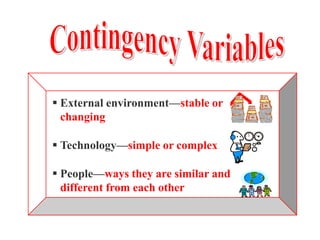
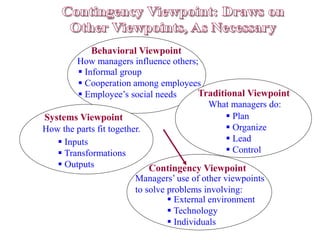
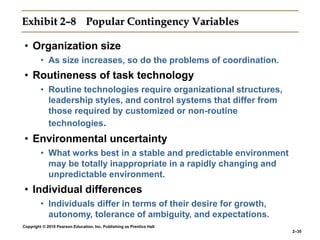
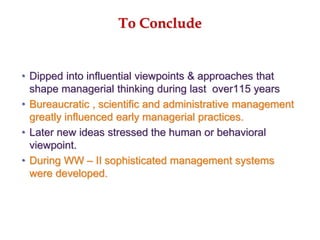
The document discusses the evolution of management approaches over time from traditional to modern views. It begins with the traditional viewpoint including bureaucratic management advocated by Max Weber which uses strict rules and hierarchies. Next it discusses scientific management proposed by Frederick Taylor which aims to increase efficiency through time motion studies. Then it covers administrative management from Henri Fayol which focuses on the basic managerial functions. It moves to the behavioral viewpoint emerging in the 1930s which emphasized the human aspects and social needs of workers based on studies like the Hawthorne experiments. Later came the systems viewpoint which sees organizations as systems transforming inputs to outputs. Finally, the contingency viewpoint recognizes there is no one best way and the approach depends on various internal and external factors.




![History_of_Management_25-10-2022[1].ppt](https://cdn.slidesharecdn.com/ss_thumbnails/historyofmanagement25-10-20221-230117145329-283d71df-thumbnail.jpg?width=640&height=640&fit=bounds)


