Adrenergic drugs
(Sympathomimetics(
Dr. Heba A. Mahmoud(
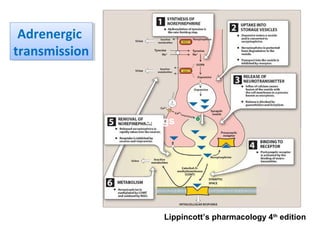
Lippincott’s pharmacology 4th
edition
drugs
Adrenergic
transmission
Adrenergic
transmission
Adrenergic receptors
The adrenergic receptors are classified as αand
β receptors. Both classes have subtypes :
• Alpha adrenoceptors (α):
α1 adrenergic receptors
α2 adrenergic receptors
• Beta- receptors (β):
Beta 1 (β1)
Beta 2 (β2)
Beta 3 (β3)
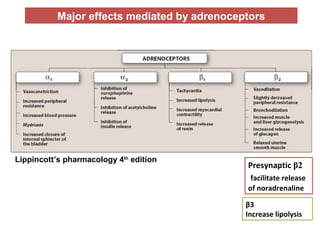
Lippincott’s pharmacology 4th
edition
Presynaptic β2
facilitate release
of noradrenaline
β3
Increase lipolysis
Major effects mediated by adrenoceptors
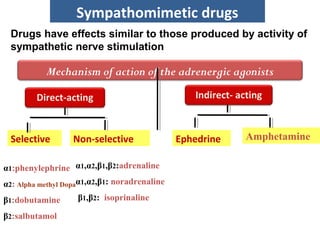
Mechanism of action of the adrenergic agonists
Direct-acting Indirect- acting
Selective Non-selective Ephedrine Amphetamine
α1:phenylephrine
α2: Alpha methyl Dopa
β1:dobutamine
β2:salbutamol
α1,α2,β1,β2:adrenaline
α1,α2,β1: noradrenaline
β1,β2: isoprinaline
Sympathomimetic drugs
Drugs have effects similar to those produced by activity of
sympathetic nerve stimulation
Mechanism of action of the
adrenergic agonists
Mechanism of action of the
adrenergic agonists
Lippincott’s pharmacology 4th
edition
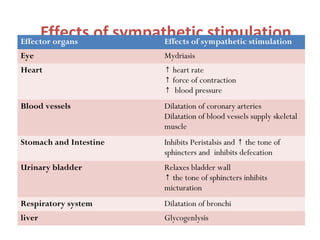
Effects of sympathetic stimulationEffector organs Effects of sympathetic stimulation
Eye Mydriasis
Heart ↑ heart rate
↑ force of contraction
↑ blood pressure
Blood vessels Dilatation of coronary arteries
Dilatation of blood vessels supply skeletal
muscle
Stomach and Intestine Inhibits Peristalsis and the tone of↑
sphincters and inhibits defecation
Urinary bladder Relaxes bladder wall
↑ the tone of sphincters inhibits
micturation
Respiratory system Dilatation of bronchi
liver Glycogenlysis
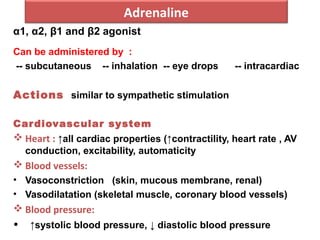
Adrenaline
α1, α2, β1 and β2 agonist
Can be administered by :
-- subcutaneous -- inhalation -- eye drops -- intracardiac
Actions similar to sympathetic stimulation
Cardiovascular system
 Heart : ↑all cardiac properties (↑contractility, heart rate , AV
conduction, excitability, automaticity
 Blood vessels:
• Vasoconstriction (skin, mucous membrane, renal)
• Vasodilatation (skeletal muscle, coronary blood vessels)
 Blood pressure:
• ↑systolic blood pressure, ↓ diastolic blood pressure
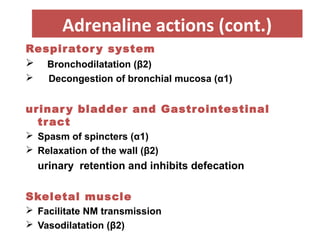
Adrenaline actions (cont.)
Respiratory system
 Bronchodilatation (β2)
 Decongestion of bronchial mucosa (α1)
urinary bladder and Gastrointestinal
tract
 Spasm of spincters (α1)
 Relaxation of the wall (β2)
urinary retention and inhibits defecation
Skeletal muscle
 Facilitate NM transmission
 Vasodilatation (β2)
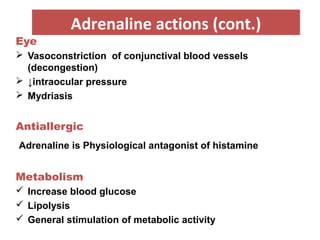
Adrenaline actions (cont.)
Eye
 Vasoconstriction of conjunctival blood vessels
(decongestion)
 ↓intraocular pressure
 Mydriasis
Antiallergic
Adrenaline is Physiological antagonist of histamine
Metabolism
 Increase blood glucose
 Lipolysis
 General stimulation of metabolic activity
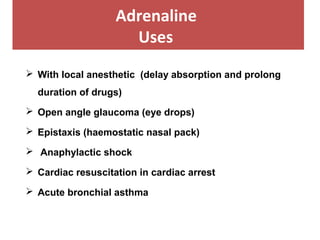
Adrenaline
Uses
 With local anesthetic (delay absorption and prolong
duration of drugs)
 Open angle glaucoma (eye drops)
 Epistaxis (haemostatic nasal pack)
 Anaphylactic shock
 Cardiac resuscitation in cardiac arrest
 Acute bronchial asthma
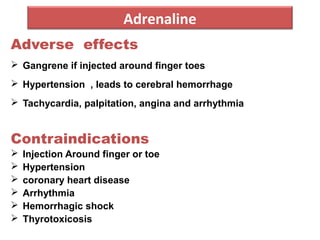
Adrenaline
Adverse effects
 Gangrene if injected around finger toes
 Hypertension , leads to cerebral hemorrhage
 Tachycardia, palpitation, angina and arrhythmia
Contraindications
 Injection Around finger or toe
 Hypertension
 coronary heart disease
 Arrhythmia
 Hemorrhagic shock
 Thyrotoxicosis
Isoprenaline
Non-selective β agonists (stimulate β1 and β2 ):
Actions:
Myocardium contraction & Tachycardia  ↑ BP
Bronchodilatation
Uses:
cardiogenic shock
Asthma
Dopamine
Non-selective α , β , D agonists
Actions
 Small dose:D1»vasodilatation--------------»↑renal blood flow
 Moderate dose:D1+β1-------» positive inotropic effect
 Large dose:α1 ------»vasoconstriction »↑peripheral resistance
Uses
 Shock
 Resistant heart failure
Dobutamine (dobutrex)
Selective β1agonist
positive inotropic  ↑ Cardiac output
 Used by I.V. infusion in treatment of
-Cardiogenic shock,
-Resistant heart failure
-Resistant heart block.
Side effects:
Angina and arrhythmias
Phenylephrine
Selective α1 – agonists
Example :
Action
stimulates α-receptors leading to VC and ↑ blood pressure
VC of mucous membrane blood vessels so promote drainage in
nasal passages
Uses:
Nasal congestion,
Hypotensive states (shock)
To prolong action of local anesthetics
Fundoscopic examination of eye
Adverse effects :
Mydriasis Urine retention
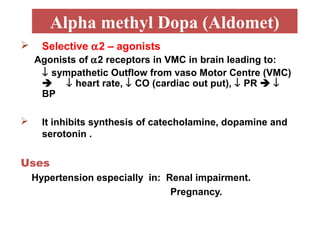
Alpha methyl Dopa (Aldomet)
 Selective α2 – agonists
Agonists of α2 receptors in VMC in brain leading to:
↓ sympathetic Outflow from vaso Motor Centre (VMC)
 ↓ heart rate, ↓ CO (cardiac out put), ↓ PR  ↓
BP
 It inhibits synthesis of catecholamine, dopamine and
serotonin .
Uses
Hypertension especially in: Renal impairment.
Pregnancy.
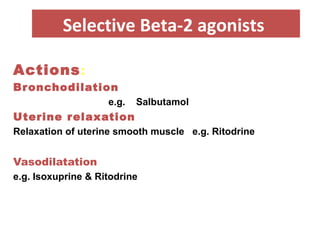
Selective Beta-2 agonists
Actions:
Bronchodilation
e.g. Salbutamol
Uterine relaxation
Relaxation of uterine smooth muscle e.g. Ritodrine
Vasodilatation
e.g. Isoxuprine & Ritodrine
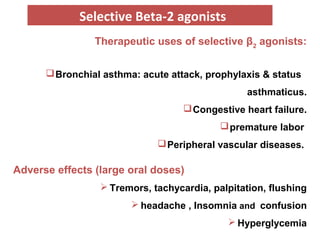
Therapeutic uses of selective β2
agonists:
Bronchial asthma: acute attack, prophylaxis & status
asthmaticus.
Congestive heart failure.
premature labor
Peripheral vascular diseases.
Adverse effects (large oral doses)
 Tremors, tachycardia, palpitation, flushing
 headache , Insomnia and confusion
 Hyperglycemia
Selective Beta-2 agonists
THANK YOUTHANK YOU
Thank you

5. adrenergic drugs

  • 1.
  • 2.
  • 3.
    Adrenergic receptors The adrenergicreceptors are classified as αand β receptors. Both classes have subtypes : • Alpha adrenoceptors (α): α1 adrenergic receptors α2 adrenergic receptors • Beta- receptors (β): Beta 1 (β1) Beta 2 (β2) Beta 3 (β3)
  • 4.
    Lippincott’s pharmacology 4th edition Presynapticβ2 facilitate release of noradrenaline β3 Increase lipolysis Major effects mediated by adrenoceptors
  • 5.
    Mechanism of actionof the adrenergic agonists Direct-acting Indirect- acting Selective Non-selective Ephedrine Amphetamine α1:phenylephrine α2: Alpha methyl Dopa β1:dobutamine β2:salbutamol α1,α2,β1,β2:adrenaline α1,α2,β1: noradrenaline β1,β2: isoprinaline Sympathomimetic drugs Drugs have effects similar to those produced by activity of sympathetic nerve stimulation
  • 6.
    Mechanism of actionof the adrenergic agonists Mechanism of action of the adrenergic agonists Lippincott’s pharmacology 4th edition
  • 7.
    Effects of sympatheticstimulationEffector organs Effects of sympathetic stimulation Eye Mydriasis Heart ↑ heart rate ↑ force of contraction ↑ blood pressure Blood vessels Dilatation of coronary arteries Dilatation of blood vessels supply skeletal muscle Stomach and Intestine Inhibits Peristalsis and the tone of↑ sphincters and inhibits defecation Urinary bladder Relaxes bladder wall ↑ the tone of sphincters inhibits micturation Respiratory system Dilatation of bronchi liver Glycogenlysis
  • 8.
    Adrenaline α1, α2, β1and β2 agonist Can be administered by : -- subcutaneous -- inhalation -- eye drops -- intracardiac Actions similar to sympathetic stimulation Cardiovascular system  Heart : ↑all cardiac properties (↑contractility, heart rate , AV conduction, excitability, automaticity  Blood vessels: • Vasoconstriction (skin, mucous membrane, renal) • Vasodilatation (skeletal muscle, coronary blood vessels)  Blood pressure: • ↑systolic blood pressure, ↓ diastolic blood pressure
  • 9.
    Adrenaline actions (cont.) Respiratorysystem  Bronchodilatation (β2)  Decongestion of bronchial mucosa (α1) urinary bladder and Gastrointestinal tract  Spasm of spincters (α1)  Relaxation of the wall (β2) urinary retention and inhibits defecation Skeletal muscle  Facilitate NM transmission  Vasodilatation (β2)
  • 10.
    Adrenaline actions (cont.) Eye Vasoconstriction of conjunctival blood vessels (decongestion)  ↓intraocular pressure  Mydriasis Antiallergic Adrenaline is Physiological antagonist of histamine Metabolism  Increase blood glucose  Lipolysis  General stimulation of metabolic activity
  • 11.
    Adrenaline Uses  With localanesthetic (delay absorption and prolong duration of drugs)  Open angle glaucoma (eye drops)  Epistaxis (haemostatic nasal pack)  Anaphylactic shock  Cardiac resuscitation in cardiac arrest  Acute bronchial asthma
  • 12.
    Adrenaline Adverse effects  Gangreneif injected around finger toes  Hypertension , leads to cerebral hemorrhage  Tachycardia, palpitation, angina and arrhythmia Contraindications  Injection Around finger or toe  Hypertension  coronary heart disease  Arrhythmia  Hemorrhagic shock  Thyrotoxicosis
  • 13.
    Isoprenaline Non-selective β agonists(stimulate β1 and β2 ): Actions: Myocardium contraction & Tachycardia  ↑ BP Bronchodilatation Uses: cardiogenic shock Asthma
  • 14.
    Dopamine Non-selective α ,β , D agonists Actions  Small dose:D1»vasodilatation--------------»↑renal blood flow  Moderate dose:D1+β1-------» positive inotropic effect  Large dose:α1 ------»vasoconstriction »↑peripheral resistance Uses  Shock  Resistant heart failure
  • 15.
    Dobutamine (dobutrex) Selective β1agonist positiveinotropic  ↑ Cardiac output  Used by I.V. infusion in treatment of -Cardiogenic shock, -Resistant heart failure -Resistant heart block. Side effects: Angina and arrhythmias
  • 16.
    Phenylephrine Selective α1 –agonists Example : Action stimulates α-receptors leading to VC and ↑ blood pressure VC of mucous membrane blood vessels so promote drainage in nasal passages Uses: Nasal congestion, Hypotensive states (shock) To prolong action of local anesthetics Fundoscopic examination of eye Adverse effects : Mydriasis Urine retention
  • 17.
    Alpha methyl Dopa(Aldomet)  Selective α2 – agonists Agonists of α2 receptors in VMC in brain leading to: ↓ sympathetic Outflow from vaso Motor Centre (VMC)  ↓ heart rate, ↓ CO (cardiac out put), ↓ PR  ↓ BP  It inhibits synthesis of catecholamine, dopamine and serotonin . Uses Hypertension especially in: Renal impairment. Pregnancy.
  • 18.
    Selective Beta-2 agonists Actions: Bronchodilation e.g.Salbutamol Uterine relaxation Relaxation of uterine smooth muscle e.g. Ritodrine Vasodilatation e.g. Isoxuprine & Ritodrine
  • 19.
    Therapeutic uses ofselective β2 agonists: Bronchial asthma: acute attack, prophylaxis & status asthmaticus. Congestive heart failure. premature labor Peripheral vascular diseases. Adverse effects (large oral doses)  Tremors, tachycardia, palpitation, flushing  headache , Insomnia and confusion  Hyperglycemia Selective Beta-2 agonists
  • 20.