Lec 8 : adrenergic system
Introduction
• The adrenergic drugs affect receptors that are stimulated by norepinephrine
(noradrenaline) or epinephrine (adrenaline).
• These receptors are known as adrenergic receptors or adrenoceptors.
• Drugs that activate adrenergic receptors are termed sympathomimetics
• Drugs that block activation of adrenergic receptors are termed sympatholytics.
• Some sympathomimetics directly activate adrenergic receptors (direct-acting
agonists)
• Others act indirectly by enhancing release or blocking reuptake of
norepinephrine (indirect-acting agonists).
What is the Adrenergic Neuron??
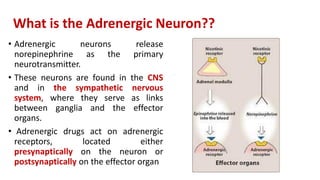
• Adrenergic neurons release
norepinephrine as the primary
neurotransmitter.
• These neurons are found in the CNS
and in the sympathetic nervous
system, where they serve as links
between ganglia and the effector
organs.
• Adrenergic drugs act on adrenergic
receptors, located either
presynaptically on the neuron or
postsynaptically on the effector organ
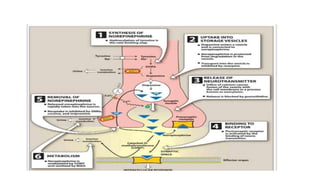
Neurotransmission at adrenergic neurons:
1. Synthesis of norepinephrine.
2. Storage of norepinephrine.
3. Release of norepinephrine.
4. Binding of norepinephrine with receptor (blocked by adrenergic antagonist)
5. Removal of the neurotransmitter from the synaptic gap (inhibited by tricyclic
antidepressants, such as imipramine, or by cocaine).
6.Metabolism of norepinephrine
Removal of norepinephrine
• Norepinephrine may
• Diffuse out of the synaptic space and enter the systemic circulation.
• May be metabolized to inactive metabolites by catechol-O-methyltransferase
(COMT) in the synaptic space.
• Undergo reuptake back into the neuron.
• Reuptake of norepinephrine into the presynaptic neuron is the primary
mechanism for termination of its effects.
Potential fates of recaptured norepinephrine
• Once norepinephrine reenters the adrenergic neuron, it may be taken up
into synaptic vesicles via the amine transporter system and be
sequestered for release by another action potential
• It may persist in a protected pool in the cytoplasm.
• Alternatively, norepinephrine can be oxidized by monoamine oxidase
(MAO) present in neuronal mitochondria.
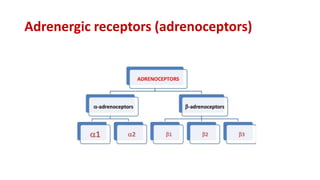
Adrenergic receptors (adrenoceptors)
α Receptors:
• The α-adrenoceptors show a weak response to the synthetic agonist
isoproterenol, but they are responsive to the naturally occurring
catecholamines epinephrine and norepinephrine.
• For α receptors, the rank order of potency is
epinephrine ≥ norepinephrine >> isoproterenol.
• The α-adrenoceptors are subdivided into two subgroups, α1 and α2
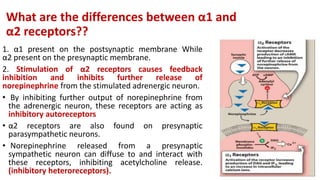
What are the differences between α1 and
α2 receptors??
1. α1 present on the postsynaptic membrane While
α2 present on the presynaptic membrane.
2. Stimulation of α2 receptors causes feedback
inhibition and inhibits further release of
norepinephrine from the stimulated adrenergic neuron.
• By inhibiting further output of norepinephrine from
the adrenergic neuron, these receptors are acting as
inhibitory autoreceptors
• α2 receptors are also found on presynaptic
parasympathetic neurons.
• Norepinephrine released from a presynaptic
sympathetic neuron can diffuse to and interact with
these receptors, inhibiting acetylcholine release.
(inhibitory heteroreceptors).
β Receptors:
• β Receptors exhibit a set of responses different from those of the α receptors.
• These are characterized by a strong response to isoproterenol, with less
sensitivity to epinephrine and norepinephrine.
• Their rank order of potency is: isoproterenol > epinephrine > norepinephrine.
• The β-adrenoceptors can be subdivided into three major subgroups, β1, β2,
and β3
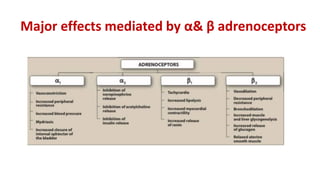
Major effects mediated by α& β adrenoceptors
Classification of Adrenoceptor agonists:
• According to their chemical structure
•By types of adreno receptor stimulation
•By direct or indirect action ( mechanism of action )
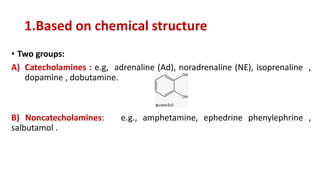
1.Based on chemical structure
• Two groups:
A) Catecholamines : e.g, adrenaline (Ad), noradrenaline (NE), isoprenaline ,
dopamine , dobutamine.
B) Noncatecholamines: e.g., amphetamine, ephedrine phenylephrine ,
salbutamol .
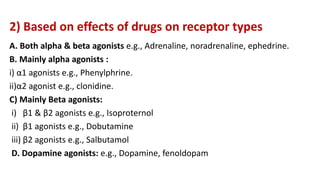
2) Based on effects of drugs on receptor types
A. Both alpha & beta agonists e.g., Adrenaline, noradrenaline, ephedrine.
B. Mainly alpha agonists :
i) α1 agonists e.g., Phenylphrine.
ii)α2 agonist e.g., clonidine.
C) Mainly Beta agonists:
i) β1 & β2 agonists e.g., Isoproternol
ii) β1 agonists e.g., Dobutamine
iii) β2 agonists e.g., Salbutamol
D. Dopamine agonists: e.g., Dopamine, fenoldopam
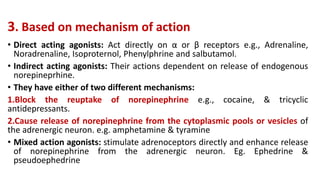
3. Based on mechanism of action
• Direct acting agonists: Act directly on α or β receptors e.g., Adrenaline,
Noradrenaline, Isoproternol, Phenylphrine and salbutamol.
• Indirect acting agonists: Their actions dependent on release of endogenous
norepineprhine.
• They have either of two different mechanisms:
1.Block the reuptake of norepinephrine e.g., cocaine, & tricyclic
antidepressants.
2.Cause release of norepinephrine from the cytoplasmic pools or vesicles of
the adrenergic neuron. e.g. amphetamine & tyramine
• Mixed action agonists: stimulate adrenoceptors directly and enhance release
of norepinephrine from the adrenergic neuron. Eg. Ephedrine &
pseudoephedrine
Epinephrine :
• Epinephrine (Adrenaline) Epinephrine is synthesized from tyrosine in the
adrenal medulla and released, along with small quantities of
norepinephrine, into the bloodstream.
• Epinephrine interacts with both α and β receptors.
• At low doses, β effects (vasodilation) on the vascular system predominate.
• At high doses, α effects (vasoconstriction) are strongest
Actions:
• Cardiovascular:
• Epinephrine strengthens the contractility of the myocardium (positive
inotropic: β1 action).
• It increases its rate of contraction (positive chronotropic: β1 action).
• Cardiac output therefore increases.
• Epinephrine constricts arterioles in the skin, mucous membranes, and viscera
(α effects), and it dilates vessels going to the liver and skeletal muscle (β2
effects).
• Renal blood flow is decreased.
• the cumulative effect is an increase in systolic blood pressure, coupled with a
slight decrease in diastolic pressure.
• Respiratory: Epinephrine causes powerful bronchodilation (β2 action).
• This action relieves all known allergic- or histamine-induced
bronchoconstriction.
• Epinephrine also inhibits the release of allergy mediators such as histamines
from mast cells.
• Hyperglycemia: Epinephrine has a significant hyperglycemic effect because of
• increased glycogenolysis in the liver (β2 effect)
• increased release of glucagon (β2 effect)
• decreased release of insulin (α2 effect).
• Adipose tissue: Epinephrine initiates lipolysis through (stimulate β3 ).
Therapeutic uses
• Epinephrine available as injection only and given intravenously,
subcutaneously, by inhalation, or topically to the eye and has therapeutic
uses.
1. Bronchospasm: in in the emergency treatment of acute asthma and
anaphylactic shock, epinephrine is the drug of choice (given subcutaneously).
2. Anaphylactic shock: Epinephrine is the drug of choice for the treatment of
Type I hypersensitivity reactions in response to allergens.
3. Cardiac arrest: Epinephrine may be used to restore cardiac rhythm.
4. Anesthetics: Epinephrine usually mixed with local anesthetic increase the
duration of the local anesthesia by producing vasoconstriction at the site of
injection.
5. Intraocular surgery: Epinephrine is used in the induction and maintenance
of mydriasis during intraocular surgery
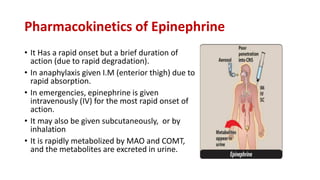
Pharmacokinetics of Epinephrine
• It Has a rapid onset but a brief duration of
action (due to rapid degradation).
• In anaphylaxis given I.M (enterior thigh) due to
rapid absorption.
• In emergencies, epinephrine is given
intravenously (IV) for the most rapid onset of
action.
• It may also be given subcutaneously, or by
inhalation
• It is rapidly metabolized by MAO and COMT,
and the metabolites are excreted in urine.
Side effects and drug-drug interaction
1. Anxiety, fear, tension, headache, and tremor.
2. Cardiac arrhythmias, particularly if the patient is receiving digoxin.
3. Pulmonary edema due to increased afterload caused by
vasoconstrictive properties of the drug.
4. Epinephrine increases the release of endogenous stores of glucose.
In diabetic patients, dosages of insulin may have to be increased.
Norepinephrine
• When norepinephrine is given in therapeutic doses to humans, the α-
adrenergic receptor is most affected.
• Cardiovascular actions :
• NE induced vasoconstriction and this causes a rise in peripheral resistance
due to intense vasoconstriction of most vascular beds, including the kidney
(α1 effect) and increase both systolic and diastolic blood pressures .
• Norepinephrine causes greater vasoconstriction than does epinephrine,
because it does not induce compensatory vasodilation via β2 receptors on
blood vessels supplying skeletal muscles, etc.
• weak β2 activity of norepinephrine also explains why it is not useful in the
treatment of asthma.]
• Therapeutic uses:
• Norepinephrine available as injection and given by intravenous infusion to
treat cardiogenic shock.
• Adverse effects:
• Headache and anxiety
• It may cause blanching and sloughing of skin along injected vein (due to
extreme vasoconstriction).
• It can cause tissue necrosis.
• It should not be administered in peripheral veins, if possible.
Isoproterenol:
• Isoproterenol is a direct-acting synthetic catecholamine that
predominantly stimulates both β1- and β2-adrenergic receptors.
• Its nonselectivity is one of its drawbacks and the reason why it is
rarely used therapeutically.
• Its action on α receptors is insignificant.
Oxymetazoline
• Oxymetazoline is a direct-acting synthetic adrenergic agonist that
stimulates both α1- and α2-adrenergic receptors.
• Uses: It is primarily used locally in the eye or the nose as a
vasoconstrictor.
• Side effects: Oxymetazoline is absorbed in the systemic circulation
and may produce nervousness, headaches, and trouble sleeping.
• When administered in the nose, burning of the nasal mucosa and
sneezing may occur.
• Rebound congestion is observed with long-term use that is why it
should not be used more than 3 days.
Phenylephrine
• Phenylephrine is a direct-acting, synthetic adrenergic drug that binds
primarily to α receptors and favors α1 over α2 .
• Phenylephrine is a vasoconstrictor that raises both systolic and diastolic blood
pressures.
• Uses:
• It used topically as nasal decongestant
• in ophthalmic solution for mydriasis.
• Also as injection to increase blood pressure (treatment of hypotension)
• IT can be used orally as decongestant and replaced pseudoephedrine.
• Side effects:
• Large doses can cause hypertensive headache and cardiac irregularities
Midodrine
• (selective α1 agonist).
• Midodrine, a prodrug, is metabolized to the pharmacologically active
desglymidodrine.
• It is a selective α1 agonist, which acts in the periphery to increase
arterial and venous tone.
• Used in treatment of orthostatic hypotension.
Clonidine(α2 agonist)
• Clonidine acts centrally on α2 to produce inhibition of sympathetic
vasomotor centers, decreasing sympathetic outflow to the periphery.
• Uses: used for the treatment of essential hypertension; minimize
symptoms of withdrawal from opiates, tobacco smoking, and
benzodiazepines.
• Side effects: lethargy, sedation, constipation, and xerostomia.
• Abrupt discontinuation must be avoided to prevent rebound
hypertension.
Selective β2- agonist
• salbutamol and terbutaline:
• They are short-acting β2 agonists
• used primarily as bronchodilators in treatment of asthma.
• Side effect is tremor and tolerance.
• Salmeterol and formoterol
• Are β2-adrenergic selective, long-acting bronchodilators (LABAs).
Indirect-Acting Adrenergic Agonists
• Indirect-acting adrenergic agonists cause norepinephrine release from
presynaptic terminals or inhibit the uptake of norepinephrine .
• They potentiate the effects of norepinephrine produced endogenously.
• These agents do not directly affect postsynaptic receptors.
Amphetamine
• It is a CNS stimulant drug.
• The abuse of this drug has limited its prescribing .
• It increases blood pressure significantly by α1 agonist action on the
vasculature, as well as β1 stimulatory effects on the heart.
• Act by increase the release of dopamine and norepinephrine from
nerve terminals.
• Uses: in treatment of narcolepsy and attention deficit hyperactivity
syndrome in children
Cocaine:
• Cocaine is unique among local anesthetics in having the ability to block
the Na+/K+-activated ATPase (required for cellular uptake of
norepinephrine) on the cell membrane of the adrenergic neuron.
• Consequently, norepinephrine accumulates in the synaptic space,
resulting in enhancement of sympathetic activity and potentiation of the
actions of epinephrine and norepinephrine.
• Like amphetamines, it can increase blood pressure by α-agonist actions
and β-stimulatory effects.
Mixed-Action Adrenergic Agonists
• Mixed-action drugs induce the release of norepinephrine from presynaptic
terminals, and they activate adrenergic receptors on the postsynaptic
membrane. For example Ephedrine and pseudoephedrine
• Ephedrine raises systolic and diastolic blood pressures by vasoconstriction
and cardiac stimulation and can be used to treat hypotension.
• Ephedrine produces bronchodilation and mild stimulation of the CNS.
• This increases alertness, decreases fatigue, and prevents sleep.
• Pseudoephedrine is primarily used orally to treat nasal and sinus congestion
• Both are replaced with other drugs with fewer adverse effects.
Adrenergic antagonists
Overview:
• The adrenergic antagonists (also called adrenergic blockers or
sympatholytics) bind to adrenoceptors but do not trigger the usual
receptor-mediated intracellular effects.
• These drugs act by either reversibly or irreversibly attaching to the
adrenoceptors, thus preventing activation by endogenous
catecholamines.
• the adrenergic antagonists are classified according to their relative
affinities for α or β receptors in the sympathetic nervous system.
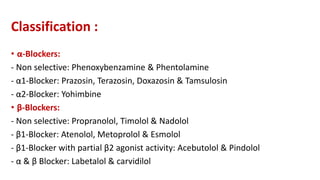
Classification :
• α-Blockers:
- Non selective: Phenoxybenzamine & Phentolamine
- α1-Blocker: Prazosin, Terazosin, Doxazosin & Tamsulosin
- α2-Blocker: Yohimbine
• β-Blockers:
- Non selective: Propranolol, Timolol & Nadolol
- β1-Blocker: Atenolol, Metoprolol & Esmolol
- β1-Blocker with partial β2 agonist activity: Acebutolol & Pindolol
- α & β Blocker: Labetalol & carvidilol
Non-selective α- blockers:
• A- phenoxybenzamine:
• nonselective, linking covalently to both α1-postsynaptic and α2-presynaptic
receptors.
• The block is irreversible and noncompetitive, and the only mechanism for
overcoming the block is to synthesize new adrenoceptors, which requires a
day or more.
• Therefore, the actions of phenoxybenzamine last about 24 hours after a
single administration.
• After the drug is injected, a delay of a few hours occurs before a blockade
develops, because the molecule must undergo biotransformation to the
active form.
Cardiovascular effects:
• By blocking α1 receptors, phenoxybenzamine prevents vasoconstriction of
peripheral blood vessels by endogenous catecholamines.
• The decreased peripheral resistance provokes a reflex tachycardia,
arrhythmia, and even ischemic cardiac events.
• The ability to block presynaptic inhibitory α2 receptors in the heart can
contribute to an increased cardiac output. [Note: These receptors when
blocked will result in more norepinephrine release, which stimulates β1
receptors on the heart to increase cardiac output].
• Thus, the drug has been unsuccessful in maintaining lowered blood pressure
in hypertension.
• Therapeutic uses:
• Phenoxybenzamine is used in the treatment of pheochromocytoma,
a (catecholamine secreting tumor of cells derived from the adrenal
medulla).
• Adverse effects:
• Phenoxybenzamine can cause postural hypotension, and reflex
tachycardia.
Non-selective α- blockers:
• B- phentolamine
• In contrast to phenoxybenzamine, phentolamine produces a competitive
block of α1 and α2 receptors
• The drug's action lasts for approximately 4 hours after a single
administration.
• Like phenoxybenzamine, it produces postural hypotension
• Phentolamine-induced reflex cardiac stimulation and tachycardia
• Phentolamine is also used for the short-term management of
pheochromocytoma.
• It is also used locally to prevent dermal necrosis following extravasation of
norepinephrine.
Selective α1-blockers:
• A- Prazosin, terazosin, doxazosin, tamsulosin:
• Cardiovascular effects:
• All of these agents decrease peripheral vascular resistance and lower arterial
blood pressure by causing the relaxation of both arterial and venous smooth
muscle.
• These drugs, unlike phenoxybenzamine and phentolamine, cause minimal
changes in cardiac output; thus The hypotensive effect is more dramatic than
non selective agents
Selective α1-blockers:
• Therapeutic uses:
• Hypertension: They are used in combination with other antihypertensive drugs
• The α1 receptor antagonists have been used as an alternative to surgery in
patients with symptomatic Benign prostatic hyperplasia (BPH) (tamsulosin and
Silodosin selective α1A blockers)
• Adverse effects:
• Dizziness, a lack of energy, nasal congestion ,headache, drowsiness, and
orthostatic hypotension
• The first dose of these drugs produces an exaggerated orthostatic hypotensive
response that can result in syncope (fainting).
• This action, termed a first-dose effect, may be minimized by adjusting the first
dose to one third or one-fourth of the normal dose and by giving the drug at
bedtime.
Selective α2- blockers :
• Yohimbine blocks α2 causing increase in sympathetic flow and so BP.
• It is sometimes used as a sexual stimulant.
Β blockers :
• Nonselective β antagonist
1.Propanolol: is the prototype β-adrenergic antagonist and blocks both β1
and β2receptors with equal affinity
• Actions:
1.Cardiovascular:
• Propranolol decreases the cardiac output, having both negative inotropic and
chronotropic effects .
• It directly depresses sinoatrial and atrioventricular nodal activity, The resulting
bradycardia usually limits the dose of the drug.
• During exercise or stress, when the sympathetic nervous system is activated, β-
blockers attenuate the expected increase in heart rate, Cardiac output, workload,
and oxygen consumption are decreased by blockade of β1 receptors, and these
effects are useful in the treatment of angina
2. Peripheral vasoconstriction:
• Nonselective blockade of β receptors prevents β2 mediated vasodilation in
skeletal muscles, increasing peripheral vascular resistance.
3.Bronchoconstriction:
• Blocking β2 receptors in the lungs of susceptible patients causes contraction of
the bronchiolar smooth muscle .
• This can precipitate an exacerbation in patients with chronic obstructive
pulmonary disease (COPD) or asthma.
4. Disturbances in glucose metabolism:
• β blockade leads to decreased glycogenolysis and decreased glucagon
secretion.
• If propranolol is given to a diabetic patient receiving insulin, careful monitoring
of blood glucose is essential, because pronounced hypoglycemia may occur
after insulin injection and β-blockers attenuate the normal physiologic
response to hypoglycemia.
Β blockers :
• Therapeutic uses of propranolol:
1. Hypertension:
• Propranolol lowers blood pressure in hypertension by several different
mechanisms of action. , which are
• Decreased cardiac output is the primary mechanism,
• Inhibition of renin release from the kidney
• decreased sympathetic outflow from the CNS
2. hyperthyroidism
3.Angina pectoris:
• Propranolol decreases the oxygen requirement of heart muscle and,
therefore, is effective in reducing chest pain on exertion that is common in
angina.
• Propranolol is, thus, useful in the chronic management of stable angina.
4.Myocardial infarction:
• Propranolol and other β-blockers have a protective effect on the
myocardium. Thus, patients who have had one myocardial infarction appear
to be protected against a second heart attack by prophylactic use of β-
blockers
5. Migraine:
• Propranolol is effective in reducing migraine episodes when used
prophylactically It is one of the more useful β-blockers for this indication, due
to its lipophilic nature that allows it to penetrate the CNS.
• Adverse effects:
1. Bronchoconstriction
2. Arrhythmias:
• Treatment with β-blockers must never be stopped abruptly because of the risk of
precipitating cardiac arrhythmias, which may be severe.
• The β-blockers must be tapered off gradually over a period of at least a few weeks.
Long-term treatment with a β antagonist leads to up-regulation of the β receptor.
On suspension of therapy, the increased receptors can worsen angina or
hypertension.
3. Metabolic disturbances:
• β Blockade leads to decreased glycogenolysis and decreased glucagon secretion.
Fasting hypoglycemia may occur.
4. CNS effects:
• Propranolol has numerous CNS-mediated effects, including depression, dizziness,
lethargy, fatigue, weakness, visual disturbances, hallucinations, short-term memory
loss
5. Sexual impairment
Β blockers :
2. Other non selective b blockers nadolol and timolol:
• They also block β1 - and β2 -adrenoceptors and are more potent
than propranolol.
• Nadolol has a very long duration of action .
• Timolol reduces the production of aqueous humor in the eye.
• It is used topically in the treatment of chronic open-angle glaucoma
Β blockers :
3. Selective β1 antagonists (Acebutolol, atenolol, betaxolol, bisoprolol, esmolol,
metoprolol, and nebivolol)
• Drugs that preferentially block the β1 receptors (cardioselective) minimize the
unwanted bronchoconstriction (β2 effect) seen with propranolol use in asthma
patients.
• This cardioselectivity is most pronounced at low doses and is lost at high doses.
• The cardioselective β-blockers have fewer effects on pulmonary function, peripheral
resistance, and carbohydrate metabolism.
• Therapeutic uses:
• They are useful in hypertensive patients with impaired pulmonary function.
• These agents are also first-line therapy for chronic stable angina.
• Bisoprolol and the extended-release formulation of metoprolol are indicated for the
management of chronic heart failure.
Β blockers :
4. Antagonists with partial agonist activity acebutolol and pindolol:
• Acebutolol (β1-selective antagonist) and pindolol (nonselective β-blocker)
are not pure antagonists.
• These drugs also have the ability to weakly stimulate both β1 and β2
receptors and are said to have intrinsic sympathomimetic activity .
• The result of these opposing actions is a lesser effect on cardiac rate and
cardiac output compared to that of β-blockers without ISA, and less
metabolic effects.
• They are effective in hypertensive patients with moderate bradycardia.
Β blockers :
5. Antagonists of both α and β adrenoceptors ( Labetalol and carvedilol):
• Labetalol and carvedilol are nonselective β-blockers with concurrent α1 -
blocking actions that produce peripheral vasodilation, so further reducing
blood pressure.
• Labetalol is employed as an alternative to methyldopa in the treatment of
pregnancy-induced hypertension.
• Intravenous labetalol is also used to treat hypertensive emergencies.
• Carvedilol is used in the treatment of heart failure.

Lec 8 adrenergic system (1).pdf 2000245

  • 1.
    Lec 8 :adrenergic system
  • 2.
    Introduction • The adrenergicdrugs affect receptors that are stimulated by norepinephrine (noradrenaline) or epinephrine (adrenaline). • These receptors are known as adrenergic receptors or adrenoceptors. • Drugs that activate adrenergic receptors are termed sympathomimetics • Drugs that block activation of adrenergic receptors are termed sympatholytics. • Some sympathomimetics directly activate adrenergic receptors (direct-acting agonists) • Others act indirectly by enhancing release or blocking reuptake of norepinephrine (indirect-acting agonists).
  • 3.
    What is theAdrenergic Neuron?? • Adrenergic neurons release norepinephrine as the primary neurotransmitter. • These neurons are found in the CNS and in the sympathetic nervous system, where they serve as links between ganglia and the effector organs. • Adrenergic drugs act on adrenergic receptors, located either presynaptically on the neuron or postsynaptically on the effector organ
  • 4.
    Neurotransmission at adrenergicneurons: 1. Synthesis of norepinephrine. 2. Storage of norepinephrine. 3. Release of norepinephrine. 4. Binding of norepinephrine with receptor (blocked by adrenergic antagonist) 5. Removal of the neurotransmitter from the synaptic gap (inhibited by tricyclic antidepressants, such as imipramine, or by cocaine). 6.Metabolism of norepinephrine
  • 6.
    Removal of norepinephrine •Norepinephrine may • Diffuse out of the synaptic space and enter the systemic circulation. • May be metabolized to inactive metabolites by catechol-O-methyltransferase (COMT) in the synaptic space. • Undergo reuptake back into the neuron. • Reuptake of norepinephrine into the presynaptic neuron is the primary mechanism for termination of its effects.
  • 7.
    Potential fates ofrecaptured norepinephrine • Once norepinephrine reenters the adrenergic neuron, it may be taken up into synaptic vesicles via the amine transporter system and be sequestered for release by another action potential • It may persist in a protected pool in the cytoplasm. • Alternatively, norepinephrine can be oxidized by monoamine oxidase (MAO) present in neuronal mitochondria.
  • 8.
  • 9.
    α Receptors: • Theα-adrenoceptors show a weak response to the synthetic agonist isoproterenol, but they are responsive to the naturally occurring catecholamines epinephrine and norepinephrine. • For α receptors, the rank order of potency is epinephrine ≥ norepinephrine >> isoproterenol. • The α-adrenoceptors are subdivided into two subgroups, α1 and α2
  • 10.
    What are thedifferences between α1 and α2 receptors?? 1. α1 present on the postsynaptic membrane While α2 present on the presynaptic membrane. 2. Stimulation of α2 receptors causes feedback inhibition and inhibits further release of norepinephrine from the stimulated adrenergic neuron. • By inhibiting further output of norepinephrine from the adrenergic neuron, these receptors are acting as inhibitory autoreceptors • α2 receptors are also found on presynaptic parasympathetic neurons. • Norepinephrine released from a presynaptic sympathetic neuron can diffuse to and interact with these receptors, inhibiting acetylcholine release. (inhibitory heteroreceptors).
  • 11.
    β Receptors: • βReceptors exhibit a set of responses different from those of the α receptors. • These are characterized by a strong response to isoproterenol, with less sensitivity to epinephrine and norepinephrine. • Their rank order of potency is: isoproterenol > epinephrine > norepinephrine. • The β-adrenoceptors can be subdivided into three major subgroups, β1, β2, and β3
  • 12.
    Major effects mediatedby α& β adrenoceptors
  • 13.
    Classification of Adrenoceptoragonists: • According to their chemical structure •By types of adreno receptor stimulation •By direct or indirect action ( mechanism of action )
  • 14.
    1.Based on chemicalstructure • Two groups: A) Catecholamines : e.g, adrenaline (Ad), noradrenaline (NE), isoprenaline , dopamine , dobutamine. B) Noncatecholamines: e.g., amphetamine, ephedrine phenylephrine , salbutamol .
  • 15.
    2) Based oneffects of drugs on receptor types A. Both alpha & beta agonists e.g., Adrenaline, noradrenaline, ephedrine. B. Mainly alpha agonists : i) α1 agonists e.g., Phenylphrine. ii)α2 agonist e.g., clonidine. C) Mainly Beta agonists: i) β1 & β2 agonists e.g., Isoproternol ii) β1 agonists e.g., Dobutamine iii) β2 agonists e.g., Salbutamol D. Dopamine agonists: e.g., Dopamine, fenoldopam
  • 16.
    3. Based onmechanism of action • Direct acting agonists: Act directly on α or β receptors e.g., Adrenaline, Noradrenaline, Isoproternol, Phenylphrine and salbutamol. • Indirect acting agonists: Their actions dependent on release of endogenous norepineprhine. • They have either of two different mechanisms: 1.Block the reuptake of norepinephrine e.g., cocaine, & tricyclic antidepressants. 2.Cause release of norepinephrine from the cytoplasmic pools or vesicles of the adrenergic neuron. e.g. amphetamine & tyramine • Mixed action agonists: stimulate adrenoceptors directly and enhance release of norepinephrine from the adrenergic neuron. Eg. Ephedrine & pseudoephedrine
  • 17.
    Epinephrine : • Epinephrine(Adrenaline) Epinephrine is synthesized from tyrosine in the adrenal medulla and released, along with small quantities of norepinephrine, into the bloodstream. • Epinephrine interacts with both α and β receptors. • At low doses, β effects (vasodilation) on the vascular system predominate. • At high doses, α effects (vasoconstriction) are strongest
  • 18.
    Actions: • Cardiovascular: • Epinephrinestrengthens the contractility of the myocardium (positive inotropic: β1 action). • It increases its rate of contraction (positive chronotropic: β1 action). • Cardiac output therefore increases. • Epinephrine constricts arterioles in the skin, mucous membranes, and viscera (α effects), and it dilates vessels going to the liver and skeletal muscle (β2 effects). • Renal blood flow is decreased. • the cumulative effect is an increase in systolic blood pressure, coupled with a slight decrease in diastolic pressure.
  • 19.
    • Respiratory: Epinephrinecauses powerful bronchodilation (β2 action). • This action relieves all known allergic- or histamine-induced bronchoconstriction. • Epinephrine also inhibits the release of allergy mediators such as histamines from mast cells. • Hyperglycemia: Epinephrine has a significant hyperglycemic effect because of • increased glycogenolysis in the liver (β2 effect) • increased release of glucagon (β2 effect) • decreased release of insulin (α2 effect). • Adipose tissue: Epinephrine initiates lipolysis through (stimulate β3 ).
  • 20.
    Therapeutic uses • Epinephrineavailable as injection only and given intravenously, subcutaneously, by inhalation, or topically to the eye and has therapeutic uses. 1. Bronchospasm: in in the emergency treatment of acute asthma and anaphylactic shock, epinephrine is the drug of choice (given subcutaneously). 2. Anaphylactic shock: Epinephrine is the drug of choice for the treatment of Type I hypersensitivity reactions in response to allergens. 3. Cardiac arrest: Epinephrine may be used to restore cardiac rhythm. 4. Anesthetics: Epinephrine usually mixed with local anesthetic increase the duration of the local anesthesia by producing vasoconstriction at the site of injection. 5. Intraocular surgery: Epinephrine is used in the induction and maintenance of mydriasis during intraocular surgery
  • 21.
    Pharmacokinetics of Epinephrine •It Has a rapid onset but a brief duration of action (due to rapid degradation). • In anaphylaxis given I.M (enterior thigh) due to rapid absorption. • In emergencies, epinephrine is given intravenously (IV) for the most rapid onset of action. • It may also be given subcutaneously, or by inhalation • It is rapidly metabolized by MAO and COMT, and the metabolites are excreted in urine.
  • 22.
    Side effects anddrug-drug interaction 1. Anxiety, fear, tension, headache, and tremor. 2. Cardiac arrhythmias, particularly if the patient is receiving digoxin. 3. Pulmonary edema due to increased afterload caused by vasoconstrictive properties of the drug. 4. Epinephrine increases the release of endogenous stores of glucose. In diabetic patients, dosages of insulin may have to be increased.
  • 23.
    Norepinephrine • When norepinephrineis given in therapeutic doses to humans, the α- adrenergic receptor is most affected. • Cardiovascular actions : • NE induced vasoconstriction and this causes a rise in peripheral resistance due to intense vasoconstriction of most vascular beds, including the kidney (α1 effect) and increase both systolic and diastolic blood pressures . • Norepinephrine causes greater vasoconstriction than does epinephrine, because it does not induce compensatory vasodilation via β2 receptors on blood vessels supplying skeletal muscles, etc. • weak β2 activity of norepinephrine also explains why it is not useful in the treatment of asthma.]
  • 24.
    • Therapeutic uses: •Norepinephrine available as injection and given by intravenous infusion to treat cardiogenic shock. • Adverse effects: • Headache and anxiety • It may cause blanching and sloughing of skin along injected vein (due to extreme vasoconstriction). • It can cause tissue necrosis. • It should not be administered in peripheral veins, if possible.
  • 25.
    Isoproterenol: • Isoproterenol isa direct-acting synthetic catecholamine that predominantly stimulates both β1- and β2-adrenergic receptors. • Its nonselectivity is one of its drawbacks and the reason why it is rarely used therapeutically. • Its action on α receptors is insignificant.
  • 26.
    Oxymetazoline • Oxymetazoline isa direct-acting synthetic adrenergic agonist that stimulates both α1- and α2-adrenergic receptors. • Uses: It is primarily used locally in the eye or the nose as a vasoconstrictor. • Side effects: Oxymetazoline is absorbed in the systemic circulation and may produce nervousness, headaches, and trouble sleeping. • When administered in the nose, burning of the nasal mucosa and sneezing may occur. • Rebound congestion is observed with long-term use that is why it should not be used more than 3 days.
  • 27.
    Phenylephrine • Phenylephrine isa direct-acting, synthetic adrenergic drug that binds primarily to α receptors and favors α1 over α2 . • Phenylephrine is a vasoconstrictor that raises both systolic and diastolic blood pressures. • Uses: • It used topically as nasal decongestant • in ophthalmic solution for mydriasis. • Also as injection to increase blood pressure (treatment of hypotension) • IT can be used orally as decongestant and replaced pseudoephedrine. • Side effects: • Large doses can cause hypertensive headache and cardiac irregularities
  • 28.
    Midodrine • (selective α1agonist). • Midodrine, a prodrug, is metabolized to the pharmacologically active desglymidodrine. • It is a selective α1 agonist, which acts in the periphery to increase arterial and venous tone. • Used in treatment of orthostatic hypotension.
  • 29.
    Clonidine(α2 agonist) • Clonidineacts centrally on α2 to produce inhibition of sympathetic vasomotor centers, decreasing sympathetic outflow to the periphery. • Uses: used for the treatment of essential hypertension; minimize symptoms of withdrawal from opiates, tobacco smoking, and benzodiazepines. • Side effects: lethargy, sedation, constipation, and xerostomia. • Abrupt discontinuation must be avoided to prevent rebound hypertension.
  • 30.
    Selective β2- agonist •salbutamol and terbutaline: • They are short-acting β2 agonists • used primarily as bronchodilators in treatment of asthma. • Side effect is tremor and tolerance. • Salmeterol and formoterol • Are β2-adrenergic selective, long-acting bronchodilators (LABAs).
  • 31.
    Indirect-Acting Adrenergic Agonists •Indirect-acting adrenergic agonists cause norepinephrine release from presynaptic terminals or inhibit the uptake of norepinephrine . • They potentiate the effects of norepinephrine produced endogenously. • These agents do not directly affect postsynaptic receptors.
  • 32.
    Amphetamine • It isa CNS stimulant drug. • The abuse of this drug has limited its prescribing . • It increases blood pressure significantly by α1 agonist action on the vasculature, as well as β1 stimulatory effects on the heart. • Act by increase the release of dopamine and norepinephrine from nerve terminals. • Uses: in treatment of narcolepsy and attention deficit hyperactivity syndrome in children
  • 33.
    Cocaine: • Cocaine isunique among local anesthetics in having the ability to block the Na+/K+-activated ATPase (required for cellular uptake of norepinephrine) on the cell membrane of the adrenergic neuron. • Consequently, norepinephrine accumulates in the synaptic space, resulting in enhancement of sympathetic activity and potentiation of the actions of epinephrine and norepinephrine. • Like amphetamines, it can increase blood pressure by α-agonist actions and β-stimulatory effects.
  • 34.
    Mixed-Action Adrenergic Agonists •Mixed-action drugs induce the release of norepinephrine from presynaptic terminals, and they activate adrenergic receptors on the postsynaptic membrane. For example Ephedrine and pseudoephedrine • Ephedrine raises systolic and diastolic blood pressures by vasoconstriction and cardiac stimulation and can be used to treat hypotension. • Ephedrine produces bronchodilation and mild stimulation of the CNS. • This increases alertness, decreases fatigue, and prevents sleep. • Pseudoephedrine is primarily used orally to treat nasal and sinus congestion • Both are replaced with other drugs with fewer adverse effects.
  • 35.
  • 36.
    Overview: • The adrenergicantagonists (also called adrenergic blockers or sympatholytics) bind to adrenoceptors but do not trigger the usual receptor-mediated intracellular effects. • These drugs act by either reversibly or irreversibly attaching to the adrenoceptors, thus preventing activation by endogenous catecholamines. • the adrenergic antagonists are classified according to their relative affinities for α or β receptors in the sympathetic nervous system.
  • 37.
    Classification : • α-Blockers: -Non selective: Phenoxybenzamine & Phentolamine - α1-Blocker: Prazosin, Terazosin, Doxazosin & Tamsulosin - α2-Blocker: Yohimbine • β-Blockers: - Non selective: Propranolol, Timolol & Nadolol - β1-Blocker: Atenolol, Metoprolol & Esmolol - β1-Blocker with partial β2 agonist activity: Acebutolol & Pindolol - α & β Blocker: Labetalol & carvidilol
  • 38.
    Non-selective α- blockers: •A- phenoxybenzamine: • nonselective, linking covalently to both α1-postsynaptic and α2-presynaptic receptors. • The block is irreversible and noncompetitive, and the only mechanism for overcoming the block is to synthesize new adrenoceptors, which requires a day or more. • Therefore, the actions of phenoxybenzamine last about 24 hours after a single administration. • After the drug is injected, a delay of a few hours occurs before a blockade develops, because the molecule must undergo biotransformation to the active form.
  • 39.
    Cardiovascular effects: • Byblocking α1 receptors, phenoxybenzamine prevents vasoconstriction of peripheral blood vessels by endogenous catecholamines. • The decreased peripheral resistance provokes a reflex tachycardia, arrhythmia, and even ischemic cardiac events. • The ability to block presynaptic inhibitory α2 receptors in the heart can contribute to an increased cardiac output. [Note: These receptors when blocked will result in more norepinephrine release, which stimulates β1 receptors on the heart to increase cardiac output]. • Thus, the drug has been unsuccessful in maintaining lowered blood pressure in hypertension.
  • 40.
    • Therapeutic uses: •Phenoxybenzamine is used in the treatment of pheochromocytoma, a (catecholamine secreting tumor of cells derived from the adrenal medulla). • Adverse effects: • Phenoxybenzamine can cause postural hypotension, and reflex tachycardia.
  • 41.
    Non-selective α- blockers: •B- phentolamine • In contrast to phenoxybenzamine, phentolamine produces a competitive block of α1 and α2 receptors • The drug's action lasts for approximately 4 hours after a single administration. • Like phenoxybenzamine, it produces postural hypotension • Phentolamine-induced reflex cardiac stimulation and tachycardia • Phentolamine is also used for the short-term management of pheochromocytoma. • It is also used locally to prevent dermal necrosis following extravasation of norepinephrine.
  • 42.
    Selective α1-blockers: • A-Prazosin, terazosin, doxazosin, tamsulosin: • Cardiovascular effects: • All of these agents decrease peripheral vascular resistance and lower arterial blood pressure by causing the relaxation of both arterial and venous smooth muscle. • These drugs, unlike phenoxybenzamine and phentolamine, cause minimal changes in cardiac output; thus The hypotensive effect is more dramatic than non selective agents
  • 43.
    Selective α1-blockers: • Therapeuticuses: • Hypertension: They are used in combination with other antihypertensive drugs • The α1 receptor antagonists have been used as an alternative to surgery in patients with symptomatic Benign prostatic hyperplasia (BPH) (tamsulosin and Silodosin selective α1A blockers) • Adverse effects: • Dizziness, a lack of energy, nasal congestion ,headache, drowsiness, and orthostatic hypotension • The first dose of these drugs produces an exaggerated orthostatic hypotensive response that can result in syncope (fainting). • This action, termed a first-dose effect, may be minimized by adjusting the first dose to one third or one-fourth of the normal dose and by giving the drug at bedtime.
  • 44.
    Selective α2- blockers: • Yohimbine blocks α2 causing increase in sympathetic flow and so BP. • It is sometimes used as a sexual stimulant.
  • 45.
    Β blockers : •Nonselective β antagonist 1.Propanolol: is the prototype β-adrenergic antagonist and blocks both β1 and β2receptors with equal affinity • Actions: 1.Cardiovascular: • Propranolol decreases the cardiac output, having both negative inotropic and chronotropic effects . • It directly depresses sinoatrial and atrioventricular nodal activity, The resulting bradycardia usually limits the dose of the drug. • During exercise or stress, when the sympathetic nervous system is activated, β- blockers attenuate the expected increase in heart rate, Cardiac output, workload, and oxygen consumption are decreased by blockade of β1 receptors, and these effects are useful in the treatment of angina
  • 46.
    2. Peripheral vasoconstriction: •Nonselective blockade of β receptors prevents β2 mediated vasodilation in skeletal muscles, increasing peripheral vascular resistance. 3.Bronchoconstriction: • Blocking β2 receptors in the lungs of susceptible patients causes contraction of the bronchiolar smooth muscle . • This can precipitate an exacerbation in patients with chronic obstructive pulmonary disease (COPD) or asthma. 4. Disturbances in glucose metabolism: • β blockade leads to decreased glycogenolysis and decreased glucagon secretion. • If propranolol is given to a diabetic patient receiving insulin, careful monitoring of blood glucose is essential, because pronounced hypoglycemia may occur after insulin injection and β-blockers attenuate the normal physiologic response to hypoglycemia.
  • 47.
    Β blockers : •Therapeutic uses of propranolol: 1. Hypertension: • Propranolol lowers blood pressure in hypertension by several different mechanisms of action. , which are • Decreased cardiac output is the primary mechanism, • Inhibition of renin release from the kidney • decreased sympathetic outflow from the CNS 2. hyperthyroidism
  • 48.
    3.Angina pectoris: • Propranololdecreases the oxygen requirement of heart muscle and, therefore, is effective in reducing chest pain on exertion that is common in angina. • Propranolol is, thus, useful in the chronic management of stable angina. 4.Myocardial infarction: • Propranolol and other β-blockers have a protective effect on the myocardium. Thus, patients who have had one myocardial infarction appear to be protected against a second heart attack by prophylactic use of β- blockers 5. Migraine: • Propranolol is effective in reducing migraine episodes when used prophylactically It is one of the more useful β-blockers for this indication, due to its lipophilic nature that allows it to penetrate the CNS.
  • 49.
    • Adverse effects: 1.Bronchoconstriction 2. Arrhythmias: • Treatment with β-blockers must never be stopped abruptly because of the risk of precipitating cardiac arrhythmias, which may be severe. • The β-blockers must be tapered off gradually over a period of at least a few weeks. Long-term treatment with a β antagonist leads to up-regulation of the β receptor. On suspension of therapy, the increased receptors can worsen angina or hypertension. 3. Metabolic disturbances: • β Blockade leads to decreased glycogenolysis and decreased glucagon secretion. Fasting hypoglycemia may occur. 4. CNS effects: • Propranolol has numerous CNS-mediated effects, including depression, dizziness, lethargy, fatigue, weakness, visual disturbances, hallucinations, short-term memory loss 5. Sexual impairment
  • 50.
    Β blockers : 2.Other non selective b blockers nadolol and timolol: • They also block β1 - and β2 -adrenoceptors and are more potent than propranolol. • Nadolol has a very long duration of action . • Timolol reduces the production of aqueous humor in the eye. • It is used topically in the treatment of chronic open-angle glaucoma
  • 51.
    Β blockers : 3.Selective β1 antagonists (Acebutolol, atenolol, betaxolol, bisoprolol, esmolol, metoprolol, and nebivolol) • Drugs that preferentially block the β1 receptors (cardioselective) minimize the unwanted bronchoconstriction (β2 effect) seen with propranolol use in asthma patients. • This cardioselectivity is most pronounced at low doses and is lost at high doses. • The cardioselective β-blockers have fewer effects on pulmonary function, peripheral resistance, and carbohydrate metabolism. • Therapeutic uses: • They are useful in hypertensive patients with impaired pulmonary function. • These agents are also first-line therapy for chronic stable angina. • Bisoprolol and the extended-release formulation of metoprolol are indicated for the management of chronic heart failure.
  • 52.
    Β blockers : 4.Antagonists with partial agonist activity acebutolol and pindolol: • Acebutolol (β1-selective antagonist) and pindolol (nonselective β-blocker) are not pure antagonists. • These drugs also have the ability to weakly stimulate both β1 and β2 receptors and are said to have intrinsic sympathomimetic activity . • The result of these opposing actions is a lesser effect on cardiac rate and cardiac output compared to that of β-blockers without ISA, and less metabolic effects. • They are effective in hypertensive patients with moderate bradycardia.
  • 53.
    Β blockers : 5.Antagonists of both α and β adrenoceptors ( Labetalol and carvedilol): • Labetalol and carvedilol are nonselective β-blockers with concurrent α1 - blocking actions that produce peripheral vasodilation, so further reducing blood pressure. • Labetalol is employed as an alternative to methyldopa in the treatment of pregnancy-induced hypertension. • Intravenous labetalol is also used to treat hypertensive emergencies. • Carvedilol is used in the treatment of heart failure.