Instrument Landing System 
Department: Electronics and Communication 
Engineering 
Batch: 2011-2015 
CAMELLIA INSTITUTE OF TECHNOLOGY
Contents 
1. What is an ILS? 
2. History of ILS 
3. Components of ILS 
4. Ground Installations 
5. How does an ILS work? 
6. Marker Beacons and Precision Runway 
7. Global Positioning System 
8. On-Board Flight Equipment 
9. Unfortunates
What is ILS? 
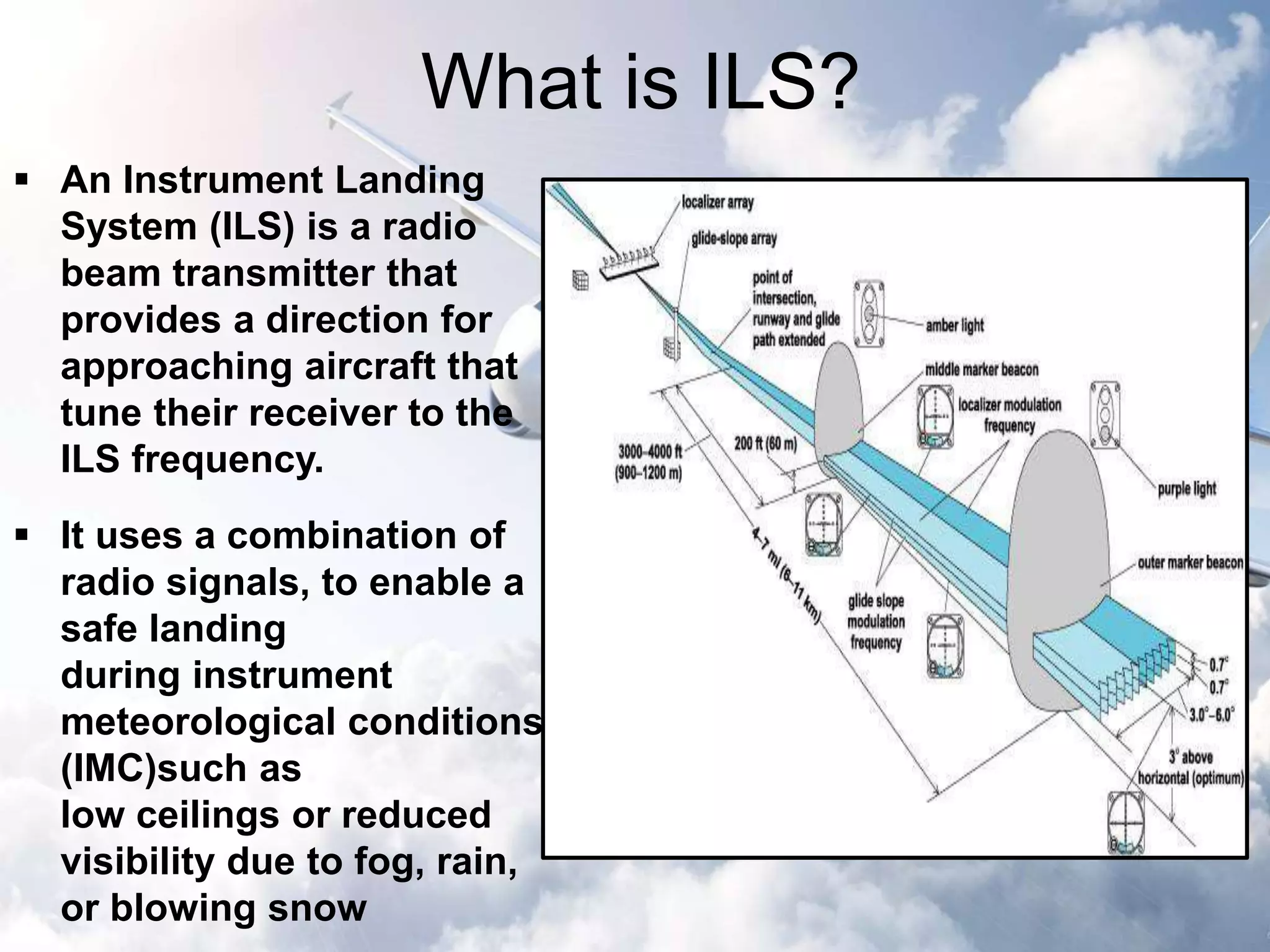
 An Instrument Landing 
System (ILS) is a radio 
beam transmitter that 
provides a direction for 
approaching aircraft that 
tune their receiver to the 
ILS frequency. 
 It uses a combination of 
radio signals, to enable a 
safe landing 
during instrument 
meteorological conditions 
(IMC)such as 
low ceilings or reduced 
visibility due to fog, rain, 
or blowing snow
History of ILS 
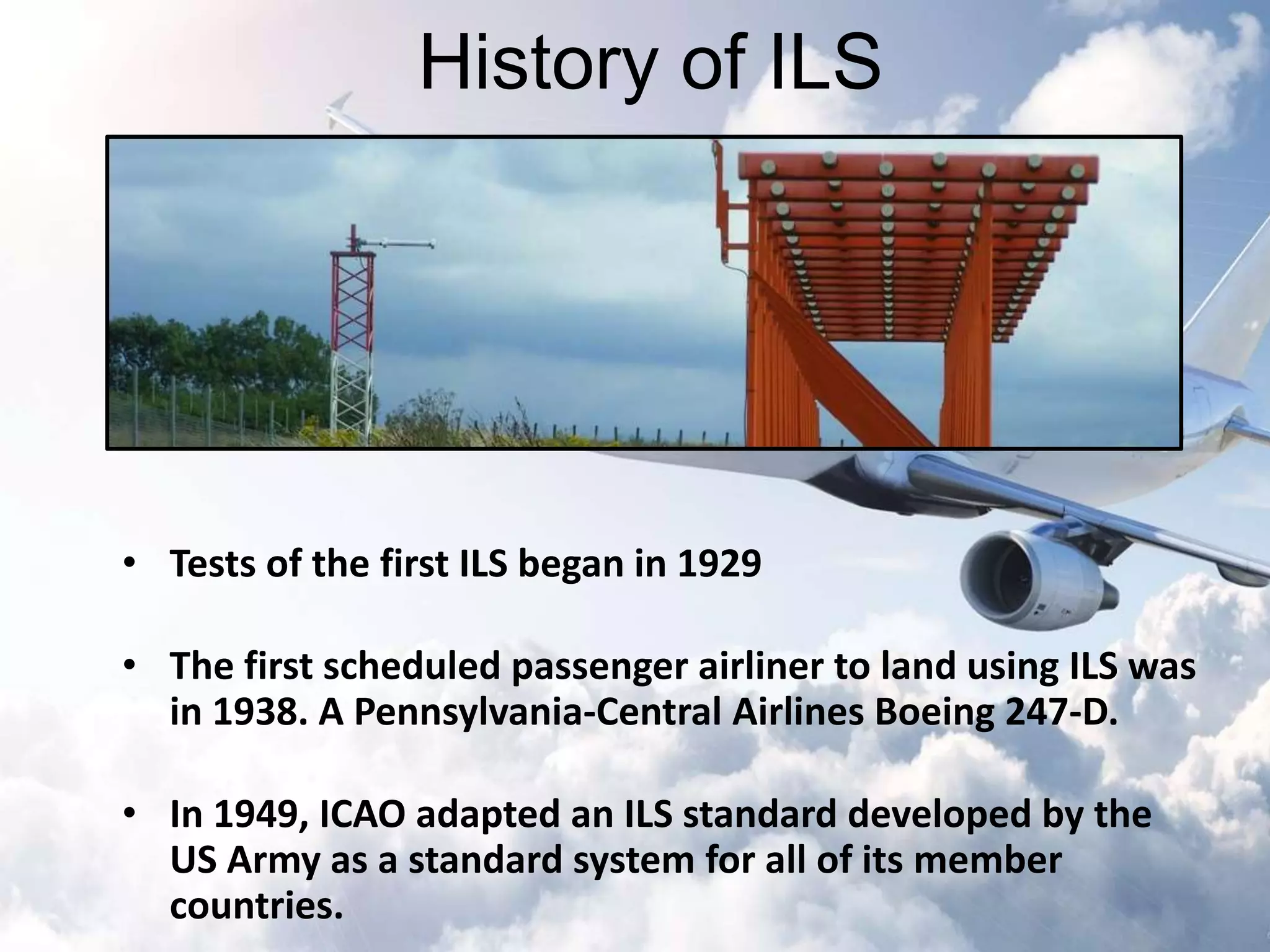
• Tests of the first ILS began in 1929 
• The first scheduled passenger airliner to land using ILS was 
in 1938. A Pennsylvania-Central Airlines Boeing 247-D. 
• In 1949, ICAO adapted an ILS standard developed by the 
US Army as a standard system for all of its member 
countries.
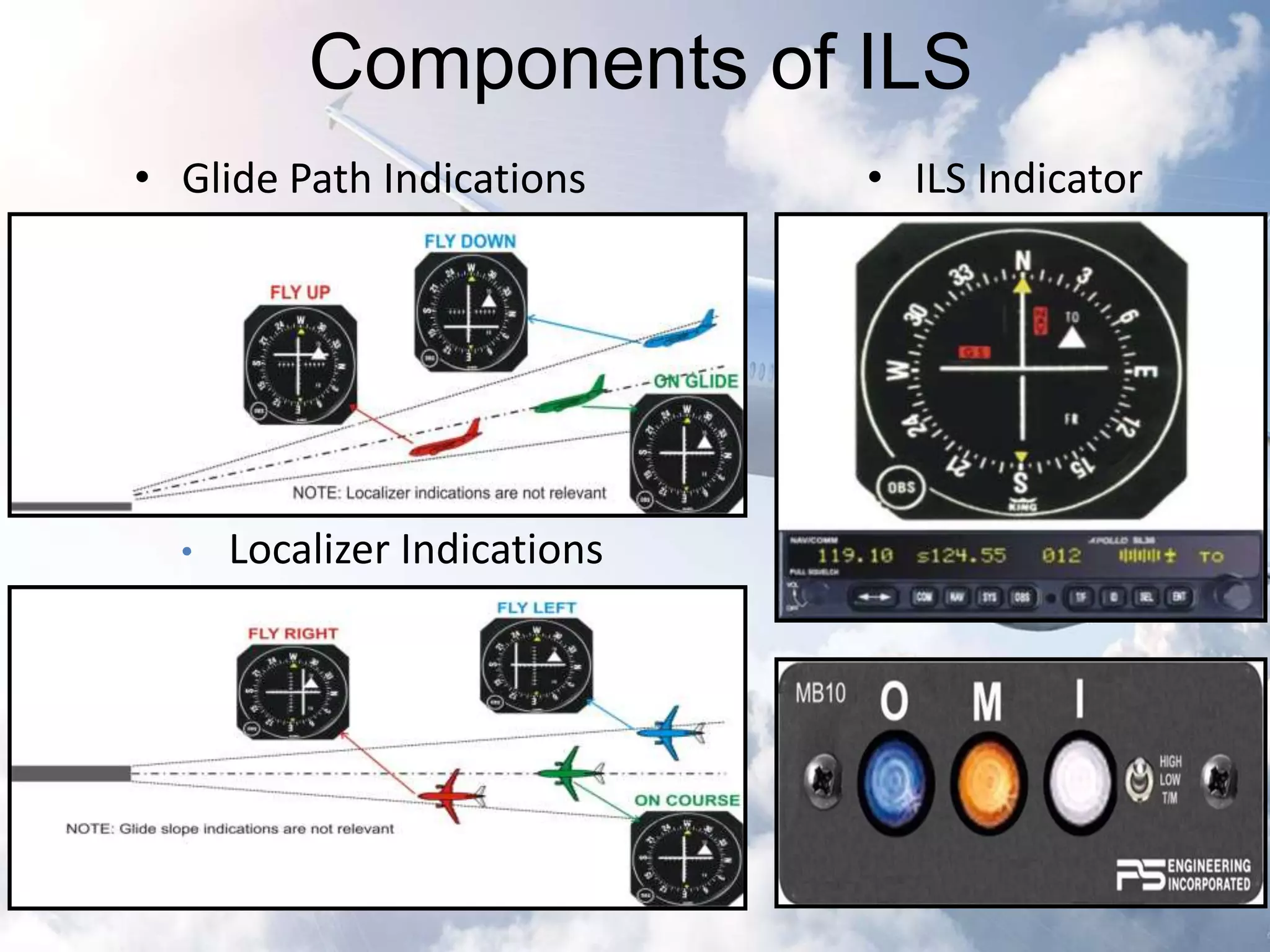
Components of ILS 
• Glide Path Indications • ILS Indicator 
• Localizer Indications
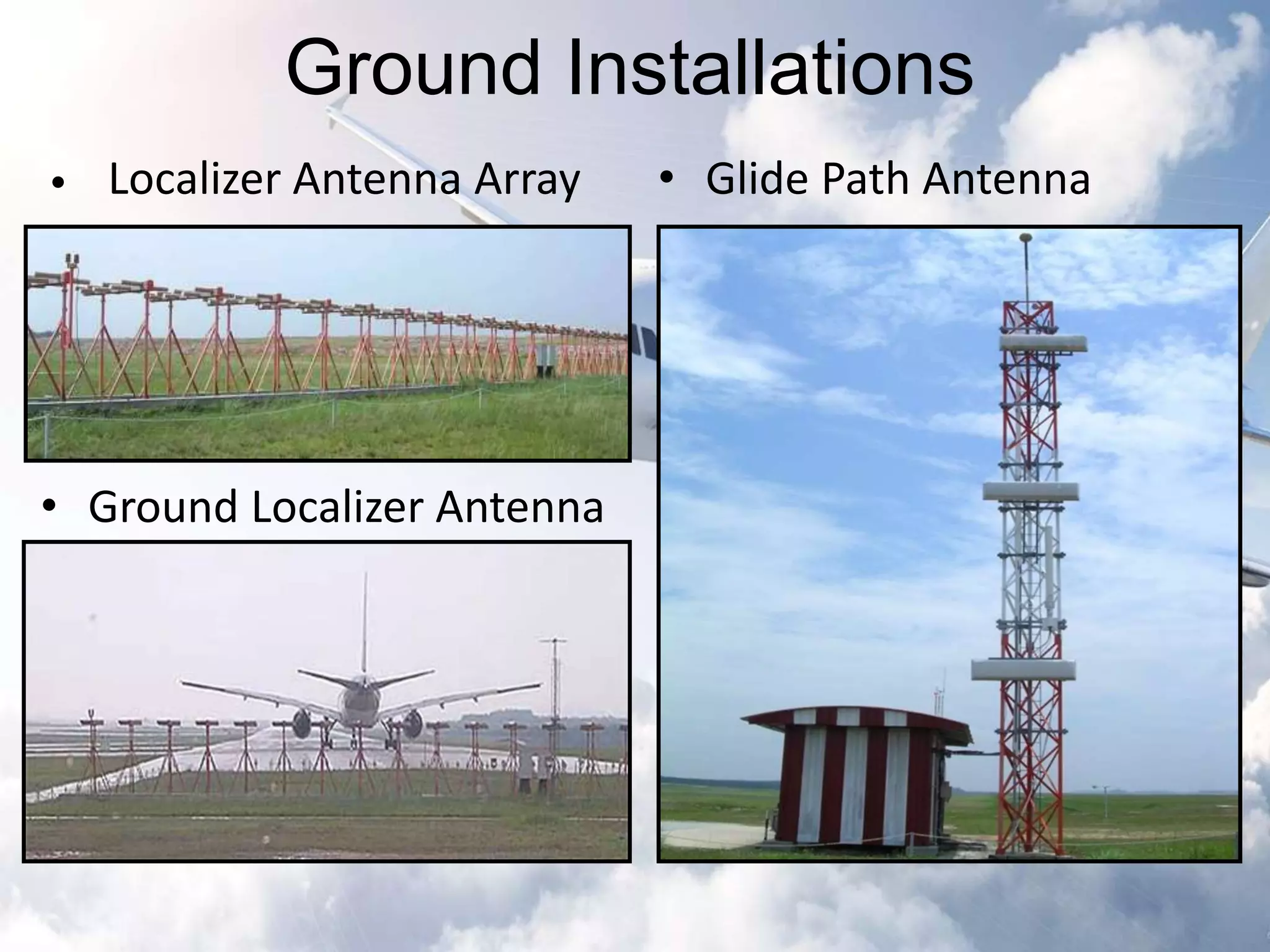
Ground Installations 
• Localizer Antenna Array • Glide Path Antenna 
• Ground Localizer Antenna
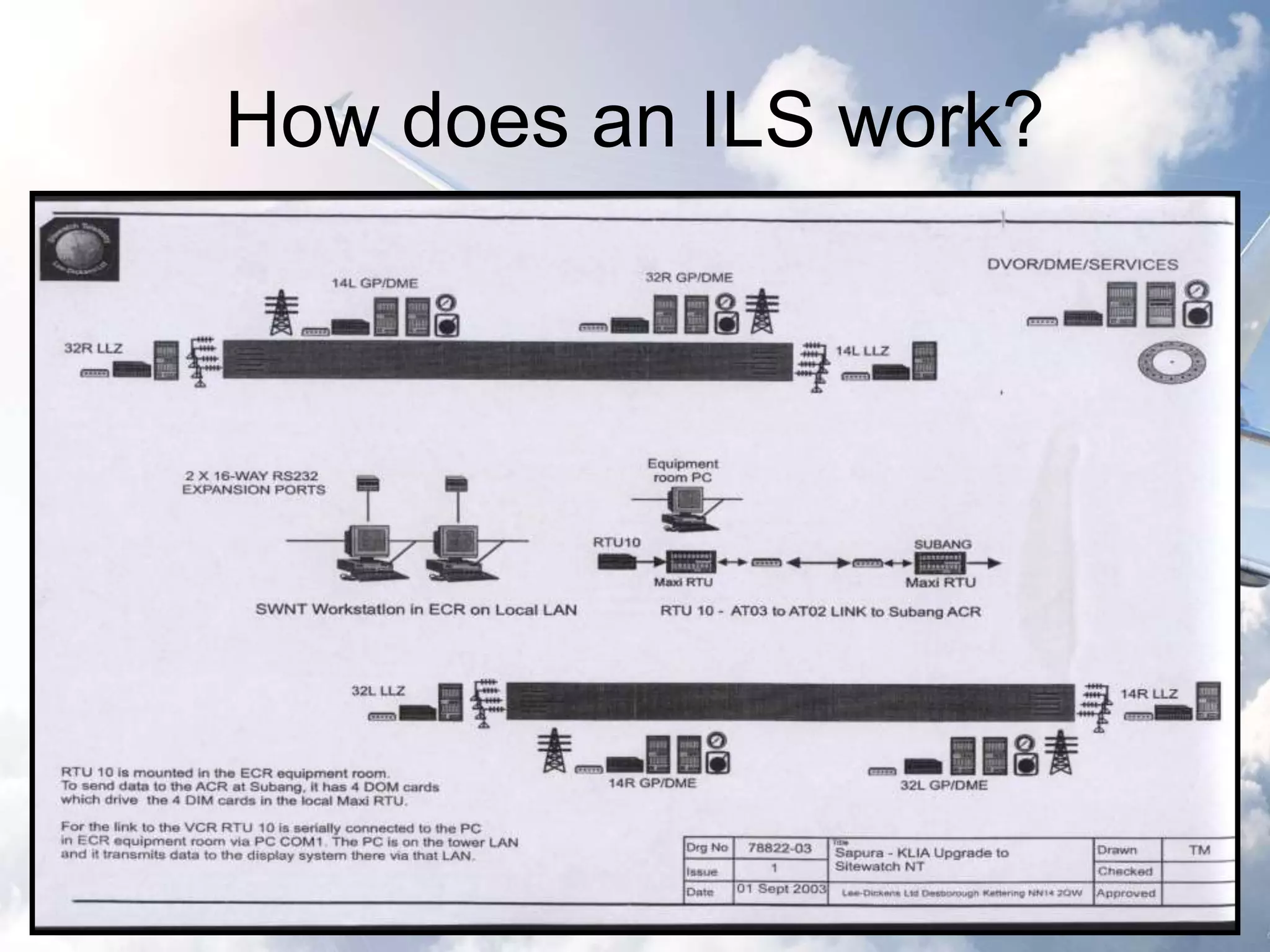
How does an ILS work?
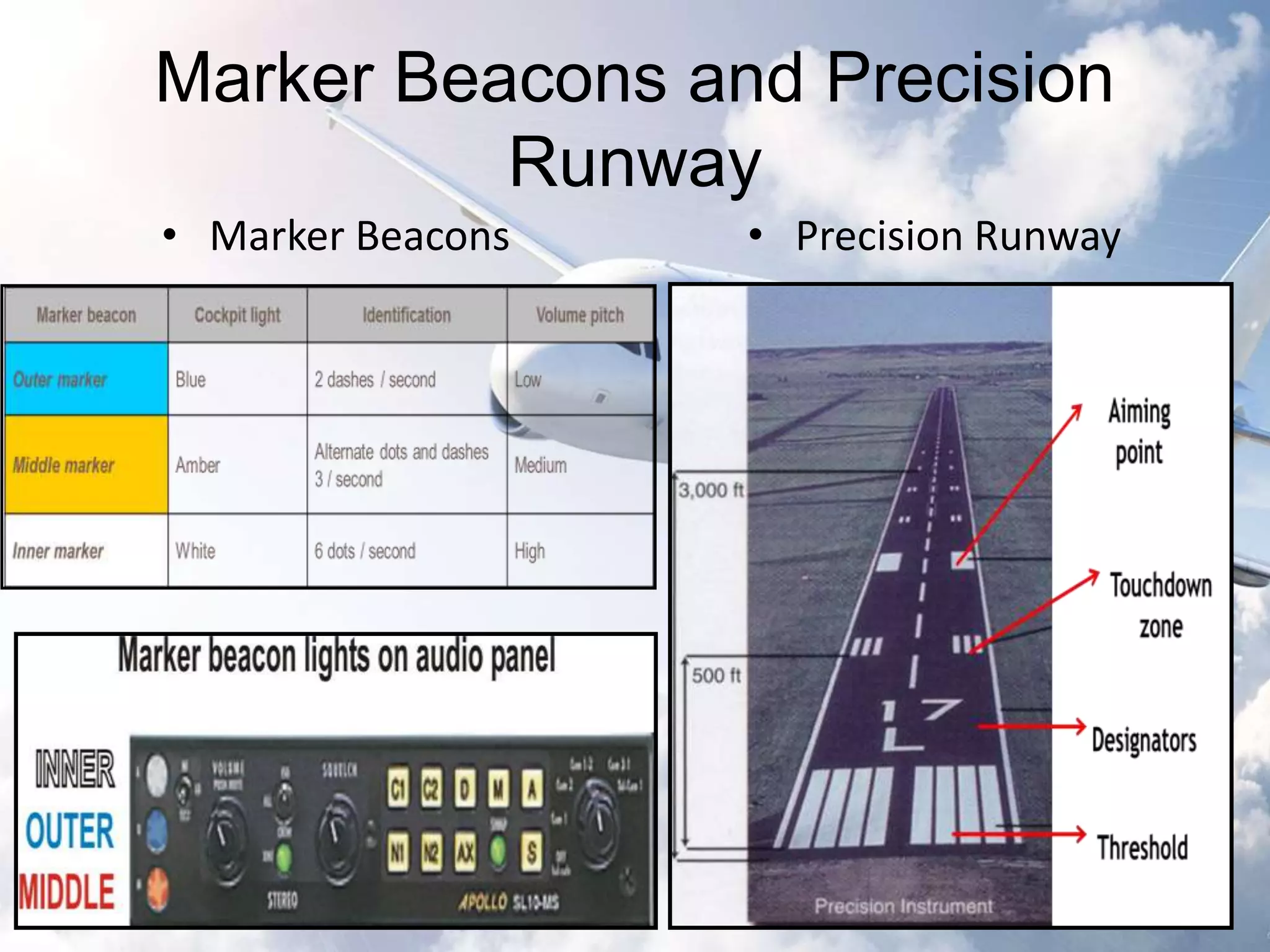
Marker Beacons and Precision 
Runway 
• Marker Beacons • Precision Runway
Global Positioning System 
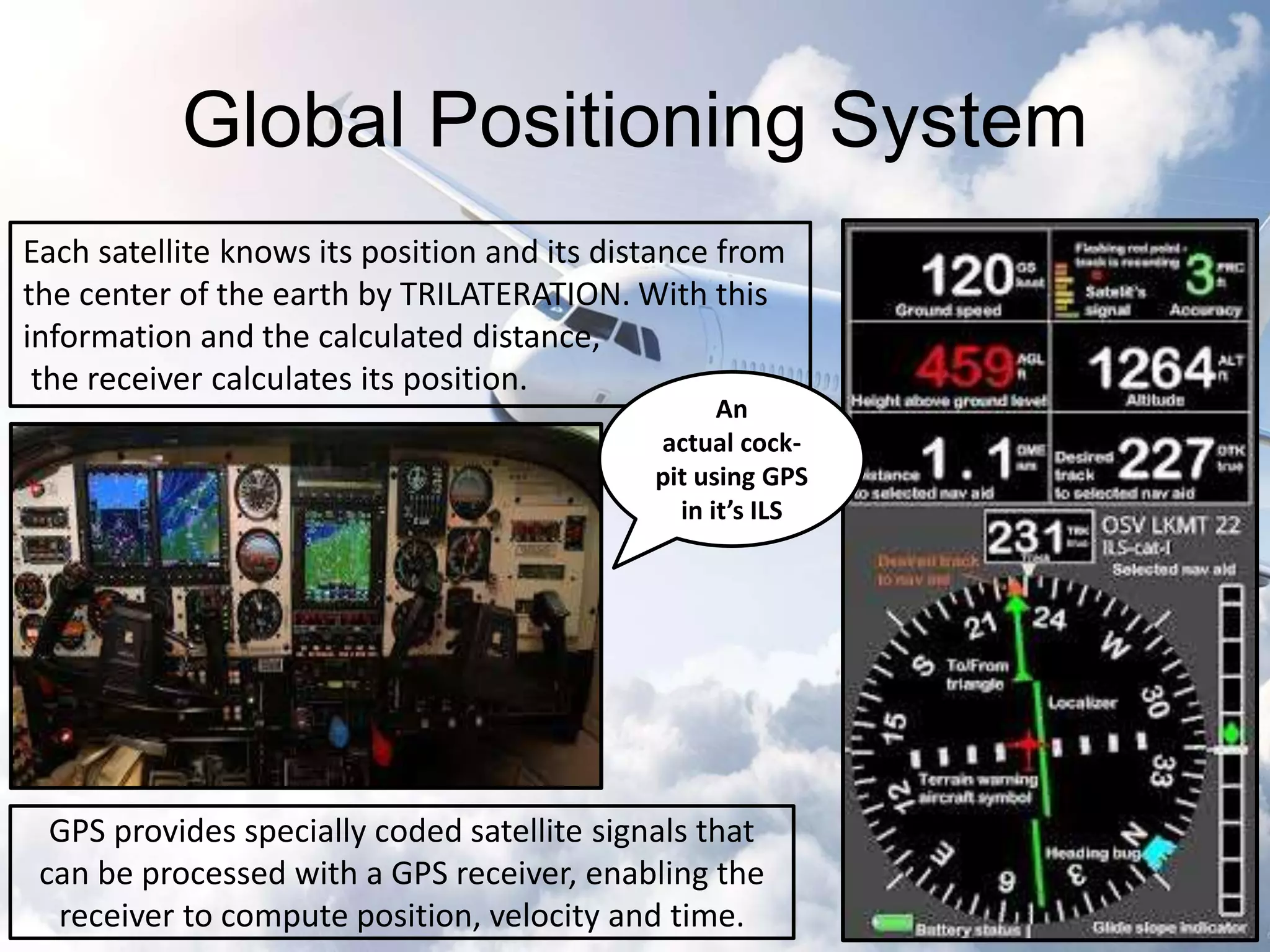
Each satellite knows its position and its distance from 
the center of the earth by TRILATERATION. With this 
information and the calculated distance, 
the receiver calculates its position. 
An 
actual cock-pit 
using GPS 
in it’s ILS 
GPS provides specially coded satellite signals that 
can be processed with a GPS receiver, enabling the 
receiver to compute position, velocity and time.
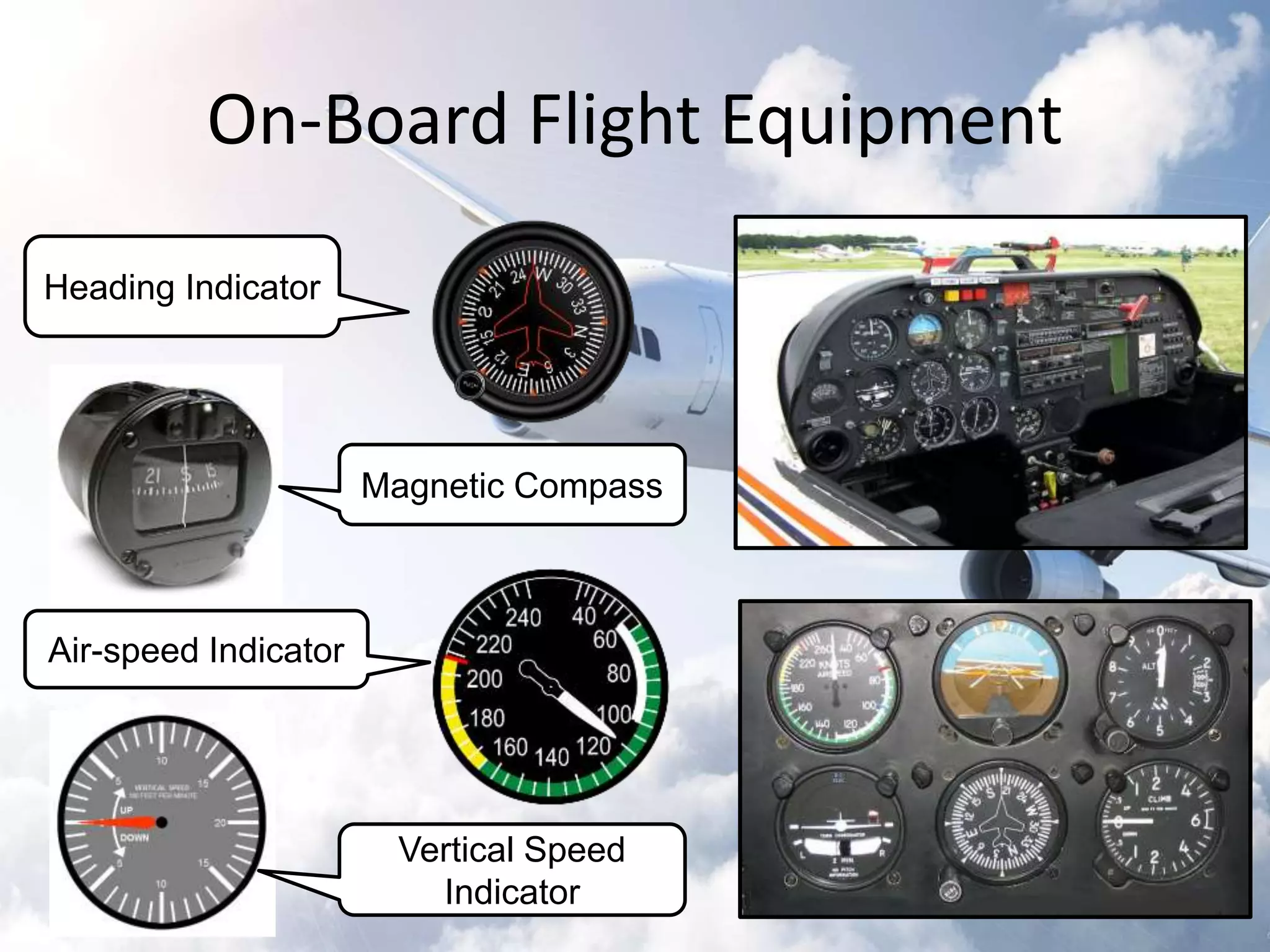
On-Board Flight Equipment 
Heading Indicator 
Magnetic Compass 
Air-speed Indicator 
Vertical Speed 
Indicator
Unfortunates 
• Asiana plane 
crash due 
to glide path failure 
• Korean Airlines 
Boeing 747: 
CFIT 
228 of 254 killed 
(Aug. 6, 1997)
Bibliography 
• http://instrument.landingsystem.com/ 
• http://en.wikipedia.org/wiki/Instrument_landing_system 
• http://electronics.howstuffworks.com/gadgets/travel/gps2.htm 
• http://en.wikipedia.org/wiki/Instrument_approach 
• http://www.infoplease.com/encyclopedia/science/instrument-landing-system.html 
• http://en.wikipedia.org/wiki/Flight_instruments 
• http://xa.yimg.com/kq/groups/22180149/68543865/name/RAN+2204+- 
+Lecture+8+(Instrument+Landing+System+(ILS)) 
• http://wallpaper.pickywallpapers.com/1920x1080/aeroplane-in-sky.jpg 
• http://www.faa.gov/about/office_org/headquarters_offices/ato/service_units/techops/ 
navservices/gnss/gps/howitworks/

Instrument Landing System

  • 1.
    Instrument Landing System Department: Electronics and Communication Engineering Batch: 2011-2015 CAMELLIA INSTITUTE OF TECHNOLOGY
  • 2.
    Contents 1. Whatis an ILS? 2. History of ILS 3. Components of ILS 4. Ground Installations 5. How does an ILS work? 6. Marker Beacons and Precision Runway 7. Global Positioning System 8. On-Board Flight Equipment 9. Unfortunates
  • 3.
    What is ILS?  An Instrument Landing System (ILS) is a radio beam transmitter that provides a direction for approaching aircraft that tune their receiver to the ILS frequency.  It uses a combination of radio signals, to enable a safe landing during instrument meteorological conditions (IMC)such as low ceilings or reduced visibility due to fog, rain, or blowing snow
  • 4.
    History of ILS • Tests of the first ILS began in 1929 • The first scheduled passenger airliner to land using ILS was in 1938. A Pennsylvania-Central Airlines Boeing 247-D. • In 1949, ICAO adapted an ILS standard developed by the US Army as a standard system for all of its member countries.
  • 5.
    Components of ILS • Glide Path Indications • ILS Indicator • Localizer Indications
  • 6.
    Ground Installations •Localizer Antenna Array • Glide Path Antenna • Ground Localizer Antenna
  • 7.
    How does anILS work?
  • 8.
    Marker Beacons andPrecision Runway • Marker Beacons • Precision Runway
  • 9.
    Global Positioning System Each satellite knows its position and its distance from the center of the earth by TRILATERATION. With this information and the calculated distance, the receiver calculates its position. An actual cock-pit using GPS in it’s ILS GPS provides specially coded satellite signals that can be processed with a GPS receiver, enabling the receiver to compute position, velocity and time.
  • 10.
    On-Board Flight Equipment Heading Indicator Magnetic Compass Air-speed Indicator Vertical Speed Indicator
  • 11.
    Unfortunates • Asianaplane crash due to glide path failure • Korean Airlines Boeing 747: CFIT 228 of 254 killed (Aug. 6, 1997)
  • 12.
    Bibliography • http://instrument.landingsystem.com/ • http://en.wikipedia.org/wiki/Instrument_landing_system • http://electronics.howstuffworks.com/gadgets/travel/gps2.htm • http://en.wikipedia.org/wiki/Instrument_approach • http://www.infoplease.com/encyclopedia/science/instrument-landing-system.html • http://en.wikipedia.org/wiki/Flight_instruments • http://xa.yimg.com/kq/groups/22180149/68543865/name/RAN+2204+- +Lecture+8+(Instrument+Landing+System+(ILS)) • http://wallpaper.pickywallpapers.com/1920x1080/aeroplane-in-sky.jpg • http://www.faa.gov/about/office_org/headquarters_offices/ato/service_units/techops/ navservices/gnss/gps/howitworks/