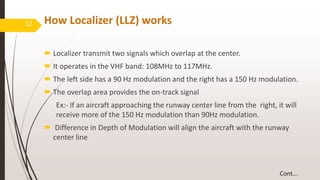
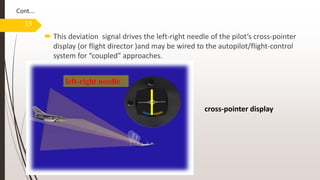
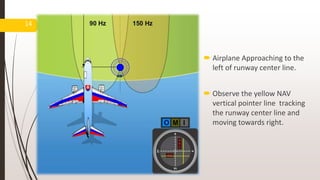
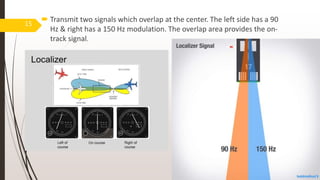
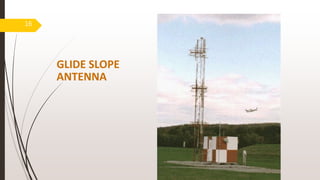
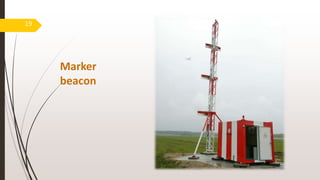
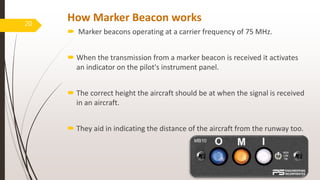
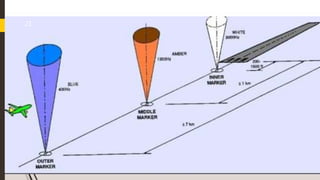
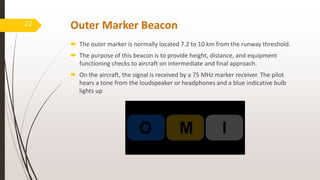
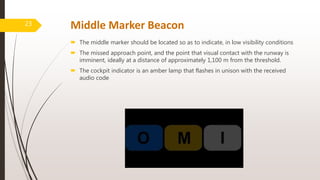
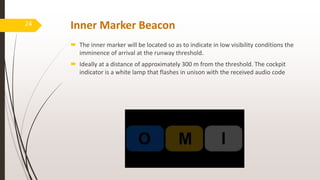
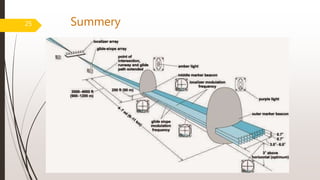
The document summarizes the instrument landing system (ILS), which provides aircraft with horizontal and vertical guidance when landing during low visibility conditions. The ILS uses radio transmitters on the ground to guide planes to runways. It consists of a localizer for lateral guidance and a glide slope for vertical guidance. Marker beacons located before the runway also help pilots judge their distance from the runway threshold. By keeping the ILS indicators centered in the cockpit, pilots can align their aircraft with the runway centerline and glide path for landing. The ILS was first tested in 1929 and helped enable safer landings in poor weather.







![A presentation on internship from jaipur Airport [AAI]](https://cdn.slidesharecdn.com/ss_thumbnails/airportpptbyadityasept-160404162154-thumbnail.jpg?width=640&height=640&fit=bounds)


