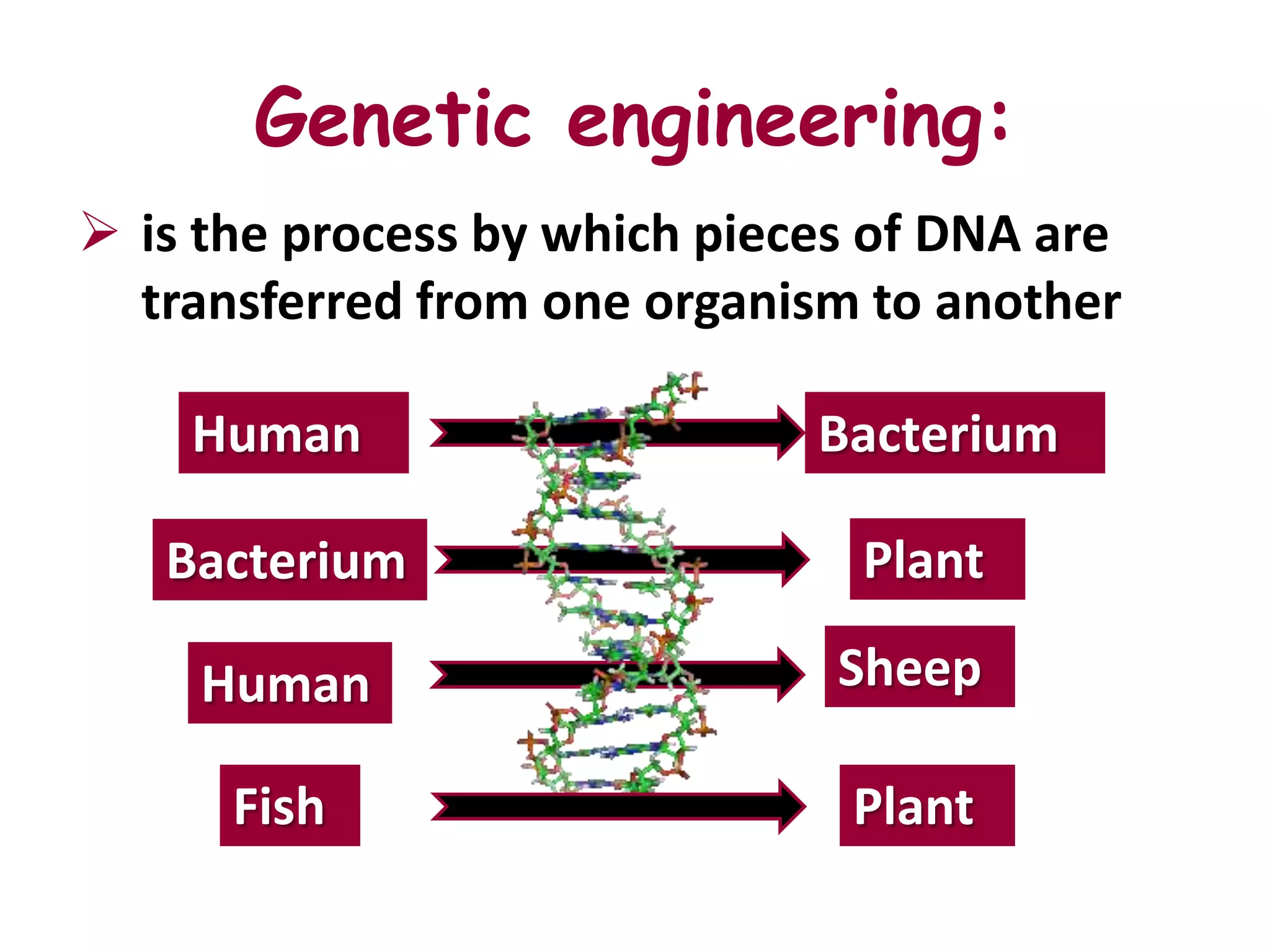
Genetic engineering:
 is the process by which pieces of DNA are
  transferred from one organism to another

    Human                     Bacterium

   Bacterium                    Plant

     Human                     Sheep

      Fish                     Plant
Tobacco plant      Gene taken
glows in the dark   from a firefly
     [1986 ]
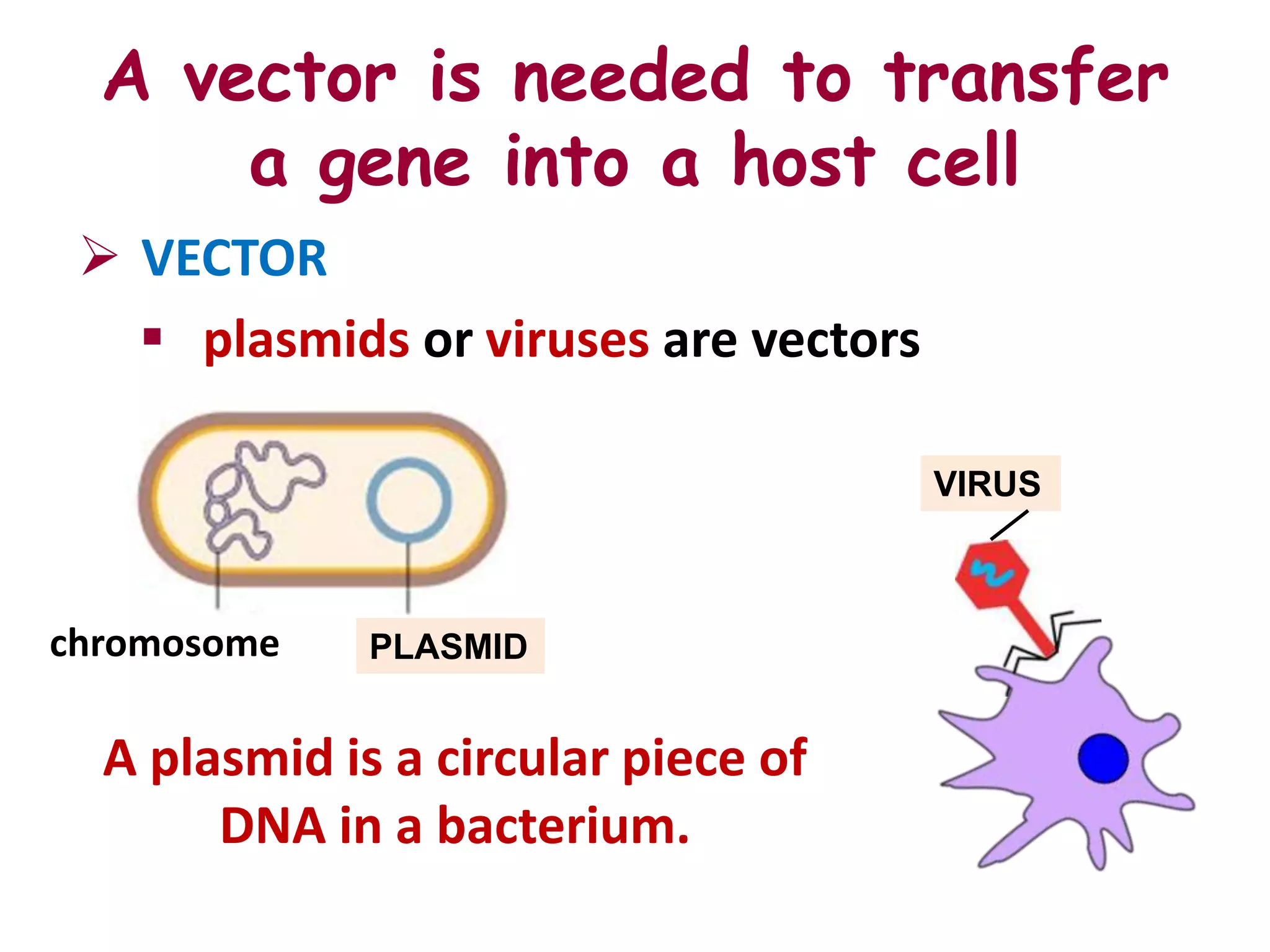
A vector is needed to transfer
      a gene into a host cell
  VECTOR
    plasmids or viruses are vectors

                                       VIRUS


chromosome    PLASMID


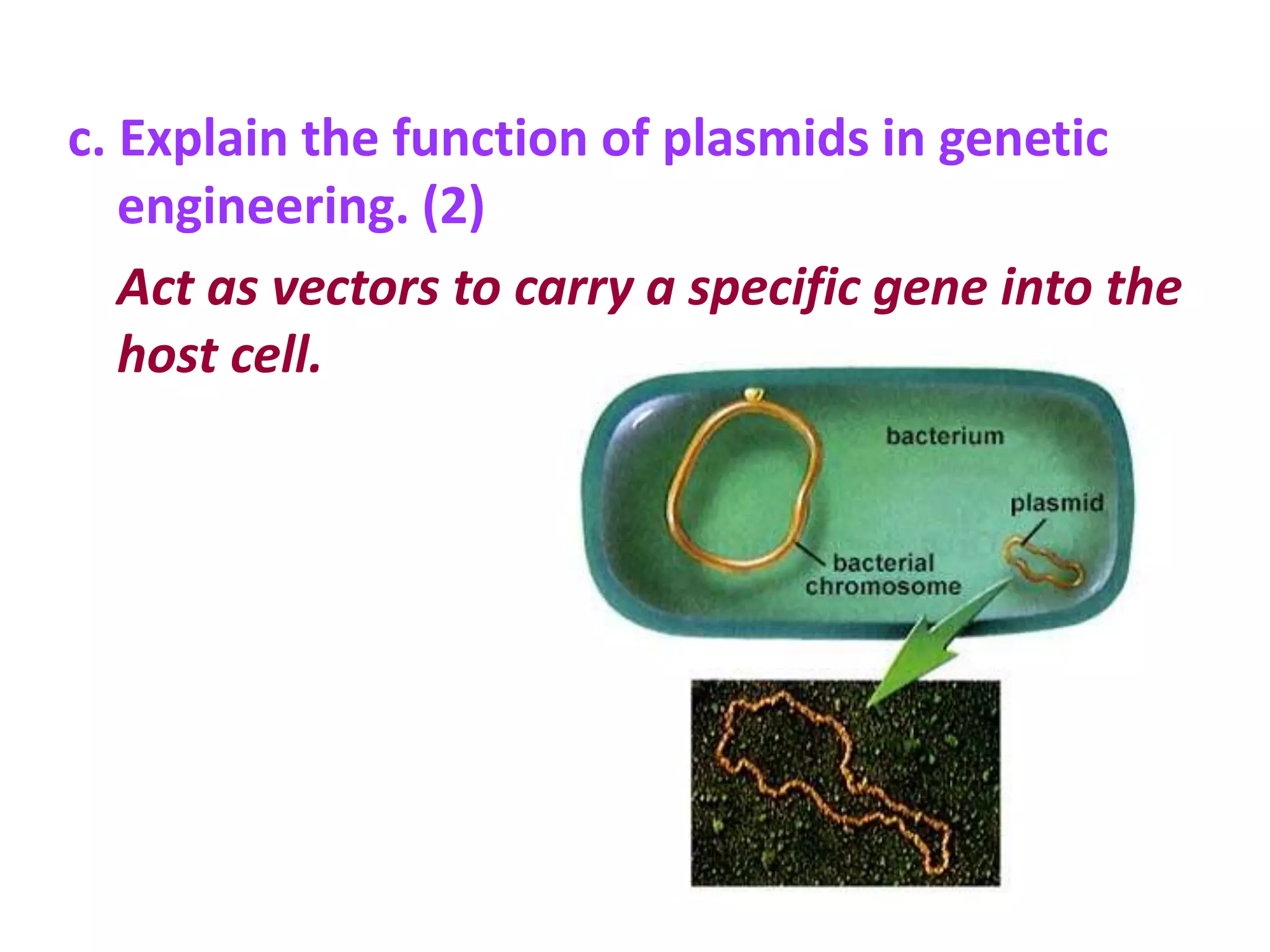
  A plasmid is a circular piece of
       DNA in a bacterium.
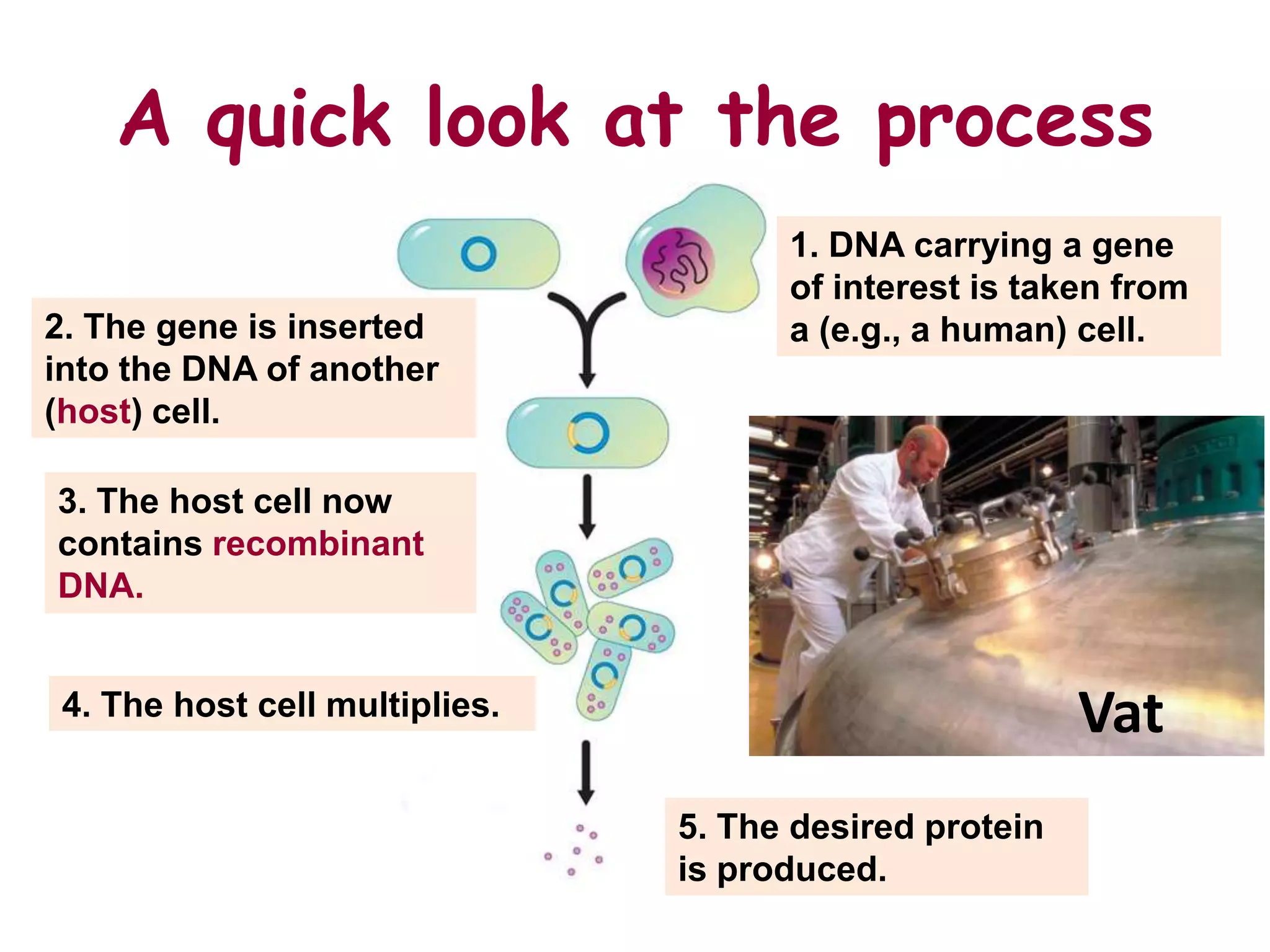
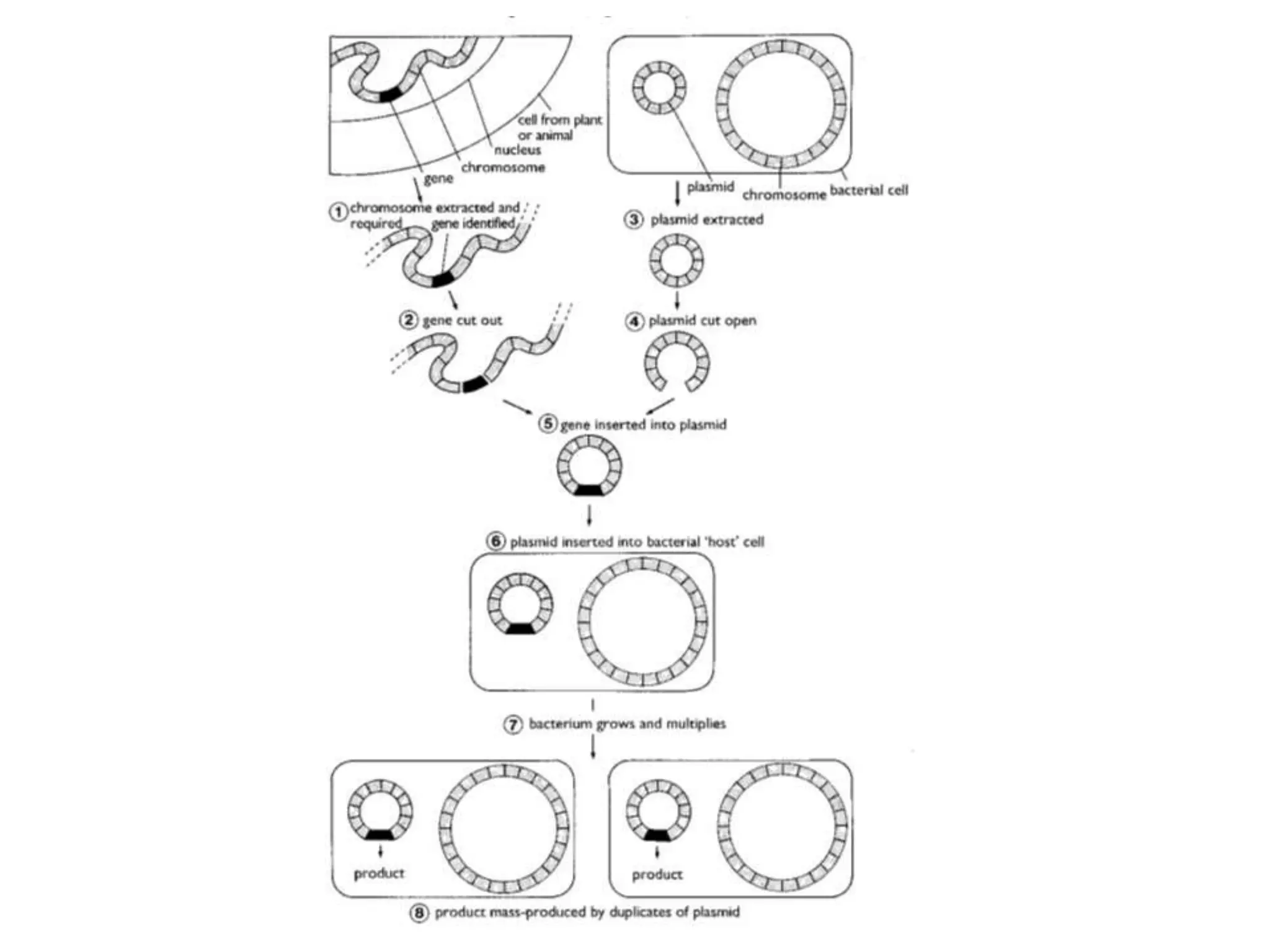
A quick look at the process
                                      1. DNA carrying a gene
                                      of interest is taken from
2. The gene is inserted               a (e.g., a human) cell.
into the DNA of another
(host) cell.

3. The host cell now
contains recombinant
DNA.


 4. The host cell multiplies.                            Vat
                                5. The desired protein
                                is produced.
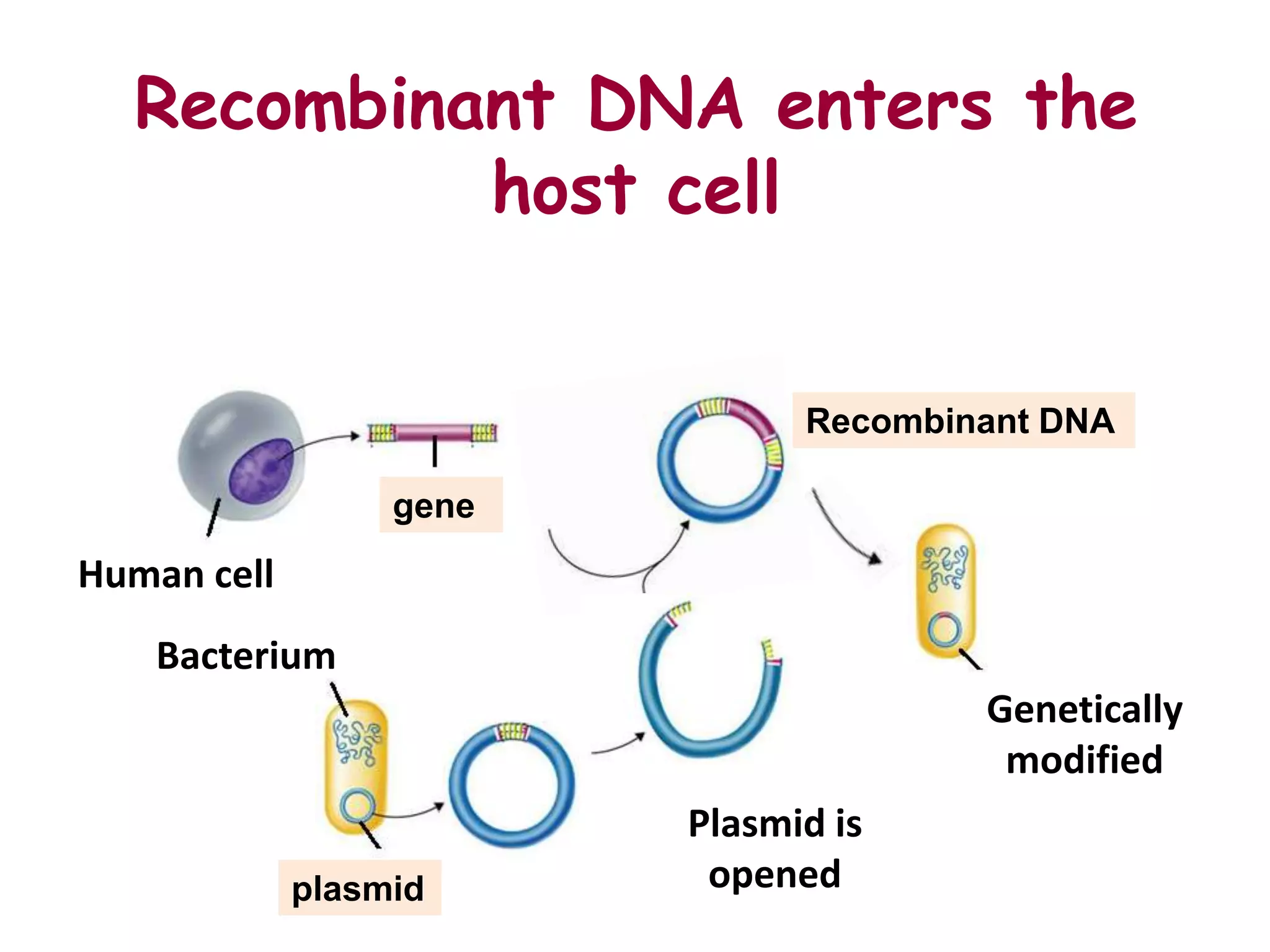
Recombinant DNA enters the
           host cell


                               Recombinant DNA

                  gene
Human cell
   Bacterium
                                       Genetically
                                        modified
                         Plasmid is
             plasmid      opened
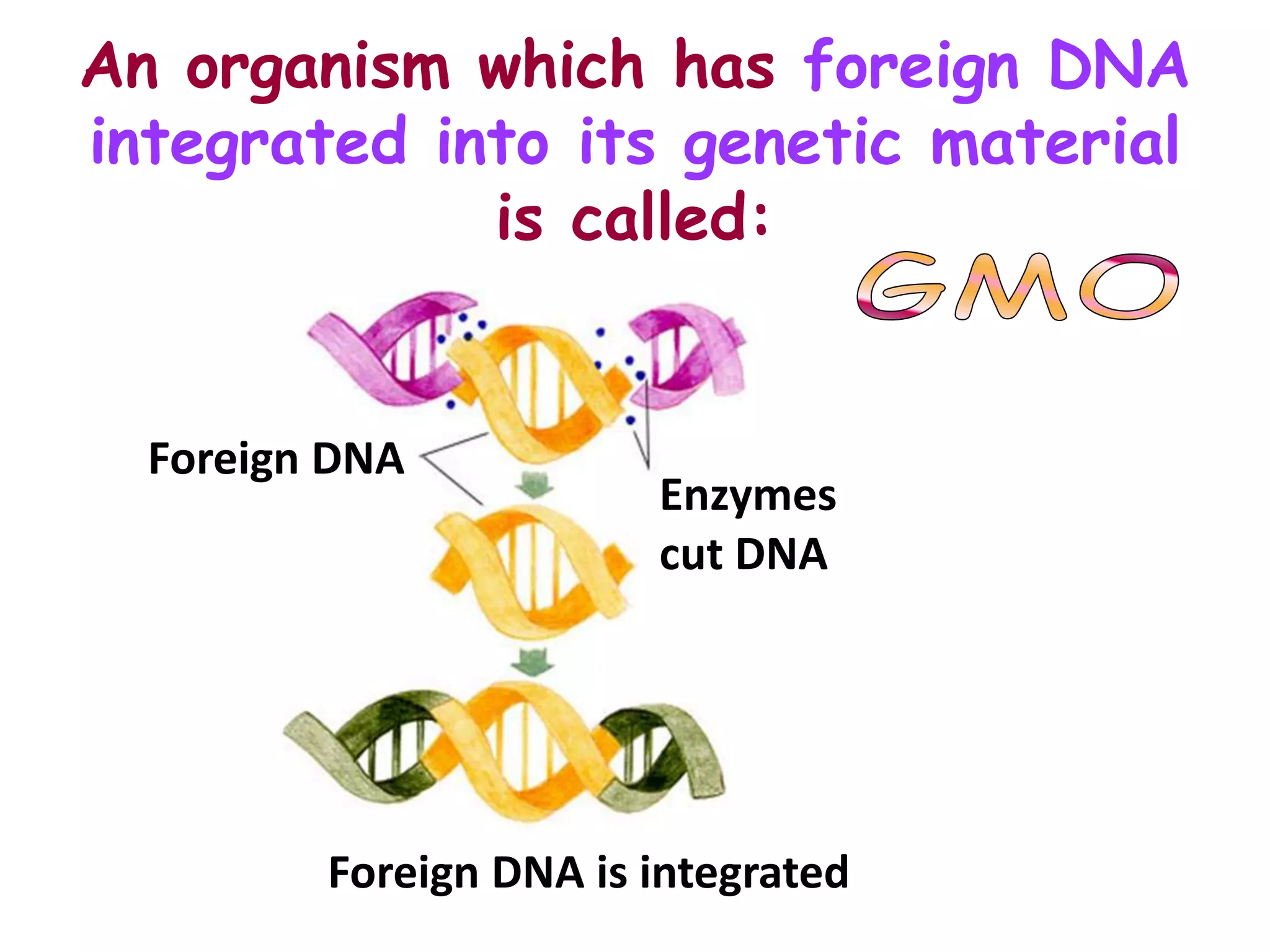
An organism which has foreign DNA
integrated into its genetic material
             is called:


  Foreign DNA
                        Enzymes
                        cut DNA


         Foreign DNA is integrated
= [Transgenic]
Question: MAY, 2012
Insulin was the first hormone to be synthesised
using genetic engineering.

a. Define the term genetic engineering. (2)
   The process by which pieces of DNA are
   transferred from one organism to another.
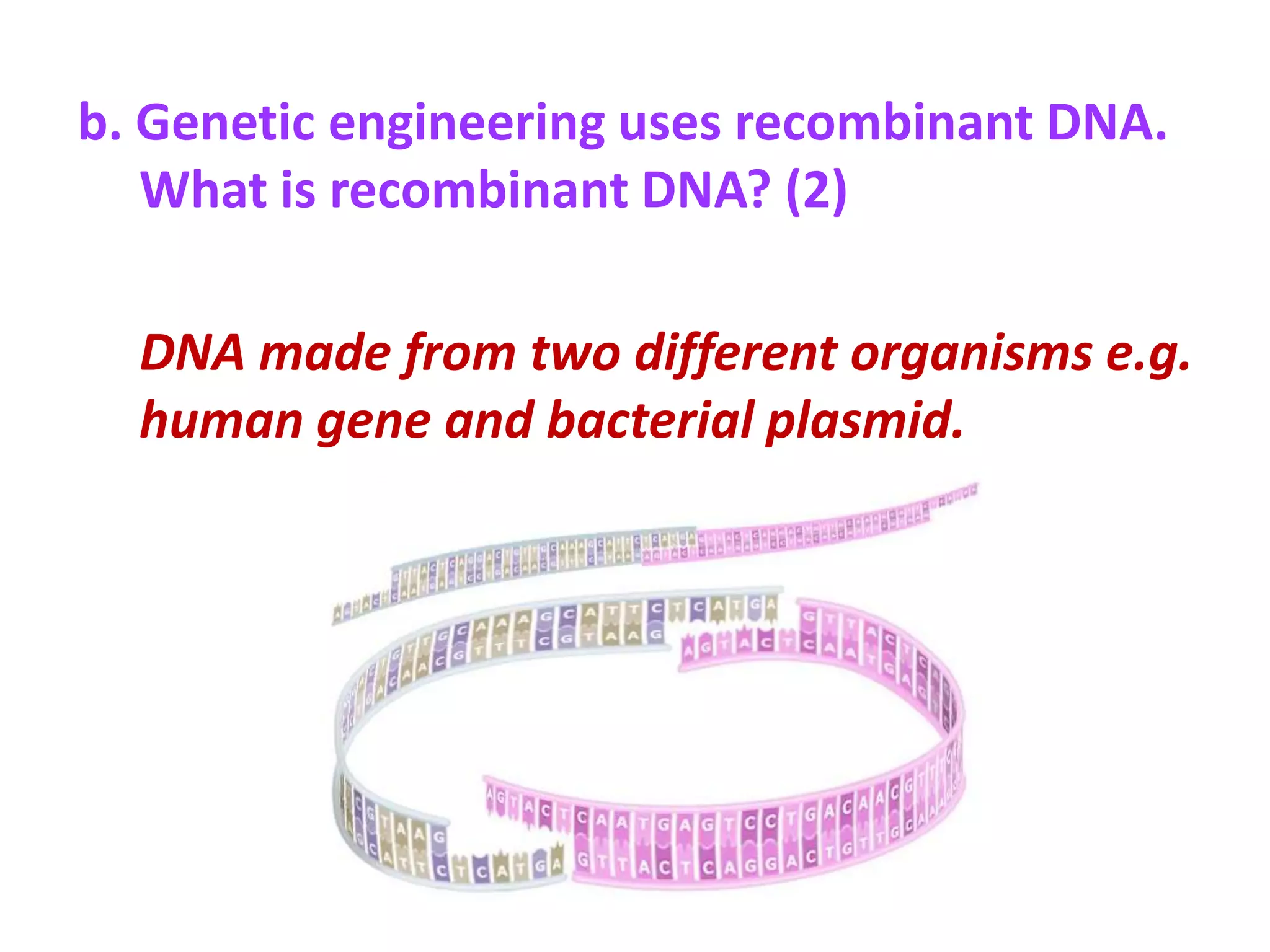
b. Genetic engineering uses recombinant DNA.
   What is recombinant DNA? (2)

  DNA made from two different organisms e.g.
  human gene and bacterial plasmid.
c. Explain the function of plasmids in genetic
   engineering. (2)
   Act as vectors to carry a specific gene into the
   host cell.
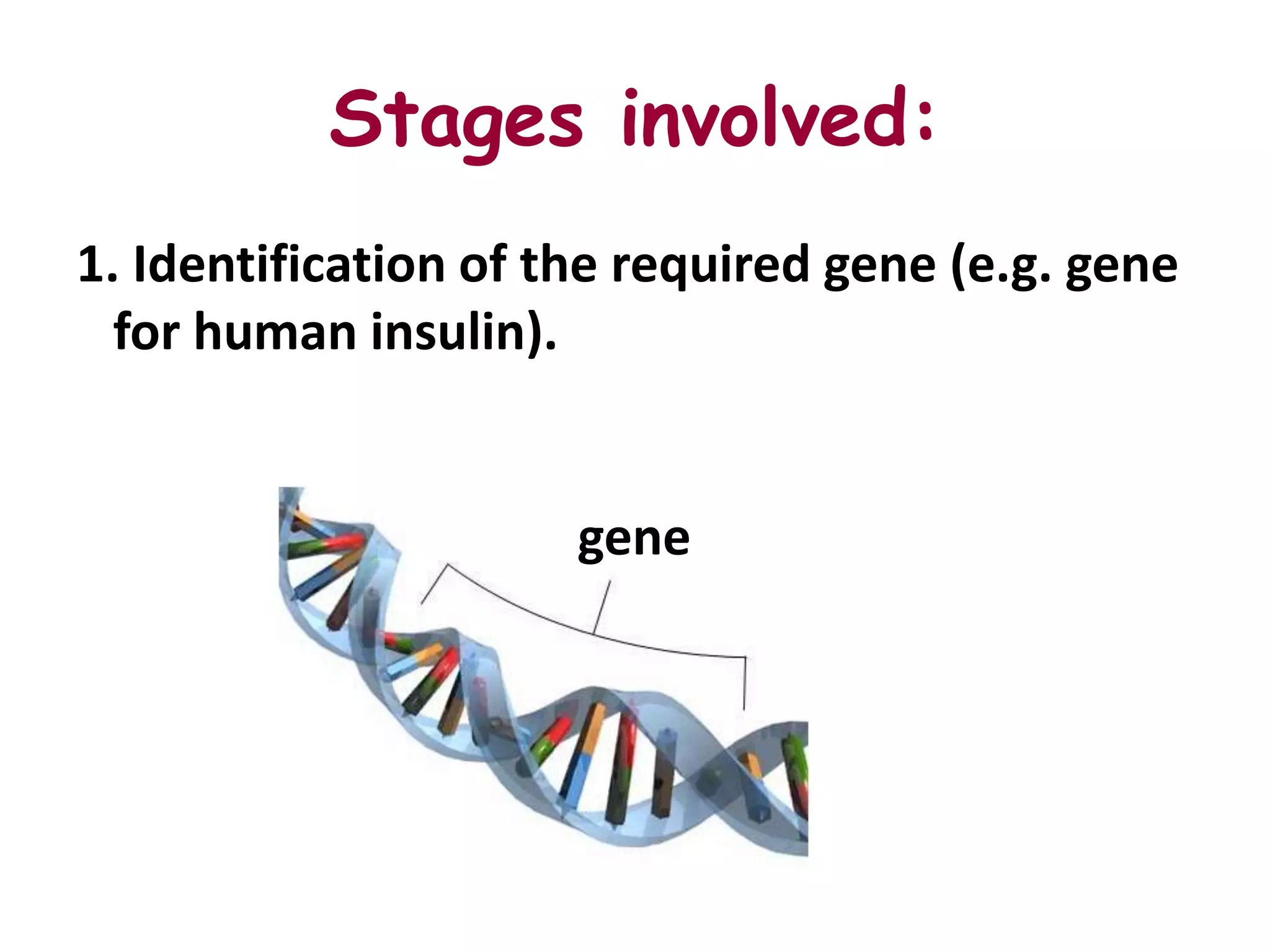
Stages involved:
1. Identification of the required gene (e.g. gene
  for human insulin).


                      gene
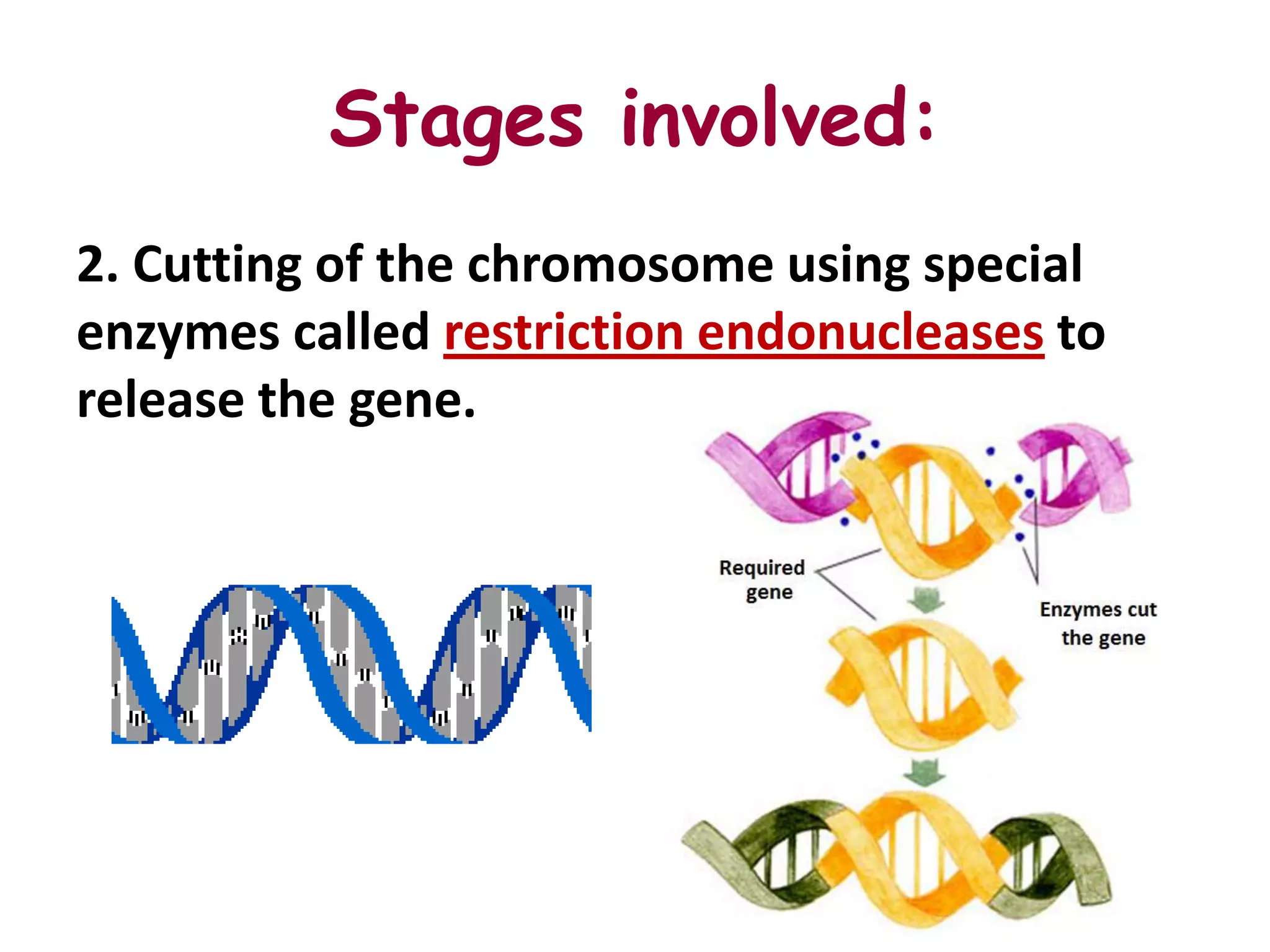
Stages involved:
2. Cutting of the chromosome using special
enzymes called restriction endonucleases to
release the gene.
Uses of genetic engineering:
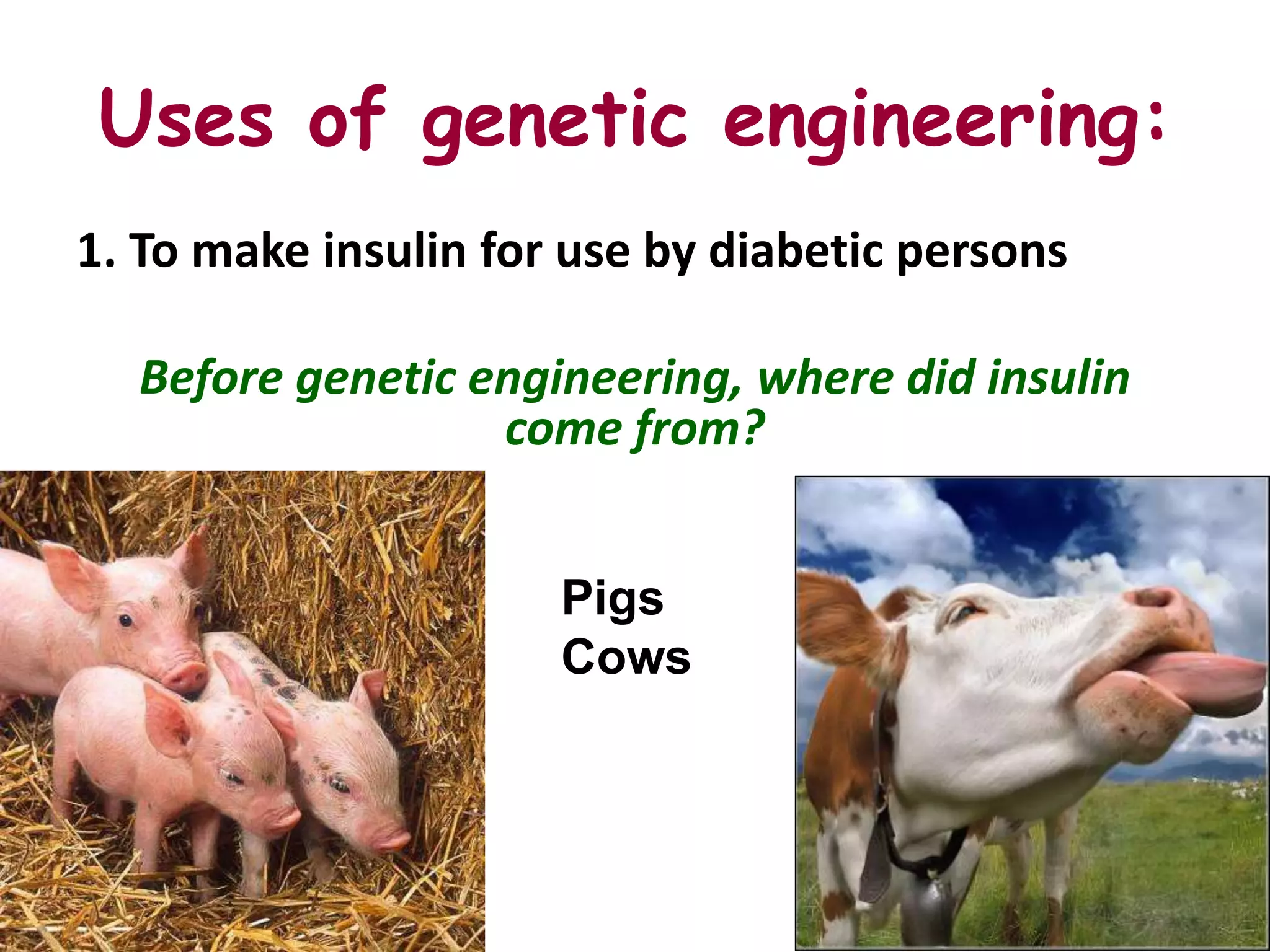
1. To make insulin for use by diabetic persons

  Before genetic engineering, where did insulin
                  come from?


                      Pigs
                      Cows
Question: MAY 2002
Give a biological explanation for the following
observation:
 Ann couldn’t believe her ears hearing the
 pharmacist telling her that the insulin shots
 bought for her grandfather were produced
 from bacteria. (2)
Insulin is produced by genetically modified
bacteria. The human gene able to make insulin
is inserted into bacteria.
Uses of genetic engineering:
2. To make growth hormone to treat dwarfs
Uses of genetic engineering:
3. To prepare vaccines
Uses of genetic engineering:
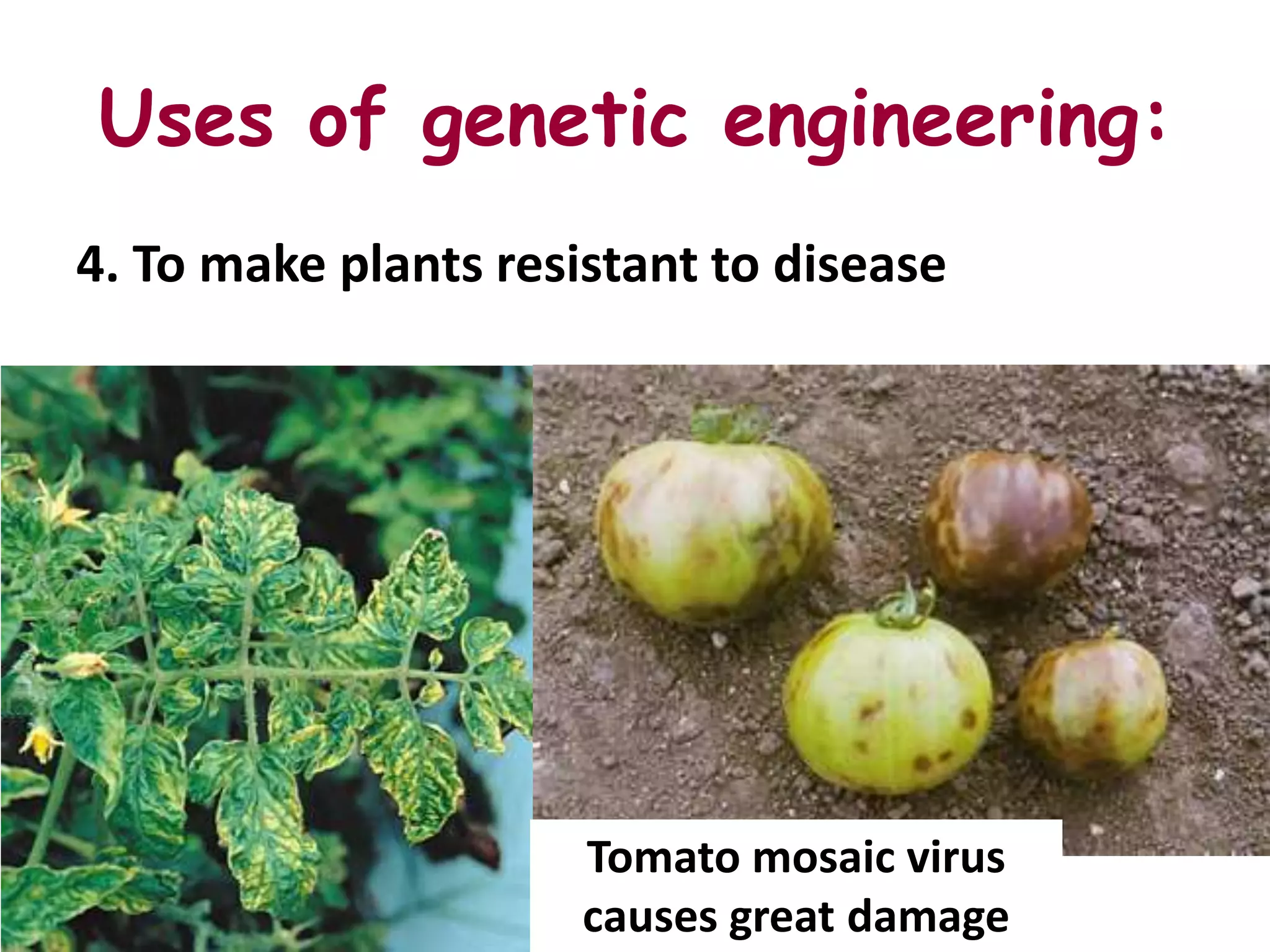
4. To make plants resistant to disease


                      Tomato mosaic virus
                      causes great damage
Uses of genetic engineering:
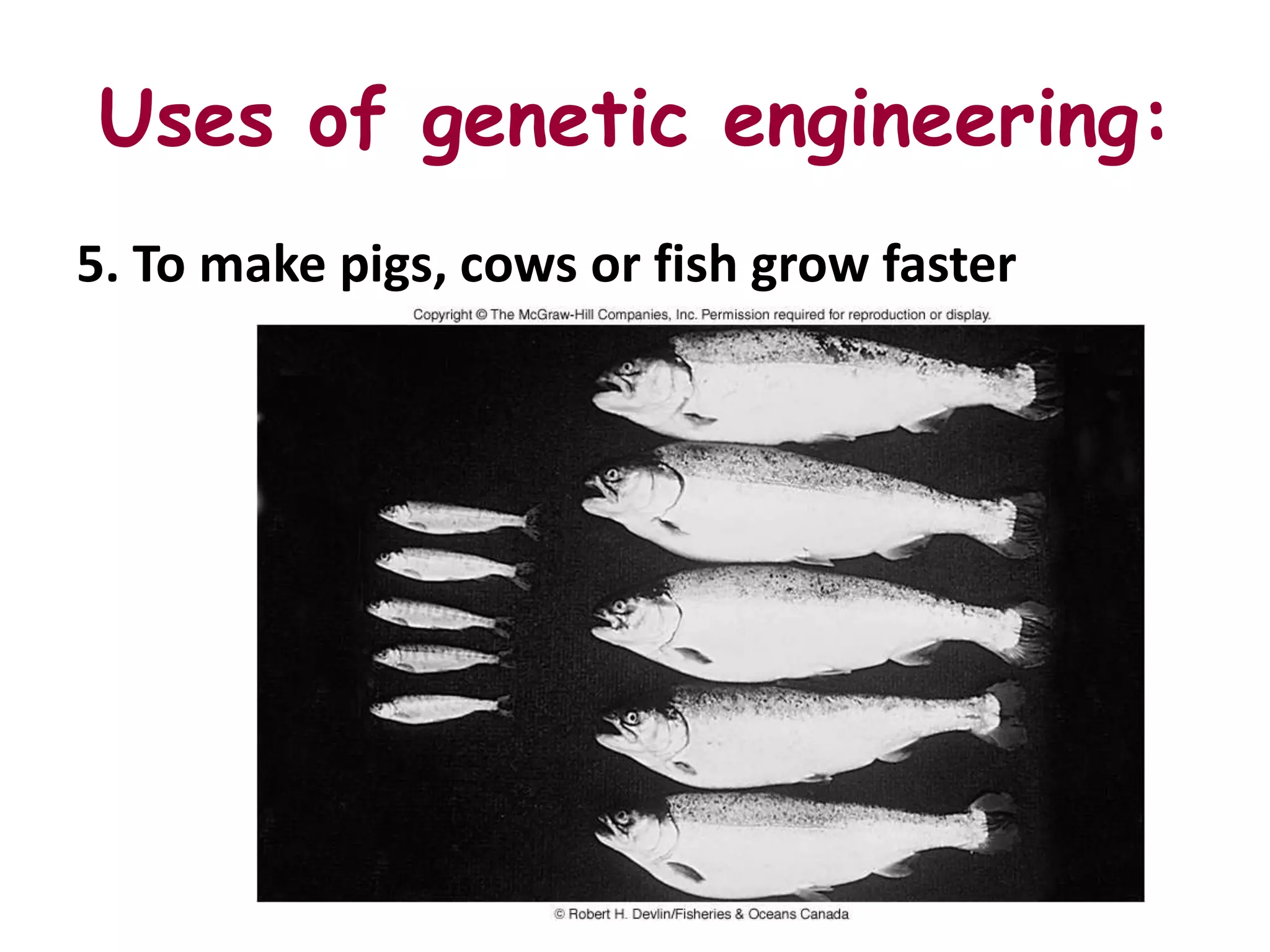
5. To make pigs, cows or fish grow faster
Uses of genetic engineering:
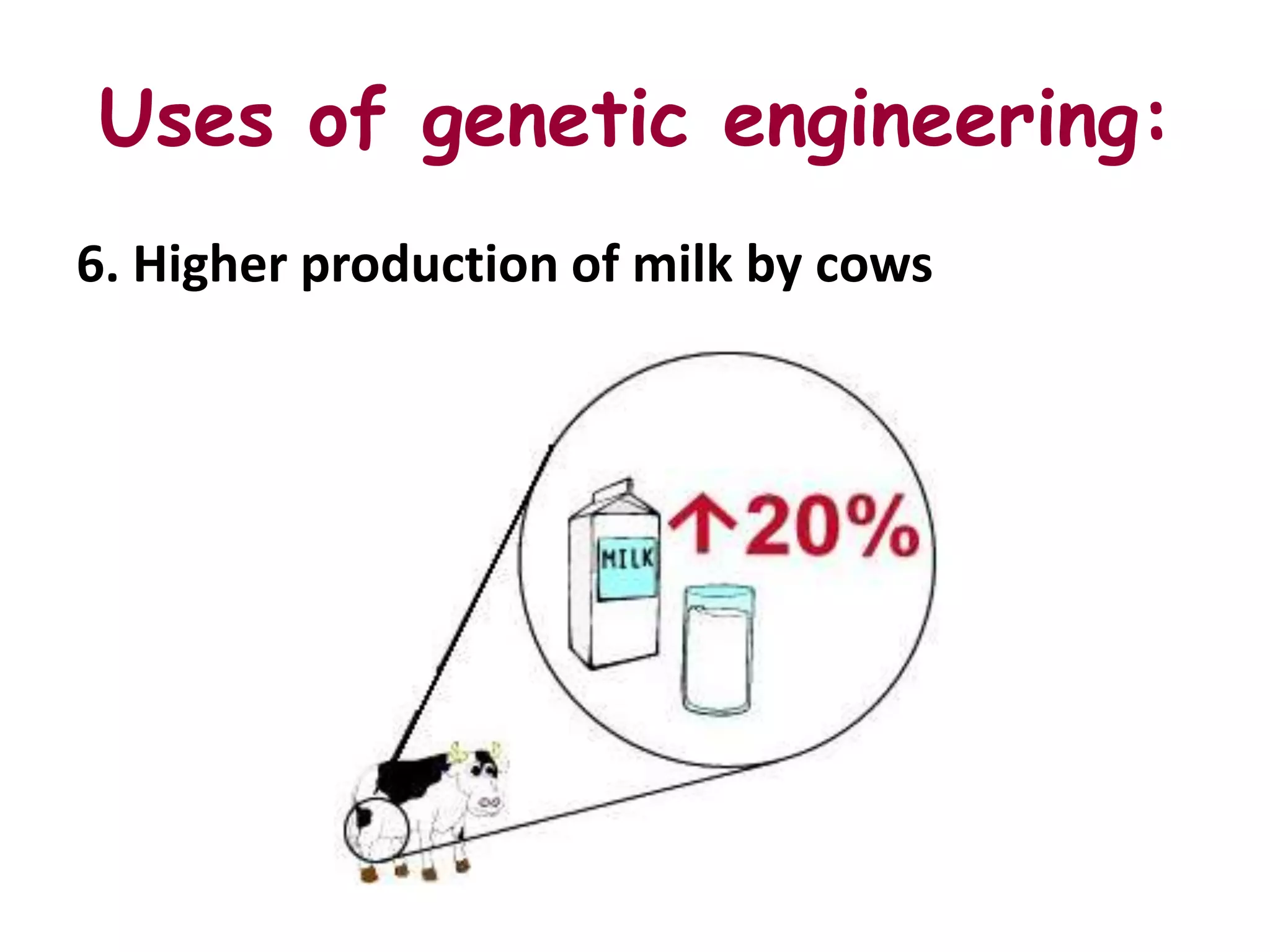
6. Higher production of milk by cows
Uses of genetic engineering:
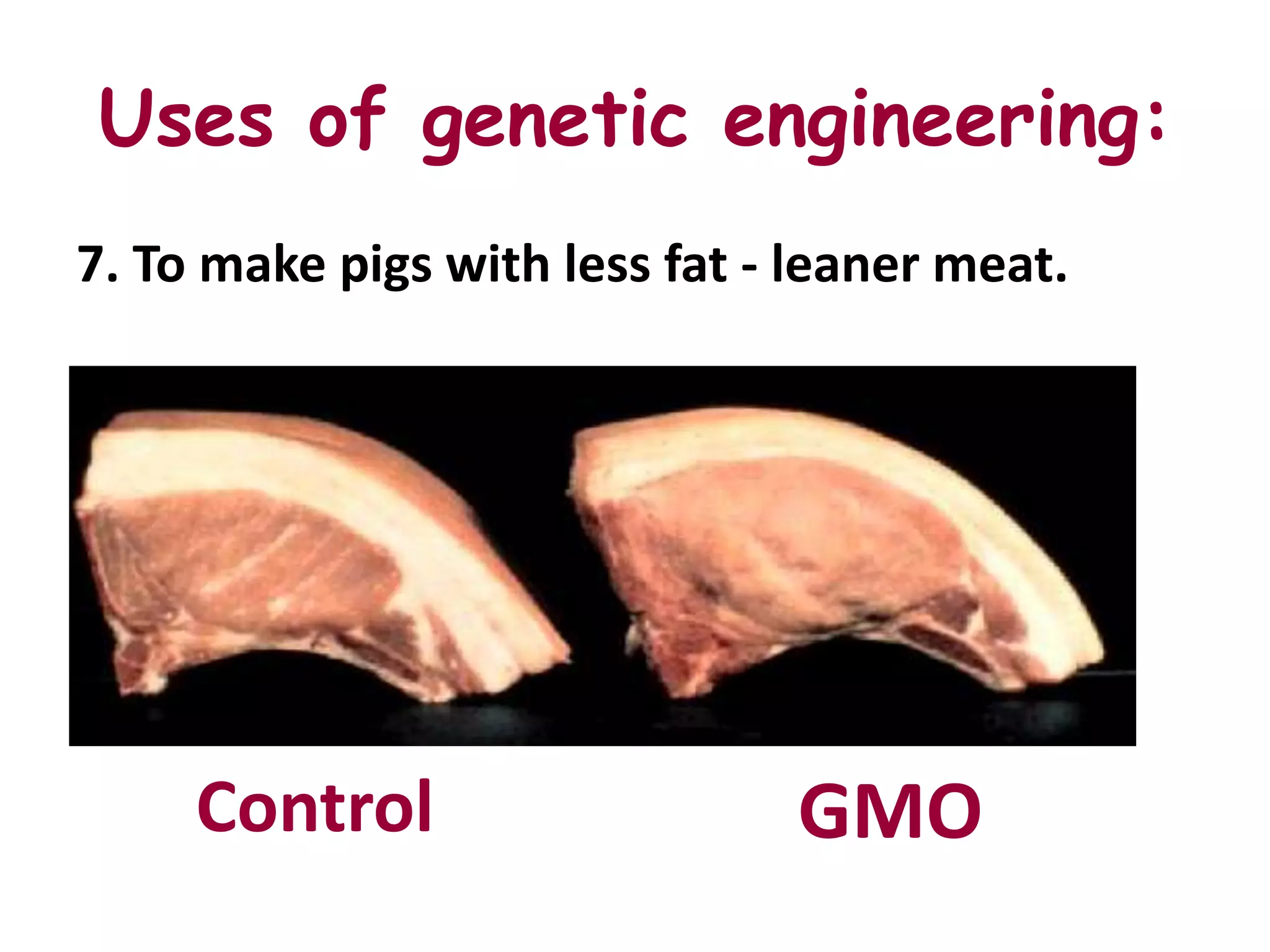
7. To make pigs with less fat - leaner meat.


     Control                   GMO
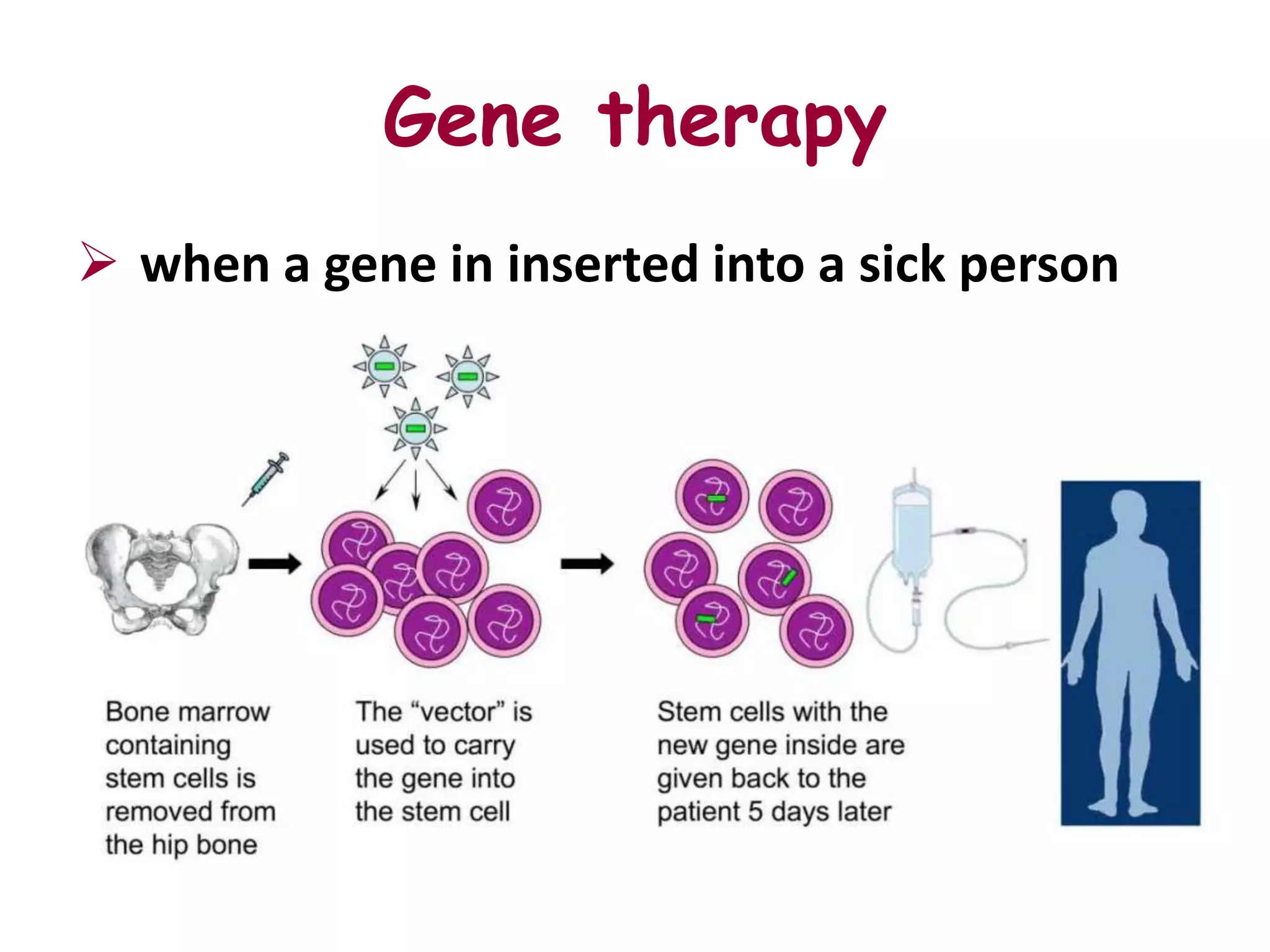
Gene therapy
 when a gene in inserted into a sick person
Other examples of GMO not
       in your notes
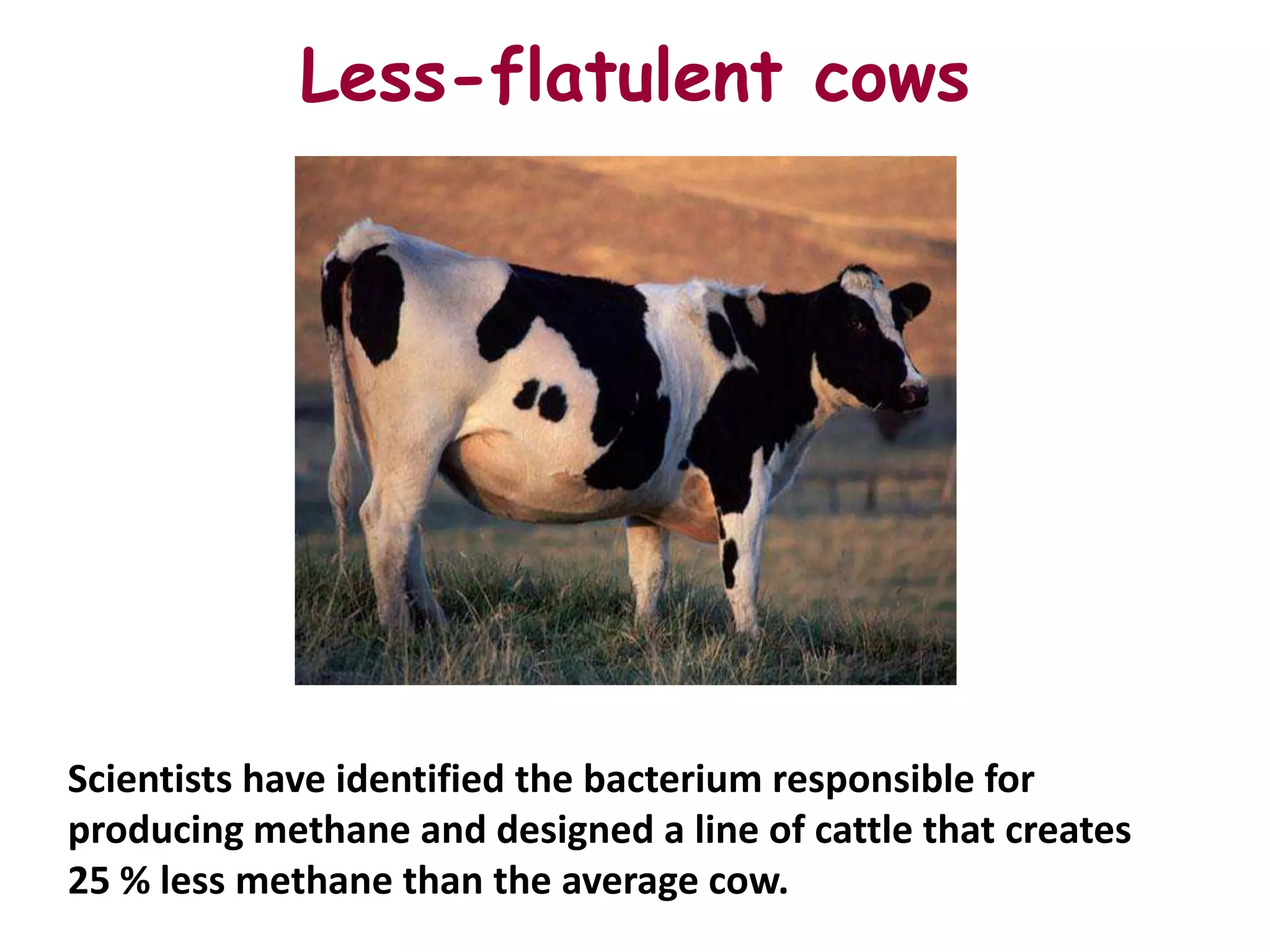
Less-flatulent cows


Scientists have identified the bacterium responsible for
producing methane and designed a line of cattle that creates
25 % less methane than the average cow.
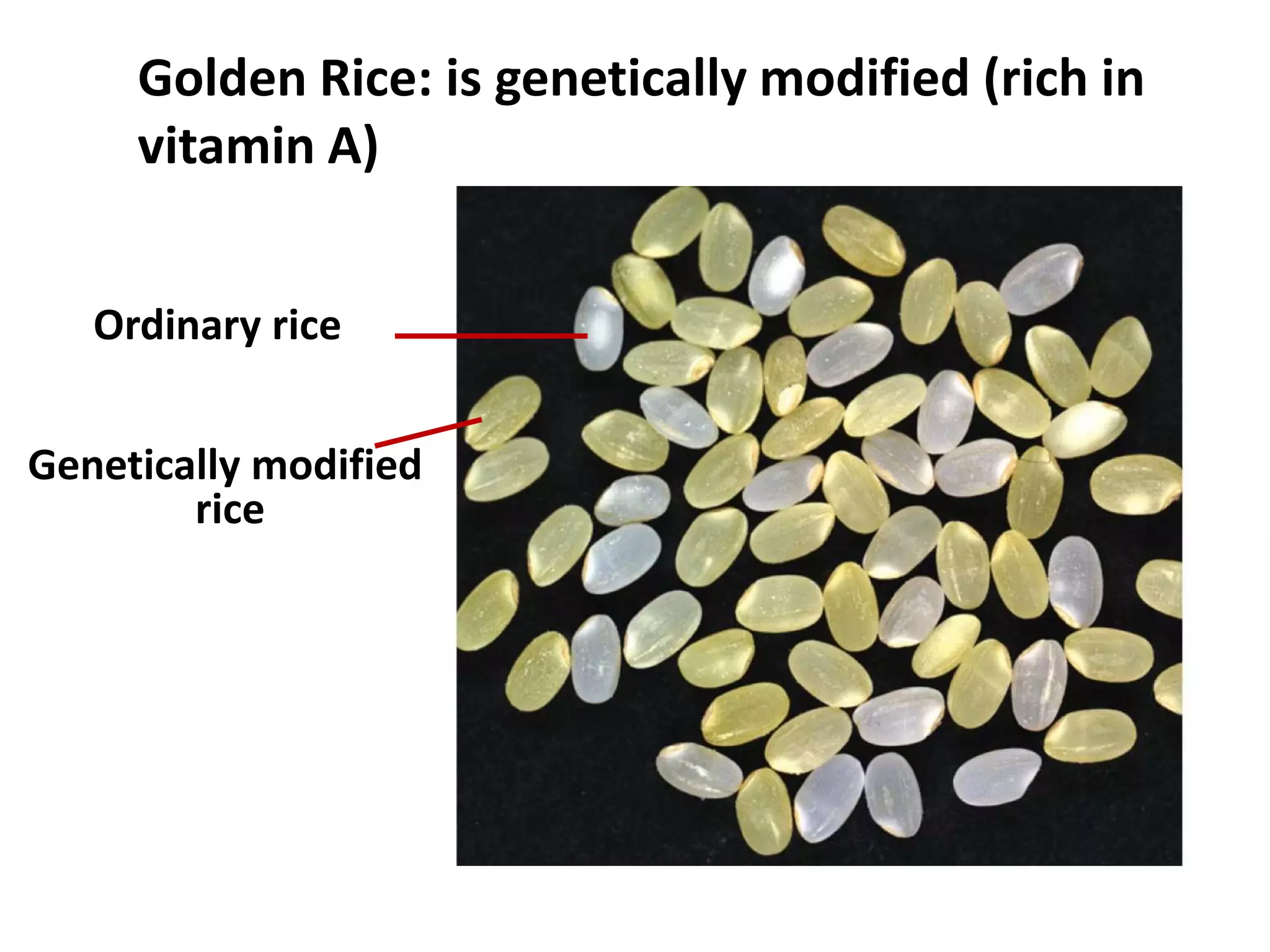
Golden Rice: is genetically modified (rich in
     vitamin A)


   Ordinary rice


Genetically modified
        rice
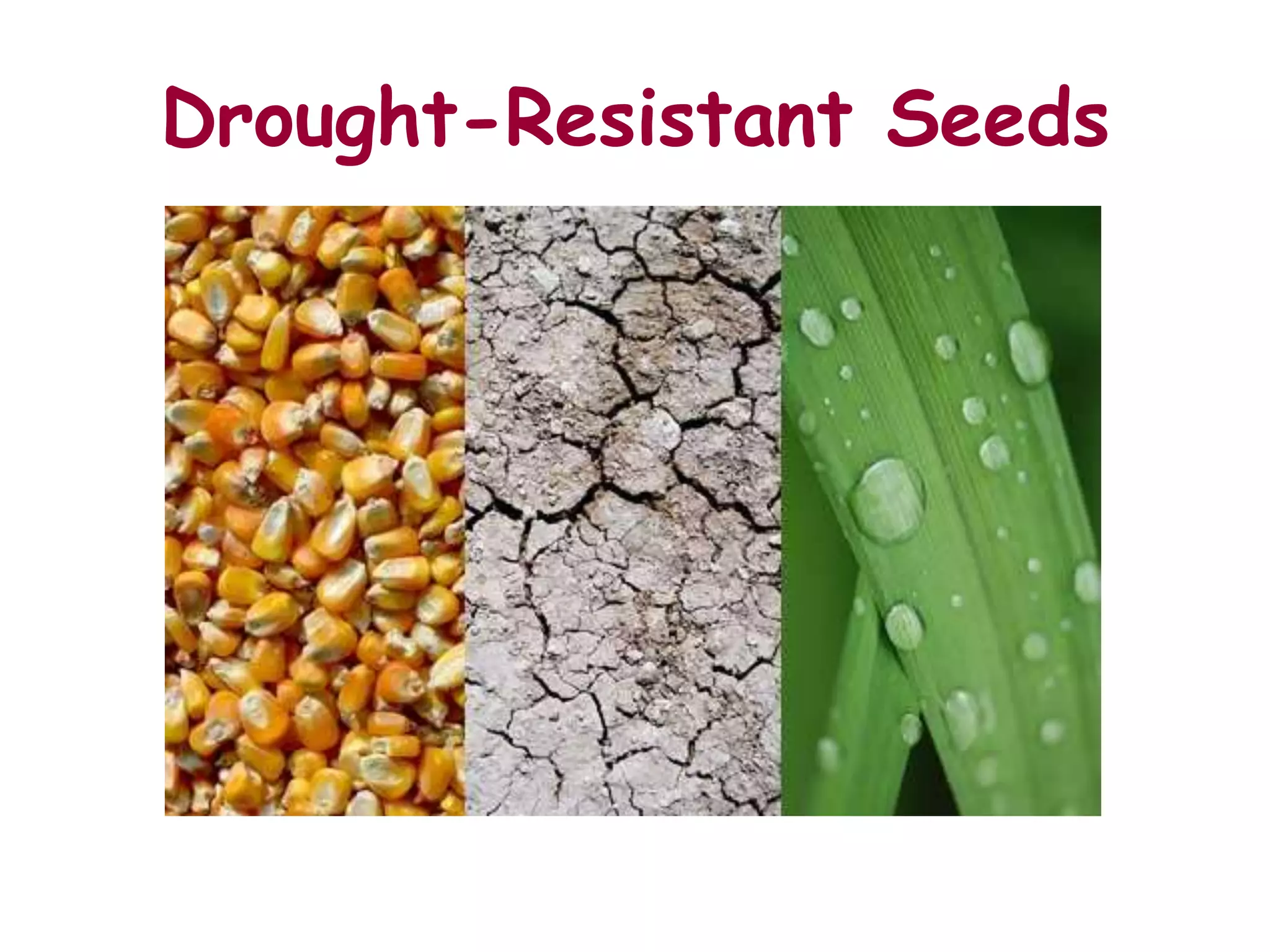
Drought-Resistant Seeds
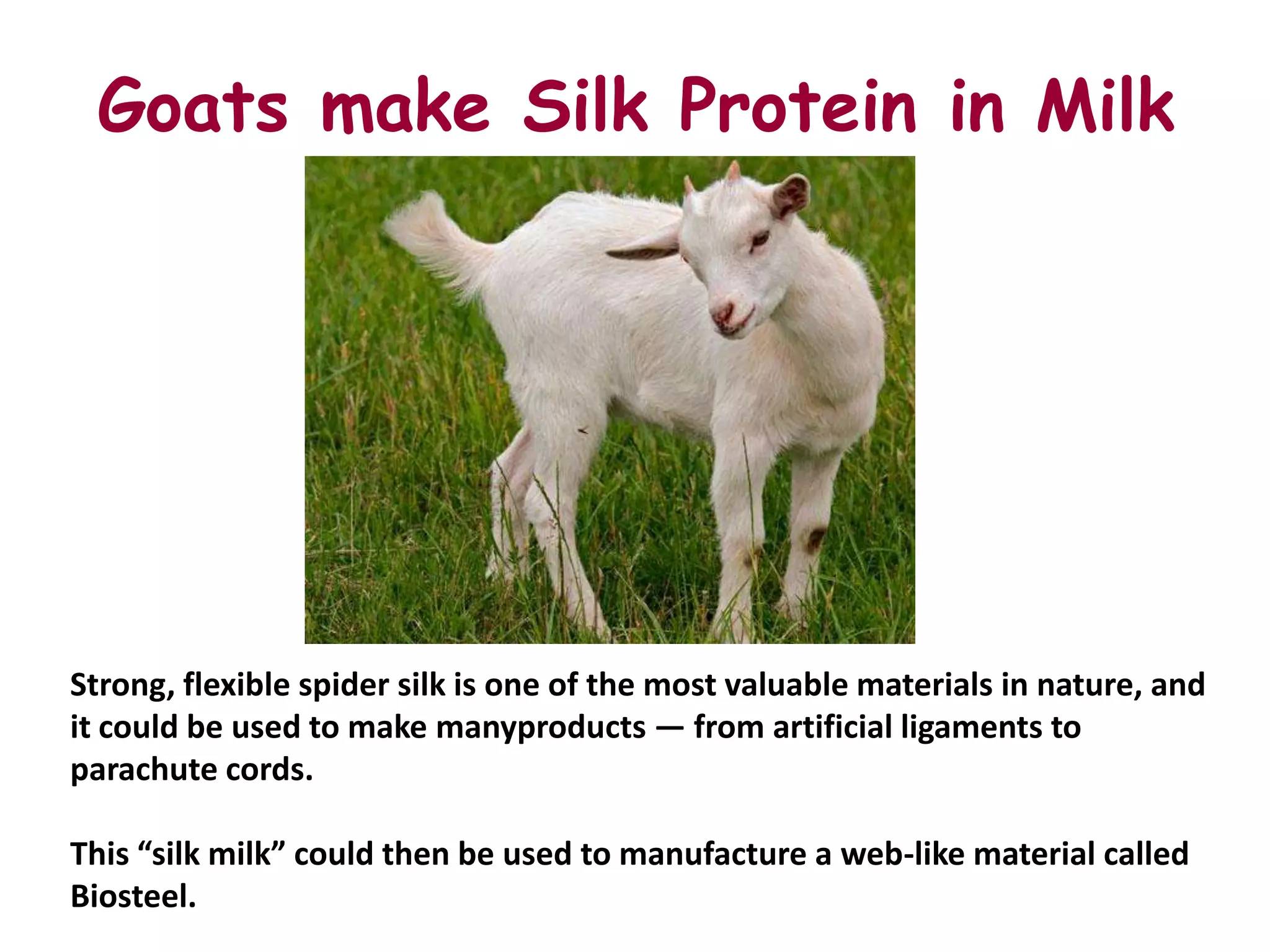
Goats make Silk Protein in Milk


Strong, flexible spider silk is one of the most valuable materials in nature, and
it could be used to make manyproducts — from artificial ligaments to
parachute cords.

This “silk milk” could then be used to manufacture a web-like material called
Biosteel.
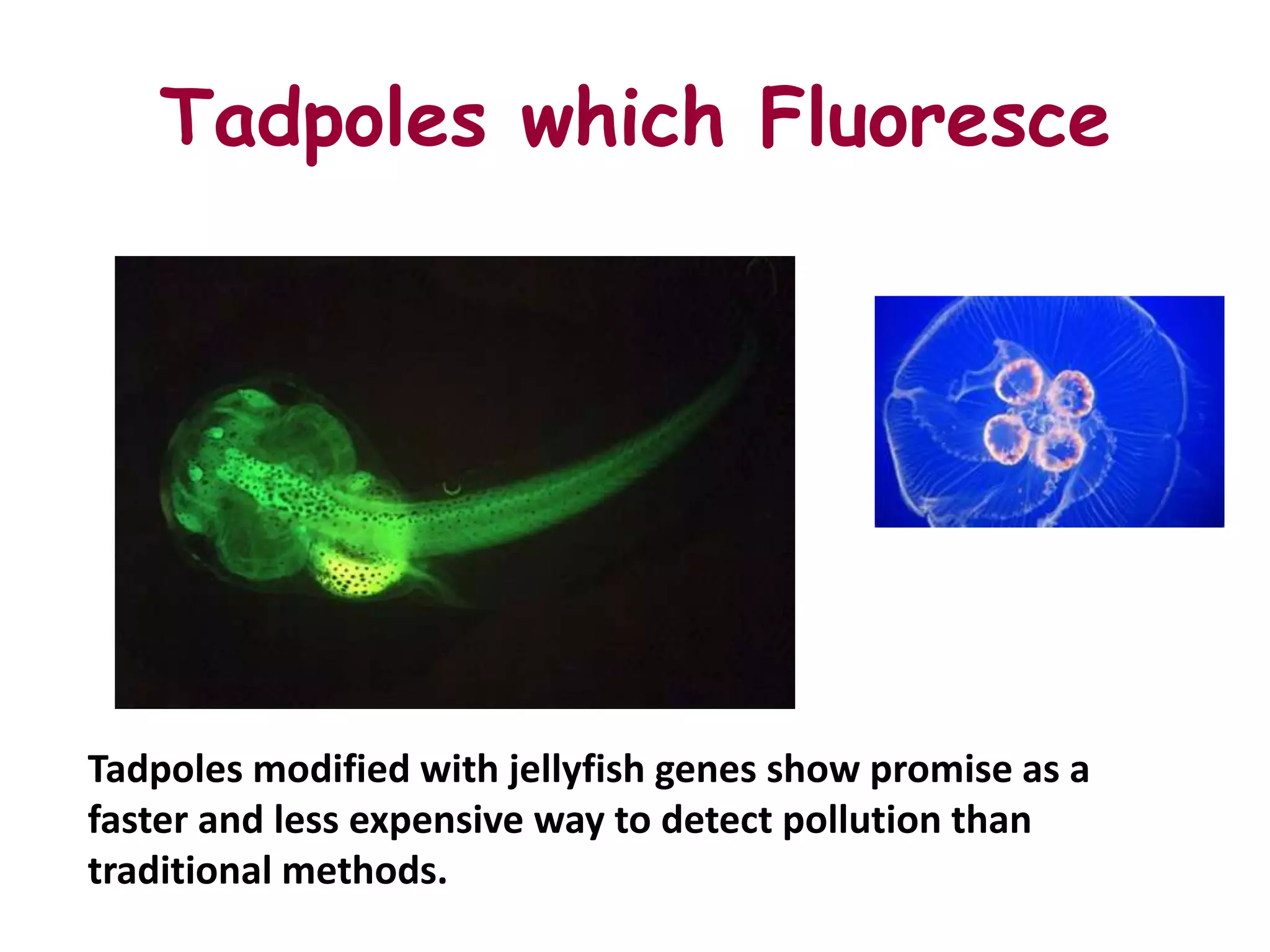
Tadpoles which Fluoresce


Tadpoles modified with jellyfish genes show promise as a
faster and less expensive way to detect pollution than
traditional methods.
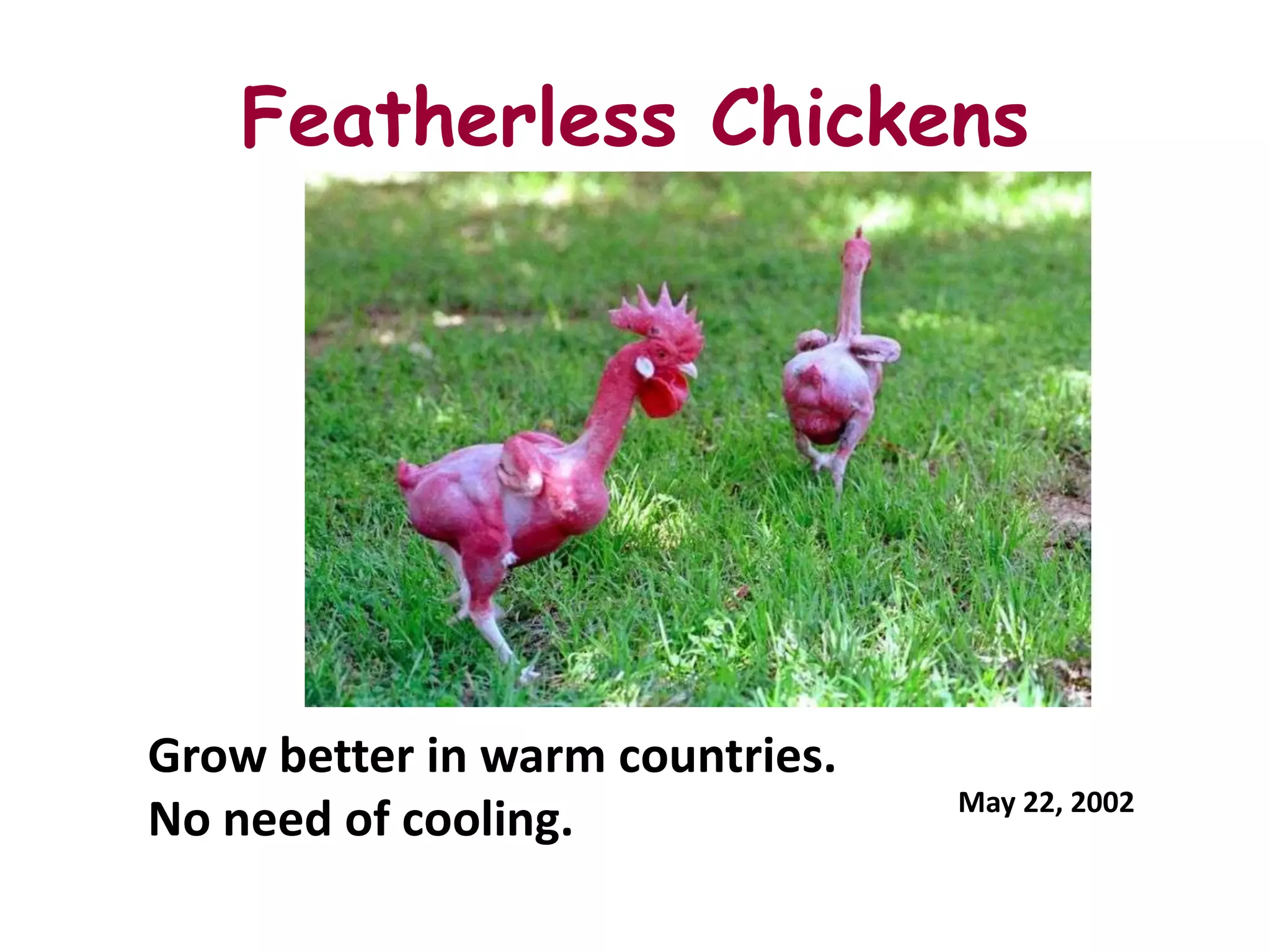
Featherless Chickens


Grow better in warm countries.
                                 May 22, 2002
No need of cooling.
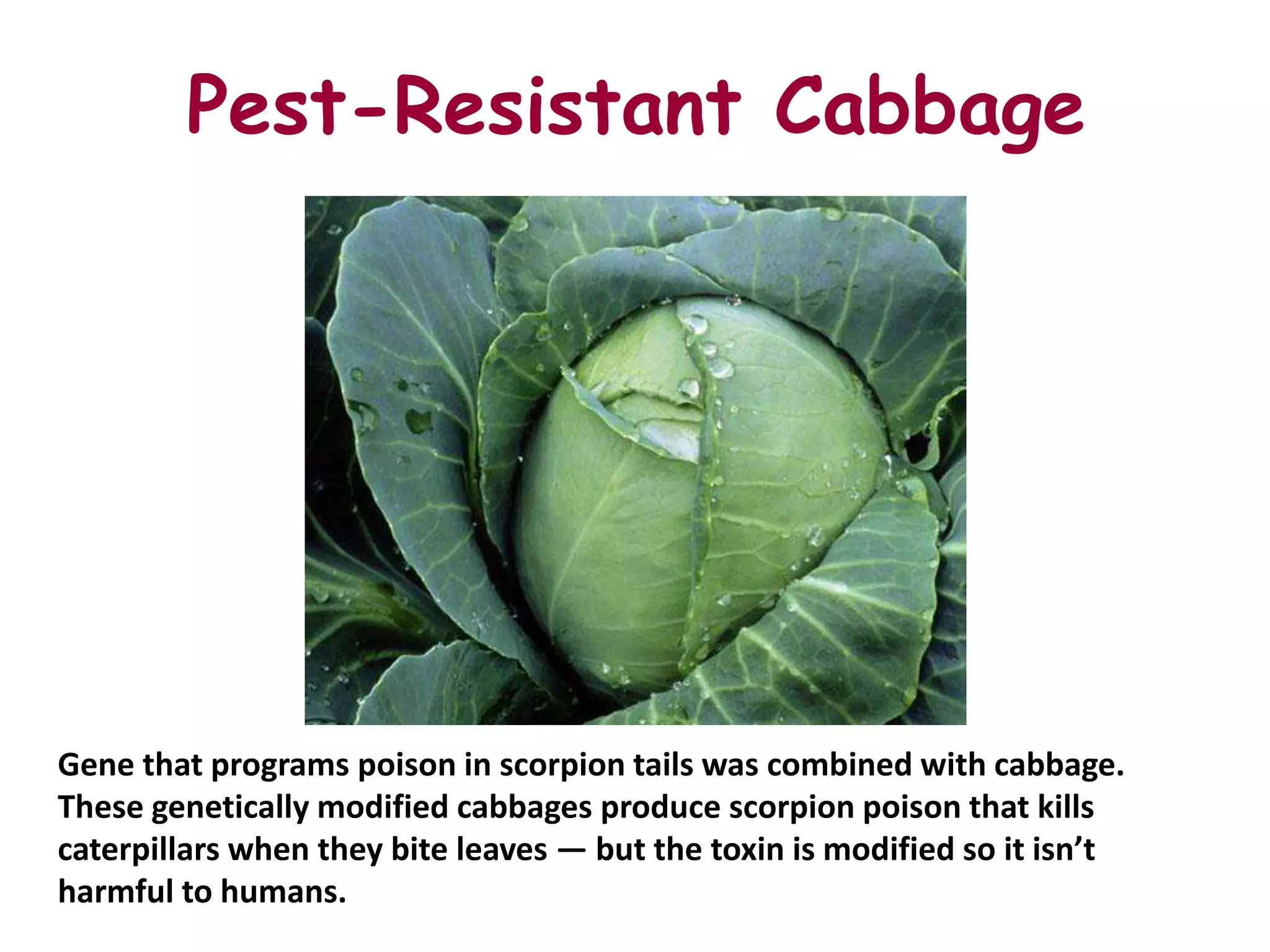
Pest-Resistant Cabbage


Gene that programs poison in scorpion tails was combined with cabbage.
These genetically modified cabbages produce scorpion poison that kills
caterpillars when they bite leaves — but the toxin is modified so it isn’t
harmful to humans.
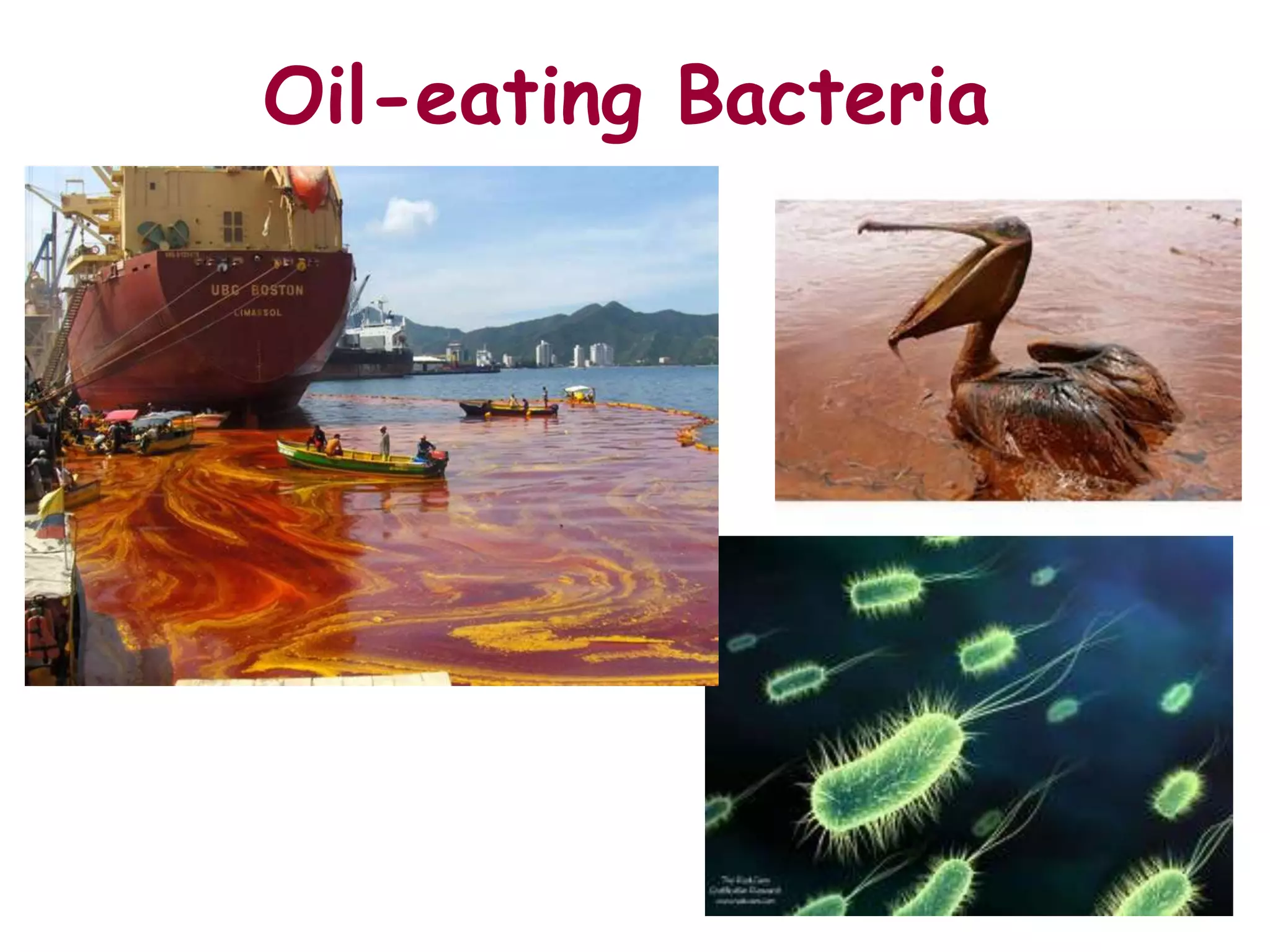
Oil-eating Bacteria
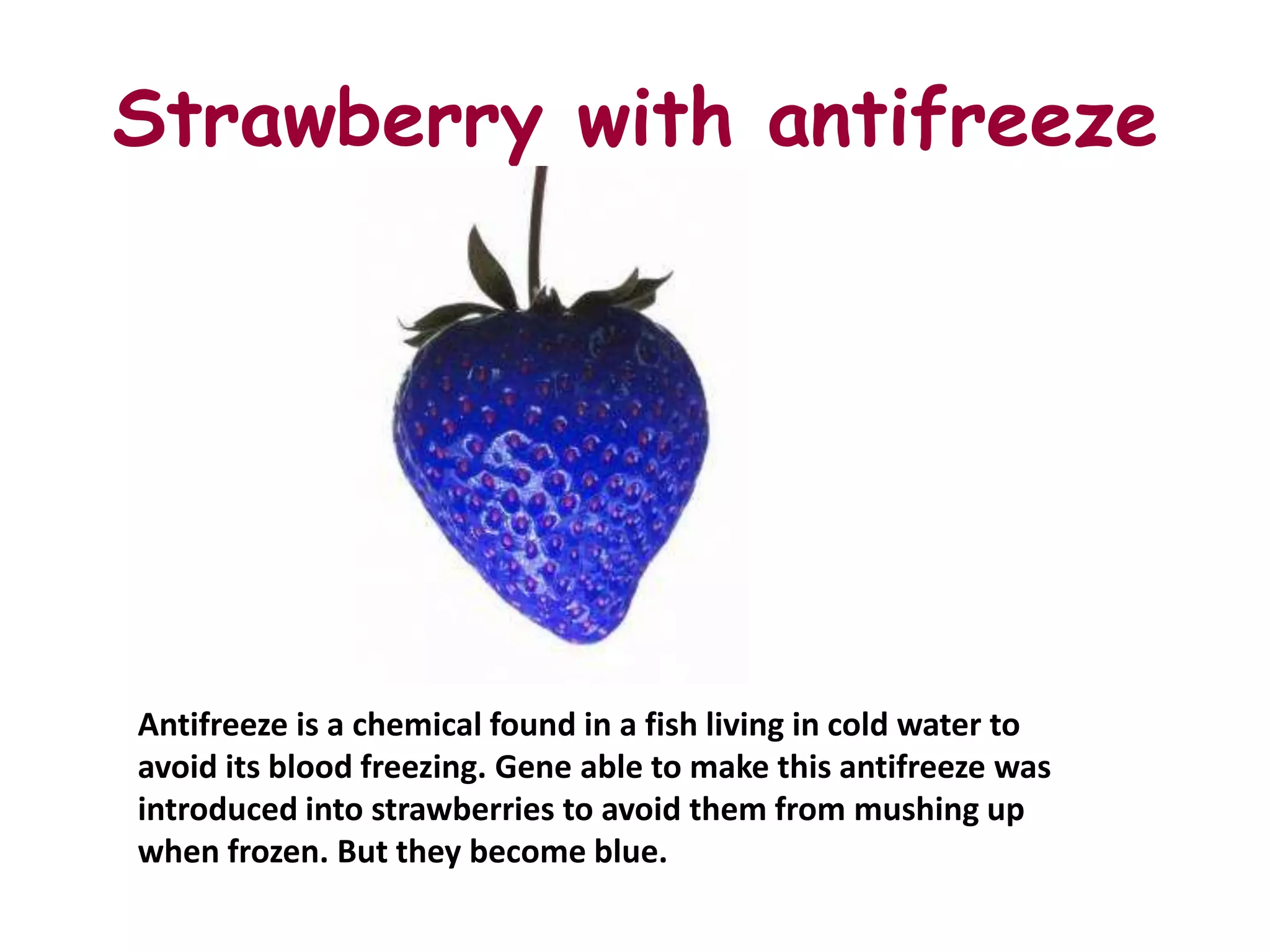
Strawberry with antifreeze


Antifreeze is a chemical found in a fish living in cold water to
avoid its blood freezing. Gene able to make this antifreeze was
introduced into strawberries to avoid them from mushing up
when frozen. But they become blue.
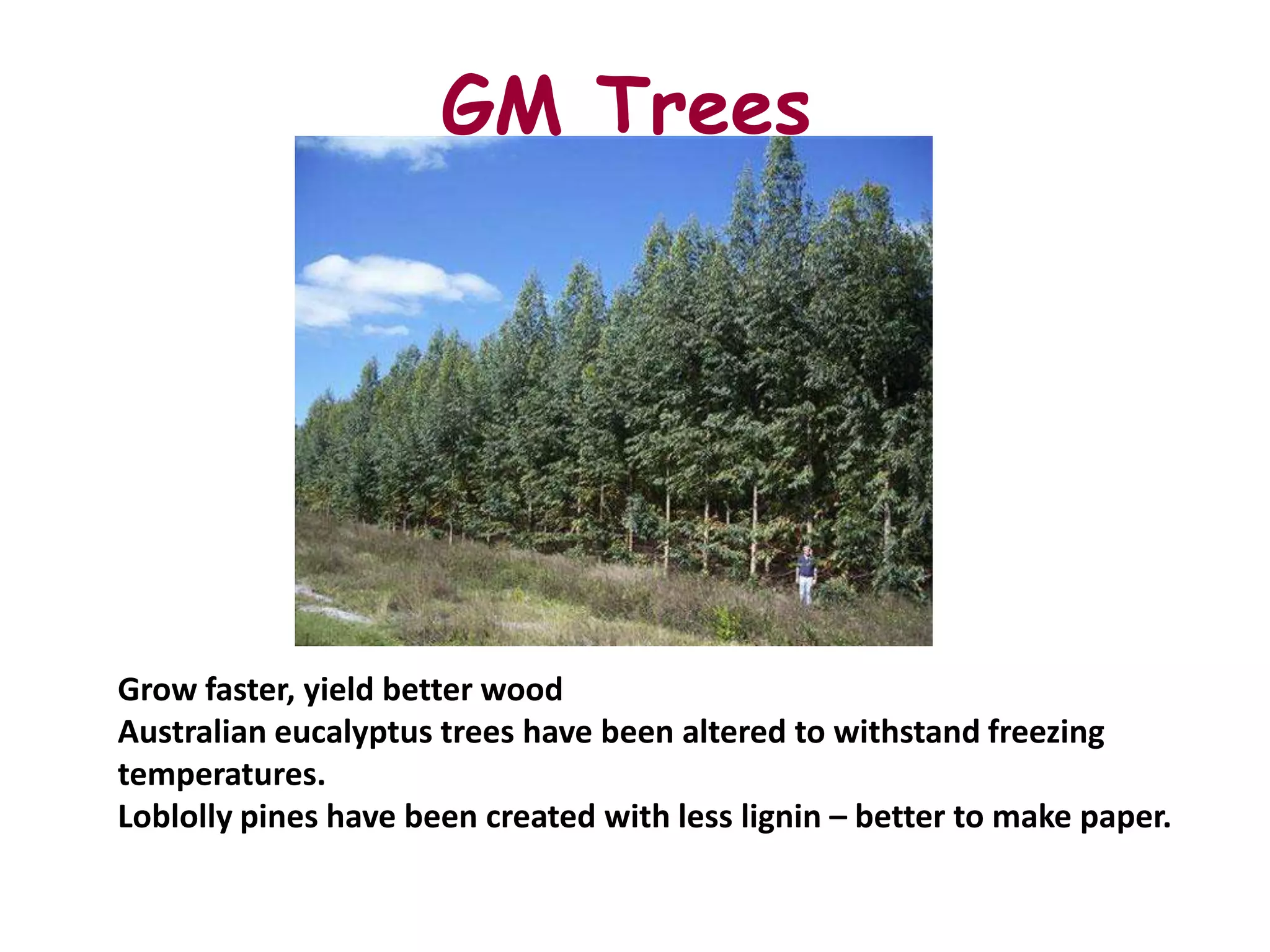
GM Trees


Grow faster, yield better wood
Australian eucalyptus trees have been altered to withstand freezing
temperatures.
Loblolly pines have been created with less lignin – better to make paper.
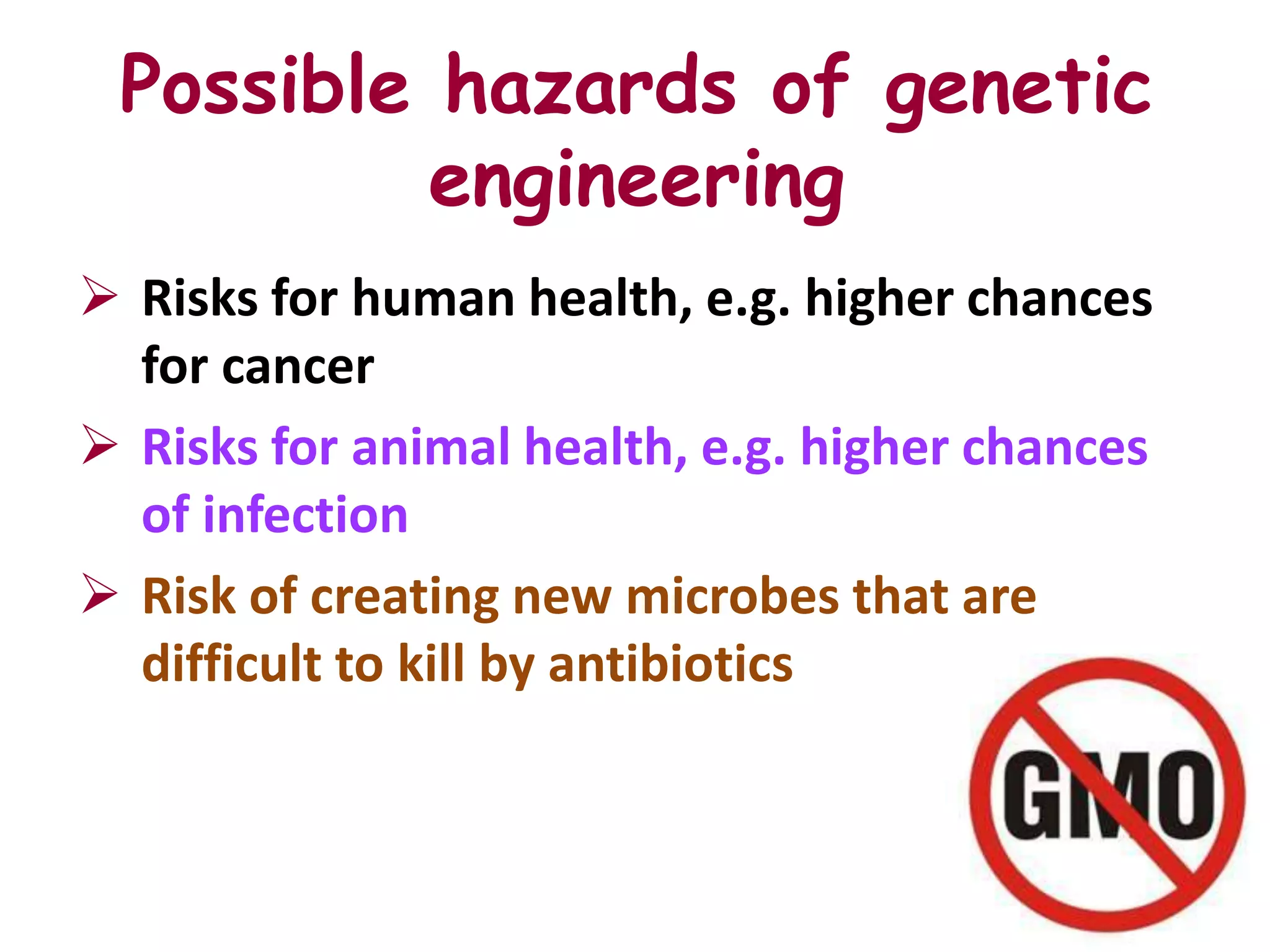
Possible hazards of genetic
          engineering
 Risks for human health, e.g. higher chances
  for cancer
 Risks for animal health, e.g. higher chances
  of infection
 Risk of creating new microbes that are
  difficult to kill by antibiotics
Genetic engineering

Genetic engineering

  • 2.
    Genetic engineering:  isthe process by which pieces of DNA are transferred from one organism to another Human Bacterium Bacterium Plant Human Sheep Fish Plant
  • 3.
    Tobacco plant Gene taken glows in the dark from a firefly [1986 ]
  • 4.
    A vector isneeded to transfer a gene into a host cell  VECTOR  plasmids or viruses are vectors VIRUS chromosome PLASMID A plasmid is a circular piece of DNA in a bacterium.
  • 5.
    A quick lookat the process 1. DNA carrying a gene of interest is taken from 2. The gene is inserted a (e.g., a human) cell. into the DNA of another (host) cell. 3. The host cell now contains recombinant DNA. 4. The host cell multiplies. Vat 5. The desired protein is produced.
  • 6.
    Recombinant DNA entersthe host cell Recombinant DNA gene Human cell Bacterium Genetically modified Plasmid is plasmid opened
  • 7.
    An organism whichhas foreign DNA integrated into its genetic material is called: Foreign DNA Enzymes cut DNA Foreign DNA is integrated
  • 8.
  • 9.
    Question: MAY, 2012 Insulinwas the first hormone to be synthesised using genetic engineering. a. Define the term genetic engineering. (2) The process by which pieces of DNA are transferred from one organism to another.
  • 10.
    b. Genetic engineeringuses recombinant DNA. What is recombinant DNA? (2) DNA made from two different organisms e.g. human gene and bacterial plasmid.
  • 11.
    c. Explain thefunction of plasmids in genetic engineering. (2) Act as vectors to carry a specific gene into the host cell.
  • 12.
    Stages involved: 1. Identificationof the required gene (e.g. gene for human insulin). gene
  • 13.
    Stages involved: 2. Cuttingof the chromosome using special enzymes called restriction endonucleases to release the gene.
  • 15.
    Uses of geneticengineering: 1. To make insulin for use by diabetic persons Before genetic engineering, where did insulin come from? Pigs Cows
  • 16.
    Question: MAY 2002 Givea biological explanation for the following observation: Ann couldn’t believe her ears hearing the pharmacist telling her that the insulin shots bought for her grandfather were produced from bacteria. (2) Insulin is produced by genetically modified bacteria. The human gene able to make insulin is inserted into bacteria.
  • 17.
    Uses of geneticengineering: 2. To make growth hormone to treat dwarfs
  • 18.
    Uses of geneticengineering: 3. To prepare vaccines
  • 19.
    Uses of geneticengineering: 4. To make plants resistant to disease Tomato mosaic virus causes great damage
  • 20.
    Uses of geneticengineering: 5. To make pigs, cows or fish grow faster
  • 21.
    Uses of geneticengineering: 6. Higher production of milk by cows
  • 22.
    Uses of geneticengineering: 7. To make pigs with less fat - leaner meat. Control GMO
  • 23.
    Gene therapy  whena gene in inserted into a sick person
  • 24.
    Other examples ofGMO not in your notes
  • 25.
    Less-flatulent cows Scientists haveidentified the bacterium responsible for producing methane and designed a line of cattle that creates 25 % less methane than the average cow.
  • 26.
    Golden Rice: isgenetically modified (rich in vitamin A) Ordinary rice Genetically modified rice
  • 27.
  • 28.
    Goats make SilkProtein in Milk Strong, flexible spider silk is one of the most valuable materials in nature, and it could be used to make manyproducts — from artificial ligaments to parachute cords. This “silk milk” could then be used to manufacture a web-like material called Biosteel.
  • 29.
    Tadpoles which Fluoresce Tadpolesmodified with jellyfish genes show promise as a faster and less expensive way to detect pollution than traditional methods.
  • 30.
    Featherless Chickens Grow betterin warm countries. May 22, 2002 No need of cooling.
  • 31.
    Pest-Resistant Cabbage Gene thatprograms poison in scorpion tails was combined with cabbage. These genetically modified cabbages produce scorpion poison that kills caterpillars when they bite leaves — but the toxin is modified so it isn’t harmful to humans.
  • 32.
  • 33.
    Strawberry with antifreeze Antifreezeis a chemical found in a fish living in cold water to avoid its blood freezing. Gene able to make this antifreeze was introduced into strawberries to avoid them from mushing up when frozen. But they become blue.
  • 34.
    GM Trees Grow faster,yield better wood Australian eucalyptus trees have been altered to withstand freezing temperatures. Loblolly pines have been created with less lignin – better to make paper.
  • 35.
    Possible hazards ofgenetic engineering  Risks for human health, e.g. higher chances for cancer  Risks for animal health, e.g. higher chances of infection  Risk of creating new microbes that are difficult to kill by antibiotics