Jet Engine Ideal Analysis
Engine Efficiency
• Propulsive Efficiency
• Thermal Efficiency
• Overall Efficiency
Propulsive Efficiency
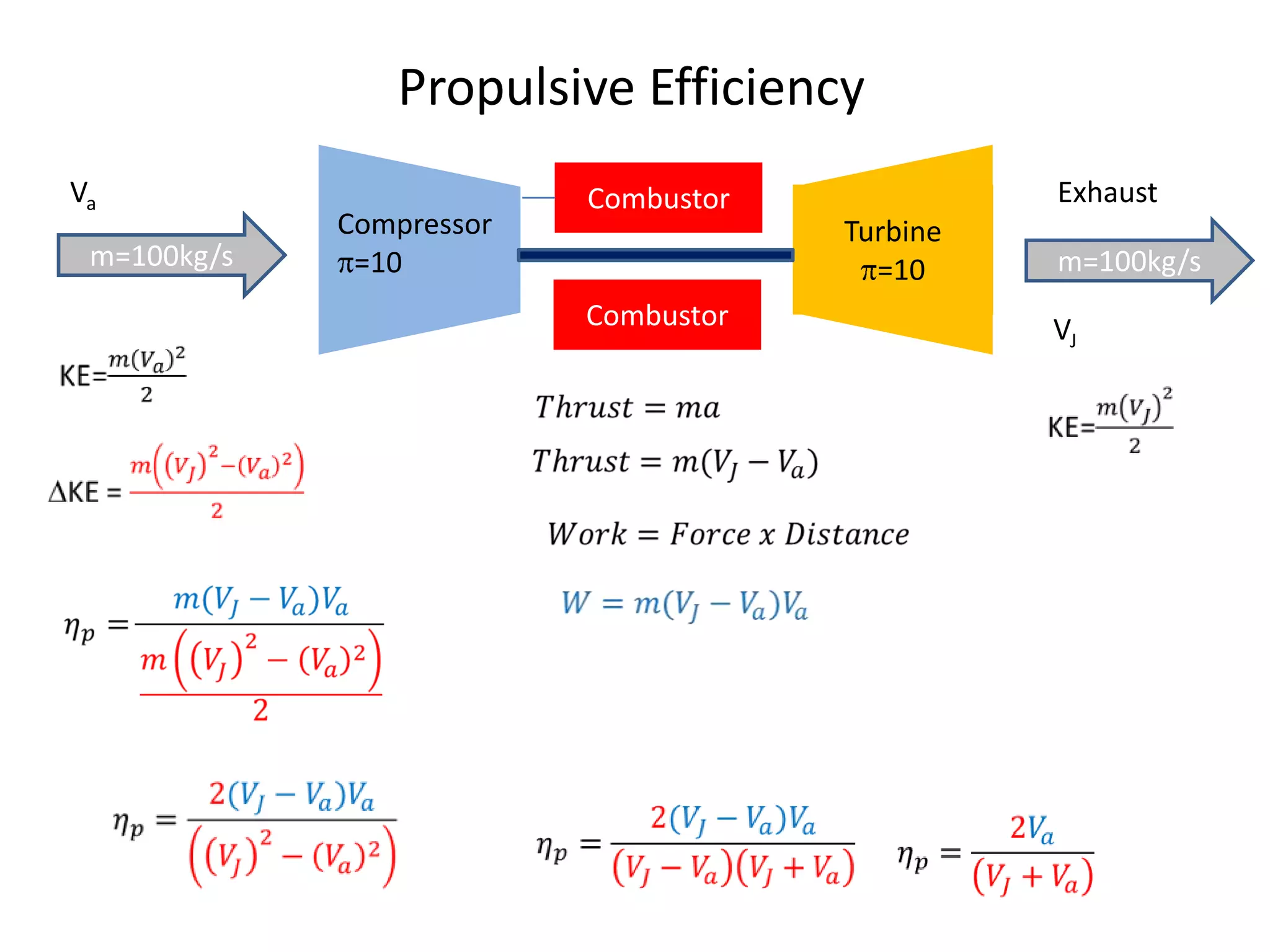
• The propulsive efficiency compares how much
work is done on the aircraft, by supplying
kinetic energy to the air.
Propulsive Efficiency
Va
m=100kg/s

Compressor
=10

Exhaust

Combustor
Turbine
=10
Combustor

m=100kg/s

VJ
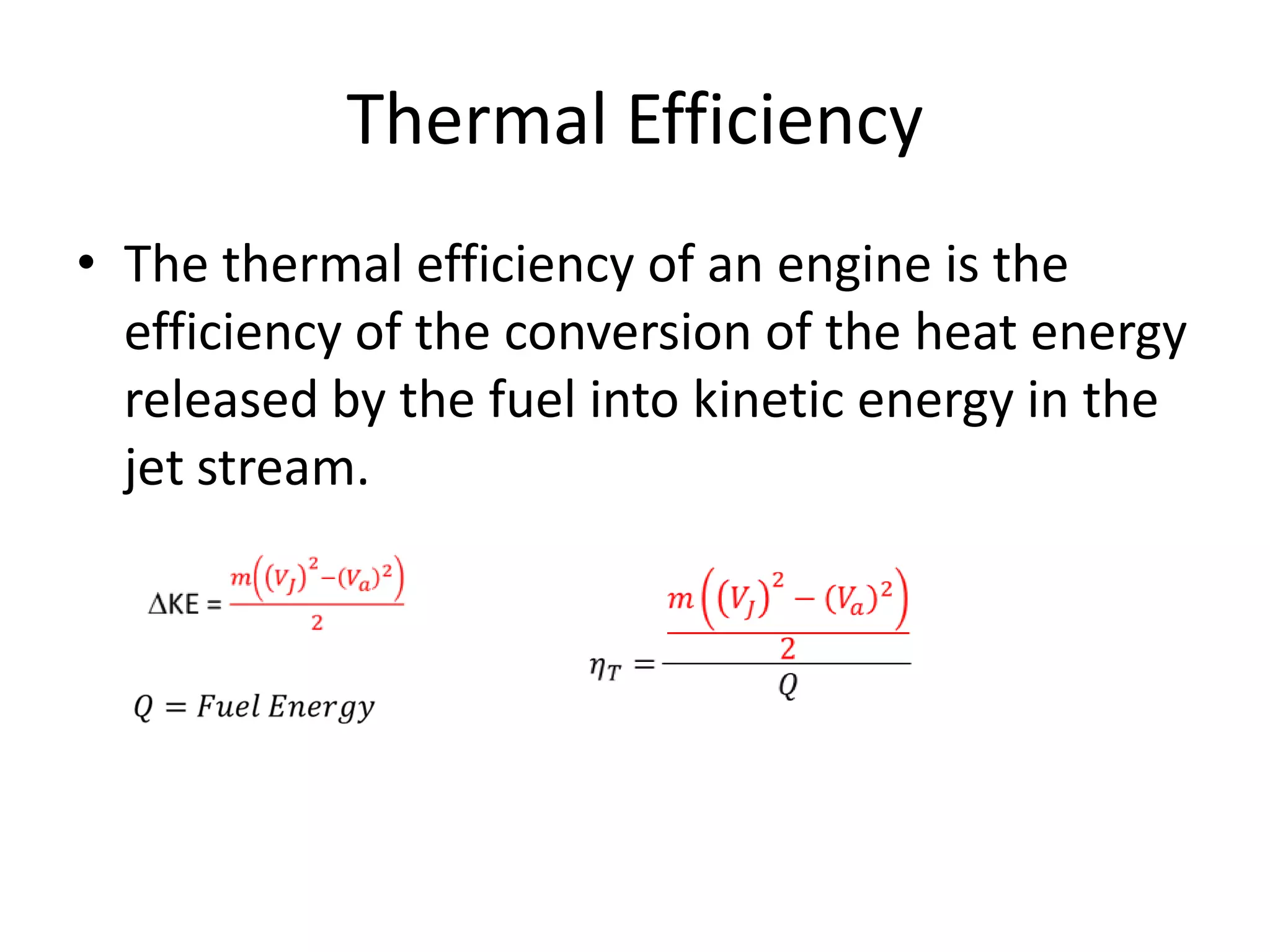
Thermal Efficiency
• The thermal efficiency of an engine is the
efficiency of the conversion of the heat energy
released by the fuel into kinetic energy in the
jet stream.
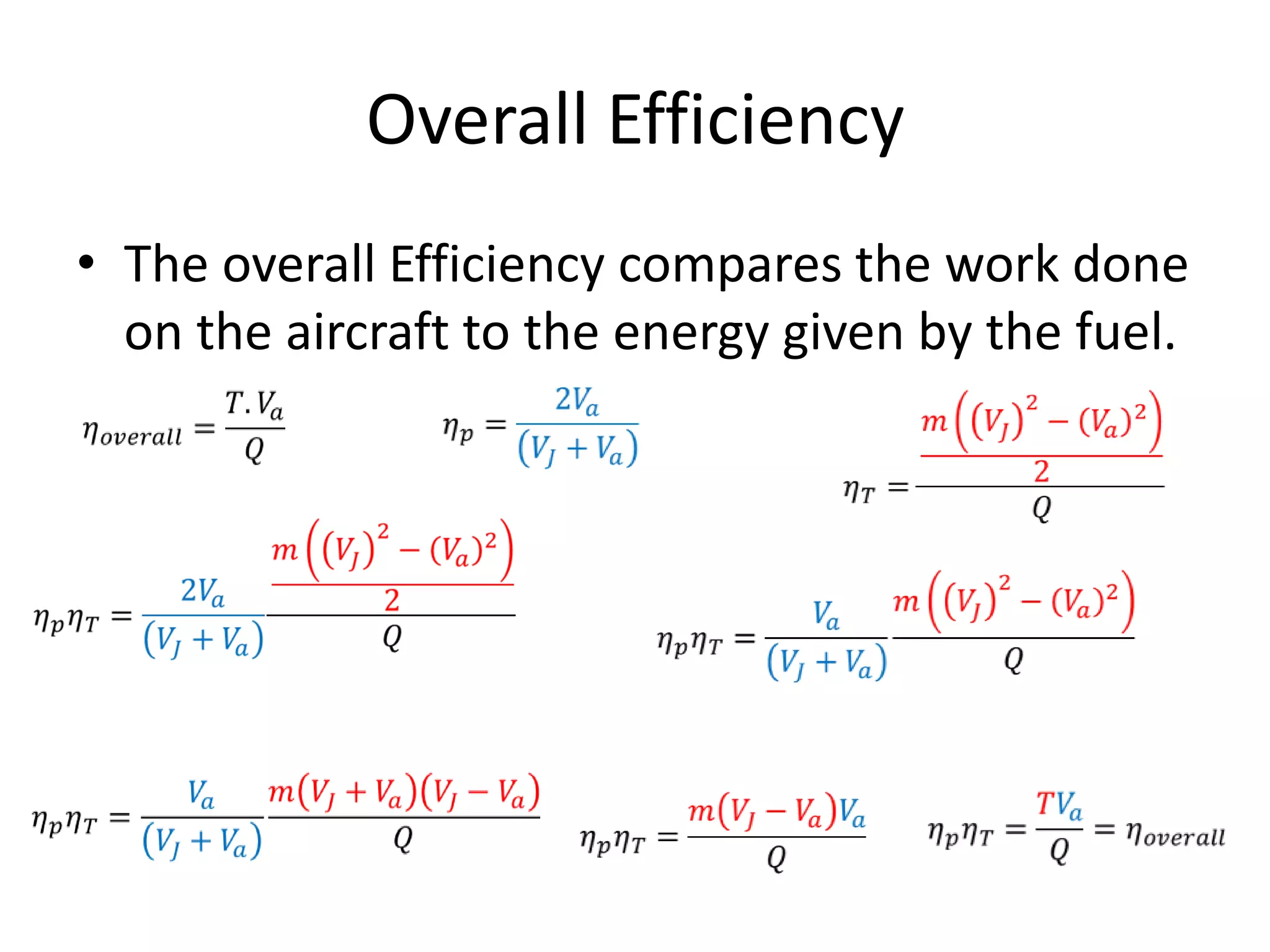
Overall Efficiency
• The overall Efficiency compares the work done
on the aircraft to the energy given by the fuel.
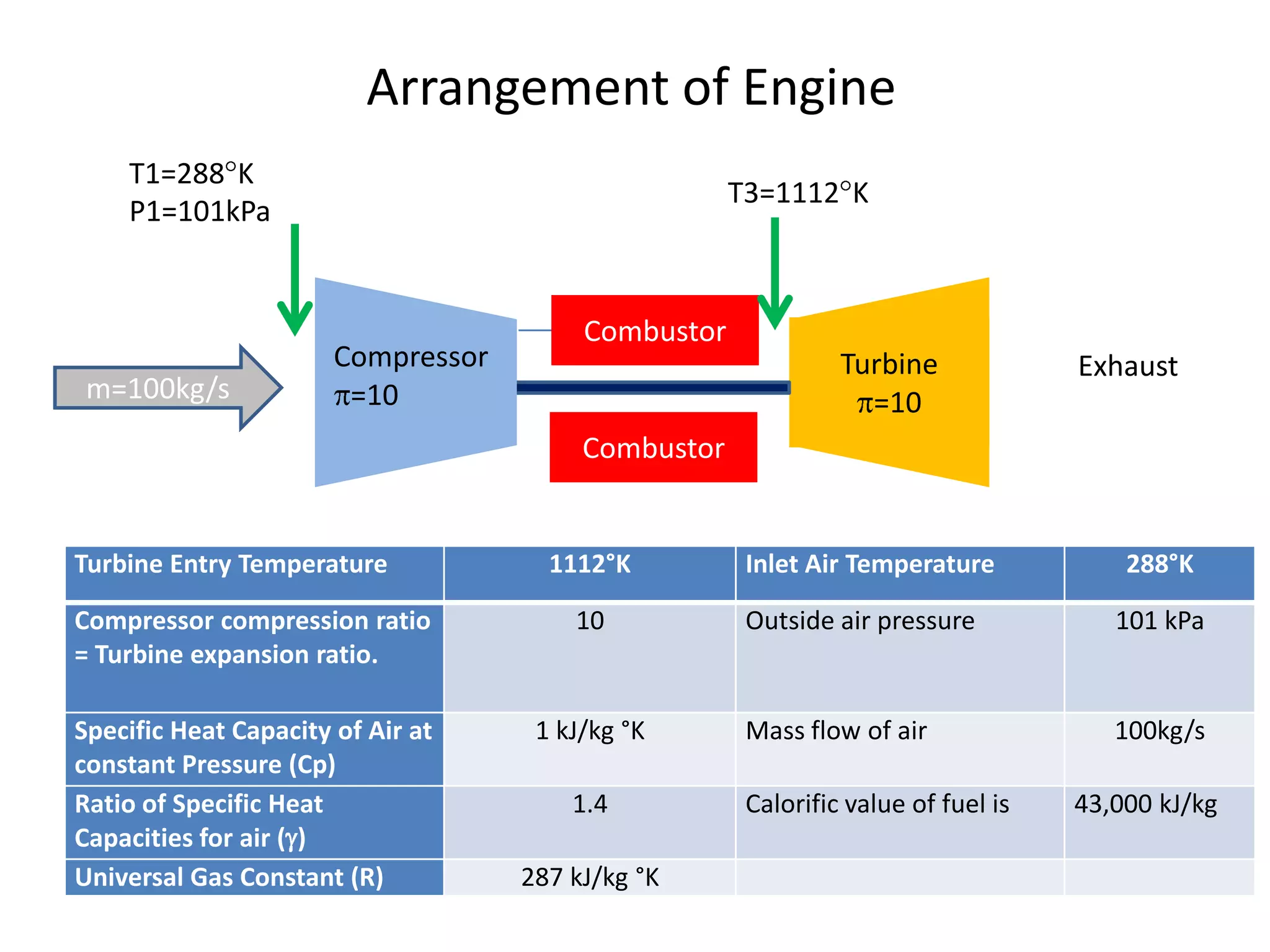
Arrangement of Engine
T1=288 K
P1=101kPa

m=100kg/s

T3=1112 K

Compressor
=10

Combustor
Turbine
=10

Exhaust

Combustor

Turbine Entry Temperature

1112°K

Compressor compression ratio
= Turbine expansion ratio.

10

Specific Heat Capacity of Air at
constant Pressure (Cp)
Ratio of Specific Heat
Capacities for air ( )
Universal Gas Constant (R)

1 kJ/kg °K
1.4
287 kJ/kg °K

Inlet Air Temperature

288°K

Outside air pressure

101 kPa

Mass flow of air

100kg/s

Calorific value of fuel is

43,000 kJ/kg
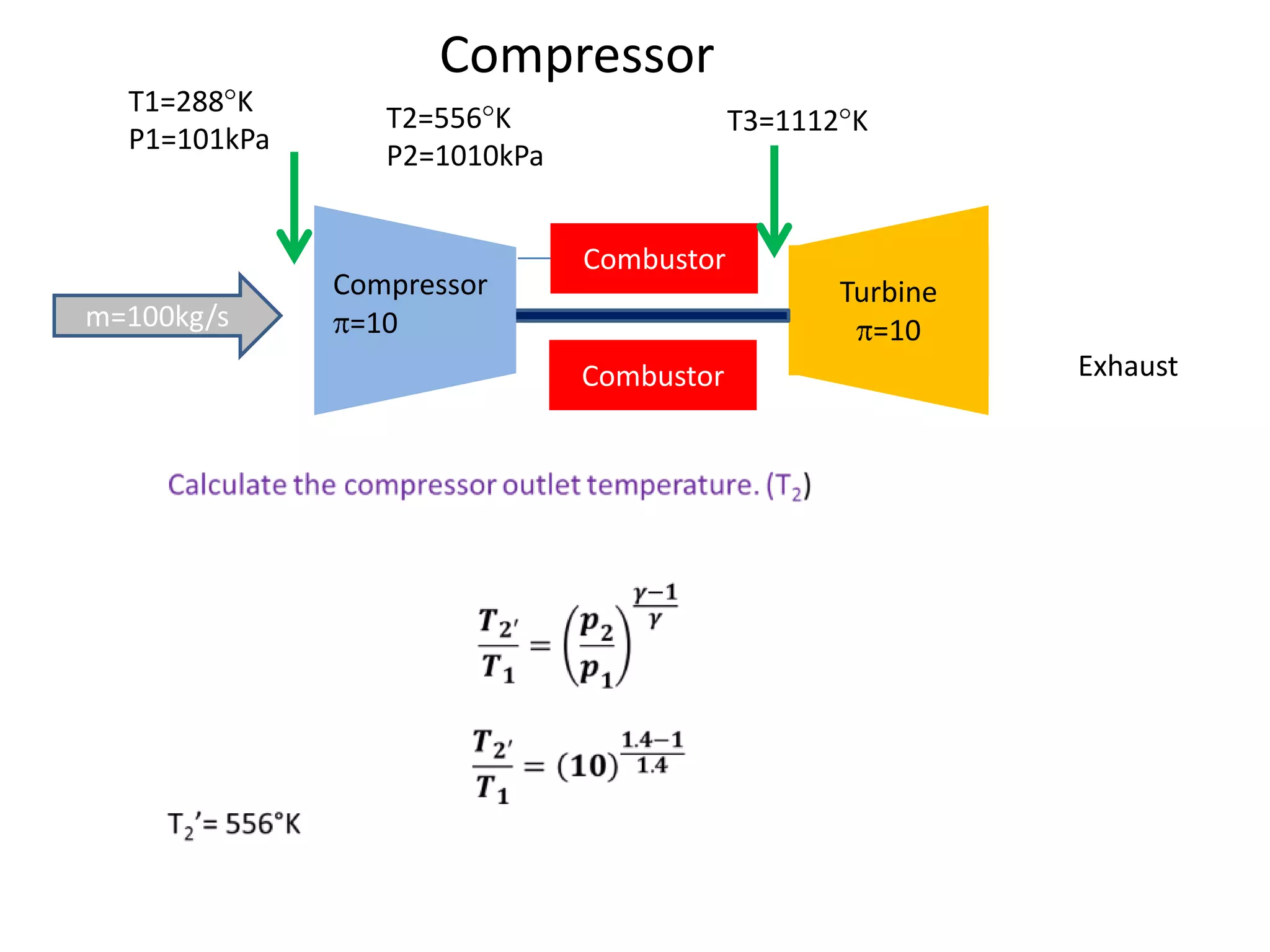
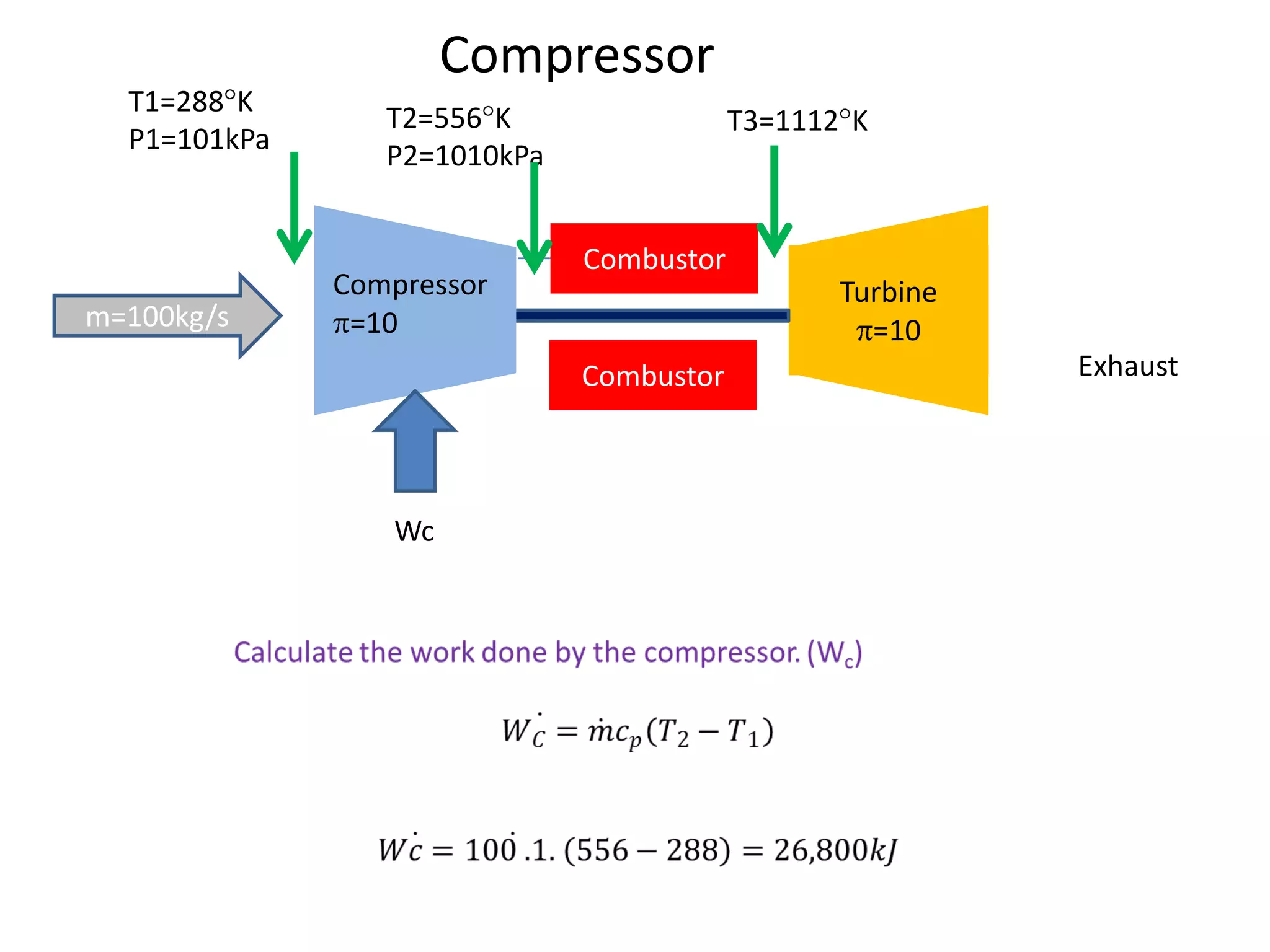
Compressor
T1=288 K
P1=101kPa

m=100kg/s

T2=556 K
P2=1010kPa

Compressor
=10

T3=1112 K

Combustor
Turbine
=10
Combustor

Exhaust
Compressor
T1=288 K
P1=101kPa

m=100kg/s

T2=556 K
P2=1010kPa

Compressor
=10

T3=1112 K

Combustor
Turbine
=10
Combustor

Wc

Exhaust
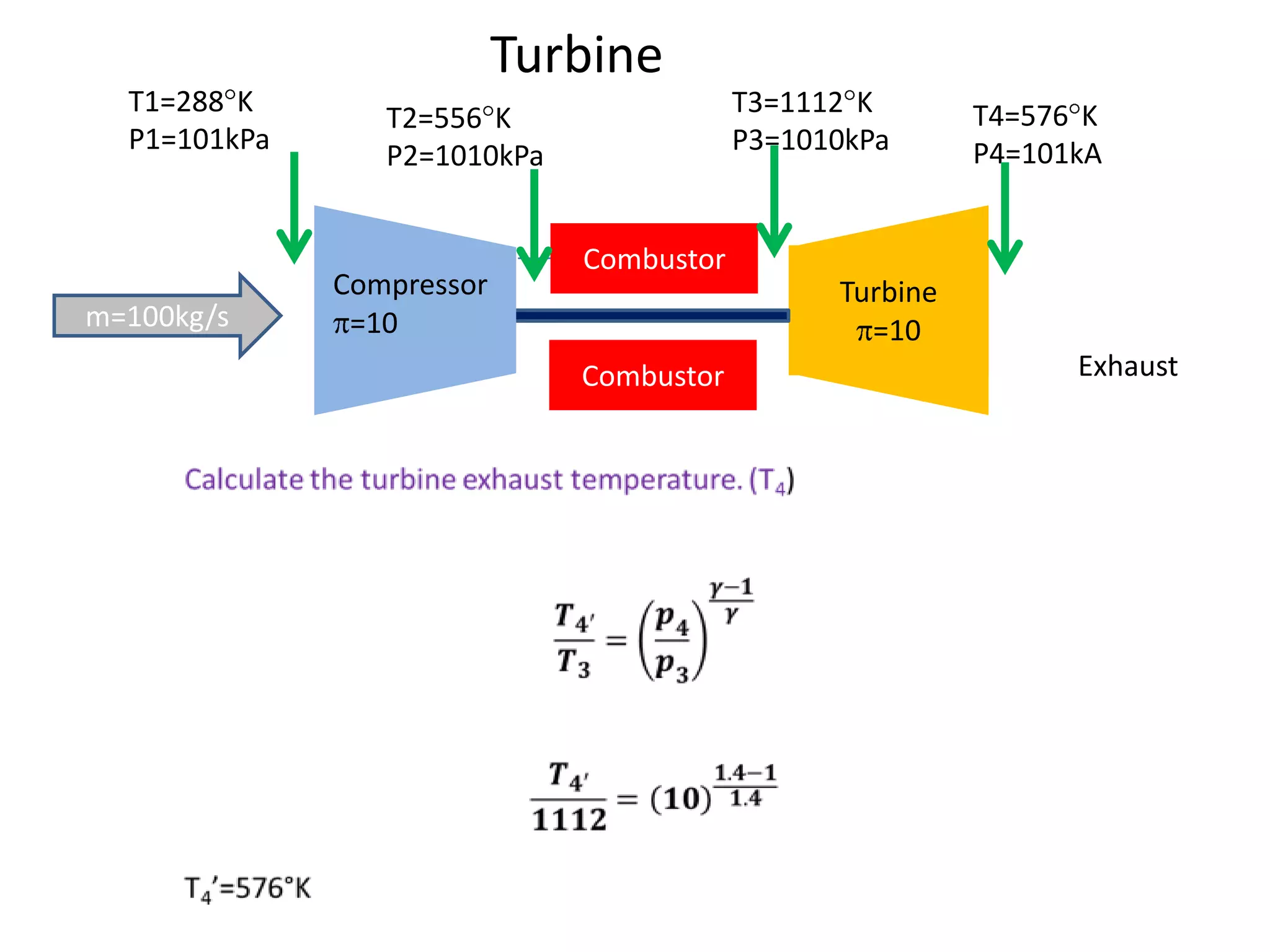
Turbine
T1=288 K
P1=101kPa

m=100kg/s

T3=1112 K
P3=1010kPa

T2=556 K
P2=1010kPa

Compressor
=10

T4=576 K
P4=101kA

Combustor
Turbine
=10
Combustor

Exhaust
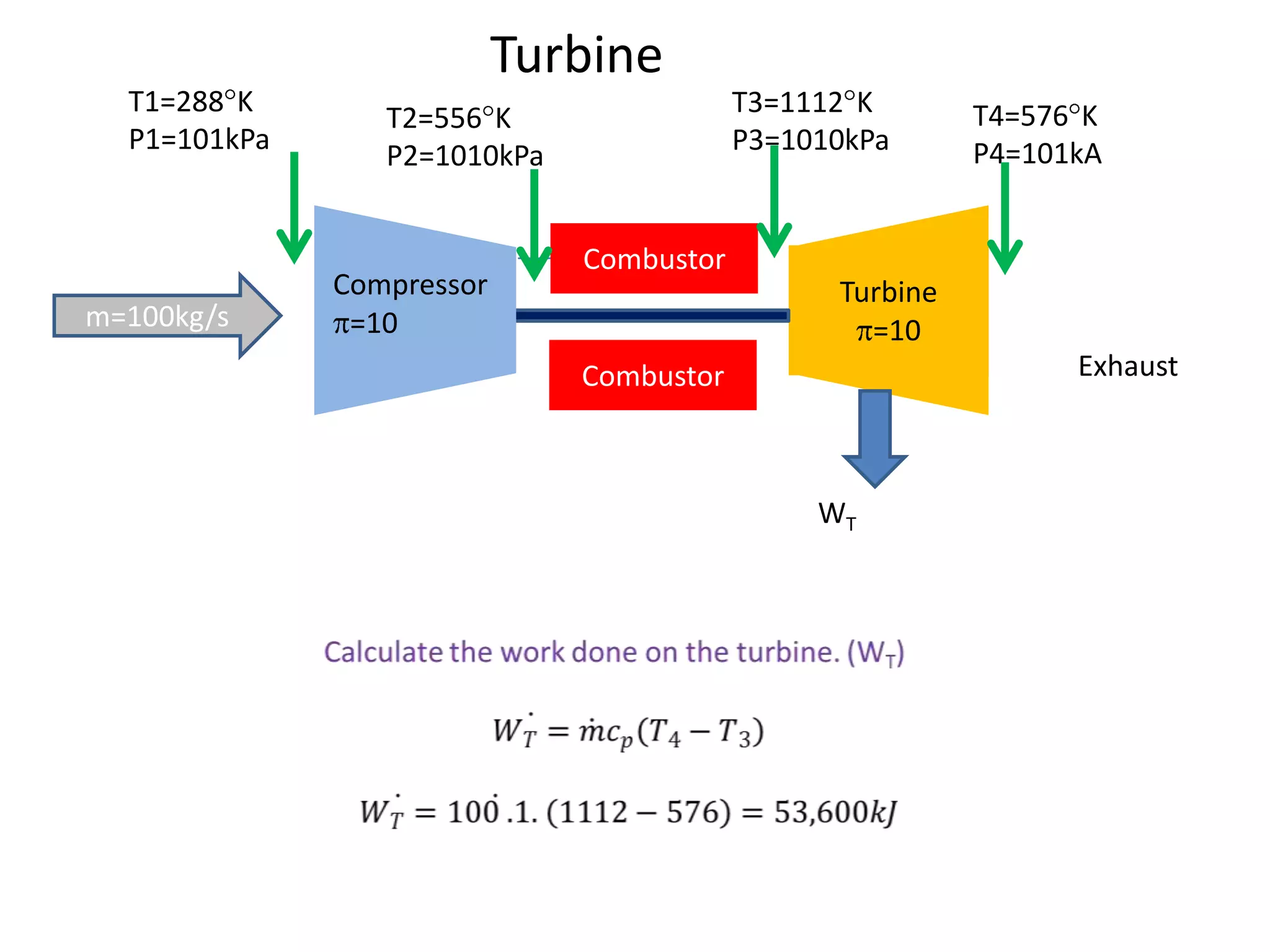
Turbine
T1=288 K
P1=101kPa

m=100kg/s

T3=1112 K
P3=1010kPa

T2=556 K
P2=1010kPa

Compressor
=10

T4=576 K
P4=101kA

Combustor
Turbine
=10
Exhaust

Combustor

WT
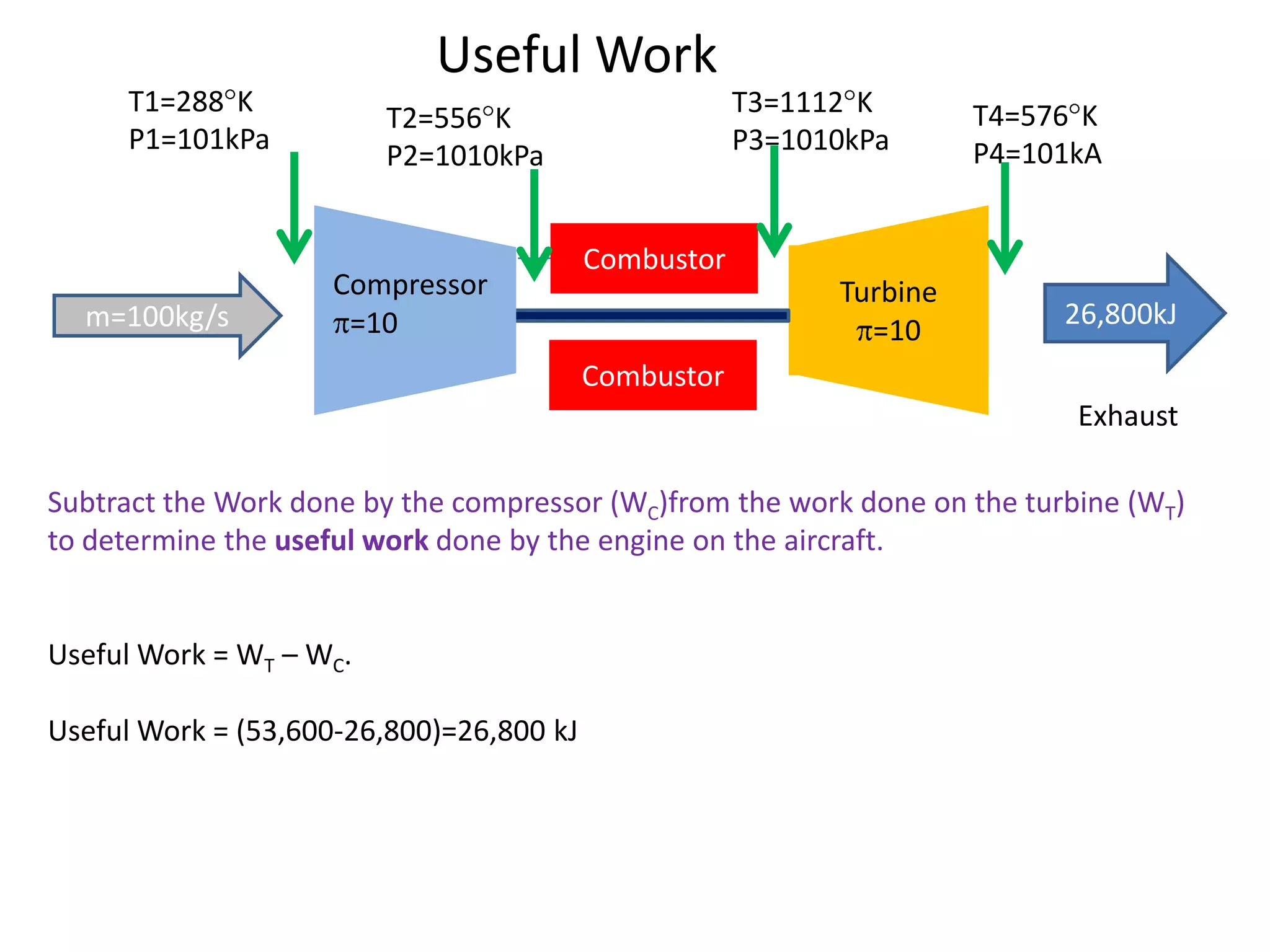
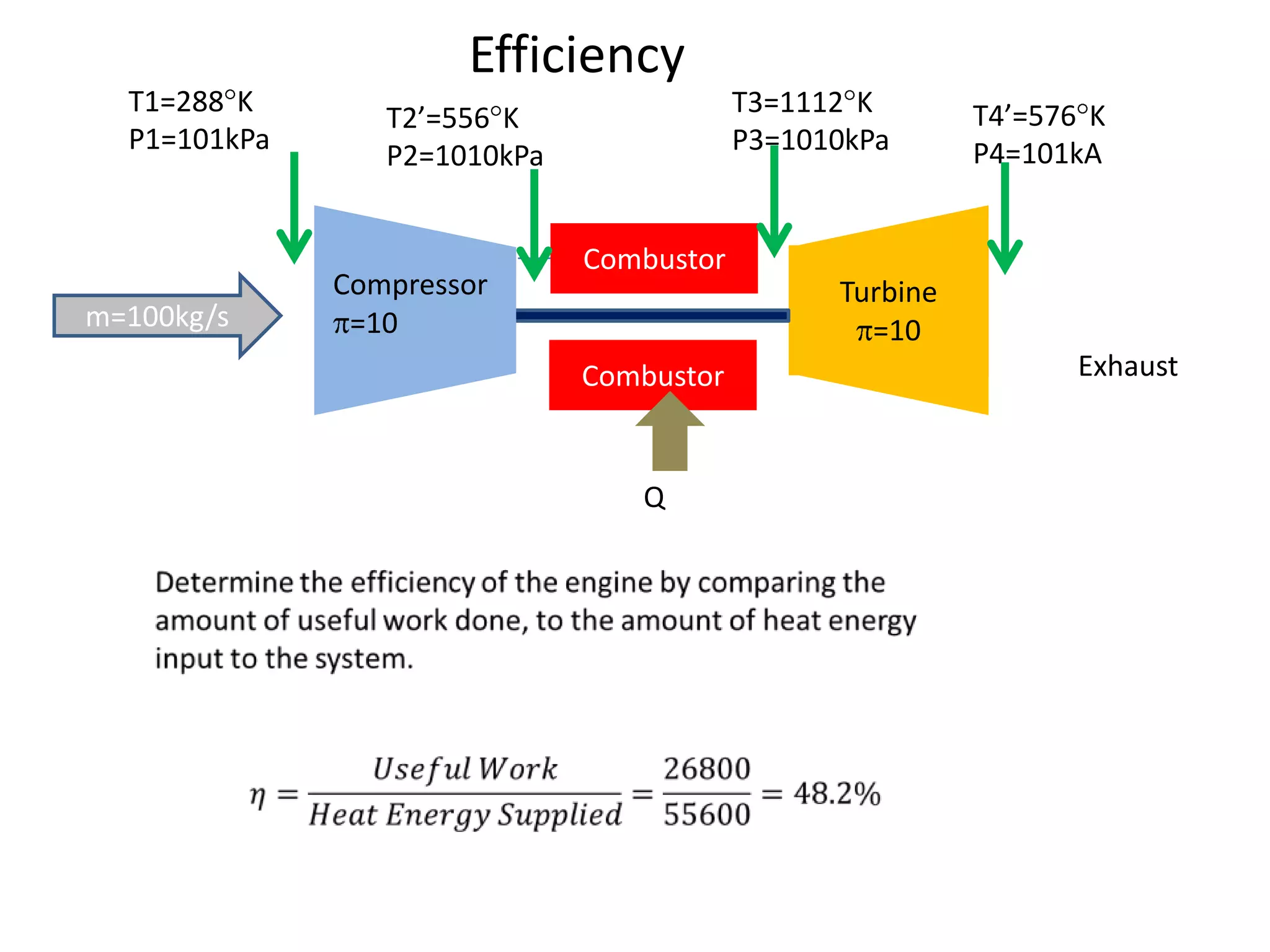
Useful Work
T1=288 K
P1=101kPa

m=100kg/s

T3=1112 K
P3=1010kPa

T2=556 K
P2=1010kPa

Compressor
=10

T4=576 K
P4=101kA

Combustor
Turbine
=10

26,800kJ

Combustor
Exhaust
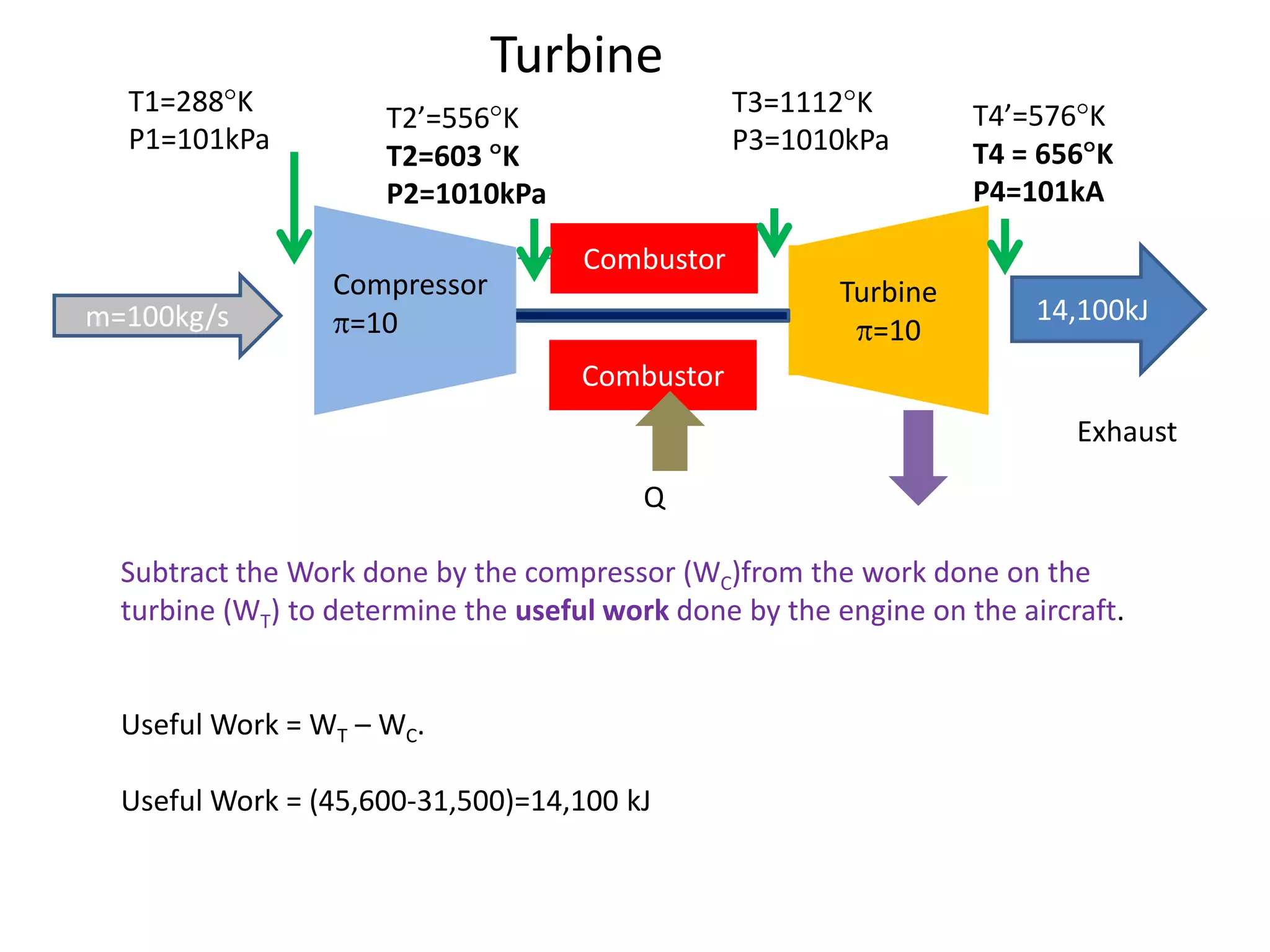
Subtract the Work done by the compressor (WC)from the work done on the turbine (WT)
to determine the useful work done by the engine on the aircraft.

Useful Work = WT – WC.
Useful Work = (53,600-26,800)=26,800 kJ
Combustor
T1=288 K
P1=101kPa

m=100kg/s

T3=1112 K
P3=1010kPa

T2=556 K
P2=1010kPa

Compressor
=10

T4=576 K
P4=101kA

Combustor
Turbine
=10
Combustor

Q

Exhaust
Fuel
T1=288 K
P1=101kPa

m=100kg/s

T3=1112 K
P3=1010kPa

T2=556 K
P2=1010kPa

Compressor
=10

T4=576 K
P4=101kA

Combustor
Turbine
=10
Combustor

Q

Exhaust
Efficiency
T1=288 K
P1=101kPa

m=100kg/s

T3=1112 K
P3=1010kPa

T2’=556 K
P2=1010kPa

Compressor
=10

T4’=576 K
P4=101kA

Combustor
Turbine
=10
Combustor

Q

Exhaust
Part 2
T1=288 K
P1=101kPa

m=100kg/s

T3=1112 K
P3=1010kPa

T2’=556 K
P2=1010kPa

Compressor
=10

T4’=576 K
P4=101kA

Combustor
Turbine
=10
Combustor

Q
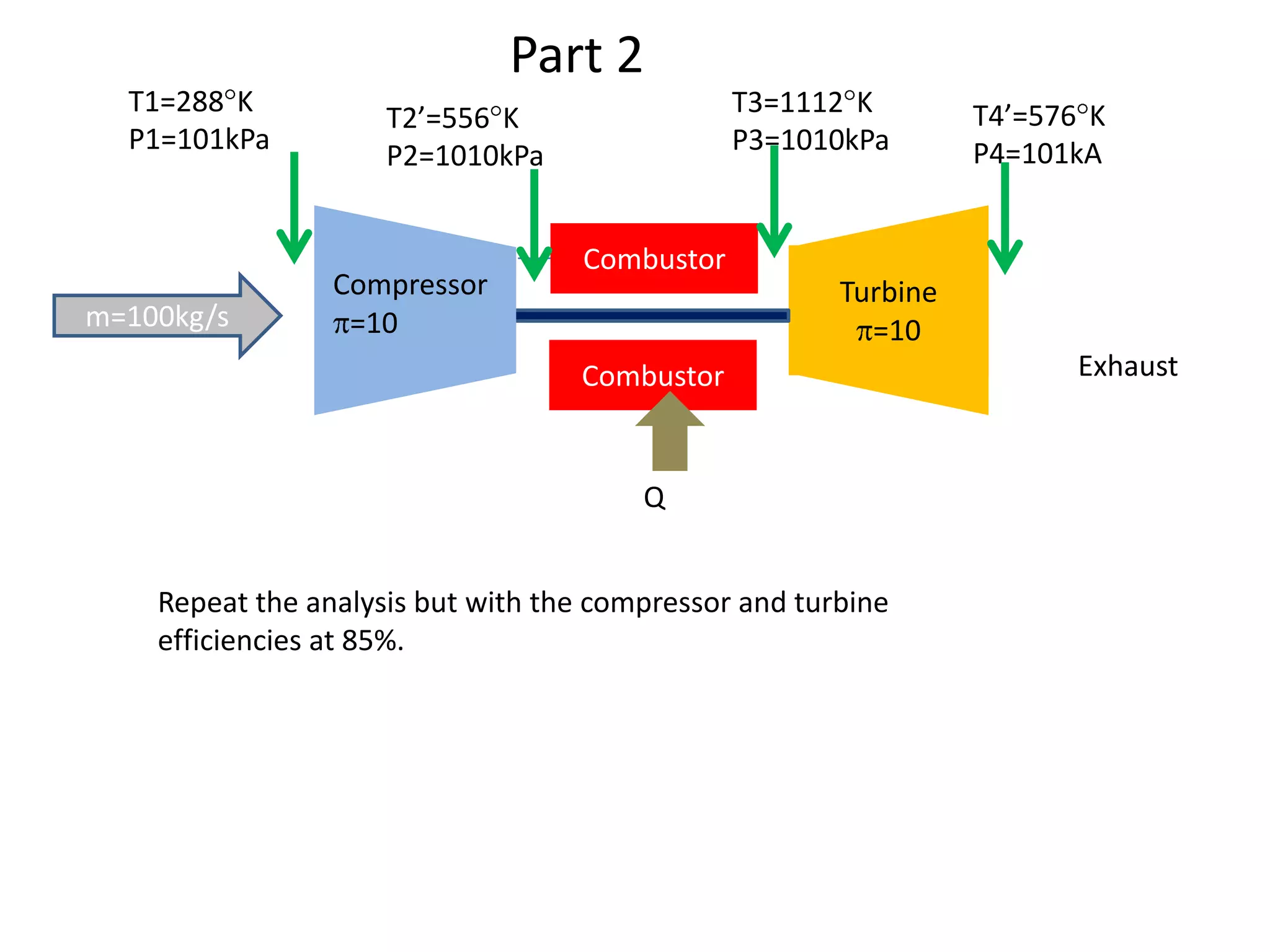
Repeat the analysis but with the compressor and turbine
efficiencies at 85%.

Exhaust
Compressor
T1=288 K
P1=101kPa

m=100kg/s

T3=1112 K
P3=1010kPa

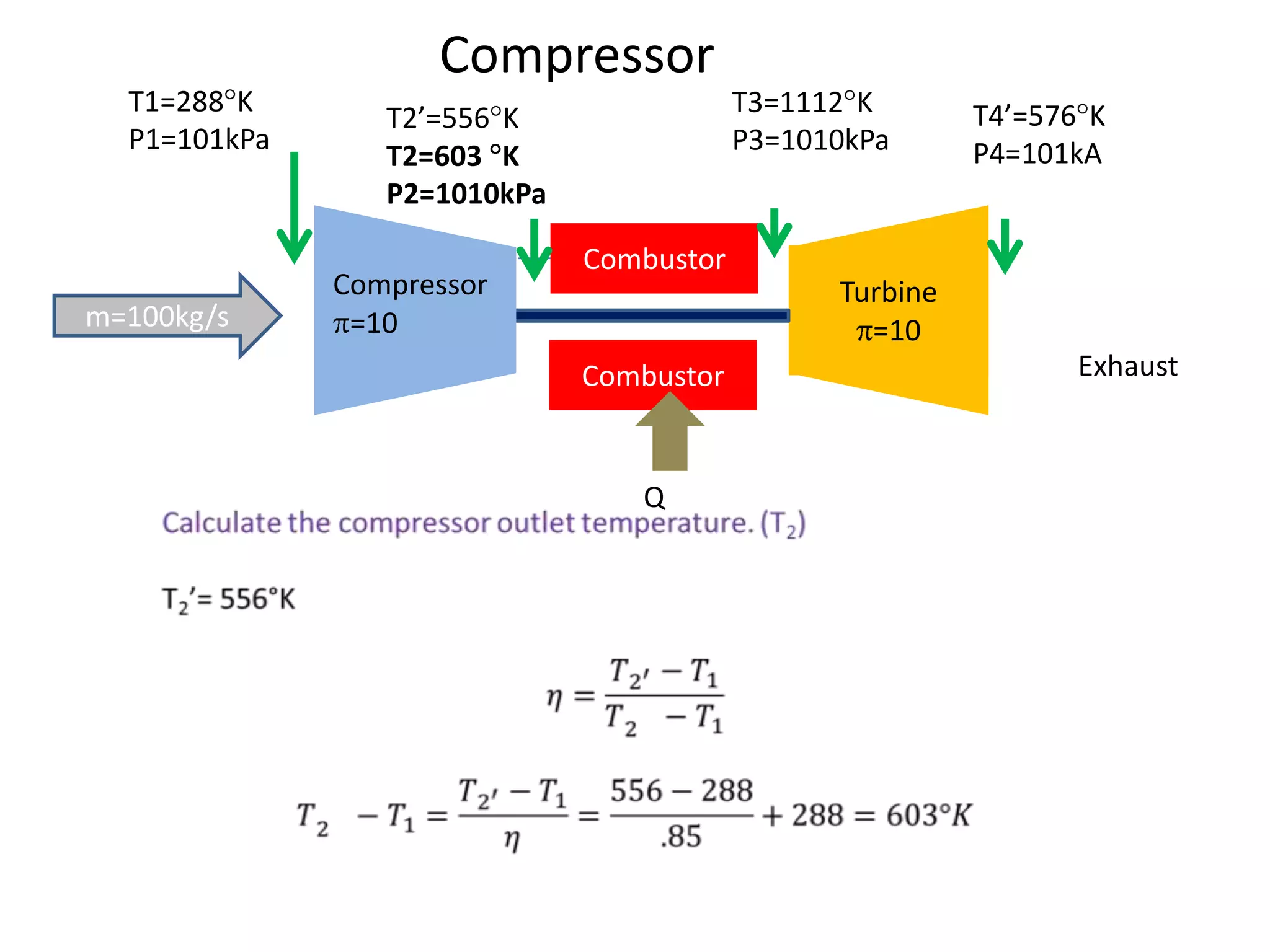
T2’=556 K
T2=603 K
P2=1010kPa
Compressor
=10

T4’=576 K
P4=101kA

Combustor
Turbine
=10
Combustor

Q

Exhaust
Compressor
T1=288 K
P1=101kPa

m=100kg/s

T3=1112 K
P3=1010kPa

T2’=556 K
T2=603 K
P2=1010kPa
Compressor
=10

T4’=576 K
P4=101kA

Combustor
Turbine
=10
Combustor

Q

Exhaust
Turbine
T1=288 K
P1=101kPa

m=100kg/s

T3=1112 K
P3=1010kPa

T2’=556 K
T2=603 K
P2=1010kPa
Compressor
=10

T4’=576 K
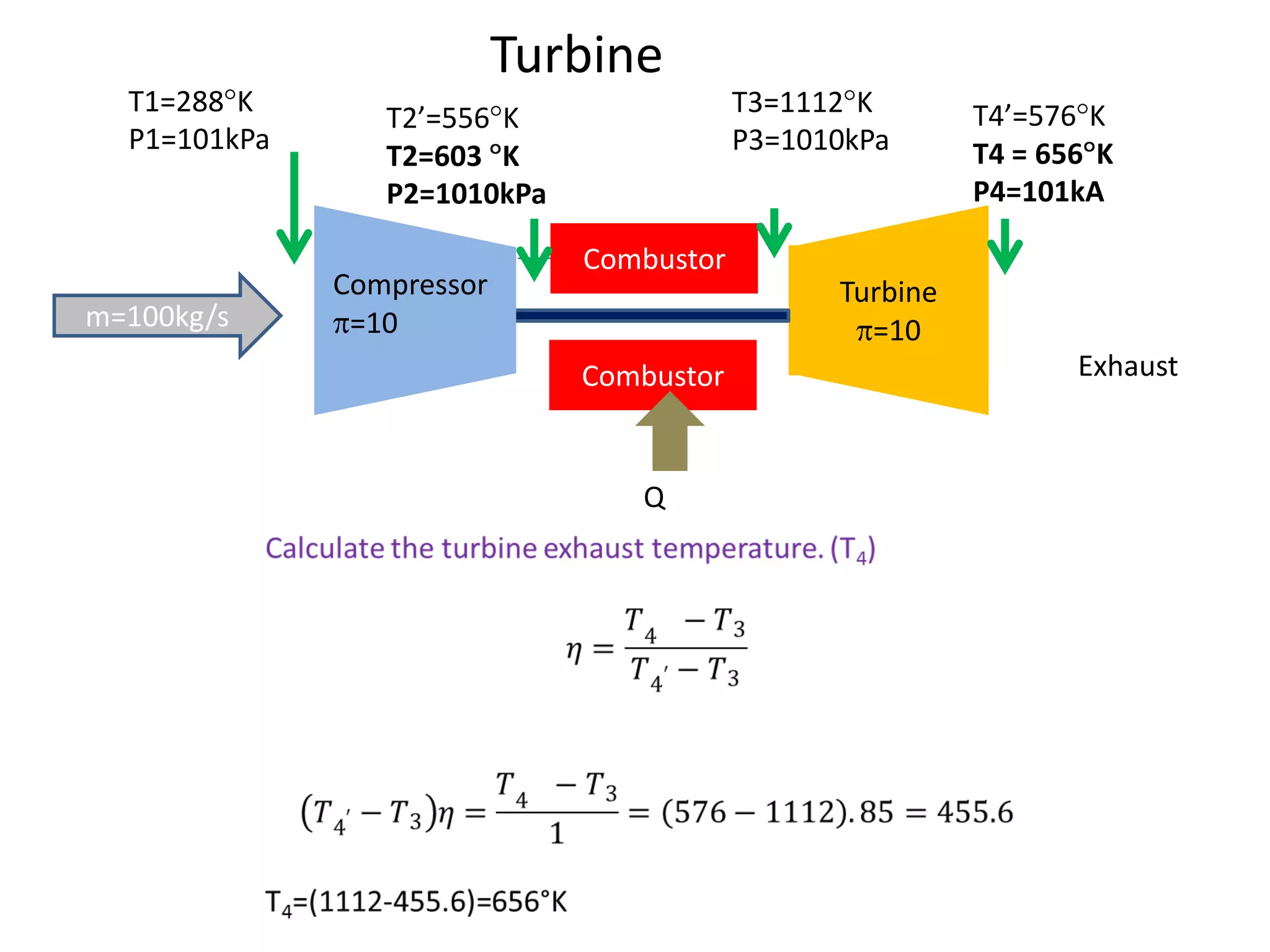
T4 = 656 K
P4=101kA

Combustor
Turbine
=10
Combustor

Q

Exhaust
Turbine
T1=288 K
P1=101kPa

m=100kg/s

T3=1112 K
P3=1010kPa

T2’=556 K
T2=603 K
P2=1010kPa
Compressor
=10

T4’=576 K
T4 = 656 K
P4=101kA

Combustor
Turbine
=10
Combustor

Q

Exhaust
Turbine
T1=288 K
P1=101kPa

m=100kg/s

T3=1112 K
P3=1010kPa

T2’=556 K
T2=603 K
P2=1010kPa
Compressor
=10

T4’=576 K
T4 = 656 K
P4=101kA

Combustor
Turbine
=10

14,100kJ

Combustor
Exhaust
Q
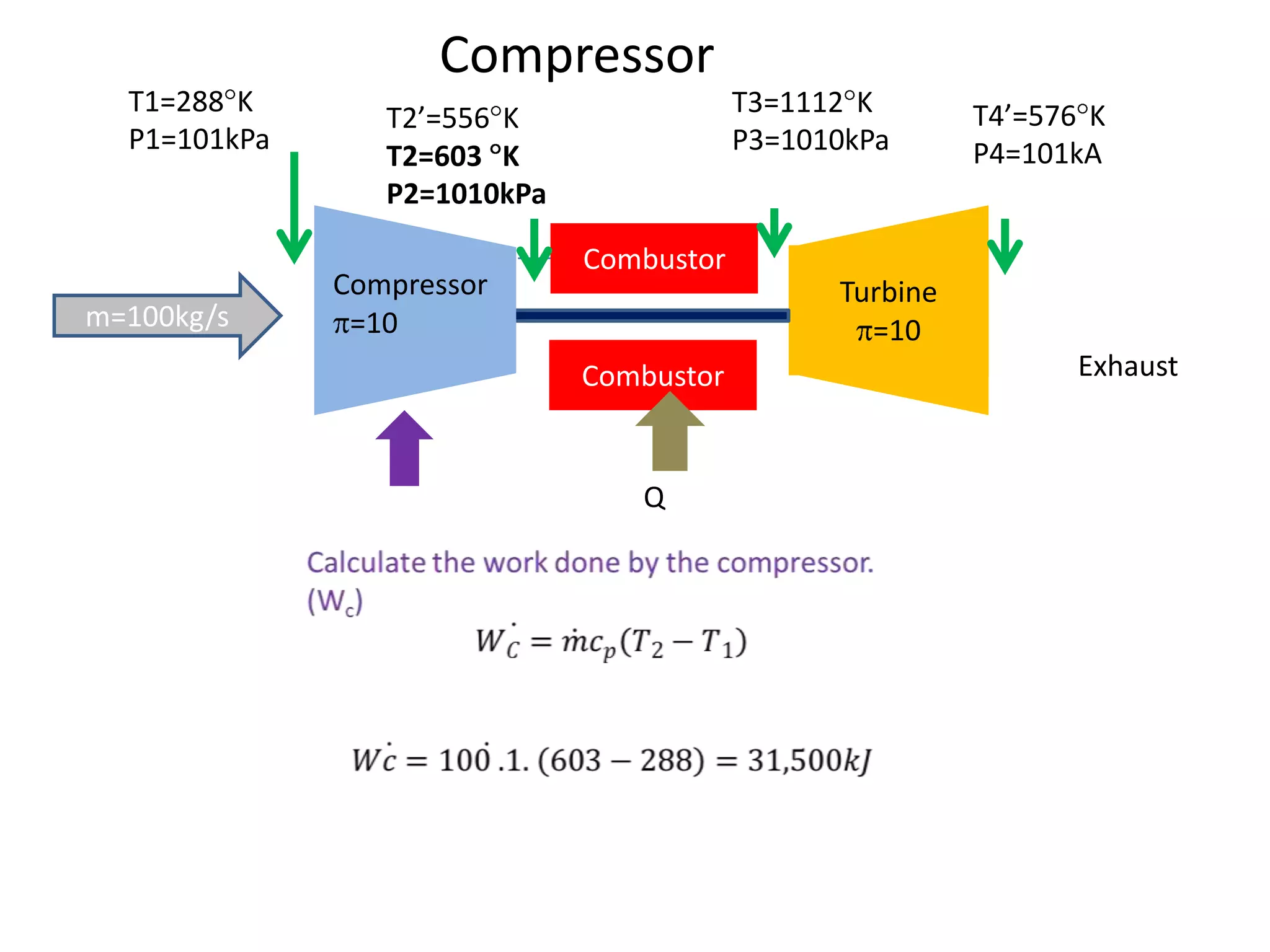
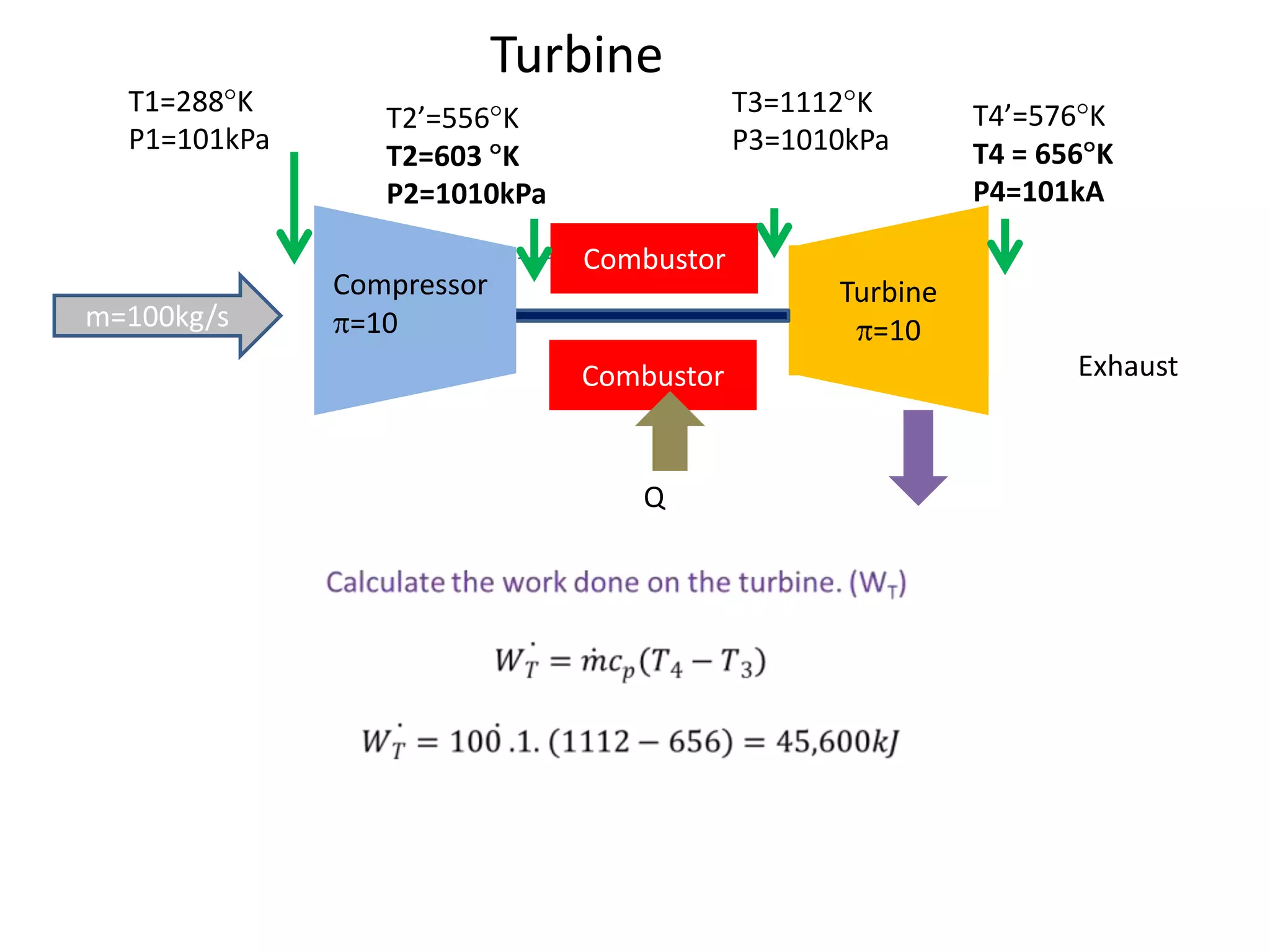
Subtract the Work done by the compressor (WC)from the work done on the
turbine (WT) to determine the useful work done by the engine on the aircraft.
Useful Work = WT – WC.

Useful Work = (45,600-31,500)=14,100 kJ
Combustor
T1=288 K
P1=101kPa

m=100kg/s

T3=1112 K
P3=1010kPa

T2’=556 K
T2=603 K
P2=1010kPa
Compressor
=10

T4’=576 K
T4 = 656 K
P4=101kA

Combustor
Turbine
=10

14,100kJ

Combustor
Exhaust
Q=50900kJ
Combustor
T1=288 K
P1=101kPa

m=100kg/s

T3=1112 K
P3=1010kPa

T2’=556 K
T2=603 K
P2=1010kPa
Compressor
=10

T4’=576 K
T4 = 656 K
P4=101kA

Combustor
Turbine
=10

14,100kJ

Combustor
Exhaust
Q=50900kJ
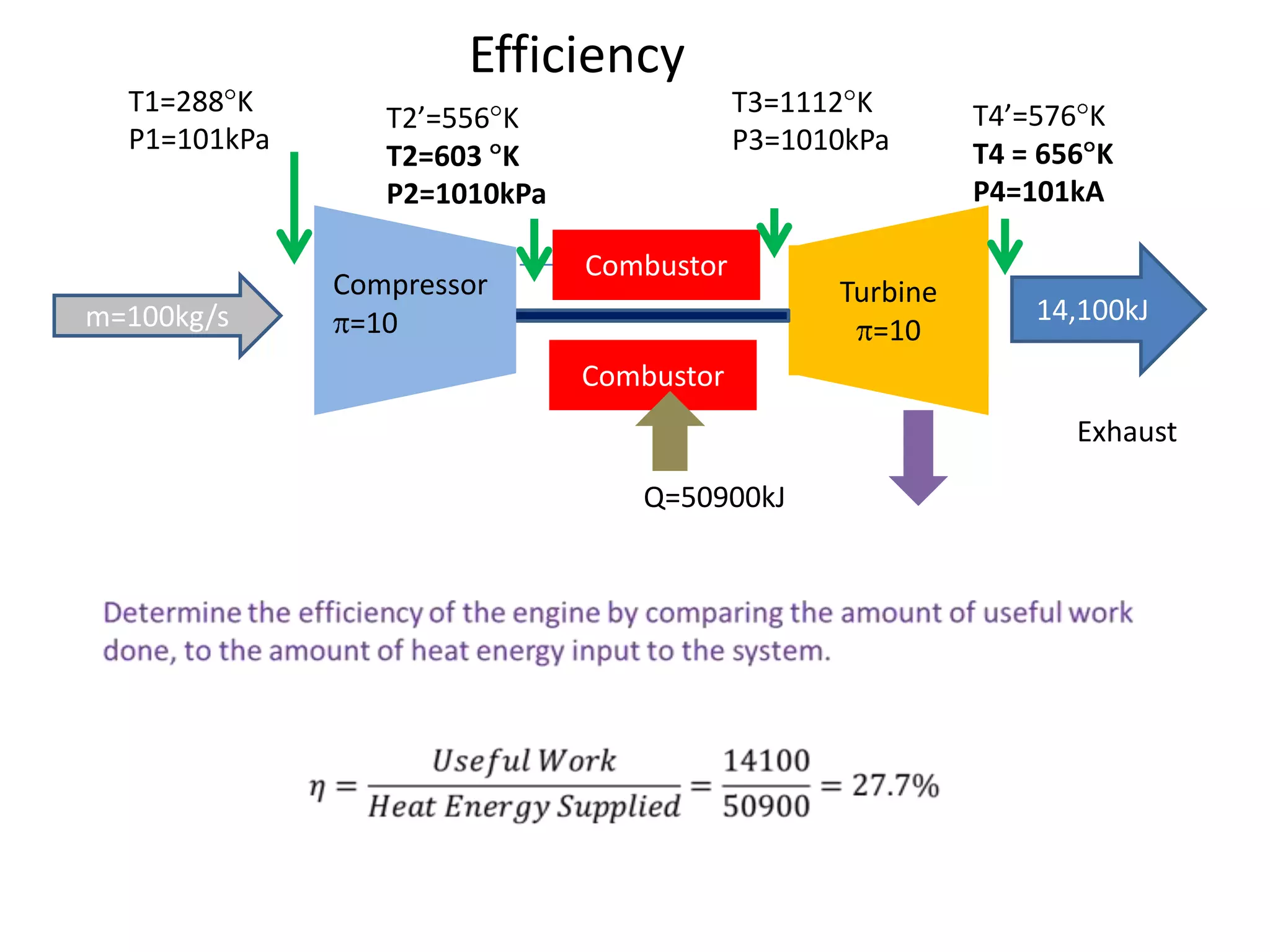
Efficiency
T1=288 K
P1=101kPa

m=100kg/s

T3=1112 K
P3=1010kPa

T2’=556 K
T2=603 K
P2=1010kPa
Compressor
=10

Combustor

Turbine
=10

T4’=576 K
T4 = 656 K
P4=101kA

14,100kJ

Combustor
Exhaust
Q=50900kJ
T1=288 K
P1=101kPa

m=100kg/s

Part 3 T3=1112 K
P3=1010kPa

T2’=556 K
T2=603 K
P2=1010kPa
Compressor
=10

Combustor

Turbine
=10

T4’=576 K
T4 = ? K
P4=?kA

14,100kJ

Combustor

Q=50900kJ
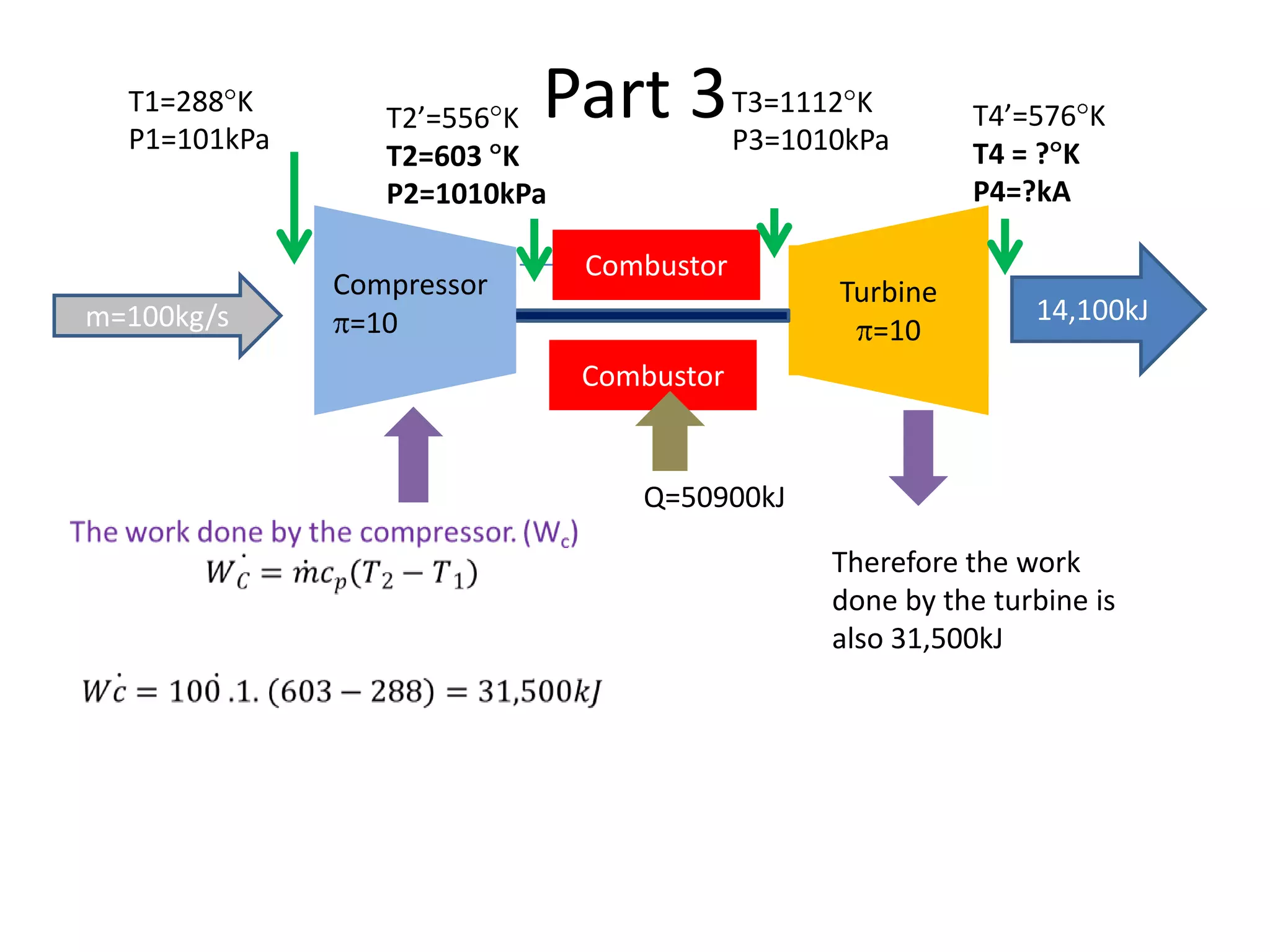
Therefore the work
done by the turbine is
also 31,500kJ
T1=288 K
P1=101kPa

m=100kg/s

Part 3 T3=1112 K
P3=1010kPa

T2’=556 K
T2=603 K
P2=1010kPa
Compressor
=10

Combustor
Combustor

Q=50900kJ

Turbine
=10

T4’=576 K
T4 = 797 K
P4=?kA

Nozzle
T1=288 K
P1=101kPa

m=100kg/s

Part 3

T3=1112 K
T2’=556 K
P3=1010kPa
T2=603 K
P2=1010kPa Q=50900kJ
Compressor
=10

Combustor
Combustor

Turbine
=10

T4’=741 K
T4 = 797 K
P4=?kA

Nozzle
T1=288 K
P1=101kPa

m=100kg/s

Part 3

T3=1112 K
T2’=556 K
P3=1010kPa
T2=603 K
P2=1010kPa Q=50900kJ
Compressor
=10

Combustor
Combustor

Turbine
=10

T4’=741 K
T4 = 797 K
P4=244kPa

Nozzle
T1=288 K
P1=101kPa

m=100kg/s

Part 3

T3=1112 K
T2’=556 K
P3=1010kPa
T2=603 K
P2=1010kPa Q=50900kJ
Compressor
=10

Combustor
Combustor

Turbine
=10

T4’=741 K
T4 = 797 K
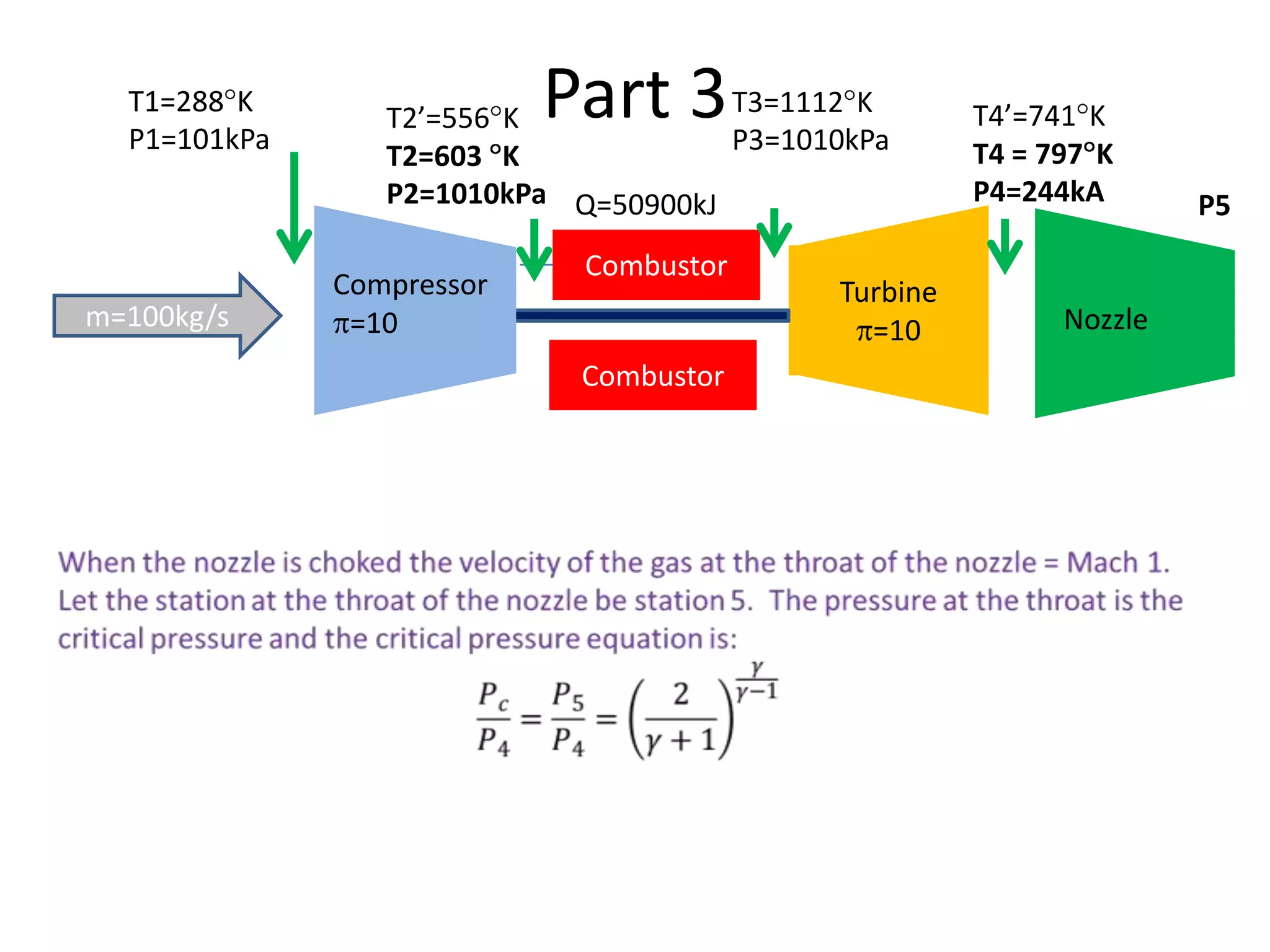
P4=244kA

Nozzle

P5
T1=288 K
P1=101kPa

m=100kg/s

Part 3

T3=1112 K
T2’=556 K
P3=1010kPa
T2=603 K
P2=1010kPa Q=50900kJ
Compressor
=10

Combustor

Turbine
=10

T4’=741 K
T4 = 797 K
P4=244kA

Nozzle

Combustor
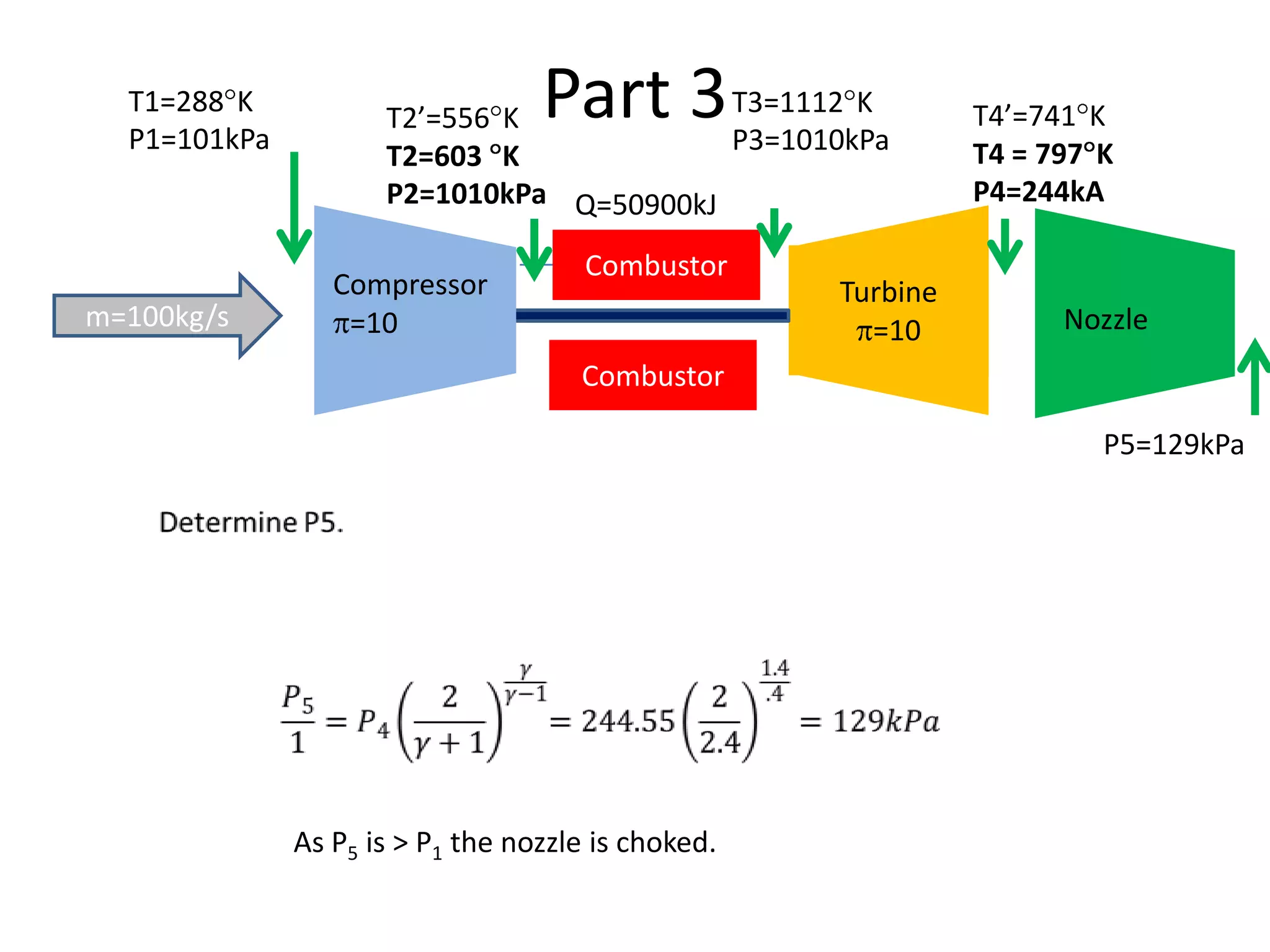
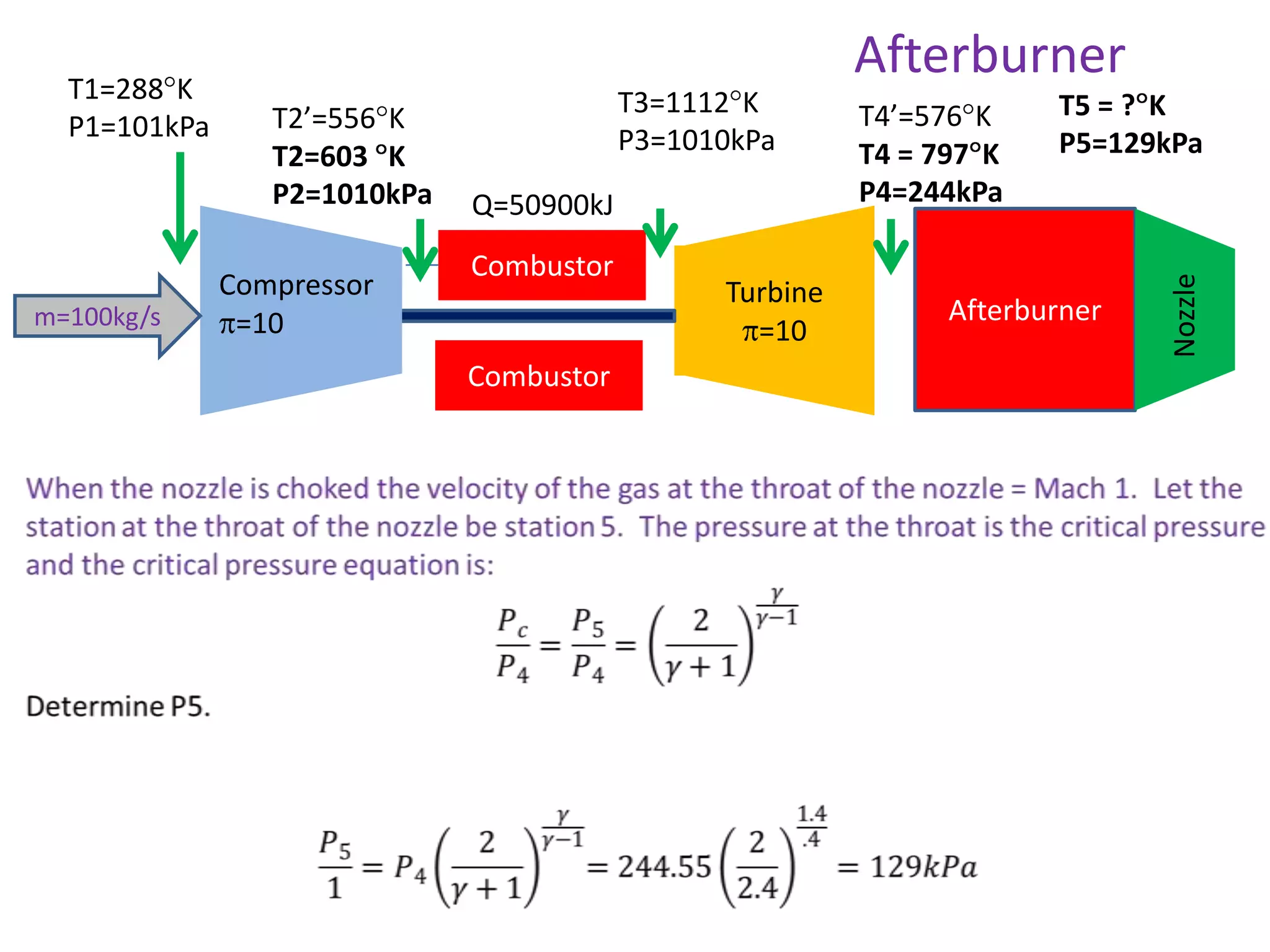
P5=129kPa

As P5 is > P1 the nozzle is choked.
T1=288 K
P1=101kPa

m=100kg/s

Part 3

T3=1112 K
T2’=556 K
P3=1010kPa
T2=603 K
P2=1010kPa Q=50900kJ
Compressor
=10

Combustor

Turbine
=10

T4’=741 K
T4 = 797 K
P4=244kA

Nozzle

Combustor
P5=129kPa
T1=288 K
P1=101kPa

m=100kg/s

Part 3

T3=1112 K
T2’=556 K
P3=1010kPa
T2=603 K
P2=1010kPa Q=50900kJ
Compressor
=10

Combustor

Turbine
=10

T4’=741 K
T4 = 797 K
P4=244kA

Nozzle

Combustor
P5=129kPa
T1=288 K
P1=101kPa

m=100kg/s

Part 3

T3=1112 K
T2’=556 K
P3=1010kPa
T2=603 K
P2=1010kPa Q=50900kJ
Compressor
=10

Combustor

Turbine
=10

T4’=741 K
T4 = 797 K
P4=244kA

Nozzle

Combustor
P5=129kPa
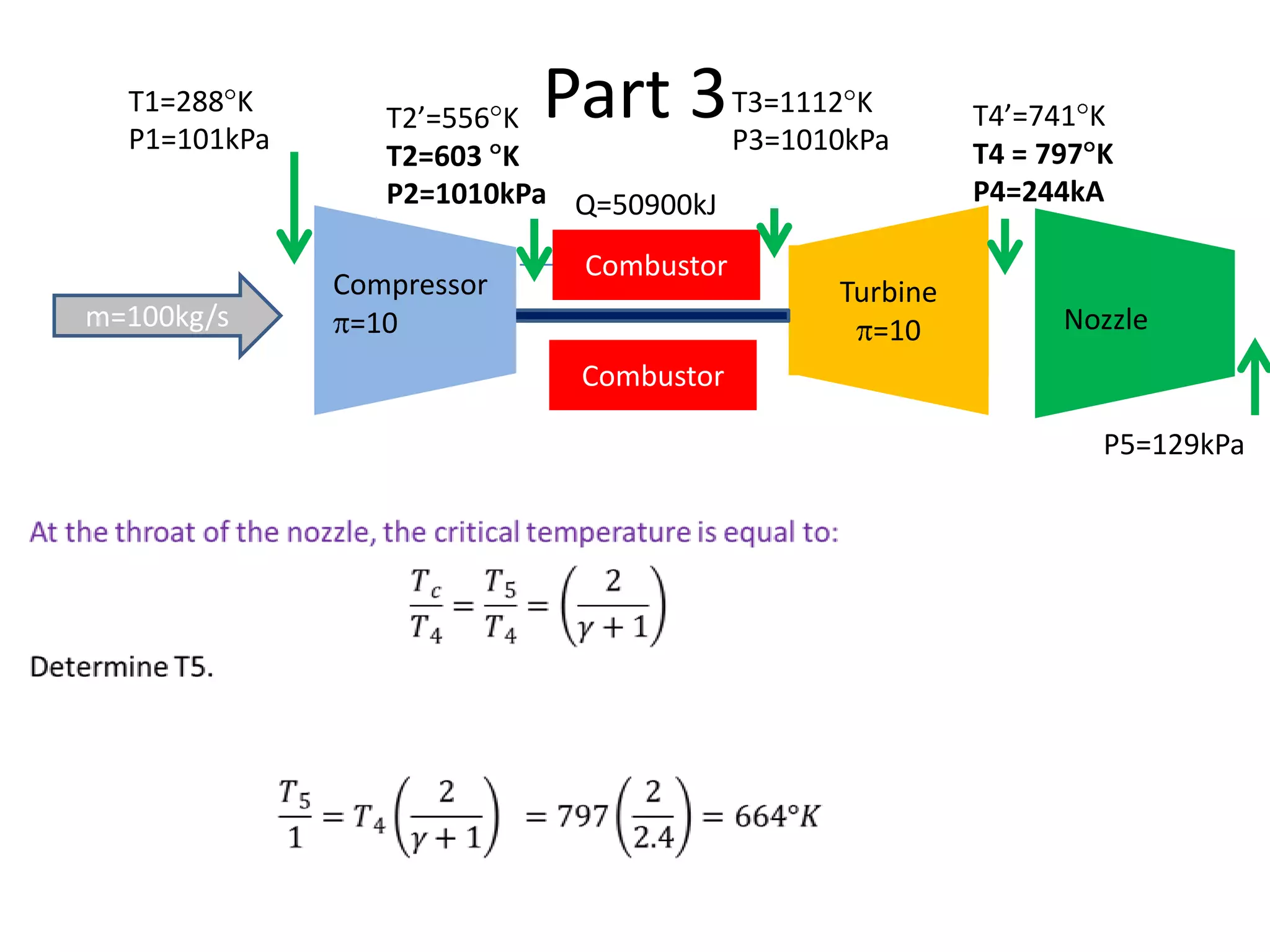
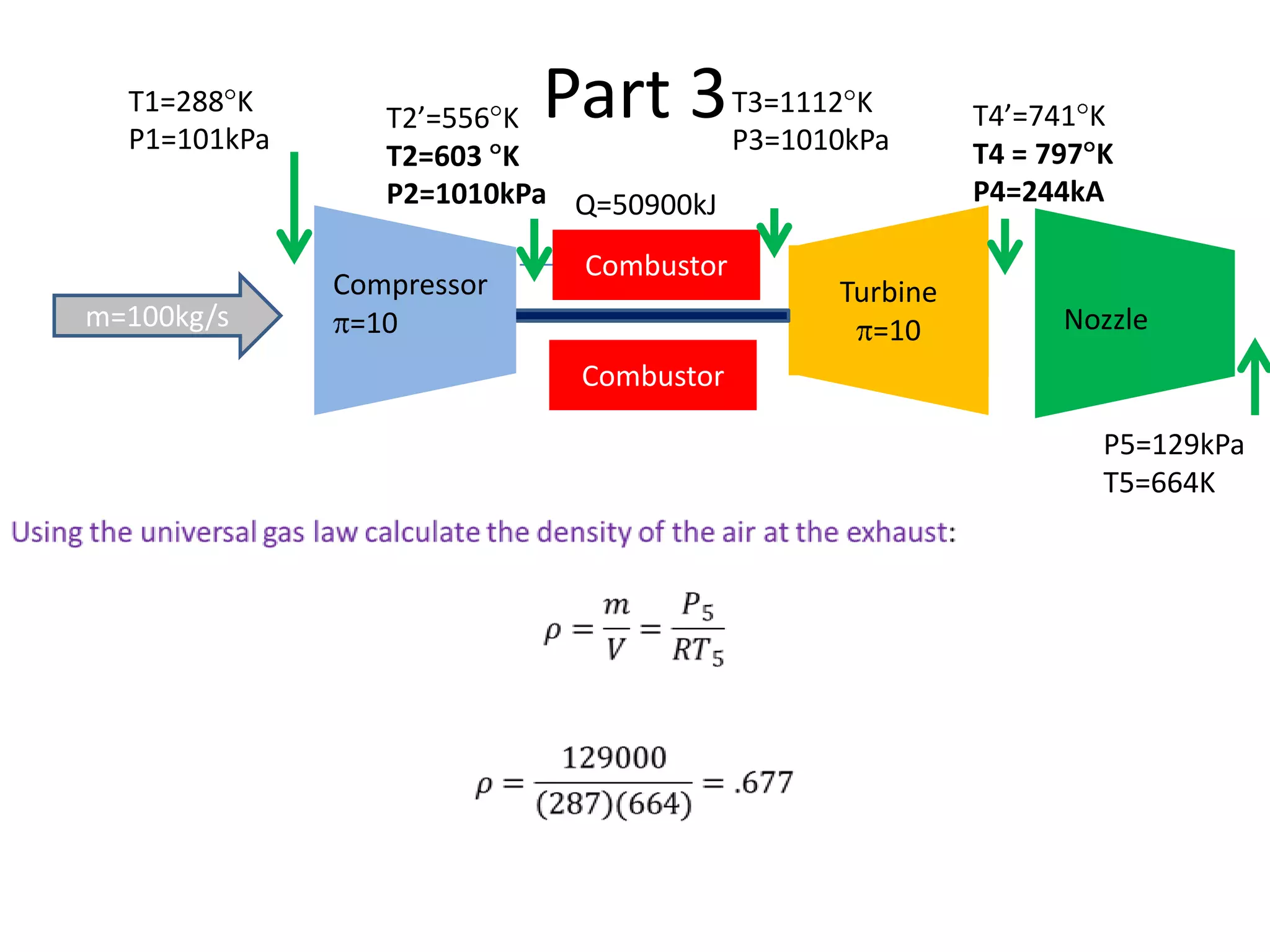
T5=664K
T1=288 K
P1=101kPa

m=100kg/s

Part 3

T3=1112 K
T2’=556 K
P3=1010kPa
T2=603 K
P2=1010kPa Q=50900kJ
Compressor
=10

Combustor

Turbine
=10

T4’=741 K
T4 = 797 K
P4=244kA

Nozzle

Combustor
P5=129kPa
T5=664K
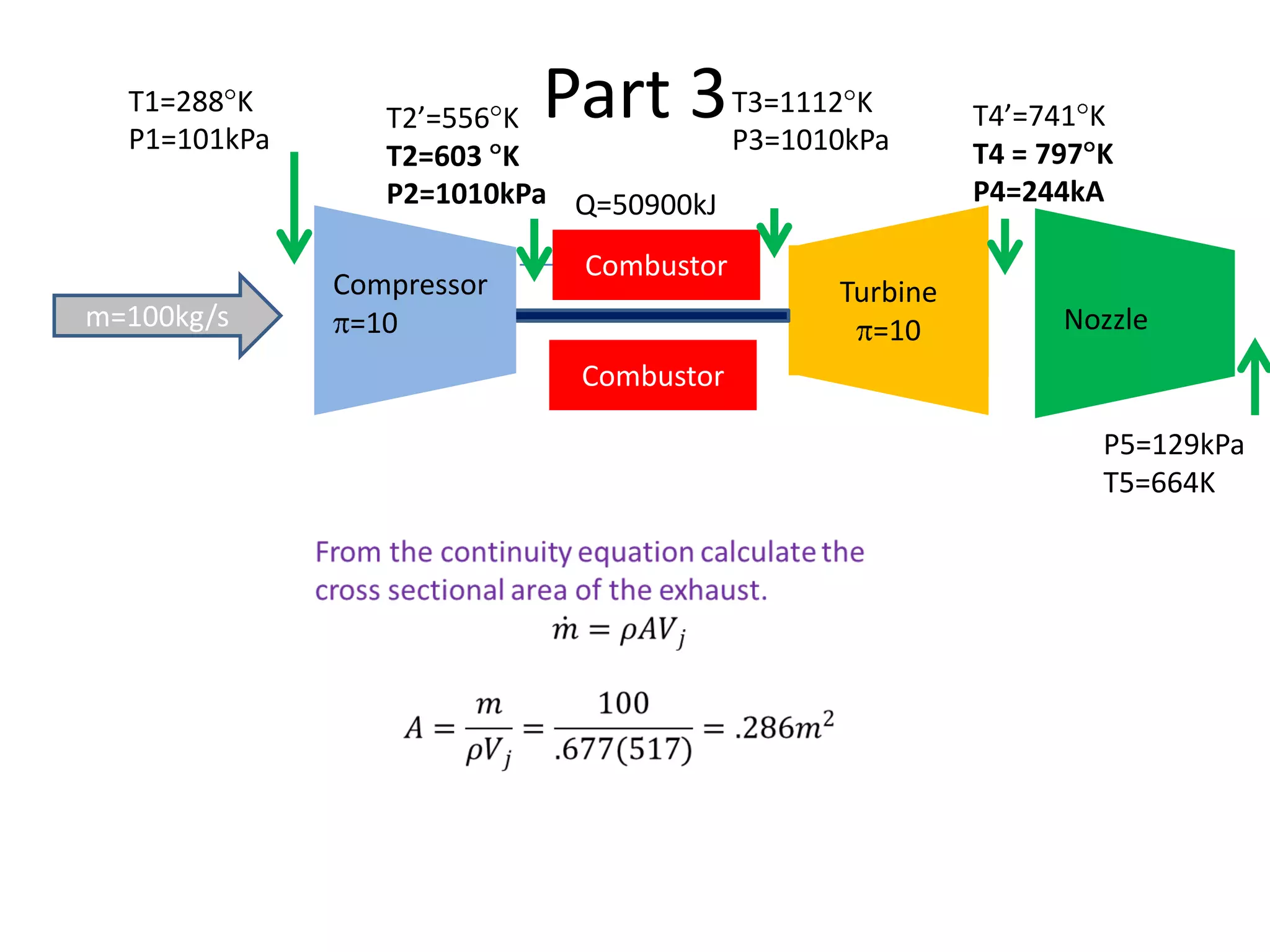
T1=288 K
P1=101kPa

m=100kg/s

Part 3

T3=1112 K
T2’=556 K
P3=1010kPa
T2=603 K
P2=1010kPa Q=50900kJ
Compressor
=10

Combustor

Turbine
=10

T4’=741 K
T4 = 797 K
P4=244kA

Nozzle

Combustor
P5=129kPa
T5=664K
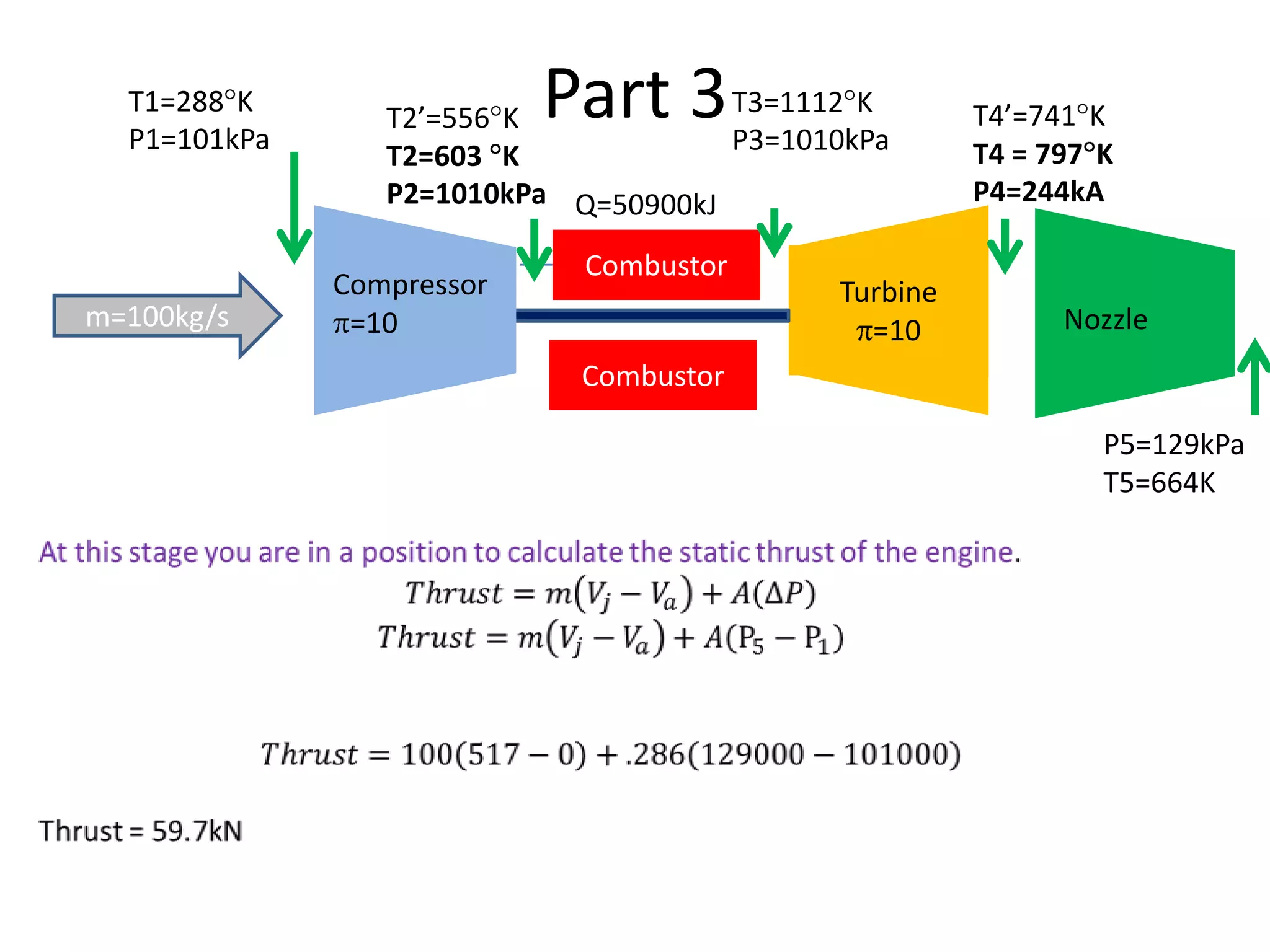
T1=288 K
P1=101kPa

m=100kg/s

Part 3

T3=1112 K
T2’=556 K
P3=1010kPa
T2=603 K
P2=1010kPa Q=50900kJ
Compressor
=10

Combustor

Turbine
=10

T4’=741 K
T4 = 797 K
P4=244kA

Nozzle

Combustor
P5=129kPa
T5=664K
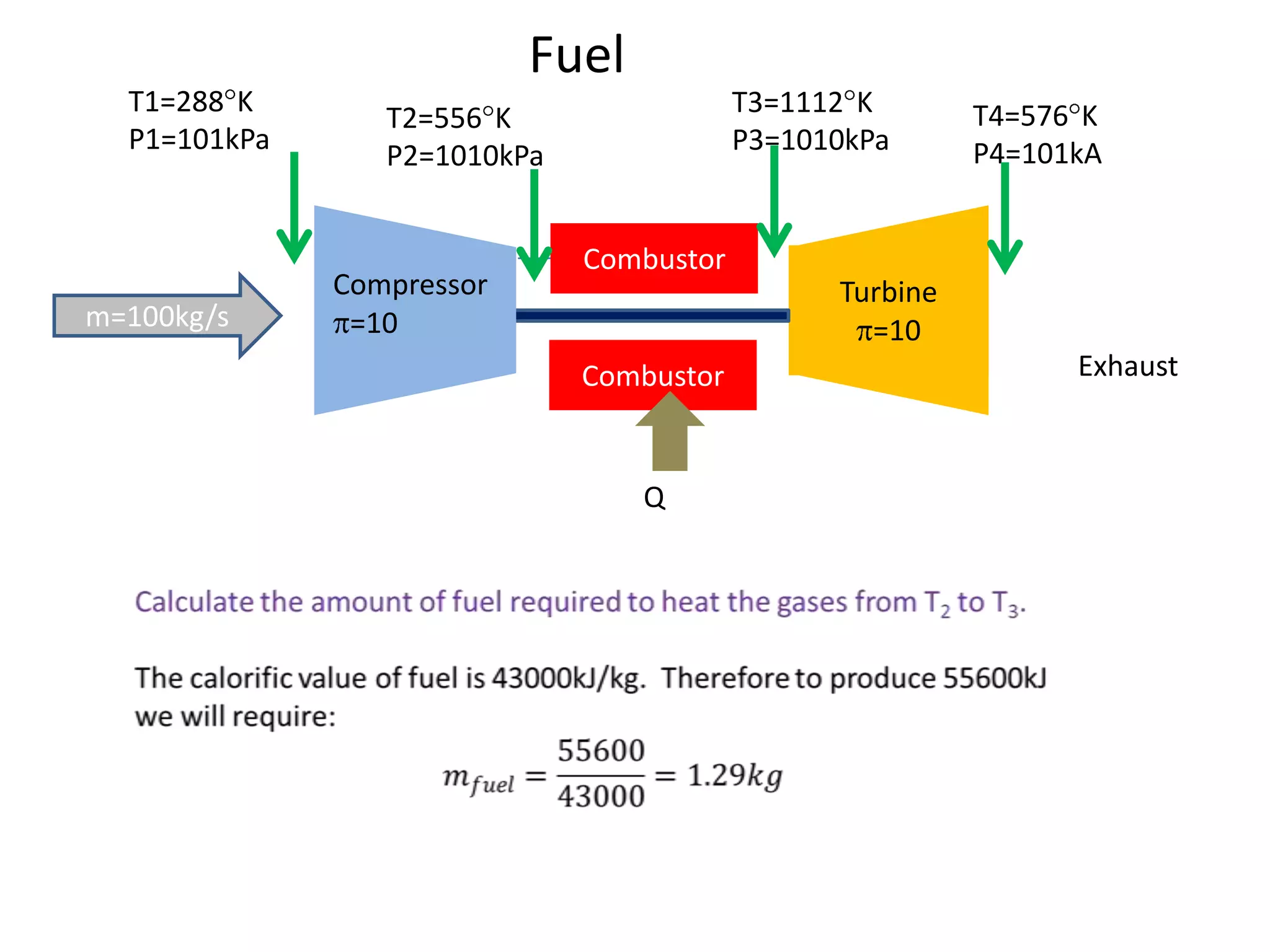
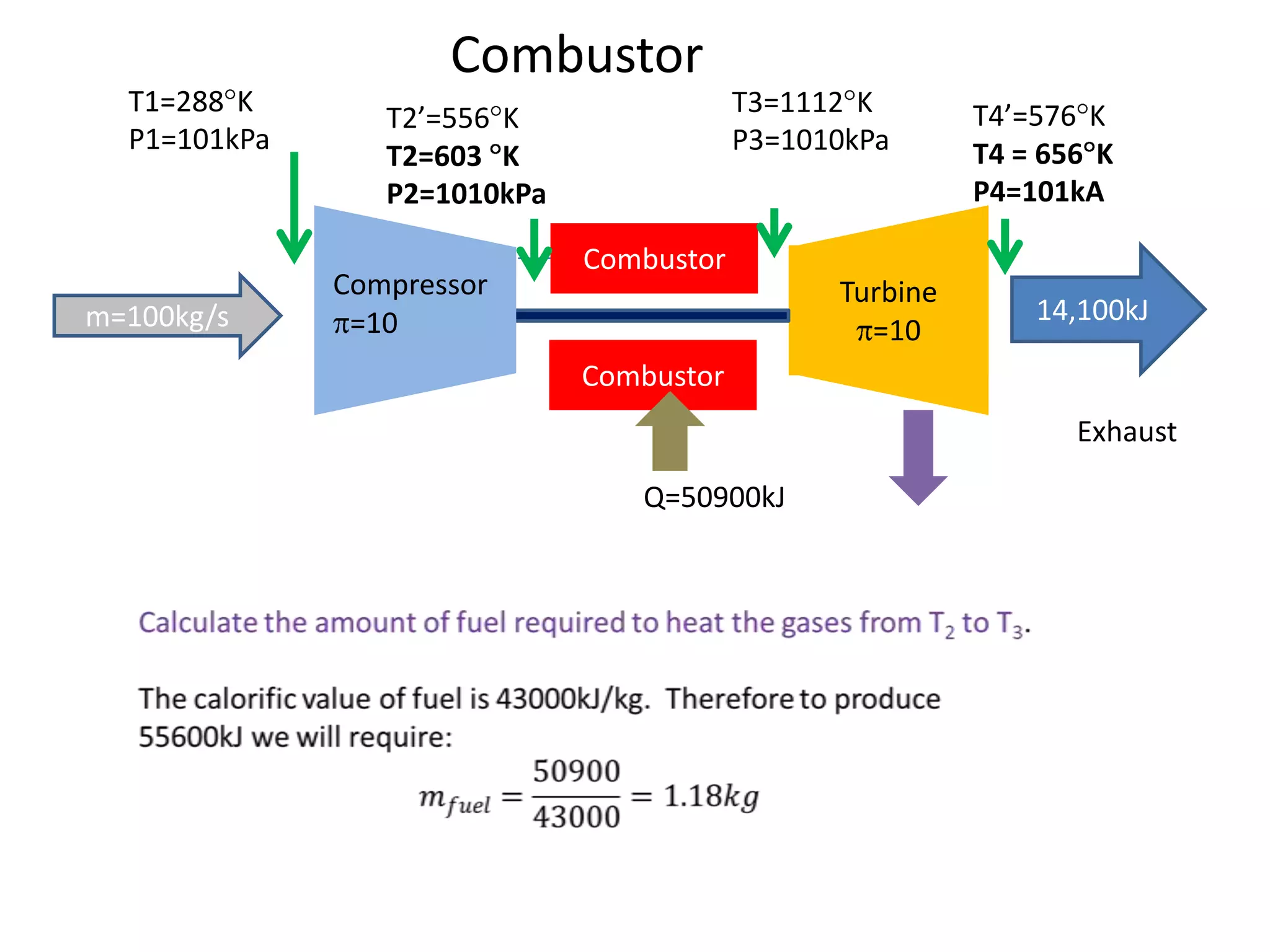
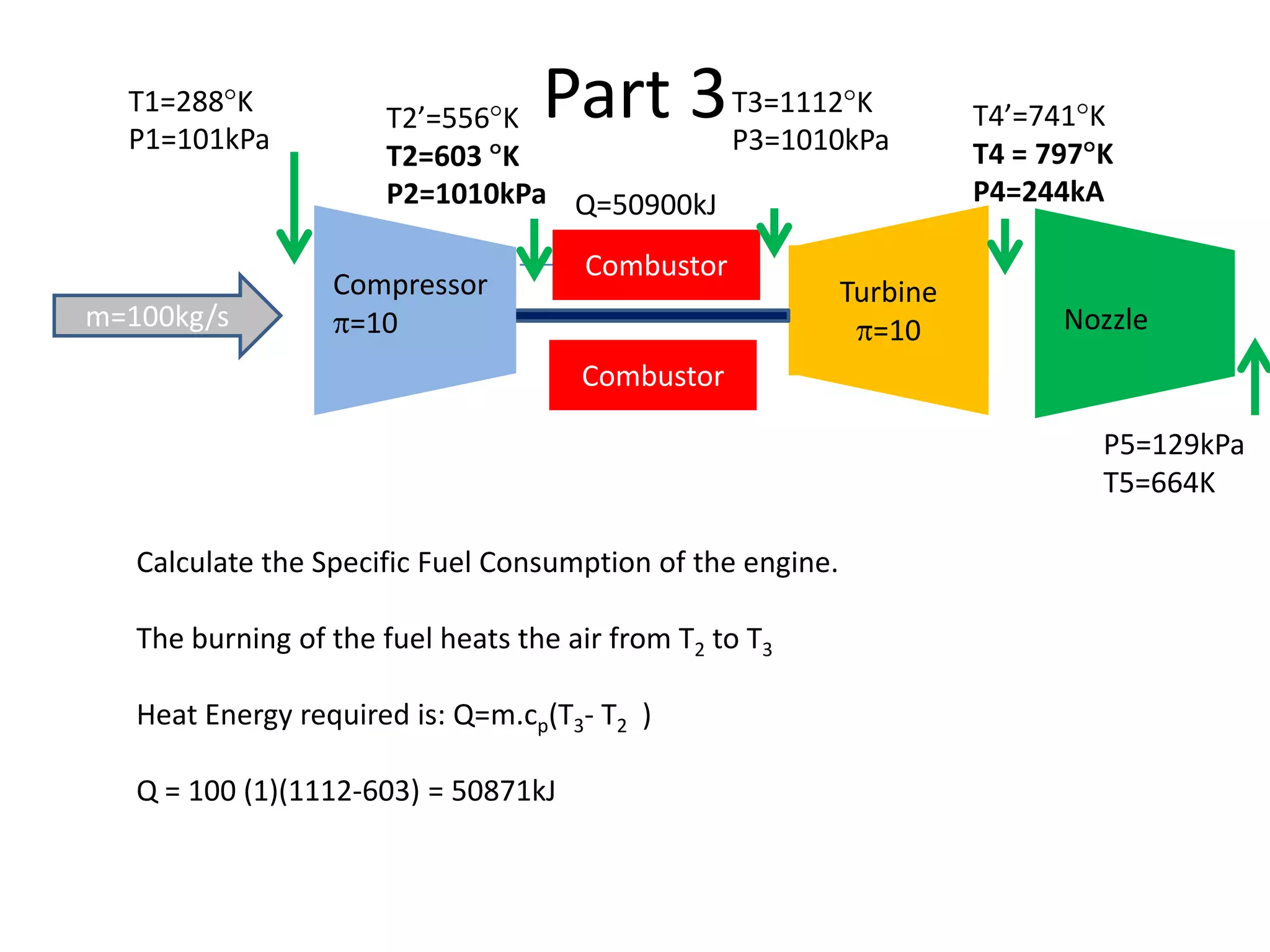
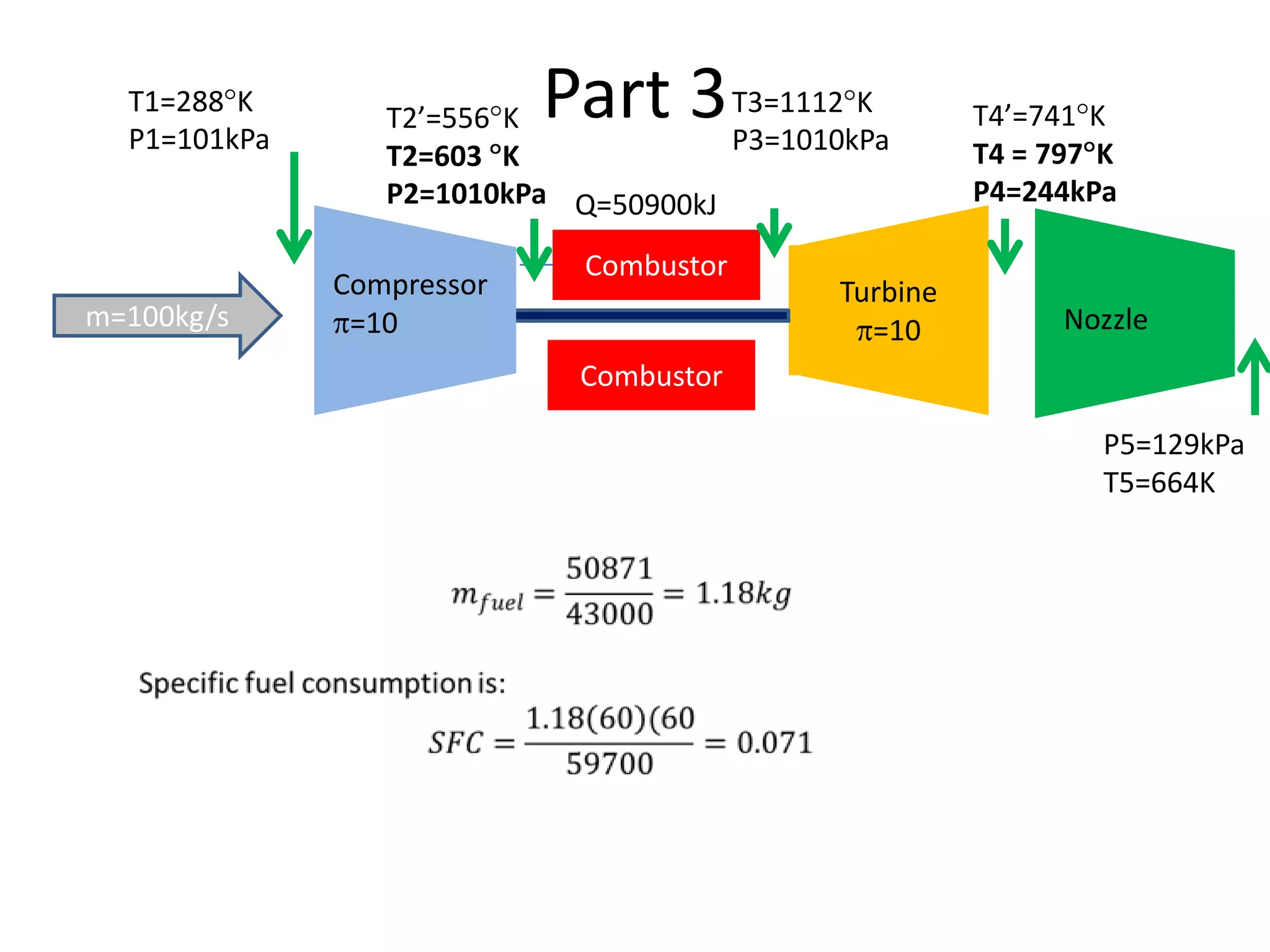
Calculate the Specific Fuel Consumption of the engine.

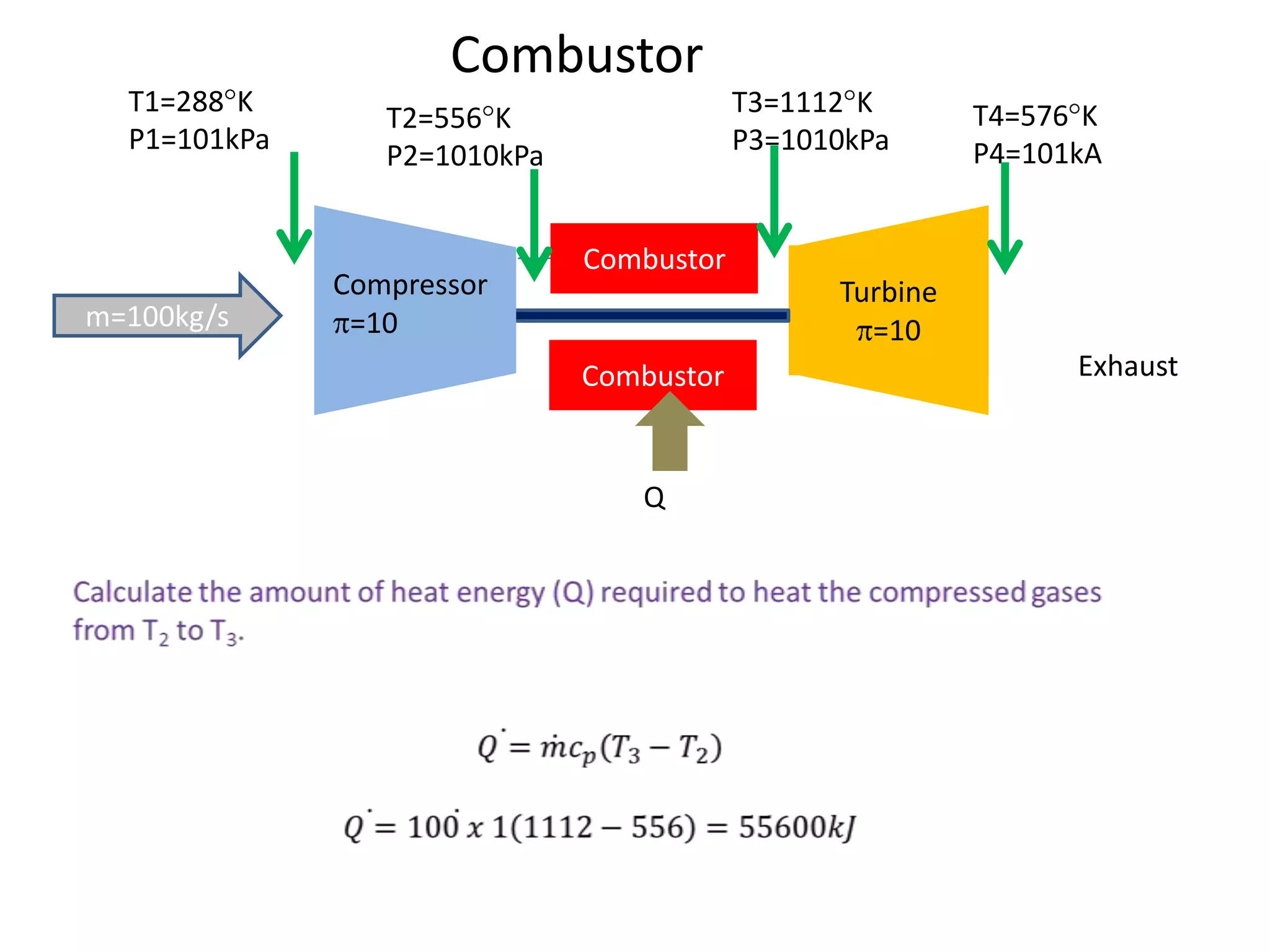
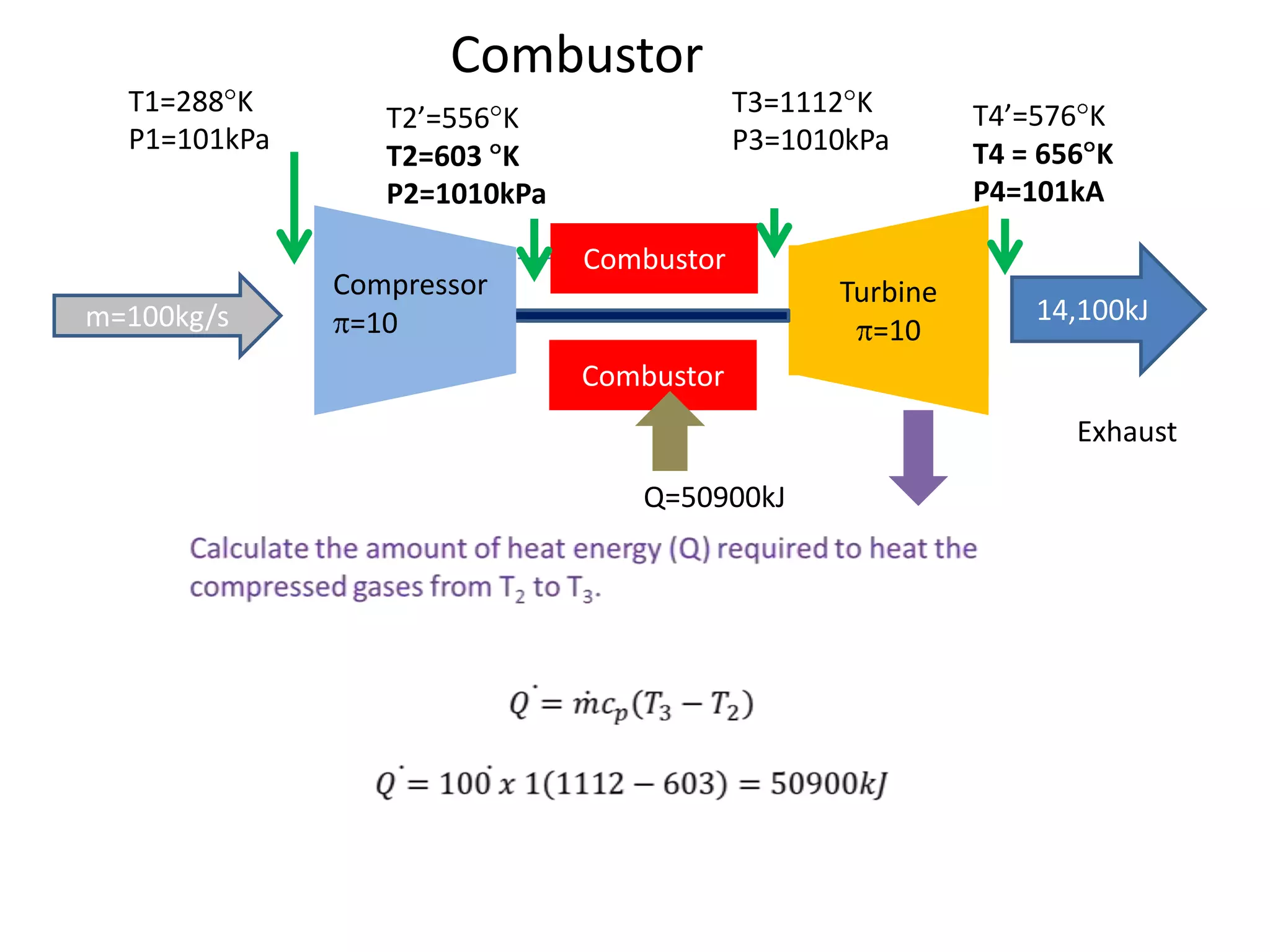
The burning of the fuel heats the air from T2 to T3
Heat Energy required is: Q=m.cp(T3- T2 )
Q = 100 (1)(1112-603) = 50871kJ
T1=288 K
P1=101kPa

m=100kg/s

Part 3

T3=1112 K
T2’=556 K
P3=1010kPa
T2=603 K
P2=1010kPa Q=50900kJ
Compressor
=10

Combustor

Turbine
=10

T4’=741 K
T4 = 797 K
P4=244kPa

Nozzle

Combustor
P5=129kPa
T5=664K
What happens when we install an
afterburner?
T1=288 K
P1=101kPa

m=100kg/s

Afterburner
T3=1112 K
P3=1010kPa

T2’=556 K
T2=603 K
P2=1010kPa
Compressor
=10

Combustor

T4’=576 K
T4 = 797 K
P4=244kPa

Turbine
=10

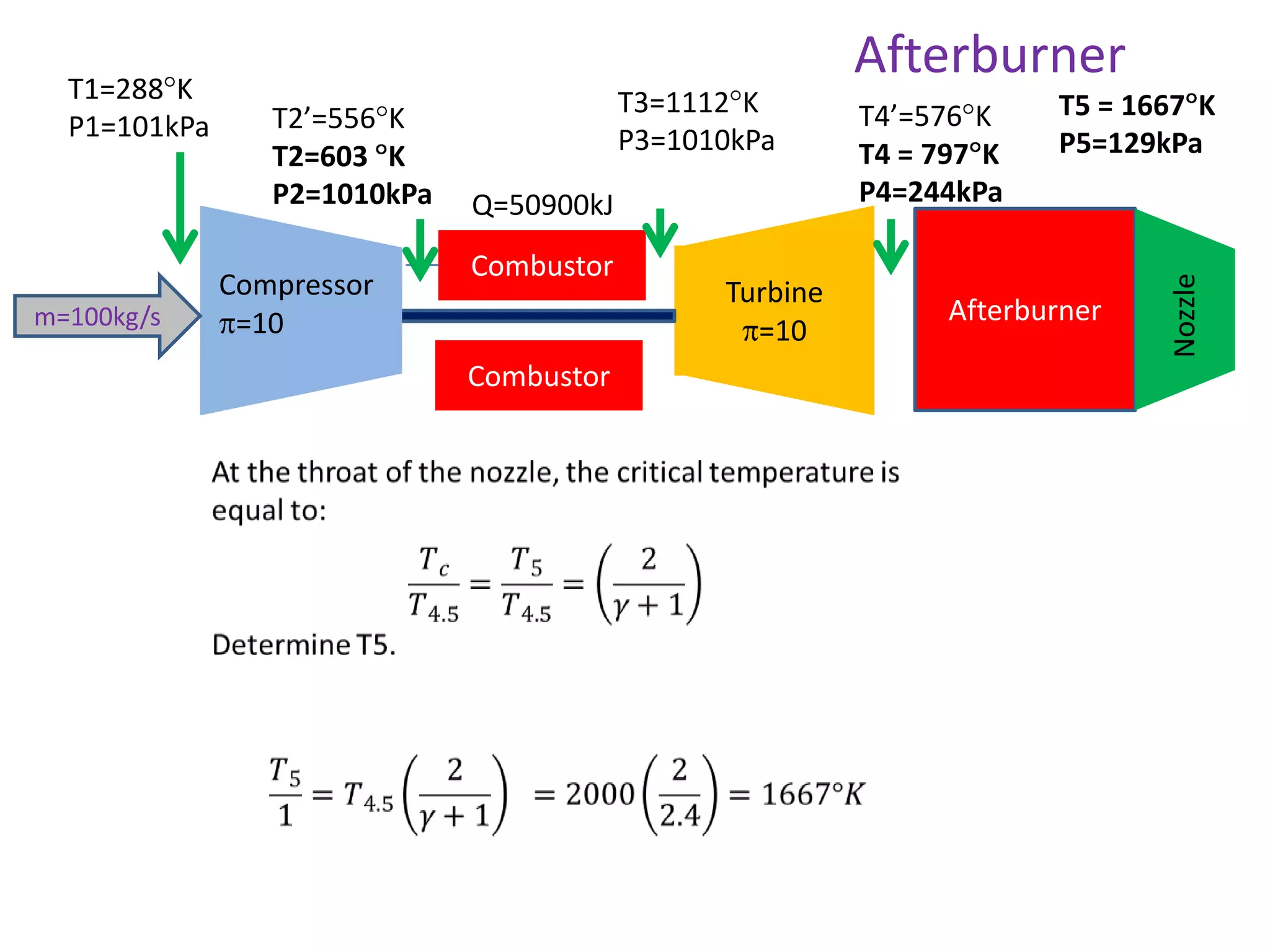
T5 = ? K
P5=?

Afterburner

Combustor

Q=50900kJ
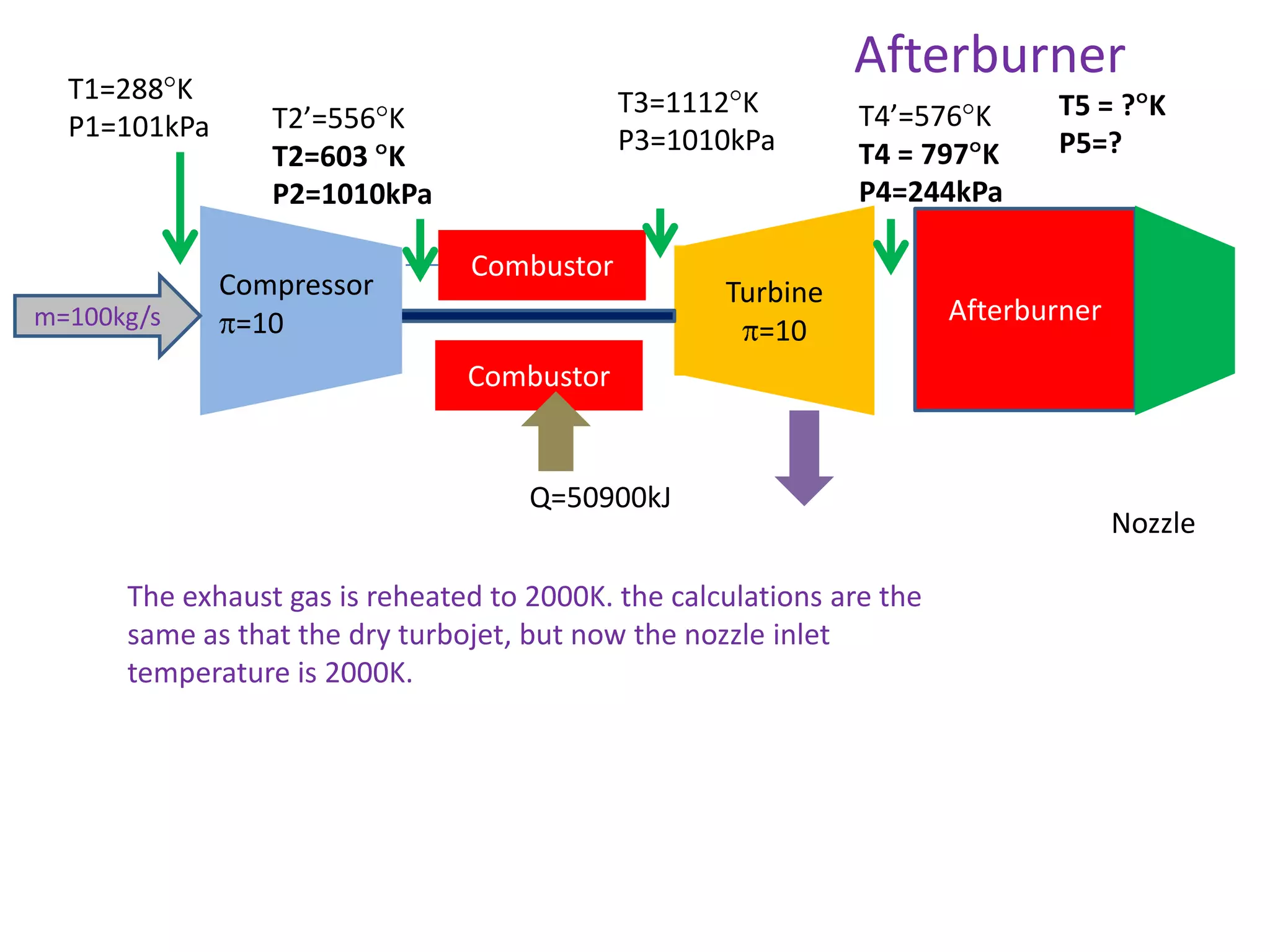
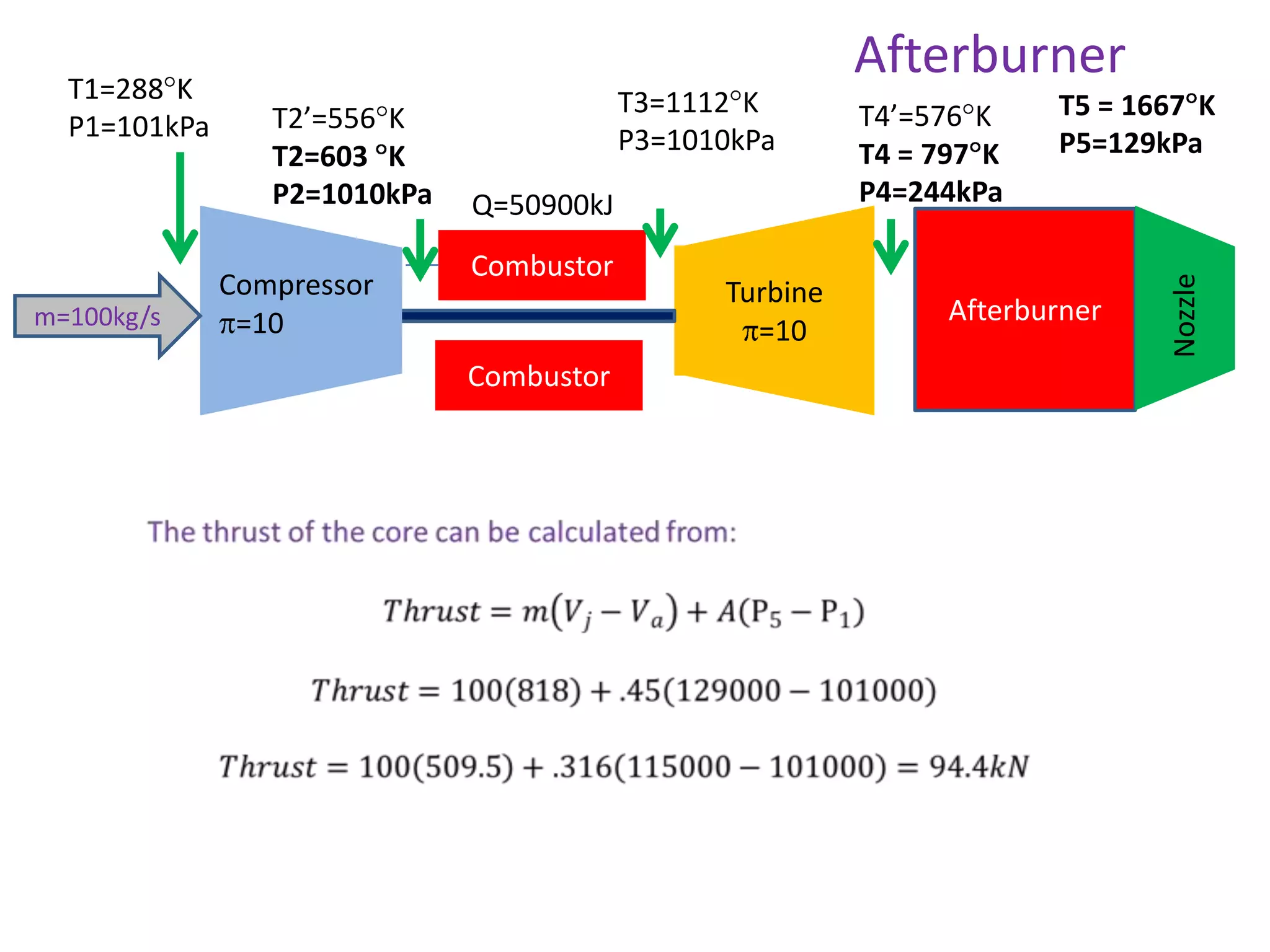
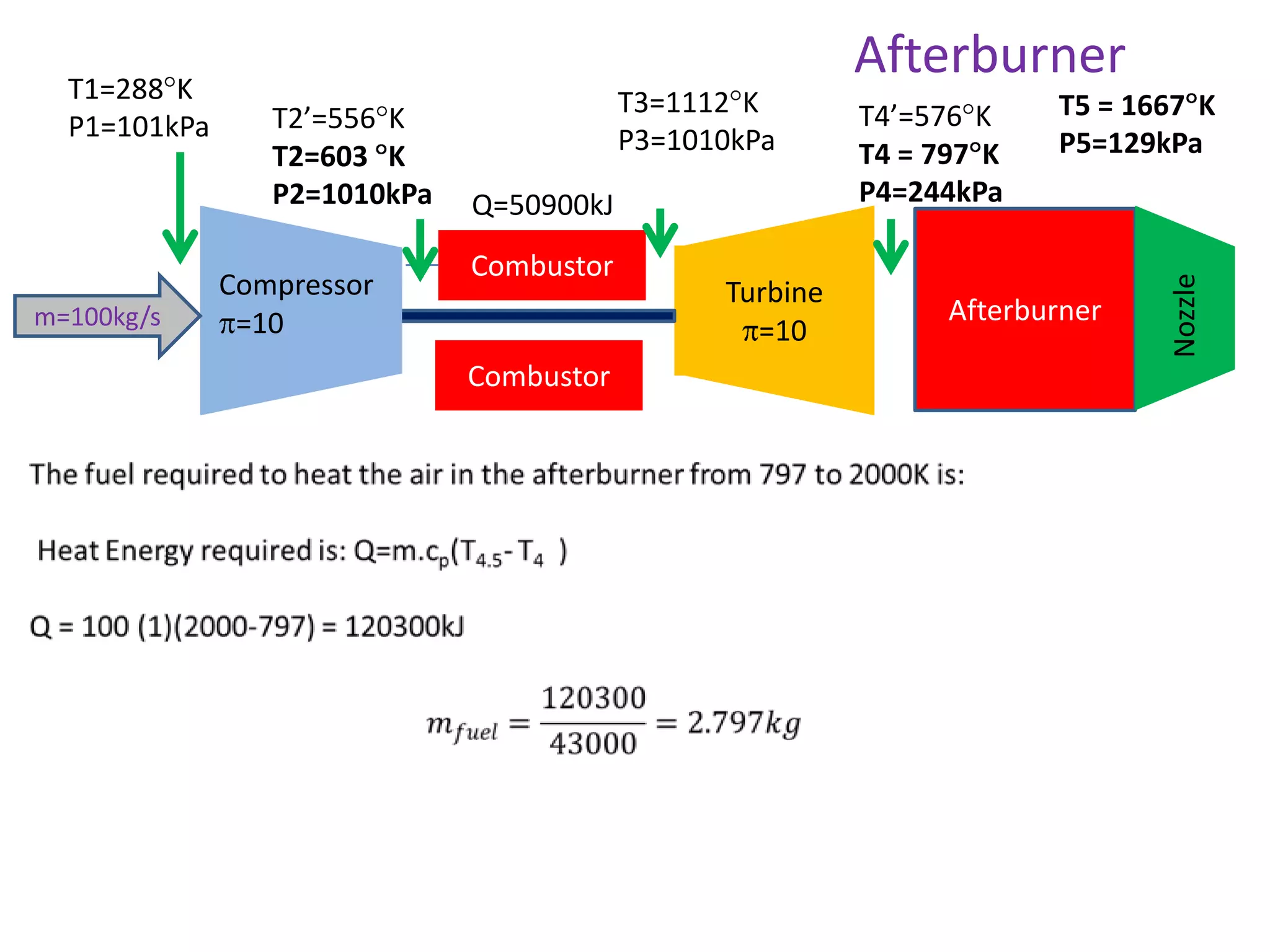
The exhaust gas is reheated to 2000K. the calculations are the
same as that the dry turbojet, but now the nozzle inlet
temperature is 2000K.

Nozzle
m=100kg/s

T2’=556 K
T2=603 K
P2=1010kPa
Compressor
=10

T3=1112 K
P3=1010kPa
Q=50900kJ
Combustor
Combustor

Turbine
=10

T4’=576 K
T4 = 797 K
P4=244kPa

T5 = ? K
P5=129kPa

Afterburner

Nozzle

T1=288 K
P1=101kPa

Afterburner
m=100kg/s

T2’=556 K
T2=603 K
P2=1010kPa
Compressor
=10

T3=1112 K
P3=1010kPa
Q=50900kJ
Combustor
Combustor

Turbine
=10

T4’=576 K
T4 = 797 K
P4=244kPa

T5 = 1667 K
P5=129kPa

Afterburner

Nozzle

T1=288 K
P1=101kPa

Afterburner
m=100kg/s

T2’=556 K
T2=603 K
P2=1010kPa
Compressor
=10

T3=1112 K
P3=1010kPa
Q=50900kJ
Combustor

T4’=576 K
T4 = 797 K
P4=244kPa

Turbine
=10

Combustor

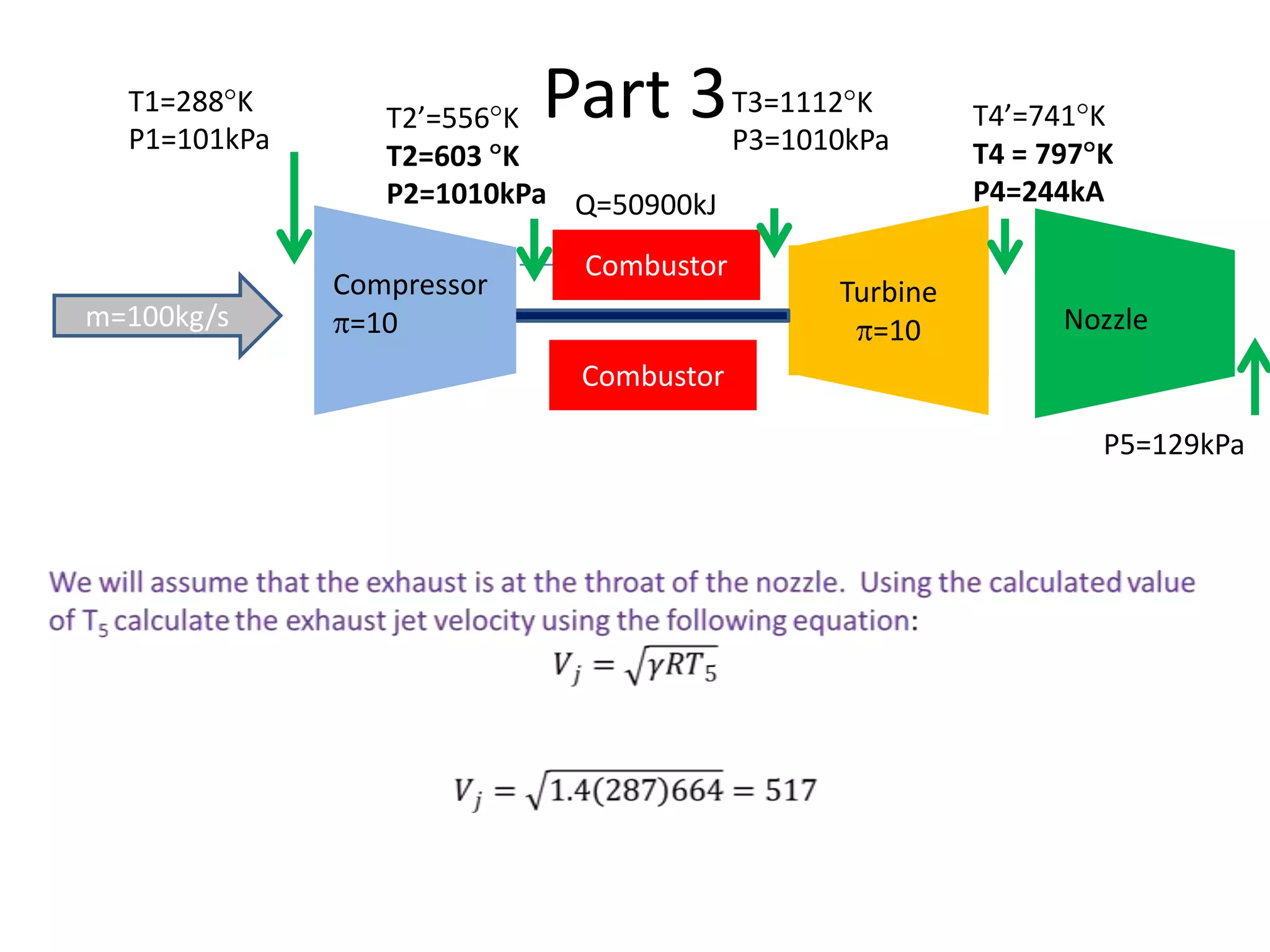
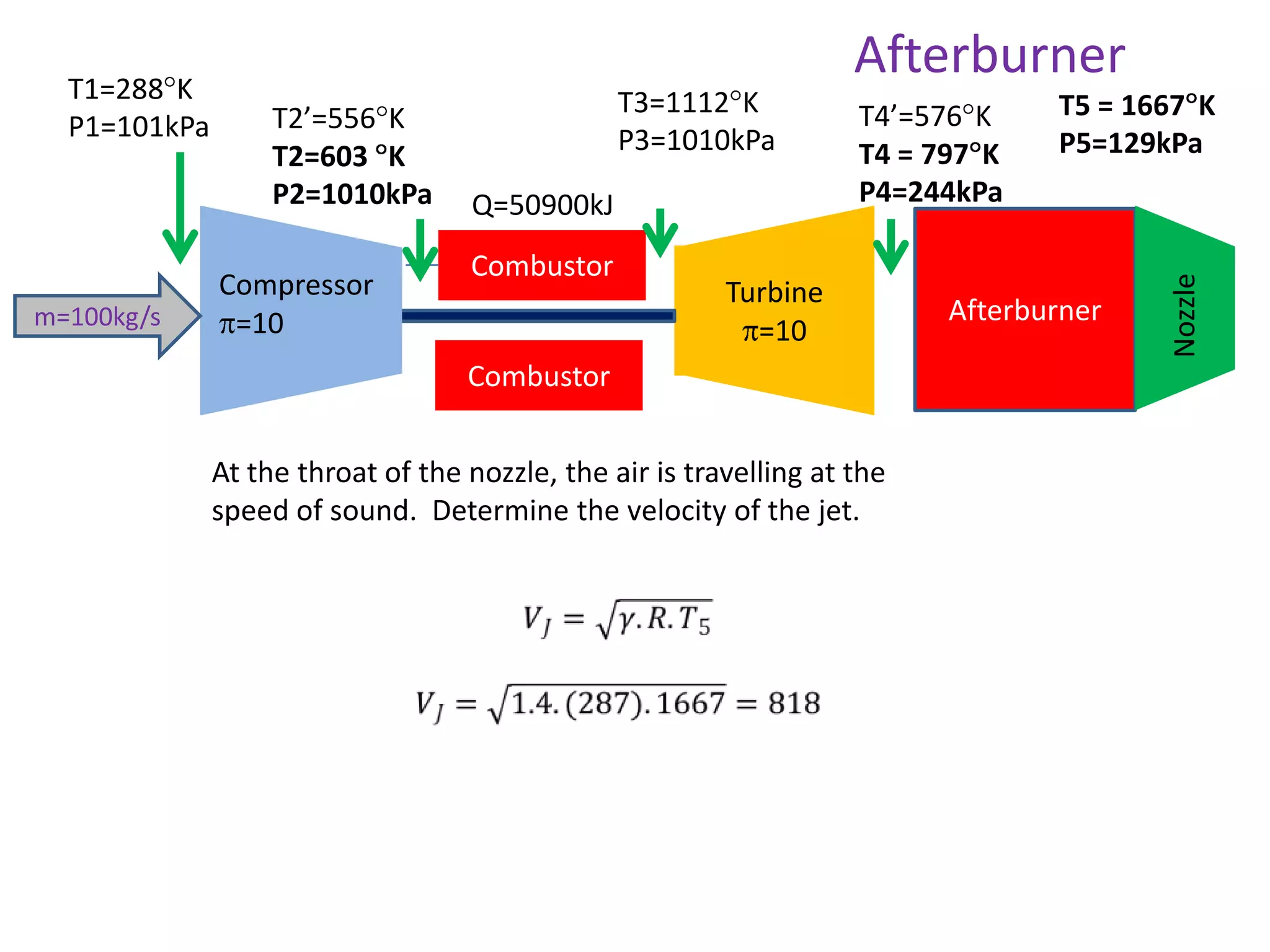
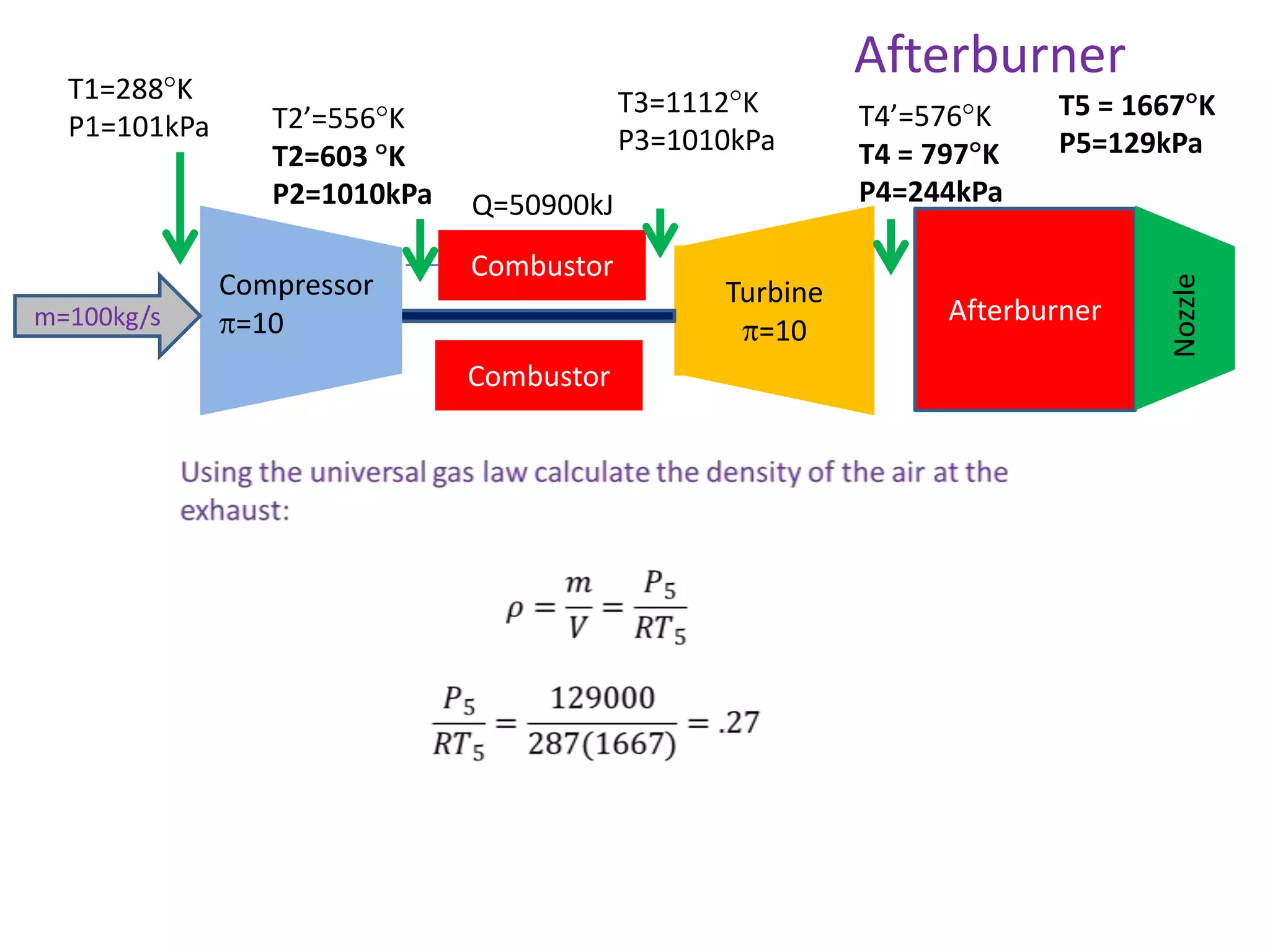
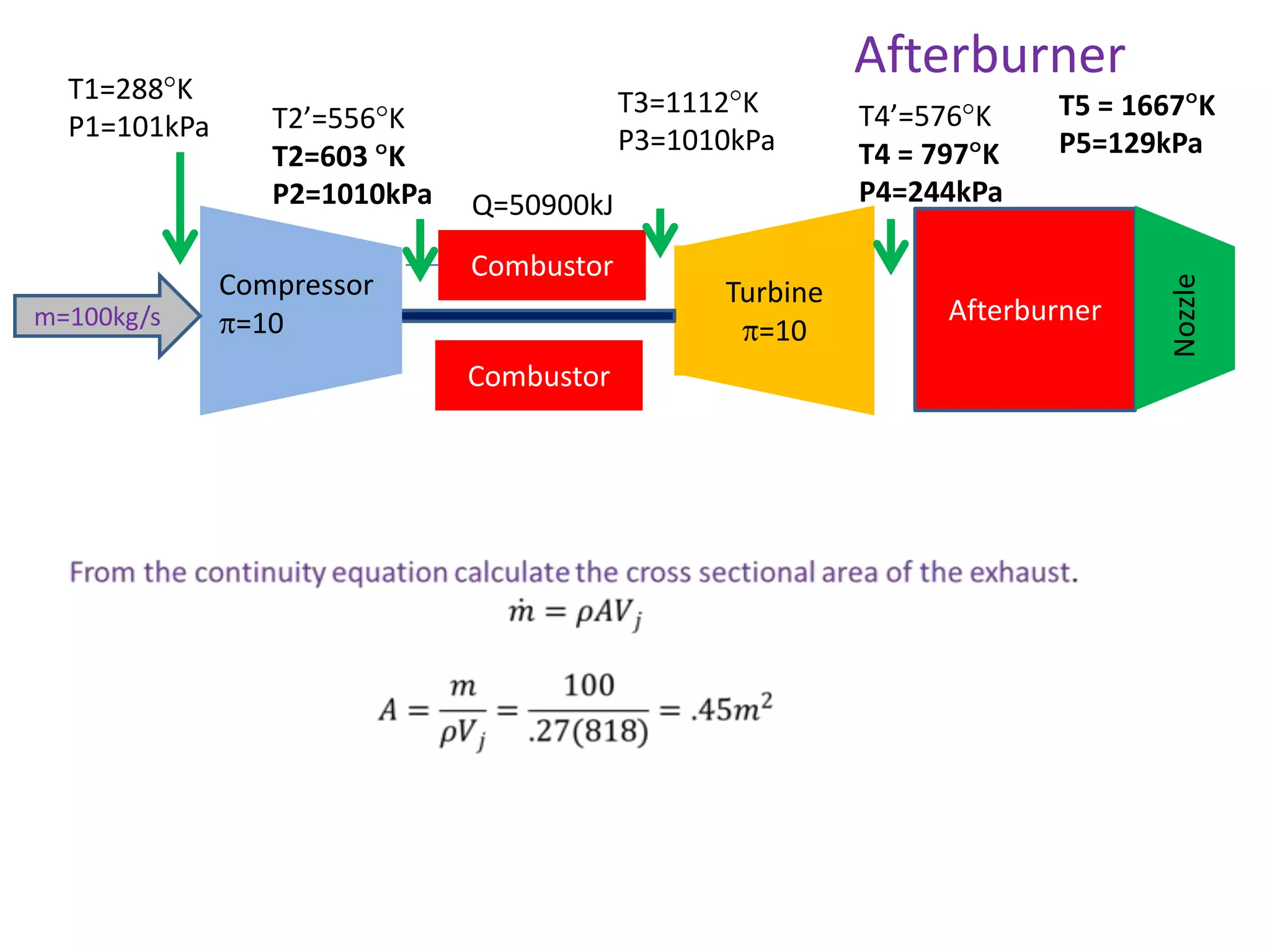
At the throat of the nozzle, the air is travelling at the
speed of sound. Determine the velocity of the jet.

T5 = 1667 K
P5=129kPa

Afterburner

Nozzle

T1=288 K
P1=101kPa

Afterburner
m=100kg/s

T2’=556 K
T2=603 K
P2=1010kPa
Compressor
=10

T3=1112 K
P3=1010kPa
Q=50900kJ
Combustor
Combustor

Turbine
=10

T4’=576 K
T4 = 797 K
P4=244kPa

T5 = 1667 K
P5=129kPa

Afterburner

Nozzle

T1=288 K
P1=101kPa

Afterburner
m=100kg/s

T2’=556 K
T2=603 K
P2=1010kPa
Compressor
=10

T3=1112 K
P3=1010kPa
Q=50900kJ
Combustor
Combustor

Turbine
=10

T4’=576 K
T4 = 797 K
P4=244kPa

T5 = 1667 K
P5=129kPa

Afterburner

Nozzle

T1=288 K
P1=101kPa

Afterburner
m=100kg/s

T2’=556 K
T2=603 K
P2=1010kPa
Compressor
=10

T3=1112 K
P3=1010kPa
Q=50900kJ
Combustor
Combustor

Turbine
=10

T4’=576 K
T4 = 797 K
P4=244kPa

T5 = 1667 K
P5=129kPa

Afterburner

Nozzle

T1=288 K
P1=101kPa

Afterburner
m=100kg/s

T2’=556 K
T2=603 K
P2=1010kPa
Compressor
=10

T3=1112 K
P3=1010kPa
Q=50900kJ
Combustor
Combustor

Turbine
=10

T4’=576 K
T4 = 797 K
P4=244kPa

T5 = 1667 K
P5=129kPa

Afterburner

Nozzle

T1=288 K
P1=101kPa

Afterburner
m=100kg/s

T3=1112 K
P3=1010kPa

T2’=556 K
T2=603 K
P2=1010kPa
Compressor
=10

Combustor

Turbine
=10

T4’=576 K
T4 = 797 K
P4=244kPa

T5 = 1667 K
P5=129kPa

Afterburner

Combustor
Q=50900kJ
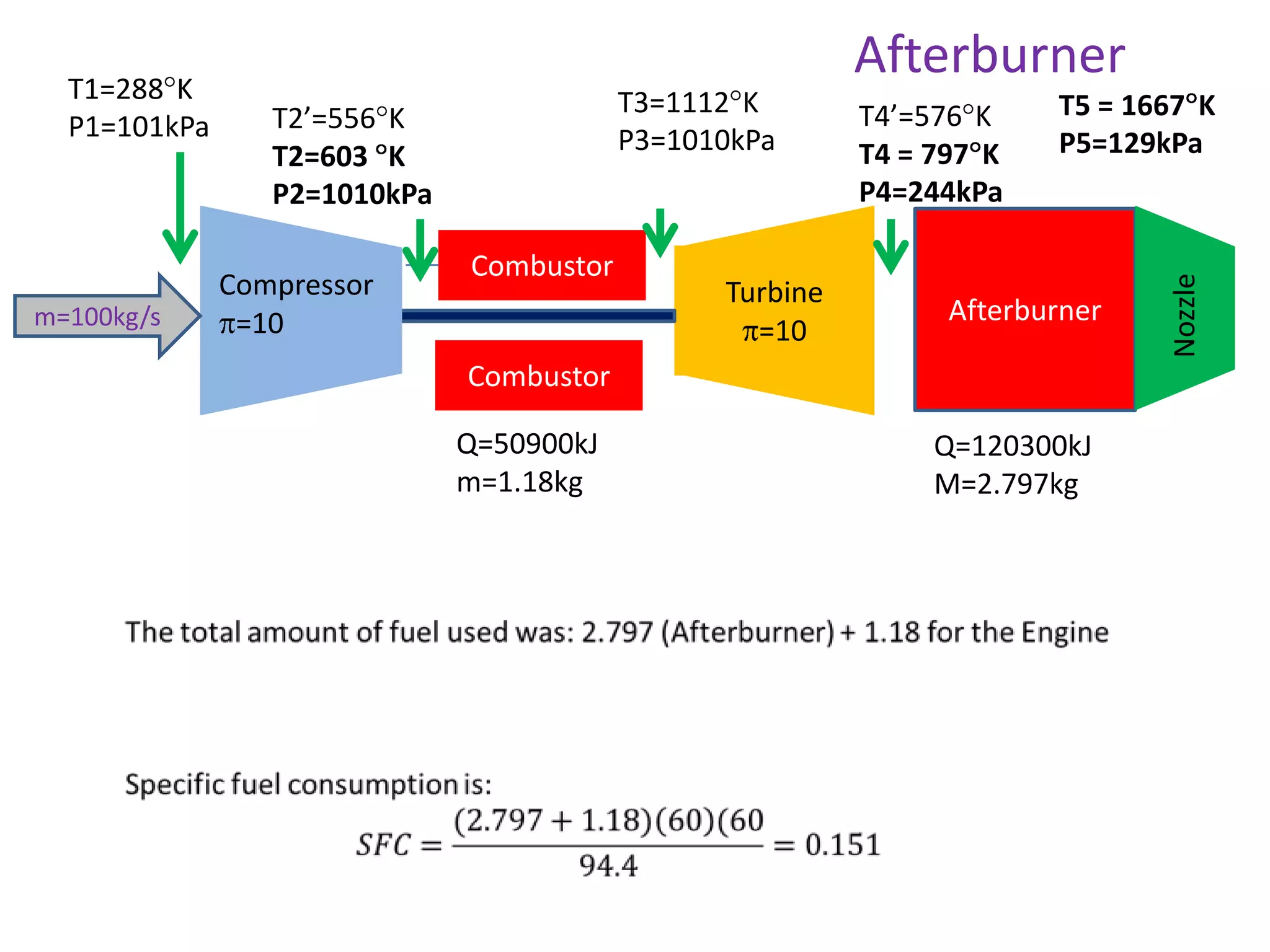
m=1.18kg

Q=120300kJ
M=2.797kg

Nozzle

T1=288 K
P1=101kPa

Afterburner
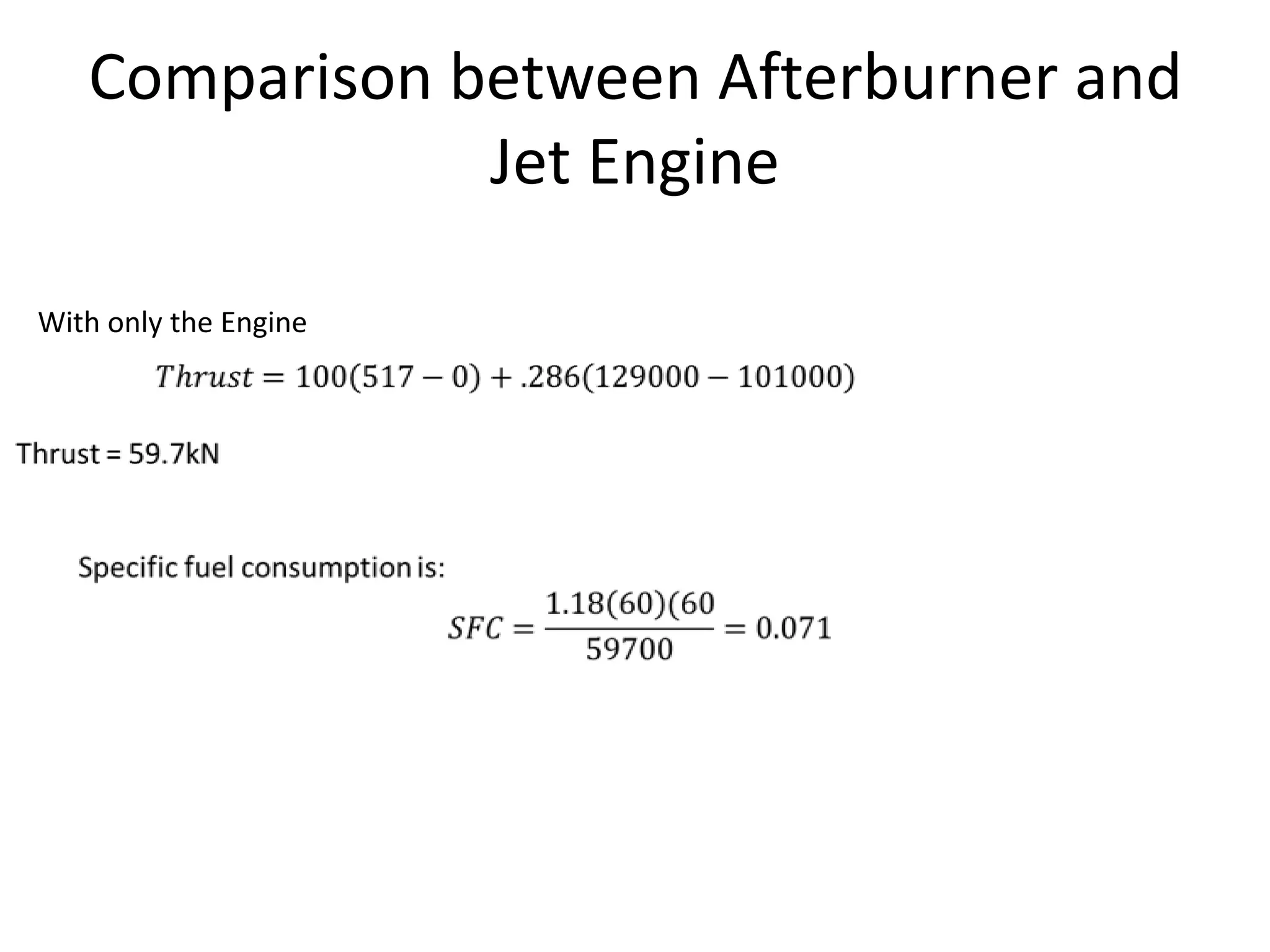
Comparison between Afterburner and
Jet Engine
With only the Engine

Jet engine ideal analysis