AIRCRAFT LANDING GEAR
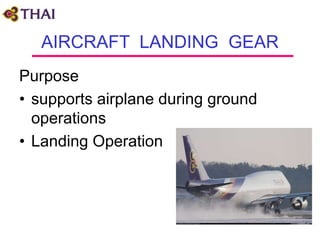
Purpose
• supports airplane during ground
operations
• Landing Operation
LANDING GEAR
• RETRACTABLE
LANDING GEAR
• NON RETRACTABLE
(FIXED)
LANDING GEAR
Retractable Landing Gear
• Developed to eliminate as much as
possible the drag caused by the
exposure of the landing gear to air
• Required Emergency System for gear
extension
FIXED LANDING GEAR
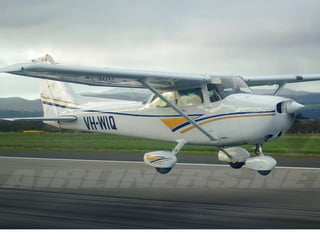
Generally attached to structural members of the
airplane with bolts, but it is not actually
"fixed”because it must absorb stresses; hence the
wheels must move up and down while landing or
taxiing in order to absorb shocks.
The landing gear is often equipped with cowling or
fairing to reduce the drag (air resistance) , and such
cowling or fairing may be assembled insections.
Auxiliary landing gear
• Nose wheel ,Tail Wheel ,Skids ,Floats
etc..
• Use to stabilize the airplane on ground
• Not to design to absorb shock or
landing load
• Steering or directional control devices
may emploted
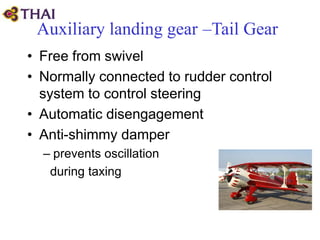
Auxiliary landing gear –Tail Gear
• Free from swivel
• Normally connected to rudder control
system to control steering
• Automatic disengagement
• Anti-shimmy damper
– prevents oscillation
during taxing
Anti-shimmy Device
An antishimmy device is normally provided to
reduce the tendency of the tail wheel to oscillate
badly during taxiing and landing.
It consists of two friction disks.usually made of
different materials,held in contact with each other by
a spring. One disk is fixed to the spindle-bearing
housing and the other is integral with the upper plate
of the disengaging device. When the tail wheel is in
any controllable position, the friction between the
disks dampens the oscillations of the tail wheel.
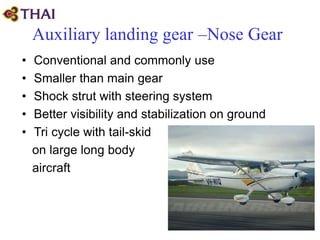
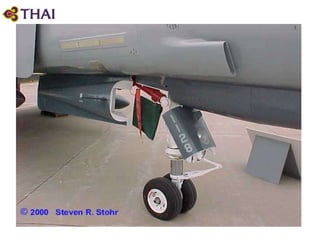
Auxiliary landing gear –Nose Gear
• Conventional and commonly use
• Smaller than main gear
• Shock strut with steering system
• Better visibility and stabilization on ground
• Tri cycle with tail-skid
on large long body
aircraft
Fixed landing gear type
• Spring gear
–Spring Steel
• Spring Oleo shock strut
–Piston type + coiled spring
• Air - Oil shock strut (air –oleo)
- retract or fixed can be used
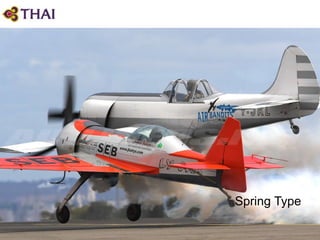
Spring Type
Retractable Landing Gear
• Normal Retraction / Extension
- Hydraulic
- Electric
• Alternate Extension
- Mechanical
- Pneumatic
- Electric
Retractable Landing Gear
• Up and Locked
• In transit
• Down and Locked
Safety Protection
• Prevent gear retracting on ground
- safety switch - handle
- ground lock pins
• Prevent gear not down & locked
when throttle is retarded below normal
power or landing configulations
= Warning!
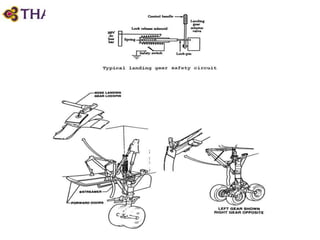
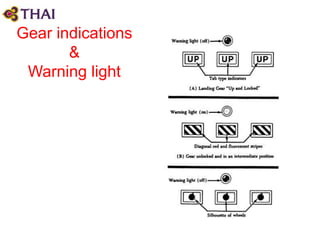
Gear indications
&
Warning light
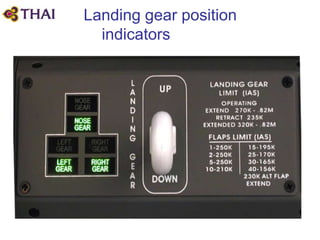
Landing gear position
indicators
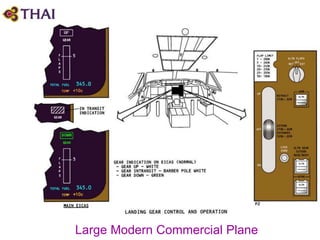
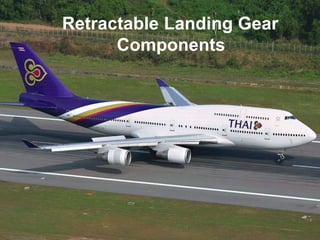
Large Modern Commercial Plane
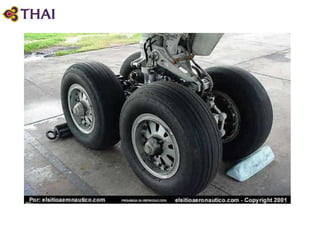
Retractable Landing Gear
Components
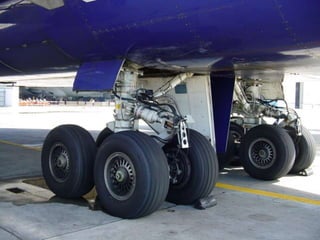
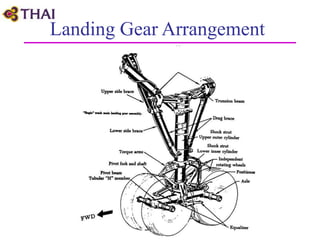
Landing Gear Arrangement
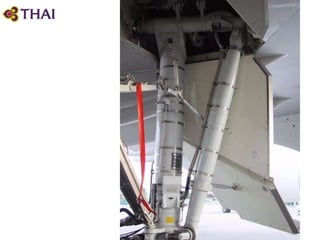
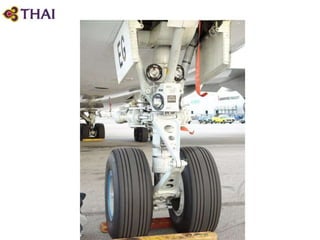
The Shock Struts
• Self contained hydraulic unit
• Absorb and dissipate shock load
• Main structure of the landing gear
• Air-oil type commonly use
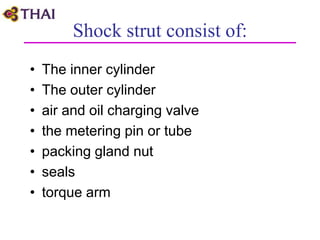
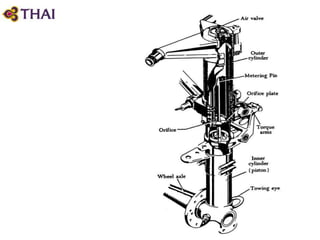
Shock strut consist of:
• The inner cylinder
• The outer cylinder
• air and oil charging valve
• the metering pin or tube
• packing gland nut
• seals
• torque arm
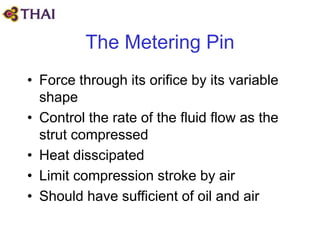
The Metering Pin
• Force through its orifice by its variable
shape
• Control the rate of the fluid flow as the
strut compressed
• Heat disscipated
• Limit compression stroke by air
• Should have sufficient of oil and air
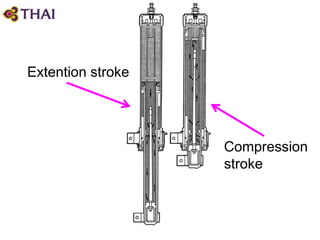
Extention stroke
Compression
stroke
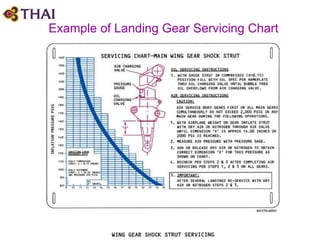
Example of Landing Gear Servicing Chart
Nose gear Centering/Locating
Cam
• Consist of upper and lower lube
cam
• The cam line up the wheel and
axial assemblies in the straight
ahead position when lift off
Others gear components
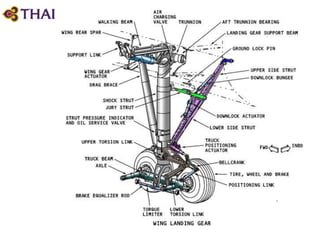
•Torsion links
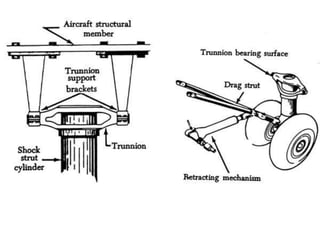
• Side & Drag struts or brace
• Bogie beam or truck beams
• Axial
• Positioners
• Down locked links
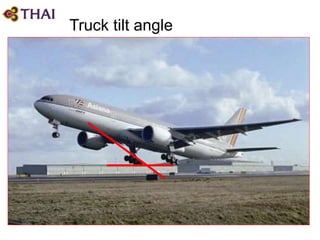
Truck tilt angle
TORSION LINK
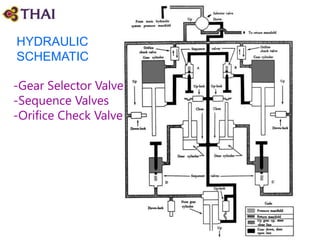
HYDRAULIC
SCHEMATIC
-Gear Selector Valve
-Sequence Valves
-Orifice Check Valve
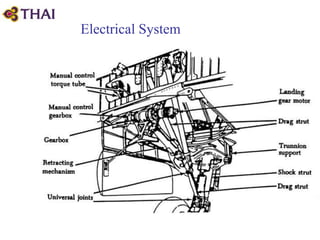
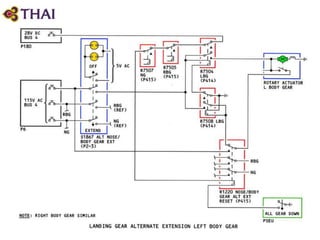
Electrical System
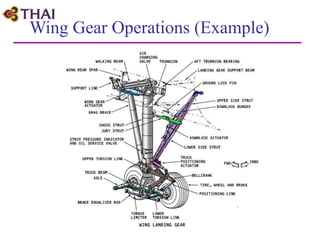
Wing Gear Operations (Example)
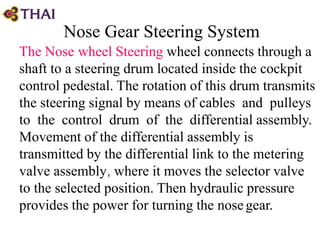
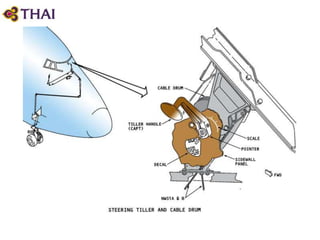
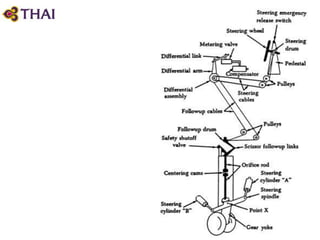
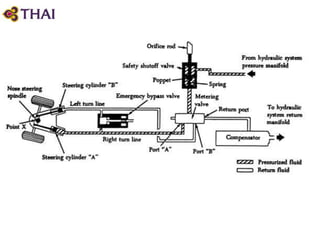
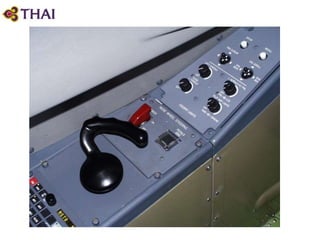
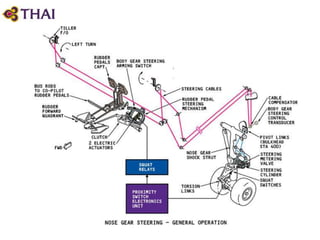
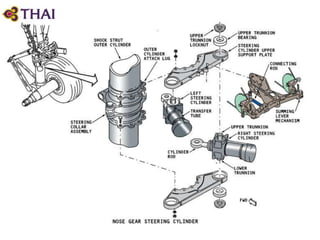
Nose Gear Steering System
The Nose wheel Steering wheel connects through a
shaft to a steering drum located inside the cockpit
control pedestal. The rotation of this drum transmits
the steering signal by means of cables and pulleys
to the control drum of the differential assembly.
Movement of the differential assembly is
transmitted by the differential link to the metering
valve assembly, where it moves the selector valve
to the selected position. Then hydraulic pressure
provides the power for turning the nosegear.
Landing Gear -1.ppt
Landing Gear -1.ppt
Landing Gear -1.ppt
Landing Gear -1.ppt
Landing Gear -1.ppt
Landing Gear -1.ppt

Landing Gear -1.ppt

  • 1.
  • 2.
    AIRCRAFT LANDING GEAR Purpose •supports airplane during ground operations • Landing Operation
  • 6.
    LANDING GEAR • RETRACTABLE LANDINGGEAR • NON RETRACTABLE (FIXED) LANDING GEAR
  • 7.
    Retractable Landing Gear •Developed to eliminate as much as possible the drag caused by the exposure of the landing gear to air • Required Emergency System for gear extension
  • 9.
    FIXED LANDING GEAR Generallyattached to structural members of the airplane with bolts, but it is not actually "fixed”because it must absorb stresses; hence the wheels must move up and down while landing or taxiing in order to absorb shocks. The landing gear is often equipped with cowling or fairing to reduce the drag (air resistance) , and such cowling or fairing may be assembled insections.
  • 11.
    Auxiliary landing gear •Nose wheel ,Tail Wheel ,Skids ,Floats etc.. • Use to stabilize the airplane on ground • Not to design to absorb shock or landing load • Steering or directional control devices may emploted
  • 12.
    Auxiliary landing gear–Tail Gear • Free from swivel • Normally connected to rudder control system to control steering • Automatic disengagement • Anti-shimmy damper – prevents oscillation during taxing
  • 13.
    Anti-shimmy Device An antishimmydevice is normally provided to reduce the tendency of the tail wheel to oscillate badly during taxiing and landing. It consists of two friction disks.usually made of different materials,held in contact with each other by a spring. One disk is fixed to the spindle-bearing housing and the other is integral with the upper plate of the disengaging device. When the tail wheel is in any controllable position, the friction between the disks dampens the oscillations of the tail wheel.
  • 14.
    Auxiliary landing gear–Nose Gear • Conventional and commonly use • Smaller than main gear • Shock strut with steering system • Better visibility and stabilization on ground • Tri cycle with tail-skid on large long body aircraft
  • 15.
    Fixed landing geartype • Spring gear –Spring Steel • Spring Oleo shock strut –Piston type + coiled spring • Air - Oil shock strut (air –oleo) - retract or fixed can be used
  • 16.
  • 17.
    Retractable Landing Gear •Normal Retraction / Extension - Hydraulic - Electric • Alternate Extension - Mechanical - Pneumatic - Electric
  • 19.
    Retractable Landing Gear •Up and Locked • In transit • Down and Locked
  • 20.
    Safety Protection • Preventgear retracting on ground - safety switch - handle - ground lock pins • Prevent gear not down & locked when throttle is retarded below normal power or landing configulations = Warning!
  • 23.
  • 24.
  • 25.
  • 26.
  • 27.
  • 29.
    The Shock Struts •Self contained hydraulic unit • Absorb and dissipate shock load • Main structure of the landing gear • Air-oil type commonly use
  • 31.
    Shock strut consistof: • The inner cylinder • The outer cylinder • air and oil charging valve • the metering pin or tube • packing gland nut • seals • torque arm
  • 34.
    The Metering Pin •Force through its orifice by its variable shape • Control the rate of the fluid flow as the strut compressed • Heat disscipated • Limit compression stroke by air • Should have sufficient of oil and air
  • 35.
  • 37.
    Example of LandingGear Servicing Chart
  • 38.
    Nose gear Centering/Locating Cam •Consist of upper and lower lube cam • The cam line up the wheel and axial assemblies in the straight ahead position when lift off
  • 39.
    Others gear components •Torsionlinks • Side & Drag struts or brace • Bogie beam or truck beams • Axial • Positioners • Down locked links
  • 41.
  • 42.
  • 45.
  • 46.
  • 50.
  • 51.
    Nose Gear SteeringSystem The Nose wheel Steering wheel connects through a shaft to a steering drum located inside the cockpit control pedestal. The rotation of this drum transmits the steering signal by means of cables and pulleys to the control drum of the differential assembly. Movement of the differential assembly is transmitted by the differential link to the metering valve assembly, where it moves the selector valve to the selected position. Then hydraulic pressure provides the power for turning the nosegear.