15.2 : ENGINE PERFORMANCE


         http://part66.blogspot.com/
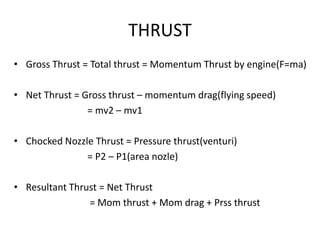
THRUST
• Gross Thrust = Total thrust = Momentum Thrust by engine(F=ma)

• Net Thrust = Gross thrust – momentum drag(flying speed)
                = mv2 – mv1

• Chocked Nozzle Thrust = Pressure thrust(venturi)
               = P2 – P1(area nozle)

• Resultant Thrust = Net Thrust
                = Mom thrust + Mom drag + Prss thrust
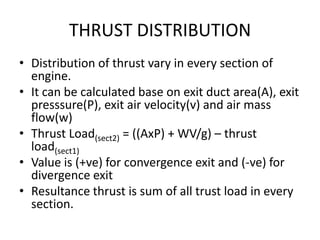
THRUST DISTRIBUTION
• Distribution of thrust vary in every section of
  engine.
• It can be calculated base on exit duct area(A), exit
  presssure(P), exit air velocity(v) and air mass
  flow(w)
• Thrust Load(sect2) = ((AxP) + WV/g) – thrust
  load(sect1)
• Value is (+ve) for convergence exit and (-ve) for
  divergence exit
• Resultance thrust is sum of all trust load in every
  section.
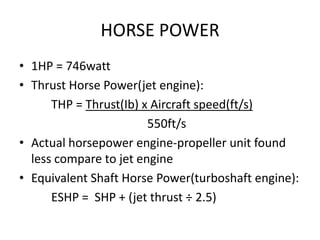
HORSE POWER
• 1HP = 746watt
• Thrust Horse Power(jet engine):
      THP = Thrust(Ib) x Aircraft speed(ft/s)
                        550ft/s
• Actual horsepower engine-propeller unit found
  less compare to jet engine
• Equivalent Shaft Horse Power(turboshaft engine):
      ESHP = SHP + (jet thrust Ă· 2.5)
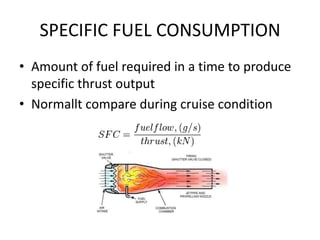
SPECIFIC FUEL CONSUMPTION
• Amount of fuel required in a time to produce
  specific thrust output
• Normallt compare during cruise condition
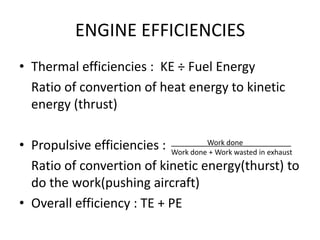
ENGINE EFFICIENCIES
• Thermal efficiencies : KE ÷ Fuel Energy
  Ratio of convertion of heat energy to kinetic
  energy (thrust)

• Propulsive efficiencies : _________Work done____________
                            Work done + Work wasted in exhaust
  Ratio of convertion of kinetic energy(thurst) to
  do the work(pushing aircraft)
• Overall efficiency : TE + PE
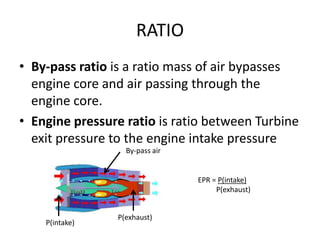
RATIO
• By-pass ratio is a ratio mass of air bypasses
  engine core and air passing through the
  engine core.
• Engine pressure ratio is ratio between Turbine
  exit pressure to the engine intake pressure
                  By-pass air


                                EPR = P(intake)
                                     P(exhaust)


                P(exhaust)
    P(intake)
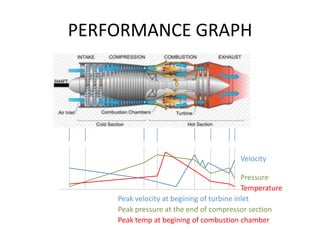
PERFORMANCE GRAPH


                                         Velocity

                                           Pressure
                                           Temperature
    Peak velocity at begining of turbine inlet
    Peak pressure at the end of compressor section
    Peak temp at begining of combustion chamber
FACTOR EFFECTING THRUST
• Temperature :
  Thrust increase with decreasing in temperature (air density
  increase at low temp)
• Air Pressure :
  Thrust increase with increasing air pressure
  (air density increase by pressure)
• Altitude :
  Thrust decrease with increase in altitude
  (change rate after 36kft = temp constant)
• Airspeed :
  Thrust decrease initially then increase back due to ram air
  effect on jet engine

EASA Part 66 Module 15.2 : Engine Performance

  • 1.
    15.2 : ENGINEPERFORMANCE http://part66.blogspot.com/
  • 2.
    THRUST • Gross Thrust= Total thrust = Momentum Thrust by engine(F=ma) • Net Thrust = Gross thrust – momentum drag(flying speed) = mv2 – mv1 • Chocked Nozzle Thrust = Pressure thrust(venturi) = P2 – P1(area nozle) • Resultant Thrust = Net Thrust = Mom thrust + Mom drag + Prss thrust
  • 3.
    THRUST DISTRIBUTION • Distributionof thrust vary in every section of engine. • It can be calculated base on exit duct area(A), exit presssure(P), exit air velocity(v) and air mass flow(w) • Thrust Load(sect2) = ((AxP) + WV/g) – thrust load(sect1) • Value is (+ve) for convergence exit and (-ve) for divergence exit • Resultance thrust is sum of all trust load in every section.
  • 4.
    HORSE POWER • 1HP= 746watt • Thrust Horse Power(jet engine): THP = Thrust(Ib) x Aircraft speed(ft/s) 550ft/s • Actual horsepower engine-propeller unit found less compare to jet engine • Equivalent Shaft Horse Power(turboshaft engine): ESHP = SHP + (jet thrust ÷ 2.5)
  • 5.
    SPECIFIC FUEL CONSUMPTION •Amount of fuel required in a time to produce specific thrust output • Normallt compare during cruise condition
  • 6.
    ENGINE EFFICIENCIES • Thermalefficiencies : KE ÷ Fuel Energy Ratio of convertion of heat energy to kinetic energy (thrust) • Propulsive efficiencies : _________Work done____________ Work done + Work wasted in exhaust Ratio of convertion of kinetic energy(thurst) to do the work(pushing aircraft) • Overall efficiency : TE + PE
  • 7.
    RATIO • By-pass ratiois a ratio mass of air bypasses engine core and air passing through the engine core. • Engine pressure ratio is ratio between Turbine exit pressure to the engine intake pressure By-pass air EPR = P(intake) P(exhaust) P(exhaust) P(intake)
  • 8.
    PERFORMANCE GRAPH Velocity Pressure Temperature Peak velocity at begining of turbine inlet Peak pressure at the end of compressor section Peak temp at begining of combustion chamber
  • 9.
    FACTOR EFFECTING THRUST •Temperature : Thrust increase with decreasing in temperature (air density increase at low temp) • Air Pressure : Thrust increase with increasing air pressure (air density increase by pressure) • Altitude : Thrust decrease with increase in altitude (change rate after 36kft = temp constant) • Airspeed : Thrust decrease initially then increase back due to ram air effect on jet engine