AIRCRAFT OIL SYSTEMS
2 TYPES
WET SUMP
DRY SUMP
SIMPLE FACTS
• Two Systems:
• Wet-sump system
• Dry-sump system
• The difference in the systems can be remembered as if the engine were off
• If it didn't have oil in the engine, it would be dry or a dry sump system,
where a separate tank was used; but if the engine would be wet with oil, then
it is a wet sump system with the sump being integral to the engine.
SIMPLE FACTS
• On light aircraft the oil filler cap and dipstick are usually accessible
through a panel in the engine cowling
• The dipstick is used for measuring engine oil quantity (sometimes it
could be a sightglass)
• If the quantity does not meet the manufacturer's recommended
operating levels, oil should be added, this also refers to the AMM
• The type of oil required may vary on numerous atmospheric and
operation conditions, as stipulated by the aircraft operations manual
SIMPLE FACTS
Placards near the access panel provide information about the
correct oil type and weight, as well as the minimum and
maximum oil quantity
The system is monitored through pressure and temperature
gauges. The loss of engine oil pressure would lead to engine
vibrations, RPM would decrease, and the engine would eventually
seize
(Note Viscosity = the ability of a liquid to resist flow)
SIMPLE FACTS
Wet-Sump:
Oil is carried in a sump, which is an integral part of the engine
The main component is the oil pump, which draws oil from the
sump and routes it to the engine possibly through an oil cooler.
After the oil passes through the engine, it returns to the sump
In some piston engines, additional lubrication is supplied by
the rotating crankshaft, which splashes oil onto portions of the
engine.
SIMPLE FACTS
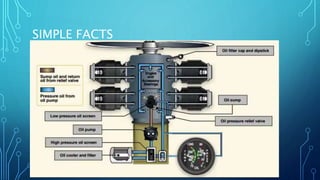
Dry-Sump:
Oil is contained in a separate tank, and circulated through the engine by pumps
These tanks are always larger than the oil it is meant to contain to compensate for
thermal expansion
An oil pump also supplies oil pressure in a dry-sump system, but the source of the oil is
located external to the engine in a separate oil tank
After oil is routed through the engine, it is pumped from the various locations in the
engine back to the oil tank by scavenge pumps (Normally bigger than the delivery pump)
Dry-sump systems allow for a greater volume of oil to be supplied to the engine, which
makes them more suitable for very large reciprocating engines
Most jet engines will consist of a dry sump design.
SIMPLE FACTS
SIMPLE FACTS
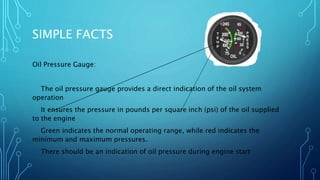
Oil Pressure Gauge:
The oil pressure gauge provides a direct indication of the oil system
operation
It ensures the pressure in pounds per square inch (psi) of the oil supplied
to the engine
Green indicates the normal operating range, while red indicates the
minimum and maximum pressures.
There should be an indication of oil pressure during engine start
SIMPLE FACTS
The oil temperature gauge measures the temperature of oil.
A green area shows the normal operating range and the red line
indicates the maximum allowable temperature.
Unlike oil pressure, changes in oil temperature occur more slowly
This is particularly noticeable after starting a cold engine, when
it may take several minutes or longer for the gauge to show any
increase in oil temperature
SIMPLE FACTS
When the pilot checks oil temperature periodically during flight
especially when operating in high or low ambient air temperature (i:e
The Gulf or Iceland)
High oil temperature indications may signal:
Blocked oil line or cooler (A cooler might look like a car
radiator)
low oil quantity (leading to possible engine failure)
Defective temperature gauge
High oil temperatures can lead to metal on metal contact as
viscosity decreases
Low oil temperature indications may signal improper oil viscosity
SIMPLE FACTS
Conclusion:
Oil systems reduce friction on moving parts, create better
seals, reduce and remove heat, carry away contaminants and in
some cases, run other systems
Many systems have pressurised sumps and a pressurised oil
tank to ensure a constant head pressure to the lubrication pump
to prevent pump cavitation at high altitudes
Oil consumption is relatively low in a gas turbine engine
compared to a piston-type engine. (Yes I am surprised at that)

Aircraft oil systems

  • 1.
    AIRCRAFT OIL SYSTEMS 2TYPES WET SUMP DRY SUMP
  • 2.
    SIMPLE FACTS • TwoSystems: • Wet-sump system • Dry-sump system • The difference in the systems can be remembered as if the engine were off • If it didn't have oil in the engine, it would be dry or a dry sump system, where a separate tank was used; but if the engine would be wet with oil, then it is a wet sump system with the sump being integral to the engine.
  • 3.
    SIMPLE FACTS • Onlight aircraft the oil filler cap and dipstick are usually accessible through a panel in the engine cowling • The dipstick is used for measuring engine oil quantity (sometimes it could be a sightglass) • If the quantity does not meet the manufacturer's recommended operating levels, oil should be added, this also refers to the AMM • The type of oil required may vary on numerous atmospheric and operation conditions, as stipulated by the aircraft operations manual
  • 4.
    SIMPLE FACTS Placards nearthe access panel provide information about the correct oil type and weight, as well as the minimum and maximum oil quantity The system is monitored through pressure and temperature gauges. The loss of engine oil pressure would lead to engine vibrations, RPM would decrease, and the engine would eventually seize (Note Viscosity = the ability of a liquid to resist flow)
  • 5.
    SIMPLE FACTS Wet-Sump: Oil iscarried in a sump, which is an integral part of the engine The main component is the oil pump, which draws oil from the sump and routes it to the engine possibly through an oil cooler. After the oil passes through the engine, it returns to the sump In some piston engines, additional lubrication is supplied by the rotating crankshaft, which splashes oil onto portions of the engine.
  • 6.
    SIMPLE FACTS Dry-Sump: Oil iscontained in a separate tank, and circulated through the engine by pumps These tanks are always larger than the oil it is meant to contain to compensate for thermal expansion An oil pump also supplies oil pressure in a dry-sump system, but the source of the oil is located external to the engine in a separate oil tank After oil is routed through the engine, it is pumped from the various locations in the engine back to the oil tank by scavenge pumps (Normally bigger than the delivery pump) Dry-sump systems allow for a greater volume of oil to be supplied to the engine, which makes them more suitable for very large reciprocating engines Most jet engines will consist of a dry sump design.
  • 7.
  • 8.
    SIMPLE FACTS Oil PressureGauge: The oil pressure gauge provides a direct indication of the oil system operation It ensures the pressure in pounds per square inch (psi) of the oil supplied to the engine Green indicates the normal operating range, while red indicates the minimum and maximum pressures. There should be an indication of oil pressure during engine start
  • 9.
    SIMPLE FACTS The oiltemperature gauge measures the temperature of oil. A green area shows the normal operating range and the red line indicates the maximum allowable temperature. Unlike oil pressure, changes in oil temperature occur more slowly This is particularly noticeable after starting a cold engine, when it may take several minutes or longer for the gauge to show any increase in oil temperature
  • 10.
    SIMPLE FACTS When thepilot checks oil temperature periodically during flight especially when operating in high or low ambient air temperature (i:e The Gulf or Iceland) High oil temperature indications may signal: Blocked oil line or cooler (A cooler might look like a car radiator) low oil quantity (leading to possible engine failure) Defective temperature gauge High oil temperatures can lead to metal on metal contact as viscosity decreases Low oil temperature indications may signal improper oil viscosity
  • 11.
    SIMPLE FACTS Conclusion: Oil systemsreduce friction on moving parts, create better seals, reduce and remove heat, carry away contaminants and in some cases, run other systems Many systems have pressurised sumps and a pressurised oil tank to ensure a constant head pressure to the lubrication pump to prevent pump cavitation at high altitudes Oil consumption is relatively low in a gas turbine engine compared to a piston-type engine. (Yes I am surprised at that)