BIS 220 INTRODUCTION TO
COMPUTER APPLICATIONS
AND SYSTEMS
WORKSHOP V, RAJI GOGULAPATI
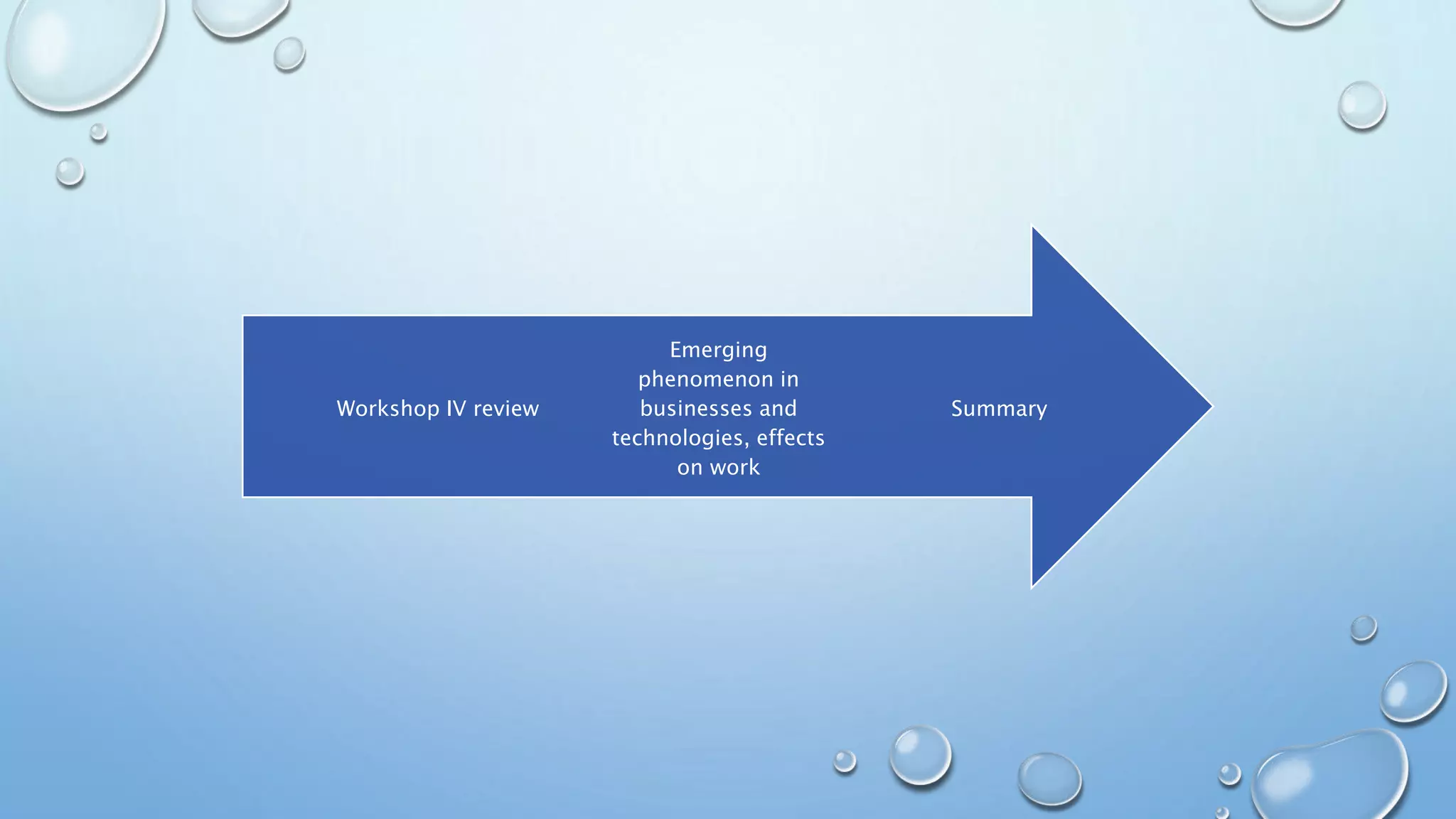
Summary
Emerging
phenomenon in
businesses and
technologies, effects
on work
Workshop IV review
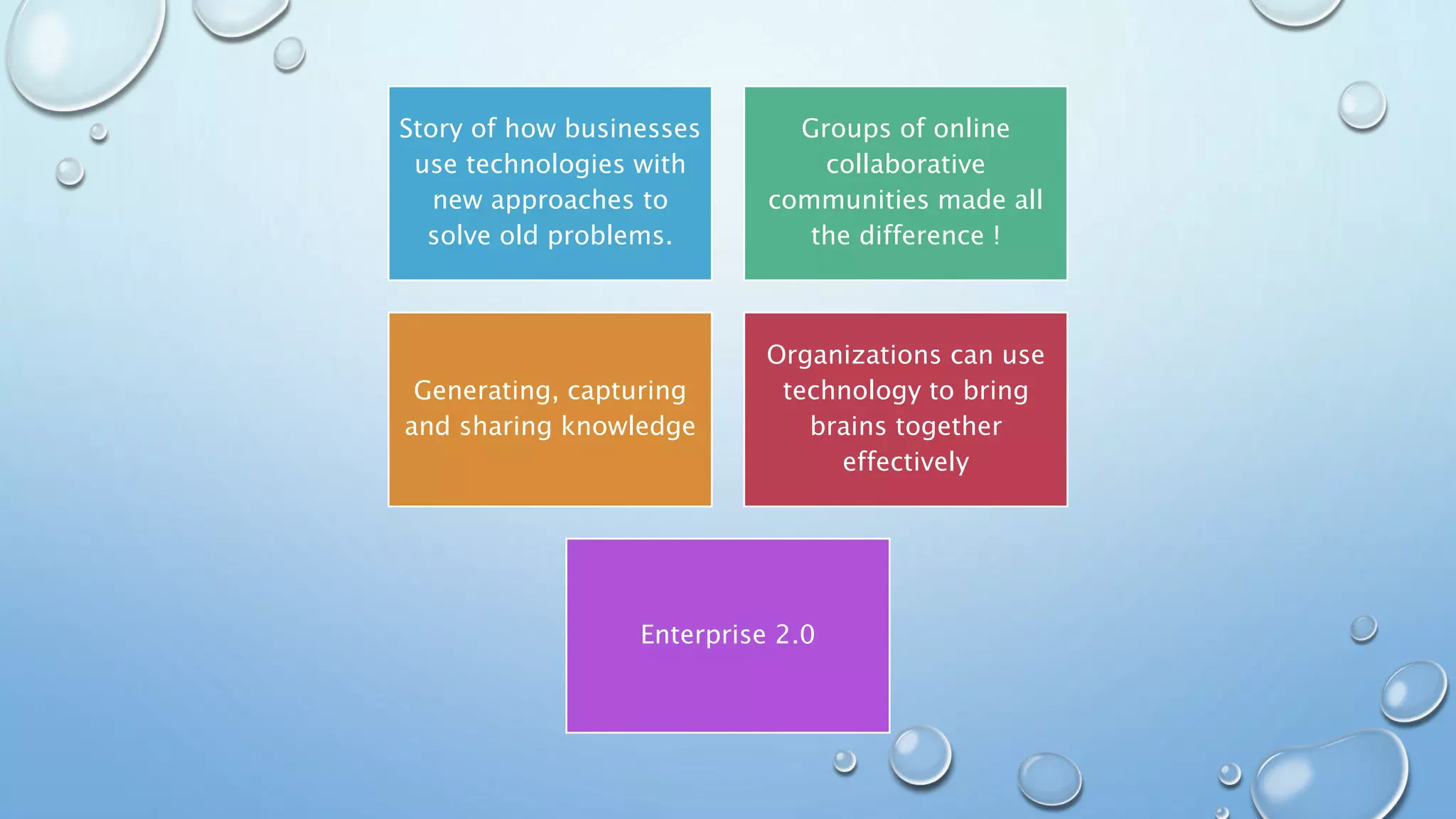
Story of how businesses
use technologies with
new approaches to
solve old problems.
Groups of online
collaborative
communities made all
the difference !
Generating, capturing
and sharing knowledge
Organizations can use
technology to bring
brains together
effectively
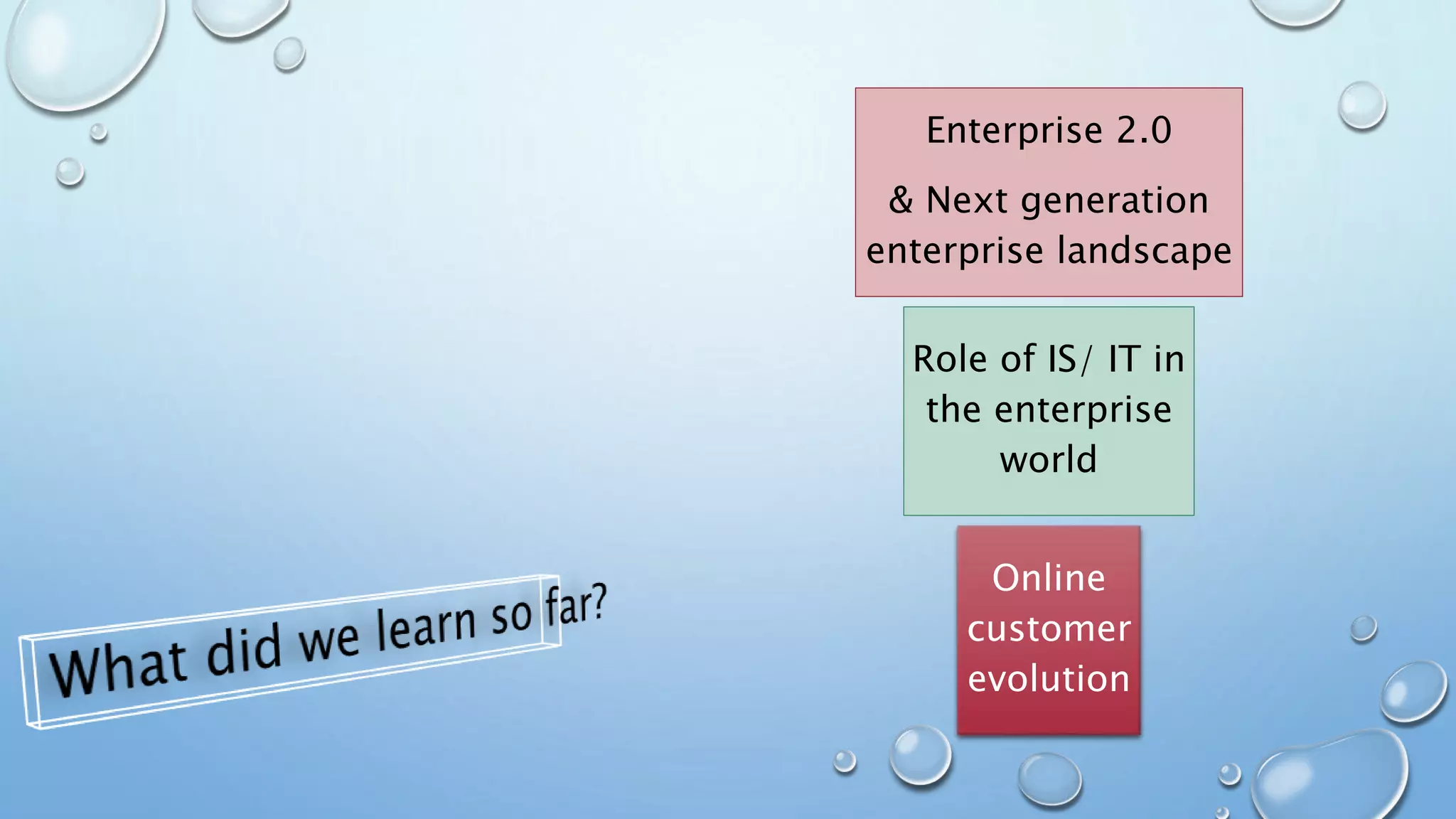
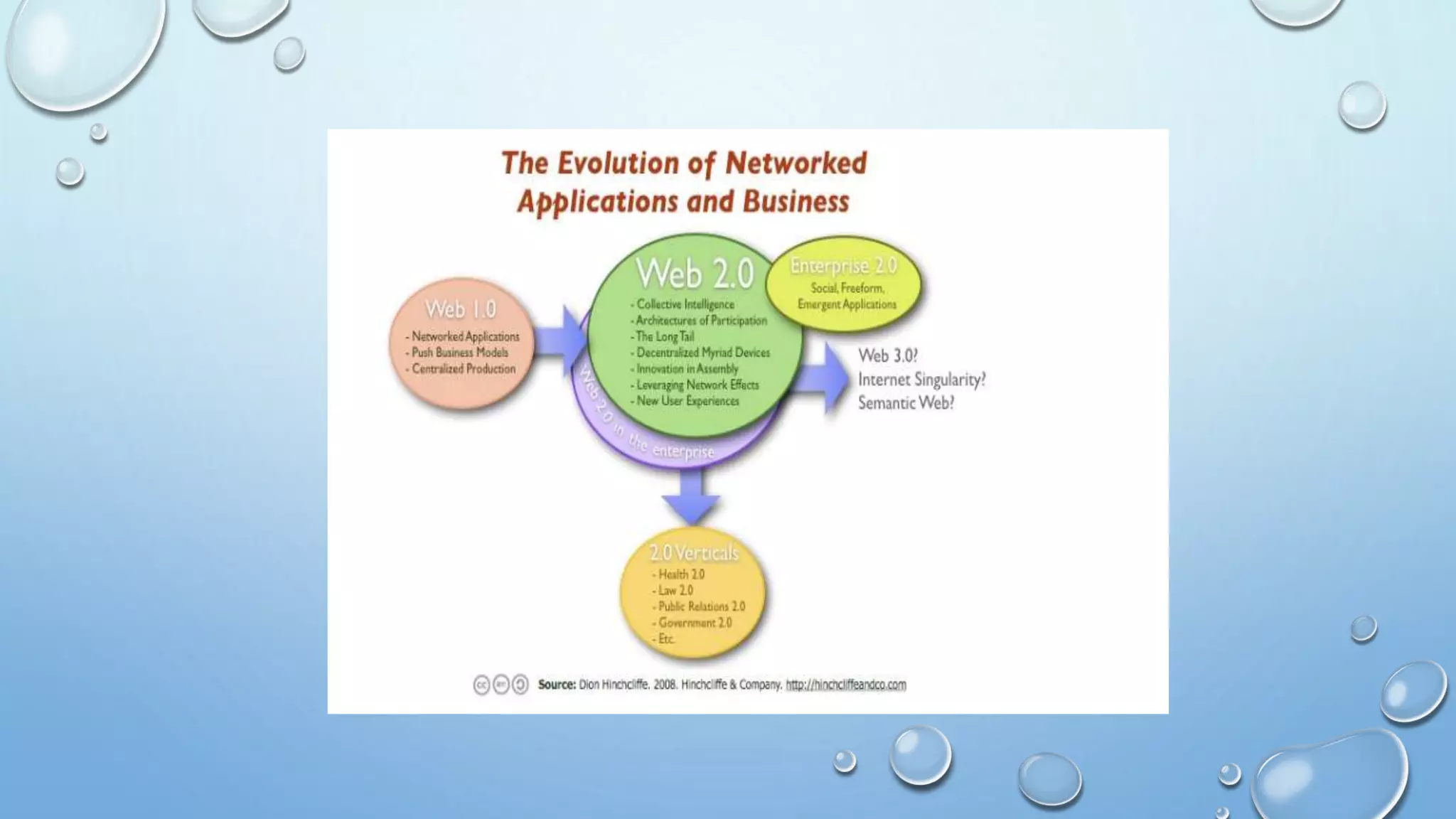
Enterprise 2.0
Enterprise 2.0
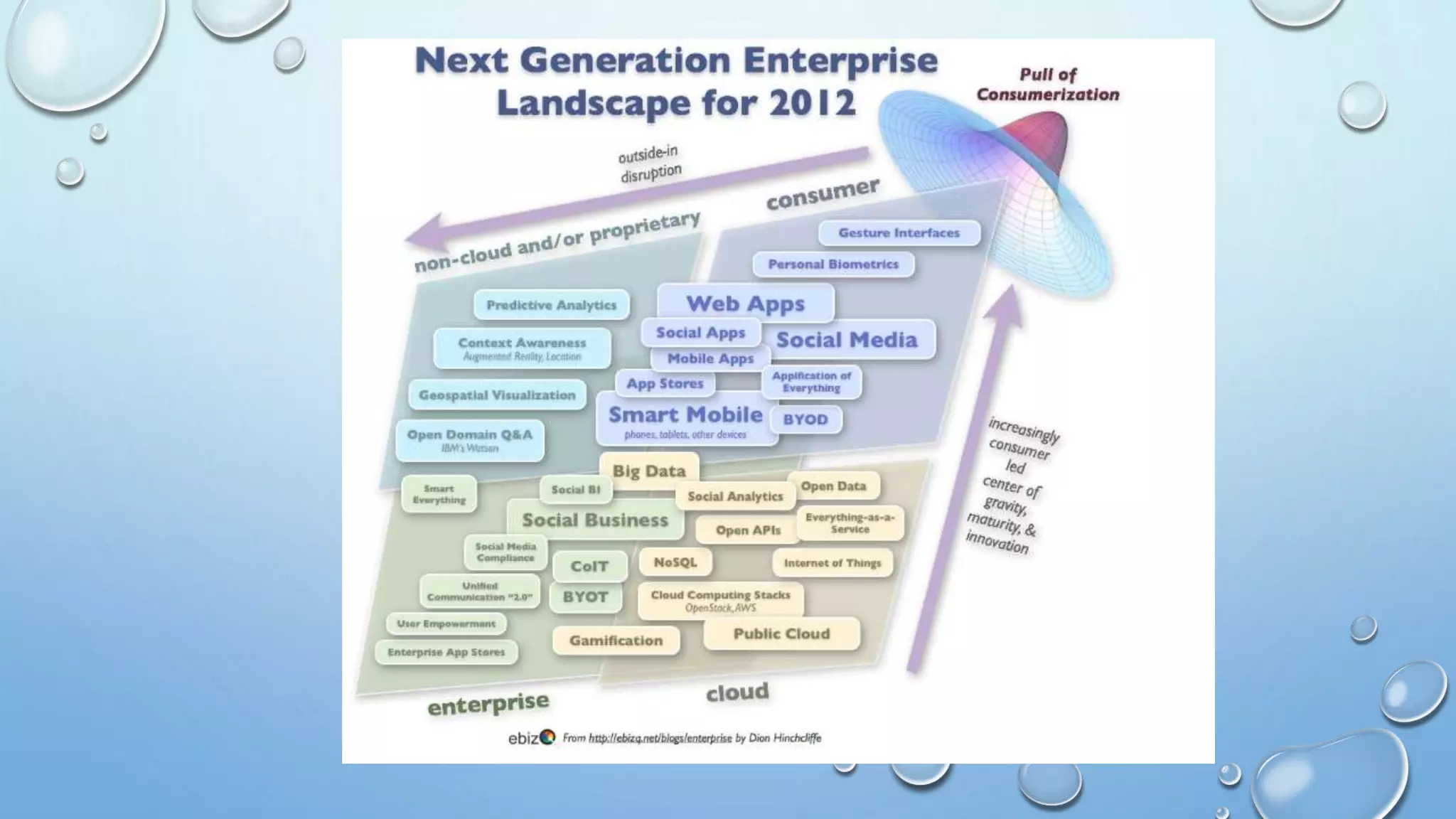
& Next generation
enterprise landscape
Role of IS/ IT in
the enterprise
world
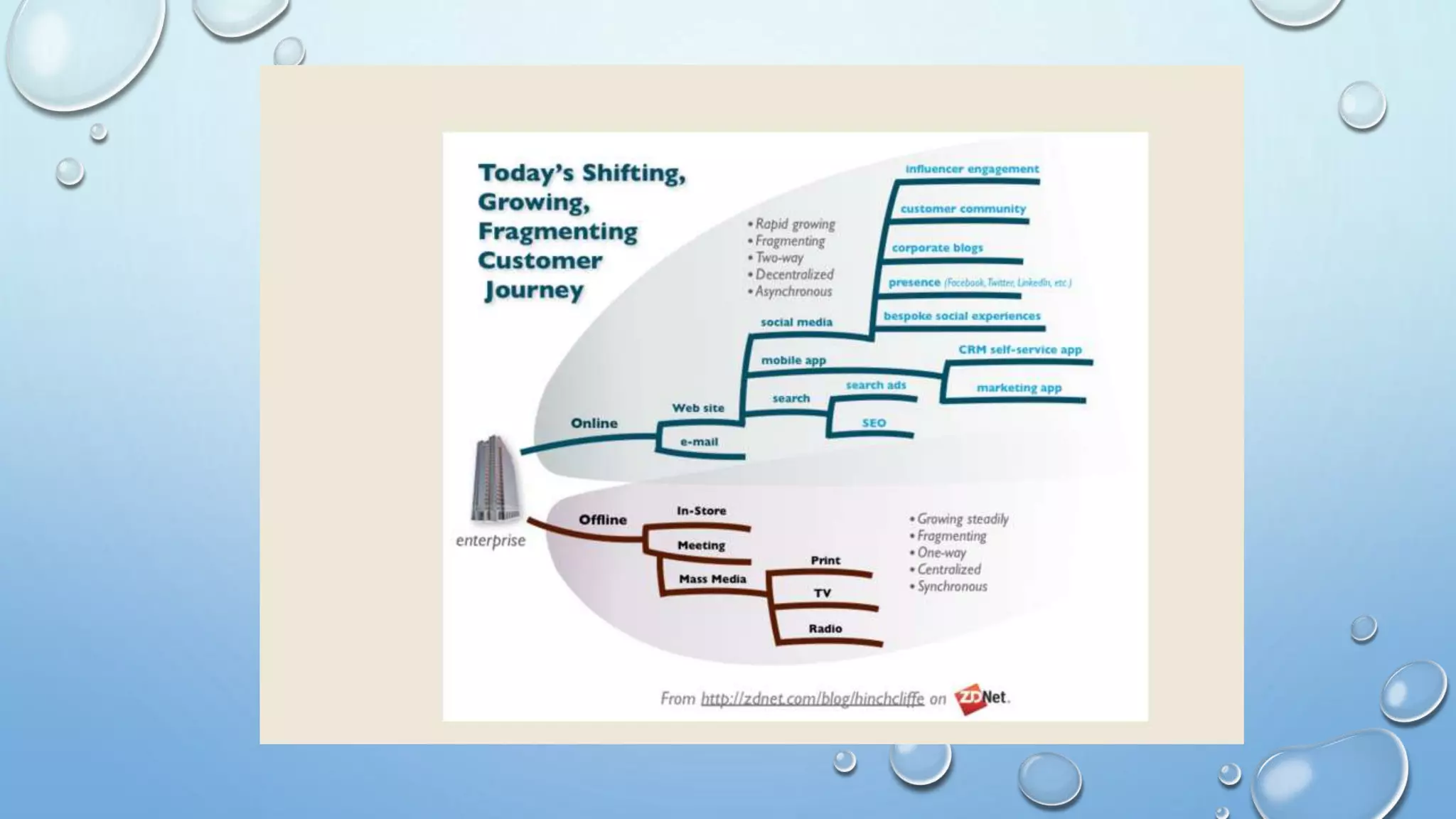
Online
customer
evolution
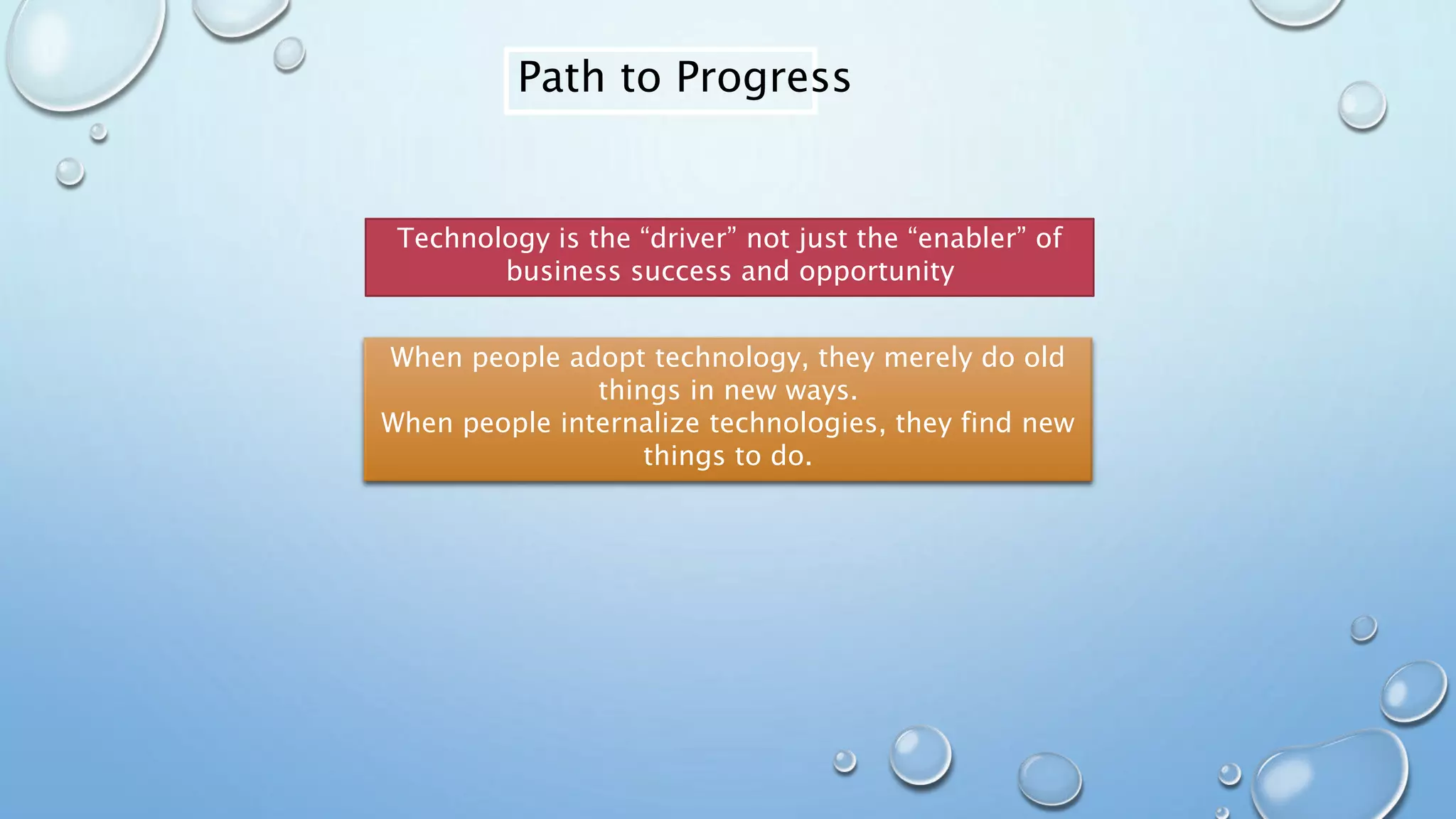
Path to Progress
Technology is the “driver” not just the “enabler” of
business success and opportunity
When people adopt technology, they merely do old
things in new ways.
When people internalize technologies, they find new
things to do.
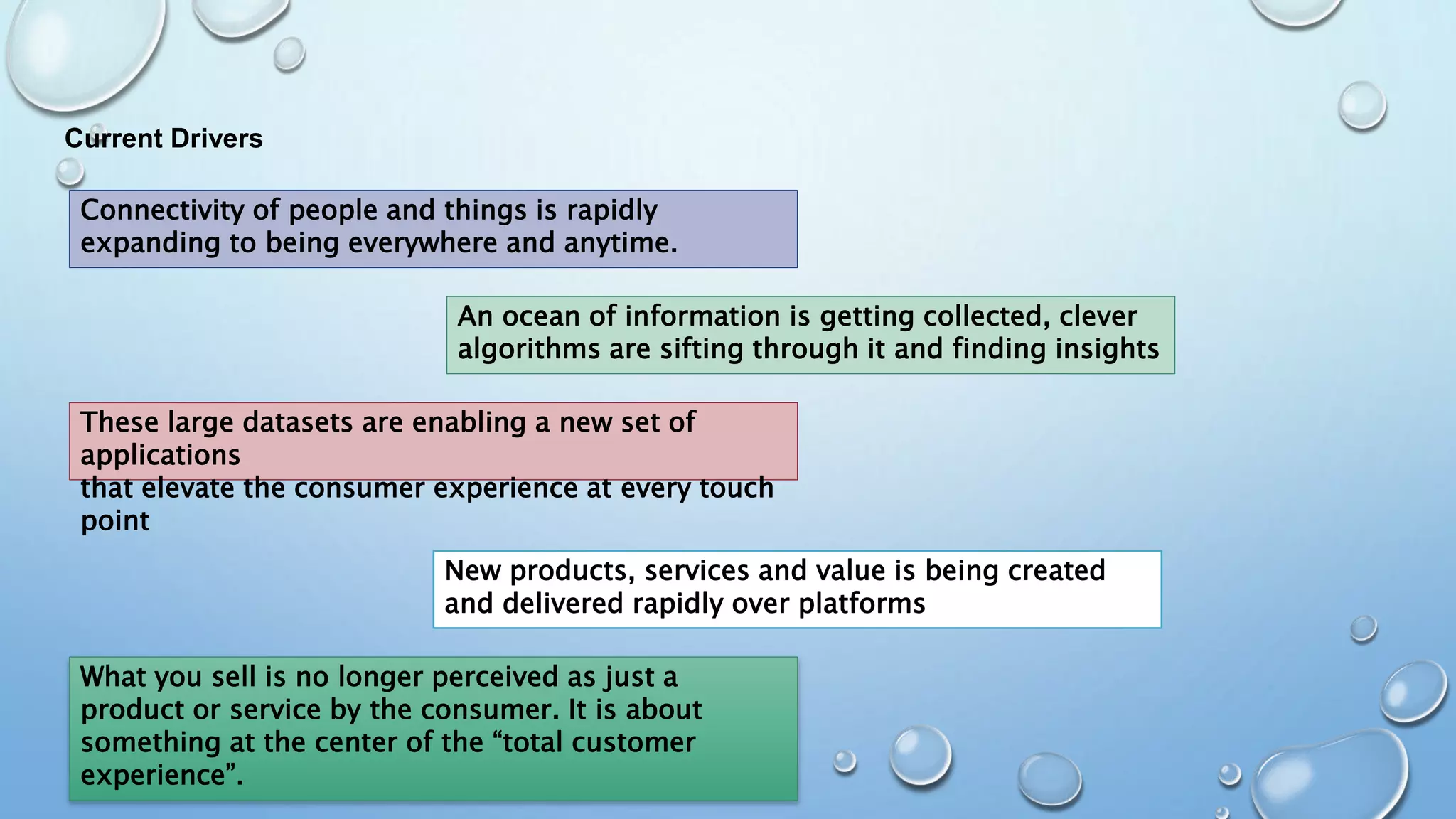
Current Drivers
Connectivity of people and things is rapidly
expanding to being everywhere and anytime.
An ocean of information is getting collected, clever
algorithms are sifting through it and finding insights
These large datasets are enabling a new set of
applications
that elevate the consumer experience at every touch
point
New products, services and value is being created
and delivered rapidly over platforms
What you sell is no longer perceived as just a
product or service by the consumer. It is about
something at the center of the “total customer
experience”.
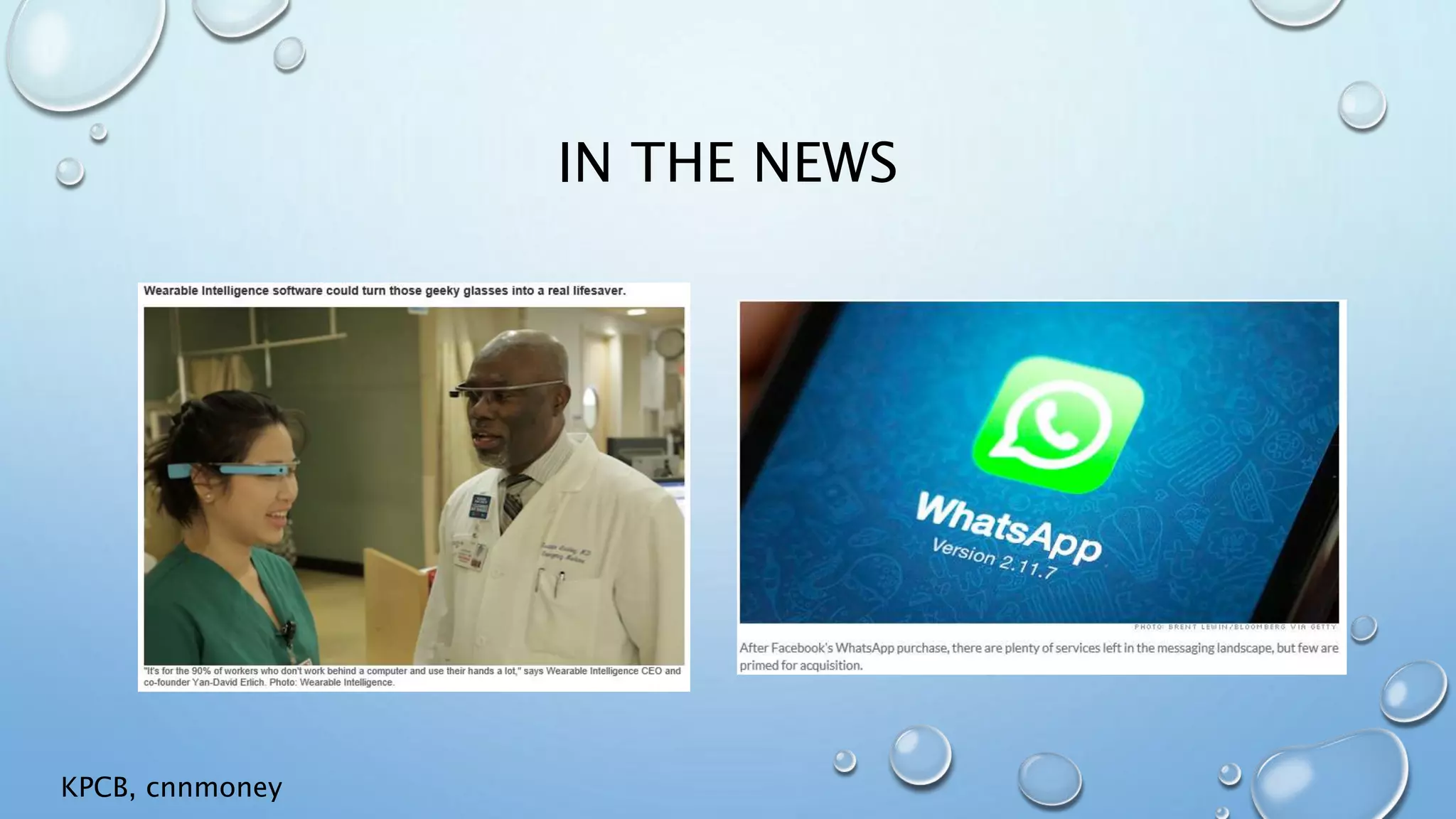
IN THE NEWS
KPCB, cnnmoney
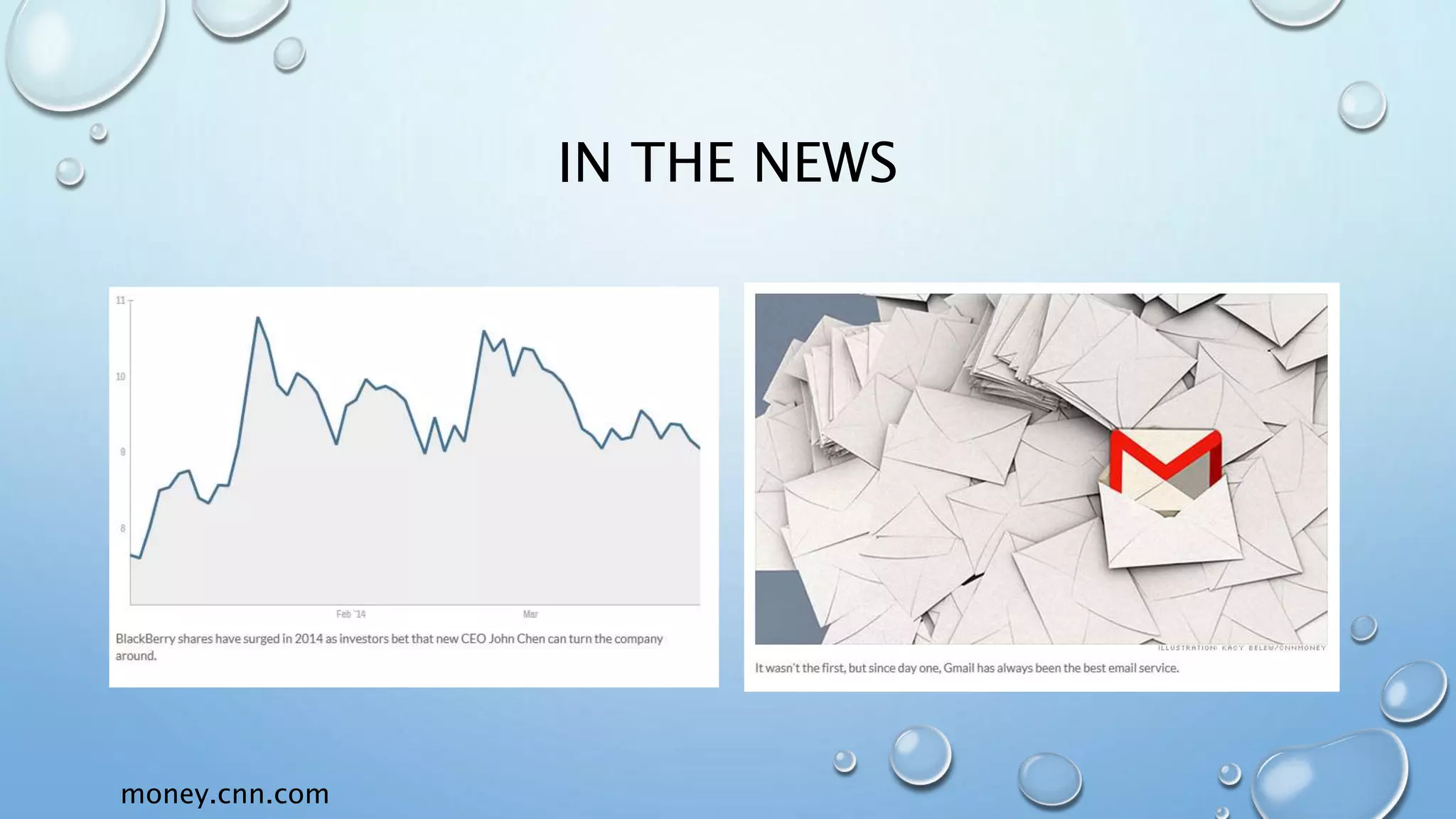
IN THE NEWS
money.cnn.com
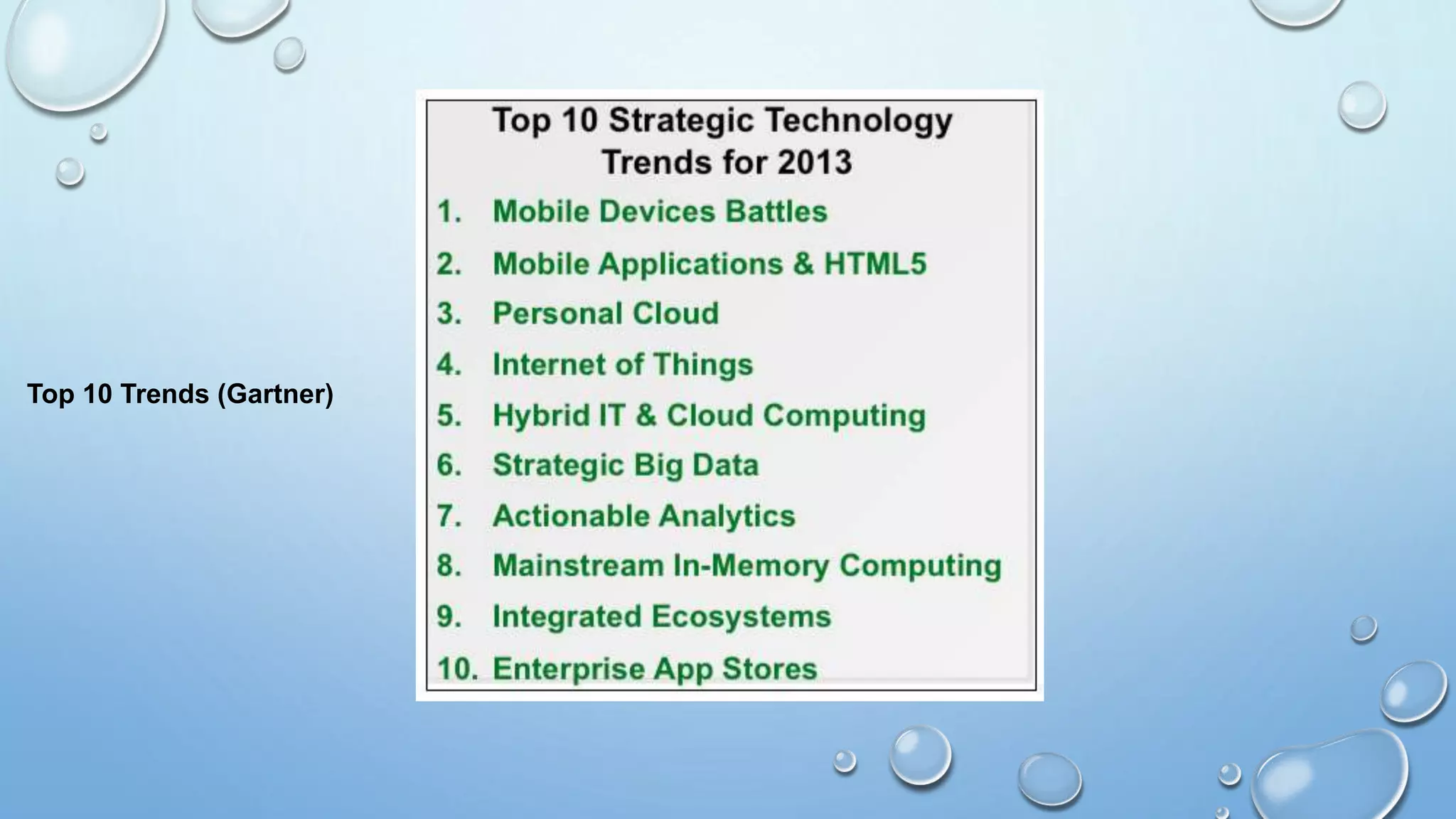
Top 10 Trends (Gartner)
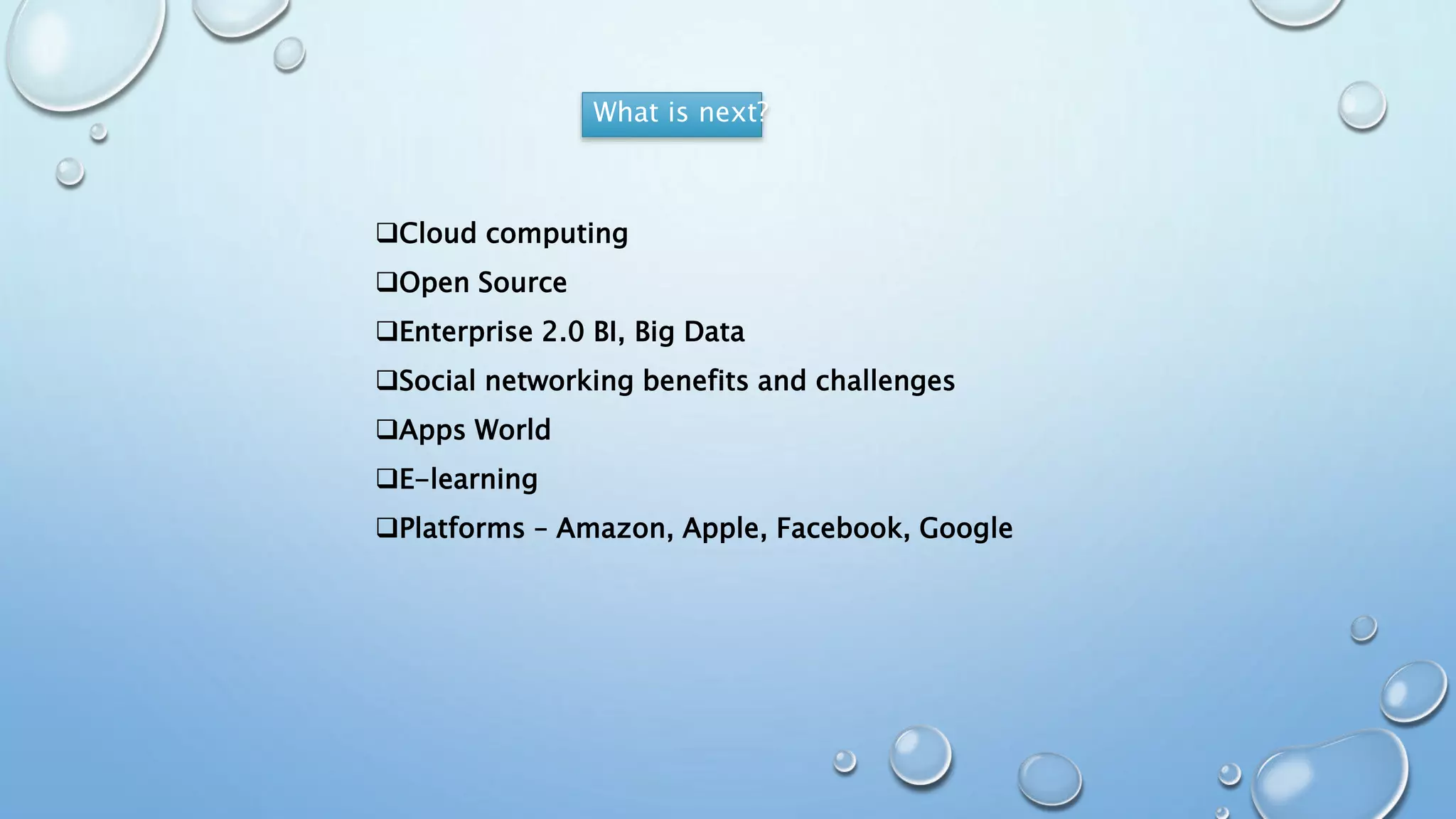
Cloud computing
Open Source
Enterprise 2.0 BI, Big Data
Social networking benefits and challenges
Apps World
E-learning
Platforms – Amazon, Apple, Facebook, Google
What is next?
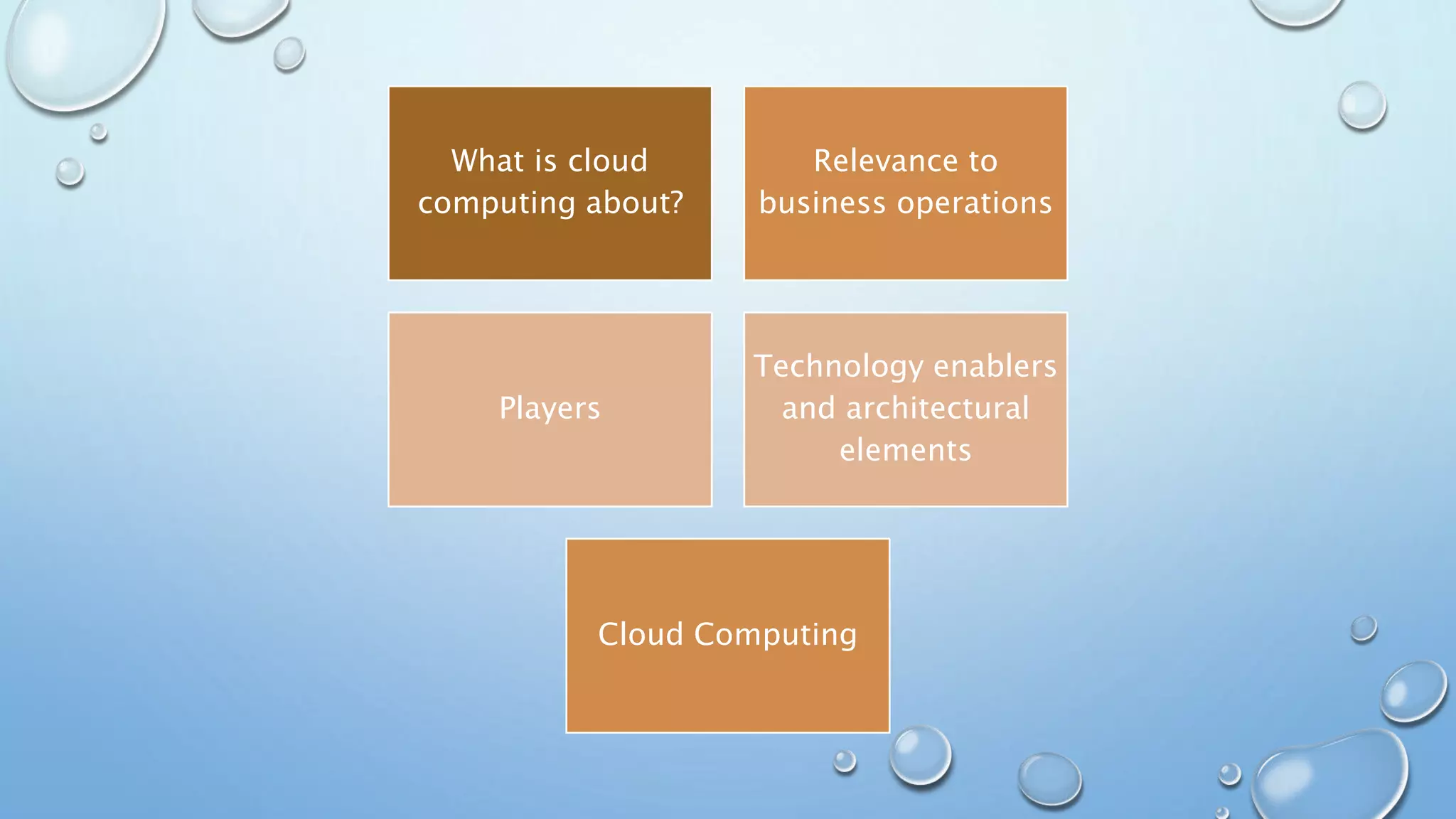
What is cloud
computing about?
Relevance to
business operations
Players
Technology enablers
and architectural
elements
Cloud Computing
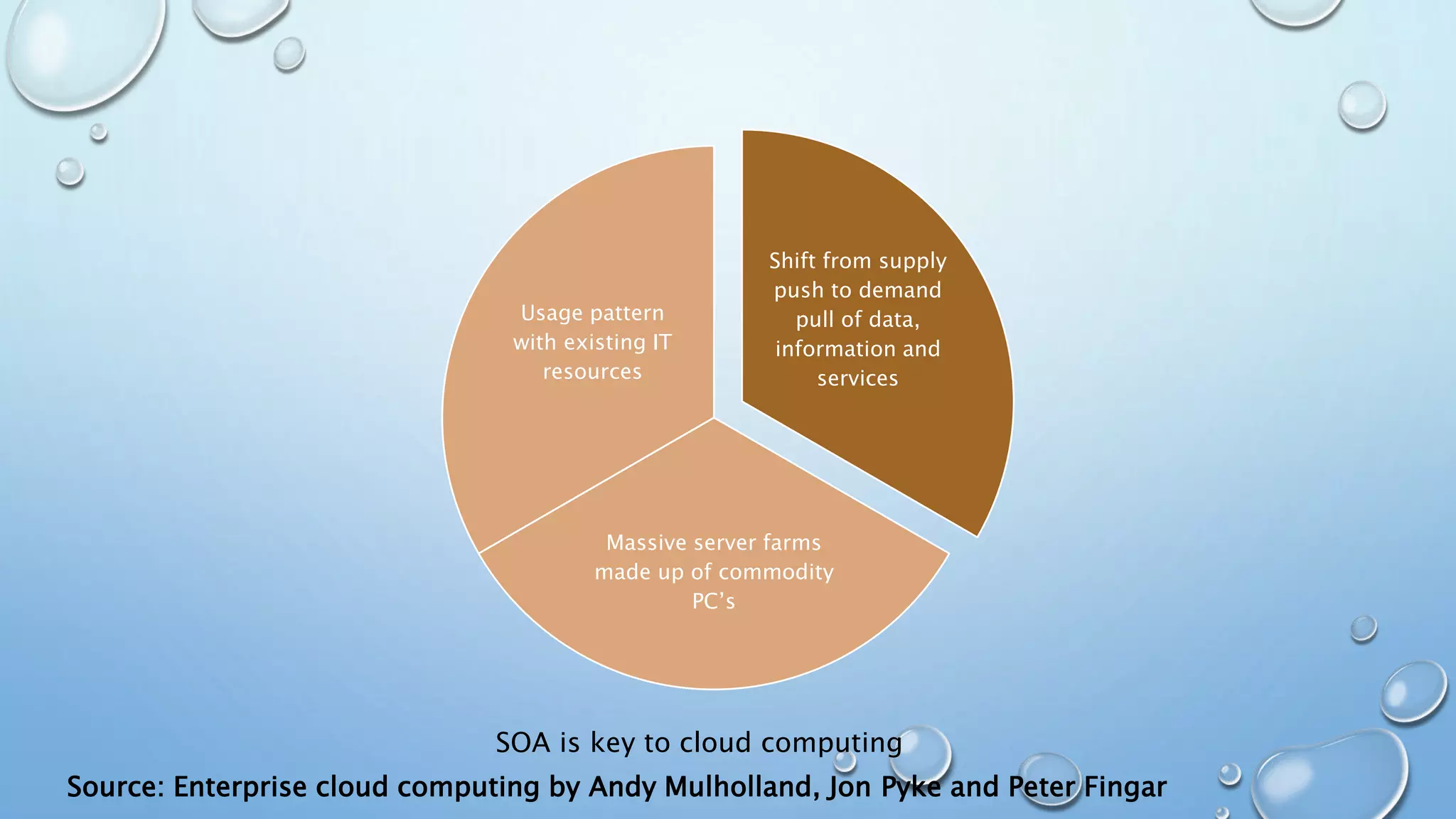
Shift from supply
push to demand
pull of data,
information and
services
Massive server farms
made up of commodity
PC’s
Usage pattern
with existing IT
resources
SOA is key to cloud computing
Source: Enterprise cloud computing by Andy Mulholland, Jon Pyke and Peter Fingar
http://www.csrc.nist.gov/groups/SNS/cloud-
computing/index.html
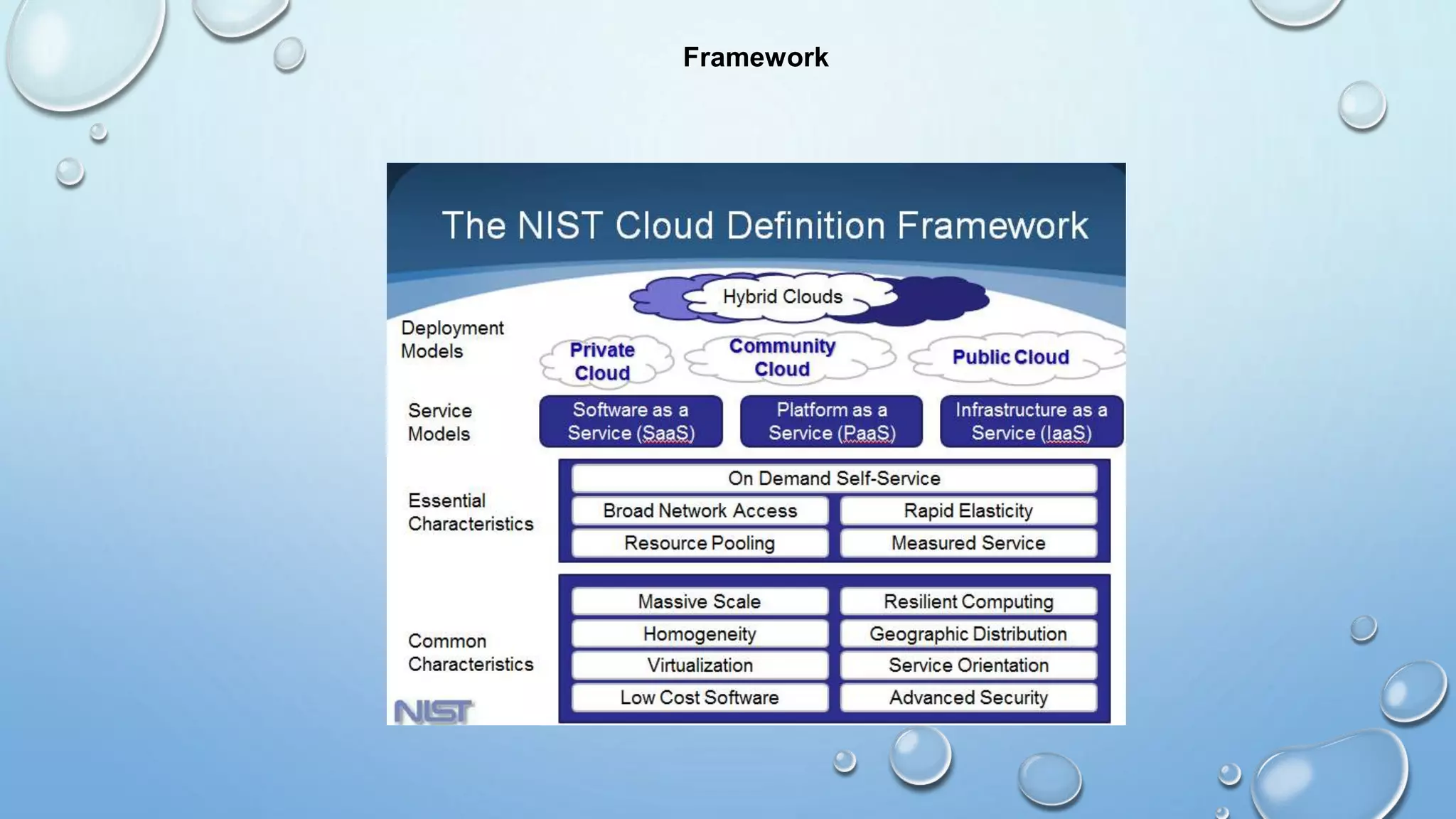
NIST Cloud Computing Framework
Access the presentation at
Framework
Applications in the Cloud
Salesforce.com growth over the
years
Virtual, collaborative learning, teaching and research
environments in the cloud
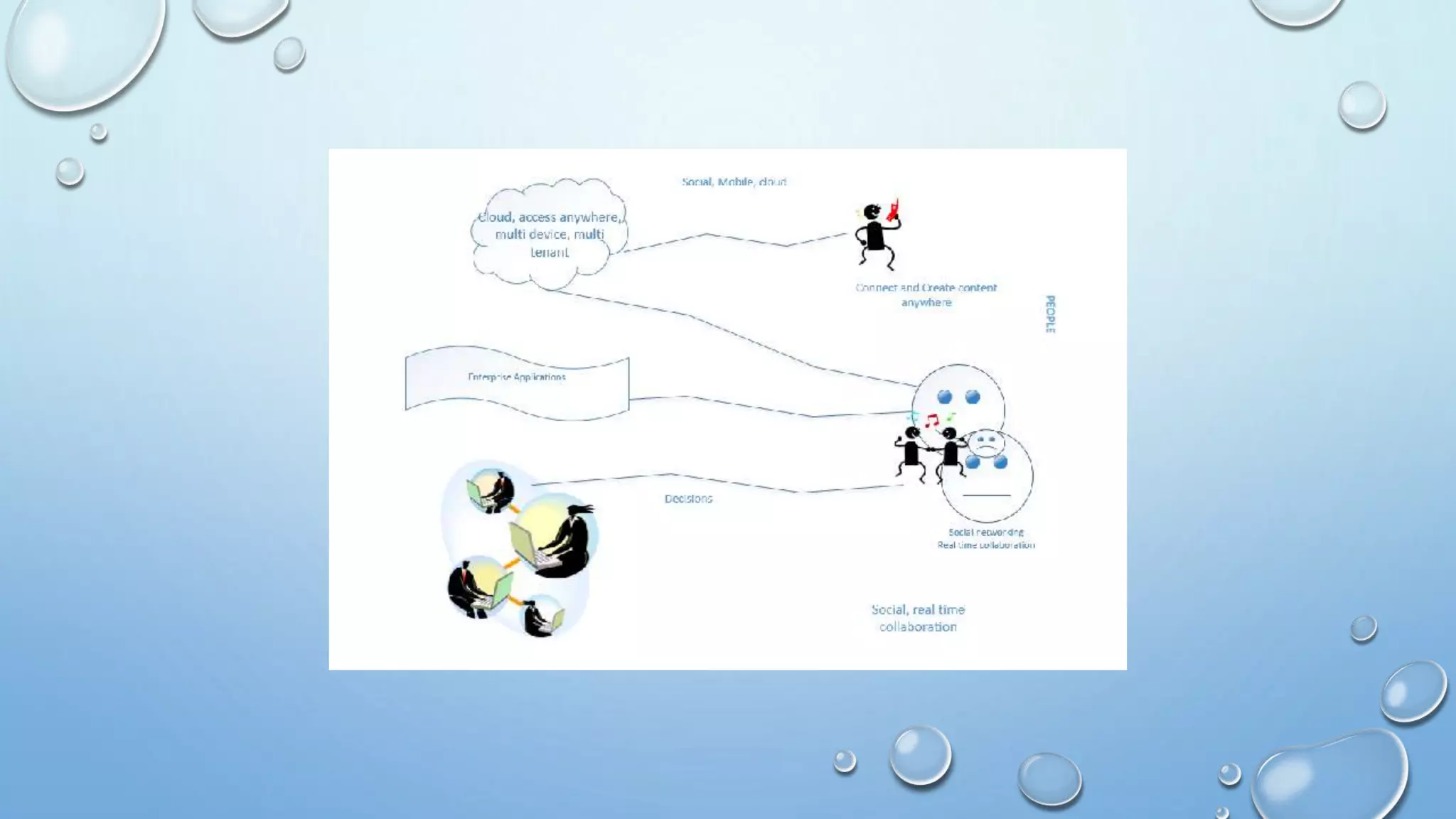
Mobile enterprise in the
cloud
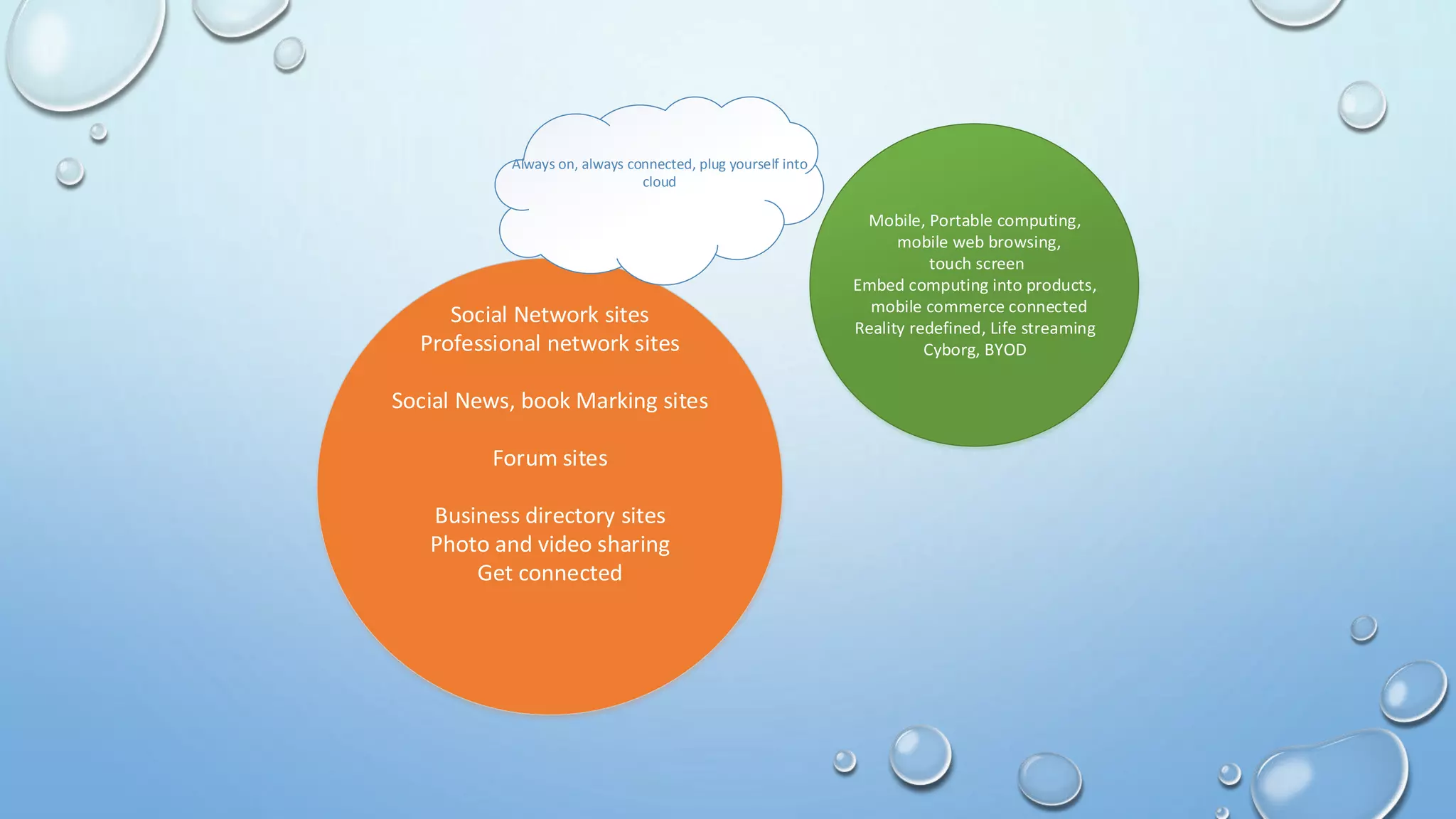
Social Network sites
Professional network sites
Social News, book Marking sites
Forum sites
Business directory sites
Photo and video sharing
Get connected
Mobile, Portable computing,
mobile web browsing,
touch screen
Embed computing into products,
mobile commerce connected
Reality redefined, Life streaming
Cyborg, BYOD
Always on, always connected, plug yourself into
cloud
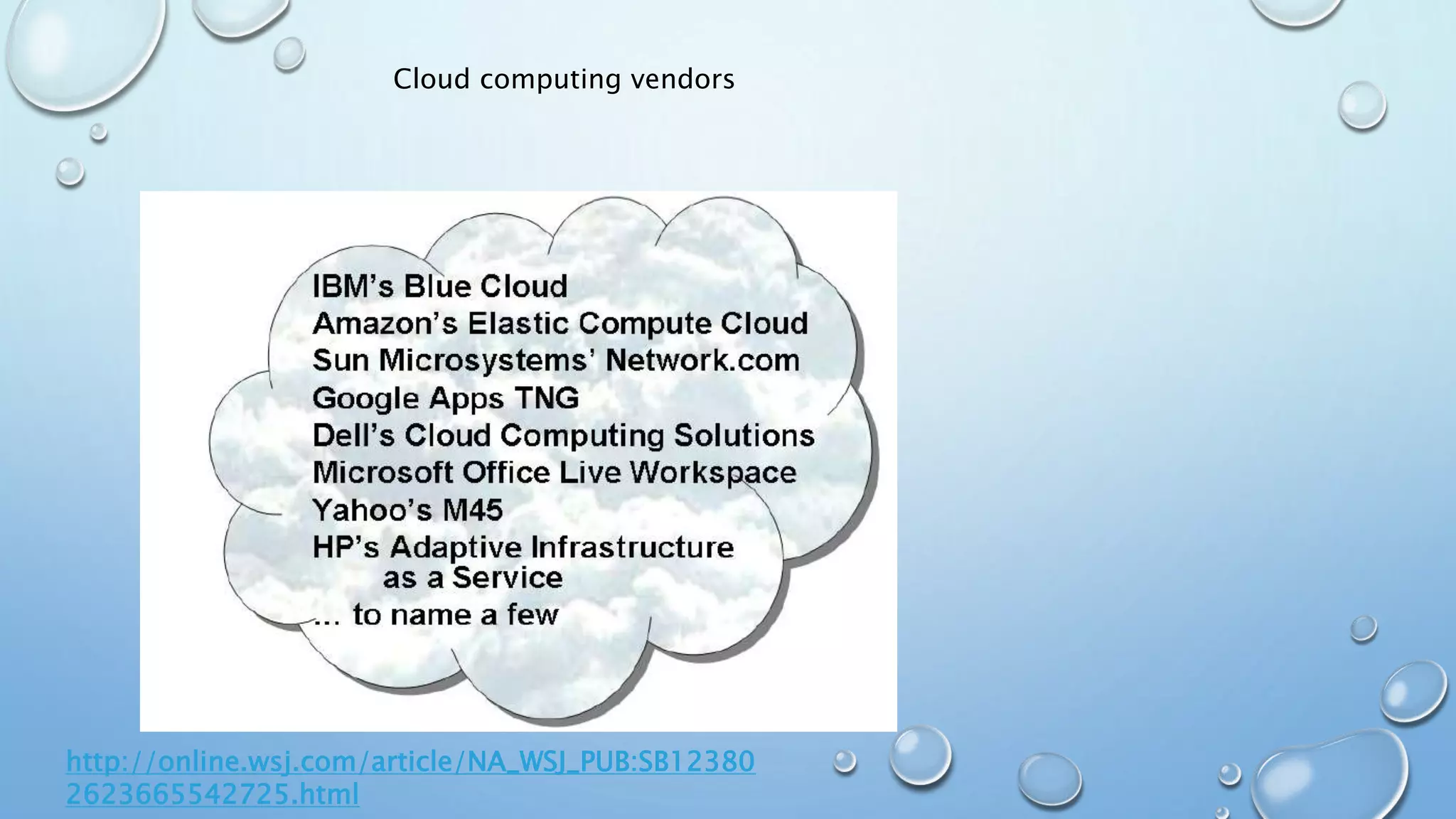
Cloud computing vendors
http://online.wsj.com/article/NA_WSJ_PUB:SB12380
2623665542725.html
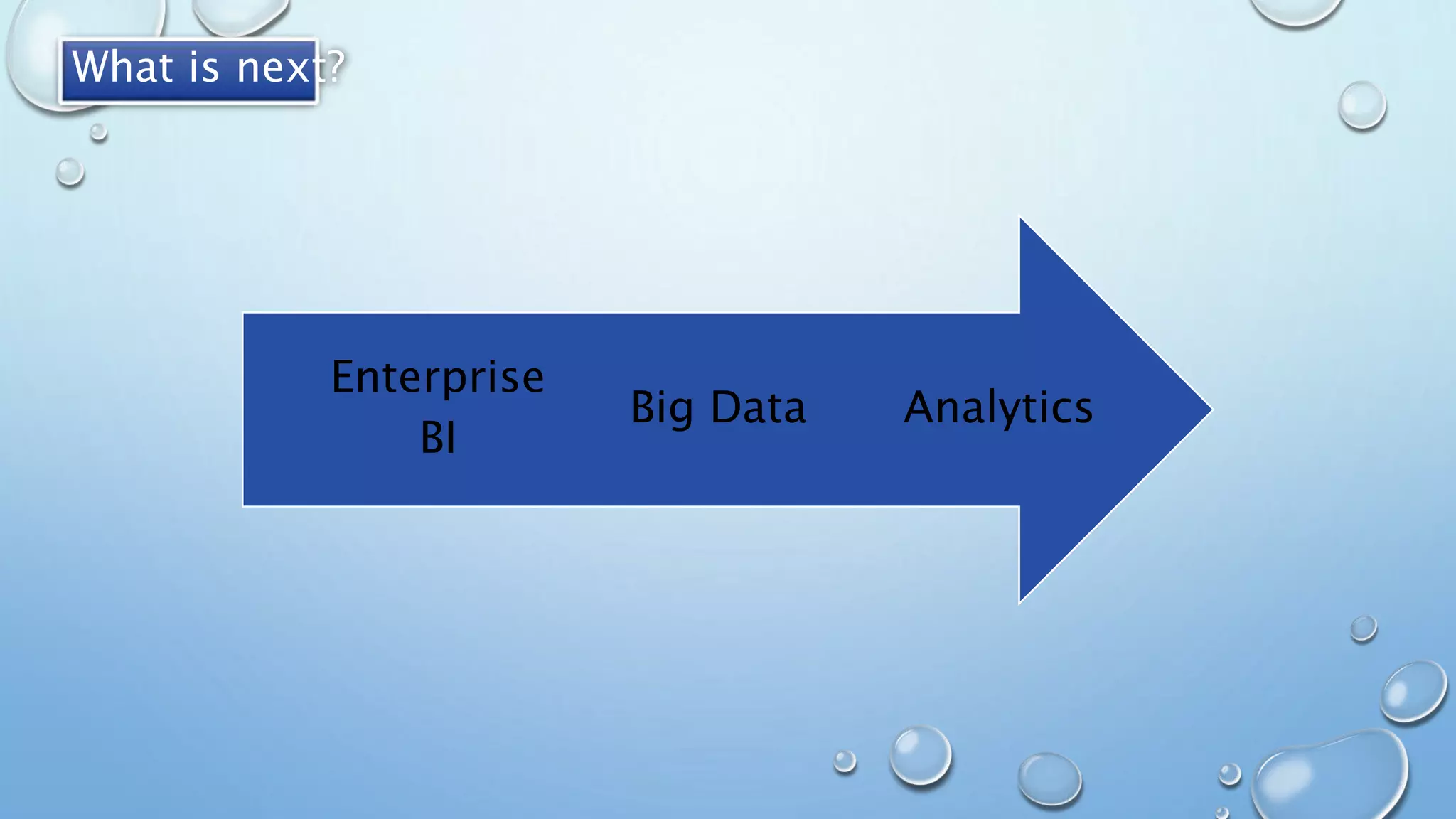
AnalyticsBig Data
Enterprise
BI
What is next?
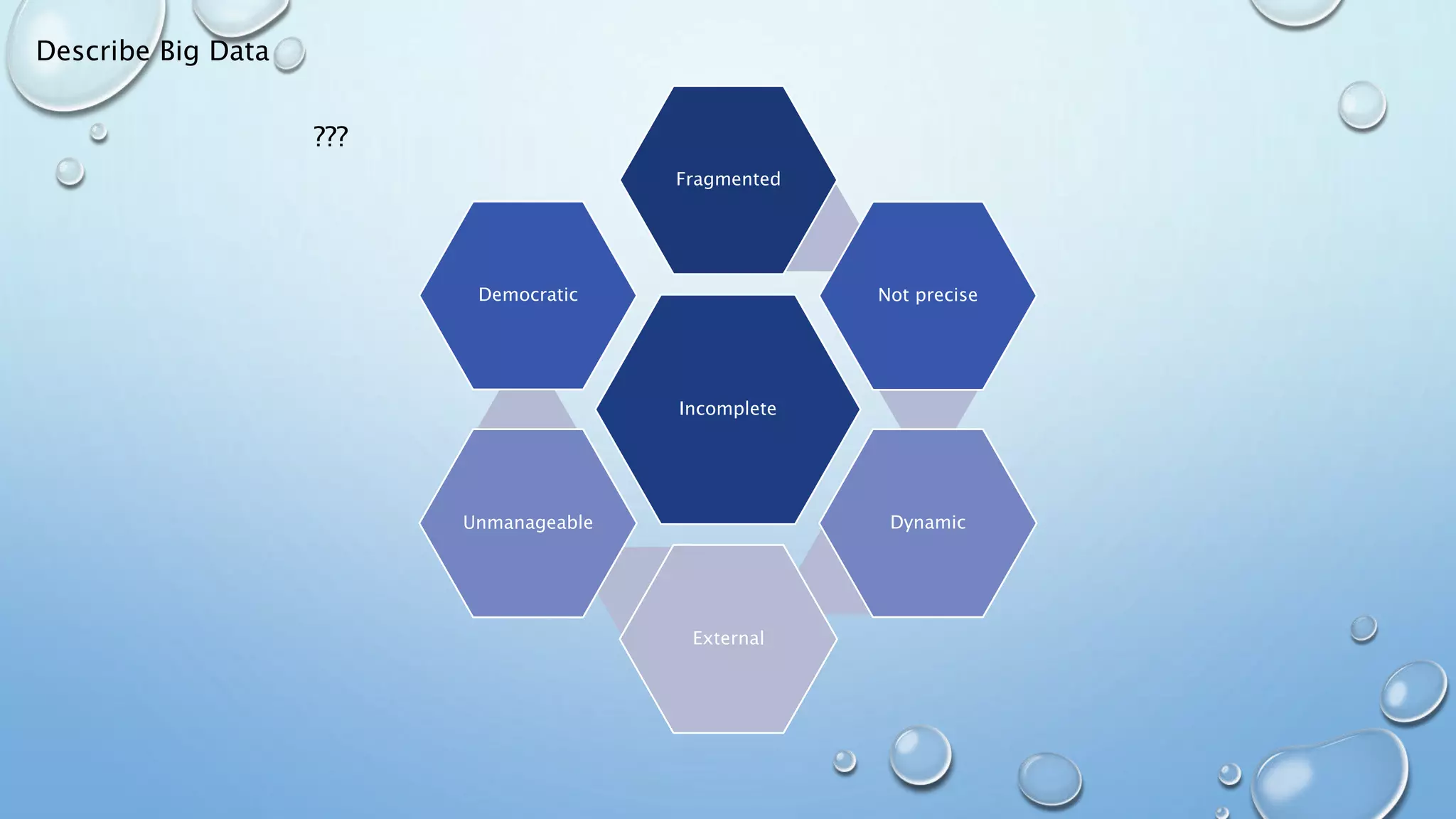
Describe Big Data
Incomplete
Fragmented
Not precise
Dynamic
External
Unmanageable
Democratic
???
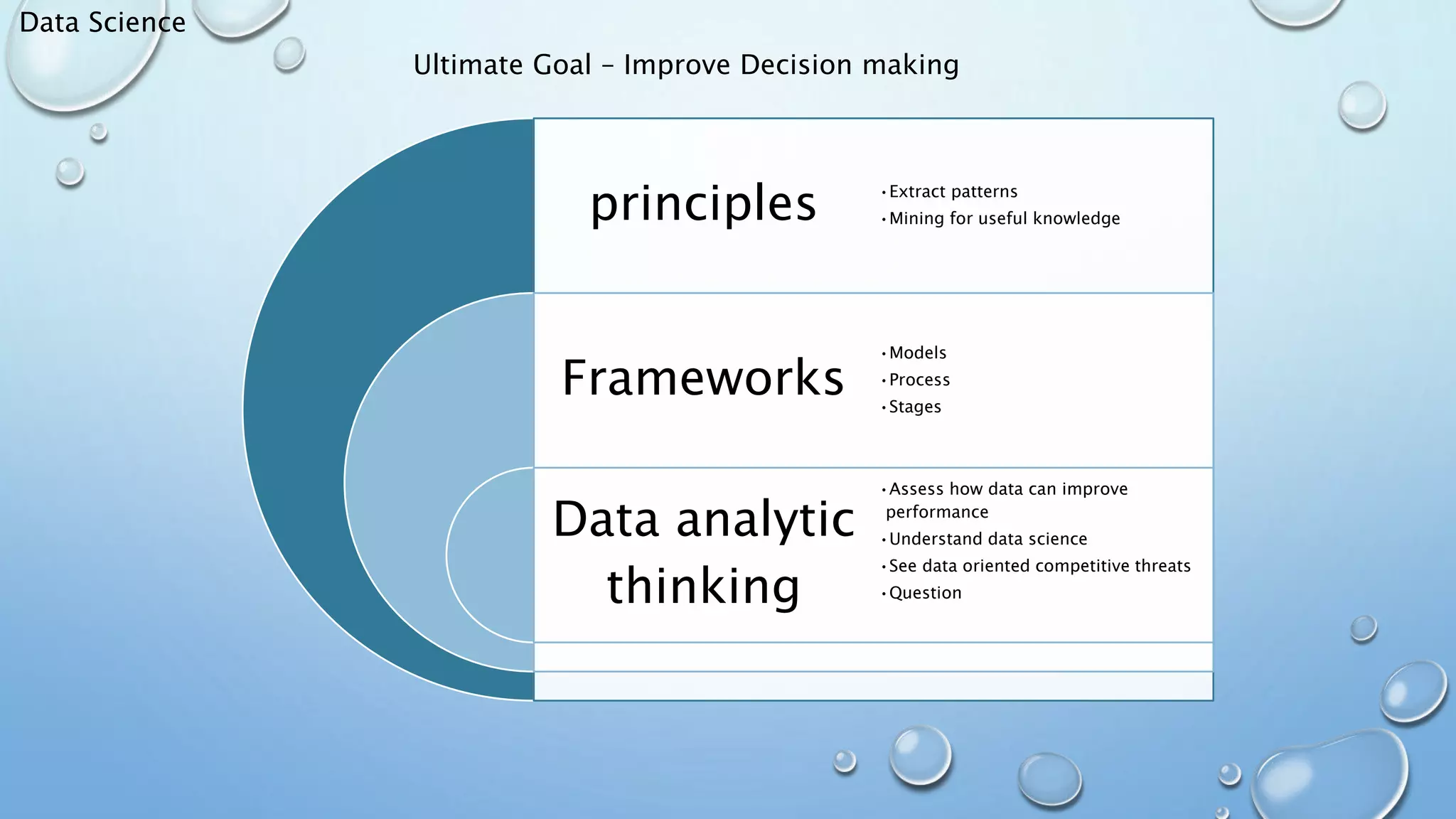
Data Science
Ultimate Goal – Improve Decision making
principles
Frameworks
Data analytic
thinking
•Extract patterns
•Mining for useful knowledge
•Models
•Process
•Stages
•Assess how data can improve
performance
•Understand data science
•See data oriented competitive threats
•Question
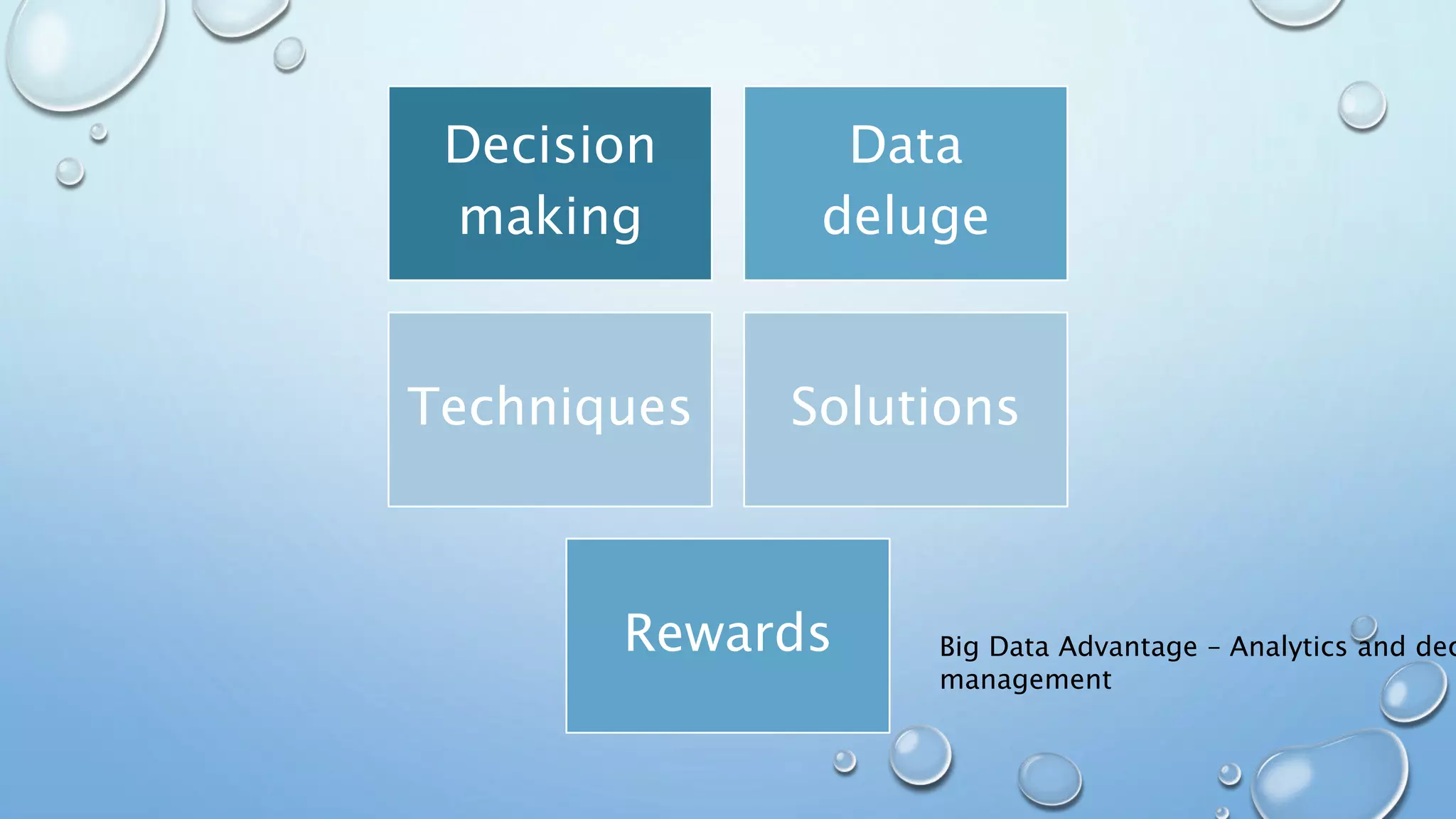
Big Data Advantage – Analytics and dec
management
Decision
making
Data
deluge
Techniques Solutions
Rewards
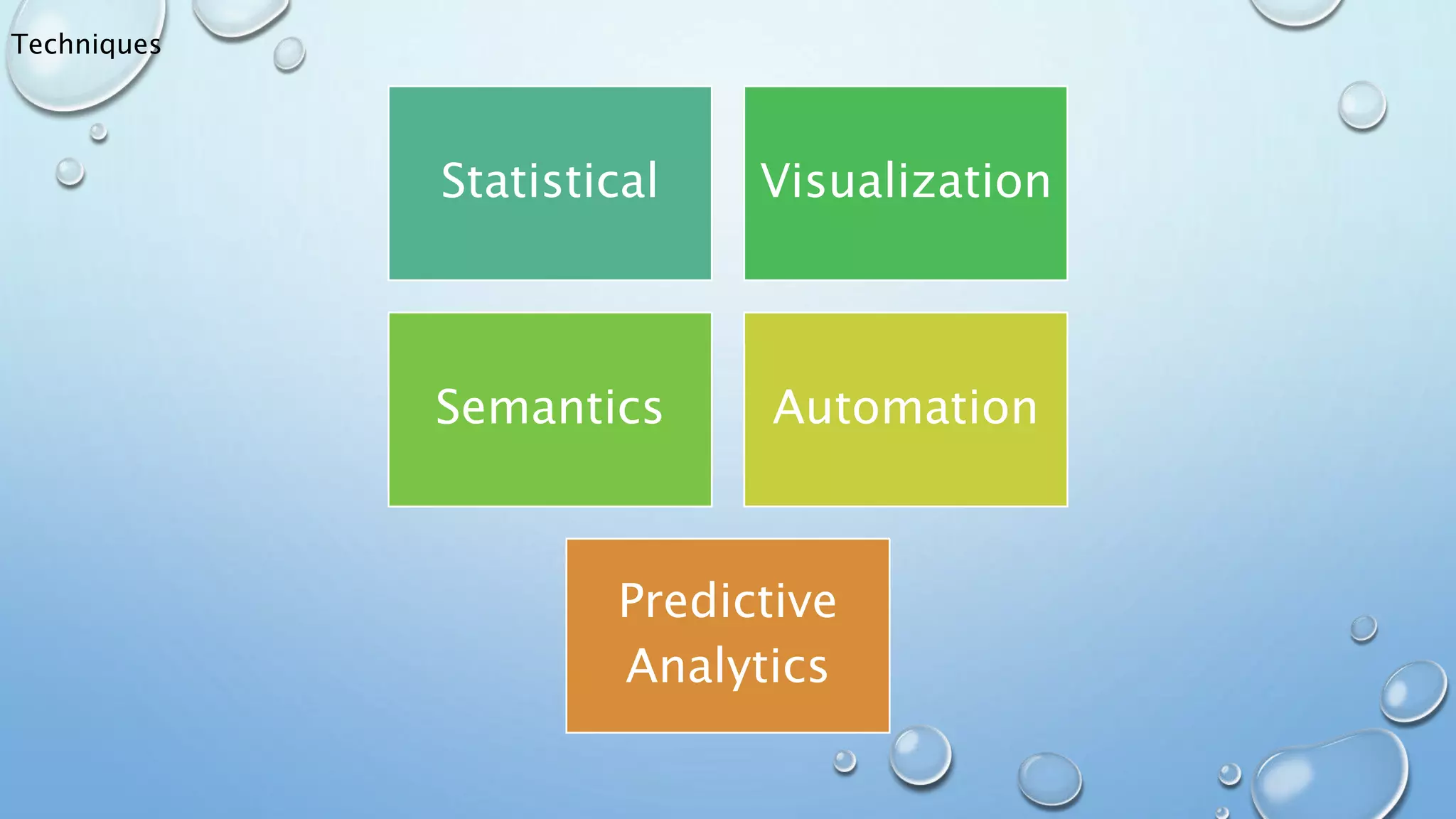
Techniques
Statistical Visualization
Semantics Automation
Predictive
Analytics
Plunge
Issues
Problems
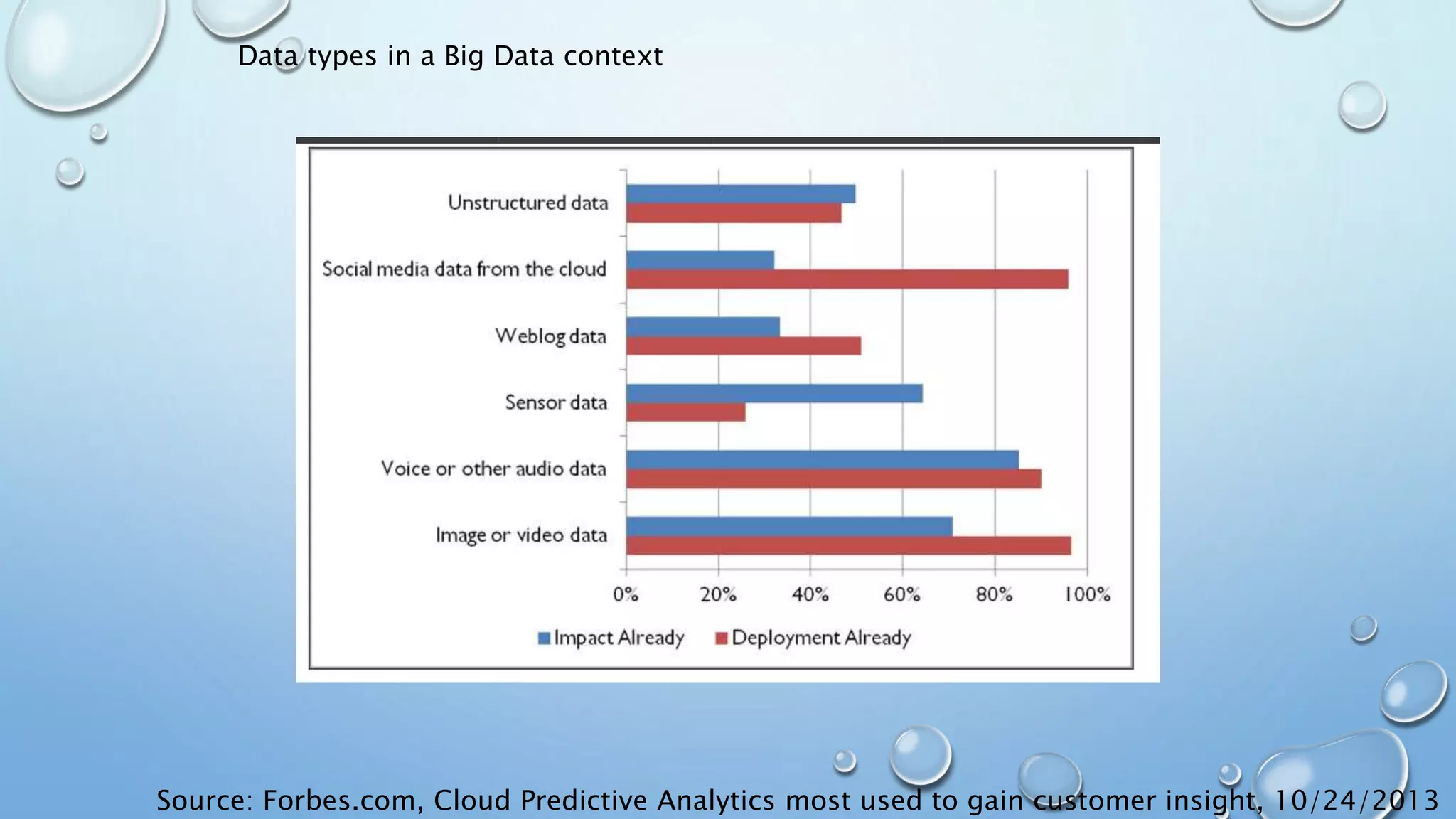
Source: Forbes.com, Cloud Predictive Analytics most used to gain customer insight, 10/24/2013
Data types in a Big Data context
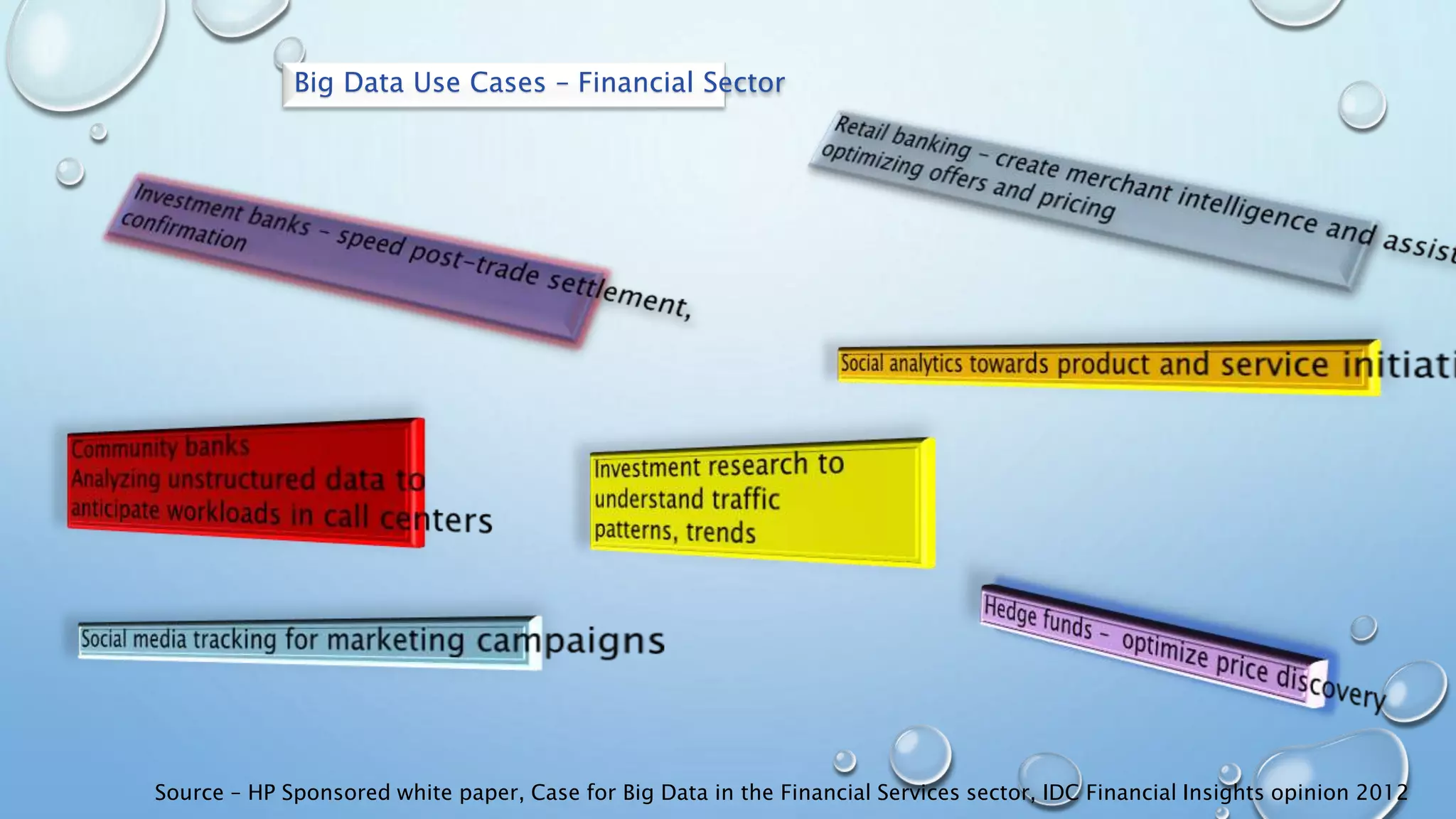
Big Data Use Cases – Financial Sector
Source – HP Sponsored white paper, Case for Big Data in the Financial Services sector, IDC Financial Insights opinion 2012
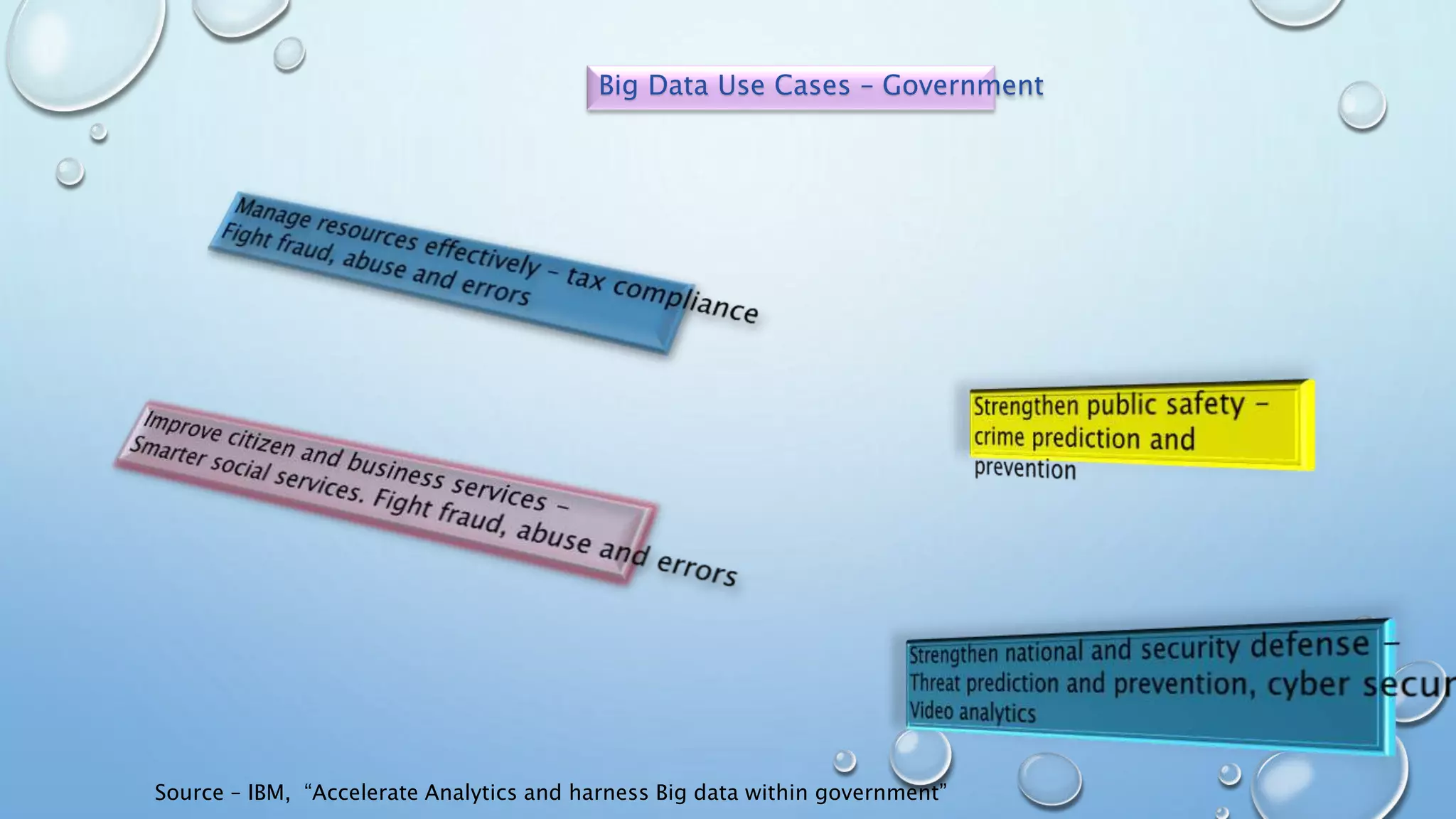
Big Data Use Cases – Government
Source – IBM, “Accelerate Analytics and harness Big data within government”
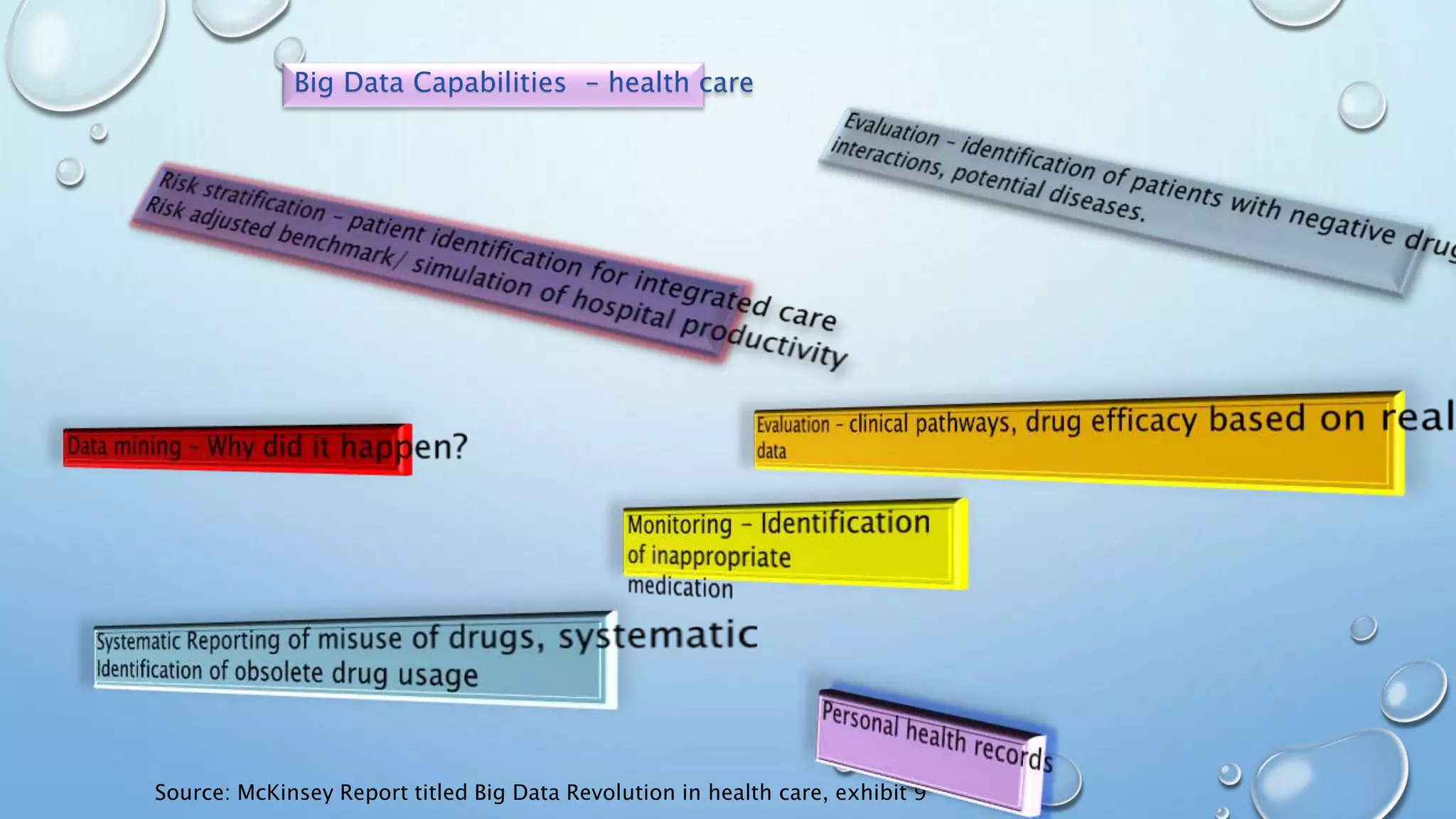
Big Data Capabilities – health care
Source: McKinsey Report titled Big Data Revolution in health care, exhibit 9
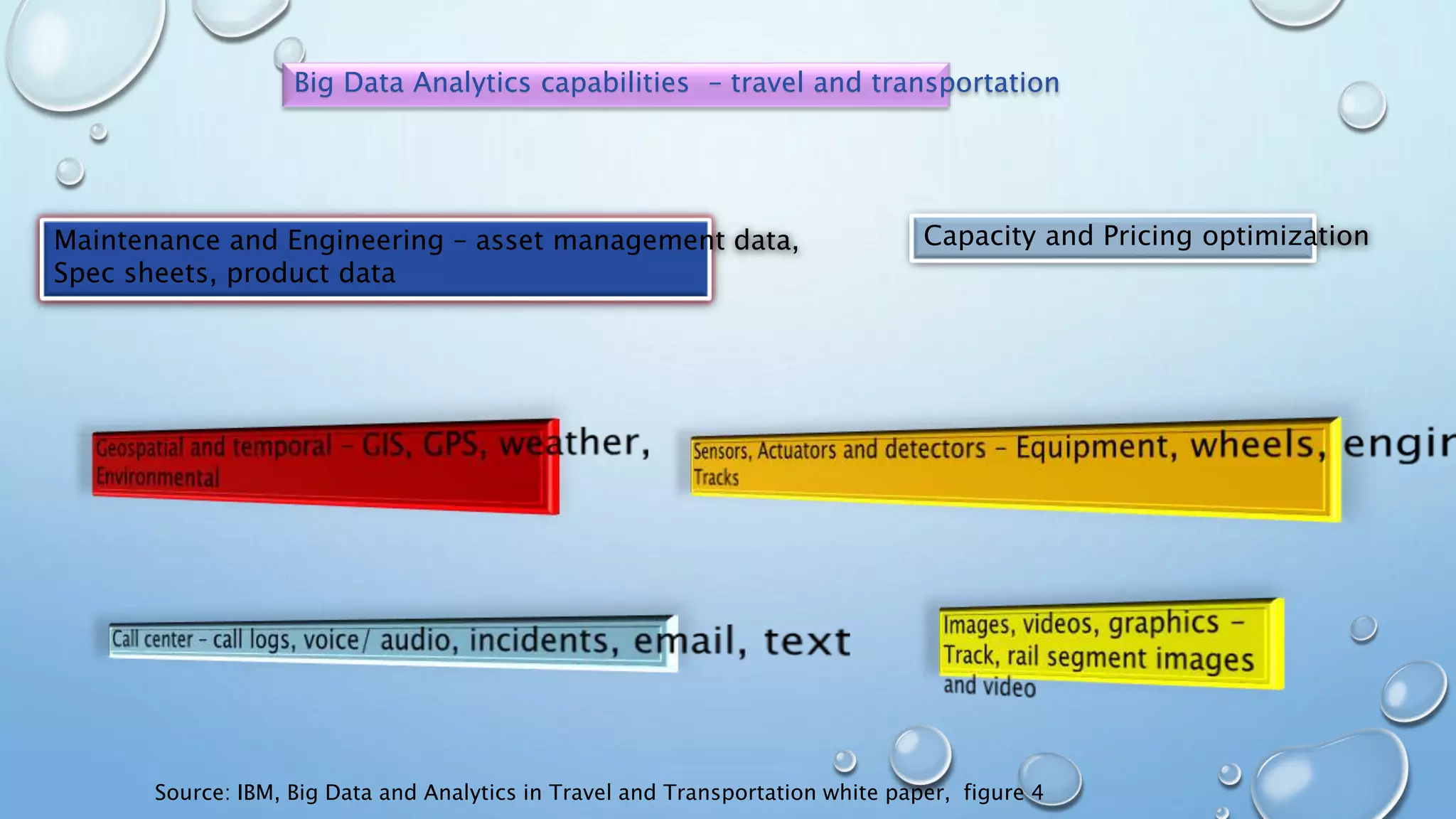
Big Data Analytics capabilities – travel and transportation
Source: IBM, Big Data and Analytics in Travel and Transportation white paper, figure 4
Maintenance and Engineering – asset management data,
Spec sheets, product data
Capacity and Pricing optimization
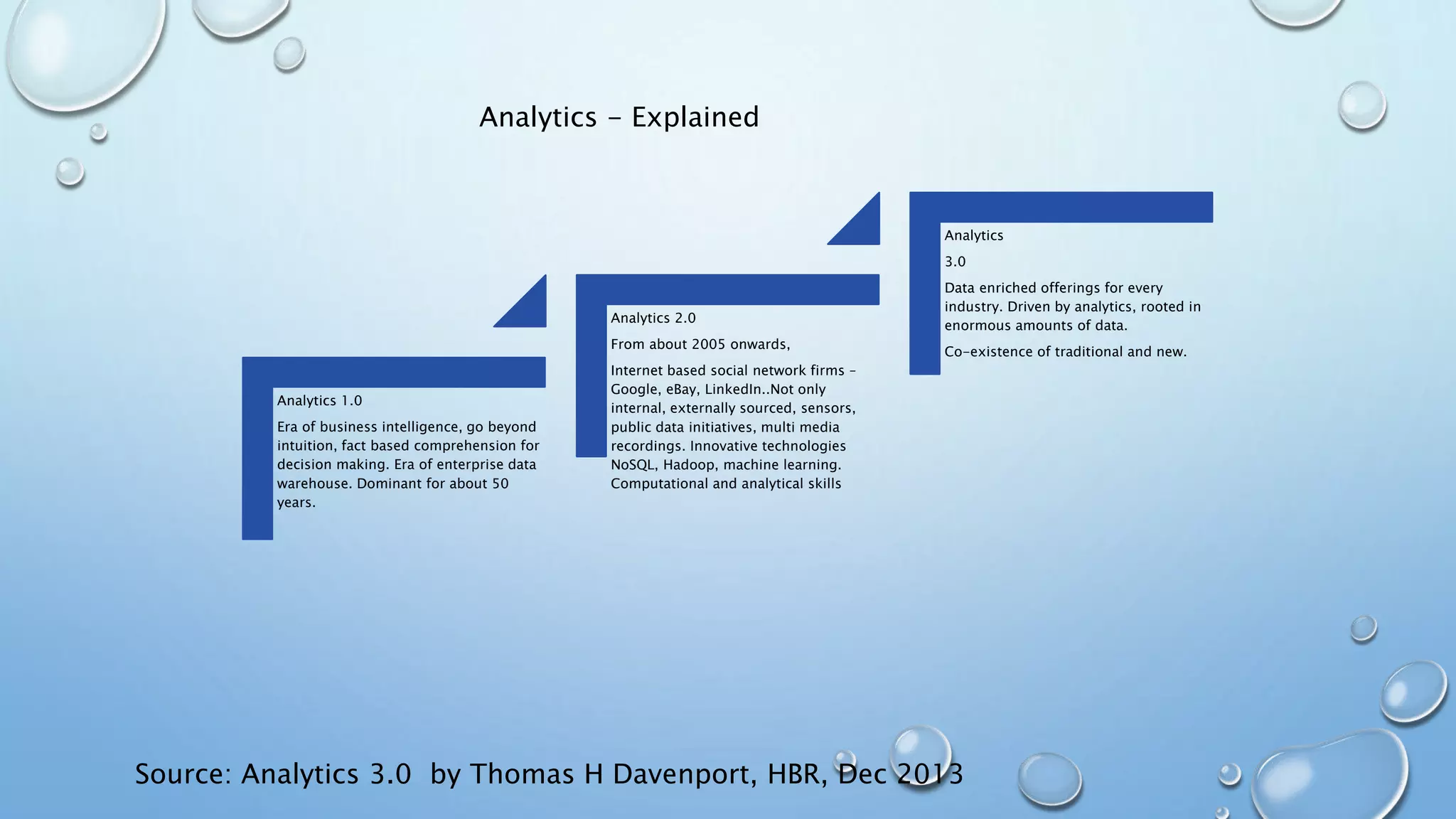
Analytics - Explained
Source: Analytics 3.0 by Thomas H Davenport, HBR, Dec 2013
Analytics 1.0
Era of business intelligence, go beyond
intuition, fact based comprehension for
decision making. Era of enterprise data
warehouse. Dominant for about 50
years.
Analytics 2.0
From about 2005 onwards,
Internet based social network firms –
Google, eBay, LinkedIn..Not only
internal, externally sourced, sensors,
public data initiatives, multi media
recordings. Innovative technologies
NoSQL, Hadoop, machine learning.
Computational and analytical skills
Analytics
3.0
Data enriched offerings for every
industry. Driven by analytics, rooted in
enormous amounts of data.
Co-existence of traditional and new.
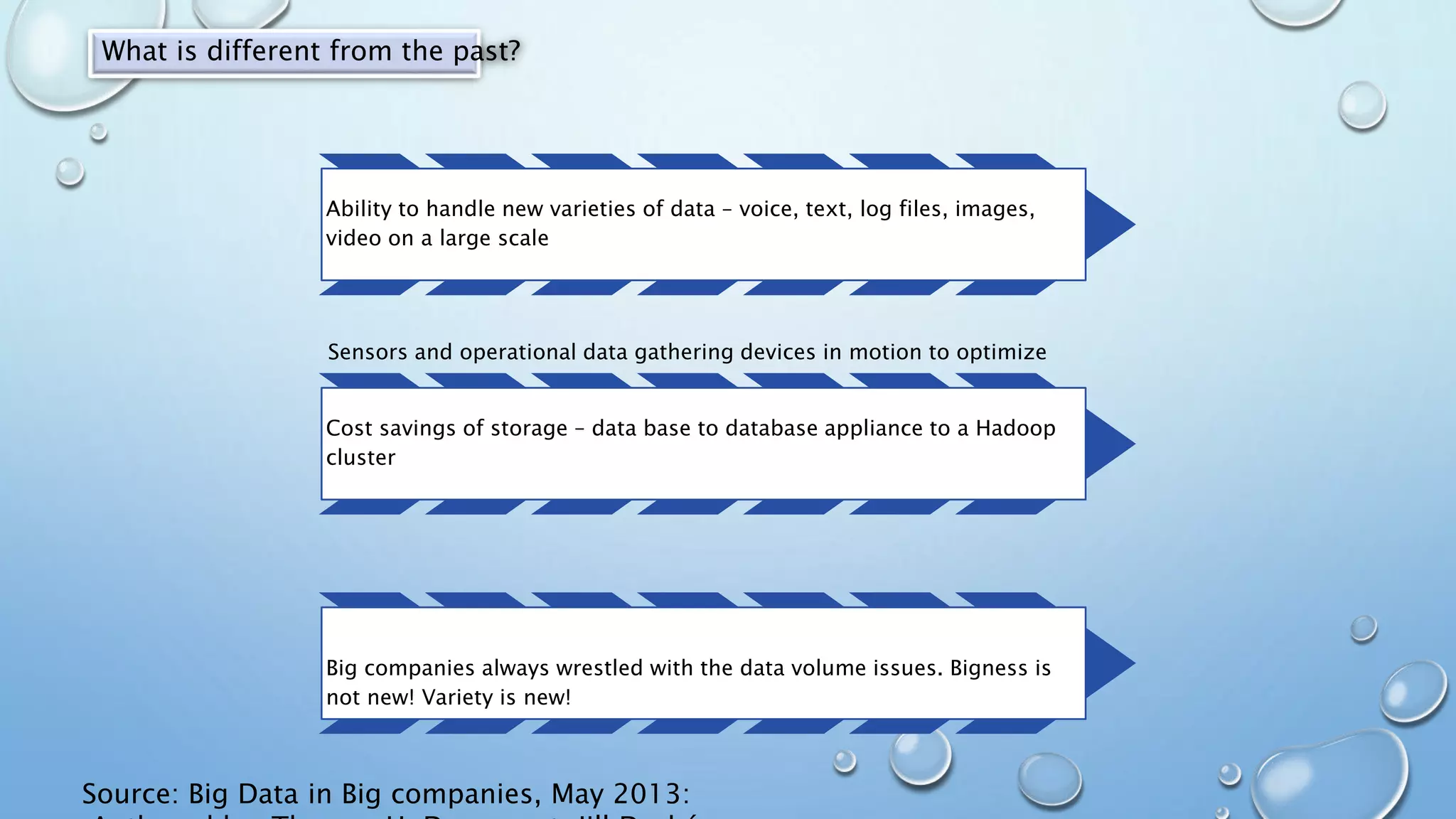
Ability to handle new varieties of data – voice, text, log files, images,
video on a large scale
Sensors and operational data gathering devices in motion to optimize
Cost savings of storage – data base to database appliance to a Hadoop
cluster
Big companies always wrestled with the data volume issues. Bigness is
not new! Variety is new!
What is different from the past?
Source: Big Data in Big companies, May 2013:
Networked
Enterprise
OfEvolution
What is next?
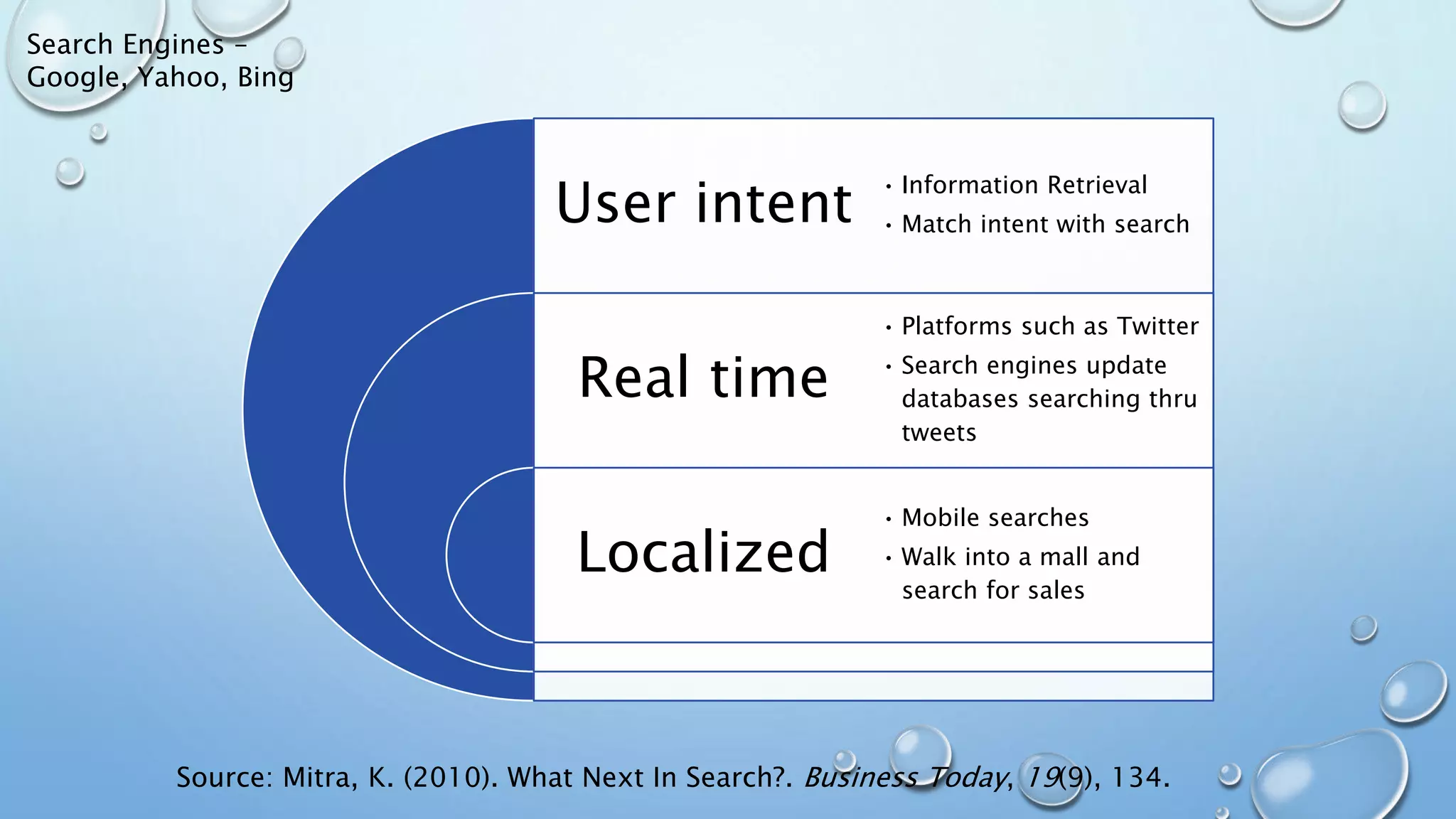
Search Engines –
Google, Yahoo, Bing
Source: Mitra, K. (2010). What Next In Search?. Business Today, 19(9), 134.
User intent
Real time
Localized
• Information Retrieval
• Match intent with search
• Platforms such as Twitter
• Search engines update
databases searching thru
tweets
• Mobile searches
• Walk into a mall and
search for sales
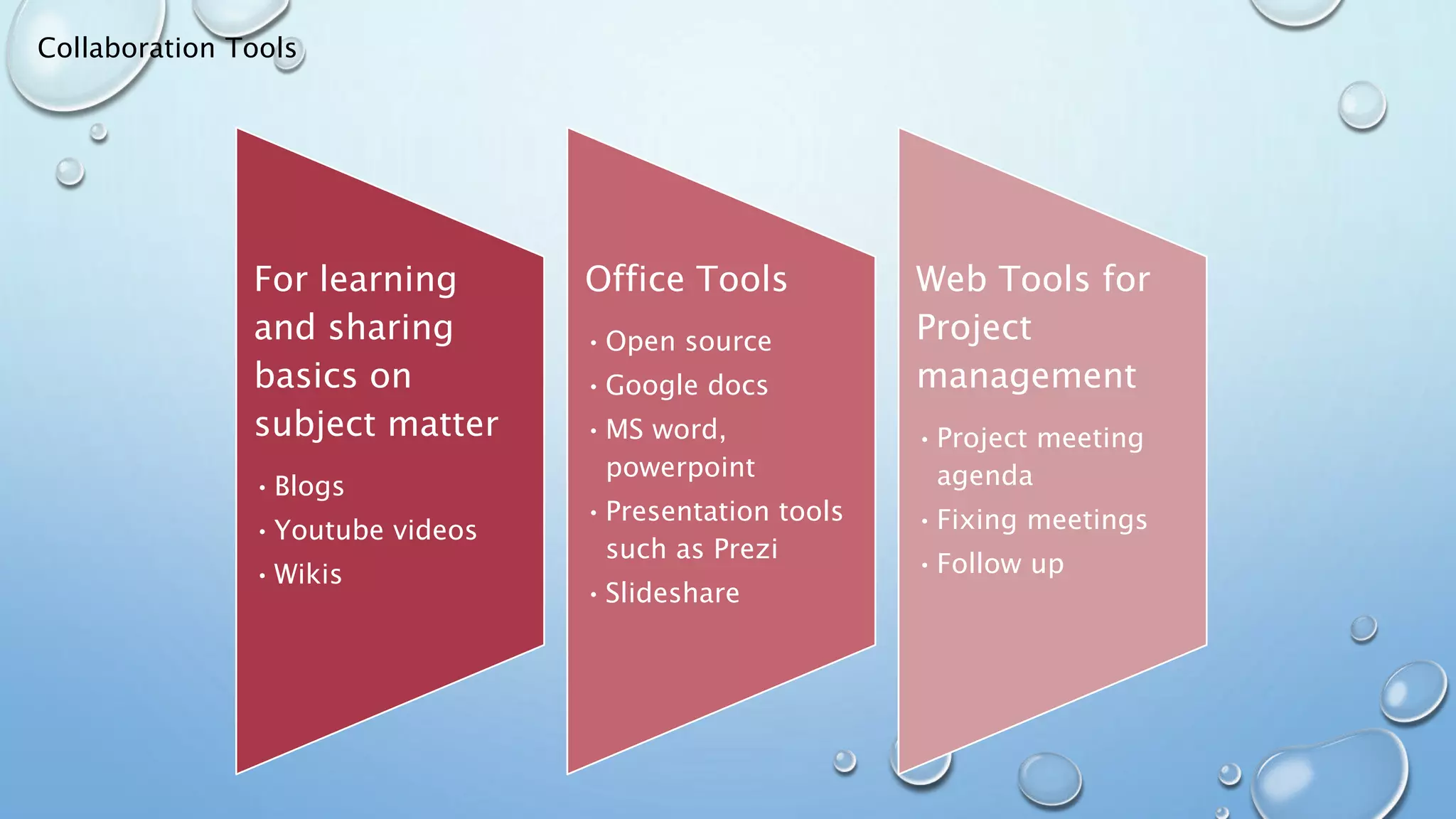
Collaboration Tools
For learning
and sharing
basics on
subject matter
•Blogs
•Youtube videos
•Wikis
Office Tools
•Open source
•Google docs
•MS word,
powerpoint
•Presentation tools
such as Prezi
•Slideshare
Web Tools for
Project
management
•Project meeting
agenda
•Fixing meetings
•Follow up
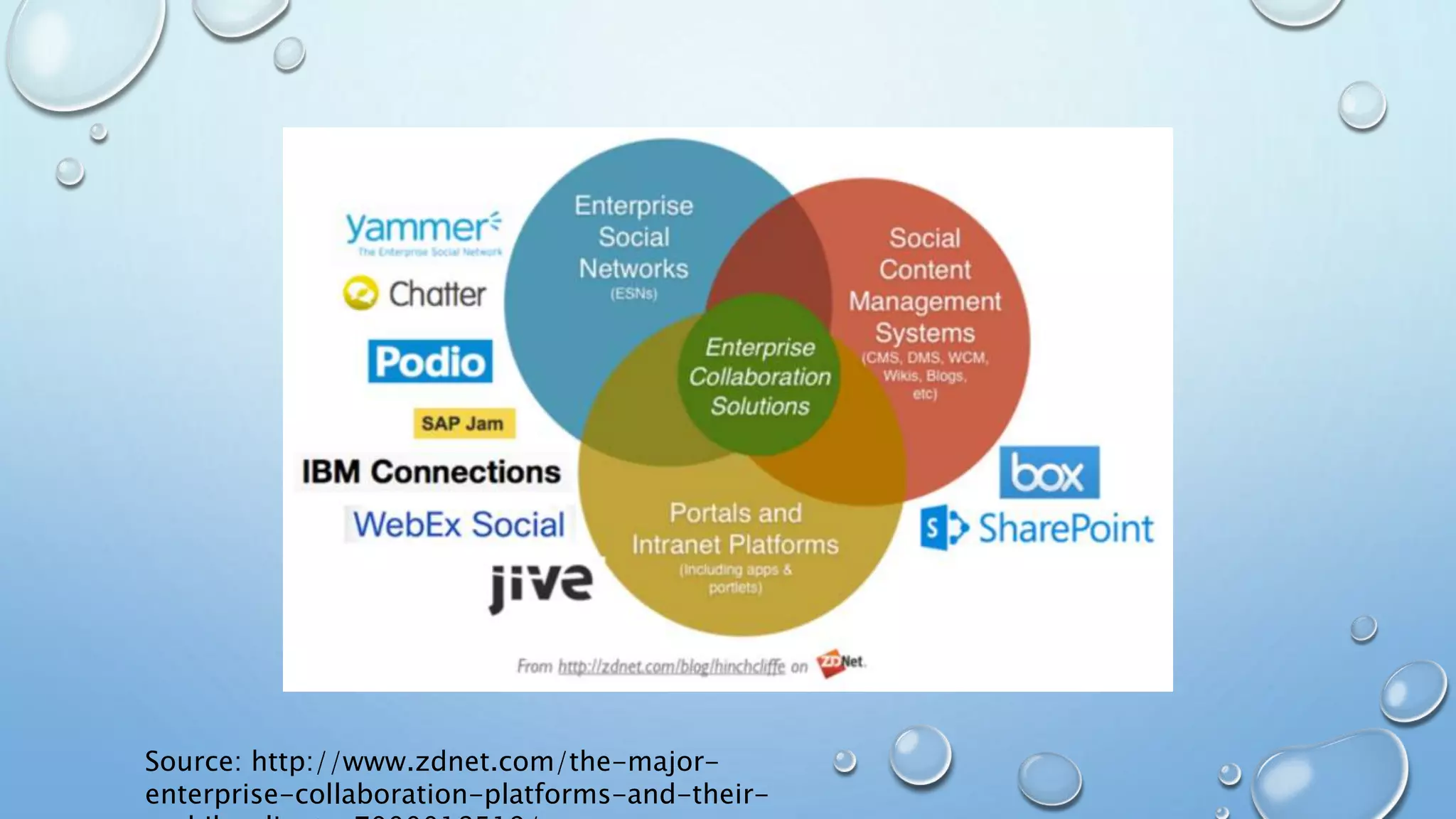
Source: http://www.zdnet.com/the-major-
enterprise-collaboration-platforms-and-their-
Corporate Portals
Re-imagine
Re-imagine knowledge Services and functionality
in a framework
e-document management systems,
exchanges for content,
database management systems,
data warehouse,
communities of practices
social communities of interest
individual communities of interest
Re-imagine organizing around this knowledge
exchange
Re-imagine innovations, competitiveness with
know-how
Source: http://socialmediatoday.com/soravjain/195917/40-most-popular-social-networking-si
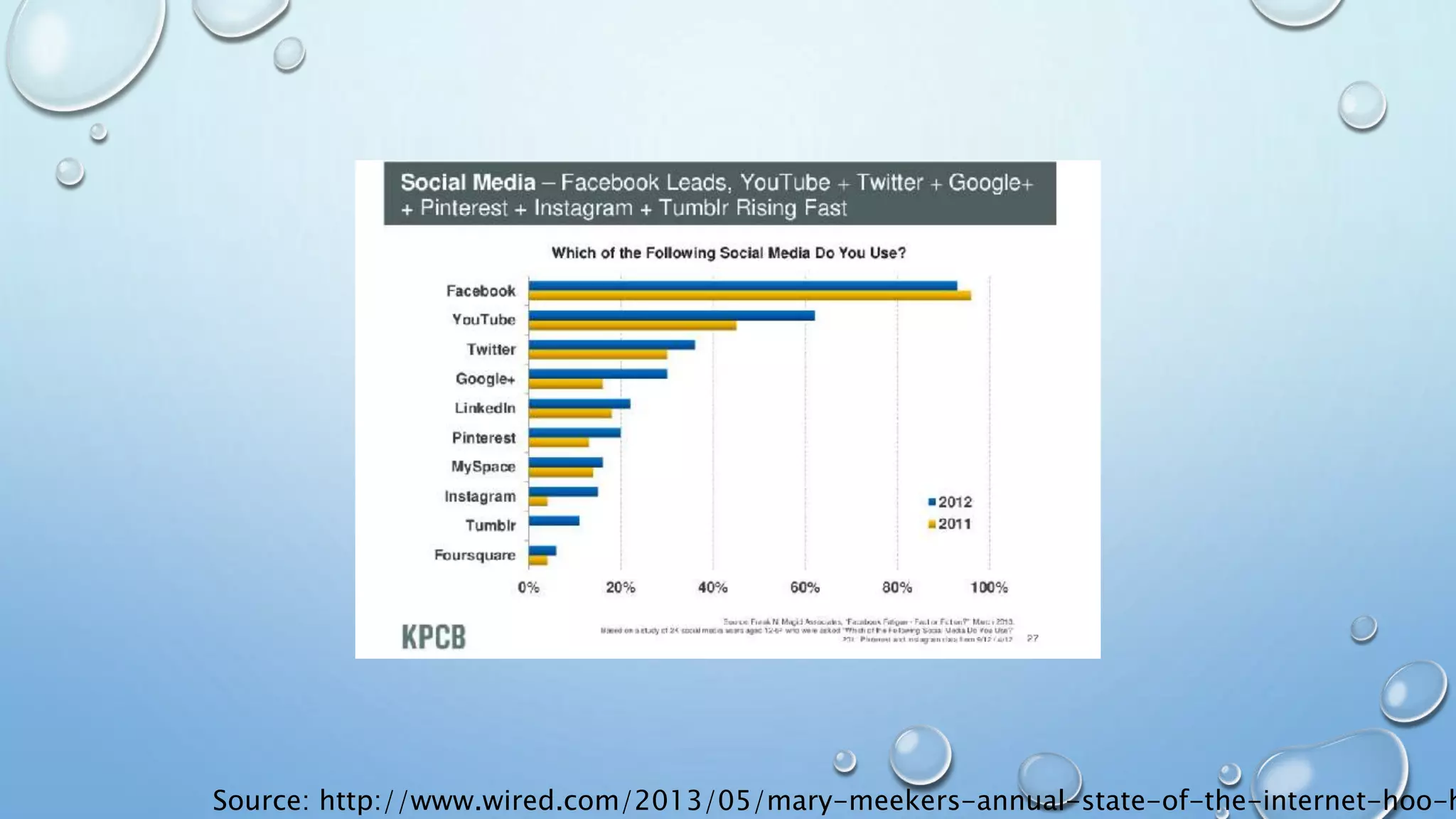
Source: http://www.wired.com/2013/05/mary-meekers-annual-state-of-the-internet-hoo-h
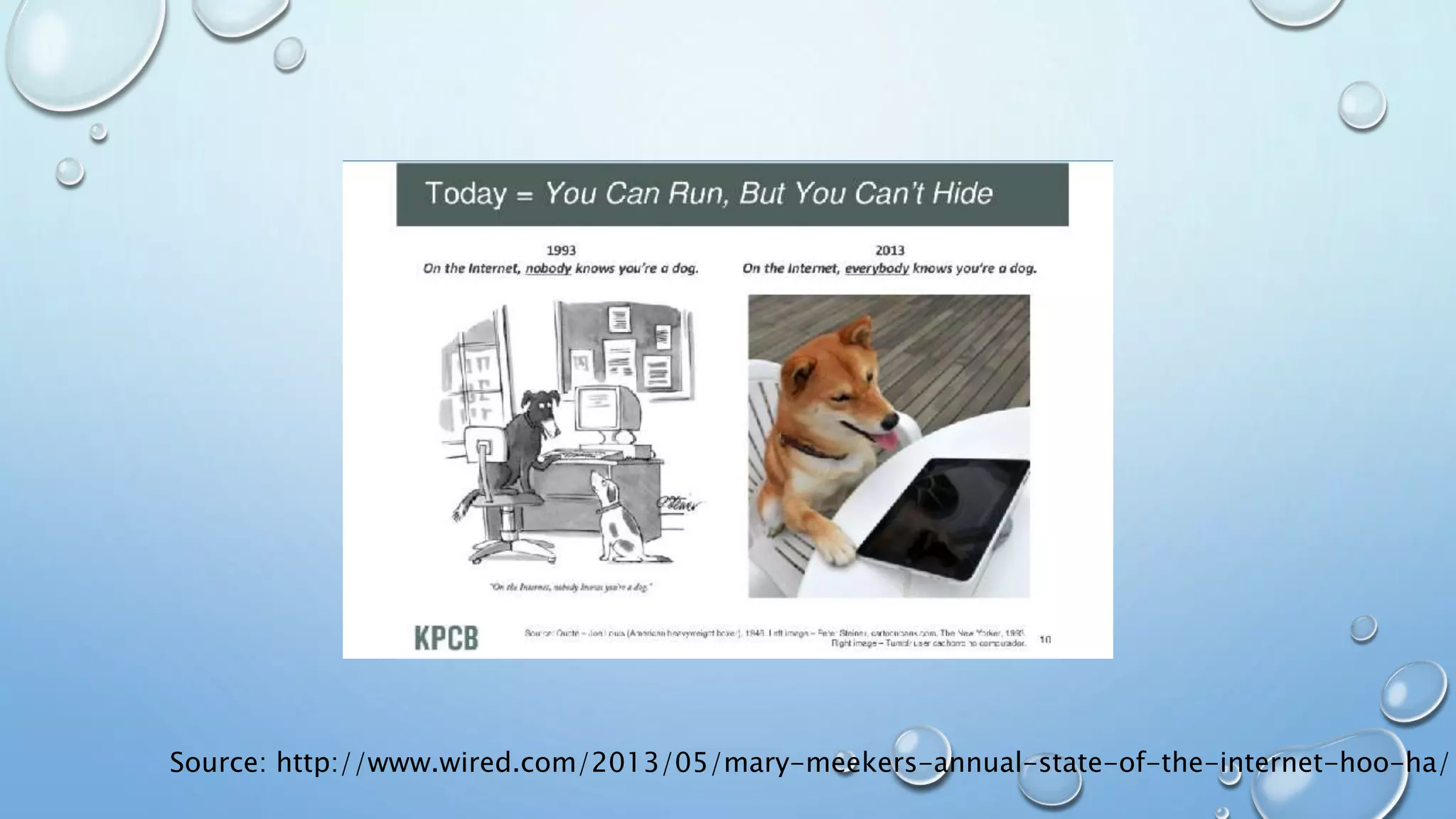
Source: http://www.wired.com/2013/05/mary-meekers-annual-state-of-the-internet-hoo-ha/
WorldApps
What is next?
Apps for everything?
First, some reflections
Procter & Gamble's Oral B smartphone connected
toothbrush - expect in the market soon...
I thought it was just the human brain and "some
things" that needed connections... I will be bold and
say - ridiculous!
For brushing teeth and eating breakfast, keep it
simple...
Mar 8, 2014.
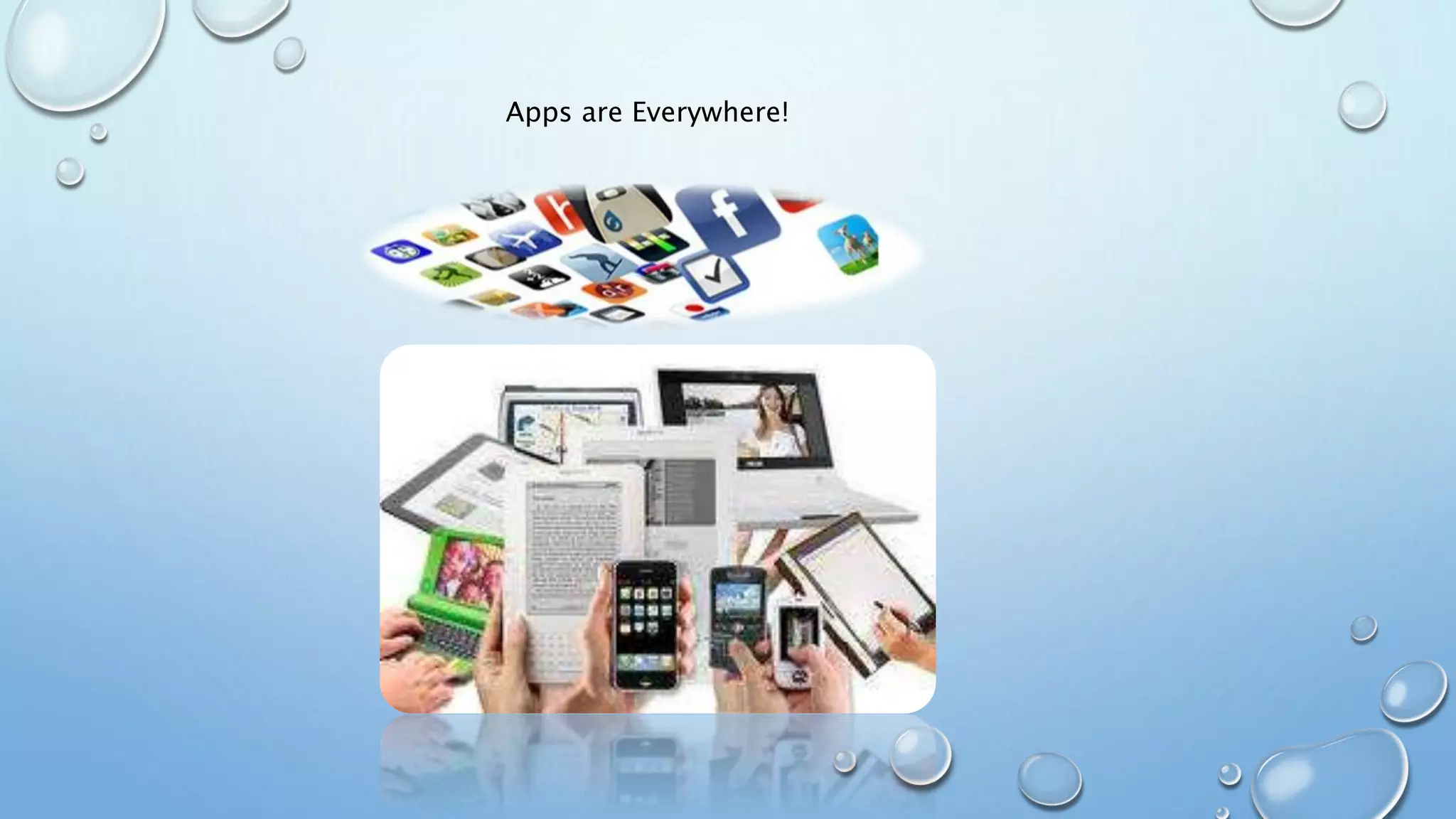
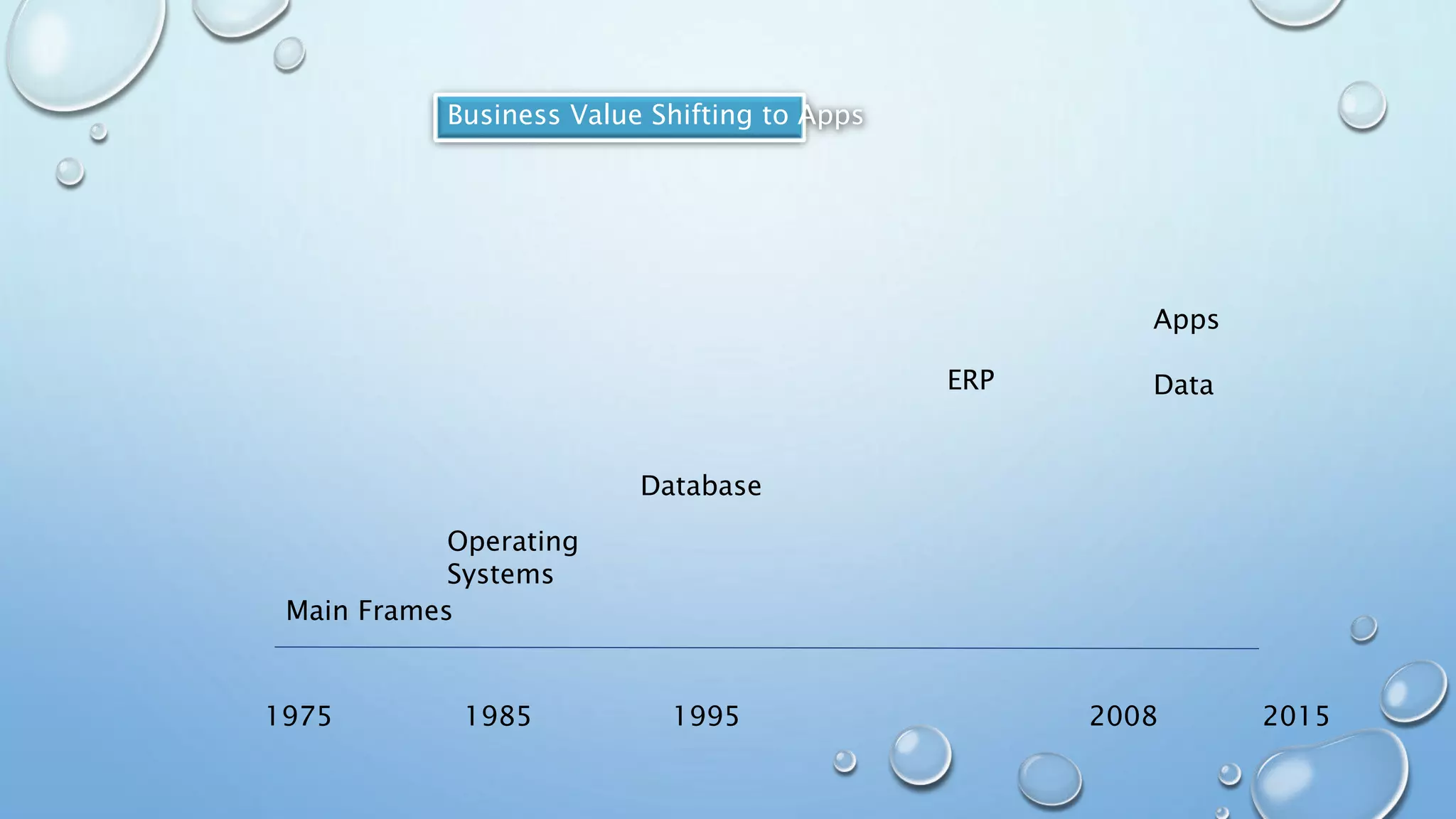
Apps are Everywhere!
1975 1985 1995 2008 2015
Main Frames
Operating
Systems
Database
ERP
Apps
Data
Business Value Shifting to Apps
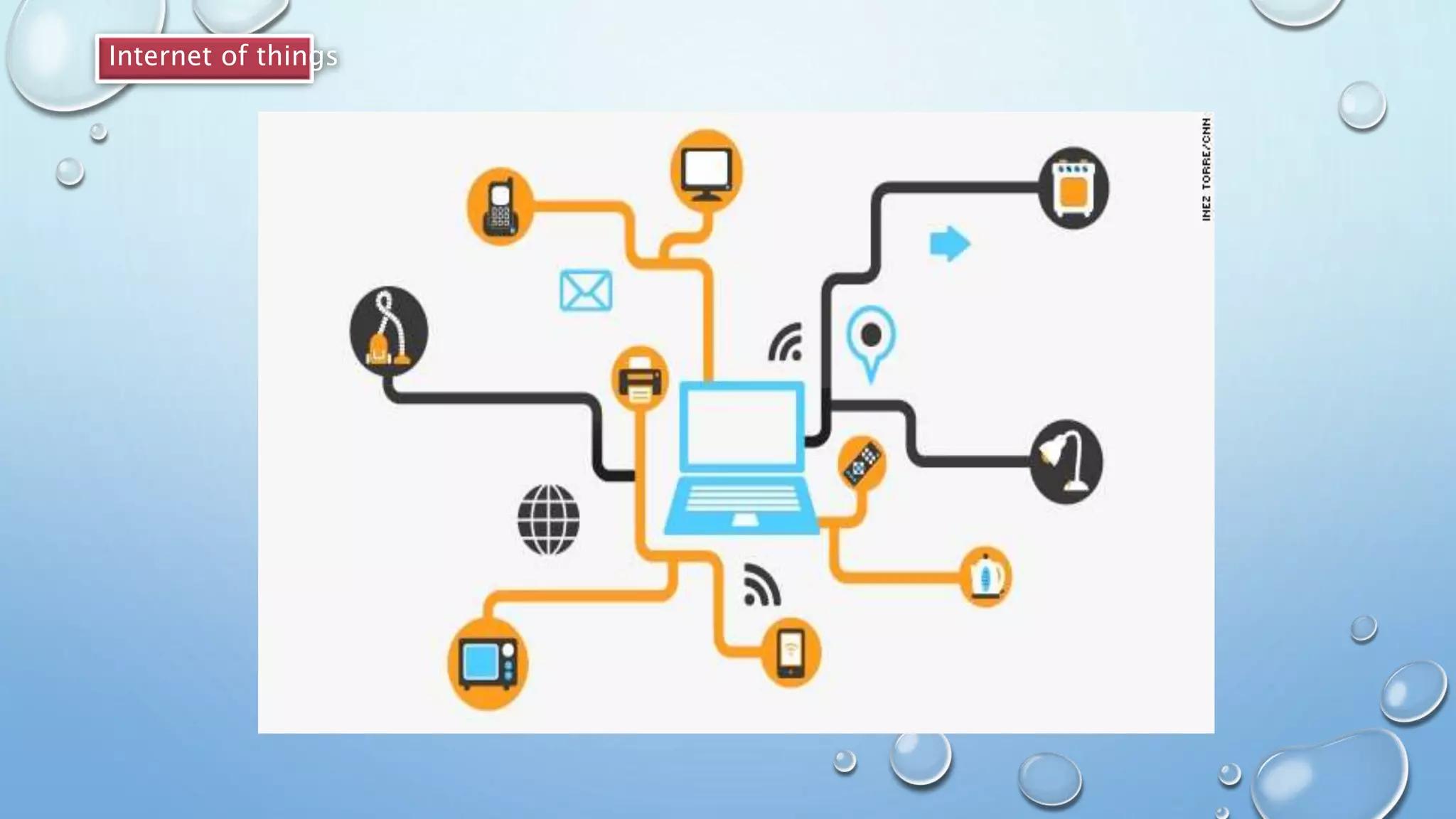
Internet of things
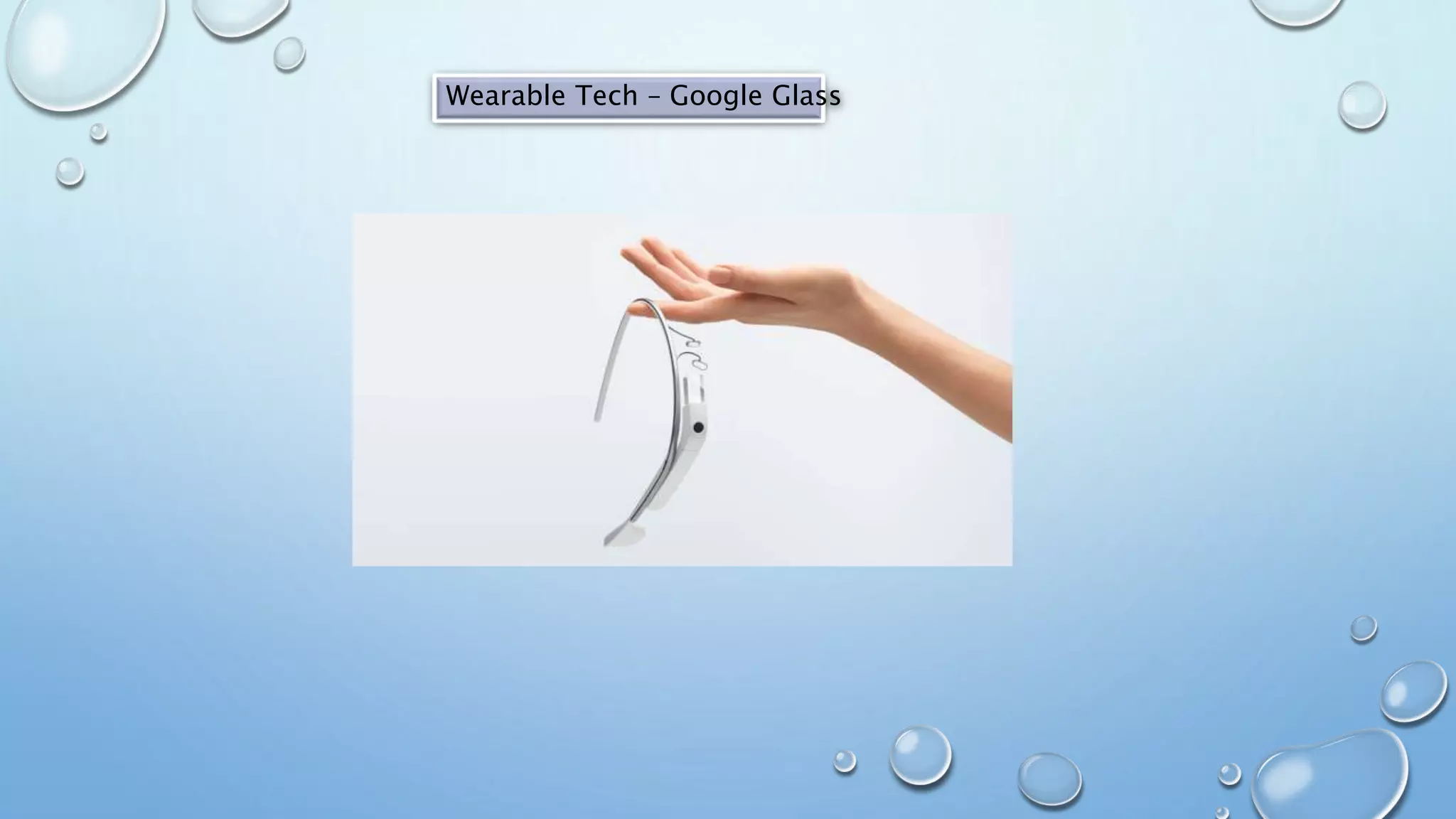
Wearable Tech – Google Glass
Platforms
What is next?
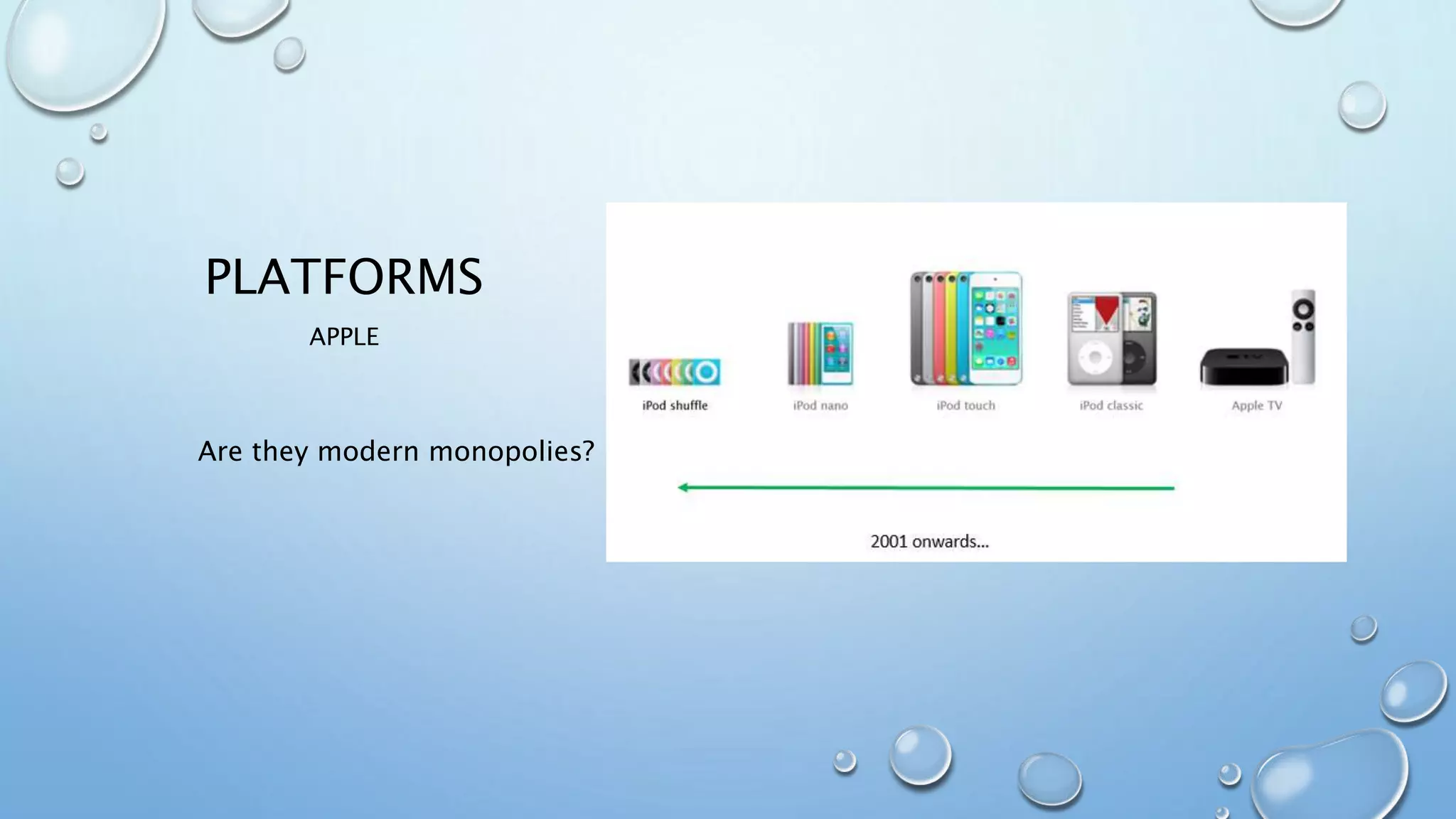
PLATFORMS
APPLE
Are they modern monopolies?
AMAZON
WHAT IT MEANS TO YOU
Network Effects
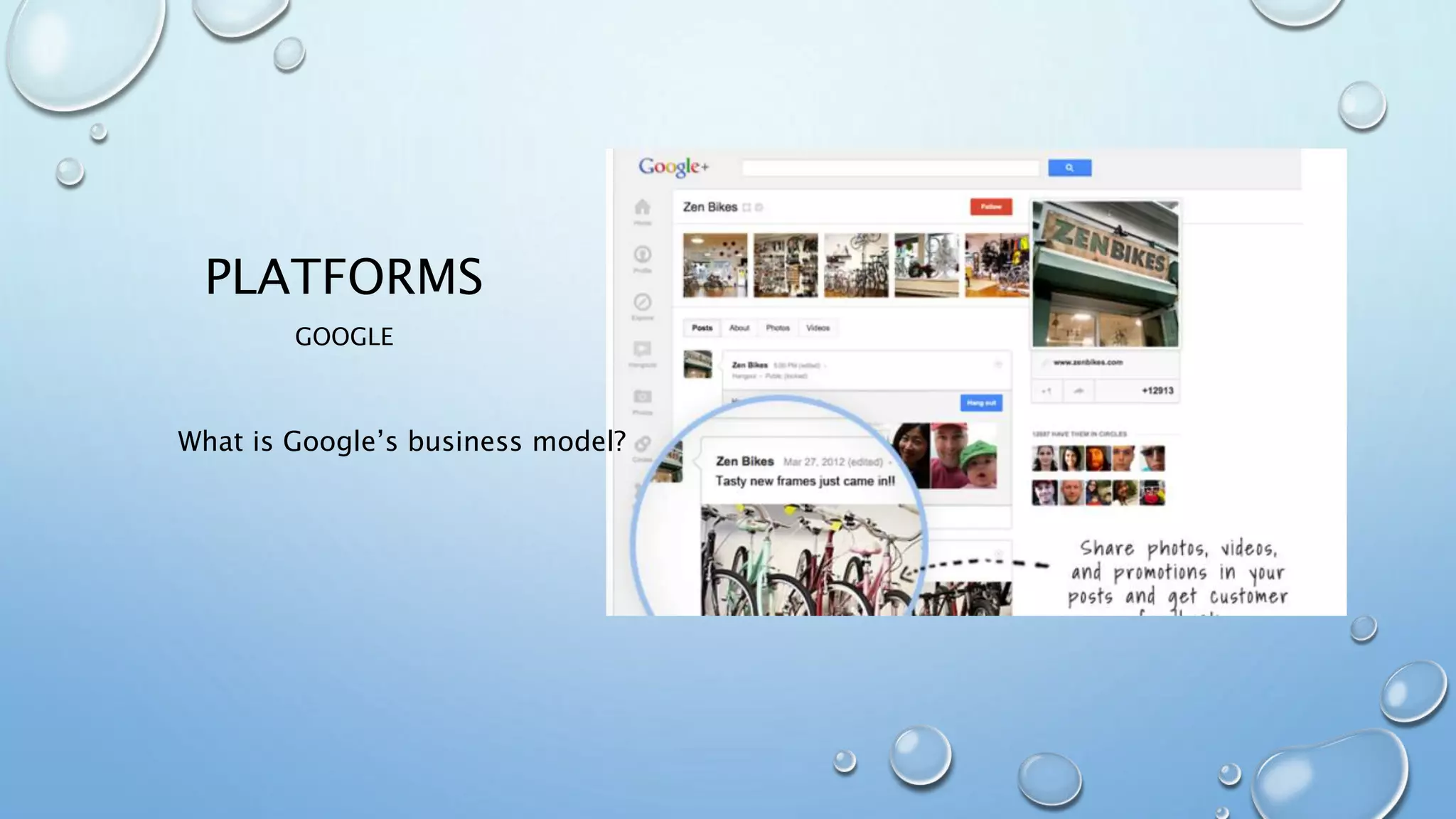
PLATFORMS
GOOGLE
What is Google’s business model?
And more
Facebook
LinkedIn
Netflix
Salesforce
PLATFORMS ARE ABOUT SOLUTIONS WITH
CONVERGENCE OF TECHNOLOGIES
• CLOUD SERVICES ARE THE BACK-END
DELIVERY MODEL FOR MOST MOBILE
APPLICATIONS
• BIG DATA IS THE COLLECTION AND
ANALYSIS OF OCEANS OF
INFORMATION THAT IS NOW BEING
PRODUCED
• AND “SOCIAL BUSINESS” REFLECTS
THE FACT THAT CUSTOMERS HAVE
TAKEN CONTROL OF THE BUYING
CYCLE
Open
Source
What is next?
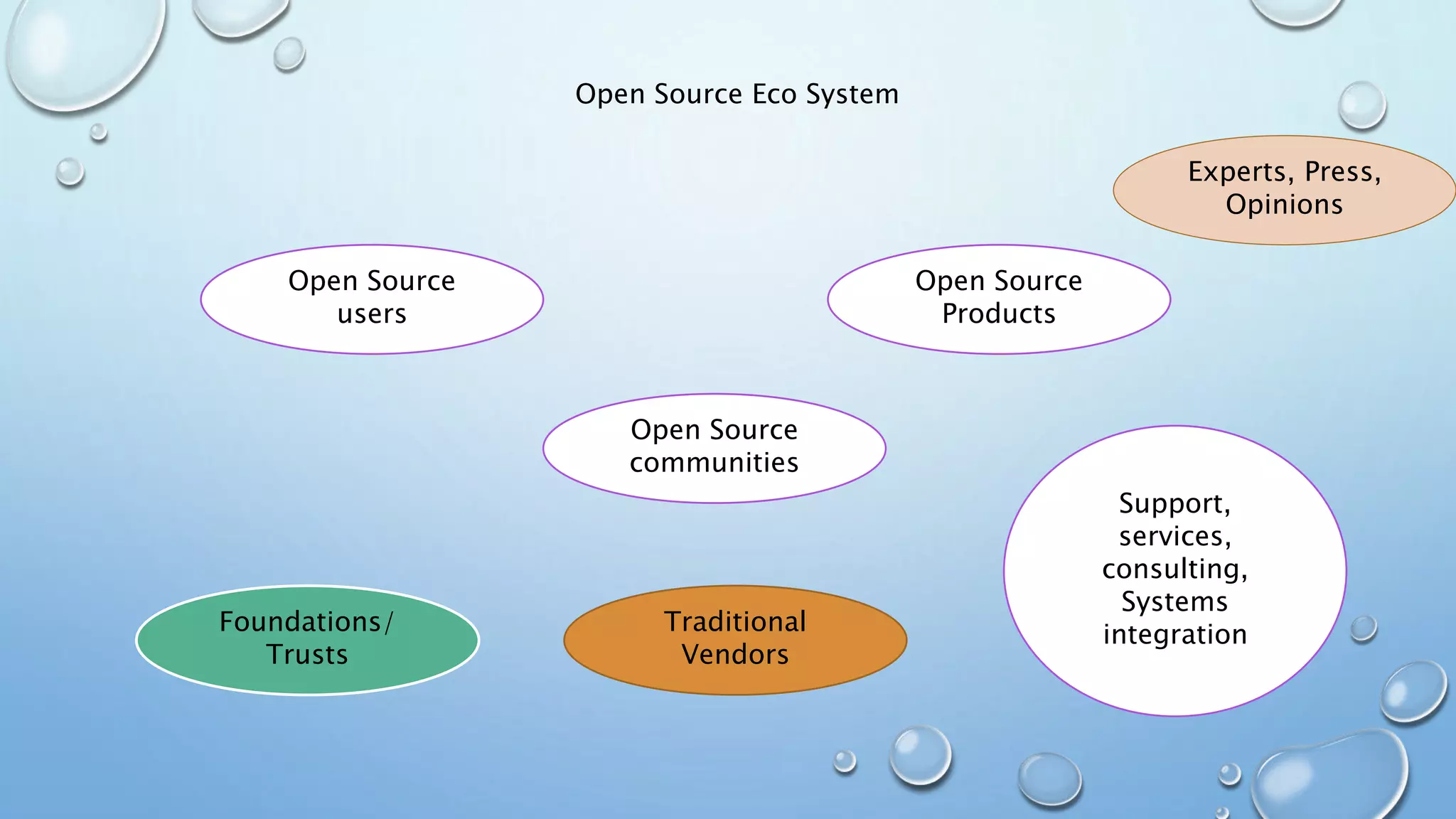
Open Source Eco System
Open Source
communities
Open Source
users
Open Source
Products
Foundations/
Trusts
Traditional
Vendors
Support,
services,
consulting,
Systems
integration
Experts, Press,
Opinions
Musings on Open Source licensing
Interactive License Differentiator from Oxford Universities OSS Watch
Open Source License Differentiators – It’s complicated!
E Learning
MOOCS
What is next?
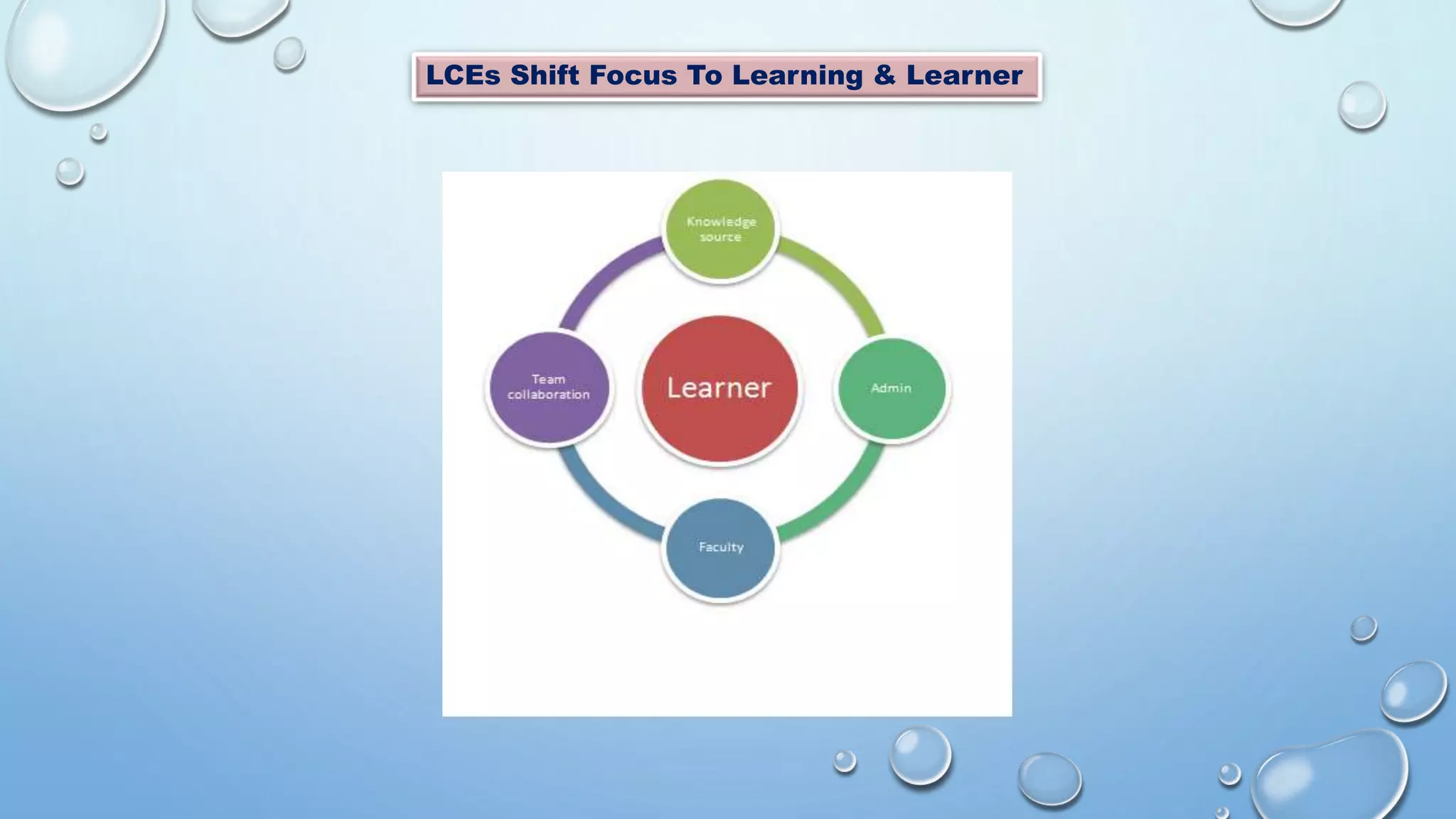
LCEs Shift Focus To Learning & Learner
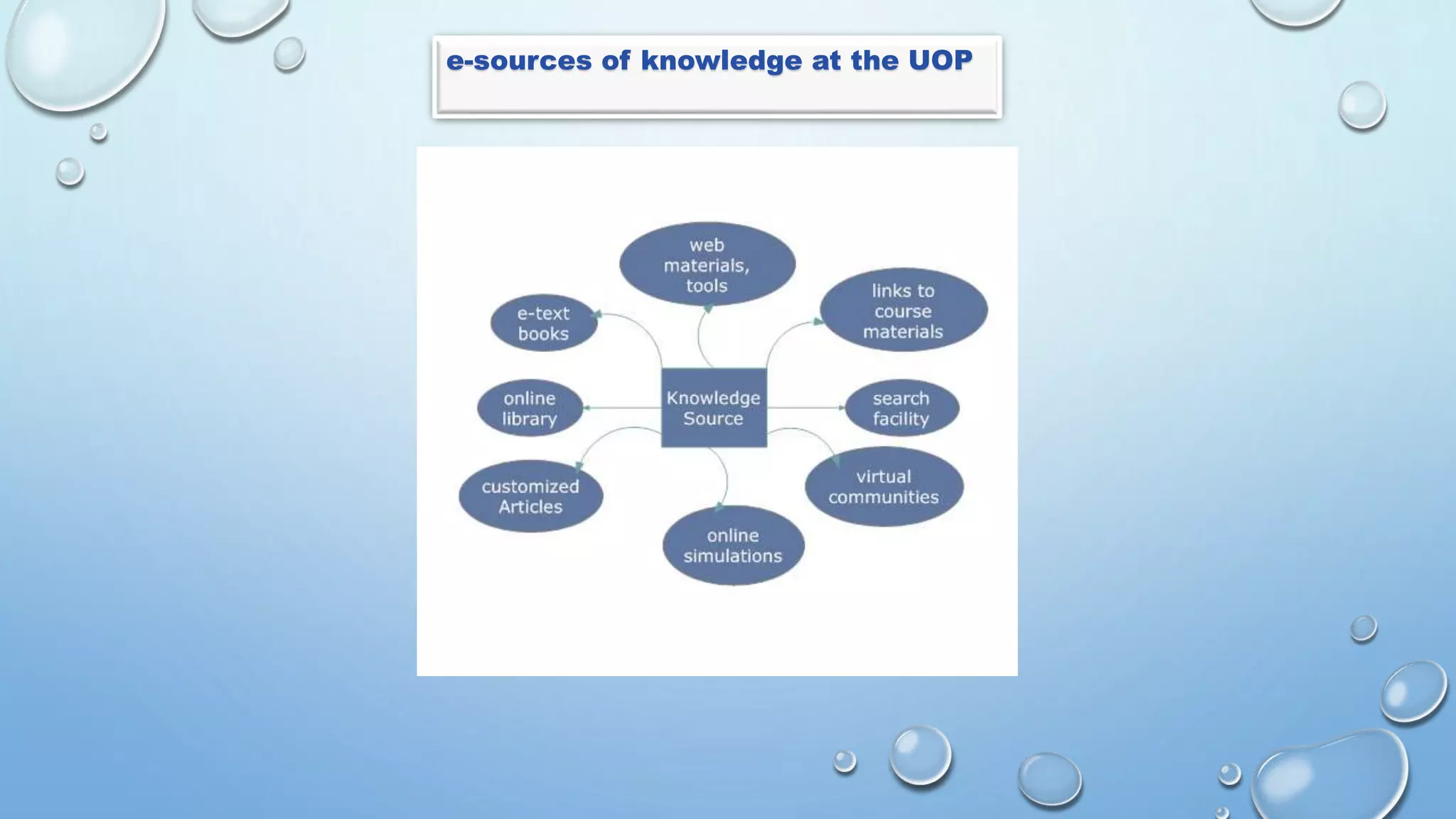
e-sources of knowledge at the UOP

Computer Applications and Systems - Workshop V