Epidemiological Triad
rajan.kawan1993@gmail.com
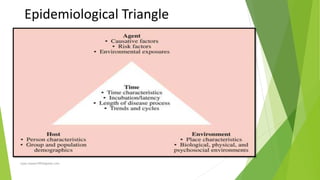
 The epidemiological triad, also known as the epidemiologic triangle, is a
fundamental concept in epidemiology used to understand and analyze the
factors contributing to the occurrence and spread of diseases within
populations. The triad consists of three interconnected components:
 Agent
 Host
 Environment
 The epidemiological triad provides a framework for understanding the
complex interplay between host, agent, and environment in the
occurrence and progression of diseases. By analyzing these three
components, epidemiologists can identify risk factors, develop preventive
measures, and design interventions to control and manage disease
outbreaks. This model is essential for investigating and addressing a wide
range of health issues, from infectious diseases to chronic conditions.

rajan.kawan1993@gmail.com
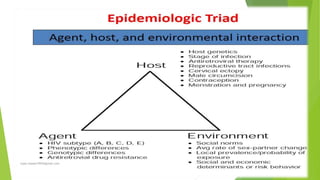
 Interaction between agent, host and environment is
called epidemiological triangle or triads. Thus health
is a dynamic equilibrium between human, agent and
the environment.
 It has three components: an external agent, a
susceptible host and an environment that brings the
host and the agent together.
 According to this model the disease cannot be
present if one of the three factors agent, host and
environment is absent.
rajan.kawan1993@gmail.com
Agent
Disease agent is a factor which is living or nonliving
thing. Such as biological agents like virus, bacteria,
fungi etc. nutrient agents like protein, fat,
carbohydrates, vitamins, minerals
and water, physical agents like heat, cold,
pressure, radiation, electricity.
rajan.kawan1993@gmail.com
 Disease may have a single or a number of independent agents or a
complex of two or more factors.
 Biological agents– living agent of disease Bacteria, Viruses, protozoa,
fungi, rickettsia
 Nutrient agents– Protein, carbohydrate, vitamins, minerals and water
 Any excess or deficiency of the nutrient elements may result in nutritional
disorders, anemia, goiter, obesity
 Physical agents –Exposure to excessive heat, cold, humidity, pressure,
radiation, sound
 Chemical agents– metal fumes, dust, gases, insecticides
 Mechanical agents – exposure to chronic friction and other mechanical
forces may result in crushing, tearing, sprains, dislocations
 Social agents – poverty, smoking, abuse of drugs, unhealthy life style,
social isolation
rajan.kawan1993@gmail.com
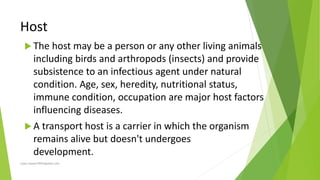
Host
 The host may be a person or any other living animals
including birds and arthropods (insects) and provide
subsistence to an infectious agent under natural
condition. Age, sex, heredity, nutritional status,
immune condition, occupation are major host factors
influencing diseases.
 A transport host is a carrier in which the organism
remains alive but doesn't undergoes
development.
rajan.kawan1993@gmail.com
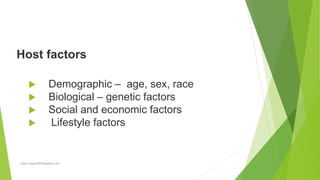
Host factors
 Demographic – age, sex, race
 Biological – genetic factors
 Social and economic factors
 Lifestyle factors
rajan.kawan1993@gmail.com
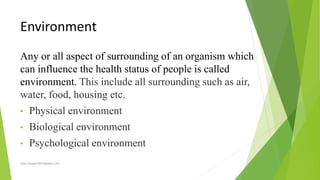
Environment
Any or all aspect of surrounding of an organism which
can influence the health status of people is called
environment. This include all surrounding such as air,
water, food, housing etc.
• Physical environment
• Biological environment
• Psychological environment
rajan.kawan1993@gmail.com
Epidemiological Triangle
rajan.kawan1993@gmail.com
THANK YOU
rajan.kawan1993@gmail.com

Epidemiologic Triad.pptx

  • 1.
  • 2.
     The epidemiologicaltriad, also known as the epidemiologic triangle, is a fundamental concept in epidemiology used to understand and analyze the factors contributing to the occurrence and spread of diseases within populations. The triad consists of three interconnected components:  Agent  Host  Environment  The epidemiological triad provides a framework for understanding the complex interplay between host, agent, and environment in the occurrence and progression of diseases. By analyzing these three components, epidemiologists can identify risk factors, develop preventive measures, and design interventions to control and manage disease outbreaks. This model is essential for investigating and addressing a wide range of health issues, from infectious diseases to chronic conditions. rajan.kawan1993@gmail.com

  • 3.
     Interaction betweenagent, host and environment is called epidemiological triangle or triads. Thus health is a dynamic equilibrium between human, agent and the environment.  It has three components: an external agent, a susceptible host and an environment that brings the host and the agent together.  According to this model the disease cannot be present if one of the three factors agent, host and environment is absent. rajan.kawan1993@gmail.com
  • 4.
  • 5.
    Agent Disease agent isa factor which is living or nonliving thing. Such as biological agents like virus, bacteria, fungi etc. nutrient agents like protein, fat, carbohydrates, vitamins, minerals and water, physical agents like heat, cold, pressure, radiation, electricity. rajan.kawan1993@gmail.com
  • 6.
     Disease mayhave a single or a number of independent agents or a complex of two or more factors.  Biological agents– living agent of disease Bacteria, Viruses, protozoa, fungi, rickettsia  Nutrient agents– Protein, carbohydrate, vitamins, minerals and water  Any excess or deficiency of the nutrient elements may result in nutritional disorders, anemia, goiter, obesity  Physical agents –Exposure to excessive heat, cold, humidity, pressure, radiation, sound  Chemical agents– metal fumes, dust, gases, insecticides  Mechanical agents – exposure to chronic friction and other mechanical forces may result in crushing, tearing, sprains, dislocations  Social agents – poverty, smoking, abuse of drugs, unhealthy life style, social isolation rajan.kawan1993@gmail.com
  • 7.
    Host  The hostmay be a person or any other living animals including birds and arthropods (insects) and provide subsistence to an infectious agent under natural condition. Age, sex, heredity, nutritional status, immune condition, occupation are major host factors influencing diseases.  A transport host is a carrier in which the organism remains alive but doesn't undergoes development. rajan.kawan1993@gmail.com
  • 8.
    Host factors  Demographic– age, sex, race  Biological – genetic factors  Social and economic factors  Lifestyle factors rajan.kawan1993@gmail.com
  • 9.
    Environment Any or allaspect of surrounding of an organism which can influence the health status of people is called environment. This include all surrounding such as air, water, food, housing etc. • Physical environment • Biological environment • Psychological environment rajan.kawan1993@gmail.com
  • 10.
  • 11.
  • 12.