LITERATURE AND ITS
TYPES
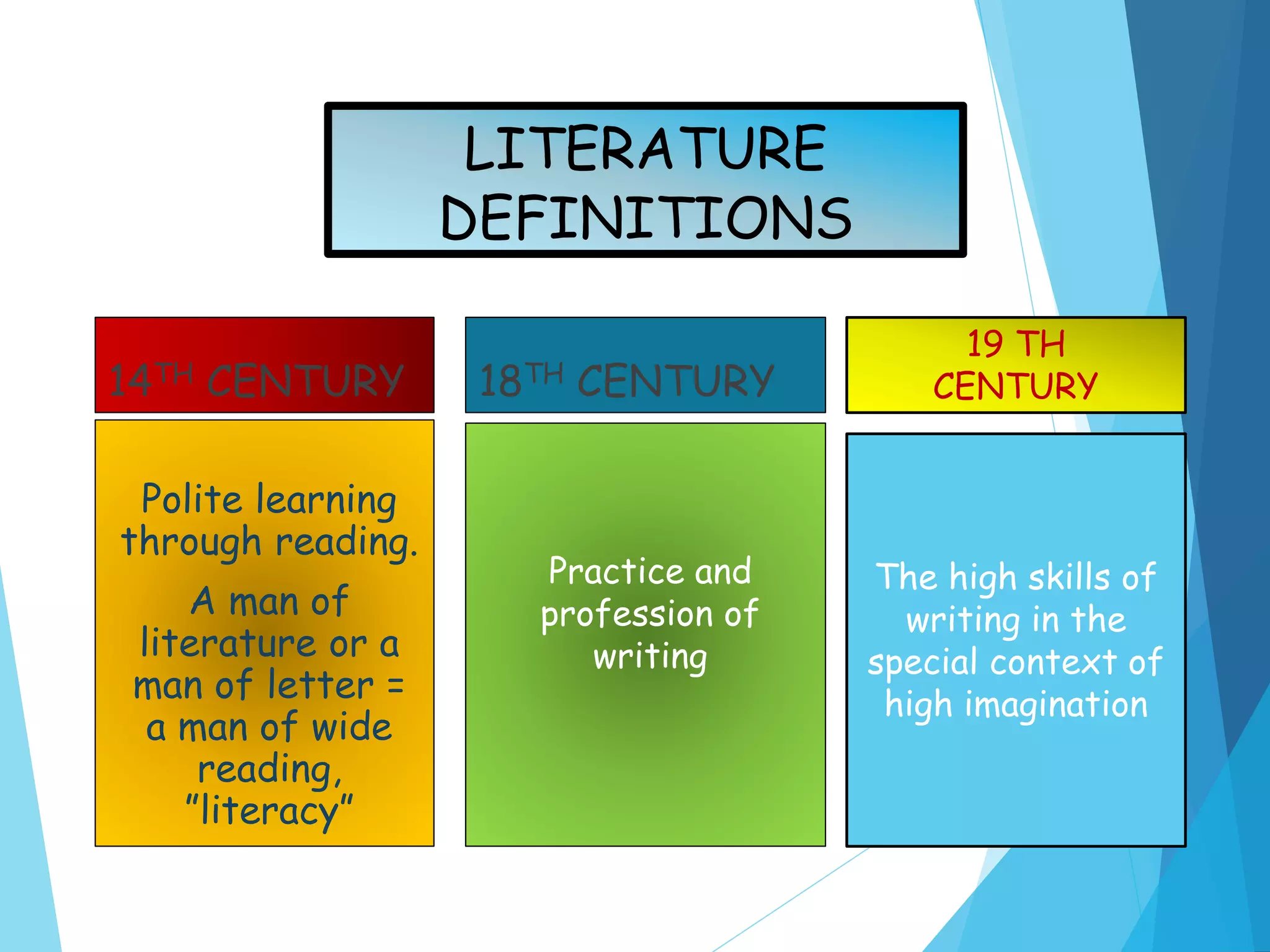
14TH CENTURY
Polite learning
through reading.
A man of
literature or a
man of letter =
a man of wide
reading,
”literacy”
18TH CENTURY
Practice and
profession of
writing
The high skills of
writing in the
special context of
high imagination
19 TH
CENTURY
LITERATURE
DEFINITIONS
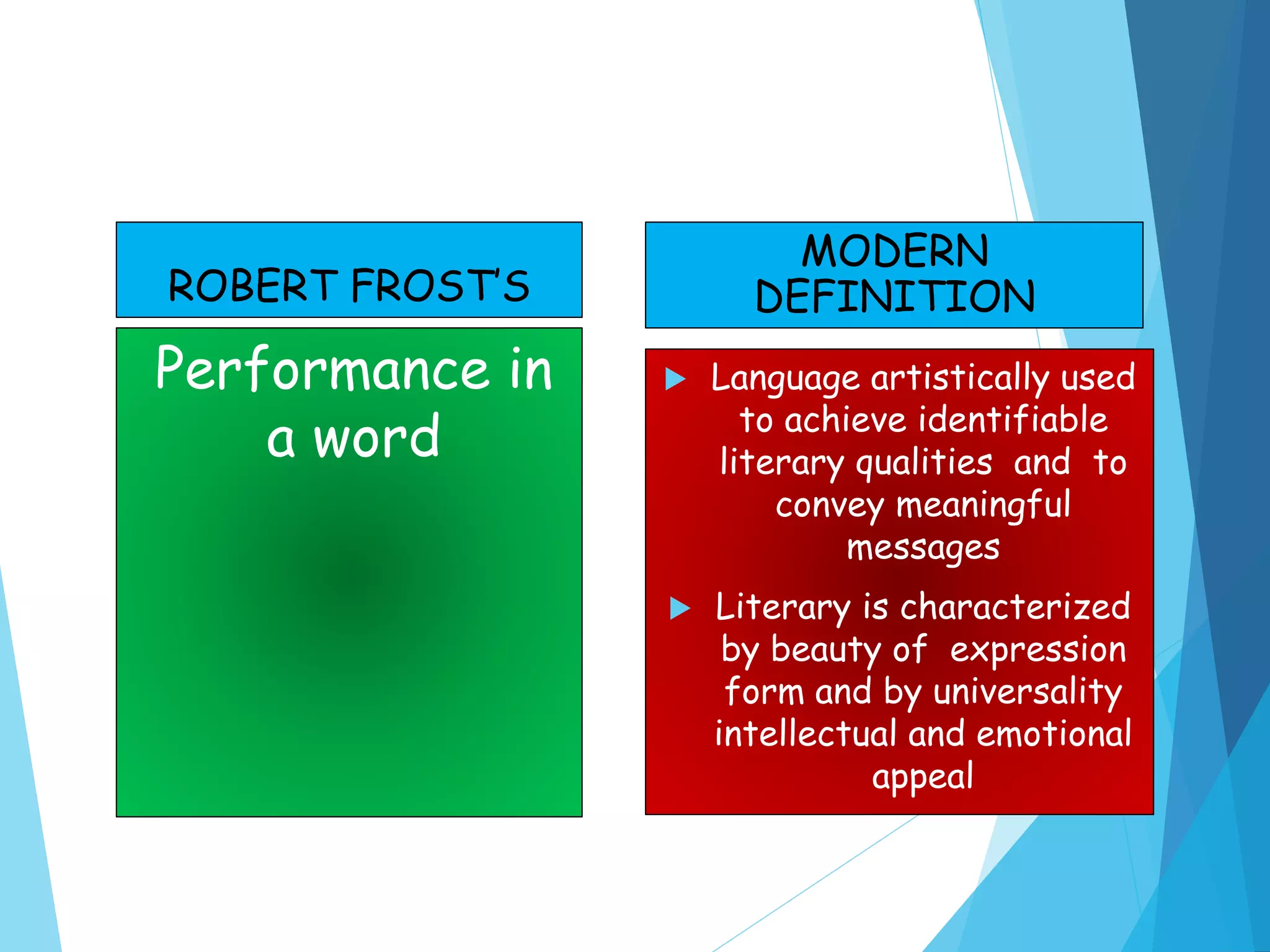
ROBERT FROST’S
Performance in
a word
MODERN
DEFINITION
 Language artistically used
to achieve identifiable
literary qualities and to
convey meaningful
messages
 Literary is characterized
by beauty of expression
form and by universality
intellectual and emotional
appeal
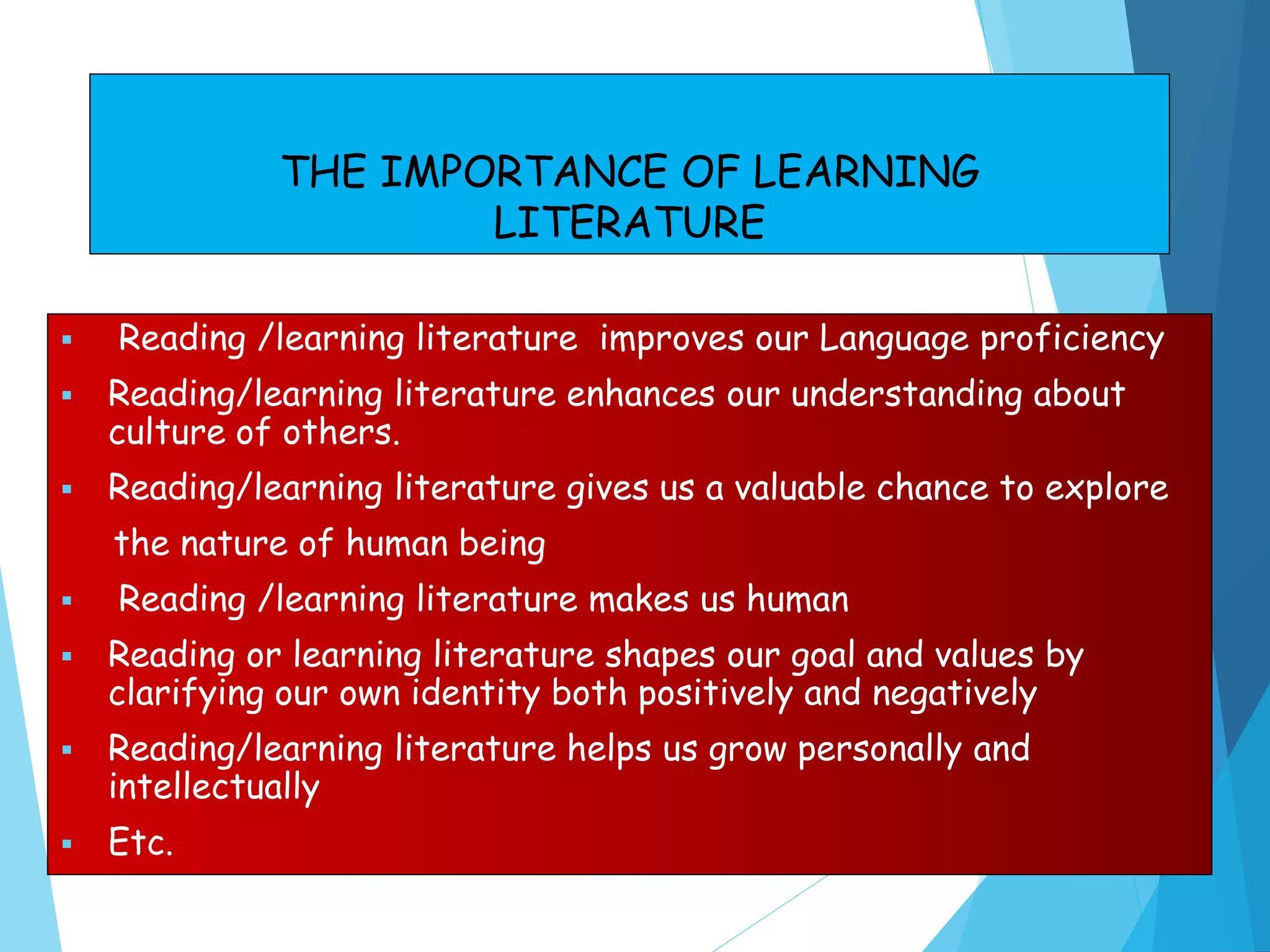
THE IMPORTANCE OF LEARNING
LITERATURE
 Reading /learning literature improves our Language proficiency
 Reading/learning literature enhances our understanding about
culture of others.
 Reading/learning literature gives us a valuable chance to explore
the nature of human being
 Reading /learning literature makes us human
 Reading or learning literature shapes our goal and values by
clarifying our own identity both positively and negatively
 Reading/learning literature helps us grow personally and
intellectually
 Etc.
LITERATURE
GENRES
 Open form
and close
form
 Relies on
imagery,
figurative
language and
sounds
Examples:
 Myths
 Fables
 Novels
 Short Stories
Examples:
 News
 Reports
 Journals
 Articles
 Essays
 Textbooks
 Biographies
 Etc.
 Made of
dialog and
set direction
 Designed to
be
performed
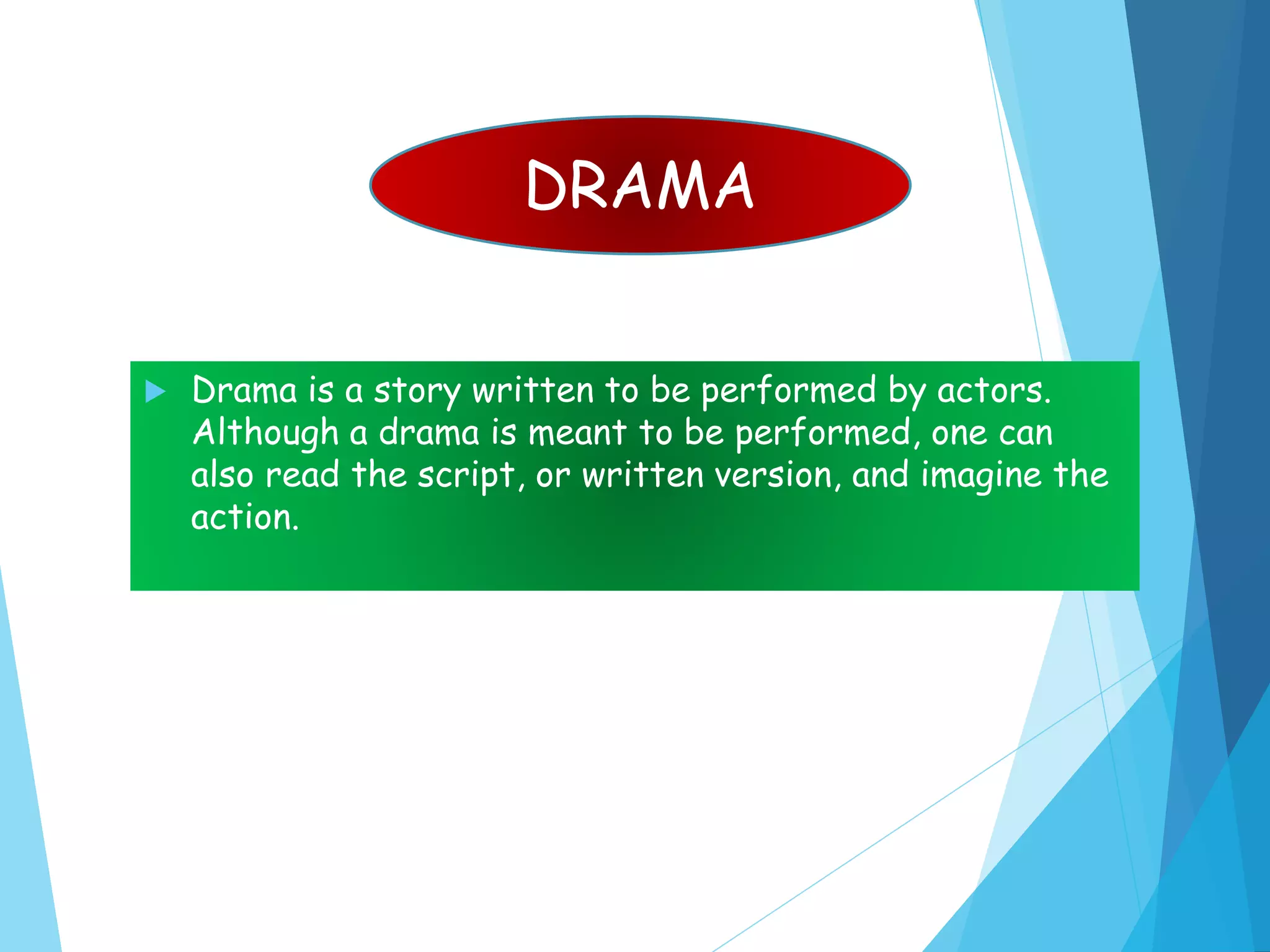
 Drama is a story written to be performed by actors.
Although a drama is meant to be performed, one can
also read the script, or written version, and imagine the
action.
DRAMA
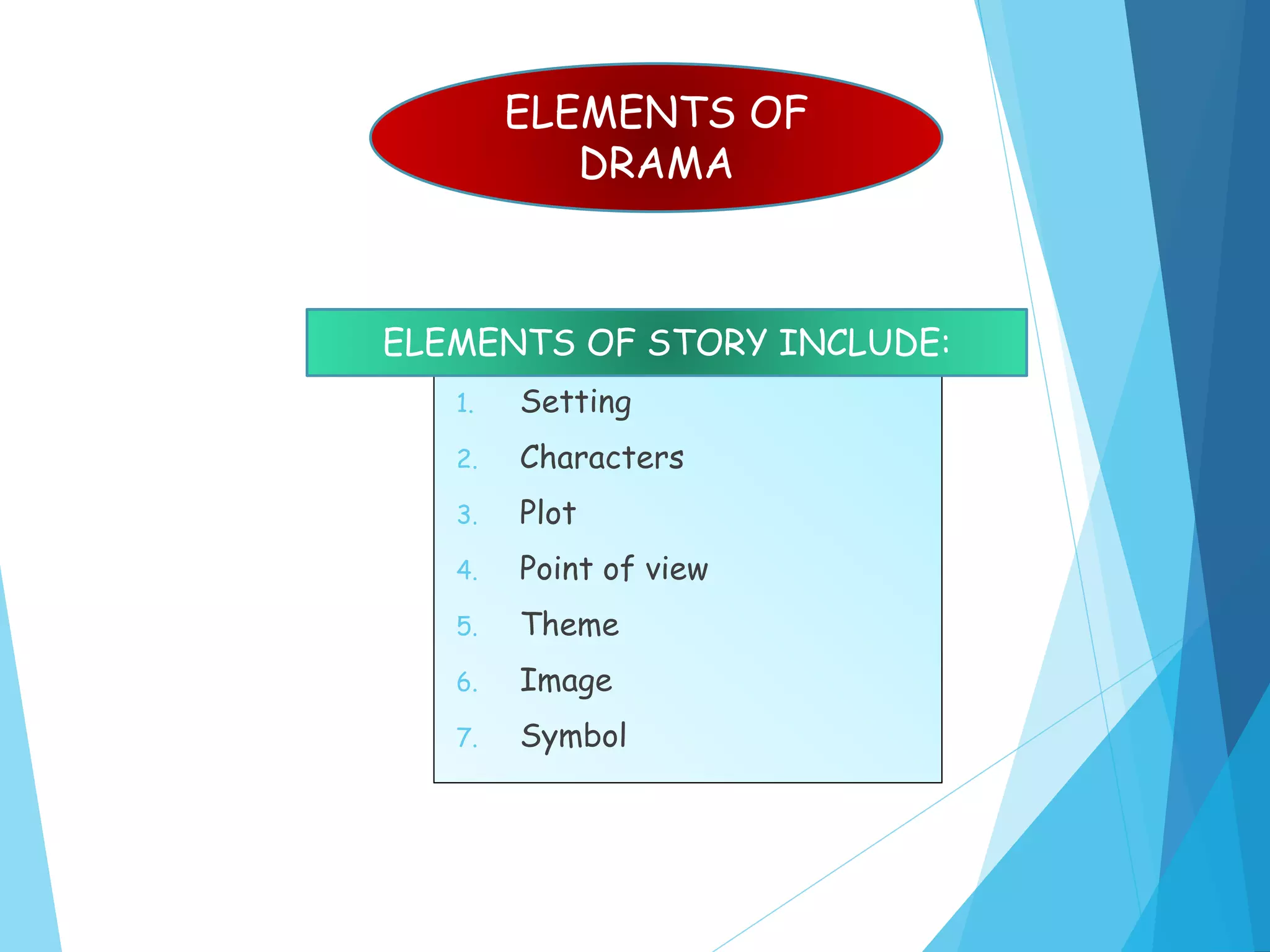
1. Setting
2. Characters
3. Plot
4. Point of view
5. Theme
6. Image
7. Symbol
ELEMENTS OF
DRAMA
ELEMENTS OF STORY INCLUDE:
Poetry is language written with rhythm, figurative language,
imagery, sound devices and emotionally charged language.
 Concrete poem
 Narrative Poem
 Lyric Poem
POETRY
DEFINITION
KINDS OF
POETRY/POEM
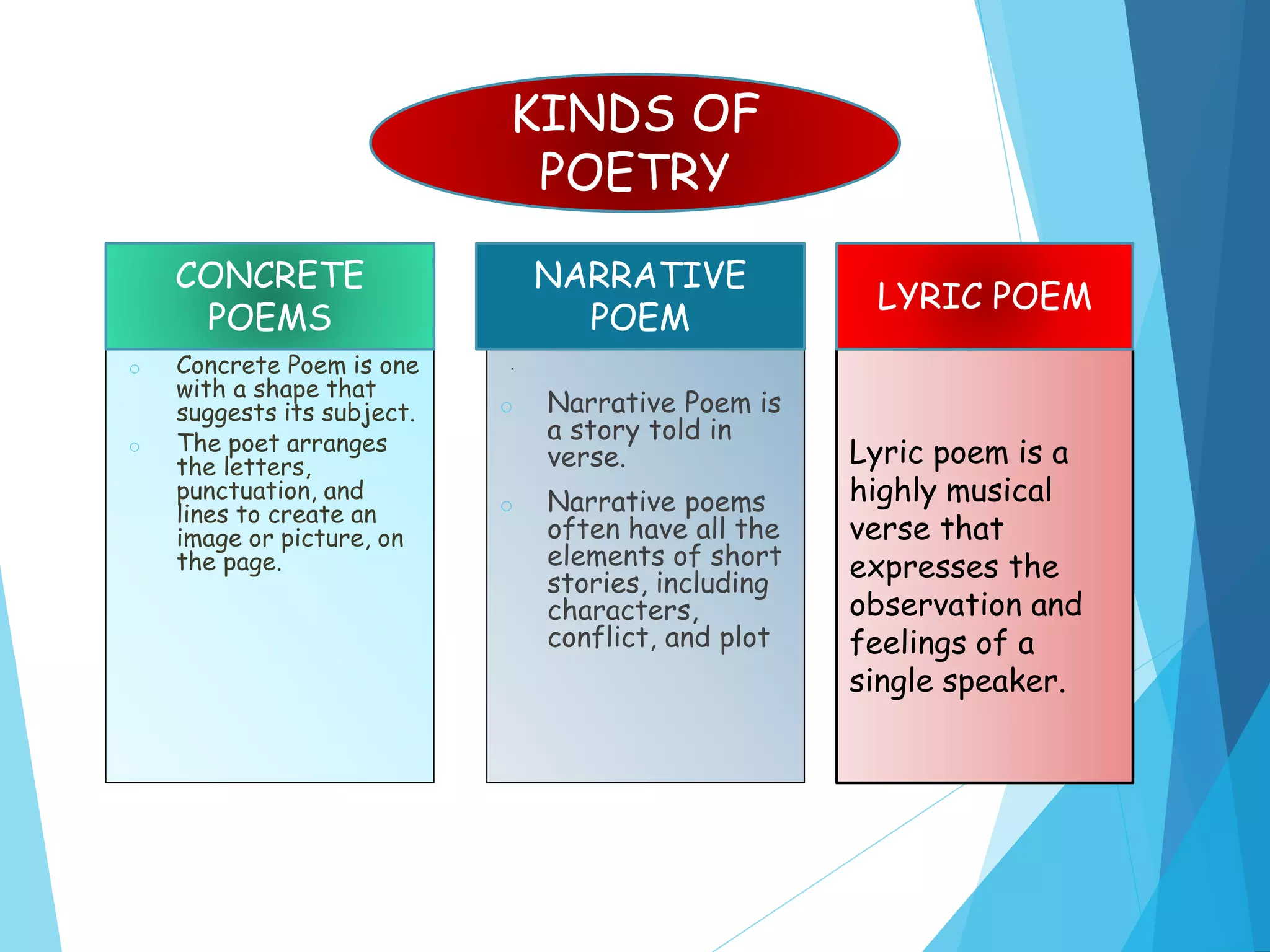
o Concrete Poem is one
with a shape that
suggests its subject.
o The poet arranges
the letters,
punctuation, and
lines to create an
image or picture, on
the page.
.
o Narrative Poem is
a story told in
verse.
o Narrative poems
often have all the
elements of short
stories, including
characters,
conflict, and plot
KINDS OF
POETRY
CONCRETE
POEMS
NARRATIVE
POEM
Lyric poem is a
highly musical
verse that
expresses the
observation and
feelings of a
single speaker.
LYRIC POEM
 PROSE is the ordinary
form of written
language.
 Prose imitates the
spoken language.
.
o Fiction
o Non Fiction
PROSE
DEFINITION
KINDS OF PROSE
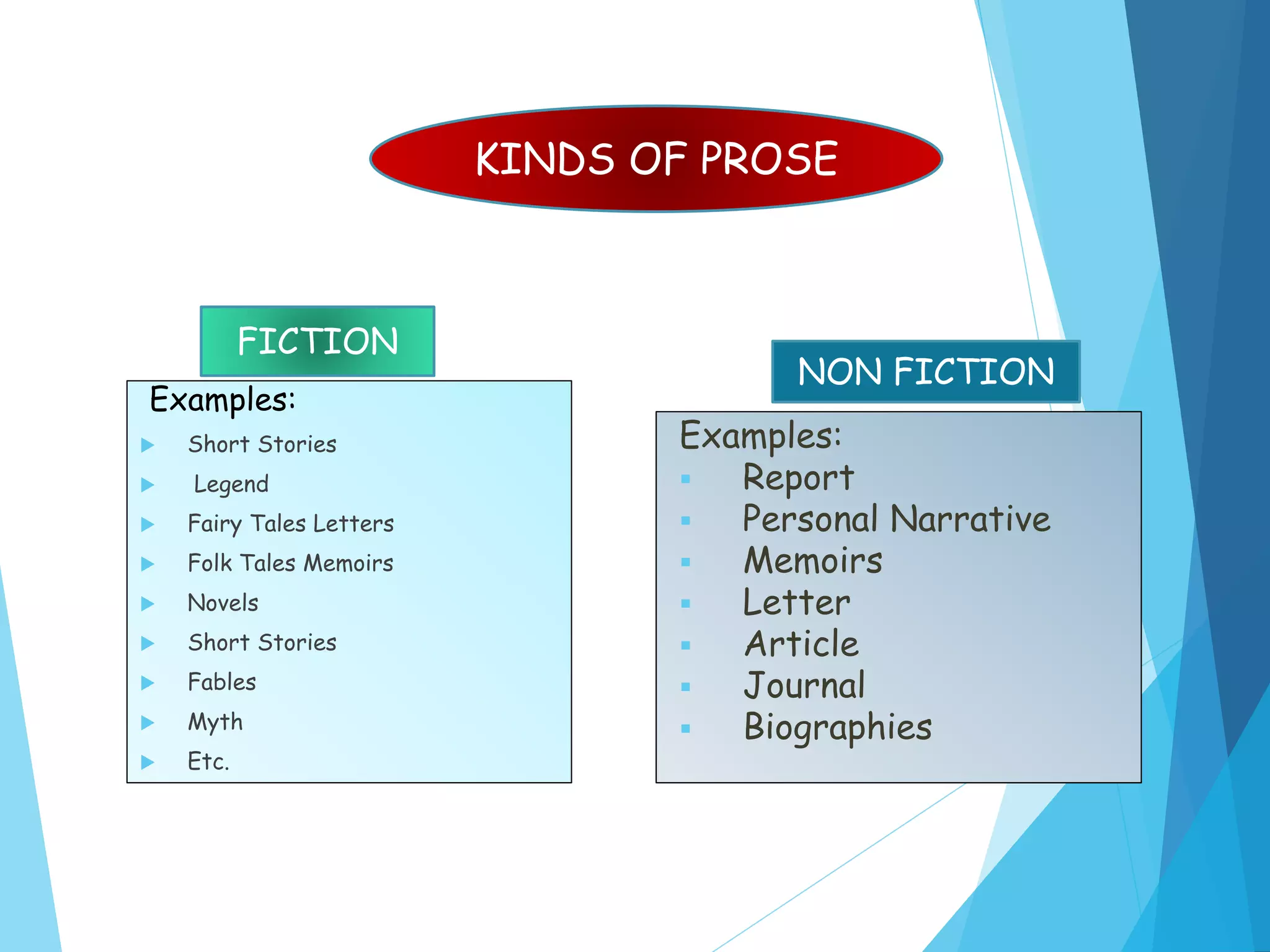
Examples:
 Short Stories
 Legend
 Fairy Tales Letters
 Folk Tales Memoirs
 Novels
 Short Stories
 Fables
 Myth
 Etc.
Examples:
 Report
 Personal Narrative
 Memoirs
 Letter
 Article
 Journal
 Biographies
KINDS OF PROSE
FICTION
NON FICTION

Types of literature

  • 1.
  • 2.
    14TH CENTURY Polite learning throughreading. A man of literature or a man of letter = a man of wide reading, ”literacy” 18TH CENTURY Practice and profession of writing The high skills of writing in the special context of high imagination 19 TH CENTURY LITERATURE DEFINITIONS
  • 3.
    ROBERT FROST’S Performance in aword MODERN DEFINITION  Language artistically used to achieve identifiable literary qualities and to convey meaningful messages  Literary is characterized by beauty of expression form and by universality intellectual and emotional appeal
  • 4.
    THE IMPORTANCE OFLEARNING LITERATURE  Reading /learning literature improves our Language proficiency  Reading/learning literature enhances our understanding about culture of others.  Reading/learning literature gives us a valuable chance to explore the nature of human being  Reading /learning literature makes us human  Reading or learning literature shapes our goal and values by clarifying our own identity both positively and negatively  Reading/learning literature helps us grow personally and intellectually  Etc.
  • 5.
    LITERATURE GENRES  Open form andclose form  Relies on imagery, figurative language and sounds Examples:  Myths  Fables  Novels  Short Stories Examples:  News  Reports  Journals  Articles  Essays  Textbooks  Biographies  Etc.  Made of dialog and set direction  Designed to be performed
  • 6.
     Drama isa story written to be performed by actors. Although a drama is meant to be performed, one can also read the script, or written version, and imagine the action. DRAMA
  • 7.
    1. Setting 2. Characters 3.Plot 4. Point of view 5. Theme 6. Image 7. Symbol ELEMENTS OF DRAMA ELEMENTS OF STORY INCLUDE:
  • 8.
    Poetry is languagewritten with rhythm, figurative language, imagery, sound devices and emotionally charged language.  Concrete poem  Narrative Poem  Lyric Poem POETRY DEFINITION KINDS OF POETRY/POEM
  • 9.
    o Concrete Poemis one with a shape that suggests its subject. o The poet arranges the letters, punctuation, and lines to create an image or picture, on the page. . o Narrative Poem is a story told in verse. o Narrative poems often have all the elements of short stories, including characters, conflict, and plot KINDS OF POETRY CONCRETE POEMS NARRATIVE POEM Lyric poem is a highly musical verse that expresses the observation and feelings of a single speaker. LYRIC POEM
  • 10.
     PROSE isthe ordinary form of written language.  Prose imitates the spoken language. . o Fiction o Non Fiction PROSE DEFINITION KINDS OF PROSE
  • 11.
    Examples:  Short Stories Legend  Fairy Tales Letters  Folk Tales Memoirs  Novels  Short Stories  Fables  Myth  Etc. Examples:  Report  Personal Narrative  Memoirs  Letter  Article  Journal  Biographies KINDS OF PROSE FICTION NON FICTION