Higher Ed
Governance
for the Real World
@rdelaudeRachel DeLauder
What does it take to run
a website?
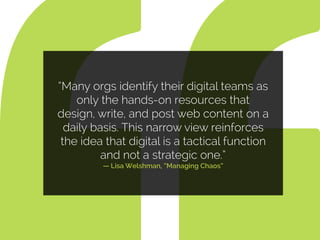
“Many orgs identify their digital teams as
only the hands-on resources that
design, write, and post web content on a
daily basis. This narrow view reinforces
the idea that digital is a tactical function
and not a strategic one.”
— Lisa Welshman, “Managing Chaos”
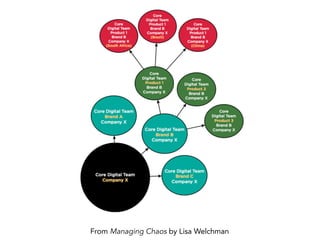
From Managing Chaos by Lisa Welchman
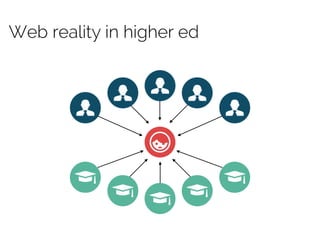
Web reality in higher ed
@rdelaudeRachel DeLauder
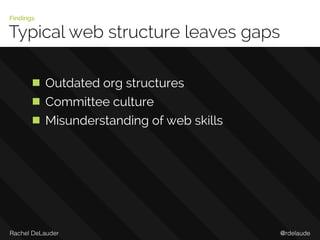
Typical web structure leaves gaps
Findings
Outdated org structures
Committee culture
Misunderstanding of web skills
@rdelaudeRachel DeLauder
Let’s take a closer look
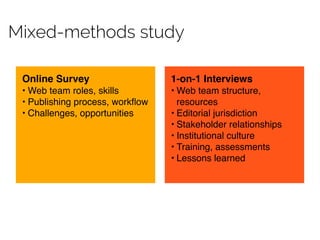
Mixed-methods study
Online Survey
• Web team roles, skills
• Publishing process, workflow
• Challenges, opportunities
1-on-1 Interviews
• Web team structure,
resources
• Editorial jurisdiction
• Stakeholder relationships
• Institutional culture
• Training, assessments
• Lessons learned
@rdelaudeRachel DeLauder
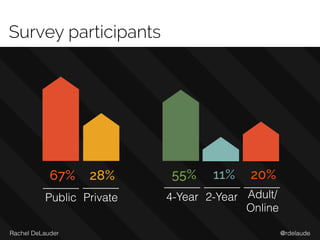
Survey participants
67%
Public 4-Year 2-Year Adult/

Online
Private
55% 20%28% 11%
@rdelaudeRachel DeLauder
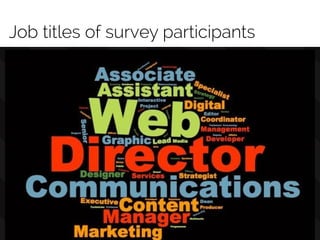
Job titles of survey participants
@rdelaudeRachel DeLauder
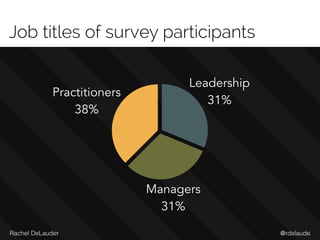
Job titles of survey participants
Practitioners
38%
Managers
31%
Leadership
31%
@rdelaudeRachel DeLauder
What is a “typical” 

web team?
@rdelaudeRachel DeLauder
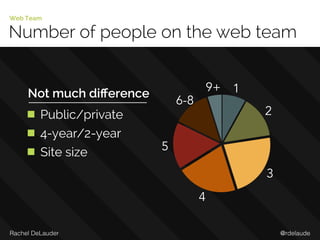
Number of people on the web team
Web Team
9+
6-8
5
4
3
2
1Not much difference
Public/private
4-year/2-year
Site size
@rdelaudeRachel DeLauder
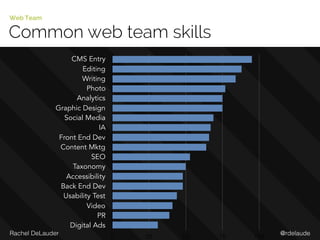
Common web team skills
Web Team
CMS Entry
Editing
Writing
Photo
Analytics
Graphic Design
Social Media
IA
Front End Dev
Content Mktg
SEO
Taxonomy
Accessibility
Back End Dev
Usability Test
Video
PR
Digital Ads
0 25 50 75 100
@rdelaudeRachel DeLauder
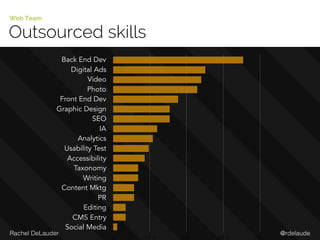
Outsourced skills
Web Team
Back End Dev
Digital Ads
Video
Photo
Front End Dev
Graphic Design
SEO
IA
Analytics
Usability Test
Accessibility
Taxonomy
Writing
Content Mktg
PR
Editing
CMS Entry
Social Media
@rdelaudeRachel DeLauder
How do they manage
content?
@rdelaudeRachel DeLauder
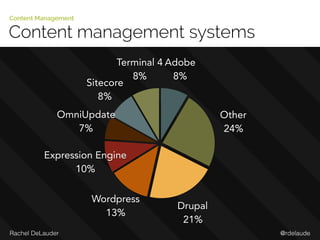
Content management systems
Content Management
Terminal 4
8%
Sitecore
8%
OmniUpdate
7%
Expression Engine
10%
Wordpress
13%
Drupal
21%
Other
24%
Adobe
8%
@rdelaudeRachel DeLauder
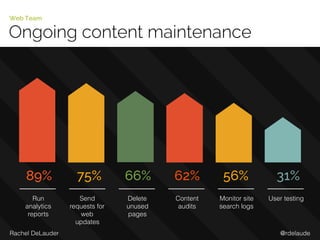
Ongoing content maintenance
Web Team
89%
Run
analytics
reports
75%
Send
requests for
web
updates
Delete
unused
pages
Content
audits
Monitor site
search logs
User testing
66% 62% 56% 31%
@rdelaudeRachel DeLauder
What are the common
challenges?
@rdelaudeRachel DeLauder
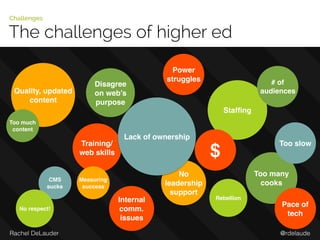
The challenges of higher ed
Challenges
Quality, updated
content
Staffing
Too many
cooks
Disagree
on web’s
purpose
Training/
web skills
Internal
comm.
issues
# of
audiences
Measuring
success
CMS
sucks
Too much
content
No respect!
Rebellion
Too slow
Pace of
tech
Power
struggles
$
No
leadership
support
Lack of ownership
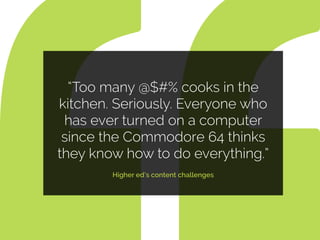
“Too many @$#% cooks in the
kitchen. Seriously. Everyone who
has ever turned on a computer
since the Commodore 64 thinks
they know how to do everything.”
Higher ed’s content challenges
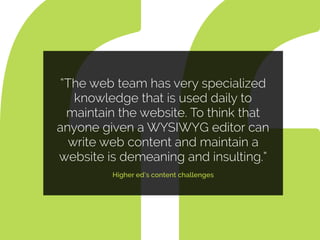
“The web team has very specialized
knowledge that is used daily to
maintain the website. To think that
anyone given a WYSIWYG editor can
write web content and maintain a
website is demeaning and insulting.”
Higher ed’s content challenges
@rdelaudeRachel DeLauder
Struggles 

to find balance
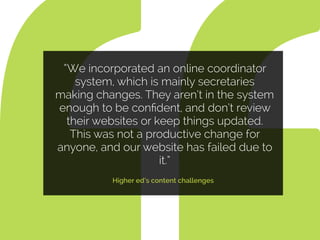
“We incorporated an online coordinator
system, which is mainly secretaries
making changes. They aren’t in the system
enough to be confident, and don’t review
their websites or keep things updated.
This was not a productive change for
anyone, and our website has failed due to
it.”
Higher ed’s content challenges
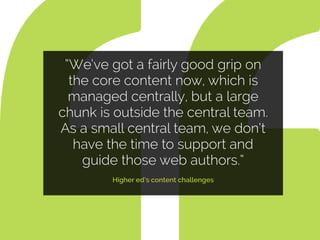
“We’ve got a fairly good grip on
the core content now, which is
managed centrally, but a large
chunk is outside the central team.
As a small central team, we don’t
have the time to support and
guide those web authors.”
Higher ed’s content challenges
@rdelaudeRachel DeLauder
So, what did we learn?
@rdelaudeRachel DeLauder
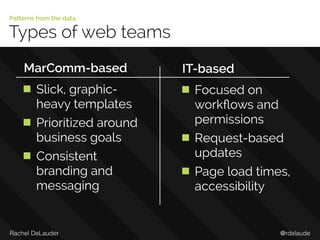
Types of web teams
Patterns from the data
MarComm-based
Slick, graphic-
heavy templates
Prioritized around
business goals
Consistent
branding and
messaging
IT-based
Focused on
workflows and
permissions
Request-based
updates
Page load times,
accessibility
@rdelaudeRachel DeLauder
Types of web teams
Patterns from the data
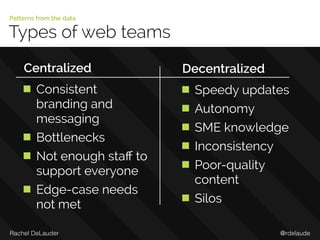
Centralized
Consistent
branding and
messaging
Bottlenecks
Not enough staff to
support everyone
Edge-case needs
not met
Decentralized
Speedy updates
Autonomy
SME knowledge
Inconsistency
Poor-quality
content
Silos
@rdelaudeRachel DeLauder
The challenges of higher ed
Patterns from the data
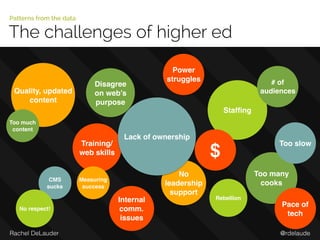
Quality, updated
content
Staffing
Too many
cooks
Disagree
on web’s
purpose
Training/
web skills
Internal
comm.
issues
# of
audiences
Measuring
success
CMS
sucks
Too much
content
No respect!
Rebellion
Too slow
Pace of
tech
Power
struggles
$
No
leadership
support
Lack of ownership
@rdelaudeRachel DeLauder
The challenges of higher ed
Patterns from the data
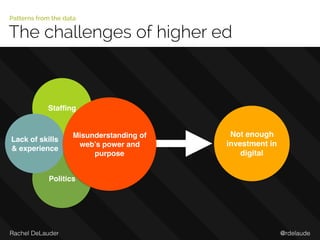
Staffing
Politics
Not enough
investment in
digital
Lack of skills 

& experience
Misunderstanding of
web’s power and
purpose
@rdelaudeRachel DeLauder
How can we fix it?
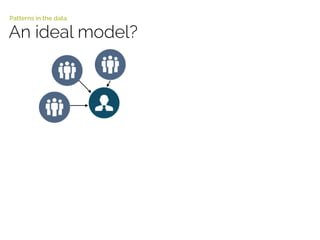
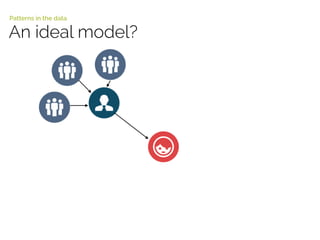
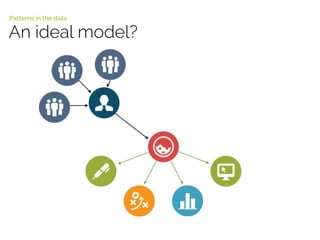
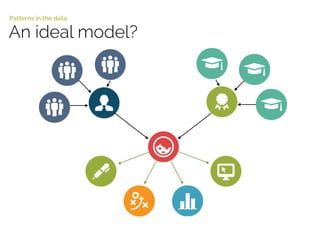
An ideal model?
Patterns in the data
An ideal model?
Patterns in the data
An ideal model?
Patterns in the data
An ideal model?
Patterns in the data
An ideal model?
Patterns in the data
@rdelaudeRachel DeLauder
Ways people deal
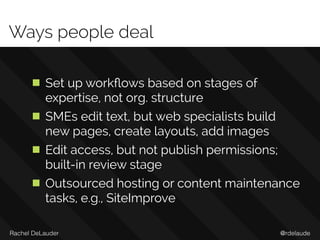
Set up workflows based on stages of
expertise, not org. structure
SMEs edit text, but web specialists build
new pages, create layouts, add images
Edit access, but not publish permissions;
built-in review stage
Outsourced hosting or content maintenance
tasks, e.g., SiteImprove
@rdelaudeRachel DeLauder
1. You are not alone
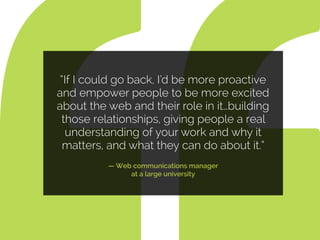
“If I could go back, I’d be more proactive
and empower people to be more excited
about the web and their role in it…building
those relationships, giving people a real
understanding of your work and why it
matters, and what they can do about it.”
— Web communications manager 

at a large university
Show them
how it’s done
@rdelaudeRachel DeLauder
2. Set clear standards
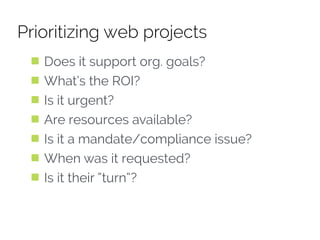
Prioritizing web projects
Does it support org. goals?
What’s the ROI?
Is it urgent?
Are resources available?
Is it a mandate/compliance issue?
When was it requested?
Is it their “turn”?
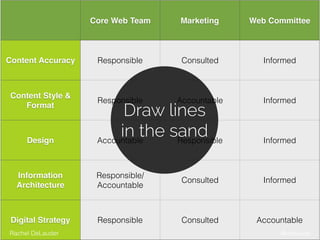
Core Web Team Marketing Web Committee
Content Accuracy Responsible Consulted Informed
Content Style &
Format
Responsible Accountable Informed
Design Accountable Responsible Informed
Information
Architecture
Responsible/
Accountable
Consulted Informed
Digital Strategy Responsible Consulted Accountable
Draw lines
in the sand
@rdelaudeRachel DeLauder
3. Get support from the
top
Infiltrate
committee
meetings
@rdelaudeRachel DeLauder
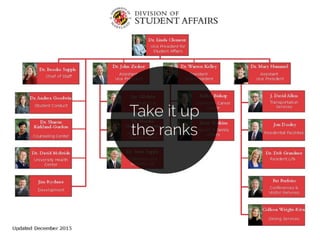
Take it up 

the ranks
@rdelaudeRachel DeLauder
4. Make it about the users
“I’ve worked in central IT and
in marketing, and the thing
that was missing with both of
those groups is nobody talked
about the user experience.”
— Director of Website Services
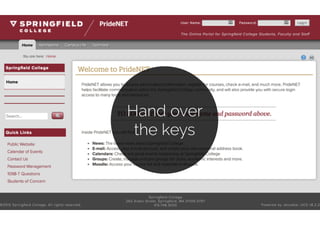
Hand over
the keys
@rdelaudeRachel DeLauder
5. Be patient
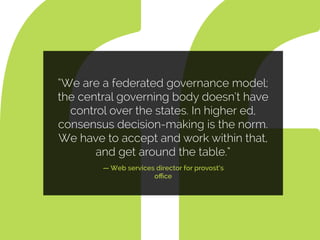
“We are a federated governance model;
the central governing body doesn’t have
control over the states. In higher ed,
consensus decision-making is the norm.
We have to accept and work within that,
and get around the table.”
— Web services director for provost’s
office
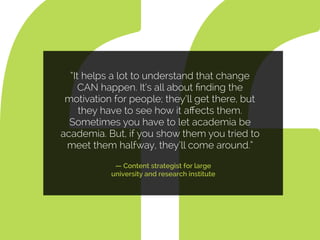
“It helps a lot to understand that change
CAN happen. It’s all about finding the
motivation for people; they’ll get there, but
they have to see how it affects them.
Sometimes you have to let academia be
academia. But, if you show them you tried to
meet them halfway, they’ll come around.”
— Content strategist for large
university and research institute
@rdelaudeRachel DeLauder
Start building your community:
@rdelaude
rachel@insidenewcity.com
#confabEDU

Higher Ed Governance for the Real World

  • 1.
    Higher Ed Governance for theReal World @rdelaudeRachel DeLauder
  • 2.
    @rdelaudeRachel DeLauder What doesit take to run a website?
  • 3.
    “Many orgs identifytheir digital teams as only the hands-on resources that design, write, and post web content on a daily basis. This narrow view reinforces the idea that digital is a tactical function and not a strategic one.” — Lisa Welshman, “Managing Chaos”
  • 4.
    From Managing Chaosby Lisa Welchman
  • 5.
    Web reality inhigher ed
  • 6.
    @rdelaudeRachel DeLauder Typical webstructure leaves gaps Findings Outdated org structures Committee culture Misunderstanding of web skills
  • 7.
  • 8.
    Mixed-methods study Online Survey •Web team roles, skills • Publishing process, workflow • Challenges, opportunities 1-on-1 Interviews • Web team structure, resources • Editorial jurisdiction • Stakeholder relationships • Institutional culture • Training, assessments • Lessons learned
  • 9.
    @rdelaudeRachel DeLauder Survey participants 67% Public4-Year 2-Year Adult/
 Online Private 55% 20%28% 11%
  • 10.
  • 11.
    @rdelaudeRachel DeLauder Job titlesof survey participants Practitioners 38% Managers 31% Leadership 31%
  • 12.
    @rdelaudeRachel DeLauder What isa “typical” 
 web team?
  • 13.
    @rdelaudeRachel DeLauder Number ofpeople on the web team Web Team 9+ 6-8 5 4 3 2 1Not much difference Public/private 4-year/2-year Site size
  • 14.
    @rdelaudeRachel DeLauder Common webteam skills Web Team CMS Entry Editing Writing Photo Analytics Graphic Design Social Media IA Front End Dev Content Mktg SEO Taxonomy Accessibility Back End Dev Usability Test Video PR Digital Ads 0 25 50 75 100
  • 15.
    @rdelaudeRachel DeLauder Outsourced skills WebTeam Back End Dev Digital Ads Video Photo Front End Dev Graphic Design SEO IA Analytics Usability Test Accessibility Taxonomy Writing Content Mktg PR Editing CMS Entry Social Media
  • 16.
    @rdelaudeRachel DeLauder How dothey manage content?
  • 17.
    @rdelaudeRachel DeLauder Content managementsystems Content Management Terminal 4 8% Sitecore 8% OmniUpdate 7% Expression Engine 10% Wordpress 13% Drupal 21% Other 24% Adobe 8%
  • 18.
    @rdelaudeRachel DeLauder Ongoing contentmaintenance Web Team 89% Run analytics reports 75% Send requests for web updates Delete unused pages Content audits Monitor site search logs User testing 66% 62% 56% 31%
  • 19.
    @rdelaudeRachel DeLauder What arethe common challenges?
  • 20.
    @rdelaudeRachel DeLauder The challengesof higher ed Challenges Quality, updated content Staffing Too many cooks Disagree on web’s purpose Training/ web skills Internal comm. issues # of audiences Measuring success CMS sucks Too much content No respect! Rebellion Too slow Pace of tech Power struggles $ No leadership support Lack of ownership
  • 21.
    “Too many @$#%cooks in the kitchen. Seriously. Everyone who has ever turned on a computer since the Commodore 64 thinks they know how to do everything.” Higher ed’s content challenges
  • 22.
    “The web teamhas very specialized knowledge that is used daily to maintain the website. To think that anyone given a WYSIWYG editor can write web content and maintain a website is demeaning and insulting.” Higher ed’s content challenges
  • 23.
  • 24.
    “We incorporated anonline coordinator system, which is mainly secretaries making changes. They aren’t in the system enough to be confident, and don’t review their websites or keep things updated. This was not a productive change for anyone, and our website has failed due to it.” Higher ed’s content challenges
  • 25.
    “We’ve got afairly good grip on the core content now, which is managed centrally, but a large chunk is outside the central team. As a small central team, we don’t have the time to support and guide those web authors.” Higher ed’s content challenges
  • 26.
  • 28.
    @rdelaudeRachel DeLauder Types ofweb teams Patterns from the data MarComm-based Slick, graphic- heavy templates Prioritized around business goals Consistent branding and messaging IT-based Focused on workflows and permissions Request-based updates Page load times, accessibility
  • 29.
    @rdelaudeRachel DeLauder Types ofweb teams Patterns from the data Centralized Consistent branding and messaging Bottlenecks Not enough staff to support everyone Edge-case needs not met Decentralized Speedy updates Autonomy SME knowledge Inconsistency Poor-quality content Silos
  • 30.
    @rdelaudeRachel DeLauder The challengesof higher ed Patterns from the data Quality, updated content Staffing Too many cooks Disagree on web’s purpose Training/ web skills Internal comm. issues # of audiences Measuring success CMS sucks Too much content No respect! Rebellion Too slow Pace of tech Power struggles $ No leadership support Lack of ownership
  • 31.
    @rdelaudeRachel DeLauder The challengesof higher ed Patterns from the data Staffing Politics Not enough investment in digital Lack of skills 
 & experience Misunderstanding of web’s power and purpose
  • 32.
  • 33.
  • 34.
  • 35.
  • 36.
  • 37.
  • 38.
    @rdelaudeRachel DeLauder Ways peopledeal Set up workflows based on stages of expertise, not org. structure SMEs edit text, but web specialists build new pages, create layouts, add images Edit access, but not publish permissions; built-in review stage Outsourced hosting or content maintenance tasks, e.g., SiteImprove
  • 40.
  • 41.
    “If I couldgo back, I’d be more proactive and empower people to be more excited about the web and their role in it…building those relationships, giving people a real understanding of your work and why it matters, and what they can do about it.” — Web communications manager 
 at a large university
  • 42.
    Show them how it’sdone @rdelaudeRachel DeLauder
  • 43.
  • 44.
    Prioritizing web projects Doesit support org. goals? What’s the ROI? Is it urgent? Are resources available? Is it a mandate/compliance issue? When was it requested? Is it their “turn”?
  • 45.
    Core Web TeamMarketing Web Committee Content Accuracy Responsible Consulted Informed Content Style & Format Responsible Accountable Informed Design Accountable Responsible Informed Information Architecture Responsible/ Accountable Consulted Informed Digital Strategy Responsible Consulted Accountable Draw lines in the sand @rdelaudeRachel DeLauder
  • 46.
    @rdelaudeRachel DeLauder 3. Getsupport from the top
  • 47.
  • 48.
    Take it up
 the ranks @rdelaudeRachel DeLauder
  • 49.
  • 50.
    “I’ve worked incentral IT and in marketing, and the thing that was missing with both of those groups is nobody talked about the user experience.” — Director of Website Services
  • 51.
  • 52.
  • 53.
    “We are afederated governance model; the central governing body doesn’t have control over the states. In higher ed, consensus decision-making is the norm. We have to accept and work within that, and get around the table.” — Web services director for provost’s office
  • 54.
    “It helps alot to understand that change CAN happen. It’s all about finding the motivation for people; they’ll get there, but they have to see how it affects them. Sometimes you have to let academia be academia. But, if you show them you tried to meet them halfway, they’ll come around.” — Content strategist for large university and research institute
  • 56.
    @rdelaudeRachel DeLauder Start buildingyour community: @rdelaude rachel@insidenewcity.com #confabEDU