Antihypertensive Drugs
S. Parasuraman, M.Pharm., Ph.D.,
Senior Lecturer, Faculty of Pharmacy,
AIMST University
Etiology of Hypertension
• A specific cause of hypertension established in only
10–15% of patients.
• Patients in whom no specific cause of hypertension are
said to have essential or primary hypertension.
• Patients with a specific etiology are said to have
secondary hypertension.
• Genetic factors, psychological stress, and
environmental and dietary factors as contributing to
the development of hypertension. The heritability of
essential hypertension is estimated to be about 30%.
Classification of hypertension on the
basis of blood pressure
JNC 7;
2003
Normal Regulation of Blood Pressure
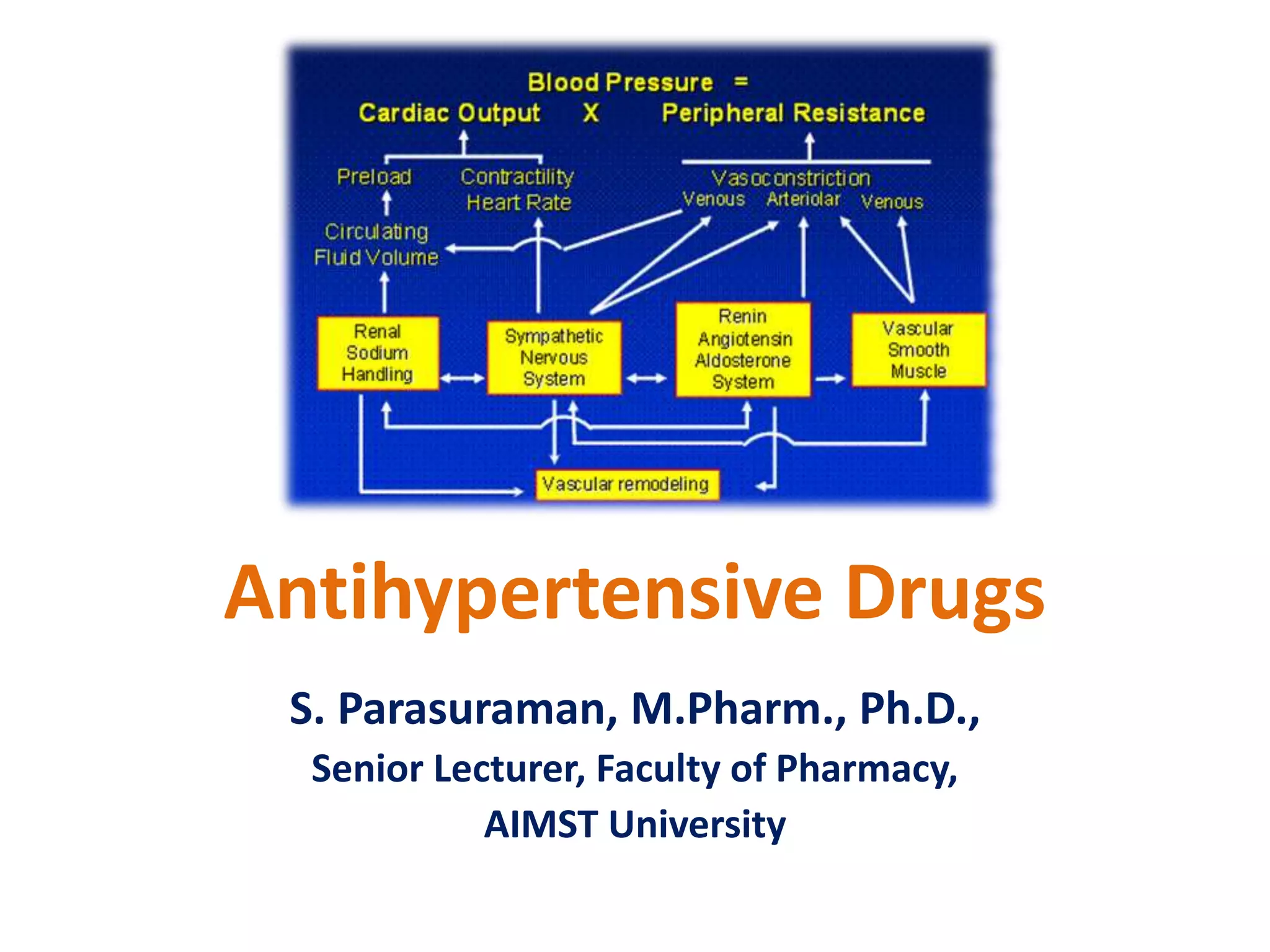
According to the hydraulic equation, arterial blood pressure
(BP) is directly proportionate to the product of the blood
flow (cardiac output, CO) and the resistance to passage of
blood through precapillary arterioles (peripheral vascular
resistance, PVR)
• BP = CO × PVR
Blood pressure is maintained by
• Moment-to-moment regulation of cardiac output
and peripheral vascular resistance exerted at three
anatomic sites arterioles, postcapillary venules
(capacitance vessels), and heart.
• Kidney
• Baroreflexes mediated by autonomic nerves
(combination with humoral mechanisms, including
the renin-angiotensin-aldosterone system)
• Local release of vasoactive substances
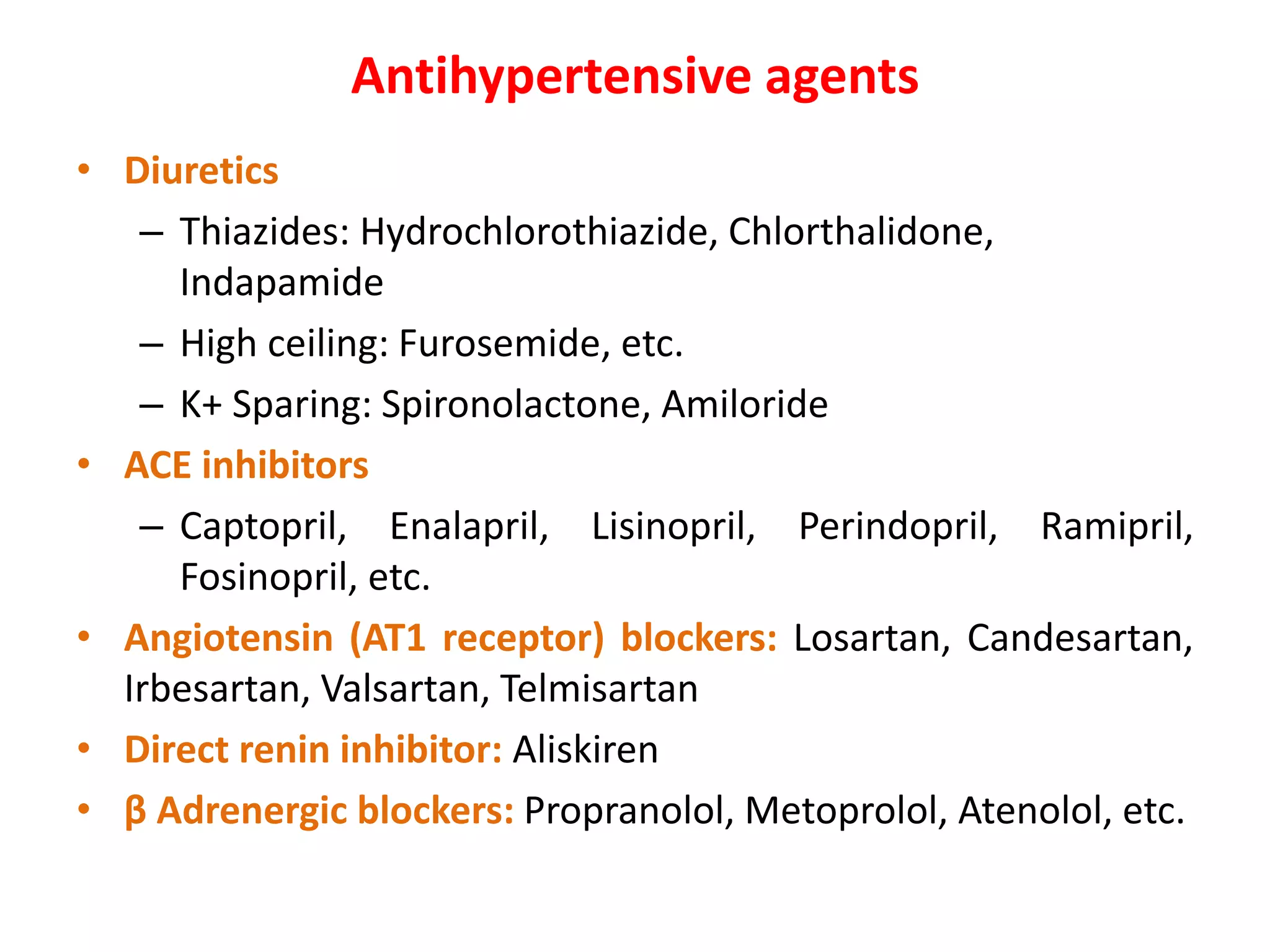
Antihypertensive agents
• Diuretics
– Thiazides: Hydrochlorothiazide, Chlorthalidone,
Indapamide
– High ceiling: Furosemide, Torsemide, ethacrynic acid.
– K+ Sparing: Spironolactone, Amiloride
• ACE inhibitors
– Captopril, Enalapril, Lisinopril, Perindopril, Ramipril,
Fosinopril, etc.
• Angiotensin (AT1 receptor) blockers: Losartan, Candesartan,
Irbesartan, Valsartan, Telmisartan
• Direct renin inhibitor: Aliskiren
• β Adrenergic blockers: Propranolol, Metoprolol, Atenolol, etc.
Antihypertensive agents
• Calcium channel blockers
– Verapamil, Diltiazem, Nifedipine, Felodipine, Amlodipine,
Nitrendipine, Lacidipine, etc.
• β + α Adrenergic blockers: Labetalol, Carvedilol
• α Adrenergic blockers: Prazosin, Terazosin, Doxazosin,
Phentolamine, Phenoxybenzamine
• Central sympatholytics: Clonidine, Methyldopa
• Vasodilators
– Arteriolar: Hydralazine, Minoxidil, Diazoxide
– Arteriolar + venous: Sodium nitroprusside
• Others: Adrenergic neurone blockers (Reserpine,
Guanethidine, etc.), Ganglion blockers (Pentolinium, etc.)
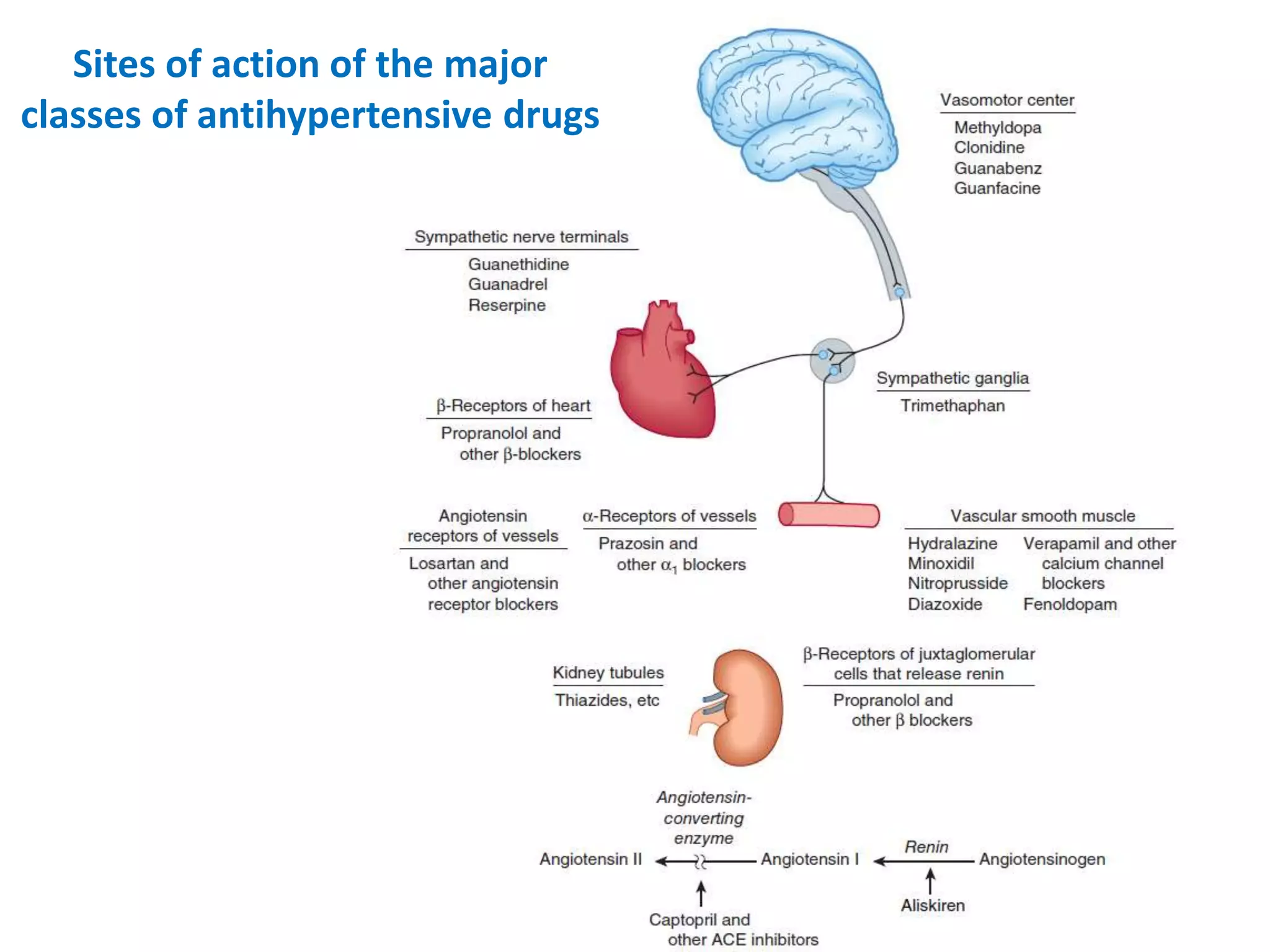
Sites of action of the major
classes of antihypertensive drugs
Diuretics
• Thiazide diuretics: Thiazide
diuretics, such as
hydrochlorothiazide and
chlorthalidone, lower blood
pressure initially by
increasing sodium and
water excretion. Thiazide
diuretics can induce
hypokalemia, hyperuricemia
and, to a lesser extent,
hyperglycemia in some
patients.
Diuretics
• Loop diuretics:
• Inhibitors of epithelial sodium transport at the late
distal and collecting ducts (furosemide, and
ethacrynic acid) or antagonizing aldosterone receptor
(spironolactone, and eplerenone) and reduce
potassium loss in the urine.
• Aldosterone antagonists have the additional benefit of
diminishing the cardiac remodeling that occurs in
heart failure.
Diuretics
• Loop diuretics:
• The loop diuretics act promptly by blocking sodium
and chloride reabsorption in the kidneys, even in
patients with poor renal function or those who have
not responded to thiazide diuretics. Loop diuretics
cause decreased renal vascular resistance and
increased renal blood flow.
Diuretics
• K+ Sparing:
• potassium-sparing diuretics (spironolactone, and
eplerenone) are competitive antagonists that either
compete with aldosterone, or directly block
epithelial sodium channel (amiloride).
ACE inhibitors
Renin Inhibitors
ACE Inhibitors
Angiotensin
blockers
ACE inhibitors
• The ACE inhibitors, are recommended as first-line
treatment of hypertension in patients with a variety
of compelling indications, including high coronary
disease risk or history of diabetes, stroke, heart
failure, myocardial infarction, or chronic kidney
disease.
ACE inhibitors
• ACE is also responsible for the breakdown of
bradykinin, a peptide that increases the production
of nitric oxide and prostacyclin by the blood vessels.
Both nitric oxide and prostacyclin are potent
vasodilators.
ACE inhibitors
• ACE inhibitors decrease angiotensin II and increase
bradykinin levels. Vasodilation is result of decreased
vasoconstriction (from diminished levels of
angiotensin II) and enhanced vasodilation (from
increased bradykinin).
• By reducing circulating angiotensin II levels, ACE
inhibitors also decrease the secretion of
aldosterone, resulting in decreased sodium and
water retention.
• ACE inhibitors reduce both cardiac preload and
afterload, thereby decreasing cardiac work.
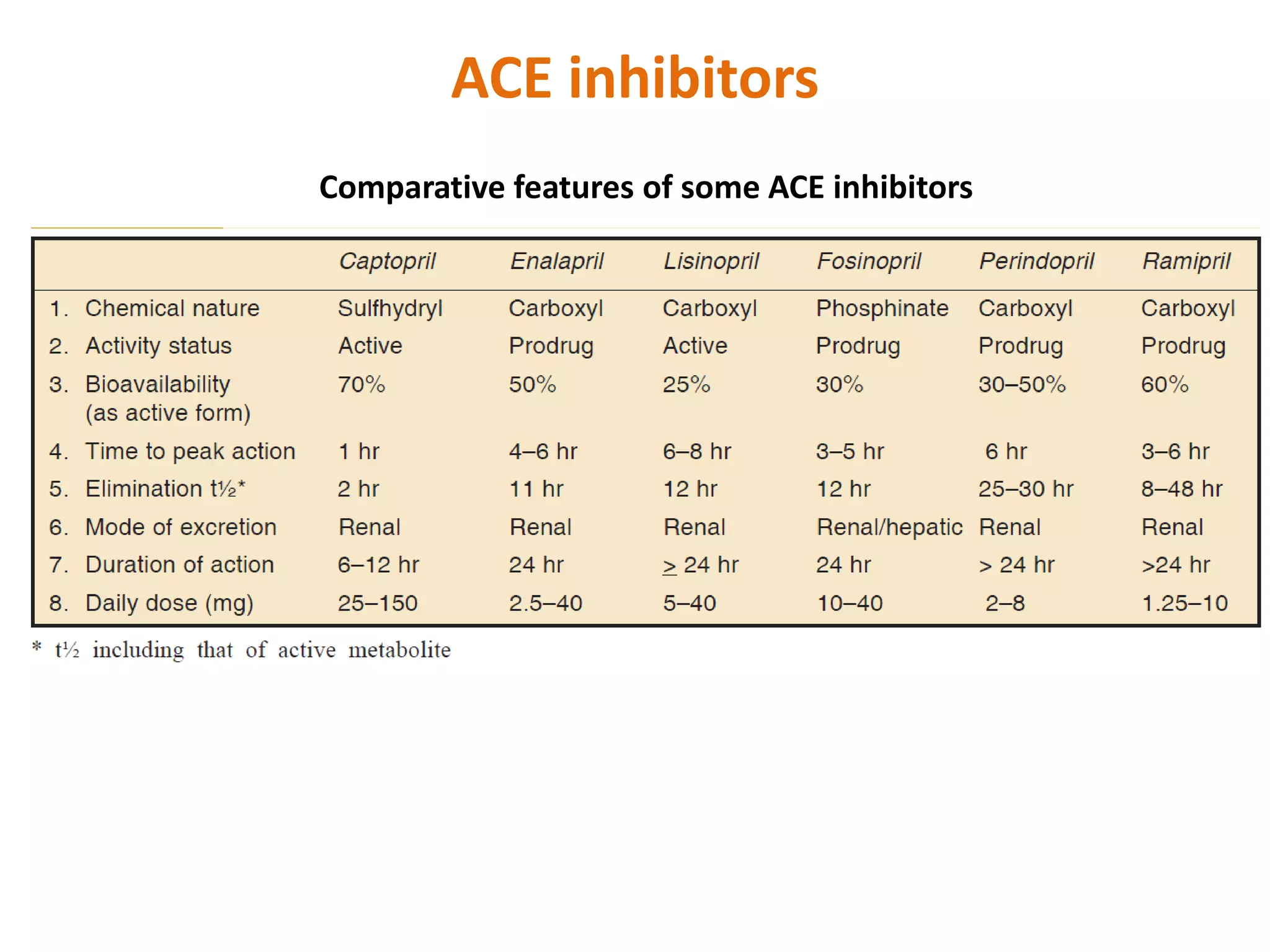
ACE inhibitors
Comparative features of some ACE inhibitors
ACE inhibitors
Adverse effects of ACE inhibitors:
• The adverse effect profile of all ACE inhibitors is
similar. Captopril is well tolerated by most patients,
especially if daily dose is kept below 150 mg.
• Hypotension: An initial sharp fall in BP occurs
especially in diuretic treated and CHF patients
• Hyperkalaemia
• Cough
• Rashes, urticaria
• Angioedema
ACE inhibitors
Adverse effects of ACE inhibitors:
• Dysgeusia/ parageusia
• Foetopathic
• Headache, dizziness, nausea and bowel upset
• Granulocytopenia and proteinuria (rare ADR)
• Acute renal failure
ACE inhibitors
Advantages of ACE inhibitor:
• Free of postural hypotension, electrolyte
disturbances, feeling of weakness and CNS effects
• Safety in asthmatics, diabetics and peripheral
vascular disease patients
• Long-term ACE inhibitor therapy has the potential to
reduce incidence of type 2 diabetes in high risk
subjects
• No rebound hypertension on withdrawal
ACE inhibitors
Advantages of ACE inhibitor:
• No hyperuricaemia, no deleterious effect on plasma
lipid profile
• ACE inhibitors are the most effective drugs for
preventing sudden cardiac death in post-infarction
patients. However, they are less effective for
primary prophylaxis of MI and for preventing left
ventricular hypertrophy.
Uses of ACE inhibitors
• Hypertension:
– The ACE inhibitors are first line drugs in all grades
of hypertension, but the angiotensin receptor
blockers (ARBs) have now surpassed them in
popularity.
– Essential hypertension respond to monotherapy
with ACE inhibitors and majority of the rest to
their combination with diuretics or beta blockers.
Uses of ACE inhibitors
• Congestive Heart Failure (CHF): ACE inhibitors cause
both arteriolar and venodilatation in CHF patients;
reduce afterload as well as preload.
• Myocardial infarction: Long-term ACE inhibitor
therapy reduces recurrent MI.
• Prophylaxis in high cardiovascular risk subjects: ACE
inhibitors are protective in high cardiovascular risk
subjects even when there is no associated
hypertension or left ventricular dysfunction. ACE
inhibitors may improved endothelial function.
Uses of ACE inhibitors
• Diabetic nephropathy: Prolonged ACE inhibitor
therapy has been found to prevent or delay end-
stage renal disease in type I as well as type II
diabetics.
• Nondiabetic nephropathy: ACE inhibitors reducing
proteinuria by decreasing pressure gradient across
glomerular capillaries as well as by altering
membrane permeability.
• Scleroderma crisis: The marked rise in BP and
deterioration of renal function in scleroderma crisis
is mediated by Ang II. ACE inhibitors produce
improvement and are life saving in this condition.
Angiotensin antagonists (ARBs)
• Angiotensin antagonists: losartan, candesartan,
valsartan, telmisartan, olmesartan and irbesartan.
• Their pharmacologic effects of ARBs are similar to
those of ACE inhibitors.
• ARBs produce arteriolar and venous dilation and
block aldosterone secretion, thus lowering blood
pressure and decreasing salt and water retention.
• ARBs do not increase bradykinin levels.
• ARBs may be used as first-line agents for the
treatment of hypertension, especially in patients
with a compelling indication of diabetes, heart
failure, or chronic kidney disease.
Direct renin inhibitor
• A selective renin inhibitor, aliskiren directly inhibits
renin and, thus, acts earlier in the renin–
angiotensin–aldosterone system than ACE inhibitors
or ARBs.
• It lowers blood pressure about as effectively as
ARBs, ACE inhibitors, and thiazides. Aliskiren should
not be routinely combined with an ACE inhibitor or
ARBs.
• Aliskiren can cause diarrhea, especially at higher
doses, and can also cause cough and angioedema,
but probably less often than ACE inhibitors.
• Aliskiren is contraindicated during pregnancy.
β-adrenergic blockers
• β-adrenergic blockers are mild antihypertensives and
do not significantly lower BP in normotensives. In
stage 1 cases of hypertensive patients (30 - 40%), β-
adrenergic blockers are used alone.
β-adrenergic blockers
Propranolol
• Propranolol is a first β blocker showed effective in
hypertension and ischemic heart disease.
• Propranolol has now been largely replaced by
cardioselective β blockers such as metoprolol and
atenolol.
• All β-adrenoceptor-blocking agents are useful for
lowering blood pressure in mild to moderate
hypertension.
• In severe hypertension, β blockers are especially
useful in preventing the reflex tachycardia that often
results from treatment with direct vasodilators.
β-adrenergic blockers
Metoprolol & Atenolol
• Metoprolol and atenolol, which are cardioselective,
are the most widely used β blockers in the treatment
of hypertension.
• Metoprolol is atenolol is inhibiting stimulation of β1
adrenoceptors.
• Sustained-release metoprolol is effective in reducing
mortality from heart failure and is particularly useful
in patients with hypertension and heart failure.
• Atenolol is reported to be less effective than
metoprolol in preventing the complications of
hypertension.
β-adrenergic blockers
Other beta blockers
• Nadolol and carteolol, nonselective β-receptor
antagonists
• Betaxolol and bisoprolol are β1-selective blockers
• Pindolol, acebutolol, and penbutolol are partial
agonists, ie, β blockers with some intrinsic
sympathomimetic activity. These drugs are
particularly beneficial for patients with
bradyarrhythmias or peripheral vascular disease.
β-adrenergic blockers
Other beta blockers
• Nadolol and carteolol, nonselective β-receptor
antagonists
• Betaxolol and bisoprolol are β1-selective blockers
• Pindolol, acebutolol, and penbutolol are partial
agonists, ie, β blockers with some intrinsic
sympathomimetic activity. These drugs are
particularly beneficial for patients with
bradyarrhythmias or peripheral vascular disease.
β-adrenergic blockers
Other beta blockers
• Labetalol, Carvedilol, & Nebivolol have both β-
blocking and vasodilating effects.
• Esmolol is a β1-selective blocker that is rapidly
metabolized via hydrolysis by red blood cell esterases.
Esmolol is used for management of intraoperative
and postoperative hypertension, and sometimes for
hypertensive emergencies, particularly when
hypertension is associated with tachycardia or when
there is concern about toxicity such as aggravation
of severe heart failure.
α-Adrenergic blockers
Prazosin, terazosin, and doxazosin
• Prazosin is a prototype α1-adrenergic blocking agent.
• Terazosin and doxazosin are long-acting congeners of
prazosin
• Alpha blockers reduce arterial pressure by dilating
both resistance and capacitance vessels.
Other alpha-adrenoceptorblocking agents
• phentolamine (reversible nonselective α-adrenergic
antagonist) and phenoxybenzamine (non-selective,
irreversible alpha blocker) are useful in diagnosis and
treatment of pheochromocytoma.
Centrally acting adrenergic drugs
Clonidine
• Clonidine acts centrally as an α2 agonist to produce
inhibition of sympathetic vasomotor centers, decreasing
sympathetic outflow to the periphery. This leads to
reduced total peripheral resistance and decreased blood
pressure. At present, it is occasionally used in combination
with a diuretic.
Methyldopa
• It is an α2 agonist that is converted to
methylnorepinephrine centrally to diminish adrenergic
outflow from the CNS. It is mainly used for management
of hypertension in pregnancy, where it has a record of
safety.
Vasodilators
• Hydralazine/Dihydralazine and minoxidil not used as
primary drugs to treat hypertension. These
vasodilators act by producing relaxation of vascular
smooth muscle, primarily in arteries and arterioles.
This results in decreased peripheral resistance.
• Both agents produce reflex stimulation of the heart,
resulting in the competing reflexes of increased
myocardial contractility, heart rate, and oxygen
consumption.
• Hydralazine is an accepted medication for controlling
blood pressure in pregnancy induced hypertension. This
drug is used topically to treat male pattern baldness.
Treatment of hypertension
• Hypertensive emergency: It is rare but life-
threatening condition (systolic BP >180 mm Hg or
diastolic BP >120 mm Hg with evidence of impending
or progressive target organ damage such as stroke,
myocardial infarction).
• A variety of medications are used, including calcium
channel blockers (nicardipine and clevidipine), nitric
oxide vasodilators (nitroprusside and nitroglycerin),
adrenergic receptor antagonists (phentolamine,
esmolol, and labetalol), the vasodilator hydralazine,
and the dopamine agonist fenoldopam.
Treatment of hypertension
• Resistant hypertension: It is defined as blood
pressure that remains elevated despite
administration of an optimal three-drug regimen that
includes a diuretic. The most common causes of
resistant hypertension
– poor compliance
– excessive ethanol intake
– concomitant conditions (diabetes, obesity, sleep apnea,
hyperaldosteronism, high salt intake, metabolic syndrome)
– concomitant medications (sympathomimetics,
nonsteroidal anti-inflammatory drugs, or antidepressant
medications)
– insufficient dose/ drug
Treatment of hypertension
• Summary of WHO-ISH and British Hypertension
Society (BHS) 2004, guidelines
– Except for stage II hypertension, start with a single most
appropriate drug
– Follow A B C D rule (A—ACE inhibitor/ARB; B—β blocker;
C—CCB, D—diuretic). While A and (in some cases) B are
preferred in younger patients (<55 years), C and D are
preferred in the older (> 55 years) for the step I or
monotherapy.
– Initiate therapy at low dose; if needed increase dose
moderately.
– If only partial response is obtained, add a drug from
another complimentary class or change to low dose
combination
Treatment of hypertension
• Summary of WHO-ISH and British Hypertension
Society (BHS) 2004, guidelines
– If no response, change to a drug from another class, or low
dose combination from other classes
– In case of side effect to the initially chosen drug, either
substitute with drug of another class or reduce dose
– Majority of stage II hypertensives are started on a 2 drug
combination
Treatment of hypertension in patients with
concomitant diseases
Combinations to be avoided
Combination Possible effects
An α or β adrenergic blocker
with clonidine
Apparent antagonism of
clonidine action has been
observed.
Hydralazine with a
dihydropyridine (DHP) or
prazosin
haemodynamic action
Verapamil or diltiazem with β
blocker
bradycardia, A-V block can
Methyldopa with clonidine or any two drugs of the same class
Antihypertensives & pregnancy
Antihypertensives to be avoided
during pregnancy
Antihypertensives found safer
during pregnancy
ACE inhibitors, ARBs: Risk of foetal
damage, growth retardation.
Hydralazine
Methyldopa
Diuretics: increase risk of foetal
wastage, placental infarcts,
miscarriage, stillbirth.
Dihydropyridine CCBs: if used, they
should be discontinued before
labour as they weaken uterine
contractions.
Nonselective β blockers: Propranolol
cause low birth weight, decreased
placental size, neonatal bradycardia
and hypoglycaemia.
Cardioselective β blockers and those
with ISA, e.g. atenolol, metoprolol,
pindolol, acebutolol: may be used if
no other choice.
Sod. nitroprusside: Contraindicated
in eclampsia.
Prazosin and clonidine-provided that
postural hypotension can be
avoided.
Possible combination of antihypertensive drugs: Continuous green line
(preferential combinations); dotted green line (acceptable combinations); dotted
black line (less usual combinations); red line (unusual combinations).
Ref: Póvoa R, Barroso WS, Brandão AA, et al. I brazilian position paper on antihypertensive drug
combination. Arq Bras Cardiol. 2014;102(3):203-10.
Thank you

Antihypertensive drugs

  • 1.
    Antihypertensive Drugs S. Parasuraman,M.Pharm., Ph.D., Senior Lecturer, Faculty of Pharmacy, AIMST University
  • 2.
    Etiology of Hypertension •A specific cause of hypertension established in only 10–15% of patients. • Patients in whom no specific cause of hypertension are said to have essential or primary hypertension. • Patients with a specific etiology are said to have secondary hypertension. • Genetic factors, psychological stress, and environmental and dietary factors as contributing to the development of hypertension. The heritability of essential hypertension is estimated to be about 30%.
  • 3.
    Classification of hypertensionon the basis of blood pressure JNC 7; 2003
  • 4.
    Normal Regulation ofBlood Pressure According to the hydraulic equation, arterial blood pressure (BP) is directly proportionate to the product of the blood flow (cardiac output, CO) and the resistance to passage of blood through precapillary arterioles (peripheral vascular resistance, PVR) • BP = CO × PVR
  • 5.
    Blood pressure ismaintained by • Moment-to-moment regulation of cardiac output and peripheral vascular resistance exerted at three anatomic sites arterioles, postcapillary venules (capacitance vessels), and heart. • Kidney • Baroreflexes mediated by autonomic nerves (combination with humoral mechanisms, including the renin-angiotensin-aldosterone system) • Local release of vasoactive substances
  • 6.
    Antihypertensive agents • Diuretics –Thiazides: Hydrochlorothiazide, Chlorthalidone, Indapamide – High ceiling: Furosemide, Torsemide, ethacrynic acid. – K+ Sparing: Spironolactone, Amiloride • ACE inhibitors – Captopril, Enalapril, Lisinopril, Perindopril, Ramipril, Fosinopril, etc. • Angiotensin (AT1 receptor) blockers: Losartan, Candesartan, Irbesartan, Valsartan, Telmisartan • Direct renin inhibitor: Aliskiren • β Adrenergic blockers: Propranolol, Metoprolol, Atenolol, etc.
  • 7.
    Antihypertensive agents • Calciumchannel blockers – Verapamil, Diltiazem, Nifedipine, Felodipine, Amlodipine, Nitrendipine, Lacidipine, etc. • β + α Adrenergic blockers: Labetalol, Carvedilol • α Adrenergic blockers: Prazosin, Terazosin, Doxazosin, Phentolamine, Phenoxybenzamine • Central sympatholytics: Clonidine, Methyldopa • Vasodilators – Arteriolar: Hydralazine, Minoxidil, Diazoxide – Arteriolar + venous: Sodium nitroprusside • Others: Adrenergic neurone blockers (Reserpine, Guanethidine, etc.), Ganglion blockers (Pentolinium, etc.)
  • 8.
    Sites of actionof the major classes of antihypertensive drugs
  • 9.
    Diuretics • Thiazide diuretics:Thiazide diuretics, such as hydrochlorothiazide and chlorthalidone, lower blood pressure initially by increasing sodium and water excretion. Thiazide diuretics can induce hypokalemia, hyperuricemia and, to a lesser extent, hyperglycemia in some patients.
  • 10.
    Diuretics • Loop diuretics: •Inhibitors of epithelial sodium transport at the late distal and collecting ducts (furosemide, and ethacrynic acid) or antagonizing aldosterone receptor (spironolactone, and eplerenone) and reduce potassium loss in the urine. • Aldosterone antagonists have the additional benefit of diminishing the cardiac remodeling that occurs in heart failure.
  • 11.
    Diuretics • Loop diuretics: •The loop diuretics act promptly by blocking sodium and chloride reabsorption in the kidneys, even in patients with poor renal function or those who have not responded to thiazide diuretics. Loop diuretics cause decreased renal vascular resistance and increased renal blood flow.
  • 12.
    Diuretics • K+ Sparing: •potassium-sparing diuretics (spironolactone, and eplerenone) are competitive antagonists that either compete with aldosterone, or directly block epithelial sodium channel (amiloride).
  • 13.
    ACE inhibitors Renin Inhibitors ACEInhibitors Angiotensin blockers
  • 14.
    ACE inhibitors • TheACE inhibitors, are recommended as first-line treatment of hypertension in patients with a variety of compelling indications, including high coronary disease risk or history of diabetes, stroke, heart failure, myocardial infarction, or chronic kidney disease.
  • 15.
    ACE inhibitors • ACEis also responsible for the breakdown of bradykinin, a peptide that increases the production of nitric oxide and prostacyclin by the blood vessels. Both nitric oxide and prostacyclin are potent vasodilators.
  • 16.
    ACE inhibitors • ACEinhibitors decrease angiotensin II and increase bradykinin levels. Vasodilation is result of decreased vasoconstriction (from diminished levels of angiotensin II) and enhanced vasodilation (from increased bradykinin). • By reducing circulating angiotensin II levels, ACE inhibitors also decrease the secretion of aldosterone, resulting in decreased sodium and water retention. • ACE inhibitors reduce both cardiac preload and afterload, thereby decreasing cardiac work.
  • 17.
  • 18.
    ACE inhibitors Adverse effectsof ACE inhibitors: • The adverse effect profile of all ACE inhibitors is similar. Captopril is well tolerated by most patients, especially if daily dose is kept below 150 mg. • Hypotension: An initial sharp fall in BP occurs especially in diuretic treated and CHF patients • Hyperkalaemia • Cough • Rashes, urticaria • Angioedema
  • 19.
    ACE inhibitors Adverse effectsof ACE inhibitors: • Dysgeusia/ parageusia • Foetopathic • Headache, dizziness, nausea and bowel upset • Granulocytopenia and proteinuria (rare ADR) • Acute renal failure
  • 20.
    ACE inhibitors Advantages ofACE inhibitor: • Free of postural hypotension, electrolyte disturbances, feeling of weakness and CNS effects • Safety in asthmatics, diabetics and peripheral vascular disease patients • Long-term ACE inhibitor therapy has the potential to reduce incidence of type 2 diabetes in high risk subjects • No rebound hypertension on withdrawal
  • 21.
    ACE inhibitors Advantages ofACE inhibitor: • No hyperuricaemia, no deleterious effect on plasma lipid profile • ACE inhibitors are the most effective drugs for preventing sudden cardiac death in post-infarction patients. However, they are less effective for primary prophylaxis of MI and for preventing left ventricular hypertrophy.
  • 22.
    Uses of ACEinhibitors • Hypertension: – The ACE inhibitors are first line drugs in all grades of hypertension, but the angiotensin receptor blockers (ARBs) have now surpassed them in popularity. – Essential hypertension respond to monotherapy with ACE inhibitors and majority of the rest to their combination with diuretics or beta blockers.
  • 23.
    Uses of ACEinhibitors • Congestive Heart Failure (CHF): ACE inhibitors cause both arteriolar and venodilatation in CHF patients; reduce afterload as well as preload. • Myocardial infarction: Long-term ACE inhibitor therapy reduces recurrent MI. • Prophylaxis in high cardiovascular risk subjects: ACE inhibitors are protective in high cardiovascular risk subjects even when there is no associated hypertension or left ventricular dysfunction. ACE inhibitors may improved endothelial function.
  • 24.
    Uses of ACEinhibitors • Diabetic nephropathy: Prolonged ACE inhibitor therapy has been found to prevent or delay end- stage renal disease in type I as well as type II diabetics. • Nondiabetic nephropathy: ACE inhibitors reducing proteinuria by decreasing pressure gradient across glomerular capillaries as well as by altering membrane permeability. • Scleroderma crisis: The marked rise in BP and deterioration of renal function in scleroderma crisis is mediated by Ang II. ACE inhibitors produce improvement and are life saving in this condition.
  • 25.
    Angiotensin antagonists (ARBs) •Angiotensin antagonists: losartan, candesartan, valsartan, telmisartan, olmesartan and irbesartan. • Their pharmacologic effects of ARBs are similar to those of ACE inhibitors. • ARBs produce arteriolar and venous dilation and block aldosterone secretion, thus lowering blood pressure and decreasing salt and water retention. • ARBs do not increase bradykinin levels. • ARBs may be used as first-line agents for the treatment of hypertension, especially in patients with a compelling indication of diabetes, heart failure, or chronic kidney disease.
  • 26.
    Direct renin inhibitor •A selective renin inhibitor, aliskiren directly inhibits renin and, thus, acts earlier in the renin– angiotensin–aldosterone system than ACE inhibitors or ARBs. • It lowers blood pressure about as effectively as ARBs, ACE inhibitors, and thiazides. Aliskiren should not be routinely combined with an ACE inhibitor or ARBs. • Aliskiren can cause diarrhea, especially at higher doses, and can also cause cough and angioedema, but probably less often than ACE inhibitors. • Aliskiren is contraindicated during pregnancy.
  • 27.
    β-adrenergic blockers • β-adrenergicblockers are mild antihypertensives and do not significantly lower BP in normotensives. In stage 1 cases of hypertensive patients (30 - 40%), β- adrenergic blockers are used alone.
  • 28.
    β-adrenergic blockers Propranolol • Propranololis a first β blocker showed effective in hypertension and ischemic heart disease. • Propranolol has now been largely replaced by cardioselective β blockers such as metoprolol and atenolol. • All β-adrenoceptor-blocking agents are useful for lowering blood pressure in mild to moderate hypertension. • In severe hypertension, β blockers are especially useful in preventing the reflex tachycardia that often results from treatment with direct vasodilators.
  • 29.
    β-adrenergic blockers Metoprolol &Atenolol • Metoprolol and atenolol, which are cardioselective, are the most widely used β blockers in the treatment of hypertension. • Metoprolol is atenolol is inhibiting stimulation of β1 adrenoceptors. • Sustained-release metoprolol is effective in reducing mortality from heart failure and is particularly useful in patients with hypertension and heart failure. • Atenolol is reported to be less effective than metoprolol in preventing the complications of hypertension.
  • 30.
    β-adrenergic blockers Other betablockers • Nadolol and carteolol, nonselective β-receptor antagonists • Betaxolol and bisoprolol are β1-selective blockers • Pindolol, acebutolol, and penbutolol are partial agonists, ie, β blockers with some intrinsic sympathomimetic activity. These drugs are particularly beneficial for patients with bradyarrhythmias or peripheral vascular disease.
  • 31.
    β-adrenergic blockers Other betablockers • Nadolol and carteolol, nonselective β-receptor antagonists • Betaxolol and bisoprolol are β1-selective blockers • Pindolol, acebutolol, and penbutolol are partial agonists, ie, β blockers with some intrinsic sympathomimetic activity. These drugs are particularly beneficial for patients with bradyarrhythmias or peripheral vascular disease.
  • 32.
    β-adrenergic blockers Other betablockers • Labetalol, Carvedilol, & Nebivolol have both β- blocking and vasodilating effects. • Esmolol is a β1-selective blocker that is rapidly metabolized via hydrolysis by red blood cell esterases. Esmolol is used for management of intraoperative and postoperative hypertension, and sometimes for hypertensive emergencies, particularly when hypertension is associated with tachycardia or when there is concern about toxicity such as aggravation of severe heart failure.
  • 33.
    α-Adrenergic blockers Prazosin, terazosin,and doxazosin • Prazosin is a prototype α1-adrenergic blocking agent. • Terazosin and doxazosin are long-acting congeners of prazosin • Alpha blockers reduce arterial pressure by dilating both resistance and capacitance vessels. Other alpha-adrenoceptorblocking agents • phentolamine (reversible nonselective α-adrenergic antagonist) and phenoxybenzamine (non-selective, irreversible alpha blocker) are useful in diagnosis and treatment of pheochromocytoma.
  • 34.
    Centrally acting adrenergicdrugs Clonidine • Clonidine acts centrally as an α2 agonist to produce inhibition of sympathetic vasomotor centers, decreasing sympathetic outflow to the periphery. This leads to reduced total peripheral resistance and decreased blood pressure. At present, it is occasionally used in combination with a diuretic. Methyldopa • It is an α2 agonist that is converted to methylnorepinephrine centrally to diminish adrenergic outflow from the CNS. It is mainly used for management of hypertension in pregnancy, where it has a record of safety.
  • 35.
    Vasodilators • Hydralazine/Dihydralazine andminoxidil not used as primary drugs to treat hypertension. These vasodilators act by producing relaxation of vascular smooth muscle, primarily in arteries and arterioles. This results in decreased peripheral resistance. • Both agents produce reflex stimulation of the heart, resulting in the competing reflexes of increased myocardial contractility, heart rate, and oxygen consumption. • Hydralazine is an accepted medication for controlling blood pressure in pregnancy induced hypertension. This drug is used topically to treat male pattern baldness.
  • 36.
    Treatment of hypertension •Hypertensive emergency: It is rare but life- threatening condition (systolic BP >180 mm Hg or diastolic BP >120 mm Hg with evidence of impending or progressive target organ damage such as stroke, myocardial infarction). • A variety of medications are used, including calcium channel blockers (nicardipine and clevidipine), nitric oxide vasodilators (nitroprusside and nitroglycerin), adrenergic receptor antagonists (phentolamine, esmolol, and labetalol), the vasodilator hydralazine, and the dopamine agonist fenoldopam.
  • 37.
    Treatment of hypertension •Resistant hypertension: It is defined as blood pressure that remains elevated despite administration of an optimal three-drug regimen that includes a diuretic. The most common causes of resistant hypertension – poor compliance – excessive ethanol intake – concomitant conditions (diabetes, obesity, sleep apnea, hyperaldosteronism, high salt intake, metabolic syndrome) – concomitant medications (sympathomimetics, nonsteroidal anti-inflammatory drugs, or antidepressant medications) – insufficient dose/ drug
  • 38.
    Treatment of hypertension •Summary of WHO-ISH and British Hypertension Society (BHS) 2004, guidelines – Except for stage II hypertension, start with a single most appropriate drug – Follow A B C D rule (A—ACE inhibitor/ARB; B—β blocker; C—CCB, D—diuretic). While A and (in some cases) B are preferred in younger patients (<55 years), C and D are preferred in the older (> 55 years) for the step I or monotherapy. – Initiate therapy at low dose; if needed increase dose moderately. – If only partial response is obtained, add a drug from another complimentary class or change to low dose combination
  • 39.
    Treatment of hypertension •Summary of WHO-ISH and British Hypertension Society (BHS) 2004, guidelines – If no response, change to a drug from another class, or low dose combination from other classes – In case of side effect to the initially chosen drug, either substitute with drug of another class or reduce dose – Majority of stage II hypertensives are started on a 2 drug combination
  • 40.
    Treatment of hypertensionin patients with concomitant diseases
  • 41.
    Combinations to beavoided Combination Possible effects An α or β adrenergic blocker with clonidine Apparent antagonism of clonidine action has been observed. Hydralazine with a dihydropyridine (DHP) or prazosin haemodynamic action Verapamil or diltiazem with β blocker bradycardia, A-V block can Methyldopa with clonidine or any two drugs of the same class
  • 42.
    Antihypertensives & pregnancy Antihypertensivesto be avoided during pregnancy Antihypertensives found safer during pregnancy ACE inhibitors, ARBs: Risk of foetal damage, growth retardation. Hydralazine Methyldopa Diuretics: increase risk of foetal wastage, placental infarcts, miscarriage, stillbirth. Dihydropyridine CCBs: if used, they should be discontinued before labour as they weaken uterine contractions. Nonselective β blockers: Propranolol cause low birth weight, decreased placental size, neonatal bradycardia and hypoglycaemia. Cardioselective β blockers and those with ISA, e.g. atenolol, metoprolol, pindolol, acebutolol: may be used if no other choice. Sod. nitroprusside: Contraindicated in eclampsia. Prazosin and clonidine-provided that postural hypotension can be avoided.
  • 43.
    Possible combination ofantihypertensive drugs: Continuous green line (preferential combinations); dotted green line (acceptable combinations); dotted black line (less usual combinations); red line (unusual combinations). Ref: Póvoa R, Barroso WS, Brandão AA, et al. I brazilian position paper on antihypertensive drug combination. Arq Bras Cardiol. 2014;102(3):203-10.
  • 44.

Editor's Notes

  • #9 Trimetaphan: Ganglionic blocker
  • #20 Dysgeusia: distortion of the sense of taste Foetopathic: disease or disorder seen in a fetus. Granulocytopenia: A marked decrease in the number of granulocytes (eosinophil, basophil).