@OSAMA_Z96
Video :
(Click here)
* Components of sensory examination :
1- Primary sensations :
Touch, Pain, Temperature, Vibrations.
2- Cortical sensations :
Localization, 2 points discrimination, Stereognosis, Graphesthesia.
3- Hearing tests :
Weber’s test, Rinne’s test.
4- Vision :
Pupillary light reflexes, Ishihara chart.
* Touch test :
1- Instrument used : Cotton or piece of paper.
2- Sensations can be similar on both sides or not.
* Pain test :
1- Instrument used : Pin.
2- If there is feeling without differentiation, this means touch is intact but pain is
lost.
Temperature test :
1- Instrument used : Test tube with hot & cold water.
* Sense of vibration test :
1- Instrument used : 128 frequency Tuning fork.
2- This sense is lost in demyelinating neuropathies.
Touch testPain test Sense of vibration test
* Sense of localization test :
1- Touch a part of patient body with his eyes closed.
2- Ask him to open the eyes & place his finger of that part.
* 2 points discrimination test :
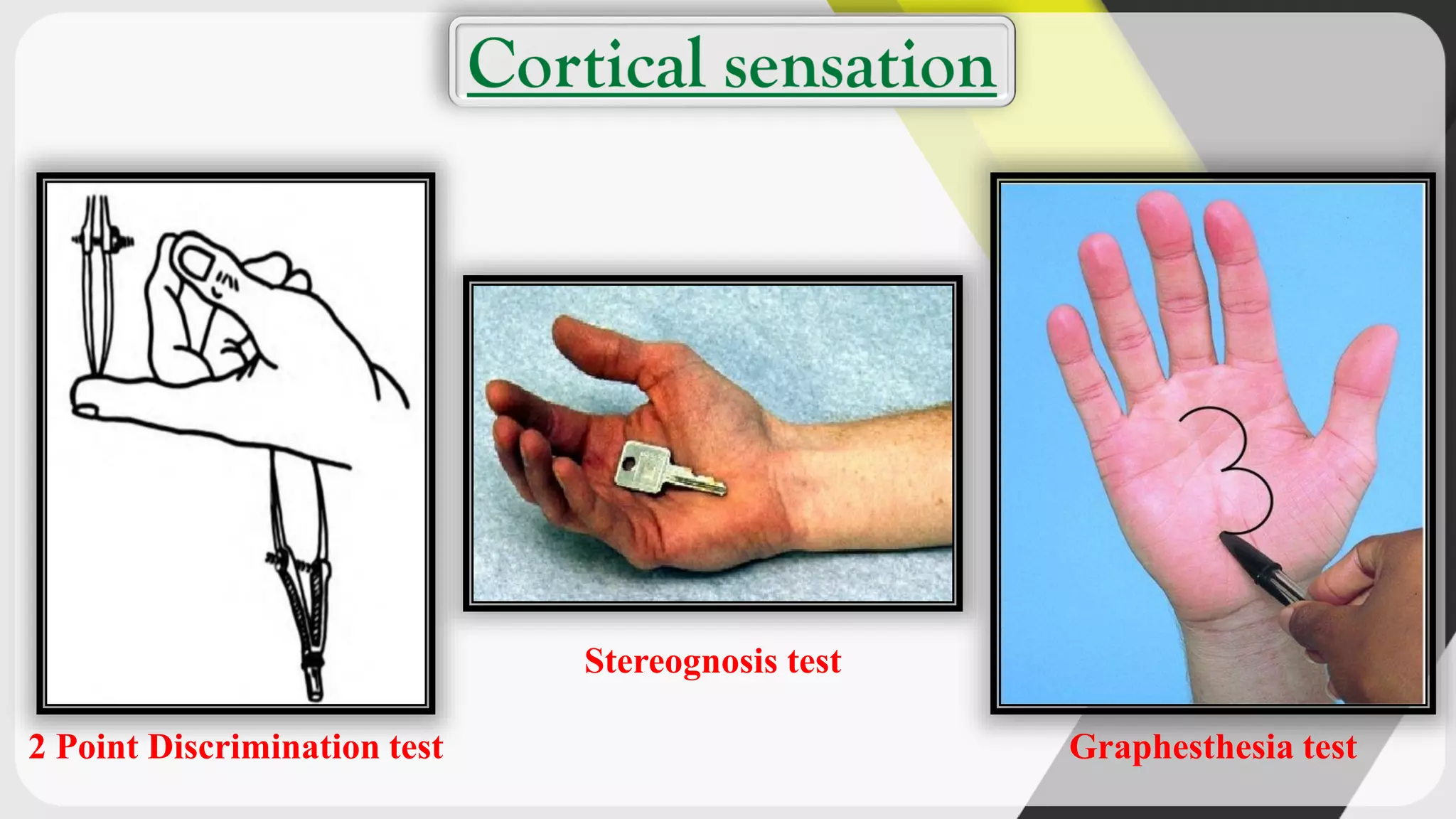
1- Instrument used : Special calibrated divider (2 points discrimination caliber).
2- Normal sense of 2 point on the pulp of fingers is 2mm, abnormal more than 5mm.
* Stereognosis test :
1- The ability to identify a suitable object after careful palpation.
2- This ability is lost in sensory cortex lesion (astereognosis).
* Graphesthesia test :
1- The ability to recognize a number or letter written in the palm with closed eyes.
2- This ability is lost in sensory cortex lesion (agraphesthesia).
Stereognosis test
2 Point Discrimination test Graphesthesia test
* Weber's test :
1- Instrument used : 512 frequency Tuning fork.
2- If the hearing is equal on both sides : indicates either normal hearing or equal deafness on
both sides.
3- In unilateral sensory neural deafness, hearing is lateralized to the normal side.
4- In unilateral conduction deafness, hearing is lateralized to the diseased ear.
* Rinne's test :
1- Instrument used : 512 frequency Tuning fork.
2- The fork on mastoid bone or 1cm away from the ear.
Rinne's test Weber’s test
* Pupillary light reflexes :
1- Instrument used : Light torch
2- Direct pupillary light reflex.
3- Relevant pupillary light reflex.
4- Indirect (consensual) pupillary light reflex.
* Color vision tests :
1- Instrument used : Ishihara chart book.
2- Test for color deficiencies.
Ishihara chart book
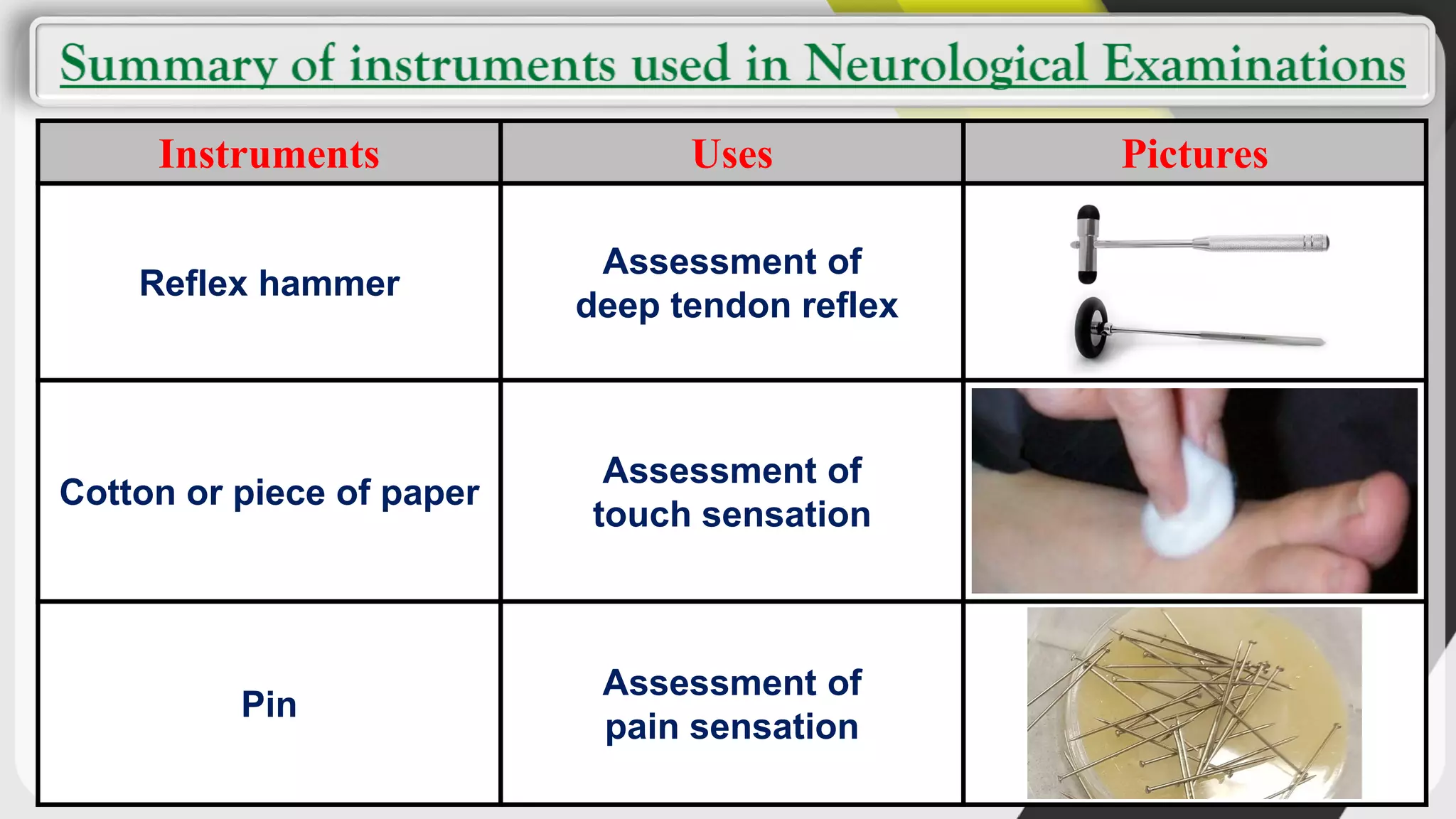
PicturesUsesInstruments
Assessment of
deep tendon reflex
Reflex hammer
Assessment of
touch sensation
Cotton or piece of paper
Assessment of
pain sensation
Pin
PicturesUsesInstruments
Assessment of
temperature sensation
Test tube
Assessment of
hearing & vibration sensation
128 frequency Tuning fork
512 frequency Tuning fork
Assessment of
2 point discrimination
Calibrated divider
PicturesUsesInstruments
Assessment of
pupillary light reflexes
Light torch
Assessment of
color deficiencies
Ishihara chart book

Physiology (sensory examination tests)

  • 1.
  • 3.
    * Components ofsensory examination : 1- Primary sensations : Touch, Pain, Temperature, Vibrations. 2- Cortical sensations : Localization, 2 points discrimination, Stereognosis, Graphesthesia. 3- Hearing tests : Weber’s test, Rinne’s test. 4- Vision : Pupillary light reflexes, Ishihara chart.
  • 4.
    * Touch test: 1- Instrument used : Cotton or piece of paper. 2- Sensations can be similar on both sides or not. * Pain test : 1- Instrument used : Pin. 2- If there is feeling without differentiation, this means touch is intact but pain is lost. Temperature test : 1- Instrument used : Test tube with hot & cold water. * Sense of vibration test : 1- Instrument used : 128 frequency Tuning fork. 2- This sense is lost in demyelinating neuropathies.
  • 5.
    Touch testPain testSense of vibration test
  • 6.
    * Sense oflocalization test : 1- Touch a part of patient body with his eyes closed. 2- Ask him to open the eyes & place his finger of that part. * 2 points discrimination test : 1- Instrument used : Special calibrated divider (2 points discrimination caliber). 2- Normal sense of 2 point on the pulp of fingers is 2mm, abnormal more than 5mm. * Stereognosis test : 1- The ability to identify a suitable object after careful palpation. 2- This ability is lost in sensory cortex lesion (astereognosis). * Graphesthesia test : 1- The ability to recognize a number or letter written in the palm with closed eyes. 2- This ability is lost in sensory cortex lesion (agraphesthesia).
  • 7.
    Stereognosis test 2 PointDiscrimination test Graphesthesia test
  • 8.
    * Weber's test: 1- Instrument used : 512 frequency Tuning fork. 2- If the hearing is equal on both sides : indicates either normal hearing or equal deafness on both sides. 3- In unilateral sensory neural deafness, hearing is lateralized to the normal side. 4- In unilateral conduction deafness, hearing is lateralized to the diseased ear. * Rinne's test : 1- Instrument used : 512 frequency Tuning fork. 2- The fork on mastoid bone or 1cm away from the ear.
  • 9.
  • 10.
    * Pupillary lightreflexes : 1- Instrument used : Light torch 2- Direct pupillary light reflex. 3- Relevant pupillary light reflex. 4- Indirect (consensual) pupillary light reflex. * Color vision tests : 1- Instrument used : Ishihara chart book. 2- Test for color deficiencies.
  • 11.
  • 12.
    PicturesUsesInstruments Assessment of deep tendonreflex Reflex hammer Assessment of touch sensation Cotton or piece of paper Assessment of pain sensation Pin
  • 13.
    PicturesUsesInstruments Assessment of temperature sensation Testtube Assessment of hearing & vibration sensation 128 frequency Tuning fork 512 frequency Tuning fork Assessment of 2 point discrimination Calibrated divider
  • 14.
    PicturesUsesInstruments Assessment of pupillary lightreflexes Light torch Assessment of color deficiencies Ishihara chart book