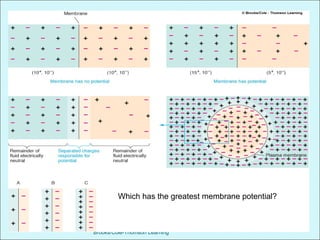
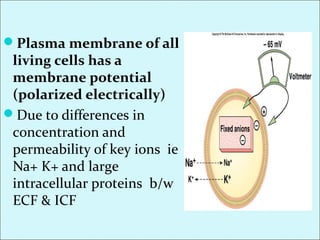
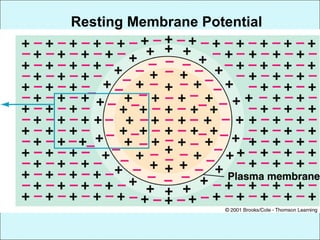
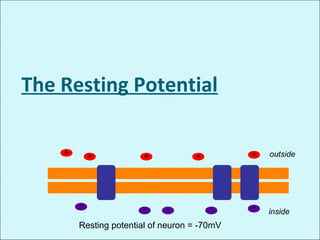
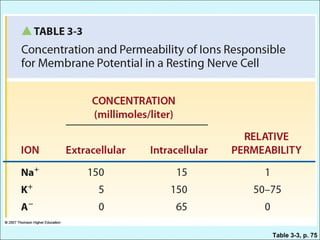
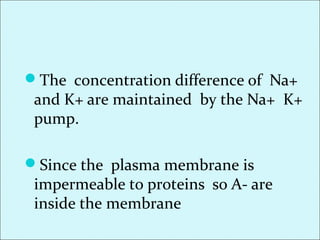
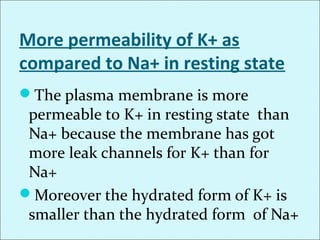
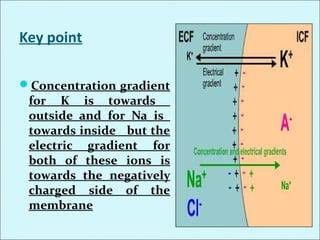
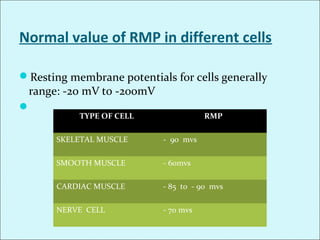
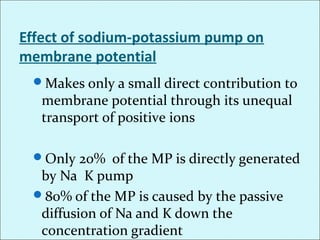
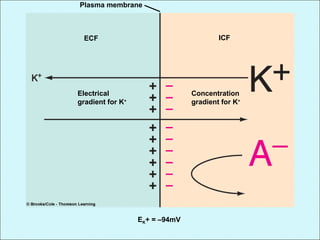
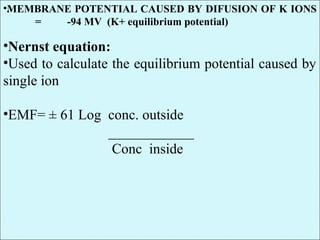
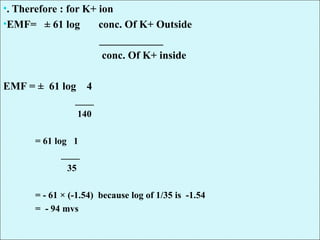
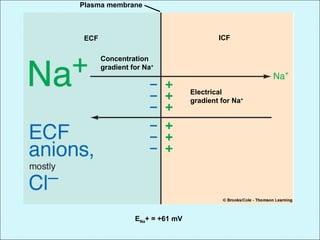
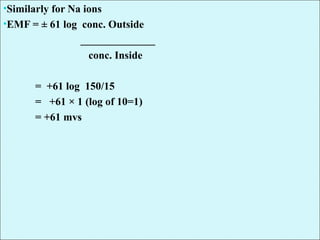
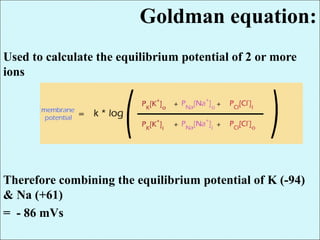
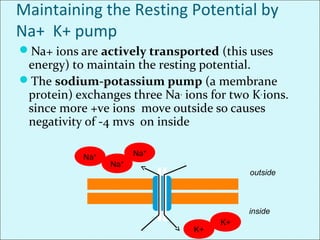
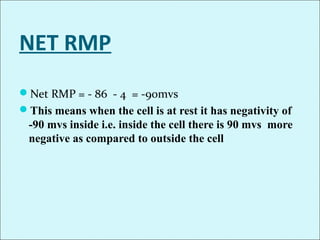
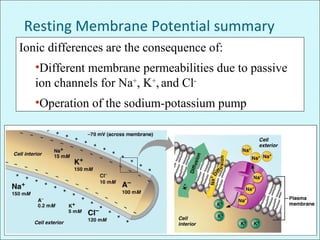
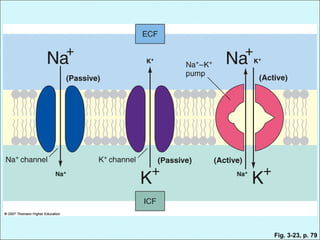
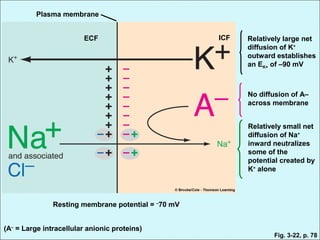
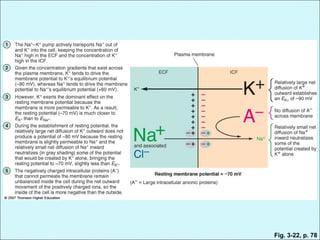
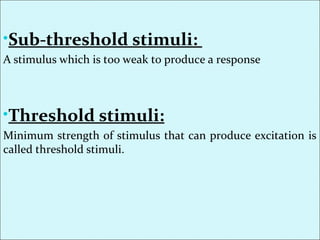
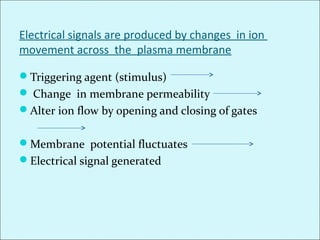
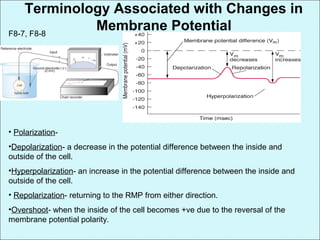
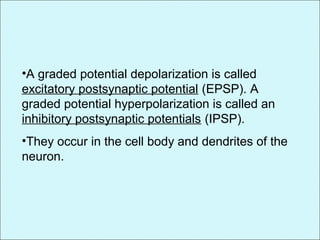
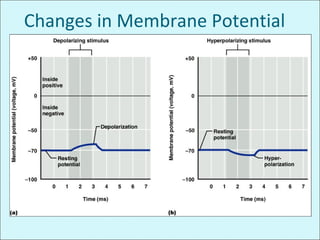
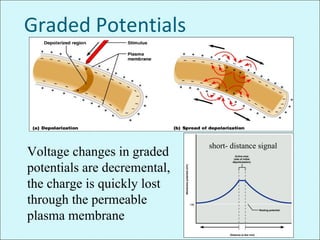
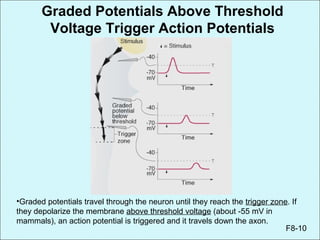
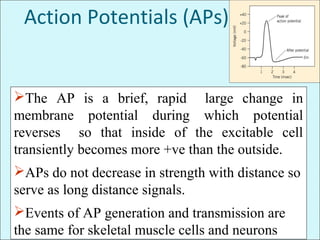
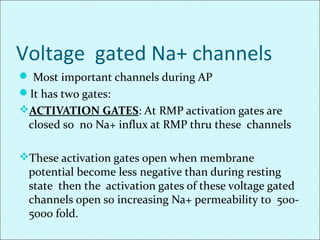
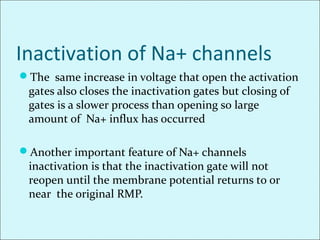
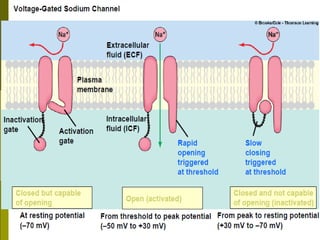
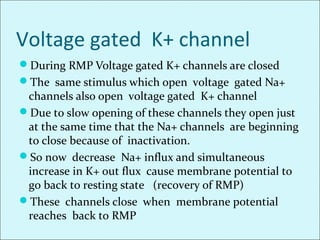
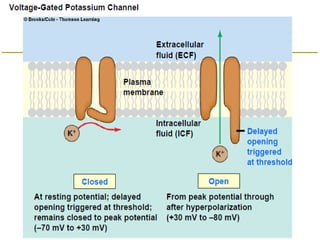
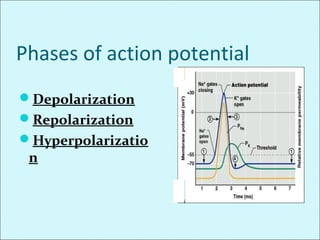
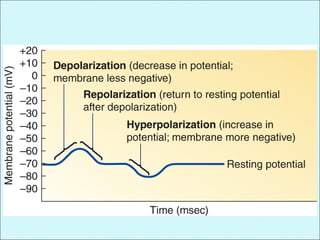
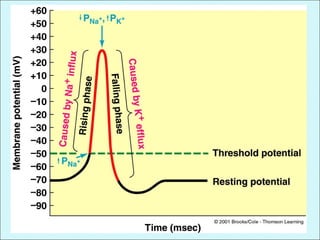
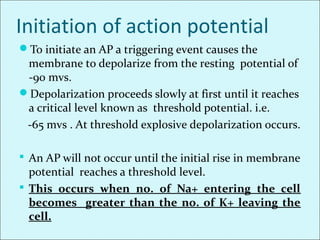
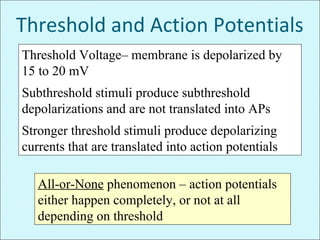
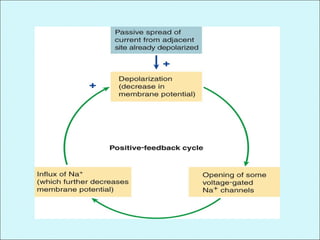
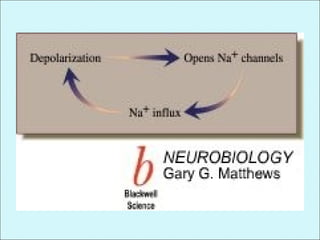
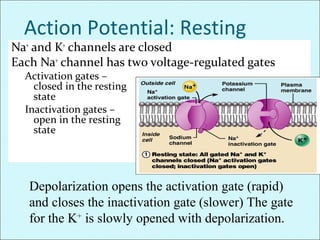
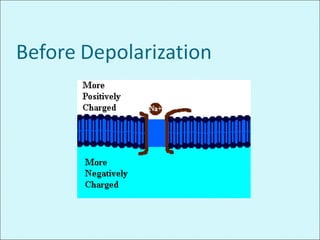
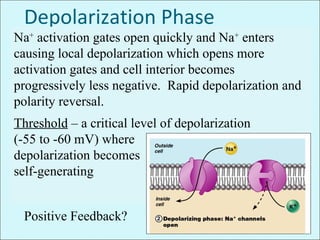
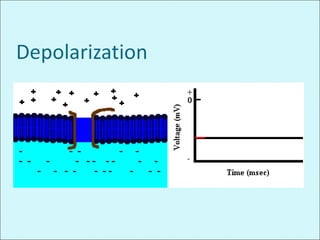
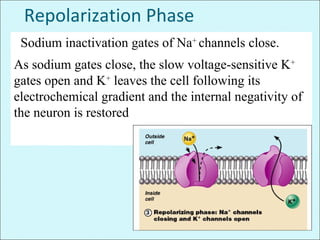
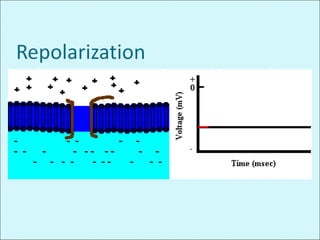
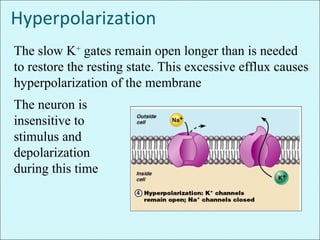
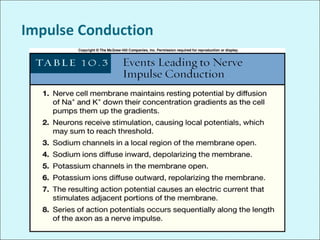
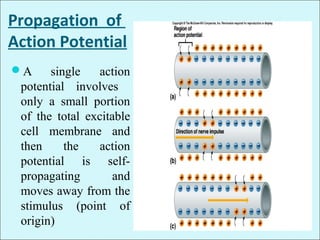
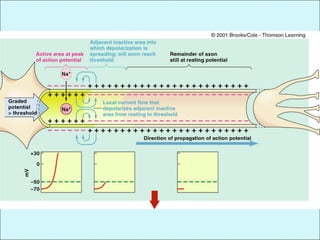
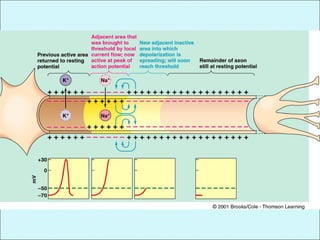
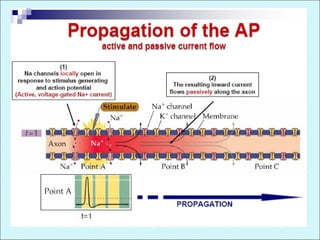
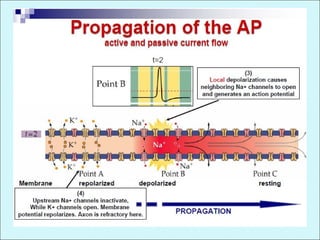
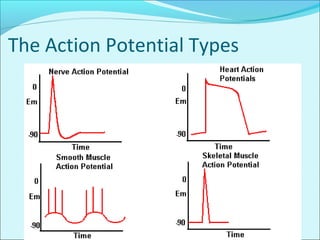
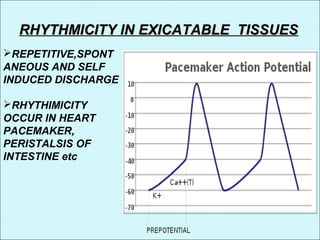
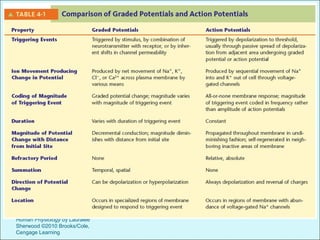
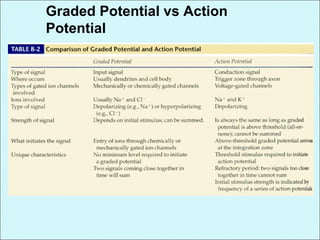
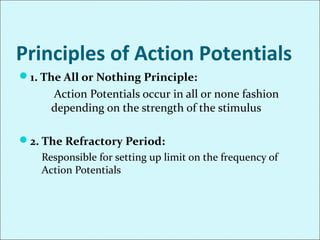
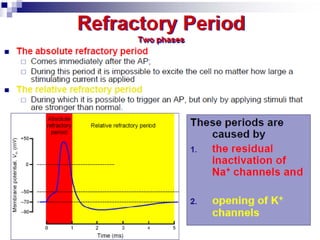
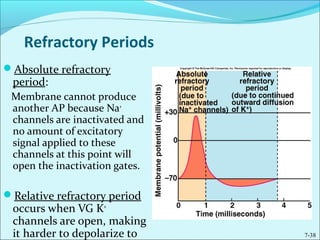
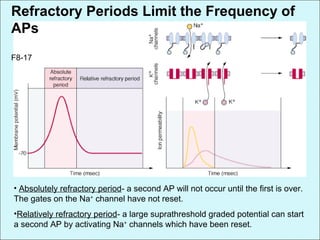
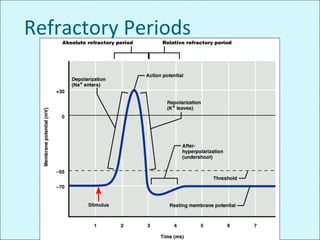
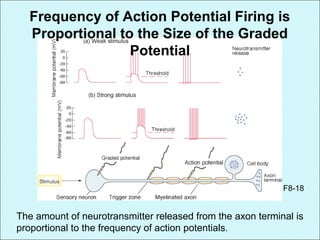
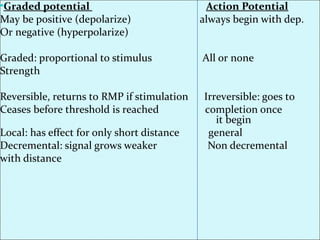
The membrane potential arises from separation of charges across the plasma membrane due to unequal distribution of ions such as sodium, potassium, and chloride between the intracellular and extracellular fluids. Nerve and muscle cells have the greatest membrane potential due to their ability to generate rapid changes in potential when stimulated. The resting membrane potential results from small passive leak of potassium out of the cell, generating a potential of around -70 mV. An action potential is initiated when the membrane potential surpasses the threshold, causing voltage-gated sodium channels to open and allow sodium to rush in, rapidly depolarizing the membrane before voltage-gated potassium channels open to repolarize it.


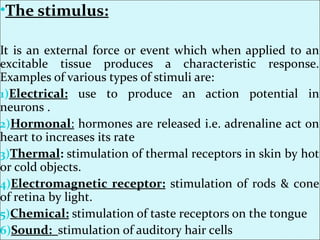
![Course of the Action Potential
The action potential begins with a partial
depolarization [A].
When the excitation threshold is reached there is a
sudden large depolarization [B].
This is followed rapidly by repolarization [C] and a
brief hyperpolarization [D].
Membrane
potential
(mV)
[A]
[B] [C]
[D] excitation threshold
Time (msec)
-70
+40
0
0 1 2 3](https://image.slidesharecdn.com/membranepotentialactionpotential-150614164544-lva1-app6891/85/Membrane-potential-action-potential-51-320.jpg)

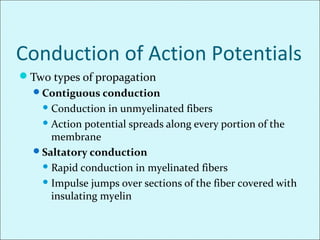
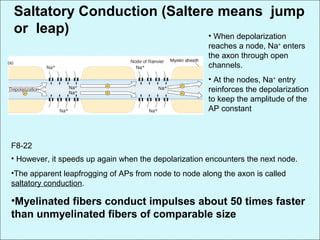
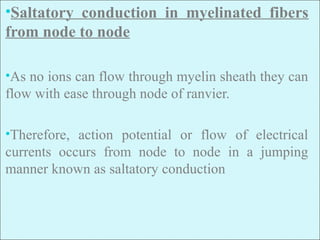
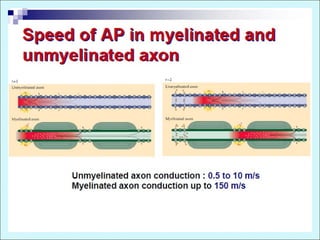


![Unit=4=Nervous system Physiology=AAU=2017 [Recovered].pdf](https://cdn.slidesharecdn.com/ss_thumbnails/unit4nervoussystemphysiologyaau2017recovered-250402223207-dbf86133-thumbnail.jpg?width=640&height=640&fit=bounds)


