Downloadedfrom:09ce.blogspot.com
Providedby:DkMamonai-09CE37
SYLLABUS of FOUNDATION
ENGINEERING
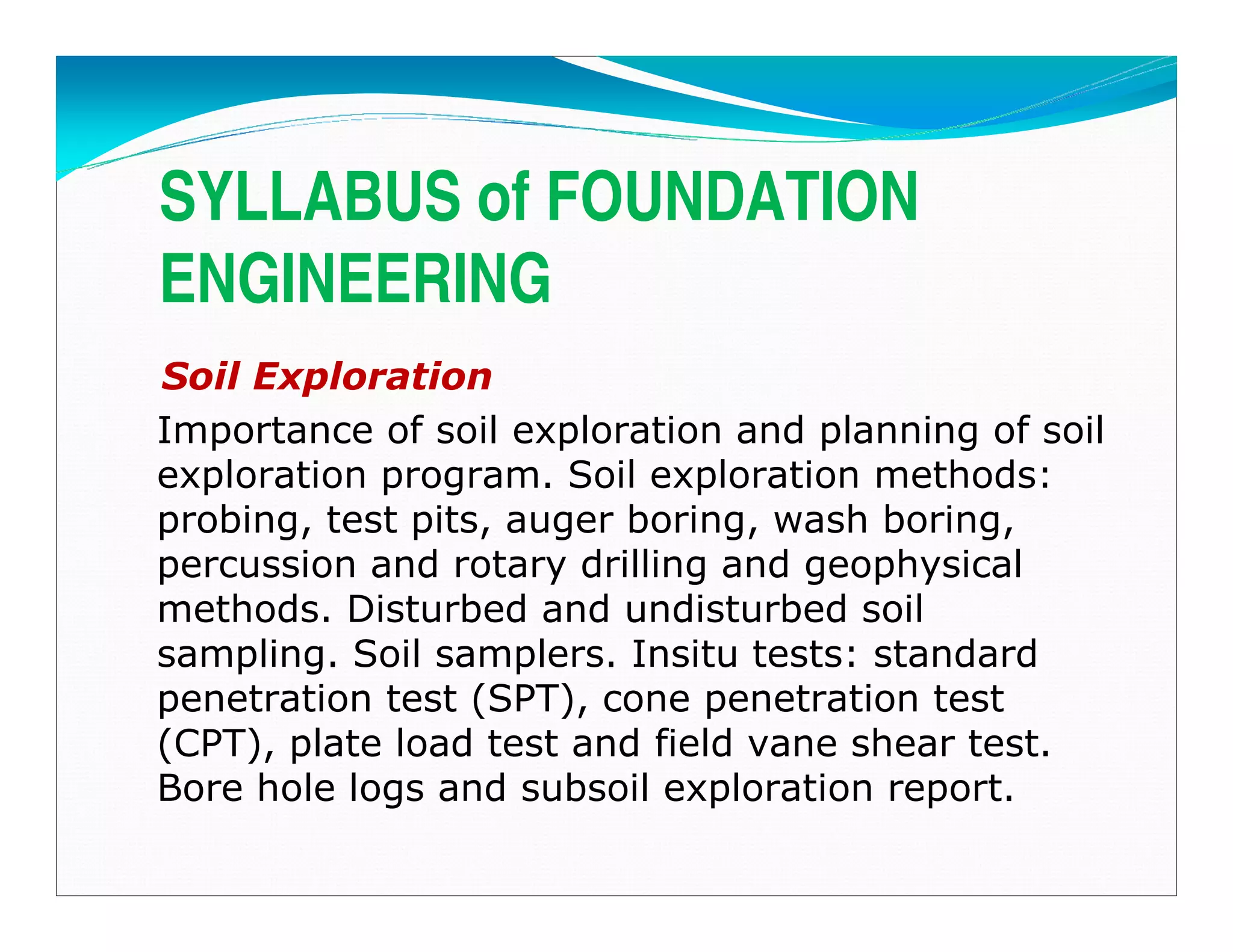
Soil Exploration
Shallow Foundations
Deep Foundations
Earthen Dams
Downloadedfrom:09ce.blogspot.com
Providedby:DkMamonai-09CE37
SYLLABUS of FOUNDATION
ENGINEERING
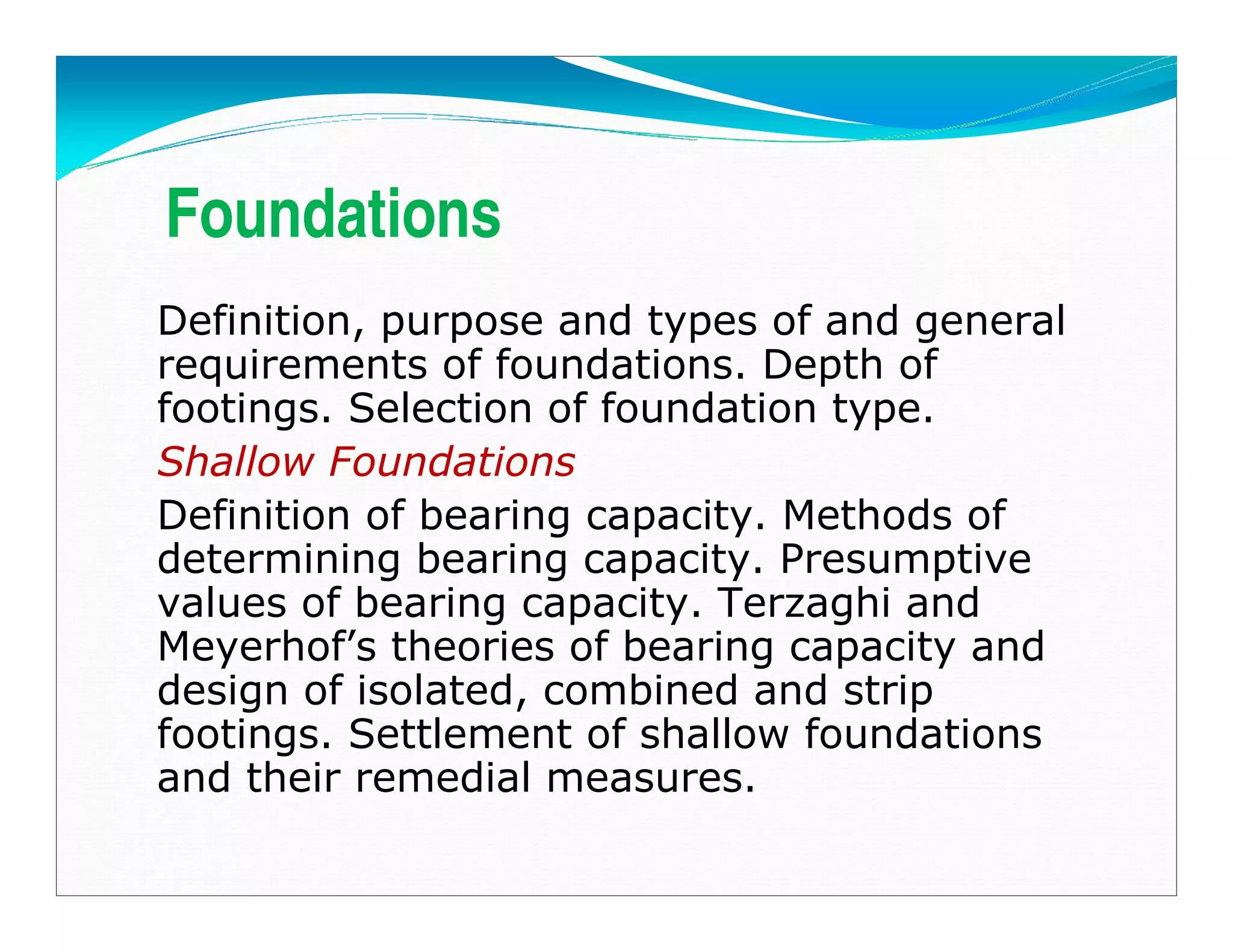
Soil Exploration
Importance of soil exploration and planning of soil
exploration program. Soil exploration methods:
probing, test pits, auger boring, wash boring,
percussion and rotary drilling and geophysical
methods. Disturbed and undisturbed soil
sampling. Soil samplers. Insitu tests: standard
penetration test (SPT), cone penetration test
(CPT), plate load test and field vane shear test.
Bore hole logs and subsoil exploration report.
Downloadedfrom:09ce.blogspot.com
Providedby:DkMamonai-09CE37
Foundations
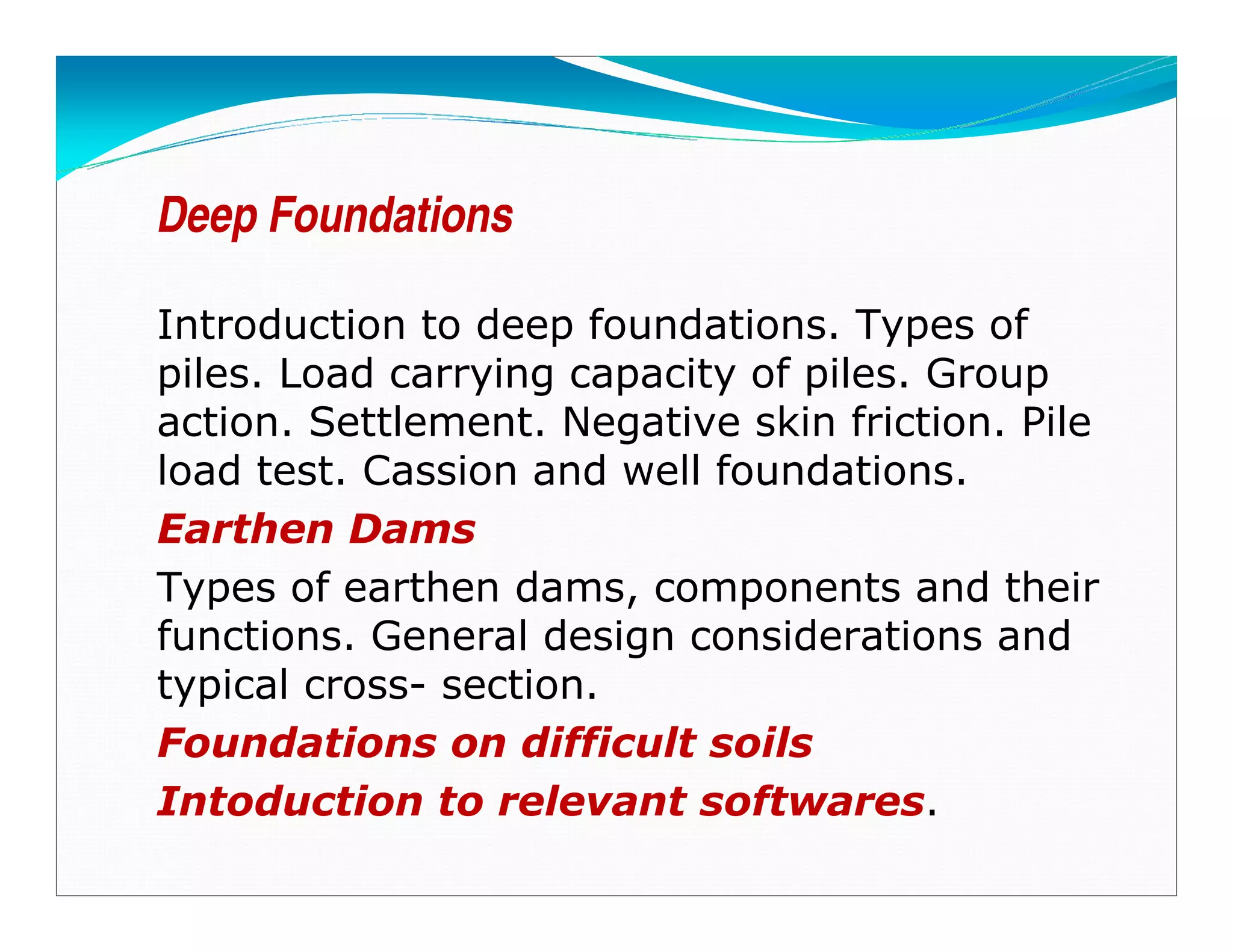
Definition, purpose and types of and general
requirements of foundations. Depth of
footings. Selection of foundation type.
Shallow Foundations
Definition of bearing capacity. Methods of
determining bearing capacity. Presumptive
values of bearing capacity. Terzaghi and
Meyerhof’s theories of bearing capacity and
design of isolated, combined and strip
footings. Settlement of shallow foundations
and their remedial measures.
Downloadedfrom:09ce.blogspot.com
Providedby:DkMamonai-09CE37
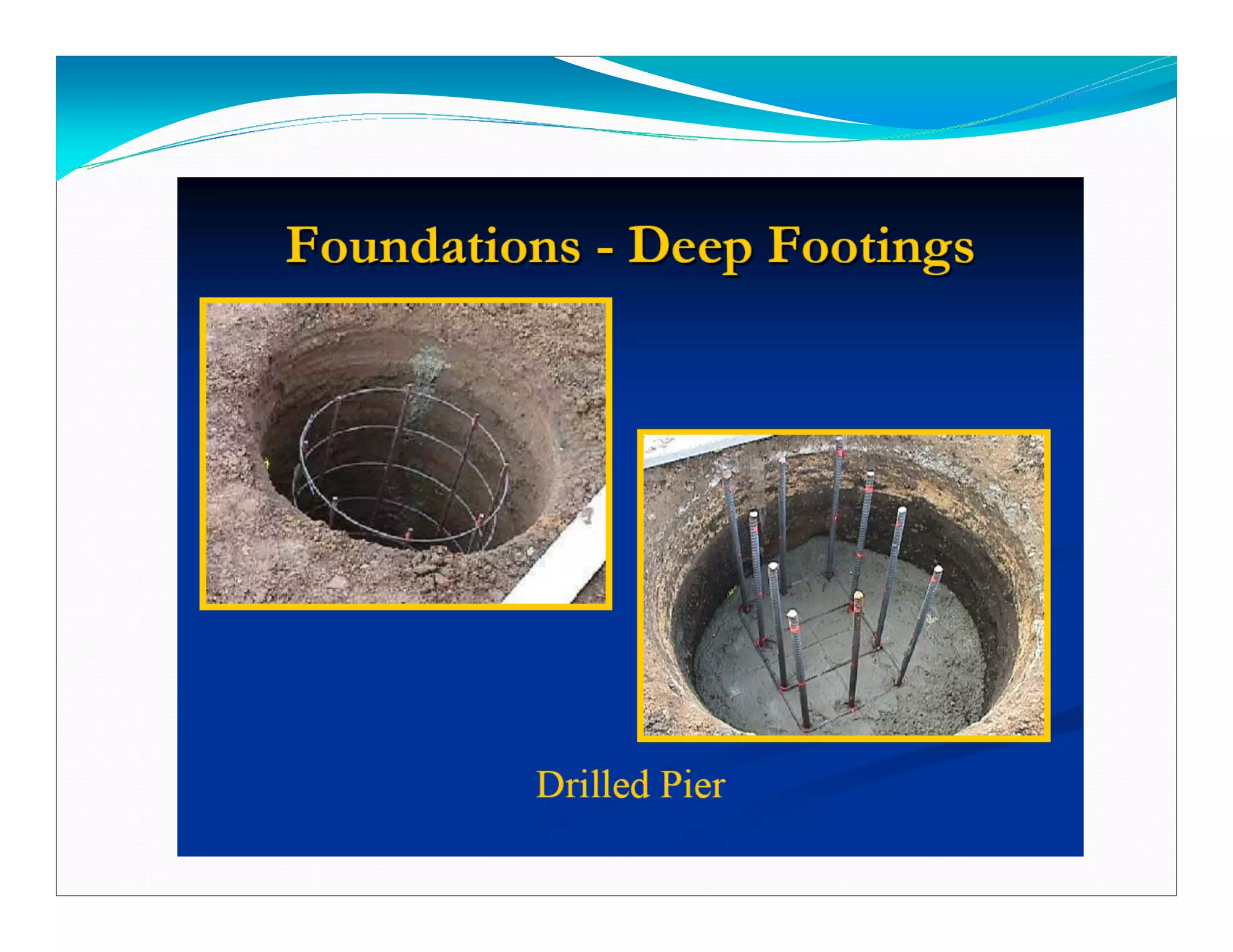
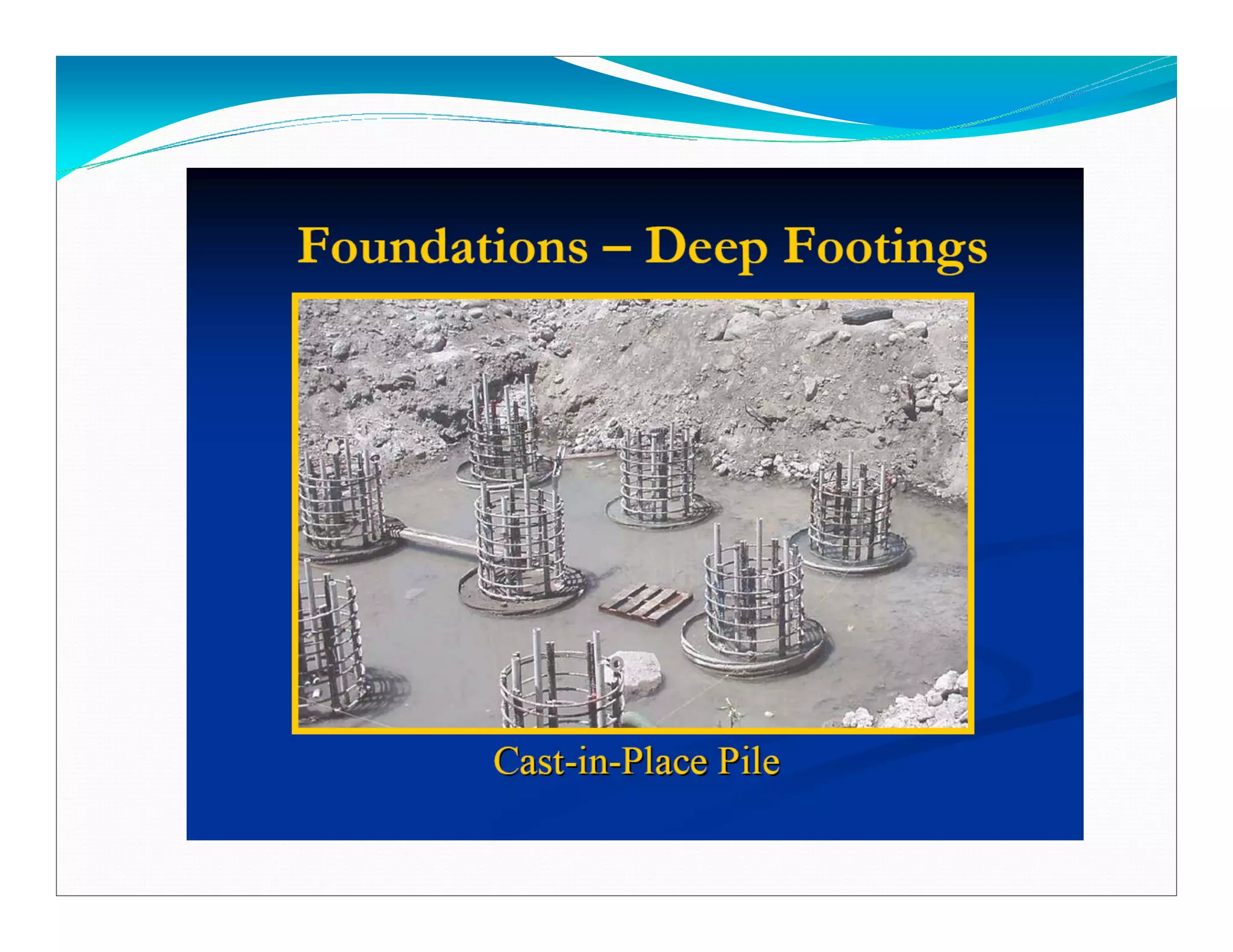
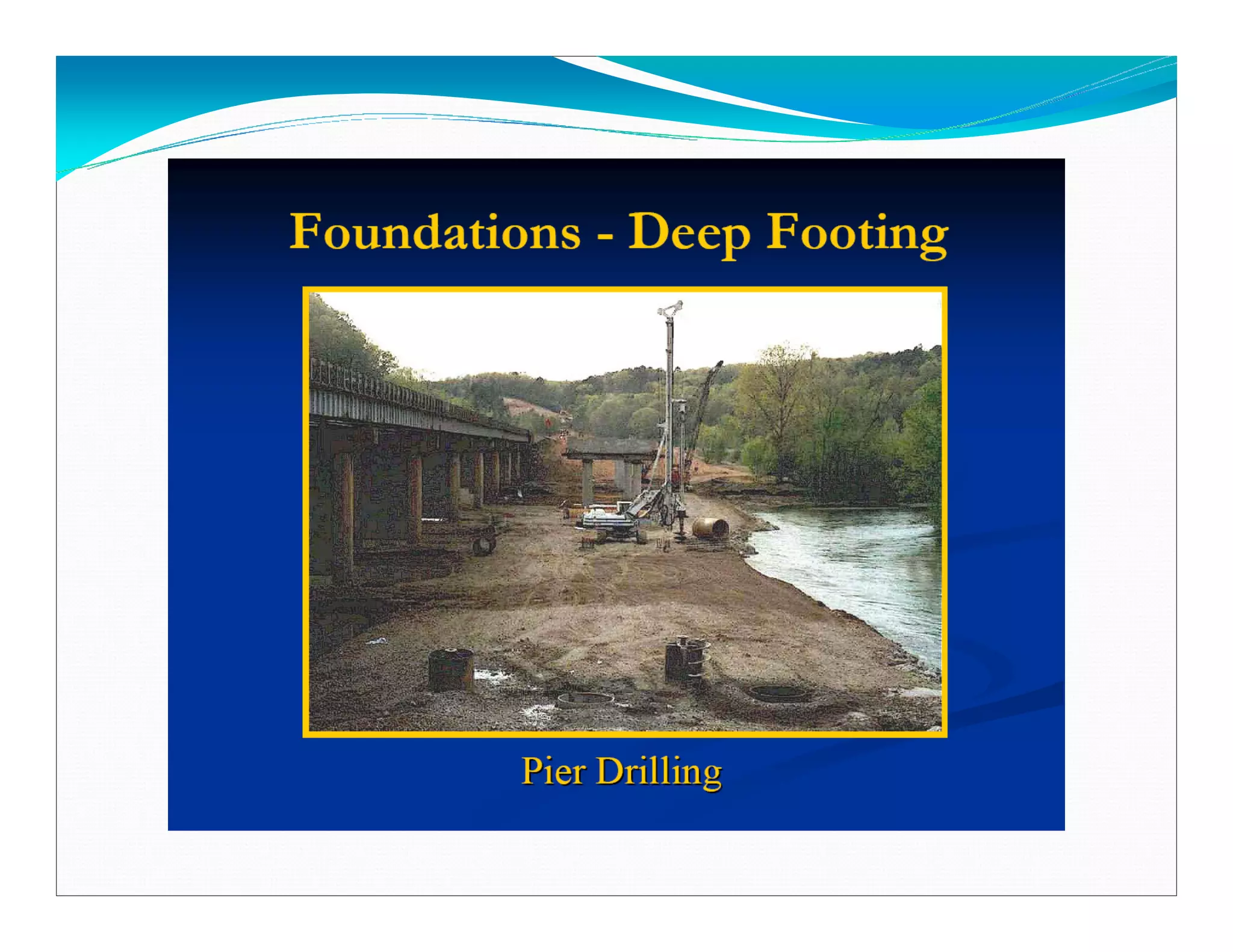
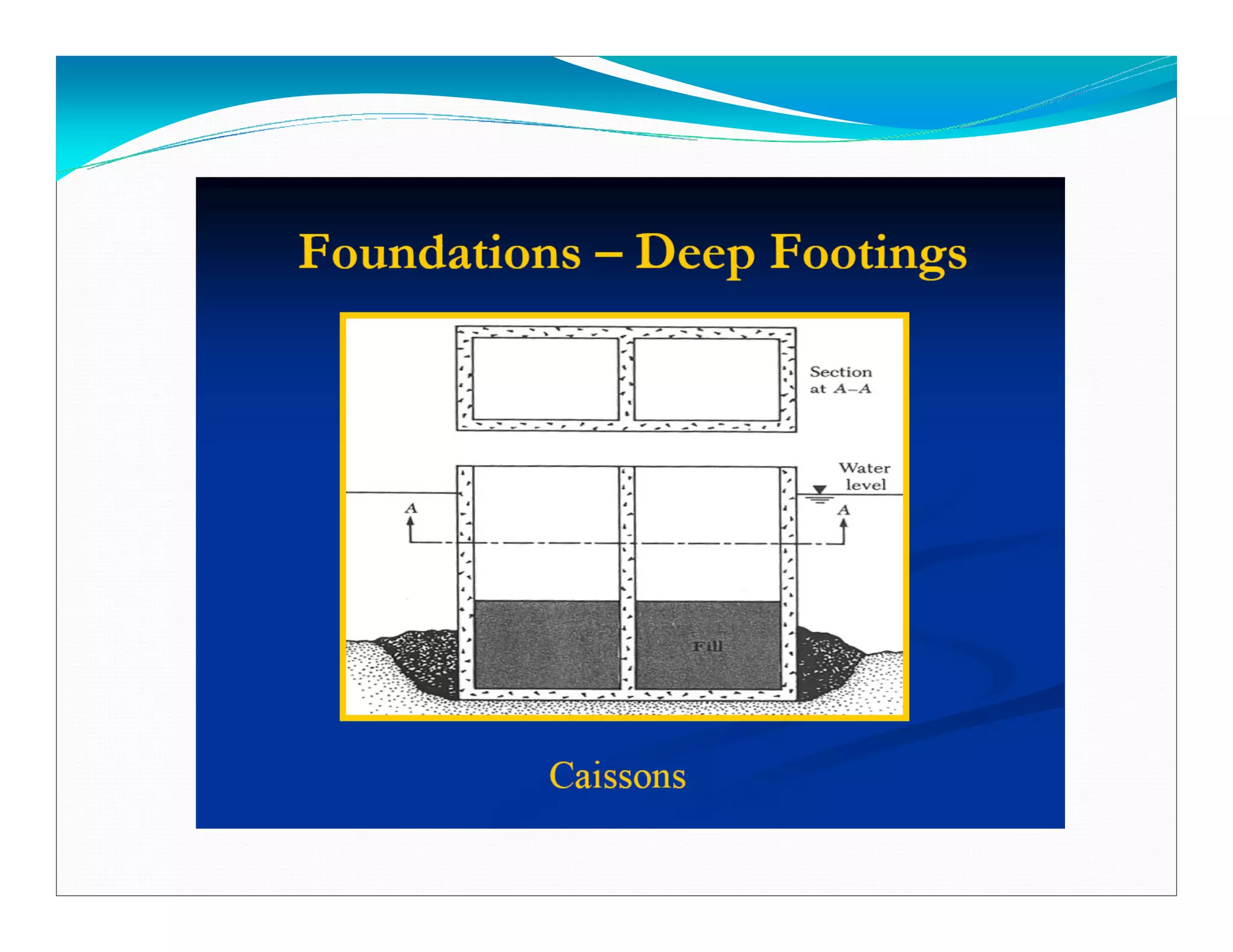
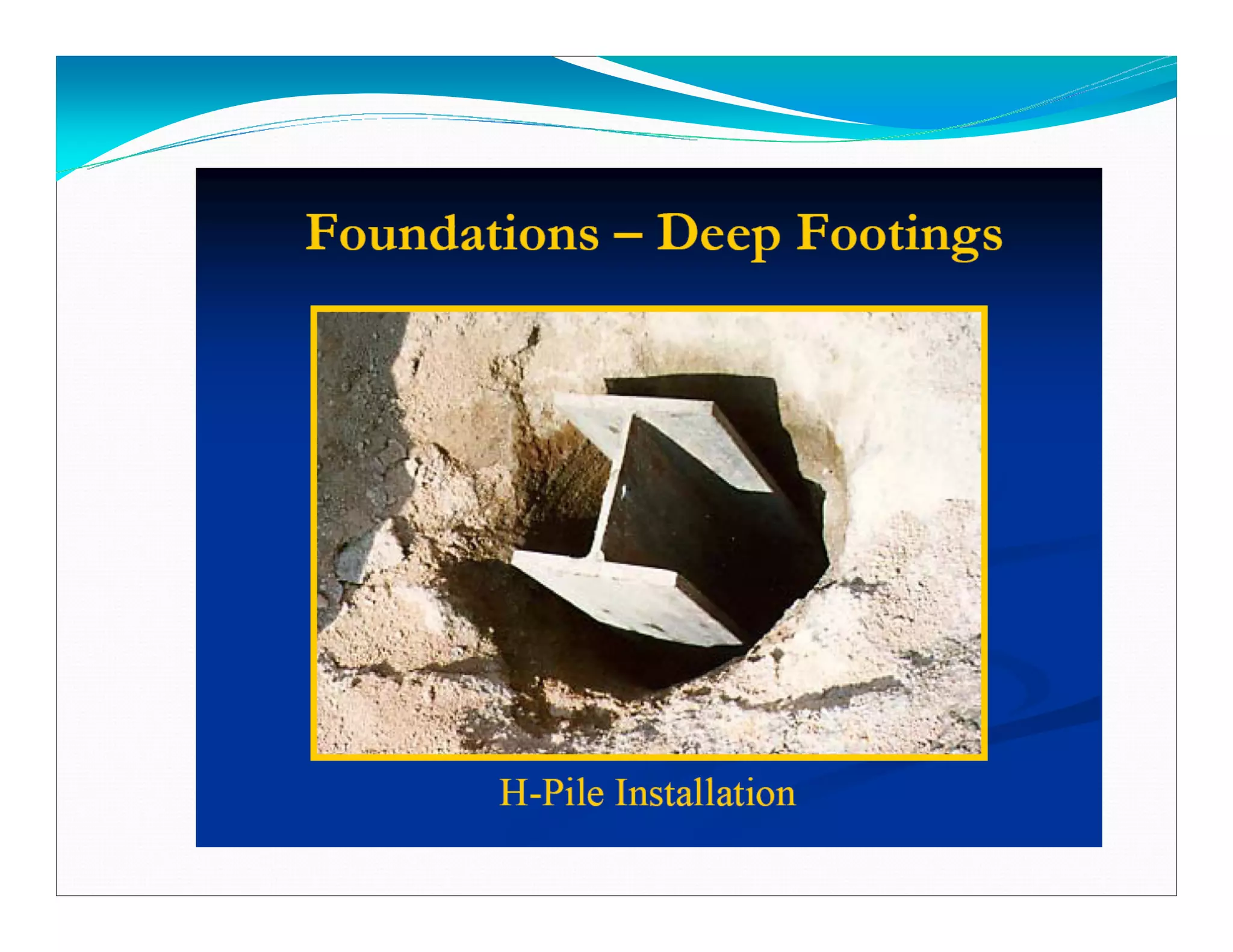
Deep Foundations
Introduction to deep foundations. Types of
piles. Load carrying capacity of piles. Group
action. Settlement. Negative skin friction. Pile
load test. Cassion and well foundations.
Earthen Dams
Types of earthen dams, components and their
functions. General design considerations and
typical cross- section.
Foundations on difficult soils
Intoduction to relevant softwares.
Downloadedfrom:09ce.blogspot.com
Providedby:DkMamonai-09CE37
Text
Principles of
Foundation
Engineering
by Braja M.
Das
Downloadedfrom:09ce.blogspot.com
Providedby:DkMamonai-09CE37
Reference
Soil
Mechanics &
Foundations
by Muni
Budhu
Downloadedfrom:09ce.blogspot.com
Providedby:DkMamonai-09CE37
Reference
Foundation
Analysis
and Design
by Joseph E. Bowles
Downloadedfrom:09ce.blogspot.com
Providedby:DkMamonai-09CE37
Reference
Foundation
Design
by Donald
P. Coduto
Downloadedfrom:09ce.blogspot.com
Providedby:DkMamonai-09CE37
Definition
Foundation is a part of the structure that
supports the structural weight and transmits
the load to underlying soil or rock.(Foundation
includes foundation structure and soil
influenced by the structural load.)
Downloadedfrom:09ce.blogspot.com
Providedby:DkMamonai-09CE37
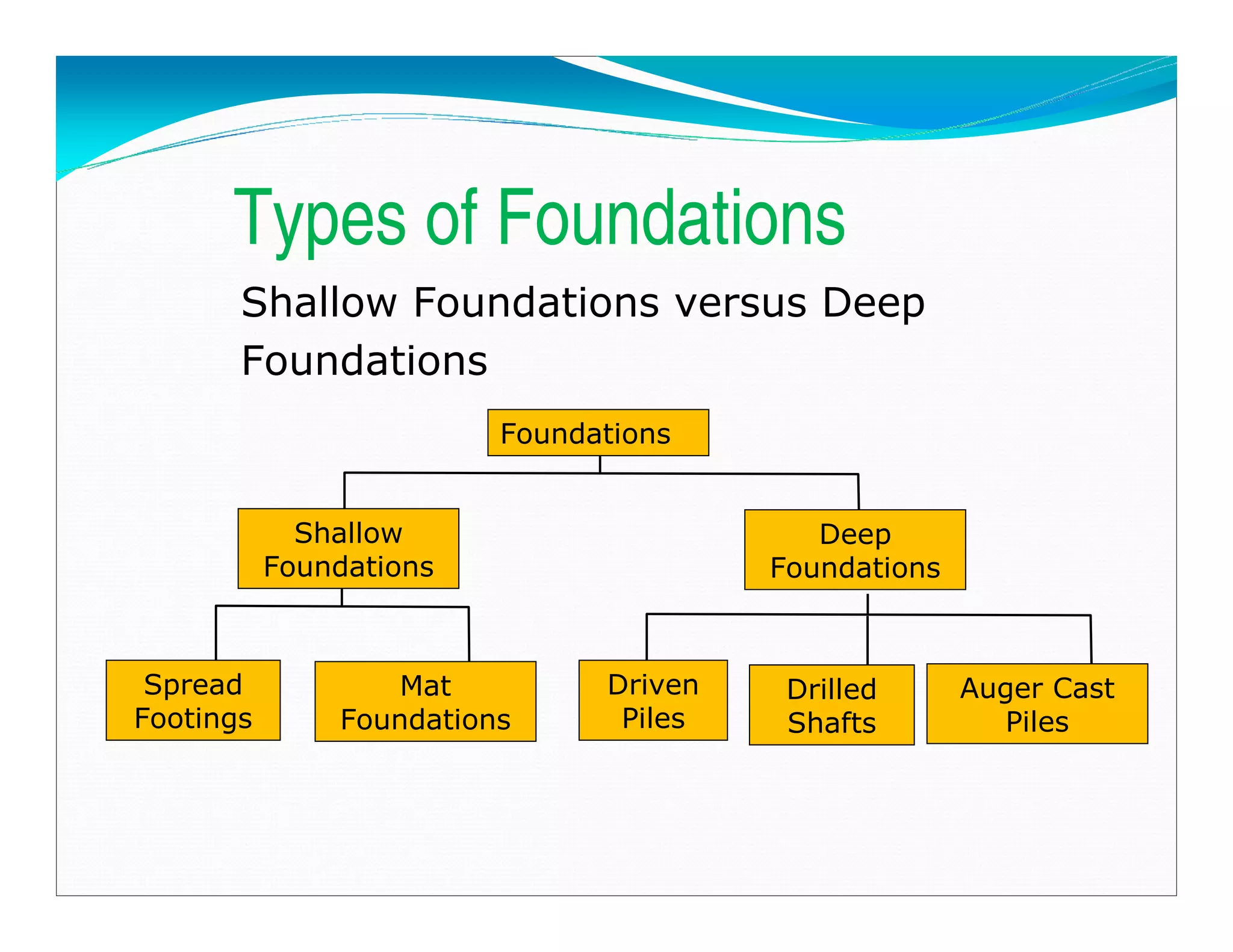
Types of Foundations
Shallow Foundations versus Deep
Foundations
Foundations
Shallow
Foundations
Deep
Foundations
Spread
Footings
Mat
Foundations
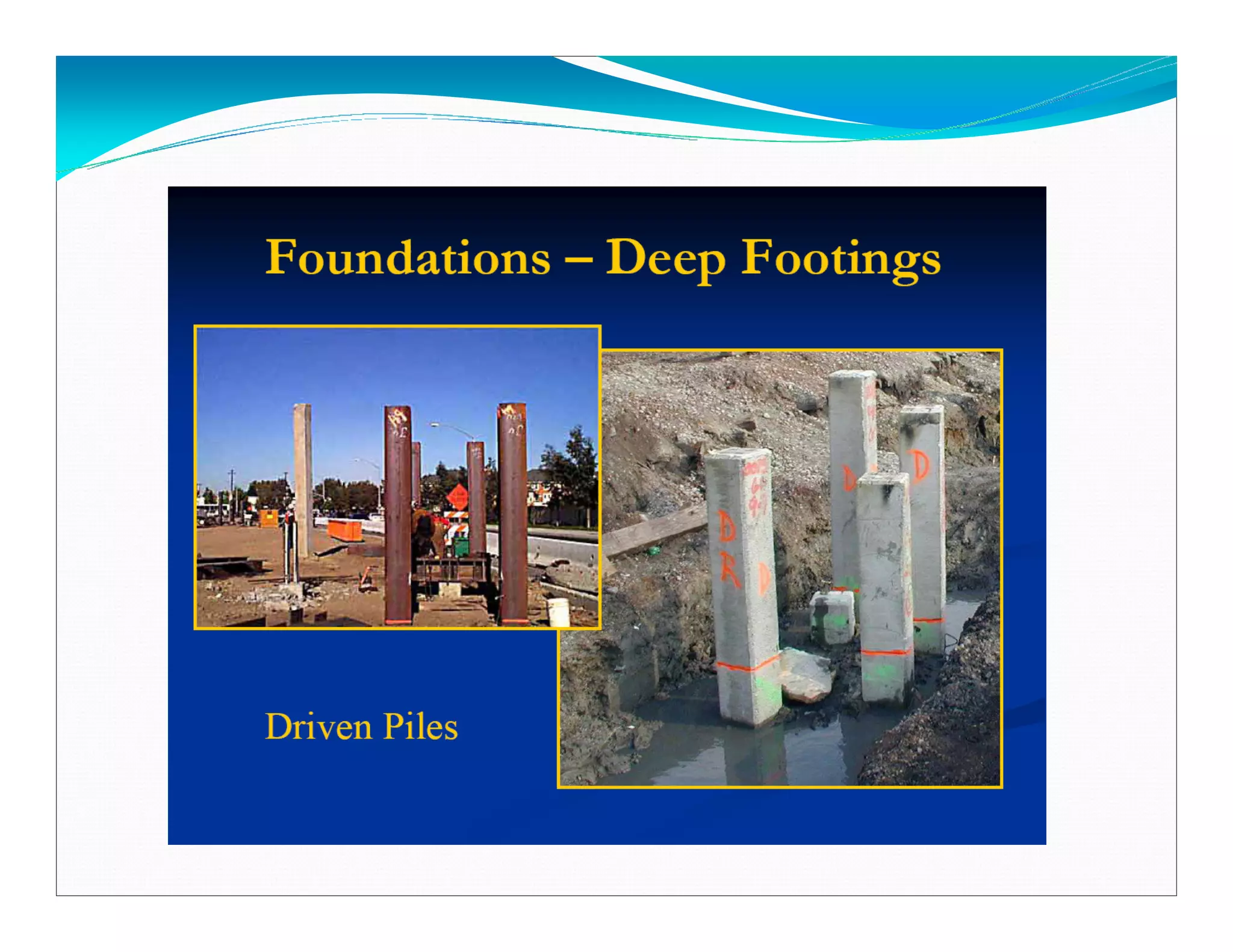
Driven
Piles
Drilled
Shafts
Auger Cast
Piles
Downloadedfrom:09ce.blogspot.com
Providedby:DkMamonai-09CE37
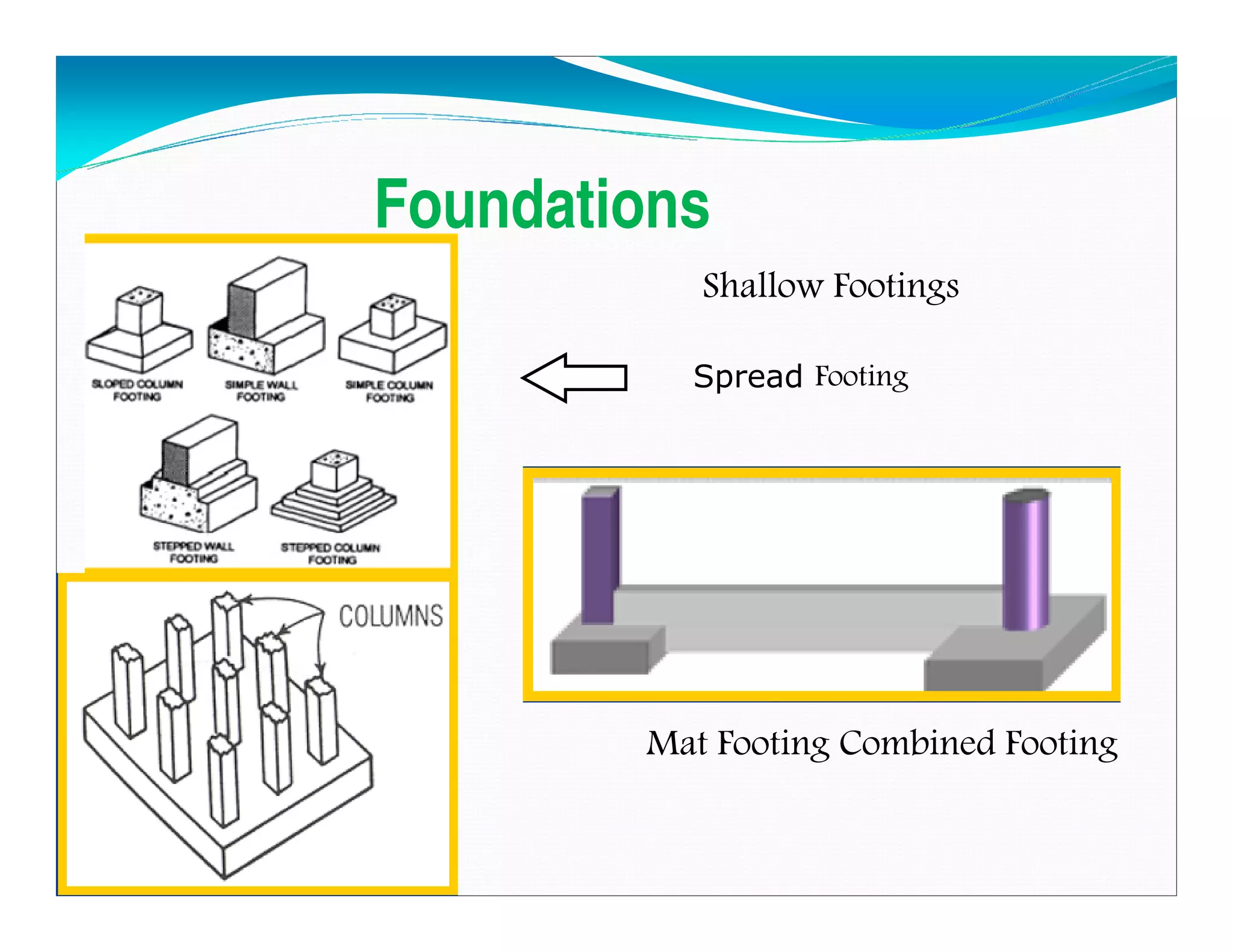
Foundations
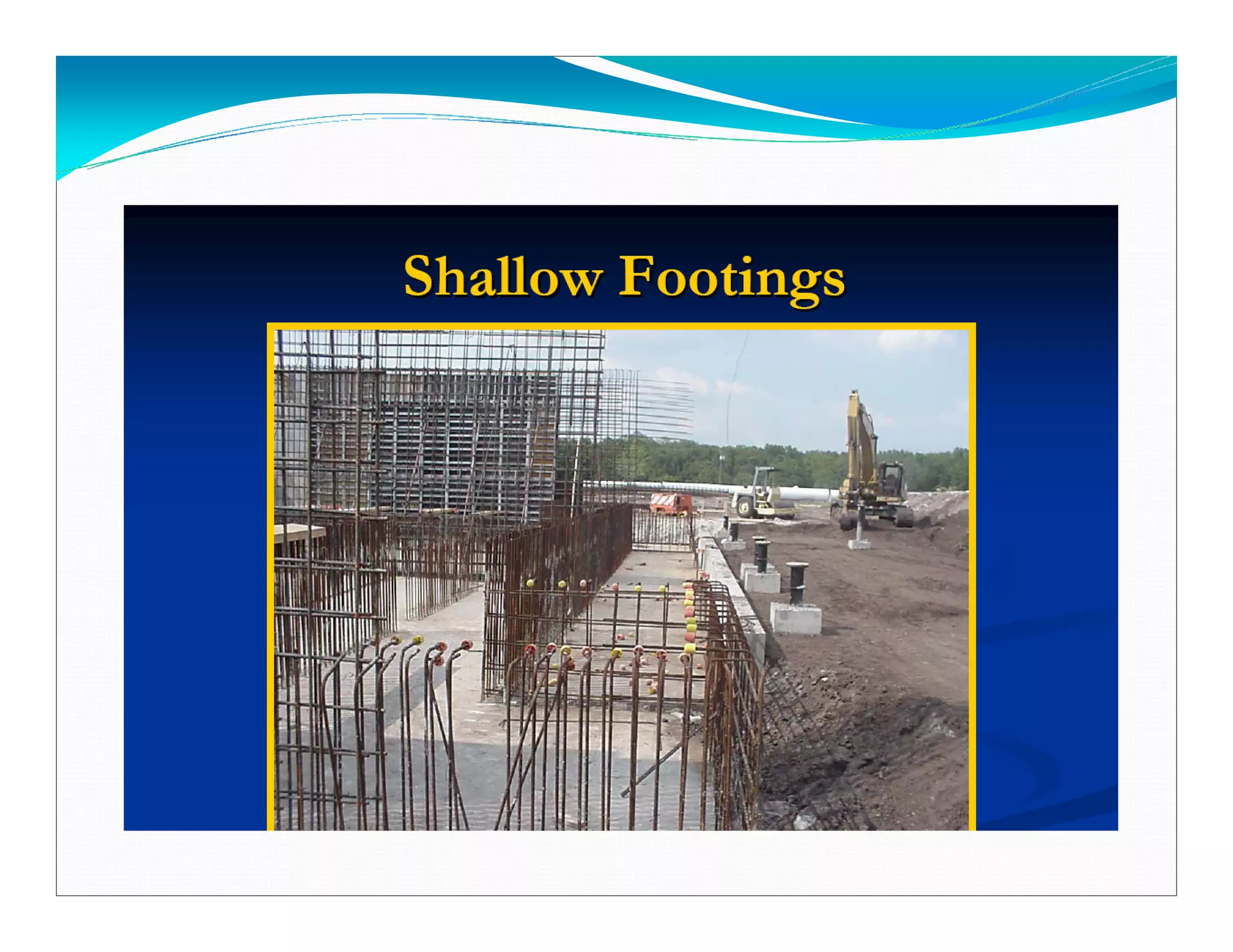
Shallow Footings
Spread Footing
Mat Footing Combined Footing
Downloadedfrom:09ce.blogspot.com
Providedby:DkMamonai-09CE37
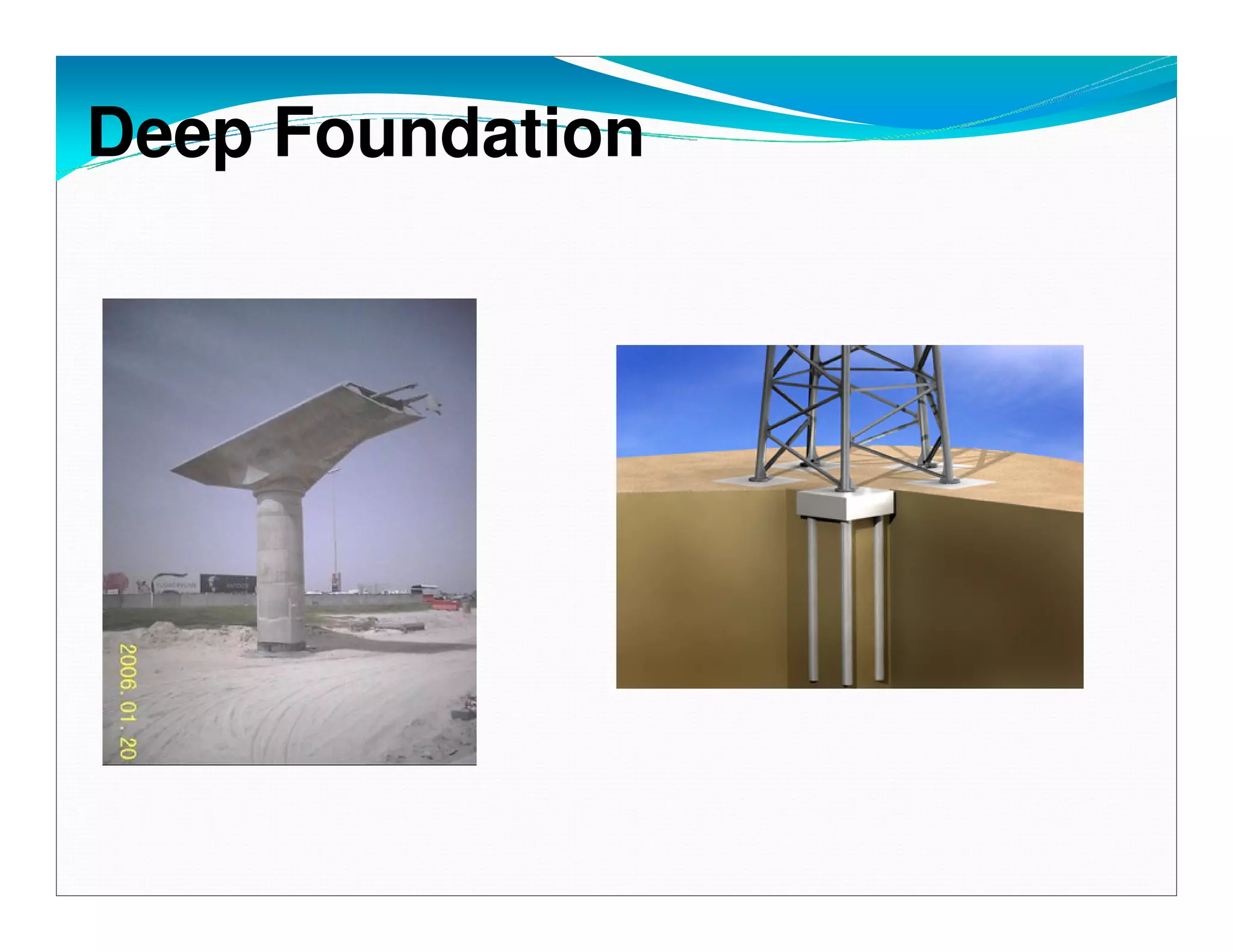
Deep Foundation
Downloadedfrom:09ce.blogspot.com
Providedby:DkMamonai-09CE37
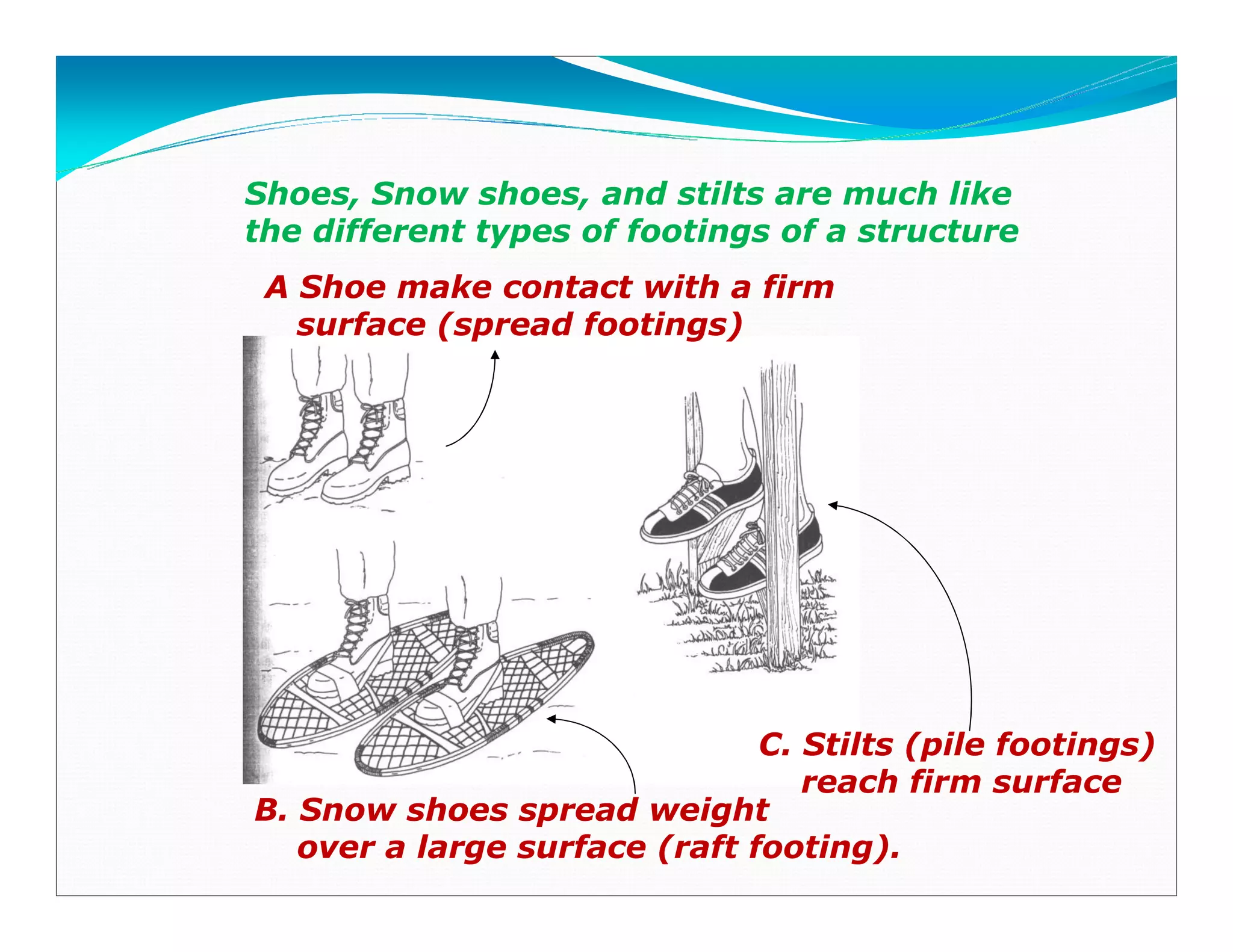
Shoes, Snow shoes, and stilts are much like
the different types of footings of a structure
A Shoe make contact with a firm
surface (spread footings)
B. Snow shoes spread weight
over a large surface (raft footing).
C. Stilts (pile footings)
reach firm surface
Downloadedfrom:09ce.blogspot.com
Providedby:DkMamonai-09CE37
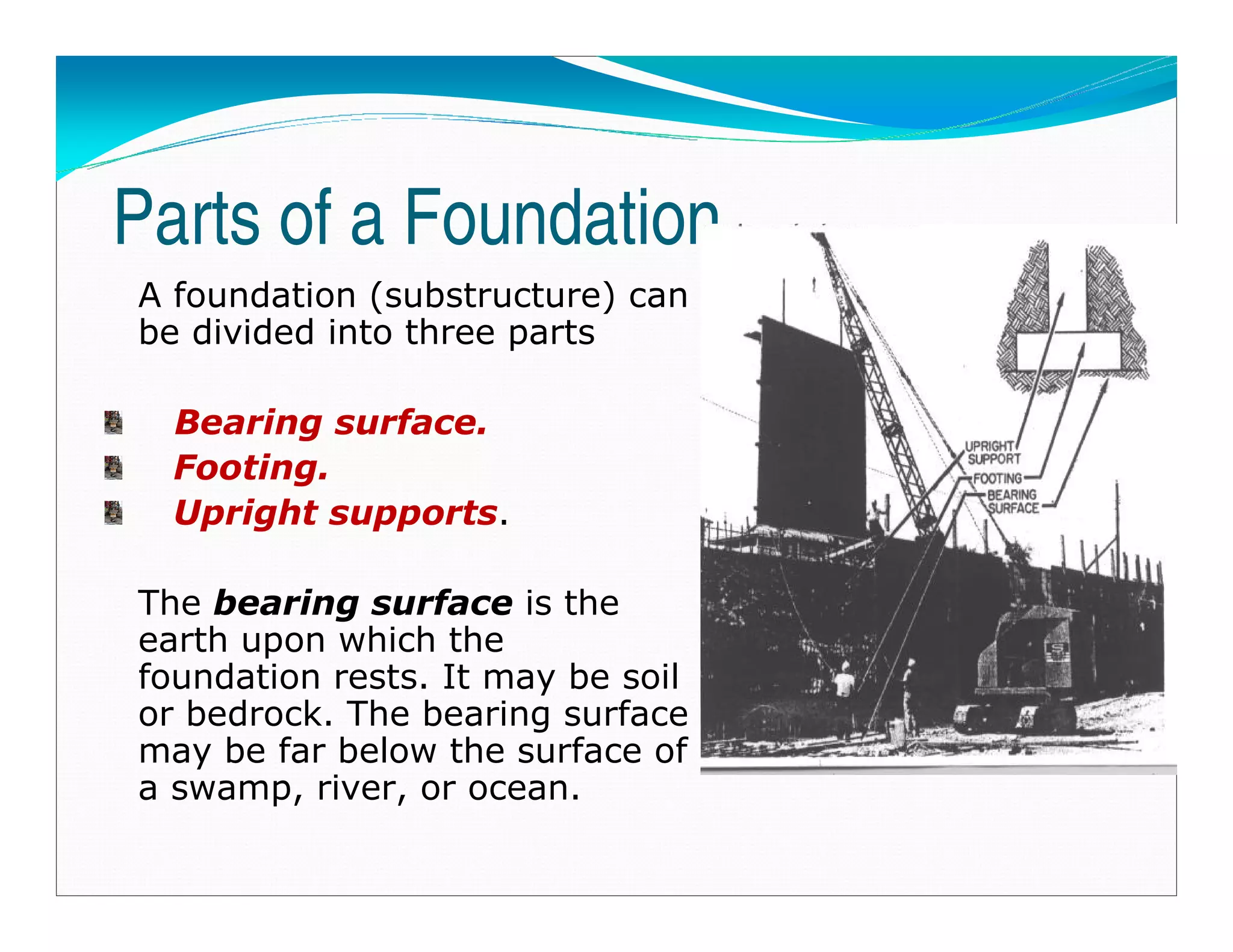
Parts of a Foundation
A foundation (substructure) can
be divided into three parts
Bearing surface.
Footing.
Upright supports.
The bearing surface is the
earth upon which the
foundation rests. It may be soil
or bedrock. The bearing surface
may be far below the surface of
a swamp, river, or ocean.
Downloadedfrom:09ce.blogspot.com
Providedby:DkMamonai-09CE37
The footing is the flat part of the foundation.
It spreads the load of the structure above it.
Upright support. They may be walls or
piers (masonry column) that rise above the
footing. They form the rest of the structure.
Downloadedfrom:09ce.blogspot.com
Providedby:DkMamonai-09CE37
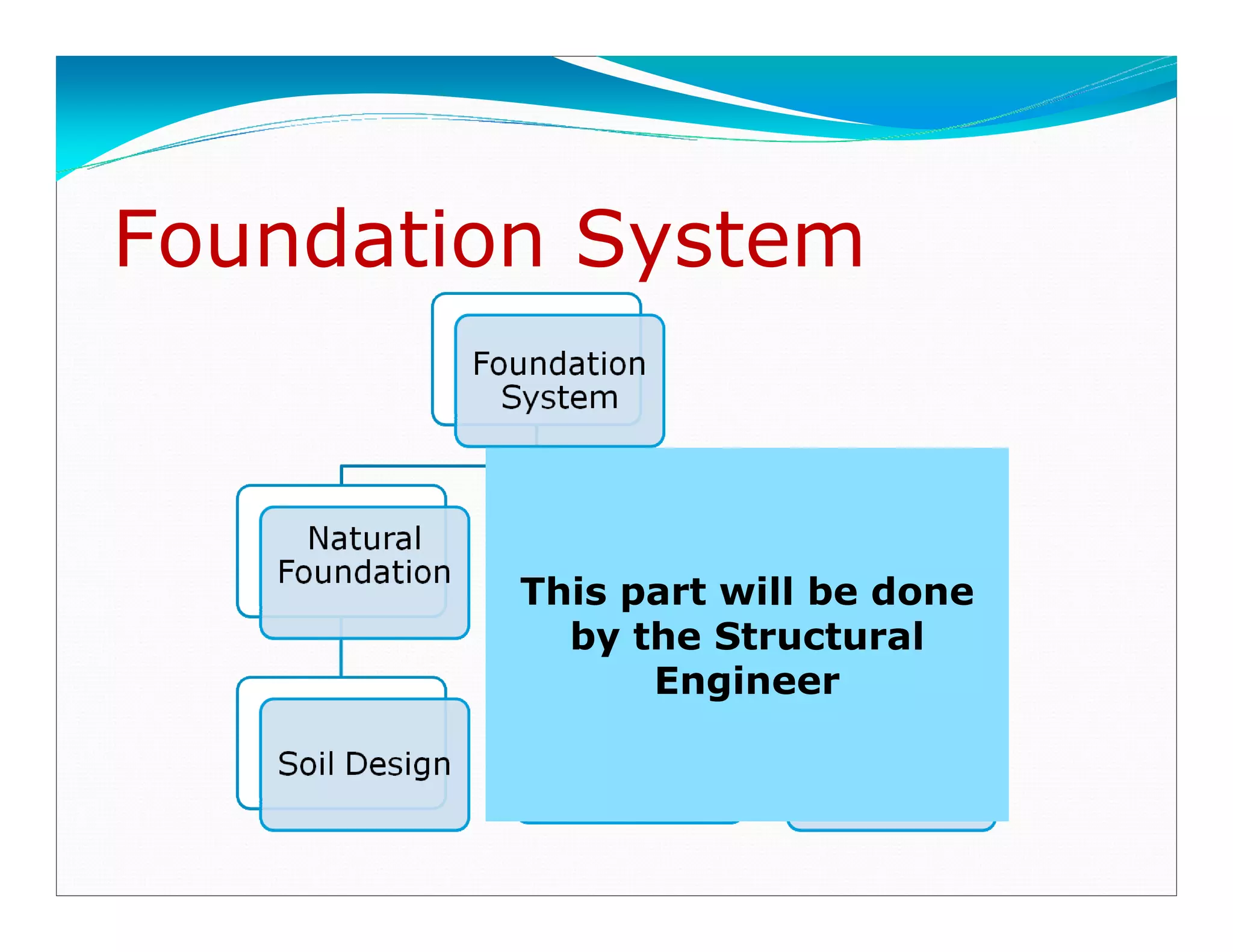
Foundation System
This part will be done
by the Structural
Engineer
Downloadedfrom:09ce.blogspot.com
Providedby:DkMamonai-09CE37
Every civil engineering structure such as :
Buildings
Bridges.
Highway pavement ,and
Railway track
Will have a superstructure and
substructure(Foundations)
Downloadedfrom:09ce.blogspot.com
Providedby:DkMamonai-09CE37
Downloadedfrom:09ce.blogspot.com
Providedby:DkMamonai-09CE37
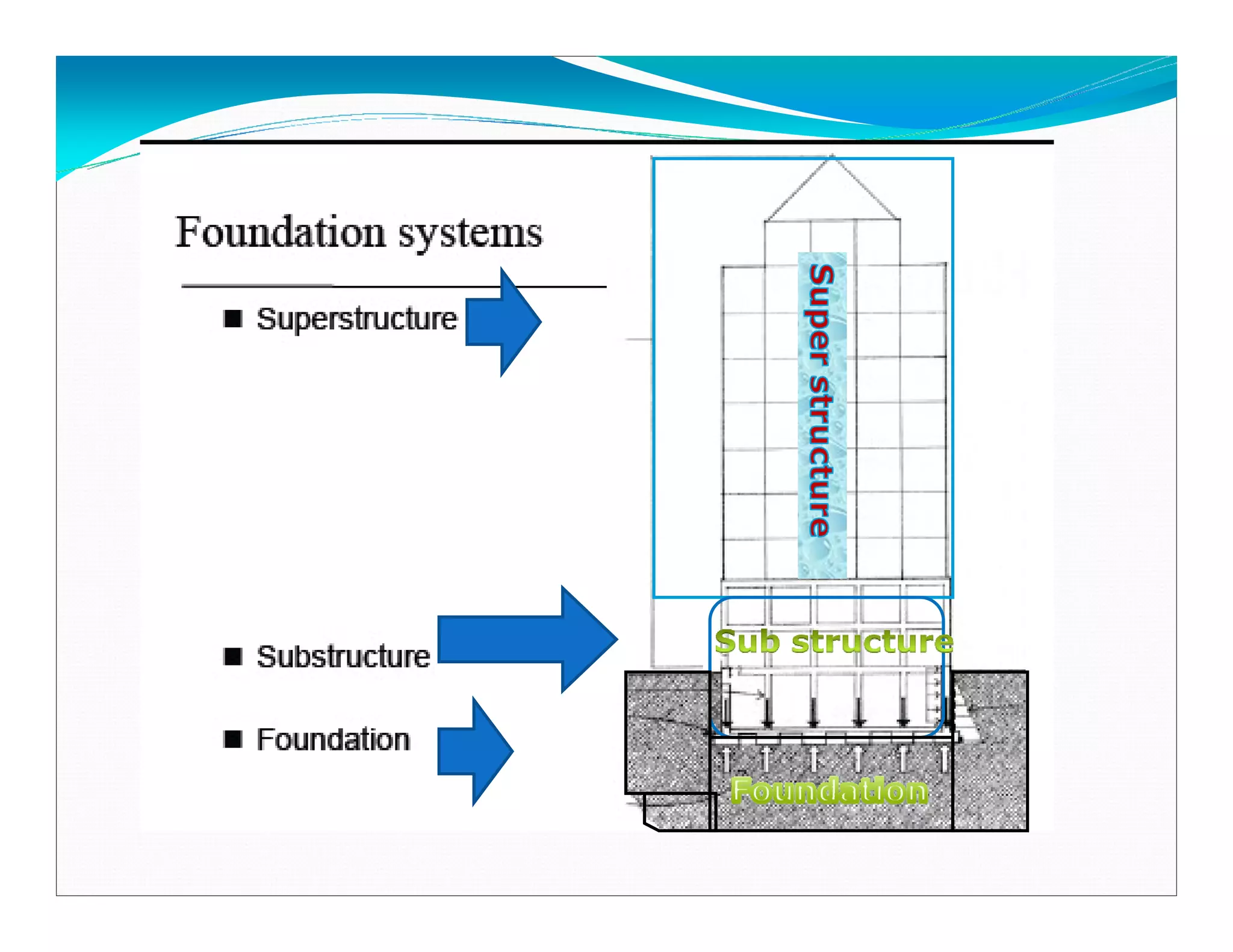
Super structure transmits the load.
Sub structure receives and transmits the
load to underlying soil or rock.
The foundation engineer’s aim is that no
component of the structure and foundation
should experience of any kind of distress.
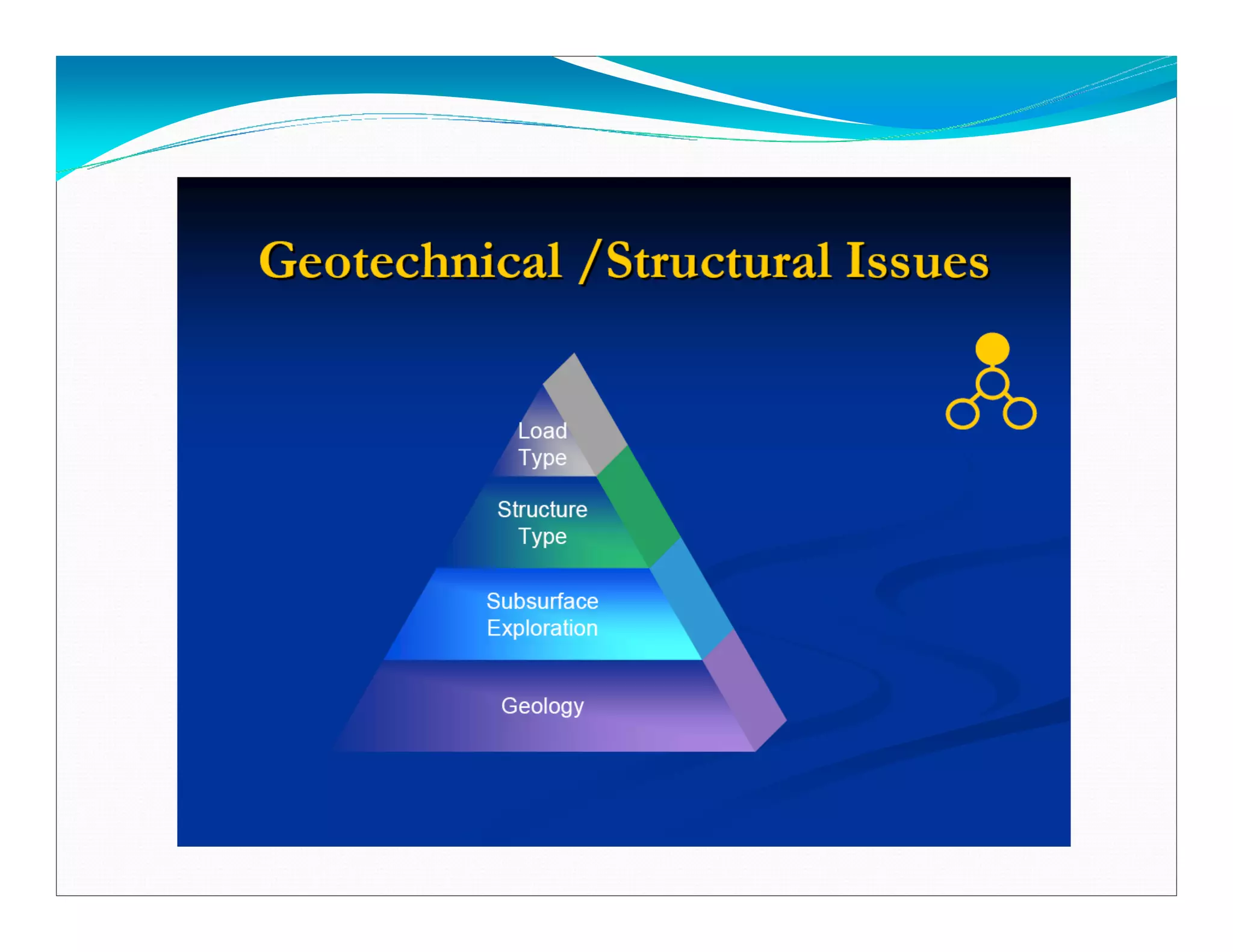
Geotechnical design parameters:
- Bearing capacity
- Settlement
Downloadedfrom:09ce.blogspot.com
Providedby:DkMamonai-09CE37
Downloadedfrom:09ce.blogspot.com
Providedby:DkMamonai-09CE37
What is Foundation Engineering?
The art of selecting, designing, and constructing
structural support systems based on scientific
principles of soils and engineering mechanics
incorporating accumulated experience with
such applications.
Downloadedfrom:09ce.blogspot.com
Providedby:DkMamonai-09CE37
What is the current
state-of-the-art?
In spite of the many advances in foundation
engineering it is still an art mostly supported
by empirical techniques.
Downloadedfrom:09ce.blogspot.com
Providedby:DkMamonai-09CE37
Why mostly empirical?
We do not fully understand the
behavior of foundations.
Knowledge of subsurface conditions
are always limited.
Downloadedfrom:09ce.blogspot.com
Providedby:DkMamonai-09CE37
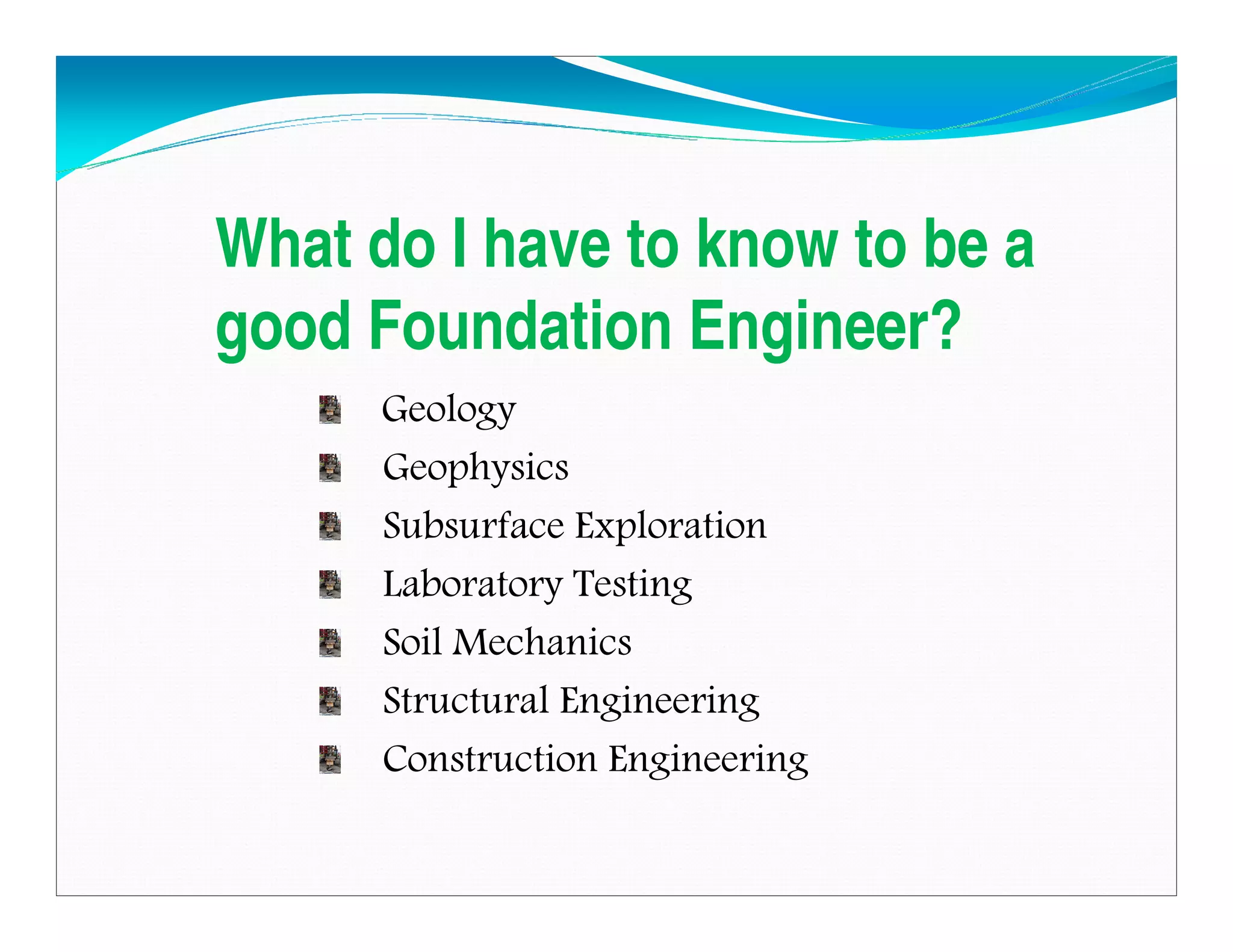
What do I have to know to be a
good Foundation Engineer?
Geology
Geophysics
Subsurface Exploration
Laboratory Testing
Soil Mechanics
Structural Engineering
Construction Engineering
Downloadedfrom:09ce.blogspot.com
Providedby:DkMamonai-09CE37
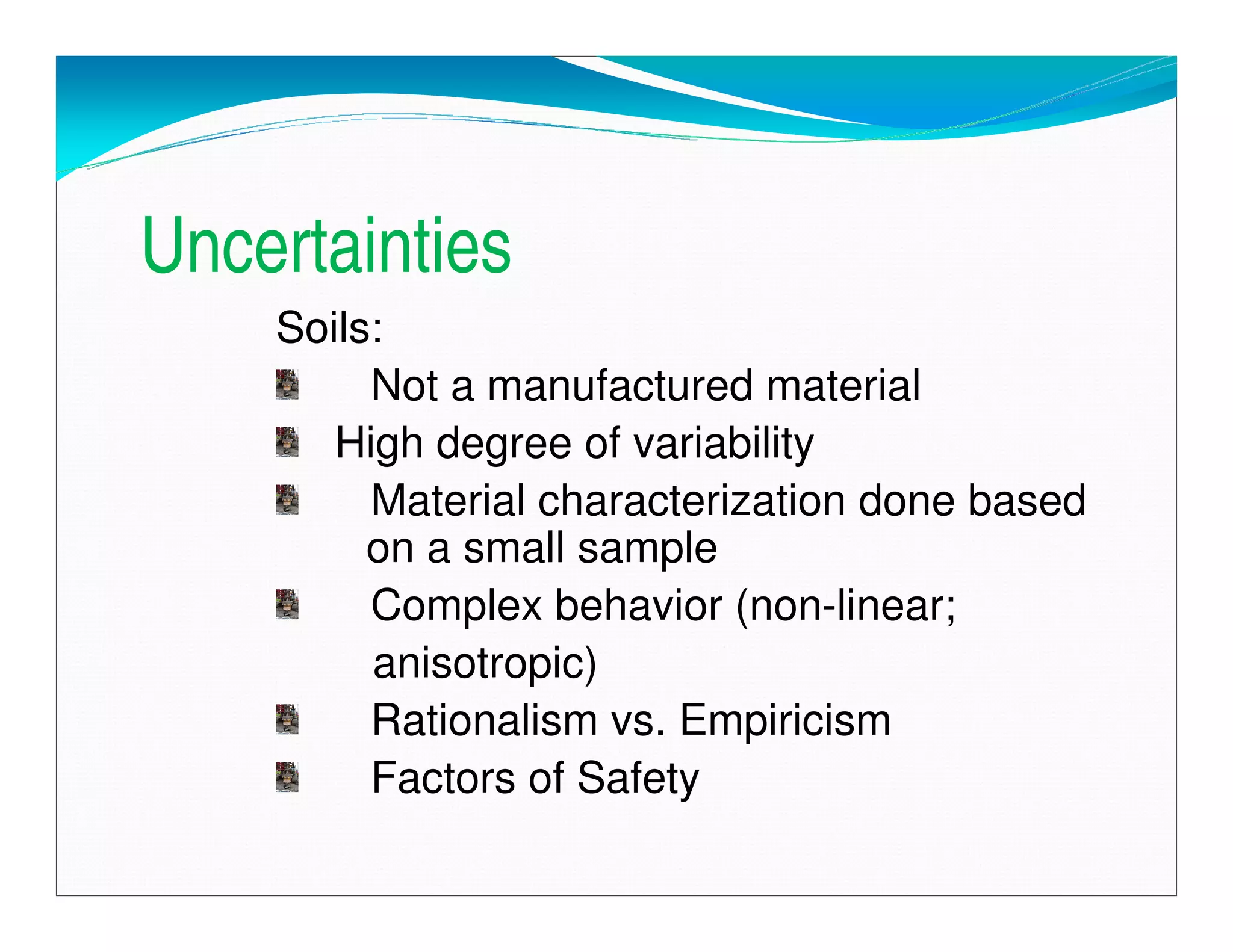
Uncertainties
Soils:
Not a manufactured material
High degree of variability
Material characterization done based
on a small sample
Complex behavior (non-linear;
anisotropic)
Rationalism vs. Empiricism
Factors of Safety
Downloadedfrom:09ce.blogspot.com
Providedby:DkMamonai-09CE37
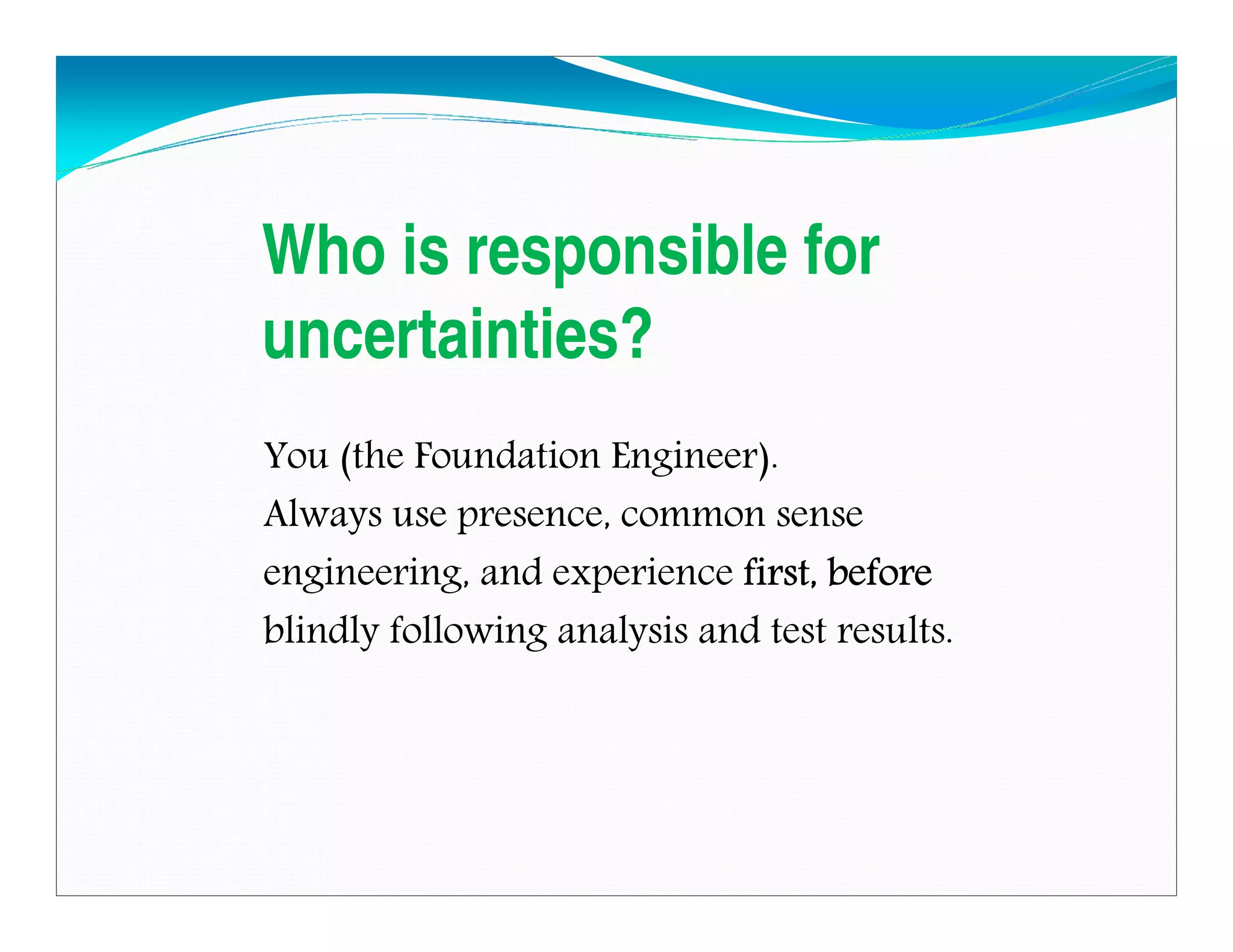
Who is responsible for
uncertainties?
You (the Foundation Engineer).
Always use presence, common sense
engineering, and experience first, beforefirst, beforefirst, beforefirst, before
blindly following analysis and test results.
Downloadedfrom:09ce.blogspot.com
Providedby:DkMamonai-09CE37
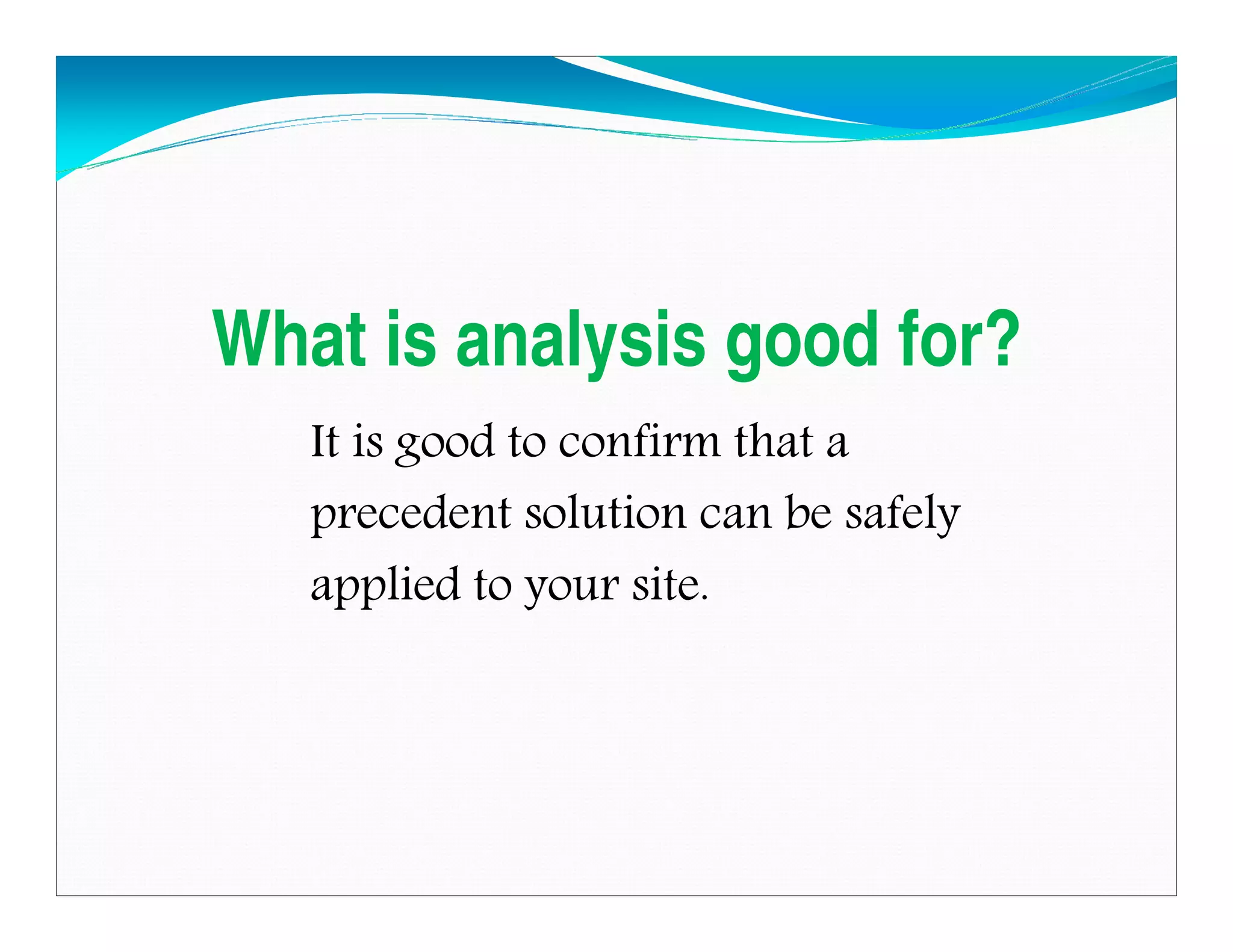
What is analysis good for?
It is good to confirm that a
precedent solution can be safely
applied to your site.
Downloadedfrom:09ce.blogspot.com
Providedby:DkMamonai-09CE37
What makes a good
foundation?
Safe
Reliable
Durable
Buildable
Economical
Downloadedfrom:09ce.blogspot.com
Providedby:DkMamonai-09CE37
Is it my job to be concerned of
costs?
Yes. As a professional engineer, it is your
obligation to balance “costs and
uncertainties
Downloadedfrom:09ce.blogspot.com
Providedby:DkMamonai-09CE37
The Final Question
In Foundation Engineering, there areIn Foundation Engineering, there areIn Foundation Engineering, there areIn Foundation Engineering, there are
manymanymanymany ““““ifififif’’’’ssss”””” andandandand ““““butbutbutbut’’’’ssss””””. What do I do. What do I do. What do I do. What do I do
when I am in doubt?when I am in doubt?when I am in doubt?when I am in doubt?
1. When in doubt go wide.
2. When in doubt go deep.
3. When in doubt grout (ground modify).
Downloadedfrom:09ce.blogspot.com
Providedby:DkMamonai-09CE37
Downloadedfrom:09ce.blogspot.com
Providedby:DkMamonai-09CE37
Downloadedfrom:09ce.blogspot.com
Providedby:DkMamonai-09CE37
Downloadedfrom:09ce.blogspot.com
Providedby:DkMamonai-09CE37
Downloadedfrom:09ce.blogspot.com
Providedby:DkMamonai-09CE37
Downloadedfrom:09ce.blogspot.com
Providedby:DkMamonai-09CE37
Downloadedfrom:09ce.blogspot.com
Providedby:DkMamonai-09CE37
Downloadedfrom:09ce.blogspot.com
Providedby:DkMamonai-09CE37
Downloadedfrom:09ce.blogspot.com
Providedby:DkMamonai-09CE37
Eiffel Tower, Paris, France,
built in 1887-1889
Downloadedfrom:09ce.blogspot.com
Providedby:DkMamonai-09CE37
Downloadedfrom:09ce.blogspot.com
Providedby:DkMamonai-09CE37
Leaning Tower, Pisa, Italy
Built 1173-1350
Downloadedfrom:09ce.blogspot.com
Providedby:DkMamonai-09CE37
Palacio de las Bellas
Artes, Mexico City
Built 1932-1934
Downloadedfrom:09ce.blogspot.com
Providedby:DkMamonai-09CE37
Tower of Latino
Americana, Mexico City
Built in 1956
44 stories; 597-ft
Downloadedfrom:09ce.blogspot.com
Providedby:DkMamonai-09CE37
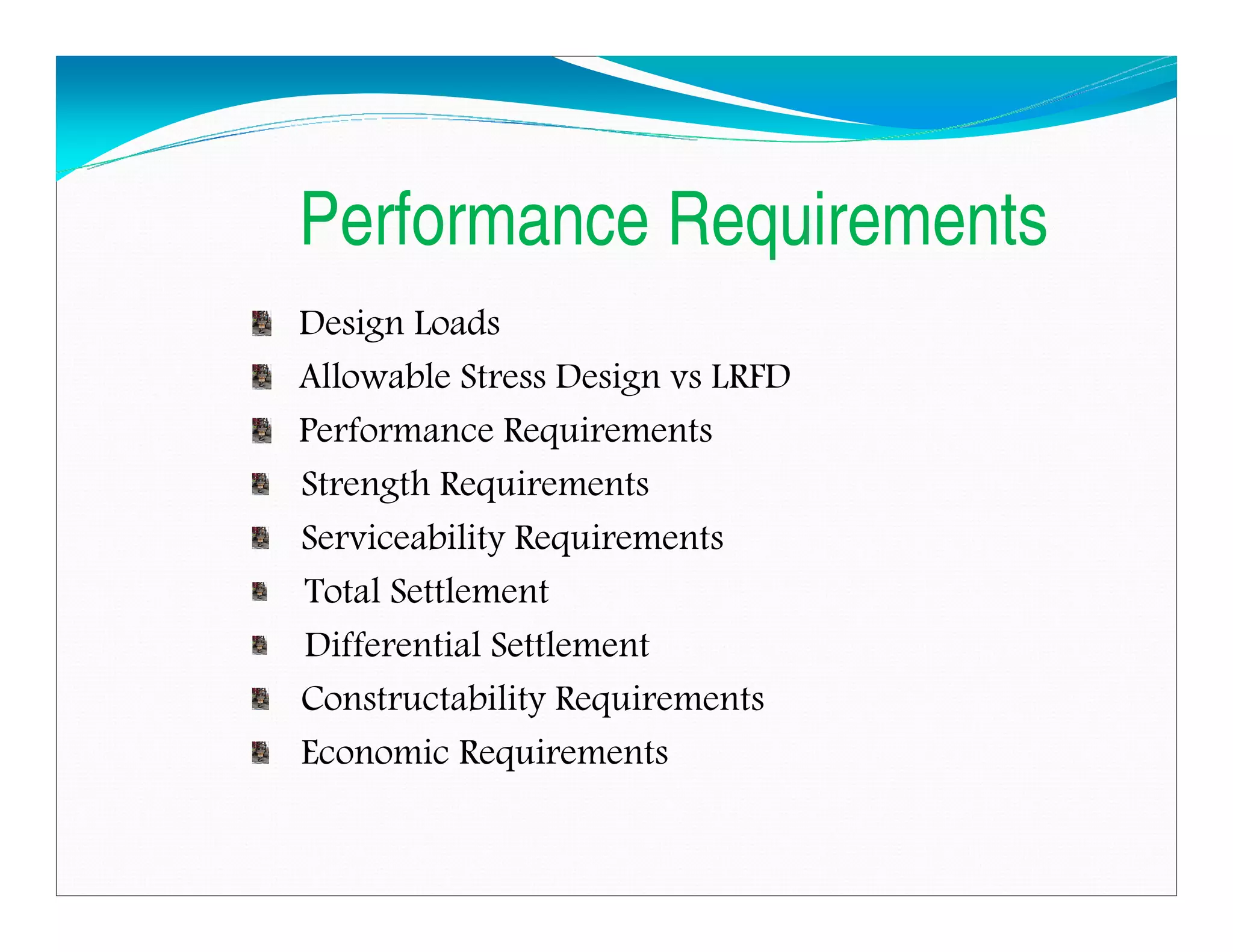
Performance Requirements
Design Loads
Allowable Stress Design vs LRFD
Performance Requirements
Strength Requirements
Serviceability Requirements
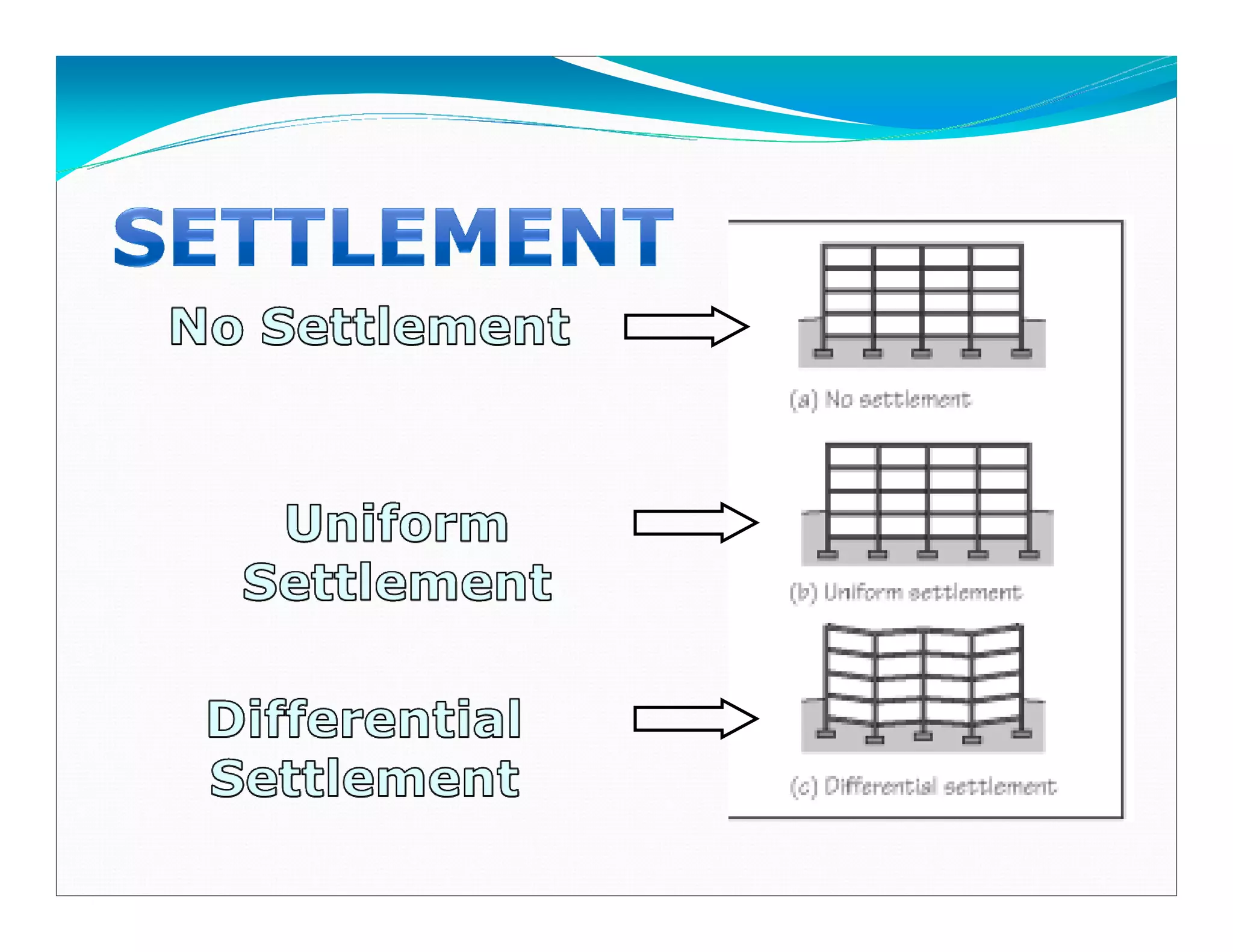
Total Settlement
Differential Settlement
Constructability Requirements
Economic Requirements
Downloadedfrom:09ce.blogspot.com
Providedby:DkMamonai-09CE37
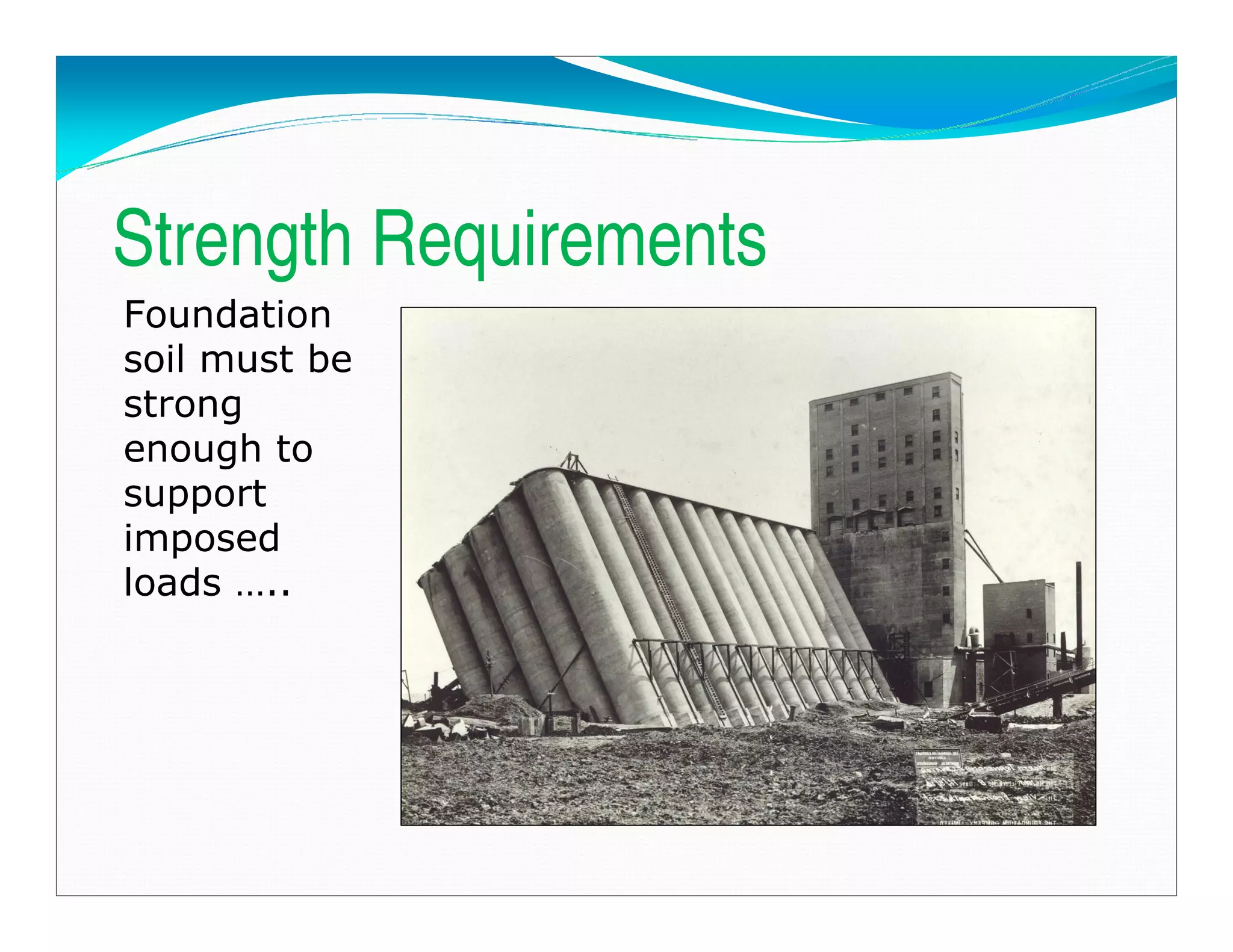
Strength Requirements
Foundation
soil must be
strong
enough to
support
imposed
loads …..
Downloadedfrom:09ce.blogspot.com
Providedby:DkMamonai-09CE37
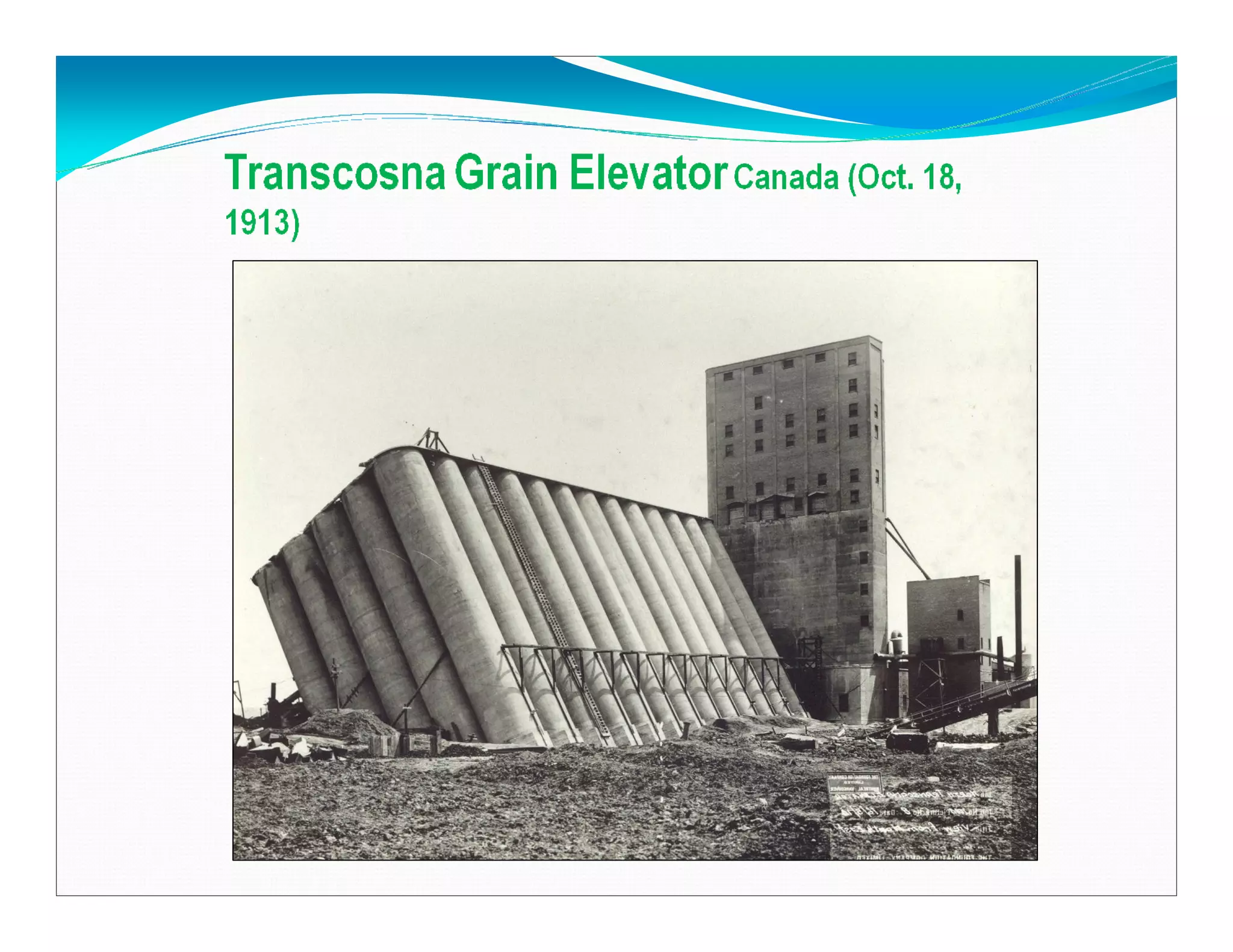
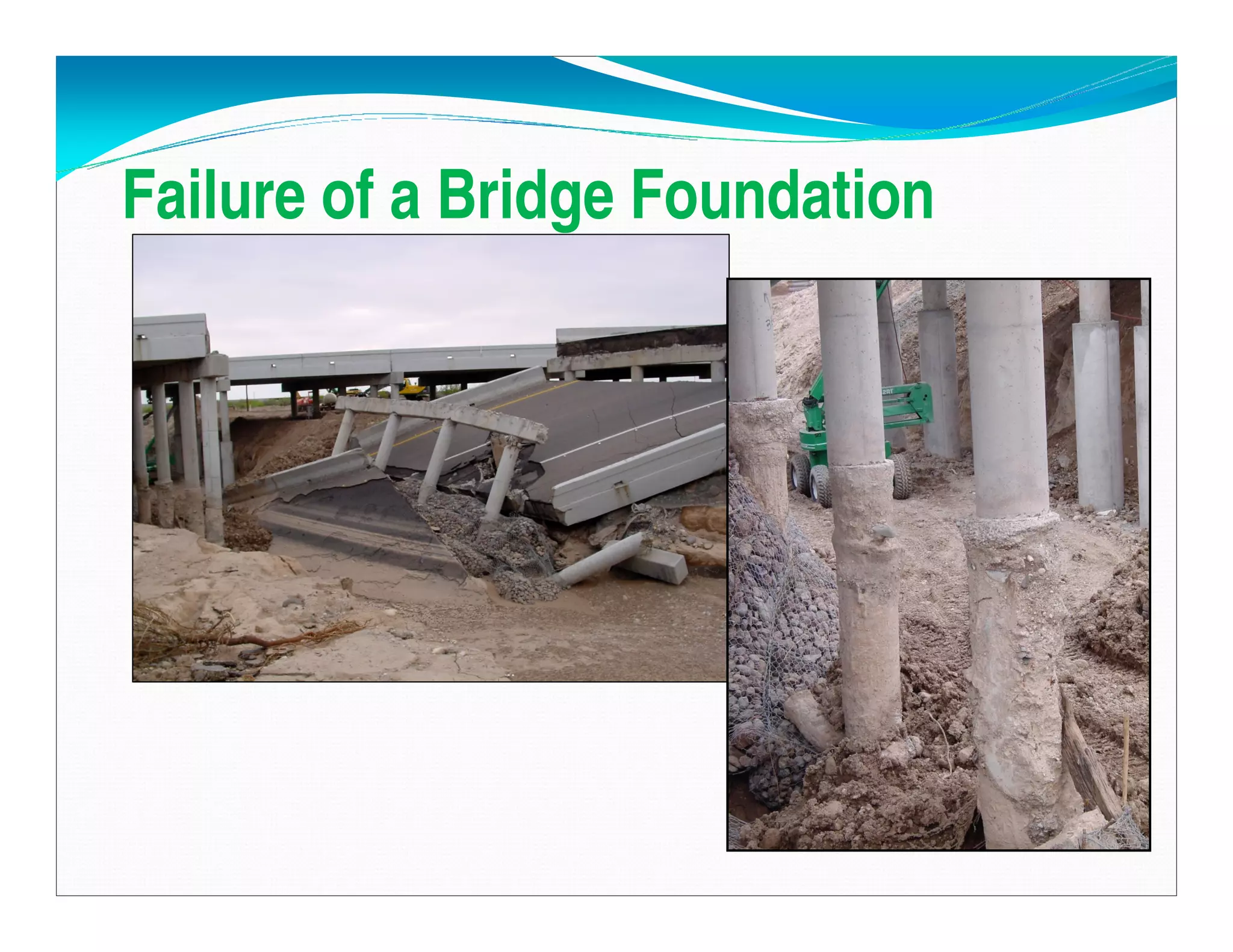
Failure of a Bridge Foundation
Downloadedfrom:09ce.blogspot.com
Providedby:DkMamonai-09CE37
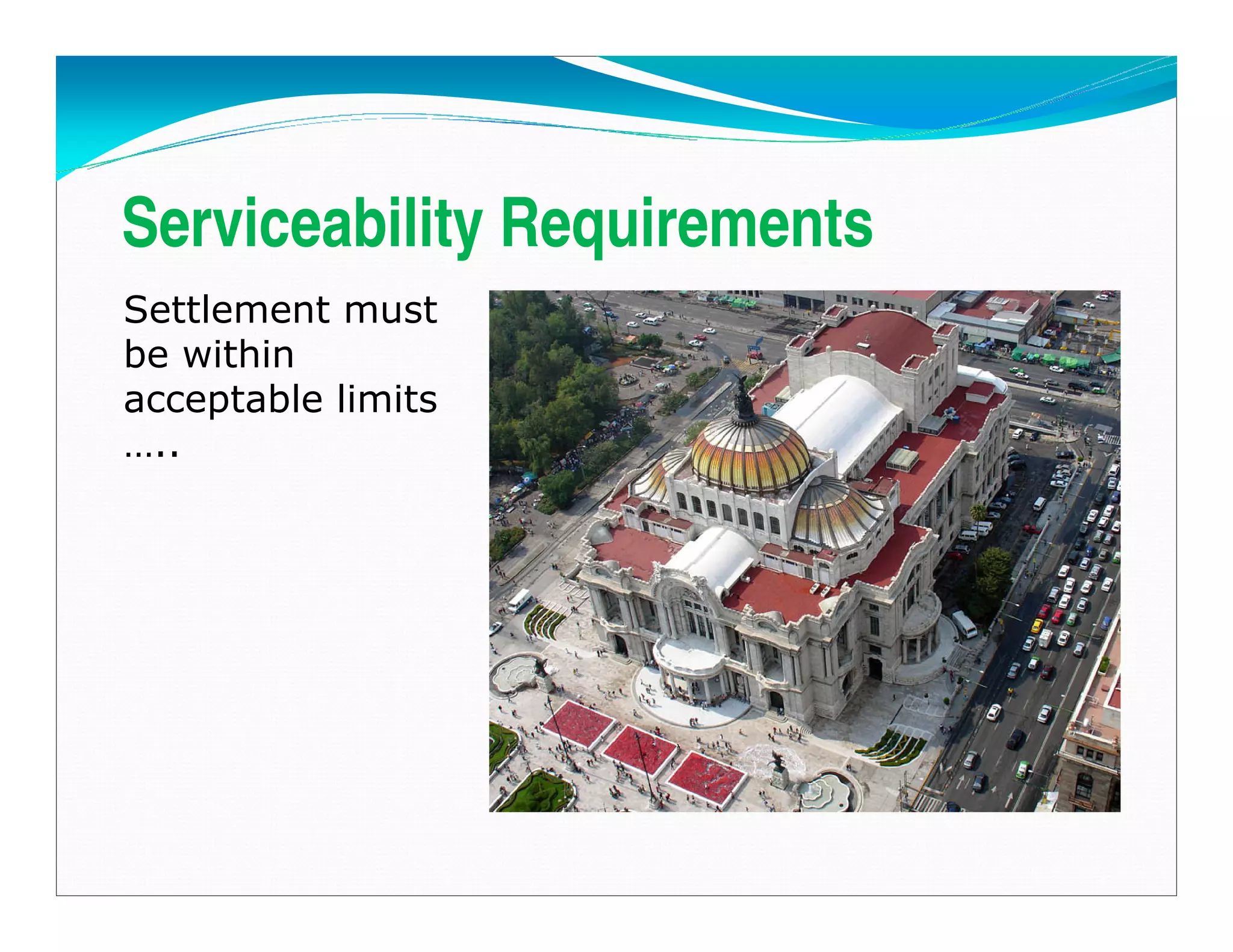
Serviceability Requirements
Settlement must
be within
acceptable limits
…..
Downloadedfrom:09ce.blogspot.com
Providedby:DkMamonai-09CE37
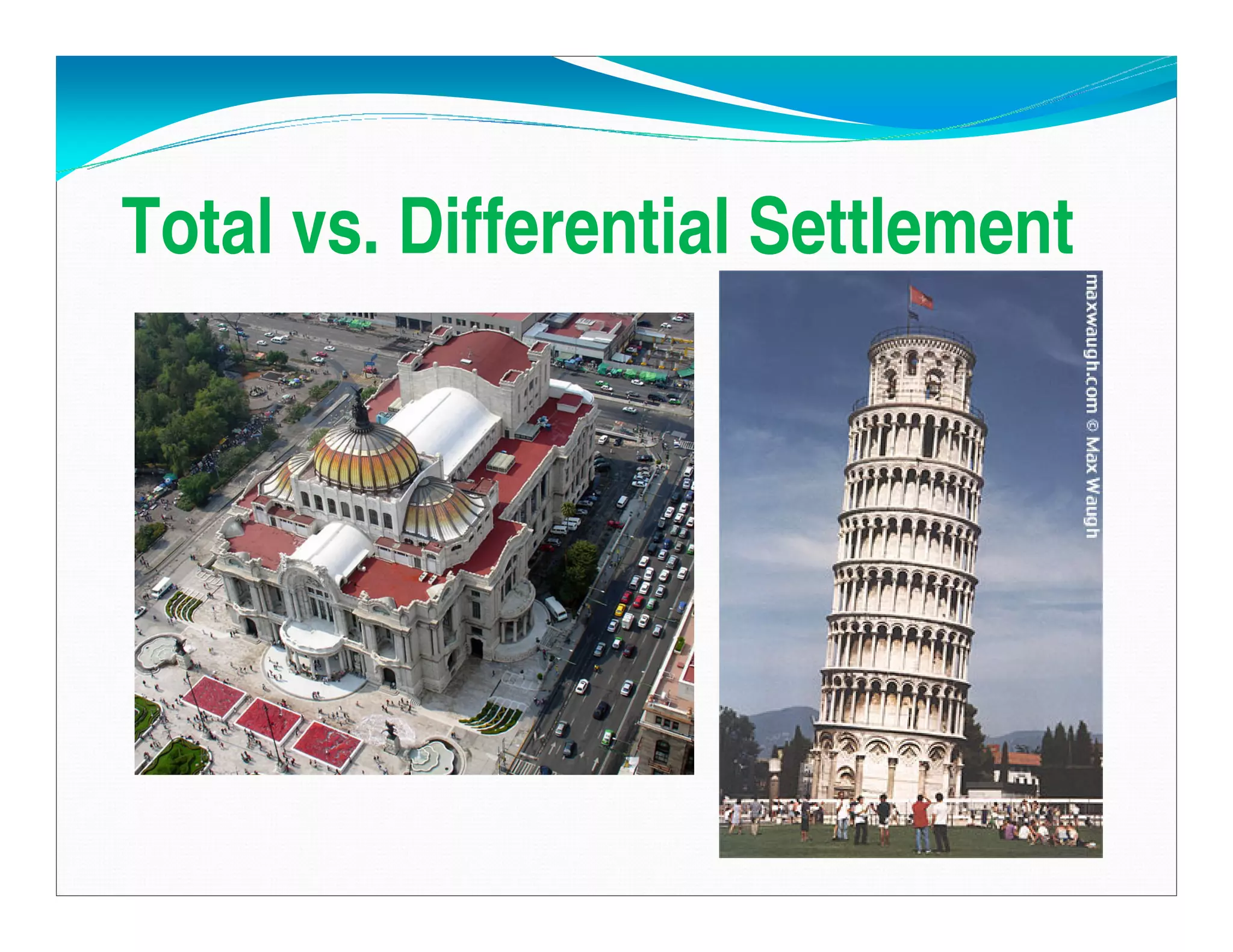
Total vs. Differential Settlement
Downloadedfrom:09ce.blogspot.com
Providedby:DkMamonai-09CE37
Geotechnical Aspects
Determining the type of foundation for the structure,Determining the type of foundation for the structure,Determining the type of foundation for the structure,Determining the type of foundation for the structure,
including the depth and dimensionsincluding the depth and dimensionsincluding the depth and dimensionsincluding the depth and dimensions
Calculating the potential settlement of the foundationCalculating the potential settlement of the foundationCalculating the potential settlement of the foundationCalculating the potential settlement of the foundation
Determining the expansion potentialDetermining the expansion potentialDetermining the expansion potentialDetermining the expansion potential
Investigating the stability of slopes and their effect onInvestigating the stability of slopes and their effect onInvestigating the stability of slopes and their effect onInvestigating the stability of slopes and their effect on
adjacent foundationsadjacent foundationsadjacent foundationsadjacent foundations
Investigating the possibility of foundation movementInvestigating the possibility of foundation movementInvestigating the possibility of foundation movementInvestigating the possibility of foundation movement
due to seismic forces, which would also include thedue to seismic forces, which would also include thedue to seismic forces, which would also include thedue to seismic forces, which would also include the
possibility of liquefactionpossibility of liquefactionpossibility of liquefactionpossibility of liquefaction
Downloadedfrom:09ce.blogspot.com
Providedby:DkMamonai-09CE37
Performing studies and tests to determine the potentialPerforming studies and tests to determine the potentialPerforming studies and tests to determine the potentialPerforming studies and tests to determine the potential
for deterioration of the foundationsfor deterioration of the foundationsfor deterioration of the foundationsfor deterioration of the foundations
Evaluating possible soil treatment to increase theEvaluating possible soil treatment to increase theEvaluating possible soil treatment to increase theEvaluating possible soil treatment to increase the
foundation bearing capacityfoundation bearing capacityfoundation bearing capacityfoundation bearing capacity
Determining design parameters for retaining wallDetermining design parameters for retaining wallDetermining design parameters for retaining wallDetermining design parameters for retaining wall
foundationsfoundationsfoundationsfoundations
Providing recommendations for dewatering andProviding recommendations for dewatering andProviding recommendations for dewatering andProviding recommendations for dewatering and
drainage of excavations needed for the construction ofdrainage of excavations needed for the construction ofdrainage of excavations needed for the construction ofdrainage of excavations needed for the construction of
the foundationthe foundationthe foundationthe foundation
Downloadedfrom:09ce.blogspot.com
Providedby:DkMamonai-09CE37
Investigating ground water and seepage problems andInvestigating ground water and seepage problems andInvestigating ground water and seepage problems andInvestigating ground water and seepage problems and
developing mitigation measures during foundationdeveloping mitigation measures during foundationdeveloping mitigation measures during foundationdeveloping mitigation measures during foundation
constructionconstructionconstructionconstruction
Site preparation, including compaction specificationsSite preparation, including compaction specificationsSite preparation, including compaction specificationsSite preparation, including compaction specifications
and density testing during gradingand density testing during gradingand density testing during gradingand density testing during grading
Underpinning and field testing of foundationsUnderpinning and field testing of foundationsUnderpinning and field testing of foundationsUnderpinning and field testing of foundations
Downloadedfrom:09ce.blogspot.com
Providedby:DkMamonai-09CE37
General Requirements for
Foundation Engineering Projects
Knowledge of the general topography of the siteKnowledge of the general topography of the siteKnowledge of the general topography of the siteKnowledge of the general topography of the site
The location of buried utilitiesThe location of buried utilitiesThe location of buried utilitiesThe location of buried utilities
The geology of the proposed siteThe geology of the proposed siteThe geology of the proposed siteThe geology of the proposed site
The previous history and use of the siteThe previous history and use of the siteThe previous history and use of the siteThe previous history and use of the site
Any special features such as the possibility ofAny special features such as the possibility ofAny special features such as the possibility ofAny special features such as the possibility of
earthquakes or climate factors such as flooding ,earthquakes or climate factors such as flooding ,earthquakes or climate factors such as flooding ,earthquakes or climate factors such as flooding ,
seasonal swelling and shrinkage, permafrost, or soilseasonal swelling and shrinkage, permafrost, or soilseasonal swelling and shrinkage, permafrost, or soilseasonal swelling and shrinkage, permafrost, or soil
erosionerosionerosionerosion
Downloadedfrom:09ce.blogspot.com
Providedby:DkMamonai-09CE37
The availability and quality of local construction materialsThe availability and quality of local construction materialsThe availability and quality of local construction materialsThe availability and quality of local construction materials
For maritime or river structures, information on tidal rangesFor maritime or river structures, information on tidal rangesFor maritime or river structures, information on tidal rangesFor maritime or river structures, information on tidal ranges
and river levels, velocity of tidal and river currents, andand river levels, velocity of tidal and river currents, andand river levels, velocity of tidal and river currents, andand river levels, velocity of tidal and river currents, and otherotherotherother
hydrographic and meteorological datahydrographic and meteorological datahydrographic and meteorological datahydrographic and meteorological data
A detailed record of the soil and rock strata and ground waterA detailed record of the soil and rock strata and ground waterA detailed record of the soil and rock strata and ground waterA detailed record of the soil and rock strata and ground water
conditions within the zones affected by foundation bearingconditions within the zones affected by foundation bearingconditions within the zones affected by foundation bearingconditions within the zones affected by foundation bearing
pressure and construction operationspressure and construction operationspressure and construction operationspressure and construction operations
Downloadedfrom:09ce.blogspot.com
Providedby:DkMamonai-09CE37
Results of laboratory tests on soil andResults of laboratory tests on soil andResults of laboratory tests on soil andResults of laboratory tests on soil and
rock samples appropriate to therock samples appropriate to therock samples appropriate to therock samples appropriate to the
particular foundation design orparticular foundation design orparticular foundation design orparticular foundation design or
construction problemsconstruction problemsconstruction problemsconstruction problems
Results of chemical analyses on soil andResults of chemical analyses on soil andResults of chemical analyses on soil andResults of chemical analyses on soil and
ground water to determine possibleground water to determine possibleground water to determine possibleground water to determine possible
deleterious of foundation structuresdeleterious of foundation structuresdeleterious of foundation structuresdeleterious of foundation structures
Downloadedfrom:09ce.blogspot.com
Providedby:DkMamonai-09CE37
Preliminary Information and Planning
the Work
Project LocationProject LocationProject LocationProject Location
Basic information on the location of the project is
required. The location of the project can be compared
with known geological hazards such as active faults,
landslides, or deposits prone to liquefaction.
Type of ProjectType of ProjectType of ProjectType of Project
It is important to obtain as much information about the
project as possible.
Downloadedfrom:09ce.blogspot.com
Providedby:DkMamonai-09CE37
Such information could include the type of structure and use,
size of the structure including the number of stories, type of
construction and floor systems, preliminary foundation type,
and estimated structural loadings.
Scope of workScope of workScope of workScope of work
The scope of the work must be determined, which includes
subsurface exploration and laboratory testing to determine
the feasibility of the project, the preparation of foundation
design parameters, and compaction testing during the grading
of the site in order to prepare the building pad for foundation
construction.
Downloadedfrom:09ce.blogspot.com
Providedby:DkMamonai-09CE37
After the preliminary information is obtained, the next
step is to plan the foundation investigation work.
For minor project, the planning effort may be minimal,
but for large-scale projects, the plan could be quite
extensive and could change as the design and
construction progresses.
Downloadedfrom:09ce.blogspot.com
Providedby:DkMamonai-09CE37
The planning effort could include the following:
Budget and scheduling considerations
Selection of a team of professionals of relevant fields
(such as geotechnical engineer, engineering geologist,
structural engineer, hydro geologist and the like)that will
work on the project
Preliminary subsurface exploration plan, such as number
, location, and depth of borings
Downloadedfrom:09ce.blogspot.com
Providedby:DkMamonai-09CE37
Document collection
Laboratory testing requirements
Types of engineering analyses
that will be required for the design
of the foundation.
Downloadedfrom:09ce.blogspot.com
Providedby:DkMamonai-09CE37

Introduction to Foundation Engineering

  • 1.
  • 2.
    SYLLABUS of FOUNDATION ENGINEERING SoilExploration Shallow Foundations Deep Foundations Earthen Dams Downloadedfrom:09ce.blogspot.com Providedby:DkMamonai-09CE37
  • 3.
    SYLLABUS of FOUNDATION ENGINEERING SoilExploration Importance of soil exploration and planning of soil exploration program. Soil exploration methods: probing, test pits, auger boring, wash boring, percussion and rotary drilling and geophysical methods. Disturbed and undisturbed soil sampling. Soil samplers. Insitu tests: standard penetration test (SPT), cone penetration test (CPT), plate load test and field vane shear test. Bore hole logs and subsoil exploration report. Downloadedfrom:09ce.blogspot.com Providedby:DkMamonai-09CE37
  • 4.
    Foundations Definition, purpose andtypes of and general requirements of foundations. Depth of footings. Selection of foundation type. Shallow Foundations Definition of bearing capacity. Methods of determining bearing capacity. Presumptive values of bearing capacity. Terzaghi and Meyerhof’s theories of bearing capacity and design of isolated, combined and strip footings. Settlement of shallow foundations and their remedial measures. Downloadedfrom:09ce.blogspot.com Providedby:DkMamonai-09CE37
  • 5.
    Deep Foundations Introduction todeep foundations. Types of piles. Load carrying capacity of piles. Group action. Settlement. Negative skin friction. Pile load test. Cassion and well foundations. Earthen Dams Types of earthen dams, components and their functions. General design considerations and typical cross- section. Foundations on difficult soils Intoduction to relevant softwares. Downloadedfrom:09ce.blogspot.com Providedby:DkMamonai-09CE37
  • 6.
    Text Principles of Foundation Engineering by BrajaM. Das Downloadedfrom:09ce.blogspot.com Providedby:DkMamonai-09CE37
  • 7.
  • 8.
    Reference Foundation Analysis and Design by JosephE. Bowles Downloadedfrom:09ce.blogspot.com Providedby:DkMamonai-09CE37
  • 9.
  • 10.
    Definition Foundation is apart of the structure that supports the structural weight and transmits the load to underlying soil or rock.(Foundation includes foundation structure and soil influenced by the structural load.) Downloadedfrom:09ce.blogspot.com Providedby:DkMamonai-09CE37
  • 11.
    Types of Foundations ShallowFoundations versus Deep Foundations Foundations Shallow Foundations Deep Foundations Spread Footings Mat Foundations Driven Piles Drilled Shafts Auger Cast Piles Downloadedfrom:09ce.blogspot.com Providedby:DkMamonai-09CE37
  • 12.
    Foundations Shallow Footings Spread Footing MatFooting Combined Footing Downloadedfrom:09ce.blogspot.com Providedby:DkMamonai-09CE37
  • 13.
  • 14.
    Shoes, Snow shoes,and stilts are much like the different types of footings of a structure A Shoe make contact with a firm surface (spread footings) B. Snow shoes spread weight over a large surface (raft footing). C. Stilts (pile footings) reach firm surface Downloadedfrom:09ce.blogspot.com Providedby:DkMamonai-09CE37
  • 15.
    Parts of aFoundation A foundation (substructure) can be divided into three parts Bearing surface. Footing. Upright supports. The bearing surface is the earth upon which the foundation rests. It may be soil or bedrock. The bearing surface may be far below the surface of a swamp, river, or ocean. Downloadedfrom:09ce.blogspot.com Providedby:DkMamonai-09CE37
  • 16.
    The footing isthe flat part of the foundation. It spreads the load of the structure above it. Upright support. They may be walls or piers (masonry column) that rise above the footing. They form the rest of the structure. Downloadedfrom:09ce.blogspot.com Providedby:DkMamonai-09CE37
  • 17.
    Foundation System This partwill be done by the Structural Engineer Downloadedfrom:09ce.blogspot.com Providedby:DkMamonai-09CE37
  • 18.
    Every civil engineeringstructure such as : Buildings Bridges. Highway pavement ,and Railway track Will have a superstructure and substructure(Foundations) Downloadedfrom:09ce.blogspot.com Providedby:DkMamonai-09CE37
  • 19.
  • 20.
    Super structure transmitsthe load. Sub structure receives and transmits the load to underlying soil or rock. The foundation engineer’s aim is that no component of the structure and foundation should experience of any kind of distress. Geotechnical design parameters: - Bearing capacity - Settlement Downloadedfrom:09ce.blogspot.com Providedby:DkMamonai-09CE37
  • 21.
  • 22.
    What is FoundationEngineering? The art of selecting, designing, and constructing structural support systems based on scientific principles of soils and engineering mechanics incorporating accumulated experience with such applications. Downloadedfrom:09ce.blogspot.com Providedby:DkMamonai-09CE37
  • 23.
    What is thecurrent state-of-the-art? In spite of the many advances in foundation engineering it is still an art mostly supported by empirical techniques. Downloadedfrom:09ce.blogspot.com Providedby:DkMamonai-09CE37
  • 24.
    Why mostly empirical? Wedo not fully understand the behavior of foundations. Knowledge of subsurface conditions are always limited. Downloadedfrom:09ce.blogspot.com Providedby:DkMamonai-09CE37
  • 25.
    What do Ihave to know to be a good Foundation Engineer? Geology Geophysics Subsurface Exploration Laboratory Testing Soil Mechanics Structural Engineering Construction Engineering Downloadedfrom:09ce.blogspot.com Providedby:DkMamonai-09CE37
  • 26.
    Uncertainties Soils: Not a manufacturedmaterial High degree of variability Material characterization done based on a small sample Complex behavior (non-linear; anisotropic) Rationalism vs. Empiricism Factors of Safety Downloadedfrom:09ce.blogspot.com Providedby:DkMamonai-09CE37
  • 27.
    Who is responsiblefor uncertainties? You (the Foundation Engineer). Always use presence, common sense engineering, and experience first, beforefirst, beforefirst, beforefirst, before blindly following analysis and test results. Downloadedfrom:09ce.blogspot.com Providedby:DkMamonai-09CE37
  • 28.
    What is analysisgood for? It is good to confirm that a precedent solution can be safely applied to your site. Downloadedfrom:09ce.blogspot.com Providedby:DkMamonai-09CE37
  • 29.
    What makes agood foundation? Safe Reliable Durable Buildable Economical Downloadedfrom:09ce.blogspot.com Providedby:DkMamonai-09CE37
  • 30.
    Is it myjob to be concerned of costs? Yes. As a professional engineer, it is your obligation to balance “costs and uncertainties Downloadedfrom:09ce.blogspot.com Providedby:DkMamonai-09CE37
  • 31.
    The Final Question InFoundation Engineering, there areIn Foundation Engineering, there areIn Foundation Engineering, there areIn Foundation Engineering, there are manymanymanymany ““““ifififif’’’’ssss”””” andandandand ““““butbutbutbut’’’’ssss””””. What do I do. What do I do. What do I do. What do I do when I am in doubt?when I am in doubt?when I am in doubt?when I am in doubt? 1. When in doubt go wide. 2. When in doubt go deep. 3. When in doubt grout (ground modify). Downloadedfrom:09ce.blogspot.com Providedby:DkMamonai-09CE37
  • 32.
  • 33.
  • 34.
  • 35.
  • 36.
  • 37.
  • 38.
  • 39.
  • 40.
    Eiffel Tower, Paris,France, built in 1887-1889 Downloadedfrom:09ce.blogspot.com Providedby:DkMamonai-09CE37
  • 41.
  • 42.
    Leaning Tower, Pisa,Italy Built 1173-1350 Downloadedfrom:09ce.blogspot.com Providedby:DkMamonai-09CE37
  • 43.
    Palacio de lasBellas Artes, Mexico City Built 1932-1934 Downloadedfrom:09ce.blogspot.com Providedby:DkMamonai-09CE37
  • 44.
    Tower of Latino Americana,Mexico City Built in 1956 44 stories; 597-ft Downloadedfrom:09ce.blogspot.com Providedby:DkMamonai-09CE37
  • 45.
    Performance Requirements Design Loads AllowableStress Design vs LRFD Performance Requirements Strength Requirements Serviceability Requirements Total Settlement Differential Settlement Constructability Requirements Economic Requirements Downloadedfrom:09ce.blogspot.com Providedby:DkMamonai-09CE37
  • 46.
    Strength Requirements Foundation soil mustbe strong enough to support imposed loads ….. Downloadedfrom:09ce.blogspot.com Providedby:DkMamonai-09CE37
  • 47.
    Failure of aBridge Foundation Downloadedfrom:09ce.blogspot.com Providedby:DkMamonai-09CE37
  • 48.
    Serviceability Requirements Settlement must bewithin acceptable limits ….. Downloadedfrom:09ce.blogspot.com Providedby:DkMamonai-09CE37
  • 49.
    Total vs. DifferentialSettlement Downloadedfrom:09ce.blogspot.com Providedby:DkMamonai-09CE37
  • 50.
    Geotechnical Aspects Determining thetype of foundation for the structure,Determining the type of foundation for the structure,Determining the type of foundation for the structure,Determining the type of foundation for the structure, including the depth and dimensionsincluding the depth and dimensionsincluding the depth and dimensionsincluding the depth and dimensions Calculating the potential settlement of the foundationCalculating the potential settlement of the foundationCalculating the potential settlement of the foundationCalculating the potential settlement of the foundation Determining the expansion potentialDetermining the expansion potentialDetermining the expansion potentialDetermining the expansion potential Investigating the stability of slopes and their effect onInvestigating the stability of slopes and their effect onInvestigating the stability of slopes and their effect onInvestigating the stability of slopes and their effect on adjacent foundationsadjacent foundationsadjacent foundationsadjacent foundations Investigating the possibility of foundation movementInvestigating the possibility of foundation movementInvestigating the possibility of foundation movementInvestigating the possibility of foundation movement due to seismic forces, which would also include thedue to seismic forces, which would also include thedue to seismic forces, which would also include thedue to seismic forces, which would also include the possibility of liquefactionpossibility of liquefactionpossibility of liquefactionpossibility of liquefaction Downloadedfrom:09ce.blogspot.com Providedby:DkMamonai-09CE37
  • 51.
    Performing studies andtests to determine the potentialPerforming studies and tests to determine the potentialPerforming studies and tests to determine the potentialPerforming studies and tests to determine the potential for deterioration of the foundationsfor deterioration of the foundationsfor deterioration of the foundationsfor deterioration of the foundations Evaluating possible soil treatment to increase theEvaluating possible soil treatment to increase theEvaluating possible soil treatment to increase theEvaluating possible soil treatment to increase the foundation bearing capacityfoundation bearing capacityfoundation bearing capacityfoundation bearing capacity Determining design parameters for retaining wallDetermining design parameters for retaining wallDetermining design parameters for retaining wallDetermining design parameters for retaining wall foundationsfoundationsfoundationsfoundations Providing recommendations for dewatering andProviding recommendations for dewatering andProviding recommendations for dewatering andProviding recommendations for dewatering and drainage of excavations needed for the construction ofdrainage of excavations needed for the construction ofdrainage of excavations needed for the construction ofdrainage of excavations needed for the construction of the foundationthe foundationthe foundationthe foundation Downloadedfrom:09ce.blogspot.com Providedby:DkMamonai-09CE37
  • 52.
    Investigating ground waterand seepage problems andInvestigating ground water and seepage problems andInvestigating ground water and seepage problems andInvestigating ground water and seepage problems and developing mitigation measures during foundationdeveloping mitigation measures during foundationdeveloping mitigation measures during foundationdeveloping mitigation measures during foundation constructionconstructionconstructionconstruction Site preparation, including compaction specificationsSite preparation, including compaction specificationsSite preparation, including compaction specificationsSite preparation, including compaction specifications and density testing during gradingand density testing during gradingand density testing during gradingand density testing during grading Underpinning and field testing of foundationsUnderpinning and field testing of foundationsUnderpinning and field testing of foundationsUnderpinning and field testing of foundations Downloadedfrom:09ce.blogspot.com Providedby:DkMamonai-09CE37
  • 53.
    General Requirements for FoundationEngineering Projects Knowledge of the general topography of the siteKnowledge of the general topography of the siteKnowledge of the general topography of the siteKnowledge of the general topography of the site The location of buried utilitiesThe location of buried utilitiesThe location of buried utilitiesThe location of buried utilities The geology of the proposed siteThe geology of the proposed siteThe geology of the proposed siteThe geology of the proposed site The previous history and use of the siteThe previous history and use of the siteThe previous history and use of the siteThe previous history and use of the site Any special features such as the possibility ofAny special features such as the possibility ofAny special features such as the possibility ofAny special features such as the possibility of earthquakes or climate factors such as flooding ,earthquakes or climate factors such as flooding ,earthquakes or climate factors such as flooding ,earthquakes or climate factors such as flooding , seasonal swelling and shrinkage, permafrost, or soilseasonal swelling and shrinkage, permafrost, or soilseasonal swelling and shrinkage, permafrost, or soilseasonal swelling and shrinkage, permafrost, or soil erosionerosionerosionerosion Downloadedfrom:09ce.blogspot.com Providedby:DkMamonai-09CE37
  • 54.
    The availability andquality of local construction materialsThe availability and quality of local construction materialsThe availability and quality of local construction materialsThe availability and quality of local construction materials For maritime or river structures, information on tidal rangesFor maritime or river structures, information on tidal rangesFor maritime or river structures, information on tidal rangesFor maritime or river structures, information on tidal ranges and river levels, velocity of tidal and river currents, andand river levels, velocity of tidal and river currents, andand river levels, velocity of tidal and river currents, andand river levels, velocity of tidal and river currents, and otherotherotherother hydrographic and meteorological datahydrographic and meteorological datahydrographic and meteorological datahydrographic and meteorological data A detailed record of the soil and rock strata and ground waterA detailed record of the soil and rock strata and ground waterA detailed record of the soil and rock strata and ground waterA detailed record of the soil and rock strata and ground water conditions within the zones affected by foundation bearingconditions within the zones affected by foundation bearingconditions within the zones affected by foundation bearingconditions within the zones affected by foundation bearing pressure and construction operationspressure and construction operationspressure and construction operationspressure and construction operations Downloadedfrom:09ce.blogspot.com Providedby:DkMamonai-09CE37
  • 55.
    Results of laboratorytests on soil andResults of laboratory tests on soil andResults of laboratory tests on soil andResults of laboratory tests on soil and rock samples appropriate to therock samples appropriate to therock samples appropriate to therock samples appropriate to the particular foundation design orparticular foundation design orparticular foundation design orparticular foundation design or construction problemsconstruction problemsconstruction problemsconstruction problems Results of chemical analyses on soil andResults of chemical analyses on soil andResults of chemical analyses on soil andResults of chemical analyses on soil and ground water to determine possibleground water to determine possibleground water to determine possibleground water to determine possible deleterious of foundation structuresdeleterious of foundation structuresdeleterious of foundation structuresdeleterious of foundation structures Downloadedfrom:09ce.blogspot.com Providedby:DkMamonai-09CE37
  • 56.
    Preliminary Information andPlanning the Work Project LocationProject LocationProject LocationProject Location Basic information on the location of the project is required. The location of the project can be compared with known geological hazards such as active faults, landslides, or deposits prone to liquefaction. Type of ProjectType of ProjectType of ProjectType of Project It is important to obtain as much information about the project as possible. Downloadedfrom:09ce.blogspot.com Providedby:DkMamonai-09CE37
  • 57.
    Such information couldinclude the type of structure and use, size of the structure including the number of stories, type of construction and floor systems, preliminary foundation type, and estimated structural loadings. Scope of workScope of workScope of workScope of work The scope of the work must be determined, which includes subsurface exploration and laboratory testing to determine the feasibility of the project, the preparation of foundation design parameters, and compaction testing during the grading of the site in order to prepare the building pad for foundation construction. Downloadedfrom:09ce.blogspot.com Providedby:DkMamonai-09CE37
  • 58.
    After the preliminaryinformation is obtained, the next step is to plan the foundation investigation work. For minor project, the planning effort may be minimal, but for large-scale projects, the plan could be quite extensive and could change as the design and construction progresses. Downloadedfrom:09ce.blogspot.com Providedby:DkMamonai-09CE37
  • 59.
    The planning effortcould include the following: Budget and scheduling considerations Selection of a team of professionals of relevant fields (such as geotechnical engineer, engineering geologist, structural engineer, hydro geologist and the like)that will work on the project Preliminary subsurface exploration plan, such as number , location, and depth of borings Downloadedfrom:09ce.blogspot.com Providedby:DkMamonai-09CE37
  • 60.
    Document collection Laboratory testingrequirements Types of engineering analyses that will be required for the design of the foundation. Downloadedfrom:09ce.blogspot.com Providedby:DkMamonai-09CE37