"ICT for Education-Successful
Integration with OER"

By

Jacqueline Peters-Richardson
Introduction
●

●

●

Governments and Education Institutions
make huge investments in ICT Tools and
Infrastructure.
This investment is to improve the quality
of teaching and learning.
ICT Integration has created some
challenges.
Overview
●

What is ICT for Education

●

Why ICT Integration is important

●

Challenges of ICT Integration

●

What are Open Educational Resources (OERs)

●

Benefits of OERs

●

Phases of Integration

●

●

What is required for a successful ICT
Integration

How can OERs assist with ICT Integration
What is ICT for Education?
●

●

It is a diverse set of technological tools and
resources used to communicate, and to
create, disseminate, store, and manage
information

Technology that is used to enhance
learning
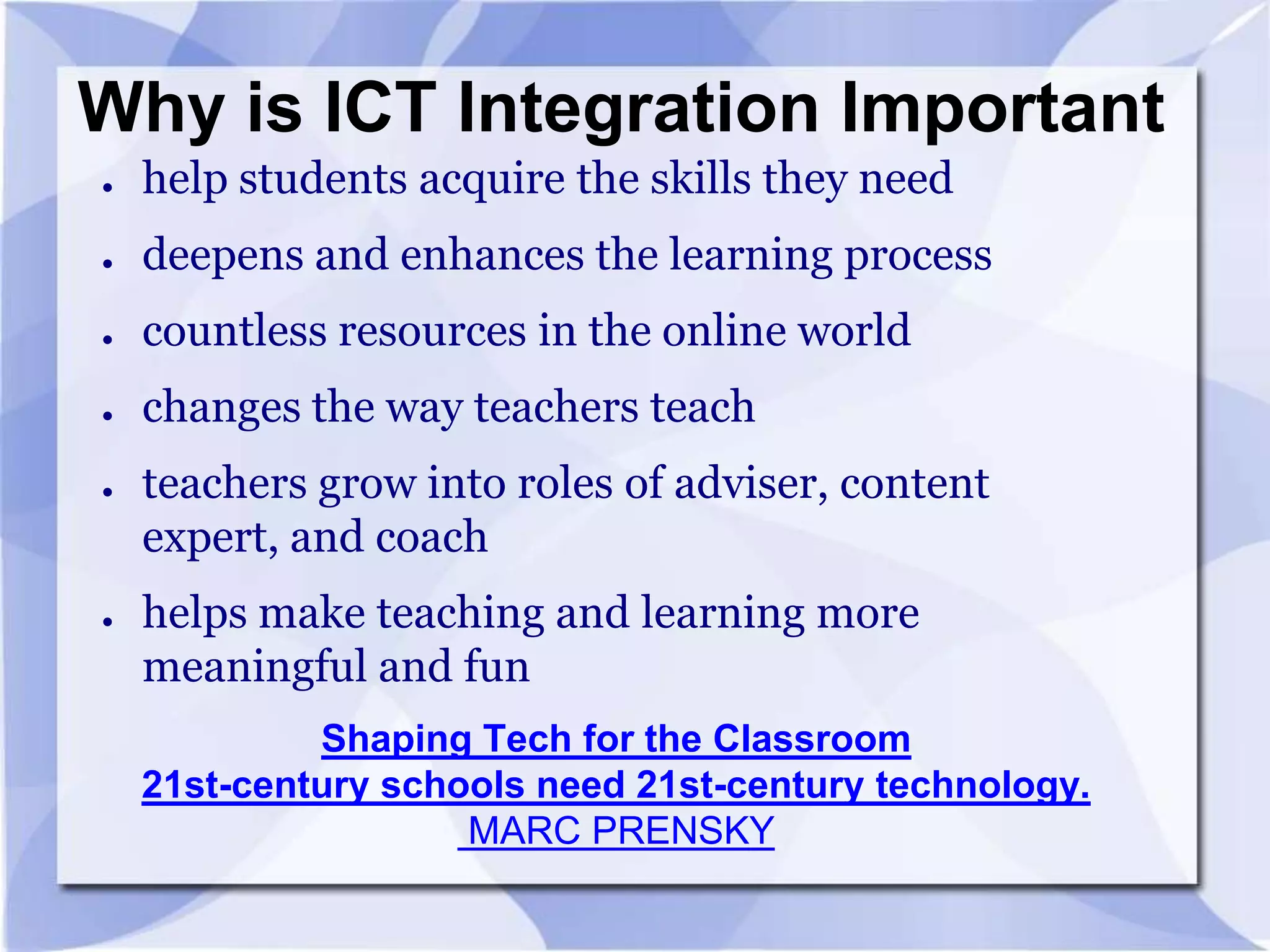
Why is ICT Integration Important
●

help students acquire the skills they need

●

deepens and enhances the learning process

●

countless resources in the online world

●

changes the way teachers teach

●

●

teachers grow into roles of adviser, content
expert, and coach
helps make teaching and learning more
meaningful and fun
Shaping Tech for the Classroom
21st-century schools need 21st-century technology.
MARC PRENSKY
Challenges of ICT Integration
1.
2.
3.
4.
5.

educational policy and planning
infrastructure
language and content
capacity building
financing
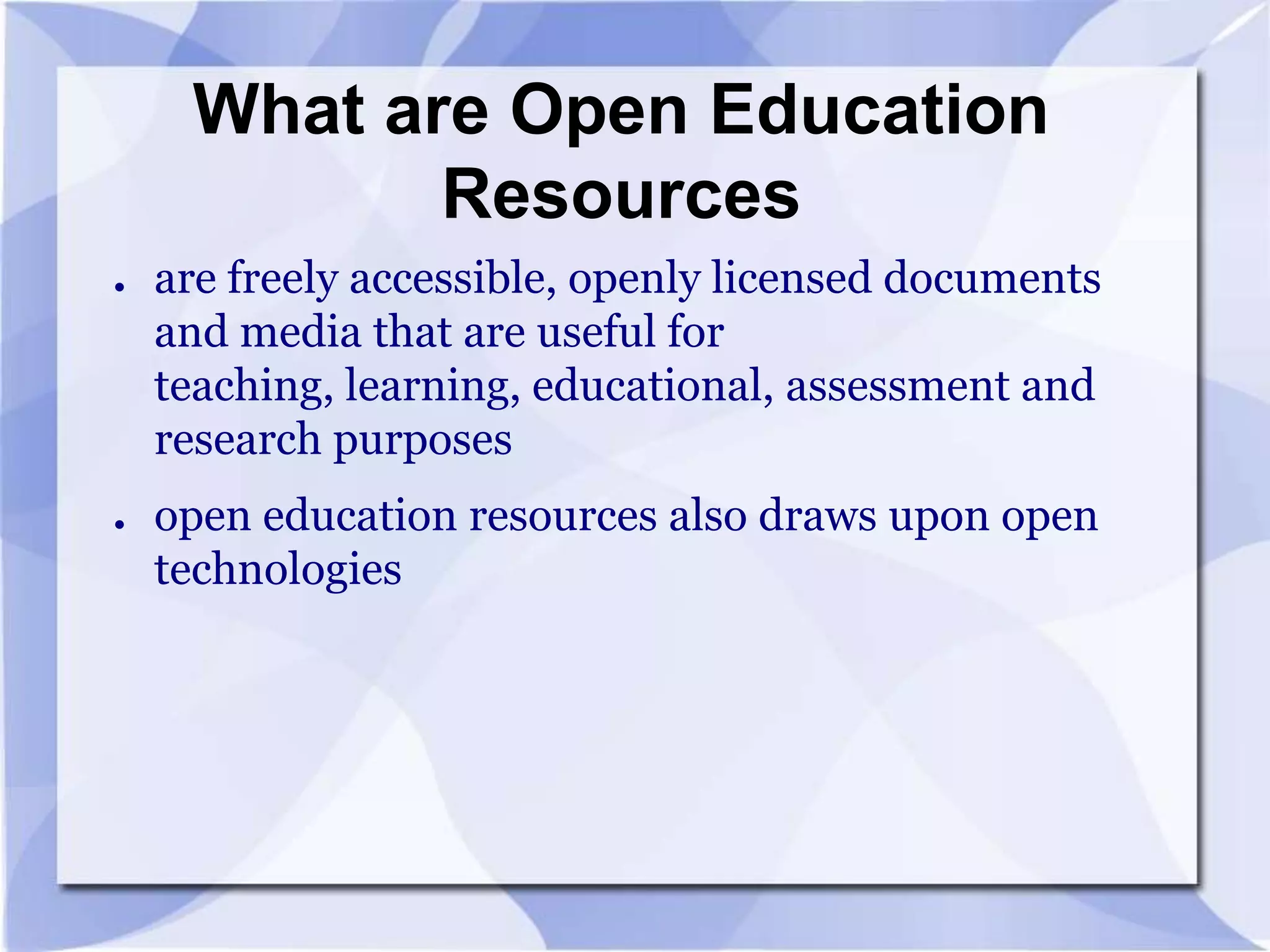
What are Open Education
Resources
●

●

are freely accessible, openly licensed documents
and media that are useful for
teaching, learning, educational, assessment and
research purposes

open education resources also draws upon open
technologies
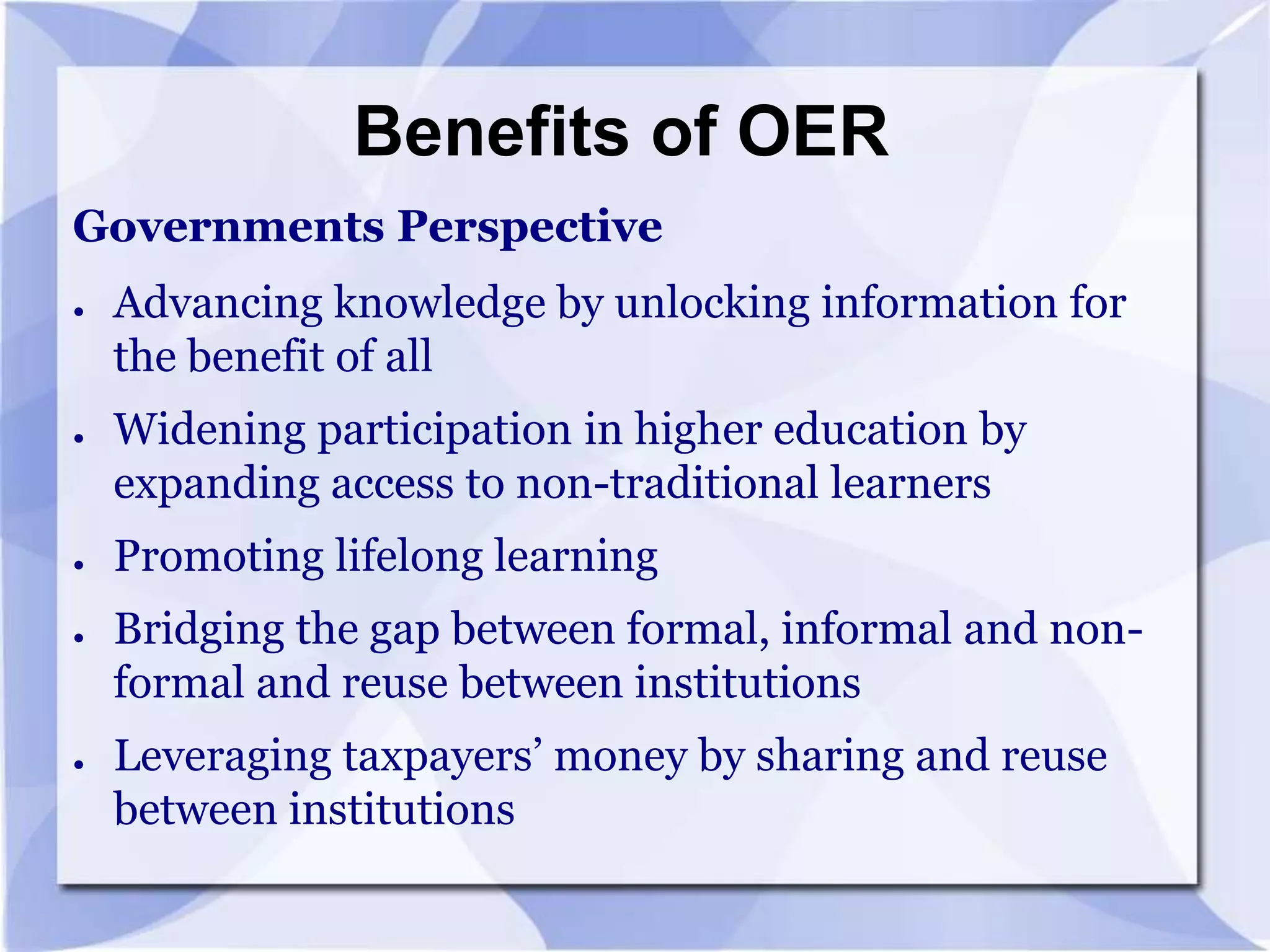
Benefits of OER
Governments Perspective
●

●

●

●

●

Advancing knowledge by unlocking information for
the benefit of all
Widening participation in higher education by
expanding access to non-traditional learners
Promoting lifelong learning
Bridging the gap between formal, informal and nonformal and reuse between institutions
Leveraging taxpayers’ money by sharing and reuse
between institutions
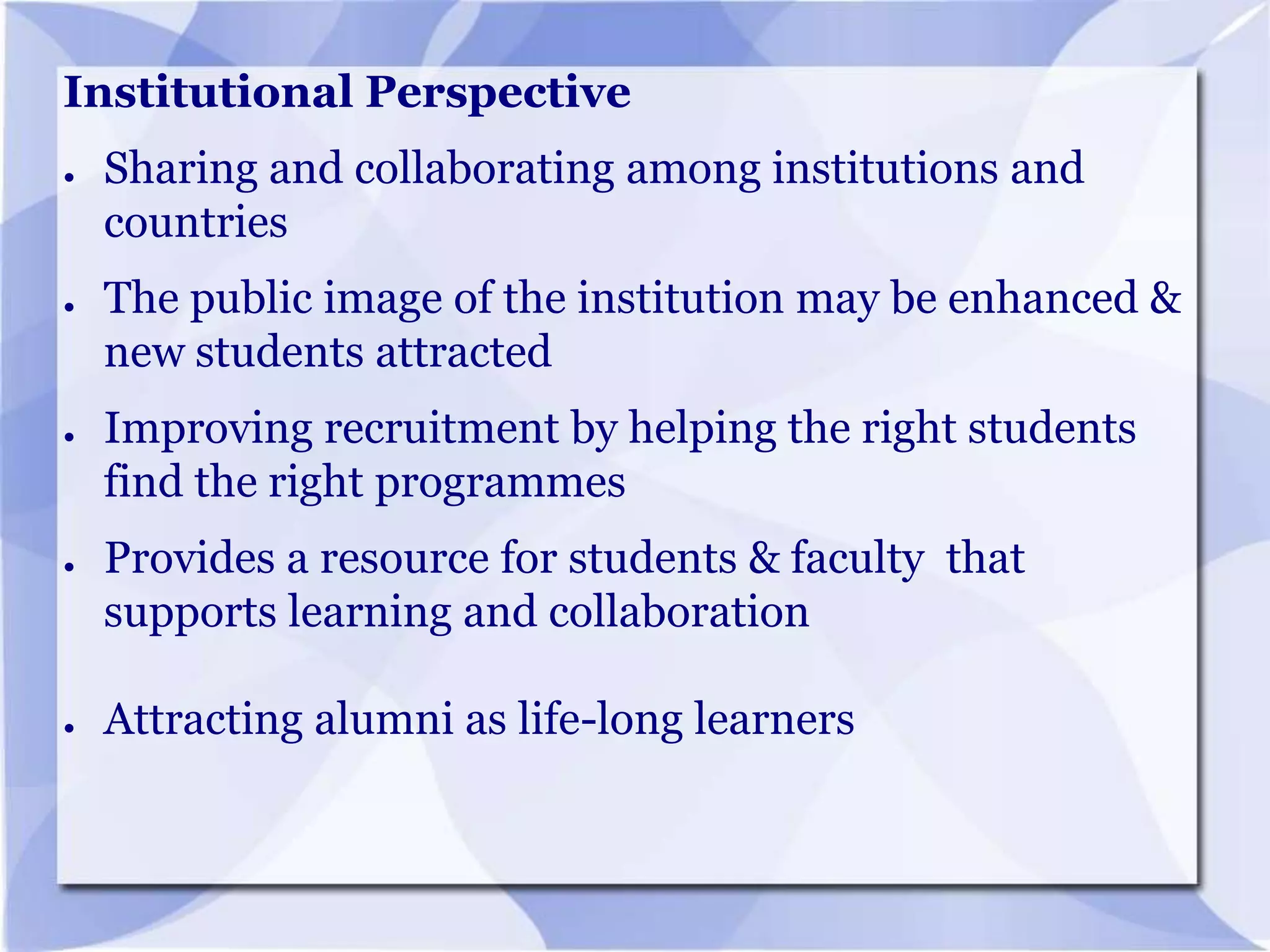
Institutional Perspective
●

●

●

●

●

Sharing and collaborating among institutions and
countries
The public image of the institution may be enhanced &
new students attracted
Improving recruitment by helping the right students
find the right programmes
Provides a resource for students & faculty that
supports learning and collaboration
Attracting alumni as life-long learners
Educators Perspective
●

●

●

Personal gain through increased reputation

Fostering connections with colleagues around the
world
Preserving a record of teaching innovations
allowing others to build upon them
Learners Perspective
•

•

•

An independent learner who has access to the
Internet can access material from some of the best
universities in the world
Promote informal learning where credential is not
needed
Prospective learners may access institutions by
looking at their materials made available by other
institutions
Phases of Integration
●

Emerging - a school in the beginning stages of ICT
development
–

administrators and educators are just starting to
explore the possibilities and consequences of using
ICTs for school management and the curriculum

–

Learners’ access to technology is through individual
educators

–

some computer literacy lessons or courses, focusing
on learning about ICT e.g. word processor courses
Applying - describes the school in which new
understandings of the contributions of ICTs to
learning have developed
–

administrators and educators use ICTs for tasks
already carried out in school management and in
the curriculum

–

educators’ lectures may be supplemented with ICT
use, such as presentation programs and wordprocessed handouts

–

the emphasis is on educators teaching about the
computer and not learners learning with the
computer
Integrating - describes a school that now has a range of
technologies both in laboratories, classrooms and
administrative offices
–

staff explores new ways in which ICTs change their
personal productivity and professional practice

–

The curriculum begins to merge subject areas to
reflect real-world applications

–

Learners’ access to technology enables them to
choose projects and ICT tools to learn and
demonstrate their knowledge across
learning/subject areas
–

Learners have more choices with regard to learning
styles and pathways

–

Staff development and support in the integration of
ICT continues throughout this stage.
Transforming - a school that has used ICTs creatively
to rethink and renew school organization
–

The focus of the curriculum is now learner-centered
and integrates subject/learning areas in real-world
applications

–

Learners’ access to technology is broad and
unrestricted
What is required for successful
Integration
●

ICT SWOT Analysis

●

ICT Vision

●

ICT Policy

●

Plan of Action
●

Implementation

●

Training

●

Monitoring and Support

●

Evaluation

●

Revision
How can OER assist with the
Transformation
●

Assistance in creating policy
–

ICT Development Cycle

●

Provide resource materials

●

Reduce Integration cost

●

Sharing of best practices

●

Provide training of teachers and administrators
–

Commonwealth of Learning

–

INTEL
Conclusion
There are many OERs available that can offer
guidance and support in making the transformation
to ICT enhance teaching and learning Environment.

New Directions of ICT-Use in Education
Guidelines for open educational resources (OER) in higher
education

ICT for Education - Successful Integration with Open Education Resources

  • 1.
    "ICT for Education-Successful Integrationwith OER" By Jacqueline Peters-Richardson
  • 2.
    Introduction ● ● ● Governments and EducationInstitutions make huge investments in ICT Tools and Infrastructure. This investment is to improve the quality of teaching and learning. ICT Integration has created some challenges.
  • 3.
    Overview ● What is ICTfor Education ● Why ICT Integration is important ● Challenges of ICT Integration ● What are Open Educational Resources (OERs) ● Benefits of OERs ● Phases of Integration ● ● What is required for a successful ICT Integration How can OERs assist with ICT Integration
  • 4.
    What is ICTfor Education? ● ● It is a diverse set of technological tools and resources used to communicate, and to create, disseminate, store, and manage information Technology that is used to enhance learning
  • 5.
    Why is ICTIntegration Important ● help students acquire the skills they need ● deepens and enhances the learning process ● countless resources in the online world ● changes the way teachers teach ● ● teachers grow into roles of adviser, content expert, and coach helps make teaching and learning more meaningful and fun Shaping Tech for the Classroom 21st-century schools need 21st-century technology. MARC PRENSKY
  • 6.
    Challenges of ICTIntegration 1. 2. 3. 4. 5. educational policy and planning infrastructure language and content capacity building financing
  • 7.
    What are OpenEducation Resources ● ● are freely accessible, openly licensed documents and media that are useful for teaching, learning, educational, assessment and research purposes open education resources also draws upon open technologies
  • 8.
    Benefits of OER GovernmentsPerspective ● ● ● ● ● Advancing knowledge by unlocking information for the benefit of all Widening participation in higher education by expanding access to non-traditional learners Promoting lifelong learning Bridging the gap between formal, informal and nonformal and reuse between institutions Leveraging taxpayers’ money by sharing and reuse between institutions
  • 9.
    Institutional Perspective ● ● ● ● ● Sharing andcollaborating among institutions and countries The public image of the institution may be enhanced & new students attracted Improving recruitment by helping the right students find the right programmes Provides a resource for students & faculty that supports learning and collaboration Attracting alumni as life-long learners
  • 10.
    Educators Perspective ● ● ● Personal gainthrough increased reputation Fostering connections with colleagues around the world Preserving a record of teaching innovations allowing others to build upon them
  • 11.
    Learners Perspective • • • An independentlearner who has access to the Internet can access material from some of the best universities in the world Promote informal learning where credential is not needed Prospective learners may access institutions by looking at their materials made available by other institutions
  • 12.
    Phases of Integration ● Emerging- a school in the beginning stages of ICT development – administrators and educators are just starting to explore the possibilities and consequences of using ICTs for school management and the curriculum – Learners’ access to technology is through individual educators – some computer literacy lessons or courses, focusing on learning about ICT e.g. word processor courses
  • 13.
    Applying - describesthe school in which new understandings of the contributions of ICTs to learning have developed – administrators and educators use ICTs for tasks already carried out in school management and in the curriculum – educators’ lectures may be supplemented with ICT use, such as presentation programs and wordprocessed handouts – the emphasis is on educators teaching about the computer and not learners learning with the computer
  • 14.
    Integrating - describesa school that now has a range of technologies both in laboratories, classrooms and administrative offices – staff explores new ways in which ICTs change their personal productivity and professional practice – The curriculum begins to merge subject areas to reflect real-world applications – Learners’ access to technology enables them to choose projects and ICT tools to learn and demonstrate their knowledge across learning/subject areas
  • 15.
    – Learners have morechoices with regard to learning styles and pathways – Staff development and support in the integration of ICT continues throughout this stage.
  • 16.
    Transforming - aschool that has used ICTs creatively to rethink and renew school organization – The focus of the curriculum is now learner-centered and integrates subject/learning areas in real-world applications – Learners’ access to technology is broad and unrestricted
  • 17.
    What is requiredfor successful Integration ● ICT SWOT Analysis ● ICT Vision ● ICT Policy ● Plan of Action
  • 18.
  • 19.
    How can OERassist with the Transformation ● Assistance in creating policy – ICT Development Cycle ● Provide resource materials ● Reduce Integration cost ● Sharing of best practices ● Provide training of teachers and administrators – Commonwealth of Learning – INTEL
  • 20.
    Conclusion There are manyOERs available that can offer guidance and support in making the transformation to ICT enhance teaching and learning Environment. New Directions of ICT-Use in Education Guidelines for open educational resources (OER) in higher education