What Is Successful
Technology Integration?
Well-integrated use of technology resources by
thoroughly trained teachers makes
twenty-first-century learning possible.
BY EDUTOPIA STAFF

NEW TECHNOLOGIES PRESENTATION – SHEILA MOREAU
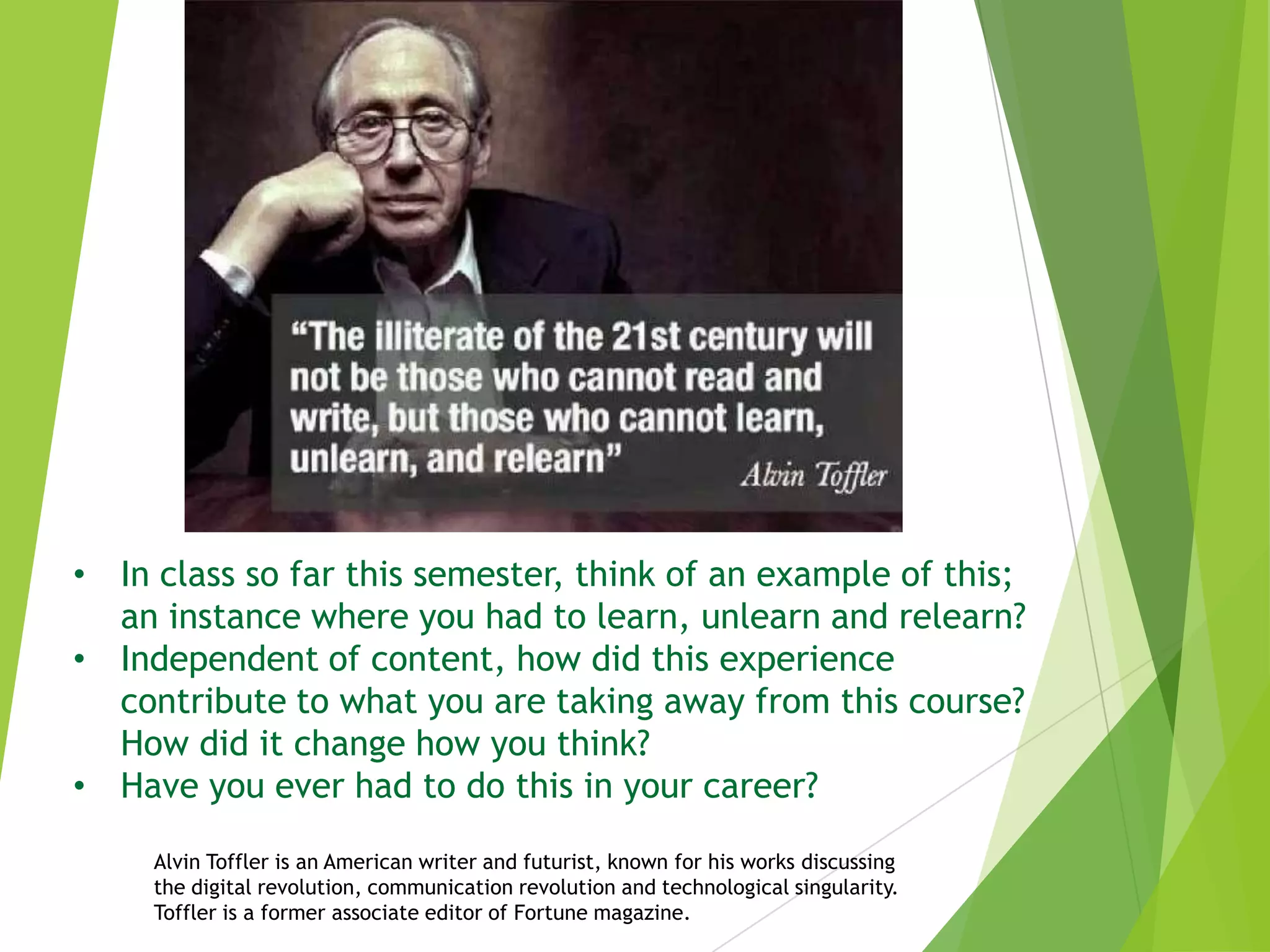
• In class so far this semester, think of an example of this;
an instance where you had to learn, unlearn and relearn?
• Independent of content, how did this experience
contribute to what you are taking away from this course?
How did it change how you think?
• Have you ever had to do this in your career?
Alvin Toffler is an American writer and futurist, known for his works discussing
the digital revolution, communication revolution and technological singularity.
Toffler is a former associate editor of Fortune magazine.
Who here is wearing a wrist watch?
Example By Sir Kenneth Robinson is an English author,
speaker, and international advisor on education in the
arts to government, non-profits, education, and arts
bodies. Known for How Schools Kill Creativity (Ted Talk)

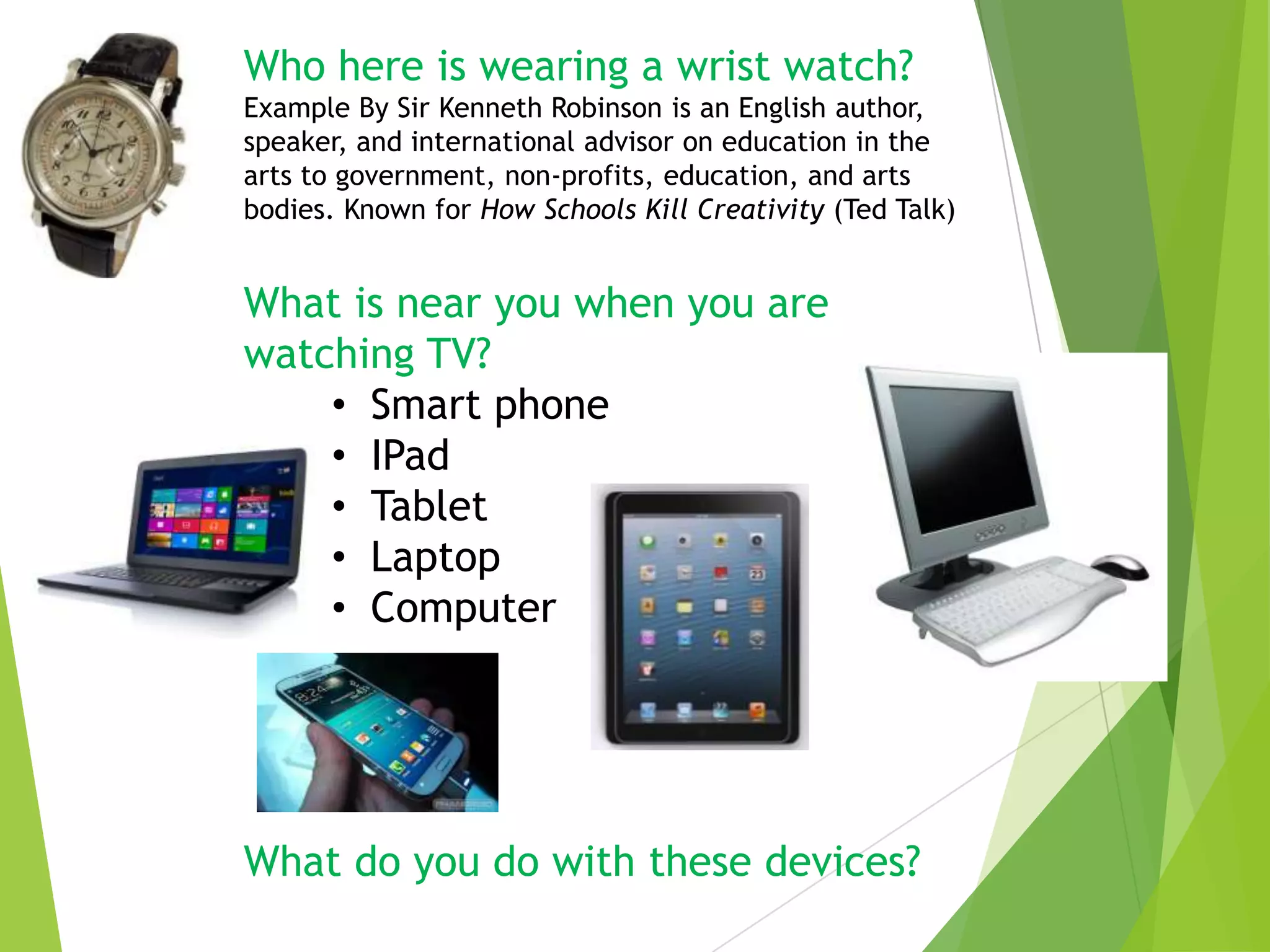
What is near you when you are
watching TV?
• Smart phone
• IPad
• Tablet
• Laptop
• Computer

What do you do with these devices?
Technology influencing life…
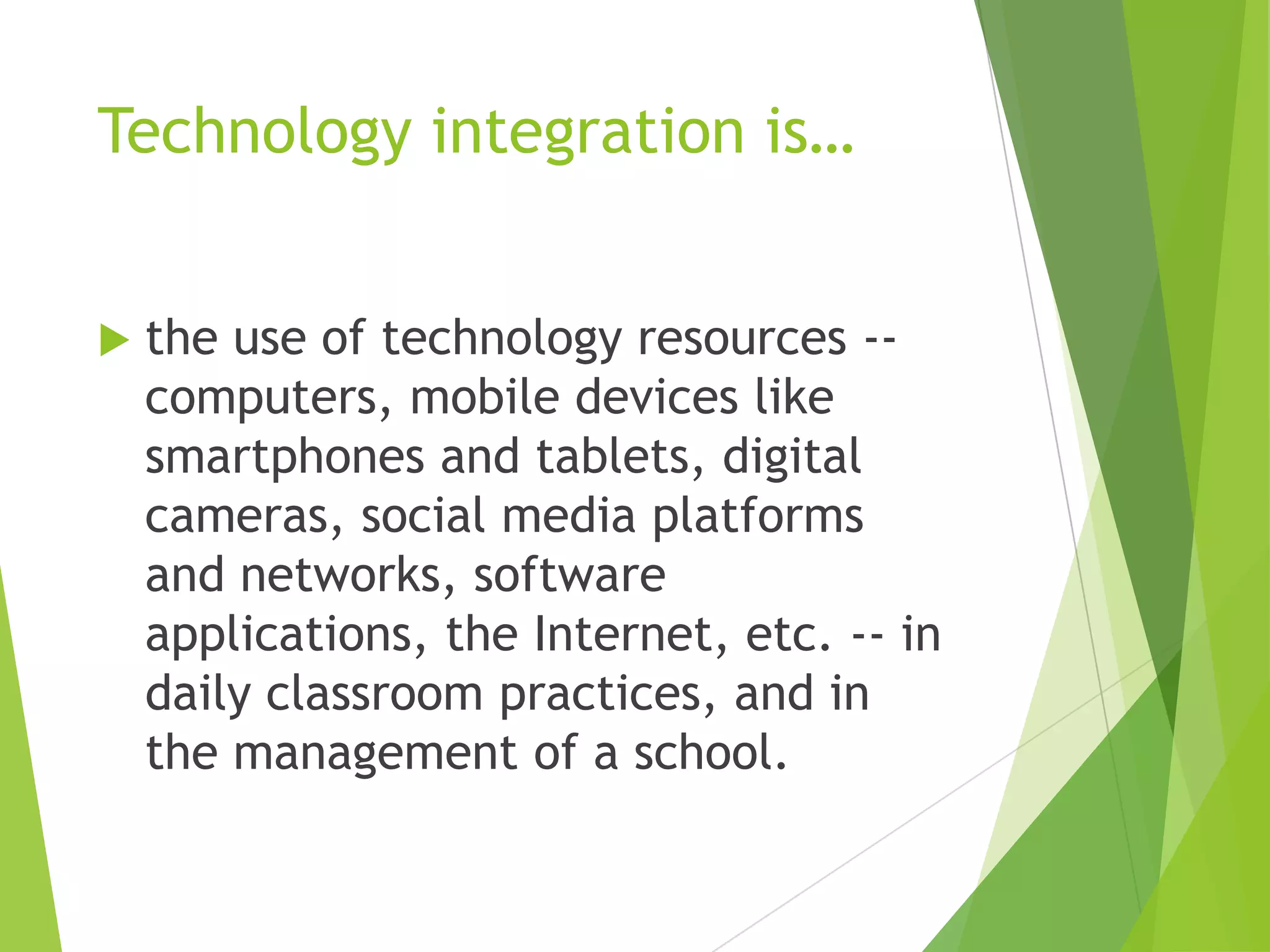
Technology integration is…


the use of technology resources -computers, mobile devices like
smartphones and tablets, digital
cameras, social media platforms
and networks, software
applications, the Internet, etc. -- in
daily classroom practices, and in
the management of a school.
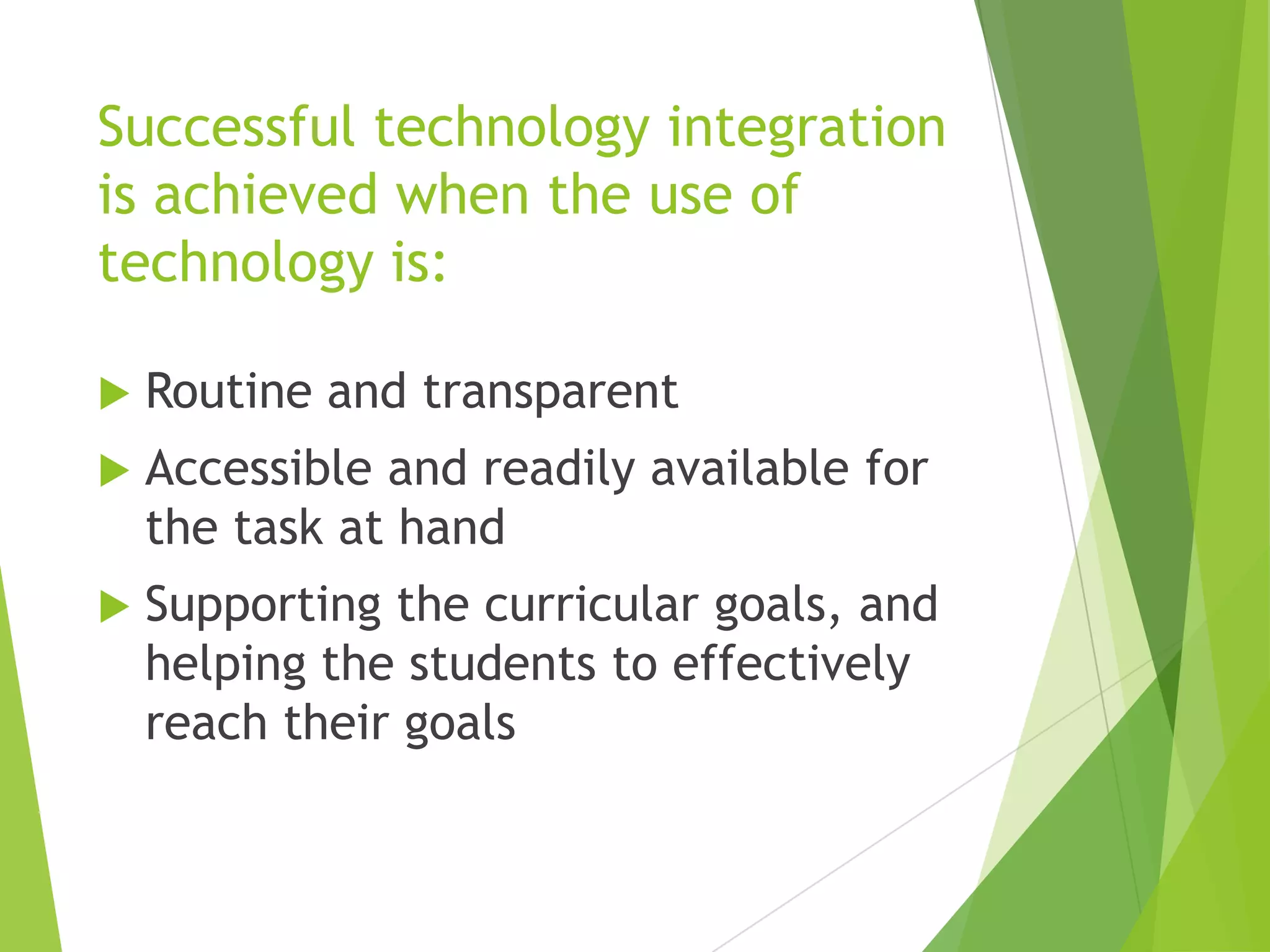
Successful technology integration
is achieved when the use of
technology is:


Routine and transparent



Accessible and readily available for
the task at hand



Supporting the curricular goals, and
helping the students to effectively
reach their goals
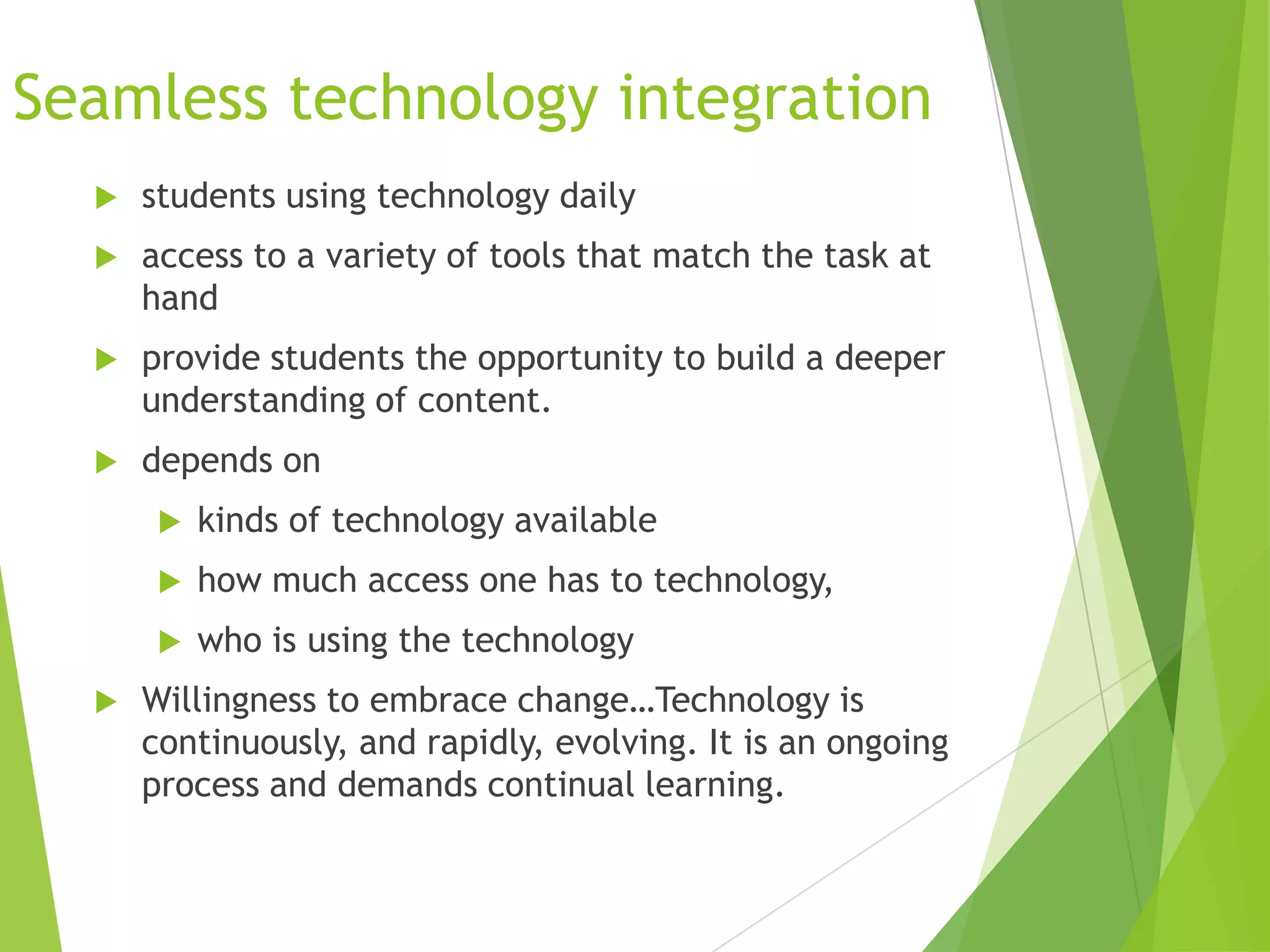
Seamless technology integration


students using technology daily



access to a variety of tools that match the task at
hand



provide students the opportunity to build a deeper
understanding of content.



depends on



how much access one has to technology,




kinds of technology available
who is using the technology

Willingness to embrace change…Technology is
continuously, and rapidly, evolving. It is an ongoing
process and demands continual learning.
Discussion…
 Based

on this definition, how
many of you feel that you have
“seamlessly” integrated
technology in the classroom?

 How

about your colleagues?
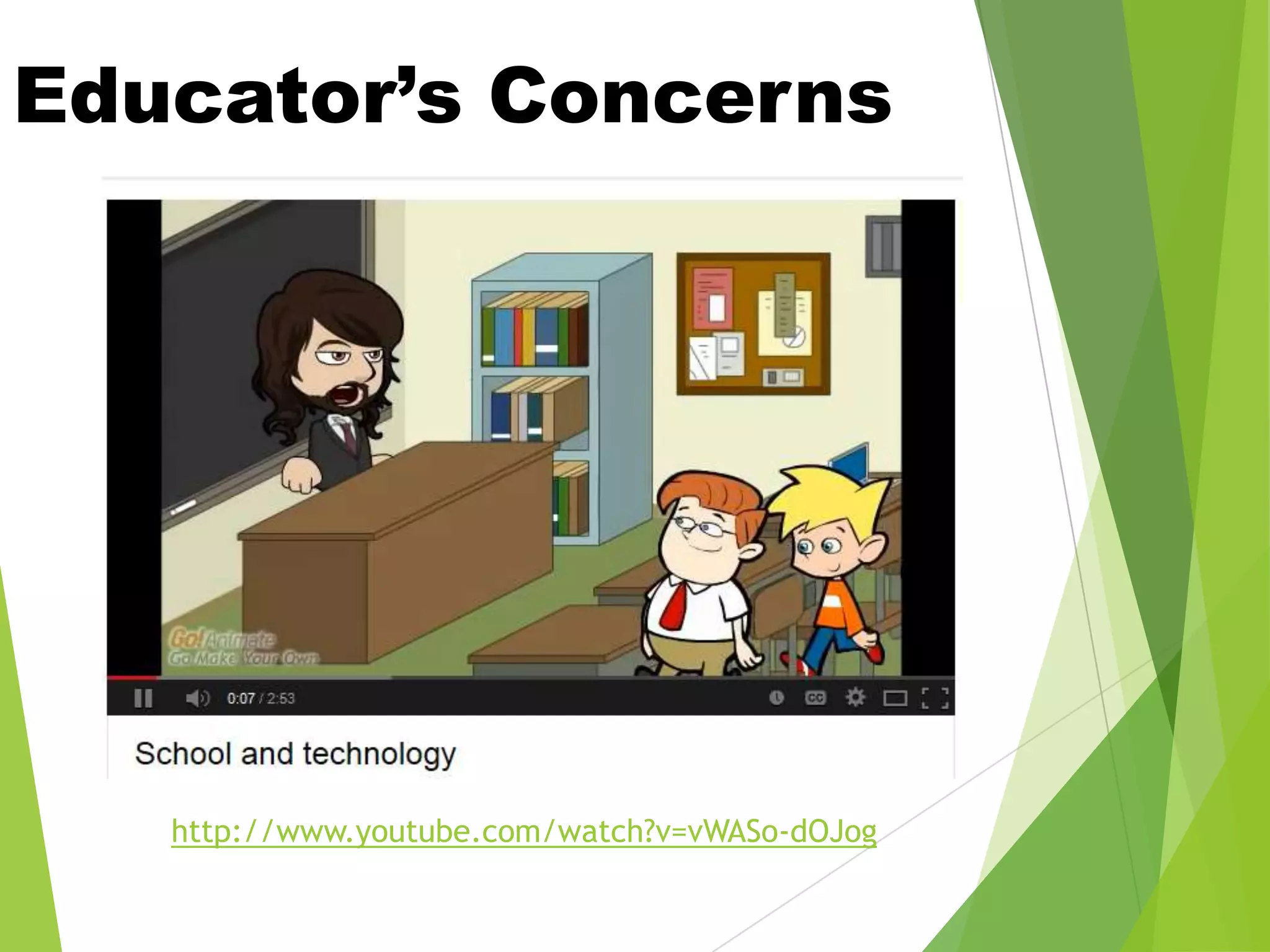
Educator’s Concerns

http://www.youtube.com/watch?v=vWASo-dOJog
When effectively integrated into
the curriculum, technology tools
can extend learning by providing
students and teachers with:


Access to up-to-date, primary source material



Methods of collecting/recording data



Ways to collaborate with students, teachers, and
experts around the world



Opportunities for expressing understanding via
multimedia



Learning that is relevant and assessment that is
authentic



Training for publishing and presenting their new
knowledge
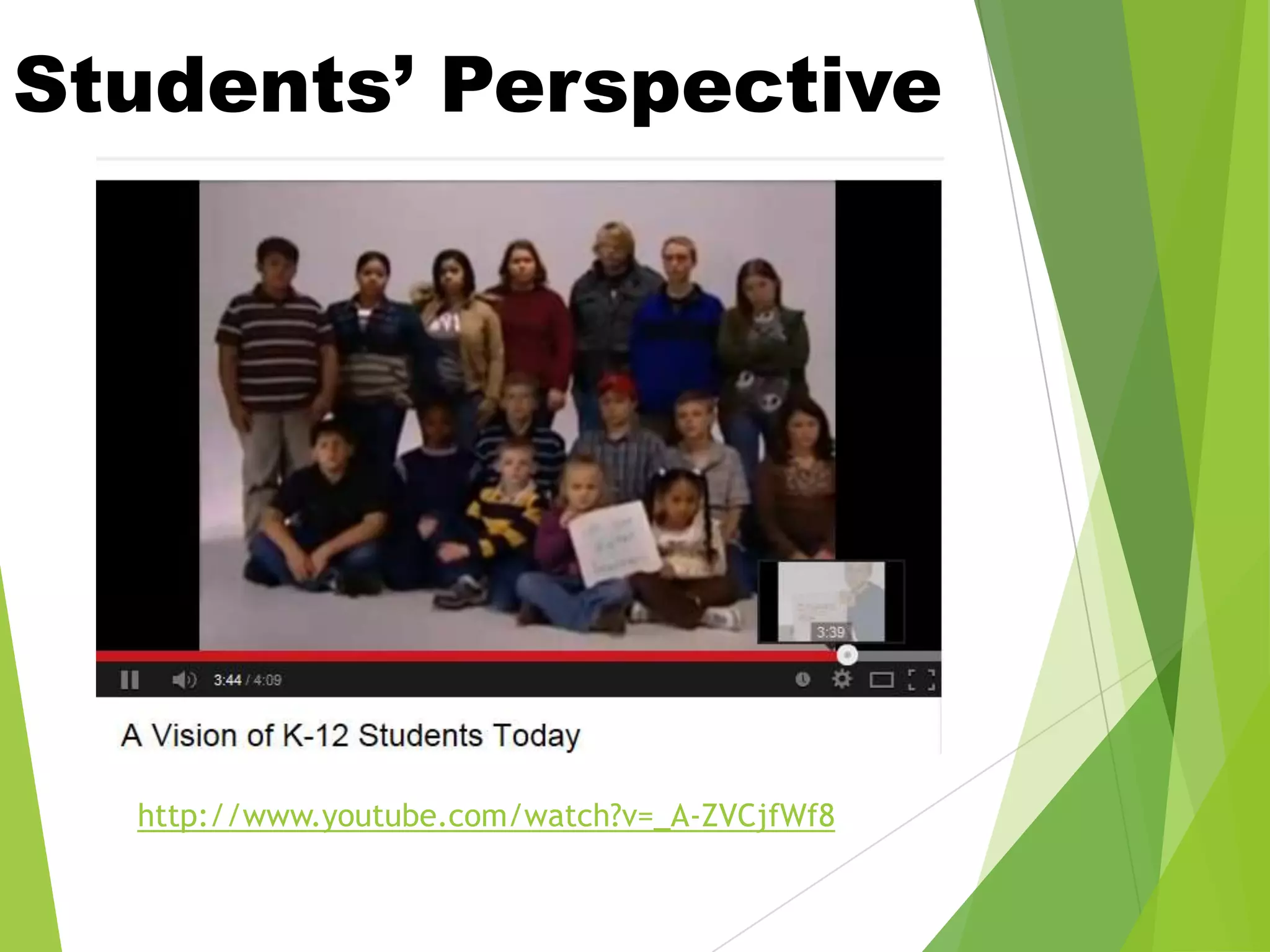
Students’ Perspective

http://www.youtube.com/watch?v=_A-ZVCjfWf8
Types of Technology Integration


Online Learning and Blended Classrooms - a combination of both
online and face-to-face education - Illuminate



Project-Based Activities Incorporating Technology - Many of the most
rigorous projects are infused with technology from start to finish
http://www.edutopia.org/stw-maine-project-based-learning-six-stepsplanning



Game-Based Learning and Assessment - incorporating simulations and
game-based learning activities into classroom instruction Jeopardylabs;
http://www.brainpop.com/search/search.weml?keyword=Games&sectio
ns=games



Learning with Mobile and Handheld Devices - cell phones, mp3
players, and tablet computers are now being used as learning tools in
forward-thinking - IPAD



Instructional Tools like Interactive Whiteboards and Student Response
Systems – SmartBoard and Socrative, www.turningtechnologies.com/



Web-Based Projects, Explorations, and Research - online research,
virtual field trips, and webquests, http://www.polarhusky.com/


Student-Created Media like Podcasts, Videos, or Slideshows One of the central ideas of digital or media literacy is that
students should be come creators and critics, not just
consumers, of media



Collaborative Online Tools like Wikis or Google Docs connecting with others online can be a powerful experience,
both for teachers and for students



Using Social Media to Engage Students


It is quickly becoming our duty as educators in the 21st
century to guide our students towards responsible use
of social media



Social Media use is becoming our new first impression.



Connected, community based learning is important.
#edchat itself is a perfect example of this very
phenomenon – Twitter! Facebook for an historical figure,
edmodo; Pinterest
http://www.toadhaven.com/Historical%20Figures%20on%2
0Facebook%20and%20Twitter.html



In five years, the filters will be gone whether you like it
or not

 What

are ways that you would use
Social Media in the classroom?
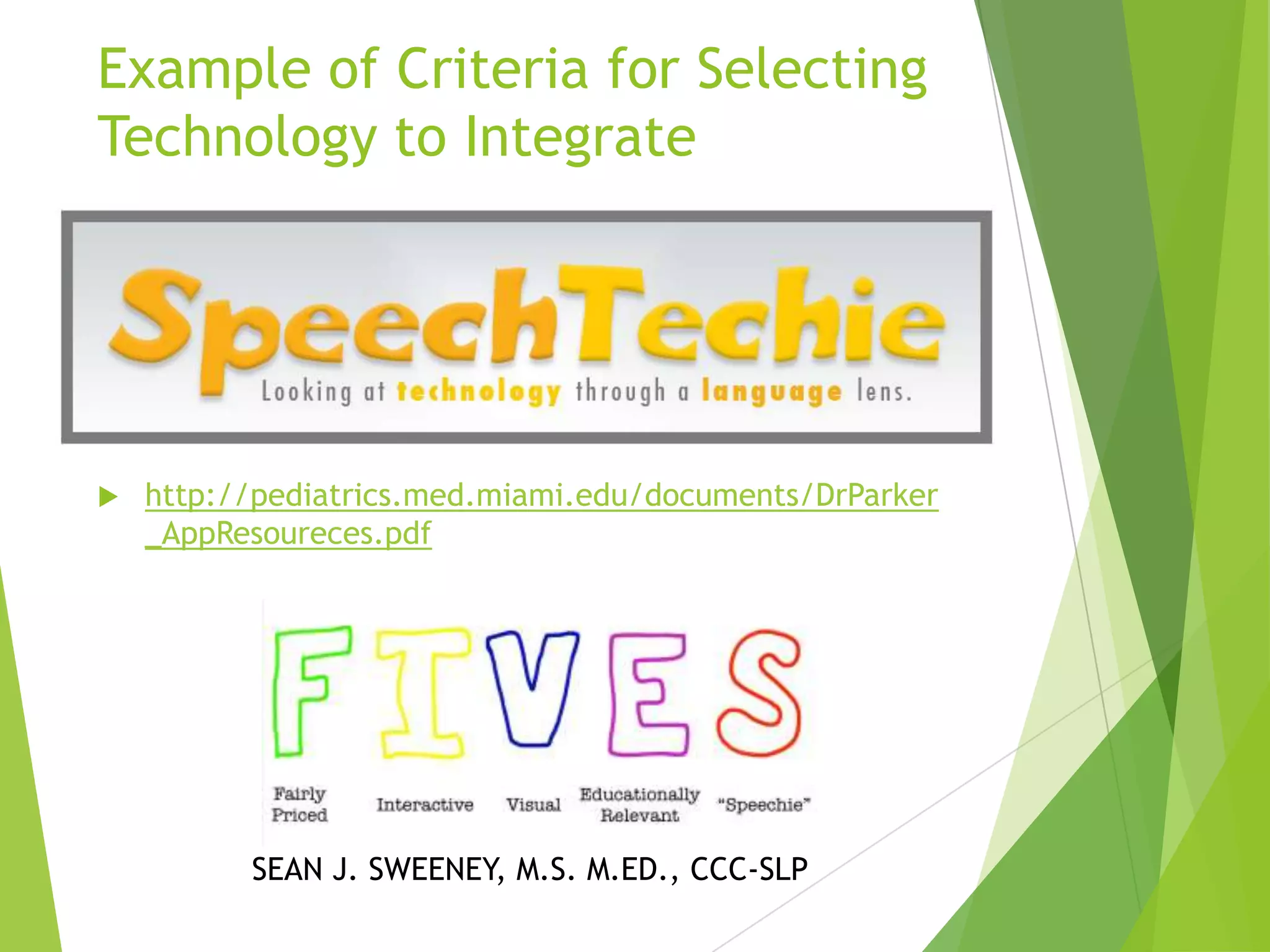
Example of Criteria for Selecting
Technology to Integrate



http://pediatrics.med.miami.edu/documents/DrParker
_AppResoureces.pdf

SEAN J. SWEENEY, M.S. M.ED., CCC-SLP
Levels of Technology Integration


Sparse: Technology is rarely used or available



Basic: Technology is used or available
occasionally/often in a lab rather than the
classroom. Students are comfortable with one
or two tools



Comfortable: Technology is used in the
classroom on a fairly regular basis. Students
are comfortable with a variety of tools



Seamless: Students employ technology daily
in the classroom using a variety of tools to
complete assignments and create projects
that show a deep understanding of content.

Integrating Technology in the Classroom

  • 1.
    What Is Successful TechnologyIntegration? Well-integrated use of technology resources by thoroughly trained teachers makes twenty-first-century learning possible. BY EDUTOPIA STAFF NEW TECHNOLOGIES PRESENTATION – SHEILA MOREAU
  • 2.
    • In classso far this semester, think of an example of this; an instance where you had to learn, unlearn and relearn? • Independent of content, how did this experience contribute to what you are taking away from this course? How did it change how you think? • Have you ever had to do this in your career? Alvin Toffler is an American writer and futurist, known for his works discussing the digital revolution, communication revolution and technological singularity. Toffler is a former associate editor of Fortune magazine.
  • 3.
    Who here iswearing a wrist watch? Example By Sir Kenneth Robinson is an English author, speaker, and international advisor on education in the arts to government, non-profits, education, and arts bodies. Known for How Schools Kill Creativity (Ted Talk) What is near you when you are watching TV? • Smart phone • IPad • Tablet • Laptop • Computer What do you do with these devices?
  • 4.
  • 6.
    Technology integration is…  theuse of technology resources -computers, mobile devices like smartphones and tablets, digital cameras, social media platforms and networks, software applications, the Internet, etc. -- in daily classroom practices, and in the management of a school.
  • 7.
    Successful technology integration isachieved when the use of technology is:  Routine and transparent  Accessible and readily available for the task at hand  Supporting the curricular goals, and helping the students to effectively reach their goals
  • 8.
    Seamless technology integration  studentsusing technology daily  access to a variety of tools that match the task at hand  provide students the opportunity to build a deeper understanding of content.  depends on   how much access one has to technology,   kinds of technology available who is using the technology Willingness to embrace change…Technology is continuously, and rapidly, evolving. It is an ongoing process and demands continual learning.
  • 9.
    Discussion…  Based on thisdefinition, how many of you feel that you have “seamlessly” integrated technology in the classroom?  How about your colleagues?
  • 10.
  • 11.
    When effectively integratedinto the curriculum, technology tools can extend learning by providing students and teachers with:  Access to up-to-date, primary source material  Methods of collecting/recording data  Ways to collaborate with students, teachers, and experts around the world  Opportunities for expressing understanding via multimedia  Learning that is relevant and assessment that is authentic  Training for publishing and presenting their new knowledge
  • 12.
  • 13.
    Types of TechnologyIntegration  Online Learning and Blended Classrooms - a combination of both online and face-to-face education - Illuminate  Project-Based Activities Incorporating Technology - Many of the most rigorous projects are infused with technology from start to finish http://www.edutopia.org/stw-maine-project-based-learning-six-stepsplanning  Game-Based Learning and Assessment - incorporating simulations and game-based learning activities into classroom instruction Jeopardylabs; http://www.brainpop.com/search/search.weml?keyword=Games&sectio ns=games  Learning with Mobile and Handheld Devices - cell phones, mp3 players, and tablet computers are now being used as learning tools in forward-thinking - IPAD  Instructional Tools like Interactive Whiteboards and Student Response Systems – SmartBoard and Socrative, www.turningtechnologies.com/  Web-Based Projects, Explorations, and Research - online research, virtual field trips, and webquests, http://www.polarhusky.com/
  • 14.
     Student-Created Media likePodcasts, Videos, or Slideshows One of the central ideas of digital or media literacy is that students should be come creators and critics, not just consumers, of media  Collaborative Online Tools like Wikis or Google Docs connecting with others online can be a powerful experience, both for teachers and for students  Using Social Media to Engage Students  It is quickly becoming our duty as educators in the 21st century to guide our students towards responsible use of social media  Social Media use is becoming our new first impression.  Connected, community based learning is important. #edchat itself is a perfect example of this very phenomenon – Twitter! Facebook for an historical figure, edmodo; Pinterest http://www.toadhaven.com/Historical%20Figures%20on%2 0Facebook%20and%20Twitter.html  In five years, the filters will be gone whether you like it or not  What are ways that you would use Social Media in the classroom?
  • 15.
    Example of Criteriafor Selecting Technology to Integrate  http://pediatrics.med.miami.edu/documents/DrParker _AppResoureces.pdf SEAN J. SWEENEY, M.S. M.ED., CCC-SLP
  • 16.
    Levels of TechnologyIntegration  Sparse: Technology is rarely used or available  Basic: Technology is used or available occasionally/often in a lab rather than the classroom. Students are comfortable with one or two tools  Comfortable: Technology is used in the classroom on a fairly regular basis. Students are comfortable with a variety of tools  Seamless: Students employ technology daily in the classroom using a variety of tools to complete assignments and create projects that show a deep understanding of content.