You may forget her, but she will never forget you
INTESTINE
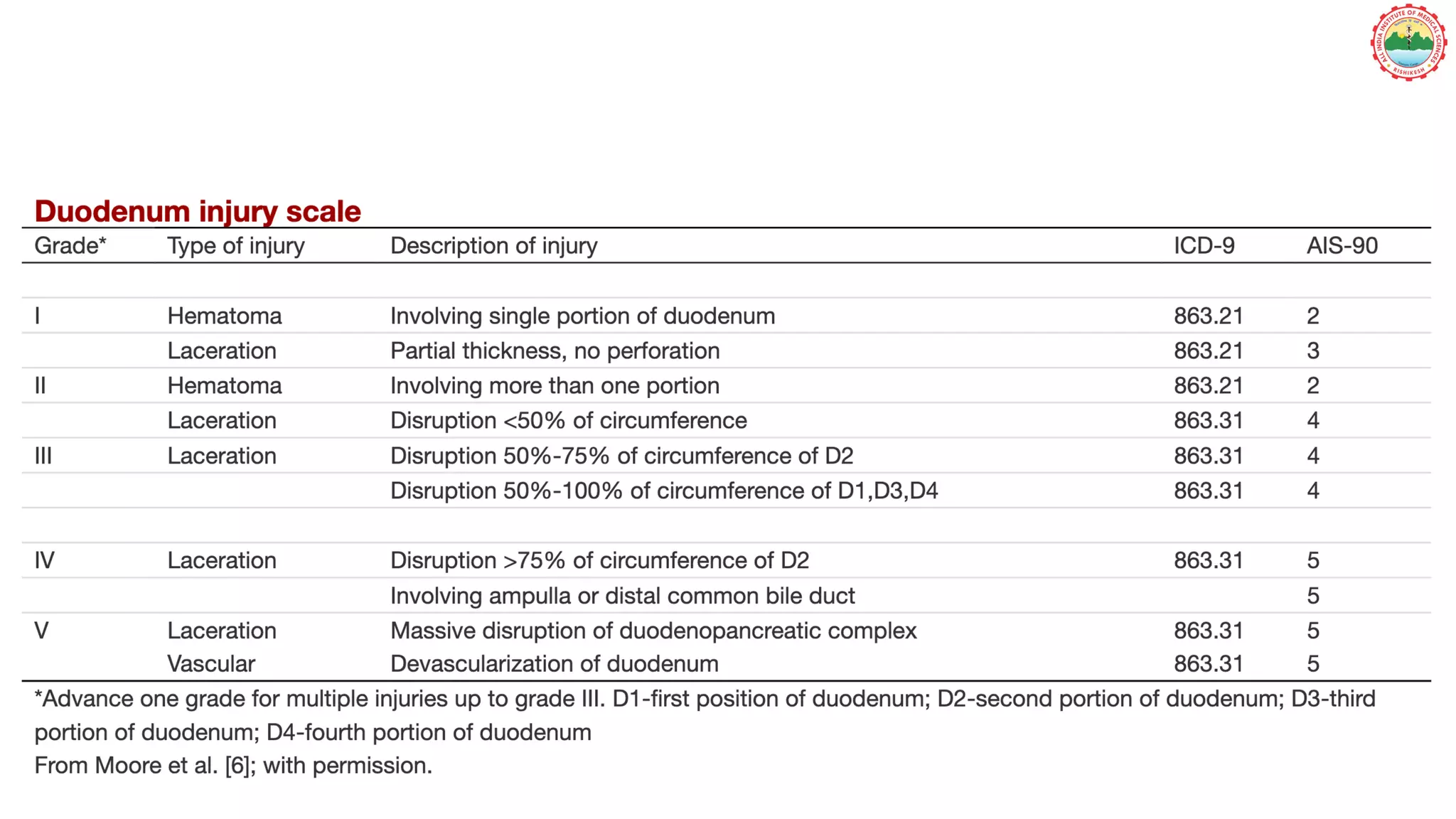
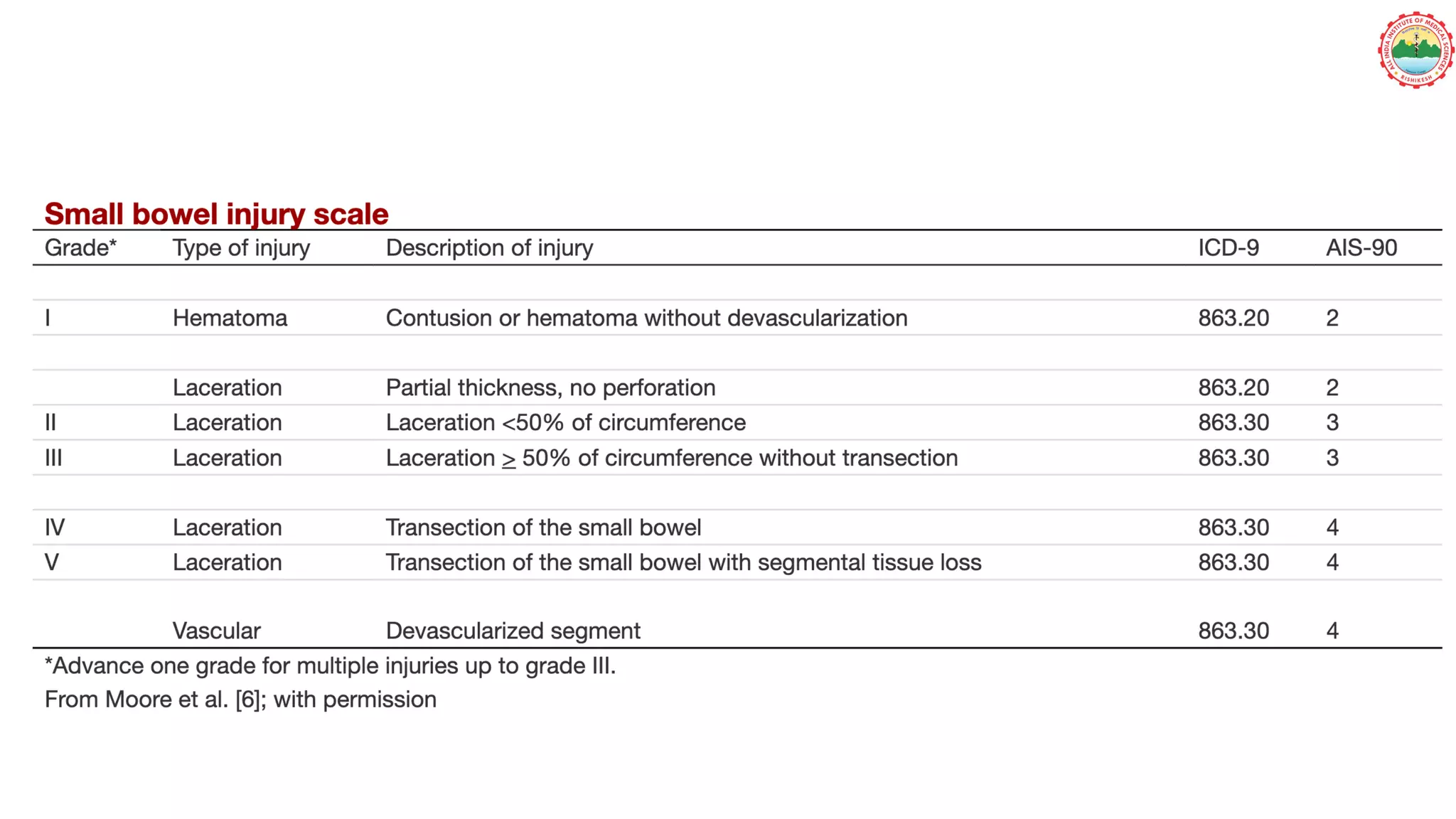
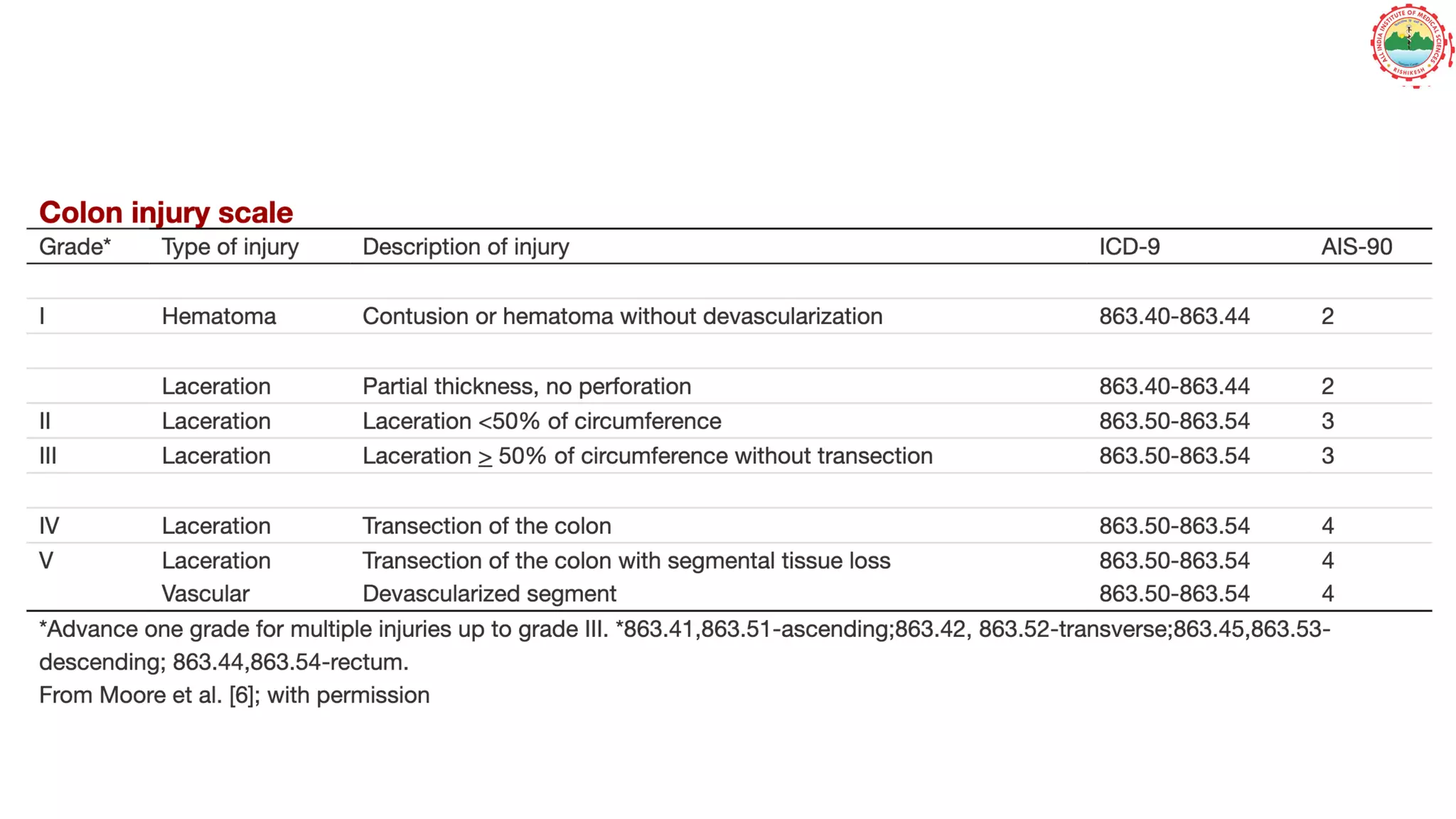
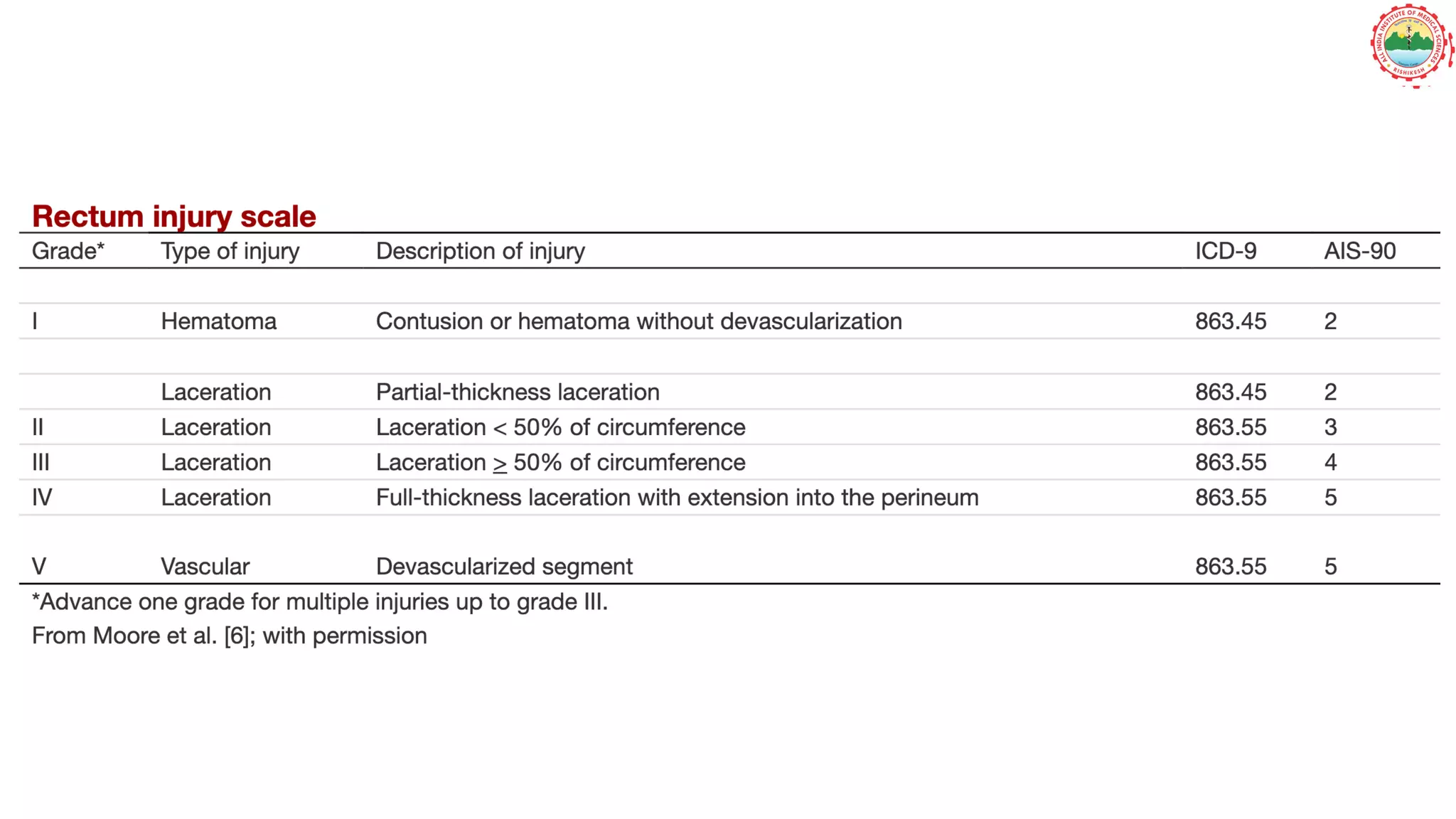
AAST Grading of Bowel Injury
Evidence based FAQs
Dr Awaneesh Katiyar
Senior Resident
Trauma Surgery and Critical Care
AIIMS Rishikesh
Overview
• Introduction
• Mechanism and initial management
• Grading of bowel injury
• Duodenal injury -brief management
• Topic of Discussion - related articles
Introduction
• 11% - blunt abdominal trauma - bowel perforation
• 5-15% in in various articles
• 3rd most common organ injured
• Most common - cause of sepsis related deaths
Zarour A, El-Menyar A, Khattabi M, Tayyem R, Hamed O, Mahmood I, Abdelrahman H, Chiu W, Al-Thani H. A novel practical scoring for early diagnosis of traumatic bowel injury without obvious solid organ injury in he
Evaluation and Management
Bowel trauma - Mechanism
• RTA - seat belt, steering wheel, crash
• Direct Kick to abdomen - physical assault
• Fall of object over abdomen
• Penetrating injury - gunshot, impalement, stabs
• Animal attack
• Workplace related - suspension or reverse suspension
Initial Assessment and Plan
ATLS protocol
• A-B-C-D-E: Key to success
• Decision - stable or unstable - Exploratory Laparotomy or Damage control
• Addressing - shock - critically important
• Isolated to concomitant injuries
• Worse prognosis - concomitant
• Isolated Mesenteric injuries
• Dealing with duodenal trauma
Manegement strategies
Unstable patient
• Control haemorrhage - continue resuscitation
• Control contamination - 2nd option
• Divert the bowel - stoma
• Duodenum - unique
• Doubt - consider on worst side - do on best side
Manegement strategies
Stable patient
• Mechanism - clue to site of injury
• Esophagus - penetrating >>> blunt
• Stomach - penetrating
• Small bowel - blunt >>> penetrating
• Duodenum - seat belt, steering wheel , direct blow , penetrating
• Large bowel - blunt > penetrating
• Rectal - penetrating - rectum impalement injuries
Examination
External patter of injury - direct hint
AAST classification
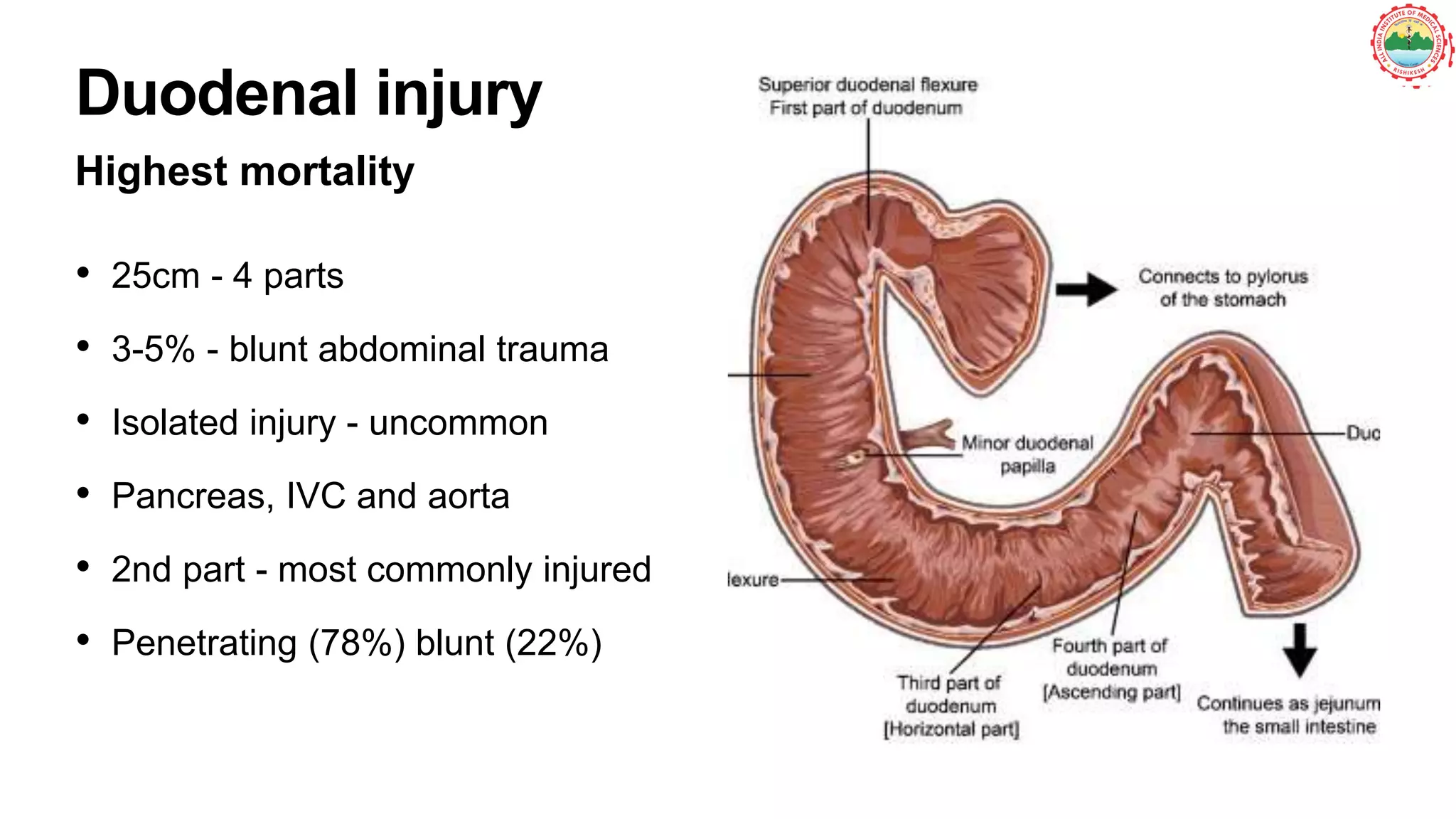
Highest mortality
• 25cm - 4 parts
• 3-5% - blunt abdominal trauma
• Isolated injury - uncommon
• Pancreas, IVC and aorta
• 2nd part - most commonly injured
• Penetrating (78%) blunt (22%)
Duodenal injury
• Specific cases - steering wheel
or direct epigastric blow
• Severe abdominal pain
• Out of proportion - pancreas
associated
• Vomiting, retching with blood
• Nothing is accurate - diagnosis
• High index of suspicion
History &
Examination
• Abdominal x rays - not useful for
diagnosis
• USG - not diagnostic - raised high
index of suspicion
• CT scan - always recommend
• CT miss perforation up to 28-30%
• DPL unreliable - 40%
Radiology
Mild to moderate
• Stab wound
• 75% wall
• 3rd and 4th
• < 24 hours
• No Associated bile duct injury
Severe injury
• Blunt or missile injury
• More than 75%
• 1st & 2nd part injured
• > 24 hours
• Associated with bile duct injury
Severity of injury
Principles
1. Restoration gut continuity
2. Decompression of duodenal lumen
3. Provide external drainage
4. Provide Nutritional support
Management
Topic of debate ?
management of Bowel injury
Are we missing bowel injury?
Present - late - Traumatic bowel - mesenteric injury
• Clinical diagnostic - dilema
• CT scan - no sign of perforation
• USG - no conclusive
• 1% of all bowel injuries - mesenteric injury leading to bowel necrosis
• High index of suspicion
• Review CT - signs ischemia or Necrosis
• > 8 hr - associated with significant mortality - sepsis
Do we go for definitive surgery in 1st step?
Even if patient is stable-
Decision for definitive surgery - better other than duodenal trauma
Duodenum - high pressure zone
Complication or leak - higher > Grade 4 trauma
Principle of Duodenum management should always be followed
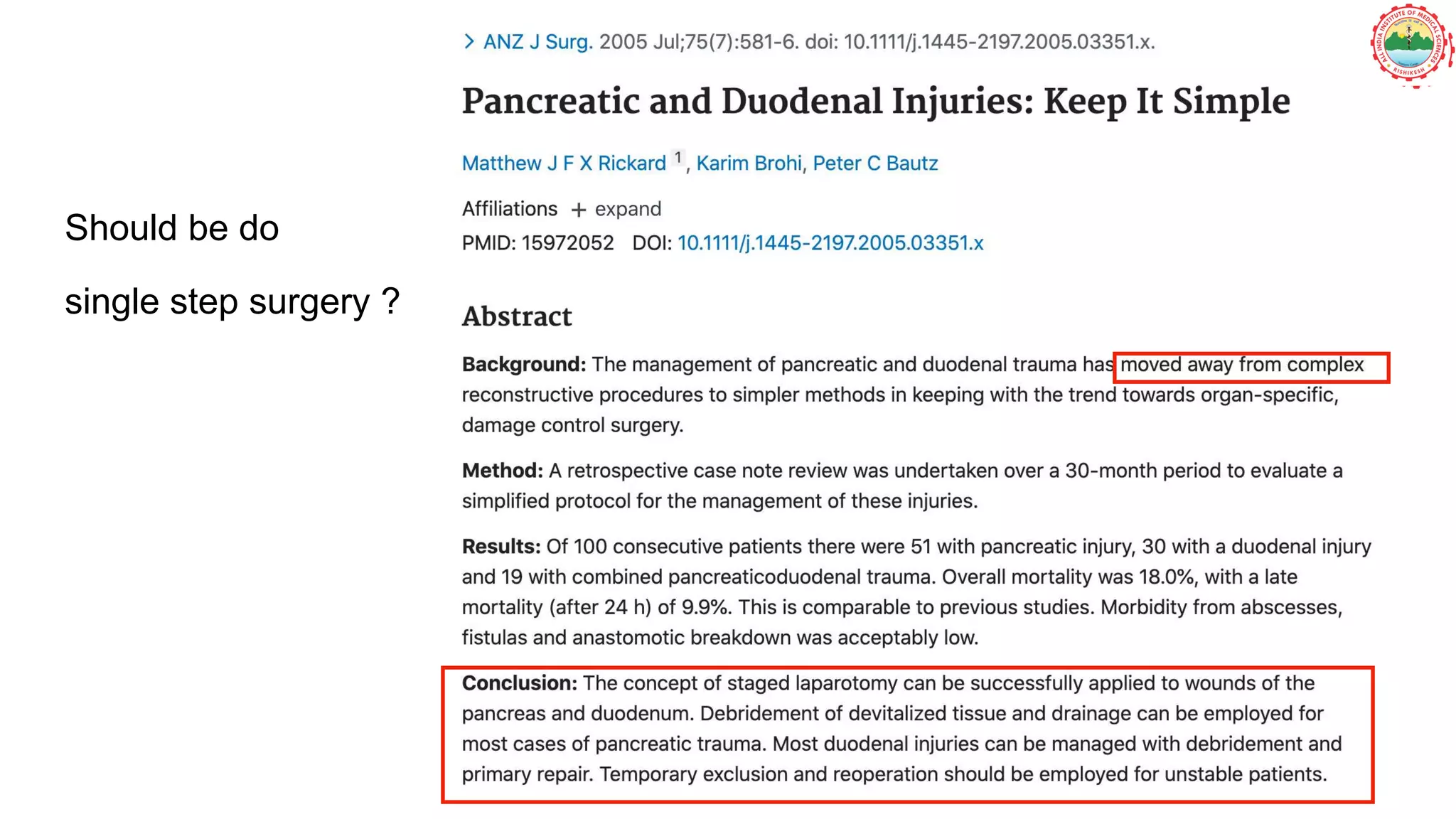
Should be do
single step surgery ?
Single layer or Double layer ?
Standard practice - depends on surgeon choice
Esophagus - single layer
Stomach and small Bowel - Double layer
Large bowel - single player
Doudenum - single layer
Emergency - Single layer is better
Single layer
or
Double layer
Journal of Clinical and Diagnostic Research. 2017 Jun, Vol-11(6): PC01-PC04
Equally Effective
And
More cost effective
Stoma or Anastomosis ?
Patient condition
• Hemodynamics - unstable
• Investigation - Hb , Alb, Lactate,
• Vasopressor - high dose
• Performing DCS
• Perineum wound, distal anastomosis
Live Problems are better than dead solutions
Do we have better grades for bowel injury ?
AAST best - adopted grading even for Bowel injury - Management
• Z score blunt trauma - non Validated
•
• Based on clinical , USG and CT
findings
• Used for early Diagnosis
PATI
Penetrating Abdominal trauma
Index
Not Widely Accepted
Only used in penetrating
trauma
Diagnostic Lap in Blunt Trauma ?
Blunt or Penetrating
Conclusion - laparoscopy in stable blunt abdominal trauma is safe and feasible, with expert hand. Avoid laparotom
and reduces LOS.
Journal of Surgical research, Australia
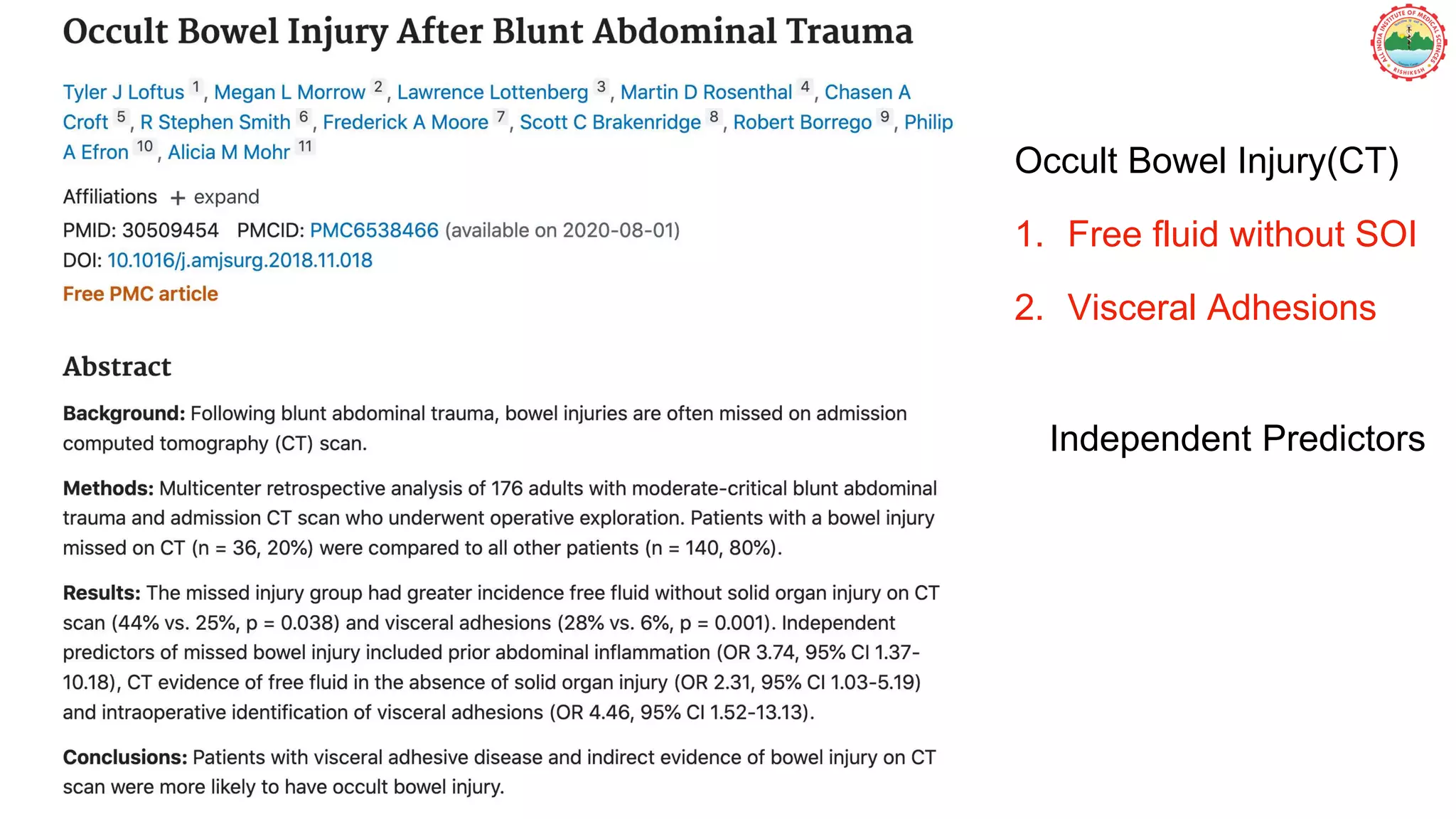
Occult Bowel Injury(CT)
1. Free fluid without SOI
2. Visceral Adhesions
Independent Predictors
Thank you
You may forget her,
but
she will never forget you
INTESTINE

AAST grading - Bowel/Intestinal Injury

  • 1.
    You may forgether, but she will never forget you INTESTINE
  • 2.
    AAST Grading ofBowel Injury Evidence based FAQs Dr Awaneesh Katiyar Senior Resident Trauma Surgery and Critical Care AIIMS Rishikesh
  • 3.
    Overview • Introduction • Mechanismand initial management • Grading of bowel injury • Duodenal injury -brief management • Topic of Discussion - related articles
  • 4.
    Introduction • 11% -blunt abdominal trauma - bowel perforation • 5-15% in in various articles • 3rd most common organ injured • Most common - cause of sepsis related deaths Zarour A, El-Menyar A, Khattabi M, Tayyem R, Hamed O, Mahmood I, Abdelrahman H, Chiu W, Al-Thani H. A novel practical scoring for early diagnosis of traumatic bowel injury without obvious solid organ injury in he
  • 5.
    Evaluation and Management Boweltrauma - Mechanism • RTA - seat belt, steering wheel, crash • Direct Kick to abdomen - physical assault • Fall of object over abdomen • Penetrating injury - gunshot, impalement, stabs • Animal attack • Workplace related - suspension or reverse suspension
  • 6.
    Initial Assessment andPlan ATLS protocol • A-B-C-D-E: Key to success • Decision - stable or unstable - Exploratory Laparotomy or Damage control • Addressing - shock - critically important • Isolated to concomitant injuries • Worse prognosis - concomitant • Isolated Mesenteric injuries • Dealing with duodenal trauma
  • 7.
    Manegement strategies Unstable patient •Control haemorrhage - continue resuscitation • Control contamination - 2nd option • Divert the bowel - stoma • Duodenum - unique • Doubt - consider on worst side - do on best side
  • 8.
    Manegement strategies Stable patient •Mechanism - clue to site of injury • Esophagus - penetrating >>> blunt • Stomach - penetrating • Small bowel - blunt >>> penetrating • Duodenum - seat belt, steering wheel , direct blow , penetrating • Large bowel - blunt > penetrating • Rectal - penetrating - rectum impalement injuries
  • 9.
    Examination External patter ofinjury - direct hint
  • 10.
  • 16.
    Highest mortality • 25cm- 4 parts • 3-5% - blunt abdominal trauma • Isolated injury - uncommon • Pancreas, IVC and aorta • 2nd part - most commonly injured • Penetrating (78%) blunt (22%) Duodenal injury
  • 17.
    • Specific cases- steering wheel or direct epigastric blow • Severe abdominal pain • Out of proportion - pancreas associated • Vomiting, retching with blood • Nothing is accurate - diagnosis • High index of suspicion History & Examination
  • 18.
    • Abdominal xrays - not useful for diagnosis • USG - not diagnostic - raised high index of suspicion • CT scan - always recommend • CT miss perforation up to 28-30% • DPL unreliable - 40% Radiology
  • 19.
    Mild to moderate •Stab wound • 75% wall • 3rd and 4th • < 24 hours • No Associated bile duct injury Severe injury • Blunt or missile injury • More than 75% • 1st & 2nd part injured • > 24 hours • Associated with bile duct injury Severity of injury
  • 20.
    Principles 1. Restoration gutcontinuity 2. Decompression of duodenal lumen 3. Provide external drainage 4. Provide Nutritional support Management
  • 21.
    Topic of debate? management of Bowel injury
  • 22.
    Are we missingbowel injury? Present - late - Traumatic bowel - mesenteric injury • Clinical diagnostic - dilema • CT scan - no sign of perforation • USG - no conclusive • 1% of all bowel injuries - mesenteric injury leading to bowel necrosis • High index of suspicion • Review CT - signs ischemia or Necrosis • > 8 hr - associated with significant mortality - sepsis
  • 23.
    Do we gofor definitive surgery in 1st step? Even if patient is stable- Decision for definitive surgery - better other than duodenal trauma Duodenum - high pressure zone Complication or leak - higher > Grade 4 trauma Principle of Duodenum management should always be followed
  • 24.
    Should be do singlestep surgery ?
  • 25.
    Single layer orDouble layer ? Standard practice - depends on surgeon choice Esophagus - single layer Stomach and small Bowel - Double layer Large bowel - single player Doudenum - single layer Emergency - Single layer is better
  • 26.
    Single layer or Double layer Journalof Clinical and Diagnostic Research. 2017 Jun, Vol-11(6): PC01-PC04 Equally Effective And More cost effective
  • 27.
    Stoma or Anastomosis? Patient condition • Hemodynamics - unstable • Investigation - Hb , Alb, Lactate, • Vasopressor - high dose • Performing DCS • Perineum wound, distal anastomosis Live Problems are better than dead solutions
  • 28.
    Do we havebetter grades for bowel injury ? AAST best - adopted grading even for Bowel injury - Management • Z score blunt trauma - non Validated • • Based on clinical , USG and CT findings • Used for early Diagnosis
  • 29.
    PATI Penetrating Abdominal trauma Index NotWidely Accepted Only used in penetrating trauma
  • 30.
    Diagnostic Lap inBlunt Trauma ? Blunt or Penetrating Conclusion - laparoscopy in stable blunt abdominal trauma is safe and feasible, with expert hand. Avoid laparotom and reduces LOS. Journal of Surgical research, Australia
  • 31.
    Occult Bowel Injury(CT) 1.Free fluid without SOI 2. Visceral Adhesions Independent Predictors
  • 33.
    Thank you You mayforget her, but she will never forget you INTESTINE